Reading view

There are new articles available, click to refresh the page.

Samsung unveils new Galaxy Z8 foldables and Galaxy Watches, available August 7

The rumors haven't left much to the imagination, but Samsung has unfurled its 2026 foldable lineup today. There are three models for the first time in Samsung's eight-gen foldable family, including the top-of-the-line Z Fold 8 Ultra. That phone is the successor to last year's Galaxy Z Fold 7, but the Z Fold 8 is new—the company's first wide-body foldable designed for media over multitasking. And then there's a new, thinner flip phone, plus a pair of smartwatches.

You can preorder Samsung's new hardware today, but the component shortage has made these already spendy product lines more expensive this year. Even the Z Flip 8 is now well over a grand, and the Ultra costs almost twice as much.

Specs at a glance: Galaxy Z8 series
Galaxy Z Flip 8 ($1,200) Galaxy Z Fold 8 ($1,900) Galaxy Z Fold 8 Ultra ($2,100)
SoC Snapdragon 8 Elite Gen 5 for Galaxy Snapdragon 8 Elite Gen 5 for Galaxy Snapdragon 8 Elite Gen 5 for Galaxy
Memory 12GB 12GB, 16GB 12GB, 16GB
Storage 256GB, 512GB 256GB, 512GB, 1TB 256GB, 512GB, 1TB
Display Main: 6.9" Dynamic AMOLED 2X (1080 x 2520) 400ppi, 120Hz; Cover: 4.1" AMOLED (948 x 1048) 342 ppi, 60/120Hz Main: 7.6" Dynamic AMOLED 2X (1848 x 2448) 403ppi, 120Hz; Cover: 5.5" Dynamic AMOLED 2X (1248 x 1972) 428ppi, 120Hz Main: 8.0" QXGA+ Dynamic AMOLED 2X (2504 x 2256) 422ppi, 120Hz; Cover: 6.5" FHD+ Dynamic AMOLED 2X (1080 x 2520) 422ppi, 120Hz
Cameras Rear: 50MP Wide (F1.8, OIS), 12MP Ultra Wide (F2.2); Selfie: 10MP (F2.2) Rear: 50MP Wide (F1.8, OIS), 50MP Ultra Wide (F1.9); Main/Cover Selfie: 10MP (F2.2) Rear: 200MP Wide (F1.7, OIS), 50MP Ultra Wide (F1.9), 10MP Tele (3x Optical, F2.4, OIS); Main/Cover Selfie: 10MP (F2.2)
Software Android 17 / One UI 9 Android 17 / One UI 9 Android 17 / One UI 9
Battery 4,300 mAh, up to 55% charge in ~30 min with 25W Adapter, 15W Wireless Charging 4,800 mAh, up to 67% charge in ~30 min with 45W Adapter, 20W Wireless Charging 5,000 mAh, up to 63% charge in ~30 min with 45W Adapter, 20W Wireless Charging
Connectivity 5G, LTE, Wi-Fi 7, Bluetooth v5.4, SIM+eSIM 5G, LTE, Wi-Fi 7, Bluetooth v6.0, SIM+eSIM 5G, LTE, Wi-Fi 7, Bluetooth v6.0, SIM+eSIM
Measurements Unfolded: 166.9 × 75.4 × 6.1 mm
Folded: 85.7 × 75.4 × 13.1 mm, 180g
Unfolded: 123.9 × 161.4 × 4.5 mm
Folded: 123.9 × 81.9 × 9.7 mm, 201g
Unfolded: 158.4 × 143.2 × 4.1 mm
Folded: 158.4 × 72.8 × 8.9 mm, 215g
Colors Pink, Graphite, Cream, Mint (online) Lavender, Graphite, Cream, Pistachio (online) Violet Shadow, Graphite, Cream, Green Shadow (online)

The Z Fold 8 Ultra has the same basic form factor as the last few Samsung tablet-style foldables. A 6.5-inch OLED on the outside is about the same ratio as a standard smartphone screen. Open it up, and you get an 8-inch display that's roughly twice as wide. That makes the main display close to square.

Read full article

Comments

© Samsung

Ukrainian drones deliver robots directly into battle by sea and air

In the latest twist on battlefield innovations, Ukraine has used both flying drone carriers and drone boats to send ground robots armed with weapons or explosives into battle.

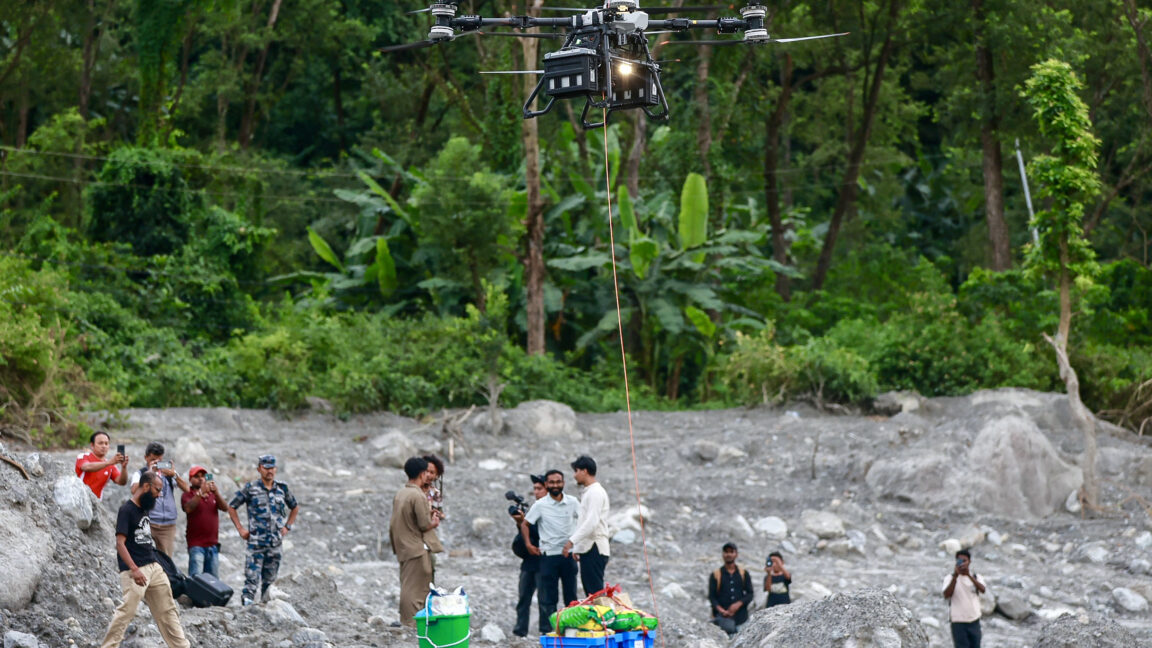
The drone-assisted deployments have enabled slower wheeled robots to bypass tough terrain and Russian defenses, and to carry out an unusual robotic amphibious assault on a contested position. Such tactics also showcase the Ukrainian military’s ongoing experimentation with using drones and robots to offset a Russian military advantage in manpower while also sparing Ukrainian soldiers from making dangerous assaults.

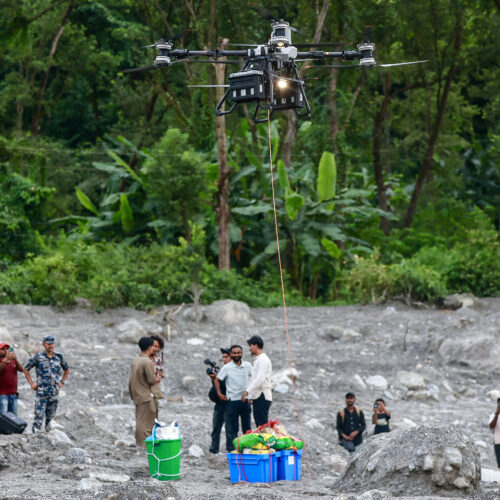
On July 19, a Russian military Telegram channel posted a video showing a Ukrainian hexacopter drone carrying a ground robot suspended below by a cable, according to the Ukrainian government-run news platform United24. The Russian Telegram channel described the Ukrainian heavy bomber drone as deploying a four-wheeled ARK-1 robot armed with explosive anti-tank mines on the ground where it continued toward Russian military positions—and apparently generated plenty of outraged comments from pro-Kremlin social media users.

Read full article

Comments

© Dmytro Smolienko/ Ukrinform/Future Publishing via Getty Images

On the run for 20 years, most-wanted fugitive caught hiding as a biotech exec

One of Rhode Island's most-wanted fugitives was arrested in New York last week after being on the run for more than 20 years, which was at least partially spent hiding as a biotech executive, according to Stat News.

In a Securities and Exchange Commission filing Monday, California-based Immix Biopharma noted that Richard Graydon was terminated Friday for "reasons unrelated to his activities at the Company."

It turns out, Richard Graydon was an alias for Ronald Fischer, a 70-year-old former anesthesiologist licensed in Rhode Island and Massachusetts, who fled amid his 2005 trial for first-degree sexual assault. Fischer was accused of raping a woman during a date on his yacht, Lion King.

Read full article

Comments

© Rhode Island State Police

TreeSize won't renew perpetual-license support unless users subscribe

The company behind the disk space analyzer TreeSize has irked some users by no longer offering support or updates for perpetual licenses beyond their maintenance period unless customers subscribe. Further frustration has come from JAM Software's long-standing policy of not providing license keys or installers to TreeSize perpetual license holders after that support period ends.

Since 2025, JAM Software has been transitioning most TreeSize editions to subscription models. Today, it sells perpetual licenses only for personal use, which include 12 months of updates, support, and “downloads of older versions, and your license,” plus the option to extend the support period. TreeSize currently has "no plans to discontinue the sale of perpetual licenses for TreeSize Personal," product manager Hendrik Christ told Ars Technica.

As perpetual-license maintenance periods expire, customers are discovering that extending support now generally requires subscribing to software they already own the right to use.

Read full article

Comments

© TreeSize

Firefighting drones in the works as wildfires plague US nearly year-round

Drones capable of spraying water and fire retardants have been practicing how to snuff out wildfires early in California and Alaska this summer—demonstrating a possible rapid-response tool for firefighting as climate change transforms wildfire season into a nearly year-round risk for much of the United States.

Most drones are significantly smaller than crewed aircraft and have shorter flight ranges, meaning they cannot replace large airtankers in delivering massive payloads of water or other fire-suppressing payloads to remote wildfires. But companies and fire agencies—along with organizers of the $11 million XPRIZE competition—are testing whether drones can help firefighting crews respond more quickly to small fires and put them out before they become more destructive.

The California Department of Forestry and Fire Protection, also known as CAL FIRE, ran its own field test involving five autonomous drones that worked together to deploy between 500 and 1,000 gallons of foam combined for suppressing fires on July 15, according to the TV station KPMH. The demonstration was organized with the help of the nonprofit FireWERX and the California-based company Seneca, which is making the drones commercially available starting in 2026.

Read full article

Comments

© Seneca

Google-backed satellites for wildfire detection launch as smoke chokes US, Canada

As smoke from hundreds of burning wildfires spread across Canada and the United States, the first three operational satellites in the Google-backed FireSat program successfully launched into orbit. The satellites will begin providing wildfire detection capable of spotting even small fires in the United States, Australia, and Europe before the end of the year.

The launch of the microsatellites aboard a SpaceX Falcon 9 rocket from Vandenberg Space Force Base in California on July 7, 2026 marks a transition to “initial operational capability” for the FireSat constellation managed by the nonprofit Earth Fire Alliance. After a three-month testing period, the three satellites will begin actively providing data to fire agencies while covering every fire-prone region on Earth at least twice per day.

FireSat represents the first satellite constellation purpose-built for detecting wildfires, including spotting smaller fires that other satellites may miss. The satellites were designed by California-based satellite manufacturer Muon Space and have received over $15 million from Google to support initial deployment. Other notable financial supporters include the Bezos Earth Fund that committed $26 million.

Read full article

Comments

© Muon Space

Fubo hikes prices by $15 after restoring some NBCU channels lost in November

Fubo prices are going up by $15 per month because it will have some NBCUniversal channels again.

For years, Fubo, a sports-centric vMVPD (virtual multichannel video programming distributor, which lets subscribers watch traditional TV channels live over the Internet), offered NBCUniversal channels. That stopped in November 2025 due to a contract dispute.

With the loss of local NBC affiliates, Telemundo, nine regional sports channels, and 32 national channels, Fubo made the sensible but rare decision to lower subscription prices in December. The Essential plan went from $85 per month to $74 per month. The Pro plan dropped from $85 to $75 per month, and the Elite plan dropped from $95 to $84 per month.

Read full article

Comments

© Gabby Jones/Bloomberg via Getty Images

HP fined 1.4 billion rupees for “cartelization” of ink cartridges, toner, PCs

The Indian government has fined HP India and its partners a total of 1.4 billion rupees (about $14.4 million) for working with reseller partners in the “cartelization” of computers, ink cartridges, and toner.

The Competition Commission of India (CCI) said this week that it found HP India had colluded with some channel partners to drive up the cost of bids for government contracts for computers, as well as for selling ink cartridges, toner, and other printing supplies, including graphic and digital manufacturing supplies.

It said that HP was aiming to outcompete other OEMs and discourage resellers from selling “counterfeit” ink and toner.

Read full article

Comments

© Getty

It's official: EU will force Google to share search data and open up AI on Android

Europe wasted no time using its landmark Digital Markets Act (DMA) to try to rein in Big Tech. Companies like Apple, Meta, and Google have faced steep fines and orders to modify their business practices since the law came into force in 2024. And the hits keep on coming for Big Tech in Europe. After several months of consideration, the European Commission has announced new DMA measures that will force Google to support interoperability and competition in the European Union, and Google is not happy about it.

The new "specification measures" cover two elements of Google's business: Android phones and search. Both changes could theoretically increase competition and give users more choices, but Google claims they will undermine privacy and security. But as a "gatekeeper" under the DMA, Google has no choice but to comply. As the European Commission points out in its announcement, these decisions are legally binding.

On Android, Google will have to open up access to competing AI platforms. Currently, Google's Gemini gets preferential access to the system. Gemini is preloaded on all Google-certified Android phones and can wake up in response to the "Hey Google" hot word. Google's AI also includes system and app automation features, screen content access, and more.

Read full article

Comments

© Getty Images | BeeBright

OnePlus confirms shutdown in the US and Europe, ending months of speculation

OnePlus arrived on the scene in 2014 with brash marketing and a compelling pitch: What if your phone was cheaper and faster? More than a decade later, the market is much different, and so is OnePlus. Confirming months of rumors and speculation, OnePlus has confirmed it's ending phone releases in North America and Europe.

This development has been expected for a while. After a brief period of expansion in the US through deals with T-Mobile and Verizon, OnePlus began visibly shifting its focus to India after the pandemic. OnePlus has also increasingly come under the control of its parent company, Oppo, aligning its device releases and software experience with the larger brand. Still, OnePlus has continued to launch flagship devices in the US and Europe, with the OnePlus 15 going on sale in late 2025. That will be the last OnePlus phone many people see, though.

OnePlus denied rumors of a shutdown earlier this year, but its language was vague and never promised future phone releases. The new statement is also worded gingerly, but the outcome is clear. "As part of the proactive global strategy adjustment, OnePlus has decided to conclude new product rollouts in Europe and North America," the official post reads.

Read full article

Comments

© Ryan Whitwam

Move over, GPS: Navigation satellites in low-Earth orbit are making a comeback

New navigation satellites in low-Earth orbit could provide 100 times stronger signal strength compared to GPS and other global navigation satellite systems operating from higher orbital altitudes—enabling greater location accuracy within dense cities, under thick foliage, and even inside buildings. Such signals would also likely prove more resilient to interference at a time when commercial flights, maritime shipping, and even various smartphone apps face increasingly widespread disruption from GPS jamming.

That vision may start to take shape when the first six production satellites of California-based Xona Space Systems are scheduled to launch in October 2026, with early service starting in 2027. Once the full constellation of 258 Pulsar satellites has been launched in the following years, Xona claims that customers will be able to accurately pinpoint their locations anywhere on Earth to within several centimeters.

“That added power means that we can get into that indoor environment that GPS can't get to today,” Adrien Perkins, co-founder and VP of engineering at Xona Space Systems, told Ars. “Our higher power allows you to get into those jamming environments a lot further than you would with GPS by itself.”

Read full article

Comments

© Xona Space Systems

Hundreds rally at Bethesda HQ to protest Xbox layoffs, and Ars was there

ROCKVILLE, Maryland—Hundreds of Bethesda Game Studios and Zenimax Online Studios employees and their supporters braved nearly 100° F temperatures to protest sweeping layoffs across Xbox during a lunchtime rally in front of parent company Zenimax's headquarters today. The rally was one of five today organized by Zenimax Workers United and its parent union, the Communication Workers of America, at offices across Texas, California, and Montreal.

Attendees held up signs with messages like "Layoffs... layoffs never change" and "Our players deserve better" as union organizers and employees rallied the crowd with speeches and songs. The overwhelming message was one of solidarity and a willingness to push back against job cuts they say have decimated their development and quality assurance teams.

"It's about us building our movement and making sure that we get seen and we're visible," Bethesda technical producer and union volunteer organizer Nathan Hahn told Ars. "Because we want to make sure that we're not okay with these layoffs and that Xbox knows."

Read full article

Comments

Engineer identifies and explains every '90s computer seen in Jurassic Park

Jurassic Park, while beloved as a film, has been the subject of snarky memes for the infamous line in which one of the characters declares, "This is a Unix system, I know this!" while using a computer with an unusual 3D file manager interface.

Despite the memes, the film's production team was meticulous in accurately sourcing the right PCs (and adjacent details) for the sets—not too much of a surprise, given writer Michael Crichton's background with computing and his obsessive attention to detail in the book the film is based on.

Read full article

Comments

© Universal Pictures

Third-party app stores coming to Google Play next week as Epic settlement withdrawn

Big changes are coming to Android apps, but they're not the changes Google wanted. The settlement between Google and Epic that aimed to put to rest the companies' long-running antitrust battle is being withdrawn, and that means third-party app stores are coming to the Play Store. Google has confirmed that it will begin distributing rival app stores next week, setting the stage for competing platforms to take a bite out of Google's Android revenue stream.

This case has the potential to upend software distribution on Android, and it's all because of V-Bucks. In 2020, Epic Games was frustrated that it had to pay a 30 percent cut to Apple and Google every time someone bought a bundle of V-Bucks in a mobile version of Fortnite. The publisher added a direct purchase option to the game in violation of both Apple's and Google's rules. Naturally, Fortnite was pulled from the App Store and Google Play, kicking off the antitrust lawsuit that is only now reaching its conclusion.

While Apple suffered little penalty in its Epic case, Google was tripped up by its anti-competitive management of the supposedly open Android ecosystem. Google used its market position to discourage device makers from promoting or pre-loading non-Google app stores and attempted to hide that conduct. The remedies set by Judge James Donato included lower fees, mirroring Google Play apps in other stores, and most vitally, placement of alternative app stores in Google Play.

Read full article

Comments

© Getty Images | Kirill Kudryavtsev

US military sent explosive drone boats into combat for the first time

For the first time in its history, the US military sent explosive-laden drone boats into combat by attacking an Iranian midget submarine and naval port. The unprecedented use of such kamikaze sea drones by the United States comes nearly a decade after Iranian and Houthi forces first demonstrated such weapons.

The US military shared a video showing three “one-way attack surface drones” exploding after approaching an Iranian midget submarine and ship maintenance facility at Iran’s Bandar Abbas Naval Base on the night of July 12. US Central Command, the US military combat command responsible for Middle East operations, described the strikes in a social media post as the “first time American forces have employed sea drones in combat operations.”

The US drone boats were able to “make a low-speed, uncontested approach” to their targets before exploding, according to USNI News, a news service from the nonprofit US Naval Institute. USNI News also identified one of the targets as an Iranian Ghadir-class midget submarine that was out of the water while being suspended from a gantry.

Read full article

Comments

© US Central Command

Ukrainian drone strikes forced Russia to stop shipping in vital sea corridor

Ukrainian drone strikes have forced Russia to completely halt shipping in the Sea of Azov in less than a week, showing once again how a country without traditional naval power can still effectively blockade maritime corridors.

Ukraine’s Unmanned Systems Forces have flown one-way attack drones to target and strike more than 100 Russian tankers and other ships in total, along with posting video evidence showing such drone strikes occurring every night between July 6 and July 14. The campaign has forced Russia to completely shut down the shipping route that flows from Russia’s Don River into the Sea of Azov, and to halt all Kerch Strait shipping transits from the Sea of Azov into the Black Sea, according to Reuters reporting.

The shutdown of such maritime lanes has further isolated the Russian-occupied Crimean Peninsula by cutting off seaborne delivery of fuel in particular. Crimea had already been experiencing severe fuel rationing and power outages as Ukraine stepped up its mid- and long-range drone strike campaign on Russian energy infrastructure and supply lines, leaving behind damaged oil refineries with billowing black smoke and burned-out trucks littering highways.

Read full article

Comments

© Planet Labs PBC

Apple and Samsung benefit as memory shortage pushes smartphone shipments to historic lows

Smartphone shipments started to plateau a few years back, ending the days of guaranteed double-digit growth for any company that wanted to make phones. Fewer smartphone manufacturers exist today, and they're facing new pressure in the age of AI. A new report claims that smartphone shipments cratered 11 percent in the last quarter. Some are weathering the storm better than others, though.

According to Counterpoint, this substantial drop brings smartphone shipments to their lowest second-quarter level since 2013. Analysts place the blame for this drop squarely on the increasing price of DRAM and NAND chips. Manufacturers have largely shifted to supporting the AI computing boom, which leaves fewer components for consumer devices like smartphones and PCs. As prices climb higher, fewer people are interested in buying new phones.

This problem has been particularly vexing for people who are happy to purchase budget devices. A recent report from market research firm Omdia noted that higher memory costs are particularly bad for phones priced at $500 or less. In these segments, memory can now easily account for half of the total manufacturing cost. These devices have seen quicker and larger price increases compared to flagship devices, for which memory is now more than a quarter of the cost. That's a significant increase in the past year, but there's still more profit to be had at the high end.

Read full article

Comments

© Ryan Whitwam

Increased drone surveillance of illegal July 4th fireworks led to $100K fine

More cities and towns deployed drones to spot illegal fireworks during the Fourth of July celebrations commemorating America’s 250th anniversary—leading to a $100,000 fine in one instance and coming as part of a broader national trend of first responders turning to drone surveillance.

Police and fire departments have described using both increased drone surveillance and steep fines to deter people from shooting off illegal fireworks, with many departments publicizing their drone videos on social media and warning that their drones will be watching in the future. Incidents involving illegal fireworks have led to costly fires, injuries, and even multiple deaths each year, along with creating local air and noise pollution for residential neighborhoods.

This year, the $100,000 fine for illegal fireworks came from the Sacramento Fire Department in Northern California deploying its own drones for the first time on the Fourth of July, according to CBS News Sacramento. Sacramento Fire Captain Justin Sylvia described the fire department’s drones as being capable of recording scenes in high-resolution video to help investigators identify the house or closest location using Google Maps.

Read full article

Comments

© MediaNews Group/Orange County Register via Getty Images / Contributor

Firmware update bricks Hue Bridge Pro devices; Philips gives free replacements

A firmware update is behind recent reports that some Hue Bridge Pro smart hubs are no longer working, Ars Technica has confirmed.

In late June, there were reports of some Hue Bridge Pro devices not working properly after installing a firmware update. Philips released firmware version 2071353020 in early June, saying that it included “several small changes” to make Hue Bridge Pros work “better.” But some customers had a different experience: Their devices stopped responding and displayed a red LED.

A Reddit user going by the name statelymachine is one of the people online who reported that the update “bricked” their device.

Read full article

Comments

© Philips

Aussie gov't tells volunteers to throw out thousands of functioning test routers

Last week, thousands of SamKnows routers were bricked after a government program ran its course.

In 2020, as part of a program conducted by the Australian Competition & Consumer Commission (ACCC), the Australian government's chief competition regulator, thousands of volunteers received routers to help test and report on the typical speed and performance of broadband plans in Australia. (More specifically, the Measuring Broadband Australia (MBA) program targeted fixed-line broadband services provided over the NBN, Australia's government-owned wholesale open-access broadband network, as well as services delivered over other access networks.)

According to the final report that the ACCC distributed, the routers are whiteboxes that were “supplied by SamKnows” and that “perform tests to measure internet performance using test servers maintained by SamKnows and hosted in Australia.”

Read full article

Comments

© Getty

❌