❌

Reading view

There are new articles available, click to refresh the page.

Hyundai claims humanoid robot plan is not part of talks with striking workers

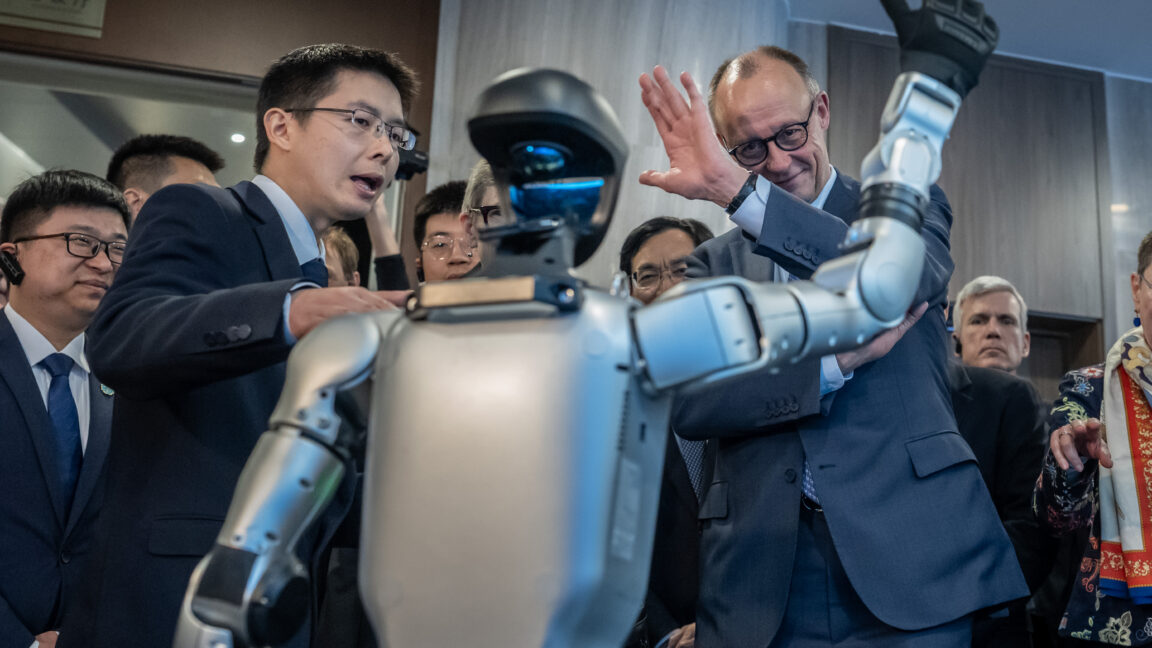
Hyundai Motor Company’s plan to put humanoid robots to work by 2028 is not part of current negotiations with striking South Korean autoworkers, according to the company.

The automaker is disputing news reports that partial labor strikes by the Hyundai Motor union at the world’s largest automotive plant in South Korea were spurred by concerns about the company's planned deployment of humanoid robots in the United States starting in 2028. A company statement shared with Ars describes the union’s demands as focusing on compensation-related issues such as wage increases, bonuses, and an extension of workers’ retirement age.

β€œPotential deployment of robots in Korean production facilities is not part of the current labor-management discussions,” according to the Hyundai statement. β€œHyundai Motor Company remains committed to constructive engagement with the union and to reaching an agreement that supports the long-term interests of both employees and the company.”

Read full article

Comments

Β© Boston Dynamics

Ukrainian drones deliver robots directly into battle by sea and air

In the latest twist on battlefield innovations, Ukraine has used both flying drone carriers and drone boats to send ground robots armed with weapons or explosives into battle.

The drone-assisted deployments have enabled slower wheeled robots to bypass tough terrain and Russian defenses, and to carry out an unusual robotic amphibious assault on a contested position. Such tactics also showcase the Ukrainian military’s ongoing experimentation with using drones and robots to offset a Russian military advantage in manpower while also sparing Ukrainian soldiers from making dangerous assaults.

On July 19, a Russian military Telegram channel posted a video showing a Ukrainian hexacopter drone carrying a ground robot suspended below by a cable, according to the Ukrainian government-run news platform United24. The Russian Telegram channel described the Ukrainian heavy bomber drone as deploying a four-wheeled ARK-1 robot armed with explosive anti-tank mines on the ground where it continued toward Russian military positionsβ€”and apparently generated plenty of outraged comments from pro-Kremlin social media users.

Read full article

Comments

Β© Dmytro Smolienko/ Ukrinform/Future Publishing via Getty Images

Fear of humanoid robots spurs human workers to strike at Hyundai auto factory

Thousands of unionized Hyundai auto workers began walking off the job early after negotiations with the South Korean automaker broke down over plans to deploy humanoid robotsβ€”the most significant pushback from organized labor so far over the latest wave of robotic automation.

The partial strike at Hyundai’s automotive production complex in the city of Ulsan in South Korea represents β€œthe car industry’s first factory stoppage addressing humanoid robots,” according to The Wall Street Journal. Workers have already ended their day and night shifts two hours early at the world’s largest automotive plant from July 13 through July 15, and plan to start staging four-hour strikes from July 20 to 22 after 15 rounds of negotiations failed to reach an agreement, The Korea Times reported.

Union pushback began as soon as Hyundai Motor Group unveiled the latest version of the Atlas humanoid robot, a two-legged robot that stands at more than 6 feet tall and can lift more than 100 pounds, at the start of this year. Atlas is made by Boston Dynamics, the US robotics company that is about to become a wholly owned subsidiary of Hyundai.

Read full article

Comments

Β© Boston Dynamics

Humanoid robots controlled by surgeons did world-first operation on live pigs

Humanoid robots have surgically removed the gallbladders from living animals in an unprecedented medical experimentβ€”but not as autonomous machines capable of replacing human doctors. Instead, skilled human surgeons remotely controlled the robots’ movements in a new example of human-robot teamups.

The teleoperated humanoid robots completed two minimally invasive surgeries by removing gallbladders from live pigs during a preclinical trial that was published in the journal Nature. If this approach eventually proves clinically ready for human patients, surgeons could use such humanoid robots to remotely perform robotic-assisted surgical care in smaller hospitals and clinics that lack the resources to install specialized but expensive surgical robots.

β€œIt's a fraction of the cost and it takes a fraction of the space in an operating room,” said Shanglei Liu, an assistant professor of surgery at the University of California San Diego School of Medicine, in an interview with UC San Diego Today. β€œSo it’s easy to deploy, anywhere from rural areas, to the battlefield, and even to space.”

Read full article

Comments

Β© UC San Diego

How AI could enable autonomous robot workers in workplacesβ€”and maybe homes

In a world where self-driving robotaxis glide through major city streets without drivers behind the wheel and delivery drones autonomously fly through the skies to drop off orders at customers’ homes, the idea of general-purpose robots helping humans with various tasks in workplaces or even homes may not seem far-fetched.

But that future hinges on developing increasingly autonomous robots powered by modern artificial intelligenceβ€”an ambitious vision that has motivated many researchers to become startup founders while also attracting billions of dollars in investment.

β€œWhen I started maybe about 15 years ago, I led a project team that was focused on autonomy, but in that era, the goal of that team was to just get a robot to navigate from point A to point B,” said Matt Malchano, vice president of software at the robotics company Boston Dynamics based in Waltham, Massachusetts. β€œAnd now, when we think of autonomy, we think of this huge space of tasks and things that we can imagine a robot doing on its own.”

Read full article

Comments

Β© Agility Robotics

How AI could enable autonomous robot workers in workplacesβ€”and maybe homes

In a world where self-driving robotaxis glide through major city streets without drivers behind the wheel and delivery drones autonomously fly through the skies to drop off orders at customers’ homes, the idea of general-purpose robots helping humans with various tasks in workplaces or even homes may not seem far-fetched.

But that future hinges on developing increasingly autonomous robots powered by modern artificial intelligenceβ€”an ambitious vision that has motivated many researchers to become startup founders while also attracting billions of dollars in investment.

β€œWhen I started maybe about 15 years ago, I led a project team that was focused on autonomy, but in that era, the goal of that team was to just get a robot to navigate from point A to point B,” said Matt Malchano, vice president of software at the robotics company Boston Dynamics based in Waltham, Massachusetts. β€œAnd now, when we think of autonomy, we think of this huge space of tasks and things that we can imagine a robot doing on its own.”

Read full article

Comments

Β© Agility Robotics

❌