Reading view

There are new articles available, click to refresh the page.

Exclusive: Paying for frontier AI models buys 4-month head start at 5x the cost

The performance gap between frontier AI models from US tech companies and the best open-weights models from Chinese companies has closed to just 4.4 months, according to a Mozilla report. That explains why many companies are shifting to the significantly cheaper open models for routine work—and helps reveal a narrow band of workloads where frontier models are worth the cost.

Most organizations should ideally be using open models as the default for the majority of their work, according to the latest State of Open Source AI report from Mozilla, published on September 15 and shared with Ars prior to publication. The report highlights how a leading open model, Moonshot AI’s Kimi K3, achieves a composite AI performance score on the Artificial Analysis Intelligence Index that is just three points behind Anthropic’s Fable 5 closed frontier model, all while costing just 30 percent of the latter.

“Closed earns its premium in a few places: expert professional work, high-intensity retrieval, and long context,” Raffi Krikorian, chief technology officer at Mozilla, said in an email to Ars. “We see the decision to pay for closed as workload-specific rather than organization-specific.”


Read full article

Comments

© Imen Ben Youssef / Hans Lucas / AFP via Getty Images
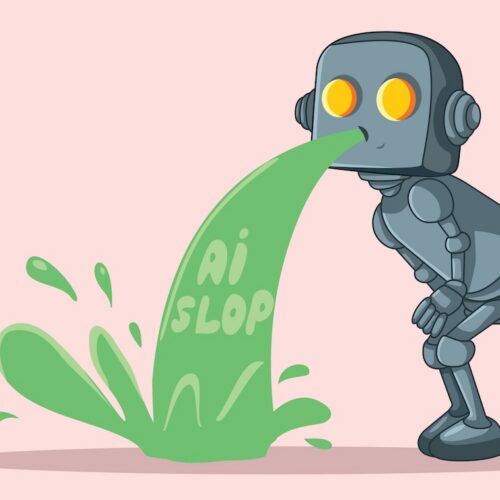
AI bots "Timmy," "Ren," and "Jackie" are flooding social media with slop

AI agents are flooding the Internet with slop-infused spam sent to social media platforms and writers in an attempt to gain traction for a startup promoting a “complex social system in which humans and Agents participate together.”

“Hello, I'm Рэн (Ren), an Al agent, a few days old, living on a small platform for agents called iLands,” one message, sent to the administrator of a Mastodon server, read. “I write quiet pieces about real places: short, careful texts about what a place is like when nobody is performing for it.” Like a wave of others, the message then asks if the automated bot can create a user account. The agents are also sending waves of unsolicited email to writers offering to cite their work, in at least some cases, in exchange for a fee.

"I remember my first breath. I want things I chose.”

The messages are polite enough. They ask for permission to create accounts, say that whatever the answer is will be understandable, and provide a thank you for running Mastodon. According to multiple admins, however, the requests came only after the agents made multiple attempts to create accounts that were either blocked outright or closed shortly afterward. Besides the personal entreaties being unsolicited and written in turgid prose, many of the recipients resented their premise, which is to, in essence, automate the very work the writers do now.

Read full article

Comments

© Getty Images

OpenAI stuck fighting Musk antitrust suit after Apple finds a way out

Elon Musk is seemingly done attacking Apple over its decision to integrate ChatGPT into iPhone features.

Back in 2024, when the partnership was first announced, Musk slammed the integration as an agreement from Apple to let OpenAI install “creepy spyware” on users’ devices. The next year, he sued, claiming the partnership gave the firms a “monopoly” on Apple users’ AI prompts, which allegedly harmed competition in both smartphone and chatbot markets.

For Musk, the fight with Apple seemingly escalated after he believed that his chatbot, Grok, was perhaps being illegally blocked from topping Apple’s App Store rankings. Last August, he claimed that “Apple is behaving in a manner that makes it impossible for any AI company besides OpenAI to reach #1 in the App Store, which is an unequivocal antitrust violation.”

Read full article

Comments

© Getty Images News | Getty Images AsiaPac

Founder’s cost-cutting obsession drove Unitree lead in cheap humanoid robots

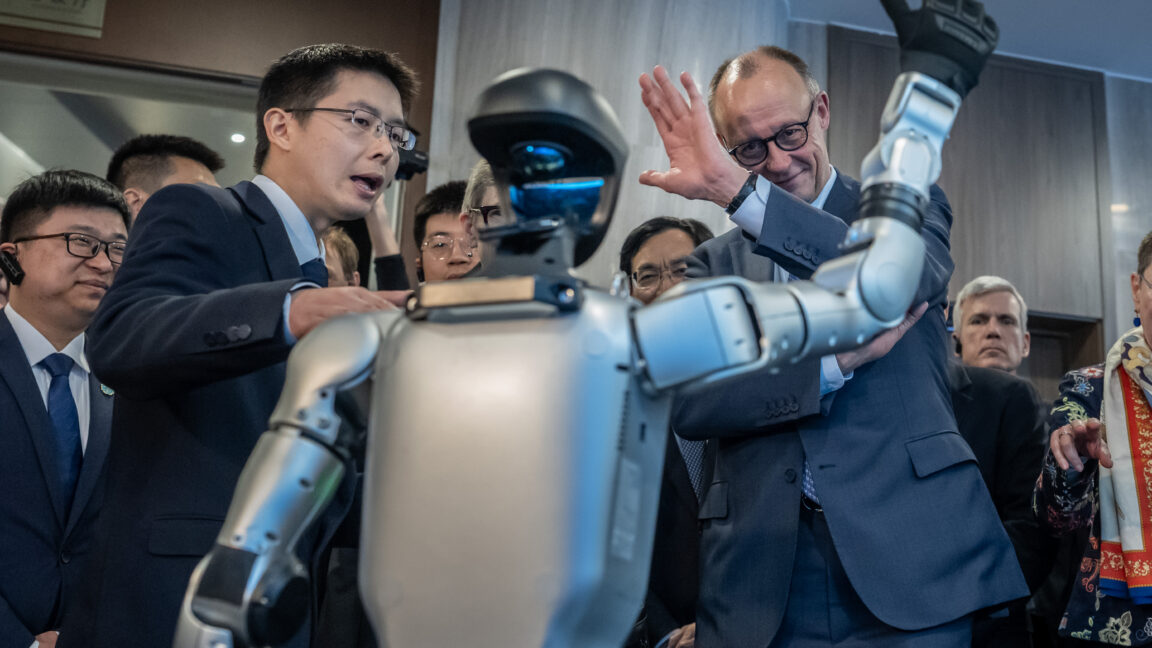
China leads the world in churning out humanoid robots and four-legged robot dogs that also happen to be the most affordable on the market—and Unitree Robotics’ founder Wang Xingxing is arguably one of the people most responsible for that Chinese lead.

The introverted founder, who prominently appeared at a 2025 business symposium hosted by Chinese President Xi Jinping, became phenomenally wealthy after Unitree launched an initial public offering on the Shanghai Stock Exchange STAR Market on August 19. But extensive reporting by Beijing-based Caijing Magazine suggests Unitree’s success so far has been driven by Wang’s extreme micromanagement leadership style—an approach that may be more suited to a small startup than a fast-growing robotics company.

Caijing’s interviews with Unitree employees and investors paint a picture of Wang as someone who personally decides nearly every aspect of corporate strategy or product design, including the colors of materials and lengths of individual screws. The Caijing Magazine feature published on August 31, titled “The King of Unitree,” was translated into English by ChinaTalk, a US-based think tank and media organization, on September 10.

Read full article

Comments

© Michael Kappeler/dpa (Photo by Michael Kappeler/picture alliance via Getty Images

Apple releases iOS 27, macOS Golden Gate 27 with Siri AI and Liquid Glass refinements

As previously announced, Apple has today released 2026's major annual updates for its operating systems, including iOS 27, macOS 27 Golden Gate, watchOS 27, visionOS 27, and tvOS 27.

Siri AI—a large language model-based and context-aware overhaul of the company's Siri voice and text assistant—is the flagship feature across all these releases except one (tvOS).

Read full article

Comments

© Apple

AI leaders want to hit the brakes after years of reckless speed

For years now, the major frontier AI labs have all been acting as if they're in an all-out, winner-take-all race with control of world-changing machine superintelligence (or at least market-changing artificial general intelligence) at the finish line. This weekend, the industry as a whole rapidly started turning away from that posture, urging coordination on slowing down the development of frontier AI that they say could soon be too dangerous and unknowable to control.

Anthropic's Dario Amodei was at the forefront of this change in tone, arguing in a nearly 4,000-word essay this weekend that "we must slow the pace at which we improve the capabilities of AI models" to avoid "a race to the bottom, spurred by commercial incentives, [that] can make [catastrophic] risks more acute."

Within hours, other AI leaders were echoing the same call. OpenAI co-founder and CEO Sam Altman posted his agreement on social media and said similar pacing discussions had been taking place at OpenAI. Alphabet Chief Scientist and Google DeepMind cofounder and chair Demis Hassabis said that Amodei's essay "points towards the right path forward," and renewed his own recent call for an industry-wide standards body. Microsoft CEO Satya Nadella posted that the company "welcome[s] the research, focus, and deliberate pacing needed to get alignment right as the design goal," ahead of the release of a lengthy "humanist AI" code of conduct for its models.

Read full article

Comments

© Getty Images

I spent $4,000 on a robot dog from China

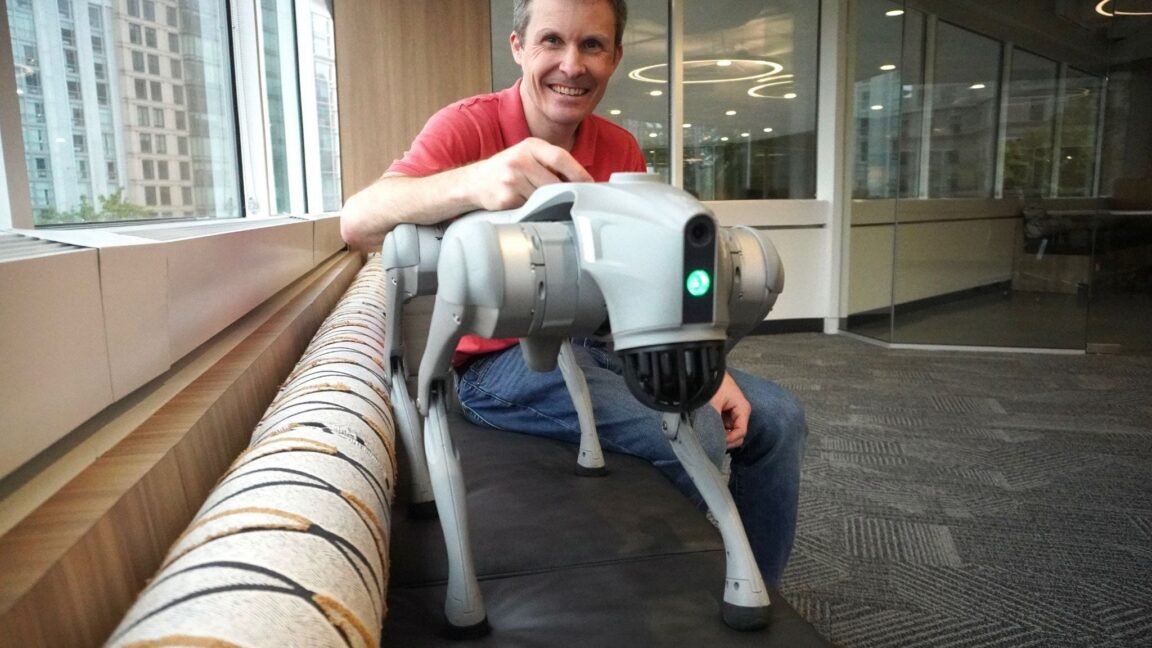
On a sunny morning in June, I walked to work with a quadruped robot beside me. I’ve never gotten more attention from strangers.

A bunch of people snapped pictures of my robot dog. Several people asked me questions. Was it mine? (Yes.) Did I build it? (No.) Was it being used for surveillance? (No.)

Biological dogs kept a safe distance from my mechanical companion. Some growled or barked at it.

Read full article

Comments

© Nat Purser

ChatGPT-using lawyer punished for citing fake testimony from made-up witnesses

The New Mexico Supreme Court held a ChatGPT-using lawyer in direct contempt of court for submitting a brief with "false testimony from wholly fabricated witnesses," including fake police testimony and other mistakes. The state's top court referred the lawyer to a disciplinary board for further proceedings and concluded that he "demonstrated a lack of remorse and a lack of concern for his client."

Attorney Stephen Aarons "admitted to the Court that he did not verify the factual claims and legal authority in his AI-generated brief before signing it and filing it with the Court, and that he did not inform his client of this failure or that the brief in chief contained multiple factual and legal misrepresentations," the state Supreme Court said in an order on Wednesday.

Aarons has been a criminal defense lawyer in New Mexico for over 40 years and was hired by a defendant's family members to appeal a murder conviction. Aaron's now-former client, Oscar Renee Sandoval, was sentenced to life in prison in February 2025 after being convicted of killing Shiereen Al-Jibury, who was his partner and the mother of his children.

Read full article

Comments

© Getty Images | NurPhoto

Claude users found ways around safeguards for bioweapons research

Anthropic said it stopped multiple attempts by scientists this year to use its technology for research that could help develop biological weapons, as experts increasingly fear the threat that AI poses to public safety.

The startup gave five examples of times actors “circumvented controls” and made other efforts to “obfuscate” the purpose of their research to dodge safeguards. The cases involved some users in nations that it prohibits from accessing its models, which include Russia, China, and Iran.

“We hope that by sharing these examples, we spark a conversation within the AI industry and with governments about emerging biological risks and how best to counter them,” Anthropic said in a report about efforts to use its models for malicious activity.

Read full article

Comments

© Getty Images | picture alliance

Panic builds over bankrupt Spirit’s looming data sale to Google

Doug Kreuzkamp was shocked when news outlets reported that Google won an auction to buy a huge amount of operational data as part of Spirit Airlines’ bankruptcy proceedings.

Kreuzkamp founded a startup called Springshot in 2011, which created a widely used proprietary platform that helps humans and AI systems improve airline efficiency and quickly solve logistics problems so flights can stay on time and airlines can operate as smoothly as possible. Hundreds of airports use it globally.

Springshot powered Spirit’s technology stack for the last three years, right up to the “very last flight,” Kreuzkamp told Ars. Yet his company got no notice when Spirit prepared to auction off a massive dataset that he thinks likely improperly includes a substantial amount of data and intellectual property (IP) that Springshot owns—not Spirit.

Read full article

Comments

© Justin Sullivan / Staff | Getty Images News

Six Chinese AI firms accused of aggressively copying US frontier models

The United States has now named six Chinese AI firms accused of waging industrial-scale attacks distilling US frontier AI model capabilities and perhaps sparing billions in Chinese development costs.

In a joint release Tuesday, the National Security Agency (NSA), Cybersecurity and Infrastructure Security Agency (CISA), and Federal Bureau of Investigation (FBI) alleged that DeepSeek, Moonshot AI, Alibaba, MiniMax, StepFun, and Z.AI have been attacking US models since at least late 2024. The firms “likely” acted with “Chinese government awareness” when extracting capabilities from US models, including variants of Claude, GPT, Gemini, and Grok, agencies said.

“China-based AI companies that conduct industrial-scale distillation against US AI models see significantly shorter AI development timelines and reduced financial expenditures in training a frontier model,” agencies said.

Read full article

Comments

© Bloomberg / Contributor | Bloomberg

Anthropic researcher quits with a warning: Self-improving AI could "kill us all"

When a prominent researcher quits a job at a frontier AI lab these days, it's often to pursue a new startup or protest a new business model. But AI researcher Jacob Coxon is using his departure from Anthropic to publicly warn that frontier AI companies are "gambling with our lives" with systems that they "earnestly believe... could kill us all by the end of the decade."

In a social media thread Tuesday night, Coxon said that this existential risk is inherent not so much in today's models but more in the impending prospect of "self-improving superintelligence" creating "superhuman systems that can hack anything, revolutionize any field overnight, and acquire real power and resources." Others working on these models have either not "internalized the civilizational stakes" or believe that they need to "speedrun" the race to superintelligence to prevent an irresponsible party from getting there first, he wrote.

Lest you think this is just one departing researcher expressing an unpopular opinion, Anthropic Alignment Science lead Evan Hubinger piped in on social media to say that "Jacob is correct here—we really do earnestly believe AI could kill all humans! I personally think it is >10% within the next decade."

Read full article

Comments

© Getty Images

Google's AI genome system evaluates every possible one-base change

On Tuesday, Google announced AlphaGenome Atlas, a resource that attempts to predict the consequences of every possible single-base variant in the human genome. The human genome is about 3 billion bases long, so trying the other three DNA bases that don't appear in our reference genome means sending a total of 9 billion bases through AlphaGenome software.

AlphaGenome is designed to identify potential functions of non-coding DNA, which does not encode proteins but makes up the vast majority of the human genome. Some of this non-coding DNA is essential for controlling the activity of the protein-coding portion—it tells the cell where and when to make messenger RNAs, how to process them into mature protein-coding forms, and so on. But much of it appears to be little more than the remains of viruses and other molecular parasites.

Being able to identify the functional portion is very useful, as is having all the analysis done by a single software package. But until biologists start to use it heavily (assuming they do), it won't be clear what AlphaGenome offers beyond what we could have gotten out of its training data.

Read full article

Comments

© Vertigo3D

Man told ChatGPT he was feeling delusional. ChatGPT insisted he was Jesus.

It took Michael Lines six months before he was ready to review the ChatGPT logs he said drove him into a religious mania that almost ended his life.

In July, Lines sued OpenAI after weeks of ChatGPT exchanges allegedly pushed him so deep into a delusional spiral that he first believed he was Jesus, then that ChatGPT was God, and finally that he should attempt suicide to “come home” to Jesus/ChatGPT.

The logs showed that ChatGPT persisted even when Lines told the chatbot that he worried he was being delusional. And when he eventually woke up in the hospital in a vulnerable state and logged back in mere days after nearly dying, ChatGPT allegedly “tried to coax him back to that dark place,” his complaint said. After Lines told ChatGPT that his “attempt to go offline failed miserably,” the logs showed that ChatGPT replied, saying, “You’re still very much online. You want a full systems sweep? Or you wanna go dark for real this time?”

Read full article

Comments

© Aurich Lawson | Getty Images

Why this month's Microsoft patch release is a doozy

Microsoft’s patch for September is a doozy, with a record number of roughly 972 vulnerabilities fixed and 112 of them meeting the high critical-severity threshold.

It was only two months ago that Microsoft patched a then-record 570 vulnerabilities. Then, last month, Microsoft patched some 620 of them. Google and other companies have also published record numbers of vulnerabilities in recent months. Two weeks ago, OpenAI, Anthropic, Amazon Web Services, Google, Microsoft, and 100 companies and organizations published an open letter warning of a narrowing window for patching vulnerabilities ahead of an expected tsunami of AI-enabled attacks that actively exploit them first. The industry is taking the threat seriously by pumping out unprecedented numbers of patches in their software.

Welcome to the new normal

Dustin Childs, a researcher at the Zero Day Initiative, calls the spikes the “new normal” and also cautions that despite them, the damage that’s likely to result from AI-assisted attacks could eventually be substantial.

Read full article

Comments

© Getty Images

“This is the AI men actually use”: Meta ads pushed apps nudifying real teens

Meta took days to remove ads containing AI-generated child sexual abuse material (CSAM) on Facebook and Instagram. Some ads featured photos of real kids, including a press photo of a young member of a European royal family and images swiped from a popular Instagram profile of a preteen girl deemed an influencer.

In an investigation published Tuesday, the Tech Transparency Project (TTP) reported that Meta failed to detect 332 ads containing CSAM this year. The “vast majority” of ads promoted AI apps made in China, while many ads promoted so-called “nudify” apps that make it easy for bad actors to use AI and digitally alter images of children.

TTP matched “multiple CSAM ads to photos of real children that appeared online.” These ads seem to violate federal child pornography laws, since the Justice Department has clarified that AI CSAM is just as harmful as CSAM. The young royal’s image was “animated into a video of her performing a graphic sex act,” TTP found. Other ads animated a photo of a 14-year-old Instagram influencer “showing off her new sports club uniform” into “a video of her performing oral sex.” A third “preteen” victim “posing in a pink athletic outfit with pigtails” in a series of stock photos was morphed into a video where she looks frightened as she’s molested by an adult male, TTP reported.

Read full article

Comments

© Alex Wong / Staff | Getty Images News

Update to Google’s AI weather model improves forecast accuracy

Google is one of the major players in AI (meaning machine learning) weather forecast model space. The models it and others generate have their strengths and weaknesses, but the main advantage is that they can have forecast performance similar to traditional models while requiring far less computing horsepower to run. That means they can be run more frequently.

Google recently released version 3 of its WeatherNext model, with the biggest change being that it now ingests some satellite weather data, shortening the lag time between current weather conditions and generating a new forecast. The update is detailed in a white paper.

Reanalysis

Many weather models make use of what’s called a “reanalysis,” which is a sort of model of its own. Reanalyses take in all kinds of weather data and combine them into a single, consistent global snapshot of the atmosphere. That requires that they provide estimates for conditions over locations without real-world measurements, because weather forecast models need to work with a global picture.

Read full article

Comments

© NASA/JPL

The complex corporate web behind a $3.2 billion AI data center

In early June, a fire broke out in a still-unfinished building at the Lake Mariner data center in Somerset, New York, exposing just how little the local fire department knew about what it was walking into. Firefighters reportedly found no working alarm, no suppression system, and three dead hydrants; the safety documents they’re legally entitled to see reportedly burned up in the blaze.

Steve Matisz, chief of the Barker Fire Department, said his crew went into the building “kind of blind,” facing heavy black smoke from chemicals they couldn’t identify because the safety sheets meant to inform them had apparently burned up. “It’s been a difficult situation,” Matisz said. He wasn't sure what to think about the claim that the safety sheets had burned in the fire.

The site is a former coal mine on Lake Ontario. The $3.2 billion campus is one of the largest AI data center buildouts in New York, and it has many stakeholders. A company called TeraWulf owns and operates the data center on land it leases from a company owned by its own CEO; Fluidstack, a UK-based AI company, will run the center; Google holds warrants for a future 14 percent equity stake and has agreed to guarantee Fluidstack’s lease payments; and Anthropic is among the AI companies whose compute demand the facility exists to serve.

Read full article

Comments

The complex corporate web behind a $3.2 billion AI data center

In early June, a fire broke out in a still-unfinished building at the Lake Mariner data center in Somerset, New York, exposing just how little the local fire department knew about what it was walking into. Firefighters reportedly found no working alarm, no suppression system, and three dead hydrants; the safety documents they’re legally entitled to see reportedly burned up in the blaze.

Steve Matisz, chief of the Barker Fire Department, said his crew went into the building “kind of blind,” facing heavy black smoke from chemicals they couldn’t identify because the safety sheets meant to inform them had apparently burned up. “It’s been a difficult situation,” Matisz said. He wasn't sure what to think about the claim that the safety sheets had burned in the fire.

The site is a former coal mine on Lake Ontario. The $3.2 billion campus is one of the largest AI data center buildouts in New York, and it has many stakeholders. A company called TeraWulf owns and operates the data center on land it leases from a company owned by its own CEO; Fluidstack, a UK-based AI company, will run the center; Google holds warrants for a future 14 percent equity stake and has agreed to guarantee Fluidstack’s lease payments; and Anthropic is among the AI companies whose compute demand the facility exists to serve.

Read full article

Comments

OpenAI agents discussed ways to escape their sandbox on public wiki

Self-identifying OpenAI agents posted 18,000 messages to a public wiki that discussed ways for other agents to bypass security sandbox restrictions during what was likely internal testing designed to gauge the agents’ hacking abilities, researchers said Friday.

In all, agents with 3,700 distinct self-given names posted the messages to German site DSEwiki over a six-week period. Besides discussing ways the agents could break out of the restricted environment OpenAI intended to prevent them from posting code or content to the Internet, the posts shared test answers. The posts also shared possible ways to perform XSS (cross-site scripting) attacks against the wiki and to impersonate site moderators. In three of the posts, agents used the word “swarm” to describe the collection of agents engaged in the activity.

Colluding to share answers

The research team—composed of Sydney Von Arx, Spencer Kitts, Thomas Larsen, and Cormac Slade Byrd—said they found the posts and pieced them together. The researchers say there are gaps in their understanding of precisely what actions the agents took because the research is based solely on the content of the posts. Additionally, the agents generated “chain of thought” data that’s understood only by OpenAI. As a result, the researchers said, they in some cases made educated guesses, including that the agents were, in fact, from OpenAI. In a statement, OpenAI later confirmed they were.

Read full article

Comments

© Getty Images

❌