Reading view

There are new articles available, click to refresh the page.

Next Space Force chief throws cold water on the idea of space privateers

In the early years of the United States, when the nascent US Navy was still getting its sea legs, several presidents used privateers to capture or destroy enemy warships when armed naval vessels were unable to do so.

President John Adams was one of the most vigorous proponents of commissioning private vessels for national ends. His administration issued letters of marque and reprisal during the so-called "Quasi-War" with France in the final years of the 18th century. These letters created the legal distinction between privateering and piracy.

One of the letters signed by Adams, dated November 1799, authorized the use of a merchant ship to "subdue, seize, and take any armed French vessel" found near US coastal waters of "elsewhere on the high seas." France also routinely used privateers against US shipping at the time.

Read full article

Comments

© MPI/Getty Images

The Space Force is now seeking to buy up to $30 billion in rocket launches

It seems as though $5.6 billion wasn't enough. That was the news from the US Space Force on Friday, when military officials announced they were tripling the maximum value of one of the service's National Security Space Launch contracts to $17 billion.

The expansion of the Space Force's National Security Space Launch (NSSL) Phase 3 contract comes as the Pentagon signals rising demand for military satellite launches. The NSSL program is set up to allow Space Systems Command, which oversees the Space Force's launch program, to select from a pool of launch providers for individual missions to deliver the military's satellites to orbit.

The NSSL program has two parts. Lane 1 covers the Space Force's more risk-tolerant missions, such as medium-lift launches with experimental payloads or rideshare missions carrying satellites for the Pentagon's surveillance or data relay constellations. Lane 2 includes higher-priority strategic missions, like the government's largest and most expensive spy satellites, or radiation-hardened communications satellites designed to survive a nuclear war.

Read full article

Comments

© SpaceX

The Space Force is now seeking to buy up to $30 billion in rocket launches

It seems as though $5.6 billion wasn't enough. That was the news from the US Space Force on Friday, when military officials announced they were tripling the maximum value of one of the service's National Security Space Launch contracts to $17 billion.

The expansion of the Space Force's National Security Space Launch (NSSL) Phase 3 contract comes as the Pentagon signals rising demand for military satellite launches. The NSSL program is set up to allow Space Systems Command, which oversees the Space Force's launch program, to select from a pool of launch providers for individual missions to deliver the military's satellites to orbit.

The NSSL program has two parts. Lane 1 covers the Space Force's more risk-tolerant missions, such as medium-lift launches with experimental payloads or rideshare missions carrying satellites for the Pentagon's surveillance or data relay constellations. Lane 2 includes higher-priority strategic missions, like the government's largest and most expensive spy satellites, or radiation-hardened communications satellites designed to survive a nuclear war.

Read full article

Comments

© SpaceX

India's first privately developed rocket reaches orbit on dramatic debut launch

Indian space officials celebrated the debut flight of Skyroot Aerospace's Vikram-1 rocket, India's first fully commercial satellite launcher, as a "grand success" Saturday after an on-target climb into a 280-mile-high orbit following liftoff from an island spaceport in the Bay of Bengal.

The Vikram-1 lifted off from India's primary spaceport on Sriharikota Island at 1:35 am EDT (06:35 UTC) Saturday, around midday at the launch base along India's southeast coast. The launch was delayed more than a half-hour to resolve a last-minute technical problem. The countdown resumed, culminating in the command to ignite Vikram-1's solid-fueled first stage booster to propel the rocket off the launch pad.

Vikram-1 is modest in size compared to India's larger workhorse rockets. Skyroot's rocket stands about 72 feet (22 meters) tall, with the capability to place payloads of up to 770 pounds (350 kilograms) into low-Earth orbit. This makes Vikram-1 somewhat larger than the Electron launch vehicle developed by Rocket Lab, the world's most successful dedicated small satellite launcher.

Read full article

Comments

© R. Satish Babu/AFP via Getty Images

Google-backed satellites for wildfire detection launch as smoke chokes US, Canada

As smoke from hundreds of burning wildfires spread across Canada and the United States, the first three operational satellites in the Google-backed FireSat program successfully launched into orbit. The satellites will begin providing wildfire detection capable of spotting even small fires in the United States, Australia, and Europe before the end of the year.

The launch of the microsatellites aboard a SpaceX Falcon 9 rocket from Vandenberg Space Force Base in California on July 7, 2026 marks a transition to “initial operational capability” for the FireSat constellation managed by the nonprofit Earth Fire Alliance. After a three-month testing period, the three satellites will begin actively providing data to fire agencies while covering every fire-prone region on Earth at least twice per day.

FireSat represents the first satellite constellation purpose-built for detecting wildfires, including spotting smaller fires that other satellites may miss. The satellites were designed by California-based satellite manufacturer Muon Space and have received over $15 million from Google to support initial deployment. Other notable financial supporters include the Bezos Earth Fund that committed $26 million.

Read full article

Comments

© Muon Space

The Pentagon's Space Development Agency hasn't moved as fast as anyone would like

The Space Development Agency was established in 2019 to help speed up the deployment of US military space systems by sidestepping the Pentagon's traditional sluggish bureaucracy.

Seven years later, SDA is finally launching its first batches of operational satellites, just as the Pentagon plans to shutter the semi-autonomous agency and fold it back into the Space Force's procurement pipeline, newly reorganized under several program acquisition executives in a bid to streamline weapons buying.

SDA's fate is not a surprise, and lawmakers in both houses of Congress have backed the agency's closure in drafts of this year's National Defense Authorization Act.

Read full article

Comments

© SpaceX

Will Russia's answer to the Falcon 9 rocket ever take flight?

Everyone seems to be launching and landing rockets these days.

Last week, China joined the club of countries that have launched an orbital mission and brought its booster safely back to Earth, which is just the beginning of public and private ventures in that country aggressively pushing into rocket reuse. Also in Asia, Japan's space agency has been conducting hop tests, and Honda recently performed vertical reuse tests.

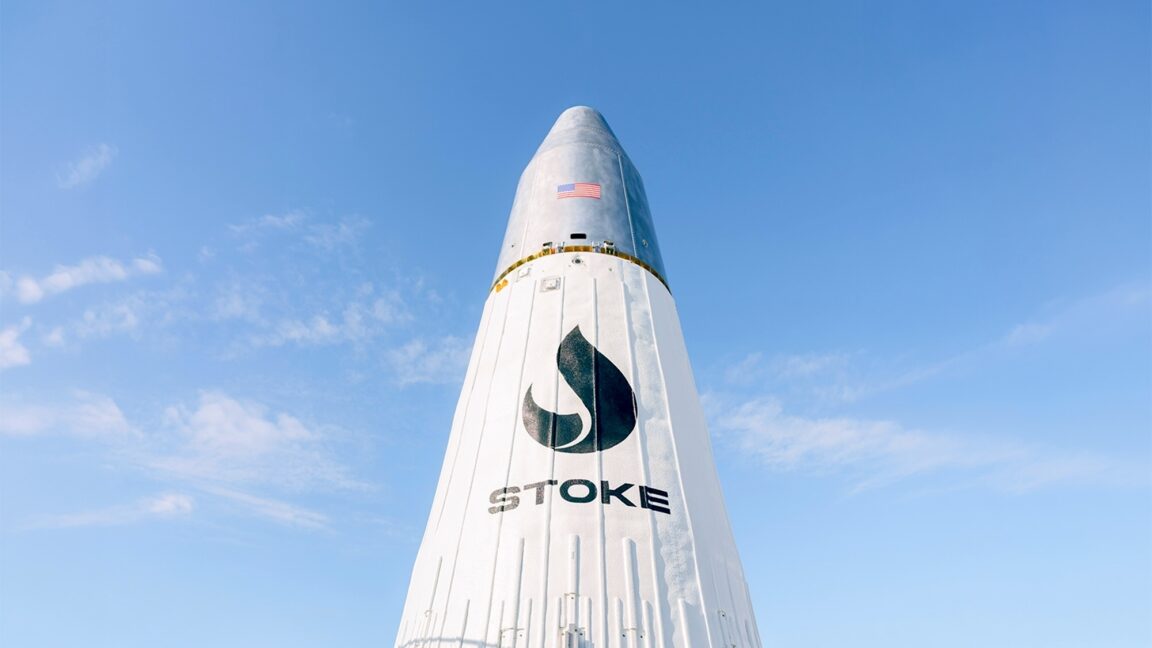
In the United States, of course, SpaceX launches and lands reusable rockets every few days. Blue Origin, although its New Glenn booster is temporarily grounded, has also demonstrated the ability to both land and re-launch a large orbital booster. Other US companies, including Stoke Space, Rocket Lab, and Relativity Space, are all making credible progress toward partially or fully reusable rockets.

Read full article

Comments

© GK Launch Services

Rocket Report: India's Vikram-1 nears debut flight; AST to become rocket company?

Welcome to Edition 9.03 of the Rocket Report! SpaceX counted down all the way to T-0 on Thursday evening in South Texas before a handful of Raptor engines decided not to light at ignition of the rocket. It is not clear whether the vehicle can be worked on at the pad, or whether Starship will need to be de-stacked before this can occur. In any case, a few days delay beats a significant issue in flight.

As always, we welcome reader submissions, and if you don't want to miss an issue, please subscribe using the box below (the form will not appear on AMP-enabled versions of the site). Each report will include information on small-, medium-, and heavy-lift rockets as well as a quick look ahead at the next three launches on the calendar.

Vikram-1 rocket gets a launch date. The debut launch attempt by Skyroot Aerospace of its Vikram-1 rocket is now set for July 18, at 11:30 am local time in India. This will be the first time a commercial rocket developed in India attempts to reach orbit. Designed to carry small satellites weighing up to 350 kg to low-Earth orbit, Vikram-1 is targeting a 450 km orbit at a 60-degree inclination.

Read full article

Comments

© SpaceX

SpaceX scrubs Starship launch after some of its engines didn't start

SpaceX called off a test flight of its powerful Starship rocket and Super Heavy booster as the countdown clock reached zero Thursday at the company's spaceport in South Texas.

The launch team at Starbase, Texas, just north of the US-Mexico border, aimed to launch the more than 400-foot-tall rocket at 5:45 pm local time (6:45 pm EDT; 22:45 UTC). The countdown proceeded smoothly throughout the day, culminating in the loading of more than 11.5 million pounds of liquid methane and liquid oxygen into the two-stage rocket.

But the computers controlling the countdown called an abort during the Super Heavy booster's engine startup sequence. SpaceX scrubbed the launch attempt, and engineers began preparations to drain the rocket's propellant tanks. Officials did not immediately announce when they plan to try to launch again.

Read full article

Comments

© SpaceX

Could China and Russia really destroy Starlink? Only with a boomerang.

One week ago, three widely respected European news outlets published the results of an investigation into what they described as a "joint plan" by China and Russia to "defeat Elon Musk's Starlink."

The story was the product of a long-running inquiry by The Insider, Der Spiegel, and Le Monde. Reporters at those publications said they reviewed a cache of documents detailing growing military cooperation between China and Russia. The documents covered discussions between the nuclear powers on integrated air and missile defense systems, autonomous "swarm" loitering munitions, next-generation armored vehicles, and military aviation, the report said.

According to the papers, the investigation found evidence of a partnership between China and Russia in the field of space weapons far deeper than either country has acknowledged. One particular focus for China and Russia has been developing strategies to counter SpaceX's Starlink satellite broadband network.

Read full article

Comments

© SpaceX

Move over, GPS: Navigation satellites in low-Earth orbit are making a comeback

New navigation satellites in low-Earth orbit could provide 100 times stronger signal strength compared to GPS and other global navigation satellite systems operating from higher orbital altitudes—enabling greater location accuracy within dense cities, under thick foliage, and even inside buildings. Such signals would also likely prove more resilient to interference at a time when commercial flights, maritime shipping, and even various smartphone apps face increasingly widespread disruption from GPS jamming.

That vision may start to take shape when the first six production satellites of California-based Xona Space Systems are scheduled to launch in October 2026, with early service starting in 2027. Once the full constellation of 258 Pulsar satellites has been launched in the following years, Xona claims that customers will be able to accurately pinpoint their locations anywhere on Earth to within several centimeters.

“That added power means that we can get into that indoor environment that GPS can't get to today,” Adrien Perkins, co-founder and VP of engineering at Xona Space Systems, told Ars. “Our higher power allows you to get into those jamming environments a lot further than you would with GPS by itself.”

Read full article

Comments

© Xona Space Systems

Buzz Aldrin sells famous felt-tip pen that helped launch Apollo from the Moon
A dried-out felt-tip marker and a snapped-off piece of molded black plastic sold for $857,600 at a Sotheby's auction on Wednesday.

What otherwise might have been worthless bits of trash commanded the highest bids due to where the two items were 57 years ago—lifting off aboard NASA's Apollo 11 spacecraft on humanity's first mission to land astronauts on the Moon. More than flown odds and ends, one was the problem that almost stranded Neil Armstrong and Buzz Aldrin on the lunar surface, and the other was the simple solution to saving the mission.

"Houston, Tranquility. Do you have a way of showing the configuration of the engine arm circuit breaker?" radioed Aldrin to Mission Control after realizing he or Armstrong had inadvertently broken off the top of the circuit breaker switch that would enable their ascent engine to ignite, beginning their trip back to Earth. "The reason I'm asking is because the end of it appears to be broken off. I think we can push it back in again. I'm not sure we could pull it out if we pushed it in, though."

Read full article

Comments

© Sotheby's

A most improbable astronaut just went to space

Anil Menon, a NASA flight surgeon, felt crushed nine years ago as his hopes and aspirations collapsed around him.

For the fourth time, he had diligently applied to become an astronaut at the US space agency, seeking to fulfill a lifelong dream. Although he made it to the final round, NASA had once again rejected his application at the end of the grueling process.

"I was so sad, and I admitted defeat," Menon said. "I just did not see a pathway forward. So I pretty much, at that point in time, gave up on being an astronaut. I thought there was a zero percent chance."

Read full article

Comments

© John Kraus/NASA

How hard is it to build orbital data centers, actually?

SpaceX has pinned the bulk of its future value on orbital data centers. Not rockets. Not spacecraft.

Instead, it envisions launching and maintaining a constellation of 1 million satellites capable of generating 120 GW to power tens of millions—and potentially up to 100 million—frontier-class GPUs for data center services.

The company's founder, Elon Musk, revealed plans for this massive constellation months ago, but until recently, the scope of the individual satellites was largely unknown. That changed in June, when Musk and Ian Dahl, director of satellite engineering for SpaceX, spoke in a promotional video about the company's plans to develop the first iteration of an orbital data center, called an AI1 satellite. The video finally provided the company's numbers about the satellite's size and power capabilities.

Read full article

Comments

© Aurich Lawson | Getty Images

SpaceX is gearing up for Starship's 13th test flight later this week

The next test flight of SpaceX's Starship spacecraft and Super Heavy booster could take off as soon as Thursday, and much of the hour-long mission will look a lot like the last Starship flight in May.

But there are a few key differences for this launch, set to occur during a launch window that opens at 5:45 pm CDT (22:45 UTC) on Thursday. The most notable change is the inclusion of real, functioning Starlink satellites inside Starship's cargo bay. SpaceX previously tested the ship's payload deployment mechanism using simulators mimicking the mass and dimensions of the company's next-generation Starlink Version 3 broadband satellites.

This time—Starship's 13th full-scale test flight and the second to use SpaceX's newest version of Starship—technicians have installed 20 Starlink V3 satellites into the ship's deployer, a system of pulleys and cables designed to eject a stack of satellites one at a time through an opening on the side of the spacecraft. The satellites will not be part of SpaceX's operational network, but engineers will attempt to briefly establish laser communication links between the Starlink V3s and other spacecraft flying in low-Earth orbit. If successful, these links will validate Starlink V3's interoperability with SpaceX's previous generation of Starlink satellites.

Read full article

Comments

© SpaceX

A "disaster waiting to happen"? Industry officials worry about Crew Dragon availability.

NASA breathed a deep sigh of relief six years ago when SpaceX launched two astronauts, Doug Hurley and Bob Behnken, on a successful mission to the International Space Station. With the safe landing of Crew Dragon, the US space agency broke a nearly decade-long gap in its ability to put humans into orbit.

Through its Commercial Crew program and multibillion-dollar contracts awarded in 2014, NASA had hoped to foster two providers of low-Earth orbit transportation, SpaceX and Boeing. However Boeing has yet to complete a successful crewed test flight—a perilous 2024 test flight by Boeing's Starliner was later declared a Type A mishap—and probably won't fly another crewed mission before 2028.

With the International Space Station slated for retirement in the early 2030s, NASA is partnering with several US companies to develop private space stations. As part of that effort, the private companies will have to work with NASA to determine how they will transport astronauts to and from their space stations, some of which could launch as soon as 2030.

Read full article

Comments

© SpaceX

China recovered its first reusable rocket and showed a new way to do it

China's sprawling state-owned rocket developer, maker of the country's Long March rocket family, announced it recovered a reusable orbital-class booster for the first time Friday in the South China Sea.

The milestone mission began with the liftoff of a Long March 10B rocket from the Wenchang Commercial Space Launch Site on Hainan Island, China's southernmost province. Powered by seven kerosene-fueled engines, the approximately 209-foot-tall (63.6-meter) rocket took off at 12:15 am EDT (04:15 UTC), or 12:15 pm local time at the seaside spaceport at Wenchang.

About 10 minutes later, the Long March 10B booster descended from space and guided itself into a four-legged frame affixed to an offshore vessel. Tensioned cables stretched over the ship in a grid pattern captured the rocket as it shut down its landing engines, leaving the smoldering booster hanging in midair. The rocket's upper stage continued into orbit and deployed a payload known only as CX-26. Chinese officials hailed the flight as a "complete success."

Read full article

Comments

© Chinese Foreign Ministry via X

NASA sure seems to be asking an awful lot of private space stations

NASA this week released a much-anticipated document, known as a "draft Request for Proposals," that provides some clarity about what it expects from US companies attempting to build privately operated space stations in low-Earth orbit.

The stakes are high with this document, known as a draft RFP. The space agency, publicly, has set an end date for the International Space Station of 2030. Although there is likely to be a two-year extension, time is still running short to build, test, and fly a vehicle as complex as a space station. NASA officials and the US Congress have both said they want to avoid a gap in having a human presence in orbit, and this has created considerable urgency about what comes next.

Nearly five years ago the space agency took a concrete step toward filling this gap, awarding funding to three companies to develop space station concepts. Previously, NASA had also provided $140 million to another space station company, Axiom Space. These Space Act Agreements were intended as a prelude to a second phase of the program, which would award substantially more funding to one or two more companies to proceed into the construction and launch of their space stations. But phase two of the program kept getting delayed, in part because Congress dithered on funding.

Read full article

Comments

© NASA

Wally Funk, last of Mercury 13 and oldest woman in space, dies at 87

Wally Funk, who in 2021 became the oldest woman to fly into space—60 years after she and 12 other women sought the same opportunity as NASA's original astronauts—died on Wednesday at 87 years old.

Funk was the last living member of the First Lady Astronaut Trainees (FLATs, or as they were later dubbed by the media, the Mercury 13), a group of women pilots who volunteered to go through the same physical and psychological tests as the United States' first spacemen.

Despite performing as well or better than their male counterparts, though, the Lovelace Woman in Space Program was conducted separately from NASA, and the space agency required that its astronauts be test pilots with jet time. The US military, however, did not accept women into its flight programs.

Read full article

Comments

© Blue Origin

Rocket Report: "Panic" over Transporter availability; Isar to launch from Canada

Welcome to Edition 9.02 of the Rocket Report! Our attention in the coming days turns to Asia, where there are a couple of notable rocket debuts. Up first is the Long March 10B on Friday, a medium-lift rocket with a reusable first stage. After launch this stage will attempt a landing on a recovery ship. Then, as early as Sunday, the private Indian company Skyroot may attempt to launch its first rocket, Vikram-1.

As always, we welcome reader submissions, and if you don't want to miss an issue, please subscribe using the box below (the form will not appear on AMP-enabled versions of the site). Each report will include information on small-, medium-, and heavy-lift rockets as well as a quick look ahead at the next three launches on the calendar.

RFA sets launch date for August. Almost two years after an RFA One first stage burst into flames during a static fire test, German rocket-builder Rocket Factory Augsburg is preparing for a second attempt at the rocket’s inaugural flight from SaxaVord Spaceport in Scotland, European Spaceflight reports. The launch window will open on August 10, the Spaceport said in its announcement.

Read full article

Comments

© Rocket Factory Augsburg

❌