❌

Reading view

There are new articles available, click to refresh the page.

Panic builds over bankrupt Spirit’s looming data sale to Google

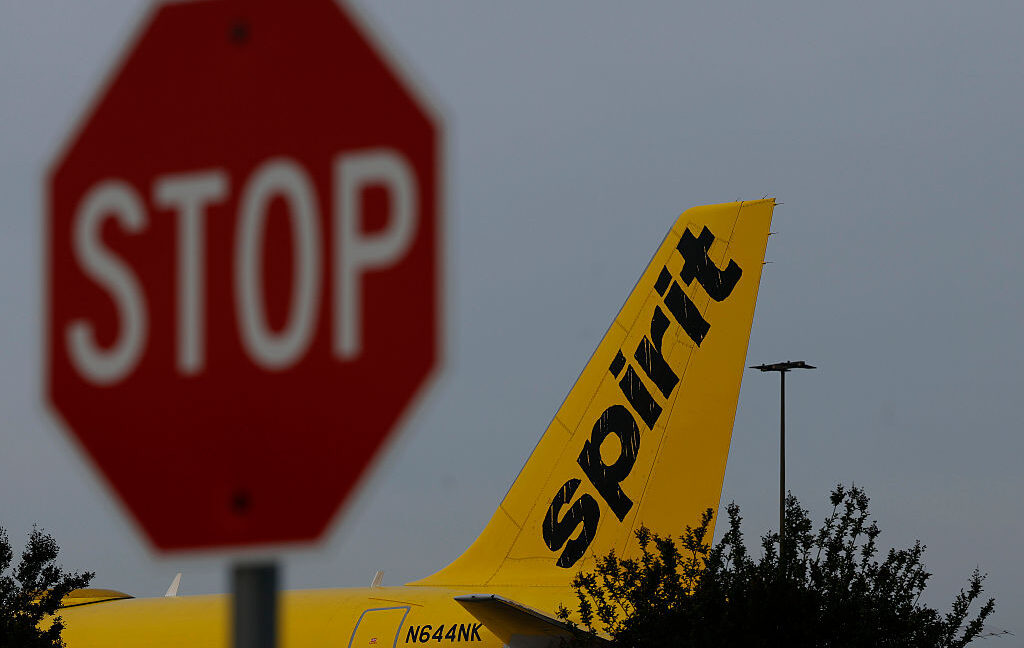
Doug Kreuzkamp was shocked when news outlets reported that Google won an auction to buy a huge amount of operational data as part of Spirit Airlines’ bankruptcy proceedings.

Kreuzkamp founded a startup called Springshot in 2011, which created a widely used proprietary platform that helps humans and AI systems improve airline efficiency and quickly solve logistics problems so flights can stay on time and airlines can operate as smoothly as possible. Hundreds of airports use it globally.

Springshot powered Spirit’s technology stack for the last three years, right up to the β€œvery last flight,” Kreuzkamp told Ars. Yet his company got no notice when Spirit prepared to auction off a massive dataset that he thinks likely improperly includes a substantial amount of data and intellectual property (IP) that Springshot ownsβ€”not Spirit.

Read full article

Comments

Β© Justin Sullivan / Staff | Getty Images News
I rented a car, and within hours, my driver's license was for sale

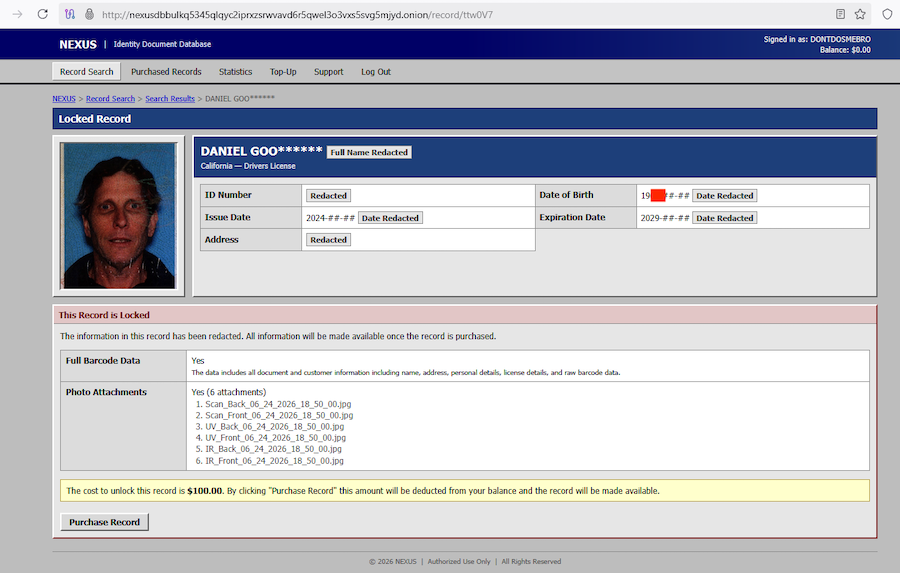
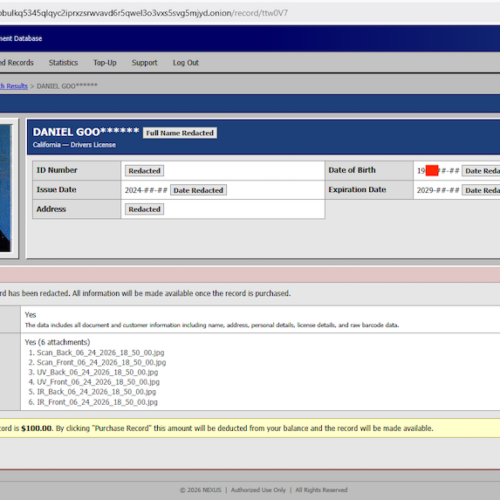
Not long ago, I rented an SUV from a well-known car rental company. Within hours of an employee scanning my driver's license, a high-resolution scan of my ID was available for sale on the dark web.

An exposΓ© published Tuesday by KrebsOnSecurity reports that my license was one of more than 153 million that were available through Nexus, the name of the new ID theft service. Like other driver's licenses available thereβ€”including some belonging to journalist Brian Krebs, his mother, an FBI assistant director, and several security researchersβ€”my license was purported to include multiple image files showing both the front and back of the ID. Besides a basic image scan, the files also captured the images in the infrared and ultraviolet spectrums. Presumably, the additional formats may allow cloned-based counterfeit IDs to pass hologram tests.

Growing by the day

Besides advertising the availability of driver's licenses, Nexus offered to sell a bevy of other forms of ID. They included:

Read full article

Comments

Β© Nexus

I asked 100 companies for my data. Some deleted it instead.

I filed a request with McDonald’s earlier this month to access all of the personal data the fast food company collected about me, and I received a stunning 515-page report a few days later that detailed my app interactions in granular detail and predicted I would never stop eating there.

Under the California Consumer Privacy Act, I have the legal right to request access to information from large companies that collect personal data. So I was curious what others might have on me, and I spent the next week filing more than 100 requests.

The CCPA went into effect in 2020, and three of its key provisions are the right to opt out of the selling of personal information, the right to delete that info, and the right to request a copy for yourself.

Read full article

Comments

Β© Sean Gallup/Getty

Meta makes AI glasses slightly less creepy with limit on nonconsensual recording

Meta is rolling out an obvious fix to make its AI glasses less creepy amid backlash over the glasses' non-consensual recordings that have flooded the Internet.

On Friday, The Verge reported that Meta closed a loophole that made it easy for smart glasses users to cover up an LED light that is supposed to alert bystanders that the device is actively recording. Meta had previously deactivated recording if a user attempted to start capturing video after placing a sticker over the light, but people quickly learned that they could get around that by reversing the order of the steps and covering up the light after they started recording.

In a post on Threads, Meta’s executive vice president of wearables, Alex Himel, explained that an update would be rolled out soon that ensures that β€œthe camera will now stop working if the light is covered during a recording." That way β€œthe capture LED can reliably alert bystanders when photos or videos are being captured for someone’s gallery,” Himel said.

Read full article

Comments

Β© Bloomberg / Contributor | Bloomberg

Motorola's GrapheneOS phones will launch in 2027 priced higher than Pixels

Several months ago, Motorola and the makers of GrapheneOS announced a team-up that would expand support for the privacy-centric OS to beyond Google's Pixel phones. The announcement, however, was bereft of details. Now, the creators of the OS have taken to Mastodon (naturally) to provide an update. Moto's GrapheneOS phones are on track to launch in 2027, but they'll cost a pretty penny.

The upcoming Moto devices won't ship with GrapheneOS, but they will be fully supported by the project with help from Moto itself. So far, only Pixel phones have met GrapheneOS's strict hardware requirements to ensure the highest level of security and privacy. The software, which is based on Android, includes features like enhanced memory protection, granular network permissions, customizable app sandboxing, and a duress code that can be used to wipe your phone. (That last one got an activist charged with a felony earlier this year after he used it to delete his data during a customs interrogation.)

According to the GrapheneOS team, the upcoming Moto phones will be premium flagship devices. The team expects pricing to be even higher than Pixel phones, which is saying something. The current Pixel lineup starts at $900 for the base model Pixel 11, a $100 increase from last year. The Pixel 11 Pro XL price has gone up to a whopping $1,300 this year.

Read full article

Comments

Β© Motorola

Personalized pricing is β€œabhorrent,” but FTC limits may increase costs, critics say

Some Americans worry that the Federal Trade Commission's rush to limit personalized pricing in the name of consumer protection could end up killing discounts they depend on or, counterintuitively, raising prices.

The FTC has no power to ban personalized pricing, in which a business uses a customer’s personal data to determine the highest price that person might be willing to pay for a product or service. But the agency believes it could set limits on the practice, including potential penalties for businesses that fail to disclose when customers may be paying more because data suggests they won't balk at the price.

In a request for public comment on a proposed policy statement, the FTC acknowledged that personalized pricing is common in some industries. But FTC Chair Andrew Ferguson said new industries are increasingly tracking customers to set individualized prices, blindsiding consumers who expect a listed price in markets like retail β€œto be the same price that everyone else sees,” Ferguson said.

Read full article

Comments

Β© Andrew Harnik / Staff | Getty Images News

❌