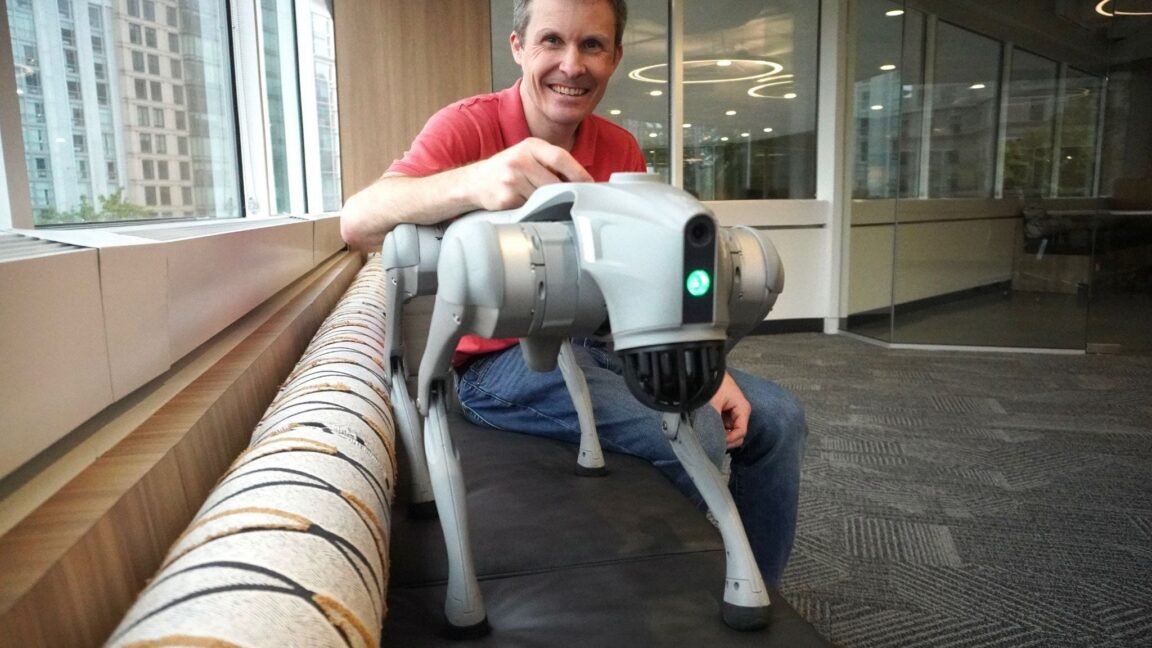
On a sunny morning in June, I walked to work with a quadruped robot beside me. I’ve never gotten more attention from strangers.
A bunch of people snapped pictures of my robot dog. Several people asked me questions. Was it mine? (Yes.) Did I build it? (No.) Was it being used for surveillance? (No.)
Biological dogs kept a safe distance from my mechanical companion. Some growled or barked at it.
For a child bursting with energy, few things are more fun than hurtling through a bouncy castle, launching into the air, and ping-ponging between every surface. But that childhood buoyancy will quickly deflate when it turns out those surfaces are smeared with a hypervirulent, multidrug-resistant pathogen.
That was the horrifying reality for a community in Ireland in fall 2025. Neighbors had gathered for an afternoon of merriment, complete with a barbecue, a sweets station, and three bouncy castles. Officials estimate that about 120 people joined the festivities, and around half of them were children and teens. Within a day, some children began developing signs of an infection. In all, 48 children in the community developed aggressive skin and soft-tissue infections.
Of the 48 cases, 33 were treated by their regular doctor, and 15 sought emergency care. Four children ended up being hospitalized. Luckily, all of the children recovered. The results of the outbreak investigation were reported this week in the journal Eurosurveillance.
Credit: Museum of Mediterranean and Near Eastern Antiquities, Stockholm
The precise composition of ancient Egyptian paints, binders, adhesives, and similar materials used to make artifacts is largely unknown, in part because a full analysis would require taking samples that would damage those valuable artifacts. The development of cutting-edge, non-destructive techniques has been helping to unlock those secrets, aiding conservation efforts.
Most recently, researchers have used mass spectrometry-based proteomics to analyze the glues and adhesives in a broad set of Egyptian artifacts, according to a new paper published in the journal Science Advances. They found plenty of expected sources, such as animal collagens and egg proteins, but also plant proteins, specifically from sesame and drumstick tree (moringa) cereals.
As previously reported, the ancient Egyptians had a highly formalized (and easily recognizable) painting style, and there has been considerable interest in gaining insights into the specific pigments and painting techniques employed. Common pigments included hematite and realgar for red; goethite and orpiment for yellow; Egyptian blue; Egyptian green; carbon-based black; and calcite, gypsum, anhydrite, and huntite for white. (Just last year, Washington State University researchers were able to re-create Egyptian blue by mixing together silicon dioxide, copper, calcium, and sodium carbonate in varying proportions and heating them at very high temperatures akin to those of ancient kilns.)
Almost a hundred years ago, physicists theorized out what free fall should do to a quantum wave. If the solution they came up with is wrong, quantum mechanics and Einstein's theory of gravity flatly contradict each other. But testing it has been impossible because nobody has managed to build an interferometer that could perform the necessary measurement.
Now, a team led by Ron Folman, a physicist at Ben-Gurion University of the Negev, with collaborators in Germany, the UK, and the US, including Nobel laureate Roger Penrose, has done it. They built a new interferometer that gives a single atom two possible paths at once: one that involves a free fall, and another where it is held perfectly still. Both paths end at the same place at the same moment, allowing the team to measure what the fall does to a wave-like property of the atom.
Long time coming
Ever since Galileo, physicists have known how to describe a falling object—where it is, how fast it goes, or how quickly it accelerates. Quantum mechanics, though, insists that every object is also a wave. “Every particle, doesn't matter if it's a car or a spaceship or an atom, is a wave,” Folman says. “Everything that is a wave, like sea waves or sound waves, goes up and down. And if you're up or down, this is measured by something called a phase. A phase just tells you if you are at the top of the wave or at the bottom.”
It turns out Jean-Luc Picard was an even better starship helmsman than the writers knew. A physicist has gone through the details of a warp-speed trick from the first season of Star Trek: The Next Generation and found a subtlety the show missed. But instead of a plot hole, the detail he found actually makes the maneuver more impressive… as well as a great opportunity to teach about a lesser-known feature of the theory of relativity.
Níckolas de Aguiar Alves, a physicist at the Federal University of ABC in Brazil, first watched Next Generation as a master’s student. When he got to the episode "The Battle" in the show’s first season, the plot reminded him of his relativity coursework.
In "The Battle," a Ferengi leader reminds Picard of a battle he fought years ago as captain of a ship called the Stargazer. Under fire from a mysterious attacker, Picard’s ship’s shields were down. He had to get closer without taking a hit, so he made a gamble. Picard ordered the Stargazer to charge the enemy ship at warp speed (meaning faster than light), then stop abruptly and fire. By going faster than light, Picard anticipated that the other ship would see two images of the Stargazer: where it reached warp speed and where it stopped. If they fired on the wrong image, they would miss the Stargazer, and Picard could win the battle.
Scientists have an indisputable playful side, evidenced by frequent allusions to popular culture in their research publications. That includes popular song lyrics. And the most popular musical group, in terms of how frequently their songs and lyrics appear in the scientific literature, is The Beatles, according to a new paper published in the journal PLoS ONE.
“Some of these are genuinely brilliant," said co-author Gabriel Budel of Delft University of Technology in the Netherlands of the more than 3,000 references they found to The Beatles. "'The lung and winding road' is a paper on Long COVID that changes one vowel. 'Here comes the SU(N)' turns 'Here Comes the Sun' into a quantum computing paper about mathematical groups. Someone was having a very good day at their desk.”
Back in 2014, scientists at the Karolinska Institute in Sweden revealed that they had been deliberately inserting Bob Dylan lyrics into their papers as part of a long-running bet, starting with a 1997 Nature review entitled "Nitric Oxide and inflammation: The answer is blowing in the wind." That resulted in a 2015 study on whether Dylan lyrics appeared elsewhere in the biomedical literature; the most frequently referenced were "The Times They Are A'Changin'" and "Blowing in the Wind."
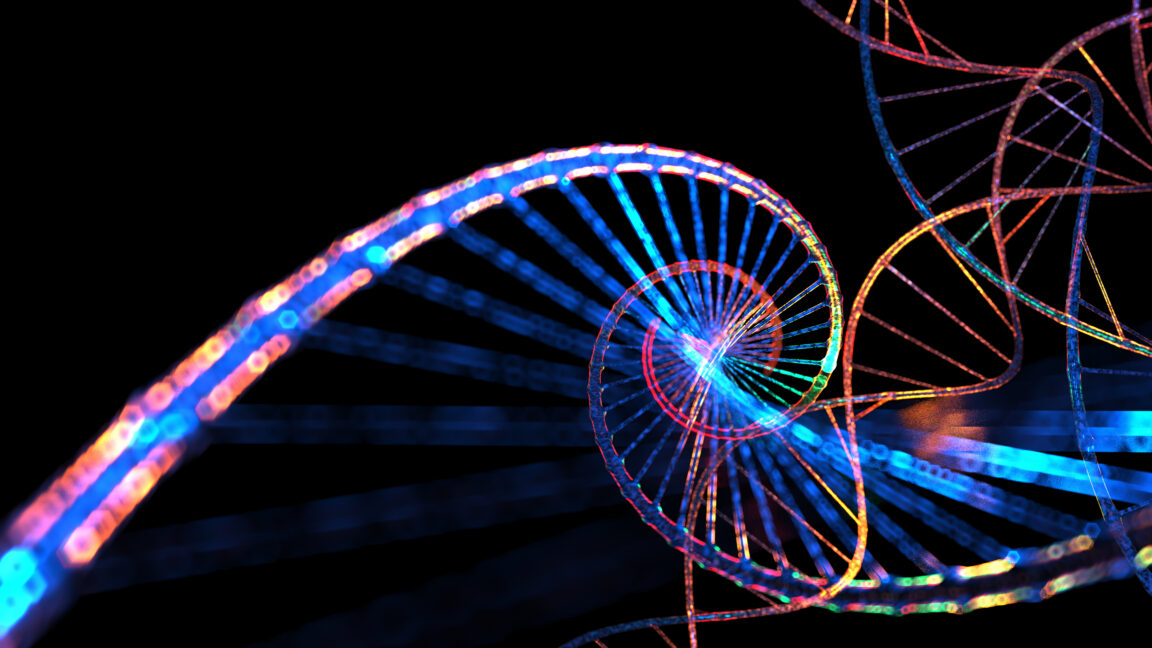
On Tuesday, Google announced AlphaGenome Atlas, a resource that attempts to predict the consequences of every possible single-base variant in the human genome. The human genome is about 3 billion bases long, so trying the other three DNA bases that don't appear in our reference genome means sending a total of 9 billion bases through AlphaGenome software.
AlphaGenome is designed to identify potential functions of non-coding DNA, which does not encode proteins but makes up the vast majority of the human genome. Some of this non-coding DNA is essential for controlling the activity of the protein-coding portion—it tells the cell where and when to make messenger RNAs, how to process them into mature protein-coding forms, and so on. But much of it appears to be little more than the remains of viruses and other molecular parasites.
Being able to identify the functional portion is very useful, as is having all the analysis done by a single software package. But until biologists start to use it heavily (assuming they do), it won't be clear what AlphaGenome offers beyond what we could have gotten out of its training data.
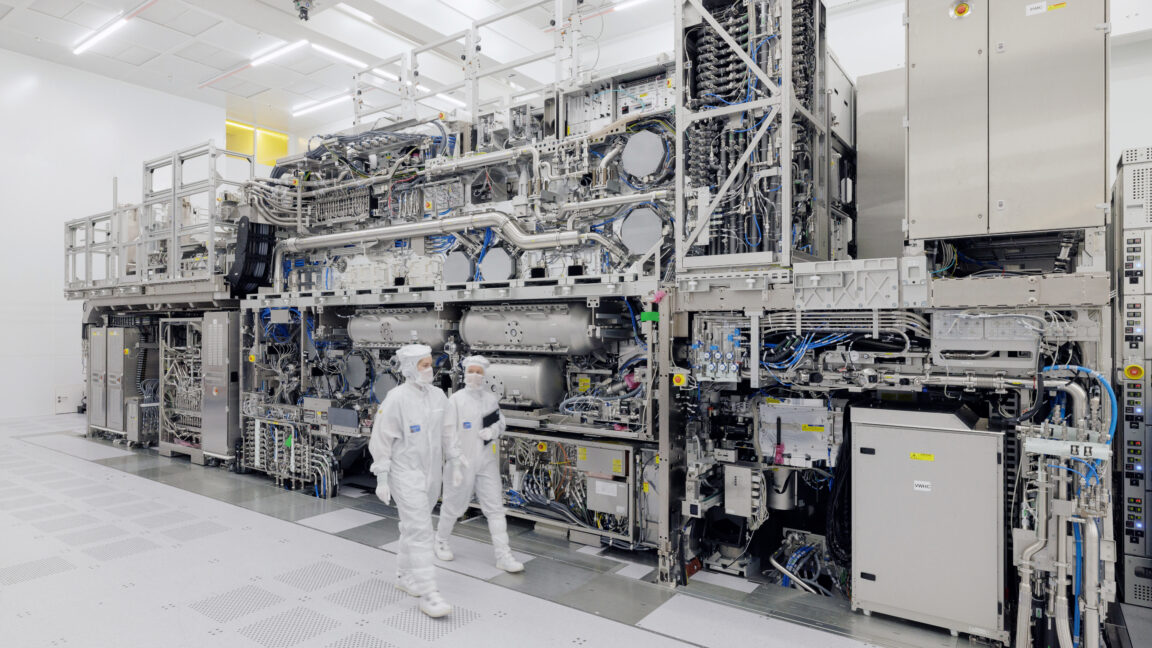
Leading chipmakers Samsung Electronics and Taiwan Semiconductor Manufacturing Co. announced plans to adopt ASML’s latest chipmaking machines in the next several years—and they also joined Intel in agreeing to a crucial technology change that could boost chip production on the new machines by 40 percent.
This signifies the semiconductor industry’s broader embrace of high NA EUV photolithography technology that can cost up to $400 million per machine and is only provided by the Dutch technology company ASML, Bloomberg reports. The technology would allow chip designers to implement even smaller features in potentially more powerful and efficient next-generation chips produced for AI data centers and consumer electronics such as smartphones, tablets, and laptops.
ASML’s EUV (extreme ultraviolet) lithography machines enable chipmakers to use powerful laser light to imprint patterns in silicon wafers, layer by layer, and gradually form the computer circuitry that makes silicon chips work. Compared to older deep ultraviolet lithography, EUV technology harnesses a more powerful source of light with a shorter wavelength to create even smaller features on silicon wafers.
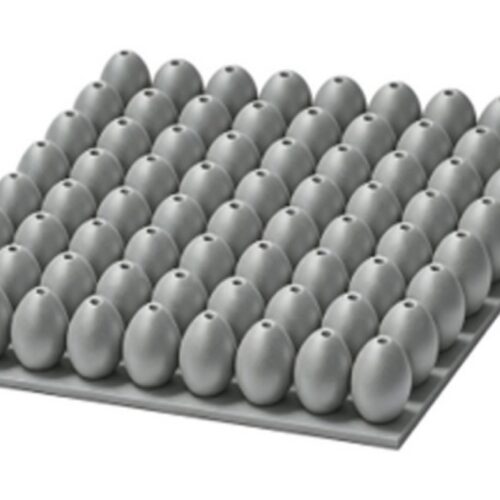
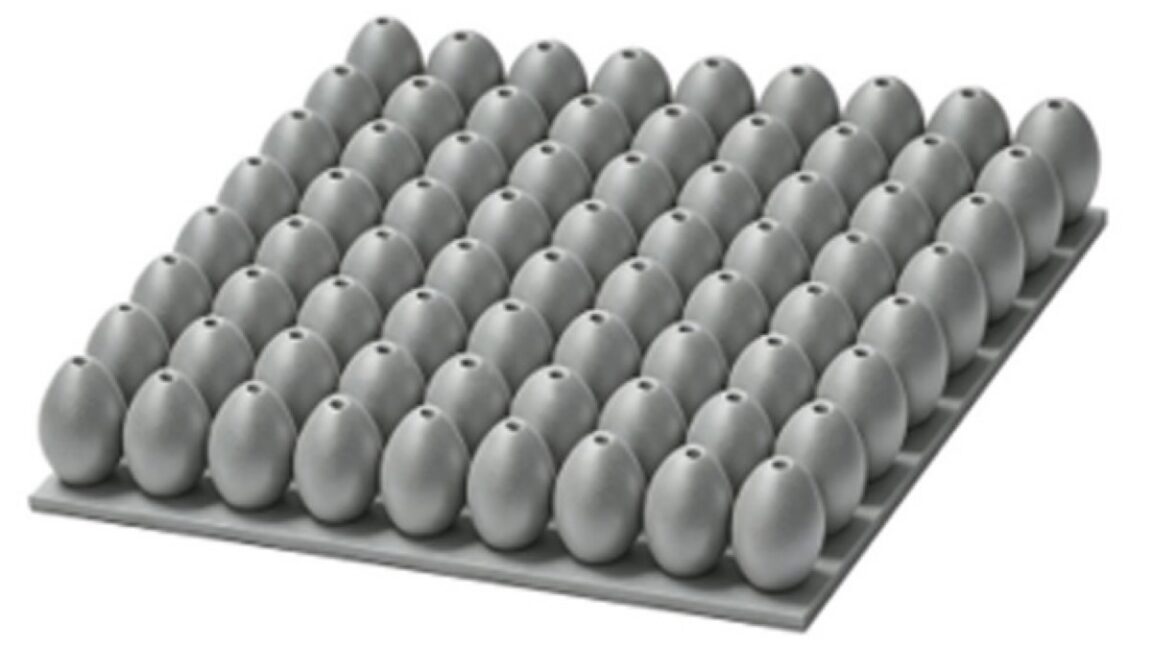
In 2007, a piece of space debris punched a bullet-like hole through the radiator panel of the US space shuttle Endeavor. The shuttle program ended in 2011, but the space debris problem has only intensified as we launch more and more satellite constellations, telescopes, and spacecraft into orbit. That's why Chinese scientists have devised a new aluminum material inspired by eggshells that they believe could offer enhanced protection against debris fragments, according to a new paper published in the Journal of Applied Physics.
Eggshells have long fascinated scientists because of their mechanical properties. For instance, it's well known that cracking an egg requires applying just enough force to the center to achieve a clean break without completely shattering the shell. In 2012, MIT mechanical engineer Pedro Reis co-authored a paper demonstrating the link between an egg's ovoid geometry and its rigidity, a major factor when predicting how much force an object can endure before cracking. (As I wrote for Slate at the time, rigidity is related to, but distinct from, strength. If one eggshell has tiny cracks and the other doesn't, both shells have different strengths—the cracked one will break more easily—but the same rigidity.)
Reis started studying eggshells after participating in a popular physics demonstration: walking on cartons of eggs without breaking them. The key, he learned, was to align the eggs with their narrow tip (the most crack-resistant part) pointing up, and then carefully place one's feet to distribute one's weight over the entire surface area. This ensures that no single egg is overloaded. While it takes around 5.5 pounds of force to crack an egg, that depends on the direction in which the force is applied, as well as its distribution over the shell's surface.
It's that time of year again, when we learn which lucky scientists are among the winners of the Ig Nobel Prizes. This year, the prizes honor research on designing the perfect splash-free urinal; using mosquito proboscises to "necroprint" tiny nozzles; studying composition rates of buried cotton underwear; and the aerodynamics of a healthy nose-blow, among other highlights.
Established in 1991, the Ig Nobels are a good-natured parody of the Nobel Prizes; they honor “achievements that first make people laugh and then make them think.” The unapologetically campy awards ceremony features miniature operas, scientific demos, and "24/7 lectures," whereby experts must explain their work twice: once in 24 seconds and the second in just seven words.
Acceptance speeches are limited to 60 seconds. And as the motto implies, the research being honored might seem ridiculous at first glance, but that doesn’t mean it’s devoid of scientific merit. In the weeks following the ceremony, the winners will also give free public talks, which will be posted on the Improbable Research website.
It’s a regrettable reality that there is never enough time to cover all the interesting scientific stories we come across. So every month, we highlight a handful of the best stories that nearly slipped through the cracks. August’s list includes the discovery of a new celestial object astronomers have dubbed a "black hole star"; breaking down plastics with microbes and turning them into edible cookies; how whale calls are connected to Einstein's special theory of relativity; and how avocado tree flowers switch sex during the day, among other highlights.
Discovery of a "black hole star"
Credit:
Rohan Naidu (University of Hawai'i)
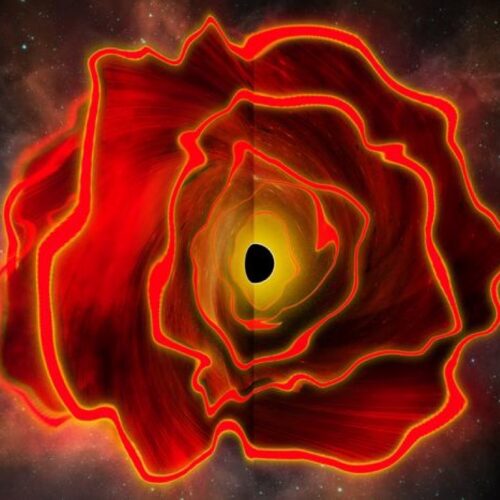
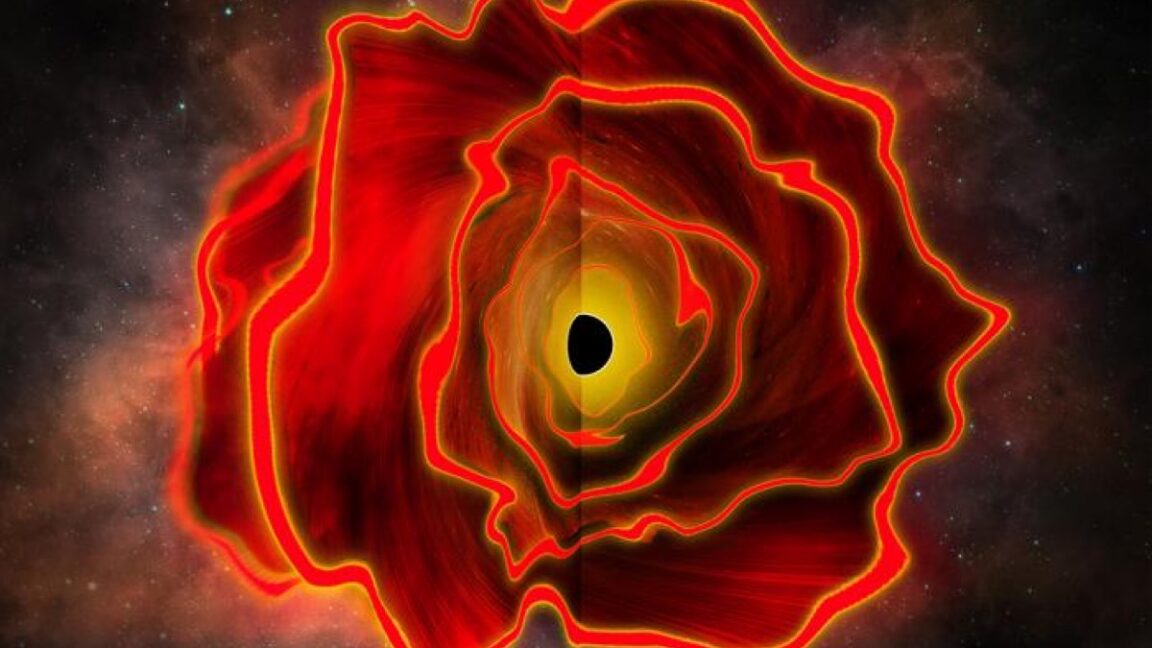
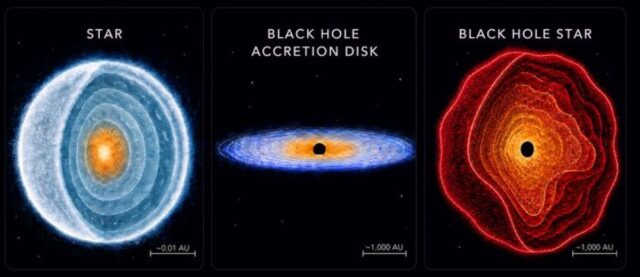
In 2024, astronomers combing through datasets taken by the James Webb Space Telescope noticed hundreds of mysterious little red dots lurking therein, believed to be baby quasars. They existed when the Universe was just a few hundred million years old. One such object in particular captured scientists' interest: a red dot that was extremely red and very bright, but whose properties didn't fit with any known astrophysical object. Astronomers have now concluded that the little red dot is a "black hole star," so named because it is the size of a large star but produces far more energy than would be possible via nuclear fusion—energy comparable to what an active black hole would produce.
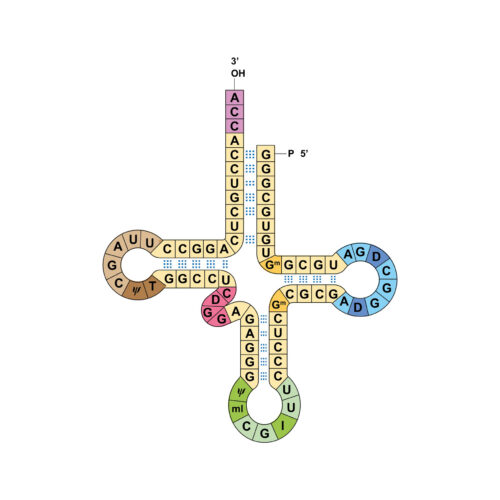
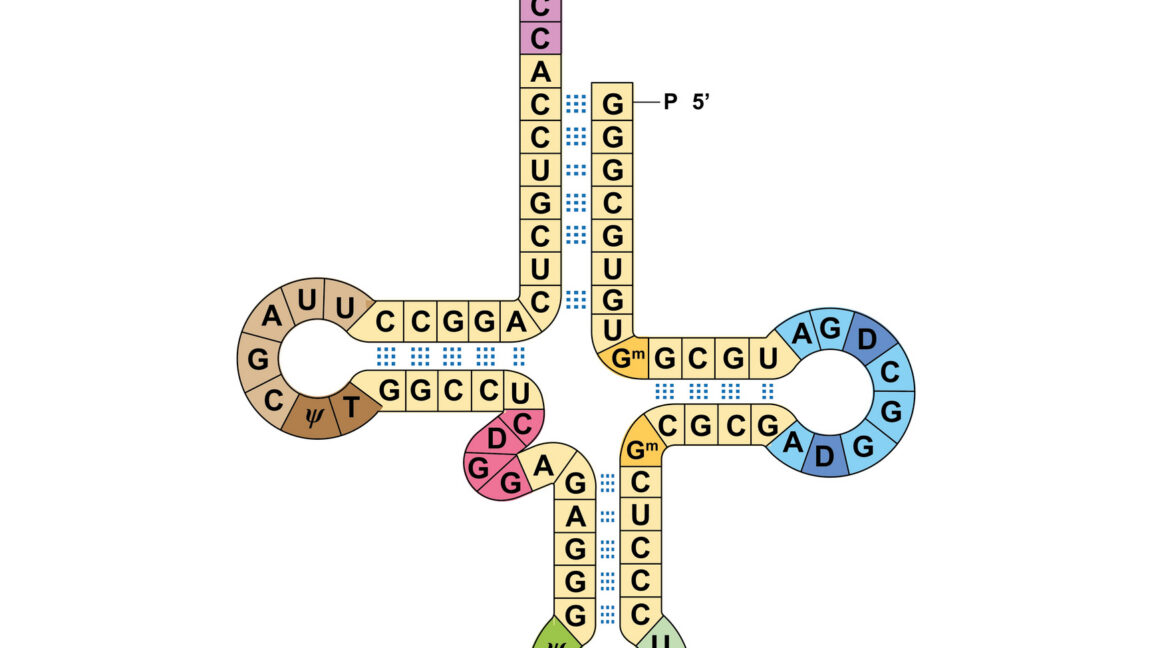
The genetic code is what life everywhere uses to convert the information contained in DNA into specific protein sequences. With minor variations, the same genetic code is used by every living thing on Earth, suggesting it was already present in the last common ancestor of all of them. It's not an easy thing to change, because so many things in every cell depend on it.
Nevertheless, some preliminary steps have been taken. Researchers have managed to add some new amino acids to a bacterial cell and were able to make proteins that were one amino acid less than usual. But it's a slog; for some of this work, people have had to re-engineer every single gene in a bacterial genome.
Now, researchers have found a way to operate two separate genetic codes simultaneously, avoiding the need to do any work to compensate for altering the code that every protein in a cell relies on. They didn't test it in an actual cell, and it might cause some problems there. But it's a creative solution that should accelerate some synthetic biology work.
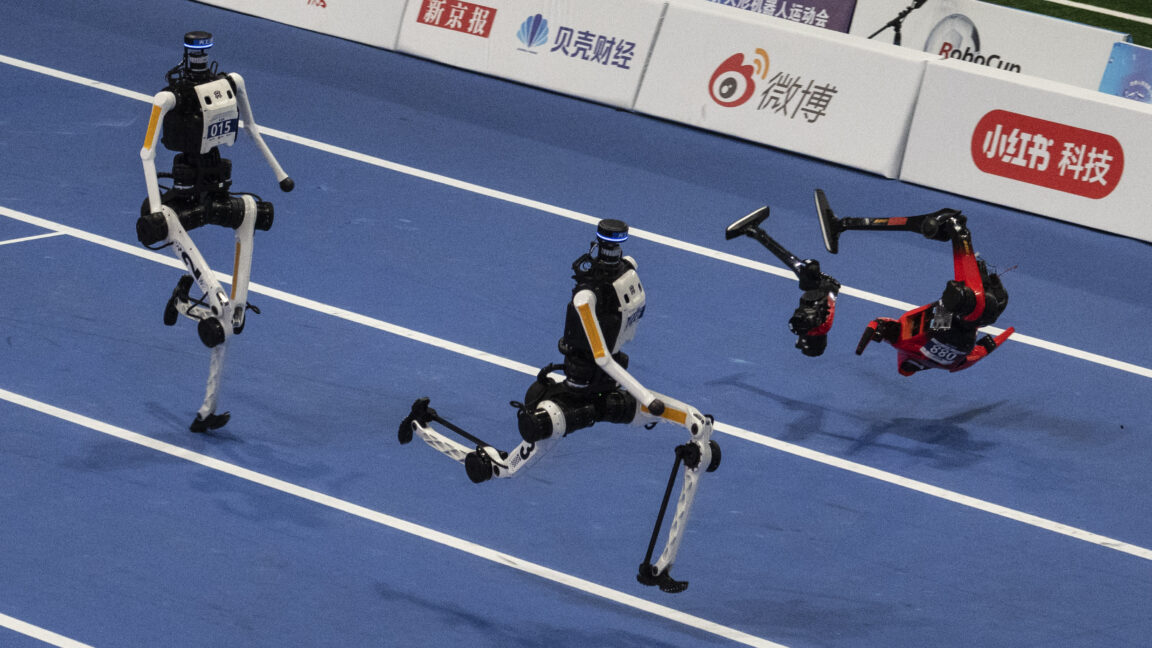
Viral videos of the World Humanoid Robot Games show sprinting robots beating the human 100-meter record held by Usain Bolt—but also feature running robots crashing into barriers and falling down because they cannot readily stop running. A few fallen robots even break at the waist in a shower of sparks or catch on fire.
That demonstration of both robotic prowess and limitations came from the second edition of the World Humanoid Robot Games hosted in Beijing from August 22–26. Like the inaugural event held in 2025, this year’s event challenged humanoid robots to run fast, perform kung fu or dance moves, fight one another in kickboxing, and play soccer or table tennis.
This year’s games also tested robots in more humdrum practical scenarios like washing and hanging laundry, where they appeared to lag behind typical human working speeds. That suggests the event organizers, including Chinese state media and the Beijing city government, are keen to showcase the commercial potential of humanoid robots at a time when China’s robotics industry is rapidly developing and testing such robots.

 Login
Login








 Credit:
Rohan Naidu (University of Hawai'i)
Credit:
Rohan Naidu (University of Hawai'i)