❌

Reading view

There are new articles available, click to refresh the page.

Trump's forced coal plant extensions thrown out by judge

The use of coal to generate electricity on the US grid has been plunging for nearly two decades, and the first Trump administration was unable to affect the trend. So his second administration has attempted more aggressive interventions to prop up coal use. One of its most direct means of doing so is to order coal plants that were scheduled to close to remain open, even if there is no need for them.

The administration's justification for these orders is a statute that allows the Department of Energy (DOE) to declare an emergency in the case of wartime or a sudden shortfall in generation. A number of parties, including states where coal plants have been slated to close, have challenged this declaration. And on Friday, in the first of these cases to make its way through the courts, the declaration was judged to be contrary to the statute. While this only affects a single coal plant in Michigan, the reasoning of the decision will apply to every coal plant closure that has been blocked by the DOE.

No emergency

The decision was issued by a unanimous three-judge panel from the DC Circuit's Court of Appeals. It focuses on the J.H. Campbell Generating Plant, which was scheduled to close last year but has been kept open by a total of five emergency declarations by the DOE, each limited to 90 days by the Federal Power Act. At issue was section 202(c) of that Act, which allows the DOE to declare emergencies when the US is at war or when β€œan emergency exists by reason of a sudden increase in the demand for electric energy, or a shortage of electric energy.”

Read full article

Comments

Β© UCG

Oracle tries to appease Stargate data center opponents with renewables push

Oracle’s proposed investment in 2 gigawatts of renewable energy projects for New Mexico comes as local opposition could delay development of the Project Jupiter data center that Oracle is building for OpenAI.

The two tech companies are developing the $165 billion Project Jupiter data center in Santa Teresa, New Mexico, as part of the broader Stargate AI infrastructure project announced by President Donald Trump in 2025. But Project Jupiter faces local protests and court battles over concerns about its environmental impactsβ€”and the latest Oracle announcement on September 8 seeking proposals for renewable energy projects does not change the fact that the data center will be powered by fuel cells that consume natural gas.

β€œLike all matching programs, this would be synthetic in the sense that 2 GW of renewables wouldn't directly power the data center,” wrote Michael Thomas, CEO of the Cleanview data platform that tracks renewable energy and data center projects, in a LinkedIn post.

Read full article

Comments

Β© STACK Infrastructure

Trump tried to curb clean energy. It’s booming anyway.

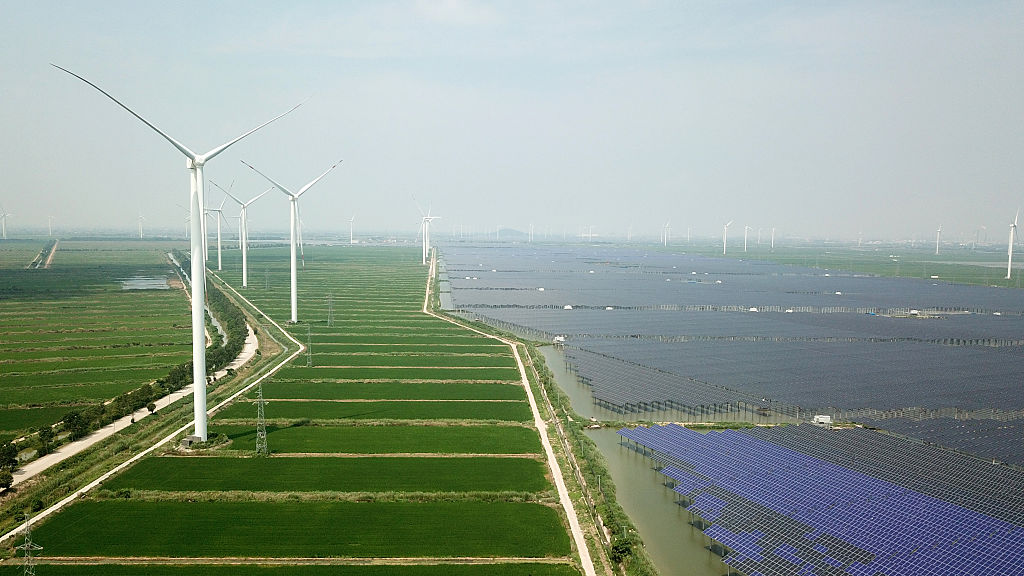
Donald Trump is presiding over an unexpected clean energy boom, as rising electricity demand spurs investment in new capacity despite the US administration’s efforts to thwart a solar and wind rollout.

Clean energy additions will rise by a record 45 gigawatts this year, according to S&P Global Energyβ€”equivalent to the average electricity demand of Turkey. The increase is roughly 25 percent higher than the record set in 2024.

The US president’s war in Iran, which has driven up global energy prices, along with surging power demand from AI data centers and developers’ rush to capitalize on expiring tax credits, are driving the cleantech boom, said analysts. Trump’s administration has also been pragmatic in the face of its energy needs.

Read full article

Comments

Β© CFOTO/Future Publishing via Getty Images

❌