Reading view

There are new articles available, click to refresh the page.

With help from data, art museums are reframing the visitor experience

Giovanni Kanter goes to at least one art museum whenever he visits a new city. That’s on top of his regular exploration of galleries in New York, where the 25-year-old ICU nurse lives and studies. He typically discovers new artists and gallery openings through word of mouth, though he has recently started curating his social media feed to serve relevant content (he’s currently in what he terms a “surrealism phase”).

He was raised on visual art; he's the son of painter Marianne Gargour and nephew of mixed-media artist Heather Hutchison and painter-printmaker Mark Thomas Kanter. His “exposure-oriented education” featured childhood visits to galleries and shows in and around Dallas, where he grew up, and in France, where he spent time with his grandparents.

But Kanter is an exception. Many other young people have a less immersive artistic education, perhaps shaped by occasional school trips or family visits to museums. If they haven’t internalized an instinct for what Kanter calls “moving through the art and absorbing it,” the museum experience is central to how they learn about and understand art.


Read full article

Comments

RFK Jr.'s handpicked committee approves manufacture of peptides he uses

In a widely expected move, a committee organized by the Food and Drug Administration (FDA) has voted to endorse removing restrictions on the manufacture of peptides for human use. Thursday's panel meeting saw a sharply divided group recommend lifting limits on four peptides; votes on three additional peptides are scheduled for today. The move comes despite a continuing lack of evidence regarding their safety and effectiveness.

The move had been telegraphed months earlier as peptide enthusiast and Health and Human Services Secretary Robert F. Kennedy Jr. took steps to ensure this outcome.

Like proteins, peptides are composed of amino acids that are chemically linked into a chain. Peptides differ merely by length; they're often 10–20 amino acids long, in contrast to proteins, which can be hundreds or thousands. Some of them, such as insulin, are specifically made by targeted processing of a protein into shorter fragments, and the resulting peptide interacts with receptors that have evolved to send signals to cells based on its levels.

Read full article

Comments

© Getty | Michael M. Santiago

Judge rebuffs Trump admin demand for phone records from NYT reporters

After criticism from a federal judge, the Department of Justice yesterday withdrew demands for phone records and grand jury testimony from New York Times reporters who wrote about security concerns related to the Air Force One jet donated to Trump by Qatar.

It was a setback in the Trump administration's attempts to unmask journalists' confidential sources. US District Judge Arun Subramanian "grilled Justice Department lawyers for nearly an hour over their handling of the subpoenas" during a hearing on Thursday, The New York Times wrote.

“Either we can quash the subpoenas, or you could withdraw the subpoenas,” Subramanian reportedly told Sean Buckley, chief counsel for the US attorney in New York's southern district.

Read full article

Comments

© Getty Images | Angela Weiss

European Union grants US request to restrict satellite images of Iran War region

The European Union has begun delaying the release of satellite images showing shipping lanes near the Strait of Hormuz by 24 hours. The move comes in response to an earlier US government request and coincides with the Trump administration ramping up the war with Iran once again.
The unusual change in the free and open data policy for Europe’s Copernicus Earth observation program was revealed by Space News, which reviewed a copy of the decision made by the Council of the EU on July 13. The ordered delay applies to images taken by Sentinel-1 and Sentinel-2 satellites and covers the Gulf of Oman region that includes shipping lanes leading to and from the contested Strait of Hormuz.

The US government first requested that the European Union restrict Copernicus satellite imagery on May 26, according to the decision document seen by Space News. That request occurred during a shaky ceasefire period for the war that began on April 8 and ended on July 8, when the US military resumed a broader campaign of military strikes following an announcement by President Donald Trump.

Read full article

Comments

© European Union | Copernicus Sentinel-2

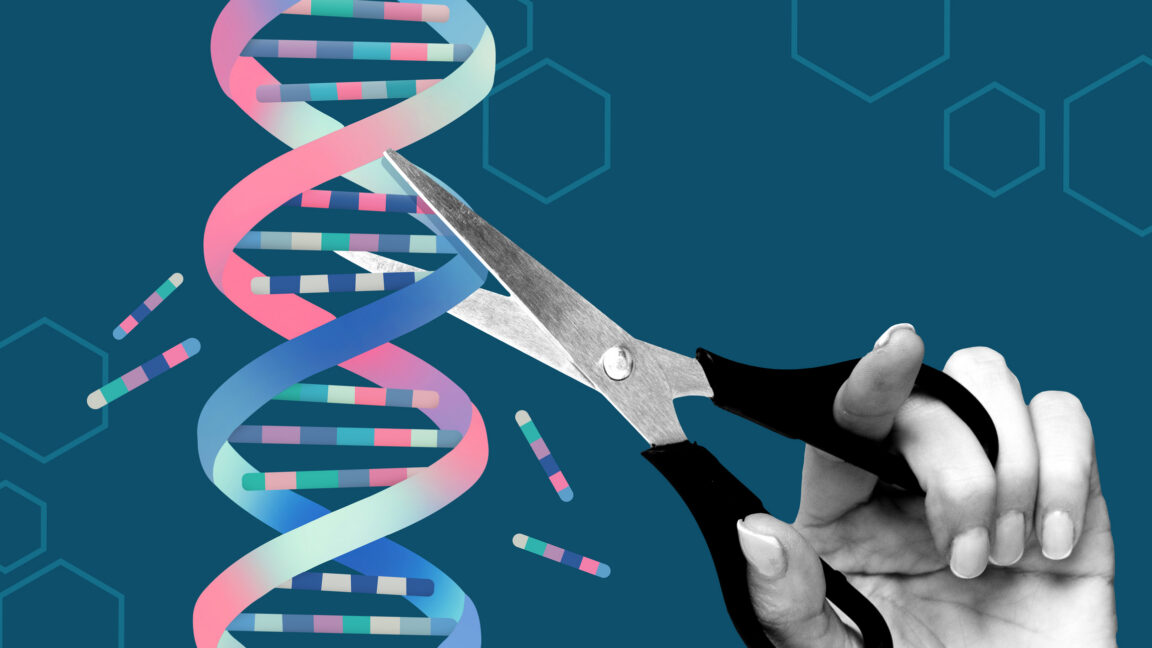
Team uses AlphaFold AI to redesign gene-editing proteins to make them safer

A couple of decades after the discovery of systems that could selectively target DNA, we're starting to see the first therapies based on gene editing. One challenge these developments have faced is safety. While we can make them pretty specific to the gene we want edited, the human genome is very large, and even rare DNA sequences can appear a couple of times by chance.

As a result, all the original gene-editing systems had known rates of what are called off-target effects, in which they simply edit the wrong sequence. This may be a low-probability event, but edit enough cells—and therapies generally have to edit many—and errors become inevitable.

A lot of effort has gone into finding ways to minimize or eliminate off-target edits. In a recent issue of Nature, researchers described modifying the AI protein-folding software AlphaFold to help identify key areas of gene-editing proteins responsible for off-target effects. Those areas were then modified to reduce the problems.

Read full article

Comments

© Anton Vierietin

Robot snakes searched for Venezuela earthquake survivors in collapsed buildings

Robots slithered like snakes into the rubble of collapsed buildings to search for trapped survivors in the aftermath of Venezuela’s double earthquake disaster.

The so-called snake robots represented a unique technological aid for international search and rescue efforts following two earthquakes that struck Venezuela on June 24, killing more than 5,000 people and leaving behind 16,740 injured. Rescuers from around the world used trained dogs, seismic and acoustic listening devices, video cameras on sticks, or thermal imaging cameras to search for signs of survivors—but the snakebots equipped with a video camera could squeeze through tight spaces to search deep within fallen building debris.

“The reason why snake robots are useful is they can get into tightly packed volumes that machinery and people otherwise cannot, and that's important in search and rescue because we were able to extend the visual reach of the rescue workers in a safe way,” Howie Choset, head of the Biorobotics Lab at Carnegie Mellon University in Pittsburgh, told Ars. “In a sense, you're doing minimally invasive surgery on a structure with a snake robot.”

Read full article

Comments

© Carnegie Mellon University

Forgot your Google password? Now you can log in with a selfie.

Getting locked out of an account is no fun. Google has a few ways to help you regain access if you happen to forget your password or lose an authenticator, including recovery contacts and backup codes. Now, Google has a completely new option: your face. You can now give Google a video record of your face and sign into your account with a selfie, which sounds like something people are going to just love.

You will have to set this feature up ahead of time if you want the option of regaining account access with a selfie later on. To get started, verify your account type is supported. You won't be able to configure selfie sign-ins for Workspace accounts, child accounts, or any account enrolled in Google's Advanced Protection Program.

Configuring selfie sign-in requires you to record a video, which Google will store on its servers. Google's selfie sign-in landing page includes the typical disclaimers about privacy and data access, promising that the company will keep the video encrypted and won't use it for any other purposes unless you opt in.

Read full article

Comments

© Google

Google just had its first negative cash flow quarter due to massive AI spending

Google has reported its financial results for the second quarter of 2026 (PDF), and as usual, the search giant raked in an unfathomable amount of money. Google saw total revenue of $119.8 billion, beating analyst expectations by a comfortable margin. Despite that, the company's stock has taken a hit. Along with all that revenue, Google has announced a further increase in its AI-fueled capital expenditures (or capex). The company is actually spending so much on AI infrastructure that it has negative cash flow for the first time.

Search was the largest chunk of Google's income, accounting for $63.3 billion. Google Cloud pulled in $24.8 billion, a significant 23.8 percent increase from the first quarter. This shows there is massive demand for Google's AI services. Google also earned $12.9 billion from its subscriptions, platforms, and devices portfolio, as well as $11.1 billion from YouTube ads. The company managed to goose that last one by more than 12 percent since last quarter as it made YouTube ads even longer.

A significant chunk of Google's revenue comes from investments. When you subtract those non-cash earnings, Google's operating cash flow for Q2 2026 was about $39.1 billion. That's not the most the company has ever seen, but it's a healthy 40 percent increase from Q2 2025. The problem is that Google's spending has also gone up—a lot.

Read full article

Comments

© Aurich Lawson

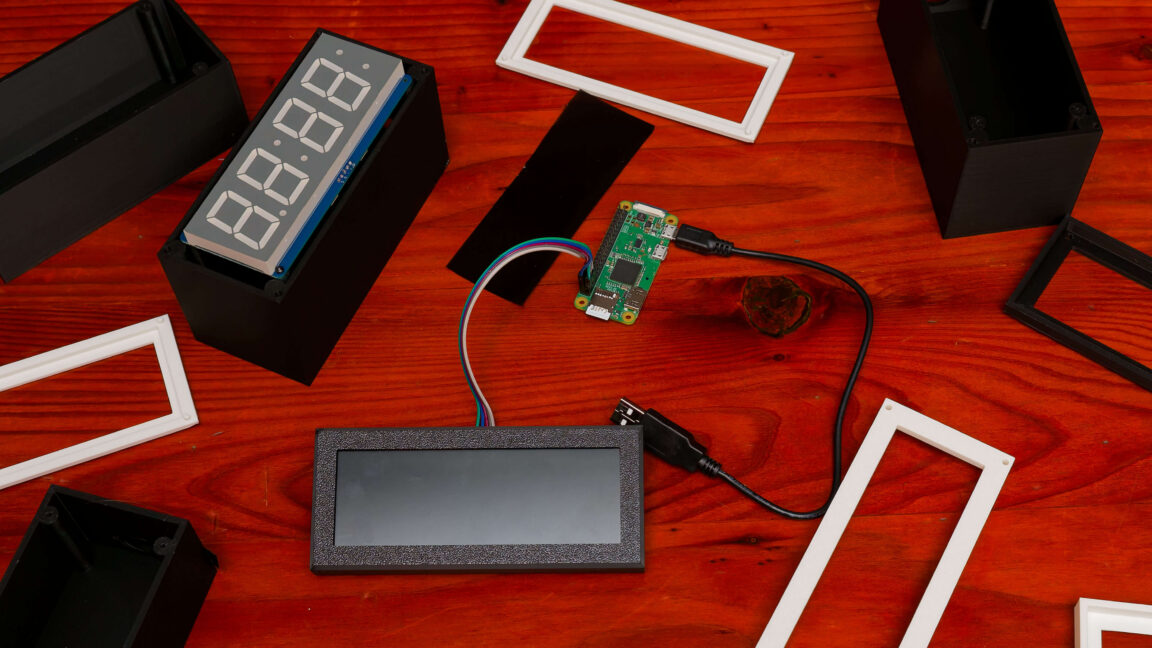
I wanted a clock that never needed setting. Things escalated.

I wanted a clock that, annoyingly, didn't seem to exist.

Since childhood, my bedside clocks have been a series of red, seven-segment LED clock-radio specials from Walmart or Target. They are invariably cheap, simple, and long-lived—but they require manual intervention at the start and end of Daylight Saving Time and whenever the power flickers. After a recent power flicker, as I found myself standing by the sideboard holding down "TIME" and mashing the "HOUR" button, frustration boiled over, and I thought to myself, "We're a quarter of the way through the 21st century. There has to be a better way!"

My perfect clock would be self-setting. It would offer auto-DST adjustment (or not, depending on how this bill fares!). It would manage drift and always show the exact sub-second time. It would show that time on a red seven-segment display—not blue, not green, not yellow, and absolutely not white. And I shouldn't have to install any privacy-destroying garbage apps to make it work.

Read full article

Comments

© Lee Hutchinson

Samsung unveils new Galaxy Z8 foldables and Galaxy Watches, available August 7

The rumors haven't left much to the imagination, but Samsung has unfurled its 2026 foldable lineup today. There are three models for the first time in Samsung's eight-gen foldable family, including the top-of-the-line Z Fold 8 Ultra. That phone is the successor to last year's Galaxy Z Fold 7, but the Z Fold 8 is new—the company's first wide-body foldable designed for media over multitasking. And then there's a new, thinner flip phone, plus a pair of smartwatches.

You can preorder Samsung's new hardware today, but the component shortage has made these already spendy product lines more expensive this year. Even the Z Flip 8 is now well over a grand, and the Ultra costs almost twice as much.

Specs at a glance: Galaxy Z8 series
Galaxy Z Flip 8 ($1,200) Galaxy Z Fold 8 ($1,900) Galaxy Z Fold 8 Ultra ($2,100)
SoC Snapdragon 8 Elite Gen 5 for Galaxy Snapdragon 8 Elite Gen 5 for Galaxy Snapdragon 8 Elite Gen 5 for Galaxy
Memory 12GB 12GB, 16GB 12GB, 16GB
Storage 256GB, 512GB 256GB, 512GB, 1TB 256GB, 512GB, 1TB
Display Main: 6.9" Dynamic AMOLED 2X (1080 x 2520) 400ppi, 120Hz; Cover: 4.1" AMOLED (948 x 1048) 342 ppi, 60/120Hz Main: 7.6" Dynamic AMOLED 2X (1848 x 2448) 403ppi, 120Hz; Cover: 5.5" Dynamic AMOLED 2X (1248 x 1972) 428ppi, 120Hz Main: 8.0" QXGA+ Dynamic AMOLED 2X (2504 x 2256) 422ppi, 120Hz; Cover: 6.5" FHD+ Dynamic AMOLED 2X (1080 x 2520) 422ppi, 120Hz
Cameras Rear: 50MP Wide (F1.8, OIS), 12MP Ultra Wide (F2.2); Selfie: 10MP (F2.2) Rear: 50MP Wide (F1.8, OIS), 50MP Ultra Wide (F1.9); Main/Cover Selfie: 10MP (F2.2) Rear: 200MP Wide (F1.7, OIS), 50MP Ultra Wide (F1.9), 10MP Tele (3x Optical, F2.4, OIS); Main/Cover Selfie: 10MP (F2.2)
Software Android 17 / One UI 9 Android 17 / One UI 9 Android 17 / One UI 9
Battery 4,300 mAh, up to 55% charge in ~30 min with 25W Adapter, 15W Wireless Charging 4,800 mAh, up to 67% charge in ~30 min with 45W Adapter, 20W Wireless Charging 5,000 mAh, up to 63% charge in ~30 min with 45W Adapter, 20W Wireless Charging
Connectivity 5G, LTE, Wi-Fi 7, Bluetooth v5.4, SIM+eSIM 5G, LTE, Wi-Fi 7, Bluetooth v6.0, SIM+eSIM 5G, LTE, Wi-Fi 7, Bluetooth v6.0, SIM+eSIM
Measurements Unfolded: 166.9 × 75.4 × 6.1 mm
Folded: 85.7 × 75.4 × 13.1 mm, 180g
Unfolded: 123.9 × 161.4 × 4.5 mm
Folded: 123.9 × 81.9 × 9.7 mm, 201g
Unfolded: 158.4 × 143.2 × 4.1 mm
Folded: 158.4 × 72.8 × 8.9 mm, 215g
Colors Pink, Graphite, Cream, Mint (online) Lavender, Graphite, Cream, Pistachio (online) Violet Shadow, Graphite, Cream, Green Shadow (online)

The Z Fold 8 Ultra has the same basic form factor as the last few Samsung tablet-style foldables. A 6.5-inch OLED on the outside is about the same ratio as a standard smartphone screen. Open it up, and you get an 8-inch display that's roughly twice as wide. That makes the main display close to square.

Read full article

Comments

© Samsung

Ukrainian drones deliver robots directly into battle by sea and air

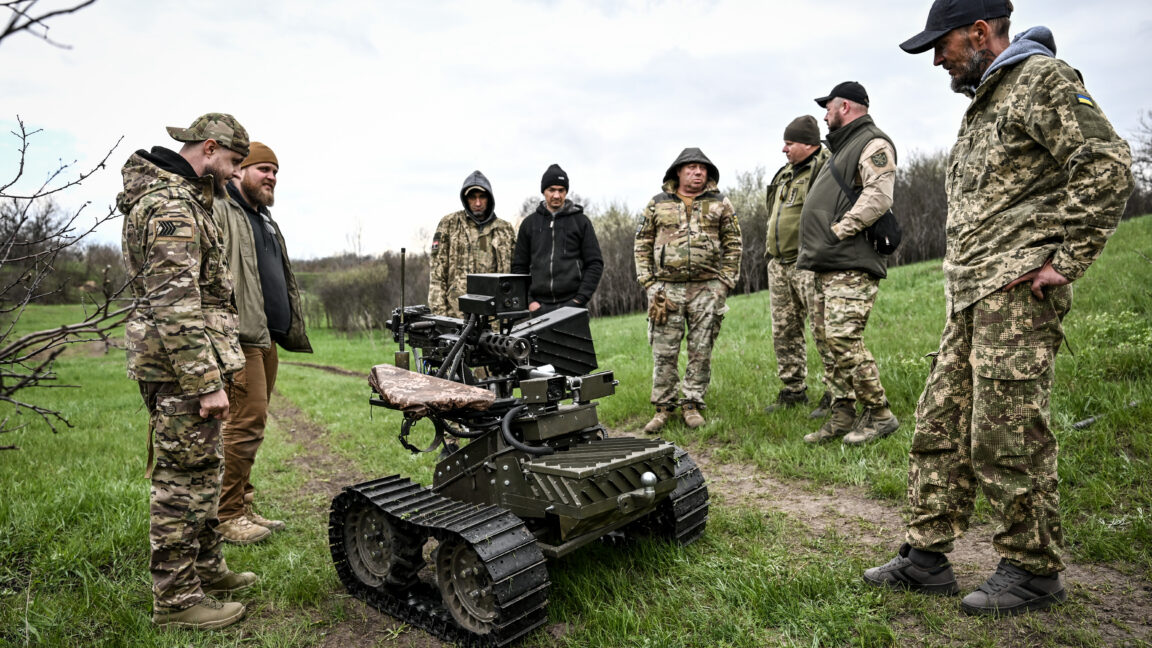
In the latest twist on battlefield innovations, Ukraine has used both flying drone carriers and drone boats to send ground robots armed with weapons or explosives into battle.

The drone-assisted deployments have enabled slower wheeled robots to bypass tough terrain and Russian defenses, and to carry out an unusual robotic amphibious assault on a contested position. Such tactics also showcase the Ukrainian military’s ongoing experimentation with using drones and robots to offset a Russian military advantage in manpower while also sparing Ukrainian soldiers from making dangerous assaults.

On July 19, a Russian military Telegram channel posted a video showing a Ukrainian hexacopter drone carrying a ground robot suspended below by a cable, according to the Ukrainian government-run news platform United24. The Russian Telegram channel described the Ukrainian heavy bomber drone as deploying a four-wheeled ARK-1 robot armed with explosive anti-tank mines on the ground where it continued toward Russian military positions—and apparently generated plenty of outraged comments from pro-Kremlin social media users.

Read full article

Comments

© Dmytro Smolienko/ Ukrinform/Future Publishing via Getty Images

Sony releases one last trailer for Spider-Man: Brand New Day

The Odyssey might be cleaning up at the box office at the moment, but in two weeks another mega-blockbuster hits theaters: Spider-Man: Brand New Day, directed by Destin Daniel Cretton (Shang-Chi and the Legend of the Ten Rings). Sony Pictures dropped one last trailer for this follow-up to 2021’s No Way Home, which is purportedly intended to launch a fresh trilogy of films with Tom Holland in the title role.

No Way Home ended on a pretty bleak note, with Peter Parker (Holland) asking Doctor Strange (Benedict Cumberbatch) to erase him from everyone’s memory to protect the multiverse, including his girlfriend MJ (Zendaya). Per the official synopsis:

It’s a Brand New Day for Peter Parker. Fighting crime full-time as Spider-Man in a world that doesn’t remember him—and the pressure of seeing his old friends move on without him—sparks a change in Peter he may not have the power to control. But that transformation might also be the only thing that can stop a shocking new threat to the city and those he loves–a powerful villain no one can even see. The world may have forgotten Peter Parker, but he hasn’t forgotten them.

Holland is reprising his role as Peter Parker/Spider-Man, along with Zendaya as MJ and Jacob Batalon as Peter’s former bestie Ned Leeds. The film also features Jon Bernthal as Frank Castle/Punisher, Mark Ruffalo as Bruce Banner/Hulk, Michael Mando as Mac Gargan/Scorpion (captured by Spider-Man in Homecoming), Marvin Jones III as albino crime lord Lonnie Lincoln/Tombstone, Charlie Cox as Matt Murdock/Daredevil (briefly Peter’s lawyer in No Way Home); Liza Colon-Zayas as detective Jean DeWolf; Eman Esfandi as MJ's new boyfriend; and Trammell Tillman as Bill Metzger of the Department of Damage Control (DODC) who is policing superpowered individuals.

Read full article

Comments

© Sony Pictures

Nintendo says users voluntarily paid higher prices, have no right to tariff refunds

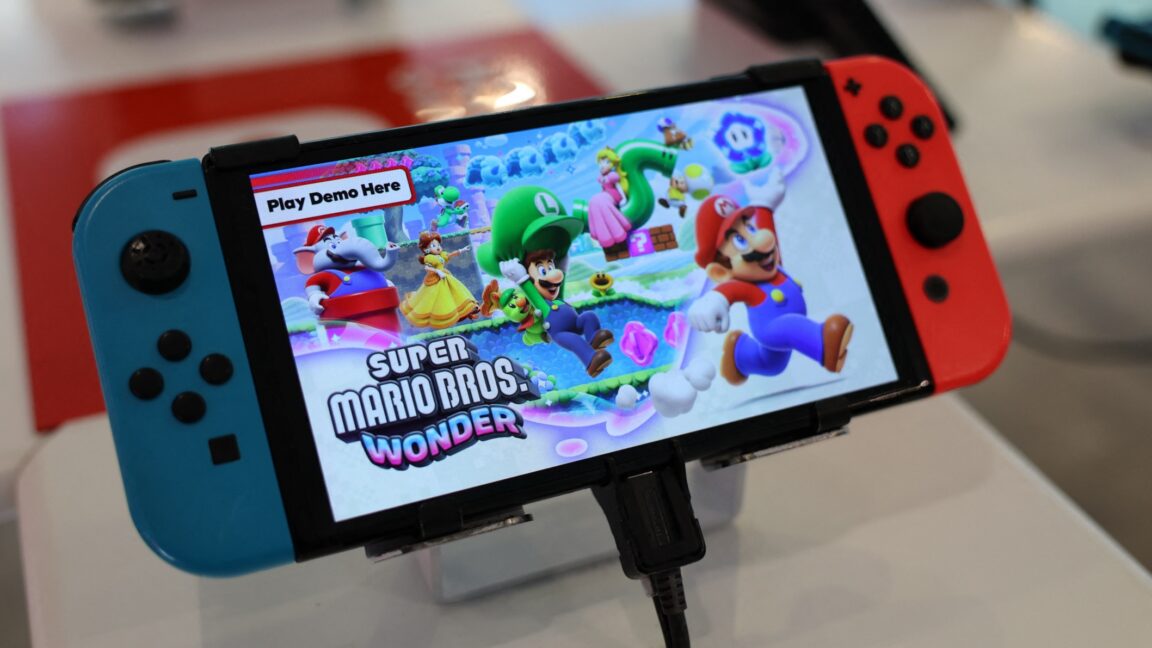
Nintendo urged a court to dismiss a lawsuit demanding that it pass tariff refunds on to customers, saying that people who bought a Switch console or other products have no legal right to refunds that Nintendo is due to receive from the government.

Nintendo said in a motion to dismiss yesterday that plaintiffs are "ask[ing] this Court to invent a legal duty out of whole cloth to retroactively re-price completed sales simply because the legal landscape has changed." Nintendo said the plaintiffs "have no legal entitlement to the tariff refunds Nintendo stands to receive."

The lawsuit was filed in April by two customers who seek to represent a class of all US residents who bought Nintendo products from February 2025 to February 2026. California resident Gregory Hoffert and Washington resident Prashant Sharan filed the class action complaint in US District Court for the Western District of Washington, alleging unjust enrichment and a violation of the Washington Consumer Protection Act's prohibition on unfair or deceptive acts.

Read full article

Comments

© Getty Images | AFP

Sales of Valve's Steam Deck crater after recent price hike

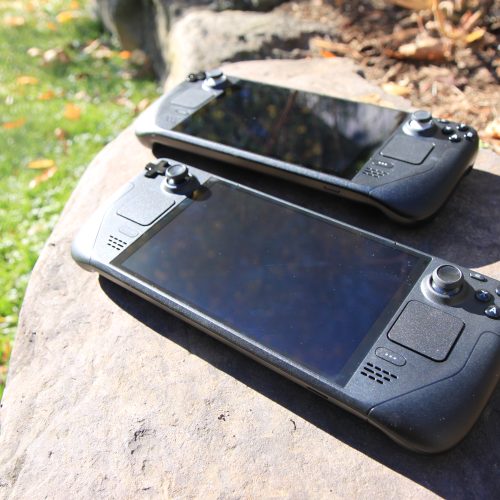
Since its 2022 launch, the Steam Deck has consistently been at or near the top of the company's "top selling products by revenue" charts, with brief dips outside of the top 10 treated as newsworthy events. But sales of the popular handheld gaming PC have apparently been on a steep decline since the system relaunched at a higher price in May.

Linux-focused gaming site Boiling Steam breaks down the historical data, showing how the Deck's chart position has fallen from fifth place immediately after orders resumed in late May down to 14th place for two weeks in early July (the hardware sits at 12th place in the current edition of those charts).

That's in sharp contrast to 2025, when the Steam Deck never dropped below seventh place on the bestseller charts and was only rarely outside the Top 5. Then Valve warned of "intermittent shortages" for the Steam Deck starting in February, leading to weeks of lower chart positions before the Deck became completely unavailable until May.

Read full article

Comments

© Kyle Orland

When your vehicle outlives its cloud: What happens next?

Do you use your vehicle’s app to pre‑cool the cabin on a scorching day, confirm the doors are locked from bed, or have the car automatically call for help when the airbags go off?

Savor those connected, cloud‑based conveniences while you can—the clock is already ticking on their obsolescence. In a few short years, you may be driving today’s vehicle without many of the features you currently enjoy.

How we got hooked on the cloud

"Connected services"—cloud-based and networked features that let a vehicle communicate with external systems to deliver apps, data, and remote functions to drivers and passengers—have been around since the 1990s, when GM introduced OnStar as an option. Those early systems were mostly voice‑centric, but they still depended on centralized back‑end systems. Modern versions, which are fully data-driven and cloud-hosted, use much more sophisticated over-the-air data links to allow a considerably better feature set.

Read full article

Comments

© Aurich Lawson | Getty Images

Apps targeted at US troops contain Chinese and Russian code

A recent examination of hundreds of mobile apps marketed toward US military personnel found more than one in eight contained software built by companies in China, Russia, or other foreign nations, raising fresh concerns that adversary governments could harvest data revealing where service members live, work, and deploy.

According to researchers at Purdue University, the US Military Academy at West Point, and Florida International University, one popular app used by service members to rate living conditions on their own bases include code from Huawei, the Chinese telecom that US regulators flagged as a national security threat in 2020. Two others were built by Russian companies and incorporate the Russian ad service Yandex.

The largely unregulated advertising industry that tracks Americans online treats civilians and service members mostly the same—unless there is profit in telling them apart—despite evidence that exposure can reveal troop deployments, unit movements, and the routines of personnel within intelligence facilities and hardened shelters where nuclear weapons are believed to be stored.

Read full article

Comments

© Tomas Ragina/Getty

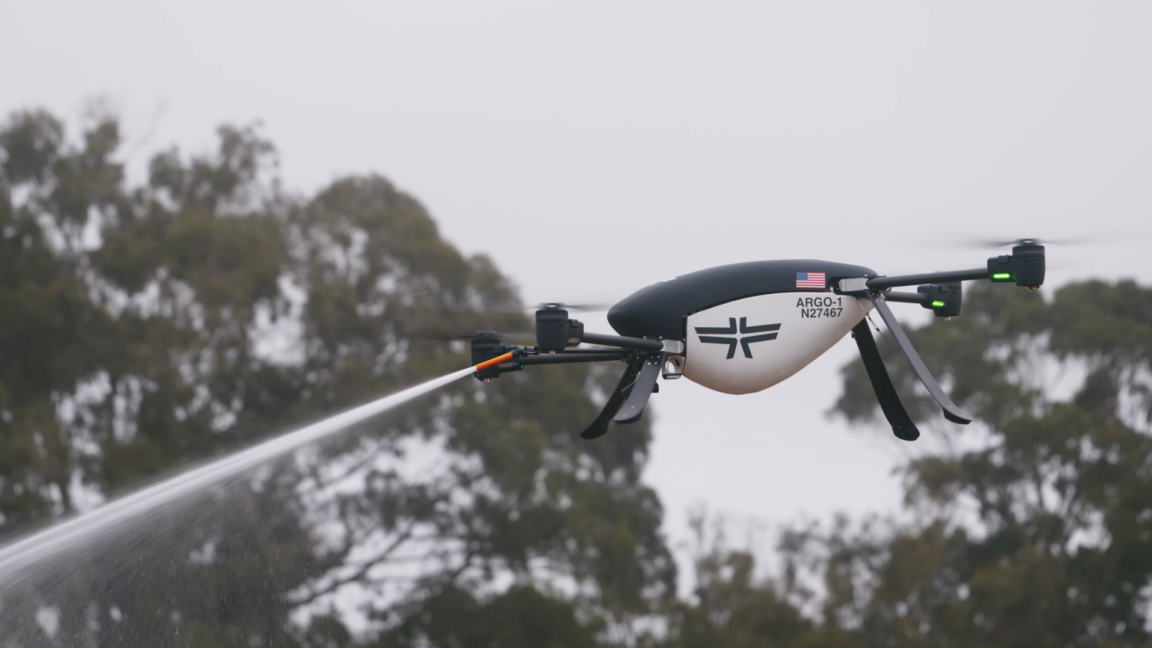
Firefighting drones in the works as wildfires plague US nearly year-round

Drones capable of spraying water and fire retardants have been practicing how to snuff out wildfires early in California and Alaska this summer—demonstrating a possible rapid-response tool for firefighting as climate change transforms wildfire season into a nearly year-round risk for much of the United States.

Most drones are significantly smaller than crewed aircraft and have shorter flight ranges, meaning they cannot replace large airtankers in delivering massive payloads of water or other fire-suppressing payloads to remote wildfires. But companies and fire agencies—along with organizers of the $11 million XPRIZE competition—are testing whether drones can help firefighting crews respond more quickly to small fires and put them out before they become more destructive.

The California Department of Forestry and Fire Protection, also known as CAL FIRE, ran its own field test involving five autonomous drones that worked together to deploy between 500 and 1,000 gallons of foam combined for suppressing fires on July 15, according to the TV station KPMH. The demonstration was organized with the help of the nonprofit FireWERX and the California-based company Seneca, which is making the drones commercially available starting in 2026.

Read full article

Comments

© Seneca

F1 in Belgium: Machine learning algorithms are ruining the sport

Formula 1 returned to the Spa-Francorchamps circuit for the Belgium Grand Prix this weekend. This ribbon of tarmac in the Ardennes is one of the sport's historic venues, featuring in the first F1 season way back in 1950. But as yesterday's race showed, the current F1 machinery is utterly ill-suited to this dramatic venue.

As we saw at Suzuka in Japan earlier this year, a 2026 F1 battery is able to power the race car's electric motor for only a few seconds a lap; for much of the rest of the lap, the energy-starved cars have less power going to their rear wheels than in the junior F2 feeder series.

The best race track in the world

For many, including much of the current F1 grid, Spa is considered perhaps the planet's greatest race track. In fact, both Spa and the Belgian Grand Prix predate the F1 world championship, with its first race held in 1922. Back then, the circuit was a 9-mile loop of public roads, taking in the towns of Malmedy and Stavelot before returning to Francorchamps. In the postwar years, the layout shrank slightly to 8.7 miles (14.1 km) and was ferociously fast, with average lap speeds of up to 150 mph (240 km/h)—and ferociously dangerous, given cars with huge amounts of power and minimal concessions to safety.

Read full article

Comments

© Nicolas Economou/NurPhoto via Getty Images

Beyond grep: The case for a context-rich AI coding harness

There are a lot of AI coding applications out there, and as impressive as large language models and the agents they enable have become, many of the most recent developments in AI-assisted development have been in the software that manages those models, not just the models themselves.

Earlier this summer, I spoke with the head of product for Claude Code, Anthropic's Cat Wu, about that company's approach to building that software.

Read full article

Comments

© Augment Code

As mosquito ranges expand, better monitoring is key to preventing disease

With summer heat comes pool parties, beach days, backyard cookouts, and, of course, swarms of bloodthirsty mosquitoes.

But while insect bites have always been a side effect of time spent outdoors, the species doing the biting are changing in historically temperate regions like New England. As climate change makes these areas warmer and wetter, their ranges are expanding—and any diseases they carry come with them.

In Connecticut, for example, a statewide mosquito monitoring program has detected 54 different species, including invasives like the Asian tiger mosquito, which can transmit potentially serious diseases including dengue and Zika. The mosquito’s historical territory is in hot and humid climates farther south, but it has been moving north.

Read full article

Comments

❌