❌

Reading view

There are new articles available, click to refresh the page.

Android can now securely migrate your logins between password managers

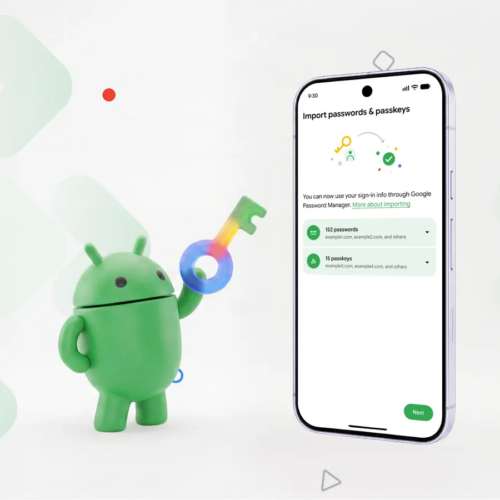
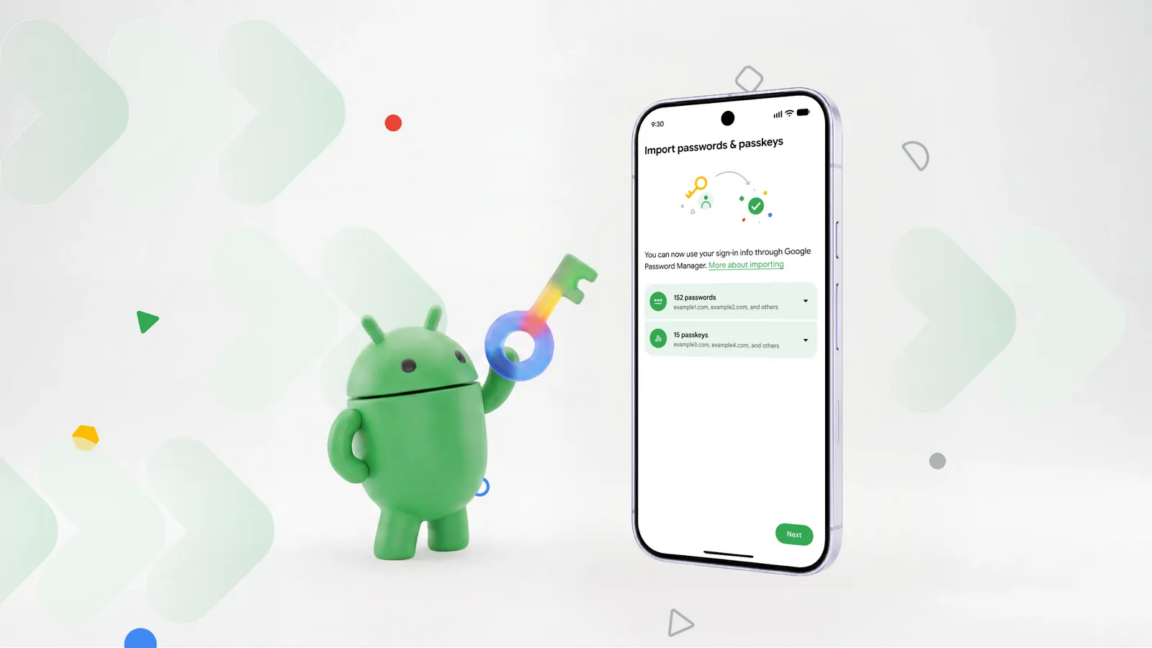
As longer, more complex passwords have become a necessity, remembering all those strings of numbers, letters, and special characters has become nearly impossible. Password managers can solve that problem, but what happens when you want to move to a different login organizer? Sure, you could manually type all your logins into a new app, but now Android can do that for you without the tedium.

Google designed the new login transfer process to happen entirely on your phone, so you need the corresponding apps installed with your credentials synced. To start the move, you'll have to find the import option in the app you want to use. The location of that feature will vary, but in Google Password Manager (built into Android), it's near the top under the settings tab.

The import option in Google Password Manager will plug in to the new migration system, while export still just creates an unencrypted CSV with your passwords that can be dumped into any app. It will be similar in other apps, so make sure to start the process in the app you want to use. Currently, this works in Google's app, 1Password, Bitwarden, and Dashlane.
Read full article

Comments

Β© Google

Nearly impossible? How Fairphone built the ethical, repairable Fairphone Gen 6+

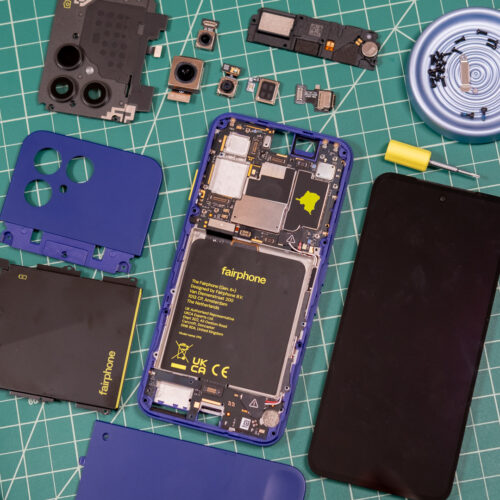
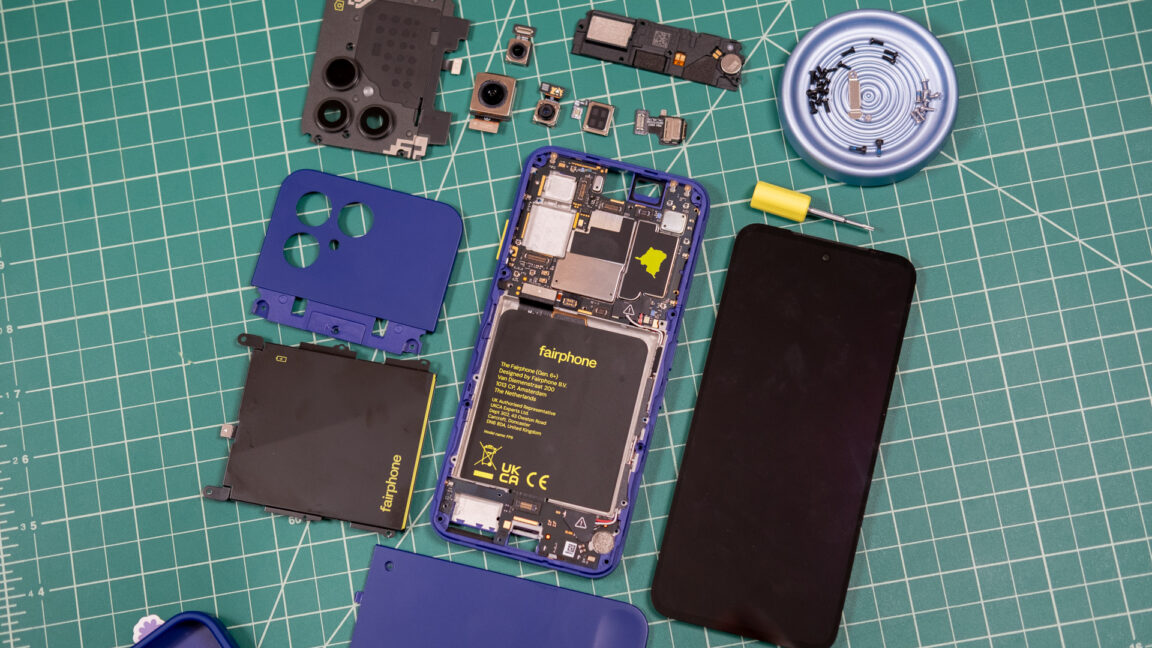
Smartphone longevity didn't used to matter. In the past, before you could wear out or break a phone, there was always some shiny new thing to buy. Today, we expect our smartphones to go the distance, but they've also become less repairable and, in many cases, more fragile. Fairphone, a Dutch smartphone maker that has just entered the US market, thinks about phones differently.

The new $650 Fairphone Gen 6+ is designed both for longevity and easy repairability. There are trade-offs to this approach if you're used to the standard glass and aluminum sandwiches filled with glue, gaskets, and teeny-tiny screws. But the drawbacks could be worth it for the right buyer. Fairphone CTO Chandler Hatton told Ars that Fairphone's goal is to provide a compelling mobile experience while also enabling the user to "fully own" their device. At the end of the day, this is what a lot of people say they want in a smartphone.

Take it apart, put it back together

These days, Google, Samsung, and Apple support phones with software updates for the better part of a decade, but will the hardware last that long? And what happens when it needs a repair? You may be out of luck or out a lot of money, but Fairphone prioritizes the self-repair experience.

Read full article

Comments

Β© Ryan Whitwam

New Android Drop adds remembered items in Find Hub, makes anti-nausea dots official

Let's be frank: Some of Google's recent Android feature Drops have been duds, offering little more than an expansion of Gemini summaries and chat functions. The new September Drop does have some Gemini flavor, but there are non-AI goodies, too. Your messaging threads are getting prettier and more useful, and those nifty Motion Assist dots that began appearing last week are rolling out widely. And even the Gemini expansion is not without utility.

Since this is an Android Drop rather than a Pixel Drop, these features are coming to a wider range of devices. The OS version does matter, though. If you're on Android 16 or higher, you can now tell Gemini to log the location of items that don't have a tracker tag attached. Just tell the AI where you put something, and include a photo if you like.

Remembered items in Find Hub

This information will be logged in Find Hub, which has thus far been used for locating phones, earbuds, and tracker tags. You can ask Gemini to recall that information or simply check Find Hub yourself the next time you forget where you put that item.

Read full article

Comments

Β© Ryan Whitwam

Google's anti-nausea Motion Assist dots finally rolling out on Android

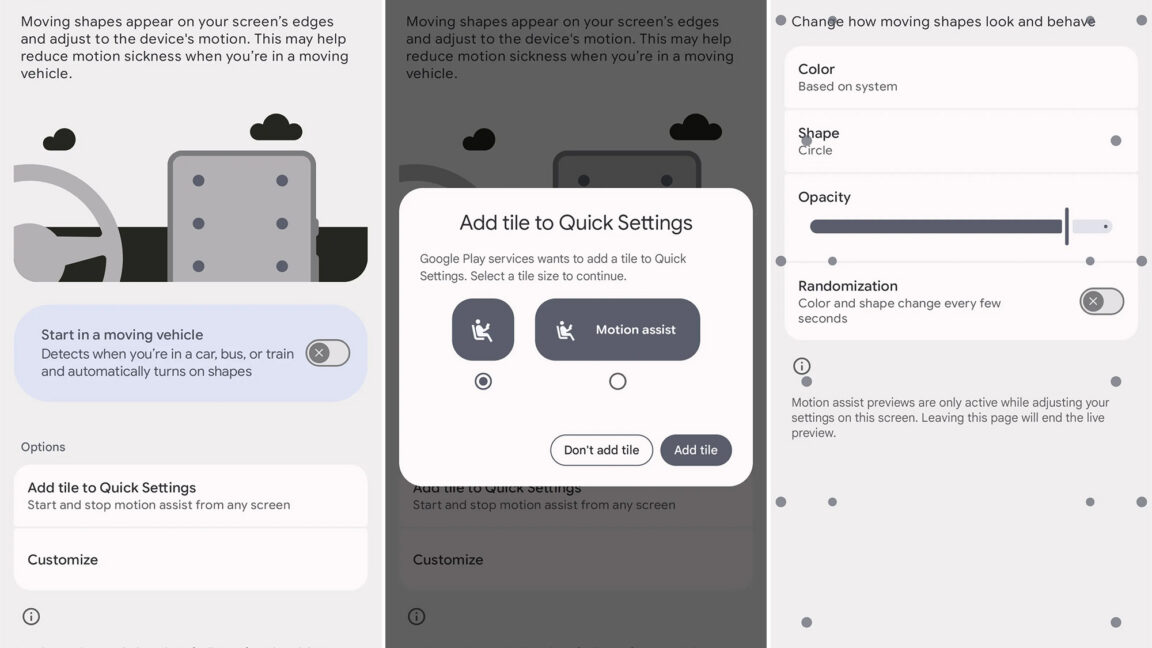
Some people are cursed with motion sickness, which can make it impossible to read or use a phone in a moving vehicle without suffering waves of nausea. There's a surprisingly simple trick that can make smartphones usable in such situations. Apple deployed it on the iPhone a couple of years ago, and now Google's own version is finally coming (slowly) to Android.

Motion sickness is caused by a disagreement between what your inner ear senses and what your eyes see. If you're looking at a book or a screen while in a car, the sensory mismatch can lead to a pretty unpleasant time. As part of iOS 18 in 2024, Apple released a feature called Motion Cues that places a network of moving dots on the screen to alleviate motion sickness, and it seems to work surprisingly well. Google's version is similar, but it's called Motion Assist.

Google began testing Motion Assist back in 2024, but it never expanded beyond an internal test until now. Android Authority reports Motion Assist is appearing on Pixel phones running Android 17, but there's no app or update you can install to get the featureβ€”it's being delivered by Play Services as part of a staged rollout.

Read full article

Comments

Β© Android Authority

Motorola's GrapheneOS phones will launch in 2027 priced higher than Pixels

Several months ago, Motorola and the makers of GrapheneOS announced a team-up that would expand support for the privacy-centric OS to beyond Google's Pixel phones. The announcement, however, was bereft of details. Now, the creators of the OS have taken to Mastodon (naturally) to provide an update. Moto's GrapheneOS phones are on track to launch in 2027, but they'll cost a pretty penny.

The upcoming Moto devices won't ship with GrapheneOS, but they will be fully supported by the project with help from Moto itself. So far, only Pixel phones have met GrapheneOS's strict hardware requirements to ensure the highest level of security and privacy. The software, which is based on Android, includes features like enhanced memory protection, granular network permissions, customizable app sandboxing, and a duress code that can be used to wipe your phone. (That last one got an activist charged with a felony earlier this year after he used it to delete his data during a customs interrogation.)

According to the GrapheneOS team, the upcoming Moto phones will be premium flagship devices. The team expects pricing to be even higher than Pixel phones, which is saying something. The current Pixel lineup starts at $900 for the base model Pixel 11, a $100 increase from last year. The Pixel 11 Pro XL price has gone up to a whopping $1,300 this year.

Read full article

Comments

Β© Motorola

❌