Reading view

There are new articles available, click to refresh the page.

What is cyber insurance


What is cyber insurance

What is cyber insurance?

Cyber ​​insurance is a type of policy that covers loss and damage caused by cyber-attacks or related types of incidents such as infrastructure failure or service outages. Most cyber insurance policies are for businesses, as they face much greater risk and potential loss from a cyber-attack than private individuals.

Cyber insurance is critical for any enterprise, especially those that deal with exclusive or touchy information.


With the boom of the internet inside the past 10 years, cyber dangers like social engineering attacks, statistics breaches and cyber extortion (i.e., ransomware) have additionally grown exponentially. Due to this, many coverage companies now offer committed cyber insurance guidelines.


Whether or not it’s cyber criminals gaining sensitive facts, a community security failure or a statistics breach, probabilities are your business insurance don't cover your losses. In case you’re concerned for a cyber incident, you’ll need to start searching round for a cyber coverage quote.


Cyber insurance covers things like liability attributable to data breaches, community interruption and media legal responsibility. Cyber ​​risk to business is much higher than personal risk.

Cyber insurance pricing varies wildly depending on what you need to include, the dimensions of your deductibles and how large your business is. These elements can change the rate from some hundred dollars per year to lots.

Given the relativity of cyber coverage markets, there’s a terrific degree of variability in both what’s blanketed and policy value. This makes it hard to generalize the entire discipline, but we’ll talk what a cyber insurance coverage normally covers, as well as what you might expect to pay for it.


Cyber insurance coverage

Cyber ​​insurance generally provides protection against four distinct types of risk: privacy, security, operational and service risk. These risks represent the biggest cyber threats to business and are typically covered by four different types of insurance policies within a cyber policy mentioned below.


Ø Network Security and Privacy Responsibility

Network Security and Privacy covers the most obvious risks and dangers posed by cyber-attacks. On the security front, cyber policies will generally cover forensic efforts to identify the attack path, legal expenses related to the attack, ransomware payments, data recovery, consumer outreach and public relations costs.


Conversely, privacy responsibility applies to you if your business maintains confidential or private data that is governed by regulation or contract. For example, if your business has a lot of customer personal records that were stolen in a cyber-attack, privacy liability insurance will cover you if the people whose records were stolen seek compensation.


Ø Network business interruption

For many businesses, a server outage can mean a catastrophic amount of lost revenue. For this reason, cyber insurance will cover lost profit for the duration of a network interruption that occurs as a result of a cyber-attack or system failure.


Ø Media responsibility

If your intellectual property is stolen as a result of your media presence, be it advertising or something else, then cyber insurance can help with that. The policy generally doesn't cover lost profit as a result, but it does cover things like legal fees associated with enforcing your intellectual property.


Ø Errors and omissions

In the event of a cyber-attack or system failure, there is a good chance that your business will be unable to continue providing its services, at least temporarily. If this happens, cyber insurance will generally cover any liability you face from customers.


What does cyber insurance not cover?

Now that we've covered what cyber insurance will generally cover, let's take a quick look at what is typically not covered.


Ø Future lost profit

The first is any future lost profits that arise as a result of a cyber security incident. Whether it's the result of user exodus due to a significant data breach, data loss, or anything else, cyber insurance generally won't cover lost revenue that isn't a direct and immediate result of a cyber-attack or incident.


Ø Losses from theft of intellectual property

Next in line are losses related to intellectual property theft. For example, if someone steals your IP (Intellectual property) and uses it to create a product that competes with yours, those lost profits won't be covered by your insurance.


Ø Proactive cyber security measures

Finally, cyber insurance generally does not include coverage for any proactive cybersecurity measures, such as upgrading infrastructure or software or improving security procedures.


What does cyber insurance cost?

The cost of cyber insurance will vary greatly depending on the size of your company, the insurance provider you go with, and what you want your policy to cover. Because of this, it's hard to predict exactly how much an individual policy will cost, but we can look at some averages.


Cyber ​​insurance for individuals generally costs $25 to $100 per month. However, most private individuals do not need cyber insurance, as regular theft or home owner insurance will often cover the aspects most useful to personal users.


Businesses, on the other hand, can expect to pay $500 to $5,000 per year for cyber insurance. As mentioned, there are many factors that determine where you end up in this price range, and the biggest companies are likely to pay much more than this.


Should You Get Cyber ​​Insurance?

Unless you're handling some very sensitive data or have a specific reason to believe you're at risk of an attack, you probably don't need cyber insurance as a private individual.


If you're concerned about the consequences of potential cyber-attacks or data breaches affecting you, finding a home or theft insurance package that includes some coverage for these types of events may be a better option.


However, for many businesses, cyber insurance is an absolute necessity. Cyber ​​security statistics show that attacks and security breaches have been on the rise in recent years, with cyber-attacks routinely targeting businesses large and small.


This can take the form of ransomware, where your systems and infrastructure are shut down until you pay the hackers a fee, or a more traditional hack aimed at breaching data security or stealing confidential information.


With a 600% increase in cybercrime since the start of the COVID-19 pandemic, it is clear that this has become such a common problem that it should be considered alongside other "analog" threats such as burglaries, fires and the like.


More to Read

Take-away-

That's it for our guide to the cyber insurance space.

We hope we have given you a better understanding of what cyber incidents are covered by cyber risk insurance as opposed to traditional insurance policies.


Most, if not all, modern businesses should consider finding cyber insurance providers and getting a cyber liability insurance quote. The cyber insurance market is still relatively young and not every insurance company offers cyber insurance.


What do you think of our guide to cyber  insurance?

Do you feel like you understand how cyber policies work and what cyber threats are generally covered? Do you have cyber insurance? If so, has it helped protect your business from various cyber exposures? Let us know in the comments  section. 


Thank you for reading.

What is cyber insurance


How to Evaluate the Risks Assessment and Treatment of IT

What is an assessment of security risks?

The process of identifying and evaluating risks for assets that could be affected by cyberattacks is known as cybersecurity risk assessment. In essence, you identify threats from both within and without; examine how they might affect things like the integrity, confidentiality, and availability of data; and figure out how much it would cost to suffer a cybersecurity incident. Using this data, you can fine-tune your cybersecurity and data protection measures to your company's actual risk tolerance.

antivirus


You must respond to three crucial questions in order to begin an IT security risk assessment:


1.       What are the data that, in the event of loss or exposure, would have a significant impact on your company's operations? These are your organization's critical information technology assets.

2.       What essential business procedures call for or make use of this data?

3.       What threats might make it harder for those business functions to function?

You are able to begin design strategies once you are aware of what you need to safeguard. But before you spend a penny or an hour of your time implementing a risk-reduction strategy, think about the type of risk you're dealing with, how important it is to you, and whether your approach is the most cost-effective.

The significance of conducting comprehensive IT security assessments on a regular basis developing a solid foundation for business success is aided by conducting comprehensive IT security assessments on a regular basis.

In particular, it gives them the ability to:

Assess potential security partners, Evaluate potential security partners, Establish, maintain, and demonstrate compliance with regulations Accurately forecast future needs.


 Explanation of cyber risk (IT risk) definition

According to the Institute of Risk Management, a cyber risk is “any risk of financial loss, disruption, or damage to the reputation of an organization from some sort of failure of its information technology systems.”

Prevent data breaches, choose appropriate protocols and controls to mitigate risks.


Cybersecurity risks include:

When taking stock of cyber risks, it is essential to detail the specific financial damage they could cause to the organization, such as legal fees, operational downtime and related profit loss, and lost business due to customer distrust. Hardware damage and subsequent data loss Malware and viruses Compromised credentials Company website failure.


The four essential components of an IT risk assessment

In a moment, we'll talk about how to evaluate each one, but first, a brief definition for each:


Threat: Anything that has the potential to harm an organization's people or assets is a threat. Natural disasters, website failures, and corporate espionage are examples.

A vulnerability is any potential flaw that would permit a threat to cause harm. A vulnerability that can make it possible for a malware attack to succeed, for instance, is out-of-date antivirus software. A vulnerability that increases the likelihood of equipment damage and downtime in the event of a hurricane or flood is a server room in the basement. Disgruntled employees and outdated hardware are two additional examples of vulnerabilities. A list of specific, code-based vulnerabilities is kept up to date in the NIST National Vulnerability Database.

The total damage an organization would suffer if a vulnerability were exploited by a threat is referred to as the impact. A successful ransomware attack, for instance, could result in not only lost productivity and costs associated with data recovery but also the disclosure of customer data or trade secrets, which could result in lost business as well as legal costs and penalties for compliance.

Probability — This is the likelihood that a danger will happen. Usually, it's a range rather than a single number.

Risk = Threat x Vulnerability x Asset. The following equation can be used to understand risk: Despite the fact that risk is represented here as a mathematical formula, it is not about numbers; It is a well-thought-out plan. Take, for instance, the scenario in which you want to determine the level of danger posed by the possibility of a system being hacked. Your risk is high if the asset is crucial and your network is extremely vulnerable (perhaps due to the absence of an antivirus solution and firewall). However, even though the asset is still critical, your risk will be medium if you have strong perimeter defences and a low vulnerability.


There is more to this than just a mathematical formula; It is a model for comprehending the connections among the factors that contribute to determining risk:


Threat is an abbreviation for "threat frequency," which is the anticipated frequency of an adverse event. One in one million people will, for instance, be struck by lightning in any given year.

The term "the likelihood that a weakness or exposure will be exploited and a threat will succeed against an organization's defences" is abbreviated as "vulnerability."

What is the organization's security environment like? If a breach does occur, how quickly can it be mitigated to avoid disaster? How likely is it that any given employee will pose an internal threat to security control, and how many of them are there?

A security incident's total financial impact is measured by its cost. Hard costs like hardware damage and soft costs like lost business and consumer confidence are included. Other expenses include:

Data loss: The theft of trade secrets could result in your competitors taking your business. Loss of trust and customer attrition could result from the theft of customer information.

System or application downtime: Customers may be unable to place orders, employees may be unable to perform their duties or communicate, and so on if a system fails to perform its primary function.

Legal repercussions: If someone steals data from one of your databases, even if the data isn't particularly valuable, you could be hit with fines and other legal fees because you didn't follow HIPAA, PCI DSS, or other data security regulations.


Security


How to conduct a security risk assessment Now, let's go over how to conduct an IT risk assessment.


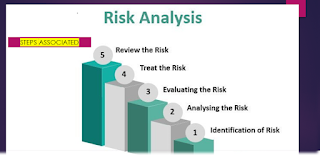
1.       Identify and prioritize assets- Servers, client contact information, confidential documents from partners, trade secrets, and so on are all examples of assets. Keep in mind that what you consider valuable as a technician may not actually be the most valuable for the company. As a result, you must collaborate with management and business users to compile a list of all valuable assets. Collect, if necessary, the following data for each asset:


  • ·         Software

  • ·         Hardware

  • ·         Data

  • ·         Interfaces

  • ·         Users

  • ·         Support Personnel

  • ·         Mission or Purpose

  • ·         Criticality

  • ·         Functional requirements

  • ·         IT security policies

  • ·         IT security architecture

  • ·         Network topology

  • ·         Information storage protection

  • ·         Information flow

  • ·         Technical security controls

  • ·         Physical security environment

  • ·         Environmental security


Since most businesses only have a small budget for risk assessment, you will probably only need to cover mission-critical assets for the remaining steps. As a result, you must establish a standard for assessing each asset's significance. The asset's monetary value, legal status, and significance to the organization are common criteria. Use the standard to classify each asset as critical, major, or minor after it has been approved by management and formally incorporated into the risk assessment security policy.


2.       Identify Threats- Anything that has the potential to harm your business is a threat. While malware and hackers are probably the first to come to mind, there are many other kinds of threats as well.

Natural catastrophes. Fire, earthquakes, floods, hurricanes, and other natural disasters have the potential to destroy not only data but also servers and appliances. Consider the likelihood of various natural disasters when choosing a location for your servers. For instance, there might be a low chance of tornadoes but a high risk of flooding in your area.

Absence of hardware. The quality and age of the server or other machine determine the likelihood of hardware failure. The likelihood of failure is low for equipment of high quality that is relatively new. However, the likelihood of failure is significantly increased if the equipment is old or comes from a "no-name" vendor. No matter what industry you operate in, you should put this threat on your watch list. It is possible for people to accidentally delete important files, click on a malicious link in an email, or spill coffee on critical systems-hosting equipment.

There are three types of wrongdoing:

When someone damages your business by physically stealing a computer or server, engineering a distributed denial of service (DDOS) attack against your website, or deleting data, they are committing interference.

Your data is stolen through interception.

Impersonation is the misuse of another person's credentials, which are typically obtained through social engineering, brute force, or the dark web.

3.       Identify Vulnerabilities- A weakness that could allow a threat to harm your business is a vulnerability. Analysis, audit reports, the NIST vulnerability database, vendor data, information security test and evaluation (ST&E) procedures, penetration testing, and automated vulnerability scanning tools are all methods by which vulnerabilities can be identified.


Don't confine your thinking to software flaws; Additionally, there are human and physical vulnerabilities. Having your server room in the basement, for instance, increases your vulnerability to flooding, and not informing employees about the dangers of clicking on links in emails increases your vulnerability to malware.


4.    Controls- To reduce or eliminate the likelihood that a threat will exploit a vulnerability, analyse the controls that are either in place or in the planning stage. Encryption, methods for detecting intrusions, and solutions for identification and authentication are all examples of technical controls. Security policies, administrative actions, and physical and environmental mechanisms are examples of nontechnical controls.


Nontechnical and technical controls can be further divided into preventive and detective categories. Preventive controls, as the name suggests, attempt to anticipate and avert attacks; Devices for authentication and encryption are two examples. Detective controls are used to find threats that have already happened or are about to happen; They include intrusion detection systems and audit trails.


5.        Determine the Likelihood of an Incident- Consider the type of vulnerability, the capability and motivation of the threat source, and the effectiveness of your controls to determine the likelihood that a vulnerability will actually be exploited. When determining the likelihood of an attack or other adverse event, many organizations use the categories high, medium, and low rather than a numerical score. 

The asset's mission and any processes that are dependent on it; the asset's value to the organization; and the asset's sensitivity. A business impact analysis (BIA) or mission impact analysis report can provide this information. The impact of harm to the organization's information assets, such as loss of confidentiality, integrity, and availability, is quantified or qualitatively assessed in this document. The impact on the system can be graded as high, medium, or low qualitatively.


6.        Determine the Level of Risk to the IT System for Each Threat/Vulnerability Pair Prioritize the Information Security Risks


The risk-level matrix is a useful tool for estimating risk in this manner. The likelihood that the threat will exploit the vulnerability. The approximate cost of each of these occurrences. The suitability of the planned or existing information system security controls for eliminating or reducing the risk. A probability of 1.0 indicates that the threat will be met; A value of 0.5 is assigned to a medium likelihood; and a 0.1 rating for a low likelihood of occurrence. In a similar vein, the values for a high impact level are 100, a medium impact level is 50, and a low impact level is 10. Risks are categorized as high, medium, or low based on the result of multiplying the threat likelihood value by the impact value.


7.        Recommend Controls - Determine the necessary steps to reduce the risk using the risk level as a foundation. For each level of risk, the following are some general guidelines:


High: As soon as possible, a plan for corrective action should be created.

Medium: Within a reasonable amount of time, a plan for corrective measures should be developed.

Low: The group must decide whether to take the risk or do something about it.

Be sure to take into account the following when evaluating controls to reduce each risk:


Policies of the organization Cost-benefit analysis Operational impact Feasibility Regulatory requirements in effect.

The recommended controls' overall effectiveness, Safety and reliability of the  Document ,the Results ,The development of a risk assessment report is the final step in the risk assessment process

This report will help management make good decisions about the budget, policies, procedures, and other things. The report ought to provide a description of the vulnerabilities that correspond to each threat, the assets that are in danger, the impact on your IT infrastructure, the likelihood of occurrence, and the control recommendations.


Report on the IT risk assessment- The risk assessment report can point to important steps that can be taken to reduce multiple risks. For instance, taking regular backups and storing them off-site will reduce the likelihood of flooding and accidental file deletion. The associated costs and business justifications for making the investment should be explained in detail at each step.


Always keep in mind that the core of cybersecurity are the enterprise risk management and information security risk assessment processes. The information security management strategy as a whole is built on these processes, which answer questions about which threats and vulnerabilities can cost the company money and how to reduce them.


❌