The Seattle-based video game developer behind the award-winning virtual reality adventure Moss has closed its doors.
The announcement was made via Polyarc Games’ LinkedIn page on Friday afternoon. No specific reason was offered for the studio’s closure.
“After nearly 12 years riding the joyous rollercoaster of emotions that is making video games, our time together has come to an end,” wrote an unnamed Polyarc representative. “Thank you to everyone at Polyarc. Our work is now finished.”
Twenty-nine employees will be dismissed due to the studio’s closure, including co-founders Chris Alderson, Danny Bulla, and CEO Tam Armstrong. Polyarc has posted a list of contact information and profiles for all affected employees, in an attempt to help them line up their next positions.
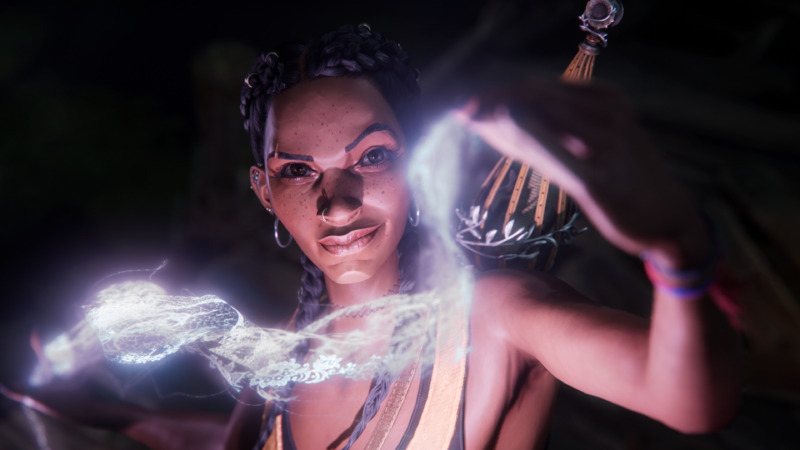
Polyarc’s first and best-known release was 2018’s Moss, where players helped guide a young mouse named Quill through a fantasy world on a journey to save her uncle. It was followed by 2022’s Moss: Book II, a direct sequel that continued Quill’s story, and the 2025 strategy spin-off Glassbreakers.
Polyarc’s most recent release was this year’s Moss: The Forgotten Relic for PC and console, which collected both Moss games into a single non-VR experience.
Armstrong, Bulla, and Alderson founded Polyarc as a startup in 2015. All three were former employees of Bungie in Bellevue, where they’d all worked in different capacities on Bungie’s online shooter Destiny.
Polyarc’s closure comes almost six months after its announcement in March that it’d had to significantly reduce the size of the company, and almost eight months after a wave of layoffs at Meta that forced a major reduction at Bellevue, Wash.-based VR studio Camouflaj (Republique, Batman: Arkham Shadow).
As noted in January, Meta is perhaps the largest current player in the virtual reality sector, largely off the ubiquity of its standalone Quest headsets. When Meta decided to deemphasize its VR efforts in January, reportedly in favor of wearable computing and AI research, it touched off a negative ripple effect throughout the virtual reality field.
There is a chance that Valve’s upcoming Steam Frame may serve as an effective bailout for the VR sector by reigniting consumer interest, but at time of writing, the Frame has no release date. It’s apparently imminent, as suggested by a big leak in August, but there’s nothing definite. If the Steam Machine’s release in June was any indication, however, we can assume the Steam Frame will launch without warning on some random Tuesday morning in the next two months.
The September update for Amazon’s cloud-based gaming service Luna comes with multiple new features, the most prominent of which is one that will allow up to 7 other players to remotely participate in the same gaming session.
Since its aggressive relaunch earlier this summer, Amazon has pinned its hopes for Luna on multiplayer games and the casual market. Anyone with an active Amazon Prime subscription has access to Luna and can launch it directly from the Prime Video app, which allows them to stream an assortment of video games to their TV, browser, or tablet via Amazon’s cloud servers.
This includes around 60 casual-friendly multiplayer games, designed to be playable by just about anyone of any age as a group activity, and some of which are exclusive to Luna as a platform.
Its newest feature, Remote Play, changes how multiplayer titles work on the service. One player with a Prime subscription can now invite up to 7 other people to participate remotely in a multiplayer Luna game, as long as all 7 of those people have an account on Amazon and a compatible device. This reportedly works with every multiplayer game on Luna, including those that formerly required every player to physically be in the same room.
Two new games have been added to Luna’s library that specifically take advantage of Remote Play. This includes a Luna-exclusive mobile version of Magic: The Gathering creator Richard Garfield’s 2011 board game King of Tokyo, in which players take the role of giant monsters fighting one another in the ruins of Japan.
(Amazon press image)
Other additions to Luna this month include access to two relatively recent games from the French publisher Ubisoft: 2024’s Star Wars: Outlaws and 2023’s Avatar: Frontiers of Pandora, the latter of which is set in the universe of James Cameron’s film franchise.
Amazon has not shared user data for Luna since its recent relaunch, so it’s difficult to tell from outside the company how much of an audience it’s been able to build. Luna represents a bet by Amazon that, in the midst of the ongoing component crunch and the related rise in hardware costs, it can build an audience by offering access to popular video games via whatever devices people might already have in their homes.
A few years ago, cloud gaming as a whole was one of the major topics in the games industry, with some analysts going so far as to predict that it was the future of hardware. Instead of purchasing an Xbox or PlayStation in your own home, you’d simply dial into a remote server and stream games to your TV.
That gold rush has largely faded in recent years, as the furor over genAI has stolen some of its thunder, but cloud gaming is still a going concern and a surprisingly competitive market. Luna might be the most accessible option for would-be cloud gamers, as it’s bundled into a subscription that 200 million households already have, but it’s quietly up against giants like Nvidia, Microsoft, and Sony.
Some of the biggest names in the games industry have placed a quiet bet that the “RAMageddon” will quietly push audiences further towards the cloud. As yet, there’s no solid evidence whether or not it’s paid off. Still, if you’re looking to get into video games but missed your window to get a relatively inexpensive computer or console, the cloud might offer you some worthwhile options.
Sonic on display at the 210 Gallery in Pioneer Square on Sept. 3, as part of a media preview event. (GeekWire Photo / Thomas Wilde)
If you attended the Sunset Market in Seattle’s Pioneer Square on Thursday night, you might’ve noticed that one of the local galleries had been transformed into a shrine to, of all things, Sonic the Hedgehog.
That’s because on Labor Day weekend, Seattle is hosting 35 Years of Speed: The Sonic Art Exhibit. This touring art collection is part of the celebration of the anniversary of the Sonic franchise, which began in 1991 with the original Sonic the Hedgehog for the Sega Genesis.
Sega commissioned more than 50 pieces for the exhibition, ranging from the iconic to the deliberately comedic. (GeekWire Photo/Thomas Wilde)
The Sonic Art Exhibit features framed concept and box art from the Sonic archives, several pieces by official Sonic artists, and a curated selection of pieces created and submitted by the Sonic fan community, which includes paintings, sketches, and even statuary.
“It’s Sonic’s 35th anniversary, so we’ve been looking at ways to celebrate his legacy,” said Jessica Perri, Sega brand director. “We commissioned 50-plus artists across styles and different mediums, and we also worked with fans who bring their own inspirations to the table. We’re displaying it all here in Seattle over the course of the weekend.”
Perri continued, “We’re really just excited to celebrate Sonic through the lens of art.”
The exhibit features multiple pieces of concept art from the history of the Sonic series, such as a design document for Sonic’s evil robot duplicate Metal Sonic (lower right) and framed boxes from multiple international editions of the original games. (GeekWire Photo/Thomas Wilde)
The game was Sega’s first-party “killer app,” intended to compete directly with the Super Nintendo and its Super Mario franchise. The title character is a blue hedgehog with the power of super-speed, who fights alongside his friends against his nemesis, Dr. Ivo Robotnik.
In the last 35 years, Sonic has appeared in more than 100 video games, which range from some absolute classics to one of the most infamous misfires in the history of the medium.
There have also been multiple lines of merchandise; several animated shows; a successful live-action film series with a fourth entry coming in early 2027; a popular comic book, which is currently published by San Diego-based IDW; and a recent comic crossover with the DC Universe that did well enough to get a sequel. (Trivia: Sonic the Hedgehog is now technically a member of the Justice League.)
35 Years of Speed: The Sonic Art Exhibit is running at Seattle’s 210 Gallery at 301 Occidental Ave. S. from Sept. 4 through Sept. 6 from 11 a.m. to 7 p.m. Admission is free. After its Seattle run, the exhibition will have its final show in Los Angeles later this month.
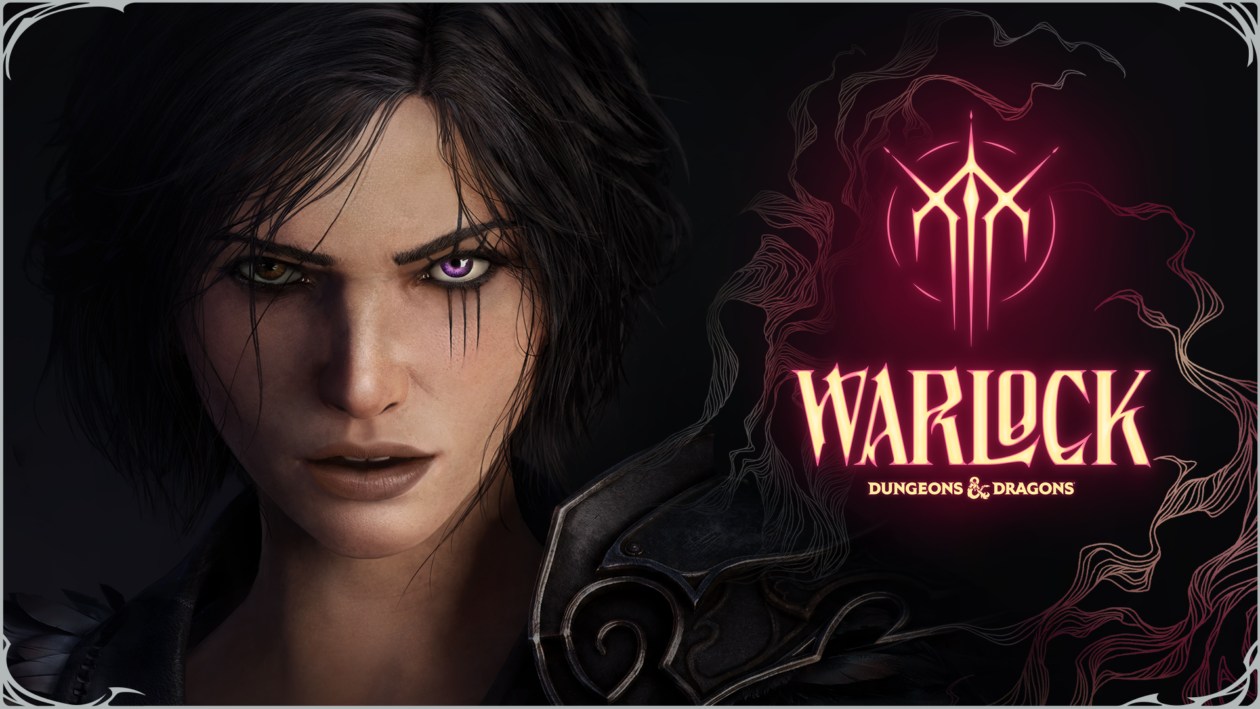
Wizards of the Coast and its subsidiary Invoke Studios released a first-look gameplay trailer for Warlock: Dungeons & Dragons, a new open-world action game based upon the systems and setting of Wizards’ popular tabletop role-playing game.
Wizards, based in Renton, Wash., is a subsidiary of Hasbro and the company behind the D&D and Magic: The Gathering franchises. It has become one of the toy giant’s most reliable profit engines. Hasbro and Wizards are now looking to video games for additional growth, with mixed results; Wizards’ recent video game efforts have included both the generational success of Baldur’s Gate 3 and significant flops such as 2021’s Dark Alliance.
Warlock‘s first trailer was released during Opening Night Live at the Gamescom conference in Cologne, Germany, which has become one of the hallmarks of the video game industry’s calendar, particularly in Europe. Clearly, someone at Wizards and/or Hasbro has a great deal of faith in Warlock.
Warlock is set in the brand-new fantasy world of Darkon. Players take the role of Kaatri (Tricia Helfer, Battlestar Galactica), a combat veteran and swordswoman who makes a pact with a magical entity to attain magical powers. Specifically, Kaatri’s deal is with Tasha (Maggie Robertson, Resident Evil Village), an archmage from the world of Toril and one of D&D’s longest-running signature characters.
In exchange for whatever Tasha wants, which is not yet revealed, Kaatri becomes a warlock: a spellcaster who derives her magic from her link with Tasha, rather than the other available sources in D&D’s cosmology. Kaatri’s newfound powers include signature D&D abilities such as telekinesis, short-distance teleportation, and detecting sources of magic.
As such, the player can approach every situation in a number of ways depending upon their opportunities and preferences, from open conflict to stealth to clever manipulation of their environment. You can go in swinging with Kaatri’s sword, telekinetically shove enemies off of cliffs, or take an opponent out at long range with D&D warlocks’ signature eldritch blasts.
Invoke Studios, based in Montreal, was founded in 2022 as a reorganization of the team behind the 2021 co-op action-RPG Dungeons & Dragons: Dark Alliance. Warlock is its debut project under the Invoke Studios brand.
To make it to market, Warlock and Invoke have survived two leadership shakeups at Wizards and several waves of layoffs and shutdowns, including the cancellation of two other D&D-based video game projects in early 2023.
Warlock: Dungeons & Dragons is scheduled for release in 2027 for PC, PlayStation 5, and Xbox Series X|S.
One of the video game studios impacted by Xbox’s layoffs in July has successfully reclaimed its independence, as well as control over its intellectual property.
Compulsion Games, headquartered in Montreal, was founded as an independent studio in 2009 and acquired by Xbox in 2018. Its one release as a member of the Xbox Games Studio network was 2025’s South of Midnight, an action/adventure game set in a magical Deep South.
In July, Microsoft announced the first wave of a planned 3,200 job cuts throughout its Xbox department, alongside plans to spin out or shut down five of its studios. Compulsion Games was one of those five, alongside Double Fine Productions (Psychonauts), Ninja Theory (Hellblade), Undead Labs (State of Decay), and Arkane Studios (Deathloop, Dishonored).
Subsequently, on Aug. 20, Compulsion CEO Guillaume Provost revealed in an interview with GamesBeat’s Dean Takahashi that Compulsion’s management had successfully reacquired the studio, its staff, and the South of Midnight IP on Aug. 11.
South of Midnight is still available via its previous storefronts, including Steam and the PlayStation Network, but is currently self-published by Compulsion.
Provost told GamesBeat that no layoffs had been made at Compulsion as it transitioned to independence, and most of the team elected to stay together.
As for the other studios affected by Xbox’s July 6 layoffs:
Double Fine Productions, headquartered in San Francisco, confirmed on July 28 that it had laid off 23 employees to return the studio to a “sustainable size.” It is once again fully independent and has control of its IP, such as Psychonauts, and will be exhibiting in Seattle on Labor Day weekend as part of the Penny Arcade Expo.
Ninja Theory, from Cambridge, England, was one of the more unexpected shutdowns, as it had debuted Senua, a third entry in its Hellblade series, only a few days before the layoffs announcement. It has reportedly been spun off from Microsoft and will continue work on Senua under an unspecified new owner.
Likewise, Seattle’s Undead Labs is currently under unidentified new ownership and still plans to release the long-anticipated third entry in its zombie survival series State of Decay at some point next year.
Finally, Arkane’s status has yet to be firmly established. It formerly consisted of two studios, in Austin, Texas and Lyon, France, but its Austin office was closed down as part of a wholly separate wave of Xbox layoffs in May 2024. Several of the affected employees in Texas, including former studio head Harvey Smith, announced on Aug. 19 that they’d founded a new company, Black Pony Immersive, with plans to create new games in the same “immersive sim” subgenre as Dishonored.
Xbox is currently exhibiting at the Gamescom conference in Cologne, Germany.
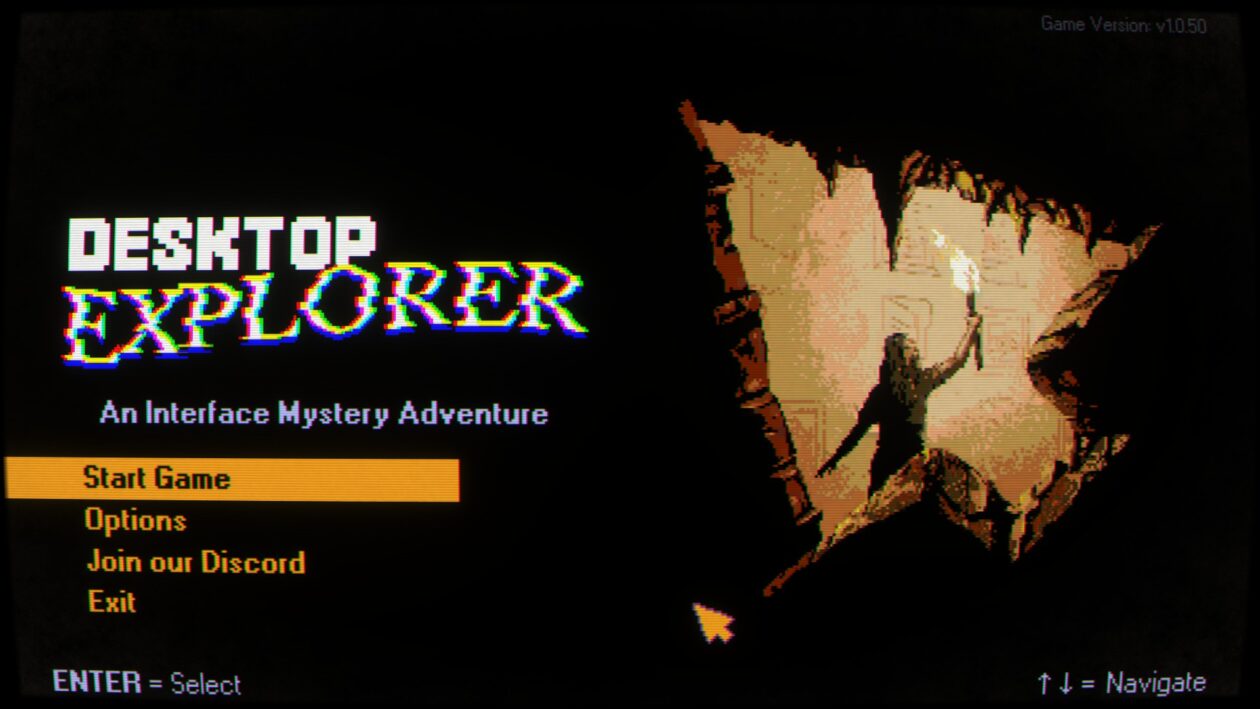
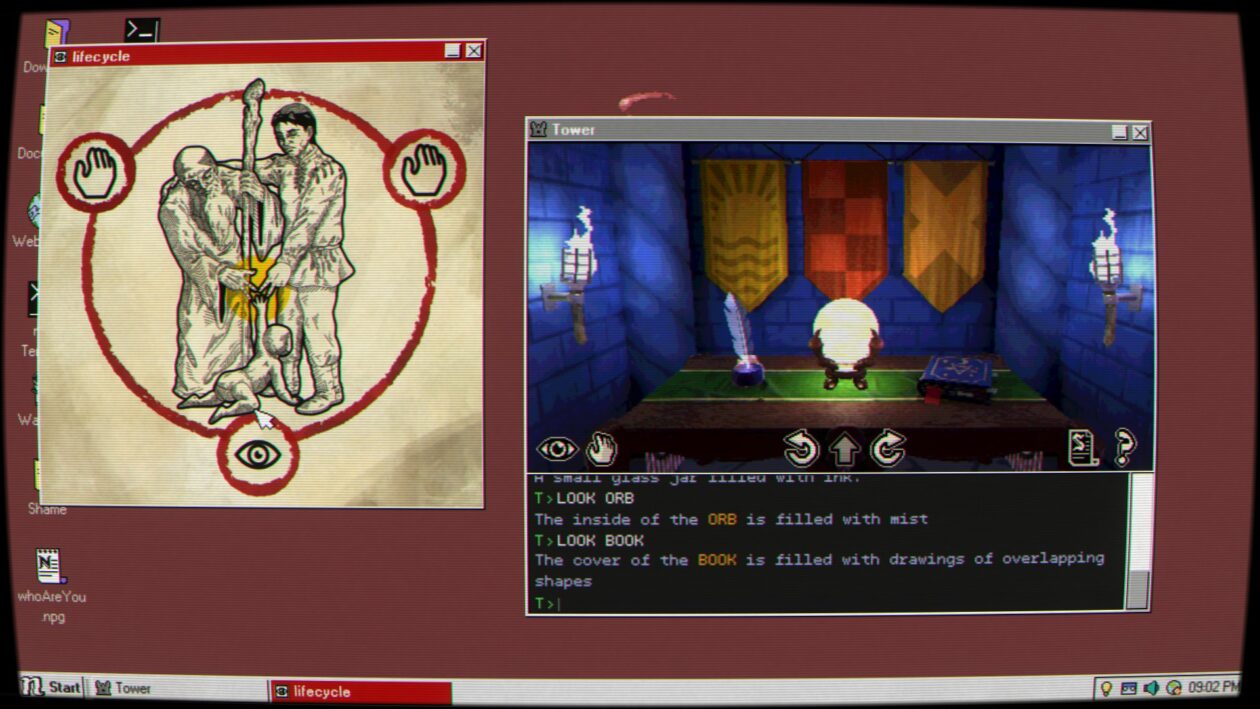
For the first hour or so, Desktop Explorer looks like a nostalgia project. The indie adventure game challenges the player to unravel a mystery by sorting through the files and programs on an old desktop computer.
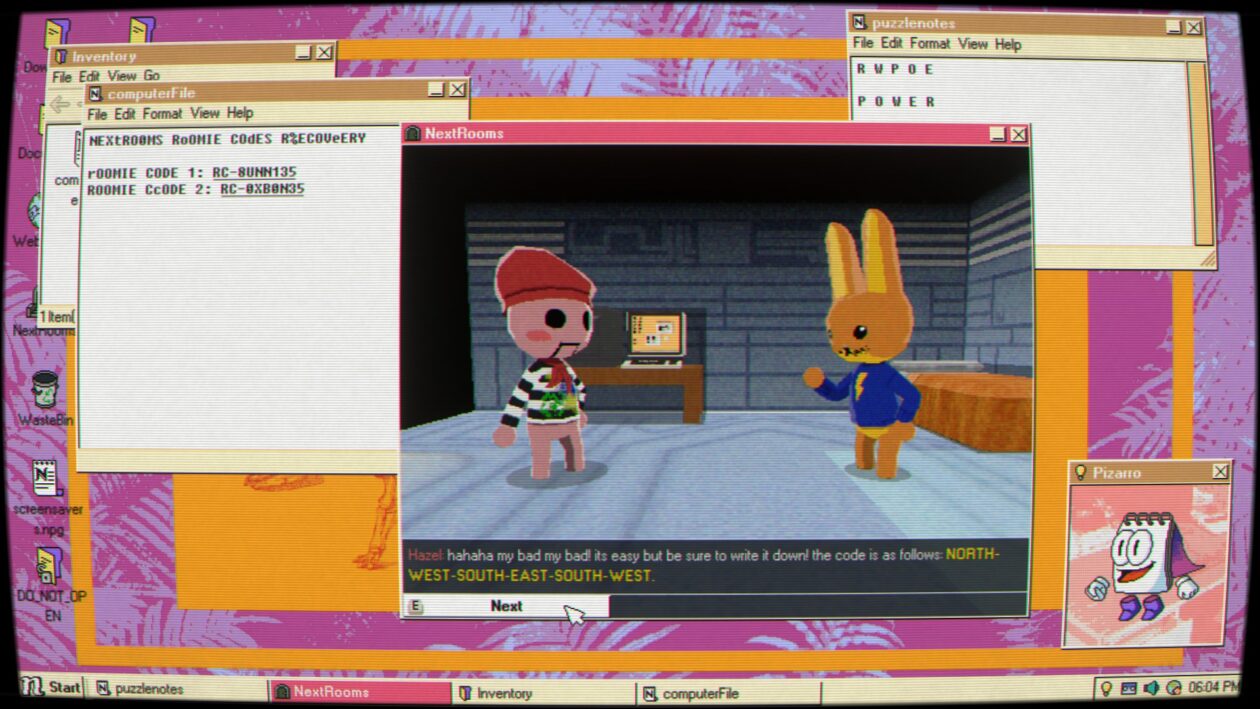
Many of its puzzles are solved through clever usage of features and tools that will be immediately familiar to anyone who spent any amount of time with Windows 95.
On the other hand, many other puzzles in Desktop Explorer are too immediate and personal to be explained by an old OS on decaying hardware. Part of it comes from the fact that using someone else’s computer can feel like you’re crawling inside their brain, and this PC in particular has a glitchy virtual assistant that seems like it knows more than it should.
Maybe the computer’s actually haunted. Maybe it’s something else.
Desktop Explorer, now available for PC and Mac, is an indie adventure game developed by Recurring Dream, a Mexican-led studio based in Seattle, and co-published by Indienova and Redmond, Wash.-based Outersloth. Recurring Dream, formerly known as Crocodile Company, previously exhibited DE at the 2023 Seattle Indies Expo.
(Recurring Dream screenshot)
DE is a “screenlife” adventure game, in the spirit of earlier releases such as Emily is Away and Her Story. You never leave the protagonist’s perspective, who’s initially only known by her nickname “Guppy,” and she spends the entire game working on her uncle’s half-busted desktop PC. You only ever see Guppy herself through photos stored on the PC.
In August of 2012, Guppy inherits a computer from her uncle Hal, who’s just gone into the hospital for dementia treatment. The first time she boots the PC, she finds a message her uncle left behind that explains why he’s held onto it for so long. The PC used to belong to someone that Hal cared about, who’s since disappeared, and he was convinced that there’s still some information about her whereabouts on the computer. Guppy, who’s a lot more computer-literate than her uncle was, decides to pick up where her uncle left off.
The primary focus of your investigation is Desktop Explorer, an app found on the PC that comes with its own digital assistant. Desktop Explorer initially comes off like it might be a gamified teaching tool for new PC users, as its first couple of puzzles involve basic tasks like renaming and compressing files.
From there, DE‘s challenges rapidly get tougher and more abstract. Some require you to translate encoded messages or search for information via the cached files on the PC’s browser. For others, you need to edit an application’s source code, duplicate files, or change the date on the PC to match a specific point in time. While you can get a couple of hints in-game if you know where to look, Desktop Explorer is surprisingly challenging.
It can also be surprisingly creepy. While it never gets more intense than an average PG-13 thriller, there are a few genuine scares across Desktop Explorer’s 4- to 7-hour running time. Right from the start, it’s obvious there’s more going on inside this old PC than you’re initially allowed to see, and the closer you get to the truth, the more surreal it becomes.
(Recurring Dream screenshot)
Desktop Explorer sits at the center of an odd Venn diagram, between retro computer enthusiasts, people who enjoy mysteries, and the adventure-gaming community. It’s initially a nostalgic experience, but that’s a thin veneer over what becomes a sort of low-key psychological thriller.
As usual with this sort of game, the fun of it comes from being able to figure out its puzzles, which can be extraordinarily hit-and-miss. Some are clever, with just enough information to let you figure out the rest on your own, while others require you to make a big intuitive leap at some point or to have spent an unusual amount of time randomly clicking buttons on the desktop. One late-game puzzle involves looking up the browser history on the PC, which you’re never told how to do and which is never useful before or after that point.
(An accessibility note: I’m red-green color-blind. While Desktop Explorer has a number of puzzles that involve color-matching, there aren’t any options in place to tweak its palette. This is an increasing issue for modern video games, especially ones that were independently produced. DE isn’t the worst offender in that regard that I’ve played in recent memory, but there are a couple of parts of the game where I just had to brute-force a puzzle.)
Those mild issues aside, Desktop Explorer is a solid entry into the unique, narrow field of screenlife detective games. While not all of its puzzles are equally satisfying, it’s a short, memorable experience that rewards you for unconventional thinking. The appeal to nostalgia might get you in the door, but its unpredictability is what keeps you thinking about it until its end.
Desktop Explorer is out now for Windows PC and Mac via Steam for $17.99.
Amazon indicated for the first time this week that any video broadcast via its livestreaming platform Twitch could be used to train generative AI, unless users take steps to avoid it, which has caused a significant backlash from both audiences and content creators.
The story began with a post on the official Twitch Support account on X (formerly Twitter) which informed users of the existence of a new option on the Twitch dashboard. That option lets users opt out of Amazon using content on their channel to train generative AI.
That, in turn, served as a couple of additional implicit announcements: Amazon intends to use Twitch as a data farm, and this option is enabled by default for all Twitch accounts. You have to actively turn it off or anything you broadcast via Twitch could be fed into “generative AI content models at Amazon.”
According to Twitch’s FAQ, the data gathered from Twitch may be used to train a future model “whose purpose is to generate or synthesize text, audio, images, or video.”
(To opt out of Amazon’s training on your own Twitch channel, go to the Settings menu, look for the “Training for Generative AI” section under Security and Privacy, and turn it off. Don’t be surprised if this takes more than one try, as several users have taken to social media to report that the training option likes to turn itself back on when you aren’t looking.)
Above, bottom: if you have a Twitch account, then as of Aug. 12, it has an option under Security and Privacy to allow you to opt out of your broadcasts being used as training data for an Amazon LLM. (Twitch screenshot)
A follow-up stream from Twitch’s head of community, Mary Kish, poured some more gasoline on the flames. Kish aired a live interview on her personal Twitch channel with Mike Minton, chief product officer at Twitch, and Minton chose that moment to get uncommonly candid.
In response to viewers demanding to know why the AI settings on Twitch weren’t opt-in instead of opt-out, Minton said, “There’s an honest answer, and I think most of you can probably appreciate this. If it was opt-in, nobody would opt in.”
Kish and Minton made an additional point of drawing a distinction between AI-powered features that are already on Twitch, such as auto-captions, and the unspecified models that Amazon plans to use Twitch data to train.
“…I think our community has the reaction that I expected you guys to have, which is that you don’t like this,” Kish said. “Because this is industry standard, going other places [besides Twitch] won’t absolve you of this… it’s something that’s happening on livestreaming communities across the space.”
Twitch came out of the 2020 lockdowns in a period of massive growth, and for several years, accounted for roughly 80 to 90% of online livestreaming. Since then, however, its market share has steadily eroded. According to a July report by the Kyiv-based analytics firm StreamsCharts, YouTube Live and TikTok Live have both overtaken Twitch’s audience share, though Twitch does still handle nearly half of livestreamed video game content.
That, in turn, brings up some of its own issues.
“…It gets me really worried about all the elements I use in my streams,” Lance Icarus, a Seattle-based gaming broadcaster, told GeekWire via Discord. “I play indie games that are proud to not be GenAI. Can I stream that game knowing I’m feeding that playthrough into a machine?”
Icarus continued, “What about when I stream with guests? Some of them are voice talents who fought hard to gain rights against the very thing I’m asking them to do by streaming on our channel. I’m still trying to wrap my head around all the ramifications.”
Beyond the simple logistics, it’s hard to overstate the degree of hostility that Amazon and Twitch are facing over this move, from both broadcasters and audience members.
“They had to do it like this,” Seattle-based Twitch streamer Will Overgard told GeekWire. “Generative AI doesn’t make money, but selling data does. I guess they turned data collection on for everyone hoping enough people wouldn’t know to turn it off or forget about it so they’d have something to flog.”
Kish noted during her Aug. 12 stream that Twitch and Amazon are watching the numbers to see how many broadcasters actively opt out of being used as training data.
At time of writing, discussions are ongoing about what if any reaction this will draw from the creator community on Twitch, which still drives much of the platform’s business. One step that’s already been taken is that streamers have begun to tag their own broadcasts with “AIOptedOut” or “NoAI” to indicate their feelings on the matter. It’s now a question of whether audiences will follow suit.
This year’s Gen Con is being held in Indianapolis July 30 through Aug. 2. In advance of the show, one of the biggest events on the calendar for North America’s tabletop gaming community, Wizards of the Coast invited press to take an early look at its scheduled announcements for the Dungeons & Dragons roleplaying game.
Wizards, headquartered in Renton, Wash., has published D&D since 1997, and has presided over the game’s meteoric rise in the last decade. Despite renewed competition and several unforced errors, D&D remains the single most popular game in the tabletop roleplaying space, to the point where it’s still often considered synonymous with the hobby as a whole.
In the next year, Wizards’ plans for D&D include a major brand revival, a substantial overhaul to its D&D Beyond online toolset, and a new publishing initiative that promises new and upcoming projects from several of D&D’s classic creators.
What might get the most attention from outside the hobby, however, is a new series of expansions for D&D that will be published under the banner of “Universes Beyond.” The first book for UB, coming on Nov. 17, is a D&D sourcebook based on Blizzard Entertainment’s long-running MMORPG World of Warcraft.
Co-created by long-time D&D designer (and WoW player) James Wyatt, the WoW sourcebook is designed to let players bring the characters, factions, and setting of WoW directly into D&D’s mechanics, with material that spans everything from the earliest days of the MMO to its most recent expansion, Midnight.
Warcraft began in 1994 as a real-time strategy franchise, built around a fantasy kingdom of humans and elves that was abruptly invaded by orcs from another world. The original Warcraft was essentially a fan production for the Warhammer Fantasy universe, but ended up becoming its own original IP.
Warcraft eventually branched out into the nascent MMORPG genre with 2004’s World of Warcraft, which rapidly became a smash hit and is still one of the most popular online games in the current market. WoW has evolved from its original dark fantasy roots into a sort of interplanetary space opera. Its current story arc, the “Worldsoul Saga,” involves the struggle to protect the world of Azeroth from the void priestess who’s out to corrupt it.
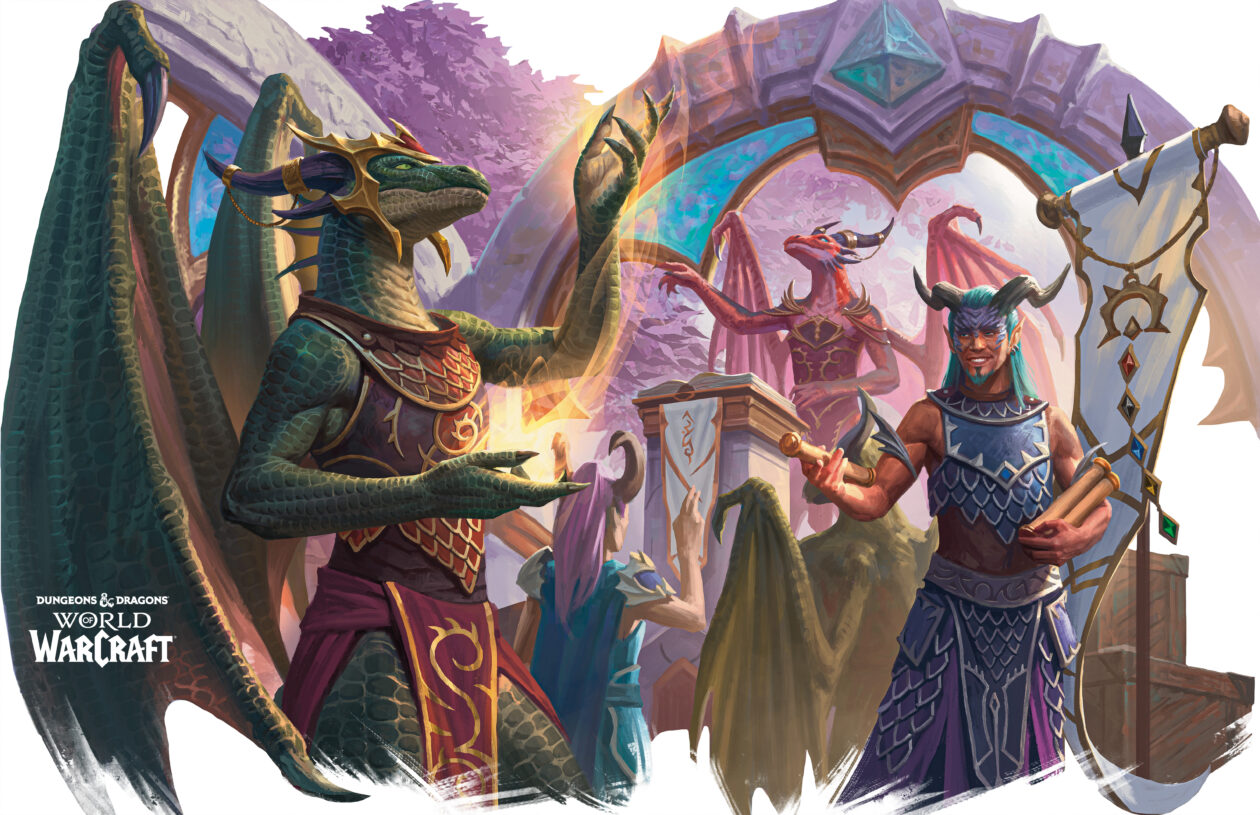
The World of Warcraft expansion for Dungeons & Dragons includes rules for playing dracthyr, a draconic species introduced in the WoW expansion Dragonflight. (Wizards of the Coast press image)
This includes D&D versions of trademark WoW species like tauren, dracthyr, earthen, and pandaren; multiple instances from WoW that have been translated into D&D-style dungeon crawls, including a high-level campaign set in Icecrown Citadel; and new D&D subclasses based on character options from WoW, such as death knights, shadow priests, and demon hunters.
This is technically the second time someone’s made Warcraft into a tabletop game, following Sword & Sorcery Studios’ 2003 Warcraft: The Roleplaying Game. According to Wyatt, Wizards’ 2026 book has little to do with that previous publication.
The Warcraft RPG was compatible with 3rd edition D&D but was meant as a standalone product, so it had to spend a lot of its word count on setting up the game’s rules. Wizards’ 2026 World of Warcraft book is an official release for D&D, so it can refer players to the core D&D books for its rules and save its space for more setting details.
The World of Warcraft Universes Beyond book is the first planned entry in what’s intended as an ongoing series of expansions. In the words of D&D franchise head Dan Ayoub, this will extend “Dungeons & Dragons into even more worlds we love.” Exactly which worlds those might be, however, has yet to be announced.
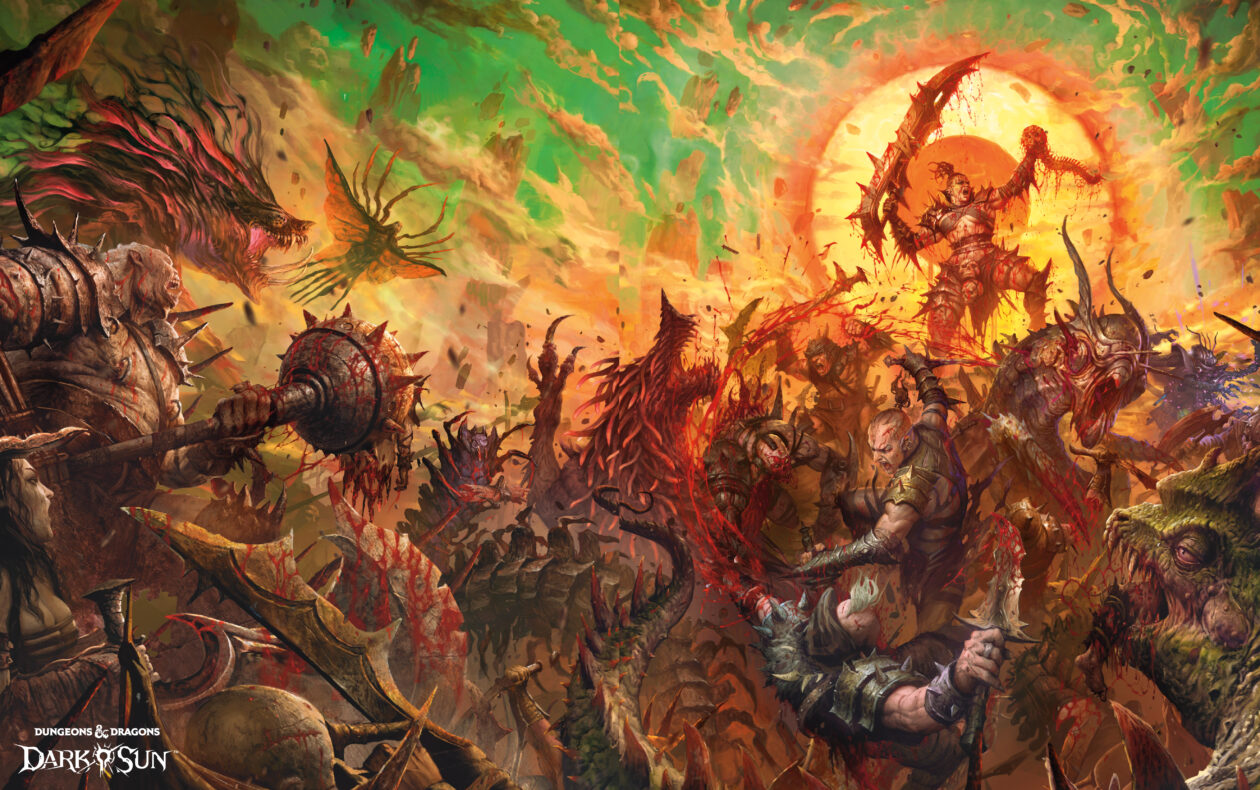
Welcome to Athas, lunch meat. (Wizards of the Coast press image)
Other D&D announcements from Gen Con 2026 include:
One of D&D’s classic settings is coming back in 2027. Dark Sun was originally published in 1991 as a dark, post-apocalyptic take on D&D, taking place on a dying desert world ruled by crazed sorcerer-kings. Wizards’ revival of the setting will be the first official Dark Sun material since 2010, and will be the first Wizards of the Coast product to ship with a mature content warning.
D&D executive producer Greg Bilsland introduced a new initiative he called “Annual Setting Support,” where Wizards will partner with other publishers for yearly new releases to provide additional material for D&D‘s various ongoing campaign settings. 2027 will see a new Ravenloft book made by the Australian company Ghostfire Gaming (Grim Hollow); more Eberron material from Visionary Productions in Canada; and a Forgotten Realms sourcebook by Kirkland, Wash.-based Kobold Press.
Wizards has hired actor and high-profile D&D fan Joe Manganiello (Justice League, Magic Mike) as the creative director for D&D Icons. This new “content program” marks the return of several classic creators to D&D, such as Margaret Weis, Tracy Hickman, and R.A. Salvatore. (Not that Salvatore’s ever exactly left, since he’s been putting out new Drizzt Do’Urden novels almost annually since the 1980s, but you get the idea.)
Luke Gygax is working to finish a project left behind by his late father, Gary Gygax, one of the original co-creators of D&D. The result will be published under the Icons banner, and promises that Luke will “complete an adventure through his father’s eyes.” The result is tentatively planned for publication next year.
2027 will see the release of a new adventure in D&D’s original setting of Greyhawk. Crown of the Witch Queen pits players against the vampire warrior Drelnza, last seen in the classic adventure The Lost Caverns of Tsojcanth, as “she seeks to claim her birthright.”
The forthcoming video game Warlock: Dungeons & Dragons features a vocal performance from Maggie Robertson (Lady Dimitrescu from Resident Evil Village). Robertson voices one of the oldest signature characters in D&D, the archmage Tasha. A first look at Warlock’s gameplay is planned for Aug. 25 as part of the Gamescom conference in Germany.
D&D Beyond plans to revise its mobile experience, which will make it “easier and more intuitive to play D&D your way,” with your phone or tablet as an unobtrusive tool. It can be helpful to keep a browser window open while you play D&D, to look up rules on the fly, and the goal of this new Beyond is to make that process as painless as possible.
Beyond also has a new “Looking for Group” feature in the works, which is designed to help D&D players find people to play the game with, whether it’s locally, virtually, or by hiring professionals to run D&D for them. (The “paid Dungeon Master” has become a genuine thing in recent years. I know. It feels weird to me, too.)
A Seattle game studio is collaborating with NASA to create a new educational video game that challenges players to plan, collaborate, and invent their way to building a virtual lunar colony.
Moonbase Y, currently under development at August Interactive, is a cooperative, exploration-focused online video game that puts players ages 13 and older in the role of the architects and engineers of a mission to return humanity to the moon. Step one is leaving Earth’s atmosphere, while step two is successfully landing on the lunar surface.
Once they’re actually on the moon, Moonbase Y players can craft items, research technologies, build their own virtual colony, and use all the usual collaborative tools found in online building games, all in a game that’s built on source images and data provided directly by NASA. To succeed, they’ll need to come up with their own solutions for the real-world problems that will confront an off-world settlement.
“There’s a whole generation of kids who may very well live and work on the moon,” said Sarah Kneller, August Interactive’s chief experience officer. “It’s imminent.”
Kneller describes Moonbase Y as a way to “not only let people imagine the future, but give them the tools to help create it.” It’s one thing to learn about the sciences and technologies required to construct a lunar colony, but it’s a better educational experience to actually let someone do it themselves.
As a video game, Moonbase Y can be summarized as a crafting-focused collaborative RPG that’s using up-to-date real scientific data. Any and every solution that players will have to come up with to build their colony in Moonbase Y is something that could at least theoretically work under real-world conditions.
August Interactive CEO Kristin Wood, left, and CXO Sarah Kneller. (LinkedIn Photos)
According to August Interactive’s CEO Kristin Wood, NASA’s current goal is to have an inhabited lunar base by 2040, as a first step toward a crewed expedition to Mars. In order to do so, Wood said, “there are approximately 187 technologies that will need to be created.”
Moonbase Y isn’t an attempt to crowdsource those solutions. Instead, it’s an educational game that’s made to let players work on specific necessary skills in a collaborative environment.
“We want a 13-year-old to understand they don’t have to be a rocket scientist [to contribute],” Kneller said. “They can say, ‘There is something I’m good at that matters.’” Wherever someone’s talents lie, from hard sciences to soft skills, they could be a part of a project like this. No one is irrelevant.
That’s part of Moonbase Y’s deliberately hopeful tone. From the ground up, the game is being built as a deliberate act of optimism. While it’s possible for a player’s colony to fail, that’s part of the learning process. You can always start again, and this time you’re a little smarter for having had the experience. This is a tough job, but that’s part of the fun.
“As entertainers, it’s really easy to sell the terrifying outcome… this mental model that the future is bleak,” Kneller said. As a result, Moonbase Y is purposefully swinging hard in the other direction.
(August Interactive press image)
Kneller used to work for Valve Software in Bellevue, Wash., where she spent more than a decade as an executive producer for Dota 2’s esports circuit. She left the company in 2023 to co-found August Interactive.
Other team members at August include Wood, a former CIA officer turned tech entrepreneur; CRO Mike Ambinder, a former research scientist for Valve who specializes in experimental psychology as it applies to game design; and creative director Jon Pierre Yousef, a Florida-based artist who’s contributed to franchises such as Fortnite and Call of Duty.
In addition to Moonbase Y, August Interactive released its first professional project on July 21. Spire is a “performance intelligence layer” that analyzes users’ style of play in competitive video games and gives players tips on how to improve. The idea behind Spire is to smooth out the onboarding process for multiplayer games like Rocket League or Dota 2, in order to make them more accessible for new players.
Moonbase Y is currently in production at August Interactive, with no stated release window.

 Login
Login