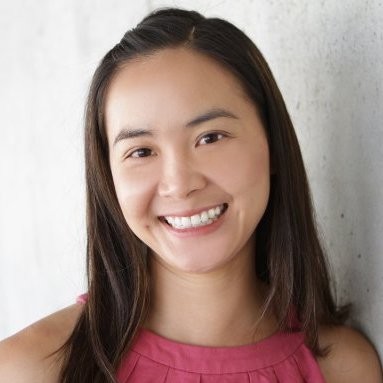
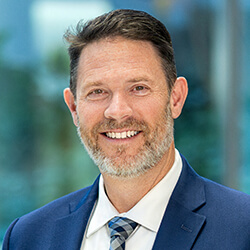
Hannah Freeman, co-founder of Ganaz. (LinkedIn Photo)
Seattle startup Ganaz, which provides payroll and HR tech for agricultural workers and employers, has been acquired by Beacon Holdings.
Ganaz co-founder and CEO Hannah Freeman announced the deal Wednesday on LinkedIn, saying the public benefit corporation “is in great hands” at Beacon, which “is building momentum for our next exciting season.”
Freeman indicated she is stepping away from the company to “catch my breath, spend more time with my daughter, and dream about what’s next,” she wrote. “I’ll miss our team & customers, but will be cheering you on from the sidelines.”
Ganaz launched in 2017 and has raised more than $10 million, with its last disclosed funding round in June 2021. That financing valued the company at $26 million, according to PitchBook. Terms of the acquisition were not disclosed.
Beacon, based in Toronto, buys software businesses serving traditional industries and provides shared technology and operational resources. The company said in September that its portfolio included 45 software businesses.
Ganaz’s platform provides employee onboarding, training, communication and analytics tools. It also offers a Mastercard payroll card that gives unbanked workers access to digital banking. Employers save time and money by skipping paper checks, while workers keep more of their pay by avoiding check-cashing and high remittance fees.
Ganaz received GeekWire’s 2023 Geeks Give Back Award. “We founded Ganaz to make life better for farm workers, and we do that by building technology that agricultural employers love and can’t live without,” Freeman told GeekWire in 2023. “We build our tools to help both workers and employers prosper, and that kicks off a virtuous cycle that helps agricultural communities prosper as well.”
At that time, the startup was serving more than 250,000 agricultural workers in the U.S. and Mexico and 100 employers in the sector.
The company has about 17 employees, according to LinkedIn. Freeman did not say in her post whether Ganaz will continue as a subsidiary or whether its employees will receive job offers from Beacon. GeekWire has reached out to Freeman for comment and will update the story with any reply.
Mike Sievert in 2017 when he was serving as T-Mobile’s COO before rising to CEO in 2020. (GeekWire File Photo/Kevin Lisota)
Former T-Mobile CEO Mike Sievert is hanging up his magenta hat, leaving the wireless giant’s board of directors and vice chair role effective Nov. 1.
Sievert will also leave the board’s Transaction Committee, according to a federal filing. His departure comes a year after he handed the CEO job to Srini Gopalan.
A company spokesperson said via email that the vice chair role was structured as a one-year term, adding that Sievert has “been a valued strategic advisor throughout the leadership transition, and we’re incredibly grateful for his contributions.”
T-Mobile said in the filing that his departure “is not the result of any disagreement with the Company on any matter relating to its operations, policies or practices.”
Sievert joined T-Mobile in 2012 as executive vice president and chief marketing officer, the same year John Legere became CEO. He later became president and chief operating officer and was mentored by Legere before succeeding him as chief executive in 2020. He served as CEO for about five and a half years.
Sievert was a central figure in T-Mobile’s campaign to brand itself the “Un-carrier.” During his time at the company, T-Mobile grew from fewer than 30 million customers to more than 130 million by September 2025, a period that included its merger with Sprint.
Once the scrappy outsider, Bellevue, Wash.-based T-Mobile currently ranks second among U.S. telecom companies by market capitalization, behind Verizon and ahead of AT&T.
Sievert previously worked at Microsoft, AT&T Wireless, E-Trade, IBM and Procter & Gamble.
— Xbox Chief Operating Officer Helen Chiang has suddenly left Microsoft after 21 years with the company, just months after landing the role in July. Her past roles include leading Mojang and the Minecraft franchise.
Verge first reported the news on Friday, citing a memo from Xbox CEO Asha Sharma that did not disclose the reason for her departure.
An Xbox spokesperson was likewise mum on details. “We don’t discuss individual personnel matters. We’re grateful for Helen’s years of service and wish her well,” the company said in an email to GeekWire.
Xbox has undergone a massive reorganization that included Chiang’s appointment, roughly 3,200 job cuts through the fiscal year — about 20% of the Xbox workforce — the spinoff of four game studios and a plan to dramatically flatten management.
Philip Su. (LinkedIn Photo)
— Seattle-based tech leader Philip Su has joined Anthropic as a member of technical staff on beneficial deployments. The management role focuses on AI applications in global health, life sciences, economic mobility and education.
Su started his tech career with 12 years at Microsoft and later worked for Facebook. He has launched multiple ventures, including Audere, a global health software nonprofit, and Superphonic, a podcast player. In 2021, he worked at an Amazon fulfillment center to experience the holiday rush.
Su also created and leads an annual course for University of Washington computer science students on how to maximize their personal and professional growth.
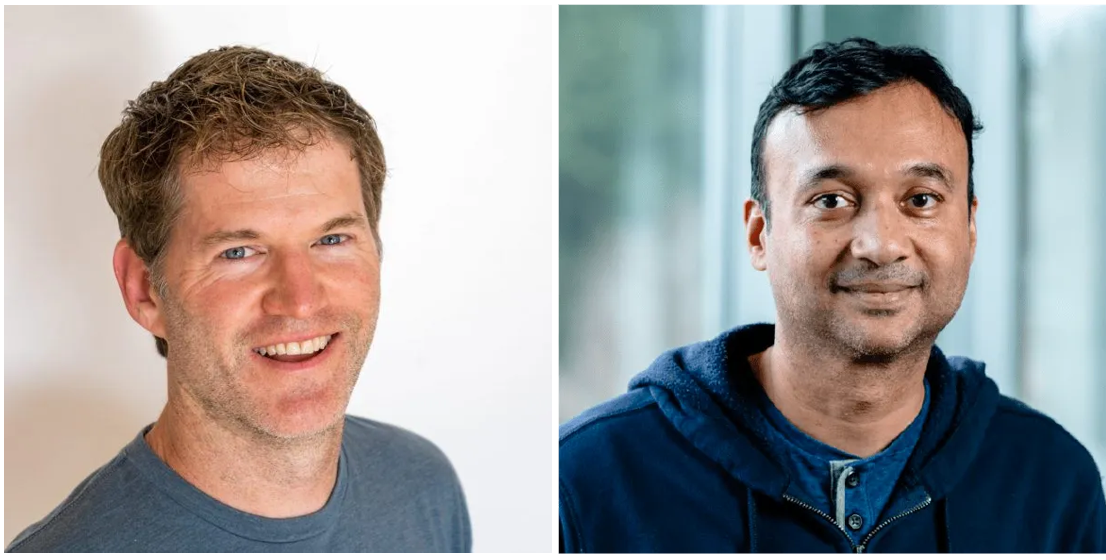
SeekOut President John Tippett, left, and CEO Aravind Bala. (SeekOut Photos)
— More leadership changes are underway at SeekOut, a Bellevue-based recruiting startup launched in 2017. The company announced Monday that co-founder John Tippett is now president, moving from his role as chief client officer.
In April, SeekOut CEO and co-founder Anoop Gupta retired and passed the reins to enterprise software veteran Sean Thompson. In August, co-founder and chief technology officer Aravind Balatook over as CEO. Thompson is now listed as an adviser to the board.
Tippett will lead day-to-day operations and work with Bala “on the company’s direction,” according to a press release. SeekOut said it wants to integrate AI tools into customers’ operations to reduce recruiters’ workload.
SeekOut is No. 68 on the GeekWire 200, a ranked index of the Pacific Northwest’s top startups.
Merritt joins from Penn Medicine, where he was chief operating officer of Penn Signature Services. He has more than 25 years of experience in academic medicine, consulting, strategy, business development and operations.
— Industrial wastewater treatment startup Membrion has named Alexander Demihovsky as director of applications engineering. He joins the Seattle-based company from Xylem. His past employers include Evoqua Water Technologies and Bechtel National.
“Alex helps turn customer needs into viable project plans, mitigate execution risks and develop competitive proposals,” the company said.
— Marine geothermal energy startup Endurance Energy has named Marty Calvert as the director of turbomachinery. Calvert joins the Seattle startup from Blue Origin. He was previously a turbomachinery engineer at NASA for more than 13 years.
Endurance completed its fifth deployment to the ocean floor last month, testing Adélie, a 100-kilowatt geothermal generator named for a penguin.
— Lattice Semiconductor, a Hillsboro, Ore.-based company, has added two directors to its board:
Raejeanne Skillern, former VP and chief marketing officer of Amazon Web Services, who returns to Lattice after serving on the board from 2022 to 2024
John McCool, senior vice president and special adviser to the CEO at Arista Networks
Kivo Health co-founders from left: CEO Victor Sadauskas and Chief Technology Officer Vaughn Koch. (Kivo Photos)
Seattle-based Kivo Health today announced $10 million in funding to help increase access to its services, which target older adults with chronic obstructive pulmonary disease (COPD). The Series A round brings the startup’s total funding to more than $16 million.
Kivo ships equipment to patients’ homes and provides a nine-week program of therapist-led, live video sessions focused on exercise, breathing techniques and disease management. The company provides ongoing support following the program and says it uses AI to handle administrative tasks and communicate with patients, supporting its clinicians.
“We’re using the funding to build our AI health coach to blend AI-led care with human-led care,” Dr. Victor Sadauskas, Kivo’s co-founder and CEO, said via email. That pairing, he added, will help patients manage their chronic disease over the long term.
The company has approximately 50 employees, including clinicians.
COPD is an incurable lung disease in which damaged airways and air sacs make breathing difficult and can worsen over time. Common symptoms include shortness of breath, a persistent cough and fatigue. COPD is the third leading cause of death globally and the fifth in the U.S.
However, there are effective treatments to improve the condition, though many patients are not able to easily access care. A study of Medicare beneficiaries with COPD found that only 3.7% received pulmonary rehabilitation in 2012.
Kivo reports that a peer-reviewed study of its program found improvements in participants’ symptoms, physical function and mental health. The company also funded an analysis that estimated its model could reduce annual health care spending by $8,245 per member through fewer hospitalizations, ER visits and time in nursing homes.
Kivo says its program is covered by Medicare, Medicaid and private insurers including UnitedHealthcare, Humana, Blue Cross, Aetna and Priority Health.
“By thoughtfully combining high quality clinical care with AI, we can now scale proactive, accessible care to every senior, improving symptoms and reducing avoidable costs,” Sadauskas said in a statement.
Sadauskas launched Kivo in 2023 with co-founder and Chief Technology Officer Vaughn Koch. Sadauskas previously was an emergency medicine physician for Kaiser Permanente and a senior investment fellow with Life Science Angels. Koch is a serial entrepreneur who sold his startup Movity to Trulia in 2010.
While its current focus is COPD, Kivo aims to expand into other costly chronic conditions affecting older adults.
Allumia Ventures led the round, with participation from Corewell Health Ventures, Y Combinator, Heuristic Capital and MassMutual Ventures.
Part of the Emerald Nuclear team, from left: Erlend Haugsbø, head of engineering and testing; Hallgeir Juliebø, co-founder and chief commercial officer; and Wesley Deason, co-founder and CEO. (Emerald Nuclear Photo)
Emerald Nuclear today announced a $2.1 million award from The Research Council of Norway to support its efforts to bring nuclear energy to the shipping industry and offshore power. The Seattle-based startup is developing high-temperature gas reactors that use an encapsulated fuel designed to resist meltdowns.
“This award will enable Emerald Nuclear to work directly with our marine partners to validate integration of our technology with their state-of-the-art marine power distribution and control systems,” said Wesley Deason, co-founder and CEO.
The funding supports Norway’s Marine Nuclear Propulsion System Pilot project, which is being led by Emerald Nuclear’s Norwegian subsidiary.
Shipping accounts for roughly 3% of global carbon dioxide emissions, making it a significant target for lower-carbon energy solutions. Some ferries serving shorter routes are adopting hybrid-electric propulsion. Shipping companies are exploring methanol, ammonia, biofuels and other alternatives to heavy fuel oil, but their climate benefits depend on how those fuels are produced and used.
Nuclear reactors have powered U.S. Navy submarines for more than 70 years. Now, a new wave of companies is working to expand nuclear power’s role in commercial shipping and other marine applications.
The award supports an early development step for Emerald Nuclear, with substantial work remaining before commercial deployment. The company has yet to build its first reactor, and its plans will require additional financing, regulatory approvals and a reliable fuel supply. The startup has previously received an undisclosed amount of funding from angel investors.
Emerald Nuclear has five employees, most of them in Norway, and is targeting two applications: offshore ships that help construct facilities like oil platforms and wind turbines and lay deep-sea cables, and floating power plants for remote communities. Each reactor is designed to produce 5 megawatts (6,705 horsepower), according to the company.
Bringing nuclear to the marine environment poses several significant challenges. They include safety issues, regulations for vessels traveling internationally, management of nuclear fuel and waste, and the way shipping companies frequently buy and sell vessels.
Deason said the company’s approach helps address those concerns:
The reactor will use TRISO fuel, which consists of a uranium-containing kernel surrounded by protective carbon and silicon-carbide layers. The uranium is in short supply, but Deason is confident it will be available by the time the company is ready to deploy.
Nuclear regulations are still being developed for international vessels, though initial deployments will be within a single country’s jurisdiction.
Emerald Nuclear will have seaside manufacturing, providing easy access for ships and floating power plants that need installations, repairs and exchanges of fresh and spent fuel.
The company will lease, rather than sell, its systems, allowing customers to swap nuclear in or out depending on their needs.
Emerald Nuclear is designing its technology “to integrate with the unique power needs of the ship, but also to meet the ways that the maritime industry does business,” Deason said.
Other companies pursuing nuclear ship propulsion include Core Power, newcleo and Blykalla. Core Power, Westinghouse, Saltfoss Energy and Prodigy Clean Energy are also developing floating nuclear power stations. Russia’s state-owned Rosatom already has nuclear-powered icebreakers and a floating nuclear power plant in operation.
Prior to launching Emerald Nuclear, Deason, a nuclear engineer, worked for Ultra Safe Nuclear Corp. (USNC) developing reactors for space-based applications.
During his tenure at the Seattle company, a professor from the Norwegian University of Science and Technology approached USNC about applications for the maritime sector. USNC declared bankruptcy in October 2024 and the deal wasn’t pursued. But the idea interested Deason and Hallgeir Juliebø, a Norwegian entrepreneur who had been a consultant with USNC. The two co-founded Emerald Nuclear in 2024 and Juliebø serves as chief commercial officer.
Emerald Nuclear has signed a lease for an engineering center in Norway, where it’s designing and building its first prototype, a non-nuclear thermal device that will be used for the Marine Nuclear Propulsion System Pilot project.
Other partners for the project are VARD Group, Vard Electro, Island Offshore, Norwegian University of Science and Technology, Imperial College London and Maskindynamikk, bringing together nuclear technology, ship design and integration, vessel operations and academic research.
The startup will build its first nuclear reactor, named the Gem Microreactor, at the Norwegian University of Science and Technology, with 2030 as its goal for completion. Emerald Nuclear will integrate equipment from Peregrine Turbine Technologies in Maine to convert the reactor’s heat into electricity.
The target for the first commercial deployment is 2031, on a Norwegian offshore vessel.
Deason is hoping to open a manufacturing site in the future in Western Washington on Puget Sound with an initial focus on floating nuclear power systems that replace diesel generators. That phase of growth is roughly targeted to the early 2030s.
Seattle Children’s is announcing today the launch of its Institute for Pediatric Innovation, a $10 million initiative with eight focus areas and a chief innovation officer yet to be named. The hospital is positioning the institute as the “core engine” driving its strategic plan.
CEO Dr. Christopher Longhurst has specific health challenges in mind where he hopes today’s technology could quickly improve care for pediatric patients.
“The question is, with this new generation of tools — not just AI and large language models, but precision health tools, whole genome sequencing, etc. — how can we leverage these tools to solve problems in ways that we have not before?” Longhurst said in an interview with GeekWire.
Dr. Christopher Longhurst, CEO of Seattle Children’s. (Seattle Children’s Photo)
Seattle Children’s has approximately 600,000 patient visits last year and reported approximately $2.6 billion in expenses.
Longhurst became CEO in January after a decade at UC San Diego Health, where he founded and directed the Joan & Irwin Jacobs Center for Health Innovation. The institute is Seattle Children’s most prominent new organization-wide initiative since he took the job.
The institute “is not a new AI center. This isn’t about the shiny objects or the tools. This is about the outcomes that we can achieve and the impact that we can have,” Longhurst said. “So really, the focus here is impact at scale.”
The organization will concentrate on eight areas:
AI tools. Seattle Children’s plans to develop, test and use new technology tools. One example is a digital care platform specific to pediatric patients where families and providers can manage appointments, medications, results and communications. The hospital is already helping build one with industry partners and Longhurst is eager to include an AI chatbot for caregivers. Other AI work includes a pilot of an automated tool that rapidly generates anonymous copies of medical images for research and a listening tool that drafts clinical notes during appointments.
Industry partnerships. Longhurst said these cut across the other focus areas. The hospital is working with industry on the care platform, for example, and plans to partner on seeking FDA approval for pediatric uses of existing devices.
Innovation unit. The hospital is establishing a facility that offers advanced care and can test new pediatric devices. Longhurst pointed to Ochsner Health’s innovation lab as a model and said he wasn’t aware of a comparable facility focused on children.
Medical device innovation. This focus overlaps with the innovation care unit and aims to serve unmet pediatric needs. Longhurst noted that numerous medical devices designed for adults are being used off-label for children. One piece of the solution is taking data related to these applications and seeking FDA approval for use in kids.
Precision medicine. Seattle Children’s already offers targeted therapies and aims to expand them. A recently published study from the hospital found that genome analysis, usually performed only for critically ill patients, could lead to faster diagnoses for non-ICU patients, particularly children with failure to thrive. “The question for us now is … how do we make a research project into something that we do every day at scale?” Longhurst said.
Biomedical data. Patient monitoring produces vast amounts of electronic data that can be combined with genetic and protein-expression information. The hospital is pursuing technology that recognizes patterns across these sources in real time to guide treatment for critically ill and other patients.
Therapeutics. Research into next-generation cell, gene and protein therapies will expand.
Training for young scientists and clinicians. The hospital’s Invent@SC program provides mentorship and education for early-career researchers and clinicians. The initiative focuses on treatments discovered at Seattle Children’s that can be widely adopted.
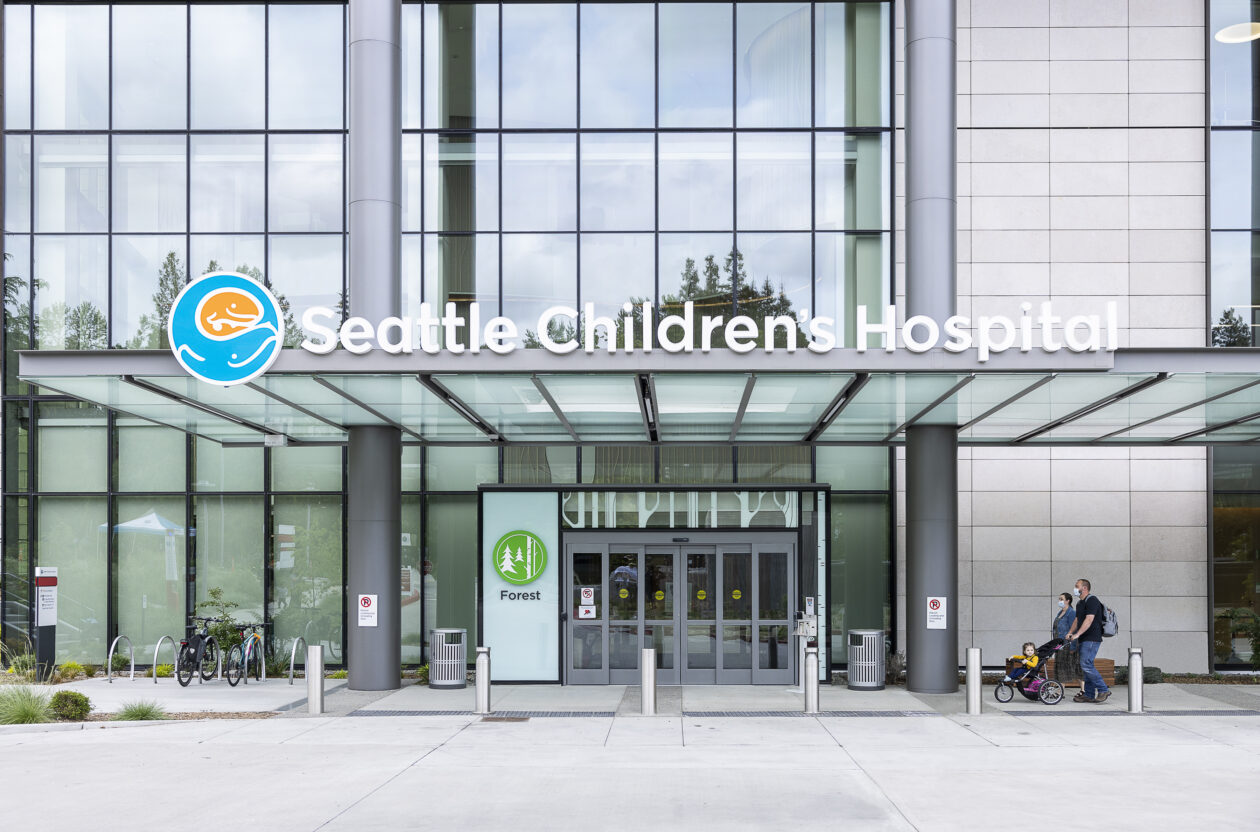
Seattle Children’s main campus. (Seattle Children’s Photo)
Projects from the institute must be approved by a Seattle Children’s AI Review Board, which will assess whether proposed uses of AI are ethical, equitable and responsible. Those involving research will also go to the Institutional Review Board for regulatory compliance.
Seattle Children’s has recruited three external launch advisors to help recruit the CIO and develop the institute’s organizational structure. They are Dr. Matthew Lungren, a Stanford University adjunct professor and former chief scientific officer for health and life sciences at Microsoft; Dr. Kevin Koo, a radiologist whose experience includes leadership at Seattle Children’s and roles at UW Medicine and McKinsey & Company; and Dr. Jessica Mega, a cardiologist and co-founder of Verily, an Alphabet company.
Longhurst said the work will require a cultural shift at the institution, from risk aversion to an openness to change.
The institute’s initial funding comes from a $5 million anonymous gift and $5 million in existing resources. Longhurst acknowledged the amount is limited relative to the scope of the work.
“That’s really just the beginning,” he said. “And what that should signify is a commitment from me as the leader to allocate actual investments in this space.”
Two former Amazon real estate managers acknowledged receiving personal payments tied to data center deals they handled for the company, under a settlement that resolves the company’s claims against them in a six-year lawsuit.
Carl Nelson and Casey Kirschner “regret their actions, apologize for failing to meet Amazon’s high ethical standards, and are glad this matter has been resolved,” according to a joint statement that the parties agreed to as part of the settlement.
The payments “violated Amazon’s Code of Conduct & Ethics, broke the trust Amazon places in its employees, and put Amazon’s reputation at risk in the communities it serves,” says the statement, which Amazon provided Friday evening in response to GeekWire’s inquiry.
The statement doesn’t call the payments kickbacks or say they were illegal. Nelson was investigated by the FBI but never charged, and a federal judge ruled in 2023 that Amazon’s Code of Conduct wasn’t a legally enforceable contract. The other terms of the settlement are confidential, including whether any money changed hands.
Before the settlement, Nelson had maintained that he abided by the terms of his Amazon employment agreement, which his attorneys said gave him broad leeway to do outside business.
Rodney Atherton, a Colorado attorney who set up business entities for the two men, also settled and “regrets the role he played in the conduct at issue in this case,” according to the statement.
The settlement closes a long legal ordeal for Nelson’s family. His wife, Amy Nelson, the former Seattle entrepreneur who founded The Riveter, a network of co-working spaces for women, has been his most outspoken advocate, defending him for years on social media and in interviews and criticizing Amazon and the Justice Department for pursuing him.
“All disputes with my husband’s former employer have been resolved,” she said in a short video posted Friday on social media.
The case upended the family’s life. The FBI seized $892,135 from the Nelsons’ bank accounts in 2020, including hundreds of thousands of dollars Amy Nelson earned as CEO of The Riveter.
The government returned most of it in a 2022 settlement. By then, the Nelsons had sold their West Seattle home and emptied their retirement accounts to pay lawyers, and they had moved with their four daughters to Hawaii and then Ohio, where Amy’s parents live. The family had spent more than $3 million on legal fees, she told KIRO 7 in 2023.
“Many of the things that we lost over the past four years, we can never get back. We can never get our home back. We can never get our jobs back. We can never get our reputation back,” she told The Seattle Times in 2024, after federal prosecutors moved to drop the related criminal cases.
Amazon told the judge on Oct. 20 that it had reached the settlement, less than two weeks before the case was set to go to trial in U.S. District Court in Alexandria, Va., according to court filings.
The case continues against the remaining defendants, Brian Watson and his Denver-based real estate firm, Northstar Commercial Partners, which Amazon hired for nine data center development projects in Northern Virginia between 2018 and 2020. Amazon alleges that Northstar won that business by paying kickbacks to Nelson and Kirschner, which Watson denies.
Watson and Northstar are headed to trial Nov. 2. In a filing Friday, they asked the judge to make Amazon hand over the settlement agreement so they can see its terms.
The settlement follows years of rulings that went both ways. In April 2023, a federal judge dismissed most of Amazon’s claims, including its breach of contract claims against Nelson and Kirschner. In September 2025, a federal appeals court revived several of the claims, including racketeering and fraud, and sent the case back for trial.
In January 2024, federal prosecutors moved to vacate the guilty pleas of two other men in the case, Kirschner’s brother, Christian Kirschner, and former Northstar account manager Kyle Ramstetter, calling prosecution “not in the best interests of justice.”
Prosecutors added that they had declined to prosecute the other alleged co-conspirators, including Nelson.
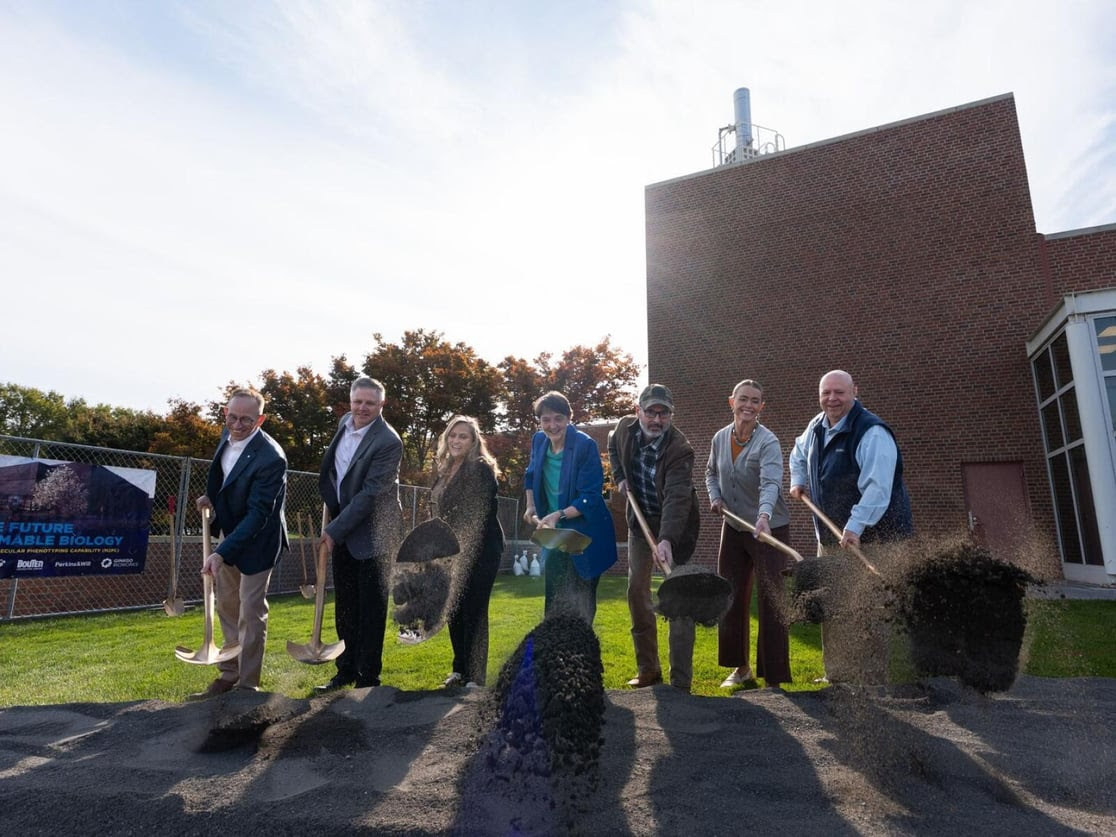
PNNL Director Deb Gracio, third from left, at a groundbreaking for the Microbial Molecular Phenotyping Capability in Richland, Wash. (PNNL Photo / Eric Francavilla)
A first-of-its-kind autonomous research facility is taking shape in central Washington that will provide free access to scientists studying bacteria, yeast and other microorganisms.
The Department of Energy’s Pacific Northwest National Laboratory (PNNL) broke ground on the lab, which will open in 2029. PNNL leaders said it will be “one of the world’s largest and most fully autonomous biosciences laboratories” and the first to offer public access through a competitive application process open to U.S. universities, companies and other national laboratories.
The new facility will include an integrated system of more than 100 automated instruments that can be programmed to perform laborious research tasks, including growing microbes, measuring their growth and behavior, and linking their genetics and cellular functions to observable traits. Ginkgo Bioworks is supplying the devices.
“M2PC will bring together PNNL’s strengths in microbial science, automation and computing to dramatically accelerate our understanding of what microbes can do and how we put those capabilities to work,” PNNL Director Deb Gracio said in a statement.
The research could address challenges in human health, manufacturing, threat detection, food production and energy. M2PC will also contribute to PNNL’s effort to build computer models that predict and program the behavior of living systems.
The project is part of DOE’s Genesis Mission, which aims to modernize U.S. science through AI and automation. It is funded through the DOE Office of Science’s Biological and Environmental Research program.
Katherine Sizov, CEO and co-founder of Strella, was recognized as a 30 Under 30 leader by Forbes. (Photo courtesy of Sizov)
Seattle-based ag-tech startup Strella has landed $4.25 million to expand the reach of its technology that monitors produce to prevent spoilage and food waste.
The investment extends the company’s Series A round and brings its total funding to $26.25 million.
CEO and co-founder Katherine Sizov launched the startup in Philadelphia in 2019 and relocated its headquarters to Seattle four years ago to be closer to Washington’s fruit orchards.
Strella uses IoT devices to measure gases including ethylene, a plant hormone released by ripening fruit, and machine vision to monitor the produce. Its software interprets the fruit’s real-time conditions alongside data such as country of origin, packing date and varietal type.
The 19-person team serves customers in 26 countries and provides information to growers of apples, pears, avocados and citrus. It recently added kiwifruit to the lineup.
“Our vision is to become the system of record for quality in the food supply chain, or the ‘guardian angels’ of produce as it passes from hand to hand,” Sizov said.
The company works with all of the players in the supply chain, including farmers, produce packers, shippers, distributors and retailers.
“The next step for us is to begin stitching all the pieces together to become a one-stop shop for quality and tackle the food waste problem at scale,” Sizov said.
The United Nations estimates that roughly 33% of food intended for humans worldwide is lost or wasted, totaling $940 billion in annual economic losses. Waste in the U.S. is even worse, at about 40% of edible food and $218 billion each year.
Helion’s Orion fusion plant is under construction in Malaga, Wash., with plans to start operating the facility in 2028. (Helion Photo)
Helion Energy, the Everett, Wash., startup racing to build the world’s first fusion plant, is expanding its semiconductor development and manufacturing efforts. The company today announced a letter of intent with the U.S. Department of Commerce for up to $175 million in funding for a three-year program to support R&D tied to semiconductor technology for commercial fusion energy.
The funds are available through the CHIPS Research and Development Office. Under the deal, which remains to be finalized, Commerce would receive a $175 million non-voting equity interest in Helion.
Helion is also putting $50 million of private investment toward the semiconductor effort.
The semiconductor initiative has two focal areas:
More than $100 million will support R&D and manufacturing in Everett, focused on next-generation, high-voltage semiconductors and advanced packaging, which integrates multiple semiconductor devices into modules for use in its systems.
About $80 million will support R&D for next-generation semiconductor development in partnership with GlobalFoundries, a chip manufacturer with operations in Vermont, New York and overseas.
Helion is working to build a power plant that produces energy from fusion — smashing together small atoms in reactions akin to those that create the sun’s energy. Dozens of companies globally are chasing fusion, but none so far have shown that their technology can make more energy than is required to produce fusion in the first place.
Helion’s system uses powerful electrical pulses to form and compress plasma — an electrically charged gas — to create fusion conditions. As the plasma expands against the machine’s magnetic field, it induces an electrical current in surrounding coils. The system is designed to recover electricity directly rather than using heat to drive a steam turbine.
An example of the semiconductors used in Helion’s fusion systems. (Helion Photo)
High-voltage semiconductors — which are designed to control electricity at high voltages without breaking down — play an essential role in the system and need to operate at optimal efficiency to capture as much energy from the system as possible.
“The CHIPS Act goal, but also specifically our component in it, builds out the high-voltage semiconductor supply chain here in the United States, both on the R&D as well as the manufacturing,” said David Kirtley, Helion’s CEO, in a GeekWire interview.
The work in Everett is expected to create more than 100 jobs. Helion’s workforce already includes a small team of semiconductor experts, and the company will be hiring for roles including materials scientists, semiconductor engineers, technicians and assemblers.
David Kirtley. (LinkedIn Photo)
“This investment expands domestic research, secures critical supply chains, and creates high-paying American jobs,” Secretary of Commerce Howard Lutnick said in a statement.
Congress passed the CHIPS and Science Act with leadership from Washington Sen. Maria Cantwell, and President Joe Biden signed it into law in August 2022. The law included $52.7 billion for semiconductor manufacturing, research and related activities.
Helion has raised more than $1.5 billion from investors. The $50 million for semiconductor work includes private funds already committed to the company and new cash; Kirtley did not specify how much additional funding it’s receiving, but said it includes new investors.
Helion’s expansion into semiconductor work comes as it continues fine-tuning its fusion technology at its Everett facility. At the same time, Helion is building Orion, its commercial-scale fusion plant in Malaga, Wash., near the Columbia River. It has an agreement to supply Microsoft with electricity from the facility and is targeting initial operations in 2028.
“So that’s still the plan,” Kirtley said. “We’re building Orion components and operating our other systems internally, and the work continues in parallel with all of this.”
The company has semiconductors available for use in Orion, primarily sourced from overseas vendors, he said. Kirtley expects some chips developed through the initiative to be used in Orion, potentially late in its construction.
The semiconductor effort adds another development track as Helion pursues the daunting goal of commercializing fusion energy.
“As soon as the award kicks off, we can build out the manufacturing capacity and the testing capacity, and in a parallel, do the research and development into the next generation of semiconductors as well,” Kirtley said.
Kymeta, a Redmond, Wash.-based mobile satellite communications company, is working to increase sales with the Department of Defense, the intelligence community and other organizations in national security.
Kimber had a 37-year career with the CIA, departing in 2022 as the agency’s deputy director for operations. She most recently worked as a vice president with Two Six Technologies and has served on Kymeta’s board of directors for two years.
Amaresh Siva. (LinkedIn Photo)
— Alaska Airlines has named Amaresh Siva as its first chief information technology officer. Siva joins from CVS Health and has held technology leadership roles for more than two decades at companies including Lowe’s, Target and GE Money.
“Technology touches nearly every part of how we run our airline and serve our guests, and Amaresh will bring our technology and digital teams together under one leader,” said Ben Minicucci, CEO of Alaska Air Group, in announcing the news.
— Vijaye Raji, founder and former CEO of Bellevue, Wash.-based Statsig and now OpenAI’s CTO of applications, has joined the board of Amplitude, a digital analytics and product intelligence company. OpenAI acquired Statsig last year, and Statsig and Amplitude announced a strategic partnership in May in which Amplitude would build on Statsig’s brand and customers.
“Statsig continues as a platform and brand within Amplitude,” Raji said. “Joining the board is an opportunity for me to help carry that mission forward as Amplitude and Statsig build their next chapter together.”
Here are four departures and arrivals for Microsoft leaders:
Vasu Jakkal. (LinkedIn Photo)
— Vasu Jakkal has left her role as Microsoft corporate vice president of security, compliance, identity, management and privacy after more than six years. She has joined Armadin, a Palo Alto, Calif.-based cybersecurity company, as chief strategy and business officer.
Jakkal is based in the San Francisco Bay Area and previously held executive roles at FireEye and Intel. She praised Armadin’s mission, which she described as building “autonomous security to stay ahead of attackers and build a safer world for all.”
Hans Yang. (LinkedIn Photo)
— Microsoft VP Hans Yang is leaving. The Los Angeles-based leader, most recently focused on AI transformation, product strategy and growth, was formerly a general manager for Microsoft for Startups and Microsoft Learn.
“I think my next hill to climb is helping companies capture real ROI from AI,” Yang said, adding, “If you know a company that is struggling to get started with AI, or has invested but is not yet seeing meaningful value, I would welcome any introductions.”
— Venky Chandrasekharan is returning to Microsoft for the role of general manager of Windows commercial category and investments. He left the company in 2021 after 12 years and worked at Qualcomm and Acuity Brands in the interim.
“Having spent some of my most formative years at Microsoft, there’s definitely a sense of familiarity — but I’m coming back with new experiences, a broader perspective, and a lot of excitement for what’s ahead,” Chandrasekharan said.
— Meg O’Conor Bannecker has left Microsoft after two years leading communications for the company’s Washington state team. Past roles include communications leadership at NanoString Technologies, Bannecker Public Affairs and Pier 70 Ventures.
Patrick Miller. (LinkedIn Photo)
— Patrick Miller has been appointed as global division president of real estate company JLL’s technology sector. Miller joins from Snap, where he served as senior director of global workplace services. He previously oversaw real estate operations for Amazon’s Seattle-area headquarters for more than three years and has worked for Facebook and DTZ.
“I’ve spent my career on the client side … so I know exactly what it feels like to need a partner who shows up, tells you the truth, and solves real problems,” Miller said.
— DigniFi, a Bellevue, Wash.-based fintech company providing repair financing for autos, RVs, ATVs and other motorized vehicles, has namedJefim Piekarz as chief product officer. Piekarz joins from Arch, and his past employers include Skylab74, Welo, Octane and Etsy. Launched in 2012, DigniFi has facilitated more than $575 million in transactions for automotive merchants in the U.S.
— Seattle-based global logistics company Tideworks Technology has named two C-suite leaders:
Mark Traynor, chief product and technology officer, joins from Lynxis. He is an entrepreneur who has worked in port, rail and terminal logistics for more than 20 years.
Guenter Schmidmeir, chief revenue officer, joins from Avlino and has decades of maritime leadership from Germany.
— Adaptiva, a Kirkland, Wash.-based company automating software updates across computers, has named Allison Armstrong VP of product marketing. She joined from Elemica and has worked for Transmit Security, Hopin, Qualtrics, Apptio and others.
— Smarsh, a Portland, Ore.-based company providing communications data and insights, has appointed Alessandro Silva as its first chief growth officer. He joins from ACI Worldwide, and his past employers include Western Union and Carlyle Group. Silva is also a board member for Teach for America.
— Seattle-based Yoodli has named Mike Matheras chief learning advisor. The startup recently expanded from helping people practice speeches, sales pitches and job interviews to providing corporate training across wide-ranging skills. Mather is CLO for the accounting firm KPMG US and was previously a partner at EY, IBM and PwC.
“For most of my career, the hardest part of [learning and development] was the gap between training and the moment someone actually has to perform,” Mather said. “Yoodli closes that gap.”
— DigiStor, a company with offices in Austin, Texas, and Vancouver, Wash., that offers secure data storage products, has appointed Peter Bell to its board of directors. Bell co-founded StorageNetworks and serves as managing partner at Stowe Capital, among other roles.
— Seattle-area tech leader Jake Varghese has been promoted to chief product and technology officer for Dayforce, a Minneapolis company providing HR, payroll and related technology. He previously worked for companies including Microsoft, ServiceNow, Tanium and ConnectWise.
— The Association of Washington Business Institute has appointed Meagan Darrow as executive director. Darrow is also an adjunct professor at Evergreen State College and was most recently executive director of the American Diabetes Association. The AWB Institute is the nonprofit research and education affiliate of the association, a longtime organization advocating on behalf of its 8,000 members.
Dr. Susan Stern, professor emeritus and founding chair of UW Medicine’s Department of Emergency Medicine
Dr. Elizabeth Swisher, professor in the Fred Hutch Clinical Research Division and UW Medicine’s Division of Gynecologic Oncology, as well as deputy director of the Fred Hutch/UW/Seattle Children’s Cancer Consortium
Dr. Leslie Walker, chair and professor of UW Medicine’s Department of Pediatrics and chief academic officer at Seattle Children’s
Dr. Dimitri Christakis, professor in UW Medicine’s Department of Pediatrics, pediatrician at Seattle Children’s and chief health officer with Special Olympics International
Dr. Christopher Longhurst, CEO of Seattle Children’s and clinical professor with UW Medicine’s Department of Pediatrics
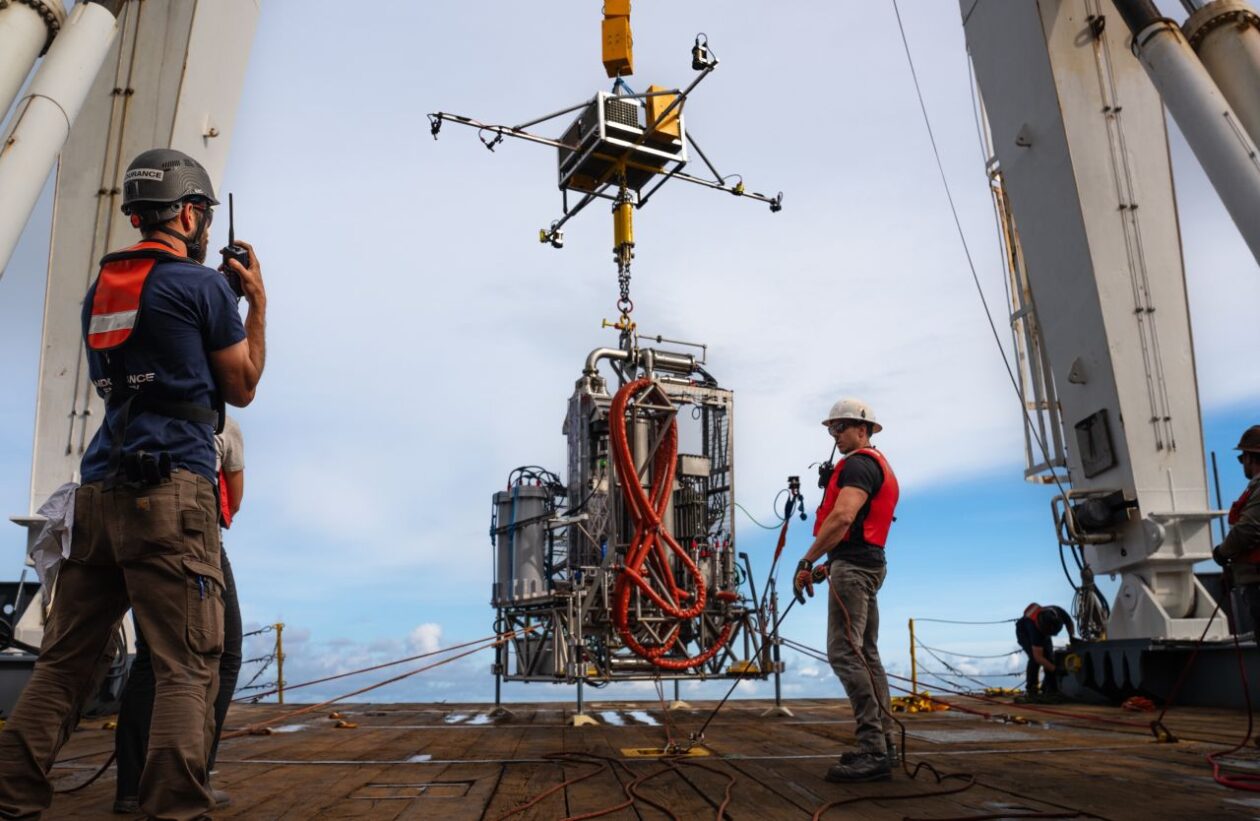
Endurance Energy prepping to test its geothermal system off the coast of Oregon. (Endurance Photo via LinkedIn)
Endurance Energy says its prototype marine geothermal power system generated more electricity than it consumed during a recent deployment 300 miles off the Oregon coast — though the milestone lasted just 8.7 seconds.
The Seattle-based startup landed its 3-ton power plant on the seafloor near a natural vent releasing water at about 538 degrees Fahrenheit. The team operated the system remotely through a fiber-optic network running along the seabed.
The expedition marked Endurance’s fifth deployment to the ocean floor where it tested Adélie — a 100-kilowatt geothermal generator named for a penguin.
The company is part of a broader race to harness geothermal energy, using heat from water or steam under the Earth’s crust, converted into electricity. But while companies such as Fervo and Sage Geosystems focus on terrestrial sites, Endurance is the first commercial venture pursuing undersea sources.
“The main question we had is can the system generate more power than it uses,” Andrew Redd, Endurance’s founder and CEO, said in a statement about the expedition, which began last month.
“Adélie did,” he added. “Goddard’s first liquid-fueled rocket flew for two and a half seconds. Our first net-positive run lasted about nine. Our approach is to make it exist, then make it good.”
The test produced only a brief burst of surplus electricity, reaching a peak net output of 16.5 kilowatts. Challenges with the technology and a failure of a power cable cut the dive short.
The team also drilled what it called the world’s first geothermal well. At a site about 5,000 feet below the ocean’s surface, its machinery created two bore holes that tapped into hydrothermal fluid. It capped one hole and drilled a roughly 2-inch wide, 52-foot deep geothermal well at the other. While the well delivered hot fluid, it wasn’t suited for testing the energy system, sending the team to the natural vent.
Endurance said the expedition included voluntary environmental monitoring. The team mapped the seafloor to select the least disruptive test site, sampled water before and after operations, surveyed marine life and monitored sound.
While the startup has made rapid progress, its approach faces significant challenges: high pressure and corrosive conditions, mineral buildup inside equipment and the risk of costly repairs to seafloor machinery. And although many population centers sit near coastlines, the systems would still need expensive subsea cables to carry electricity over potentially long distances.
The company has raised $63 million from investors and has roughly three-dozen employees.
This winter, Endurance plans to deploy Gentoo, a refurbished and upgraded version of Adélie designed to generate more power for longer periods.
The company is also developing its first commercial project in Tonga, with the goal of delivering its first electricity in 2027.
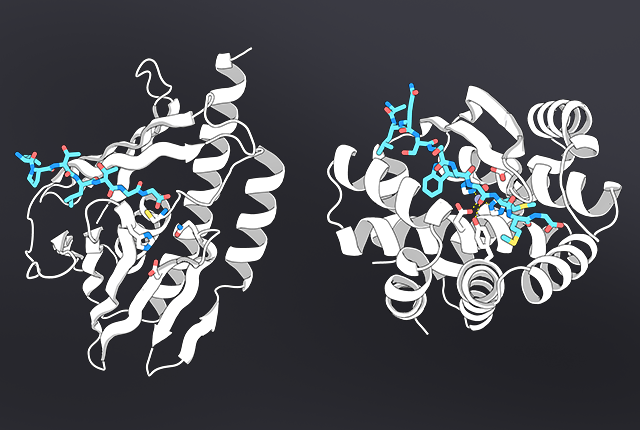
Structural models of two enzymes created using models developed at the UW Medicine Institute for Protein Design. (IPD Image / Benedicte Rossi)
The UW Medicine Institute for Protein Design (IPD) today released a new open-source model for creating proteins with specific functions, called RFD4-Proteina. It is the first AI protein model the University of Washington has co-developed with semiconductor giant Nvidia.
The release comes on the heels of a major computing boost. Earlier this month, IPD announced it had received a large grant of computing power from Nvidia CEO Jensen Huang and his wife, Lori Huang, through their foundation. In June, the institute began accessing Nvidia graphics processing units, or GPUs, through cloud company CoreWeave. The grant is expected to support the institute for a year.
“RFD4-Proteina will open the door to new solutions in medicine, sustainability, materials and biotechnology,” David Baker, director of IPD and a 2024 Nobel laureate in chemistry, said in a statement. He earlier told GeekWire that the foundation’s grant has been “transformational” for the institute’s work.
IPD has used deep learning to develop and release a series of tools, including RoseTTAFold for predicting protein structures and RFdiffusion (RFD) for designing new proteins. The new model’s name nods to RFD and references Nvidia’s Proteina-Complexa computational models.
The team is touting RFD4-Proteina as “a considerable improvement over previous methods” that is faster and requires significantly less computational power.
The models have allowed researchers to design proteins never imagined before, with potential as drugs for challenging diseases or as tools for managing environmental waste such as toxic chemicals and plastics, among other applications. The IPD lists 11 spinout companies, including vaccine developer Icosavax and protein-design startup Archon Biosciences.
Seth Woodbury used RFD4-Proteina in his enzyme work as a , a UW bioengineering predoctoral candidate. “In just a few days we designed a pesticide-degrading enzyme that performs many fold better than my previous best, which took months to design,” he said. Woodbury last year published a paper in Nature on enzyme research.
At IPD, the RFD4-Proteina work was led by UW doctoral students Nathaniel Corley, Maxwell Kazman and Rafi Brent, along with Kieran Didi, a visiting student from the University of Oxford.
RFD4-Proteina is available through Berkeley Software Distribution.
Alaska Air Group is a proponent of sustainable aviation fuel as the most affordable and practical near-term solution for cutting the sector’s climate impacts given that it can be used in existing aircraft. (GeekWire Photo / Kurt Schlosser)
Taylor Swift was pilloried online over the climate impacts of her private jet travel for the Eras Tour and to see Travis Kelce, now her husband, play in the 2024 Super Bowl. Her representatives said she paid to offset the tour-related emissions, but the uproar highlighted a bigger problem: Aviation is a serious source of carbon dioxide, and it’s tough to fix.
Flying accounts for roughly 2.5% of global carbon dioxide emissions, and that share is expected to rise as other sectors adopt cleaner power.
The trouble is that jet fuel is so good at what it does. It holds enough energy to fly a plane nonstop from New York to Singapore. Cleaners sources likes batteries can’t begin to match that range, and hydrogen fuel faces hurdles including fuel storage and transfer and the need for aircraft redesigns.
That leaves aviation with one top alternative for today: sustainable aviation fuel, or SAF.
Instead of pumping more oil from underground, SAF uses carbon already on the earth’s surface. Manufacturers — including two in the American West — are making the fuel from sources such as cooking oil, animal fats, oil-rich plants, farm and forestry waste, or even captured carbon.
“SAF really fits a need that we have today and long into the future,” said Ryan Spies, managing director of sustainability at Alaska and Hawaiian Airlines. “SAF is the answer because it’s a drop-in fuel. That means we don’t have to change our planes, we don’t have to change what’s happening at the airport.”
The fuel remains in limited supply and use — only 1% of Alaska Air Group’s fuel is SAF, for example — but efforts are underway to expand production and adoption worldwide.
Twelve’s captured-carbon approach
Twelve’s AirPlant One is turning captured carbon dioxide into a low-carbon aviation fuel. (Twelve Photo)
In tumbleweed country in central Washington, a startup called Twelve opened its AirPlant One facility last year and began commercially producing SAF from captured carbon dioxide this summer.
The site sits in an industrial stretch of Moses Lake in a largely agricultural area. Its neighbors include a fertilizer producer and battery materials manufacturer Sila. Low-cost, carbon-free hydropower has drawn businesses to the region, though data centers are creating competition for the energy.
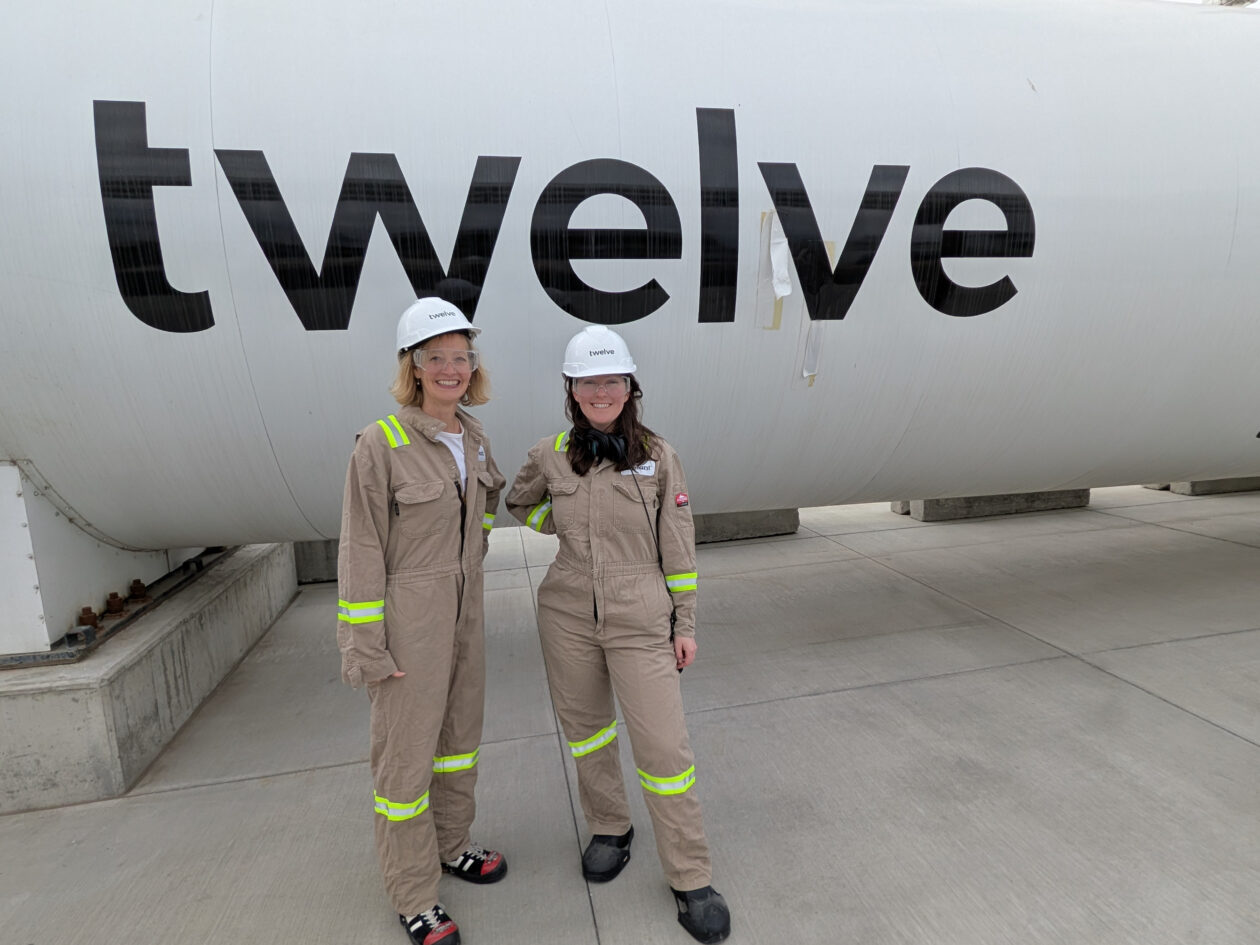
To manufacture SAF, Twelve takes delivery of carbon dioxide that’s captured as a byproduct of ethanol production. The greenhouse gas is stored in a giant white tank. From there it’s pumped through insulated silver pipes that carry it through devices that remove oxygen and add hydrogen taken from water, producing the hydrocarbons that serve as fuel. The largely outdoor facility is shiny and new, with equipment stretching skyward.
The startup’s technology can make a variety of low-carbon products, including naphtha, a plastics precursor also produced at AirPlant One.
The site is designed to make up to 50,000 gallons of SAF, which is branded as E-Jet. The company is ramping up to that volume, said Nicholas Flanders, CEO and co-founder of Twelve.
“Even when we’re at that full capacity, there’s a lot more customer demand than we can make at AirPlant One,” he said. AirPlant Two, a much bigger facility that would make tens of millions of gallons a year, is already in development. Flanders did not provide a timeline or location for the site.
Old refinery finds a new purpose
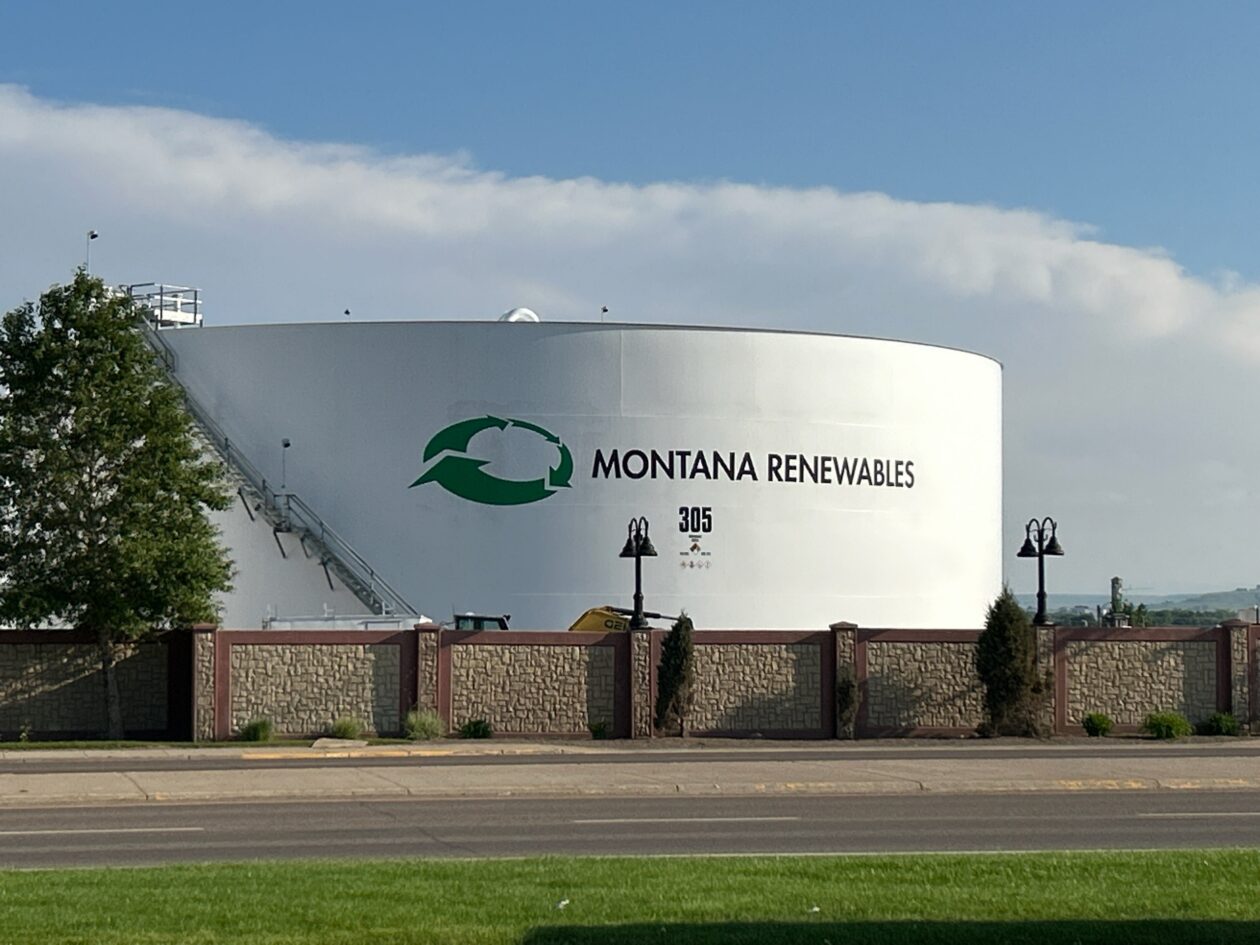
Montana Renewables converted part of an oil refinery to SAF production in Great Falls, Mont. (Montana Renewables Photo)
About seven hours east of Moses Lake by car, Montana Renewables is producing SAF with a different approach. It makes the fuel at a century-old oil refinery that has been partially converted to renewable fuel and naphtha production.
“That’s the most economical way to to produce renewable fuels like SAF,” said Matt Upmeyer, vice president of commercial for Montana Renewables.
The facility uses feedstocks including used cooking oil, beef tallow from rendering plants and camelina, a lesser-known cover crop that helps farmers restore soil and also produces an oily seed.
Montana Renewables began making SAF in 2023, and by the next year was the largest SAF producer in North America, Upmeyer said, “which is a pretty cool stat.”
The company can produce 60 million gallons of SAF a year in Great Falls, Mont., and aims to reach 200 million gallons by the end of 2028.
That growth is significant, but the need is much higher. The U.S. government set a goal a few years ago of producing 3 billion gallons of SAF annually by 2030. A recent academic study involving researchers at Washington State University estimates the country could potentially reach 2.1 billion gallons by then. That total counts SAF from all U.S. producers, including Phillips 66, World Energy, Neste and LanzaJet.
By comparison, U.S. airlines use about 20 billion gallons of fuel a year, and that number is rising.
Cleaner fuel carries a premium
Montana Renewables aims to produce to 200 million gallons of SAF by the end of 2028, up from 60 million today. (Montana Renewables Photo)
Cost is arguably the biggest hurdle to SAF adoption. The fuel is more expensive than traditional jet fuel, but the gap fluctuates because geopolitics moves oil prices. It should get cheaper as production scales, though demand will remain high.
Spies offered rough estimates for price comparisons. SAF made from fats, oils and greases — the most common form today — trades at less than double the price of jet fuel, he said. SAF from captured carbon, like Twelve’s, has the greatest environmental benefit, Spies said, but is “multiple times more expensive.”
Policy can help close the gap. The U.S. has used “carrots” such as a tax credit of up to $1.75 per gallon, created in 2022, but that was cut to $1 with President Trump’s return to office. Europe has opted for “sticks”: a requirement that 2% of jet fuel be SAF starting last year, which rose to 3.6% in the United Kingdom this year.
Customers are signing fuel purchase agreements, which can lock in prices and create demand that encourages more production. Alaska Airlines and Microsoft partnered with Twelve in 2022 to support its fuel’s development and use, helping create demand for the Moses Lake plant’s output.
Getting customers to sign these long-term deals “is really important for securing project financing,” Flanders said.
Measuring SAF’s climate benefits
Positive Charge hosts Lisa Stiffler, left, and Laura Scott suited up in hard hats and safety goggles, fire retardant jumpsuits and steel-toed protective gear to tour Twelve. They’re standing in front of a giant tank holding carbon dioxide that will be turned into sustainable aviation fuel. (GeekWire Photo)
While SAF is the best near-term fuel for reining in aviation emissions, it still produces carbon dioxide when burned. But unlike petroleum-based jet fuel, which releases carbon that would otherwise stay trapped underground, SAF recycles carbon already in circulation in plants, animals and the atmosphere.
And there are other strategies for curbing aviation’s impacts that can compliment SAF, including designing more efficient planes, preventing contrail formation, and using flight plans that reduce emissions.
Most SAF produced today provides an 80% reduction. By Twelve’s calculations, if a plane used straight E-Jet, it could slash the flight’s carbon emissions up to 90% compared with jet fuel (there are some carbon costs for production and transportation).
Twelve’s Flanders put the benefits in perspective.
“To have 90% lower emissions when you fly, that would mean taking a domestic flight would have the same emissions per passenger mile as taking the London Tube,” he said. With flying on par with taking the train, “it really can change the impact of aviation on the environment.
T-Mobile’s Deeanne King, right, enjoying the Pacific Northwest with family. (Photo courtesy of King)
When Deeanne King came to the Pacific Northwest in 2020 — relocating from Kansas after Sprint merged with Bellevue, Wash.-based T-Mobile — she fell in love with the region’s natural beauty. In her role as executive vice president and chief people officer, she also helps lead sustainability efforts for the telecom giant.
“The outdoors is my happy place,” King said. The region’s lakes, inland sea and trails, she added, are “a good reminder of what we’re all working to protect.”
T-Mobile has been ranked among the greenest companies in the U.S and globally. It’s making notable progress toward climate goals at a time when numerous corporations are scaling back or abandoning their carbon targets.
Keep reading to learn more about King’s sustainability journey. Her quotes have been edited for clarity and length.
What gives you the most hope for the planet?
People. Hands down. I get to work with some incredibly smart, curious, and committed people, and one thing I’ve learned is that when you put a hard problem in front of people who care, they find a way. They challenge the status quo, they try something new, they learn, and they keep going. I’ve never seen our teams walk away from a problem because it was hard.
I’m also encouraged by the growing recognition that sustainability and good business can, and should, go together. Building more efficiently, using resources more thoughtfully, and reducing waste can make a business more resilient while also being better for the planet. Those things don’t have to compete.
And I see that mindset in our employees. People want their work to matter. They want to contribute to something bigger than themselves. When you combine that sense of purpose with ingenuity and a willingness to work together, I think there’s tremendous reason for hope.
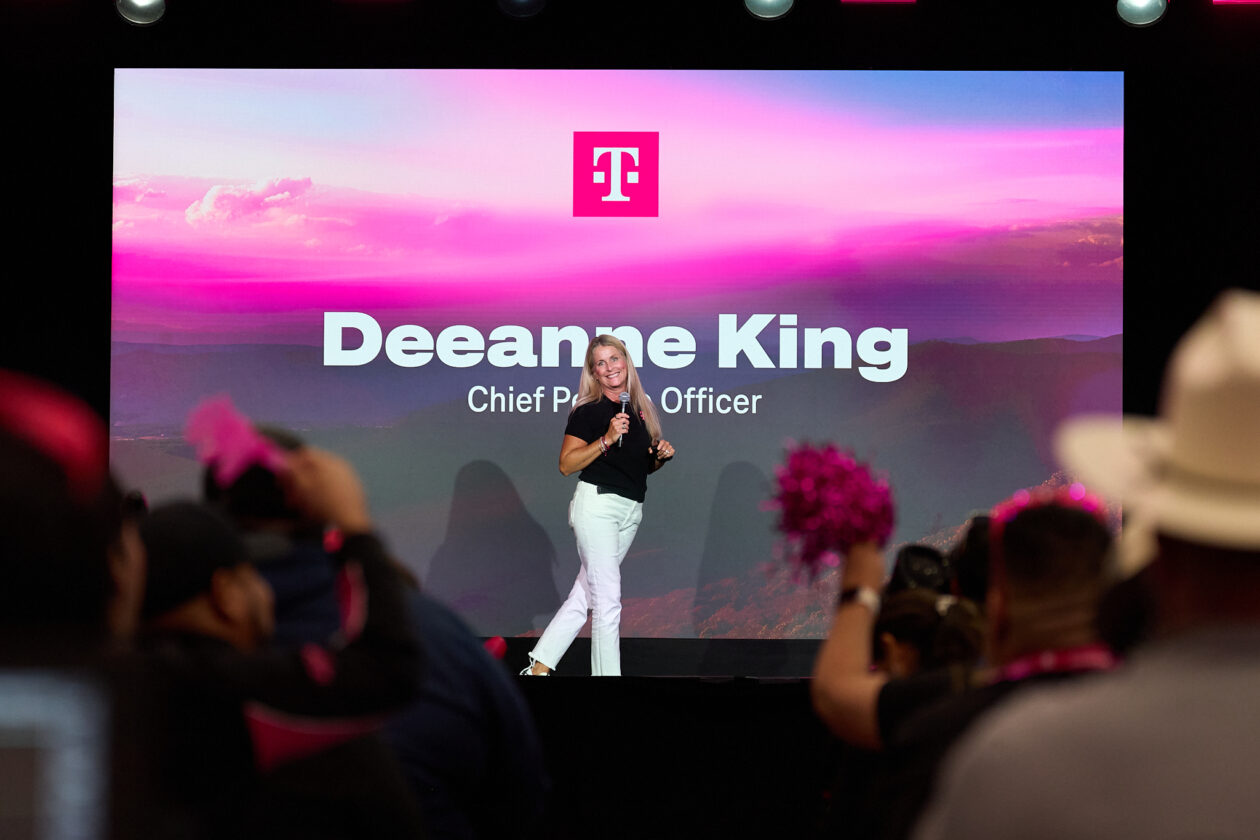
King presenting at a T-Mobile all-employee meeting. (T-Mobile Photo)
What’s one habit you’ve changed personally because of environmental concerns?
I’ve gotten much more intentional about cutting down on single-use things, and my reusable water bottle is probably the simplest example. It goes everywhere with me now.
It sounds small, but I think that’s actually the point. Once you make one change part of your routine, you start noticing other opportunities: what you throw away, what you reuse, what you buy, and what you probably didn’t need in the first place. Those small choices add up.
Coffee with any sustainability leader, past or present — who do you pick?
I’d choose Chief Sustainability Officer Kara Hurst at Amazon. T-Mobile joined Amazon and hundreds of other companies in signing the Climate Pledge, committing to reach net-zero carbon by 2040. And there’s something Kara has said about that work that really resonates with me: “We cannot go at this alone.”
I couldn’t agree more. The biggest challenges we face aren’t going to be solved by one company, one industry, or one really smart person. We have to find common ground, share what we’re learning, and be willing to work together toward something bigger than any one of us.
I’d love to sit down with Kara and compare notes on what’s working, where we’re getting stuck, and where companies like ours can work together to move faster. And knowing me, we’d probably end up talking about people and leadership too, because ultimately, ambitious goals only become real when you have people who are willing to question how things have always been done and figure out how to get there.
What’s an underrated solution that deserves more attention?
Making sustainability practical. Sometimes we gravitate toward the giant, breakthrough idea, and we absolutely need those. But there is also enormous opportunity in doing the basics really, really well and using data to figure out where small changes can add up to a very big impact.
Take buildings. They aren’t necessarily the first thing people think about when they think about climate innovation, but managing HVAC systems more intelligently produced nearly $5 million in estimated energy savings for T-Mobile in 2025. As of 2025, we have 132 community solar projects in our portfolio, providing an estimated lifetime total savings of $60 million in energy costs. You can reduce energy use, lower costs, and do something positive for the planet.
What’s one metric you watch obsessively as a sustainability leader?
I don’t know that I would use the word obsessively, but I absolutely believe in measuring whether the work is actually making a difference. One number I’m particularly proud of is that in 2025, T-Mobile’s total emissions were 50% lower than our 2020 baseline. That’s meaningful progress, especially because our business hasn’t been standing still.
The scope of the climate challenge is daunting — how do you approach this work?
You can’t let the size of the problem become the reason you don’t start. That’s true of climate change, but honestly, it’s true of almost every really hard problem I’ve encountered in my career. When something feels enormous, I focus first on what we can control. What’s the next decision? What’s the next action? What can we make better today? Then you keep going.
I’m also a big believer in being willing to learn along the way. Take smart risks, look at the data, listen to people, adjust and keep moving.
What impact do you hope your work has in 20 years?
As a mom, I think about the world we’re handing to the next generation. Of course I want my children, and someday, their children, to inherit a healthy planet. But I also want them to inherit the belief that when something matters, you don’t wait for somebody else to fix it. You figure out what you can do, you bring people together and you get to work.
Inrix co-founder and CEO Bryan Mistele above rush-hour traffic on Interstate 5 in Seattle in 2011. After more than two decades of turning traffic data into a business, Inrix has agreed to sell substantially all of its assets to Arity, a subsidiary of Allstate. (GeekWire File Photo / Annie Laurie Malarkey)
Inrix, the Bellevue, Wash.-based traffic data company that spun out of Microsoft in 2004 and became one of the Seattle region’s longest-running independent tech companies, has agreed to sell substantially all of its assets to Arity, the mobility data subsidiary of insurance giant Allstate.
The deal, announced Friday, would end Inrix‘s 22-year run as a standalone company. Inrix has raised more than $288 million and flirted with an IPO multiple times over its lifetime. Terms were not disclosed. The companies expect the acquisition to close later this year.
Founded in 2016, Chicago-based Arity analyzes driving behavior for insurers, marketers and public-sector customers. It says it has amassed more than 3 trillion miles of driving data. The acquisition would pair that information with Inrix’s analytics on traffic, road conditions and transportation networks.
“By combining Arity’s predictive insights on driving behavior and risk with Inrix’s transportation intelligence and mobility analytics, we will be uniquely positioned to deliver more robust intelligence and insights into how people, vehicles, goods, and roads interact,” Gary Hallgren, president of Arity, said in a statement.
While the companies are touting the benefits of combining their data and analytics, Arity’s data practices have faced legal scrutiny. In January 2025, Texas sued Allstate and Arity, alleging they collected and sold consumers’ driving and location data without adequate consent.
“We are confident in our compliance with all laws and regulations and are committed to ensuring consumers are informed when their data is used for personalized insurance rates,” an Arity spokesperson told GeekWire via email.
The proposed acquisition charts an alternate course to Inrix’s earlier plans for going public. In 2012, Inrix hired Goldman Sachs and JPMorgan Chase with an eye toward a 2013 IPO that was expected to raise up to $100 million. The company looked to go public again in 2022 but backed out amid economic uncertainty stemming from Russia’s invasion of Ukraine and other factors.
“We were about two weeks away from filing our documents with the SEC,” Inrix CEO Bryan Mistele said in an August 2022 GeekWire story. “We’re on standby right now, waiting to see when the markets and economy improve, in which case we’ll take another run at it.”
Inrix declined via email to comment on the reason why it chose to sell at this time.
“By leveraging the complementary strengths of both organizations, we see an opportunity to turn transportation data into actionable intelligence that helps organizations make better decisions and create safer, more efficient, and more connected transportation systems,” an Inrix spokesperson said.
Inrix serves corporate, automotive, technology and public-sector customers including Amazon, IBM, General Motors, Windermere Real Estate and state departments of transportation.
The company got its start selling traffic and transportation-related data. In recent years, it moved beyond supplying raw traffic data into subscription software that helps customers interpret it, including tools for traffic-signal timing, road safety and retail site selection.
Recent public releases include its first Parking Scorecard, which ranks the availability and cost of parking in major cities in the U.S. and Europe.
Inrix has about 277 employees, based on LinkedIn data. A spokesperson said that “all eligible” employees will receive job offers from Arity, and there are no planned changes to the company’s Bellevue headquarters.
Editor’s note: Comments from Arity and Inrix spokespeople were added 10/19.
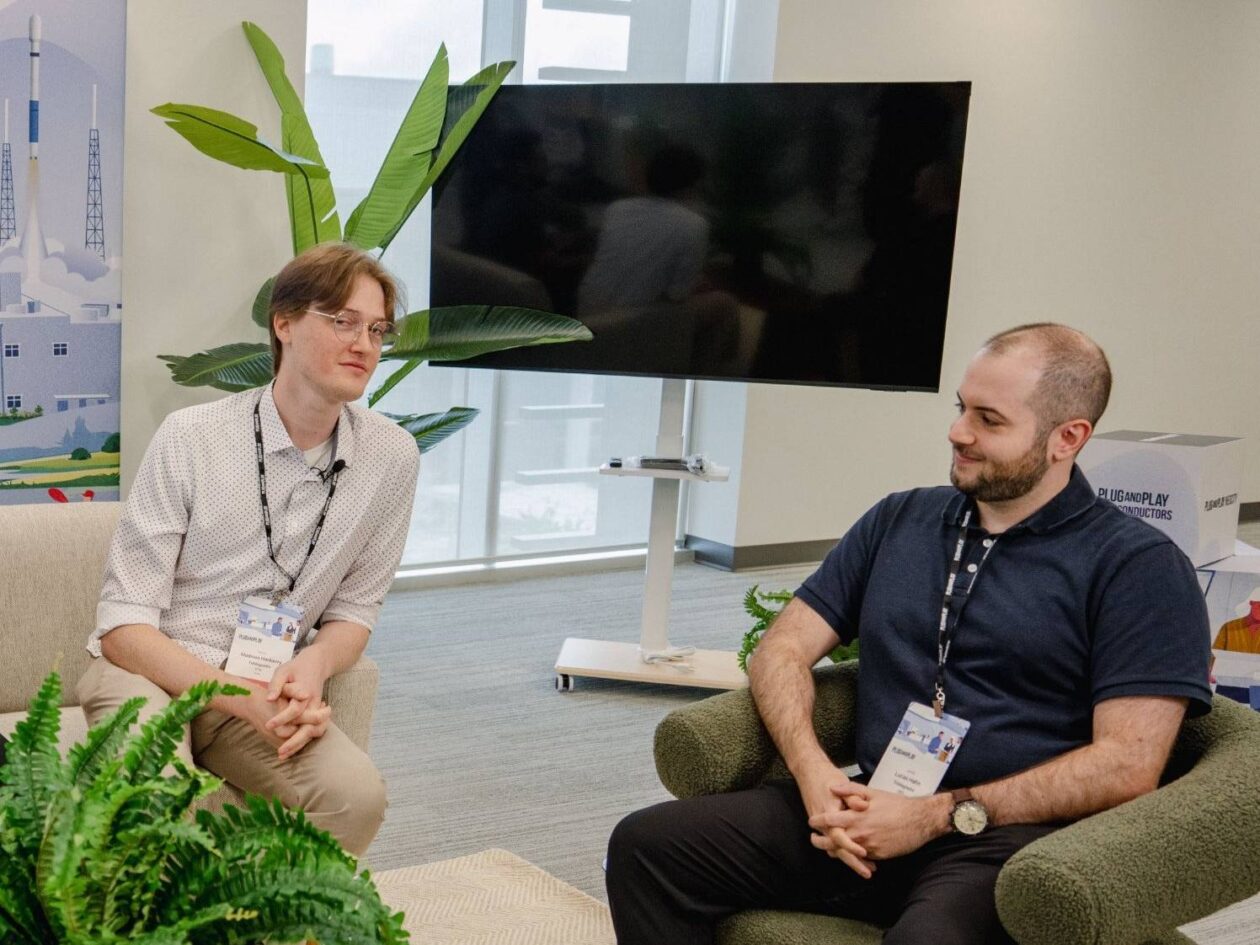
TriMagnetix co-founders Madison Hanberry, left, and Lucas Hahn at the Plug and Play Semiconductor Accelerator kickoff. (Plug and Play Photo)
Seattle-based TriMagnetix has landed new funding and commitments totaling $1 million to continue developing a semiconductor chip that, according to initial lab testing, consumes 800 times less energy than a traditional chip to process the same amount of data.
The startup uses nanomagnetic technology that requires only electrical pulses rather than the constant power stream traditional chips need, dramatically reducing electricity consumption and heat generation. The design also makes the chip resistant to radiation, and it’s built to integrate with existing computing infrastructure.
The startup has made additional progress beyond the new funding:
TriMagnetix is partnering with WaveWorks Technologies on its first paid pilot.
It has joined the Plug and Play Semiconductor Accelerator.
It was recently accepted into the Nvidia Inception program, which offers support including access to tech experts, introductions to Nvidia’s corporate clients and marketing.
Earthbound data centers struggling to curb energy use and heat output are seeking more sustainable chips, but the startup is particularly interested in satellite applications.
The Pacific Northwest, home to companies including Starcloud and SpaceX, is the “satellite capital of the world,” said Lucas Hahn, co-founder, president and chief strategic officer of TriMagnetix.
Satellite companies have told him they want semiconductors that are energy efficient and resistant to the radiation experienced in space, Hahn said. That makes TriMagnetix’s devices “a no-brainer.”
In addition to Hahn, the startup’s other employee is Madison Hanberry, who launched the TriMagnetix in 2023. Hanberry, who has served as chief of research and development, is transitioning to CEO. His sister, Aspen White, is also a co-founder.
The chips made so far by TriMagnetix are not the high-performance graphics processing units, or GPUs, used for applications such as AI and 3D animation. Nor are they simpler central processing units, or CPUs.
“It’s replacing specific compute in certain devices at a very low level,” Hahn said. “So not quite CPU yet, but it is at the core level doing similar things.”
TriMagnetix has contracted with the Washington Nanofabrication Facility at the University of Washington to use the site’s fabrication equipment. It aims to have a product available for commercial sales within the next year.
The round was led by Acequia Capital with participation from Athenaeum Ventures. Actuate Ventures has also committed to the round. The combined total from the three firms is $1 million. Last year, the startup received a $200,000 investment from climate venture fund SNØCAP.
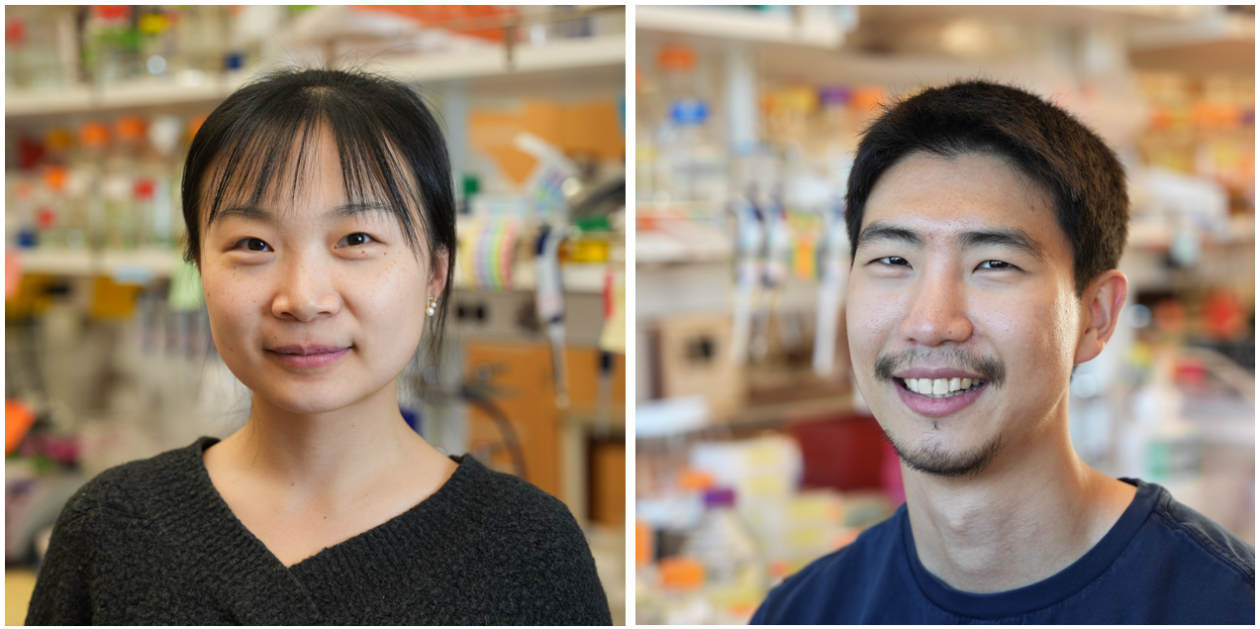
Anqi Chen, left, and Hojae Choi, are lead authors on two Nature papers from UW Medicine’s Institute for Protein Design. (IPD Photos)
Researchers at UW Medicine’s Institute for Protein Design (IPD) have created new proteins that act like molecular scissors, chopping up targets associated with Alzheimer’s disease and amyotrophic lateral sclerosis, also known as ALS or Lou Gehrig’s disease.
The University of Washington scientists are using sophisticated AI models developed at IPD to design proteins called proteases — a class of enzymes that cut specific proteins at specific locations in their structure. The proteases can make those cuts over and over again.
“You have this catalytic capability to destroy one target, and then immediately your molecule can hop over to the second, third and thousands of different targets,” said Anqi Chen, a postdoctoral fellow at the institute.
Many pharmaceuticals bind to a single target, inactivate it and stay there. That approach requires high doses of medicine to have an effect on disease. These enzymatic proteins, by contrast, have an amplified impact.
“There’s this potential to use your drug at very, very low concentrations,” Chen said.
The researchers have made proteases that attack proteins associated with neurodegenerative disease and are now working on targets for malaria, chronic diseases and cancer. They also could make proteins to defang viruses or bacterial toxins.
Structural model of a representative designed cysteine protease and metalloprotease, highlighting the catalytic area that performs the cutting. (IPD Image / Benedicte Rossi)
“There’s super exciting applications,” said David Baker, director of IPD and a 2024 Nobel laureate in chemistry.
Baker is the senior author of two papers describing this work that were published today in the journal Nature. Chen and Kejia Wu are the first authors of one paper, and Hojae Choi, an IPD graduate student, is the first author of the other.
Baker said the research is significant because of how well the enzymes work and the range of potential applications, which beyond medicine include breaking down hazardous pollutants and plastic waste.
Chen and her colleagues designed proteases that use a metal ion, rather than an amino acid, as the cutting blade. More than one-third of the new proteases that they created precisely cut their target, a protein implicated in Alzheimer’s disease, and did so 100 million times faster than cuts made without the enzymes.
The work by Choi and his colleagues used an activated amino acid called cysteine as the blade. The proteins designed by the scientists had a 19% success rate in cutting their targets and were up to 30 million times faster than uncatalyzed reactions.
Much work remains before these newly designed proteins can become drugs for humans. One challenge is ensuring that the proteases don’t trigger a response in which a patient’s immune system attacks the therapeutic before it has a beneficial effect. Another potential hurdle is turning the enzymes off and on to modulate their impact as needed.
Choi is studying that immune system issue, called immunogenicity. He’s working to combine the catalytic, cutting component of the enzyme with a benign-appearing antibody that won’t alert the immune system — sort of a protease wolf in antibody clothing.
“It is a newly launched project, so we don’t have any official data to show to public,” Choi said. “But we’re really working on it.”
The Nature publications are titled: “Computational design of metalloproteases” and “De novo design of cysteine proteases”
Other institutions contributing to the research are: University of Oxford, NVIDIA, University of Cambridge, Imperial College London, Universitat Ramon Llull, Howard Hughes Medical Institute, Zhejiang University, Max Planck Institute of Molecular Cell Biology and Genetics, ETH Zurich, Lawrence Berkeley National Laboratory, Stanford University and Korea Advanced Institute of Science and Technology.
— Brinc Drones, the Seattle-based maker of 911 response drones, has named Joe Levy chief revenue officer. Levy joins from Peregrine, a public safety data platform, and early in his career was a drill sergeant and combat engineer for the U.S. Army Reserve.
Levy praised the Brinc team, saying, “They’re passionate about what they do with a vision that will change the public safety landscape. I’m grateful to join them and help scale what they’ve built.”
Brinc announced a $125 million funding round in July, bringing its total raised to more than $280 million. The startup is hiring for numerous roles and is No. 6 on the GeekWire 200, a ranked index of the Pacific Northwest’s top startups.
Jessie Minton. (Fred Hutch Photo)
— Seattle-based Fred Hutch Cancer Center has appointed Jessie Minton vice president and chief digital and information officer, a new position that brings the roles together.
Former Chief Data Officer Jeff Leek stepped down and is now a professor in the Fred Hutch Public Health Sciences Division and CEO of Synthesize Bio, a startup he co-founded in 2023. Last month, Fred Hutch announced Shawn Stapleton as VP and chief AI and innovation officer, another new role.
Minton joins from Washington University in St. Louis where she has been vice chancellor for technology and chief information officer since 2022. She was previously VP and CIO at the University of Oregon.
Fred Hutch praised Minton’s track record “of modernizing complex technology organizations, strengthening cybersecurity, governing large-scale Epic environments and aligning technology strategy with clinical, research and academic priorities.” The new role is effective Dec. 7.
Jason (JJ) James. (LinkedIn Photo)
— Jason (JJ) James has been named chief information officer of Acumatica, the Bellevue, Wash.-based enterprise software giant that was acquired last year by Vista Equity Partners. James has more than 25 years in technology leadership and was previously CIO at companies including Aptos Retail, Net Health and Optima Healthcare Solutions.
“My focus is putting AI to work across Acumatica while keeping security at the core, so we can move fast without compromising the trust our expanding community of customers, partners and developers places in us,” James said in a statement.
Andrew Bennett. (LinkedIn Photo)
— Seattle tech leader Andrew Bennett has joined San Francisco-based Motiveas chief marketing officer. Bennett was with Smartsheet for a decade, leaving as CMO in 2024. He is also a limited partner with the investment firm Stage 2 Capital.
Motive provides software, hardware and AI-powered tools to help businesses manage physical fleets of vehicles and heavy equipment.
— Steven Chen has left LinkedIn, where he served as director and head of corporate legal and sustainability, to become a senior director at Rubrik.
— Seattle-based LevelTen Energy, a startup facilitating the deployment of clean energy projects, has appointed John Barrow as director of a new initiative enabling the purchase and sale of data center projects under development.
Barrow joins from CyrusOne, a global data center developer and operator, and was with CPS Energy for more than 15 years.
“In my career, I’ve had a front-row seat to the data center boom,” Barrow said. Participants are struggling to quickly secure locations and energy, he said, adding that LevelTen “can solve those problems for industry participants at scale.”
— Certivo, a Seattle startup building technology to automate supply chain compliance, has named Jeffrey Bornstein to its board. Bornstein was with GE for nearly three decades and served in roles including vice chairman and chief financial officer.
“He has run the numbers for some of the most complex industrial supply chains in the world while regulators checked every one of them,” said Certivo CEO Kunal Chopra. Certivo is No. 194 on the GeekWire 200.
Convera leadership, from left: Mike Cahill, Jon Southall, Tui Allen and Chris Steinig. (Convera Photo)
— Convera, a Seattle-based fintech company helping businesses transfer money across borders, has added to its leadership team. All four will work out of Convera’s other offices.
Mike Cahill has been appointed EVP and chief operating officer after joining in June as interim chief product and technology officer. Past employers include Early Warning Services, the company behind Zelle, as well as PayPal, Boku and American Express.
Jon Southallhas been named SVP and chief technology officer. He joins from PayPal and has also worked for Boku and Braintree.
Tui Allenhas joined as SVP and chief product officer. She previously worked for employers including Ticketmaster, Shopify and Blackbaud.
Chris Steinig has been named CIO after leading Convera’s technology operations for four years.
— Portable Consultants a Redmond, Wash., enterprise telecommunications and data connectivity provider, has named two leaders.
Carrie Ferrero has joined as VP of product and marketing development. She previously served as VP of sales engineering at Connectbase.
Troy Brockway has been named director of client development, joining from SpikeUp Media.
— Reperio Health, a Portland, Ore., startup bringing preventive health check-ups into the home, has named Brad Nations to its board of directors. Nations is CEO and founder of JB Advisory.
— iQmetrix, a Vancouver, B.C.-based company building point-of-sale and retail management software for cell phone and wireless stores, has appointed Beniamin Longodor as VP of global growth. Longodor, who is based in Austria, was previously with NTS Retail.
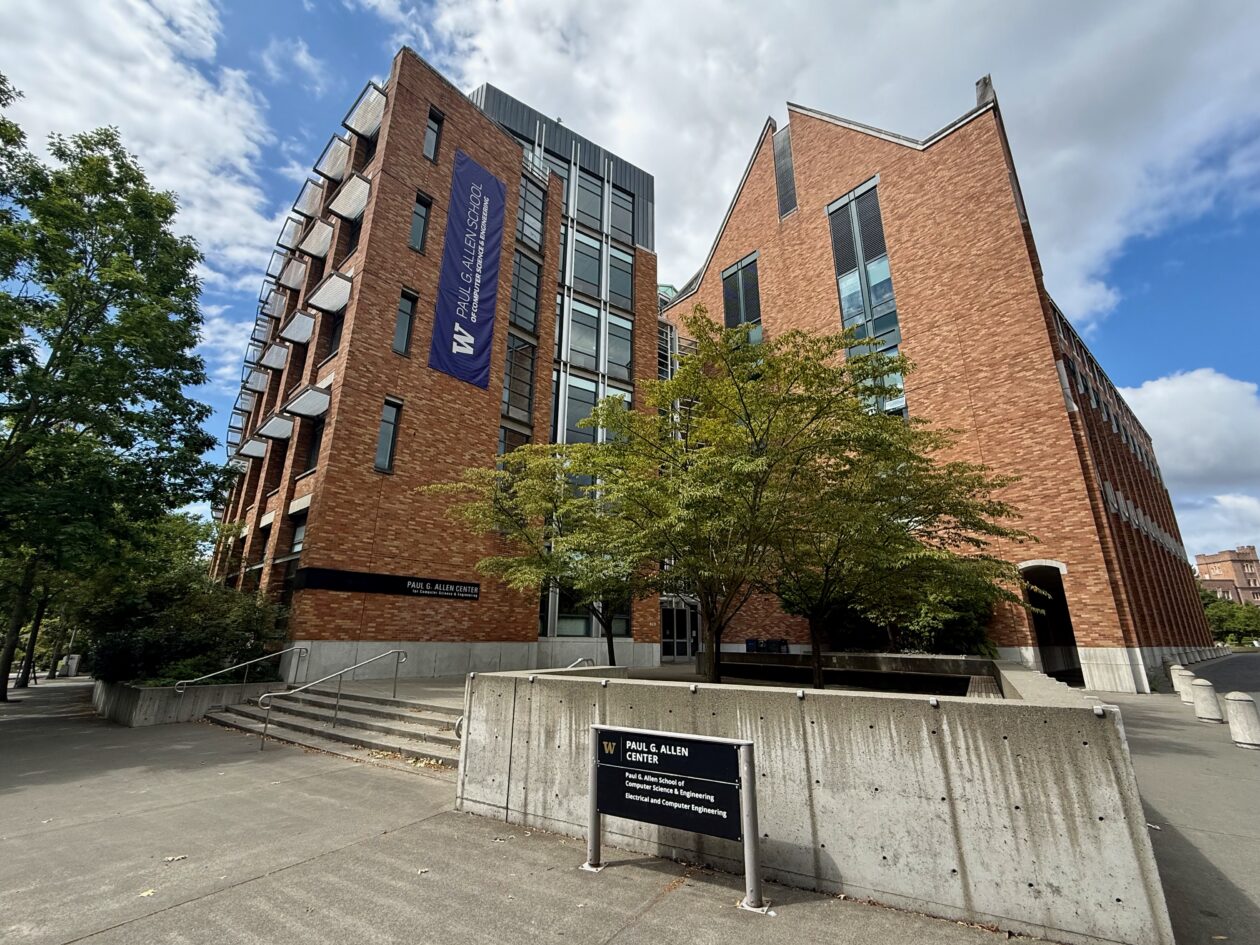
The Paul G. Allen School of Computer Science & Engineering is part of the University of Washington’s College of Engineering. (GeekWire Photo / Kurt Schlosser)
The University of Washington’s College of Engineering has received a $12 million gift from a semiconductor company whose chairman earned a master’s degree from the school more than 45 years ago.
The donation is from Winbond Electronics Corporation America, a U.S. subsidiary of Taiwan-based Winbond Electronics Corp. Arthur Y.C. Chiao is Winbond’s chairman and CEO and has been with the company since 1987. He earned his master’s degree in electrical engineering from the UW in 1980.
The gift will create the Winbond Endowed Fund for Excellence in the College of Engineering to support student scholarships, faculty recruitment and retention, research and interdisciplinary collaboration.
“Arthur Chiao’s vision, leadership and lifelong commitment to the University of Washington make this gift especially meaningful,” Nancy Albritton, dean of the College of Engineering, said in a statement.
Chiao envisions the new fund “as a catalyst for breakthrough discoveries” that will allow the college to “pursue bold initiatives and respond to evolving opportunities in engineering, technology and fields of future strategic importance,” according to a UW release. That includes semiconductors, AI, quantum tech and advanced manufacturing.
Taiwan-based semiconductor company Winbond is making a $12 million gift to the UW College of Engineering. Winbond President Pei-Ming Chen, left, and UW President Robert Jones celebrate at a September event in Seattle. (UW Photo)
The College of Engineering is among the UW’s largest colleges, enrolling 10,136 students last fall and employing a faculty of 350. The college says it is the fifth-largest producer of electrical and computer engineering graduates in the U.S.
“Seattle is a gateway to the Pacific Northwest of North America, and the University of Washington will play an important role in connecting future technology innovation between North America and East Asia,” Chiao said.
The gift comes amid a push to bring chipmaking closer to home. Taiwan is the global center of manufacturing for the most advanced semiconductor chips, and the United States has been working to reduce its dependence on East Asian chip production. In 2022, Congress passed the CHIPS and Science Act to incentivize domestic fabrication, R&D work and workforce training.

 Login