❌

Reading view

There are new articles available, click to refresh the page.

A new pal for Pluto? Rubin Observatory finds its first dwarf planet candidate
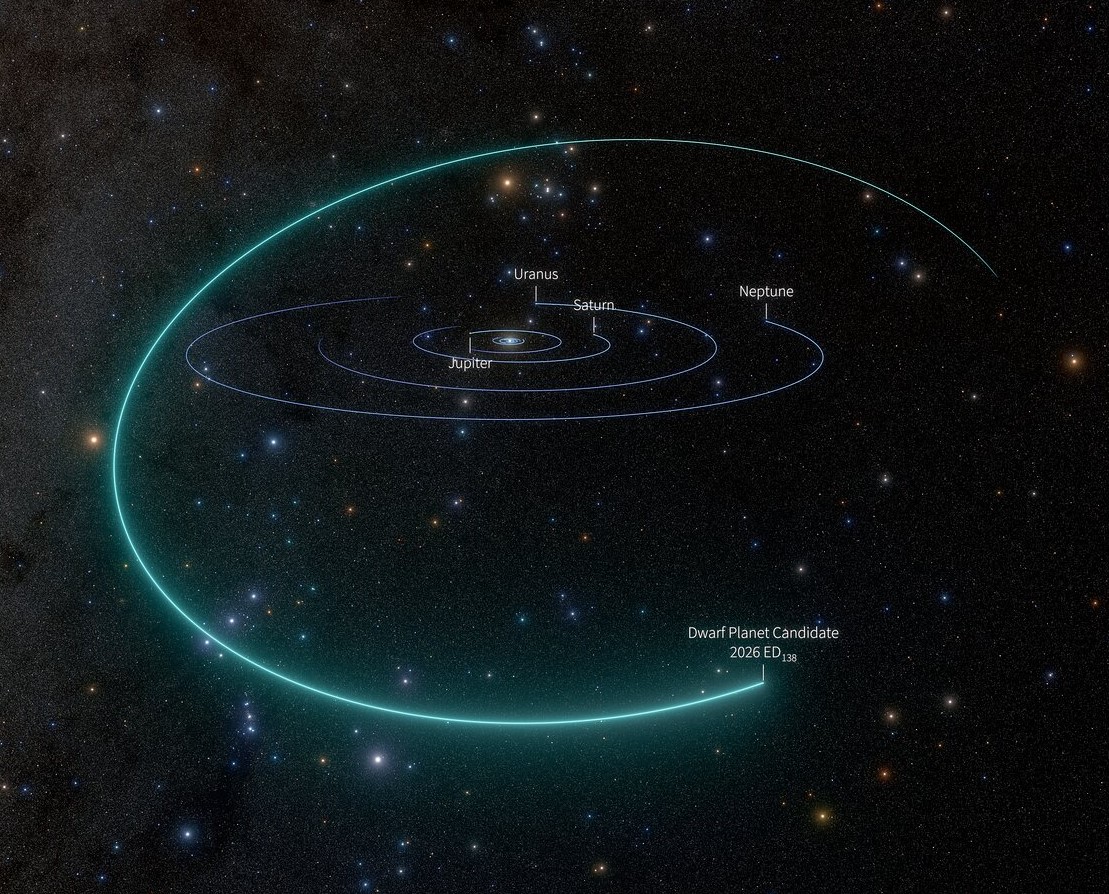
A visualization shows the orbital path of the dwarf planet candidate 2026 ED138 in relation to the orbits of the solar system’s larger planets. Click on the image for a larger version. (Credit: NSF-DOE Vera C. Rubin Observatory / NOIRLab / SLAC /AURA / R. Proctor)

Astronomers sorting through data from the Vera C. Rubin Observatory in Chile have found an icy world that has a good chance of joining Pluto in the solar system’s retinue of dwarf planets.

University of Washington astronomer Mario Jurić joined the astronomer who made the discovery, Matthew Holman of the Harvard & Smithsonian Center for Astrophysics, to announce the findings today at a meeting of the American Astronomical Society’s Division for Planetary Sciences in Spokane, Wash.

Jurić, the Rubin team’s solar system lead scientist, said the observatory’s capabilities made it possible to detect and characterize the new dwarf planet candidate, known as 2026 ED138.

“Rubin is giving us an unprecedented capacity to explore the sky through a combination of speed, depth, and precision,” Jurić said in a news release. “And the discovery is just the beginning: Once we identify a new object, we can search back months, and sometimes even decades, finding it in images where nobody knew to look. This ability to both discover and ‘precover’ objects is transforming how quickly and accurately we can determine their orbits and understand the distant solar system.”

2026 ED138 traces a tilted orbital path that takes it well beyond Pluto, the solar system’s best-known dwarf planet. It’s currently at a distance of 46 astronomical units, where 1 AU equals the average distance between Earth and the sun. Pluto, by comparison, is currently about 40 AU from the sun.

Astronomers suspect ED138 formed billions of years ago closer to the sun before being flung into a wider orbit by gravitational interactions with Neptune.

Based on an analysis of its distance, brightness and assumed composition, ED138 is thought to be somewhere between 600 and 1,500 kilometers (373 to 932 miles) in diameter. At that size, an icy object should possess enough gravity to pull itself into a round shape — satisfying the primary physical criterion for a dwarf planet.

ED138 may be Rubin’s first dwarf planet candidate, but it almost certainly won’t be the last. Thanks to the observatory’s Simonyi Survey Telescope — named after the family of Seattle software billionaire Charles Simonyi — the Rubin team detected more than 11,000 new asteroids even before June’s official start of a 10-year survey of the southern sky.

Rubin’s researchers analyze the data from those scans to find objects of interest — ranging from asteroids to gamma-ray bursts — and track them over time. On Oct. 13, Holman was running data through a search code that he developed with Kevin Napier, a colleague at the Center for Astrophysics. ED138 stood out due to its exceptional size and brightness.

“My first reaction was one of excited disbelief,” Holman said. “Objects like this are very rare, so I immediately started checking whether I or the code had done something wrong.”

To confirm the discovery, Holman, Jurić and their colleagues found 30 archived observations of ED138 dating back to March 4. The Asteroid Institute’s ADAM Precovery service found still more images of the object, going back to 2016, in the archives of a different astronomical survey.

The precovery data confirmed that ED138 was a special case.

“Finding an object this big, roughly 1,000 kilometers across, is something that happens maybe once in a generation,” Jurić said. “It’s the largest trans-Neptunian object found in about 20 years, and Rubin turned it up while we were still commissioning the telescope.”

In 2006, the International Astronomical Union defined dwarf planets as planetary objects that are big enough to crush themselves into a roundish shape — technically speaking, into a state of hydrostatic equilibrium — but not big enough to clear their orbital neighborhood.

So far, the IAU has classified five solar system objects as dwarf planets — including Ceres in the main asteroid belt, plus Pluto, Eris, Haumea and Makemake in the region beyond Neptune. 2026 ED138 joins a host of other celestial objects that are thought to be dwarf planets but haven’t yet been added to the IAU’s official list.

“The official list hasn’t moved since 2008,” Jurić told GeekWire in an email. “I’m not sure if there’s an active process that reviews candidates, and what are the timelines.”

Jurić and his colleagues hope additional observations will boost ED138’s chances of attaining true dwarf planethood.

“The next step in building the case would be to prove it’s round (in hydrostatic equilibrium),” he wrote. “The means to do that would be directly through occultations (and there’s a good chance of that, given it’s in a dense stellar field), and then thermal measurements plus modeling and light curves (or the absence of variability).”
Orbital Robotics gets set to send up a pair of arms for International Space Station’s robots

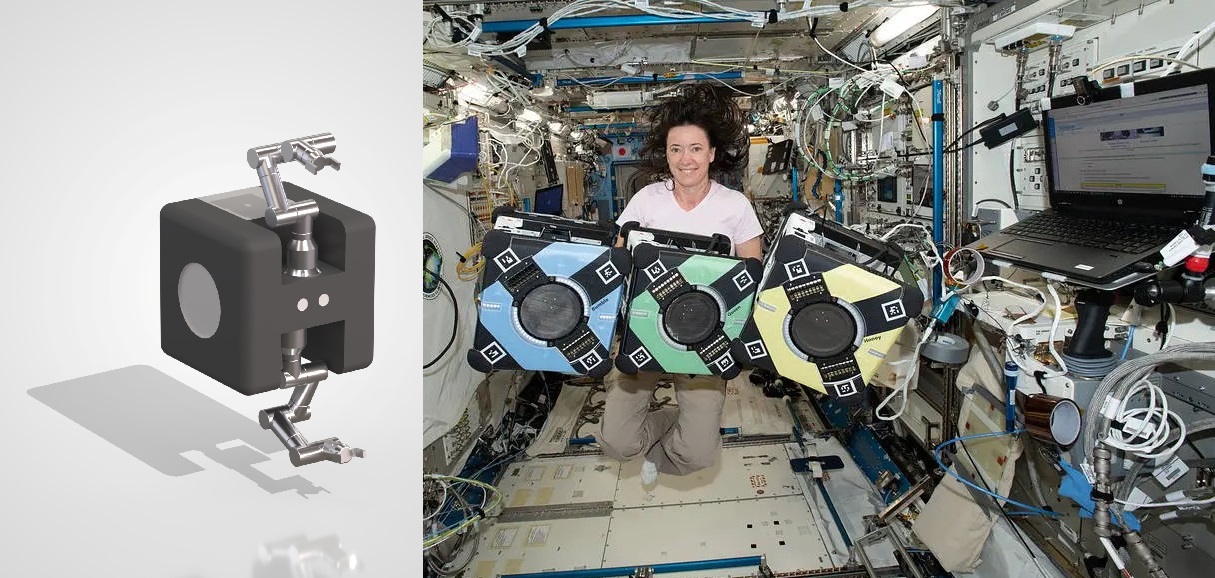
An illustration shows an Astrobee free-flying robot equipped with Orbital Robotics’ arms, at left. NASA astronaut Megan McArthur shows off three Astrobees aboard the International Space Station, at right. (Credits: Orbital Robotics for illustration at left, NASA for photo at right)

A free-flying NASA robot aboard the International Space Station will soon demonstrate a system for capturing and servicing satellites in orbit, using a pair of autonomous robotic arms built by Seattle startup Orbital Robotics.

“This demo will prove our ability to capture, manipulate and upgrade satellites on orbit, moving humanity one massive step forward towards reusable satellites,” Orbital Robotics CEO Aaron Borger said today in a news release.

Borger told GeekWire that the company plans to send its robotic arms to the space station in the third quarter of 2027. Three separate demonstrations would be conducted, each about a month apart, he said.

The mission will mark a major milestone for Orbital Robotics, which was founded in 2024 by Borger and other veterans of Jeff Bezos’ Blue Origin space venture, including lead hardware engineer Riley Mark, lead software engineer Sohil Pokharna and adviser Doug Kohl. Orbital Robotics has been developing arms controlled by artificial intelligence for use on free-flying spacecraft, and this will be the company’s first opportunity to prove out its capture technology and autonomous control software together in microgravity under real spaceflight conditions.

The demonstration is a joint effort with Arkisys, NASA’s sustaining and maintenance partner for the Astrobee program, which will provide integration support and in-space platform infrastructure. A successful demo would boost confidence that free-flying robots equipped with Orbital Robotics’ arms could conduct satellite servicing missions.

“Free flight proves you can get there, manipulation proves you can do something once you arrive,” Arkisys CEO David Barnhart said. “Pairing Astrobee with Orbital Robotics’ arms creates a powerful proxy for the servicing and assembly operations that will shape the future ISAM [in-space servicing, assembly and manufacturing] economy.”

Three cube-shaped Astrobee robots — nicknamed Bumble, Queen and Honey — are currently available for testing aboard the ISS. In 2024, one of the Astrobees was outfitted with a set of tentacle-like arms that grabbed onto a boxy cube to demonstrate the system’s gripping ability. Borger said the Orbital Robotics / Arkisys demo would be similar to the tentacle test.

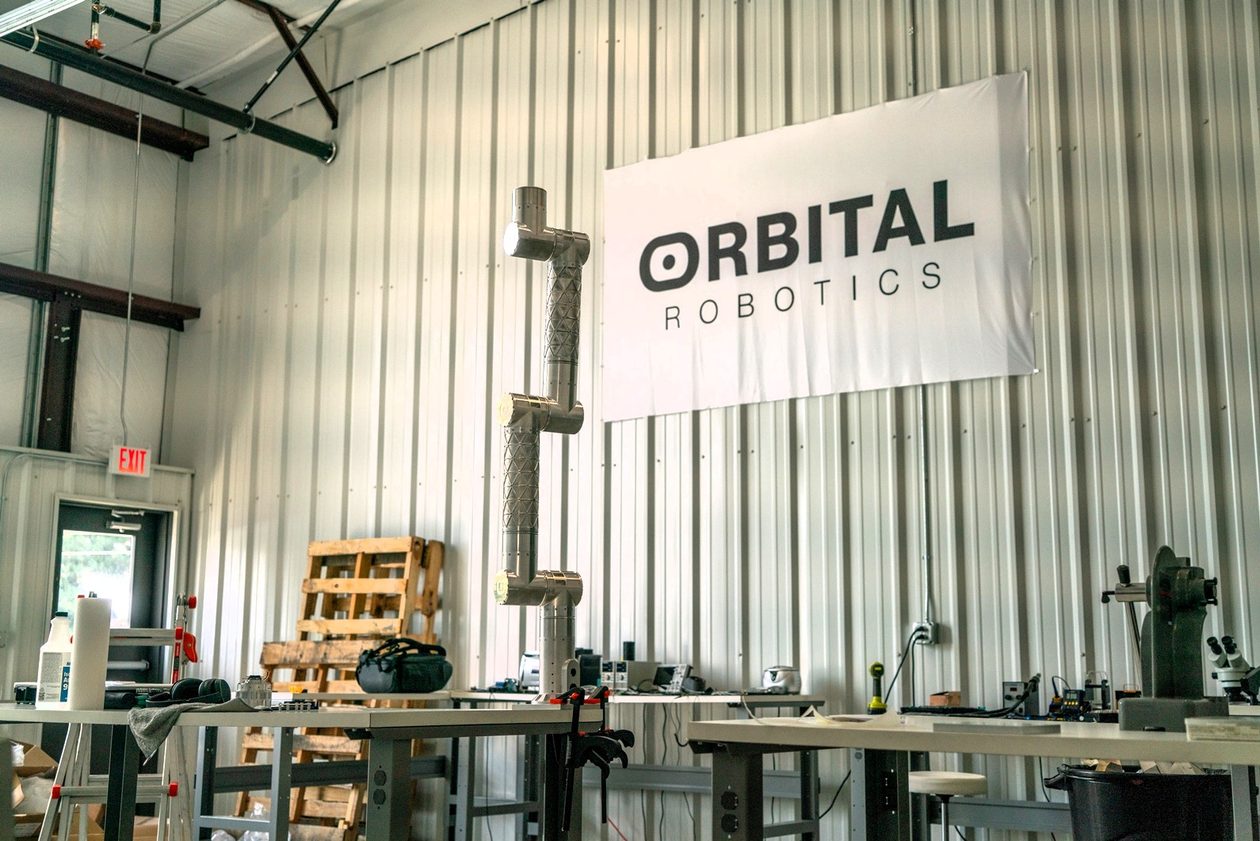
Orbital Robotics’ arms for the Astrobee demonstration will be scaled-down versions of the ORA-A arm that the company has built in its Seattle lab, Borger said.

Orbital Robotics’ next-generation ORA-A robotic arm rises from its workbench in the company’s lab. (Orbital Robotics Photo)

“The arms will be sent up to the ISS and then installed onto one of the Astrobees by the crew,” Borger said in an email. “The Astrobee with the arms will then demonstrate the capture and servicing on a second Astrobee that is already on the ISS. … After the capture, we will replace a simple compute module we will launch and integrate with the Astrobee being captured.”

Borger said the ISS demonstration is an internally funded program. “We are paying for the launch and demonstrations with Arkisys as our implementation partner through their Space Act Agreement with NASA,” he said.

After the demonstration, the arms will remain available aboard the ISS to assist astronauts with moving cargo, to automate simple tasks involving robotic manipulation, and to provide opportunities for roboticists to conduct follow-up experiments.

NASA and its commercial partners are already preparing for the next step in space robotics: The Fly Foundational Robots mission, due for launch in late 2027, will deploy a satellite equipped with a commercial robotic arm for demonstrations of in-space servicing tasks.

Seattle Space Week shines a light on eight problems and prospects for pioneers on the final frontier

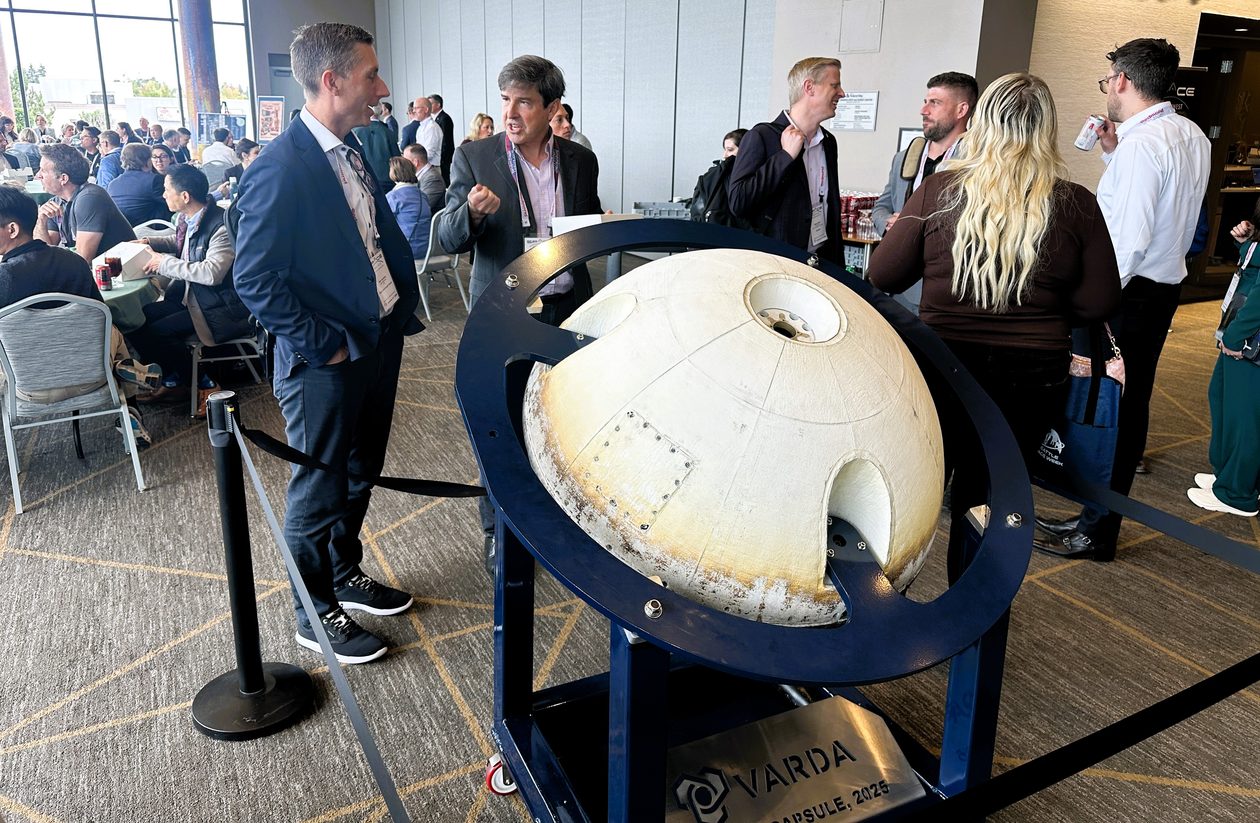
Dale Goulding, chief operating officer at Forge Digital, chats with Michael Reilly, chief strategy officer at Varda Space Industries, at the Space Northwest Symposium in Federal Way, Wash. One of Varda’s orbital capsules is on display in front of them. (GeekWire Photo / Alan Boyle)

How high can Washington state’s space industry rise?

Preliminary findings suggest that the economic impact of the state’s space sector more than doubled between 2018 and 2022, and nearly doubled again between 2022 and now. But at the same time, some leaders of the space community are questioning whether the Pacific Northwest can keep pace with other regional clusters in, say, Florida, Texas and Colorado.

That good news, bad news situation made headlines this week when Stoke Space CEO Andy Lapsa questioned whether he’d pick the Seattle area as his home base if he had to do it over — just before taking the stage as a member of Gov. Bob Ferguson’s Washington Space Council.

Ferguson isn’t the only elected official trying to make sure the Seattle area keeps up on the space frontier. Dana Ralph, the mayor of Kent, Wash., where Stoke is headquartered, made that clear in her remarks during the kickoff for Seattle Space Week at the Museum of Flight.

“We don’t take you for granted,” said Ralph, addressing a gathering of CEOs, investors and other VIPs. “I want you to hear that out loud: We don’t take you for granted.”

Seattle Space Week — highlighted by Tuesday’s Space Northwest Symposium in Federal Way — provided plenty of opportunities for discussing the challenges facing Washington state’s space ventures. Here are four problems to face, and four prospects to look forward to.

‘We have a problem’

The launch crisis: The availability of launch opportunities has shrunk dramatically. “It’s just crazy how there’s this mismatch between supply and demand right now in the industry,” said Tim Beard, Stoke Space’s chief financial officer. “It’s becoming a crisis.”

One factor is the increased demand for deploying satellite constellations for broadband data services (such as Starlink and Amazon Leo) and for future AI data processing (such as Starcloud, SpaceX’s Starmind and Google’s Project Suncatcher).

Another factor is reduced supply: Blue Origin and United Launch Alliance are dealing with setbacks in their next-generation rocket programs. Meanwhile, SpaceX is talking about phasing out its workhorse Falcon 9 rocket as it makes the transition to Starship. The resulting launch crunch is an industry-wide problem, but it hits Seattle’s satellite ventures especially hard.

The workforce challenge: There’s also a limited supply of skilled technicians and engineers. Bill Bruner, CEO of New Frontier Aerospace, ranks that as his No. 1 challenge. “It’s finding skilled, trained people to do, not just the hard engineering work, but the Grade 13, Grade 14 graduate technical work,” he said. “We need a national solution to that problem.”

Ralph said Kent and other Seattle-area municipalities need to partner with state government and commercial ventures to address the challenge. “We should be able to make it easier for employers to invest in apprenticeship, credentials and on-the-job training,” she said. “We need to build a workforce system that moves with industry, not several years behind it.”

Funding from faraway: Much of the funding that fuels Seattle’s space ventures comes from elsewhere. “There are a lot of VCs in Seattle, but they’re not necessarily space VCs,” said Mike Reilly, chief strategy officer for Varda Space Industries. “I feel like a lot of the space money comes out of L.A. and San Francisco.”

Brian Monnin, co-founder and chief commercial officer at Sophia Space, said midsize space ventures need to find ways to fill their funding gaps. “Debt financing is one way,” he said. “But I think there should be more public-private combinations of firms, traditional banks working alongside debt financiers, working alongside the public for us to fill that vast middle.”

Regional rivalries: Several executives said other states are much more aggressive than Washington when it comes to attracting space ventures. “The incentives just aren’t here,” Monnin said. “We’re looking at where we build our Factory One for Sophia Space tiles, and you have to look at the incentives from sovereign funds in New Mexico, Louisiana and others. They’re far more attractive than they are in this state currently.”

The inter-regional competition was one of the challenges cited by Stoke Space CEO Andy Lapsa — and by his CFO as well. “I need to be pretty direct in that we’re being actively courted by any number of states: Colorado, Texas, Florida,” Beard said. “They want us to move there, but Washington state is the right place for Stoke. … I hope our policymakers in Olympia, throughout the state, our senators hear this. We want to stay in Washington state. Help us do that.”

‘Light this candle’

Public-private partnerships: The newly announced Washington Space Council isn’t likely to set up a multibillion-dollar fund for space ventures anytime soon, but it could serve as a forum for business executives and government officials to work out realistic ways to foster the state’s space industry.

Will the work of the council go beyond virtue-signaling? Last year, the Governor’s Economic Development Strategic Reserve Fund awarded $350,000 to support Portal Space Systems’ expansion into a 50,000-square-foot satellite manufacturing facility in Bothell, Wash. Such grants may serve as a model for future financial incentives.

Satellite offices: Space ventures don’t need to be headquartered in Washington to benefit the state’s space industry. Cowboy Space, for example, is based in California but recently announced the opening of a 291,035-square-foot spacecraft design and manufacturing facility in Kent. BlackSky is based in Virginia, but its satellites are built in a 22,000-square-foot factory in Tukwila, Wash. SpaceX may have moved its corporate headquarters from California to Texas, but it still makes more than half of the world’s satellites at its facilities in Redmond and Woodinville, Wash.

Just as Google and Meta maintain engineering hubs in the Seattle area, out-of-state satellite ventures are likely to establish Seattle-area outposts. “The fundamentals that made this region are still here: talent, a deep supply chain, industrial capacity, a culture of making things, and generations of knowledge that you simply cannot re-create overnight,” Ralph said.

Coming attractions: The silver lining to the launch crisis is that Stoke Space and other commercial space ventures plan to fill the gap. And when SpaceX’s Starship enters service, that could dramatically change the parameters of the launch market. Ron Faith, CEO of RBC Signals, said this week’s first orbital Starship flight was “a pretty big milestone event.”

“Having Starship go into orbit and deploy real satellites … that’s a significant increase in capacity for launch,” he said. “But with that said, we’re also seeing many, many more launchers come online.” The list includes Blue Origin’s New Glenn, United Launch Alliance’s Vulcan, Rocket Lab’s Neutron, Firefly Aerospace’s Alpha, Relativity Space’s Terran R — and yes, Stoke Space’s Nova.

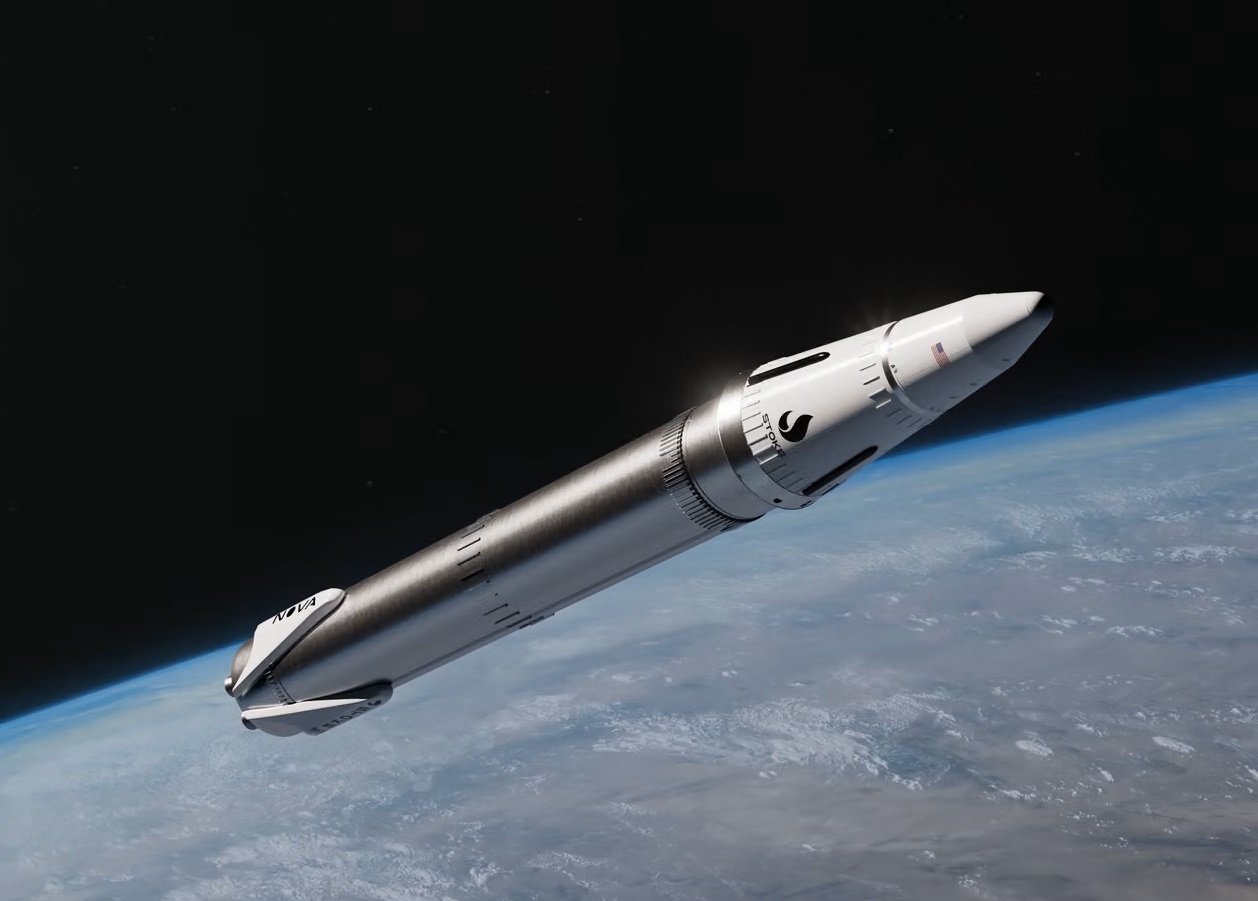
Illustration: Stoke Space Nova Pathfiner during ascent
An artist’s conception shows Stoke Space’s Nova Pathfinder rocket rising into Earth orbit. (Stoke Space Illustration)

A pad of our own: When it comes to space facilities, the Seattle area lacks two big items: a nearby NASA center and an orbital launch pad.

During a recent visit to Redmond, NASA Administrator Jared Isaacman didn’t offer much encouragement for the space agency’s fans in the Pacific Northwest. “I think it’s unlikely we’re going to be adding any additional centers right now,” he told me.

But at the Museum of Flight, Ferguson said the Washington Space Council “will look for ways we might be able to develop Washington-based commercial launch capabilities.”

At the Space Northwest Symposium, Monnin wondered why the Seattle area’s space ventures haven’t forged closer ties with the region’s military installations. “It’s a shame that over the last few decades we haven’t seen the affinity toward Fort Lewis-McChord or the naval base in Bremerton as innovation centers … because from an orbital compute standpoint, the biggest need is defense- or security-related,” he said. “How we haven’t tapped into that as a state, I think, is a miss.”

The Pacific Northwest’s geography would make it difficult to put a launch pad in a place that avoids posing a significant risk to populated areas. That’s why Blue Origin and Stoke Space have their orbital launch pads in Florida instead of Washington. But when Beard was asked about the prospect of using a pad closer to home, he wasn’t dismissive.

“Launching from the Washington coast would be fantastic,” he said. “Also, my geography is not great, but I think it’s slightly closer to ship a rocket to the Washington coast than it is all the way down to Cape Canaveral. So, that’s one advantage as well. We’d love to see launch here, and I think that we’d be good partners to do that with.”

Check out the Space Northwest website for the Seattle Space Week event calendar.

SpaceX’s rideshare launch kicks off milestone mission for Starfish Space’s first Otter space vehicle

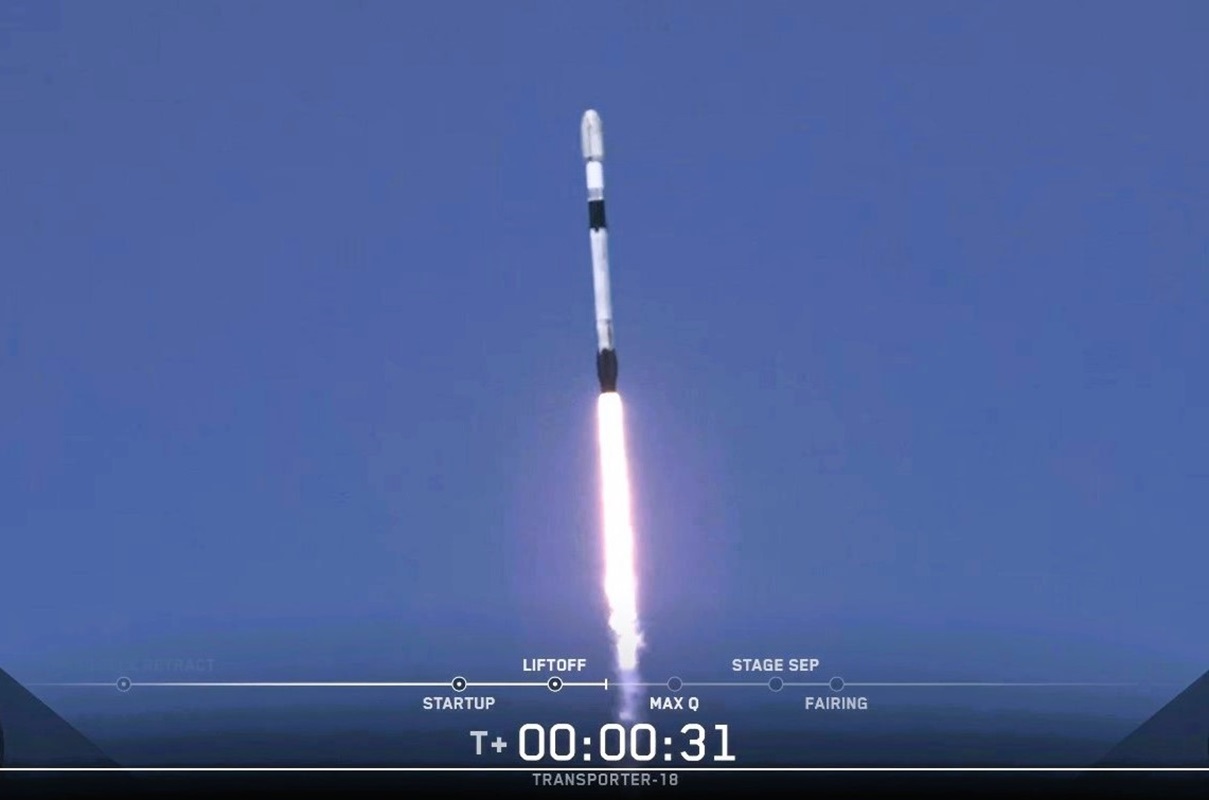
SpaceX’s Falcon 9 rocket rises from its California launch pad, sending 130 payloads into orbit. (Credit: SpaceX via X)

Starfish Space’s first full-scale Otter satellite servicing vehicle went into orbit today, marking a major milestone for the Tukwila, Wash.-based startup.

The Otter spacecraft was among 130 payloads launched from Vandenberg Space Force Base in California aboard a SpaceX Falcon 9 rocket. Otter is roughly the size of a kitchen oven, with solar arrays that were folded up for launch.

Other payloads on the satellite rideshare mission, known as Transporter-18, included Cowboy Space’s first power-beaming satellite, a prototype for Google’s AI data-center constellation, and a NASA-funded probe that will track the energy released by galaxies and supernovas.

Today’s liftoff through surface-level fog — and the return of the Falcon 9’s first-stage booster to a nearby landing pad — proceeded like clockwork. A little more than an hour after launch, Otter separated from the rocket’s upper stage and powered up for orbital operations.

Once Otter is fully commissioned, it will rendezvous with and inspect a series of inoperable satellites for a $15 million NASA mission known as Small Spacecraft Propulsion and Inspection Capability, or SSPICY for short. The capabilities demonstrated by SSPICY could be used during future missions to check the health of active satellites, or dispose of defunct satellites.

SSPICY may not be the only mission that Otter takes on during its operating lifetime.

“Success in the mission is to actually go and provide this commercial inspection service on a number of these different spacecraft, and that will be a huge win in and of itself,” Starfish co-founder Trevor Bennett told GeekWire last week. “But we’re also bringing Otter along to provide servicing well beyond that, so we could go and inspect more spacecraft, or potentially do some additional docking past the initial mission.”

This inaugural Otter mission follows up on two orbital flight tests involving smaller-scale Otter Pup prototypes. The first test fell short of linking up with its target satellite but was able to demonstrate Starfish’s satellite-tracking system. The second Otter Pup went into orbit last year and is currently closing in on its target.

Starfish Space is already preparing for future Otter missions — including a satellite disposal job for the Pentagon’s Space Development Agency, two commercial satellite servicing missions in geostationary Earth orbit, and two servicing missions for the U.S. Space Force.

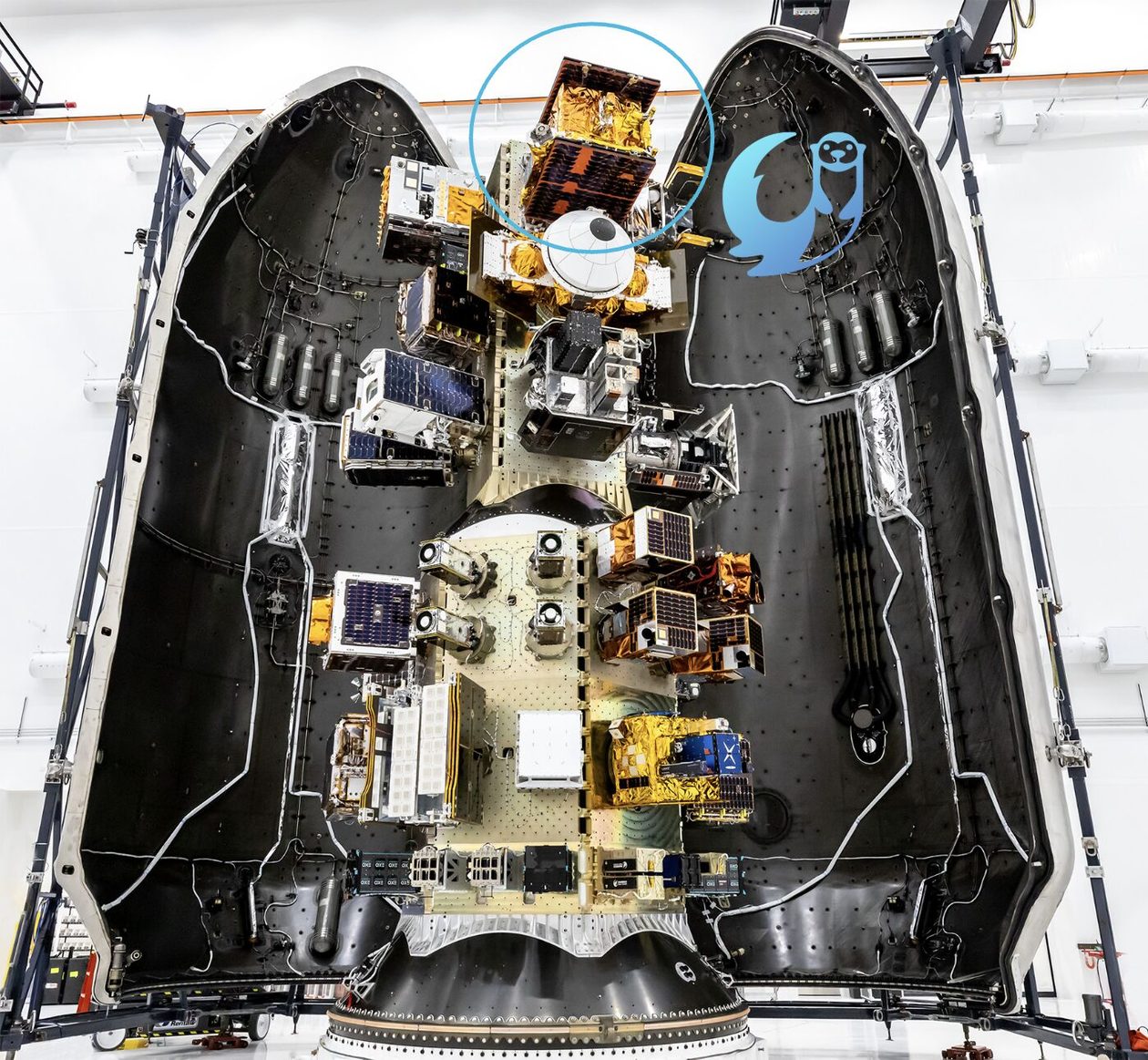
The blue circle highlights the placement of Starfish Space’s Otter spacecraft inside the Falcon 9 rocket’s upper stage prior to launch. (Credit: Starfish Space / SpaceX)

More about Transporter-18’s payloads:

  • Cowboy Space’s Reason-1 satellite is designed to collect solar energy in space and transmit it to a ground receiver with a kilowatt-class laser, advancing technologies central to the company’s planned orbital data centers. Cowboy Space, formerly known as Aetherflux, is headquartered in California but is setting up a 291,035-square-foot manufacturing facility in Kent, Wash.
  • Google’s Project Suncatcher M1 prototype, built by Planet Labs, will test the tensor processing units that Google plans to use for its orbital AI data-center constellation. The prototype is “designed to gather in-orbit data on how our TPUs handle the physical stress of spaceflight and the radiation and thermal extremes of space,” Google said in a blog post.
  • Star Catcher’s Protostar satellite will be involved in an experiment to beam power from the main spacecraft to a smaller deployable satellite equipped with off-the-shelf solar panels. The Protostar mission is meant to blaze a trail for the orbital power grid that Star Catcher hopes to create.
  • The SPRITE CubeSat is part of a $4 million mission funded by NASA and led by the University of Colorado that will study how stars and galaxies shaped the evolution of the early universe. The satellite is equipped with a far-ultraviolet imaging spectrograph. SPRITE stands for Supernova Remnants and Proxies for Reionization Testbed Experiment.

Starcloud’s AI computing payload will get a ride to lunar orbit on Firefly’s space vehicle

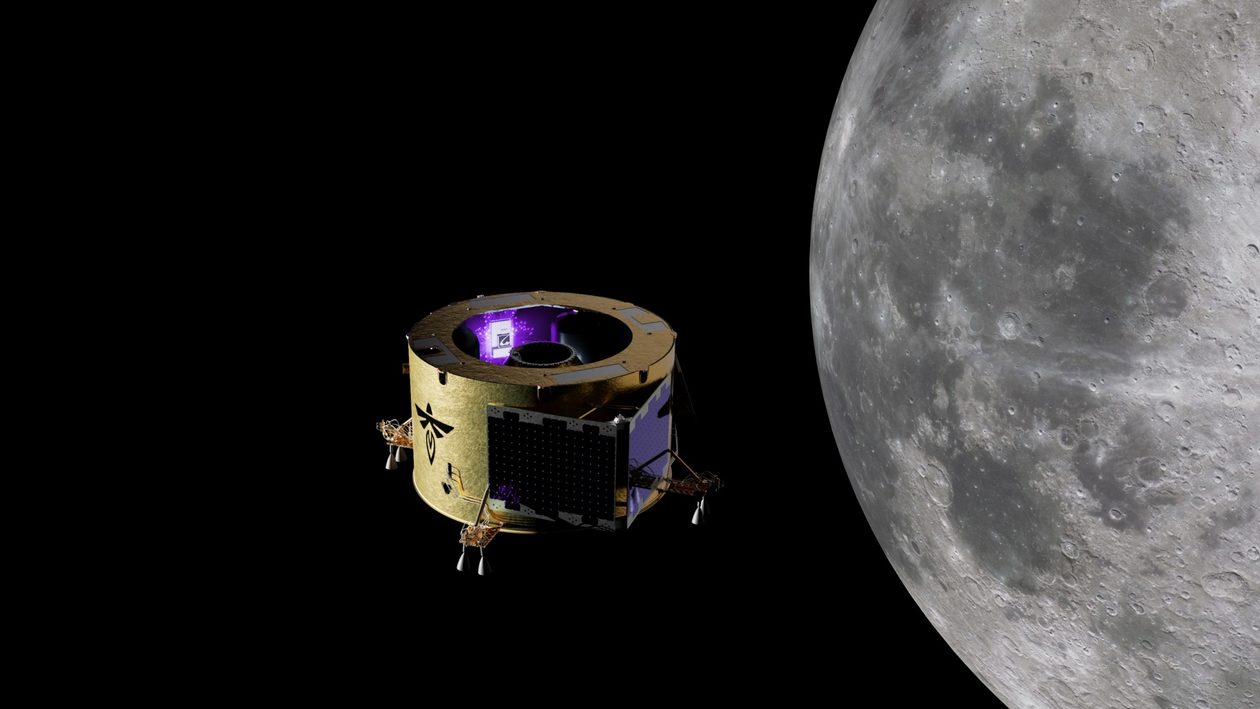
An artist’s conception shows Firefly’s Elytra spacecraft in lunar orbit, with Starcloud’s SC-1L data-processing payload highlighted in purple. (Firefly Aerospace Illustration)

Redmond, Wash.-based Starcloud has signed up to send its artificial intelligence data-processing hardware into lunar orbit on a Firefly Aerospace spacecraft.

Starcloud’s payload, known as SC-1L, will fly on Firefly’s Elytra orbital vehicle during a NASA-supported mission that’s scheduled for launch no earlier than 2028. The mission will demonstrate technologies that Starcloud plans to use on AI data centers in Earth orbit — and around the moon as well.

“Space is the future of data centers, and the moon is the next frontier for that vision,” Ezra Feilden, Starcloud’s co-founder and chief technology officer, said today in a news release.

Starcloud made its mark in Earth orbit last year with Starcloud-1, a satellite equipped with an Nvidia H100 chip. Starcloud-1 successfully trained a large language model called NanoGPT, marking a first for orbital computing. “We successfully validated our ability to run and train AI models on enterprise-grade GPUs in low Earth orbit, and now we’re taking this proven technology to lunar orbit,” Feilden said.

Starcloud’s SC-1L payload will be integrated aboard the Elytra vehicle for a mission aimed at delivering Firefly’s Blue Ghost lander to a lunar region known as the Gruithuisen Domes. After the lander separates from Elytra and descends to the surface, the orbiting vehicle will serve as a data relay for Blue Ghost.

The data-processing demonstration begins when the Blue Ghost mission ends. SC-1L will ingest data from Elytra’s onboard Solux vision system, execute high-performance AI computing in orbit and transmit the processed data back to Earth.

The Solux system is designed to serve as an autonomous navigation and tracking tool in space environments where global positioning systems are otherwise unavailable. Firefly expects the Elytra orbiter to operate in lunar orbit for at least five years.

“We’re proud to collaborate with innovative customers like Starcloud and collectively take another step toward establishing the infrastructure that will power a permanent human and robotic presence at the moon,” said Ray Allensworth, Firefly’s vice president of spacecraft.

Elytra will also use high-resolution telescopes and Firefly’s Ocula moon imaging service for surface mapping, mineral detection and reconnaissance. Firefly recently announced a collaboration with Nvidia to process the data for Ocula using Nvidia’s Jetson module.

In August, Starcloud reported raising $250 million in funding to support the creation of a constellation of AI data-center satellites in low Earth orbit, powered by Nvidia’s Space-1 Vera Rubin Module. Starcloud has filed an application with the Federal Communications Commission to operate as many as 88,000 satellites as orbital data centers.

Fresh figures suggest Washington’s space industry has doubled its economic impact … again

Analysts have traced the economic impact produced by scores of space ventures in Washington state. (Space Northwest Illustration)

The preliminary results of a study commissioned by Space Northwest, an association focused on regional space ventures, suggest that Washington state’s space economy contributes $8.1 billion in direct economic output annually.

The newly reported figures show that the space industry’s economic impact in the Evergreen State has nearly doubled since a similar study in 2022. That earlier report also documented a doubling effect over the course of four years, from $1.8 billion in 2018 to $4.6 billion in 2022.

Kelly Maloney, Space Northwest’s co-founder and the chair of the association’s board of directors, shared the latest figures today at the Space Northwest Symposium in Federal Way, Wash. She said the preliminary findings, developed by BERK Consulting and Alliance Velocity, reinforce the view that space is not just a niche industry in Washington.

“We are effectively the Space Tech State,” Maloney said.

She said the state’s space sector directly supports about 12,300 jobs and $2.3 billion in labor income. When indirect and induced impacts are included, the figures rise to about 34,200 jobs, $12.4 billion in statewide economic output and $3.9 billion in labor income.

“For every direct space job in Washington, another 1.8 jobs are supported elsewhere in the economy,” Maloney said.

She noted that the space sector’s direct labor income averages about $188,000 per worker.

“That is twice the statewide average,” Maloney said. “So, this is not just a growing industry in terms of employment. It is an industry generating significant economic value and exceptionally strong labor income here in Washington.”

Maloney added that 94% of the state’s direct space sector jobs are concentrated in three highly technical areas. “Nearly 6,500 people work in space vehicle and propulsion manufacturing; more than 3,000 in research, engineering and computing; and just over 2,000 in space electronics and hardware,” she said.

Washington’s space workers play a central role in the satellite industry. More than 68% of all active satellites in Earth orbit were built in the state, according to the analysis. Most of those made-in-Washington satellites were produced at SpaceX’s Starlink operation in Redmond.

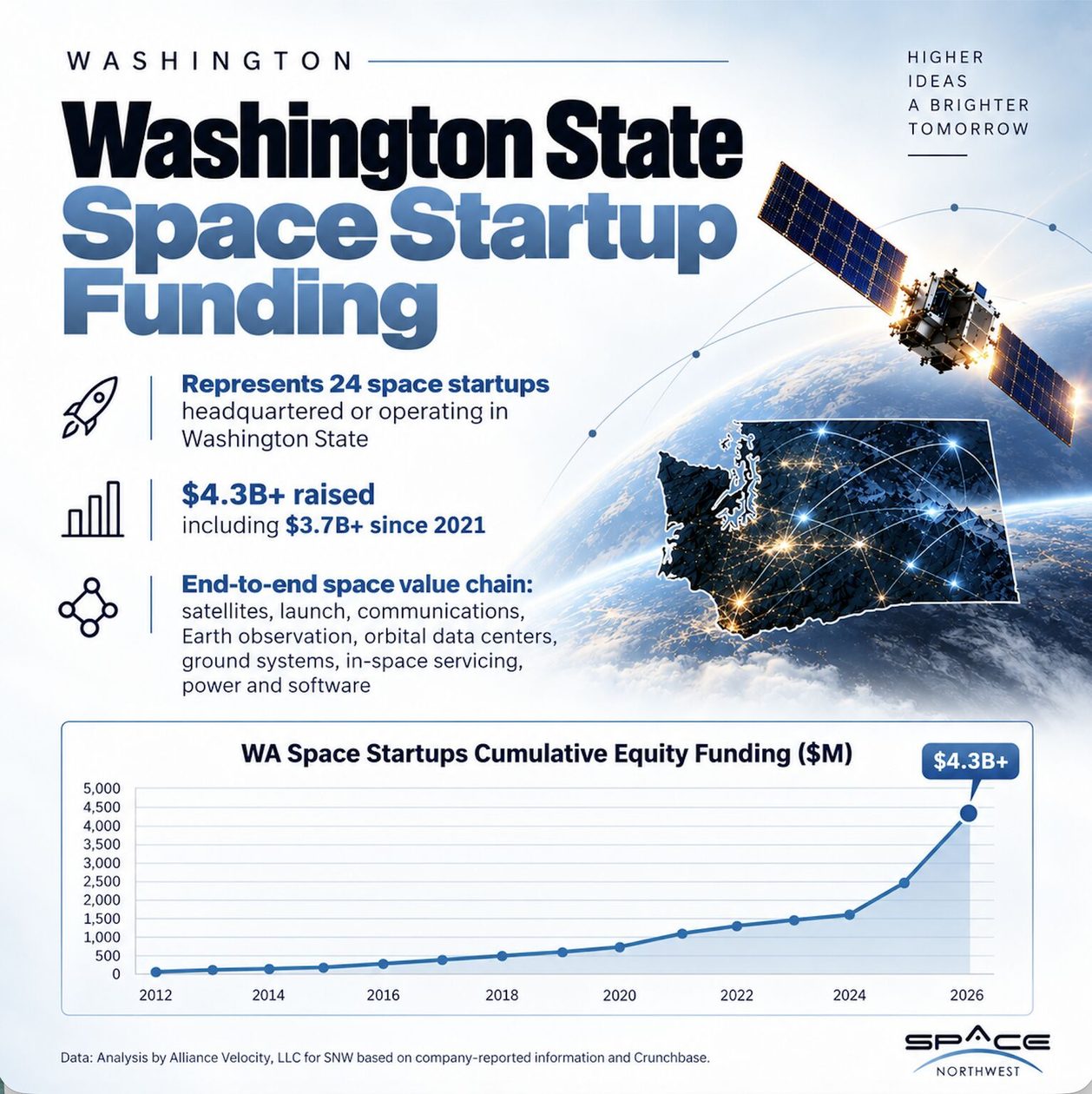
The study also found that 24 space startups headquartered or operating in the state have collectively raised more than $4.3 billion, including more than $3.7 billion since 2021.

Space Northwest is lending support to eight space startups through a new program called the Space Technology Accelerator for Growing Entrepreneurship, or STAGE. The selected startups will participate in a 12-week program, with each startup receiving three hours of personalized coaching alongside specialized workshops.

STAGE’s first cohort includes:

  • Beyonders: “We’re opening the door to the wonder of cosmic discovery by creating your own spacecraft … gram-scale picosatellites,” said founder Mike Antares.
  • Godel Space: Founded by Vikash Kodati and named after famed mathematician Kurt Gödel, this startup is building autonomous AI agents for satellite payloads.
  • Kynthos: Co-founders Selvan Viswanathan and Priya Srinavasa are working on software that maintains continuous custody of high-value assets and non-cooperative space objects.
  • Luthien Space: “We are in the business of making lunar landings and missions safe with a decision-grade intelligence tool that is physics-validated,” said founder Tammy Payne.
  • Ora Biomedical: “What Ora Biomedical is focused on is creating the therapies that enable longer, safer spaceflight and crewed missions,” said co-founder and CEO Ben Blue.
  • Signal Sights: This venture is developing systems that convert radio frequency signals into intuitive visual information to improve situational awareness and decision making.
  • SQK: This three-year-old startup provides guided computational AI to reconstruct and validate complex scientific data from noisy, incomplete or low-signal measurements.
  • Wave Motion: “What we want to do is turn the rocket equation on its head. … We essentially take the rocket fuel and beam it to the rocket as it’s needed,” said co-founder James Penna.

The preliminary findings reported by Space Northwest were produced by BERK Consulting and Alliance Velocity. Additional data sources include company-reported information, Crunchbase, and satellite data from Jonathan McDowell. The full report is still pending.

Check Space Northwest’s website for a schedule of Seattle Space Week events.

Washington governor sets up space council to boost business ventures targeting the final frontier

Washington Gov. Bob Ferguson kicks off the Washington Space Council, surrounded by the council’s members and 10-year-old Sebastian Yu. (GeekWire Photo / Alan Boyle)

Washington Gov. Bob Ferguson has created a public-private council to elevate the Evergreen State’s profile as regional clusters compete for primacy in America’s space industry.

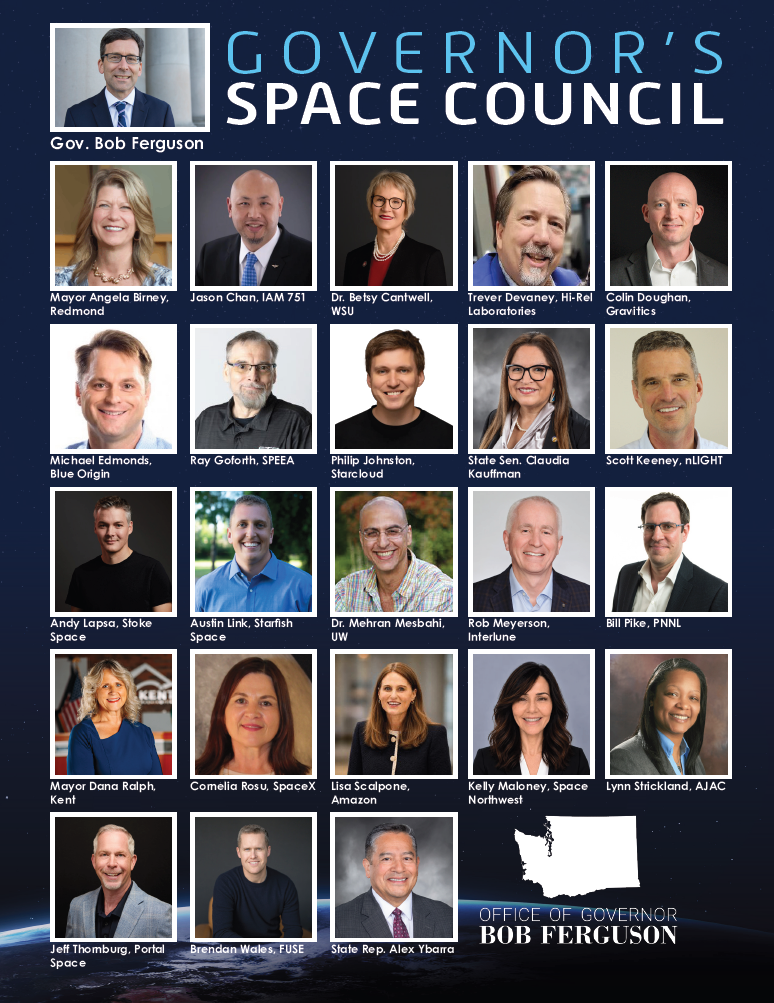
The 23-member Washington Space Council was introduced tonight at the Museum of Flight during a kickoff event for Seattle Space Week, a celebration organized by Space Northwest.

“The council will help keep us competitive by comparing Washington with other leading states in the industry and identifying ways we can continue to improve and compete,” Ferguson said.

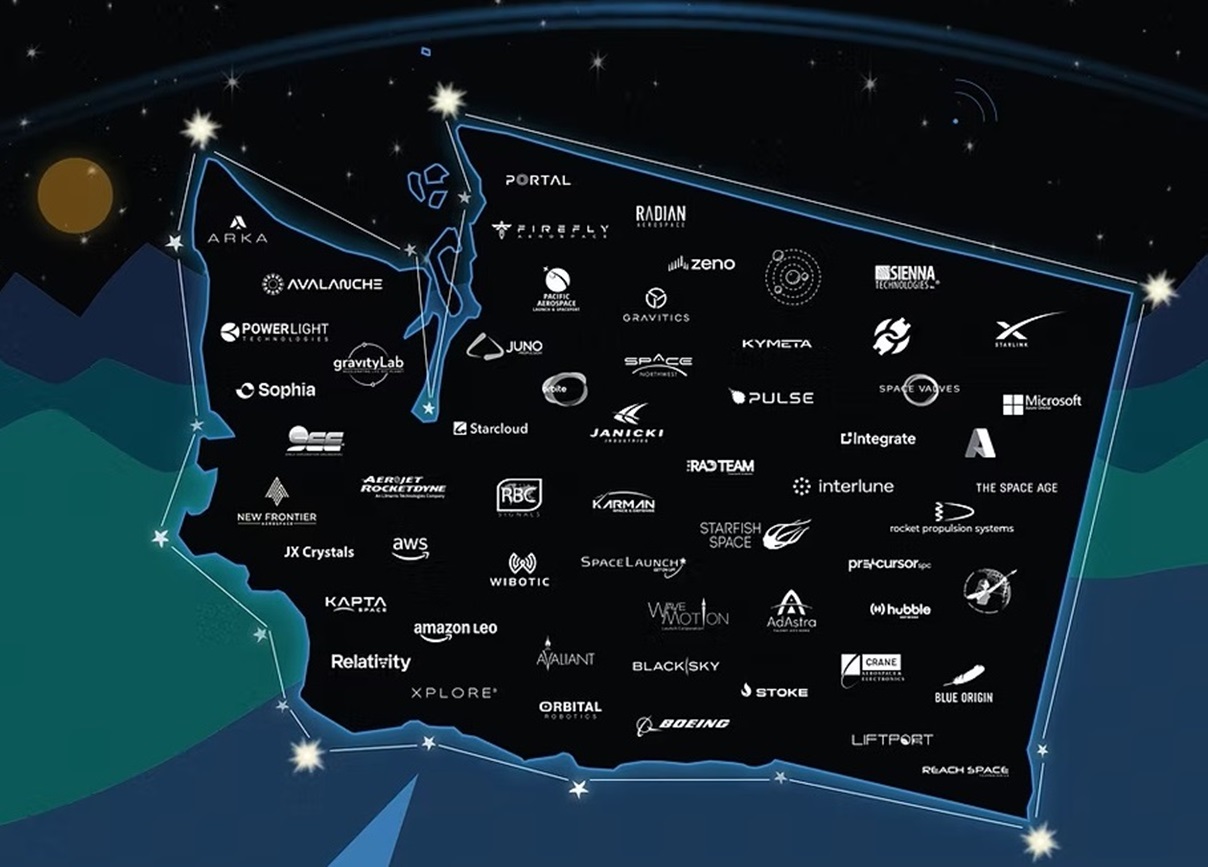
Washington state already ranks as one of the nation’s space industry hotspots. “We’re proud to have a cluster of more than 90 space companies employing more than 13,000 workers, generating over $4 billion in annual economic activity and $1.6 billion in annual payroll,” Ferguson said.

But Andy Lapsa, co-founder and CEO of Kent, Wash.-based Stoke Space, told tonight’s crowd that several other regions are competing with the Pacific Northwest for space-related investments. “States like Florida and Texas and Colorado want this industry, and they want it bad,” he said. “They compete for it every day. Washington has every advantage it needs to lead them all, and the window to use those advantages is open right now.”

Boeing has historically been the state’s leading venture in aerospace, but when you focus on ventures that concentrate strictly on space, Blue Origin is high on the list. Seattle is particularly strong in the satellite sector: More than half of the world’s satellites are built in the Seattle area, thanks to SpaceX’s Starlink facilities in Redmond and Woodinville, plus Amazon Leo’s factory in Kirkland, BlackSky’s production plant in Tukwila and Xplore’s operation in Bellevue.

Gravitics, Interlune, Portal Space Systems, Starcloud and Starfish Space are among other space ventures represented on the Washington Space Council. The list also includes elected officials, union leaders, educators and investors, plus representatives from space-related tech companies and Pacific Northwest National Laboratory.

The 23-member Washington State Council includes representatives from government, academia and the space industry. Click on the image to get the full list from the Washington State Department of Commerce.

Ferguson said the council will “identify barriers for the industry and find opportunities for growth.”

“That includes, by the way, workforce development, infrastructure and much more,” he said. “And the council will look for ways we might be able to develop Washington-based commercial launch capabilities. That would be a very exciting addition to what we’re doing right here in Washington.”

Ferguson brought a member of the audience, 10-year-old Sebastian Yu, to the stage when he signed the executive order that officially created the council. After the signing, the governor handed the pen to Yu.

“Your assignment, Sebastian, is that when we do that first launch, you have to save this pen and bring it with you to the first launch,” Ferguson said. “Take care of this pen, OK? I’m going to expect to see it again someday.”

Notes from the kickoff:

  • Space Northwest presented three awards to recognize contributions to the region’s space industry. The Shooting Star award for municipal support went to the city of Kent, Wash. Portal Space Systems won the Rising Star award for emerging space companies, and SpaceX won the North Star Award for large space companies.
  • Kent Mayor Dana Ralph noted that her city’s connection to the space industry goes back to Boeing’s work on the lunar rovers for NASA’s Apollo moon missions in the 1970s, while acknowledging that Kent can’t rest on its laurels. “Our job is to make it possible for companies to build and grow and hire. That means reinvesting in the basics: roads, great mobility, water, sewer, plentiful and easily accessible energy and industrial land,” she said.
  • Mehran Mesbahi, professor and chair of the University of Washington’s Department of Aeronautics and Astronautics, highlighted efforts to boost careers in the space industry. “We have Husky Satellite Lab, a group of energized students at UW, and we’re going to create a certificate program around space systems going forward,” he said.

Seattle Space Week continues on Tuesday with the Space Northwest Symposium at the Federal Way Performing Arts & Event Center.

With NASA’s backing, Starfish Space is getting ready for the orbital debut of its flagship Otter spacecraft

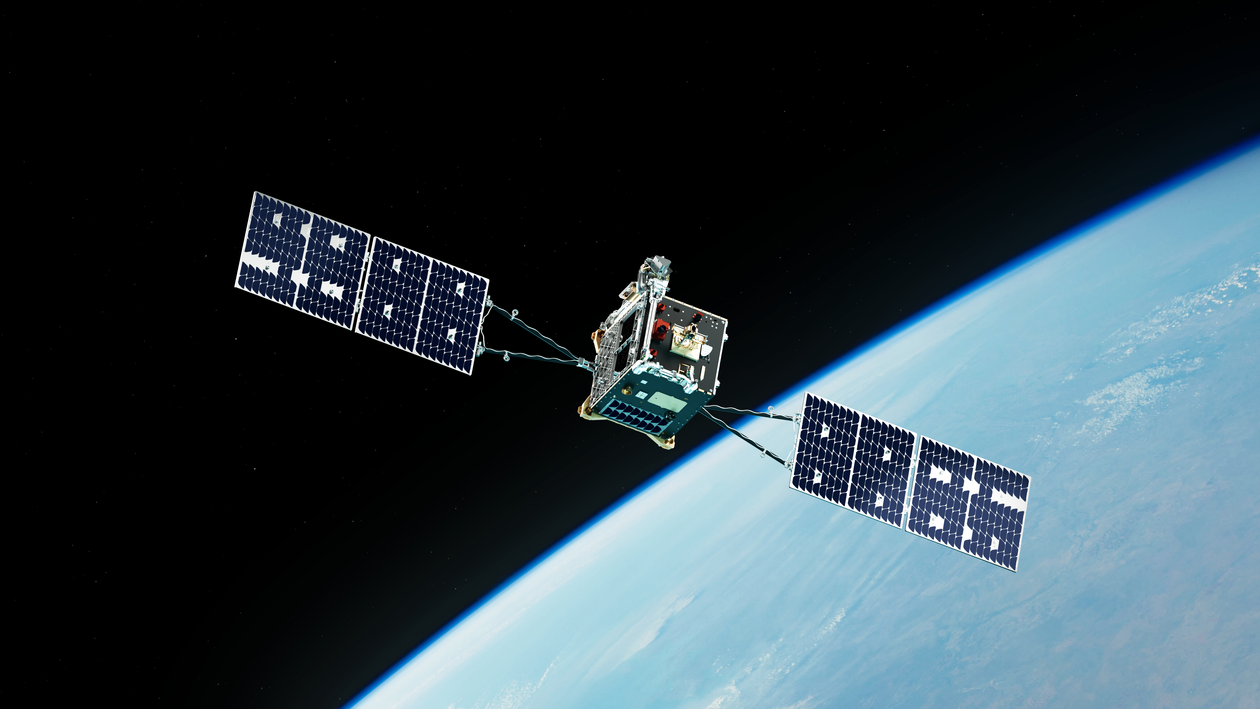
An artist’s conception shows Starfish Space’s Otter spacecraft in orbit. (Starfish Space Illustration)

Tukwila, Wash.-based Starfish Space is ready for the first launch of its full-size Otter space servicing vehicle, following two orbital tests of scaled-down prototypes.

Otter is due to lift off from California’s Vandenberg Space Force Base no earlier than Oct. 1, riding into orbit alongside other payloads on SpaceX’s Transporter-18 satellite rideshare mission. The 660-pound (300-kilogram) spacecraft, roughly the size of a kitchen oven (plus solar arrays), will demonstrate technologies for inspecting inoperable satellites during NASA’s $15 million Small Spacecraft Propulsion and Inspection Capability mission (SSPICY).

“This is the moment Otter becomes real,” Starfish co-founder Austin Link said today in a news release. “It’s no longer something we’re designing for the future. The first Otter is built, it has a customer and a mission, and it’s going to space.”

After it separates from its SpaceX Falcon 9 rocket and undergoes commissioning, the spacecraft will maneuver to approach and observe multiple satellites up close.

“We have a series of candidates that we can go to,” Starfish’s other co-founder, Trevor Bennett, told GeekWire. “We’ve actually studied a number of these satellites as potential candidates, and those will be selected once we’re in orbit. … These are spacecraft that are in family with satellites that NASA would be interested in servicing, and by being decommissioned satellites, there is no concern about trying to maintain the operational mission while we do our mission.”

Insights gained during the SSPICY mission will be applied to future missions that would involve docking with other satellites. Otter is built to service satellites for extended operations, or to dispose of them if they’re no longer operable.

“Success in the mission is to actually go and provide this commercial inspection service on a number of these different spacecraft, and that will be a huge win in and of itself,” Bennett said. “But we’re also bringing Otter along to provide servicing well beyond that, so we could go and inspect more spacecraft, or potentially do some additional docking past the initial mission.”

Bennett said the satellites on the list range in size from hundreds of kilograms to multiple tons.

“What’s really interesting about some of these spacecraft is that they have not been seen in a long time,” he said. “And so there is not only value in doing the commercial mission that we set out to do, but we provide some of that data back to NASA and say, ‘This is how your spacecraft have held up over the years in orbit’ — which is an interesting learning for them as well.”

How long will the SSPICY mission last? Bennett said that’s an open question. “Depending on how long each inspection takes, and how long the transit is to subsequent spacecraft, it’s probably a couple of years that we would be operating around multiple clients with this mission,” he said. “There’s always an opportunity for an extended mission here.”

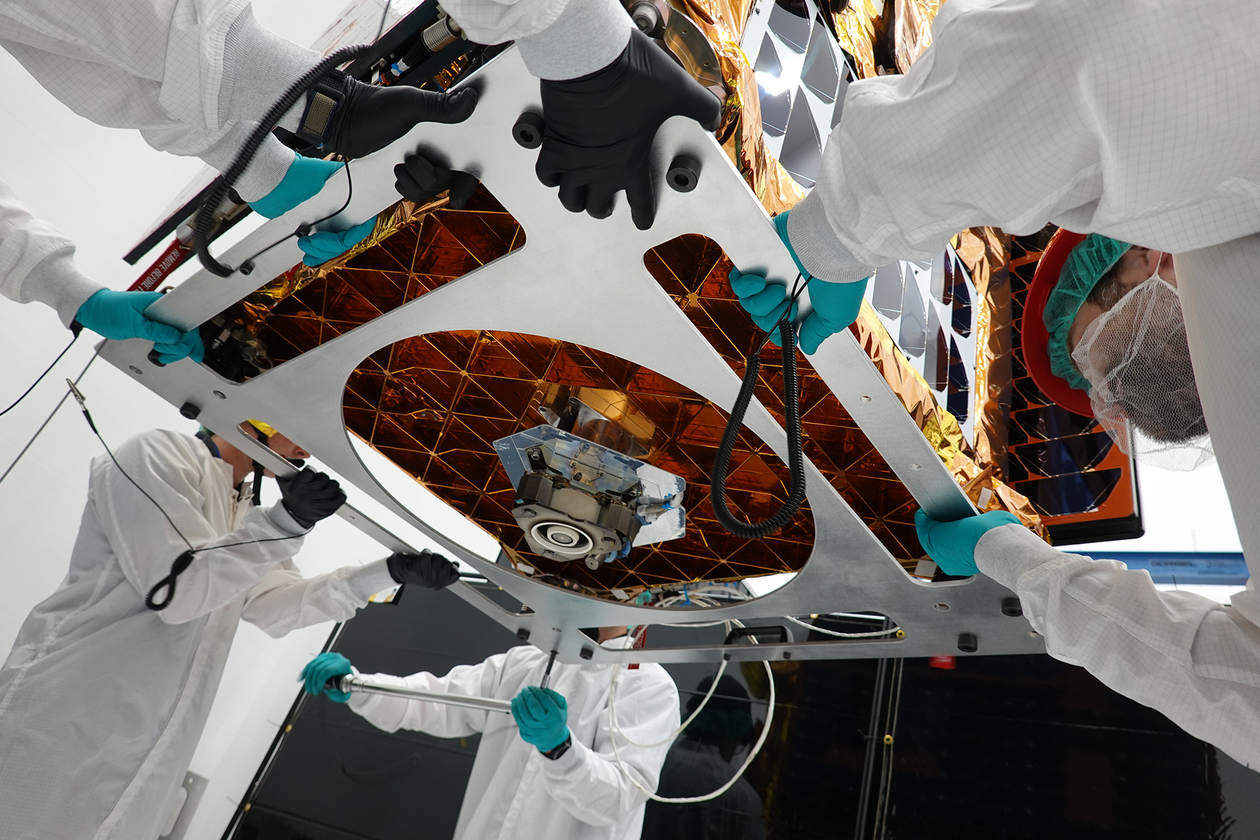
Workers wearing lab coats position Otter, as viewed from below
The Otter spacecraft is maneuvered into position in a clean-room setting. (Starfish Space Photo)
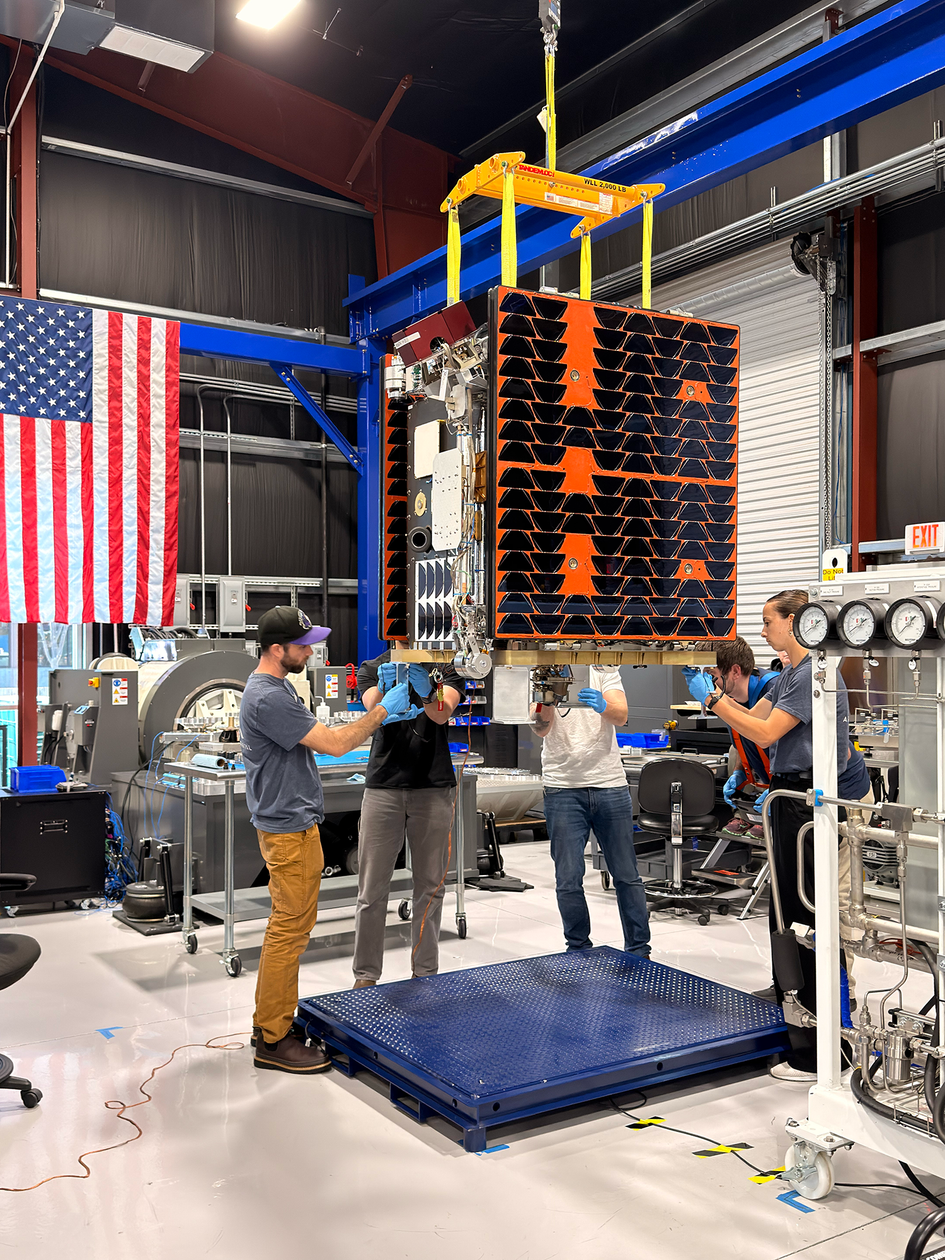
Otter surrounded by workers in lab
Workers carefully position the Otter spacecraft in their workshop. (Starfish Space Photo)
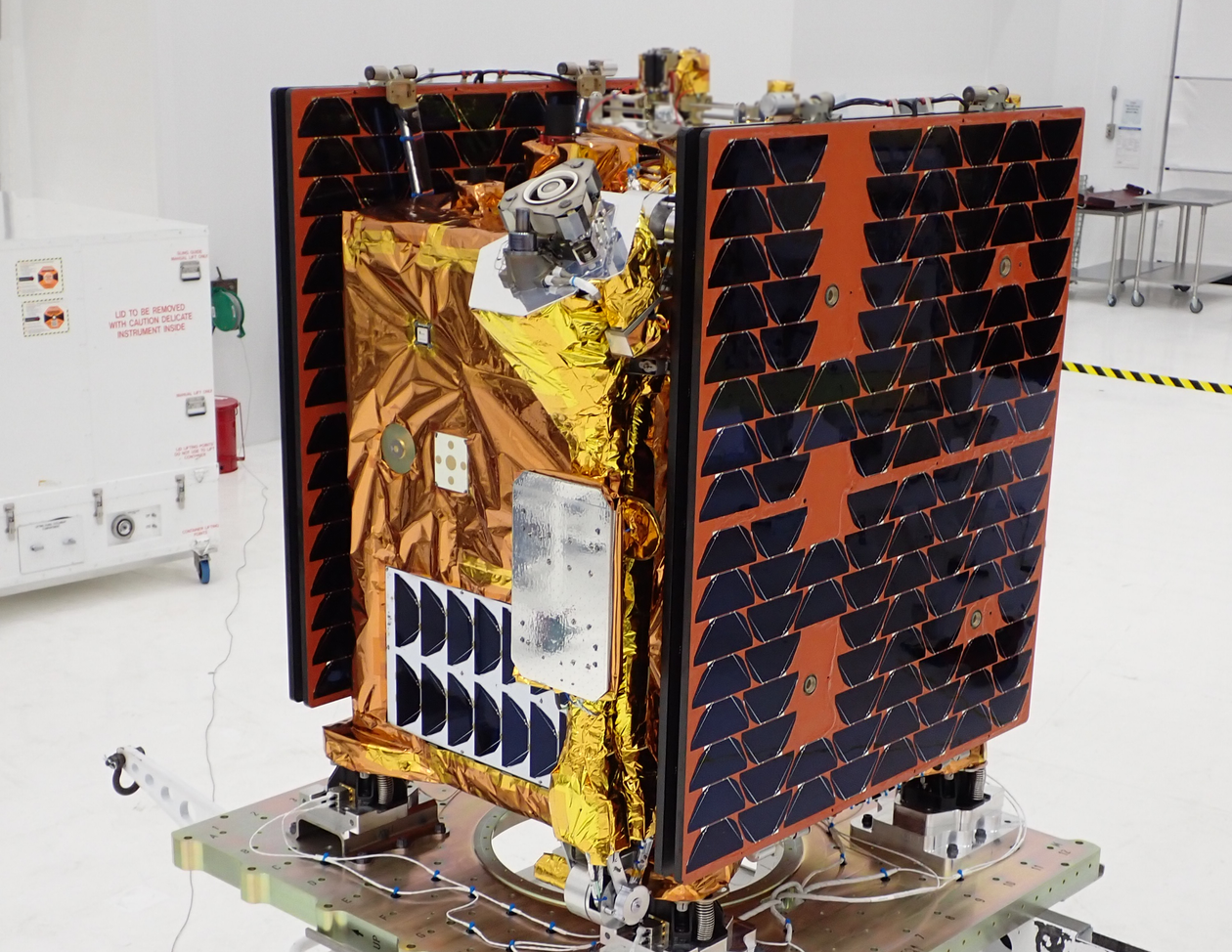
Otter sitting on platform in lab
Starfish Space’s first Otter spacecraft sits on a platform with its solar arrays folded during preparations for launch. (Starfish Space Photo)

This won’t be the first Starfish spacecraft to go into orbit. The startup, which Bennett and Link founded in 2019 after working at Jeff Bezos’ Blue Origin space venture, launched an Otter Pup prototype that was about the size of a microwave oven in 2023. Although technical difficulties prevented the spacecraft from docking with its target satellite, it successfully demonstrated Starfish’s satellite-tracking system.

A second Otter Pup was launched last year and is currently closing in on a different target satellite. “We have been in the vicinity with it since about June, and we’re consistently flying quite close to that spacecraft with the intention of Otter Pup 2 actually being a docking mission,” Bennett said.

Starfish Space is already preparing for missions beyond SSPICY — including a satellite disposal mission for the Pentagon’s Space Development Agency, two commercial satellite servicing missions in geostationary Earth orbit, and two servicing missions for the U.S. Space Force.

That means Starfish is working on at least six Otters, including the unit due for launch in October. “Now it’s all about how many Otters can we build, and how quickly can we get them up there for folks, because the demand is there,” Bennett said.

He said it currently takes about a year and a half for each Otter to go through the entire manufacturing process. “Part of our goal is to speed that process up and build toward a fleet strategy,” Bennett said.


Expanding the workforce is central to that goal. Just a few months ago, Starfish Space reported having more than 90 employees. “We’ve grown to over 120 people now, which is pretty large for where we have been over time, but it’s still a really focused team,” Bennett said.

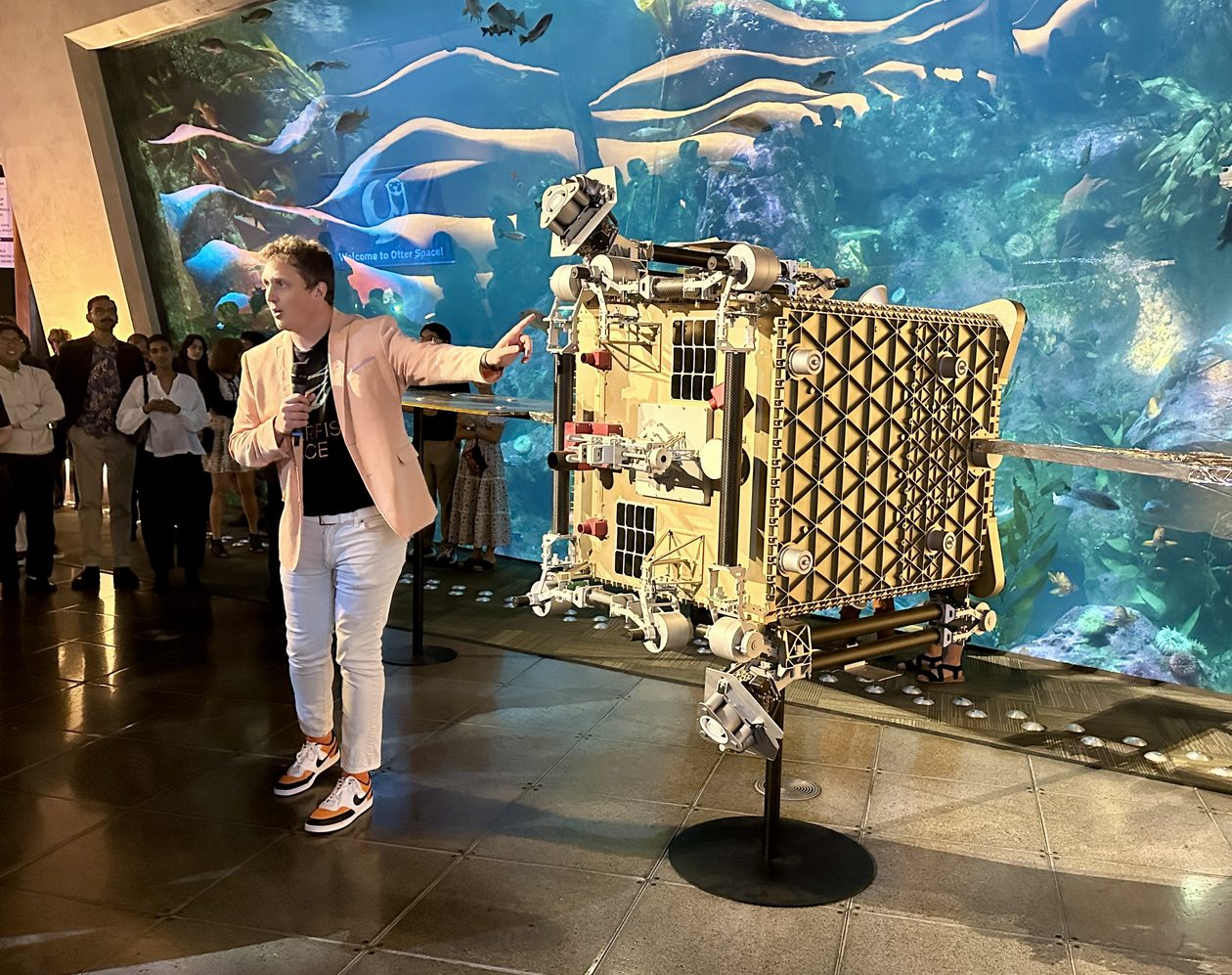
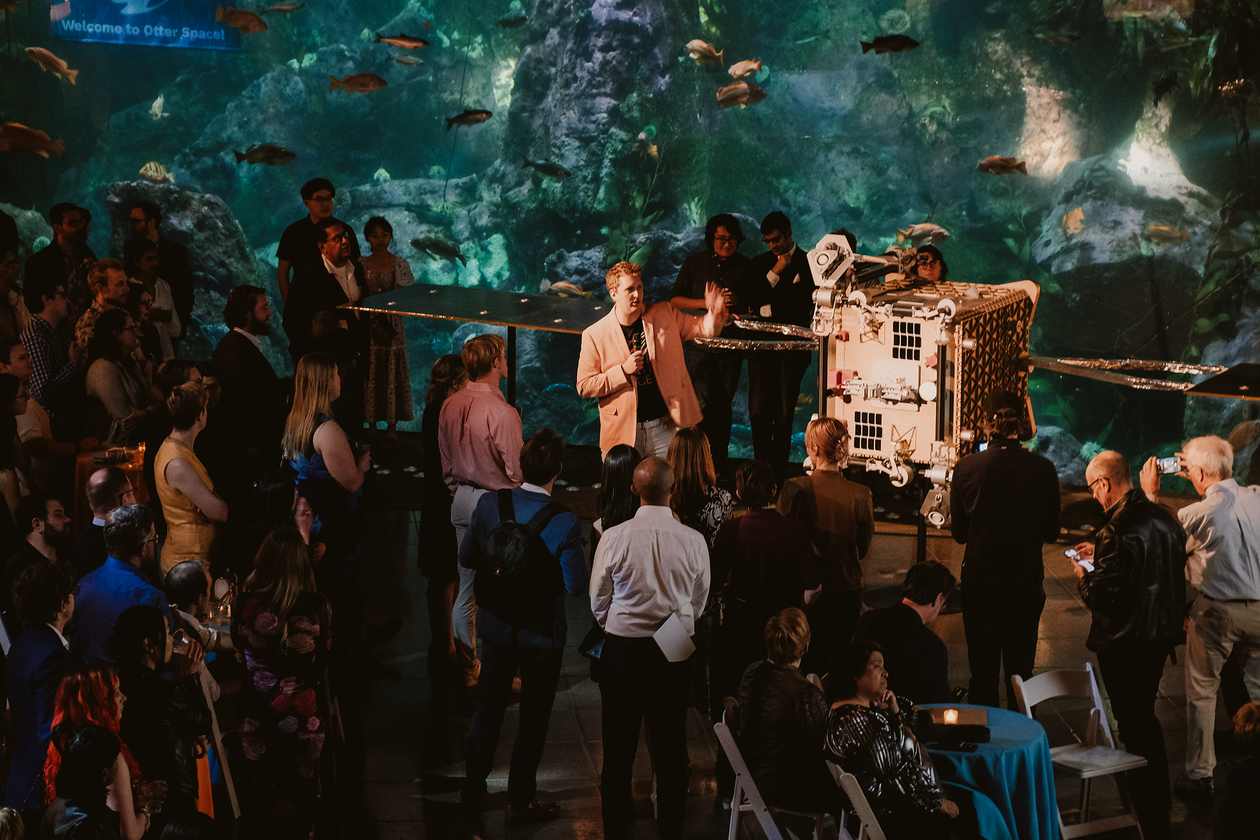
To celebrate Otter’s upcoming debut, Starfish Space put on a party for its employees and for invited guests at the Seattle Aquarium on Wednesday night. The spacecraft itself couldn’t be there, because it’s already in California awaiting launch. But an Otter mockup was on display at the party — and nearby, the Seattle Great Wheel was illuminated in Starfish’s corporate shades of coral and azure.

“This is a big deal for Seattle,” Bennett said. “Anytime a Seattle space company is able to make a meaningful difference in the larger space ecosystem, that’s worth celebrating. If we can splash other companies’ colors on there when they have their great moments, why not make that a tradition going forward? We’re happy to be the first, and hopefully not the last, that gets to splash colors on a Ferris wheel and show off what the Seattle space community has to offer.”

Check out these snapshots from Wednesday night’s celebration:

Austin Link gestures toward Otter replica at Seattle Aquarium
Starfish Space co-founder Austin Link shows off a replica of the Otter servicing spacecraft. (GeekWire Photo / Alan Boyle)
Wider shot of Austin Link and Otter at Seattle Aquarium
A crowd gathers around Starfish Space’s Austin Link to get a closer look at the Otter replica. (Starfish Space Photo)
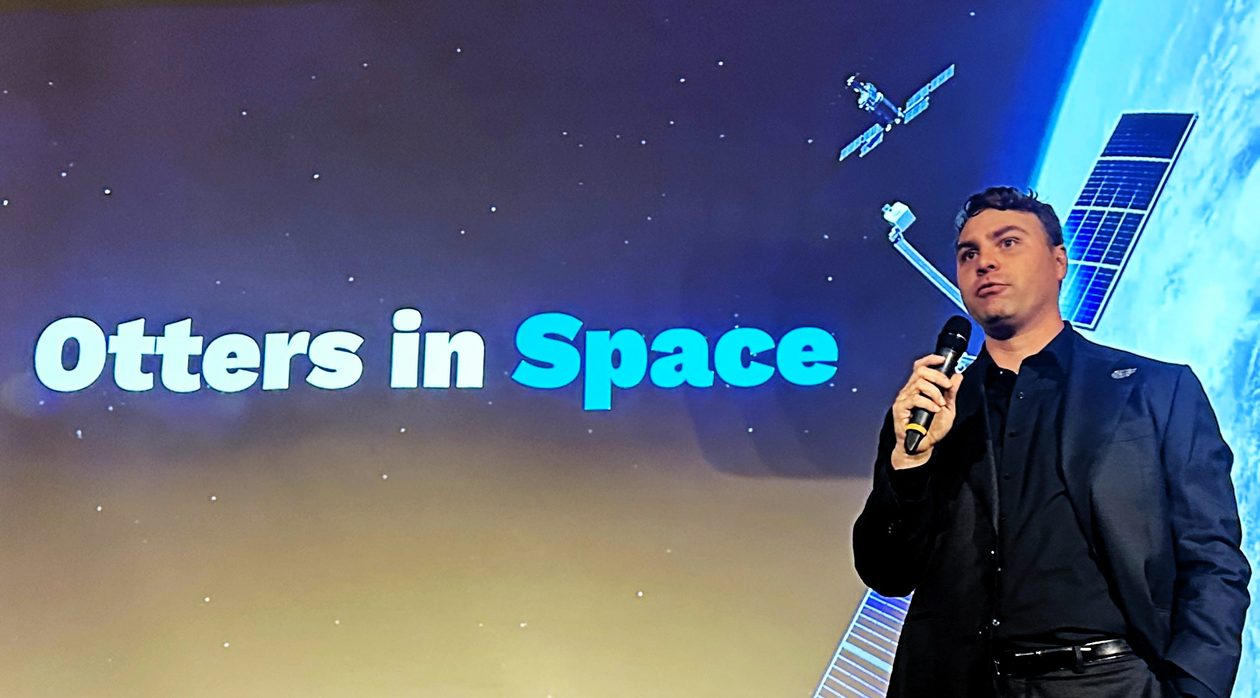
Trevor Bennett speaking in front of screen showing the words "Otters in Space"
Starfish Space co-founder Trevor Bennett talks about the future of the Otter space program. (GeekWire Photo / Alan Boyle)
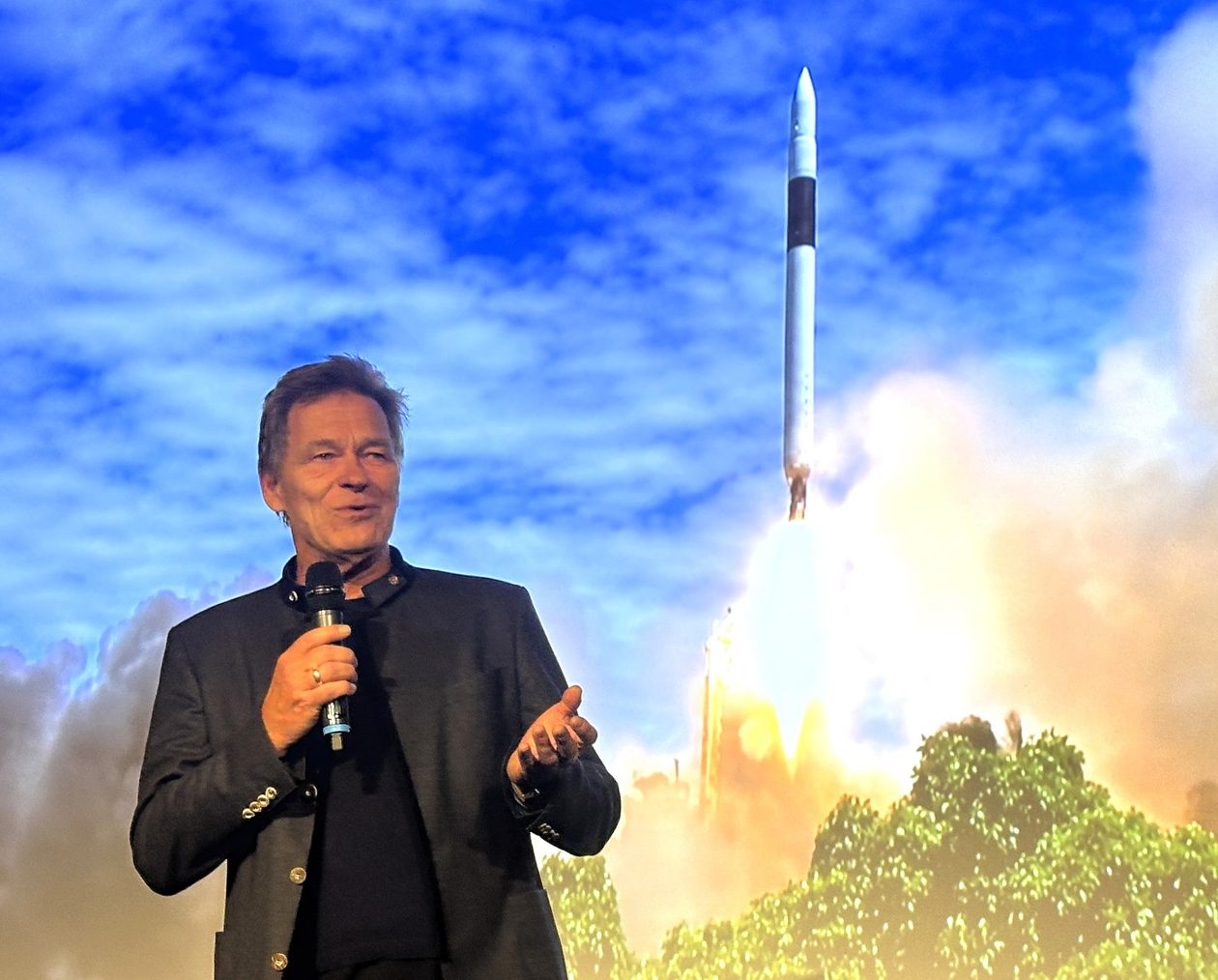
Hans Koenigsmann in front of picture of Falcon 1 launch
Hans Koenigsmann, a veteran of SpaceX who now serves on the board of Kent, Wash.-based Stoke Space and serves as an adviser to other space companies, talks about the early days of SpaceX at Starfish Space’s celebration at the Seattle Aquarium. The launch of a SpaceX Falcon 1 rocket is shown on the screen behind him. (GeekWire Photo / Alan Boyle)
Seattle's Great Wheel lit up just after sunset
Seattle’s Great Wheel is lit up in Starfish Space’s corporate colors, coral and azure, during the space company’s celebration at the Seattle Aquarium. (Starfish Space Photo)

Space hardware startup plans $125M stock offering and Nasdaq listing through shell company merger

Illustration: Diamondback module in orbit with Earth's night lights sparkling below
An artist’s conception shows Gravitics’ Diamondback orbital carrier, which is due to make its debut as early as 2027. (Gravitics Illustration)

Marysville, Wash.-based Gravitics, which is developing orbital carriers for government and commercial customers, is getting ready for a reverse takeover that could lead to a $125 million public offering.

The arrangements are being made with Non-Invasive Monitoring Systems, a Florida-based shell company, with the goal of getting Gravitics listed on the Nasdaq Stock Market.

The two ventures have been discussing the deal for months. The terms for the public offering were announced last month, and this week, a notice filed with the Securities and Exchange Commission revealed a previously unreported $17 million funding round that was completed earlier this year. The filing appears to be part of the preparations for the reverse takeover.

Similar to a SPAC merger, a reverse takeover offers a faster route for a private company to go public by acquiring a less active shell company and taking control of the combined operations. Non-Invasive Monitoring Systems is a prime example: It stopped manufacturing motorized therapeutic platforms in 2019 but retained its OTC listing. The plan envisions “uplisting” the merged company from OTC to Nasdaq.

The reverse takeover strategy has been used by several prominent companies, including Berkshire Hathaway, Burger King and Bellevue, Wash.-based T-Mobile US. Gravitics plans to follow up on the merger with an offering of 8.1 million shares priced between $14 and $17, which averages out to $125 million.

Because the offering has been registered with the SEC, the parties to the transaction are in a quiet period that restrains them from commenting on the arrangements.

Gravitics was founded in 2021 by CEO Colin Doughan, chief architect Gary Hudson and chief marketing officer Michael DeRosa. Over the past five years, it has secured some high-profile contracts for the design and manufacture of orbital carriers and space station modules.

Although Gravitics hasn’t yet put any spacecraft in orbit, several projects are underway. In 2024, the company won a $125 million contract from Axiom Space to provide a pressurized module for Axiom’s yet-to-be-launched space station. Last month, NASA said it would issue an award of up to $225,000 to support Gravitics’ work on a hangar facility for orbital cargo vehicles.

Gravitics is also receiving funding from the U.S. Space Force for multiple projects. The company said last month that it was selected by Lockheed Martin to support a “contract of national importance,” reportedly involving the development of orbital carriers for the Pentagon’s Golden Dome missile defense initiative.

Interlune raises $5M for initiatives that go beyond mining the moon

An artist’s conception shows a mining operation on the moon, including harvesters and a solar power plant. (Interlune Illustration)

Seattle-based Interlune has raised $5 million in fresh funding to support a business plan that involves building space infrastructure as well as mining the moon for helium-3 and other valuable resources.

The funds were raised through a Simple Agreement for Future Equity, or SAFE, in which investors provide upfront cash to a startup in exchange for shares to be issued during a future priced round. Interlune used the same approach to raise $5 million earlier this year.

Interlune said existing and new investors participated in its latest SAFE offering, which came to light today in a regulatory filing with the Securities and Exchange Commission.

“The company’s continued traction with government contracts, along with major milestones across the space ecosystem over the past year, makes this a beneficial approach ahead of our next priced round,” Interlune CEO Rob Meyerson said in an emailed statement.

When Interlune was founded in 2020, the company focused primarily on developing technologies for extracting resources from lunar rocks and soil, also known as regolith. Helium-3 leads its target list because that material is more abundant on the moon than on Earth and is highly valued for applications ranging from medical imaging and quantum computing to fusion power. The price for helium-3 can exceed $9 million a pound. 

Meyerson noted that Interlune’s business plan is no longer limited to space mining. “In response to growing market demand, we’ve expanded our product offering to include space infrastructure and survival services, leveraging the same technologies we’ve been developing to harvest natural resources from space,” he said.

In July, Interlune announced it was expanding its partnership with Vermeer, an Iowa-based industrial equipment manufacturer, to develop construction tools for use on the moon. Such tools could support NASA’s 10-year, $30 billion initiative to build the infrastructure for a moon base. Interlune is also adapting its helium-3 extraction process for terrestrial applications.

The company is planning to send its first payload — a mineralogical mapping instrument — to the moon later this year aboard Voyager Technologies’ Griffin-1 lander. Follow-up missions will characterize the moon’s helium-3 reserves and test technologies for excavation and extraction. Interlune plans to start harvesting lunar helium-3 and bringing it back to Earth in the 2030s.

Sophia Space and SLI set the terms for a $300M deal that will finance an orbital computing constellation

Illustration: Sophia Space satellites flying in orbital formation
An artist’s conception shows several Sophia Space satellites in orbit. (Sophia Space Illustration)

Sophia Space and SLI, an aerospace leasing venture based in Washington, D.C., say they’ve agreed on a $300 million asset-financing framework that will support the creation of a 10-satellite constellation for high-performance computing.

The details of the arrangement are as notable as the bottom line: Sophia Space will build the satellites, leveraging the startup’s patented TILE technology for modular in-space data processing. SLI will purchase the satellites under the terms of a financing agreement.

“SLI as the lessor will purchase the satellites from Sophia, hold title to the assets, and lease them to the end user on a long-term basis in exchange for fixed monthly or quarterly payments,” Max Yergan, the company’s senior vice president for investments, explained in an email. “Full control and operational responsibility for the assets sit with Sophia and the end user, who will determine between them how operations are handled.”

Sophia’s satellites are designed to deliver on-orbit edge data services for a wide variety of applications. “The demand we are underwriting exists today,” Yergan said. “Earth observation, weather and supply-chain analytics, disaster response and defense ISR [intelligence, surveillance and reconnaissance] users all face the same constraint now: They collect far more data than they can bring to the ground, and its value decays while it waits to be downlinked. Processing on orbit addresses that directly.”

The constellation’s first launch is targeted for as early as 2028. SLI would pay out funds linked to development and launch milestones, all the way through verification that the on-orbit network performs to pre-agreed standards.

The arrangement is laid out in a non-binding letter of support. “The non-binding nature is a reflection of where we are in the process, and is typical of large asset financings,” Yergan explained. “It sets the commercial framework so both parties can commit resources while definitive documentation is negotiated.”

Leasing arrangements are often seen in aviation and the maritime industry, but this is a relatively new concept for satellite ventures.

“This is the first time that this approach has been applied to this kind of constellation, but not the first time for in-space assets,” said Gareth Zundel, SLI’s senior vice president for communications. “In December 2025 we announced the acquisition of two AscendArc satellites that will be offered to operators on leasing terms. Then, in March this year, we did a similar deal with ReOrbit. We do believe, however, that we are the first leasing company to specialize in the space sector.”

Rob DeMillo, Sophia Space’s CEO and co-founder, said the arrangement demonstrates how far the commercial space industry has come.

“Asset financing didn’t invent aviation or shipping, but it accelerated them at scale,” he said in a news release. “We’re doing the same for orbital computing. This approach with SLI signals that Sophia Space’s space infrastructure is mature enough to attract the capital structures that have historically built terrestrial infrastructure.”

The approach also gives Sophia Space — which is headquartered in Pasadena, Calif., but also has strong ties to the Seattle area — access to capital without diluting the equity held by current investors, including Unlock Venture Partners in Seattle.

“Sophia has the technology, the team and the vision. What had been missing was access to scalable, non-dilutive capital,” said Praveen Vetrivel, SLI’s CEO. “This framework provides it, giving them the capacity and flexibility they need to build the next layer of digital infrastructure.”

Each of the 10 satellites in the constellation will link together six of Sophia’s TILE (Thermal Integrated LEO Edge) modules, with four Nvidia Jetson processors on each module. That adds up to 240 edge computing servers in orbit.

“These 10 spacecraft are dedicated to this transaction,” Yergan said. “Sophia’s other programs and partnerships involve separate spacecraft and separate funding and are not directly affected by this facility.”

Sophia Space has previously said that it plans to start selling TILE systems and related components to customers in 2028. The company is also collaborating with Axiom Space, Armada and Kepler Communications on separate in-space computing initiatives.

In June, Sophia Space announced the conclusion of a $7 million financing round that brought the company’s total funding to $22 million. That round took advantage of an arrangement known as a Simple Agreement for Future Equity, or SAFE, in which investors provide cash to a startup in exchange for the right to receive stock later.

❌