Reading view

There are new articles available, click to refresh the page.

Tech Moves: T-Mobile appoints CFO; Microsoft and Blue Origin VPs depart; AZX and Caddi name leaders

Jessica Uhl. (T-Mobile Photo)

— Telecom giant T-Mobile announced that Jessica Uhl will join as chief financial officer-designate later this month, and succeed Peter Osvaldik as CFO in February. Uhl served as CFO of Shell and worked for the global oil and energy giant for more than 17 years. She joins T-Mobile from GE Vernova, where she was president.

“I am thrilled to welcome Jessica to T-Mobile,” Srini Gopalan, president and CEO of T-Mobile said in a statement. “She brings deep financial and strategic acumen, capital allocation expertise and an innovative growth mindset that is a perfect fit for T-Mobile’s next era.”

Osvaldik will transition to strategic advisor and retire from T-Mobile in July. He joined the company in 2016 and became chief financial officer in 2020. Osvaldik’s tenure “has been defined by disciplined financial stewardship, consistent financial outperformance, and an unwavering commitment to T-Mobile’s mission,” the company said.

The move marks the latest leadership shakeup at the Bellevue, Wash.-based company. Mike Katz, T-Mobile’s chief business and product officer, announced his departure in July, and Chris Sambar was named chief enterprise officer. T-Mobile has cut 470 jobs in its home state this year and closed numerous retail locations.

Brent Colburn. (LinkedIn Photo)

Brent Colburn, Microsoft‘s vice president of global public affairs, is resigning after three years, effective mid-October.

“Stepping away from Microsoft is not a decision that I made lightly, but ultimately it is the right one for me and my family,” said Colburn, who has been commuting weekly between his home in Oakland, Calif., and Microsoft’s Redmond, Wash., headquarters.

Colburn’s career has spanned leadership roles in government, academia and philanthropy. That includes serving as principal advisor to the secretary of defense for communications and chief of staff to then-Secretary Shaun Donovan. More recent roles include communications vice president for the University of California in Oakland, Princeton University and the Chan Zuckerberg Initiative.
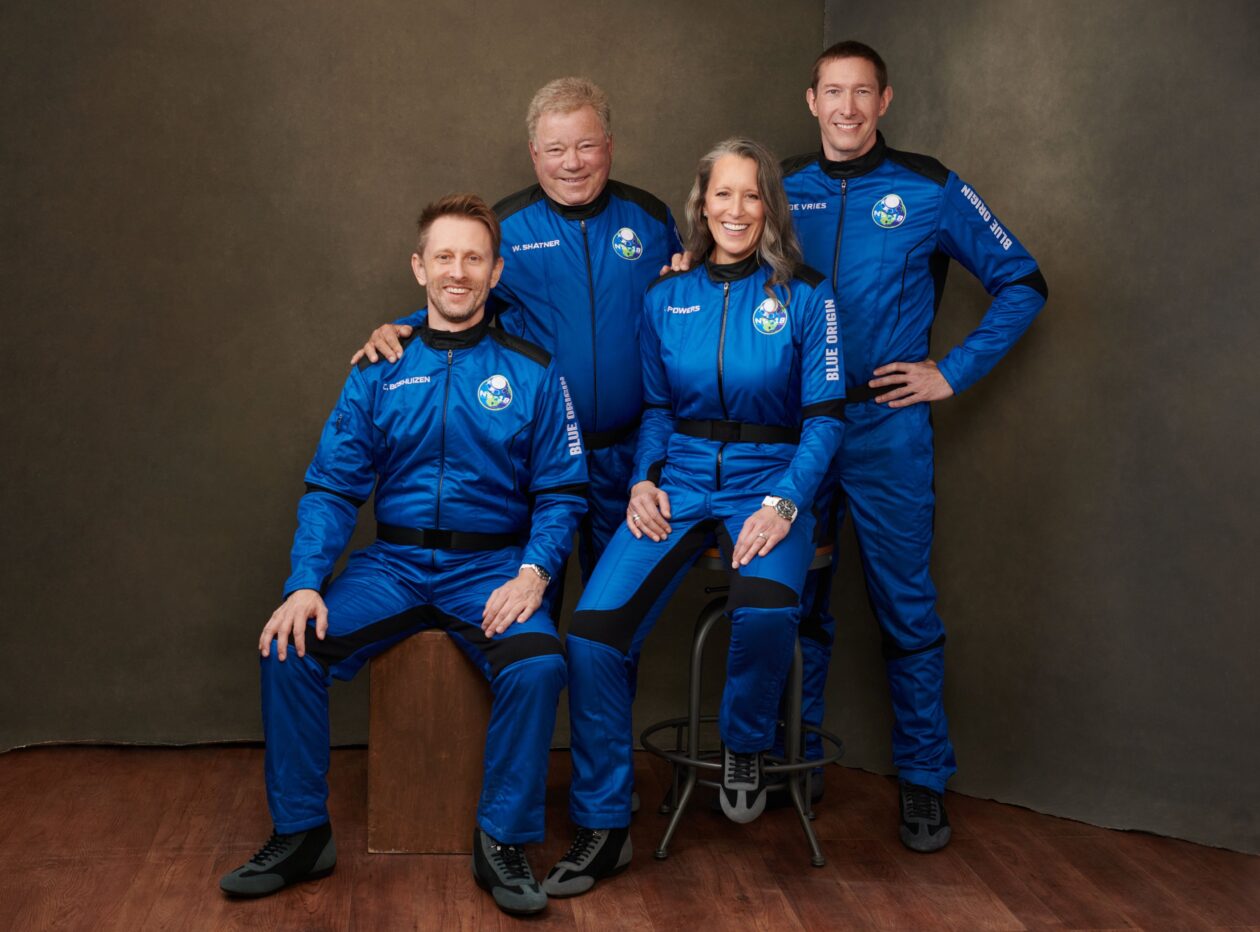
Blue Origin crew portrait
William Shatner stands alongside crewmates Chris Boshuizen (left), Audrey Powers and Glen de Vries. (Blue Origin Photo)

— After nearly 13 years, Audrey Powers has left Blue Origin, the aerospace company founded by Jeff Bezos that develops reusable rockets, spacecraft and rocket engines. She was on Blue Origin’s October 2021 spaceflight that also carried “Star Trek” star William Shatner and two others.

“Hopefully, I’ve helped change peoples’ impressions of rockets (they land, too), astronauts (they are everyone), and our Earth,” Powers said, adding that she was sad to leave, but grateful that she took a chance on “a little startup no one had heard of.”

Powers held the title of deputy and vice president of the New Shepard Business Unit, which is the program that carries people and research payloads into suborbital space. She is an attorney who has previously worked at NASA as a flight controller and as a senior systems engineer at Lockheed Martin.

Michael Levi. (LinkedIn Photo)

Michael Levi has joined AZX as chief commercial officer of the Bellevue-based startup, which works with utilities and other industries to build in-house AI technologies supporting their missions.

Levi is based in San Francisco and was previously vice president of marketing and growth for KloudGin, where he helped reposition the company’s field service software into an AI-native platform for utilities and the public sector. He earlier founded L1CG, a go-to-market advisory, and has held leadership roles in energy, renewables, supply chain and fintech.

Jason Alafgani. (LinkedIn Photo)

Jason Alafgani was named head of marketing for Caddi, a Seattle startup that launched out of AI2 Incubator and is automating basic business operations with generative AI. Alafgani is the co-founder of startups including the podcast company Jellypod and worked as marketing leader for Appwrite, Dodgeball, Mode and others.

Dr. Amir Iravani has joined Los Angeles-based UCLA Health as director of the theranostics program, which focuses on treating cancer using targeted radiation therapy. Iravani previously served as theranostics clinical director at Fred Hutchinson Cancer Center in Seattle and was an associate professor of radiology at the University of Washington School of Medicine.

Kelly Lyons. (LinkedIn Photo)

Portland Metro Region Innovation Hub has hired Kelly Lyons as director of the organization, which provides networking, coaching, funding and other support to entrepreneurs. Lyons is the founder of two startups and has served in leadership at Core Education, Umpqua Bank and Development House, a social services nonprofit.

DigiStor, a Vancouver, Wash.-based provider of secure data-at-rest protection solutions, appointed Michael Callahan to its board of directors. Callahan co-founded Awake Security and PolyServe, which was acquired by HP.

Amazon’s next big business, Satya Nadella’s DIY app, and a VC’s rallying cry for Seattle tech

This week on the GeekWire podcast: Microsoft and Amazon both reported quarterly numbers, and both stocks rose on cloud results that beat expectations. Is all that AI spending paying off? And in related news, Microsoft sees a rare annual headcount decline, hitting product R&D hardest. 

Plus: Satya Nadella builds a Power BI dashboard out of an analyst’s research report, and touts it on the earnings call to make a bigger point. Jeff Bezos names Amazon’s chips business as the long-awaited fourth pillar. And AI House managing director Jacob Colker delivers a much-needed pep talk for Seattle tech, calling on the region to recognize and build on its strengths. 

Related stories and links

Microsoft and Amazon earnings

Amazon’s fourth pillar

A rallying cry for Seattle tech

The Washington tech ecosystem

Subscribe to GeekWire in Apple Podcasts, Spotify, or wherever you listen.

What’s his angle? Teen frustrated by plastic protractor reimagines the classic classroom tool

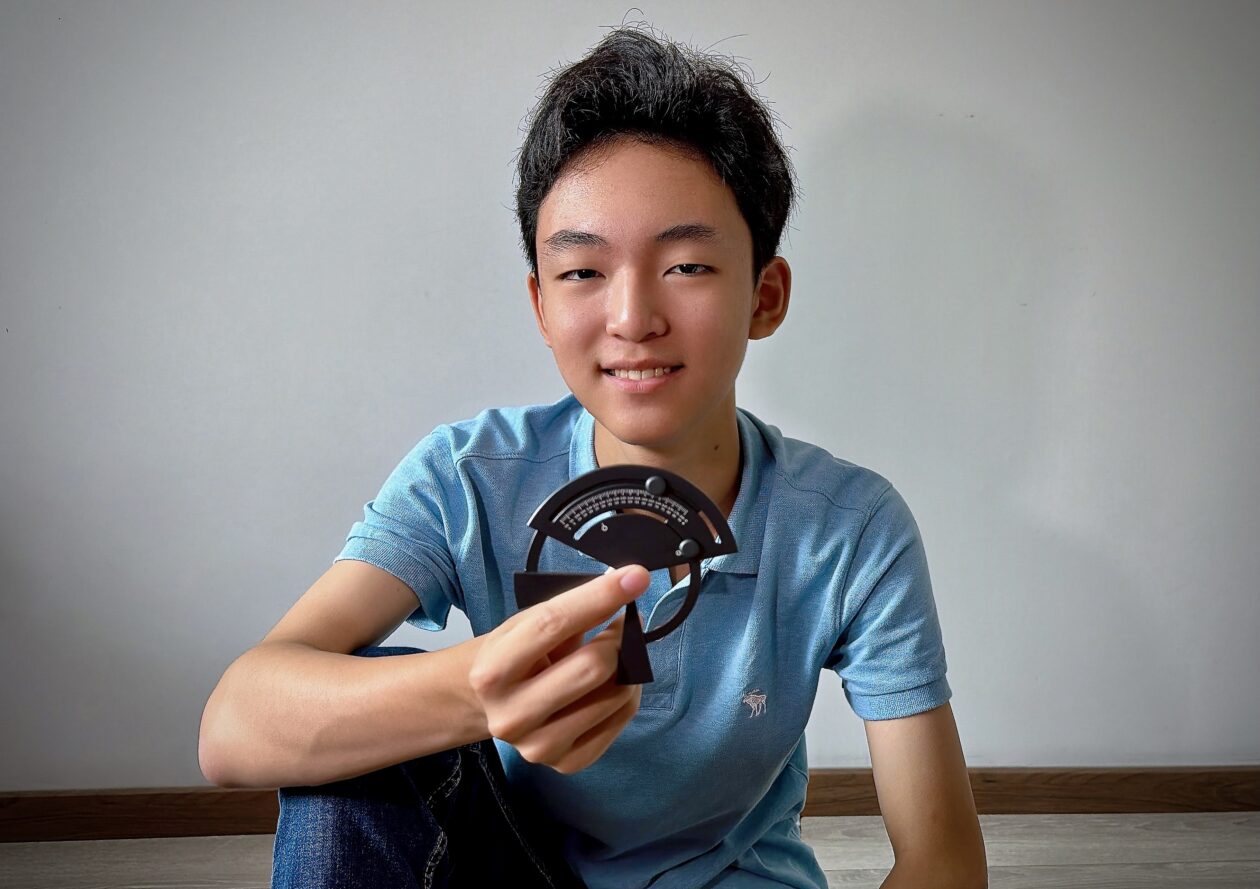
Wenxin Fang of Redmond, Wash., holds the ZeroPivot Protractor that he designed and is selling through a new Kickstarter campaign. (Photo courtesy of Wenxin Fang)

Wenxin Fang was 14 years old when he realized he was fed up with fighting with a flimsy piece of plastic in math class.

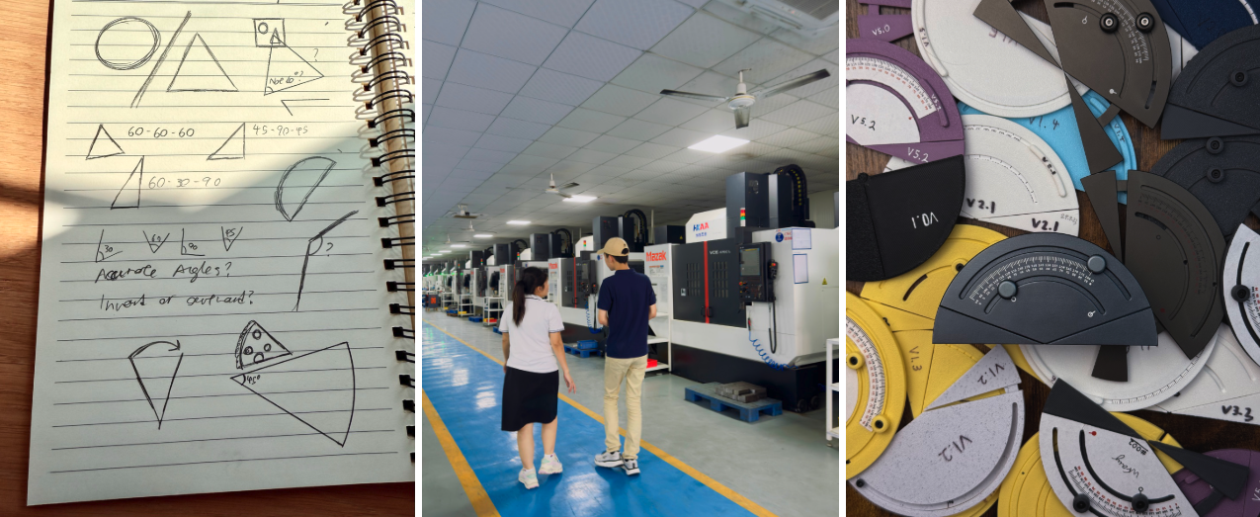
As an eighth grader at Evergreen Middle School in Redmond, Wash., Fang kept bumping into the limits of standard classroom protractors — the cheap, clear tools generations of students have used to measure and plot angles. Frustrated by how often he had to realign the plastic arc just to mark a single line, he started sketching an alternative in his notebook.

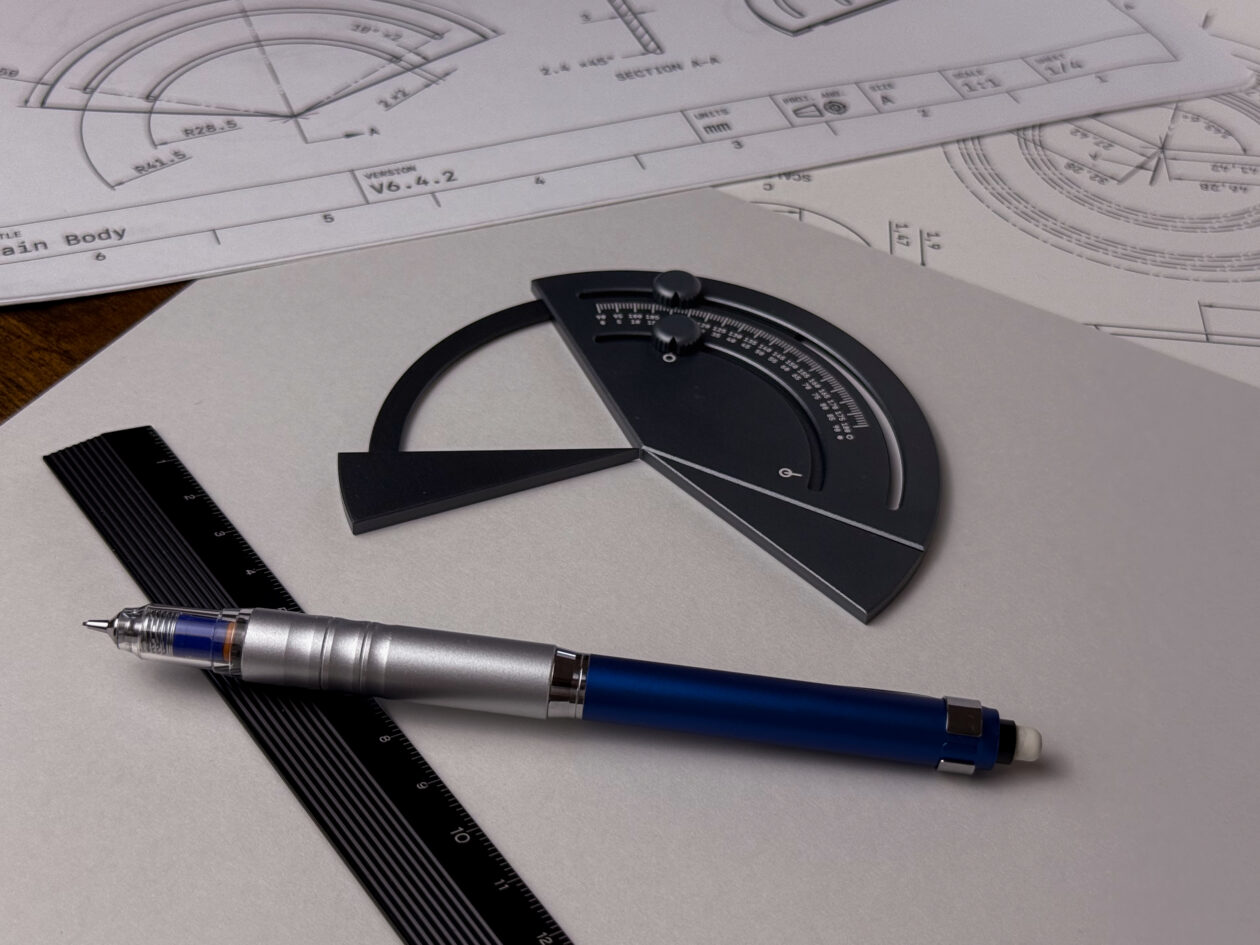
Two and a half years and seven design iterations later, the incoming Tesla STEM High School junior is launching the ZeroPivot Protractor, a sleek, precision-machined aluminum hardware project aiming to drag an overlooked classroom staple into the modern era.

“I shouldn’t be fighting with a piece of plastic to draw an angle,” said Fang, now 17, during a call from China this week where he was meeting with suppliers ahead of production of his tool.

Fang launched a Kickstarter campaign on July 26 to fund the initial production run of the ZeroPivot. The campaign hit its initial target within 48 hours and has raised more than $2,200 from dozens of early backers.

Priced at $19, the ZeroPivot is positioned as a durable, high-precision upgrade over standard $3 plastic models. The funding will cover tooling costs and help manufacture the custom-machined aluminum components through HKAA Industrial, a supplier Fang vetted and partnered with during a visit to Shenzhen.

To make the tool work, Fang abandoned the traditional semi-circular design in favor of a guide-rail system made from anodized aluminum — a material choice he insisted on despite the higher production costs.

Unlike a standard protractor, which requires users to mark an angle’s vertex and rays in separate steps, the ZeroPivot features an adjustable sliding mechanism that allows users to plot and draw precise angles in a single fluid sweep.

“I went down this path of product design, trying to come up with something that’s small, that’s almost simplistic … that is able to improve the lives of people in tiny ways through good design,” Fang said.

Fang didn’t just keep his ideas trapped in his notebook. After coming up with the initial sketches, he brought them to his middle school engineering teacher, who encouraged him to build an actual prototype rather than treat it as a fleeting thought.

The ZeroPivot Protractor. (Photo courtesy of Wenxin Fang)

When he transitioned to high school, that mentorship expanded into a full support structure. A trio of teachers helped him turn his hobby into a legitimate consumer hardware launch:

  • Steven Bonomo, an engineering and product design teacher with a background working on Microsoft’s Surface Laptop line, guided Fang through user testing, ergonomics, and physical product design.
  • Andrew Christensen, who has a background in law, walked him through the corporate, operational, and legal logistics of starting his company, Bonae Artis LLC.
  • Karen Schaeffer, a graphic design teacher, helped him refine the brand identity and the final visual aesthetics of the product and its packaging.

That guidance proved essential as Fang spent the past year user-testing prototypes in class on himself and his classmates, refining the tool’s feel and mechanics in real classroom conditions.

Balancing the demands of a hardware startup with high school homework requires an intense level of discipline — and plenty of late nights.

“It’s a ton of work, that’s just the reality of it,” Fang said. “If you’re pushing a project by yourself, there’s not an external deadline there. What you have to do is set deadlines for yourself and say, ‘Hey, this iteration needs to get out by Sunday.’ I do late nights pretty often just to get something in on time.”

Diary of a protractor reinvention, from left: Wenxin Fang’s notebook sketches, touring a manufacturing facility in China, and various prototypes throughout the process. (Photos courtesy of Wenxin Fang)

For Fang, the ZeroPivot is just the starting point for a career he has been prepping for since childhood. His earliest memory of designing anything was at age 9 during Chinese Lunar New Year, when he used Lego bricks and superglue to create a custom ceiling hook to help his grandparents hang decorative lanterns.

Now aiming for a college degree and future career in product design and mechanical engineering, Fang sees the protractor project as proof of what simple, physical problem-solving can accomplish.

“That was kind of when I first realized, hey, I could make something so simple, and I could have somebody else use it, and it could be really nice for them,” Fang said.

With the Kickstarter campaign already funded, Fang is focused on executing the manufacturing run smoothly in China and delivering the finished ZeroPivot protractors to backers by his estimated February fulfillment target.

While he isn’t yet ready to reinvent the ruler or big pink eraser, Fang does envision creating more consumer hardware tools down the road. But his immediate motivation remains remarkably simple.

“I’m definitely focused on getting this through to fulfillment and getting this in people’s hands,” Fang said. “I think that is the most satisfying part of doing products — getting to see people using them.”

❌