Reading view

There are new articles available, click to refresh the page.

The code AI forgot: logcat.ai raises $2.55M to put agents to work on device operating systems

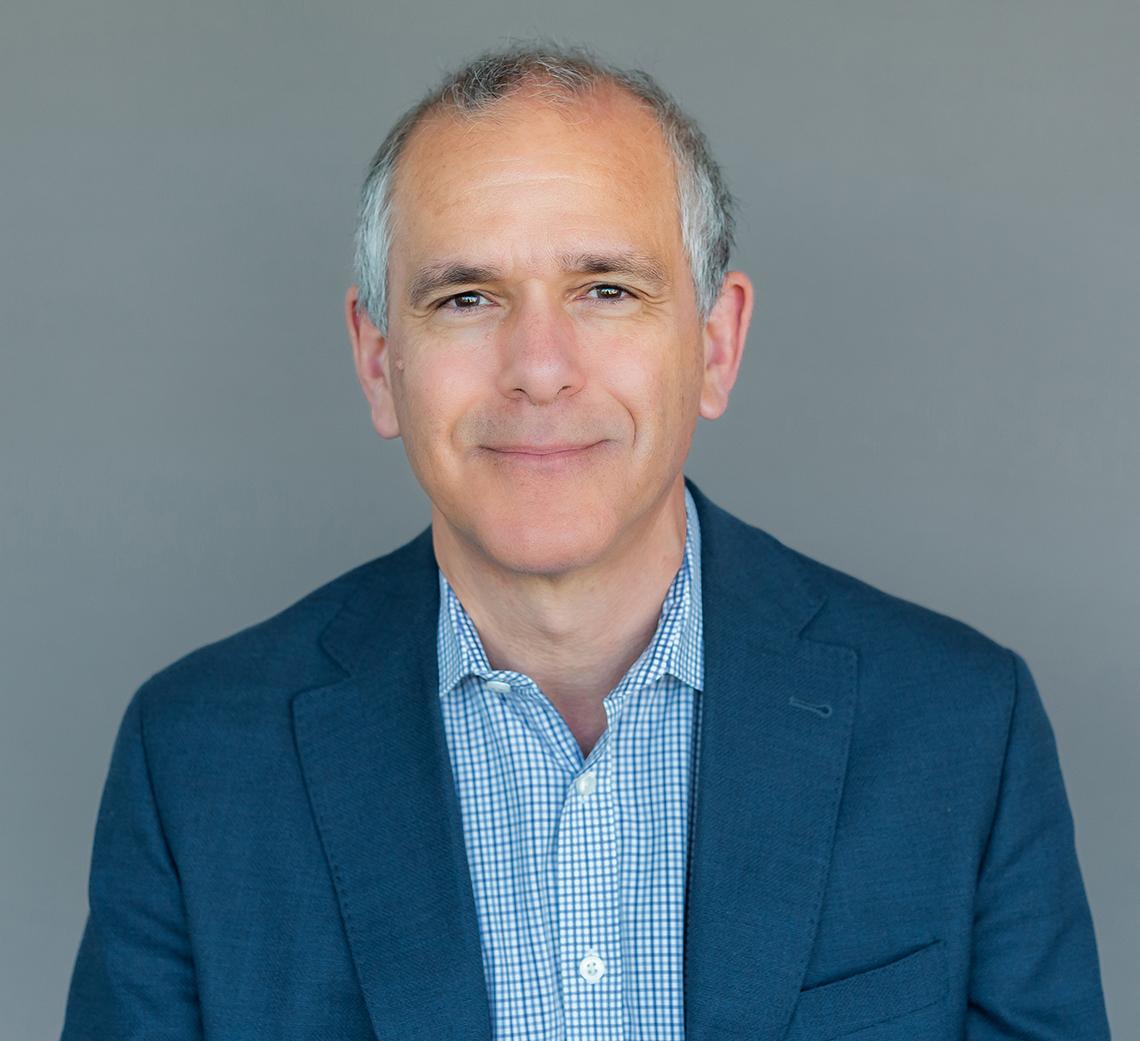
Varun Chitre, CEO, left, and Tarun Vashisth, CTO, co-founders of logcat.ai. (logcat.ai Photos)

The past two years have transformed the world of software development, but there’s at least one area that remains largely untouched by artificial intelligence: the operating-system layer inside phones, vehicles, and other connected devices. 

A Seattle startup called logcat.ai has raised $2.55 million to change that.

Co-founded by CEO Varun Chitre and CTO Tarun Vashisth, two engineers with years of experience building device software, logcat.ai is developing a system of AI agents that autonomously hunt down bugs across the kernel, modem, and firmware of devices running Android or Linux.

The pre-seed round was led by Founders’ Co-op, with participation from Act One Ventures, TheFounderVC, Shorewind Capital, Clayoquot Capital, and Alumni Ventures. 

“It’s one of the toughest areas of software engineering, and it doesn’t get a lot of exposure. Operating-system engineering is virtually hidden today,” Chitre said in an interview.

It’s also a challenge for many companies given a shortage of engineers who specialize in the field, compared to the much larger population of developers who build apps and software that run on top of the operating system.

How it works: An engineer using logcat.ai uploads the log files a device generates when something goes wrong — such as bug reports and kernel logs — and logcat.ai’s software analyzes them together to find the root cause and point to where in the code to fix it. Each finding cites the exact log line it came from, so an engineer can check the work.

Currently, logcat.ai finds the root cause and recommends a fix. The larger plan is to have the AI write the fixes, test them, and eventually build new features on its own, with engineers approving the work before it’s deployed.

The long-term goal, Chitre said, is to become the standard tool for building and maintaining operating systems on new and existing hardware — from smartphones to cars to robots and other embedded systems — so a company can ship without a full-stack specialist on staff.

“We’re moving toward a world where software and intelligence extend far beyond our laptops and phones, yet the tooling to build high-quality products for that world is still missing,” said Aviel Ginzburg, general partner at Founders’ Co-op, in a statement.

He called Chitre and Vashisth “one of the only teams in the world truly up for the challenge.”

Traction: The company says it has served hundreds of engineering teams in a public beta, analyzed more than 10 billion lines of trace data, and run thousands of automated investigations. It’s generating revenue but isn’t ready to disclose numbers or customers. 

Competitive landscape: Chitre said logcat.ai’s main competition isn’t another product but in-house scripts and the knowledge locked in a few senior engineers’ heads. App-level crash tools like Google’s Crashlytics and Sentry stop at the app layer and don’t do the deeper system debugging.

Specialist vendors and the contract manufacturers that build devices are potential partners more than rivals, Chitre said, since they face the same engineer shortage.

GeekWire first reported on logcat.ai in March, in a Startup Radar roundup.

The team: Chitre and Vashisth met at Esper, the Bellevue, Wash.-based device-management company, where they worked together for more than seven years. They started logcat.ai because they had spent years doing debugging by hand and knew what was missing.

Chitre has spent more than 13 years in the field, getting operating systems to boot and run on new hardware and porting new Android releases and Linux kernels onto older devices. He was also a maintainer of LineageOS, a widely used open-source version of Android. 

Vashisth has led engineering teams working across Android, Linux, and iOS, and brings a background in large-scale distributed systems. At Esper, he rose to senior software engineering manager. His prior experience includes platform-architecture engineering at Target.

For now, the company is just the two founders: Chitre in the Seattle area, Vashisth in Bengaluru, India. They plan to hire about 10 people over the next year, with a distributed team working remotely from wherever they can find the specialized talent.

They know those hires won’t be easy to find, given the scarcity of people in the field. “That’s the same shortage our product exists to address,” Chitre said, “and we’re not exempt from it.” 

Archives to avatars: Famed historian is moved by Microsoft’s AI-powered Theodore Roosevelt at new library

The lifelike avatar of President Theodore Roosevelt, which relies on artificial intelligence to answer visitors’ questions, at the Theodore Roosevelt Presidential Library in Medora, N.D. (Theodore Roosevelt Presidential Library Photo via Microsoft)

“Speak softly and carry a big prompt.”

That’s not exactly how Theodore Roosevelt put it, but presidential historian Doris Kearns Goodwin found herself face to face with an AI-powered version of the 26th president at the newly opened Theodore Roosevelt Presidential Library in Medora, N.D. — and she had questions.

Goodwin is among the high-profile visitors to interact with the lifelike, immersive version of Roosevelt that is able to discuss his life, leadership and legacy.

A week after a visit from President Trump, Goodwin joined Microsoft President Brad Smith at the library to learn how the tech giant’s AI is being used to help the institution — and the Roosevelt avatar — speak directly to future generations.

“Who better to put our avatar to the test than American historian Doris Kearns Goodwin,” Smith wrote on LinkedIn on Sunday, where he shared a video of a clearly giddy Goodwin meeting the digital Roosevelt.

“I’ve been wanting to meet you for such a long time,” Goodwin said. “I feel like I’ve lived with you for 10 years of my life when I wrote a first book about you.”

Goodwin asked Roosevelt questions about his relationship with JP Morgan, the changing will of the country, and how it was presumed that when he neared death, Roosevelt would still be fighting and still be in the arena.

“I never cared how’d I’d be remembered by the historians,” the avatar said. “Still swinging, still loud, still on your feet. If folks say I managed that, well, I’m glad of it.”

A Pulitzer Prize-winning biographer who has written extensively about presidents and American history, Goodwin was moved by the interaction.

“Wow,” she said. “It’s amazing.”

The AI works as part of Box 1, the knowledge base backbone of the museum, powered by technology Microsoft helped create. According to a July 1 Microsoft blog post, the system is loaded with hundreds of thousands of archival documents, and AI is used to “organize, enrich and reconstruct fragmented materials into searchable, contextualized historical records.”

Box 1 and AI also power The Campfire Reading Room, a digital research tool that anyone anywhere in the world can use to search through Roosevelt’s writings, letters, images and historical materials.

Microsoft donated much of its work with the library through its AI for Good Lab. The company said it plans to release a paper documenting exactly how the technology works and to open source the software used in the project.

As technology evolves, the library will evolve with it, Microsoft said. When more documents are added to Box 1 or as generative AI improves, the Roosevelt avatar will automatically update with the additional context.

“That’s why we call it a living library,” said Laura Hoffman, senior director of the AI for Good Lab. “One of the most challenging things for cultural institutions is to continue to keep their experiences feeling relevant and fresh. This is what’s great about AI technology: It will continue to get better and better.”

10 new startups emerge from the University of Washington, with healthcare dominating the lineup

Leaders of startups recently spun out of the UW, top row, from left: Hilco Boerlage of Precision Cognition Labs; Jan Whittington of Climate Solutions International; Elena Cant of DetellaDx; Sura Alwan of PEAR-Net Society; and Min Sun of Colleague AI. Bottom row, from left: Jingcong Zhao of KeenSight Health; Vigneshwar (Viggy) Sakthivelpathi of Nanosync Labs; Chris Norn of Skape Bio; Joelle Tudor of CathConnect; and Conor Lanahan of Prosthetic Fit 360. (CoMotion Photos)

The University of Washington’s CoMotion program announced 10 startups that secured UW-licensed intellectual property over the past year. Eight are in healthcare, spanning diagnostic tools, medical devices and new therapeutics. The other two focus on K-12 education or climate change.

CoMotion, which operates as a collaborative innovation hub, reports that it and its predecessors have fostered 310 deep-tech companies over the past three decades, more than one-third of which are still active. Those businesses have raised $1.8 billion from investors in the past five years alone.

Here’s a look at the 10 startups:

CathConnect is a Seattle-based startup making urinary catheters that are easy to insert into a patient’s bladder and will safely disconnect if pulled out accidentally. The devices could help prevent the 450,000 traumatic catheter removals that occur in the U.S. each year, which lead to longer hospital stays, higher medical costs and increased infection risk.

CathConnect was launched by Joelle Tudor, a former UW undergraduate researcher and Michael Malone, a UW doctoral candidate.

Climate Solutions International offers a software platform that helps government employees analyze factors like climate resilience, cost and carbon emissions for proposed infrastructure projects. The startup is the brainchild of Jan Whittington, a UW urban planning professor who previously received funding from the World Bank to apply these strategies across 300 cities in 30 countries.

Climate Solutions International was selected for CoMotion’s second Climate Tech Incubator, a six-month program located at the Seattle Climate Innovation Hub, a public-private partnership in the city’s downtown.

Colleague AI created an AI tool and chatbots to assist K-12 teachers craft lesson plans and streamline other classroom operations. The technology was developed by Min Sun, a UW professor of education and Colleague AI co-founder, with substantial research and testing by educators.

The UW College of Education was selected two years ago as a national center for research and development on using generative AI as a teaching tool, a designation that included a $10 million grant to support Sun’s work.

DetellaDx is using AI and single-cell technology — a research tool that allows scientists to analyze genetic information in individual cells — to detect early stage cancers with a high degree of accuracy.  The diagnostic approach is based on research by Scott Kennedy, an associate professor in the UW Department of Laboratory Medicine & Pathology. DetellaDx’s initial focus is on women with a genetic predisposition for ovarian cancer. 

KeenSight Health aims to help clinicians communicate better with patients through its Clinical Intelligence Engine, a coaching software that reviews doctor-patient conversations and gives physicians practical feedback. The platform also incorporates patient history stored in electronic records and other resources.

KeenSight was co-founded by past and current UW professors Dr. Ian Bennett, Dr. Misbah Keen and Larry Mauksch. The startup is based in Bellevue, Wash.

Nanosync Labs has created wearable sensors that monitor brain health and sleep without invasive procedures. The devices and platform allow for continuous tracking of changes in brain pressure and deep sleep, a restorative stage essential for brain health. The sensors enable earlier detection of neurological conditions, benefiting patients with traumatic brain injury and sleep disorders.

The technology was developed in the UW lab of Jae-Hyun Chung, an associate professor of mechanical engineering. Viggy Sakthivelpathi, who earned a PhD from the UW, is Nanosync’s co-founder and CEO.

PEAR-Net Society provides resources to help medical and public-health experts understand whether medications, chemicals, infections, vaccines, or other exposures may harm a fetus during pregnancy.

The organization relies on two well-established databases documenting teratogens, factors that can cause birth defects. These include the Teratogen Information System, or TERIS, developed by Dr. Jan Friedman, a UW graduate, and Shepard’s Catalog of Teratogenic Agents.

Precision Cognition Labs has developed a tool for memory assessment that can detect mild dysfunction and track changes in cognitive performance. The assessment is faster and easier to use than tools that require in-person, clinical evaluations, allowing for more frequent checkups and longitudinal studies.

The startup is a joint venture between the UW and the University of Groningen in the Netherlands, where it is based. Andrea Stocco, a UW associate professor and expert in computational psychiatry, is a co-founder and scientific director.

Prosthetic Fit 360 is building sensors that improve outcomes for patients with lower-limb prosthetics. The devices use trilateration, a technology that measures an object’s precise location by calculating distances from multiple known reference points. The startup was founded by Conor Lanahan, who earned his bioengineering and biomedical engineering doctorate degree from the UW.

Skape Bio is using AI to create new therapeutics that target G protein-coupled receptors, or GPCRs. The receptors, which are located on cell membranes, detect hormones, neurotransmitters and other signals that trigger biological responses.

The Copenhagen-based startup was founded by Chris Norn in partnership with UW Nobel laureate David Baker and scientists from the UW’s Institute for Protein Design and the BioInnovation Institute in Copenhagen.

Microsoft cuts 4,800 jobs, about 2% globally, revamps salesforce and launches massive Xbox overhaul

Microsoft’s Redmond headquarters. (GeekWire File Photo)

Microsoft is cutting 4,800 jobs, just over 2% of its global workforce, citing a need to revamp its sales and consulting division to keep pace with a rapidly changing tech industry, while overhauling its Xbox business in a push for long-term growth and profitability from gaming. 

The cuts include about 600 jobs in Washington state, home to Microsoft’s Redmond headquarters. That’s down from 3,200 job reductions locally a year ago. Combined with ongoing hiring, Microsoft’s workforce in the state is expected to remain stable at around 52,000 people.

About 1,600 of the 4,800 job cuts being announced Monday are in the Xbox division. Additional Xbox layoffs in the months ahead are expected to bring total job reductions in the gaming division to roughly 3,200, or about 20% of the global Xbox workforce, this fiscal year. 

Microsoft is also spinning off four Xbox game studios to operate independently. 

In an internal memo, Xbox CEO Asha Sharma called it the biggest restructuring in Xbox history, saying the division has been “operating at margins that are 3-10x lower than comparable platform and publishing businesses” and that studios have been losing 64 cents for every dollar invested.

Overall, top executives sought to distinguish Microsoft from other tech giants, saying the cuts were minimized by the redeployment of more than 4,000 employees into new roles over the past year and a voluntary retirement program that let thousands more exit by their own choice.

By comparison, the company last year cut more than 15,000 jobs globally in two rounds of layoffs in spring and summer 2025 — the largest reductions in more than a decade.

The latest cuts come amid record capital spending on the company’s AI infrastructure, pressure from Wall Street to keep operating expenses in check, and a 30% stock slide that has wiped out roughly $1.2 trillion in Microsoft’s market value over the past nine months.

“Microsoft can only be a strong employer if it has a successful business,” said Brad Smith, its president and vice chair, in an interview with GeekWire. “We have to adapt to change.”

Before the latest cuts, the company’s total workforce was about 220,000 people. Across the company, Microsoft expects worldwide headcount to decline year-over-year, CFO Amy Hood said on an April earnings call. 

Amy Coleman, Microsoft’s chief people officer, said in a memo to employees Monday morning that the roles the company is eliminating today are not being directly replaced by AI.

At the same time, she acknowledged, “AI is changing how work gets done.” She added, “Some of the tasks we do every day can now be automated, and that means we all need to keep learning, keep building new skills, and keep adapting as the work evolves.”

However, the line from Coleman’s memo that may get the most attention internally is this: “We are still early on this journey, and there will be more changes ahead; other parts of our business will need to make similar changes.”

In an interview, Coleman stopped short of signaling further layoffs across the company. Instead, she described a larger shift in how Microsoft manages its workforce. That includes reskilling engineers for customer-facing and AI-focused positions, and exploring how to make voluntary exit programs a regular part of the company’s operations — not just a one-time offer, but potentially something employees could opt into annually or on an ongoing basis.

Coleman confirmed that about 30% of roughly 8,750 eligible U.S. employees accepted Microsoft’s first-ever voluntary retirement program in recent weeks, in line with the company’s expectations, which reduced the size of the reduction in force announced Monday. 

The cutbacks and changes in the company’s sales and consulting teams build on last week’s launch of the Microsoft Frontier Company, a $2.5 billion initiative to embed 6,000 engineers inside customers to deploy AI. The shift is reducing some traditional sales and consulting roles and resulting in more technical positions working directly with customers. 

“We’re seeing that we need more engineering excellence in the customer space,” she said. 

Smith said software development is undergoing its biggest shift in the more than 50 years since Microsoft’s founding. The widespread use of AI is making code cheaper and faster to produce, but he said that’s also creating demand for new kinds of roles and work.

“Some things like coding require less time of software developers,” he said. “At the same time, there’s new parts that are growing, whether it’s the product management or software design, or perhaps most importantly, working directly with customers.”

Update: A filing by Microsoft on Monday under the Washington state Worker Adjustment and Retraining Notification Act listed 605 positions being eliminated in Washington state.

The roles span software engineering, product management, sales strategy, data science, business program management, marketing, and game design, among others — ranging from mid-level individual contributors to senior managers, consistent with cuts that reach across both the company’s technical ranks and its sales and consulting operations.

Xbox at a crossroads: 25 years later, Microsoft is done playing around

Xbox at a gamescom briefing in 2014. Microsoft is pressing its games division to turn a profit. (Microsoft Photo)

In 2007, Microsoft’s Xbox 360 consoles started dying — overheating until three lights on the front blinked red, a defect gamers came to call the “red ring of death.” Microsoft’s response was to extend the warranty on every machine and take a charge of more than $1 billion to fix the problem, making it one of the costliest product failures in the company’s history.

Microsoft could afford it financially, but the bigger factor was strategy. Xbox was a bet on the living room, and for a company minting money on Windows and Office at the time, losing a billion or so was a justifiable cost of staying in the game.

Nearly two decades later, that patience has run out.

“Going forward, this cannot continue,” the new Xbox CEO Asha Sharma wrote in a memo to employees last month, offering a blunt assessment of a business that has spent more than $20 billion over five years, only to see its core revenue fall by nearly half a billion dollars, running at a thin 3% profit margin, by Microsoft’s own internal measures.

With thousands of layoffs expected to be announced across Microsoft as soon as next week, the Xbox division is likely to be among the hardest hit.

The cuts reach across the company — including sales and consulting — part of a restructuring that has become routine around the close of Microsoft’s fiscal year. But for Xbox, they’re an early step in a broader effort to reset the business, rein in costs, and position the division for healthier profits.

Microsoft CEO Satya Nadella has been blunt about it: the company has spent years subsidizing Xbox rather than profiting from it, and that era is over. The videos and livestreams of people playing Xbox games that fill YouTube generate more money than Microsoft makes from the games themselves, he noted in an appearance on the Hard Fork podcast.

“No one can accuse Microsoft of not having invested for the last 25 years,” Nadella said. “And now we have to turn this into a sustainable business.”

Long-term strategic bet

Turning it around means breaking a pattern that runs through Xbox’s history.

Xbox launched in 2001 and lost money for most of its first decade. Microsoft absorbed the losses and stayed in — going up against Sony’s PlayStation and Nintendo — because it saw a strategic prize in owning a piece of the living room, and later mobile. Online gaming also gave the company early experience running services at scale, which fed its cloud ambitions.

Over time, the goal shifted from selling hardware to selling subscriptions.

Xbox Live, launched in 2002, turned online play into recurring revenue. Game Pass, which arrived in 2017, let players pay a monthly fee — the top tier is about $23 — for a library of games, including Microsoft’s own new releases the day they come out. The idea was to get people paying for Xbox everywhere: consoles, PCs, phones and the cloud.

And when growth stalled, Microsoft doubled down. It paid $7.5 billion in 2021 for Bethesda, the studio behind Fallout and The Elder Scrolls, then $69 billion in 2023 for Activision Blizzard (whose games include Call of Duty, World of Warcraft, Diablo and the mobile hit Candy Crush) the largest acquisition in Microsoft’s history.

A series of economic headwinds

In recent years, almost everything about the economics of gaming has turned against Xbox at the same time.

Hardware loses money, and AI is making it worse. Microsoft sells consoles at or below cost, banking on games and subscriptions to make up the difference. But AI data centers are consuming so much memory and storage that chip prices have spiked. That has forced Microsoft to raise Xbox console prices, most recently a $100-to-$150 hike this summer that it blamed directly on component costs.

Xbox lost the console war. By most estimates, Sony’s PlayStation 5 has outsold the Xbox Series X and S more than two to one. A smaller base means fewer game sales and subscriptions to offset the upfront hardware losses. That has left Xbox a distant second for the entire generation.

Revenue is shrinking. Even setting aside the games it gained from Activision, Xbox’s annual revenue has fallen nearly $500 million over five years — while the money going into the business keeps climbing. It has been investing more to earn less.

Microsoft’s most recent quarterly filing shows gaming revenue of $16.8 billion for the nine months through March, down about $1.1 billion, or 6%, from a year earlier.

Game Pass cuts into sales. Handing subscribers a new game the day it launches undercuts the roughly $70 they would have paid to buy it. The service delivers steady subscription income, but thinner economics on the games themselves.

Activision didn’t fix the margins. Even with one of gaming’s most profitable businesses folded in, Xbox earns only about 3 cents of profit on every dollar — well under the 17 to 22 cents typical in the industry. If the biggest acquisition in company history can’t move the margin, little will.

Every spare billion is flowing to AI. Microsoft is pouring more than $100 billion a year into the data centers and chips behind its AI push, trying to capitalize on the boom. Against a risk and payoff that big, a gaming business that barely breaks even feels like yesterday’s strategic bet.

What’s next for Xbox

The cuts have already started. In recent weeks, Microsoft has signaled plans to close or sell some studios, including Ninja Theory, maker of the acclaimed “Hellblade” series.

Shedding staff, studios and marketing will lift Xbox’s profit margins in the near term. What it won’t do is fix the underlying problem: a business can trim its way to a better number only so much before it has to generate more revenue.

Sharma’s plan, so far, is to concentrate on Xbox’s biggest franchises, funding blockbusters like Halo and Fallout while pulling back elsewhere. It’s leaning on Game Pass and releasing most of its games on PCs and rival consoles from Sony and Nintendo, reaching players well beyond Xbox’s shrinking base, even as it holds back a few new exclusives like Gears of War to give owners a reason to stay.

Microsoft is also rethinking the console itself. In her memo, Sharma described a “hardware component crisis” that has left the company unable to make as many consoles as players want, and called for “a new business model and partnerships” for its hardware.

How far the reset ultimately goes is an open question. The Information reported that Microsoft has weighed making Xbox a standalone subsidiary, a joint venture, or a spin-off, though nothing is imminent.

Microsoft’s response to the Xbox 360 “red ring of death,” July 6, 2007. (Seattle Post-Intelligencer / NewsBank)

Whatever happens next, it’s clear that times have changed. In 2007, as the red ring of death crisis emerged, Peter Moore, who ran the Xbox business at the time, and his boss Robbie Bach went to then-CEO Steve Ballmer to ask for the money to repair and replace the failing consoles.

Ballmer didn’t flinch. “What’s it going to cost?” he asked, as Moore later recalled.

Told it was $1.15 billion, Ballmer said, simply: “Do it.”

Moore credits that decision with saving Xbox. There would have been no Xbox One, he said, without Ballmer’s willingness to spend more than a billion dollars to protect the brand.

Nearly two decades later, Microsoft is done writing that kind of check.

Steamboats to software: Microsoft’s Brad Smith mines America’s founding for tech insights

As the country marks its 250th birthday this week, Microsoft is rolling out an unlikely summer project: a six-part series of short videos, hosted by Microsoft President and Vice Chair Brad Smith, that look to American history for lessons relevant to technology and innovation today.

The premise is that every technology debate of the moment — over such issues as patents, privacy, and who gets to shape AI — has a precedent somewhere in the country’s past, and that we’d all benefit from remembering how we got here in the first place.

“We felt that the 250th anniversary of the country deserved some added reflection about the lessons of history, the role of technology, and the questions that we’re facing as a country,” explained Smith, a well-known history buff, in an interview with GeekWire this week.

In the first episode, for example, he stands in Philadelphia’s Independence Square to explain how a steamboat demonstration on the Delaware River in 1787 helped inspire the Constitutional Convention to give Congress the power to grant patents. This was the basis for the intellectual property framework that Smith describes as a bedrock of American innovation.

Savvy viewers may see some irony in a company extolling the virtues of IP protections even as Microsoft and OpenAI defend themselves against a New York Times copyright suit over the material used to train their AI models.

Asked about that, Smith made it clear he doesn’t see a contradiction.

“Every generation of technology has required a new round of legal thinking, legislation and oftentimes lawsuits, so that courts can sustain the balance that has always been needed between new innovation and the protection of things created already,” he said.

He also noted that Microsoft is often the party going to court to protect customers, pointing as one example to the company’s move this week to intervene before Europe’s top court in defense of the European Union and U.S. data-protection framework.

The six-part series was overseen by Smith’s longtime chief of staff, Carol Ann Browne, a Microsoft vice president; and produced by Kirkland, Wash.-based Trifilm. The episodes, around 3 or 4 minutes each, will roll out in the coming weeks. Smith said they recorded during existing travel plans, working the shoots into stops on trips he was already taking.

The series travels next to a Boston courtroom for the birth of privacy rights, Henry Ford’s Detroit assembly line for the spread of new technology, Cincinnati for Tocqueville’s take on nonprofits, Great Falls, Md., for George Washington’s early infrastructure ambitions, and the Lewis and Clark expedition in Montana for the value of uniting competing viewpoints.

“The 250th anniversary of the country is quite rightly an occasion to honor the past, celebrate the past,” Smith said, explaining the motivation for the series. “But let’s make sure we get something out of the past that helps us be more successful in the future.”

Ballmer Group launches ‘MoveUp Washington’ as part of broader philanthropic restructuring

MoveUp Washington will be led by Andi Smith, who currently heads Ballmer Group’s Washington state regional office. (Ballmer Group Photo)

Ballmer Group, the Bellevue, Wash.-based philanthropy founded by former Microsoft CEO Steve Ballmer and his wife Connie, is spinning out its Washington state work into an independent organization, one of three new regional groups launched Wednesday as part of a broader restructuring.

The new organization, MoveUp Washington, will be led by Andi Smith, who currently heads Ballmer Group’s Washington regional office. It will operate independently from Ballmer Group but continue to be funded by the Ballmers, carrying on the philanthropy’s existing mission of improving economic mobility for kids and families in the state.

Similar organizations are launching in Southeast Michigan and Los Angeles County — MoveUp Southeast Michigan and MoveUp LA — led by Kylee Mitchell Wells and Nina Revoyr, respectively, who currently lead Ballmer Group’s regional offices in those areas.

As the three regional groups become independent, Ballmer Group said in a news release that it will narrow its own focus to a smaller set of large, scalable initiatives aimed at improving economic mobility for kids and families nationally.

“Our intention is to ensure that these local philanthropies can be permanent, ongoing resources in each region, while we concentrate our national efforts on advancing economic mobility in new ways,” the Ballmers said in a statement.

Ballmer Group CEO Terri Ludwig, who helped guide the shift, will serve as a founding board member for all three new organizations while continuing to lead Ballmer Group.

Each organization will establish its own independent board and continue its existing regional work while evolving to meet local needs, according to Ballmer Group.

“Across these regions, our teams have demonstrated exceptional leadership and have distributed more than $1.5 billion in grants over the past decade,” Ludwig said in a statement.

Examples of past giving include:

  • $38 million to strengthen mental health services in Washington, including graduate-level clinical education scholarships coordinated through the University of Washington’s School of Social Work.
  • $43 million to the UW and other groups to boost early childhood education, including more than 1,500 scholarships over eight years.
  • $400 million toward Black investment fund managers and Black businesses, working with firms including Fairview Capital and Goldman Sachs.

Ballmer Group team members currently working in Washington, Southeast Michigan and Los Angeles County will transition to the new organizations over the next year. Current grantees will continue to be supported throughout the process, with no disruption to existing commitments, according to Ballmer Group.

The Ballmers are still determining the long-term financial structure for the new organizations — an endowment is one option under consideration, though not something being established at launch.

Steve Ballmer, who served as Microsoft CEO from 2000–2014, is founder of USAFacts, a nonpartisan organization founded in 2017 to make government data more accessible and understandable. He’s also chairman of the Los Angeles Clippers NBA team.

Gov. Bob Ferguson taps Amazon, Microsoft and others as concerns over Washington economy grow

Gov. Bob Ferguson announcing the new Economic Development Council. (Washington Office of Financial Management Photo)

Gov. Bob Ferguson last week recruited top executives from Microsoft, Amazon, T-Mobile, Boeing and other major employers to help shape Washington state’s economic strategy, launching a new advisory council as concerns mount that the state is becoming less competitive for business.

The 26-member Governor’s Economic Development Council is the first such governor-led economic advisory body in roughly two decades, reviving an approach last used under former Gov. Christine Gregoire in 2006. The group includes leaders from technology, aerospace, organized labor, higher education, tribal governments, ports and economic development organizations who will advise the governor on policies aimed at strengthening Washington’s economy. (See full list below).

One missing ingredient: No members from Washington’s venture capital or startup ecosystem are on the council, even though they are often considered the bench strength of a growing economy.

The announcement comes as executives, startup founders and business organizations have increasingly warned that higher taxes, rising costs, permitting delays and an uncertain regulatory environment are making Washington a more difficult place to build and grow companies. Ferguson recently signed the so-called “millionaires tax” — a proposed 9.9% tax applied to taxable, personal annual income that exceeds $1 million.

Some of the region’s wealthiest and most prominent entrepreneurs — including Zillow and Expedia co-founder Rich Barton; Amazon founder Jeff Bezos and former Starbucks CEO Howard Schultz — have publicly announced moves out of Washington state in recent years.

Starbucks also recently announced a major expansion in Nashville, and Montana Gov. Greg Gianforte of earlier this month announced that Sedro Wooley, Wash.-based Janicki Industries chose Great Falls for the site of an $800 million manufacturing center expected to create 1,000 jobs.

“Washington is our home, and that is not changing,” said John Janicki, president of Janicki Industries, in a press release. “Our footprint in Washington has continued to grow but is slowing due to ever-increasing regulations and lack of business understanding at an executive and legislative level.” 

Meanwhile, a recent survey from the Association of Washington Business found that 24% of businesses are considering a relocation out of the state, up from 17 percent in the prior quarter.

Washington’s economic climate was also one of the reasons why GeekWire recently traveled to Cleveland, where we explored how the Midwestern city was positioning itself for a changing economy, and the lessons that Washington could learn from it.

“We cannot take our strength for granted,” Ferguson said in announcing the council. “I’m launching a historic convening of top leaders from around Washington state to help guide the next chapter of economic prosperity for our state.”

The council will help develop Washington’s long-term economic strategy, identify opportunities to create family-wage jobs, evaluate the state’s competitiveness against other states and global markets, recommend ways to attract new employers and review regulatory barriers that may be slowing economic growth. The group will meet quarterly and submit recommendations to the governor.

The council’s creation comes after months of growing unease within Washington’s technology and business community.

GeekWire has reported extensively on criticism surrounding this year’s tax package, which raised business taxes on many employers and expanded the sales tax to additional services, including advertising. Business groups warned the measures could discourage investment and expansion in Washington, while lawmakers argued the revenue was necessary to close a multibillion-dollar budget gap and preserve essential public services.

The broader economic backdrop remains mixed. Washington continues to rank among the nation’s strongest state economies and remains home to global leaders in artificial intelligence, cloud computing, aerospace and life sciences. At the same time, employers are navigating higher borrowing costs, federal policy uncertainty, trade tensions and intensifying competition from states aggressively courting new investment.

As one example, Ohio Gov. Mike DeWine recently encouraged people and businesses from places like Washington to consider Ohio.

“Come work in Ohio,” DeWine noted after a question from GeekWire about advice he’d provide to Washington. “You will not find a better place, better people, quality of life. Cost of living is low compared to the two coasts.”

In the press release announcing Janicki Industries’ Montana expansion, Gianforte was a bit more blunt.

“The Treasure State is proud to attract job creators like Janicki that choose to expand from high-tax, high-regulation blue states to take advantage of our unmatched quality of life, lower taxes, and strong workforce,” he said. “I look forward to seeing the impact of this significant investment.”

Ferguson has sought to make economic development a central priority during his first year in office. His administration has highlighted efforts to speed permitting across state agencies, increase housing production and invest in sectors including quantum computing, advanced manufacturing and clean energy.

However, some have argued that the governor’s efforts come a bit too late, and are only be instituted in response to criticism. Gov. Ferguson shot back at that contention in the press conference last week, saying he doesn’t worry about critics and he’s interested in “solving problems.”

“I didn’t wake up last week and think about forming this council,” he said. “To be clear, as I mentioned in my talking points, this was an effort we really started last year and was an outgrowth of having conversations with many of the folks behind me and many other people across the state.”

Whether the new council ultimately leads to meaningful policy changes remains to be seen. But its creation sends a signal that Ferguson intends to place economic competitiveness — and closer engagement with Washington’s business community — near the center of his administration.

Amazon Chief Global Affairs and Legal Officer David Zapolsky, a member of the newly created council, called the formation of the group an “important step.”

“When the public and private sectors align around shared goals, communities benefit,” he said.

Governor’s Economic Development Council members:

  • Michael Cade — Incoming Board Chair, Washington Economic Development Association; Executive Director, Thurston County Economic Development Council
  • Dr. Betsy Cantwell — President, Washington State University
  • Leonard Forsman — Chairman, Suquamish Tribe
  • Denny Heck — Washington State Lieutenant Governor
  • Kris Johnson — President, Association of Washington Business
  • Trevor Johnson — CEO, Blackwood Homes
  • Dr. Robert Jones — President, University of Washington
  • Mike Katz — Chief Business & Product Officer, T-Mobile
  • Mary Kipp — President & CEO, Puget Sound Energy
  • Heather Kurtenbach — Executive Secretary, Washington State Building & Construction Trades Council
  • Dr. Thomas J. Lynch Jr. — President & Director, Fred Hutchinson Cancer Center
  • Julianna Marler — CEO, Port of Vancouver
  • West Mathison — President & CEO, Stemilt Growers
  • Stephen Metruck — Executive Director, Port of Seattle
  • Denise Moriguchi — President & CEO, Uwajimaya
  • Stephanie Pope — President & CEO, Boeing Commercial Airplanes
  • Heather Rosentrater — President & CEO, Avista
  • Michael Senske — Chairman & CEO, Pearson Packaging Systems
  • April Sims — President, Washington State Labor Council, AFL-CIO
  • Brad Smith — Vice Chair and President, Microsoft
  • Rachel Smith — President, Washington Roundtable
  • Bill Sterud — Chairman, Puyallup Tribe
  • Shane Tackett — President and Chief Financial Officer, Alaska Airlines
  • Monique Valenzuela — Executive Director, Ventures
  • Dr. Rebekah Woods — President, Columbia Basin College
  • David Zapolsky — Chief Global Affairs & Legal Officer, Amazon
❌