
Reading view

There are new articles available, click to refresh the page.

Mars Society and South Seattle College strike a deal to build a simulated space habitat
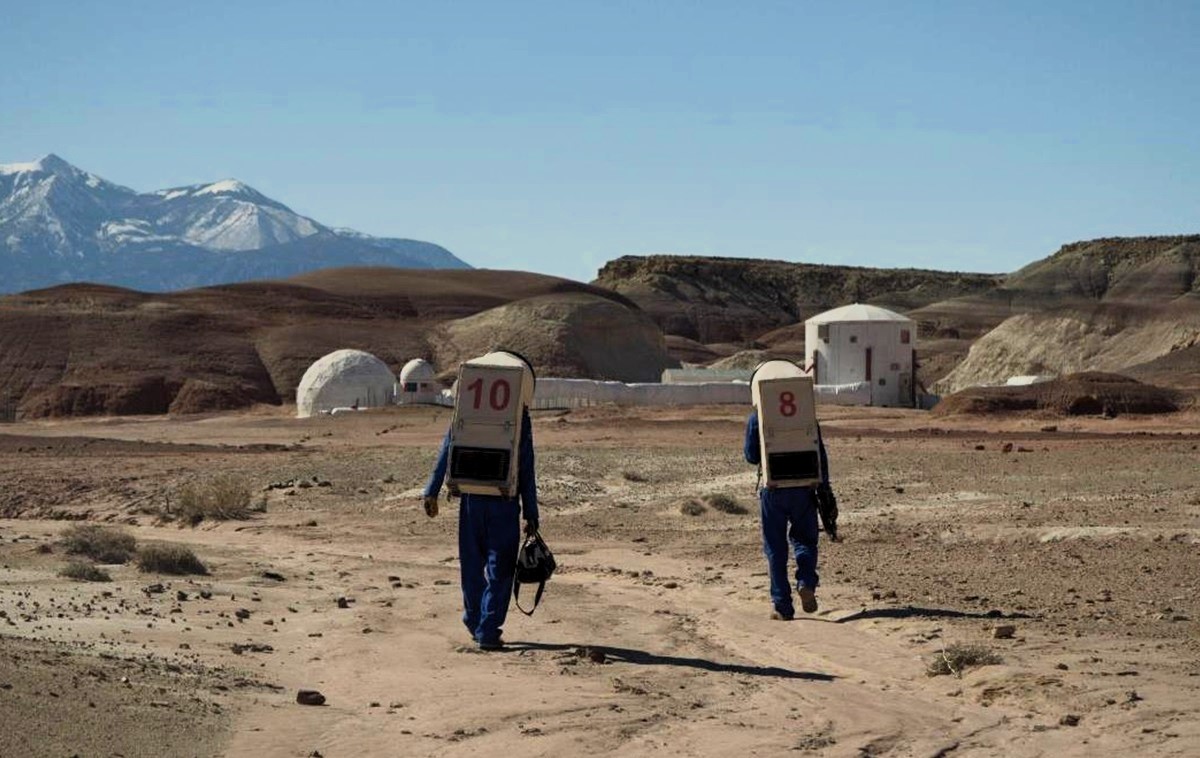
Two analog astronauts trudge toward the Mars Society’s Mars Desert Research Station in Utah. (Mars Society Photo)

The Mars Society is planning to build a Pacific Northwest research station suitable for simulating missions to the moon or Mars, in partnership with South Seattle College.

The nonprofit space advocacy group announced today that its executive director, James L. Burk, and the college’s president, Monica Brown, have signed a 10-year memorandum of agreement establishing the partnership.

The plan calls for the Mars Society to lease land on the college’s 87-acre West Seattle campus and build the research station, contingent on funding. Both parties will raise funds from aerospace companies and other donors to support construction, with the goal of opening the station at the start of the 2027-2028 academic year.

The agreement provides for the creation of a joint space studies curriculum and certificate program; a student capstone project and internship program tied to industry partners; and a regional workforce pipeline and community engagement effort.

The Seattle facility would be the third analog research station operated by the Mars Society, joining the Flashline Mars Arctic Research Station on Canada’s Devon Island and the Mars Desert Research Station in Utah.

Those two stations were built more than two decades ago to reflect the designs for Mars habitats. They provide opportunities for teams of researchers to test the tools and techniques that future astronauts might use for extraterrestrial exploration. During their missions, the researchers live and work under simulated Mars conditions. For example, they’re required to put on simulated spacesuits every time they venture outside their habitat.

Burk said the Seattle research station will reflect NASA’s growing emphasis on moon exploration as a precursor to crewed Mars missions, as well as South Seattle College’s traditional emphasis on workforce training. “For more than two decades, the Mars Society has operated analog research stations in the Utah desert and the Canadian Arctic that have shaped how humanity will live and work on other worlds. Bringing that capability to an urban community college campus is something new, and it is deliberate,” he said.

“The moon and Mars programs the federal government has now committed to are going to need a workforce we have not trained for in 50 years,” Burk said. “South Seattle College knows how to train people for the industries that actually build things. That approach is exactly what we need for preparing for planetary surface operations on the moon and Mars.”
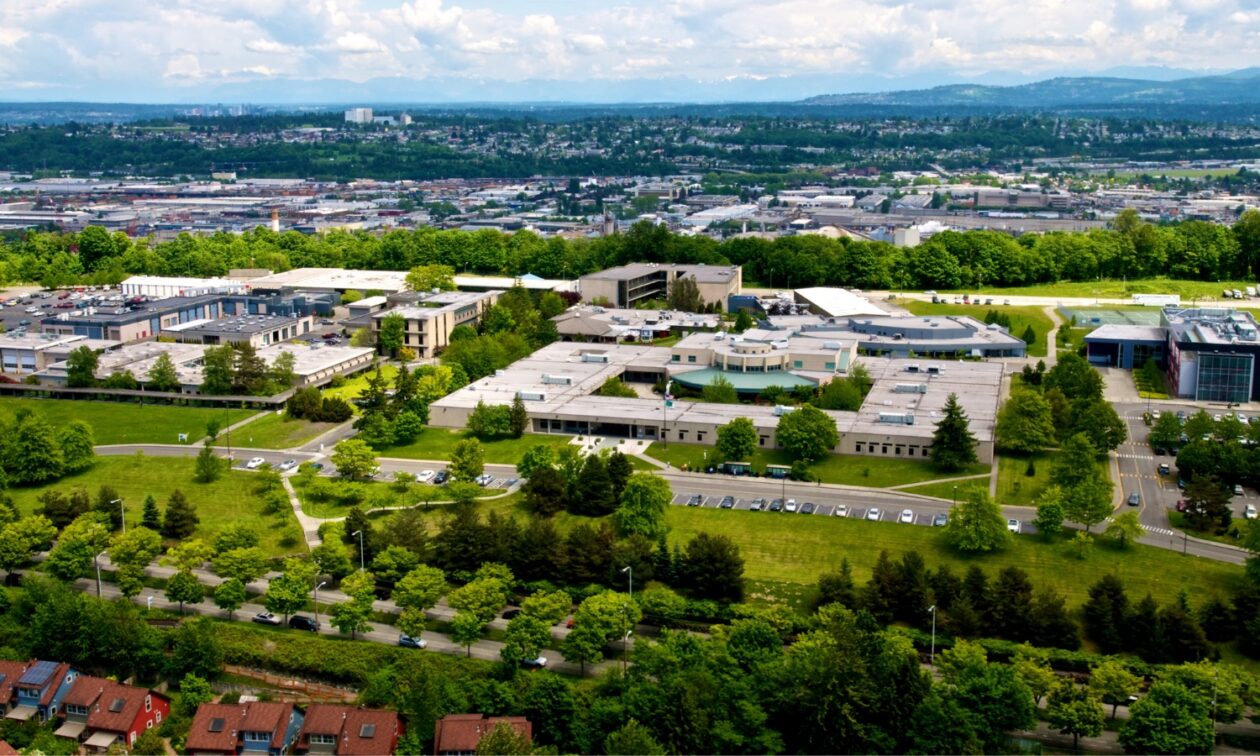
South Seattle College’s main campus spans 87 acres in West Seattle. (South Seattle College Photo)

The analog research projects would build upon the college’s existing training programs. For example, students learning about electric vehicle maintenance and repair could work on projects involving battery-powered rovers and drones. Students in the college’s culinary arts program could contribute to research into growing vegetables in space environments.

“South Seattle College has a long tradition of meeting our region’s workforce needs in aerospace, applied science, and skilled trades,” Brown said. “This partnership extends that tradition, and this initiative reflects our commitment to exploring bold, future-oriented opportunities that expand access, inspire imagination, and ensure our students are prepared to lead in emerging industries.”

The Mars Society is headquartered in Colorado but has plenty of Pacific Northwest connections. The Seattle chapter was created in 1998, shortly after the national organization was founded. Burk, a former Microsoft project manager, lives and works in North Bend, Wash.

During a 2023 podcast interview, Mars Society President Robert Zubrin — who earned his Ph.D. in nuclear engineering from the University of Washington — said the Pacific Northwest was “perhaps at the top of the list” of potential sites for a Mars Technology Institute. Today’s announcement appears to be consistent with Zubrin’s assessment of the region.

In its news release, the Mars Society noted that the Pacific Northwest “hosts one of the largest concentrations of commercial space activity in the United States.” The society specifically cited Jeff Bezos’ Blue Origin space venture, SpaceX’s Starlink satellite factory and L3Harris Technologies’ Aerojet Rocketdyne facility in Redmond.

To raise public awareness of the Seattle project, the Mars Society said it plans to install an inflatable mockup of a research habitat in South Seattle College’s Aviation Maintenance Technology facilities this summer. The society also hinted at more to come, saying that there’s “a public event in the works.”

10 new startups emerge from the University of Washington, with healthcare dominating the lineup

Leaders of startups recently spun out of the UW, top row, from left: Hilco Boerlage of Precision Cognition Labs; Jan Whittington of Climate Solutions International; Elena Cant of DetellaDx; Sura Alwan of PEAR-Net Society; and Min Sun of Colleague AI. Bottom row, from left: Jingcong Zhao of KeenSight Health; Vigneshwar (Viggy) Sakthivelpathi of Nanosync Labs; Chris Norn of Skape Bio; Joelle Tudor of CathConnect; and Conor Lanahan of Prosthetic Fit 360. (CoMotion Photos)

The University of Washington’s CoMotion program announced 10 startups that secured UW-licensed intellectual property over the past year. Eight are in healthcare, spanning diagnostic tools, medical devices and new therapeutics. The other two focus on K-12 education or climate change.

CoMotion, which operates as a collaborative innovation hub, reports that it and its predecessors have fostered 310 deep-tech companies over the past three decades, more than one-third of which are still active. Those businesses have raised $1.8 billion from investors in the past five years alone.

Here’s a look at the 10 startups:

CathConnect is a Seattle-based startup making urinary catheters that are easy to insert into a patient’s bladder and will safely disconnect if pulled out accidentally. The devices could help prevent the 450,000 traumatic catheter removals that occur in the U.S. each year, which lead to longer hospital stays, higher medical costs and increased infection risk.

CathConnect was launched by Joelle Tudor, a former UW undergraduate researcher and Michael Malone, a UW doctoral candidate.

Climate Solutions International offers a software platform that helps government employees analyze factors like climate resilience, cost and carbon emissions for proposed infrastructure projects. The startup is the brainchild of Jan Whittington, a UW urban planning professor who previously received funding from the World Bank to apply these strategies across 300 cities in 30 countries.

Climate Solutions International was selected for CoMotion’s second Climate Tech Incubator, a six-month program located at the Seattle Climate Innovation Hub, a public-private partnership in the city’s downtown.

Colleague AI created an AI tool and chatbots to assist K-12 teachers craft lesson plans and streamline other classroom operations. The technology was developed by Min Sun, a UW professor of education and Colleague AI co-founder, with substantial research and testing by educators.

The UW College of Education was selected two years ago as a national center for research and development on using generative AI as a teaching tool, a designation that included a $10 million grant to support Sun’s work.

DetellaDx is using AI and single-cell technology — a research tool that allows scientists to analyze genetic information in individual cells — to detect early stage cancers with a high degree of accuracy.  The diagnostic approach is based on research by Scott Kennedy, an associate professor in the UW Department of Laboratory Medicine & Pathology. DetellaDx’s initial focus is on women with a genetic predisposition for ovarian cancer. 

KeenSight Health aims to help clinicians communicate better with patients through its Clinical Intelligence Engine, a coaching software that reviews doctor-patient conversations and gives physicians practical feedback. The platform also incorporates patient history stored in electronic records and other resources.

KeenSight was co-founded by past and current UW professors Dr. Ian Bennett, Dr. Misbah Keen and Larry Mauksch. The startup is based in Bellevue, Wash.

Nanosync Labs has created wearable sensors that monitor brain health and sleep without invasive procedures. The devices and platform allow for continuous tracking of changes in brain pressure and deep sleep, a restorative stage essential for brain health. The sensors enable earlier detection of neurological conditions, benefiting patients with traumatic brain injury and sleep disorders.

The technology was developed in the UW lab of Jae-Hyun Chung, an associate professor of mechanical engineering. Viggy Sakthivelpathi, who earned a PhD from the UW, is Nanosync’s co-founder and CEO.

PEAR-Net Society provides resources to help medical and public-health experts understand whether medications, chemicals, infections, vaccines, or other exposures may harm a fetus during pregnancy.

The organization relies on two well-established databases documenting teratogens, factors that can cause birth defects. These include the Teratogen Information System, or TERIS, developed by Dr. Jan Friedman, a UW graduate, and Shepard’s Catalog of Teratogenic Agents.

Precision Cognition Labs has developed a tool for memory assessment that can detect mild dysfunction and track changes in cognitive performance. The assessment is faster and easier to use than tools that require in-person, clinical evaluations, allowing for more frequent checkups and longitudinal studies.

The startup is a joint venture between the UW and the University of Groningen in the Netherlands, where it is based. Andrea Stocco, a UW associate professor and expert in computational psychiatry, is a co-founder and scientific director.

Prosthetic Fit 360 is building sensors that improve outcomes for patients with lower-limb prosthetics. The devices use trilateration, a technology that measures an object’s precise location by calculating distances from multiple known reference points. The startup was founded by Conor Lanahan, who earned his bioengineering and biomedical engineering doctorate degree from the UW.

Skape Bio is using AI to create new therapeutics that target G protein-coupled receptors, or GPCRs. The receptors, which are located on cell membranes, detect hormones, neurotransmitters and other signals that trigger biological responses.

The Copenhagen-based startup was founded by Chris Norn in partnership with UW Nobel laureate David Baker and scientists from the UW’s Institute for Protein Design and the BioInnovation Institute in Copenhagen.

❌