Reading view

There are new articles available, click to refresh the page.

Warner Bros. Discovery sues Amazon over HBO Max exec hire, seeks order blocking future poaching
GeekWire Image / Company Logos

A new Warner Bros. Discovery lawsuit against Amazon, accusing the tech giant of poaching a top HBO Max marketing executive 16 months before her contract expired, comes with an unusual request: a court order barring Amazon from hiring any employee of the media conglomerate as long as they’re under contract.

The suit, filed July 21 in Los Angeles County Superior Court, centers on Pia Barlow, the longtime HBO Max executive who was announced last week as Amazon MGM Studios’ new head of series marketing. Her Warner Bros. Discovery contract ran through October 2027.

She resigned in June and was due to start at Amazon on Aug. 3.

Warner Bros. Discovery accuses Amazon of “hurriedly seeking to pirate away a number of contracted employees,” calling the company a “digital bull in a china shop” that chose to build its entertainment workforce by raiding Hollywood rather than hiring from scratch.

The suit says Amazon tried weeks earlier to recruit another WBD executive under contract through December 2027 and failed, and was pursuing at least one more when the suit was filed.

The complaint says Barlow’s departure “conveyed a troublesome message throughout Plaintiffs’ executive ranks” — that contractual commitments could be disregarded “whenever a larger paycheck appears.”

Amazon declined to comment in response to GeekWire’s inquiry.

The company acquired MGM in 2022 for $8.5 billion, its second-largest acquisition ever behind the $13.7 billion purchase of Whole Foods in 2017. The deal brought a catalog of more than 4,000 films and 17,000 TV shows, and the studio was rebranded Amazon MGM Studios in 2023.

It’s led by Mike Hopkins, head of Prime Video and Amazon MGM Studios.

Warner Bros. Discovery itself is in the middle of being sold. Paramount Skydance agreed in February to buy the company for about $81 billion, outbidding Netflix, but 12 state attorneys general sued this month to block the deal, and Paramount has pushed its closing deadline to as late as June 2027.

The complaint goes further, alleging Amazon didn’t just recruit Barlow but also picked her lawyer. Warner Bros. Discovery says the firm now representing her is based less than a mile from Amazon’s Seattle headquarters and “has a well-publicized, long-standing relationship with Amazon as outside litigation counsel,” and that Amazon is paying its fees. The firm isn’t named in the complaint.

Barlow, who lives and works in Los Angeles, is not a defendant.

Warner Bros. Discovery says its lawyers exchanged letters with Amazon and with that attorney before filing suit, demanding Barlow not leave. It makes the fee allegation on “information and belief,” a legal phrase indicating a claim based on inference rather than direct evidence.
Amazon puts Luna gaming service inside its Prime Video app, hoping people finally notice

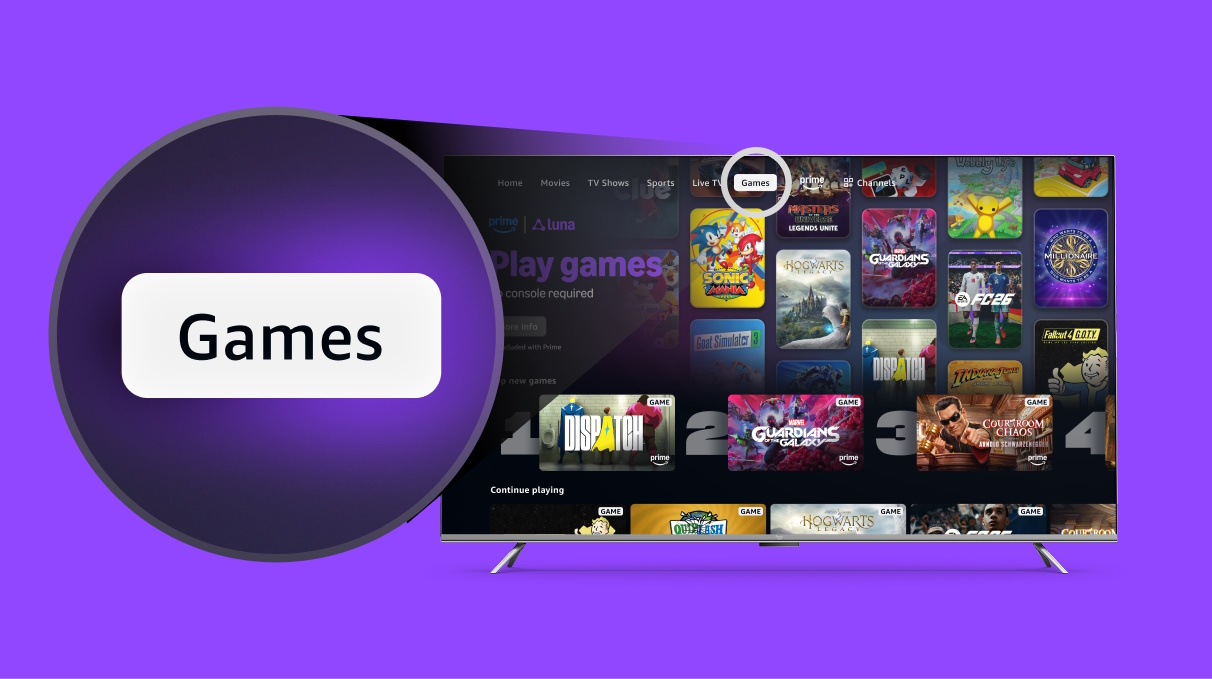
Amazon will begin to fold its Luna cloud platform directly into the Prime Video app via the new Games tab, in an effort to get word about Luna to Prime members. (Amazon Luna promotional image)

Amazon announced today that it has updated some versions of its Prime Video app to include direct access to its cloud-based Luna gaming platform.

The business goal is to solve Luna’s awareness problem and bring new users to the platform. Many Prime members don’t know the gaming service is included with their membership.

Consumers in the US and UK who have both a Prime subscription and a Fire TV can now launch Luna directly from the Prime Video app, where it can be found in its own dedicated tab in the UI. Prime subscribers who launch Luna in the app will get direct access to a library of both casual and mainstream “AAA” video games for no additional cost and without having to exit the app.

“Effectively, we relaunched last October, taking a bunch of the value of Luna that had been behind a paywall… We pushed it into the Prime membership, as a way of providing great value and trying to grow our business,” Jeff Gattis, GM of gaming at Amazon, told GeekWire.

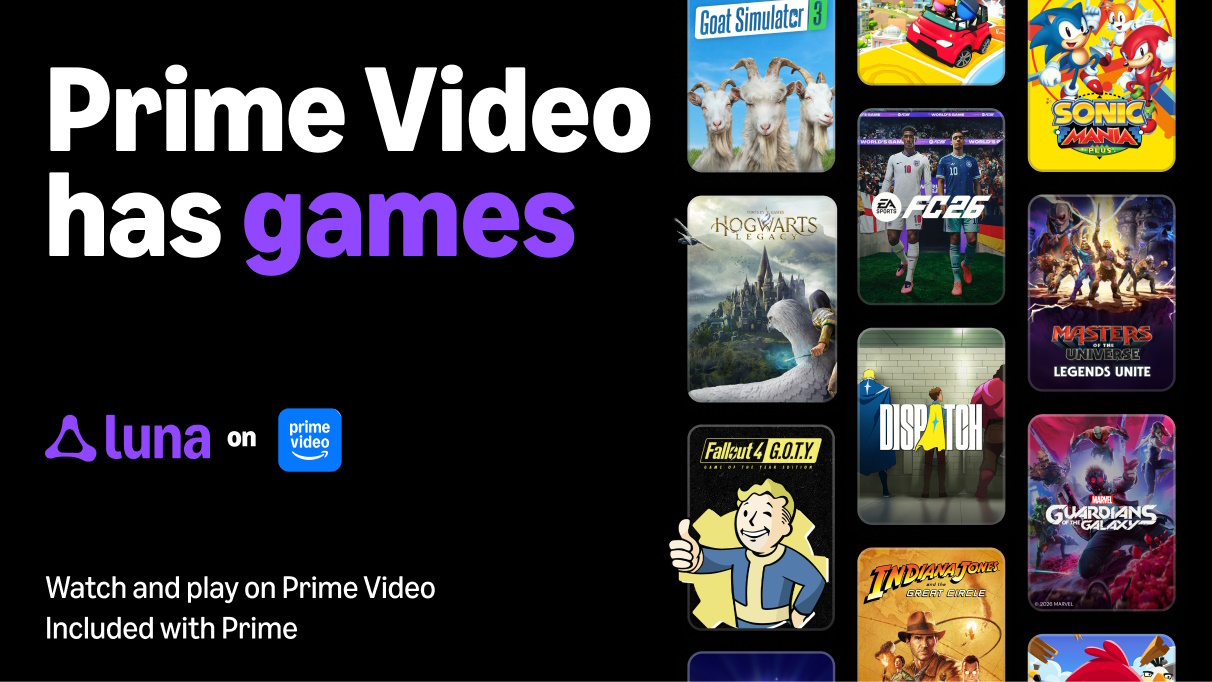
Players on Luna can stream an assortment of games to their TV or browser via Amazon’s cloud servers, using a smartphone as a controller if they don’t have a compatible gamepad. Luna’s current library ranges from established mainstream hits like Indiana Jones and the Great Circle, Dispatch, and Fallout 4 to an assortment of casual-friendly exclusive titles like Amazon’s own Courtroom Chaos.

(Amazon Luna press image)

Since that relaunch, Gattis said, the company has “basically 5x’d” its player base.

“The question for us is, how do you build upon that?” he said. “How do we let 200 million-plus Prime members worldwide know that they have this great benefit where you can play $70 games inside your Prime membership at no additional cost? One of our biggest challenges today remains that people don’t know the [Luna] benefit exists.”

While Luna was previously available to Prime subscribers via web browser and a couple of other types of smart TVs, it was a standalone service that required users to seek it out on its own. By shifting it into its own tab on the Prime Video app, Amazon’s hope is to drive up awareness that, well, Luna is there at all.

“It’ll start on Fire TV, but obviously our end state is to roll out to more countries and more devices, both first-party and third-party,” Gattis said. “Eventually we’ll be everywhere that Prime Video is.”

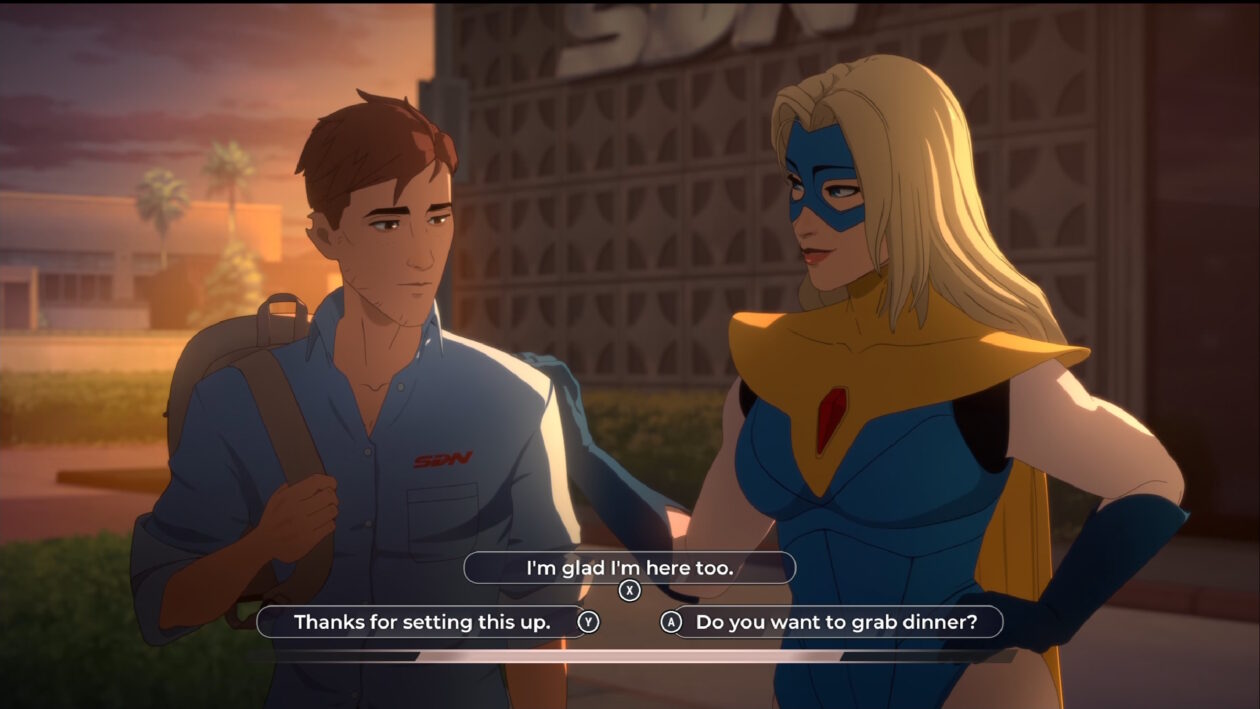
Dispatch, a viral indie hit from 2025 about office romance at a superhero agency, has been a big hit on Amazon Luna. (AdHoc Studio image)

The integration of Luna with Prime could also potentially bring back the largely-abandoned practice of video game movie tie-ins. Fans of this summer’s Masters of the Universe reboot can watch the film on Prime Video, then switch to Luna to play Masters of the Universe: Legends Unite, a strategic deckbuilding game that’s currently exclusive to Luna. This kind of transmedia synergy used to be a part of every big summer action movie, but it’s largely fallen by the wayside since the 2010s.

Luna originally debuted in 2020 as a subscription-based cloud service. Subscribers could pay a monthly fee for access to over 100 video games, which they could play through their browser by streaming them from Amazon’s servers.

Back then, Luna was Amazon’s entry into what was shaping up to be a publisher-driven “battle for the cloud,” with companies like Google and Nvidia all launching their own game streaming services. Over time, however, the cloud’s impact on gaming hasn’t matched its early hype.

More recently, the component crunch has driven up the price of consoles and graphics cards, and that plays into Amazon’s bet on Luna.

Gattis said the cloud has been “technology ahead of its time,” in part because the industry aimed it at the wrong people, pitching it as a direct replacement for consoles and gaming PCs.

“That’s a heavy lift to ask somebody like myself,” he said. “I’ve invested both emotionally and financially in my Series X console and my 5090 graphics card. I’m happy.”

Amazon is catering to everyone else: players unlikely to buy a gaming PC or a current-generation console, let alone the next generation of gaming hardware at even higher prices. For the first time, Gattis said, there are “a lot more people who are going to think about the cloud as a viable alternative to $1,500 hardware.”

❌