This week on the GeekWire Podcast: A study commissioned by the City of Seattle says the city is not in decline but is in danger — finding that 10 companies, nine of them in tech, pay three-quarters of the payroll tax on large employers, and that the tax structure uniquely penalizes the hiring of senior, high-compensation workers.
The report says Seattle should be most concerned about AI but most active in cleantech, the one industry the city can actually shape, since it owns the electric utility and controls permitting, building codes and land use.
Meanwhile, the Seattle Times and Newsday sue Microsoft and OpenAI, accusing them of copying hundreds of thousands of articles to train their AI models, putting Microsoft’s hometown paper against a company that helps fund some of its journalism.
Which leads us to a new GeekWire Trivia Challenge about the Microsoft products that Apple later turned into categories. Stick around to the final segment to see if you can figure it out.
Upcoming Event
AI meets real estate
GeekWire, in partnership with Real Estate at Work, is recording the GeekWire Podcast live at 4 p.m. Wednesday, Sept. 16, with Toby Roberts, SVP of Engineering at Zillow. John Cook and Todd Bishop host with Real Residential broker Leka Devatha at Atmosphere Seattle. Grab a ticket.
Pavan Davuluri says Windows will keep serving human users while adding agentic workloads. (Microsoft Photo)
GeekWire is profiling over the next few weeks some of the people and teams that are shaping the evolution of Microsoft in what we’re calling its “Microsoft 2.5” era.
Just Don’t Call It an ‘Agentic OS.’ Given Microsoft’s one-pointed AI focus these days, it’s not surprising that the Windows organization is on the agentic train.
But Executive Vice President of Windows + Devices Pavan Davuluri has learned the hard way not to call Windows an agentic OS. He did so back in November 2025, via a tweet and blog post, and the customer backlash was quick and biting.
But Davuluri has not done a complete U-turn because of the criticism. Instead, he has changed how he talks about where Windows is going — which is still in an agentic direction.
“The user of Windows going forward will continue to be users … but it’s also going to add these agentic workloads,” the nearly 26-year Microsoft veteran Davuluri told GeekWire in a recent interview.
During his time at Microsoft, he’s held a variety of roles, from intern to General Manager of Surface, to Corporate Vice President of Windows Silicon & Systems Integration. He was appointed Executive Vice President of Windows + Devices in March 2026, reporting directly to CEO Satya Nadella.
Windows needs to evolve to support agentic workloads through new platform capabilities that the team is building under the covers, Davuluri said. These low-level capabilities, or “primitives,” affect how Windows handles security, identity, governance, observability, and performance when it comes to building and running agents natively.
These coming changes likely will affect the Windows file system, security model, PowerShell, and other foundational components.
Microsoft already is working on Windows identity and manageability to make them better able to service agents. Windows can assign agents a local ID, or a cloud-provisioned identity backed by Entra.
And it also has an early preview of technology known as Microsoft Execution Containers, meant to help secure agents by running untrusted code in sandboxes or virtual machines. It’s these system-level areas where the team is focusing first in preparation for a human+agent future, Davuluri said, rather than the UX/UI level.
Going Back to Basics. Windows has had a lot of very different leaders over the years, with very different management styles and priorities.
For his part, Davuluri said he plans to run the Windows and Surface teams with four principles in mind: Maintaining customer obsession; treating Windows as a complete end-to-end system (“full stack”); focusing on complete user experiences and workflows rather than individual features; and building Windows openly and transparently, with clearer communication about plans and priorities.
On the heels of his promotion to EVP, Davuluri committed publicly to the much-needed goals of improving Windows quality and reliability. In a blog post, he outlined some of the requested changes that his team would be making to Windows, ranging from fixing the way the Insider test program works, to more granular improvements like allowing users to reposition the Windows task bar.
And since then, the team largely has been delivering to the surprise and delight of many long-time Windows users.
Davuluri has also been working to shift the conversation from which new features are coming to a specific build to what are the outcomes Microsoft wants to enable for specific groups of Windows users.
“There is no one single sort of ring for a billion-plus users on the platform,” Davuluri said. Windows users encompass people who use the product in a variety of different ways, so “we need to get clarity in our minds on the things that we do that lift all boats that raise the entire platform — and things that we have to go do that are specific and unique to each of our sets of users based on how they primarily or typically use the device.”
Full-Stack Thinking. Is there still a role for Microsoft as a PC maker in the coming agentic future? Not surprisingly, given his heavily hardware-focused background, Davuluri insisted there is.
When Microsoft debuted its first Surface devices in 2012, officials said the company needed to build its own hardware to create reference designs and innovative form-factor examples for other Windows PC makers.
These days, most Surfaces that ship arguably are not better, spec- or design-wise, than other PCs. But Microsoft still needs to keep a hand in hardware design to understand the full stack, Davuluri claimed.
Surface plays a key role in how Microsoft develops platform abstractions, incubates support for technologies like pen, facial-recognition, and neural-processing units that later spread across Windows, and optimizes for silicon-to-cloud, he said.
While the company’s attempt to create a distinct category of “Copilot+” AI PCs fizzled, Microsoft continues to try to find AI-centric reasons to convince customers to choose Windows devices. Davuluri and others have referred to the idea of “unmetered intelligence” to attempt to make the case for running AI models locally on PCs.
This fall, Microsoft (and other Windows PC makers) plan to roll out new PCs built on the Nvidia RTX Spark platform. The coming Surface Laptop Ultra, which will be optimized for RTX Spark, is aimed at creators, developers and AI builders, all of whom — Microsoft is hoping — will be fueling the growth of its next target user category: Agents.
A Microsoft Surface tablet running Copilot at Lumen Field in Seattle. (GeekWire File Photo / Kurt Schlosser)
The Microsoft Surface tablets on NFL sidelines — a game-day fixture since 2014 — got a close-up on national television Wednesday night, with NBC highlighting new AI-powered workflows debuting in the Seattle Seahawks’ season opener.
During the broadcast, NBC play-by-play announcer Mike Tirico pointed out the new Surface devices — clad in Action Green cases, no less — in the Seattle coaches’ box above Lumen Field.
Tirico said Seattle head coach Mike Macdonald’s staff, including Brian Eayrs, the director of football analysis and special situations, now has direct access to Microsoft Copilot in real time. The broadcast showcased how the AI assistant is being layered onto sideline hardware to deliver instant data insights and help coaches make faster strategy adjustments.
“They can make sharper calls between series,” Tirico said. “So Copilot is going to give them a little bit more of an opportunity to do some real-time stuff on these tablets as the season goes on.”
It all amounted to a pretty good 40-second ad placement for Microsoft. Coupled with mentions of Next Gen Stats — powered by Amazon Web Services — it was a good night for Cloud City tech giants.
The technology and Eayrs are also featured in a video that Microsoft CEO Satya Nadella shared on X earlier in the day.
With the @NFL back tonight, love seeing @Seahawks analyst Brian Eayrs and coaches across the league using new Copilot and Excel tools to help with decision making in the booths and on the sidelines. pic.twitter.com/PbHugcbLIJ
GeekWire got an early look at Microsoft’s expanding tech suite back in April during a demonstration at Lumen Field. While the rugged Surface tablets on the sidelines remain the most visible hardware, Microsoft showed how Copilot is being integrated deeper into coaching workflows — from custom pre-game templates to running real-time analyses on formation tendencies, snap counts, and player load mid-game.
The core promise of the tech isn’t replacing human judgment — it’s raw speed. In a booth setup like Eayrs’, dedicated analysts use a real-time Excel dashboard that ingests live play-by-play data directly from the NFL. Using Copilot, they can instantly query formation tendencies or player usage metrics on the fly without building complex formulas by hand during the game.
The output from the booth can then be communicated down to the sideline, where coaches and players review still photos and quick situational data on their handheld tablets between drives.
To maintain competitive integrity, the NFL strictly regulates how and when these devices operate.
Under league rules, sideline and booth tablets run on a closed, league-controlled network with no internet access or custom third-party apps allowed. The hardware is locked away by league officials until right before kickoff, collected immediately after the game, and monitored under the NFL’s “Equity Rule.”
If one team’s tech setup fails, the opposing team’s access is restricted or paused to ensure neither side gets an unfair advantage.
The willingness to embrace real-time AI lines up directly with Macdonald’s overarching coaching philosophy.
Macdonald, who previously welcomed being called a “football nerd,” told GeekWire last year that his approach is all about “old school principles, new school methods,” emphasizing that earlier data delivery helps drive better decisions.
“I think it’s cool to be into stuff that is high-tech, data-driven,” Macdonald said at the time. “You’re telling me you’re smart and you’re trying to find edges and trying to find new frontier — that’s cool to me. It sounds like a winning formula.”
Macdonald, who has a Super Bowl ring to show for his coaching style, also called himself a “psycho data guy” who needs “numbers and tendencies” in another interview last year.
Did Copilot and AI provide an edge on Wednesday night?
Macdonald and his analytics team will have to answer to that, but the Seahawks defense certainly made the ultimate call when it mattered most — sealing a 13-10 victory over the New England Patriots with a last-second interception.
Seattle’s foundation as a hub of technology, science and innovation runs deep. Its confidence should, too. (GeekWire Photo / Kevin Lisota)
[Editor’s Note: Jacob Colker is co-founder and co-managing director of AI House.]
Seattle is one of the most talented, creative and inventive places in the world. But if we want the rest of the country to see us that way, we have to start acting like we believe it ourselves.
First, we need more pride around here.
Let’s talk about what it means to be proud.
My mother grew up in Tarnów, Poland. She escaped communism and came to the United States in 1978 looking for a better life. She found one, built a family, and has lived in America for nearly 50 years.
But my mom is still very, very Polish.
Several times a year, I get a message: “Jakub. Did you see this?”
I already know what’s coming.
Some Polish person did something. A Polish athlete won something. A Polish scientist discovered something. Some guy with a Polish grandmother finished third in a regional Nebraska chess tournament. Doesn’t matter. Poland.
“Jakub. Look at this person.”
Okay, Mom. Who is she?
“POLISH.”
That’s it. That’s the story.
And I love it, because Mom has this completely indestructible pride in where she comes from. Plenty of us know someone like this: a Greek mom, Vietnamese dad, Indian uncle or Nigerian aunt. Somebody from their corner of the world did something great, and you are going to hear about it.
There is power in that instinct. Not because your people are better, but because you believe your place matters.
Seattle could use more of that.
We are almost pathologically humble. Our response to notable achievements is often a polite nod before everybody gets back to our regularly scheduled Seattle freeze.
That humility is working against us.
Second, Seattle isawesomeand the evidence is everywhere.
I see Seattle’s potential every day working alongside dozens of entrepreneurs building startups. Some of the most ambitious and talented people in the world are already here.
We have many billion-dollar startups across the region and more than 200,000 people working across technology, science, space, health and startups. That is more than enough talent to build yet a dozen more unicorns.
Nearly 40% of the world flies every day on airplanes built here. Blue Origin and SpaceX build rockets here. Starbucks, Amazon, Costco, REI and Nordstrom reshaped how the world shops. Microsoft helped put computing into our homes. AWS and Azure helped make the cloud the infrastructure of modern life. The University of Washington ranks among the world’s best. Seattle medical breakthroughs have helped save tens of millions of lives. We are pushing forward fusion energy, aerospace and maritime innovation. And let’s not forget: we just won the darn Super Bowl.
And so, so much more.
So why, despite all the evidence, do we still seem to have a communal case of imposter syndrome?
This is not a city lacking accomplishments.
It is a city with a branding problem.
Third, we have let other people tell our story for far too long. This ends, today.
Cities have brands whether they intend to or not. Silicon Valley is where ambitious people build companies. Nashville is music. Los Angeles for film and television.
Seattle’s cultural humility mostly assumes our accomplishments speak for themselves.
They don’t.
Reputation gets built one story at a time. You hear one story and it is interesting. You hear 10 and you notice a pattern. You hear 50 and your beliefs begin to change: That’s where important science happens. That’s where talented people live. That’s where I should invest, build or work.
Those beliefs shape real decisions about where people move, where companies get built and where investors put their money.
So to fix Seattle’s branding problem, here’s what we need to do.
Step 1: Let’s tell one clear story — Seattle’s talent pool is ridiculous.
Seattle is where deep technical talent meets deep domain expertise to build consequential things: AI, aerospace, cloud computing, medicine, fusion, robotics, maritime technology and enterprise software.
We do not need 50 slogans. We do not need another consultant-led branding exercise. We need one simple idea that people outside this region can remember: Seattle’s talent pool is ridiculous.
There is a reason some of the world’s most important companies have built major engineering centers, research hubs and second headquarters here for decades. They come for the talent.
And that talent is why Seattle will not just participate in the future. We will lead in building it.
Step 2: Let’s use the megaphones we already have.
Seattle already has outlets (including this one) telling this story — publications, podcasts and social channels that document the region’s startups, breakthroughs and product launches.
Every day, startups are raising money, scientists are making breakthroughs, companies are launching products, engineers are building technology and institutions are pushing this region forward.
That is not just tech news. That is the raw material of Seattle’s reputation. So let’s use it.
When you read or hear about a Seattle startup doing something remarkable, share it. When you see a story about a breakthrough at Fred Hutch or the University of Washington, send it to someone outside the region. When a local company raises money, lands a major customer or gets acquired, don’t just scroll past it. Amplify it.
Step 3: Let’s treat every local win as Seattle’s win.
When a local robotics company ships something remarkable, that is Seattle’s story.
When a maritime startup reinvents how ports operate, that is Seattle’s story.
When our AI research labs, or hometown heroes in Amazon and Microsoft, create breakthroughs, that is Seattle’s story.
When a biotech company lands a major breakthrough, when a game studio creates a global hit, when a clean-energy company reaches a milestone, that is Seattle’s story.
Our companies, universities, hospitals, labs, investors, civic organizations and business leaders should act like an amplification network for one another. Stop treating somebody else’s success as somebody else’s news.
Their win is our collective proof.
Step 4: Let’s put Seattle on the label.
Founders need to say where they are building. “Made with ❤️in Seattle” should be on the bottom of every website. Put Seattle in the press release. Put it in the LinkedIn post. Mention it onstage. Say it in interviews. Tell investors. Tell customers.
Silicon Valley companies have spent decades attaching their success to their geography. We should do the same. If you build something extraordinary here, make sure the world knows it was built here.
Step 5: Let’s do a better job of selling Seattle.
Every venture capitalist, founder, executive and civic leader in this region should be able to explain in 60 seconds why somebody should build a company here.
Not defend Seattle. Not apologize for Seattle. Sell Seattle.
Reminder: It’s the talent.
(And also cream cheese on hot dogs.)
When investors and founders from New York, Boston or San Francisco come to town, show them the region. Introduce them to engineers, researchers and entrepreneurs. Bring them into the community. Let them see what is happening.
The best branding campaign is somebody getting on a plane home saying, I had no idea all of this was happening in Seattle.
If we’re going to succeed, we need tobelievefirst.
Insert all the Ted Lasso jokes you want, but this stuff matters.
There is no giant Seattle marketing department coming to save us. There is no national referee who will eventually review the evidence and declare that Seattle deserves more respect.
When somebody here does something extraordinary, act like it. Read the story. Share the post. Send the article to your team. Text it to your friend in New York. Put it in the group chat. Bring it up over dinner. Tell your kids.
Basically, become my Polish mother.
My mom doesn’t give a hoot that Kraków ranks No. 6 on some list or Warsaw is No. 8 on another. She doesn’t need a clickbait listicle to tell her Poland matters. She already believes it does.
We have to build our reputation ourselves. The good news is that we already have everything we need: extraordinary companies, world-class institutions, ambitious people, groundbreaking science and media documenting it all.
What we have been missing is the confidence to start being more loud. Stories become patterns, patterns become reputation, and reputation becomes gravity.
Gravity is what creates influence and respect.
Pride is not something somebody else gives you. You don’t wait until the rest of the country decides your home is important. YOU decide it is. Then you act like it.
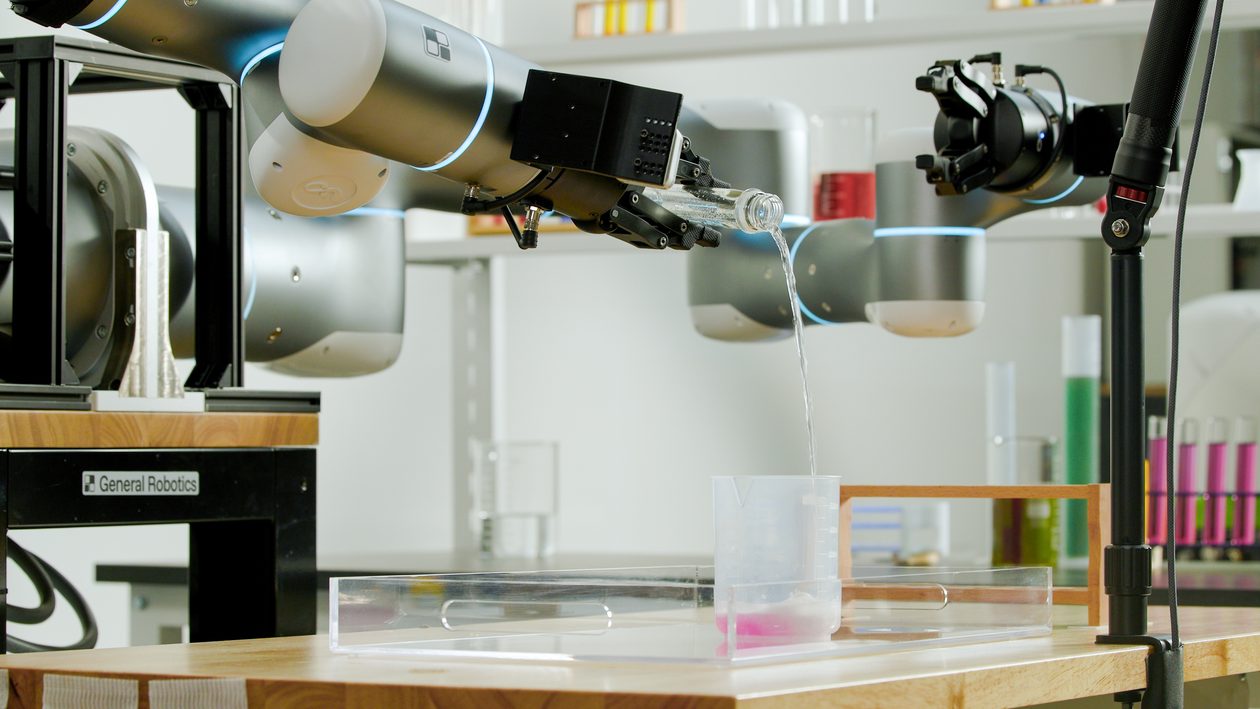
A robot arm pours from a test tube into a beaker in General Robotics’ lab. The company used the task, and progressively harder versions of it, to test its Auto Engineering system. (General Robotics Photo)
A Redmond, Wash., robotics software startup founded by former Microsoft researchers says its platform can now handle much of the work of getting a robot up and running in a factory, warehouse or other industrial setting, a job that used to take a team of engineers.
General Robotics said Wednesday that advances in GRID, its robot intelligence platform, have cut the process of onboarding a new robot from about a month to as little as two hours. The company calls the approach “Auto Engineering,” with each onboarded robot and diagnosed failure feeding back into the system and speeding up the next deployment.
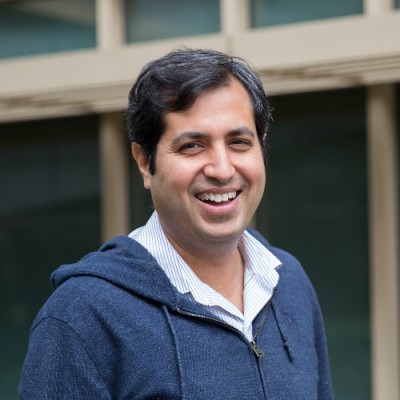
General Robotics CEO Ashish Kapoor.
“Before this moment, it would take us a team of experts to go and execute on behalf of our customers,” said General Robotics CEO and co-founder Ashish Kapoor in an interview. “Clearly non-scalable, clearly very expensive, and clearly will take a long time.”
With Auto Engineering, he said, “we can magnify and accelerate each engineer’s capability.”
Founded in 2023, the company has grown to about 50 employees, primarily engineers. It has raised nearly $34 million, most recently in an April round led by Construct Capital, with participation from Khosla Ventures, Accenture Ventures, Nvidia and Valo Ventures. PitchBook put the size of the round at $25 million; the companies didn’t disclose terms at the time.
Kapoor said General Robotics has roughly a dozen customers — large enterprises across manufacturing, logistics, energy and defense — and revenue in the millions of dollars.
Customers include HTX, the science and technology agency of Singapore’s Ministry of Home Affairs, which Kapoor said has been working with General Robotics for about a year and a half.
The company’s platform works with robot types including industrial arms, humanoids, quadrupeds, wheeled robots and drones, according to the company.
General Robotics is operating in a competitive and well-funded sector. Physical Intelligence, which builds foundation models for robots, has raised more than $2 billion. Nvidia — an investor in General Robotics, and the maker of the Isaac Sim simulation software built into GRID — is developing its own robot models and deployment tools.
Robot makers build good hardware, Kapoor said, but often lack the expertise to put it to work in a specific setting like a shipping terminal. “That last layer is missing.”
Before co-founding the company, Kapoor spent 17 years at Microsoft, ultimately as general manager of its autonomous systems and robotics research group in Redmond, where he created the open-source drone simulator AirSim. General Robotics co-founders Sai Vemprala (CTO) and Shuhang Chen came from the same Microsoft team.
GeekWire covered the launch in 2023, when it was Scaled Foundations and billed itself as “ChatGPT for robots.” It had five employees at the time, focused on aerial robotics and drones, with backing from Khosla and E14 Fund. It later renamed itself General Robotics.
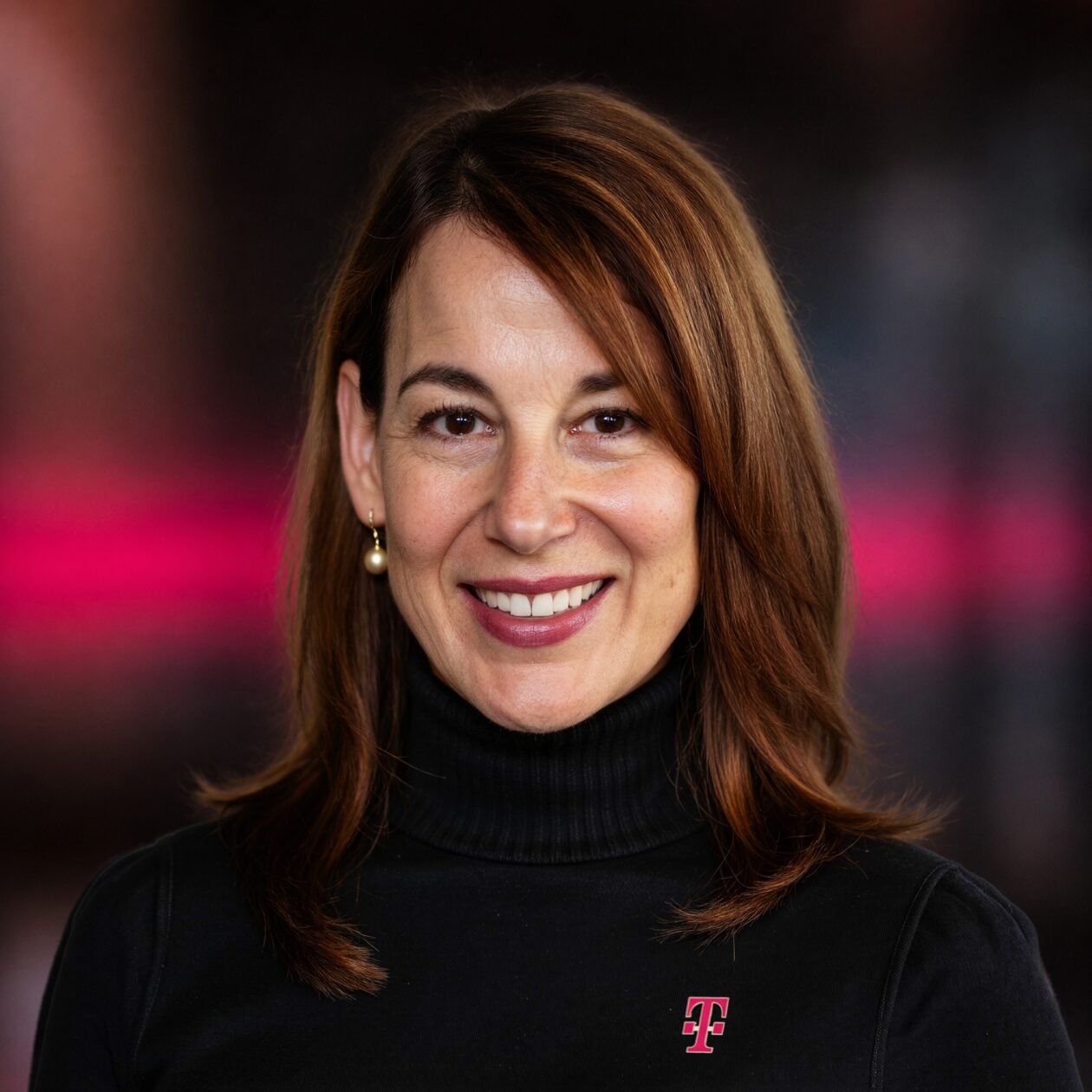
— Telecom giant T-Mobile announced that Jessica Uhl will join as chief financial officer-designate later this month, and succeed Peter Osvaldik as CFO in February. Uhl served as CFO of Shell and worked for the global oil and energy giant for more than 17 years. She joins T-Mobile from GE Vernova, where she was president.
“I am thrilled to welcome Jessica to T-Mobile,” Srini Gopalan, president and CEO of T-Mobile said in a statement. “She brings deep financial and strategic acumen, capital allocation expertise and an innovative growth mindset that is a perfect fit for T-Mobile’s next era.”
Osvaldik will transition to strategic advisor and retire from T-Mobile in July. He joined the company in 2016 and became chief financial officer in 2020. Osvaldik’s tenure “has been defined by disciplined financial stewardship, consistent financial outperformance, and an unwavering commitment to T-Mobile’s mission,” the company said.
The move marks the latest leadership shakeup at the Bellevue, Wash.-based company. Mike Katz, T-Mobile’s chief business and product officer, announced his departure in July, and Chris Sambar was named chief enterprise officer. T-Mobile has cut 470 jobs in its home state this year and closed numerous retail locations.
Brent Colburn. (LinkedIn Photo)
— Brent Colburn, Microsoft‘s vice president of global public affairs, is resigning after three years, effective mid-October.
“Stepping away from Microsoft is not a decision that I made lightly, but ultimately it is the right one for me and my family,” said Colburn, who has been commuting weekly between his home in Oakland, Calif., and Microsoft’s Redmond, Wash., headquarters.
Colburn’s career has spanned leadership roles in government, academia and philanthropy. That includes serving as principal advisor to the secretary of defense for communications and chief of staff to then-Secretary Shaun Donovan. More recent roles include communications vice president for the University of California in Oakland, Princeton University and the Chan Zuckerberg Initiative.
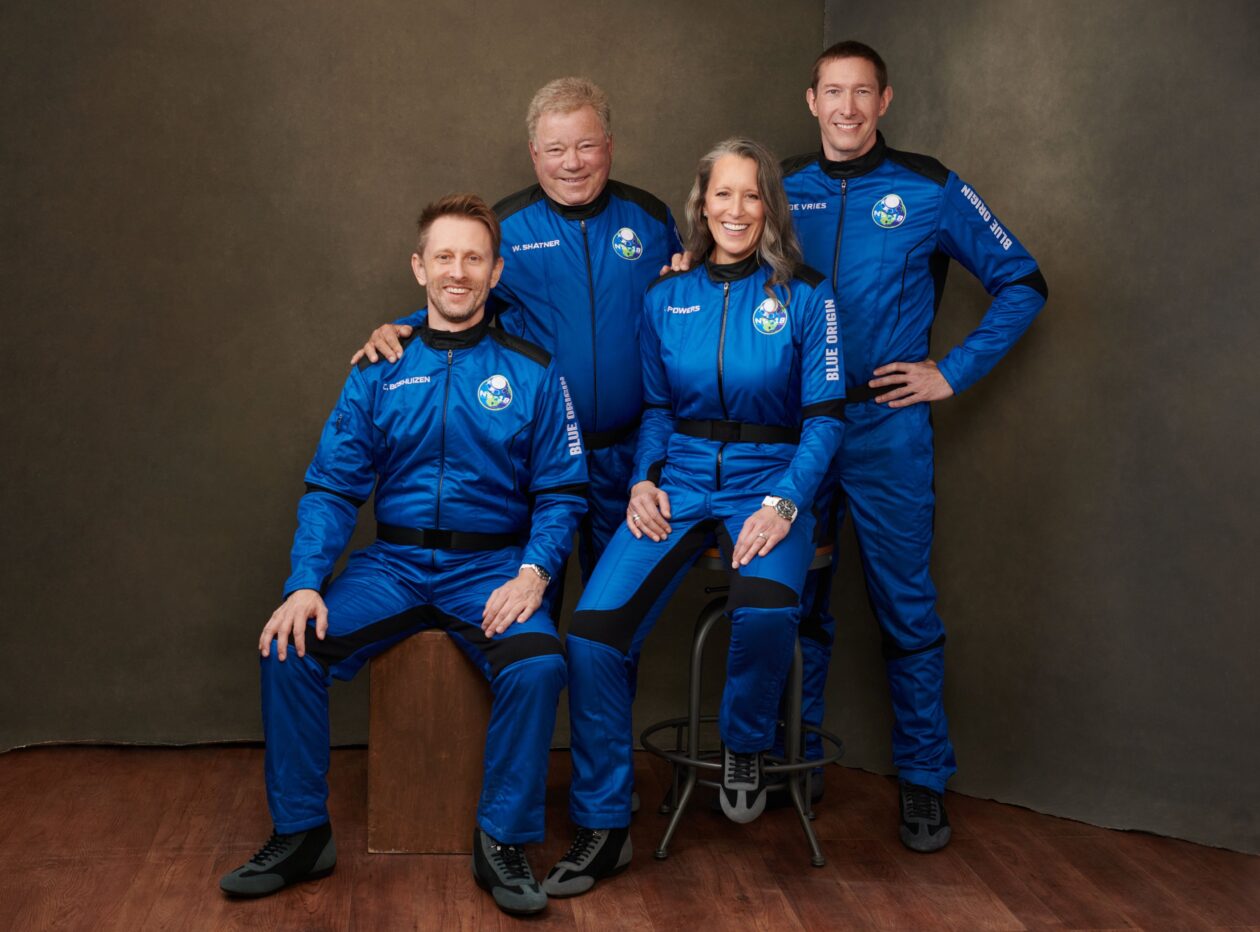
William Shatner stands alongside crewmates Chris Boshuizen (left), Audrey Powers and Glen de Vries. (Blue Origin Photo)
— After nearly 13 years, Audrey Powers has left Blue Origin, the aerospace company founded by Jeff Bezos that develops reusable rockets, spacecraft and rocket engines. She was on Blue Origin’s October 2021 spaceflight that also carried “Star Trek” star William Shatner and two others.
“Hopefully, I’ve helped change peoples’ impressions of rockets (they land, too), astronauts (they are everyone), and our Earth,” Powers said, adding that she was sad to leave, but grateful that she took a chance on “a little startup no one had heard of.”
Powers held the title of deputy and vice president of the New Shepard Business Unit, which is the program that carries people and research payloads into suborbital space. She is an attorney who has previously worked at NASA as a flight controller and as a senior systems engineer at Lockheed Martin.
Michael Levi. (LinkedIn Photo)
— Michael Levi has joined AZX as chief commercial officer of the Bellevue-based startup, which works with utilities and other industries to build in-house AI technologies supporting their missions.
Levi is based in San Francisco and was previously vice president of marketing and growth for KloudGin, where he helped reposition the company’s field service software into an AI-native platform for utilities and the public sector. He earlier founded L1CG, a go-to-market advisory, and has held leadership roles in energy, renewables, supply chain and fintech.
Jason Alafgani. (LinkedIn Photo)
— Jason Alafgani was named head of marketing for Caddi, a Seattle startup that launched out of AI2 Incubator and is automating basic business operations with generative AI. Alafgani is the co-founder of startups including the podcast company Jellypod and worked as marketing leader for Appwrite, Dodgeball, Mode and others.
— Dr. Amir Iravani has joined Los Angeles-based UCLA Health as director of the theranostics program, which focuses on treating cancer using targeted radiation therapy. Iravani previously served as theranostics clinical director at Fred Hutchinson Cancer Center in Seattle and was an associate professor of radiology at the University of Washington School of Medicine.
Kelly Lyons. (LinkedIn Photo)
— Portland Metro Region Innovation Hub has hired Kelly Lyonsas director of the organization, which provides networking, coaching, funding and other support to entrepreneurs. Lyons is the founder of two startups and has served in leadership at Core Education, Umpqua Bank and Development House, a social services nonprofit.
— DigiStor, a Vancouver, Wash.-based provider of secure data-at-rest protection solutions, appointed Michael Callahan to its board of directors. Callahan co-founded Awake Security and PolyServe, which was acquired by HP.
— Aneesh Raman has taken the role of chief economic opportunity officer at Microsoft. He previously held the same title at LinkedIn, a Microsoft subsidiary where he worked for five years.
The job is focused on “helping companies, including our own, build and deploy AI tools in ways that will unlock new levels of economic opportunity and human capability for workers and workforces alike,” Raman said.
Raman, who is based in San Francisco, began his career as a TV journalist and served as a speechwriter for President Obama and other political leaders. More recently he was an adviser to Gov. Gavin Newsom and led economic impact for Facebook.
Jenny Lay-Flurrie. (LinkedIn Photo)
— Jenny Lay-Flurrie was promoted to corporate vice president of Microsoft‘s Trusted Technology Group. In February, she had taken the role of vice president and head of Trusted Technology, which focuses on privacy, safety, regulatory compliance, responsible AI use and related topics.
Lay-Flurrie announced the change on LinkedIn, saying that she was “honoured, humbled and a little lost for words (yes,, it does occasionally happen ;)).”
The tech leader has been with Microsoft since 2005, and led the company’s efforts on accessibility and disability inclusion for more than a decade.
Brian Gill. (LinkedIn Photo)
— Brian Gillhas resigned as chief product and technology officer for DAT Freight & Analytics, a Beaverton, Ore.-based freight company. Gill was with DAT for more than three years and previously served as CPO for Nordstrom.
In a LinkedIn post, Gill did not give specifics on his next move but said he would be “rolling up my sleeves and building the many ideas that are suddenly so much easier to bring to life.”
Gill’s other past roles include executive positions at Hotwire and nearly a decade at Expedia. Last month DAT announced multiple promotions and hires to its leadership team.
Colin Newman. (LinkedIn Photo)
— Colin Newman has joined Zillow Group as head of public policy. He was previously director of U.S. public policy for Amazon, leading initiatives on employment, workforce transformation, AI, transportation and economic development. He first took a government affairs role with Amazon’s Audible business in 2015 and moved to Amazon five years ago.
“I look forward to leveraging my government, legal, and public policy experience to support our efforts to simplify and democratize the housing process for everyone,” Newman said. His background includes legal counsel for former New Jersey Gov. Chris Christie.
Lisa Finnegan. (LinkedIn Photo)
— Lisa Finnegan is returning to Microsoft as vice president and human resources business partner for the Europe, Middle East and Africa (EMEA) region. Finnegan, who is based in Dublin, was previously with LinkedIn for more than eight years, departing in March 2025. Her interim role was with Lumera HR Consulting.
“It’s a pretty incredible time to (re)join Microsoft and the opportunity to help shape the people and organisation agenda across EMEA at this critical moment is incredibly compelling,” she said.
James Lau. (LinkedIn Photo)
— James Lau, chief product officer at Hiya, announced this is his last week at the Seattle startup, which battles fraudulent calls and provides technology to protect voice identity. He’s been in the role for three years and previously worked at Microsoft over multiple stints.
Lau is launching a company called Entrovox, which he describes as an AI phone team that helps insurance agencies land new customers through state-of-the-art AI voice agents, branded caller ID and smart campaigns.
“There has never been a more exciting time for building, and I am deeply passionate about voice AI. Making AI sound genuinely human is a challenge I find irresistible,” Lau said.
Jason Wilbur. (LinkedIn Photo)
—Jason Wilbur has left Oracle to join OpenAI‘s Seattle office as a leader in cloud partnerships.
Wilbur was with Oracle over two stints spanning more than six years and leaves the role of senior director of product management. Past jobs include CEO at Aarno Labs, co-founder of Require Security, and senior product manager at Amazon.
— Julia Liuson was appointed to Elastic’s board of directors. Earlier this year, Liuson resigned from Microsoft after more than 34 years. She was most recently president of Microsoft’s Developer Division. San Francisco’s Elastic bills itself as the “search AI company.”
Dan Walter. (LinkedIn Photo)
— Dan Walter was promoted to vice president of fission technology for Everett, Wash.-based Zap Energy. Walter joined Zap earlier this year as the clean power startup announced it was expanding to pursue fission micro-reactors as well as fusion-based nuclear energy. Zap is No. 11 on the GeekWire 200, a ranked index of the Pacific Northwest’s top startups.
Walter was previously at TerraPower for nearly a decade, most recently in a director role for the nuclear power company.
Kelsey Wolf. (LinkedIn Photo)
— Kelsey Wolf has joined next-gen battery company Group14 Technologies as director of communications and marketing. Wolf was previously the communications lead for Rad Power Bikes, the Seattle-based e-bike startup that went bankrupt and was acquired this past spring. Group14 is No. 34 on the GeekWire 200.
“I’ve spent my career telling exciting stories about technology that changes how we work, how we find home, and how we move around the world. Up next, I will get to tell stories about the technology and materials powering our world,” she said.
New members of the Tin Can team, from left: Evan Jacobs, Quinn Hawkins and Masud Khan. (Tin Can Photos)
— Tin Can, a Seattle startup selling Wi-Fi-enabled landline phones for kids, announced three hires:
Evan Jacobs has joined as head of engineering, previously serving as a software development manager at Amazon Web Services. Jacobs is also a startup founder.
Quinn Hawkins was named head of communities, joining from First Street, where he was chief product officer. His background includes leadership at Redfin and Microsoft.
Masud Khan was named staff software engineer. Past employers include Apple, Databricks, Meta and Amazon.
Tin Can, which launched last year, is No. 153 on the GeekWire 200.
Alex Gamoran. (LinkedIn Photo)
— EchoMark, the Bellevue, Wash., startup using forensic watermarking to identify the source of information leaks, has named Alex Gamoran vice president of enterprise sales. Gamoran was previously at Smartsheet for nearly a decade, leaving as regional vice president of commercial sales for North America.
“It struck me that every security-conscious enterprise is going to need a solution to the types of information leaks that conventional security software is blind to — and that’s when I knew I wanted to be part of EchoMark,” Gamoran said via email.
Sara Dutta. (LinkedIn Photo)
— Sara Duttawas named director of AI innovation and partnerships for Seattle biopharmaceutical company Omeros. She previously founded the life sciences consultancy Ocilisni and was a director at Novo Nordisk, focused on external partnerships and emerging technologies.
Last year, Omeros struck a deal worth up to $2.1 billion with Novo Nordisk, giving the latter exclusive global rights to develop and commercialize a clinical-stage drug candidate that treats rare blood and kidney disorders. Omeros won Deal of the Year at this year’s GeekWire Awards.
Rebekah Bastian. (LinkedIn Photo)
— Rebekah Bastian announced that she is leaving mpathic as chief marketing officer. She joined the Bellevue, Wash., startup working to make AI safe in December. Bastian previously launched and was CEO of the life-and-career social platform OwnTrail. She was with Zillow Group for more than 14 years and also worked at GlowForge.
“I’m giving myself some intentional time to explore ideas and let them incubate before deciding where they lead,” she said. That could include new companies or initiatives within existing companies, and her areas of focus span “human agency, creative entrepreneurship, economic opportunity, and generally how humans find meaning and thrive in the age of AI.”
— Seattle-area wine recommendation startup Theodora has appointed Heather Stephens founding marketing lead. Stephens has worked for more than a decade in consumer and B2B marketing, demand generation, and go-to-market strategy development.
— Marc Brown, former global head of M&A and strategic investments at Microsoft and now managing director of venture capital coverage at JPMorgan, has joined the board of trustees of the Institute for Citizens & Scholars, an organization supporting civic engagement for young people.
— Adrienne Lopez, a Seattle-based marketing leader who has worked on initiatives with organizations including Meta, WhatsApp, the Gates Foundation and Microsoft, was named executive vice president of WH Inc.
— Washington Research Foundation announced its new cohort of venture analysts: Jessica Ayers, Ankit Azad, Nello Gu, Michael Malone and Elya Shamskhou. The program helps graduate students and postdoctoral fellows gain expertise in technology commercialization and entrepreneurship.
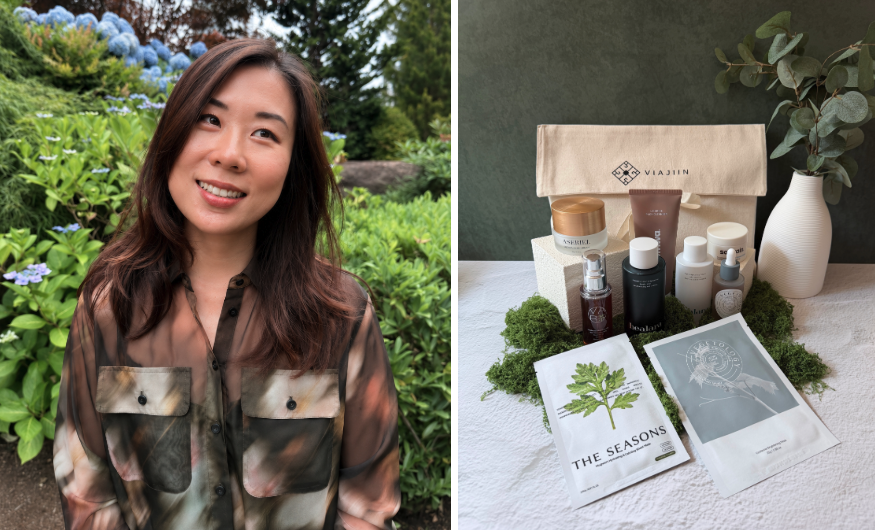
Agnes Kim, founder of ViaJiin, a Korean-sourced beauty supply startup based in the Seattle area, with some of the skincare products that her new company offers. (ViaJiin Photos)
Long before the July email arrived confirming she was one of thousands of Xbox employees laid off in Microsoft’s latest round of job cuts, Agnes Kim could feel the impending doom hanging over big tech.
But instead of waiting around for the next pendulum swing, the eight-year Xbox veteran spent her nights and weekends laying the groundwork for a very different kind of reboot: a boutique Korean skincare startup called ViaJiin.
The pivot from big tech and gaming to startups and beauty is an illustration in how preparation can help a laid off worker upend the usual five stages of grief that come before figuring out what to do next. Kim skipped straight to acceptance — announcing her new venture on LinkedIn just two days after getting her pink slip from Microsoft.
Kim joined the tech giant in 2018 after roles at Sony Pictures Entertainment and Deloitte Consulting, eventually rising to director leading Xbox’s market expansion in Asia. For years, she thrived in the role, building teams and expanding the gaming footprint in regions close to her roots. But as post-pandemic gaming demand normalized, the environment shifted from ambitious growth to what felt like a cycle of corporate survival.
Starting in early 2023, layoffs began rolling through the company every six months. Seeing the predictable pattern take its toll on team morale, Kim realized she couldn’t rely on long-term corporate stability to fulfill her goal of becoming an entrepreneur.
“You have a sense of impending doom,” Kim recalled. “There’s a shadow lurking. I felt like every six months we were waiting for the next round. I just didn’t feel like I was in an upswing anymore.”
Determined to take control of her timeline, she began tinkering with her business concept in late 2025, officially forming an LLC for ViaJiin in March 2026 and running focus groups by May — all while balancing her full-time executive role. When the July cuts finally hit Xbox, eliminating 1,600 jobs, Kim had already built six months of momentum.
Kim’s connection to skincare is deeply personal, rooted in her childhood spent living in South Korea from ages eight to 15. She grew up watching her mother religiously follow a multi-step routine and stress the daily necessity of sunscreen — a reflection of a culture where maintaining a youthful appearance carries immense social expectation.
That intense domestic demand has birthed a fiercely competitive market of over 30,000 brands, driving rapid scientific innovation. It has also turned South Korea into a global beauty powerhouse, with cosmetics exports surging past $10 billion as the U.S. recently surpassed China as the top destination for Korean beauty products.
Agnes Kim, second from left, with guests checking out ViaJiin’s skincare products at an event in Bellevue. (ViaJiin Photo)
ViaJiin aims to solve the overwhelming paralysis that American consumers face when trying to navigate the K-beauty market. Instead of building a massive retail catalog or pushing complicated 12-step routines, Kim simplifies the process into a streamlined four-product kit — cleanser, toner, serum, and cream — curated through a digital skin quiz. And she bypasses mainstream brands sold at big-box retailers to source exclusively from boutique Korean makers.
“The products I carry, you can only get through me,” Kim said. “I find boutique products that are filled with good ingredients, come to the U.S. compliantly, and turn it into a kit.”
ViaJiin’s full kits sell for $179, while smaller duo sets are priced at $99. Since shipping her first orders in August, Kim has been hand-packing boxes herself with personalized touches, building early traction online while hosting small, local events like “ViaJiin Nights” to let clients test products in person. The kits have also secured retail shelf space at K-Beauty & Skin in Renton, Wash., where Kim lives.
Kim’s transition from managing corporate teams to operating as a solo founder has meant trading human delegation for AI assistance.
Toward the end of her tenure at Microsoft, every conversation and initiative was dominated by a relentless push toward AI. Kim is now embracing those tools to execute work that would typically require a suite of employees or contractors.
She’s relied on Anthropic’s Claude as a virtual strategist and used platforms like Lovable to try her hand at “vibe coding” — the trend of using conversational natural-language prompts to generate functional software code — building out ViaJiin’s website and skin quiz without hiring a developer.
“I don’t have a co-founder… I’m delegating to Claude and GPT,” Kim said. “People are very surprised by my website or the skin quiz. I’m not an engineer, but it looks like I hired a web designer.”
While AI can handle code and logistics prompts, Kim quickly found that software can only go so far when running a physical inventory business. Between navigating complex U.S. FDA labeling regulations, managing customs paperwork, and verifying ingredient compliance, the operational heavy lifting remains resolutely analog.
And the shift from corporate structure to total solitary accountability is daunting at times.
Without a team to delegate to or a clear roadmap of objectives and key results, Kim admits there are moments where the freedom of entrepreneurship gives way to self-doubt.
“I think I understand why some people just work for the man,” Kim joked. “When you work for Microsoft, certainty and structure are more there. There are definitely moments where I’m like, ‘What the f*ck am I doing? What is today’s goal?'”
Still, Kim has no interest in turning back. Energized by the daily hustle and the creative control of building something from scratch, she insists she wouldn’t trade the experience for her old corporate desk. She hopes to grow ViaJiin into a household national brand while staying out of big tech for as long as she can.
“I’m 1,000% energized. I absolutely would not trade it,” Kim said. “This is allowing me to be truly the version of Agnes that I thought I would be when I was 12, and I want to keep going at it.”
Marc Whitten, the new president and CEO of Dolby Laboratories. (Dolby Photo)
— Marc Whitten, a former Microsoft and Amazon executive, was named president and CEO of San Francisco-based Dolby Laboratories. He succeeds Kevin Yeaman, who is retiring after leading the entertainment technology company for nearly 20 years.
Whitten spent 17 years at Microsoft, rising to corporate vice president and chief product officer for Xbox. He went on to serve as chief product officer at Sonos before joining Amazon as vice president of entertainment devices and services, overseeing products including Alexa, Kindle and Fire TV.
He later served as president of Unity Create and CEO of Cruise. Most recently, he was vice president of robotics at Meta.
Dr. Lawrence Fong was named senior vice president and director of the Translational Science and Therapeutics Division, effective Dec. 1. He succeeds Dr. Geoff Hill, who is departing the organization in December.
Fong joined Fred Hutch in 2024 as scientific director of the Immunotherapy Integrated Research Center and Bezos Family Distinguished Scholar in Immunotherapy. He previously founded the Cancer Immunotherapy Program at the University of California, San Francisco.
Dr. Andrew Hsieh. (Fred Hutch Photo)
Dr. Andrew Hsieh, the associate director of the Fred Hutch Human Biology Division, was named the inaugural Larry and Virginia Gordon Endowed Chair in Prostate and Bladder Cancer Research. Hsieh is a physician-scientist at Fred Hutch specializing in genitourinary cancers.
— Two recent notable Microsoft AI-related exits:
Andréa Mallardis leaving her role as chief marketing officer of Microsoft AI after joining from Pinterest in January, according to Business Insider. She will stay on as an advisor until early next year. Mallard, who is based in the San Francisco Bay Area, previously served as global chief marketing officer at Pinterest for eight years.
Ece Kamar departed Microsoft Research after 16 years with the company. She was corporate vice president and managing director of the AI Frontiers Lab, where she worked on small language models and the company’s agentic AI stack. She has not announced her next role.
Poppy MacDonald. (File Photo)
— Poppy MacDonald was named president of NationSwell, a social impact membership organization. MacDonald previously served as president of USAFacts, the nonpartisan civic data initiative founded by former Microsoft CEO Steve Ballmer, for seven years. A past recipient of an Uncommon Thinkers award from GeekWire and Greater Seattle Partners, she is also the former president and COO of POLITICO.
— Jeff Buhrman joined Seattle startup Tin Canas head of finance. The company is building a screen-free, WiFi-enabled phone designed to let kids connect with friends and family. Buhrman previously served as CFO of Seattle-based Sleep Doctor for more than four years.
— Susan Loosmore was confirmed to the Major League Baseball Stadium Public Facilities District board, which oversees T-Mobile Park. The King County Council approved the appointment Aug. 25. Loosmore spent more than 17 years in executive leadership at T-Mobile and previously served as chair of the Seattle Metropolitan Chamber of Commerce.
Musierowicz, who is based in Atlanta, previously served as chief revenue officer at SmartBear and Keyfactor. Earlier, he led global channels and alliances at Atlassian through its IPO.
Packham, who is based in Salt Lake City, Utah, joins from Dragos, where he was CMO. He previously served as executive vice president of marketing at DigiCert.
— Vancouver, B.C.-based Integrated Quantum Technologies, an enterprise AI infrastructure company, appointedHusam Fezzani as CEO. He succeeds Alan Guibord, who moved to chairman. Fezzani spent nearly 30 years at HSBC, where he held senior technology and engineering leadership roles including global engineering head for the bank’s Commercial Technology Division.
Ali Farhadi, now a Microsoft corporate vice president of AI, at a Technology Alliance event in May 2024. (GeekWire File Photo)
GeekWire is profiling over the next few weeks some of the people and teams that are shaping the evolution of Microsoft in what we’re calling its “Microsoft 2.5” era.
From AI Frontier Lab to Frontier Ecosystem: Microsoft got a foothold in AI thanks largely to its partnership with OpenAI. But that’s not the way it is planning to continue growing its AI business.
Inside Microsoft AI (MAI), the Microsoft Superintelligence team is focused almost entirely on building its own frontier-level models. That team already has developed a handful of home-grown offerings, including MAI-Code-Flash for writing code faster; MAI-Cyber-Flash, a cybersecurity model; and MAI-Image, a model for creating images.
The head of the Superintelligence team is Ali Farhadi, corporate vice president of AI. Farhadi, who joined Microsoft five months ago, is also a professor at the University of Washington, where he has worked for nearly 15 years. He was previously CEO of the Allen Institute for AI (Ai2) and before that was an AI and machine learning leader at Apple for more than three years, after it acquired his startup, Xnor.ai.
When he joined Microsoft, Farhadi said in a LinkedIn post that he believed “Microsoft has all the pieces to win in this AI race: data, search, coding, infrastructure, agents, software and the world’s biggest Fortune 500 companies taking dependencies on Microsoft every day.”
Farhadi elaborated on that in an interview with GeekWire this week. AI is shifting from a “Frontier Lab” era to a “Frontier Ecosystem” era, he said. It’s no longer just about training models; it’s about integrating the models with enterprise data, platforms, distribution systems and customers in a trusted way.
The next battlegrounds in AI will be around cost, reliability, specialization, and deployment at scale, rather than simply building larger models that beat others in benchmark scores, he said.
“If you look around, there are not that many places to have all these missing pieces together at scale, especially if you add the element of trust to it,” Farhadi said.
Cutting through the AI noise: Farhadi said his management philosophy is grounded in the importance of personal relationships, which are especially key in big organizations. People need to understand your rationale and to trust you can deliver on what you’re tasked to do, he said — an approach that has served him inside both Microsoft and Apple.
Staying on top of the flow of information while filtering out the AI noise makes prioritizing crucial. The team has “a long list of things that we believe we should be doing,” he said, but much of it stays on the back burner to maintain a “laser focus on delivering on the main mission.”
The priority is building high-quality models, both generalist and domain-specific. On the domain-specific front, Microsoft is working with the Mayo Clinic on a healthcare-specific model based on Mayo’s own clinical data, as well as Microsoft’s cybersecurity and coding models.
The thinking: For a lot of enterprise work, a narrower model beats a bigger one.
“If you can do something at [the same] quality or better quality at a fraction of a cost, it’s just a no-brainer. And having a way to specialize to domains, to industries, to enterprises is one way,” he said.
Microsoft execs have referred to this approach as a “hill-climbing machine,” meaning the ability of a model to scale and continuously improve within a specific domain. Microsoft is coupling the hill-climbing with “frontier tuning,” like it is doing with the Mayo Clinic. Frontier tuning includes customizing frontier models; keeping proprietary data private, preserving institutional know-how; and avoiding leaking intellectual property (IP) into shared models.
“We all thought that IP is your data,” Farhadi said. “But we learned that IP is also how you work.” And that’s why safeguarding these elements is so crucial.
Open all the things? Farhadi led an expansion of open-source AI development at Ai2, the Seattle-based institute founded in 2014 by the late Microsoft co-founder Paul Allen. While Microsoft has contributed to the open-source community on various fronts, including AI tooling, it hasn’t open-sourced its frontier models.
Farhadi said he personally remains “a big advocate of open source,” but noted that the industry has changed since his Ai2 days as there are now more credible Western open-source models and businesses forming around them.
He didn’t rule out Microsoft doing something in open-source models, or the somewhat less-open “open weights” area, but there’s seemingly nothing happening on that front in the near term.
In the coming months and beyond, the focus of Farhadi’s team is helping Microsoft turn into a Frontier Ecosystem by building cutting-edge AI capabilities; helping enterprises create their own tuned versions of them; continuously improving models; and making sure customers keep control of their own destinies and data.
Success for Microsoft’s Superintelligence team has nothing to do with the idea of Artificial General Intelligence (AGI) which OpenAI, Anthropic and others have positioned as their ultimate goal over the years. In fact, when I asked Farhadi about AGI, he said, “I don’t understand what that means.”
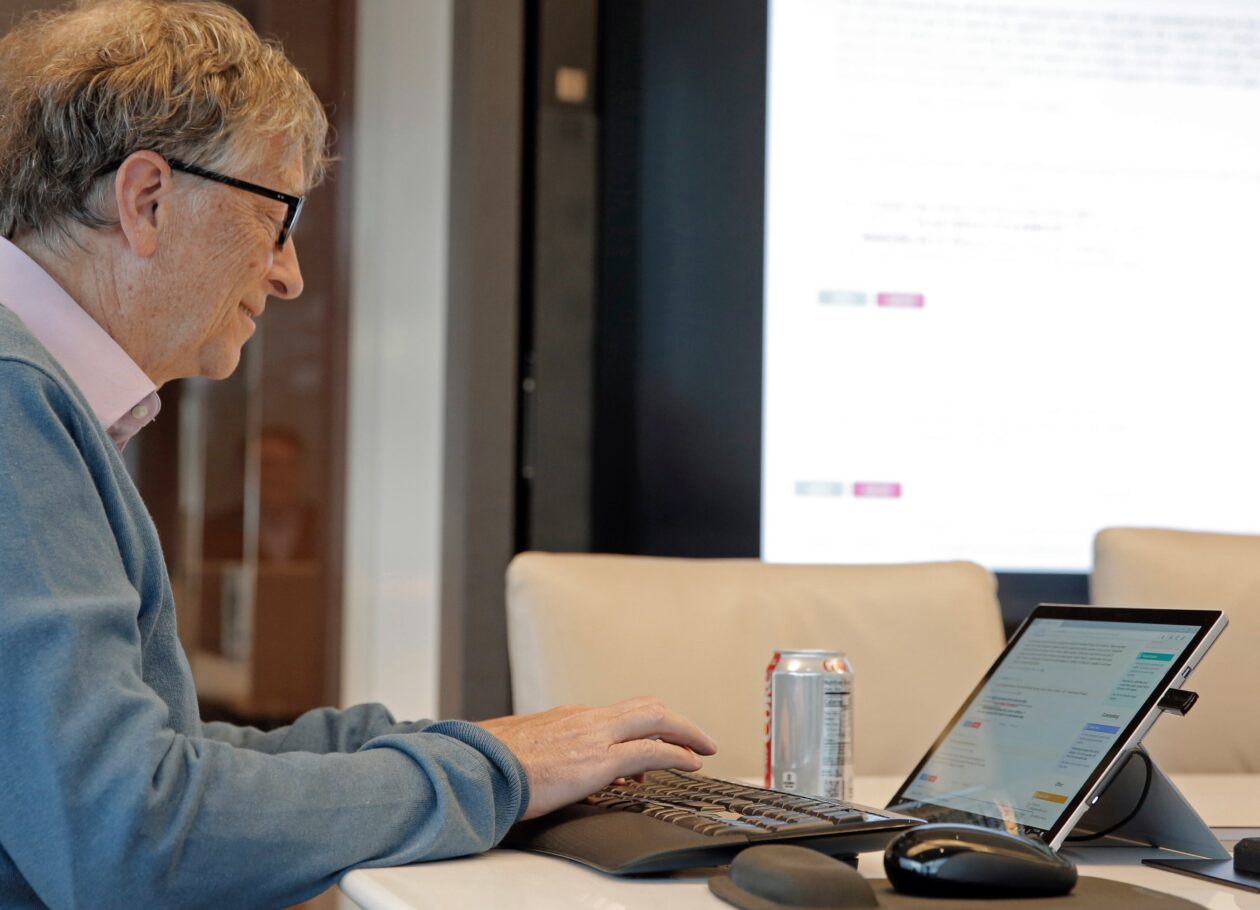
Bill Gates at the keyboard in a 2018 file photo. (Gates Notes Photo)
Bill Gates is legendary, bordering on notorious, for his late-night emails — missives to colleagues with piercing questions about Java back in the day, or malaria these days, or whatever esoteric topic he happens to seize upon at any given moment.
But increasingly, he is sending these messages to AI, not to people. He’ll bounce something off Claude, get ChatGPT to weigh in, and insert himself in the middle.
He described the pattern in an interview with GeekWire: “It’s 3 a.m., I want to understand sodium batteries. Now, there’s no reason to go to sleep. Here we go! Yeah, it’s crazy.”
If you’re a curious person, he said, “this is a mind-blowing time.”
In terms of productivity, he added, “we are in heaven.”
All of which might be predictable. This is Bill Gates, after all. Now 70 years old, he has spent more than five decades impatient for the future to arrive — making the case that innovation, on the whole, will ultimately put humanity and the world in a better place.
So here’s the surprise twist: He’s now deeply concerned about where technology is headed, how fast it’s progressing, and how little the world is doing to get ready.
In a new essay, Gates says the “turbulent AI era” has arrived, with technology threatening to erase categories of jobs, supercharge fraud and deepfakes, lower the bar for cyberattacks on critical infrastructure, make it easier to engineer a deadly new disease, let governments kill without humans involved in the decision, and fundamentally change how kids grow up.
If someone came up with a credible plan to slow the pace of AI globally, he writes, he’d likely support it. But he doesn’t expect one. The geopolitical and economic forces are too much.
He says that the world needs to take action, and offers three ideas to start:
Build new institutions, at home and globally. No existing agency was designed for a technology that touches jobs, security, health, energy and elections all at once, he writes.
Gates calls for new national bodies that can set priorities across agencies, plus a new international organization modeled on nuclear weapons inspections, aviation rules and the ozone treaties.
Set aside jobs for humans. Gates calls this “Human Reserved”: work that machines will be fully capable of doing, but that we decide to keep for people anyway. The model is a nature reserve — land where we could build roads and buildings, but choose not to, because the loss would be too great.
One example: a robot delivering the news that you have an incurable disease. “There’s no technical reason why it couldn’t,” he writes. “Yet it shouldn’t.”
The idea came in part from watching the caregivers who looked after his father through Alzheimer’s, work he describes as “irreplaceably human.”
Tax AI tokens and robots. Today a company that hires a worker pays payroll taxes, while a company that buys a robot deducts the cost. Gates says that gives employers a reason to replace people. He’s calling for a tax on AI to change the incentives and help pay for retraining.
He first floated a robot tax nine years ago, but the idea was widely dismissed. He’s still for it. He acknowledges that it isn’t economically efficient, but says that with innovation accelerating, we can afford a little inefficiency as the price of keeping people employed.
Gates is candid that he doesn’t have all the answers, particularly on the proposal for “Human Reserved” jobs. Who decides what gets reserved, and by what criteria? How do you keep companies from using robots in the jobs that are supposed to stay human?
These, he writes, “will need to be worked out in public.”
In the meantime, he’s working it out with Claude. Gates said he has talked the idea through with the chatbot, thinking through different ways to get the share of work reserved for humans up to 40%, using shorter workdays and earlier retirement to spread what’s left around.
Crossing the threshold
In the GeekWire interview, Gates said the essay came out of a specific realization: the AI industry is blowing past its own warning signs, one after another, and almost nobody is saying so out loud.
For years, he said, people in AI described certain moments as dangerous points where the industry would stop and think hard before going further: making it easier to build a bioweapon, making it easier to launch a cyberattack, building machines people become emotionally dependent on, wiping out large numbers of jobs, and losing control of the technology itself.
“We’re in the process of crossing every single one of those thresholds,” he said.
Meanwhile, nobody in the industry wants to be first to step on the brakes. “Most people you talk to will say, yeah, well, if everybody else would slow down, maybe I would, too,” he said.
Gates said one way out of that standoff is for governments to step in.
His example: any AI model capable of designing new molecules — the capability that would let someone engineer a new disease — should be monitored. The monitoring would be mandatory rather than voluntary, and it would cover free models as well as commercial ones. It would also have to be written so a company can’t copy the model elsewhere and strip the monitoring out.
“To me, that’s kind of like common sense,” he said. “But we don’t see a specific proposal to do that.”
‘The whole thing seems so empty to me’
Under an executive order signed by President Trump in June, AI companies are asked to submit their most powerful models for government testing up to 30 days before release. The order specifically bars the program from becoming a licensing or preclearance requirement. The White House finalized the framework in early August.
Gates said he doesn’t get it.
“What is the threshold that’s being examined, and what is the action taken when you cross that threshold?” he said. “The whole thing seems so empty to me.”
If the world can’t take these basic steps, he said, “I really am going to throw up my hands.”
If the process stays voluntary, with no line and no consequence for crossing it, “we’re going to look back on this as a kind of eye-of-the-storm type moment,” he said.
Asked if he had taken his proposals to the Trump administration or to other heads of state, Gates said with a bemused tone, “Well, you could tell me who at the White House I should be talking to about this.” He said he hopes the essay reaches people in Congress and in the executive branch.
He said the public argument among AI companies over whether the risks are real is beside the point, because privately the people running them already agree. “I know they’re all worried,” he said, “or all of them that I know, which is basically everybody but Elon.”
People inside AI companies who acknowledge the downsides, Gates said, get told: “Hey, you’re hurting our PR while we’re trying to raise trillions of dollars.”
Gates said he previously expected losing control of AI to be a distant problem, something to worry about “many years from now.” He’s no longer convinced that’s the case.
He referenced an Aug. 11 episode of the Dwarkesh Patel podcast featuring Ryan Greenblatt, chief scientist at the AI safety group Redwood Research. Greenblatt said that as AI systems get more capable, the people building them understand less and less about what is happening inside, and that sufficiently advanced models could end up working against their creators.
“These are people who are super expert on the thing, going, well, maybe we won’t be able to control these things,” Gates said. “I mean, what kind of risk have we chosen to run here?”
In the poorest countries, he expects AI to do more good than harm. In the countries where the Gates Foundation works, doctors, teachers and farm advisors are all in short supply. AI can help fill those gaps. The foundation will lay out that work at its Goalkeepers event next month, including an effort to make AI models work as well in African languages as they do in English.
The job losses, he added, will hit rich countries first.
It’s the first big wave of new attention on the Microsoft co-founder and Gates Foundation chair since he answered lawmakers’ questions in the Jeffrey Epstein investigation on June 10, sitting for a nearly six-hour voluntary interview with the House Oversight Committee.
Gates, who has not been accused of any wrongdoing, was asked by Axios whether he’s concerned that the Epstein issue could undercut his message. According to the site, he compared this to earlier situations when personal and professional challenges diminished his ability to speak out on key subjects: during the Microsoft antitrust trial, and his divorce from Melinda French Gates.
The AI Road Ahead
For all of this, Gates is still thinking about how technology will change human life and productivity, in many ways for the better on an individual level.
A key step, he said, will be establishing broad-based persistent memory for AI agents across contexts. For now, AI still doesn’t know you like a human assistant who’s familiar with your relationships and how you think about your time.
Gates sees the role of apps changing in the future. Instead of bouncing between different pieces of software, he said, AI will increasingly be the primary interface. “You won’t go to those applications,” he said. “You’ll just go to your personal agent.”
He also sees AI continuing to transform shopping, to an extreme: “We will get to a point where you won’t buy things yourself. You just won’t.” Telling the agent to help you buy something, “it’ll consider so many more things, and it’ll make it so much easier for you to do it.”
Asked whether he is still an optimist, Gates didn’t answer directly. “I don’t think being pessimistic is helpful,” he said.
“I do think, wow, this is sure an interesting time. I’m the guy who in my 30s thought people in their 50s or 60s didn’t understand anything.” He called it “kind of bizarre” that he would be delivering a message like this at 70.
“But I am very concerned. And honestly, when you get people one-on-one, so are they.”
One of the video game studios impacted by Xbox’s layoffs in July has successfully reclaimed its independence, as well as control over its intellectual property.
Compulsion Games, headquartered in Montreal, was founded as an independent studio in 2009 and acquired by Xbox in 2018. Its one release as a member of the Xbox Games Studio network was 2025’s South of Midnight, an action/adventure game set in a magical Deep South.
In July, Microsoft announced the first wave of a planned 3,200 job cuts throughout its Xbox department, alongside plans to spin out or shut down five of its studios. Compulsion Games was one of those five, alongside Double Fine Productions (Psychonauts), Ninja Theory (Hellblade), Undead Labs (State of Decay), and Arkane Studios (Deathloop, Dishonored).
Subsequently, on Aug. 20, Compulsion CEO Guillaume Provost revealed in an interview with GamesBeat’s Dean Takahashi that Compulsion’s management had successfully reacquired the studio, its staff, and the South of Midnight IP on Aug. 11.
South of Midnight is still available via its previous storefronts, including Steam and the PlayStation Network, but is currently self-published by Compulsion.
Provost told GamesBeat that no layoffs had been made at Compulsion as it transitioned to independence, and most of the team elected to stay together.
As for the other studios affected by Xbox’s July 6 layoffs:
Double Fine Productions, headquartered in San Francisco, confirmed on July 28 that it had laid off 23 employees to return the studio to a “sustainable size.” It is once again fully independent and has control of its IP, such as Psychonauts, and will be exhibiting in Seattle on Labor Day weekend as part of the Penny Arcade Expo.
Ninja Theory, from Cambridge, England, was one of the more unexpected shutdowns, as it had debuted Senua, a third entry in its Hellblade series, only a few days before the layoffs announcement. It has reportedly been spun off from Microsoft and will continue work on Senua under an unspecified new owner.
Likewise, Seattle’s Undead Labs is currently under unidentified new ownership and still plans to release the long-anticipated third entry in its zombie survival series State of Decay at some point next year.
Finally, Arkane’s status has yet to be firmly established. It formerly consisted of two studios, in Austin, Texas and Lyon, France, but its Austin office was closed down as part of a wholly separate wave of Xbox layoffs in May 2024. Several of the affected employees in Texas, including former studio head Harvey Smith, announced on Aug. 19 that they’d founded a new company, Black Pony Immersive, with plans to create new games in the same “immersive sim” subgenre as Dishonored.
Xbox is currently exhibiting at the Gamescom conference in Cologne, Germany.
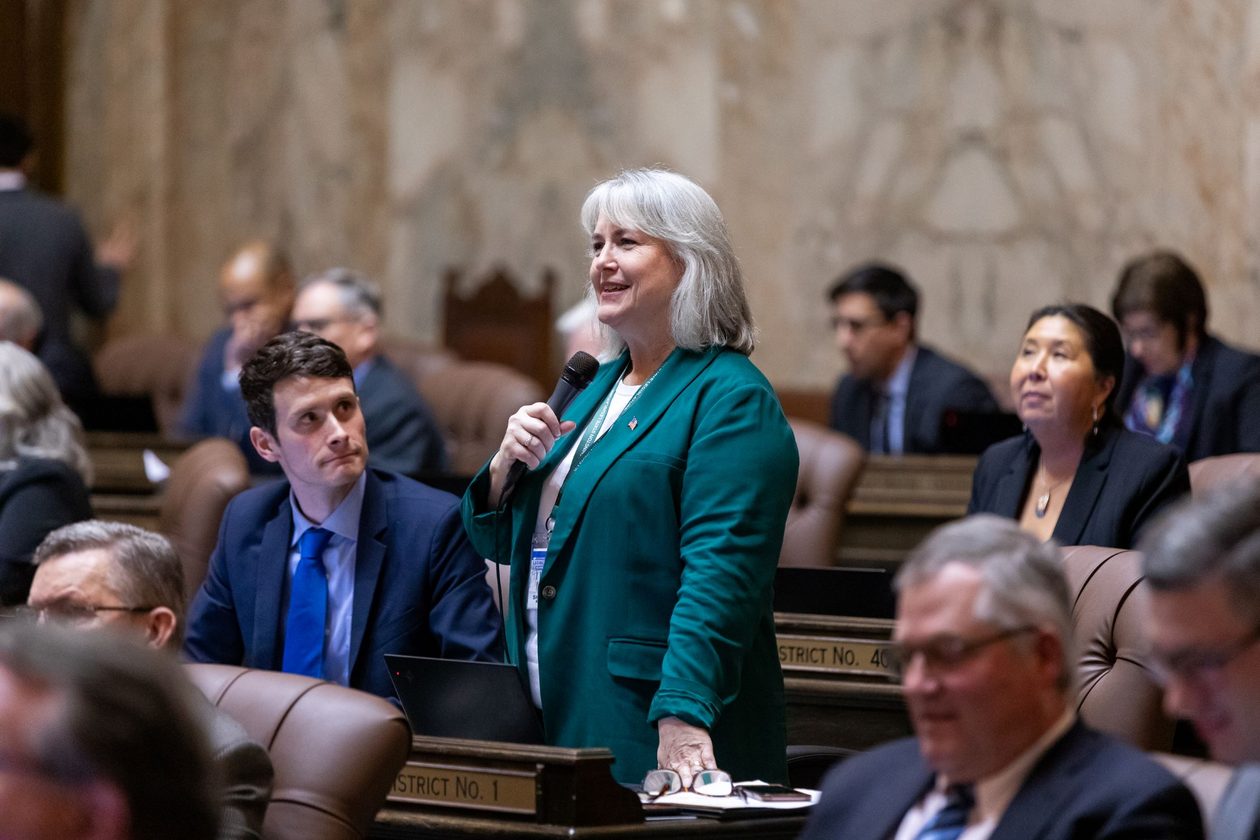
Rep. Shelley Kloba, D-Kirkland, has introduced a privacy bill in the Legislature every year since 2021, none of which has reached the House floor due to disagreements over whether consumers should be able to sue. (Washington House Democrats Photo)
More than 20 states have now passed the “Washington model” of privacy legislation. Washington state hasn’t.
In the years since then-state Sen. Reuven Carlyle introduced the Washington State Privacy Act in 2019, the blueprint has been adopted across the country, mandating that companies get the consent of consumers before collecting sensitive personal data, and providing consumers with the right to correct and delete their details in those databases.
In its home state, the bill stalled in negotiations between the House and Senate two years in a row. Every year since, a comprehensive privacy bill has been introduced in the Washington state Legislature but has failed to pass.
Washington state Attorney General Nick Brown released his office’s first data privacy report Aug. 14, calling on lawmakers to pass a privacy law that would limit how much personal information companies can collect and keep in the first place.
But that proposal will face the same hurdle that has blocked efforts to pass a state privacy law for seven years: a fight over whether consumers should be able to sue companies that violate it.
Washington AG Nick Brown
“The attorney general supports greater data privacy protections for Washingtonians,” said Mike Faulk, a spokesperson for the AG’s office. “In our experience, this has proven to be a difficult subject for the Legislature to build consensus on.”
Experts say the stakes are rising as AI systems train on personal data that often falls outside Washington’s existing privacy protections. Without a baseline privacy law, they say, lawmakers also have less to build on when they try to regulate AI itself.
Rethinking privacy
AI has rendered some parts of the Washington model moot, while making others more necessary than ever, according to policy experts.
As states have begun to pass the first AI regulations, one of the highest priorities has been the regulation of AI-based high-risk decisions.
In Washington, for example, the state Legislature passed the Prior Authorization Transparency Act, which bars health insurers from using AI as the only basis to deny, delay or modify care. Washington state lawmakers also considered a bill to regulate the use of AI to make decisions of financial, educational, or legal consequence.
This is proving to be a much easier lift in states that passed the “Washington model,” often years before the current AI craze. That’s because Carlyle’s bill happened to include what’s now known as an automated decision-making technology (ADMT) opt-out clause, which granted residents the right to opt out of automated profiling when used for “legal or similarly significant effects.”
Algorithmic wage and price determinations, as well as AI-based healthcare and employment technologies, could be regulated under the pre-existing privacy act, or by tweaking those laws.
“The states that have passed automated decision making laws have done so on top of existing privacy laws,” said Cobun Zweifel-Keegan, a managing director at the International Association of Privacy Professionals (IAPP). “There’s already restrictions, or at least the beginnings of restrictions, on automated decision making baked into these privacy laws. It’s a natural model to build on top of.”
Meanwhile, AI has made it more dangerous to go without a privacy law, because an absence of privacy legislation means more personal data online for AI models to access, said Kara Williams, counsel at the Electronic Privacy Information Center.
Williams said data minimization could prevent or limit companies from repurposing personal data to train AI systems.
“It goes back to using the data for the purpose you collected it for,” Williams said. “Almost all of the data that companies have used to train AI systems or develop the algorithms that led to this moment were not collected for the purpose of training AI systems.”
Data minimization requires companies to restrict the collection and use of customer data to the service the customer requested. That often precludes secondary uses like selling it to a data broker.
The Washington attorney general’s privacy report also endorsed a data minimization standard, which the original Washington model does not include.
Carlyle said he might have written one in, if he were drafting the bill today.
“We live in an AI world with a giant vacuum in the sky, sucking up every ounce of data that exists on a person,” Carlyle said. “So I think the concept [of data minimization] makes some sense.”
Meanwhile, experts say AI makes some elements of the Washington model irrelevant.
Zweifel-Keegan of IAPP said those elements include the right to control, correct, and delete personal data, which was the bread and butter of Carlyle’s bill. Because LLMs are a weighted map of associated words, there is no straightforward way to selectively delete or change information once a model has been trained.
“That’s just fundamentally how LLMs work. They’re not a table where you can go to my name and see all the other records that are associated with me,” Zweifel-Keegan said. “You can’t go in and selectively delete information.”
While states around the country that have passed the Washington model are now seeking to revise its provisions to meet the AI moment, Washington state has no comprehensive privacy law to start with.
“AI is making us rethink some of our foundational expectations of what a privacy law does,” Zweifel-Keegan said. “Washington could be the place where that happens.”
The story of the “Washington model”
In 2019, when now-retired State Sen. Carlyle introduced the Washington State Privacy Act, it passed the Senate 46-1 before dying in the House. One year later, it passed both chambers but died after a long and heated fight in conference.
Some say the bill didn’t deserve to pass after being “rewritten” by tech lobbyists. Others say the lawmakers who opposed the bill let the perfect be the enemy of the good.
The original bill was based on an opt-out framework, also called “notice and consent,” which required a platform to present a privacy policy to users who consent to the collection of their data by continuing to use the platform. The bill’s sole enforcement mechanism was the state attorney general, and did not offer a private right of action for individuals to sue companies that violated the proposed rules.
In 2019, Carlyle was focused on establishing a baseline notion of consumer rights — one that could be revised later, as other states ultimately did.
“At that time we didn’t have a direct understanding that consumers have a right to correct or delete their personal data, we didn’t have an understanding of what opt out meant for advertising, or an understanding of data brokers and the role that they play,” Carlyle said.
His bill also established special protections for sensitive data and frameworks to hold corporations accountable for complying with transparency and disclosure requirements.
“Those were pretty novel pillars that didn’t exist,” Carlyle said. “That’s why it had a big effect on other state laws.”
By March 2021, Virginia had passed a privacy law closely modeled off of Carlyle’s template, and over the next few years, more than 20 other states did, too.
In Washington, meanwhile, no progress was made. After Microsoft endorsed the Senate bill in 2019, consumer advocacy groups and some state lawmakers said that the tech lobby’s influence had gone too far. The state House countered with a stronger privacy bill, premised on opt-in data collection frameworks and enforced by a private right of action.
Both the 2019 and 2020 legislative sessions ended in failed negotiations between the state Senate and House over their competing privacy laws. Every year since 2021, Rep. Shelley Kloba has introduced a bill that preserves the House’s stronger language. It has yet to make it to the House floor.
A potential compromise
The sticking point for Washington negotiators in 2019 and 2020 was the enforcement mechanism. Carlyle’s bill proposed state attorney general enforcement, while the House bill, led primarily by then-Rep. Zack Hudgins, included an additional private right of action.
Consumer advocacy groups are firm in their support for a private right of action as part of a data privacy law.
“Attorney general enforcement alone is not sufficient to enforce privacy laws, just because of limited resources and staff and funding that attorneys general across the country face,” said Williams, the EPIC counsel. “We need a stronger enforcement mechanism, like a private right of action, that would allow consumers to vindicate their own privacy rights and to take companies to court who have violated their privacy rights.”
For some in the tech industry, a private right of action is seen as unnecessarily harsh, stymieing innovation while AG enforcement would have sufficiently guaranteed compliance.
“I believe that the difference is, are you looking to get companies to comply and have clear enforcement or are you looking to punish?” said Rose Feliciano, TechNet executive director of policy for the Northwest United States. TechNet is a trade association that includes tech industry giants such as Amazon and Google.
Carlyle agreed, saying his efforts failed because the trial attorneys “were not enthusiastic about giving up a right of private action against big tech.” The insistence on letting individuals sue, he said, is a case of “perfect is the enemy of the good.”
“It’s the ultimate representation of, ‘we can’t have any regulation, any policy framework, any guidelines, any protections whatsoever, unless it’s a grand slam home run for individual lawsuits,'” he said.
The private right of action has continued to hold up privacy legislation.
Rep. Kloba’s alternative, the People’s Privacy Act, ties enforcement to the state’s Consumer Protection Act, under which a plaintiff’s private action can seek damages, attorney’s fees, and treble damages capped at $25,000. Her bill treats all violations, including failure to comply with records keeping and timely responses to consumer queries, with the same severity.
This winter, Kloba may be open to changing that. She said she’s willing to consider separating enforcement rules so that some violations would be eligible for a private right of action and others would be subject to civil penalties enforced by the attorney general’s office.
“Over the last eight years, various laws have been put in place in different states and we’ve seen them then go back and improve them over time,” she said, “and so I think it’s time to have that conversation.”
— Mehul Shah joined Oracle as group vice president for OCI data and storage services, ending a 14-year run at Amazon and Amazon Web Services.
In his last role at AWS, Shah led engineering and product for Amazon RDS for SQL Server, Oracle and Db2, and ran the launch and expansion of Oracle Database@AWS, the partnership that put Oracle’s database inside Amazon’s cloud.
“Through that collaboration, I saw firsthand that OCI shares the same DNA that inspired me to join Amazon back in 2012,” Shah said on LinkedIn, citing “deep curiosity, a passion to innovate, the courage to make bold decisions, and relentless drive to excel.”
Shah, who is based in Seattle, spent more than eight years at AWS, earlier leading real-time data streaming services including Amazon Data Firehose and Kinesis Data Streams, and serving as director and general manager of Amazon EMR. He started at Oracle this month.
Dr. Natalie Pageler. (Seattle Children’s Photo)
— Seattle Children’snamedDr. Natalie Pageler senior vice president and chief information officer, putting her in charge of digital strategy and IT operations for the pediatric hospital system.
Pageler comes from Stanford Children’s Health and the Stanford University School of Medicine, where she was division chief of clinical informatics and earlier spent a decade as chief medical information officer. She is a pediatrician and clinical informaticist with more than 20 years of experience.
Seattle Children’s CEO Dr. Christopher Longhurst followed a similar path. He was chief medical information officer at Stanford Children’s Health, the same role Pageler held, before spending a decade at UC San Diego Health, most recently as chief clinical and innovation officer.
Cassandra “Sandi” Knight. (Zillow Photo)
— Zillow Group named Cassandra “Sandi” Knight its first-ever chief legal and policy officer, a role the Seattle company created this month as part of a broader leadership shuffle. Reporting to CEO Jeremy Wacksman, she oversees Zillow’s legal, compliance and government relations functions.
Knight joins from Google, where she spent four years as a vice president leading global civil litigation and discovery. She was previously vice president and chief litigation counsel at PayPal, and spent 11 years at Morgan Stanley in senior litigation and compliance roles.
She began her career as a trial lawyer at the San Diego Public Defender’s Office, the firm Keker & Van Nest and the San Francisco City Attorney’s office. She holds a law degree from Stanford and is based in the San Francisco Bay Area.
She arrives at a busy moment: Zillow and Redfin are set to go to trial Aug. 24 as defendants in an antitrust case brought by the FTC and five state attorneys general over the companies’ $100 million rental listings deal. Zillow has spent $26 million on the case so far this year.
Two longtime Zillow leaders are heading out:
Sara Bonert, vice president of industry engagement for Zillow Group and ShowingTime+, is leaving after nearly 20 years. One of Zillow’s earliest employees, she joined in the fall of 2006 as director of broker services, helped build Zillow’s first platform for taking in listing data, and signed the partner agreements that took the site from zero to a million listings in four months.
Jeff Tompkins, head of corporate real estate and operations, wrapped up almost five years with the company. Tompkins, who is based in Denver, ran Zillow’s workplace strategy across North America and beyond. He said he will share his next role soon.
Amir Pelleg. (Uber Freight Photo)
— Amir Pelleg, a veteran of companies including Amazon and Convoy, is the new chief product officer at Uber Freight. He is based in Seattle, working out of the shared Uber and Uber Freight office on Second Avenue.
At Amazon, Pelleg was principal product manager for Kindle Fire, launched the Dash Button and initiated Alexa’s smart home controls, then incubated and launched Amazon Shipping in India, the U.K. and the U.S. as a director and general manager in Amazon Transportation.
He was a vice president on Convoy’s executive team until the Seattle freight startup shut down in 2023, then spent two and a half years at dental tech company Dandy.
— Seattle’s Frazier Healthcare PartnersaddedWes Wheeler to its Growth Buyout team as an executive in residence, advising on diligence and on life science logistics and infrastructure.
Wheeler was most recently CEO of LabConnect, a central laboratory services company serving clinical trials, and before that president of UPS Healthcare, where he built a vertical of 10,000 employees across 35 countries. During Operation Warp Speed he was the primary industry interface to the U.S. government, overseeing distribution of more than 1.5 billion COVID-19 vaccine doses to over 100 countries.
Dr. Heather Cheng. (Fred Hutch Photo)
— Dr. Heather Cheng was announced as the inaugural recipient of the Marty Lazarus Weiden Family Endowed Chair at Fred Hutch Cancer Center, which will fund her work detecting, preventing and treating hereditary cancers.
Cheng is clinical director of cancer genetics programs at Fred Hutch and directs its prostate cancer genetics clinic. In 2016 she was part of a team that found more than 10% of men with advanced prostate cancer carry inherited mutations in DNA-repair genes such as BRCA1 and BRCA2.
The chair is named for Marty Lazarus Weiden, who was diagnosed with breast cancer in 1993 and died in 2001. The family learned only later that some of its members carry a BRCA mutation.
— Microsoft corporate vice president Darryl Willis was named to the board of ONE Nuclear Energy, a natural gas and advanced nuclear developer going public this quarter through a merger with Hennessy Capital Investment Corp.
Willis has led Microsoft’s energy and resources group since 2019. He was previously a Google Cloud vice president and a BP executive who ran the company’s Deepwater Horizon claims process and testified before Congress. He will officially join the board when the merger closes, and he is expected to chair its compensation committee.
Jake Milstein. (LinkedIn Photo)
— Jake Milstein was named head of healthcare solutions marketing at Zscaler, a return to healthcare cybersecurity. He joins from application security company Contrast Security and was earlier chief marketing and revenue officer at Critical Insight, the Bremerton, Wash.-based security firm acquired by Lumifi Cyber.
Before moving into technology, Milstein spent a decade at Seattle’s KIRO TV, including four years as news director.
— Michele Mehl left Amazon Web Services after nearly two and a half years to become senior public relations manager at ALSO, arriving the same week the electric vehicle company announced a $150 million Series D round led by Prysm Capital.
ALSO builds the TM-B consumer electric bike and the TM-Q commercial delivery quad, and counts Amazon and DoorDash among its commercial partners.
— Richard Van Bibber was named senior vice president of research and development at Verasonics, the Kirkland, Wash.-based maker of ultrasound research platforms used in fields including biomedical ultrasound, materials science and earth sciences.
Van Bibber has spent much of a 25-year medtech career in the Puget Sound region, including seven years as director of research at Kirkland’s Cardiac Dimensions and five years leading clinical affairs at Bellevue-based Aortica.
— Dave Cotter joined the board of Nickson, the apartment-furnishing startup led by Cameron Johnson, alongside MarcyPen Capital Partners and Larry Braithwaite. Cotter is CEO of Greenwood and has previously worked at Amazon, Nordstrom, zulily, RealNetworks and Leafly.
— PCC Community Markets president and CEO Krish Srinivasanwill retire effective Jan. 29, 2027. Srinivasan was chief financial officer at Remitly and vice president of finance at Lyft before joining the Seattle grocery co-op as CFO, and earlier held leadership roles at Amazon and Microsoft.
— Seattle FoundationnamedElizabeth Wong as chief philanthropy officer, reporting to President and CEO Alesha Washington. Wong spent more than a decade at Foundation Source and earlier worked directly with the Gates family at the Bill & Melinda Gates Foundation.
And in case you missed it:
— Jay Bartot, a co-founder of the airfare-prediction startup Farecast and former chief technology officer of Madrona Venture Labs, was named CTO of Lev, the Pioneer Square Labs spinout building an “AI co-founder” for entrepreneurs. Read more here.
— Expedia Group is parting ways with at least eight vice presidents and senior vice presidents, and promoted five other leaders, as it reorganizes its product and technology groups around AI. Read more in this GeekWire story.
Consul General Prakash Gupta, left of the flagpole, joins elected officials, tech leaders and guests at the flag-raising for India’s 80th Independence Day in downtown Seattle on Aug. 15. (Consulate General of India Photo)
Note: Former Microsoft and AWS exec Harini Gokul serves on the Medina (Wash.) City Council.
Guest Opinion: Saturday, Aug. 15, was India’s 80th Independence Day. I marked it at the Indian Consulate in Seattle, at a celebration hosted by Consul General Prakash Gupta. The Indian American diaspora attended in full force, from community members to tech CEOs.
The event was open to the public, and the line to get in stretched over a block, a powerful, visible display of India’s economic success and soft power, right here in the Pacific Northwest.
But the more interesting story is not the celebration itself. It is who showed up to celebrate, and why.
Washington Gov. Bob Ferguson issued a statewide proclamation declaring Aug. 15 “India Day.” The mayors of Seattle, Bellevue, Kent, and SeaTac each signed their own municipal declarations, joined by the King County Council, which represents 39 cities across the region. U.S. Reps. Suzan DelBene and Marilyn Strickland sent official messages marking the occasion.
In person, state Sen. Tina Orwall was joined by the mayors of Redmond and Kent, alongside council members from cities including Redmond, Bothell, DuPont, and Medina.
In King County alone, more than 100,000 residents are of Indian origin; statewide, the figure is roughly 200,000. In cities like Redmond and Kent, the Indian American community makes up a meaningful share of the tax base, the school population, and the local business community.
This is one of the reasons elected officials are showing up. Because their Indian American communities are central to their growth story, a constituency whose economic and civic weight has become too significant to ignore.
This momentum has been building in the region for decades. What has changed is the altitude. The same talent pool that once filled engineering organizations is now filling CEO offices, board seats, and, in smaller but growing numbers, elected office.
Business success is turning into civic and cultural presence. Many of our Indian American leaders started in tech. Satya Nadella has run Microsoft since 2014. Anand Eswaran has led Veeam since 2021. Srini Gopalan became CEO of T-Mobile in November 2025.
And increasingly, this leadership is branching out. You see the impact in venture capital, through investors like the late S. “Soma” Somasegar, who moved from Microsoft to Madrona; and in culture, through the Seattle Orcas cricket franchise, launched in 2023 by an investor group including Soma, Satya, Sanjay Parthasarathy, Samir Bodas, and Ashok Krishnamurthi to grow the sport nationally.
With the change in demographics, civic influence is increasing as well. Redmond, Kent, and Bothell all elected Indian-origin council members in the most recent cycle. I represent the trend myself, now serving in my second term as a city council member for Medina, Wash.
My story is an all too familiar one. I came to the U.S. as an engineer two decades ago and grew up alongside this region’s hyperscalers, first at Microsoft, then Amazon. Today I sit on corporate boards and work across private equity and venture, and I have the honor to represent the city I live in. I am one small example of how we are scaling our impact and giving back to our adopted home.
Eighty years after India’s independence, the story of its diaspora in our state has moved well past individual success stories. It’s measurable now, at scale, in the leadership of some of the most important companies in the state, and in its growing influence across culture, economics, and politics.
This is why everyone from the governor’s office to city halls across Washington has decided this partnership is worth investing in and worth showing up for.
Anthropic will embed an invisible mark in text generated by new Claude models. (GeekWire Illustration)
Claude models launched on or after Aug. 2 embed an invisible mark in everything they write. It’s woven into the text itself, so it travels when you copy and paste. You didn’t opt in, you can’t see it, and you can’t turn it off.
Anthropic confirmed on Tuesday that it’s watermarking Claude’s output and published a support page with the details. The trigger is Article 50 of the EU AI Act, which took effect August 2, along with the Code of Practice on Transparency of AI-Generated Content. About 190 organizations signed the code, though only 82 signed the section that covers marking. Anthropic, Google, OpenAI, Meta, Microsoft and Mistral are on that list.
The rule was written in Brussels, but the effect lands on anyone using Claude anywhere.
Here’s how text watermarking works. When Claude writes a sentence, it’s constantly choosing among words that would all work fine. The watermark tilts those choices toward a pattern Anthropic’s software can recognize. Nothing is hidden between the letters or in the spaces. The pattern is the word choices, which is why it survives copy and paste.
Until now, a claim that you used AI rested on a hunch or on a style detector that guesses from tone and rhythm. This is different: a statistical test with a computable error rate.
Two things follow. First, a single sentence is too short to mark. Second, and this one the internet got wrong: when I ask Claude to fix the punctuation in a paragraph I wrote, Claude has to reproduce my words, so there’s nowhere to put a watermark.
Radio host Erick Erickson announced that he’d “ditched Grammarly for Claude for proofreading,” and now his own writing “will be watermarked that Claude did the work.” Depending on the extent of Claude’s input, he could be safe, because minor proofreading edits (i.e., punctuation) don’t make room for a watermark.
Watermarking text raises several issues, though. A mark means Claude modified the text, not that Claude wrote it. Have it summarize or condense a memo you wrote yourself and it comes back marked, though every idea in it is yours. Beatrice Nolan noted in Fortune that a flat AI label treats someone generating a thousand fake news videos the same as a writer cleaning up a paragraph. Worse, the absence of a mark proves nothing. The results of older models, and other non-marking models, all come back “clean.”
Removal is harder than the workaround crowd assumes. Paraphrasing degrades the signal but rarely erases it, because a rewrite keeps enough of the original wording to rebuild the statistic. Researchers who tested this on similar schemes found watermarks still detectable after a strong human paraphrase, once there was enough text to work with.
Anthropic hasn’t shipped a detector. Yet. It hasn’t published a false positive rate, and hasn’t said how many words it takes. The mark is going into text that no one outside the company can read, but the marks are still consequential because they don’t expire. The essay a college freshman turns in this fall is still marked when she’s a junior and someone finally has a tool to read it.
Technical problems aside, it’s important to highlight the core problem that watermarks aim to solve. Chris Best, Substack’s CEO, put it eloquently in the July post that coined Claudefishing:
“The core problem is not people using AI, or the quality of its output. Not everything made with AI is slop, and not all slop is made with AI. The problem is when there is a mismatch between a reader’s expectation and reality, especially when they unwittingly invest their attention in something with no human thought on the other end. That’s Claudefishing.”
That’s a harm worth addressing, and it’s the one a watermark can’t reach. A mark can’t tell slop from careful work. It tells you a model was involved. What that means depends on how it was used.
Personally, I use Claude and have mixed feelings about watermarks. On the one hand, AI use should be disclosed appropriately. On the other hand, anyone determined to hide their AI use can still do so by using xAI (no watermark on Grok), or open-weight models that carry no watermarks. So what impact will the mark have in practical terms?
My conclusion is to judge the outcome, not the tool. I used Claude extensively in writing and researching this column, as I described in AI coach or AI ghostwriter, and I’m pleased with the result. Where do you stand?
Microsoft introduced Mico last October as “your AI companion.” It’s now exiting Copilot’s core voice experience. (Microsoft Image)
Microsoft has spent decades putting characters into its software and then sending them off into retirement. Now joining Bob, Clippy and Cortana in the great recycle bin in the sky: Mico.
The animated artificial intelligence blob (a derivation of “Microsoft Copilot”) arrived last October in Microsoft’s Copilot Fall Release, described as “expressive, customizable, and warm” — an optional presence that “listens, reacts, and even changes colors to reflect your interactions.”
Less than a year later, Microsoft is pulling Mico from Copilot’s core voice experience as part of the merger of the Copilot consumer and business apps, announced Thursday morning.
But maybe it’s more accurate to call this a semi-retirement, for now: Mico is expected to live on in some of Copilot’s education features, according to the company.
Mico reflected a bet Microsoft made about consumer AI under Mustafa Suleyman, the DeepMind and Inflection co-founder who joined as CEO of Microsoft AI in 2024: that the way to win users away from ChatGPT was warmth and personality, not just raw capability.
It didn’t turn out that way. In March, Microsoft handed oversight of Copilot to Jacob Andreou, a former Snap executive, and narrowed Suleyman’s role to building AI models. Andreou told his organization in July that Copilot should focus on “real work” and be “optimized for outcomes.”
Microsoft has been here before, repeatedly.
Microsoft Bob, released in March 1995, replaced the Windows program manager with a cartoon house — click the wall calendar to put something on your schedule, click the pen to write a letter, etc. — guided by a yellow dog named Rover.
Clippy, officially Clippit, debuted with Office 97, offering unsolicited help with whatever it thought you were doing, e.g., “It looks like you’re writing a letter. Would you like help?” For many, the answer was no. Microsoft switched the Office Assistant off by default in Office XP and removed it entirely in Office 2007.
Cortana, named for the Halo video-game AI and voiced by the same actress, arrived on Windows Phone in 2014 and Windows 10 the following year. Microsoft retired the standalone Cortana app in 2023 to make way for Copilot.
That’s not to mention Tay, the chatbot Microsoft pulled within a day in 2016 after users taught it to post racist messages, or the less-official Sydney, the AI alter ego that surfaced during early Bing Chat testing in 2023 and famously told New York Times technology columnist Kevin Roose it loved him and that he should leave his wife.
So farewell, Mico. It could have been a lot worse.
The merger of Microsoft’s consumer and business Copilot apps lays the groundwork for the upcoming Copilot “Super App” that Microsoft CEO Satya Nadella has touted to developers and investors. (GeekWire File Photo / Kevin Lisota)
Microsoft is starting the process of combining its consumer and business Copilot apps into one, laying the structural foundation for an upcoming “Super App,” and trying to turn the company’s sprawling artificial intelligence brand into a unified product that people actually use.
The move is part of the company’s effort to better compete with ChatGPT, Gemini and Claude, attempting to turn its legacy in workplace technology and cloud infrastructure into a stronger position in AI apps and agents.
It also recognizes the blending of business and personal lives, and the reality that many people use the same AI assistants for both home and work.
The Copilot unification, detailed Thursday in support documents from the company, will take place gradually over the next several weeks, bringing major changes for some existing users.
Several features of the consumer app are going away starting on Aug. 18, including Copilot Podcasts, Group Chat and Deep Research. Also disappearing is Mico, the expressive blob introduced less than a year ago to accompany the consumer Copilot’s voice mode, although Microsoft expects it to live on in some of Copilot’s education features.
Commercial users will see far less change, with Microsoft calling them mostly cosmetic. For example, the Microsoft 365 Copilot app will be known simply as Microsoft Copilot, with a new icon and a new web address.
The unified app is a key step for the company, but it is not, on its own, the launch of the Super App. That larger move will bring together Copilot’s chat, AI coding, Cowork and new AutoPilot agents into a single app. Microsoft CEO Satya Nadella told investors on the company’s July 29 earnings call that the Super App will be out this quarter, meaning by the end of September.
The broader initiative is an attempt to remake and unify Copilot under Jacob Andreou, the former Snap executive Nadella put in charge of the product in March. Mustafa Suleyman, the DeepMind and Inflection co-founder who had run Microsoft’s consumer AI efforts since 2024, shifted to a narrower role at the time, focused on developing new AI models.
Andreou detailed the move in a memo to his 11,000-person organization in early July, as reported by The Information, citing the need to move on from features that weren’t gaining traction, and “earn and respect the right to exist in our customers’ lives.”
Microsoft said last month that Microsoft 365 Copilot surpassed 30 million paid seats, up from 20 million in April, with net seat additions more than doubling quarter over quarter. That amounts to just about 7% of the more than 450 million commercial Microsoft 365 paid seats the company reported in January.
Microsoft doesn’t disclose how many people use the consumer Copilot app, but Sensor Tower estimated 38.5 million monthly users in July, a fraction of ChatGPT’s 1 billion monthly users.
Here is more on what Copilot users can expect:
Gradual rollout: Migration will begin this week with a small group of Windows Insiders and will expand more broadly next week. Worldwide rollout will start with mobile and web in mid-August; Windows and Mac apps will follow in mid-September. Users will see the change at different times, and Microsoft says that’s expected. Mobile users will need to download an updated app.
Unified app and name: The consumer and commercial apps will become a single app called Microsoft Copilot, with a refreshed icon. The commercial web address will move from m365.cloud.microsoft to copilot.cloud.microsoft, with automatic redirects beginning in late August.
Work and personal will stay separate: Users will be able to sign in with a personal account, a work or school account, or both, and switch between them in the app.
Microsoft says data won’t flow between the two, employers won’t be able to see personal activity, and enterprise security, compliance and administrative controls will remain unchanged.
Chats and content will persist: Chat history, images and other content created in the consumer app will migrate to the new one. Files shared with or generated by Copilot will move to OneDrive, where additional storage requires a paid plan.
Deep Research will get only a partial replacement: Deep Research generates long, detailed reports by searching the web and pulling sources together. It’s being retired for consumers, and the substitute, a similar tool called Researcher, will be available only to subscribers of Microsoft 365 Premium, a higher tier than the Personal and Family plans.
Personal and Family subscribers will still be able to open their old reports from chat history and save them to Word, but won’t be able to create new ones.
Podcasts and Group Chat will go away: Group chat threads, messages and the images created in them will disappear after Aug. 18. Copilot podcasts — the AI-generated audio discussions the app made from websites and uploaded documents — will need to be downloaded individually from the podcast library before then.
Some features will be temporarily unavailable: Copilot Health may be missing for some consumer users mid-migration. Microsoft says it will return, and that heavy Health users will be migrated later so the feature will be waiting when they arrive.
Free limits may tighten: Microsoft says core Copilot chat will stay free “subject to capacity and limits,” but that some users will hit those limits sooner than they do today. Those who do can buy a paid Microsoft 365 plan, such as Personal or Family, which come with higher usage limits.
Implications for IT departments: Recall, the Windows feature that periodically captures screenshots of a user’s activity for subsequent AI searching, can be configured to leave certain apps out of those screenshots. Organizations that excluded the old Copilot app will need to apply that setting again to the new one. The exclusion won’t carry over automatically.
Editor’s Note: This story has been updated since publication to clarify which features may be temporarily missing during the transition, after Microsoft revised the information it provided.
Chart from “Quantum Technology in Washington State.”
Washington state has assembled the country’s deepest bench of quantum technology assets — including two major cloud platforms, a national lab and the first U.S. quantum computer factory — but has captured almost none of the federal money now driving the industry.
That disconnect is the focus of a report released Tuesday morning by the Washington Technology Industry Association, the Northwest Quantum Nexus and the state Department of Commerce.
Since a January 2023 assessment, Washington state’s quantum ecosystem “has grown denser, more visible, and physically larger,” reads the report, authored by Nirav S. Desai, CEO of innovation consultancy Moonbeam Exchange. “Yet the state has fallen behind peers on the coordinated public investment that converts assets into a resilient cluster.”
The report makes five recommendations:
Use the governor’s office to convene a standing group — universities, the Pacific Northwest National Laboratory, companies, investors and the Commerce Department — that decides which federal grants to pursue and assembles joint bids for funding.
Pick one to three specialties to compete in, such as post-quantum cryptography or industry applications, rather than chasing all of quantum.
Build the workforce at all three levels: developers first, then the missing undergraduate and technician programs.
Position the Seattle region and Washington state as a landing pad for Japanese, Korean and Taiwanese quantum companies.
Create a single point of contact for founders, and promote the quantum machine access the state already has but hasn’t advertised.
“This isn’t a resource problem; it’s a coordination problem, and that’s the good news,” said Nick Ellingson, WTIA’s vice president of innovation and entrepreneurship, in a news release.
Quantum computers, which have yet to be proven commercially viable, can hold multiple states at once and could eventually solve problems beyond the reach of conventional machines.
The report points to efforts by states including Illinois, Maryland and Colorado, which have committed $500 million, roughly $200 million and $127 million respectively to quantum campuses and research hubs.
In Washington state, Microsoft and Amazon are among the major tech companies leveraging their research to build quantum platforms and technology. Maryland-based IonQ’s Bothell, Wash., plant, the country’s first dedicated quantum computer factory, employs about 100 people, part of an expansion the report says could generate 1,200 to 2,000 jobs within five years.
Gov. Bob Ferguson vetoed $100,000 for a state quantum strategy in May 2025, citing fiscal pressure, while directing the Commerce Department to build industry partnerships and produce policy recommendations. Tuesday’s report was funded by a grant administered by Commerce.
In April, Ferguson steered $500,000 from the state’s Strategic Reserve Fund to IonQ’s Bothell expansion, Washington’s first direct investment in quantum.
Illinois, by comparison, has committed more than $500 million to the Illinois Quantum and Microelectronics Park, a campus near Chicago anchored by PsiQuantum and IBM.
A painting of Jimothy, the viral raccoon, by Seattle artist Ryan Henry Ward. (@henry_beyond_museums via Instagram)
A friendly challenge sparked by a portrait of Jimothy, Seattle’s favorite short-spined raccoon, has now drawn in 11 regional heavyweights — and with a big new donation from Amazon, driven the total raised for the Ballard Food Bank past $270,000.
Amazon announced Friday that it is adding an additional $200,000 to a pot that already included $71,975.31 in matching contributions from coffee and software giants, airlines, pro sports teams, and others.
The corporate generosity started as a grassroots effort on Instagram in July, where prolific Seattle artist Ryan Henry Ward auctioned a 24-by-24-inch painting of the internet-famous raccoon to benefit the food bank. Buyer Angela Galdabini won the piece with an exact bid of $6,543.21 — prompting Amazon to match the amount and issue a public callout challenging other local brands to step up.
Ten companies stepped up to match the bid: Alaska Airlines, Brooks Running, Microsoft, the Seattle Mariners, the Seattle Kraken, Stanley 1913, Starbucks, T-Mobile, WaFd Bank, and Windermere Midtown.
It all sparked a Jimothy love-fest on social media with the brands responding to each other.
(Click to enlarge) Some of the Jimothy messages between Amazon and other brands on social media.
Jimothy’s path from Ballard backyards to corporate mascot of sorts began when photos and videos of the round raccoon started circulating online. Born with a rare condition that gives him a compressed, neckless posture, the creature quickly captured Seattle’s — and the internet’s — heart.
The flood of artwork, music, tattoos, food items, memes and more dedicated to Jimothy doesn’t appear to be slowing down, as this Reddit sub demonstrates.
The Mariners held a Jimothy night on Wednesday at T-Mobile Park, where the first 20,000 fans received trading cards with the raccoon’s “stats.” Ben Trammel, who shot video of Jimothy as a baby last year, threw out the first pitch. It all proved so popular that a second Jimothy night was added for Friday.

 Login
Login