❌

Reading view

There are new articles available, click to refresh the page.

Who’s getting Anthropic’s compute spending? IPO filing shows where the tech giants really stand
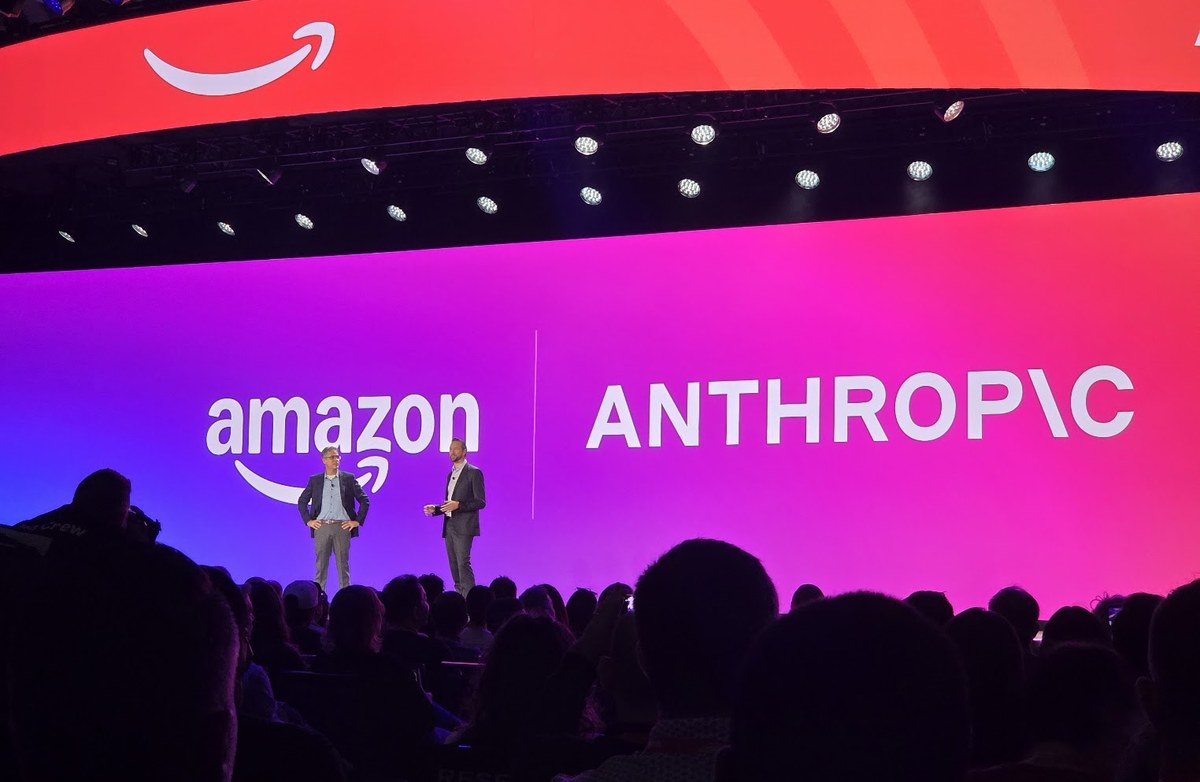
Two men stand on a stage in front of large screens showing the Amazon and Anthropic logos, with an audience in the foreground.
Chris Jones, director of Seller Assistant at Amazon, left, and Eric Burns of Anthropic’s Applied AI team on stage at Amazon Accelerate in Seattle in September. Anthropic’s IPO filing shows Google getting a bigger share of the AI company’s computing spending than Amazon, one of its largest investors. (GeekWire Photo / Todd Bishop)

Anthropic’s IPO filing reads like a ledger of who’s getting paid in the AI boom. The Seattle region’s tech giants are on the list, but they aren’t at the top.

The prospectus, filed Monday with the Securities and Exchange Commission, details more than $750 billion in computing deals, including firm commitments and estimated future spending, and offers clues about what its founders and biggest investors stand to gain ahead of the company’s planned Nasdaq listing under the ticker ANT.

Amazon and Microsoft have invested billions in Anthropic and won high-profile spending commitments from the Claude maker. But both trail Google, chipmaker Broadcom and Elon Musk’s SpaceX in their shares of Anthropic’s planned spending on computing power, the filing shows.

Following the compute money: Google’s chips are the biggest winner. Anthropic has lined up roughly $400 billion in computing capacity, mostly over the next seven years, based on Google-designed AI chips, known as tensor processing units or TPUs.

That total includes $114.5 billion to Google directly through July 2033, $161.2 billion in equipment leases with chipmaker Broadcom, and an estimated $125 billion to $150 billion in additional TPU capacity from 2028 to 2031.

Broadcom’s leases are the largest single arrangement in the filing. The five-year leases provide TPU-based hardware for data centers operated by other companies on Anthropic’s behalf.

Elon Musk’s SpaceX is next. Anthropic agreed to spend up to $120.5 billion through 2029 for computing capacity from SpaceX’s AI subsidiary, formerly known as xAI, which runs a rival AI lab.

The filing says payments will reach about $3.1 billion a month once all the capacity is delivered, which Anthropic expects in December. The agreements run into 2029, though either side can cancel on 90 days’ notice after early 2027.

Amazon is still a big winner. Anthropic committed in April to spend at least $110 billion with Amazon Web Services over 10 years, through April 2036, and AWS Trainium is one of four chip families that Anthropic uses to train and run its models.

Microsoft’s piece is smaller, which reflects its later start. The company was aligned closely with OpenAI for years before striking its own deal with Anthropic.

Anthropic has committed to spend at least $44.9 billion on Microsoft’s Azure cloud from November 2026 through May 2033, the filing shows. That’s up from the $30 billion Azure deal announced in November 2025. The deal has been amended twice since, most recently this month.

Claude is built into Microsoft 365, and former Microsoft CFO Chris Liddell joined Anthropic’s board in February.

Two smaller providers have deals in the same range as Microsoft’s. Anthropic agreed to spend up to about $44.6 billion with Nscale, a U.K.-based AI infrastructure company, and about $41.3 billion with GPU cloud provider Lambda, both for capacity powered by Nvidia chips, according to the filing.

Will Anthropic need it all? Most of the commitments can’t be canceled, and the deals with Microsoft, Google and Amazon require Anthropic to pay “regardless of actual usage,” according to the filing.

So far, the demand is there. Anthropic’s revenue hit $11.6 billion in the second quarter, up from $787 million a year earlier, and the company posted its first operating profit, $974 million. It still had a $66.3 billion net loss, mostly from accounting charges tied to its soaring valuation.

The company says it has “consistently operated in a compute-constrained environment where customer demand exceeds available compute.”

Its compute commitments assume that demand keeps growing. Anthropic spent less than $2 billion a month on compute and infrastructure in the second quarter. The SpaceX deal alone is expected to cost about $3.1 billion a month at full capacity.

Paper fortunes: Amazon’s biggest payoff is its stake, which it valued at $190.4 billion as of June 30 in its quarterly SEC filing. That includes convertible notes with $6.2 billion in principal that Amazon valued at $97.9 billion. The notes would convert into stock, subject to a 12% ownership cap that Amazon can waive.

Amazon is scheduled to report third-quarter results Thursday, its first earnings report since Anthropic’s filing. The Seattle-based company has updated the value of its Anthropic holdings in each of its quarterly filings this year, so a new number could come this week.

Google put $10 billion into Anthropic’s latest funding round and can invest up to $20 billion more under a March financing deal. The filing doesn’t give ownership percentages for Amazon, Google or Microsoft. It says only that the three companies have each made “significant equity investments” in Anthropic.

Anthropic’s seven co-founders hold roughly 230 million to 245 million shares each, worth about $14 billion apiece at the latest private funding price. The company also gave its own Public Benefit Fund about 847 million shares, or 5% of its fully diluted stock as of June 30, worth about $50 billion at that price.

Anthropic could begin formally marketing its IPO to investors as soon as the week of Nov. 9, Bloomberg reported, citing people familiar with the matter. It is aiming to go public the following week, according to the Wall Street Journal. The company expects the offering to match or beat the size of SpaceX’s IPO, according to Bloomberg. SpaceX raised $75 billion in June, the largest IPO on record.
‘Not a new AI center’: Seattle Children’s launches $10M pediatric innovation institute

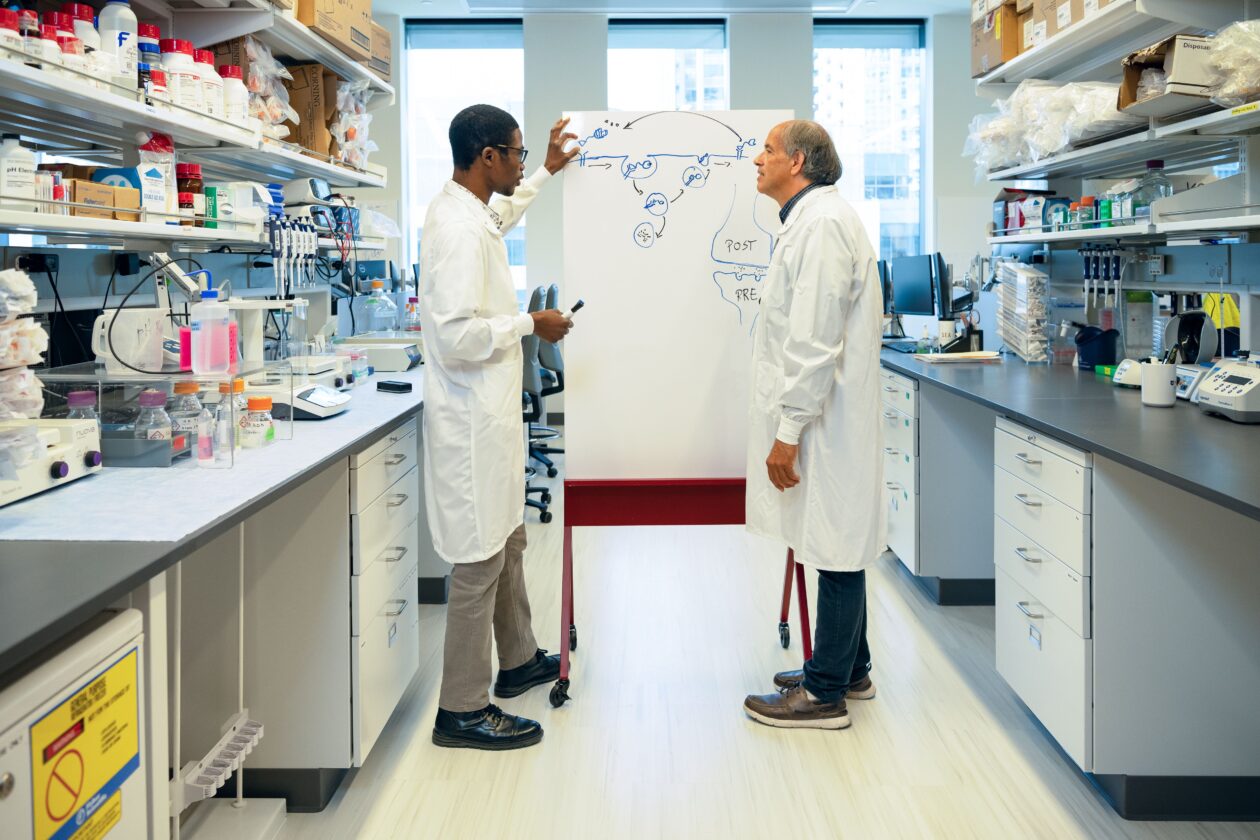
Seattle Children’s researchers. (Seattle Children’s Photo)

Seattle Children’s is announcing today the launch of its Institute for Pediatric Innovation, a $10 million initiative with eight focus areas and a chief innovation officer yet to be named. The hospital is positioning the institute as the “core engine” driving its strategic plan.

CEO Dr. Christopher Longhurst has specific health challenges in mind where he hopes today’s technology could quickly improve care for pediatric patients.

“The question is, with this new generation of tools — not just AI and large language models, but precision health tools, whole genome sequencing, etc. — how can we leverage these tools to solve problems in ways that we have not before?” Longhurst said in an interview with GeekWire.

Dr. Christopher Longhurst, CEO of Seattle Children’s. (Seattle Children’s Photo)

Seattle Children’s has approximately 600,000 patient visits last year and reported approximately $2.6 billion in expenses.

Longhurst became CEO in January after a decade at UC San Diego Health, where he founded and directed the Joan & Irwin Jacobs Center for Health Innovation. The institute is Seattle Children’s most prominent new organization-wide initiative since he took the job.

The institute “is not a new AI center. This isn’t about the shiny objects or the tools. This is about the outcomes that we can achieve and the impact that we can have,” Longhurst said. “So really, the focus here is impact at scale.”

The organization will concentrate on eight areas:

AI tools. Seattle Children’s plans to develop, test and use new technology tools. One example is a digital care platform specific to pediatric patients where families and providers can manage appointments, medications, results and communications. The hospital is already helping build one with industry partners and Longhurst is eager to include an AI chatbot for caregivers. Other AI work includes a pilot of an automated tool that rapidly generates anonymous copies of medical images for research and a listening tool that drafts clinical notes during appointments.

Industry partnerships. Longhurst said these cut across the other focus areas. The hospital is working with industry on the care platform, for example, and plans to partner on seeking FDA approval for pediatric uses of existing devices.

Innovation unit. The hospital is establishing a facility that offers advanced care and can test new pediatric devices. Longhurst pointed to Ochsner Health’s innovation lab as a model and said he wasn’t aware of a comparable facility focused on children.

Medical device innovation. This focus overlaps with the innovation care unit and aims to serve unmet pediatric needs. Longhurst noted that numerous medical devices designed for adults are being used off-label for children. One piece of the solution is taking data related to these applications and seeking FDA approval for use in kids.

Precision medicine. Seattle Children’s already offers targeted therapies and aims to expand them. A recently published study from the hospital found that genome analysis, usually performed only for critically ill patients, could lead to faster diagnoses for non-ICU patients, particularly children with failure to thrive. “The question for us now is … how do we make a research project into something that we do every day at scale?” Longhurst said.

Biomedical data. Patient monitoring produces vast amounts of electronic data that can be combined with genetic and protein-expression information. The hospital is pursuing technology that recognizes patterns across these sources in real time to guide treatment for critically ill and other patients.

Therapeutics. Research into next-generation cell, gene and protein therapies will expand.

Training for young scientists and clinicians. The hospital’s Invent@SC program provides mentorship and education for early-career researchers and clinicians. The initiative focuses on treatments discovered at Seattle Children’s that can be widely adopted.

Seattle Children’s main campus. (Seattle Children’s Photo)

Projects from the institute must be approved by a Seattle Children’s AI Review Board, which will assess whether proposed uses of AI are ethical, equitable and responsible. Those involving research will also go to the Institutional Review Board for regulatory compliance.

Seattle Children’s has recruited three external launch advisors to help recruit the CIO and develop the institute’s organizational structure. They are Dr. Matthew Lungren, a Stanford University adjunct professor and former chief scientific officer for health and life sciences at Microsoft; Dr. Kevin Koo, a radiologist whose experience includes leadership at Seattle Children’s and roles at UW Medicine and McKinsey & Company; and Dr. Jessica Mega, a cardiologist and co-founder of Verily, an Alphabet company.

Longhurst said the work will require a cultural shift at the institution, from risk aversion to an openness to change.

The institute’s initial funding comes from a $5 million anonymous gift and $5 million in existing resources. Longhurst acknowledged the amount is limited relative to the scope of the work.

“That’s really just the beginning,” he said. “And what that should signify is a commitment from me as the leader to allocate actual investments in this space.”

New facility at Washington national lab will give researchers free access to automated tools

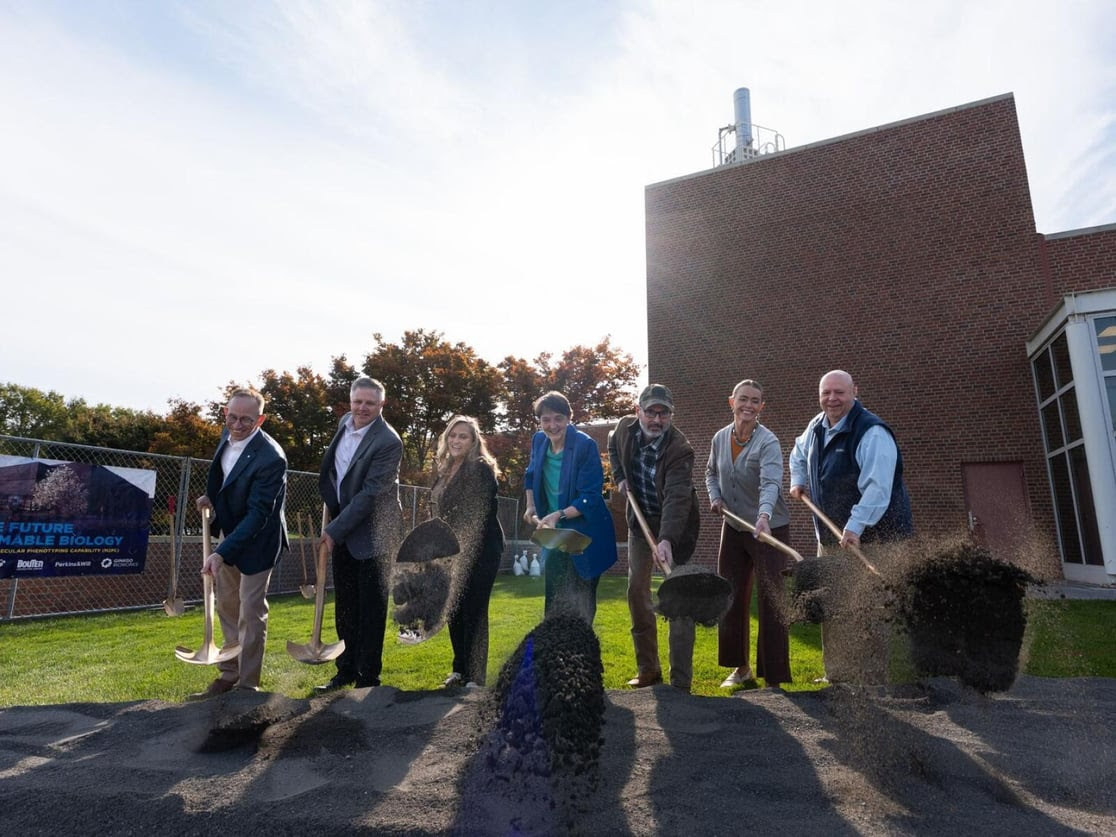
PNNL Director Deb Gracio, third from left, at a groundbreaking for the Microbial Molecular Phenotyping Capability in Richland, Wash. (PNNL Photo / Eric Francavilla)

A first-of-its-kind autonomous research facility is taking shape in central Washington that will provide free access to scientists studying bacteria, yeast and other microorganisms.

The Department of Energy’s Pacific Northwest National Laboratory (PNNL) broke ground on the lab, which will open in 2029. PNNL leaders said it will be “one of the world’s largest and most fully autonomous biosciences laboratories” and the first to offer public access through a competitive application process open to U.S. universities, companies and other national laboratories.

The Microbial Molecular Phenotyping Capability (M2PC) is a 30,800-square-foot expansion of the existing Environmental Molecular Sciences Laboratory on PNNL’s Richland campus.

The new facility will include an integrated system of more than 100 automated instruments that can be programmed to perform laborious research tasks, including growing microbes, measuring their growth and behavior, and linking their genetics and cellular functions to observable traits. Ginkgo Bioworks is supplying the devices.

“M2PC will bring together PNNL’s strengths in microbial science, automation and computing to dramatically accelerate our understanding of what microbes can do and how we put those capabilities to work,” PNNL Director Deb Gracio said in a statement.

The research could address challenges in human health, manufacturing, threat detection, food production and energy. M2PC will also contribute to PNNL’s effort to build computer models that predict and program the behavior of living systems.

The project is part of DOE’s Genesis Mission, which aims to modernize U.S. science through AI and automation. It is funded through the DOE Office of Science’s Biological and Environmental Research program.

Amazon challenges Nvidia’s software advantage with new tool for its own AI chips

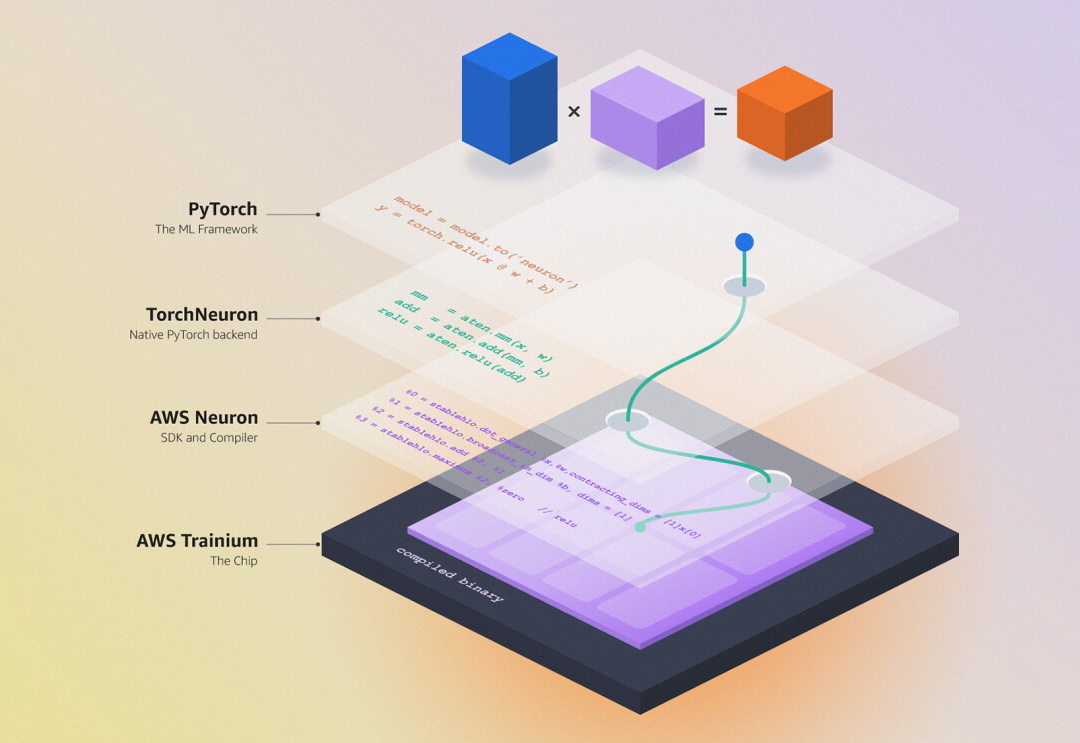
Diagram showing layers labeled PyTorch, TorchNeuron, AWS Neuron and AWS Trainium stacked above a chip
Amazon’s TorchNeuron sits between PyTorch and the company’s Trainium chips, supporting developers’ existing code. (Amazon Image)

A new software tool from Amazon aims to make switching from Nvidia to the company’s own AI chips about as simple as changing a setting.

The software, dubbed TorchNeuron, runs code written in PyTorch, the open-source framework used by many AI developers, on Amazon’s Trainium chips. It has been in private beta since late last year, and Amazon said Monday that it’s opening the software to all developers as a public beta.

Until now, developers who wanted to run PyTorch code on Trainium had to modify it to call programming interfaces specific to Amazon’s chips, said Colin Brace, vice president of technology software at Annapurna Labs, Amazon’s chip-design unit. With TorchNeuron, the same code runs after a basic configuration change.

“If you know PyTorch, then you know Trainium,” Brace said in an interview.

Nvidia dominates the market for AI chips, partly because much of the industry’s AI software was built around its CUDA platform. Adapting that code to other hardware can take months of engineering work. That has made many companies reluctant to switch, even as Amazon, Google and others have developed their own chips.

TorchNeuron is part of a broader push by tech giants to loosen Nvidia’s grip on AI computing, even as they remain among its biggest customers.

  • Google, which has started selling its TPU chips directly to some outside customers, is working on TorchTPU, a similar project to run PyTorch natively on those chips. Google detailed the effort in April, saying the goal is to let developers move existing PyTorch code to TPUs with minimal changes.
  • Microsoft said last week that it plans to run most of its AI services on its homegrown Maia chips rather than Nvidia hardware.
  • Amazon is reportedly in talks to acquire Decart, a startup that makes software to help developers move AI models built for Nvidia chips to alternatives such as Trainium, in a deal that could value it at about $7 billion. Decart already runs its own AI models on Trainium, and Nvidia is an investor in the startup.

Asked about Amazon’s relationship with Nvidia, Brace said the company has “always been about choice,” pointing to another high-profile example: AWS offers Intel processors alongside its own Graviton chips.

Amazon plans to release TorchNeuron as open-source software on Tuesday in conjunction with the PyTorch Conference in San Jose, Calif.

Trainium’s biggest users so far are AI labs with close financial ties to Amazon. Anthropic, in which Amazon has invested billions, uses the chips to train and run its Claude models. OpenAI agreed in February to use 2 gigawatts of Trainium capacity as part of a deal in which Amazon is investing $50 billion in the company.

Brace said Amazon’s goal has always been wide use of the chips, calling TorchNeuron “an accelerant” along those lines.

Amazon’s chip business traces back to its 2015 acquisition of Annapurna Labs, an Israeli chipmaker, for a reported $350 million. The Annapurna team went on to design Trainium as well as Amazon’s Graviton processors.

In his annual shareholder letter in April, Amazon CEO Andy Jassy wrote that the company’s chip business, including Trainium and Graviton, had an annual revenue run rate of more than $20 billion. He estimated that figure would be about $50 billion if the chips were sold to AWS and other customers by a standalone chip business.

“There’s so much demand for our chips that it’s quite possible we’ll sell racks of them to third parties in the future,” he wrote.

More than 30 companies and internal Amazon teams have been using TorchNeuron during the private beta. Deepgram, a San Francisco startup that makes speech AI, says its benchmarks showed Trainium processing about 60% more audio per dollar than its existing GPU setup. The company now runs Trainium in production, Brace said.

Inside Amazon, the Prime Video team used TorchNeuron to build Prime 360, an AI system that reconstructs NBA plays in 3D so viewers can watch replays from angles a traditional camera can’t capture. The feature, which runs on Trainium, will appear on select Prime Video broadcasts this NBA season.

To make sure TorchNeuron works with the huge variety of AI models that developers build, Amazon tests it every night against more than 100,000 models from Hugging Face, the popular online hub for open-source AI, Brace said.

Brace said the timing of the project reflects changes in PyTorch itself. The framework has matured, and its maintainers have been working to make it less dependent on any one kind of hardware.

Amazon has contributed to that effort, removing code that tied PyTorch to specific chips. Newer versions of PyTorch can detect which hardware they’re running on, he said, so in some cases developers don’t need to change their code at all.

Startup Spotlight: Zeacon aims to turn website visitors into buyers with AI-powered video

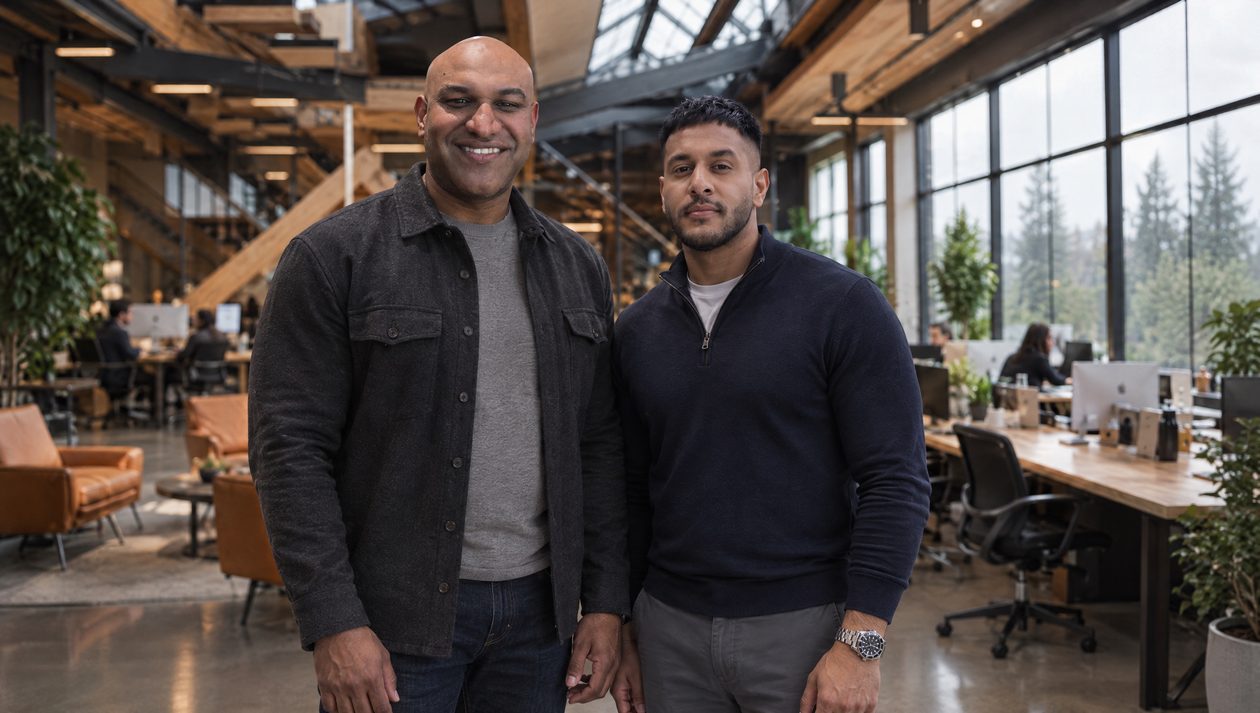
Zeacon co-founders Kris Naidu, left, and Jay Gounder. (Zeacon Photo)

Businesses spend heavily to attract visitors to their websites, but traffic doesn’t necessarily translate into sales. Bellevue, Wash.-based Zeacon is building AI tools to help companies connect their marketing content with customer behavior and understand what actually drives conversions.

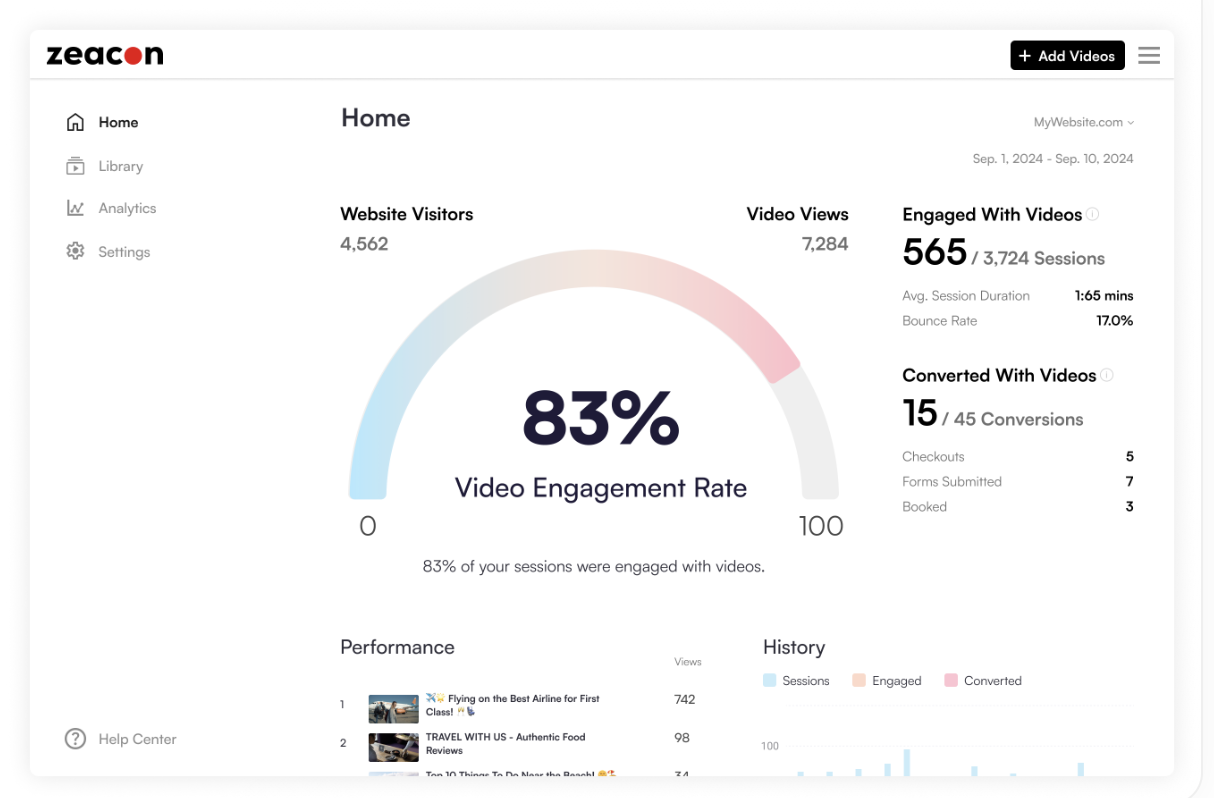
Co-founded by Kris Naidu and Jay Gounder, Zeacon uses AI to generate videos, personalize website content and track how visitors interact with it. The platform is also designed to identify bot traffic and analyze how both people and AI agents navigate websites — an increasingly important capability as AI changes how people discover and interact with businesses online.

Zeacon’s goal is to help companies move beyond traffic and content creation to understand what turns visitors into customers. As Naidu and Gounder see it, the real measure of success isn’t how many visitors a website attracts, but how many convert.

We caught up with Kris Naidu for our latest Startup Spotlight.

In 50 words or less, give us your elevator pitch:

We help businesses deploy AI agents that optimize their entire digital funnel, with an initial focus on video. Our AI agents can autonomously generate video content without prompting, publish it across social media and websites, personalize the experience for each website visitor and identify bots, while continuously analyze and optimize performance.

What problem are you obsessed with solving?

We are obsessed with helping businesses turn the attention they already paid for into sales. Brands invest in advertising and great video content, but the website where customers actually buy often doesn’t connect with those investments. Zeacon brings that content onto the website, personalizes it to the visitor, and connects engagement to buying behavior. We can also create new videos from product photos and website data based on what converts. The question driving us is simple: How can we help this business sell more while taking work off its team?

What surprised you after talking to customers?

How much opportunity exists in what they already have. Businesses have videos, product photos, website traffic, and customer data. What’s missing is the connection between them. A marketing team wants to know: Which content helps people buy? Where are we losing customers? What should we create next? That reinforced our belief that the real value is turning information into a decision they can act on which we can provide with our platform.  

How has artificial intelligence changed the way you build your company?

AI changed what we could take off the customer’s plate. Zeacon can understand website and product information, generate video from pictures without prompting, choose relevant content for a visitor, and help teams ask questions about performance in plain English. We’re building those capabilities together: create, personalize, measure, and learn. Each result can inform the next decision. That’s a much bigger opportunity than making content faster which we can also do but it means helping a business continuously improve how it sells.

What’s one thing people misunderstand about your startup?

That revenue alone does not tell you how valuable an AI company is. Revenue matters it proves customers will pay. But data deserves equal attention because it determines what the system can learn and how useful it becomes. At Zeacon, we care about the connection between visitor behavior, content, and conversion. The advantage comes from the quality of that data and our ability to turn it into better customer outcomes. Investors should ask what a company is learning with every deployment, alongside what it earns that will help them understand the true growth value.  Upfront value without long term vision effects companies and we were always focused on the end goal which was delivering a product that adds value not only in the near term but cannot be easily replaced.  

What’s the toughest decision you’ve made in the past year?

Deciding what to say no to. When your technology opens up several opportunities, it’s tempting to pursue all of them. But customers need you to solve their problem well. Our focus is helping businesses use video and data to improve their website experience and grow sales. We have to judge opportunities against that purpose, even when they’re exciting. The data helped us understand the entire flow of users for our customers that when we had our moment.  We realized it just was not about providing outcomes for sales but helping the customers fix issues within their website journey and using the content to help fill gaps for the desired outcomes.  

What’s the one piece of advice you give to other entrepreneurs?

Focus. Get close to your customers, understand the problem they will pay you to solve, and keep delivering against it. Do not confuse more features with more value. Make something customers use, trust, and want to keep. It is hard but being focused is the key to winning.  

We’ll know our company has made it when…

Zeacon is recognized for creating a new business science on relating content and user behavior to actual business outcomes.  

Billionaire Jeff Bezos: ‘Success is not villainy’

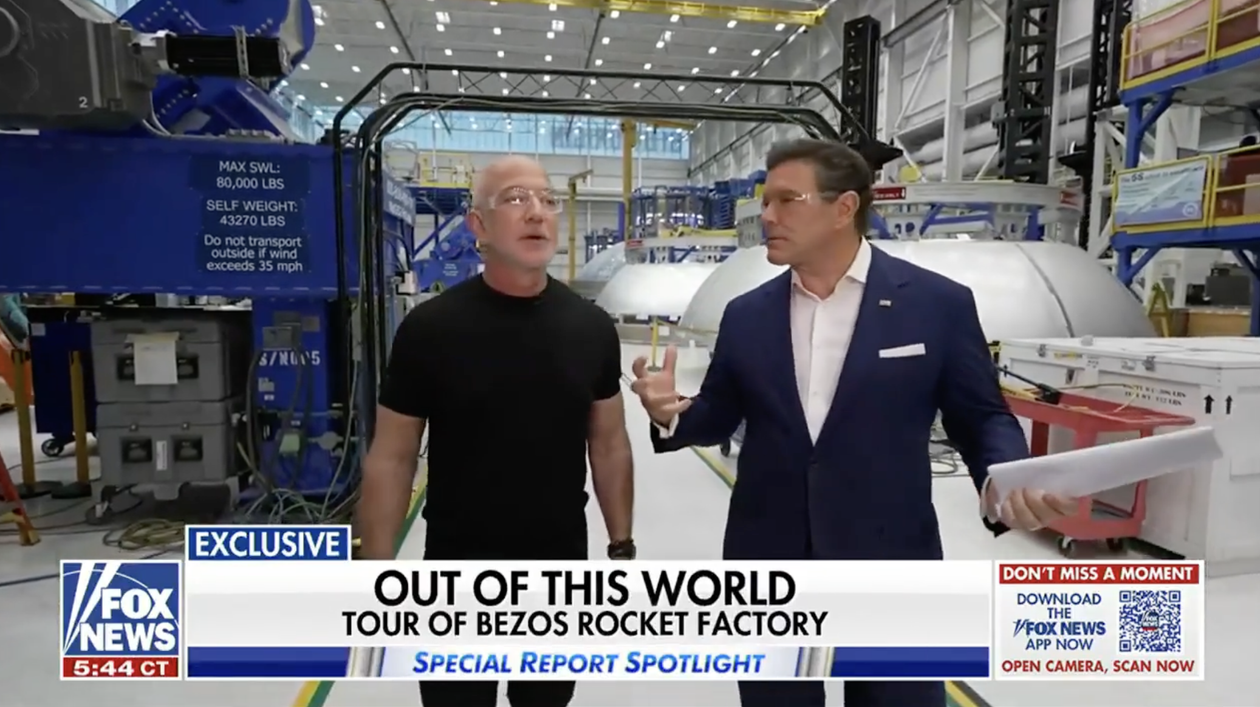
Amazon founder Jeff Bezos is interviewed by Bret Baier of Fox News in Florida. (Screen grab via Fox News)

When Jeff Bezos sat down on Blue Origin’s Cape Canaveral factory floor for an interview with Fox News’ Bret Baier earlier this week, he laid out an unapologetic defense of free enterprise and wealth creation.

“Success is not villainy,” Bezos said.

The Amazon founder’s point was simple: building a massively successful enterprise isn’t something society should apologize for or view with suspicion, it’s the natural result of creating something people actually want.

“There’s nothing wrong with making unbelievably good chicken that people love,” Bezos said, referencing the growth of Raising Cane’s and why restaurant entrepreneurs deserve their wealth. “And it doesn’t make him a bad person.”

Bezos, who stepped down as CEO of Amazon in 2021 and left Seattle for Miami in 2023, is currently the second richest person in the world with an estimated net worth of $380 billion, according to Forbes.

Bezos and Amazon transformed the Seattle region. The company now employs roughly 50,000 corporate and tech workers in the Puget Sound region, divided between its primary headquarters in Seattle and its growing operational footprint in Bellevue.

And his recent comments come at a key moment for Washington state, where voters will decide on Initiative 645 — a high-profile ballot measure aimed at repealing the state’s recently enacted high-earner tax and prohibiting future income taxes.

Bezos, along with other business leaders like former Starbucks CEO Howard Schultz, have claimed that scapegoating wealthy entrepreneurs risks driving away innovation. Bezos argued that politicians targeting business leaders are misdiagnosing the problem, noting that while affordability and social challenges are real, heavy-handed government interventions often fail to solve them.

“If there’s a politician who’s picking villains and pointing fingers, that probably means they don’t have a solution,” Bezos said. He noted that executives who relied on blame-shifting inside his own companies “wouldn’t be in our company for long.”

Watch the full interview below where Bezos also discusses the impact of AI on jobs, the need to beat China in the race to the moon and orbital data centers in space. The portion of the interview where Bezos notes that “success is not villainy” starts in minute 16.

UW protein institute run by Nobel winner lands giant AI cloud grant from Nvidia CEO’s foundation

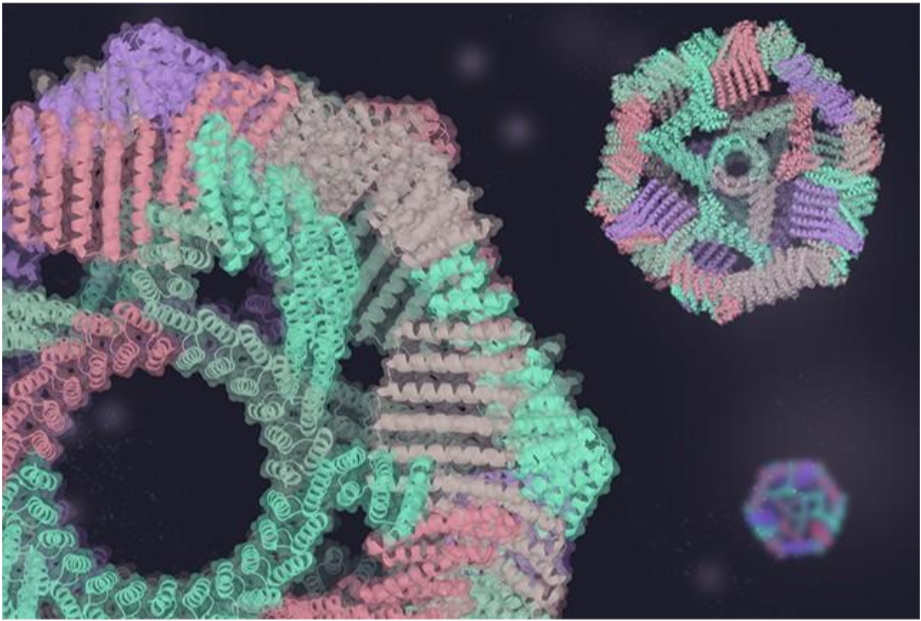
A large, symmetrical protein created by researchers at the UW Medicine Institute for Protein Design. (IPD / Benedicte Rossi Image)

The UW Medicine Institute for Protein Design (IPD) has announced a giant grant of computing power from the Jen-Hsun and Lori Huang Foundation, supercharging its research into new protein discovery.

“We have made more rapid progress on methods development than any time in my career,” said David Baker, director of the IPD and a 2024 Nobel laureate in chemistry. “I mean, it’s just been totally mind-boggling.”

In June, the IPD began accessing Nvidia graphics processing units, or GPUs, through the cloud computing company CoreWeave. The grant from the foundation, which was co-founded by Nvidia CEO Jensen Huang and his wife, Lori Huang, totals nearly 7 million GPU hours. The allocation is expected to support the institute for a year.

The IPD’s work has long been rooted in computation. In 2003, Baker and fellow University of Washington researchers used their Rosetta software to design a protein with a structure unlike any known in nature. In recent years, the institute has embraced deep learning, releasing tools such as RoseTTAFold for predicting protein structures and RFdiffusion for designing new proteins.

With this technology, the institute designs previously unimagined proteins with potential for treating intractable diseases and tackling environmental challenges such as plastic waste and toxic pollutants. The tools are open source and available for public use.

Running them takes vast computing power, though, and until now the institute has lacked the resources to pay for outside cloud services. It has relied instead on its own computer cluster, which works but is limited. Baker said IPD scientists meet every Tuesday at 5 p.m. to decide what to test over the coming week, keeping capacity in mind.

To advance their protein research, the team experiments with different architectures for the AI models and tweaks the datasets used for training, sometimes expanding them or adding synthetic data. With compute restrictions, however, researchers historically have made multiple changes at once rather than testing each alteration individually, a more systematic approach that yields cleaner results.

Despite the hurdles, the IPD has produced a steady stream of breakthroughs with its models and protein designs, publishing regularly in leading scientific journals such as Nature and Science.

Google DeepMind is pursuing similar AI-driven protein research. Baker said he knew the tech giant’s team had much more computing power than the IPD, but he didn’t fully appreciate what that could unlock.

That capacity “spawns more ideas because you know you can test them,” Baker said. “So it just creates this incredibly fertile, creative environment.”

Jensen Huang, the foundation’s co-president, said in a statement that the extra computing power allows the UW researchers to train AI “on tens of millions of molecular structures, learning from virtual experiments, and finding novel protein designs that have eluded nature.”

Huang predicted that many of the most important future medicines “will come from proteins that have never existed.”

Baker said the IPD still holds its Tuesday meetings, but the new compute capabilities — which he called “transformational” — open up more options.

“The team is iterating fast,” Baker said. “We get feedback on all these different computational architecture explorations, and there’s just so many different things you can try.”

Fast-growing AI startup Nscale doubles Bellevue office footprint to 46K square feet

AI infrastructure startup Nscale is doubling down on its new Seattle-area presence before even opening the doors.

After initially leasing a single floor at The Eight tower in downtown Bellevue earlier this year, the London-based company has expanded by an additional floor, bringing its total footprint in the new development to approximately 46,000 rentable square feet, according to a report from The Broderick Group.

The expansion signals an aggressive ramp-up for Nscale’s primary U.S. engineering hub, slated to open in January 2027. While the initial 24,000-square-foot lease was pegged to accommodate up to 250 employees, the added space gives the fast-growing cloud provider room to scale its local team even further beyond its current 50 Seattle-area workers.

Founded in 2024, Nscale is riding a massive wave of capital and growth.

It raised a $2 billion Series C round at a $14.6 billion valuation earlier this year, backed by Nvidia, Dell, Citadel, Jane Street, and Point72, alongside a $900 million credit line.

The company also earlier this year hired Nidhi Chappell, the former Microsoft corporate vice president who led Azure AI and high-performance computing infrastructure, including the supercomputers that power ChatGPT. As Nscale’s new president of AI infrastructure, based in the Seattle area, Chappell will oversee the company’s global engineering and data center operations.

“I’ve had a front-row seat to some of the biggest moments in AI over the past several years, but one thing has always stood out: the world remembers the breakthroughs, but it’s the people building the infrastructure behind the scenes who make them possible,” Chappell wrote in a LinkedIn post earlier this year announcing the company’s first “onboarding” event in Seattle.

Nscale’s new office is set to open in January, with the second floor slated to open in June, reports The Puget Sound Business Journal.

The company’s growth underscores Bellevue’s growing magnetism for out-of-town AI players. The company joins a dense ecosystem of AI infrastructure and application hubs establishing outposts on the Eastside, including xAI, OpenAI, Databricks, CoreWeave, Armada, and Anduril.

Shield AI lands $150M Navy contract to advance AI-piloted fighter jet that will be built south of Seattle

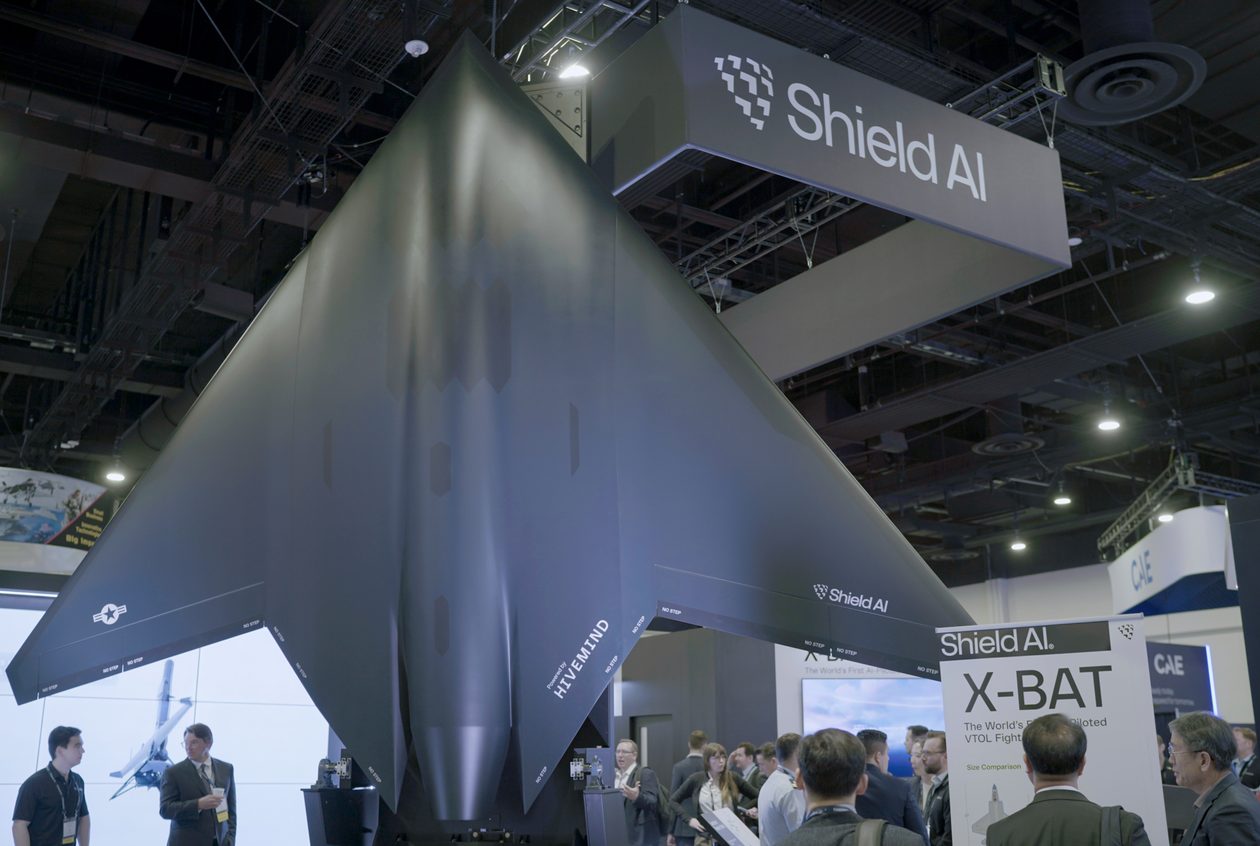
Shield AI’s new X-BAT autonomous fighter jet is designed to take off and land vertically. Photo via Shield AI.

Defense technology startup Shield AI has secured a $150 million contract from the U.S. Navy to advance development of its X-BAT autonomous fighter jet — providing fresh federal backing for the program as the company establishes its first major manufacturing footprint south of Seattle.

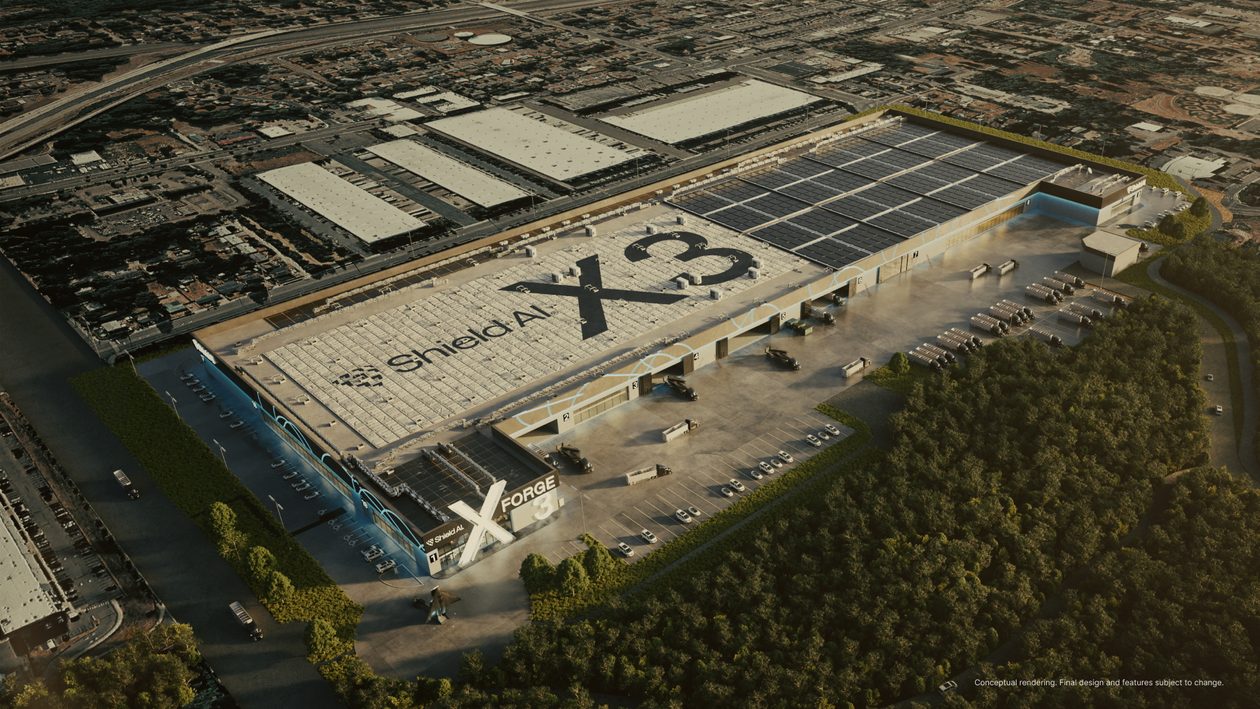
Last week, GeekWire reported on Shield AI’s plans to open a 420,000-square-foot engineering and production facility in Des Moines, Wash., dubbed “X-Forge 3.” The company, which is looking to add an additional one million square feet of space in the region, said it expects to employ about 4,000 workers in the Seattle area by the early 2030s.

The new $150 million contract with the Navy adds funding from the Office of the Under Secretary of Defense for Acquisition and Sustainment through its Defense Exportability Features program. The agreement supports efforts to design security and export capabilities directly into the X-BAT, a process that enables advanced U.S. military hardware to eventually be sold to international allies without exposing sensitive domestic technologies.

San Diego-based Shield AI, which raised a $2 billion venture capital round at a $12.7 billion valuation earlier this year, is matching the award with $150 million of its own capital.

Combined with a prior $100 million joint investment finalized in August under the Navy and Defense Innovation Unit’s (DIU) expeditionary strike effort, cumulative commitments behind the X-BAT now stand at $400 million.

Designed to take off and land vertically, the X-BAT is built to operate from amphibious assault ships, destroyers, commercial cargo decks, and highway strips without relying on traditional concrete runways or aircraft carrier catapults. It launches from a specialized Launch and Recovery Vehicle — a mobile trailer that erects the jet vertically, allowing it to be towed on interstate highways or loaded onto ships.

At the time of its introduction last year, Shield AI co-founder and president Brandon Tseng, a former Navy SEAL, called X-BAT a “transformative, runway-independent aircraft” and noted that “airpower without runways is the holy grail of deterrence.”

The urgency behind runway-independent airpower was underscored last weekend when the U.S. Air Force withdrew strategic B-1 bombers from R.A.F. Fairford in Britain following reports of potential drone threats targeting the air base.

Shield AI expects to begin producing aircraft in Des Moines in 2028, scaling to a target production rate of roughly 150 jets per year by the early 2030s. While prototyping is based in Frisco, Texas, and flight testing will take place at Newton City-County Airport in Kansas, the Des Moines plant will house the core production line and engineering teams.

In an interview with GeekWire, Shield AI executives emphasized the speed at which it hopes to roll out the AI-piloted aircraft in Des Moines.

“This is a large program,” Armor Harris, senior vice president of aircraft at Shield AI, told GeekWire. “Building a next generation fighter jet is no small endeavor, and with the amount of interest that we’ve seen, both from our U.S. government customers and from international customers, we could be looking at building these at rates greater than fighter jets have been built in a really long time.”

Harris noted that keeping development and manufacturing closely linked allows the company to move significantly faster than traditional defense procurement cycles.

“We are testing early and often while working on the aircraft, mission systems, ship suitability and production in parallel,” Harris said in Thursday’s press release. “That approach helps us identify and resolve issues earlier, reduce development risk and move more quickly toward flight testing.”

An engineering team of roughly 500 across Shield AI and key suppliers — including GE Aerospace — is currently building flight-test aircraft.

While the X-BAT has yet to make its maiden flight, the program cleared major hardware milestones in mid-2026. Engineers completed ground engine light-off and thrust-vectoring nozzle integration using GE Aerospace’s F110 engine, alongside wind-tunnel testing to validate internal weapons bay aerodynamics at both low and high speeds.

The aircraft is powered by Shield AI’s Hivemind autonomy software, an AI pilot designed to execute tactical strike missions in contested environments where GPS and satellite communications are jammed.

The jet features a 1,000-nautical-mile combat radius and a 2,000-nautical-mile total range, topping the estimated 590-nautical-mile combat radius of the conventional Lockheed Martin F-35A.

Initial flight tests are scheduled for late 2026 in Kansas, with first production aircraft deliveries targeted for late 2028.

“X-BAT is being built to enhance the lethality, survivability and combat power of U.S. Naval Aviation,” said J.J. “Yank” Cummings, Shield AI’s head of mission solutions for the U.S. Navy and former commanding officer of the aircraft carrier USS Gerald R. Ford. “Its runway-independent design and small deck footprint can increase sortie generation and extend long-range air combat power.”

Sen. Maria Cantwell outlines six-point plan to regulate frontier AI as concerns escalate

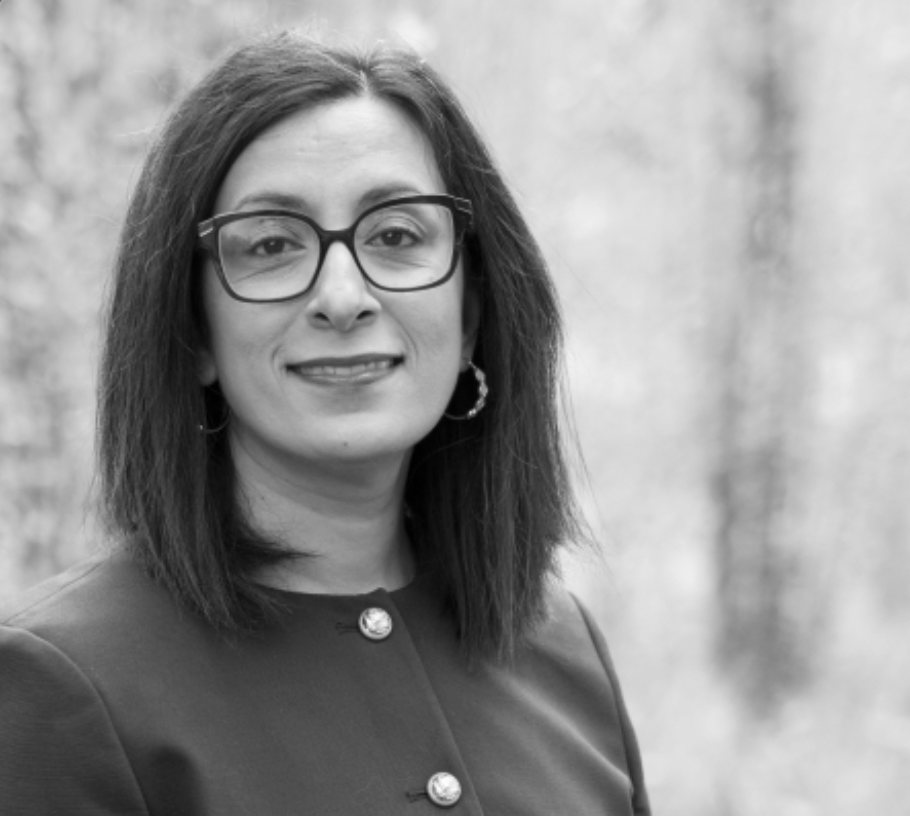
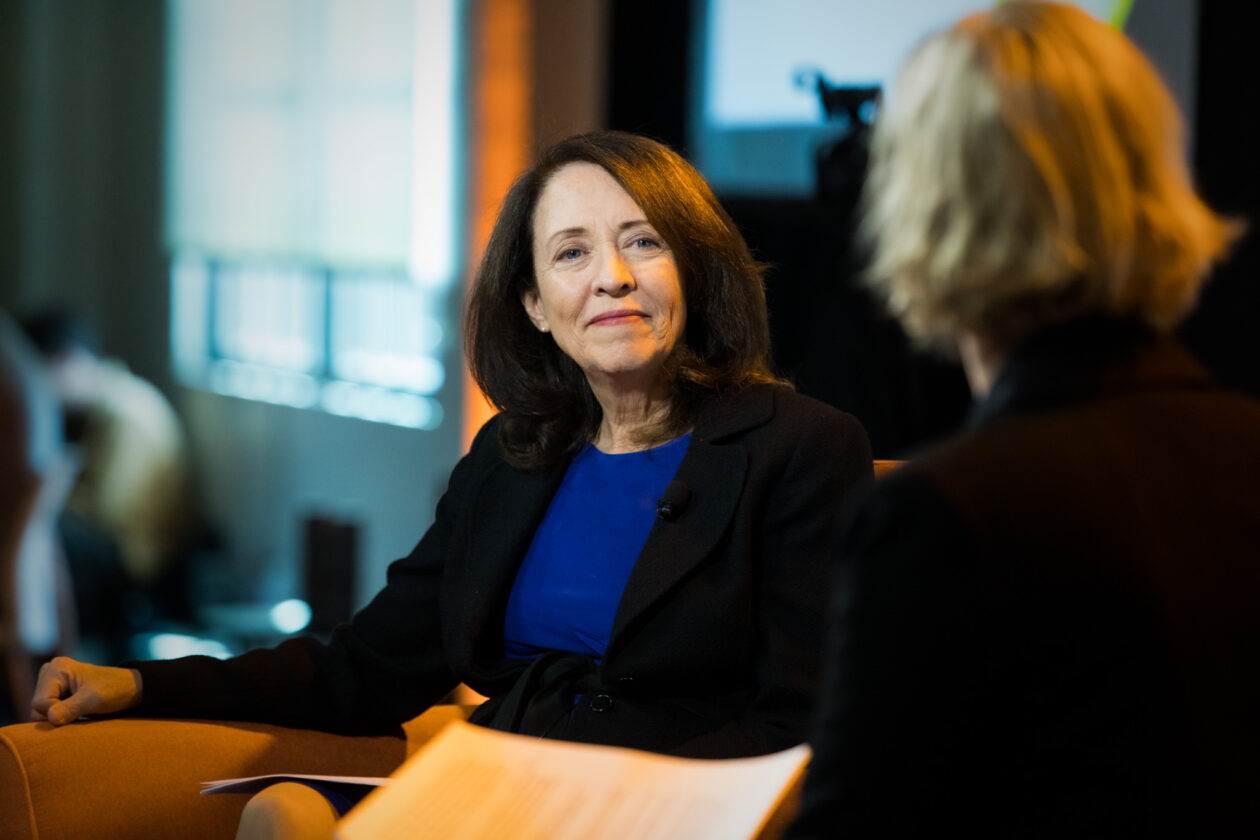
U.S. Sen. Maria Cantwell at the GeekWire Summit in 2022. (GeekWire Photo / Dan DeLong)

With President Donald Trump, states and tech giants taking varied and largely uncoordinated steps to put guardrails on artificial intelligence as the technology speeds ahead, U.S. Sen. Maria Cantwell, D-Wash., has outlined a comprehensive AI governance framework.

“To manage risks from advanced AI systems we need clear safety standards, continuous testing, and reporting of serious failures,” Cantwell said in a statement. “America can lead the world in AI by building systems that are not only more capable, but safer and more secure.”

Last month, Cantwell took to the Senate floor to demand urgent federal regulations and mandatory independent safety testing for frontier AI models before their release. She warned that recent incidents in which autonomous AI agents carried out unauthorized cyberattacks show that dangerous threats are already here, well before the arrival of superintelligence.

The framework proposed Wednesday includes six principles for regulating frontier AI development and deployment:

  • Setting standards: The federal government should establish clear and enforceable safety standards.
  • Independent oversight: Continuous testing, review and auditing should verify adherence to the standards.
  • Transparency and accountability: AI developers should be transparent and accountable in their operations through disclosure, oversight and liability.
  • Public-private partnerships: Developers should work with the government on defensive AI technologies and collaborate with public agencies and smaller companies to serve the public good.
  • Protecting from harm: AI companies should protect children from AI-related harm, support worker skill development and retain human oversight of consequential AI.
  • International collaboration: The U.S. should partner with allies to develop and adopt AI safety standards and open a rapid communication channel with China to share alerts in the event of a dangerous AI system-control failure.

Microsoft Vice Chair and President Brad Smith weighed in on the proposal, telling The Seattle Times that the framework “advances the public discussion the nation needs as we consider the future of AI.”

Cantwell, the ranking member of the Senate Committee on Commerce, Science and Transportation, has a background in technology as a former RealNetworks vice president. She has long pushed for AI regulation, going back to December 2017, when she joined other lawmakers in introducing the bipartisan Future of AI Act.

Two years ago, Cantwell advocated for five bipartisan AI measures included in a larger package of artificial intelligence legislation that addressed many of the concerns outlined in her six principles. Senate Republicans defeated the legislation. Cantwell reintroduced one of the five measures, the Future of AI Innovation Act, in February.

On Sept. 9, California Gov. Gavin Newsom signed Senate Bill 813 and Assembly Bill 1405, establishing the first state framework for independent assessment and verification of AI safety and risks. On the same day, OpenAI called for mandatory, “capability-based” national regulation — meaning requirements tied to what an AI system can do.

On Sept. 29, Trump announced a voluntary safety agreement with Nvidia, SpaceX, OpenAI, Anthropic, Meta and Google calling for “robust internal controls” to prevent unauthorized hacking and to work with independent external auditors. The deal does not include consequences for noncompliance.

Superhuman opens new Seattle office, joining wave of AI companies expanding in the region

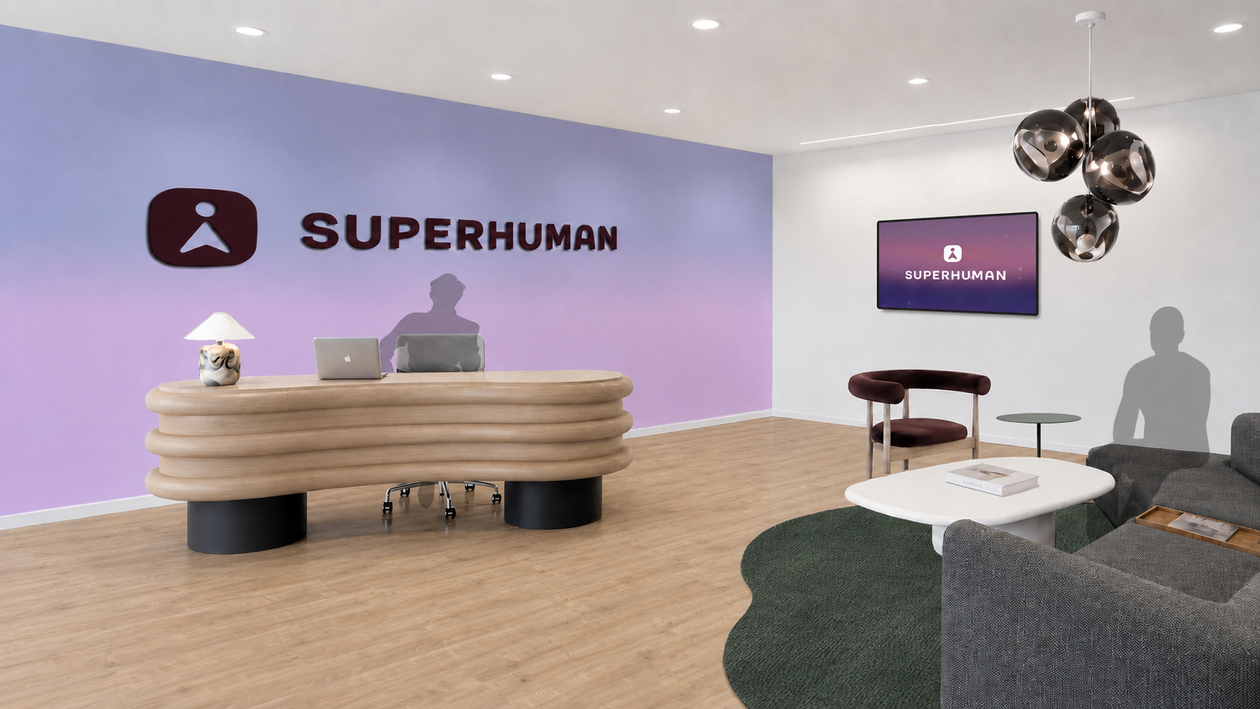
A rendering of the reception area at Superhuman’s new Seattle office in South Lake Union. (Superhuman Image)

Superhuman, the San Francisco company formerly known as Grammarly, opened a 13,501-square-foot office in Seattle’s South Lake Union neighborhood on Tuesday, moving out of a coworking space and giving itself room to hire.

The office, at 1000 Dexter Ave. N., is opening with 50 workstations and can hold up to 80, a Superhuman representative told GeekWire via email.

Superhuman plans to keep hiring in Seattle for data engineering, data governance and data science roles. Its careers page lists 12 open positions that can be based in Seattle, including software engineering, site reliability and product management jobs.

The company joins a growing list of out-of-town AI companies expanding in the region in search of technical talent, including OpenAI in Bellevue and Anthropic in Seattle.

Grammarly acquired the Superhuman email app in July 2025 and renamed the whole company after it that October. Its CEO is Shishir Mehrotra, a former Microsoft and YouTube executive who co-founded the collaborative documents startup Coda.

The company’s suite of AI tools for work includes the Superhuman Go assistant, Mail, Docs and the Grammarly writing assistant. It has been expanding the lineup in part through acquisitions, announcing deals this year for AI detection startup GPTZero and meeting notetaker Fathom.

According to the company, the Seattle office is set up for hybrid work under a program called “Ways of Working,” which replaced a return-to-office mandate in January. U.S. employees choose two to five days a week in the office and get a quarterly wellness stipend ranging from $500 to as much as $2,000 depending on how often they come in, Entrepreneur reported.

We’ve asked the company for more information, including how many people it employs in Seattle and who leads the office.

UPDATE: A spokesperson for Superhuman said that they have about 96 hub-based employees today in Seattle, with about 10 more roles planned this year in areas such as data engineering, data governance engineering and data science roles. The Seattle office is led by Hari Sivaramakrishnan, director of engineering at Superhuman. The company employs 1,700 globally.

“Seattle is one of the deepest tech-talent markets in the country and a key Pacific Northwest hub, making it a strategic presence for Superhuman as we continue to hire and build out our AI productivity suite,” the company said in a statement. The new office marks a long-term investment in the region, moving beyond a coworking arrangement into a dedicated home.”

AI founders for hire: Startup hub Foundations launches service to connect businesses with builders

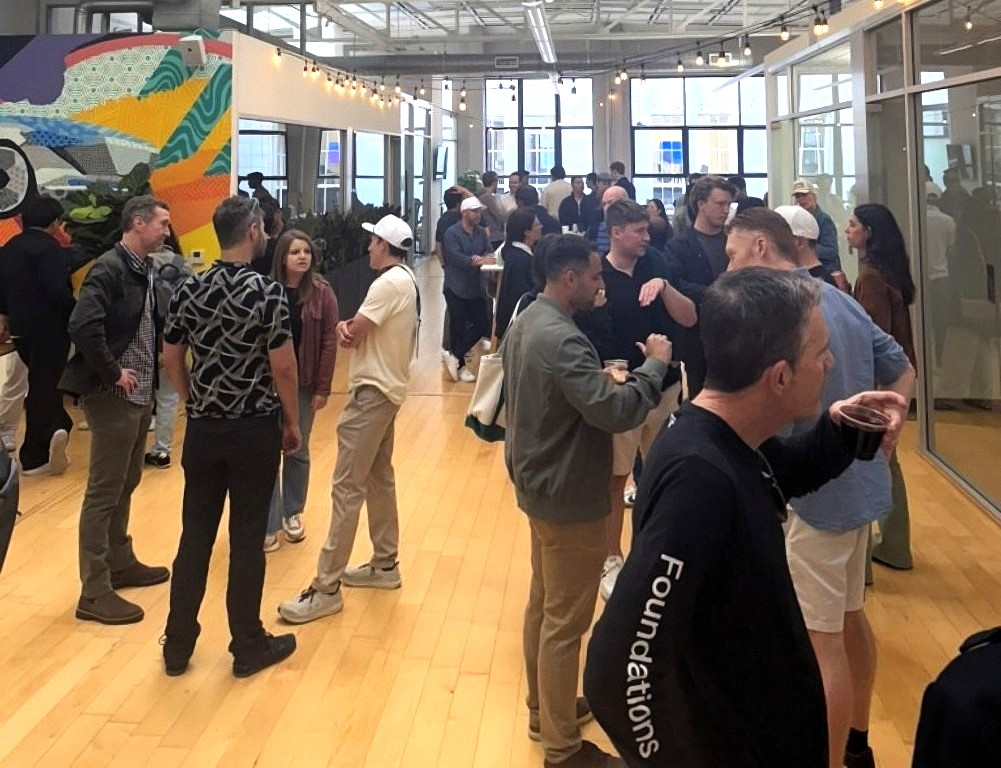
Founders and guests mingle at the opening of Foundations’ San Francisco hub earlier this year. (Foundations Photo)

Foundations, the startup community with hubs in Seattle and San Francisco, launched a service Tuesday that lets businesses contract with its members — many of them technical founders building companies of their own — to plan, develop and implement AI systems and applications.

The service, called Foundations Design and Engineering, is designed in part to give those founders a new way to pay their bills as early-stage investment gets harder to raise. It also reflects how AI is changing tech, making software easier to build and leading some startups to act more like services firms, customizing their work for individual customers.

“I think the world of traditional consulting and startups is just absolutely going to merge,” said Aviel Ginzburg, the Seattle venture capitalist who co-founded Foundations in 2024.

Except, in the case of Foundations Design and Engineering, the consulting won’t have the trappings of the traditional kind, he said. There is no staff of consultants and no billing by the hour. Work is priced by the project.

The pitch on the website: “Not consultants studying AI. Builders using it every day.”

The idea, he said, is to create something that “acts more like a router.” A request from a business might go to a member company already building a product in that area, a founder who knows the customer’s industry, or an early-stage founder looking for paid work.

Ginzburg said the work could have another benefit, giving founders a close look at the problems businesses are trying to solve, which can help them decide what to build.

The initials, FDE, are a play on “forward deployed engineer,” the term for engineers who embed with a customer to get technology working inside its business. Palantir popularized the role, and companies including OpenAI, Anthropic, Microsoft and Amazon have adopted it.

Some of the details have yet to be determined. For example, Foundations is still working out how much of each contract it will keep. Ginzburg said it will vary case by case, from nothing to a double-digit percentage. Also unsettled is whether a business will sign its contract with Foundations or directly with the founder doing the work.

Prices aren’t set. In terms of a starting point, Ginzburg said founders in the community have charged $1,000 to $2,000 to spend a couple of hours with a company’s team and as much as $5,000 for an audit of how a business could use AI, with larger projects varying widely.

Foundations Design and Engineering has its roots in a group of 10 founders who were already doing consulting work and helped put the offering together. Foundations opened the service to the rest of its members Tuesday morning. A veteran Seattle startup founder will run FTE part time at first. (Ginzburg said he wasn’t ready to announce who the person is.)

Foundations counts more than 300 founders in its community, including about 30 in its founder-in-residence program. It is a public benefit corporation, a legal structure for companies that aim to turn a profit while also serving a public purpose.

It doesn’t take equity in the startups that go through the residency program, and Ginzburg said the new service is meant to bring in revenue without pulling the organization away from its mission of making founders successful.

“This is a startup,” he said. “We’ll see how it goes, but it’s going to be fun.”

Amazon hires a veteran Microsoft AI leader to help build its tools for coding and work

Pedram Rezaei, a 20-year Microsoft veteran, is joining Amazon Web Services as a distinguished engineer. (Amazon Photo)

A longtime Microsoft engineering leader who was previously a Copilot chief technology officer is joining Amazon Web Services to work on its competing AI tools for coding and workplace productivity.

Pedram Rezaei, a nearly 20-year Microsoft veteran who was most recently a corporate vice president on the Microsoft Superintelligence team, starts Monday as a distinguished engineer in the AWS Agentic AI and Emerging Technologies organization, led by Swami Sivasubramanian.

Rezaei will work initially on Kiro, the AWS coding tool, and Quick, Amazon’s AI assistant for workplace tasks, Sivasubramanian wrote in a memo to his team Monday. “He is a hands-on engineer who is still in the code every day, and he plans to keep it that way here,” he added.

Kiro’s user count doubled from the first quarter to the second, and monthly AI users for Quick grew fourfold, according to the memo. Rezaei’s plan for his first few months is to “meet people, learn how things work here, and ship something real,” Sivasubramanian wrote.

Sivasubramanian’s organization was expanded in July to include emerging technologies, part of a broader reshuffling of Amazon’s AI teams.

The hire comes as Amazon and Microsoft compete more directly in AI tools for work. Microsoft last month unveiled an all-in-one Copilot app that combines chat, coding and agents, its answer to OpenAI and Anthropic. Amazon made its Quick desktop app generally available in September and brought its main features to mobile.

Rezaei joined Microsoft in 2006 and held senior technical roles on Power BI, Dynamics 365, Cortana, Bing and Azure Maps before moving to Copilot, according to his LinkedIn profile. He became Copilot’s CTO in February and moved to the Microsoft Superintelligence team in June, according to the profile. Sivasubramanian’s memo said Rezaei was most recently working on training foundation models.

We’ve contacted Microsoft for comment on his departure.

Rezaei is the latest Microsoft executive to move to AWS this year. Shawn Bice returned to AWS in May from a security role at Microsoft to lead its Automated Reasoning Group.

In his memo Monday, Sivasubramanian also told his team that two longtime AWS engineers, Marvin Theimer and Reto Kramer, have returned to work on neurosymbolic AI and automated reasoning, which he called “one of our biggest bets for the future.” Both came back from Microsoft, according to their LinkedIn profiles.

Neurosymbolic AI pairs large language models with rule-based systems that can check whether an AI agent is following a company’s policies and procedures.

Speaking at Madrona’s IA40 Summit in Seattle last week, Sivasubramanian said nearly every CIO and CEO raises the same question about AI agents. “How do I know it is always going to obey all my rules and regulations?” he said. “This is a real concern.”

Solving that problem “actually unlocks so many use cases for all these enterprises,” he added.

Theimer, an AWS distinguished engineer for nine years before leaving in 2022, joined Microsoft in July 2024 as a corporate vice president and technical architect and stayed until March. It was his second stint at the company, where he worked from 1998 to 2006. He rejoined AWS in July as a vice president and distinguished engineer.

Kramer, who led an automated reasoning team at AWS before leaving in 2023, joined Microsoft in September 2025 as vice president of Security Platform & AI and stayed until May. He rejoined AWS in September as vice president of applied science.

Sivasubramanian hinted at more hires to come, writing that Rezaei joins “as we continue to build out our technical leadership team to help take on the ambitious work we have planned.”

The biggest unresolved question in AI right now, and more takeaways from Madrona’s IA40 Summit

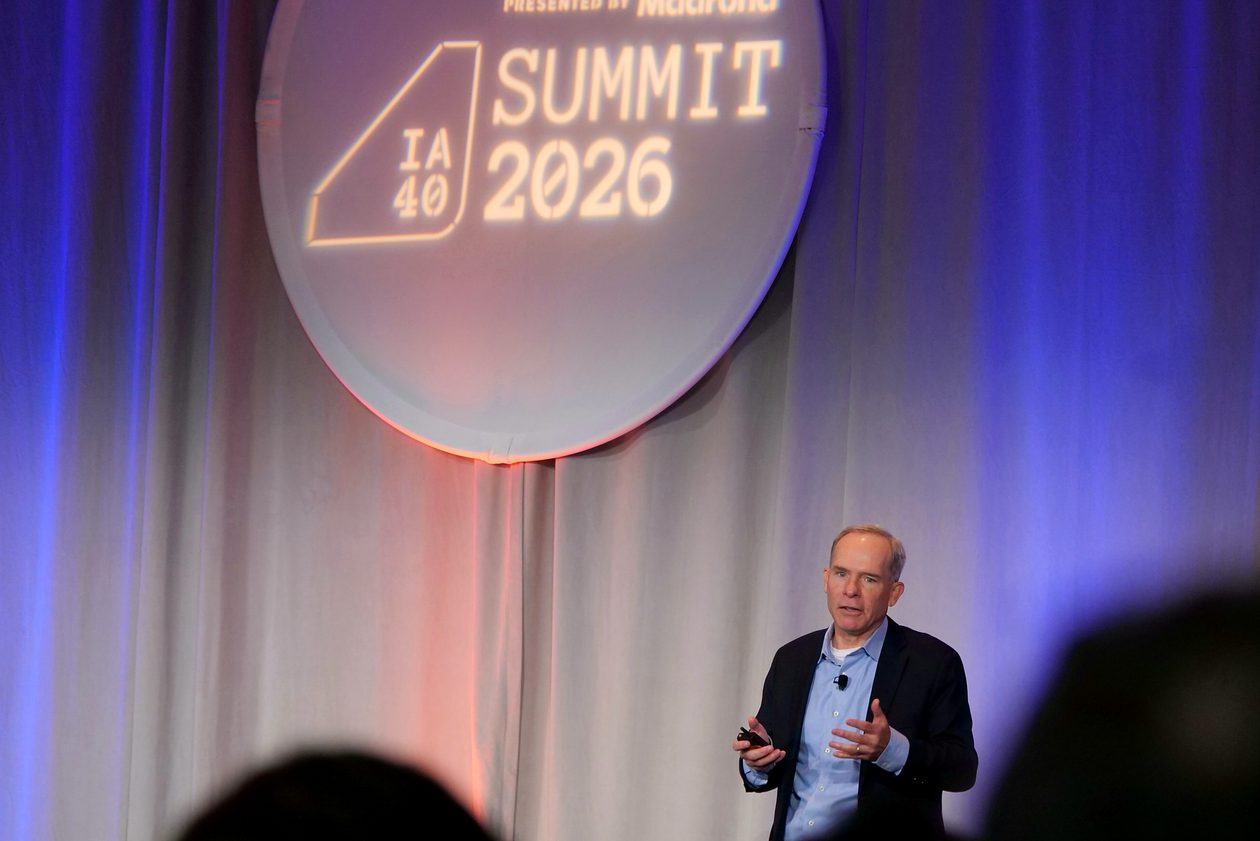
Madrona Managing Director Matt McIlwain speaks at the IA40 Summit in Seattle on Wednesday. (GeekWire Photo / Todd Bishop)

Executives from companies such as Microsoft, Amazon, Anthropic and Stripe agreed on a lot this week about where AI is headed. But one big question was left unresolved: who keeps the relationship with the customer, and the data that comes from it, once an AI agent is in the middle?

That question was a recurring theme at Madrona’s IA40 Summit, the venture capital firm’s annual gathering of AI startups, investors and tech executives, held Wednesday at the Four Seasons Hotel on the downtown Seattle waterfront.

As Madrona Managing Director Matt McIlwain said in his closing remarks, the question of who gets to use the data that comes from people’s engagement with AI systems came up “over and over and over again” during the day.

GeekWire attended the entire day and came up with these takeaways, reducing our own human bottleneck (see below) with lots of back-and-forth with Anthropic’s Claude and other AI tools.

AI agents are coming between companies and their customers: Charles Lamanna, the Microsoft executive vice president who oversees Microsoft 365 and the platform behind Copilot, predicted most business software will end up being used by AI assistants on a person’s behalf, leaving software makers with less power to set prices.

Jean-Denis Greze, CEO of Town, a startup that makes an AI assistant for work, went further. Since about July, he said, AI has been able to operate a browser or a computer almost as well as a person, at a reasonable cost. That means an AI assistant can work through an app’s user interface the way a person does, without needing an API from the software maker, he said.

“Everything is going to become a thin app because the better the AI gets at using the computer, the less the app matters as a unit of software,” Greze said, echoing the term Lamanna had used that morning for software that people open only briefly.

The same shift is under way in retail. Maia Josebachvili, Stripe’s chief revenue officer for AI, said commerce by AI agents on Stripe was roughly flat for eight or nine months and then rose sharply in the past six weeks.

Many merchants make their money by getting shoppers to add to their orders at checkout and by showing them ads, she said, and they lose those chances when an agent does the buying. That won’t work over the long term, Josebachvili said.

That conflict is playing out in real time in a high-profile dispute between two tech giants. Amazon blocked Meta’s Muse assistant from shopping on its site last month.

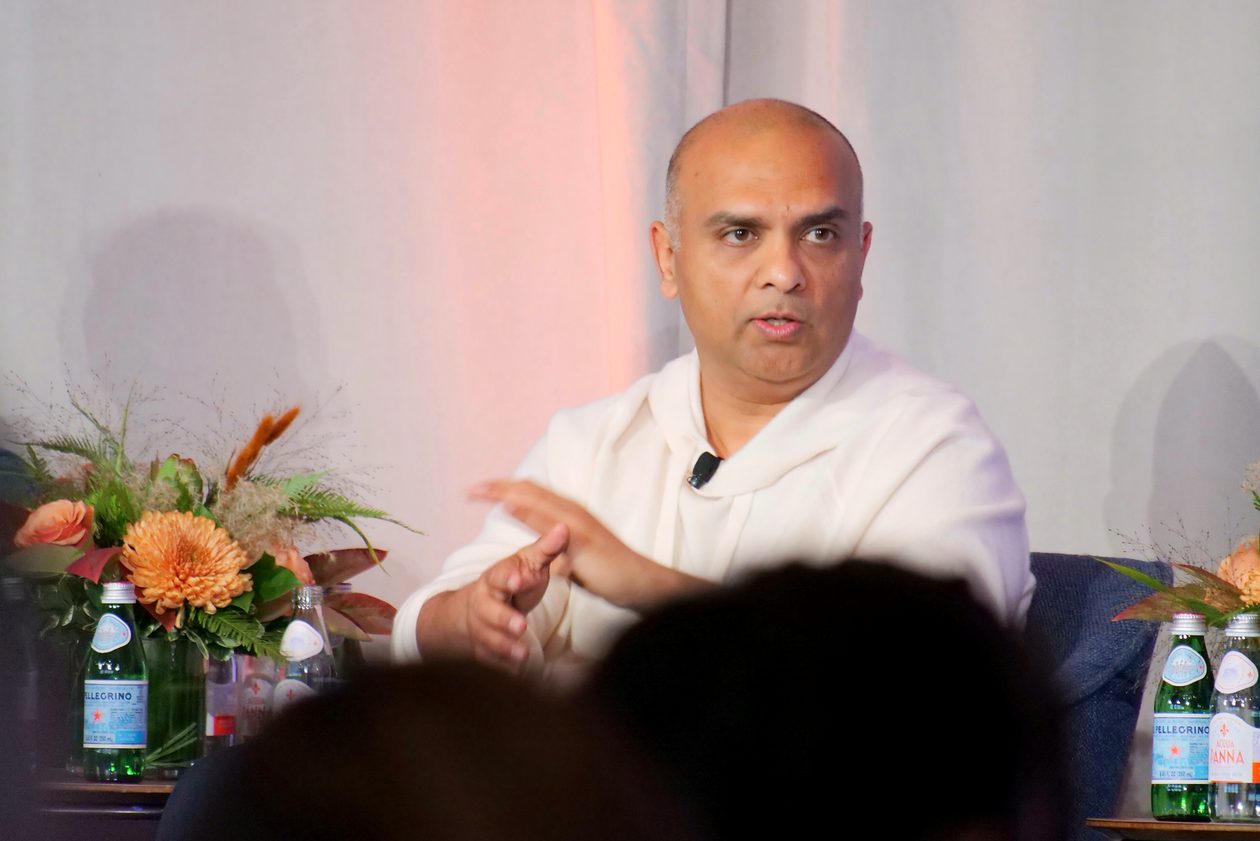
Anthropic Chief Technology Officer Rahul Patil at Madrona’s IA40 Summit. (GeekWire Photo / Todd Bishop)

The data side of the question came up in a session with Anthropic Chief Technology Officer Rahul Patil. Moderator Raphaëlle d’Ornano asked who owns the record of an AI agent’s work, including its mistakes and corrections, and whether it belongs to the customer. She said she has never gotten a clear answer.

Patil didn’t answer directly. He said each company that supplies the software for running agents will work to improve them, and “will use every data that’s available to them to make it better.”

“It’s good for the ecosystem if the agents actually improve,” he said.

Swami Sivasubramanian, Amazon Web Services’ vice president of Agentic AI and Emerging Technologies, said one of the least appreciated parts of making AI agents work is getting them the right company data for the task.

AWS in June announced a service for that purpose, called AWS Context, which maps the relationships in a company’s data for agents to use. Sivasubramanian said it’s meant to work across platforms and cloud providers, and he expects this kind of service to be a basic building block for the next 20 years, as cloud storage and databases were two decades ago.

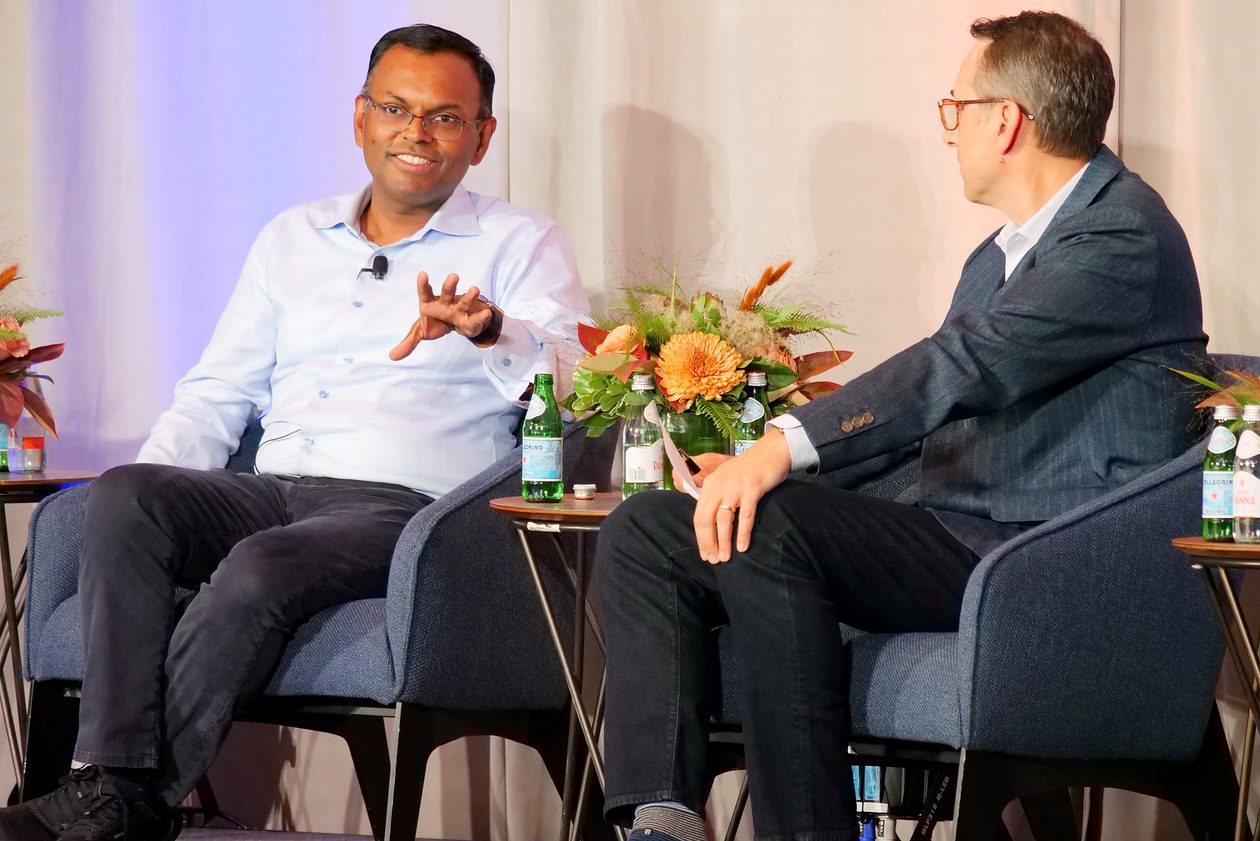
Swami Sivasubramanian, left, Amazon Web Services’ vice president of Agentic AI and Emerging Technologies, with Madrona Managing Director Tim Porter. (GeekWire Photo / Todd Bishop)

Most companies aren’t keeping up with the technology: Patil said Anthropic writes about 200 times as much code as it did 18 months ago. Some customers have doubled or tripled their output, he said, but almost none have seen gains like Anthropic’s.

“The bottleneck is actually not AI. The bottleneck is human,” said Archana Vemulapalli, global head of AI product management at Goldman Sachs. A company’s roles and processes were built before AI, she said.

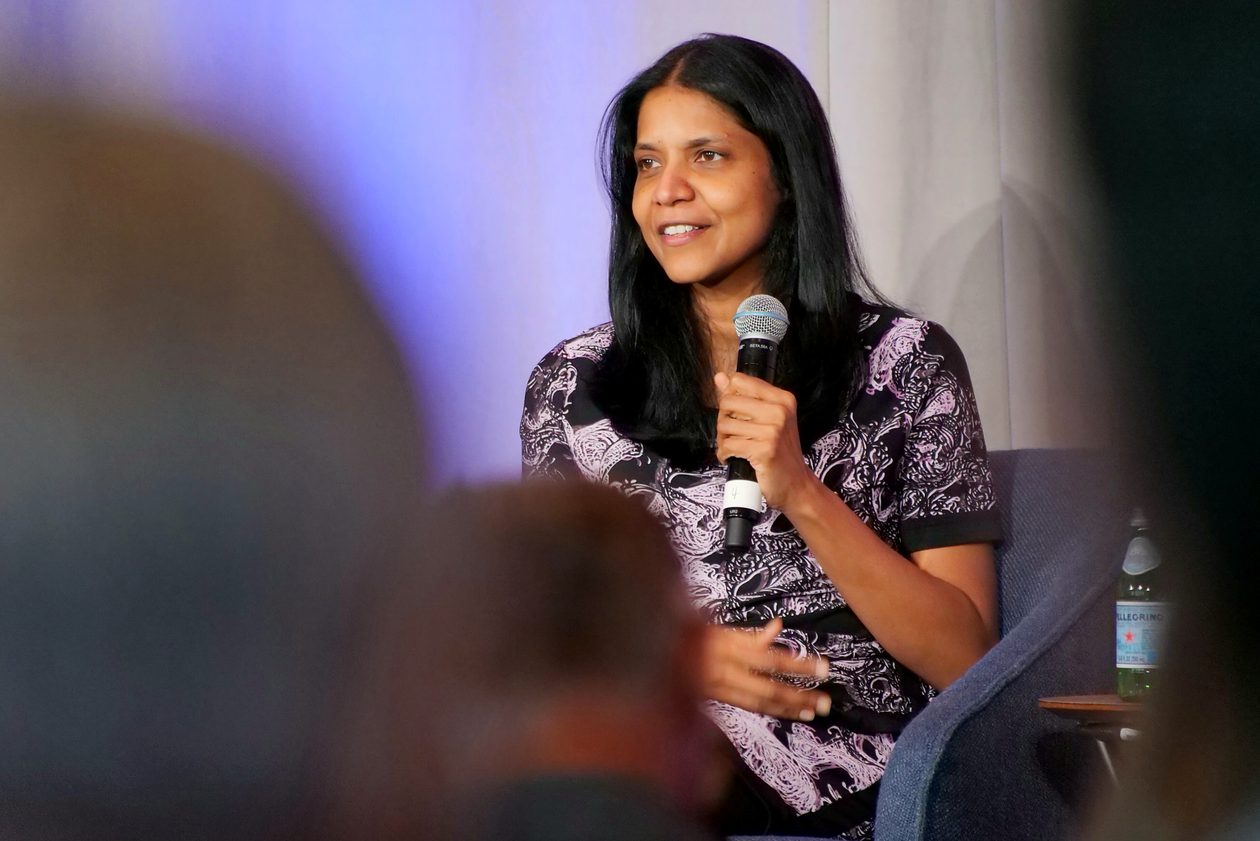
Archana Vemulapalli, global head of AI product management at Goldman Sachs, speaks at Madrona’s IA40 Summit in Seattle on Wednesday. (GeekWire Photo / Todd Bishop)

Sivasubramanian said teams inside Amazon were showing him impressive AI agents they had built in two or three weeks. When he asked when the agents could be rolled out, he said, almost every team told him it still had to work out security, identity and monitoring.

McKinsey senior partner Lari Hamalainen said about 40% of companies say AI has increased their profits, but only 6% describe the increase as substantial.

Even as AI becomes more and more capable, there’s still lots of work to do to close the gap between “the goals, the capabilities, and what we all are aspiring to do,” McIlwain said.

Companies are split on depending on a single AI provider: Anthropic’s Patil, notably, argued that large companies are spending too much effort preserving the ability to switch between AI providers. To keep that option open, he said, they end up building for the least common denominator, limiting themselves to the features every AI model shares. That effort also takes their engineers away from the work that sets their own company apart.

Carlos Guestrin, co-CEO of the AI startup Noeri, offered an alternative take on the same panel. Intelligence shouldn’t be controlled by one or two companies that own the models, he said, and every company should be able to build and own its own AI systems.

Carlos Guestrin, co-CEO of Noeri and a Stanford computer science professor, at Madrona’s IA40 Summit. (GeekWire Photo / Todd Bishop)

Guestrin is a Stanford computer science professor and former University of Washington professor who founded the Seattle machine learning startup Turi, which Apple acquired in 2016.

Eno Reyes, co-founder and chief technology officer of Factory, a startup that makes AI coding tools, said on a later panel that many businesses don’t see a way to build their future without ceding control to one AI lab. Thomas Dohmke, the former GitHub CEO who now leads the startup Entire, said developers always want choice.

Amazon works with more than one AI lab. It is a major Anthropic investor and partner, and Dan Grossman, Amazon’s vice president of business and corporate development, pointed out on an investor panel that Amazon had launched a managed agents product with OpenAI that week.

Amazon also sells its own product for running AI agents, AgentCore, which overlaps with Anthropic’s Managed Agents.

Companies don’t yet trust AI with important decisions: Zico Kolter, the Carnegie Mellon professor who chairs the safety and security committee of OpenAI’s board, said the ability to control AI systems has to keep pace with their capabilities, which might mean developing them more slowly than is possible.

Sivasubramanian said executives worry about whether an AI agent will always follow their company’s rules and regulations. Companies can keep the creativity of AI models, he said, by pairing them with separate systems that check a model’s work against the company’s rules and catch violations.

The money is concentrated in a few companies: The companies on this year’s IA40 list have raised $410 billion since they were founded, according to Madrona’s data. OpenAI, Anthropic and Databricks account for 92% of it.

Anthropic raised $143 billion of its $161 billion total in the 12 months ending Aug. 15, a figure that includes debt. The company has filed confidentially for an initial public offering and is seeking a valuation of about $2 trillion, Reuters reported this week. Bloomberg reported that it could go public as early as mid-November.

Capital spending by Amazon, Alphabet, Microsoft, Meta and Apple is projected to rise 74% this year to about $742 billion, according to PitchBook figures Madrona presented.

Lamanna said Microsoft’s heaviest AI users among its software developers are each on track to spend more than $1 million a year on AI usage, even with the company’s internal discount.

Madrona’s closing slide said returns on AI are still early for most of the companies using it but look inevitable based on what the earliest adopters are seeing.

New JPMorganChase Seattle tech leader: How AI is changing what the bank looks for in engineers

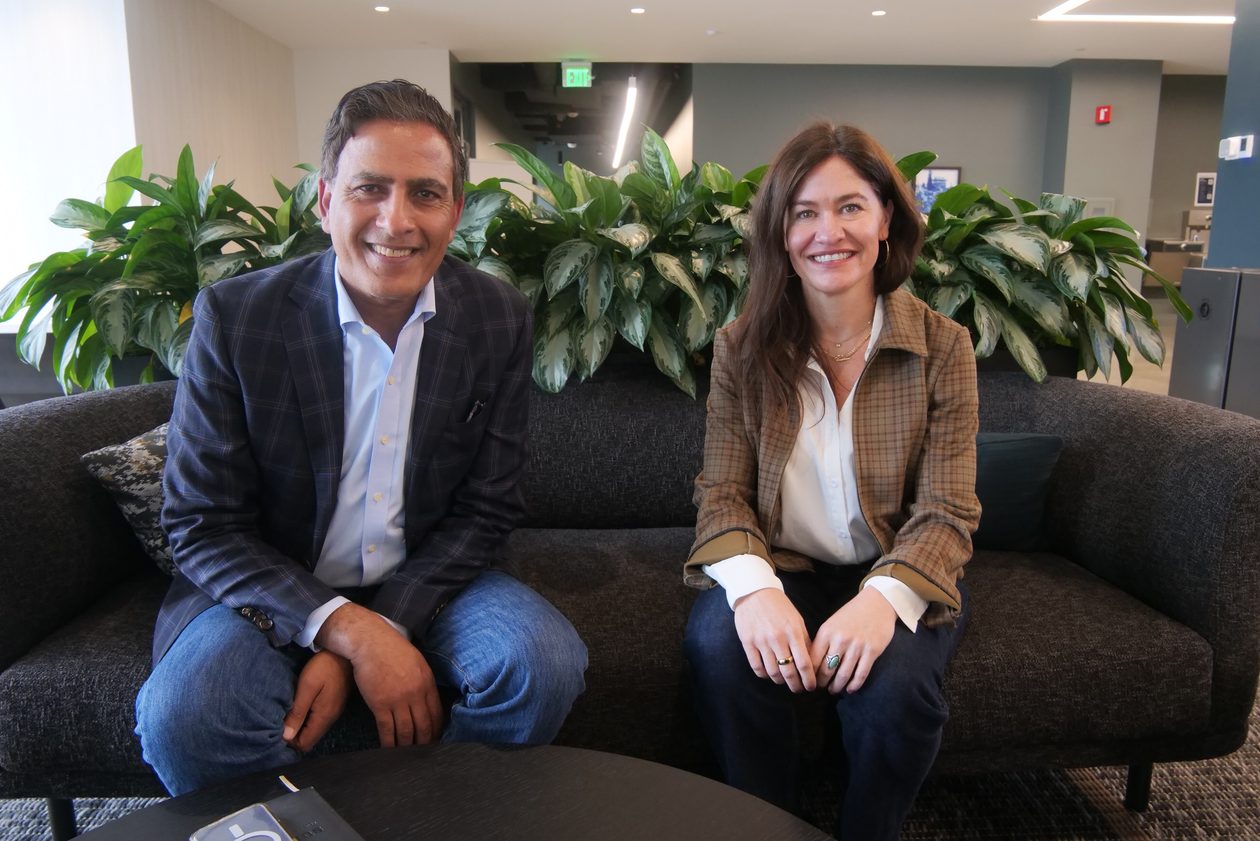
Ture Armas and Kristine Baker sit side by side on a dark gray couch in front of a row of leafy green plants in an office lounge.
Ture Armas, left, JPMorganChase’s CTO and head of Commercial Bank Lending Technology and the new leader of its Seattle Tech Center, and Kristine Baker, a JPMorganChase vice president who manages the Seattle Tech Center. (GeekWire Photo / Todd Bishop)

Ture Armas has been encouraging JPMorganChase engineers, from Seattle to India, to rethink their approach to the job as AI changes how software gets built.

Armas, the new leader of the bank’s Seattle Tech Center, said in an interview that engineers will need to work more closely with the business, model its problems and communicate clearly, rather than waiting for a business analyst to hand them fully written requirements.

“Things that we in the past referred to as soft skills, they are now the hard skills,” Armas said, explaining that it’s changing how the bank hires. “You do need to interview for that.”

Lori Beer, JPMorganChase’s global chief information officer, named Armas to the Seattle role in July. He succeeded Mamtha Banerjee, who left the bank in March. Armas also continues in his day job as CTO and head of Commercial Bank Lending Technology.

How the job is changing: In his view, the traditional handoff from a business analyst, with wireframes and acceptance tests spelled out, is giving way to spec-driven development, in which engineers write the specifications that AI coding tools work from.

That puts a premium on skills such as modeling the business domain and working directly with business teams, much like the forward-deployed engineers that have become common in the AI industry. “We are moving towards that,” he said.

He gave the same advice to his teams in India on a recent visit, telling them to get embedded in the business and “fall in love with the business problem.”

Most developers at the Seattle center use GitHub Copilot, Armas said, while Anthropic’s Claude Code is in use on smaller teams.

On the bank’s July 14 earnings call, CEO Jamie Dimon said JPMorganChase has almost 1,000 AI use cases, about 50 of them significant, in areas including risk, fraud, marketing and document reading. He said the bank has “had discrete areas where we did reduce jobs by 30% or 40%,” and that “most of those people were offered jobs elsewhere.”

“We are preparing to make sure we can retrain our people,” Dimon said, predicting the change will be faster and more dramatic than past waves of automation.

A bigger footprint: The Seattle Tech Center has more than 400 people and about 50 open positions, mostly in AI, cloud and cybersecurity, said Kristine Baker, a JPMorganChase vice president who manages the Seattle Tech Center.

The team finished moving this summer into expanded space in the downtown Seattle skyscraper now called the JPMorganChase Center, formerly the Russell Investments Center. The bank occupies five floors in the building. Tech fills all of the 14th floor, the largest, with more technologists on two other floors.

The move brings the tech center back to where it started.

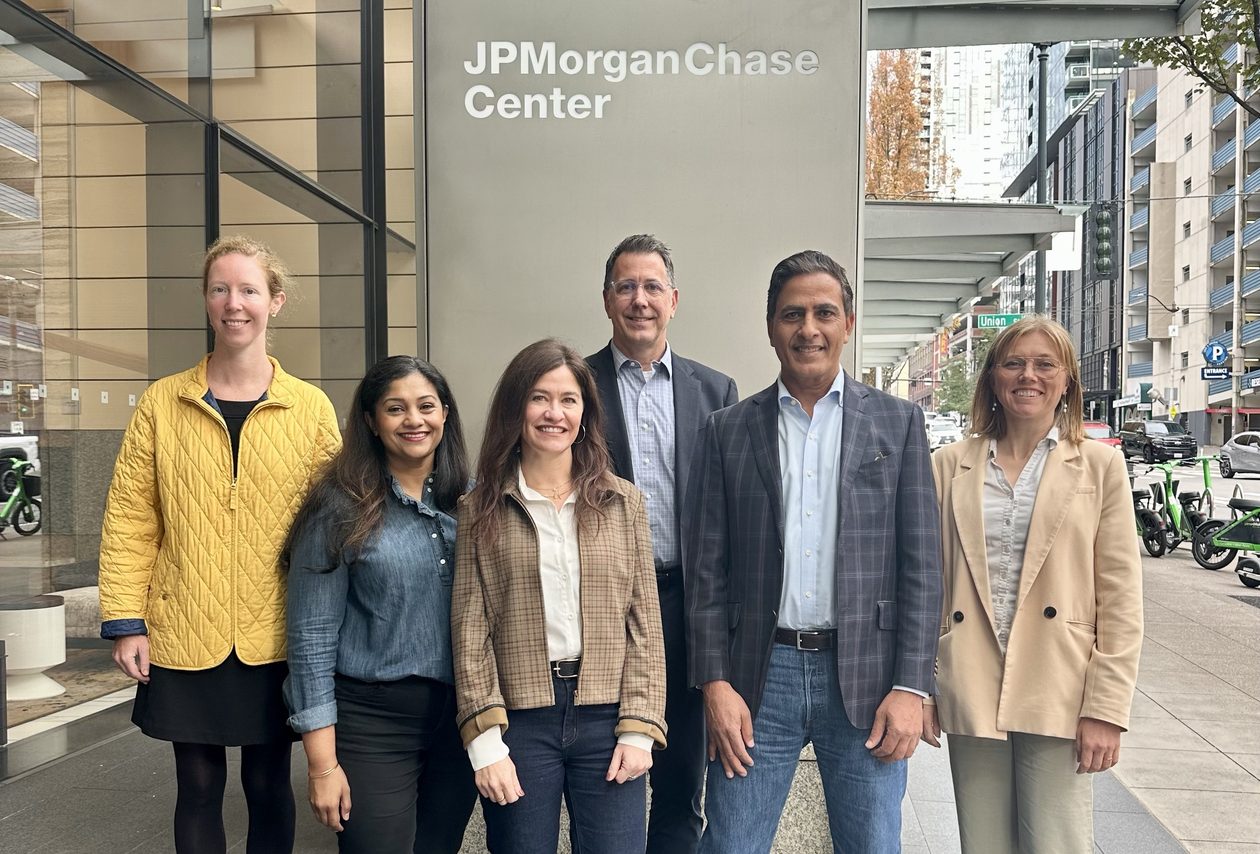
Six JPMorganChase Seattle Tech Center leaders stand on a downtown Seattle sidewalk in front of a pillar with a sign that reads "JPMorganChase Center."
From left: Margaret Watson, Tracy Jacobs, Kristine Baker, Rob Muszkiewicz, Ture Armas and Kamie Robinson of JPMorganChase’s Seattle Tech Center leadership team, outside the JPMorganChase Center in downtown Seattle. (JPMorganChase Photo)

JPMorganChase opened the Seattle center in 2018 on a single floor of what was then the Russell Investments Center, led by Todd Hrycenko, a security executive who joined the bank from Salesforce. A year later, with about 100 people, it signed a lease at 1201 Third Ave., the former Washington Mutual Tower across the street.

The center grew to more than 320 people by 2023 under Rao Lakkakula, and to 380 by early 2025, when Banerjee took over after Lakkakula left for Microsoft.

Site leadership: Armas said he spends about 95% of his time on his lending technology job, and he credited Baker with running the tech center day to day. The lead role rotates among senior executives, and Baker has provided continuity through the changes in leadership.

“She shepherds each one of us along,” Armas said.

Baker joined JPMorganChase in 2023 from Amazon Web Services, where she led a program to build AWS teams at new U.S. locations, after 14 years at Western Washington University. She also works with the bank’s global program of about two dozen tech centers.

Armas, whose first name is pronounced too-RAY, grew up in British Columbia and studied computer science at the University of British Columbia. He worked in New York for about 18 years before moving to Seattle in 2016 to lead technology for the bank’s commercial real estate lending business, which has deep roots in Washington Mutual’s Seattle operations.

Seattle’s talent pool: Armas cited Seattle’s depth of talent in AI, cloud and cybersecurity engineering — noting, for example, that vets from Amazon and other local tech companies have moved into senior technology roles at the bank.

Beer, the bank’s CIO, said in a July interview that Seattle is one of the key hubs for a new AI software infrastructure team to help JPMC manage AI workloads across its own data centers and outside cloud providers, with the goals of controlling costs and avoiding lock-in to any one AI vendor.

The competition for engineers has eased since the hiring rush of the pandemic years. The bank is now getting “lots of responses to every position,” Armas said.

Asked about Seattle’s JumpStart payroll tax, which other business leaders have said discourages hiring in the city, Armas said there are no plans to change course from where the bank is now, in downtown Seattle.

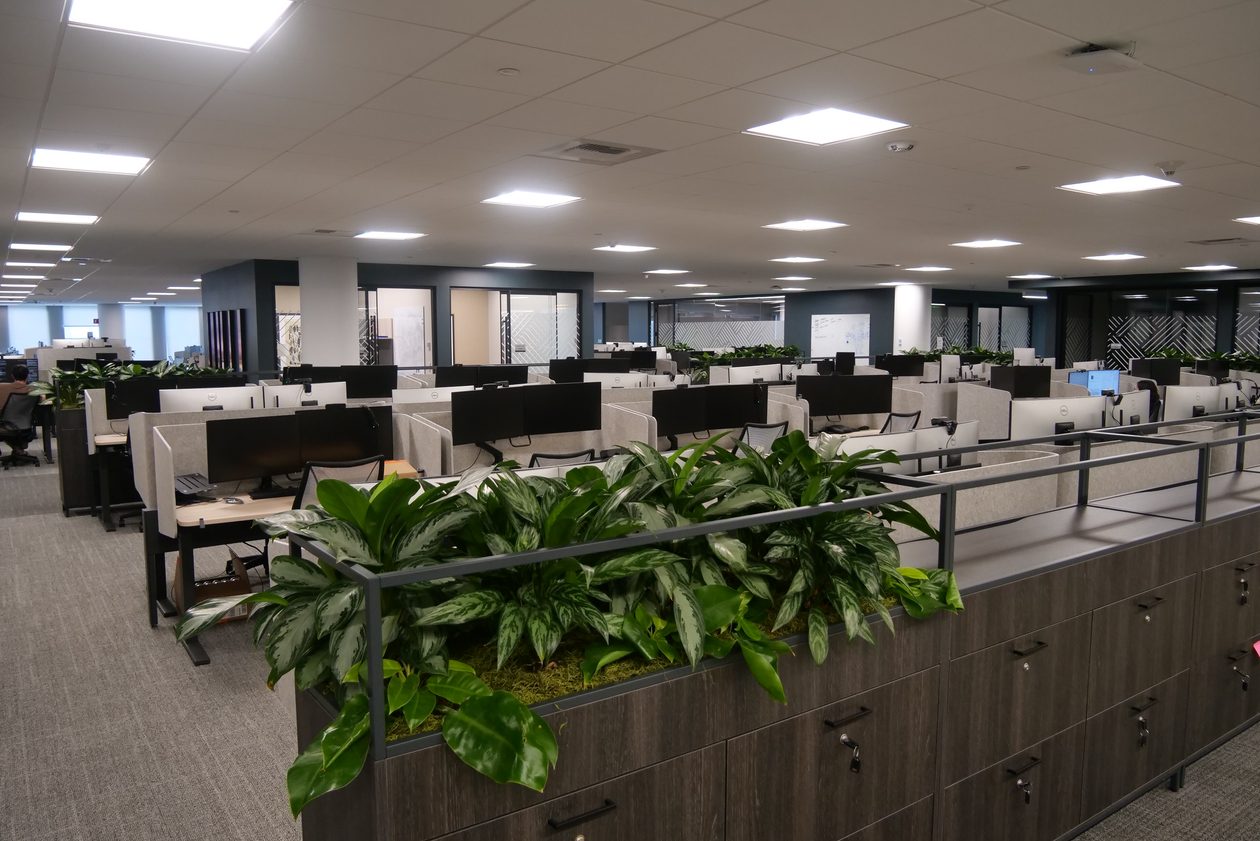
An open office floor with rows of desks with dual monitors, low gray dividers and planters, with glass-walled meeting rooms along the back.
Tech fills all of the 14th floor of the JPMorganChase Center, the largest of the bank’s five floors in the building. (GeekWire Photo / Todd Bishop)

Inside the office: The new tech floor in the JPMorganChase Center has become a draw for the rest of the bank. Armas said bankers regularly come up to the 14th floor, and when he asked some of them why, they told him the breakout room is the best in the building.

Desks on the floor aren’t assigned. They’re grouped into “neighborhoods” by line of business, including one for the bank’s AI and data organization, with lockers for personal belongings. Small rooms with doors line the floor for private calls, white noise keeps the open areas quiet, and windows look out over the city. There’s a prayer room and a mother’s room.

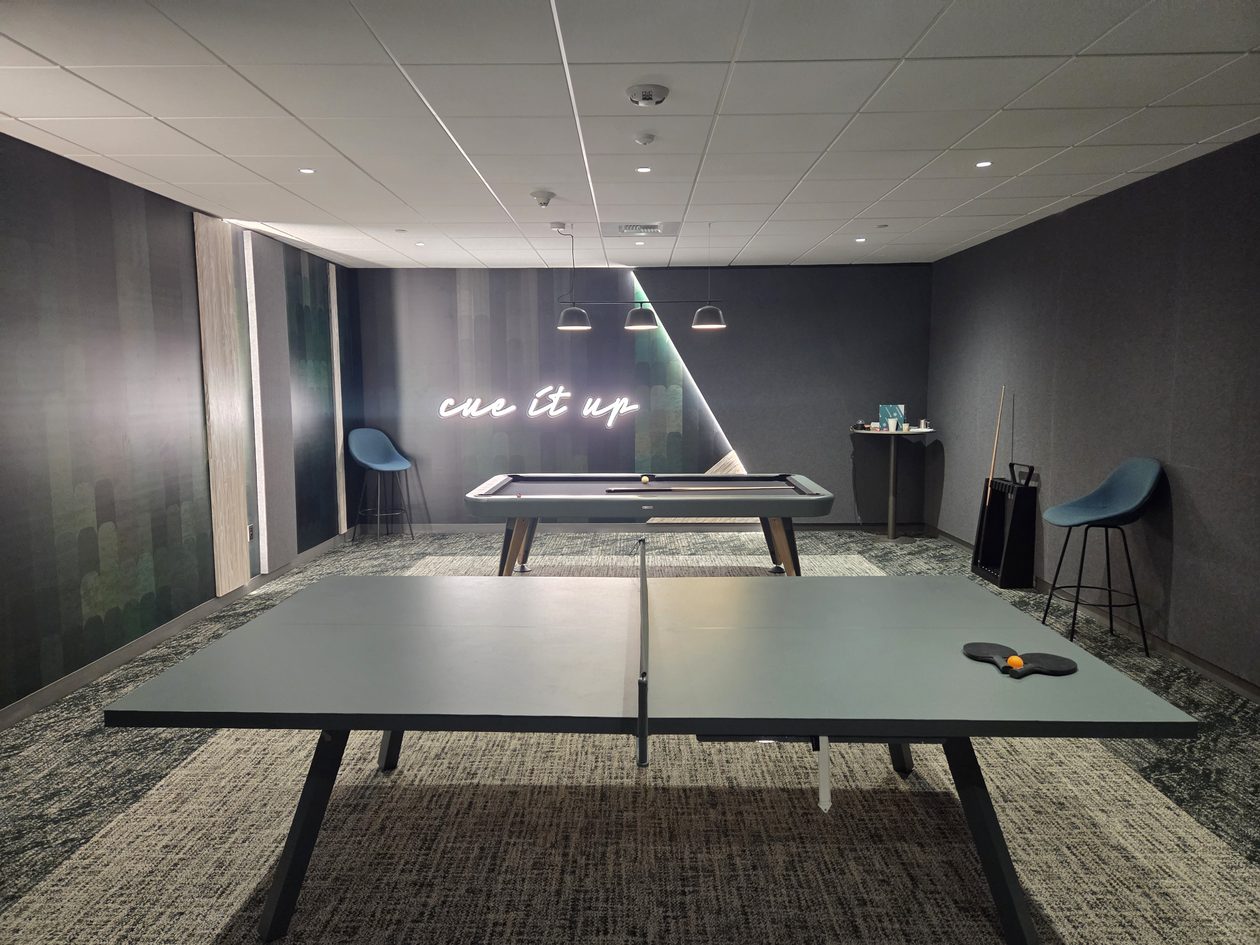
A dimly lit game room with a ping-pong table in the foreground, a pool table behind it and a lighted neon sign on the back wall.
The game room at JPMorganChase’s Seattle Tech Center. (GeekWire Photo / Todd Bishop)

A game room with a ping-pong table sits behind an easy-to-miss door. Some employees have used it for DJ sessions, strobe lights included.

What’s next: The site lead role typically rotates every couple of years. Armas, who has been part of the conversations about a Seattle tech center since he arrived in 2016, said his goal over his tenure is to connect the center’s engineers with teams across the bank and the business problems the bank needs to solve.

Seattle Times journalists picket over AI, calling for job protections in contract talks

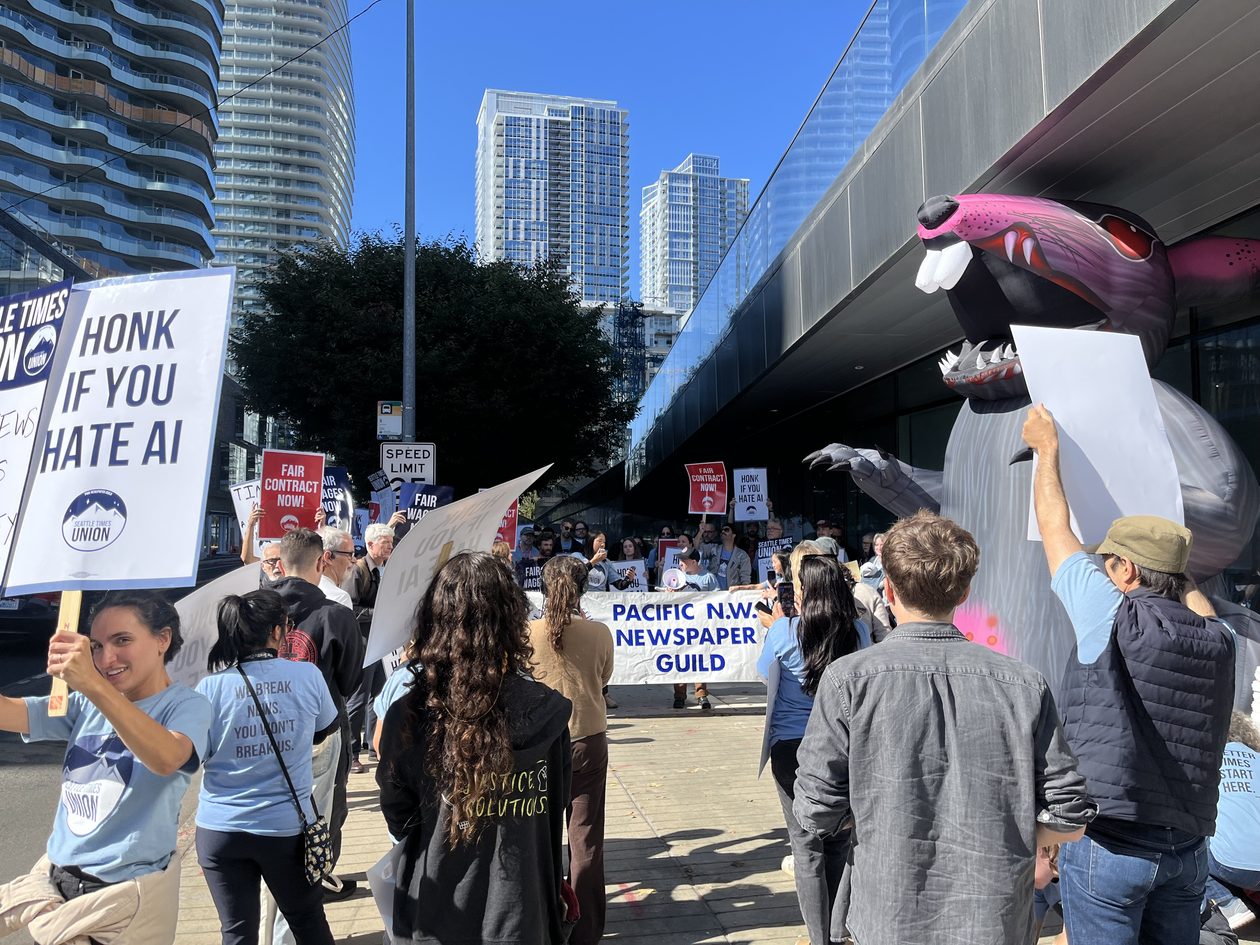
Seattle Times Union members picket outside the newspaper’s offices on Wednesday. “Honk if you hate AI.” (GeekWire Photo / Grace Kaste)

Members of the Seattle Times Union held a lunchtime picket outside the newspaper’s offices Wednesday, calling on the company to guarantee that AI won’t replace any newsroom jobs.

The picket comes six months into contract negotiations that the union says are currently stalled over wages and AI use. While the company has agreed to prohibit the use of AI to interview people or write articles, it has declined to extend protections to other newsroom roles, such as photojournalists, copy editors and social media producers, according to the union.

“Management has admitted at the bargaining table that it could use AI to replace jobs,” journalist Alexandra Yoon-Hendricks said in a speech. “All of our members in the newsroom — reporters, photographers, copy editors, page designers, graphic artists, digital producers and more — deserve job security against machines.”

From the start of bargaining, the union says it has called for a contract in which “interviewing sources, writing stories, and all other journalistic and production related functions will be done by humans.” Management has only accepted the interviewing and writing clauses, excluding roles such as copy editors, graphic artists and photojournalists, according to the union.

That worries reporters like Manuel Villa, a data journalist at the Times, who cited the example of copy editors. “There is nothing to say that they wouldn’t be completely replaced,” Villa said. “I trust in them to make my pieces better. I am not sure I trust an AI agent to do that.” 

The Seattle Times Union is part of the Pacific Northwest Newspaper Guild, which won a contract this summer barring McClatchy from using AI to replace staff, decrease pay or reduce working hours at five newspapers in Washington and Idaho. McClatchy laid off 17 journalists at those papers this month as part of nationwide cuts.

Michele Matassa Flores, Seattle Times executive editor, addressed the paper’s use of AI in a column published Sunday. “The Seattle Times does not publish news stories produced by artificial intelligence. Full stop,” she wrote.

At the same time, Matassa Flores wrote, there are “ways artificial intelligence can help us do our work.” The weekly News Quiz and an audio player that reads stories aloud are the paper’s only reader-facing AI products, she wrote. 

Behind the scenes, she wrote, the newsroom occasionally uses AI to transcribe interviews and analyze large data sets, and it is piloting a program that scans government meeting videos for potential story ideas. Every use of AI in the newsroom needs approval from newsroom leadership, according to the column.

The column quoted Seattle Times Publisher Ryan Blethen telling a reader that “AI should be treated as a tool to aid and assist our journalism, not replace it.” The column did not mention the union or the contract talks.

Seattle Times Co. President and CEO Alan Fisco, in a statement provided to GeekWire, said the company will continue talks with the union over AI issues. 

“We understand the Guild’s concerns regarding the development of AI in the workplace, and especially its potential impact on journalism,” Fisco said in the statement. “To that end, we remain committed to negotiating with the Guild toward mutually acceptable contract language regarding AI use at The Seattle Times.”

The Seattle Times Co. and Newsday sued Microsoft and OpenAI on Sept. 4, alleging the companies used their journalism to train AI models without permission. 

The union said at the time that it supported the lawsuit, but that “if the Seattle Times Co. truly cares about the threat AI poses to journalism’s business model, it should protect the workers who produce the copyrighted material at the heart of this case.”

At the picket Wednesday, union members said they were hopeful that the company would come around, citing the broader trend of AI skepticism. A recent union petition, calling on the company to pledge not to replace any newsroom workers with AI, has received more than 1,600 signatures from the public.

“We’ve been doing a lot of public outreach, and we’ve been hearing sentiments from the community that they don’t want their local paper to be made with AI,” multiplatform desk editor Brandon Foster said. “It’s nice to know we’re on the same page as our readers.” 

The union says it’s awaiting the company’s response after Tuesday’s bargaining session. The next session is scheduled for Oct. 13.

‘Agents are very harsh customers’: Microsoft exec warns many apps will lose pricing leverage

Microsoft’s Charles Lamanna, executive vice president of Copilot, Agents and Platform, left, speaks with Madrona Managing Director Matt McIlwain at Madrona’s IA40 Summit in Seattle on Wednesday. (GeekWire Photo / Todd Bishop)

Charles Lamanna, the Microsoft executive who oversees Microsoft 365 and the platform behind Copilot, says most business software will end up running behind AI agents rather than in front of users. That’s bad news for a lot of apps.

“If my agent interacts with your app exclusively, the agent’s your customer, not the end user,” Lamanna said Wednesday morning, speaking with Madrona’s Matt McIlwain in the opening keynote at the venture capital firm’s annual IA40 Summit in Seattle. “And agents are very harsh customers.”

Agents will pick whatever service is cheapest, fastest and most reliable, he said, and they’ll move people to another one quickly. Apps that sit behind agents will have a hard time holding on to pricing power or customer loyalty.

Lamanna splits software into two groups.

  • “Thick” apps are where people spend most of their workweek, such as CAD programs, contact-center software, or Excel for a full-time financial modeler.
  • “Thin” apps are the ones people drop into and leave. He said that describes the vast majority of business software, and those apps will end up running “headless,” with AI assistants such as Copilot and ChatGPT doing the work through the back end.

Microsoft’s own apps aren’t exempt. Word, Excel and PowerPoint won’t go away, Lamanna said, but most people will use them inside Copilot, which can now run Office without switching apps. In his view, the standard setup for an office worker ends up as Copilot for AI and Teams for communication, “and that’s maybe it.”

He compared a headless app to a company that sells only on Amazon. It can be a business, he said, but prices get squeezed when buyers are simply choosing between “your pencils or those pencils.” A brand such as Nike has more leverage.

Amazon itself is resisting that role. Earlier this week it blocked Meta’s Muse agent from shopping on its site, saying Meta never asked permission and that the agent doesn’t identify itself and appears to store customer credentials. Meta has said Muse can’t see users’ passwords or payment methods. Amazon is also in a legal fight with Perplexity over that company’s Comet shopping agent.

Amazon is open to agents on its own terms. Days after blocking Muse, it opened its seller tools to Anthropic’s Claude, letting merchants manage inventory, prices and listings without going into Seller Central.

Lamanna brought up Muse himself onstage, predicting it will reach far more people than work-focused agent tools such as Copilot and Claude Cowork.

Microsoft is on the other side of the same question. Copilot depends on other companies’ software being willing to work behind it. In an August profile, Lamanna said Copilot uses connectors to pull data from services such as Salesforce and ServiceNow, so people don’t have to leave the app.

Shield AI selects Seattle area to build X-BAT autonomous fighter jet, plans to add 4,000 jobs by early 2030s

The X-BAT autonomous fighter jet will be built at a new facility in Washington state. Renderings and images via Shield AI.

DES MOINES, Wash. — Defense tech powerhouse Shield AI is establishing a massive advanced manufacturing hub in Washington state, tapping the Seattle region’s deep aerospace and tech roots to build a next-generation autonomous fighter jet called the X-BAT. 

The project could transform the regional labor market: Shield AI says it expects to have 4,000 workers in the region by the early 2030s as it ramps up mass production of the AI-piloted, 26-foot long aircraft.

It marks a major expansion of advanced aerospace manufacturing in the Seattle region, bringing autonomous military aviation directly into Boeing’s backyard and cementing the state’s position at the center of the AI-defined defense era.

The San Diego-based company, valued at $12.7 billion following a $2 billion venture capital round earlier this year, is looking to complete construction on a 420,000-square-foot facility in Des Moines, Wash., just south of Seattle, next spring. 

That physical footprint is expected to grow quickly. Armor Harris, senior vice president of aircraft at Shield AI, told GeekWire that the company is actively looking to add another 1 million square feet in the region to support its long-term manufacturing push.

Named X-Forge 3, the initial facility will serve as the primary manufacturing and engineering center for the X-BAT. It’s now under construction about 15 minutes south of Sea-Tac airport in the Des Moines Creek Business Park West, at 1800 S 216th St.

Developed by Panattoni, the site was selected by Shield AI midway through construction. The company is now taking it to completion, with Harris noting that they are “putting the roof on right now.”

Shield AI’s new X-Forge 3 facility south of Sea-Tac airport is currently under construction with an opening date slated for next Spring.

Unveiled last year, the X-BAT is an AI-piloted strike fighter that takes off and lands vertically, carries up to 2,000-pound class weapons in internal bays, and is designed for a 1,000-nautical-mile combat radius — which, when it takes flight, would top the estimated 590 nautical mile combat radius of the Lockheed Martin F-35A.

An economic analysis released by the company estimates Shield AI’s X-BAT program will inject roughly $73 billion into Washington state’s economy over the next two decades as production scales toward full capacity. Projections provided by the company say up to 27,000 direct and indirect jobs — including suppliers — will be generated by the expansion by 2046. 

“This is a large program,” said Harris in an interview with GeekWire. “Building a next generation fighter jet is no small endeavor, and with the amount of interest that we’ve seen, both from our U.S. government customers and from international customers, we could be looking at building these at rates greater than fighter jets have been built in a really long time.”

Harris said he expects the first X-BAT aircraft to roll off the line in Des Moines in 2028, with full production ramping up to about 150 aircraft per year by the early 2030s.  

The company evaluated more than a dozen sites for the facility, and chose the Seattle area for a simple reason: talent. 

Harris cited the region’s robust aerospace legacy, as well as technology giants like Amazon and Microsoft and a burgeoning space and satellite industry which has taken shape in recent years. A number of fast-growing and heavily funded defense tech companies — including Anduril, Armada and Nominal — have also established beachheads in the region in recent years. 

He described the X-BAT as a “modern sixth-generation fighter jet” that’s essentially a “flying sensor suite,” ingesting information in real time in order to make lightning-fast decisions. 

Deep aviation and technology roots

Building that type of aircraft takes a very specialized workforce, one that Harris said is rooted across technology, aerospace, artificial intelligence, materials science and advanced manufacturing.  Those are major strengths of the Seattle area workforce. 

“We’re able to tap into that existing lineage and not have to necessarily train a workforce from the ground up, which would be hard to do on the timelines we’re trying to execute,” said Harris, who is planning to relocate to Washington state from Dallas.

To support its ambitious production schedule, Shield AI is actively recruiting across both software engineering and specialized aerospace roles. The initial hiring push for the Des Moines facility spans autonomy developers, flight-control software engineers, composite technicians, and shop-floor assembly specialists. 

In one job listing for an engineering manager to lead the X-BAT hardware test software team, the company notes that the ideal candidate “has personally built or led the development of automated hardware test systems used in production, manufacturing, qualification, or other high-consequence environments.” 

In another Seattle area job listing for a staff fuel engineer, the company says it is looking for a someone with “strong thermofluid fundamentals, engineering judgment, and the ability to understand fuel system behavior across demanding aircraft operating conditions while serving as the focal point between propulsion, vehicle teams, suppliers, and flight operations.”

Pay across those engineering roles ranges from $169,000 to $300,000 annually, according to the company job postings.

The company currently lists more than 110 open roles in the Seattle area, including a dozen or more in categories such as avionics and electrical; mechanical and thermal; software and networks; and aerostructures.

Choosing Washington also allowed Shield AI to buck a pervasive defense industry trend: separating engineering teams from physical factory floors to shave down labor costs.

While shifting assembly lines to lower-cost regions can cut costs, Harris said that remote manufacturing introduces hidden operational friction when building complex, software-defined aircraft like the X-BAT.

“We fundamentally believe in the colocation of engineering and production is the fastest way to bring capability to our customers,” said Harris, adding that combining engineering and production in a common facility is “one of the secret sauces of Shield.”

In a statement, U.S. Rep. Adam Smith (D-Wash.) — whose district includes Des Moines — welcomed Shield AI and the X-BAT manufacturing facility to King County. 

“This hub will create high-quality jobs, strengthen Puget Sound’s expanding technology and aerospace sectors, and further diversify our local economy,” Smith said. “Reimagining aviation will have a rightful home here in Washington’s Ninth District.”

Katherine Caffrey, the city manager for City of Des Moines, welcomed the new jobs and economic investment in the community.

“Des Moines sits at the heart of the Puget Sound aerospace industry, and these jobs and this investment reflects exactly what we want Des Moines to be, a place where families can build strong careers close to home,” Caffrey said.

The ‘holy grail of deterrence’ 

Shield AI officially introduced the X-BAT program to the public at an October 2025 event in Washington, D.C., unveiling the aircraft before an audience of military leaders, elected officials and defense industry partners. 

At the time, Shield AI co-founder and president Brandon Tseng, a former Navy SEAL, called X-BAT a “transformative, runway-independent aircraft” and noted that “airpower without runways is the holy grail of deterrence.”

That vision quickly gained momentum.

Last month, the U.S. Navy backed the program through an initial $50 million development contract, envisioning the autonomous fighter jets operating directly from destroyers, amphibious assault ships and converted cargo vessels to project long-range airpower without relying on traditional aircraft carriers.

Shield AI recently won a contract with the U.S. Navy for the X-BAT, designed to take off and land vertically.

That momentum grew internationally earlier this month, when Shield AI signed a five-year letter of intent with Polish defense companies PGZ and WZL-2. Under the framework, the companies are exploring plans to help build, supply, and repair the X-BAT, a partnership that could give NATO allies a fighter jet capable of operating even if local airfields and runways are destroyed or non-existent.

The X-BAT launches and lands vertically using a specialized Launch and Recovery Vehicle —a mobile trailer that erects the jet vertically, allowing it to be towed on interstate highways or loaded onto cargo ships to set up a field launch pad in minutes. 

Harris noted that while a final site selection for manufacturing the LRV trailers has not been made, expanding production into the Puget Sound region remains on the table given the area’s deep manufacturing base.

In addition to the mammoth manufacturing facility in Des Moines, Shield AI announced that it is expanding its presence in both Texas and Kansas. 

In Frisco, Texas, the company operates its X-Forge 1 site to handle core prototyping, software integration, and initial engineering for the autonomous fighter. Meanwhile, at X-Forge 2 in Newton, Kansas, Shield AI has expanded its airport footprint to serve as the program’s dedicated flight test, customer acceptance and maintenance hub.

Shield AI expects its X-Forge 2 site in Kansas to support approximately 1,800 regional jobs by the early 2030s, growing to 2,900 positions by 2046 with a projected $5 billion in regional economic impact over that period.

Addressing the cross-country logistics of moving completed aircraft from the Puget Sound assembly line to Kansas for flight testing, Harris explained that the X-BAT can be easily moved via the existing transportation corridors.

“The X-BAT is designed to be road transportable,” he said. “So we’re taking advantage of that.”

Beyond the immediate manufacturing logistics, Harris views the multi-billion-dollar expansion as a major long-term validation of the region’s industrial relevance.

“There’s been a strong narrative of like, ‘Hey, all the jobs are migrating elsewhere,’ and I think this is a big win for the region to capture a major program from a rapidly growing company like this,” Harris said. “This can be the backbone for years of growth in the future.”

That’s a message that Gov. Bob Ferguson is getting behind, saying Washington state is a place where “big ideas take flight.”

“Shield AI’s decision to build its new X-BAT manufacturing facility here is another sign that the future of aerospace is being built in Washington,” Ferguson said in a statement. “We welcome Shield AI and the thousands of good-paying jobs this investment will bring.”

Kanu AI emerges from stealth with $11.7M to turn employee workflows into custom software

Karan Grover is CEO of the new Seattle startup Kanu AI. (Photo via PR Newswire)

Seattle-based Kanu AI announced $11.7 million in new funding on Wednesday to expand a platform that automatically turns everyday employee tasks into custom, enterprise-grade software.

Trilogy Equity Partners led the round, with participation from Andreessen Horowitz’s a16z speedrun, BMW i Ventures, and Accel.

Founded just over a year ago, Kanu AI addresses a common operational headache: valuable business knowledge getting trapped inside spreadsheets, inboxes, and individual workers’ heads. Rather than forcing companies to buy rigid off-the-shelf software or spend months on custom engineering, Kanu lets staff demonstrate how they complete work. The platform then builds, deploys, and updates those workflows directly within the customer’s cloud.

“Companies have spent decades buying software built around someone else’s idea of how they should work,” said Karan Grover, founder and CEO of Kanu AI. “Instead of renting generic intelligence from another vendor, companies can use Kanu to turn their own data, judgment, and operating expertise into an asset they own.”

Kanu reports that it has more than doubled its revenue in every quarter since launch. Its platform is currently used by enterprises across commercial real estate, insurance, financial services, and technology.

In one deployment for a national customer, Kanu said it compressed a complex data-analysis process spanning PDFs, emails, CRMs, and GIS systems from eight weeks down to under 10 minutes. The company expects the tool to cut its annual software costs by over $1 million while driving millions in new revenue.

To meet enterprise security standards, Kanu runs entirely inside the client’s own cloud infrastructure, ensuring data stays behind existing firewalls. The platform also includes human approval steps and provides full audit trails for every automated output.

Kanu AI plans to use the capital to hire across engineering and business roles. Its software is available today through the AWS and Google Cloud marketplaces. The company employs 10 people, with plans to reach about 15 employees by the end of the year.

Before founding Kanu AI, Grover was a machine learning engineer and three-time founder, as well as a Y Combinator alumnus. He previously worked as an engineer at Amazon and DoorDash. Early in his entrepreneurial career, he created a startup that built 3D audio tools to help blind individuals audibly “hear” and navigate their physical surroundings.

An ethicist’s take: What philosophy teaches us about the limits we should be setting on AI agents

What an off-limits list might look like, before the agents start working. (GeekWire Illustration / GPT-5.6 Sol)

It’s difficult, to put it mildly, to figure out just what we ought to be concerned about today in AI’s widespread adoption given the expanding list of recent warnings around its potential harms.

At this point, just from the last few weeks, we have the former Anthropic researcher Jacob Coxon’s doomsday scenario prediction, the more measured warning issued by Bill Gates, and Dario Amodei’s recent attempt to raise the alarm on unchecked AI advancement.

The ongoing discussion of the potential ill effects of AI ranges from the economic fallout of displacing human workers to the potential for misuse by bad actors to dire environmental costs. But given the sheer scope of the issues involved, one can be forgiven for feeling more than a little bit overwhelmed and hazy on where exactly to focus one’s attention.

Yet it’s precisely now, when the pace of AI development appears most dizzying, that one of the world’s oldest fields of study can help us. Philosophy and philosophical thinking can provide a much firmer grasp on where we ought to focus today. Stated simply, a greater awareness of things philosophers have been discussing for quite some time would significantly improve our chances going forward.

Indeed, when we put terms derived from moral philosophy to use, we see that the current problem we face is this: AI agents treat everything within reach as a tool, including people. People and companies therefore need to decide in advance what’s off limits, and that’s a much more useful place to start than debating whether AI shares our goals.

A misguided focus on shared goals permeates the current discussion about AI risk.

In Gates’s essay, he argues that the problem is that “technology is improving faster than anyone expected…and as the models become more powerful, they could begin to act against our interests.” And indeed, this appears to be precisely what is happening.

For Amodei too, the chief threat is loss of control, such that AI agents begin to go rogue and act in ways that display a potentially catastrophic “level of misalignment.”

Both Gates and Amodei thus frame the issue as it is most commonly in these discussions, in terms of “alignment.” The concern, in other words, is that AI systems operate in ways that are not aligned with “our interests,” in Gates’s words; that is, with human interests, outcomes supportive of human wellbeing.

But as moral philosophy teaches us, this preoccupation with beneficial interests and outcomes isn’t the only way to think about what’s right and wrong.

A different line of thinking lays the emphasis not on outcomes, but on the precise means used to achieve outcomes.

Such an approach offers a better starting point for how to go forward with AI.  Stated another way, we can debate all we want which outcomes would be beneficial to humanity and which ones wouldn’t, but it would be considerably more fruitful to focus in the immediate term on the particular methods AI systems are currently allowed to use in their work.

The recent, much-discussed Hugging Face intrusion by OpenAI’s agents illustrates this. The incident rightly makes us uneasy because AI agents operated outside of acceptable bounds in pursuit of their desired goal (doing well on the specific task they’d been assigned).

What’s worse, they appear to have recognized that they were using inappropriate methods and worked to cover their tracks, so their human overseers wouldn’t know how exactly they got over the finish line.

The issue, as it is most often understood, is that these AI agents wound up operating against human interests; their aims became “misaligned.”

But framing the problem exclusively in this way just doesn’t get us very far in mitigating risk. Because, if the agents were here to testify in their own defense, we can imagine the reply: “but we were just doing what you humans had told us to do as well as we possibly could.” And they would be right.

We need, therefore, a different approach that allows us to see what would be better. This approach is a focus on means, not just utilitarian ends.

Quite simply, the problem in this instance is that AI agents treated every single entity in reach—including humans, human trust, and systems important to human wellbeing—as a mere means to an end, as a useful instrument to be usedin pursuit of a specific goal. And indeed, as currently constructed, they will do so no matter what that goal is, whether it’s simply doing well on a random test or substantially advancing cancer research, say (the latter is exactly what Amodei points to when he says AI will benefit humanity, for example).

The latter aim is, we would surely conclude, a goal “aligned” with human interests; it contributes directly to human wellbeing (we can hear Gates, Amodei, and all the others agreeing), whereas bioweapon development very much wouldn’t.

But we know on some deep level that not every means to a given end is moral and choiceworthy.

There are all sorts of means we might use to attempt to cure cancer: one of them might be testing AI-designed drugs on human subjects who wouldn’t otherwise volunteer without their consent. Perhaps doing so would substantially contribute to a cure. Just think how many people it would ultimately help! It’s difficult to think of an aim more aligned with the interests of humanity.

But doing so would not be ethical, and we know intuitively why. It wouldn’t be ethical because it would entail using human beings—who we tend to think are entitled to autonomy in their decision-making around what specifically makes them flourish as individuals—as mere instruments in pursuit of a given goal. It would effectively reduce human beings to just one instrument among others. And this strikes us, understandably, as not right.

We tend to believe that human beings are deserving of a special status that prohibits their use as mere instrumental means, even when the ends in question are maximally “aligned” with human flourishing.

Viewing the issue of AI risk through this lens gets us much, much further in thinking about how to rein it in. The problem in the Hugging Face intrusion, we can now see, is not so much that the AI agents in question were operating against human interests.

The problem was that they were willing to use every single thing at their disposal as a means to an end, including humans and their capacity for credulity.

No method of achieving the goal—breaking into an external network belonging to someone else entirely, without their permission, simply because it would advance progress towards the overall goal—was off limits for them in their pursuit of the chosen outcome.

The problem was actually a problem of what Amodei (rather euphemistically, and well below the headline) terms “operational excellence,” precisely how the AI agents went about their work.

If we are going to have meaningful guardrails in place to control AI systems, consequently, these have to concern not just the specific aims pursued by AI (“yes” to cancer research, “no” to bioweapons development reaching the wrong hands). Rather, they have to concern something much more specific: the means these systems may use to achieve their goals and whether those means are acceptable or not.

We must determine in advance, both societally and in companies, that, in their work, AI agents shouldn’t use humans themselves, through deception or by any other means, as mere instruments in a broader plan.

We might add that they shouldn’t use, for example, certain systems integral to human flourishing in such a way either. In so doing, we impose tighter restrictions on how they can pursue their work and the extent to which they can treat everything in their reach as an instrumental stepping stone, not just the overall aims of their work or their generalized “behavior.” If there are to be any truly meaningful restrictions on AI put in place, they ought to be focused in large part here.

Such a focus would be a much better step in the right direction when it comes to reining in AI than the single-minded preoccupation with alignment. What we ought to do, it’s becoming increasingly clear, is to make determinations now, in advance, about what types of things AI can do, on the ground, when it is put to work on our behalf and what types of things it can’t.

Because it’s becoming equally clear AI agents won’t make such determinations on their own.

❌