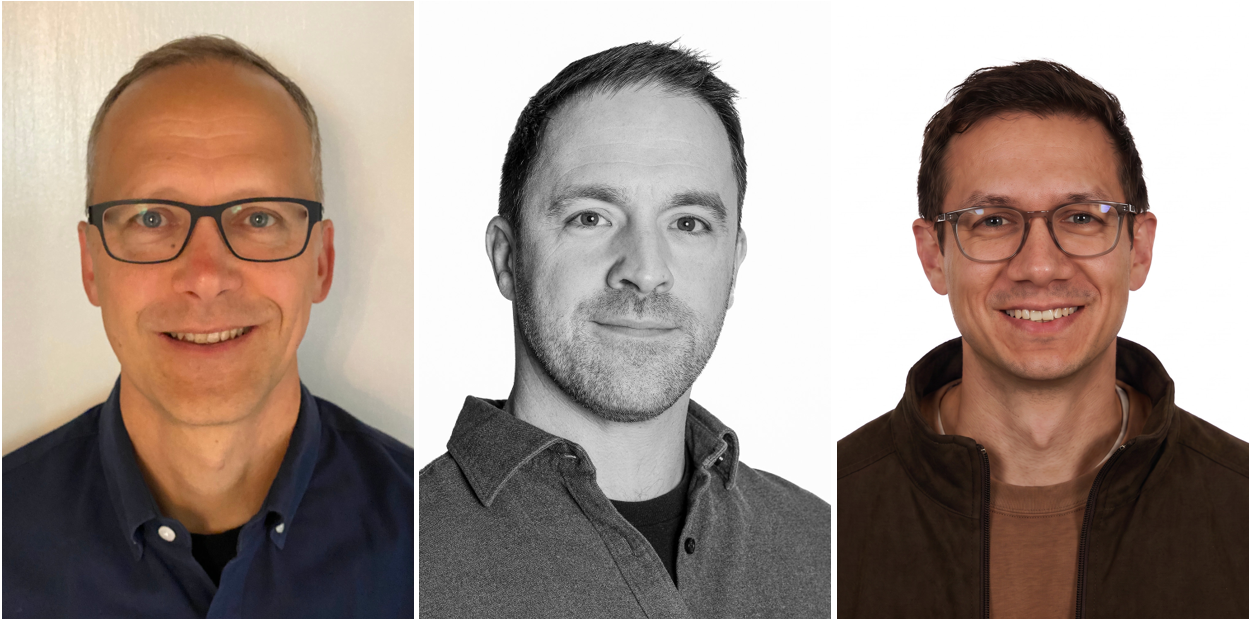
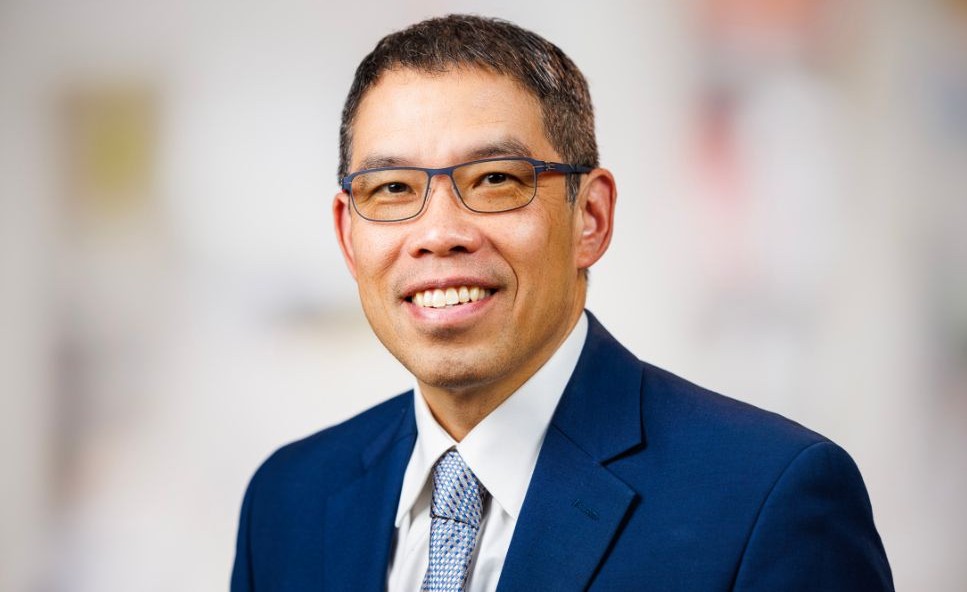
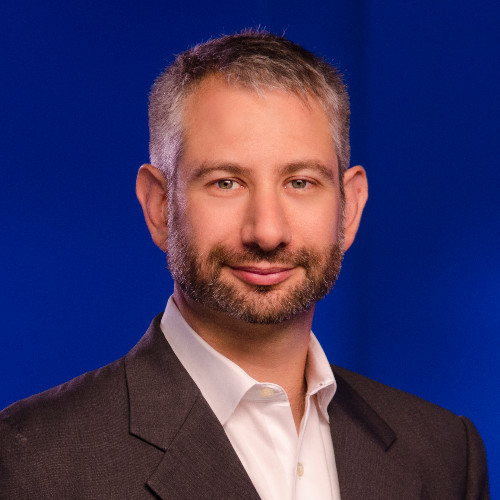
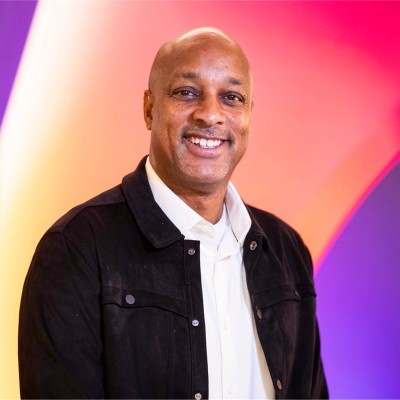
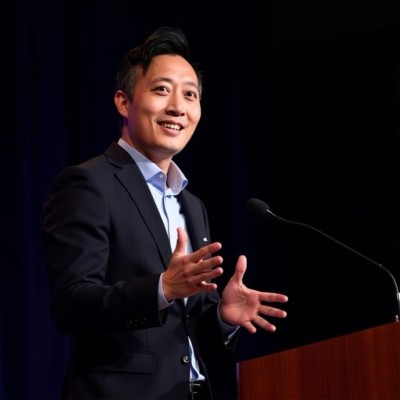
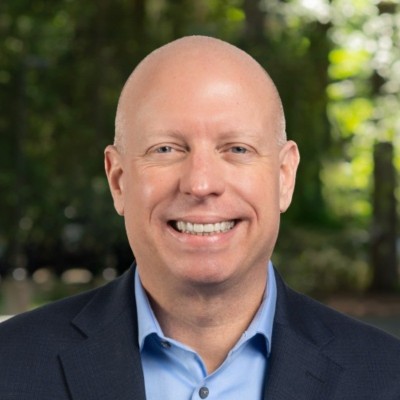
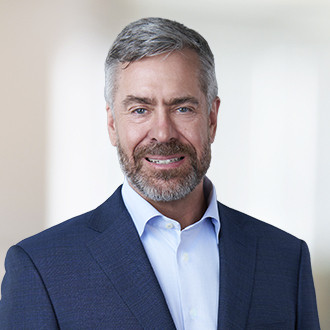
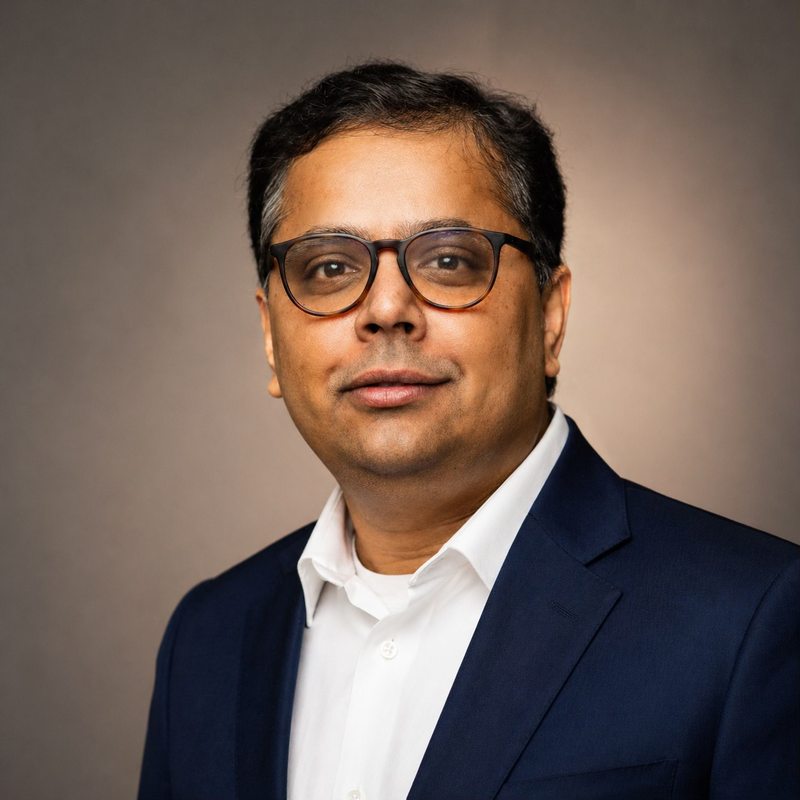
Rudra Mitra will lead Amazon security services in his new role. (LinkedIn Photo)
Rudra “Rudy” Mitra, who spent more than 27 years at Microsoft and most recently led its Purview data-security business, is joining Amazon Web Services as vice president of security services.
Mitra will oversee an AWS portfolio that includes tools such as GuardDuty and Security Hub, which companies use to track security risks across their cloud accounts. AWS recently added AI-specific threat detection to GuardDuty and, perhaps notably given today’s news, extended Security Hub to monitor AI workloads and security inside Microsoft Azure.

He will report to Chet Kapoor, the former DataStax CEO whom AWS hired last year as vice president of search, security and observability, a role that reports to AWS CEO Matt Garman.
“Rudy brings decades of security experience, a passion for building, and a deep understanding of what customers need as the security landscape continues to evolve,” Kapoor wrote on LinkedIn.
Mitra joined Microsoft in 1999 straight out of college, working on early efforts to deliver Office as an online service before launching Purview, the company’s data-security and governance product, in 2014. He announced his exit from Microsoft last week, addressing what was next at the time by saying only that there was “more on that soon.”
His departure comes amid a broader reshuffling of Microsoft’s security leadership this year under Hayete Gallot, who returned from Google in February to run the group and has been reshaping its executive ranks in recent weeks and months.
Gallot replaced Charlie Bell, who had joined from AWS in 2021 and continues at Microsoft as an individual contributor focused on engineering quality. She’s been overhauling the group’s product lineup, according to The Information, which reported last week that at least nine corporate vice presidents who reported to Bell have left the company this year.
On the inbound side at Microsoft, Naseem Tuffaha returned in June to fill the corporate VP role Kumar had left, after nearly two decades at the company and a stint away.
When Gallot arrived, Microsoft named Ales Holecek, a longtime engineering leader, as the security group’s chief architect, reporting to her. David Weston, another veteran Microsoft executive, also reportedly shifted into the security unit earlier this year.
Anand Subbaraman is departing as CEO of Icertis, the Bellevue, Wash.-based contract management software company said Friday. Chief Financial Officer Rajat Bahri and longtime executive and Icertis board member Jim Moffatt will serve as interim co-CEOs as Icertis searches for its next CEO.
Subbaraman took the helm in August 2025 when Icertis co-founder Samir Bodas stepped down. Bodas had been the company’s only CEO since launching the business in 2009. Bodas shared at the time that he was resigning due to a health concern, and passed away in January after a battle with cancer.
Subbaraman, who joined Icertis in 2024 as chief operating officer, will serve as an advisor during the leadership transition. No reason was provided for his exit. We’ve asked the company for further details.
“We are grateful for Anand’s service and his work to expand the company’s AI capabilities and scale operations,” Moffatt said in a statement. “As our Board conducts its search for the next CEO, Rajat and I will ensure we do not miss a beat during this important time for our company.”
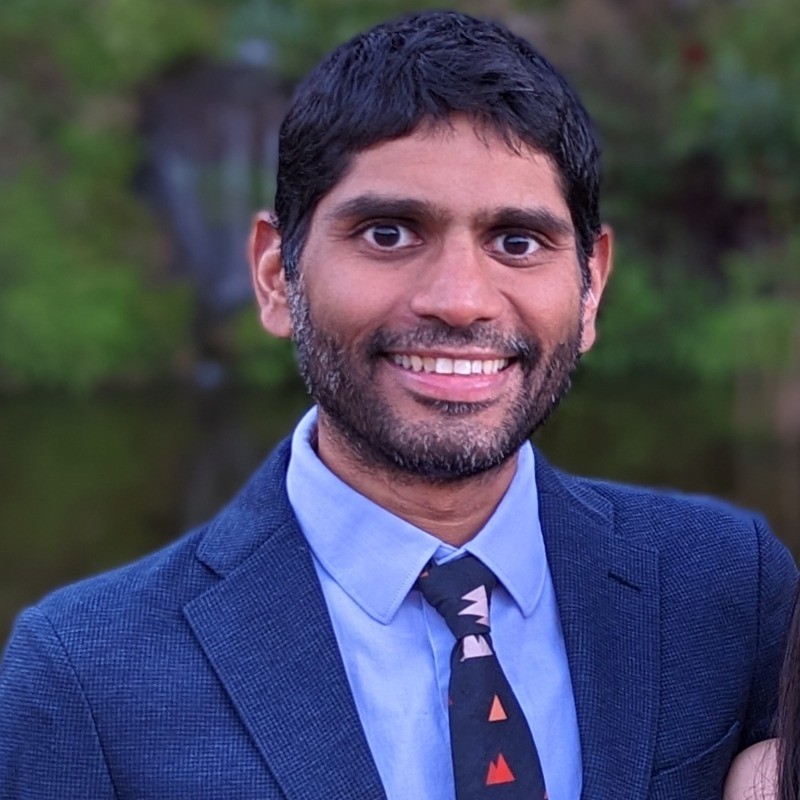
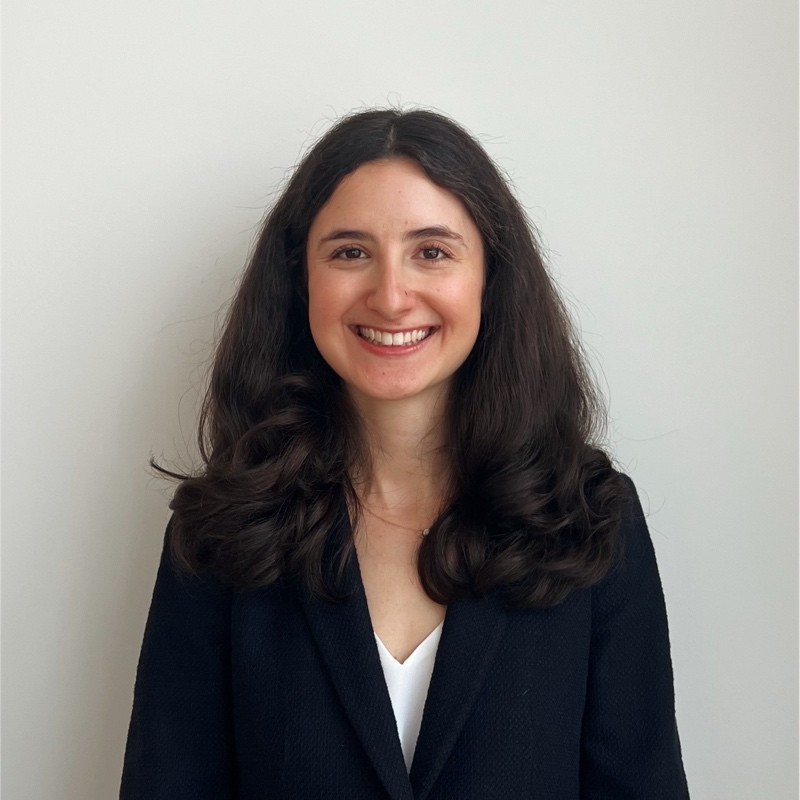
Icertis Chief Financial Officer Rajat Bahri, left, and board member Jim Moffatt will serve as interim co-CEOs as the company searches for a new chief executive. (Icertis Photos)
Founded in 2009, Icertis has raised more than $500 million and was valued at $5 billion four years ago. Its investors include SoftBank’s Vision Fund, SAP and PSP Partners, the firm chaired by lead independent director Penny Pritzker.
Bloomberg reported in February that Icertis was working with Goldman Sachs to explore a potential sale that could value the company at as much as $5 billion, citing people familiar with the matter. Buyout firms had shown preliminary interest, and no final decision had been reached, according to the report.
The company said Friday that Bahri will hold dual roles as interim co-CEO and CFO. He joined Icertis in 2022 and previously served as CFO at several companies, including ID.me; Wish, where he helped lead the company’s IPO; and Jasper Technologies.
Moffatt has served on the Icertis board since 2022, after previously serving on its advisory board, and is a member of the board’s audit and compensation committees. He has also been appointed chair of the board, in addition to his interim leadership role. Moffatt spent more than 35 years at Deloitte, leaving the company as vice chairman and global CEO of Deloitte Consulting. He is now president of JSM Advisors.
— F5 named former Amazon executive Cathy Peterman as executive vice president and chief people officer of the Seattle-based application-delivery and security company. In May, F5 celebrated its 30th year in business.
“Cathy brings a rare combination of strategic depth and genuine humanity that will raise the bar for how we invest in our people,” said CEO François Locoh-Donou in a statement. “She and I share a reverence for culture and its impact on driving sustained results.”
Peterman joins F5 from Wayfair, where she served as CPO for the retail company’s technology organization. Prior to that, she was with Amazon for more than five years, departing as the HR executive for advertising products and technology.
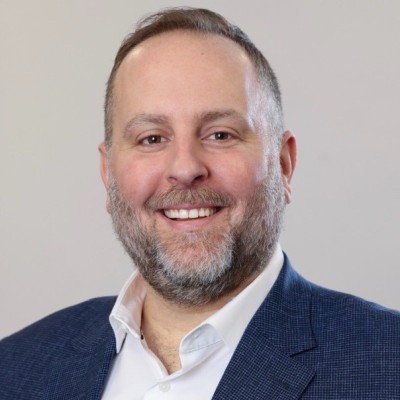
Rudra Mitra. (LinkedIn Photo)
— After more than 27 years at Microsoft, Rudra Mitra has announced his departure. He leaves the role of corporate vice president and head of Microsoft Security Purview, a team addressing data security and governance focused on artificial intelligence and AI agents.
Mitra joined the Redmond, Wash.-based tech giant straight out of college as a software engineer. He has led work on products including Office, Windows Live and Microsoft 365 Cloud Infrastructure.
“Microsoft is a very special place full of incredibly talented people, and this decision comes with gratitude, happiness, and optimism for the future,” he said on LinkedIn. Mitra did not share his next move, saying only that there is “more on that soon.”
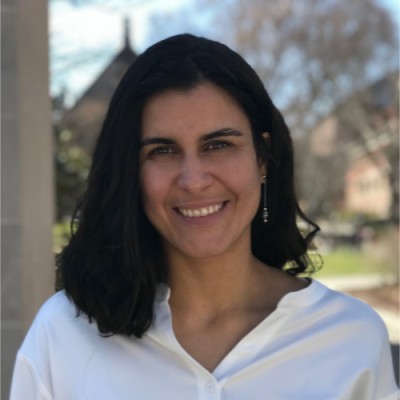
Markham McIntyre. (LinkedIn Photo)
— Markham McIntyre, who previously led Seattle’s Office of Economic Development, is now executive director of Climate Surge, which is described as a “project built to accelerate the deployment of climate policies and market solutions in Washington.”
The effort works with corporations, heavy industry, government, developers, advocates, and philanthropy, and is a partnership between Earth Finance, Climate Solutions and Stolte Foundation.
Prior to his role with the city of Seattle, McIntyre was at the Seattle Metropolitan Chamber for more than eight years, leaving in 2022 as executive vice president.
— Qualtrics, an experience management technology company with headquarters in Seattle and Provo, Utah, announced a slate of new hires, all of whom appear to be working remotely:
Adam Blockwas named chief sales officer, joining from Motive where he was chief revenue officer.
Ken Coleman was named senior vice president of marketing, coming from Ramsey Solutions.
Khoi Hoang was named leader of the global sales engineering organization, joining from Salesforce.
Aaron Ellis was named leader of corporate sales, joining from Workday.
Qualtrics previously shared news that it promoted Ken Hoang to senior vice president of product.
— Jay Shankar, Amazon’s former vice president of global talent acquisition, has joined Uber in a comparable role. Shankar, who is based in San Francisco, resigned from Amazon in December. Past employers include Adobe and BMC Software.
“When I joined AWS almost 8 years ago to lead recruiting, I had never run a talent acquisition organization. What I discovered was a team of builders who showed me that this work is fundamentally about investing in people and obsessing over customer needs,” Shankar said on LinkedIn.
— Jamie Boyd has joined the advisory board for Seattle’s GemaTEG, a startup building technology to manage the heat produced by computer chips. Boyd is a founder of Cypress Capital Holdings and previously helped build Cascadia, an investment banking franchise focused on energy and climate technologies.
— Seattle immigration tech startup Casium named Kat Kelley as its founding go-to-market lead. Kelley joins from Teaching Strategies, a digital education company, and past employers include Rectxt and brightwheel.
— Wilson Sonsini Goodrich & Rosati, a firm that specializes in corporate and technology-focused legal work, announced that Ty Kayam has joined as counsel in Seattle, expanding the firm’s healthcare regulatory team.
— Rogo named Joe Xavier as chief technology officer of the New York-based finance platform. Early in his career, Xavier held leadership roles at Amazon and Microsoft, and more recently served as Grammarly’s CTO. At Rogo, he will help establish a San Francisco office.
— And in case you missed it: Dave Brown, senior vice president of Amazon Web Services leading its compute, AI and machine learning operations, is leaving after nearly 19 years. He is departing at the end of this month, and Amazon exec Dave Treadwell will take over the group. Read more in this GeekWire story.
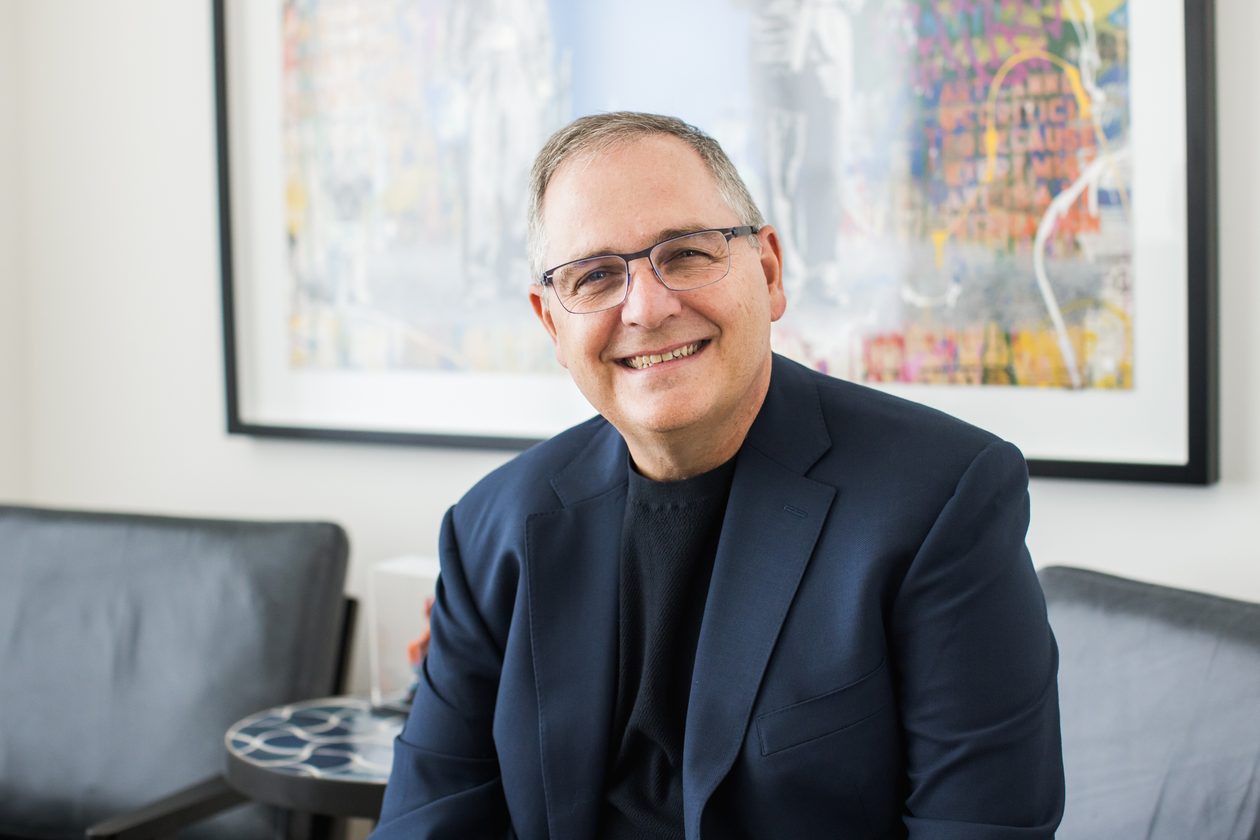
Dave Brown, departing AWS executive, in 2023. (GeekWire Photo / Todd Bishop)
[Update, Friday, July 17: Brown is joining Meta, the WSJ reported. More here.]
Dave Brown, who joined Amazon Web Services as one of its earliest EC2 engineers and rose to lead its compute, AI and machine learning services, is leaving after nearly 19 years.
AWS CEO Matt Garman told employees in a memo posted publicly Wednesday that Brown will depart at the end of July for an unspecified “new role outside of the company.” Amazon exec Dave Treadwell, who joined the company in 2016 after 27 years at Microsoft, will take over the group Aug. 1.
Dave Treadwell. (Amazon Photo)
Brown’s exit comes about three months after Amazon promoted him to senior vice president. Brown had been on the company’s senior leadership team since 2023.
His tenure stretched back to the early days of the cloud. He joined AWS in 2007 in Cape Town, South Africa, where Amazon based part of its early EC2 engineering, before relocating to the Seattle area.
In an interview with GeekWire earlier this year, as the company marked the AWS 20th anniversary, Brown recalled Amazon CEO Andy Jassy, then the company’s top cloud executive, gathering the small Cape Town team in those days and telling them the business could one day be worth a billion dollars.
Brown said he could barely grasp the figure at a time when the service was bringing in tens of dollars a day: “I couldn’t even imagine how much a billion dollars was. It sounded like a lot of money.”
AWS today runs at roughly $150 billion in annualized revenue, and grew 28% in its most recent quarter — its fastest pace in nearly four years.
Brown’s role grew with the business. After starting as an engineer on EC2, or Elastic Compute Cloud, he went on to lead its broader compute organization, including close collaborations with the executives running Amazon’s custom silicon business. His purview also expanded to include the machine learning and AI services now central to AWS, such as the Bedrock and SageMaker platforms.
Treadwell has run Amazon’s eCommerce Foundation, the technical backbone of the company’s online retail operations, since joining in 2016. Before that he spent 27 years at Microsoft, where as a corporate vice president he worked on Windows, Xbox, and the .NET software framework.
In his memo, Garman described Treadwell — known internally as “Tread” — as one of AWS’s largest and most vocal internal customers, someone who pushed the cloud group to innovate and will now lead it.
Brown will remain through the end of July to help with the transition. In his own farewell note, he said it felt like the right time to begin a new chapter. “I’ll be cheering you all on from the sidelines,” he wrote.
— Rina Hahn has left Seattle’s Remitly as chief marketing officer. Hahn joined the remittance company in 2018 as director of digital marketing and rose to CMO after four years. Before joining Remitly, she was an executive at Blue Nile and Big Fish Games.
The publicly traded company helps customers in more than 170 countries send money internationally.
“I’ve seen firsthand the deep love this company has for its customers and the impact that purpose-driven work can have on immigrants and their families around the world,” she said on LinkedIn. Hahn, who is based in London, did not share her next move. Remitly co-founder Matt Oppenheimer stepped down as CEO in February.
Preeti Somal. (LinkedIn Photo)
— Temporal announced that Preeti Somal has been promoted to executive vice president in a role that will oversee the company’s engineering, product and design operations, which were recently reorganized under a single leader.
The industry is moving so fast that “we can’t afford any distance between the people who decide what to build and the people who build it. Unifying these functions closes that loop,” said CEO Samar Abbas on LinkedIn.
Somal has been with Temporal for three years, joining from HashiCorp where she held EVP roles.
The Seattle-area software company offers a platform for running complex computer workflows more reliably. In February, the business closed a $300 million round that pushed its valuation to $5 billion. Temporal is No. 2 on the GeekWire 200 is a ranked index of the Pacific Northwest’s top startups.
Michelle Graff. (LinkedIn Photo)
— Veeam Software, a Seattle-based data protection and ransomware recovery company, appointed Michelle Graff as senior vice president of global partners and channel. She joins from the cybersecurity company Commvault and is based in the San Francisco Bay Area.
“The future belongs to organizations that can transform trusted data into trusted AI with resilience built in from the start,” Graff said on LinkedIn.
Graff’s hiring is the latest in a string of leadership changes at Veeam, which has made five other executive hires or promotions this year.
Ken Hoang. (LinkedIn Photo)
— Qualtrics, an experience management technology company with headquarters in Seattle and Provo, Utah, has promoted Ken Hoang to senior vice president of product. Hoang is based in San Mateo, Calif., and will work remotely. He was previously a VP at Apptio in Bellevue, Wash.
Qualtrics had a big leadership shakeup in April, when five executives were let go in what CEO Jason Maynard described as an effort to “simplify our structure and ensure we are positioned for our next phase of growth.” Two product executives were among those who left, and Hoang joined the company around that time.
Qualtrics, which employs more than 4,500 people globally, makes software that helps companies gather and act on feedback from customers, employees and others through surveys, AI-powered analytics and other tools.
— Monica Lazois now the sales director for Loopr AI, a Seattle startup that sells computer vision quality control software to manufacturing firms. She joins from Neurala, an AI platform automating visual inspections that is based in Boston.
— Pacific Northwest National Laboratory has named atmospheric scientist Larry Berg as the director of the Department of Energy’s Atmospheric Radiation Measurement User Facility.
And some departures from Big Tech:
Mary Birkner is retiring from Microsoft after 21 years, primarily in leadership with Xbox. “I thank you for the laughter and goodness that were part of the journey to all the big work stuff,” she said on LinkedIn.
Steve Andrews has closed out a 32-year career that included more than 11 years across two stints at Amazon, most recently as senior principal technical program manager. The TPM role “is often misunderstood and misused, so I dedicated a substantial amount of effort helping to set TPMs, their managers, and their teams up for success across the company,” he said. “I hope it made a difference.”
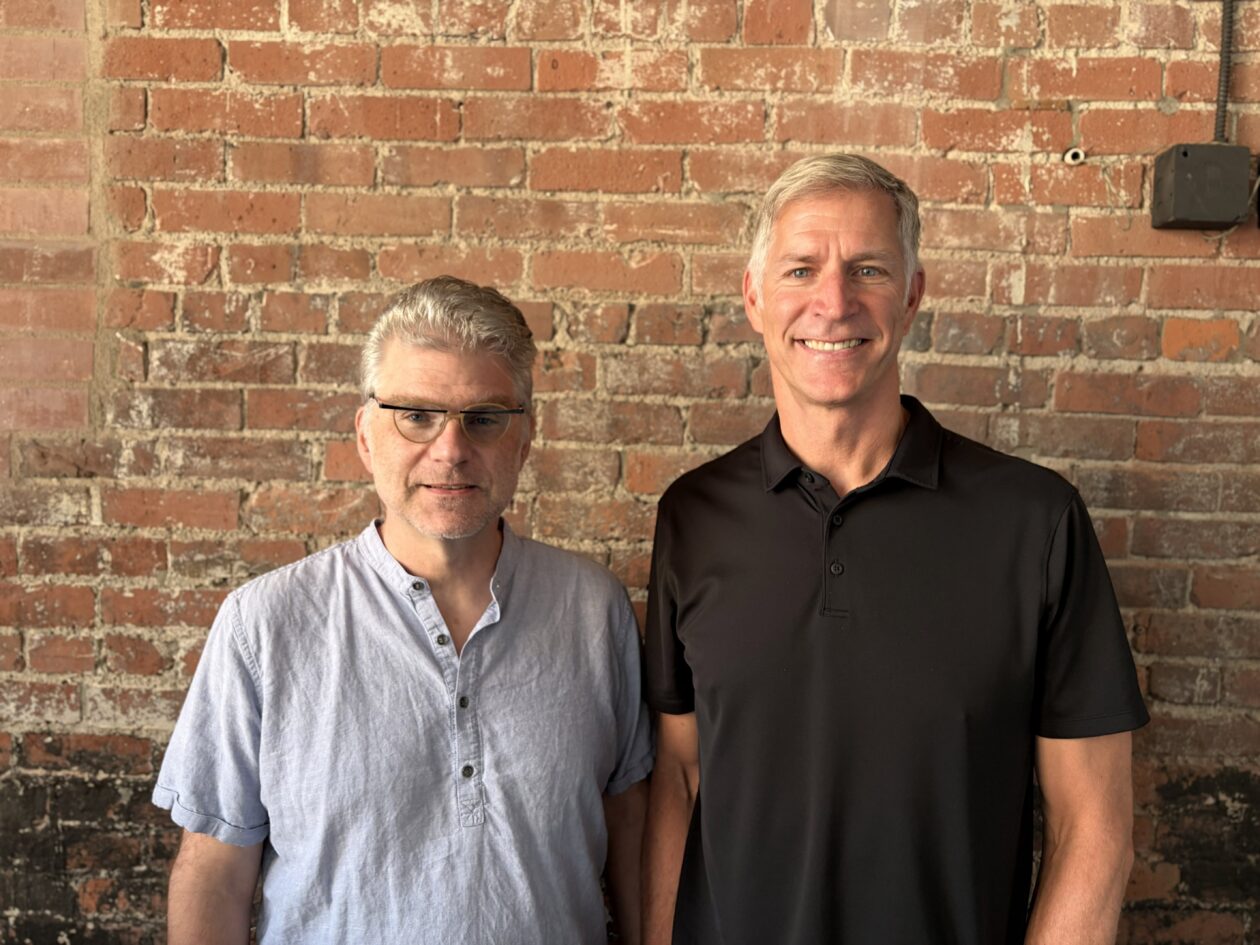
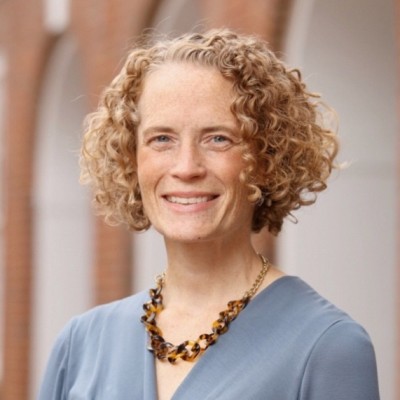
Jeff Nienaberis departing Microsoft after more than 16 years, leaving the role of senior director and principal PM for the office of the CTO. “I’m really excited to see what tomorrow’s sunrise has in store,” Nienaber said.
Mike Katz speaks at a T-Mobile event in 2025. (GeekWire File Photo / Todd Bishop)
T-Mobile’s longest-tenured Un-carrier architect just Un-carriered himself.
Mike Katz, who started selling VoiceStream phones at Circuit City 28 years ago and rose to help T-Mobile go from an also-ran into the wireless industry’s most formidable competitor, is leaving the Bellevue, Wash.-based carrier as part of a broader executive reshuffling under CEO Srini Gopalan, who took the helm in November.
Katz, T-Mobile’s chief business and product officer, is stepping away to pursue “new professional interests,” the company said in a press release and SEC filing. The company didn’t provide specifics. We’ve contacted Katz for more on his plans.
He’ll remain as a strategic advisor through December 2026.
His responsibilities are being split three ways:
Chris Sambar, a wireless industry veteran who spent two decades at rival AT&T and most recently served as COO of Public Storage, will join as chief enterprise officer no later than Oct. 14, overseeing T-Mobile’s SMB, enterprise and government businesses.
André Almeida is moving into an expanded role as chief marketing, brand and broadband officer.
CTO John Saw‘s purview will grow to include product engineering and cybersecurity.
Katz was named last month to Gov. Bob Ferguson’s newly created Economic Development Council, a 26-member panel of business, labor, and tribal leaders. His status on the council following his departure from T-Mobile is unclear.
Over his career at T-Mobile, Katz led the company’s business group, where he helped triple the customer base, and later oversaw marketing, strategy and products, shaping some of the carrier’s most recognizable brand moves: T-Mobile Tuesdays, Magenta Status, and others.
“We built a regional player into a national powerhouse, flipped the industry on its head with the Un-carrier movement, pulled off the Sprint merger, and pushed into broadband and enterprise,” Katz said in a LinkedIn post announcing his departure.
Gopalan praised Katz in the press release, calling him “a driving force of so many of the bold moves that have transformed our company and our industry.”
Sambar’s hiring is a notable move for T-Mobile, which built its Un-carrier brand in part by positioning itself as the scrappy alternative to industry giants AT&T and Verizon. At AT&T, Sambar led the buildout of the company’s 5G mobile network and oversaw the design and deployment of FirstNet, the nationwide public safety communications network.
A U.S. Naval Academy graduate who served more than 20 years in the Navy, Sambar will report directly to Gopalan and lead T-Mobile’s push into enterprise, government, and emerging growth areas including T-Ads and physical AI.
— Mike Torres, a former executive at Amazon, Microsoft and Google, has joined Dropbox as the company’s first chief product officer.
“As a product leader, joining a company that helped pioneer product-led growth is energizing…” Torres said on LinkedIn. “In this role, my focus will be simple: help Dropbox ship the right things at the right time for our customers.”
Seattle-based Torres comes to Dropbox from Google, where he served as vice president of product for Chrome. Before that, he spent more than a decade at Amazon, most recently as VP of Kindle. At Microsoft, he led teams working on OneDrive, Windows Movie Maker and other products.
Chris Sambar. (LinkedIn Photo)
— T-Mobile appointed Chris Sambar as chief enterprise officer, effective no later than Oct. 14. Sambar will lead the Bellevue, Wash.-based company’s small- and medium-sized business, enterprise and government units.
Sambar joins from Public Storage, where he serves as chief operating officer. He was previously at fellow communications giant AT&T for more than two decades, most recently as a president of the company’s global network organization overseeing architecture, engineering, construction, operations, tower strategy and program management.
“Chris is a seasoned wireless industry leader with proven experience including expanding high-growth businesses and seizing market opportunities,” said Srini Gopalan, CEO of T-Mobile.
T-Mobile made two additional C-suite changes:
Mike Katz. (LinkedIn Photo)
Chief Business & Product Officer Mike Katz has resigned to “pursue new professional interests,” according to a press release. Katz was with the company for more than 28 years and will remain in a strategic advisory role through the end of the year. Gopalan offered his “sincere gratitude to Mike for his incredible contributions to T‑Mobile.” Read more about his departure in this GeekWire story.
André Almeida‘s C-suite role has expanded and his title has been updated to chief marketing, brand and broadband officer. He previously served as chief broadband, enterprise and emerging business officer. In the new position, Almeida will help oversee the company’s consumer wireless and broadband businesses.
Kevin LaChapelle. (LinkedIn Photo)
— After 37 years with Microsoft, Xbox Vice President Kevin LaChapelle was among those laid off this week, with the cuts hitting the gaming division particularly hard as the company aims to overhaul the division.
LaChapelle was hired by the Redmond, Wash.-based tech giant in 1989 as a software design engineer and joined the Xbox team in 2012.
“I will say my fondest memories are of leading the team of very talented engineers who built the Xbox Backward Compatibility program,” LaChapelle said on LinkedIn. When Phil Spencer, then head of Xbox, announced the program at the Electronic Entertainment Expo in 2015, LaChapelle added, “The audience’s reaction was unbelievable.”
Adam Shoenfeld. (LinkedIn Photo)
— Adam Schoenfeld has resigned as chief marketing officer for Inflection.io. In April, the B2B marketing automation company acquired Keyplay, a Seattle startup co-founded and previously led by Schoenfeld. The deal reunited Schoenfeld and Inflection CEO Aaron Bird, who have known each other for many years and have collaborated and invested in each other’s companies.
Schoenfeld said on LinkedIn that he “had the best of intentions” when he committed to the acquisition, but then burnout hit him. “I was embarrassed and disappointed in myself. I dreaded telling the team. I didn’t want to bail and let people down… I’m sure others have been in this place,” he added. “After facing the hard conversations, I’m excited to look ahead.”
Schoenfeld remains a part-time CMO advisor for the business and also produces Adam’s GTM Report, which provides data-backed research, maps and tools for leaders and builders in the space.
— Kent, Wash.-based Stoke Space Technologies named former OpenAI executive Kevin Weil to its board. Weil has held leadership roles at Planet, Meta, Instagram and Twitter and also serves on the boards of Cisco and The Nature Conservancy.
Stoke Space builds reusable rockets and raised $860 million from investors in its latest round. It’s No. 6 on the GeekWire 200, a ranked index of the Pacific Northwest’s top startups.
— Skippy Shaw has joined fusion startup Helion Energy as director of Washington government affairs. The Everett, Wash.-based company is working to build what could be the world’s first commercial fusion facility in Central Washington. Shaw joins Helion from The Nature Conservancy, where she led state governmental relations for TNC’s Washington chapter.
— David Langworthy announced that he has resigned from Microsoft after nearly 25 years, leaving the role of architect for Azure OpenAI. Langworthy, who worked as a founding member of Azure OpenAI, GitHub Copilot, GenAI, MAC, and Azure AI Services, is the founder and CTO of a stealth startup based in Bellevue.
— Carissa Allen has also left Microsoft, departing as director of strategy for the company’s events, including Ignite and AI Tour. On LinkedIn, Allen called her resignation after nearly 30 years “my Valiant Reboot Project (no “retirement” here) because you know I’m not finished yet.”
— And in case you missed it:
Bill Colleran, a veteran technology executive who previously led Impinj, has joined Seattle-based AI coding startup Adronite as CEO. Edward Rothschild, who co-founded and previously led the company, is transitioning to chief technology officer. Read more in this GeekWire story.
Nick Parker, a 26-year Microsoft veteran who led the company’s worldwide commercial sales business, is leaving to become Nvidia’s new sales chief, effective Aug. 24. Read more here.
Bill Colleran, a veteran technology executive who previously led Impinj and sold Innovent Systems to Broadcom, has joined Seattle-based AI coding startup Adronite as CEO.
Edward Rothschild, who co-founded Adronite in 2023 and served as its first CEO, is transitioning to chief technology officer, where he’ll continue leading the company’s product development, including its Adronite Context Engine and Codistry AI code generation tool, according to a news release.
The 15-person company raised a $5 million Series A led by Gatemore Capital Management earlier this year. The platform supports cloud, on-premises and air-gapped deployments, targeting midmarket companies and regulated industries.
Colleran has more than 35 years of experience in semiconductor and enterprise technology. He grew Impinj into a market leader in RFID technology, raising more than $100 million in equity financing. He left the company in 2014 and was succeeded by co-founder Chris Diorio.
He was also CEO of Innovent Systems, which developed the world’s first CMOS Bluetooth chip and was acquired by Broadcom for approximately $500 million.
More recently he founded lidar company Lumotive and led Seattle SaaS startup AnswerDash. He holds a Ph.D. in electrical engineering from UCLA and a J.D. from Harvard Law School.
“Throughout my career, I’ve seen technology industries transformed when complexity becomes manageable,” Colleran said in a statement. “Software development now faces a similar challenge. AI can generate code at an incredible pace, but understanding complex software systems remains difficult for both developers and AI.”
Adronite’s platform aims to help developers and AI agents understand entire codebases rather than working file by file — a challenge especially acute for midmarket companies managing legacy systems without the tooling available to large enterprises.
The company says its approach can cut token consumption by up to 40%, a claim that could resonate as engineering teams grapple with rising AI costs.
Enterprise software company LogicGate is establishing a Bellevue, Wash., office and rapidly expanding its Seattle-area executive team, betting on the region’s deep technology talent pool as it embarks on a new chapter under newly appointed CEO Diego Panama.
The Chicago-based governance, risk and compliance software company recently signed a lease in Bellevue with space for up to 25 employees and expects to have about 20 people working there by the end of the year.
It also recently recruited two Seattle-area executives to its leadership team: veteran marketing executive Michael Schultz as chief marketing officer and David Rostov as chief financial officer, whose appointment is being announced today.
“The tech talent market here is really second to none,” said Panama, the former LiveRamp and Microsoft sales leader who took the helm of the company in April. “As we looked to create a hub with a vibrant office culture, Bellevue is really a stand-out option.”
The expansion comes as Panama succeeds co-founder Matt Kunkel in a planned leadership transition that the company hopes will position LogicGate for its next phase of growth.
“We are eyes wide open — this is hard to get right — and really proud/excited about how we are going about it,” said Panama. One of his main goals as CEO is to transform LogicGate from a cloud-based software-as-a-service business into an AI-centric company where agents and humans work seamlessly together.
David Rostov, the newly appointed CFO at LogicGate.
Founded in 2015 and now employing about 200 globally, LogicGate develops governance, risk and compliance software used by enterprises to manage regulatory, cybersecurity and operational risk.
Rostov is a longtime Seattle technology finance executive who previously served as CFO at Avalara and Identity Digital before co-founding Aurion Biotech. Based in Seattle, he will oversee LogicGate’s finance and legal organizations while helping expand the company’s Pacific Northwest operations.
“We have a leadership team that can match the ambition of what we’re creating at LogicGate,” Panama said in a statement.
Rostov said he was drawn by both the market opportunity and the company’s strategy around AI.
“Enterprise GRC is at an inflection point, and companies need a trusted AI-focused platform that scales alongside their risk and compliance demands,” he said in a statement.
The Bellevue office reflects the company’s belief that the Seattle region’s concentration of enterprise software, cloud computing and AI talent can help fuel its next stage of growth as it expands both its leadership team and its AI capabilities.
LogicGate’s investment also adds another enterprise software company to a growing roster of firms choosing the Seattle area as a base for executive leadership, alongside engineering and product talent. GeekWire’s engineering center list now includes more than 100 companies with outposts in the region.
Microsoft executive Nick Parker at a conference in 2018. (Microsoft Photo)
Nick Parker, a 26-year Microsoft veteran who led the company’s worldwide commercial sales business, is leaving to become Nvidia’s new sales chief — a high-profile talent shift between two of the biggest players in the AI boom.
Parker will join Nvidia as executive vice president of worldwide field operations, effective Aug. 24, according to a regulatory filing. He succeeds Jay Puri, who is retiring after 21 years running Nvidia’s global sales operation and will stay on as a senior adviser.
“Microsoft and NVIDIA are great partners and I look forward to continuing to nurture that fantastic relationship,” Parker wrote in a LinkedIn post announcing the move.
The regulatory filing by Nvidia sets Parker’s base salary in the new role at $1 million, with a $5 million signing bonus and equity grants targeted at $40 million. The bulk of that, $35 million in restricted stock units, vests over roughly four years, while the additional $5 million in shares is tied to Nvidia outperforming the S&P 500 over three years.
The new role puts him in charge of global sales and customer relationships at the center of the AI boom, reporting directly to Nvidia CEO Jensen Huang — one of the most consequential commercial roles in the industry, overseeing the operation that sells Nvidia’s chips to the world’s largest companies.
Parker, 55, rose through OEM, device and partner sales roles at Microsoft before being named president of industry and partner sales in 2022. After a promotion this year, he served most recently as executive vice president and chief business officer of Microsoft Worldwide Sales & Solutions, reporting to Judson Althoff, CEO of Microsoft’s commercial business.
Puri, 71, is credited with helping transform Nvidia from a consumer gaming brand into an AI infrastructure giant, building the enterprise sales operation Parker will now inherit.
On Thursday, Microsoft unveiled a $2.5 billion initiative called the Microsoft Frontier Company, which will embed AI engineers inside customers. It will be led by Rodrigo Kede Lima, a longtime Microsoft sales and enterprise leader, most recently president of Microsoft Asia.
— Hrishikesh Aradhyehas joined Amazon Music as vice president of product and tech for the streaming service. He spent nearly 19 years at Google, most recently as senior director of engineering leading YouTube Music and Podcasts.
“The music industry is going through a tectonic shift that will unlock entirely new kinds of customer experiences through AI,” Aradhye said.
Earlier in his tenure there, he worked at Google Research, where he helped pioneer computer vision and machine learning systems for YouTube and Android.
Vasu Jakkal. (LinkedIn Photo)
— Vasu Jakkal is stepping down after six years as Microsoft‘s corporate vice president of Security, Compliance, Identity, Management & Privacy. She thanked colleagues and customers in a LinkedIn post.
“It’s been an epic journey — six years ago, we formed our Security customer solution area and the growth and impact of Microsoft Security over these past years has been incredible as we built the #1 security business in the world while keeping our mission of building a safer world for all at the heart of it,” Jakkal wrote.
Jakkal is based in the San Francisco Bay Area and previously held executive roles at FireEye and Intel. She did not indicate her next move.
Mika Yamamoto. (Veeam Photo)
— Mika Yamamoto was named chief marketing and customer AI officer for Veeam Software, a Seattle-based data protection and ransomware recovery company. It’s the latest in a string of leadership changes at Veeam, which has made four other executive hires or promotions this year.
Yamamoto previously worked for Seattle-area companies including F5, Microsoft and SAP, and joined Veeam from Los Angeles-based Blackline.
“She has experienced this industry from every angle — analyst, operator, executive leader — and has consistently put the customer and partner at the center of how companies operate,” CEO Anand Eswaran said in a statement.
— In case you missed it, Microsoft has undergone a leadership shakeup within Copilot as the company works to turn its platform into a “super app.” Changes include:
Jacob Andreou has moved from corporate vice president at Microsoft AI to executive vice president of Copilot. He joined the company in 2025 from Greylock Partners and before that was at Snapchat-maker Snap.
Peter Sellishas been named Copilot’s lead of design, growth and engineering, reporting to Andreou. He joins Microsoft from Discord and overlapped with Andreou at Snap, where Sellis was VP of product.
The reshuffle also comes with a departure. Trevor O’Brien, former VP of product for M365 Copilot experiences, has resigned from his role. “The past two and a half years have been inspiring, chaotic, intense, and deeply rewarding,” O’Brien said on LinkedIn. He did not indicate his next move.
Niranjan Vijayaragavan. (LinkedIn Photo)
— Seattle-based tech executive Niranjan Vijayaragavan has taken the role of CTO at Five9, a cloud-based contact-center-as-a-service company. He joins Five9 from Nintex, where he served as chief product and technology officer. Other past employers include Avalara and Expedia Group.
“Five9 is at the center of one of the most important shifts in customer experience as AI reshapes how companies engage with their customers,” Vijayaragavan said in a statement. The company is based in San Ramon, Calif., but Vijayaragavan will remain in Washington.
Maura Mast. (LinkedIn Photo)
— Maura Mastwas appointed president of Seattle University, succeeding Eduardo M. Peñalver, who resigned to lead Georgetown University. Mast is the first woman and first mathematician to hold the top role at the Jesuit Catholic university.
“Our world urgently needs spaces of dialogue and discernment that actively work to heal deep divisions and build a more equitable society,” Mast said in a statement, adding that SU can lead in these areas.
Mast will begin the job on Sept. 1 and joins SU from Fordham University, where she served as a dean and mathematics professor.
Jake Gentry. (LinkedIn Photo)
— The Cascadia Sustainable Aviation Accelerator named Jake Gentry as its executive director. Gentry helped create CSAA, which aims to make the Pacific Northwest a center for the production of sustainable aviation fuel (SAF). He remains a senior director at Seattle’s Earth Finance and is leading the accelerator as part of that organization.
Hawaiian Airlines CEO Diana Birkett-Rakow praised Gentry’s appointment, saying in a statement that he has “the right combination of strategic depth, execution orientation, coalition-building instincts, and commitment to the work.”
Gentry previously held sustainability leadership roles with companies including Point B and Boeing.
— Seattle’s F5 has added Gavin Munroe to its board of directors, where he will serve on the audit and risk committees. Munroe has decades of experience in financial services and most recently was chief information officer and transformation head at Commonwealth Bank of Australia.
— Harini Gokul, a former leader at Microsoft and AWS and past chief customer officer at Entrust, has joined the board of Afiniti. The company builds AI software for call centers that aims to match customers with the appropriate agent. Gokul also serves on the Medina City Council.
— Safe Software, a data and AI enterprise integration platform based in Surrey, British Columbia, has named Nabil Lodey vice president of Europe, the Middle East and Africa. Lodey will help lead the company’s expansion in the UK and Ireland.
— Allison Gruber is now VP and leader of Portland-based Cambia Health Foundation. She previously oversaw Cambia Health Solutions’ Strategy and Innovation team, where she led data-driven strategy initiatives.
— And some more folks are retiring from Microsoft, in addition to those featured Tuesday in a GeekWire story on the company’s first-ever voluntary retirement program:
Nir Michaely, Azure software engineering manager, closes out 26 years with the company.
John Ballard, principal security researcher, departs after nearly 30 years.
Kristen Mattoni, senior product marketing manager, is leaving after 15 years.