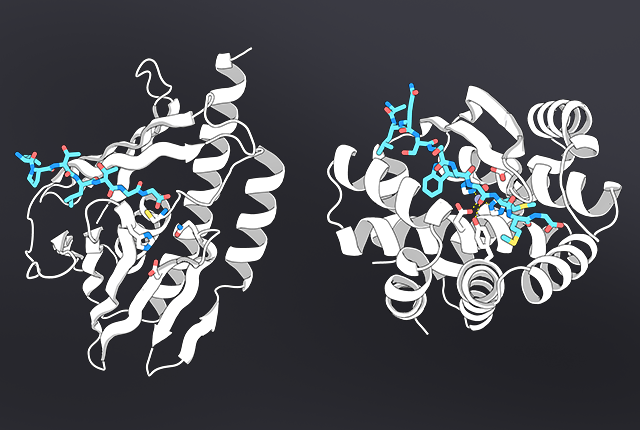
Structural models of two enzymes created using models developed at the UW Medicine Institute for Protein Design. (IPD Image / Benedicte Rossi)
The UW Medicine Institute for Protein Design (IPD) today released a new open-source model for creating proteins with specific functions, called RFD4-Proteina. It is the first AI protein model the University of Washington has co-developed with semiconductor giant Nvidia.
The release comes on the heels of a major computing boost. Earlier this month, IPD announced it had received a large grant of computing power from Nvidia CEO Jensen Huang and his wife, Lori Huang, through their foundation. In June, the institute began accessing Nvidia graphics processing units, or GPUs, through cloud company CoreWeave. The grant is expected to support the institute for a year.
“RFD4-Proteina will open the door to new solutions in medicine, sustainability, materials and biotechnology,” David Baker, director of IPD and a 2024 Nobel laureate in chemistry, said in a statement. He earlier told GeekWire that the foundation’s grant has been “transformational” for the institute’s work.
IPD has used deep learning to develop and release a series of tools, including RoseTTAFold for predicting protein structures and RFdiffusion (RFD) for designing new proteins. The new model’s name nods to RFD and references Nvidia’s Proteina-Complexa computational models.
The team is touting RFD4-Proteina as “a considerable improvement over previous methods” that is faster and requires significantly less computational power.
The models have allowed researchers to design proteins never imagined before, with potential as drugs for challenging diseases or as tools for managing environmental waste such as toxic chemicals and plastics, among other applications. The IPD lists 11 spinout companies, including vaccine developer Icosavax and protein-design startup Archon Biosciences.
Seth Woodbury used RFD4-Proteina in his enzyme work as a , a UW bioengineering predoctoral candidate. “In just a few days we designed a pesticide-degrading enzyme that performs many fold better than my previous best, which took months to design,” he said. Woodbury last year published a paper in Nature on enzyme research.
At IPD, the RFD4-Proteina work was led by UW doctoral students Nathaniel Corley, Maxwell Kazman and Rafi Brent, along with Kieran Didi, a visiting student from the University of Oxford.
RFD4-Proteina is available through Berkeley Software Distribution.
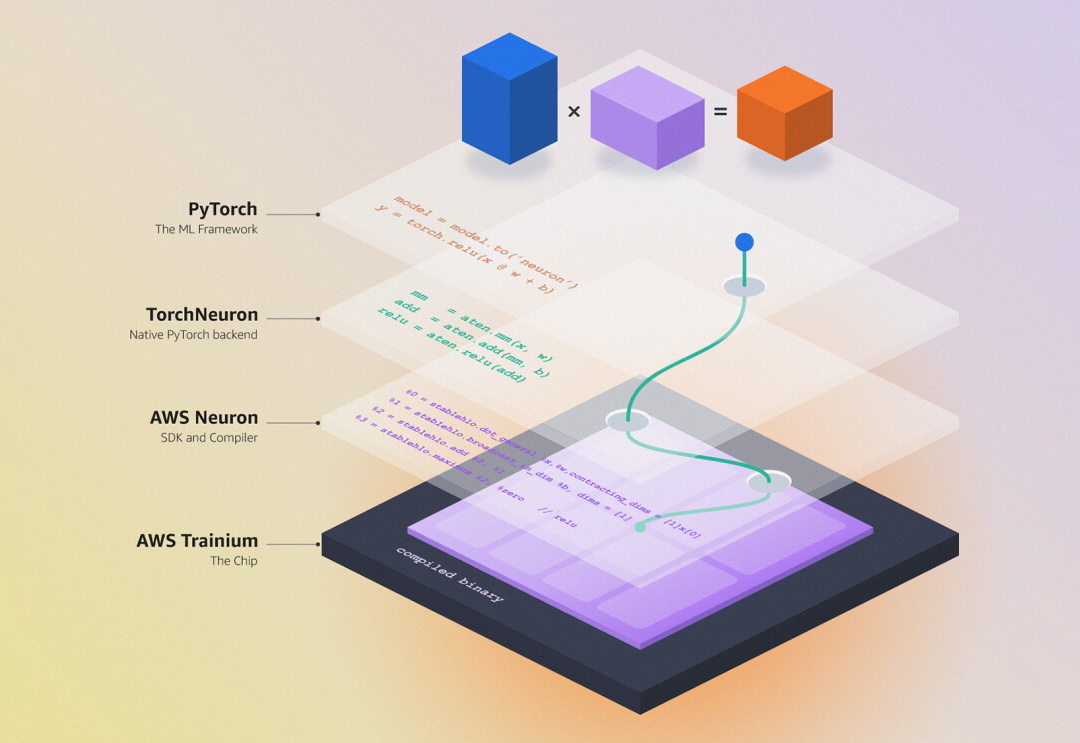
Amazon’s TorchNeuron sits between PyTorch and the company’s Trainium chips, supporting developers’ existing code. (Amazon Image)
A new software tool from Amazon aims to make switching from Nvidia to the company’s own AI chips about as simple as changing a setting.
The software, dubbed TorchNeuron, runs code written in PyTorch, the open-source framework used by many AI developers, on Amazon’s Trainium chips. It has been in private beta since late last year, and Amazon said Monday that it’s opening the software to all developers as a public beta.
Until now, developers who wanted to run PyTorch code on Trainium had to modify it to call programming interfaces specific to Amazon’s chips, said Colin Brace, vice president of technology software at Annapurna Labs, Amazon’s chip-design unit. With TorchNeuron, the same code runs after a basic configuration change.
“If you know PyTorch, then you know Trainium,” Brace said in an interview.
Nvidia dominates the market for AI chips, partly because much of the industry’s AI software was built around its CUDA platform. Adapting that code to other hardware can take months of engineering work. That has made many companies reluctant to switch, even as Amazon, Google and others have developed their own chips.
TorchNeuron is part of a broader push by tech giants to loosen Nvidia’s grip on AI computing, even as they remain among its biggest customers.
Google, which has started selling its TPU chips directly to some outside customers, is working on TorchTPU, a similar project to run PyTorch natively on those chips. Google detailed the effort in April, saying the goal is to let developers move existing PyTorch code to TPUs with minimal changes.
Microsoft said last week that it plans to run most of its AI services on its homegrown Maia chips rather than Nvidia hardware.
Amazon is reportedly in talks to acquire Decart, a startup that makes software to help developers move AI models built for Nvidia chips to alternatives such as Trainium, in a deal that could value it at about $7 billion. Decart already runs its own AI models on Trainium, and Nvidia is an investor in the startup.
Asked about Amazon’s relationship with Nvidia, Brace said the company has “always been about choice,” pointing to another high-profile example: AWS offers Intel processors alongside its own Graviton chips.
Amazon plans to release TorchNeuron as open-source software on Tuesday in conjunction with the PyTorch Conference in San Jose, Calif.
Trainium’s biggest users so far are AI labs with close financial ties to Amazon. Anthropic, in which Amazon has invested billions, uses the chips to train and run its Claude models. OpenAI agreed in February to use 2 gigawatts of Trainium capacity as part of a deal in which Amazon is investing $50 billion in the company.
Brace said Amazon’s goal has always been wide use of the chips, calling TorchNeuron “an accelerant” along those lines.
Amazon’s chip business traces back to its 2015 acquisition of Annapurna Labs, an Israeli chipmaker, for a reported $350 million. The Annapurna team went on to design Trainium as well as Amazon’s Graviton processors.
In his annual shareholder letter in April, Amazon CEO Andy Jassy wrote that the company’s chip business, including Trainium and Graviton, had an annual revenue run rate of more than $20 billion. He estimated that figure would be about $50 billion if the chips were sold to AWS and other customers by a standalone chip business.
“There’s so much demand for our chips that it’s quite possible we’ll sell racks of them to third parties in the future,” he wrote.
More than 30 companies and internal Amazon teams have been using TorchNeuron during the private beta. Deepgram, a San Francisco startup that makes speech AI, says its benchmarks showed Trainium processing about 60% more audio per dollar than its existing GPU setup. The company now runs Trainium in production, Brace said.
Inside Amazon, the Prime Video team used TorchNeuron to build Prime 360, an AI system that reconstructs NBA plays in 3D so viewers can watch replays from angles a traditional camera can’t capture. The feature, which runs on Trainium, will appear on select Prime Video broadcasts this NBA season.
To make sure TorchNeuron works with the huge variety of AI models that developers build, Amazon tests it every night against more than 100,000 models from Hugging Face, the popular online hub for open-source AI, Brace said.
Brace said the timing of the project reflects changes in PyTorch itself. The framework has matured, and its maintainers have been working to make it less dependent on any one kind of hardware.
Amazon has contributed to that effort, removing code that tied PyTorch to specific chips. Newer versions of PyTorch can detect which hardware they’re running on, he said, so in some cases developers don’t need to change their code at all.
President Trump at the White House ballroom construction site in May. Microsoft, Amazon and T-Mobile have committed $20 million to the project, according to the Washington Post. (Official White House Photo by Joyce N. Boghosian)
Microsoft committed $10 million to President Trump’s White House ballroom project, and Amazon and T-Mobile each chipped in $5 million, according to an internal donor list obtained by the Washington Post and reported by the newspaper Thursday morning.
The commitments are drawing scrutiny because the ballroom donations aren’t subject to campaign finance limits or disclosure requirements. The money goes through a nonprofit, the Trust for the National Mall, into a White House account the president directly controls.
Of the $333 million raised so far, the vast majority came from companies and wealthy people with interests before the federal government, the Post found, raising concerns among experts that companies could be buying influence with the administration, or feeling pressured to give.
The White House publicly named Microsoft, Amazon and T-Mobile among the ballroom’s donors last October but didn’t disclose the amounts. Other donors asked to keep their names out of it entirely, the Post found, including a subsidiary of mortgage lender Rocket, which committed $10 million weeks after a federal agency approved its acquisition of Mr. Cooper.
The Seattle-area companies have a wide range of dealings with the government as suppliers, regulated businesses and targets of federal scrutiny. Microsoft and Amazon are two of the federal government’s largest technology providers, and T-Mobile requires regulatory approval across its business, from wireless spectrum to acquisitions.
Apple and Nvidia were among the top contributors at $25 million each, according to the list of 67 donations above $10,000. Microsoft’s $10 million puts it in the next tier with Palantir and Lockheed Martin, while Amazon and T-Mobile joined Meta, Cisco and ServiceNow at $5 million.
White House spokesman Davis Ingle told the Post that the donors are “a wide array of great American companies and generous individuals, all of whom are contributing to make the People’s House better for generations to come.”
A Microsoft spokesperson said the company didn’t have a comment beyond what has been publicly reported. We’ve contacted Amazon and T-Mobile for comment.
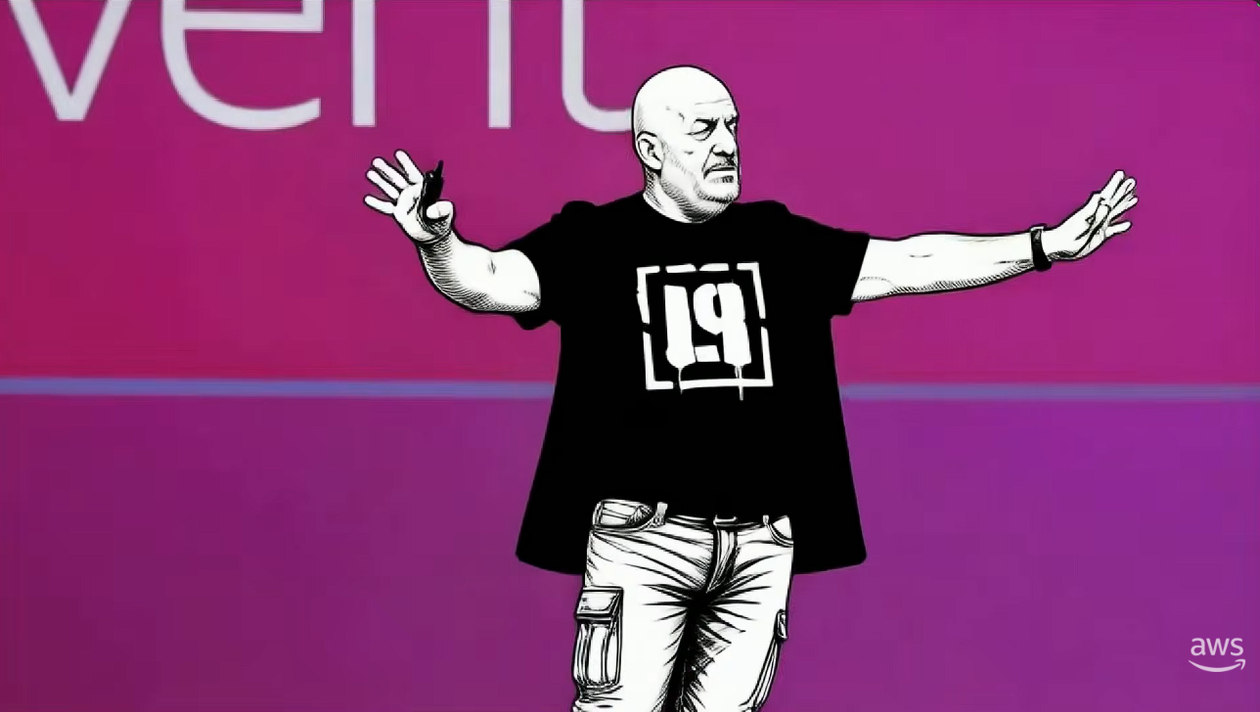
Not Werner: Decart’s real-time video model turns AWS Senior Vice President Peter DeSantis into a cartoon of Amazon CTO Werner Vogels, live on stage, at the start of DeSantis’ re:Invent keynote in Las Vegas last December. (AWS Video Screenshot)
A deal for Decart, a startup that makes software to help AI models run faster on different kinds of chips, would give Amazon new ways of getting more AI developers to use its custom chips instead of Nvidia hardware.
The Wall Street Journal reported Sunday that the companies are in talks for an acquisition that could value Decart around $7 billion, citing people familiar with the matter. Amazon and Decart haven’t confirmed the talks. Amazon hasn’t responded to GeekWire’s request for comment.
It would also be far larger than the deal that started Amazon’s chip business. Amazon bought Israeli chipmaker Annapurna Labs in 2015 for a reported $350 million. That team went on to design Trainium and Amazon’s other custom chips, now linchpins of its cloud business.
Nvidia dominates the AI chip market in large part because of CUDA, the software that developers have used for years to build and run AI models. Moving that work to other chips, including Amazon’s Trainium, normally takes extra engineering work.
What Decart does: Decart sells software that makes AI models run faster on chips from Nvidia, Google and Amazon, and makes it easier for developers to switch between them, according to the Journal. It licenses that technology to cloud providers and AI labs.
The company also builds its own AI models, including Lucy, which edits live video in real time, and Oasis, which generates interactive virtual worlds. Brothers Dean and Orian Leitersdorf founded Decart in 2023 with Moshe Shalev. The company is based in San Francisco, with a development center in Tel Aviv.
For Amazon, owning Decart could make Trainium an easier sell. Customers with AI models built for Nvidia chips could run them on Trainium with fewer changes, and Amazon would get the engineers behind the technology.
Decart’s software could also help Amazon get more out of the chips it already has. That was Anthropic’s goal in pursuing the startup, according to Bloomberg.
The company’s video models could fit other Amazon businesses, too. Streamers use its technology on Twitch, which Amazon owns. Its Lucy model can show online shoppers how clothes look on them.
Existing ties to AWS: Decart has already moved its own models to Trainium.
At AWS re:Invent in Las Vegas last December, Decart’s real-time video model turned AWS Senior Vice President Peter DeSantis into a live cartoon of Amazon CTO Werner Vogels on the side screens as he opened his keynote. It was a joke about taking over a morning slot that attendees expected Vogels to fill.
When Decart CEO Dean Leitersdorf took the stage later, the model animated him, too, mimicking his movements. The animations were generated live on Trainium3, Amazon’s newest AI chip.
Leitersdorf said the startup worked with AWS to move its models and infrastructure to Trainium. Amazon said that week that Decart was running real-time video four times faster on Trainium at half the cost of GPUs.
Nvidia also invested in Decart’s $300 million funding round in May, which valued the startup at about $4 billion.
Anthropic walked away in September after due diligence, Bloomberg reported, adding that the companies may still work together in other ways. Globes, citing sources close to Decart, reported that the founders had refused Anthropic’s push to move much of the company’s team from Tel Aviv to San Francisco.
Anthropic is one of Amazon’s closest AI partners. Amazon has invested about $18 billion in Anthropic and could invest up to $15 billion more as certain milestones are met. Anthropic uses Amazon’s Trainium chips to train and run its Claude models.
Larger industry moves: Amazon isn’t alone in trying to reduce its reliance on Nvidia. Microsoft on Monday unveiled Maia 300, the third generation of its custom AI chip, and said it plans to make Maia the main hardware for running AI in its own products starting in 2027.
Google has its TPU chips, and OpenAI has developed a chip with Broadcom.
A deal for Decart could come together soon, according to the Journal, unless talks fall apart or another suitor emerges. One open question is whether Decart’s software would keep supporting Nvidia and Google chips under Amazon ownership.
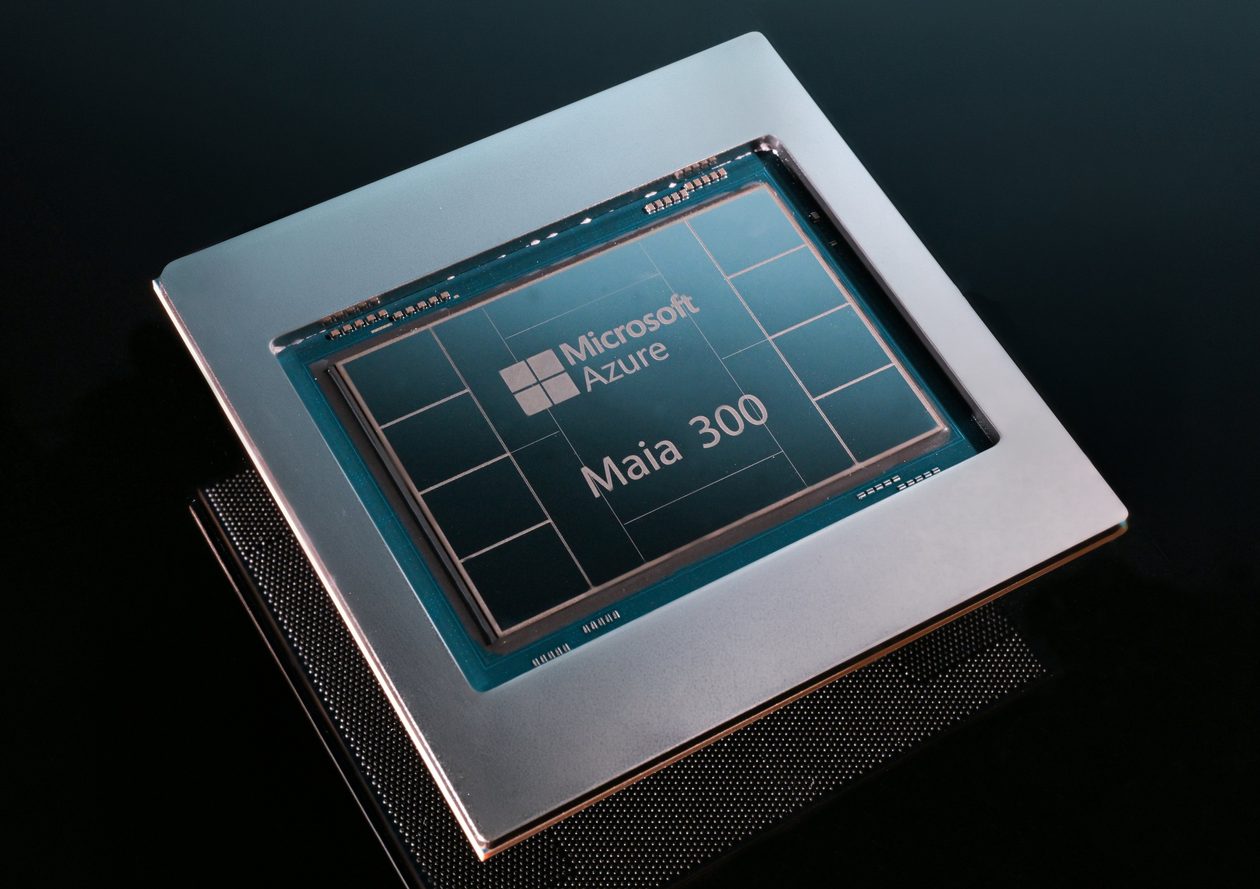
A prototype of Microsoft’s Azure Maia 300 chip, which the company plans to begin deploying at scale in 2027. (Microsoft Photo)
Microsoft plans to run most of its AI services on chips it designs itself, a shift that could save the company billions of dollars and reduce its dependence on industry juggernaut Nvidia.
The company on Monday unveiled Maia 300, the third generation of its custom AI chip, saying it will begin large-scale deployments in 2027. In a blog post, Azure chief Scott Guthrie said Maia will become “the primary AI inference system for Microsoft products and services.”
Microsoft CEO Satya Nadella called it “our biggest bet yet on our own silicon” in a post on X.
Maia 300 will produce 40% more AI output for the same amount of power as leading GPU-based systems, which Nvidia dominates, according to the company.
A full rack of the new chips will produce up to seven times as much AI output as the current generation, the company says. They’re designed for the kinds of tasks that are growing fastest, such as AI agents that work through multistep jobs and models that handle long documents or conversations.
The Redmond company designs the chips and relies on Taiwan Semiconductor Manufacturing Co. (TSMC) to make them, rather than buying finished chips from Nvidia. More-efficient chips also let Microsoft run AI services using less electricity, at a time when power supply has become one of the biggest constraints on AI expansion.
Microsoft and Nvidia remain big partners. Nadella and Nvidia CEO Jensen Huang shared the stage last week to launch Windows PCs built on Nvidia chips. Nvidia also remains a key supplier for Microsoft’s data centers, and Nadella said on the company’s July earnings call that Microsoft will be among the first cloud providers to deploy next-generation systems based on Nvidia’s Vera Rubin and AMD’s Helios.
Microsoft has been playing catch-up. Unlike Google’s and Amazon’s chips, Maia isn’t available for outside customers to rent. Microsoft’s first Maia chip, announced in 2023, was followed by a second-generation Maia 200 this January after delays. As of this summer, Maia 200 was running in just two U.S. data centers, The Information reported in August.
Maia 200, the current generation, already powers Microsoft 365 Copilot and runs models from OpenAI as well as Microsoft’s own. It’s now being deployed across the U.S., Europe and Australia, according to Microsoft. GitHub Copilot and Microsoft Foundry are set to move onto it by the end of the year.
The shift will take time. Evercore ISI analysts estimate that Maia will account for about 10% of Microsoft’s spending on AI chips by early 2027, CNBC reported.
Microsoft says it will share more details next month at its Ignite conference in San Francisco.
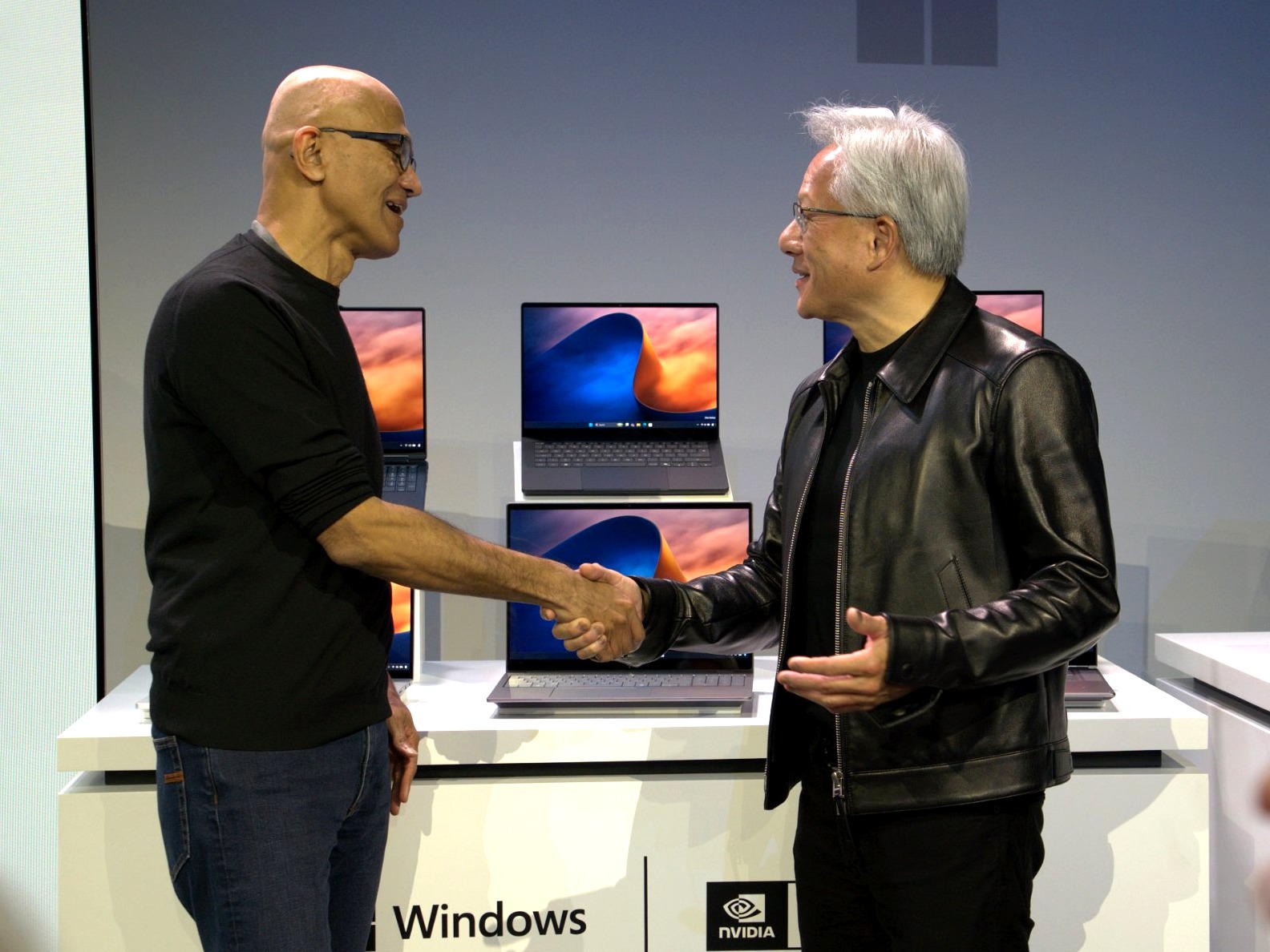
Microsoft CEO Satya Nadella, left, and Nvidia CEO Jensen Huang shake hands in front of new RTX Spark laptops at Microsoft’s Windows and Surface event in San Francisco on Wednesday. (Photo by Ken Yeung for GeekWire)
Microsoft is turning to an old friend and a familiar advantage in search of a new edge in AI.
The company and its longtime partner Nvidia on Wednesday started taking orders for a new line of high-end Windows PCs built to run large AI models independent of the cloud.
Microsoft also announced what it calls “Windows Hybrid Intelligence,” a set of features that will let its Copilot assistant read the files on a PC, take actions on the machine and opt to run AI models locally instead of in the cloud when it makes sense.
It’s not a new concept to users of such programs as Anthropic’s Claude, Perplexity and OpenClaw, which already work with the files on a user’s computer. But only Microsoft can build the features into Windows itself, along with security controls that limit what an AI agent can reach on the machine and will keep a separate record of what the agent does.
“I think agents are going to be the largest users of the file system,” Microsoft CEO Satya Nadella said during an on-stage conversation with Nvidia CEO Jensen Huang at an event in San Francisco.
Microsoft got an early jump in AI with its 2019 investment in OpenAI and the 2021 debut of GitHub Copilot, its AI coding assistant. But its Copilot products for consumers and businesses have since been overshadowed by OpenAI’s ChatGPT and Anthropic’s Claude.
Both rivals also moved quickly on AI agents that write code and carry out other tasks on a user’s computer, the kind of software Microsoft is now building into Windows. Microsoft’s own Copilot Cowork, which it introduced in March, integrates Anthropic’s Claude.
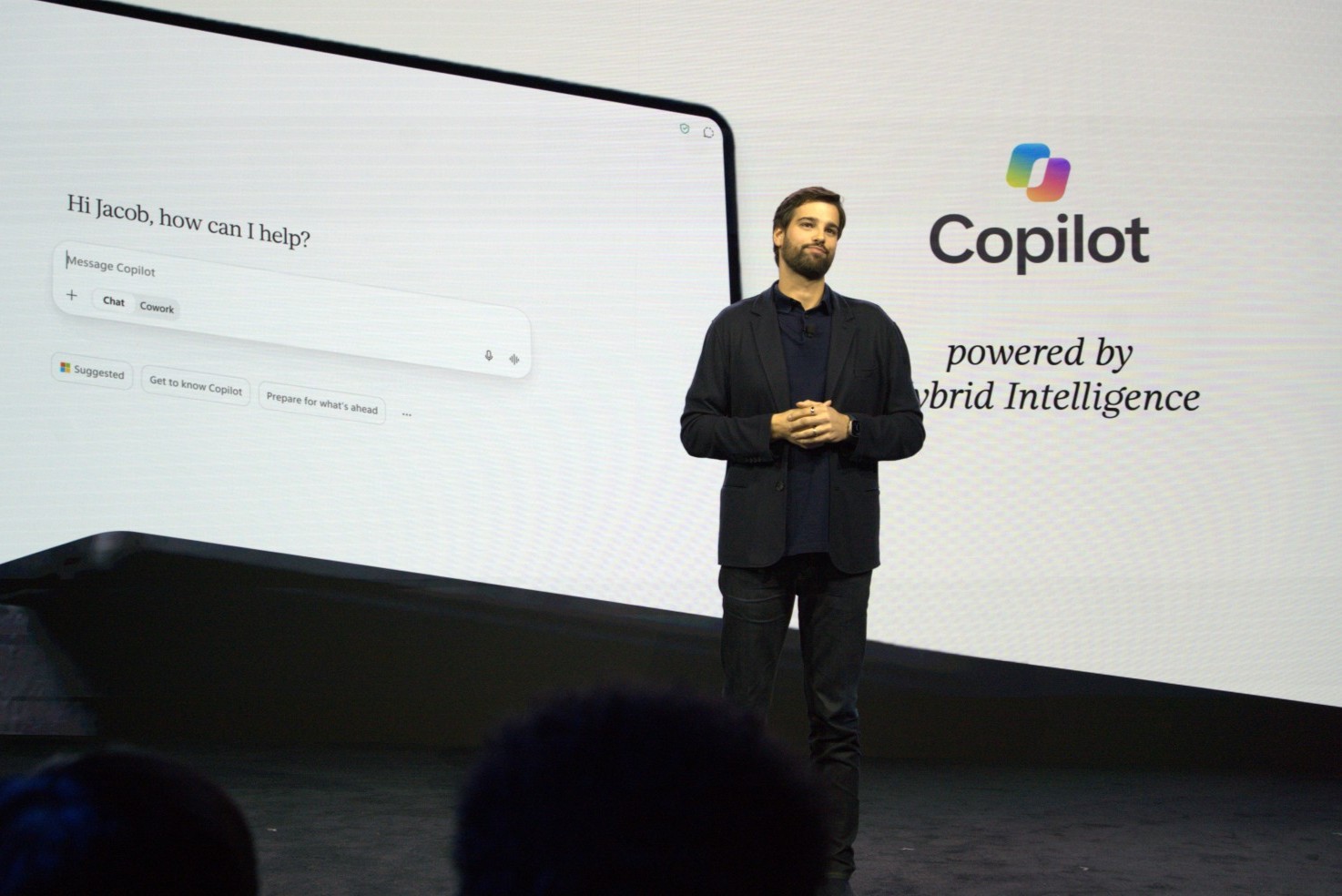
The tech giant has been reworking Copilot to catch up. Earlier this year, it put its Copilot teams for consumers and businesses under Jacob Andreou, now its executive vice president of Copilot. Last month, it released a new version of the app with tools for coding and long-running tasks.
Where Copilot is headed: Windows Hybrid Intelligence gives Copilot three new capabilities, as Andreou described them on stage. The assistant can draw on all the files on a PC, take actions such as moving files and changing settings, and hand tasks to AI models running on the machine “when cost or privacy matter more.”
Copilot will still use the cloud for the hardest tasks, Andreou said, and will act on the PC only with the user’s permission.
Microsoft said the features are expected to begin rolling out in the coming months on Copilot+ PCs, the AI-focused Windows machines it introduced in 2024.
Jacob Andreou, Microsoft’s executive vice president of Copilot, describes the assistant’s new capabilities on Windows PCs at the company’s event in San Francisco on Wednesday. (Photo by Ken Yeung for GeekWire)
Developers will get a version first. An experimental release coming later this month will let GitHub Copilot automatically send simpler coding tasks to an AI model on the PC and harder ones to the cloud.
In one example depicted on stage, Copilot’s Autopilot agent found an email from Andreou’s accountant, gathered tax documents scattered across his PC, renamed and sorted them into folders, bundled them into a zip file and drafted a reply with it attached, pausing for his approval before sending. The sorting was handled by AI models on the laptop, he said, so the tax details weren’t sent to the cloud.
Running AI models on the PC reduces the usage charges that come with AI in the cloud. Nadella wrote on X that Microsoft is bringing “unmetered intelligence to every desk and every home,” echoing the company’s original mission of “a computer on every desk and in every home.” A slide in the presentation said local models would run tasks on the PC “at no extra cost.”
Microsoft is also adding thousands of quick actions to the search box on the Windows 11 taskbar, such as switching to dark mode, arranging windows or sending a text message. Those start rolling out Wednesday to people in the Windows Insider testing program.
An option to get Copilot answers in the search box will be opt-in and will arrive in select markets later this year, according to the company.
The Recall precedent: Microsoft has run into trouble before with AI that looks at what’s on a PC. Recall, a feature that takes periodic screenshots of a user’s activity to make it searchable, drew objections from security researchers when it was announced in 2024. Microsoft delayed it and made it opt-in before releasing it widely in 2025.
Recall didn’t come up at Wednesday’s event. Microsoft’s blog post says Copilot’s access to local content, which it describes as “files and recent activity,” will require the user’s permission.
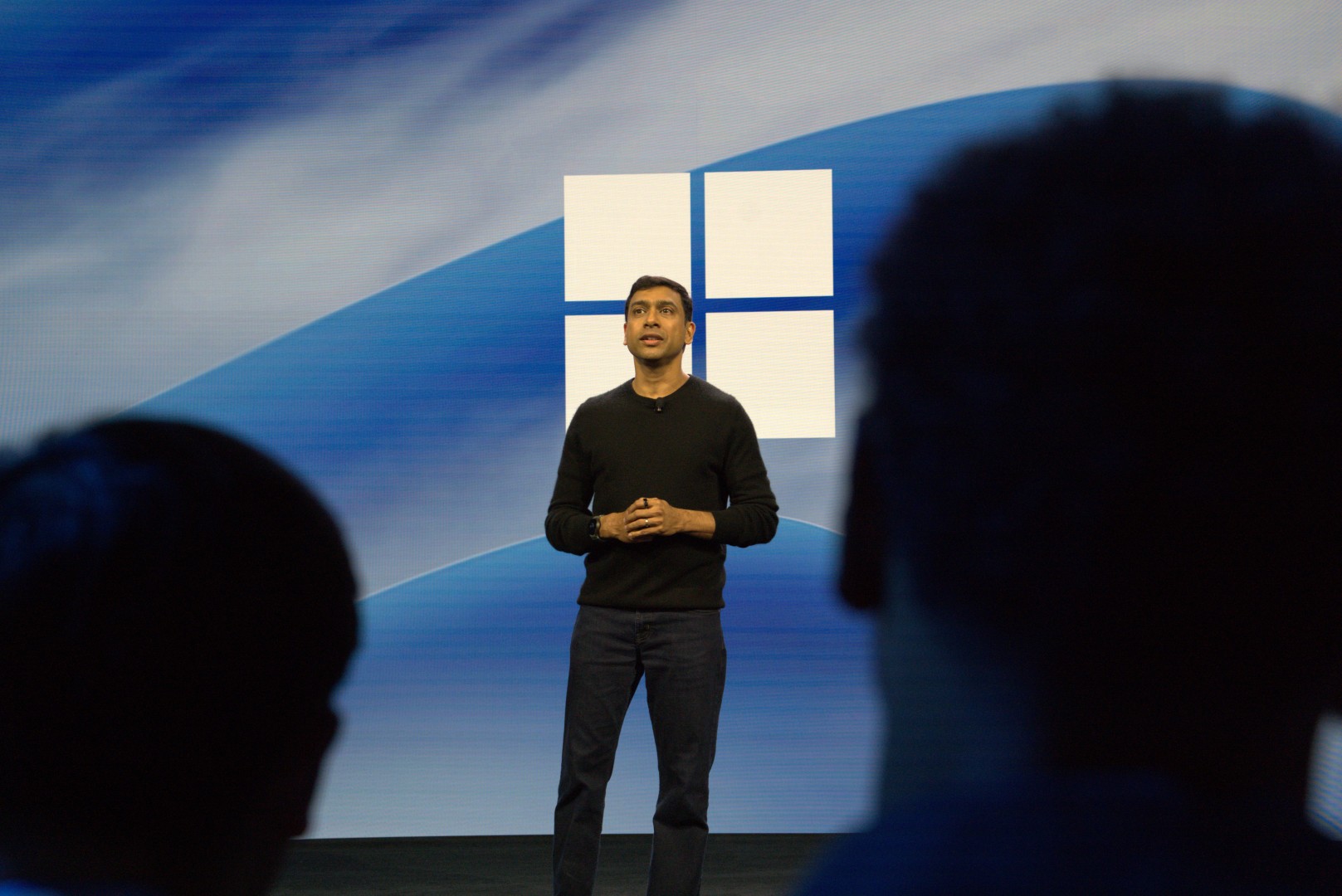
Pavan Davuluri, Microsoft’s executive vice president of Windows and Devices, speaks at the company’s Windows and Surface event in San Francisco on Wednesday. (Photo by Ken Yeung for GeekWire)
Limits on AI agents: Pavan Davuluri, Microsoft’s executive vice president of Windows and Devices, said the AI agents that run on PCs today are “fundamentally insecure because they have broad system access.”
Microsoft’s answer is a technology called Microsoft Execution Containers, now generally available in Windows 11, which lets an organization set which files and networks an AI agent can reach. Microsoft said OpenAI’s Codex and OpenClaw already support it, and that Anthropic’s Claude Code and Perplexity plan to.
Meta’s Muse agent is coming to Windows as an app that uses the technology, as well.
The new PCs: The machines are built around Nvidia’s RTX Spark chip and aimed at developers and creative professionals who want to run large AI models on their own computers.
Microsoft’s Surface Laptop Ultra, a 15-inch laptop with up to 128GB of memory, starts at $2,599 and will be available Oct. 16, the same day similar laptops from Asus, Dell, HP, Lenovo and MSI begin shipping.
A desktop version for developers, the Surface RTX Spark Dev Box, costs $5,999 and ships in the U.S. in November.
Microsoft is pitching the laptops against Apple. It says machines with the Nvidia chip start producing AI responses up to 2.1 times faster than a 16-inch MacBook Pro with Apple’s M5 Pro chip and generate AI images up to 4.3 times faster, citing tests it commissioned or that Nvidia ran on preproduction machines.
The company is also offering up to $1,000 back to buyers who trade in a MacBook Pro.
Huang said the chip took more than 4,000 engineering years and started with a conversation he had with Nadella four years ago.
Nvidia’s Windows roots: Sriram Krishnan, the venture capitalist and former White House AI advisor who moderated the conversation, asked Huang for a favorite memory of working with Microsoft. Huang said Nvidia owes its existence to Windows.
He recalled a moment in late 1992, when Windows 3.1 was new and he and his co-founders, who had worked mostly on workstations, started imagining a PC with 3D graphics that could run games and design software. They started the company the next year.
“If not for Windows, Nvidia wouldn’t have been founded,” Huang said.
He traced a line from there to the AI boom. Windows brought graphics chips to the PC, he said, which led to Nvidia’s GeForce chips and its CUDA software, which gave AI researchers the computers they needed for deep learning.
Nadella joked that Huang was “now going to do a little transfer of market cap back to me.” Nvidia is the world’s most valuable company, at about $5.8 trillion. Microsoft is worth about $3.9 trillion.
“Windows has been with me for 34 years,” Huang said at the end of the conversation. “Looks like it’s going to be with me for 34 more.”
“There you go,” Nadella added before they walked off the stage.

 Login