Reading view

There are new articles available, click to refresh the page.

As the influencer economy drives retail sales, Seattle startup raises $22M to play matchmaker
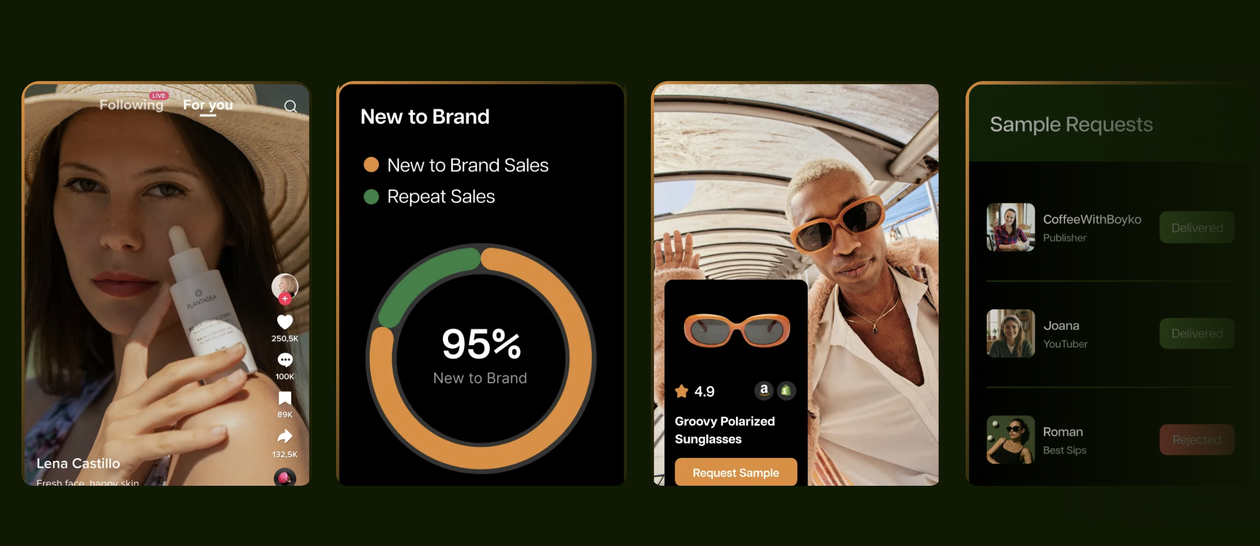
Levanta builds marketing tools so influencers and creators can connect with brands. Image via Levanta.

Influencers and online creators have become an increasingly powerful way for brands to sell products. But managing those relationships can get complicated — especially for companies selling across Amazon, Walmart, Shopify and other channels.

That’s the market Seattle startup Levanta is targeting, which today is announcing $22 million in new funding led by Volition Capital. The company provides software that helps brands find creators, send them products, set up affiliate commissions, track sales and handle payments.

The company says it now has more than 90,000 vetted creators on its platform. Brands can offer creators products to review or promote, pay commissions when their links generate sales, or arrange flat-fee partnerships. Levanta tracks the performance across Amazon, Walmart and Shopify and handles payments.

The startup originally focused on Amazon sellers but has expanded to Walmart and Shopify. Its revenue is up 80% year-over-year in 2026, according to the company.

“Every marketplace has thousands of sellers that want more customers, and there are millions of creators and affiliates capable of driving those customers,” said CEO and co-founder Ian Brodie in a press release. “The missing piece is infrastructure that connects the two, handles the economics, and accurately measures what happens.”

In 2023, Goldman Sachs estimated that the the influencer marketing category was expected to grow to $480 million by 2027.
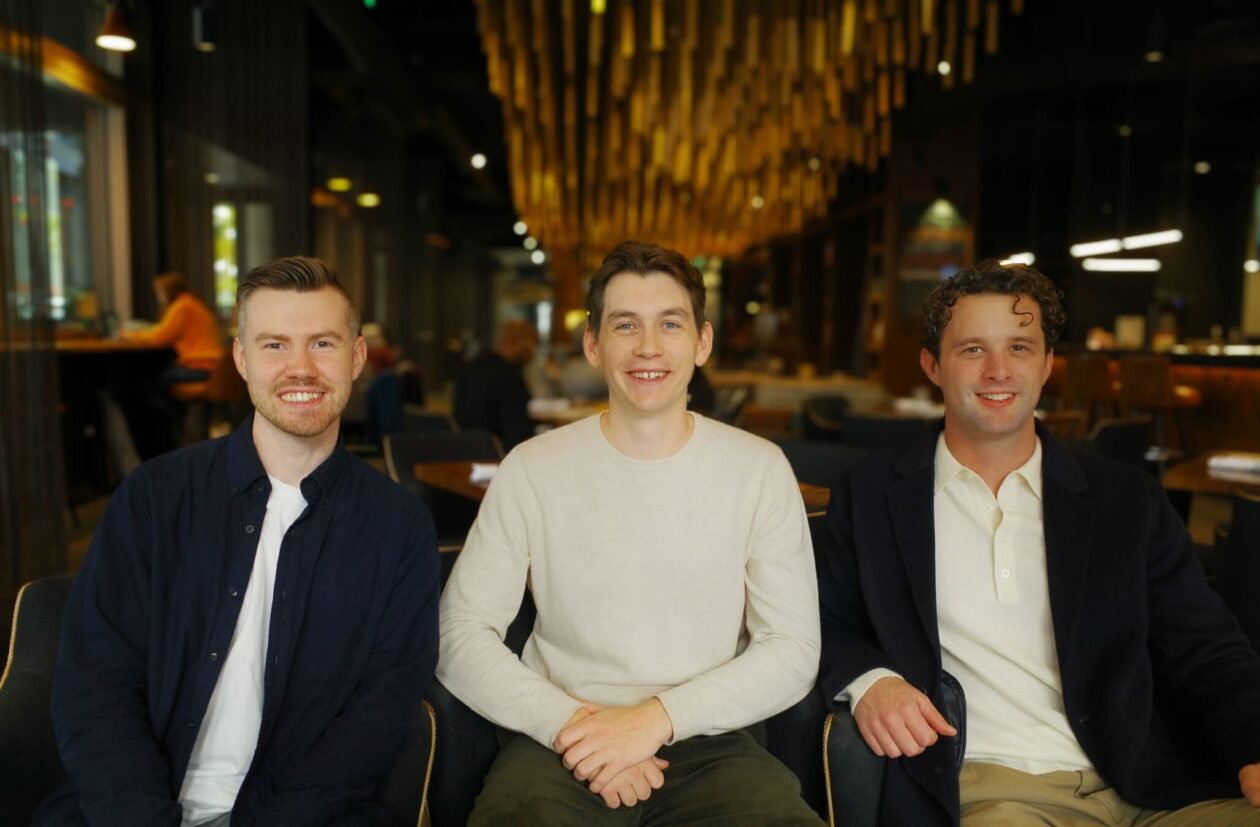
Levanta co-founders, from left: Spencer McKenney, Ian Brodie, and Rob Schab. (Levanta Photo)

Levanta was founded in 2023 by Brodie, CTO Spencer McKenney and Chief Marketplace Officer Rob Schab, all University of Washington graduates. The three previously founded Grovia.io, an affiliate marketing company that was acquired by Acceleration Partners in 2022.

With more than 100 employees, Levanta is the rare startup that has already reached profitability with Brodie telling Business Insider that it has been profitable or roughly break-even since its launch. With the new funding, it also provided cash liquidity to some eligible employees.

“This is a milestone moment for Levanta and it reflects how far the company has come and the value our team has created together,” Brodie said in the release. “At the same time, it allows us to reward the people who have been instrumental in building the foundation of the business while ensuring they remain deeply aligned with where we’re going next as we continue building Levanta for the long term.”

The new funding will support expansion to additional retail marketplaces and international growth.

Previous Levanta backers include Long Run Capital, OpenSky Ventures and Arrived Homes CEO Ryan Frazier. The latest series B round brings Levanta’s total funding to more than $43 million.
Washington to receive up to $339M in landmark $17B settlement over Meta social media addiction claims

Meta must overhaul Instagram and Facebook for young users by enforcing daily time limits, turning off push notifications during school hours, and blocking access late at night. (BigStock Photo)

Washington state will receive up to $339 million as part of a historic $17.1 billion multistate settlement with Meta, resolving allegations that the tech giant intentionally designed Facebook and Instagram with addictive features that harmed youth mental health.

Attorney General Nick Brown said Wednesday that the landmark agreement delivers on core youth-safety product changes — including hard caps on daily time limits, late-night scrolling blocks, and disabled push notifications during school hours — that state lawmakers failed to pass through legislation over the past two years.

“Let me say to the young people of Washington state: This agreement shows that your health and safety is more important than Meta’s profits,” Brown said in a news release.

Under the deal, Meta must overhaul Instagram and Facebook for young users by enforcing a two-hour combined daily time limit, turning off push notifications during school hours (8 a.m. to 3 p.m.), and blocking access late at night between midnight and 6 a.m. Teen users will also get the option to switch off algorithmic feeds in favor of a chronological timeline.

The agreement resolves claims brought by a coalition of 47 states, Washington, D.C., and three territories. While Meta acknowledged the settlement could cost up to $18 billion total over 10 years, it marked a rare legal resolution for a major platform facing nationwide youth safety litigation.

Outside the landmark Big Tobacco agreements of the late 1990s, the $17.1 billion deal represents the largest state consumer protection settlement in U.S. history. State officials and tech policy experts are framing the enforcement action as a similar watershed moment for regulating algorithmic harms and digital product design.

Washington state will receive a guaranteed baseline of $237 million from the core youth-safety agreement, with its payout potentially scaling up to nearly $339 million over the next decade if other major platforms like TikTok and Snapchat adopt comparable terms.

The Attorney General’s Office plans to use the funds to cover legal costs, bolster ongoing consumer protection enforcement, and directly fund state programs tackling the youth mental health crisis driven by social media use.

The settlement also mandates an independent third-party auditor to evaluate and report Meta’s technical compliance directly to state regulators annually over the next five years. Beyond usage limits, Meta must restrict social comparison features such as targeted beauty filters, hide public “like” counts for younger users, and implement stricter age verification to prevent children under 13 from creating accounts.

In addition to the core youth-safety agreement, Washington will receive a separate $10.2 million payment resolving long-standing state claims against Meta for sharing nonpublic user data with third parties like Cambridge Analytica during the 2016 election cycle.

Oregon Attorney General Dan Rayfield announced that his state’s share will total more than $125 million over 10 years. 

In a public statement, Meta praised the agreement as setting a new benchmark for youth safety, while emphasizing that the restrictions should apply across the entire industry.

“While this is an important step, these protections will only be truly effective if our peers — TikTok and YouTube — put the same measures in place,” a Meta spokesperson said.

The agreement remains subject to final judicial approval in federal district court.

Amazon drones go national, inside Anduril’s Seattle buildup, and AirTag leads to secret book-scanning site

This week on the GeekWire Podcast: Amazon’s delivery drones are going national, nearly 13 years after Jeff Bezos unveiled them on 60 Minutes. We listen back and discuss what’s next.

Plus: We go inside Anduril’s unmarked Bellevue office as the defense company builds toward 1,000 Seattle-area engineers; a reporter hides an AirTag in a rare book and tracks it to a secret Amazon book-scanning facility in Las Vegas; and an Anduril-themed trivia challenge.

Audio editing and production by Curt Milton.

Related stories and links

Mentioned at the top

Amazon drone delivery

The AirTag and the book-scanning facility

Anduril in the Seattle region

Subscribe to GeekWire in Apple Podcasts, Spotify, or wherever you listen.

How an AirTag planted by a reporter led to a secret Amazon site where old books are cut apart and scanned

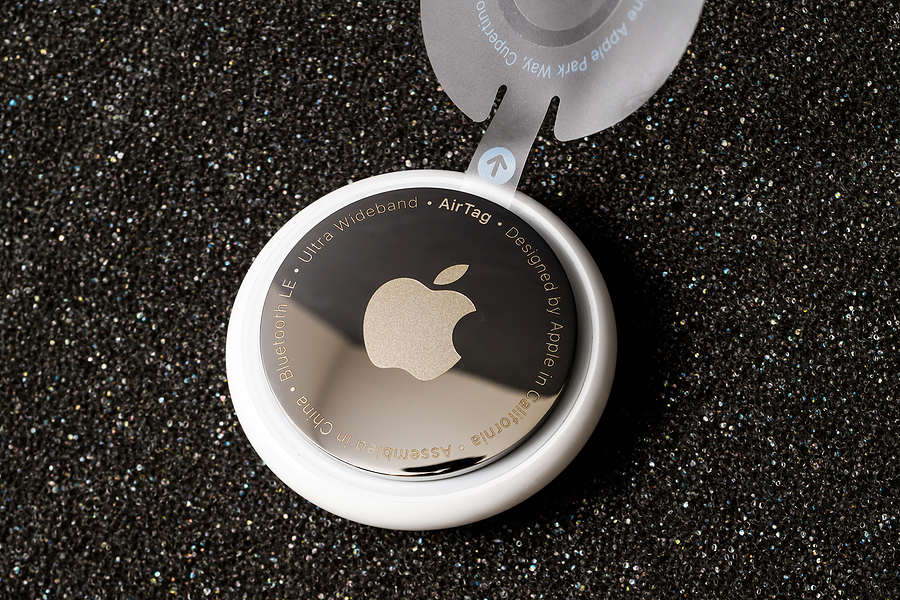
The reporting tool in question. (BigStock Photo / hadrian)

Amazon is reportedly cutting the spines off old books and scanning the pages at a Las Vegas facility, presumably to train AI models on text that exists almost nowhere else.

The company won’t confirm that’s the reason. It gave us the same statement it provided to 404 Media, which broke the story: it “purchases books through commercial channels to help develop and improve the products and services our customers use.”

But what really got my attention (and professional admiration) was 404 Media’s means of discovering this was happening at all: reporter Emanuel Maiberg put an Apple AirTag in a rare book and watched where it went, like a biologist tracking an endangered salmon.

Maiberg, a co-founder of 404 Media, has been digging into this topic for a while. He reported in July that booksellers were seeing a massive surge in bulk orders from buyers who didn’t haggle.

According to Maiberg’s latest story, a seller informed him that they’d received an order for about 1,000 books through the marketplace Biblio, and agreed to slip an AirTag supplied by 404 Media into one of them. 404 Media granted the seller anonymity because the seller was worried the disclosure would hurt their business.

The book flew out of a California airport to Milwaukee, sat for two weeks in a distribution warehouse outside Kenosha, Wis., then went west by truck, making an overnight stop in Grand Junction, Colo., before arriving at an Amazon warehouse in Las Vegas known as LAS8.

As Maiberg recounts in the story, he was initially confused. LAS8 is largely a print-on-demand operation. It prints and ships books as customers order them, the opposite of destroying them.

But the AirTag put the book at the north end of the building, which Amazon employees who posted on a workers’ forum described as a separate operation with its own code: VGT3. Its logo, painted at the entrance, is a T. rex with an open book in its hands. Employees described a split operation: some workers cut books, others received them and scanned bar codes.

Booksellers told Maiberg the bulk orders never included the very rarest books, the ones old enough to predate ISBNs, suggesting that buyers were working methodically through the serial numbers assigned to every published book.

A history of reportorial tracking

This technique of journalistic investigation has actually been around for a while.

The Basel Action Network, a Seattle nonprofit, started planting GPS trackers inside old printers and monitors in 2014, dropping them at Goodwill locations and recyclers around the country to find out where America’s electronic waste actually ends up.

Nearly a third of the tracked devices were exported. Two old TVs dropped at Oregon recyclers traveled to a warehouse in south Seattle, then to the Port of Seattle, and to junkyards in Hong Kong. BAN’s trackers led to federal conspiracy charges against Total Reclaim, the Seattle recycler that had been handling that Oregon e-waste.

Over the years, others have adopted the same tactics. ABC News put trackers in plastic bags dropped at Walmart and Target recycling bins in 10 states, and Finland’s public broadcaster hid them in used clothing to trace where donated fast fashion actually ends up.

What’s different now is the hardware. BAN worked with MIT and used cellular trackers that needed a data plan. Maiberg used a $29 AirTag that reports its position by pinging any nearby iPhone.

What’s going on at VGT3?

Sure, it’s possible that the slicing and scanning at Amazon’s VGT3 could be for something other than training AI models. Amazon has digitized books for two decades, for example, going back to Search Inside the Book. But that program runs on files publishers submit themselves. It doesn’t require buying used copies on the open market and cutting the spines off.

The circumstantial evidence pointing to AI is strong.

The books are rare titles with almost no resale market, but that’s exactly what makes them valuable as training data. The text was never digitized, and books printed before the AI boom are free of the machine-generated writing that degrades AI models trained on it.

The bookseller who sold the tracked shipment put it plainly to Maiberg: the books have historical and sentimental value, and the AI companies destroying them don’t care about that.

Cutting the spine is faster for scanning. It’s also the specific act that made Anthropic’s version of this legal: in June 2025, a federal judge ruled that buying print books, stripping the bindings and scanning them was fair use, because the digital copy replaced an original that no longer existed.

The same ruling went against Anthropic on books it had downloaded from pirate sites, which is the claim the company has since settled for $1.5 billion.

As someone who has covered Amazon for a while, I should note that this could be some “peculiar” project that actually looks nothing like anything people are speculating about, which will only become clear “in the fullness of time,” to use some of the favorite phrases inside a company known for being “willing to be misunderstood for long periods of time.”

But in the meantime, it’s pretty fascinating to see everyday technology being used in a creative way to uncover something that otherwise might have never come to light.

❌