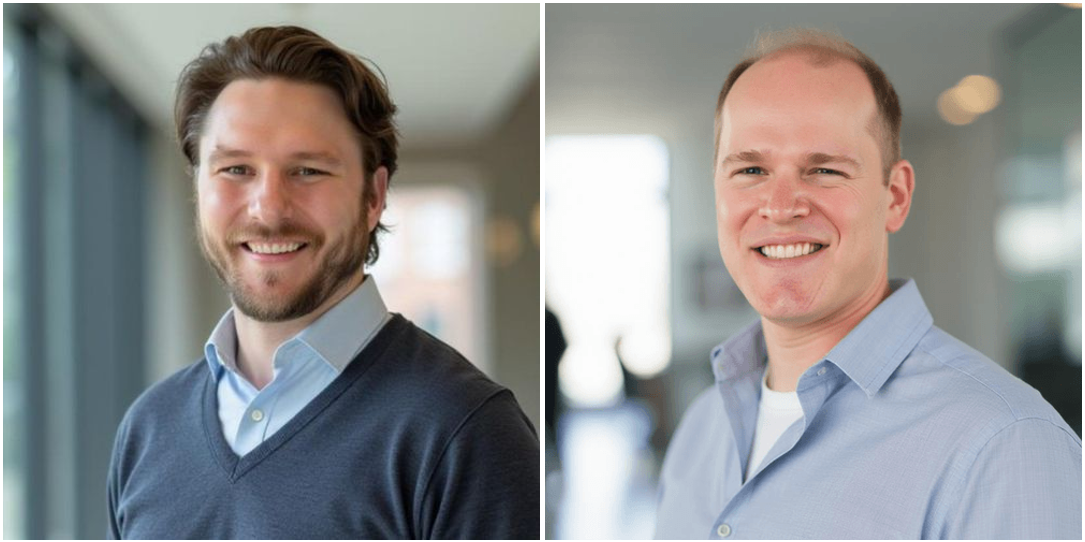
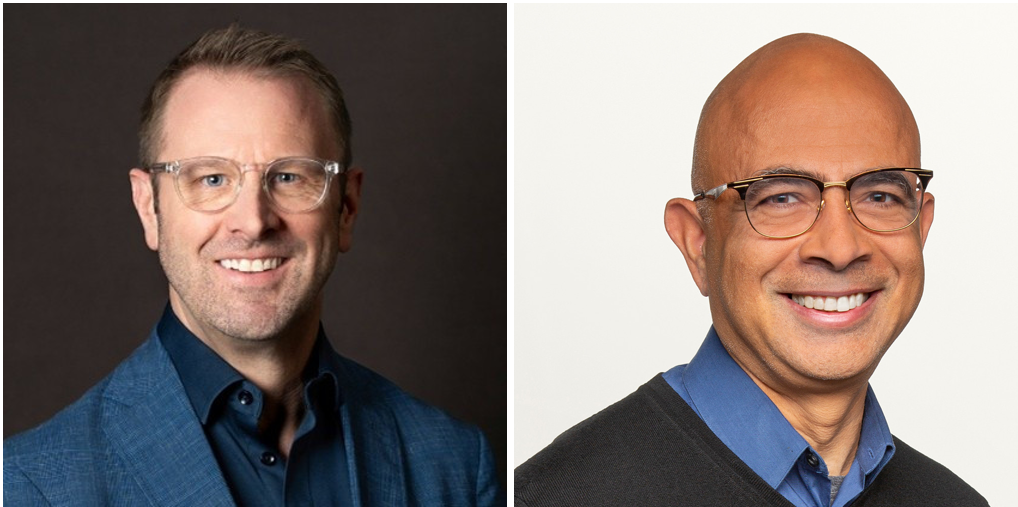
Kivo Health co-founders from left: CEO Victor Sadauskas and Chief Technology Officer Vaughn Koch. (Kivo Photos)
Seattle-based Kivo Health today announced $10 million in funding to help increase access to its services, which target older adults with chronic obstructive pulmonary disease (COPD). The Series A round brings the startup’s total funding to more than $16 million.
Kivo ships equipment to patients’ homes and provides a nine-week program of therapist-led, live video sessions focused on exercise, breathing techniques and disease management. The company provides ongoing support following the program and says it uses AI to handle administrative tasks and communicate with patients, supporting its clinicians.
“We’re using the funding to build our AI health coach to blend AI-led care with human-led care,” Dr. Victor Sadauskas, Kivo’s co-founder and CEO, said via email. That pairing, he added, will help patients manage their chronic disease over the long term.
The company has approximately 50 employees, including clinicians.
COPD is an incurable lung disease in which damaged airways and air sacs make breathing difficult and can worsen over time. Common symptoms include shortness of breath, a persistent cough and fatigue. COPD is the third leading cause of death globally and the fifth in the U.S.
However, there are effective treatments to improve the condition, though many patients are not able to easily access care. A study of Medicare beneficiaries with COPD found that only 3.7% received pulmonary rehabilitation in 2012.
Kivo reports that a peer-reviewed study of its program found improvements in participants’ symptoms, physical function and mental health. The company also funded an analysis that estimated its model could reduce annual health care spending by $8,245 per member through fewer hospitalizations, ER visits and time in nursing homes.
Kivo says its program is covered by Medicare, Medicaid and private insurers including UnitedHealthcare, Humana, Blue Cross, Aetna and Priority Health.
“By thoughtfully combining high quality clinical care with AI, we can now scale proactive, accessible care to every senior, improving symptoms and reducing avoidable costs,” Sadauskas said in a statement.
Sadauskas launched Kivo in 2023 with co-founder and Chief Technology Officer Vaughn Koch. Sadauskas previously was an emergency medicine physician for Kaiser Permanente and a senior investment fellow with Life Science Angels. Koch is a serial entrepreneur who sold his startup Movity to Trulia in 2010.
While its current focus is COPD, Kivo aims to expand into other costly chronic conditions affecting older adults.
Allumia Ventures led the round, with participation from Corewell Health Ventures, Y Combinator, Heuristic Capital and MassMutual Ventures.
— Brinc Drones, the Seattle-based maker of 911 response drones, has named Joe Levy chief revenue officer. Levy joins from Peregrine, a public safety data platform, and early in his career was a drill sergeant and combat engineer for the U.S. Army Reserve.
Levy praised the Brinc team, saying, “They’re passionate about what they do with a vision that will change the public safety landscape. I’m grateful to join them and help scale what they’ve built.”
Brinc announced a $125 million funding round in July, bringing its total raised to more than $280 million. The startup is hiring for numerous roles and is No. 6 on the GeekWire 200, a ranked index of the Pacific Northwest’s top startups.
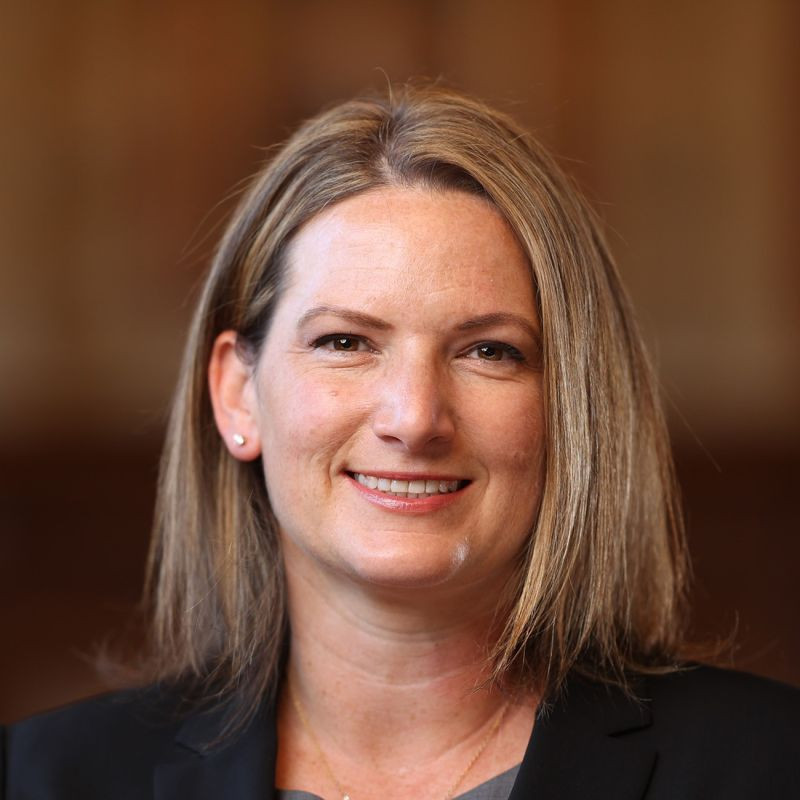
Jessie Minton. (Fred Hutch Photo)
— Seattle-based Fred Hutch Cancer Center has appointed Jessie Minton vice president and chief digital and information officer, a new position that brings the roles together.
Former Chief Data Officer Jeff Leek stepped down and is now a professor in the Fred Hutch Public Health Sciences Division and CEO of Synthesize Bio, a startup he co-founded in 2023. Last month, Fred Hutch announced Shawn Stapleton as VP and chief AI and innovation officer, another new role.
Minton joins from Washington University in St. Louis where she has been vice chancellor for technology and chief information officer since 2022. She was previously VP and CIO at the University of Oregon.
Fred Hutch praised Minton’s track record “of modernizing complex technology organizations, strengthening cybersecurity, governing large-scale Epic environments and aligning technology strategy with clinical, research and academic priorities.” The new role is effective Dec. 7.
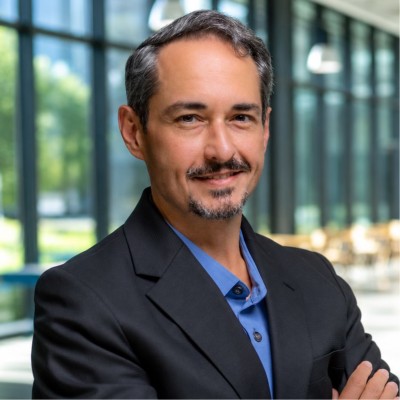
Jason (JJ) James. (LinkedIn Photo)
— Jason (JJ) James has been named chief information officer of Acumatica, the Bellevue, Wash.-based enterprise software giant that was acquired last year by Vista Equity Partners. James has more than 25 years in technology leadership and was previously CIO at companies including Aptos Retail, Net Health and Optima Healthcare Solutions.
“My focus is putting AI to work across Acumatica while keeping security at the core, so we can move fast without compromising the trust our expanding community of customers, partners and developers places in us,” James said in a statement.
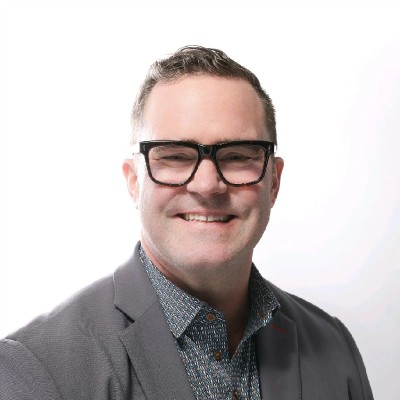
Andrew Bennett. (LinkedIn Photo)
— Seattle tech leader Andrew Bennett has joined San Francisco-based Motiveas chief marketing officer. Bennett was with Smartsheet for a decade, leaving as CMO in 2024. He is also a limited partner with the investment firm Stage 2 Capital.
Motive provides software, hardware and AI-powered tools to help businesses manage physical fleets of vehicles and heavy equipment.
— Steven Chen has left LinkedIn, where he served as director and head of corporate legal and sustainability, to become a senior director at Rubrik.
— Seattle-based LevelTen Energy, a startup facilitating the deployment of clean energy projects, has appointed John Barrow as director of a new initiative enabling the purchase and sale of data center projects under development.
Barrow joins from CyrusOne, a global data center developer and operator, and was with CPS Energy for more than 15 years.
“In my career, I’ve had a front-row seat to the data center boom,” Barrow said. Participants are struggling to quickly secure locations and energy, he said, adding that LevelTen “can solve those problems for industry participants at scale.”
— Certivo, a Seattle startup building technology to automate supply chain compliance, has named Jeffrey Bornstein to its board. Bornstein was with GE for nearly three decades and served in roles including vice chairman and chief financial officer.
“He has run the numbers for some of the most complex industrial supply chains in the world while regulators checked every one of them,” said Certivo CEO Kunal Chopra. Certivo is No. 194 on the GeekWire 200.
Convera leadership, from left: Mike Cahill, Jon Southall, Tui Allen and Chris Steinig. (Convera Photo)
— Convera, a Seattle-based fintech company helping businesses transfer money across borders, has added to its leadership team. All four will work out of Convera’s other offices.
Mike Cahill has been appointed EVP and chief operating officer after joining in June as interim chief product and technology officer. Past employers include Early Warning Services, the company behind Zelle, as well as PayPal, Boku and American Express.
Jon Southallhas been named SVP and chief technology officer. He joins from PayPal and has also worked for Boku and Braintree.
Tui Allenhas joined as SVP and chief product officer. She previously worked for employers including Ticketmaster, Shopify and Blackbaud.
Chris Steinig has been named CIO after leading Convera’s technology operations for four years.
— Portable Consultants a Redmond, Wash., enterprise telecommunications and data connectivity provider, has named two leaders.
Carrie Ferrero has joined as VP of product and marketing development. She previously served as VP of sales engineering at Connectbase.
Troy Brockway has been named director of client development, joining from SpikeUp Media.
— Reperio Health, a Portland, Ore., startup bringing preventive health check-ups into the home, has named Brad Nations to its board of directors. Nations is CEO and founder of JB Advisory.
— iQmetrix, a Vancouver, B.C.-based company building point-of-sale and retail management software for cell phone and wireless stores, has appointed Beniamin Longodor as VP of global growth. Longodor, who is based in Austria, was previously with NTS Retail.
Matt Blosl, left, CEO of DexCare, and Shailu Verma, co-founder and CEO of Mila Health. (LinkedIn Photos)
Seattle health-tech startup DexCare today announced it’s acquiring Mila Health, a fellow Seattle-area company that has built AI agents to call and text patients seeking medical appointments.
The startups did not disclose the terms of the deal.
DexCare, which spun out of Providence’s digital innovation group a decade ago, helps healthcare organizations fill appointment slots and manages information including patient referral requirements, insurance and scheduling protocols. The company serves 57 million patients nationwide, and customers include Kaiser Permanente, Piedmont, Texas Health Resources and Tampa General.
Mila’s technology can help answer questions related to available appointments and patient qualifications. The startup said it takes only hours to embed its technology into existing systems and launch AI agents.
“Healthcare can’t rely on out-of-the-box large language models because they’re unpredictable and can’t be audited,” said Shailu Verma, co-founder and CEO of Mila, in a statement. “With DexCare, providers and payers can configure an AI agent to complete the tasks they can’t staff for.”
Added Matt Blosl, CEO of DexCare: “AI solutions are everywhere, but health systems quickly realize that building the infrastructure, scaling the pilot, and managing the agent’s boundaries is untenable.”
Providence initially started DexCare to help with digital patient acquisition by better coordinating health system capacity and appointment booking. The startup has raised $146 million, with its most recent round totaling $75 million in 2023. It previously acquired Womp, a Bellingham, Wash.-based online commerce platform, in 2022.
The company was also a finalist for Health Innovation of the Year at the 2023 GeekWire Awards. It’s No. 43 on the GeekWire 200, a ranked index of the Pacific Northwest’s top startups, and has approximately 133 employees, according to PitchBook.
Verma helped launch Mila in January 2024 and previously served as chief product officer of strategy and innovation at UnitedHealth Group. He spent five years at Amazon Web Services as a product manager, leaving in 2021.
PitchBook reports that Mila participated in the Advanced Technology Development Center accelerator and that no equity or funding was exchanged as part of the program. The startup appears not to have raised any venture capital and has 25 employees.
“AI could be a great equalizer — or widen the gap,” Bill Gates writes in a new Gates Foundation report. (GeekWire File Photo / Todd Bishop)
The Gates Foundation is pledging to spend at least $1 billion over the next two years on artificial intelligence for health workers, farmers and teachers, largely in the world’s poorest countries, funding AI tools for people the market would otherwise overlook.
The bet is that AI can help reaccelerate the world’s progress against child mortality, poverty and disease, which has slowed sharply as governments cut global health funding.
The Seattle-based foundation’s new financial commitment, released Monday evening in conjunction with its 10th annual Goalkeepers Report, illustrates the double-edged sword of AI at a moment when the U.S. in particular is preoccupied with what the technology might damage or destroy.
Bill Gates, who issued his own AI warnings in an essay three weeks ago, writes in the new report that the risks “are real and deserve serious attention.” He adds, “AI could be a great equalizer — or widen the gap. This is not a long-range prediction. It’s a present-tense choice.”
In this case, Gates writes, he’s focusing on “the possibility that AI, if shaped well, could expand who has access to solutions, opportunities, and knowledge that has too often been out of reach.”
The window is short, he writes: “I believe that the decisions made in the next 12 to 18 months — about how AI is built, funded, and deployed — will determine whether this technology primarily benefits the people who already have the most or reaches those who have the least.”
Gates Foundation CEO Mark Suzman, in an interview with GeekWire, called the $1 billion a “down payment,” saying he expects the figure to grow significantly after the first two years.
For this first installment, 40% of the money will go to education, 40% to health care, 10% to agriculture and 10% to digital infrastructure, including datasets in languages the models don’t handle, according to the foundation.
More than 90% of the data used to train early large language models came from English-language sources, according to the report. Leading AI speech recognition systems make errors less than 6% of the time in English and more than 60% of the time in Yoruba, a West African language spoken by tens of millions of people, for example.
Most people in Africa use feature phones rather than smartphones, Suzman said, so the tools have to work by voice. That means collecting recordings of speech, not just written text, in local accents and including children’s voices. He said the foundation works with Google and Microsoft on AI language initiatives.
Winding down: Gates announced in May 2025 that he would give away virtually all his wealth and close the foundation in 2045, which requires doubling its spending over those 20 years. The foundation had previously planned to close 20 years after his death.
As part of that plan, the foundation will need to give away $200 billion before it shuts down. Its budgeted payout is $9 billion this year, the largest in its history. Suzman said the $1 billion over two years comes out of its core budget.
Goals for its final two decades include cutting preventable child deaths in half again, eradicating polio and malaria, and bringing tuberculosis and HIV under control.
The report’s data section shows how far off the pace the world is. Child mortality, neonatal mortality and HIV are all projected to miss their 2030 targets. HIV incidence is on track to fall only to 0.22 new cases per 1,000 people, more than 10 times the target of 0.02.
Early AI results: The report makes the case that AI could change those trajectories. It points to a number of tools already in use in different settings:
Penda Health, a network of affordable clinics in Nairobi, Kenya, where an AI tool built into patient records has raised diagnostic accuracy by 16 percentage points.
In the U.S., seventh graders using a tool called Kiddom Atlas across 21 middle schools gained the equivalent of six extra months of learning in a single year.
In India, the state of Maharashtra runs a free AI advisory service called MahaVISTAAR that has signed up more than 740,000 farmers, with 70,000 more joining every month.
The foundation has supported all three, according to the report’s endnotes. The endnotes also cite OpenAI’s account of its work with Penda Health on the clinical copilot.
One caveat: the evidence behind the examples is early. Suzman said the education work is “still on a relatively small scale,” and pointed to agriculture as the area already operating at size.
Suzman said the foundation spent years experimenting with AI without committing at this scale, wary of getting ahead of what the technology could actually deliver in its areas. Progress in the models over the past year, and results from early investments, convinced him otherwise.
“We now can state with a pretty high degree of confidence there are real deliverables that we can see across health, across education, across agricultural development,” he said.
What AI won’t fix: Asked whether AI can substitute for the money the U.S. and other governments have cut from global health, Suzman said: “Sadly, no.” The cuts run to “tens of billions of dollars,” he said, and they are hitting basic services now. He cited the purchase of bed nets and antiretroviral drugs, and care for mothers before and after birth.
“That’s affecting families right now with a real impact,” he said. “Ideally, you combine the two [AI and aid funding], and that’s how you get hugely accelerated progress.”
Suzman said the foundation will keep pressing the U.S. to remain a leader in global health. Despite the cuts, he said, it has been encouraging to see the country stay a partner in programs such as the Global Fund to Fight AIDS, Tuberculosis and Malaria, and he noted that Congress has moved to fund these areas more fully than the administration has.
“We believe that currently reflects the U.S. public’s broad view and support for these areas, when you can see the concrete results,” he said.
The Epstein review: Asked how the scrutiny of Gates’ ties to Jeffrey Epstein has affected the foundation’s work, Suzman pointed to the external review the foundation released in July.
Conducted by the law firm WilmerHale, it found no evidence that Epstein received foundation money or that the foundation knew of his crimes. It counted roughly 30 meetings from 2011 to 2014, involving Gates and nine other foundation leaders and staff, and found that staff had repeatedly raised concerns about associating with him.
The board adopted the recommendations that followed, among them centralized vetting of brokers and co-funders and tougher conflict-of-interest rules.
Suzman expressed optimism that the review has cleared the way for the foundation to keep working across the full range of governmental and philanthropic partnerships. “Hopefully it’s full speed ahead,” he said, “and with these AI shifts, that’s more important than ever.”

 Login