Reading view

There are new articles available, click to refresh the page.

Tech Moves: Microsoft, Amazon and Kestra promotions; Gradial names CMO; Yoodli adds VP
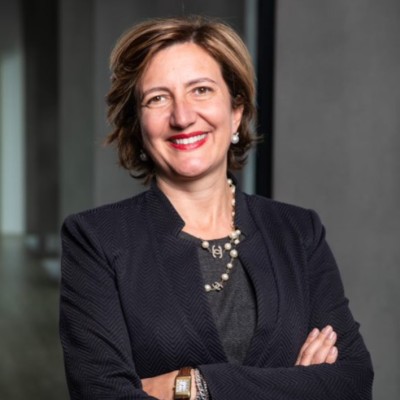
Silvia Candiani. (LinkedIn Photo)

Silvia Candiani has been named corporate vice president of Worldwide Telco & Media within the Microsoft Frontier Company, a $2.5 billion initiative launched by the tech giant in July to embed engineers inside customers to build and run AI systems. In her new role, Candiani will lead Microsoft Frontier Company’s work with some of the largest telecommunications operators and media conglomerates.

“The momentum across our industry is extraordinary, and I believe we are only at the beginning of what AI can make possible,” said Candiani, who is based in Milan.

Before joining Microsoft in 2010 as a general manager, Candiani was a marketing director for Vodafone in Italy for more than a decade.
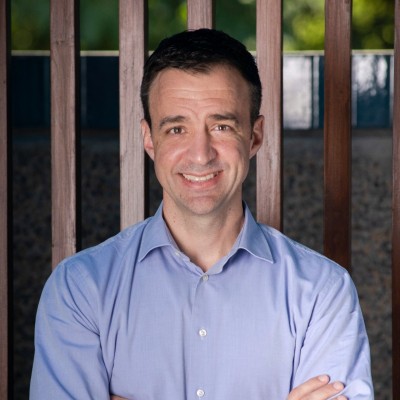
Kevin Frey. (LinkedIn Photo)

Kevin Frey has been appointed vice president and chief impact officer of Microsoft Elevate, the company’s philanthropic effort providing technology support, donations, sales and AI training for educational organizations and nonprofits. Frey joined from UNICEF, where he was the first CEO of Generation Unlimited, the organization’s skills and employment initiative.

Frey said he was joining Microsoft because it’s “one of the only organizations in the world with the scale, scope and influence to bend the arc of the AI-powered future we are entering.”

“I will be spending my time and energy trying to ensure that the benefits of AI are shared broadly and safely across society — by every teacher, every student and every worker — regardless of their postal code,” he added.

— And while we’re on Microsoft, Anne Linge has been promoted to director of communications for commercial and consumer experiences after nearly 10 years with the company. She previously worked in communications at Weber Shandwick and Waggener Edstrom Worldwide, which has since rebranded as We.
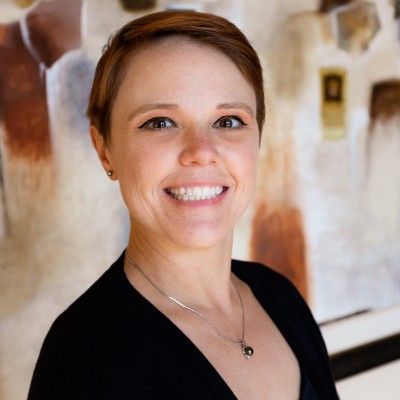
Alexis Bateman. (LinkedIn Photo)

Alexis Bateman has been promoted to director of global sustainability at Amazon Web Services after more than five years with the company. She was director of the MIT Center for Transportation & Logistics for 14 years before coming to Amazon.

Her work with AWS has given her the chance to help “shape sustainability at enormous scale,” Bateman said. “AI and cloud are transforming technology and society at an unprecedented pace, creating both enormous challenges and incredible opportunities for sustainability.”

Lynn Girotto. (LinkedIn Photo)

Gradial has appointed Lynn Girotto as chief marketing officer. In June, the Seattle startup announced $65 million in new funding for its agentic AI platform that automates enterprise marketing. The company is No. 127 on the GeekWire 200, a ranked index of the Pacific Northwest’s top startups.

Girotto joins from Qualtrics, where she was CMO for two years. She has previously led marketing teams at companies including Vimeo, Tableau and Getty Images, and was a senior director at Microsoft for nine years earlier in her career.

“The best marketers I know want to build ideas and customer relationships, not manage processes,” Girotto said. “Gradial is the first company I’ve seen that’s built to give them that time back.”
Kam Ghaffarian. (LinkedIn Photo)

— A Seattle-area nonprofit group known as the Fermi Explorer Mission announced that Kam Ghaffarian has joined as co-founder. Earlier this month, the organization shared its plans to send a spacecraft on an 80,000-year trip to the nearest alien star system, Alpha Centauri.

Ghaffarian is a billionaire who helped launch companies including X-energy, Axiom and Intuitive Machines. “By committing to launching a spacecraft to Alpha Centauri by 2029, we are not just pushing the boundaries of current technology; we are inspiring a new generation to look up and dream of interstellar exploration,” Ghaffarian said.

Philip Johnston, co-founder and CEO of the Fermi Explorer Mission, also leads Redmond, Wash.-based Starcloud, a startup aiming to launch up to 88,000 satellites to serve as AI data centers.

Rachel Cougan. (LinkedIn Photo)

Yoodli, the Seattle-based AI roleplay platform for enterprise training, has named Rachel Cougan vice president of human resources. Cougan previously served as a fractional HR leader through her consultancy, Possible HR. Before that, she was VP of people for Logixboard and Hiya, and also served as VP of talent for Textio.

Yoodli, which launched in 2021, has grown to more than 100 employees. The company is No. 17 on the GeekWire 200.

Daniel Finney. (LinkedIn Photo)

Kestra Medical Technologies has promoted Daniel Finney to vice president of research and development. The Kirkland, Wash.-based company sells cardiac monitoring and therapeutic devices. It raised $202 million in its IPO in March 2025 and was nominated for Deal of the Year at this year’s GeekWire Awards.

Finney has been with Kestra since 2019. CEO Brian Webster praised his role in developing the company’s FDA-approved monitoring device, adding that his “technical depth, product experience, and demonstrated leadership positions him to guide our next phase of innovation.”

Finney succeeds Phillip Foshee, Jr., who recently retired after leading Kestra’s R&D organization for nearly a decade.

PATH has named Dr. Jeremy Farrar chief of its Asia, Middle East and Europe regional division. Farrar, a globally recognized leader in public health and clinical medicine, will join PATH effective Oct. 1 and be based in Geneva. His past roles include assistant director-general at the World Health Organization and director of the Wellcome Trust.

PATH CEO Nikolaj Gilbert praised the appointment, and noted that Farrar “possesses deep knowledge of the realities that prevent access, the people that make health care possible, and the need for PATH’s mission of ensuring breakthrough innovations reach all who need them.”

— The Seattle Metropolitan Chamber has added eight members to its board of trustees:

  • Deniz Anders, Nordstrom’s executive vice president and chief marketing officer
  • Reuven Carlyle, founder of Earth Finance and former state senator
  • Carl Gipson, vice president of government and community affairs for Comcast
  • Trevor Gooby, executive vice president and chief operating officer for the Seattle Mariners
  • Daniel Huber, BNBuilders’ vice president of operations for the Northwest and Colorado
  • Karen Lee, CEO of Plymouth Housing
  • Holli Martinez, vice president, head of belonging, recognition and corporate responsibility for T-Mobile
  • Rajat Puri, executive vice president and chief operating officer for Premera Blue Cross
Fermi Explorer team plans to launch a probe that will reach the star system next door … in 80,000 years

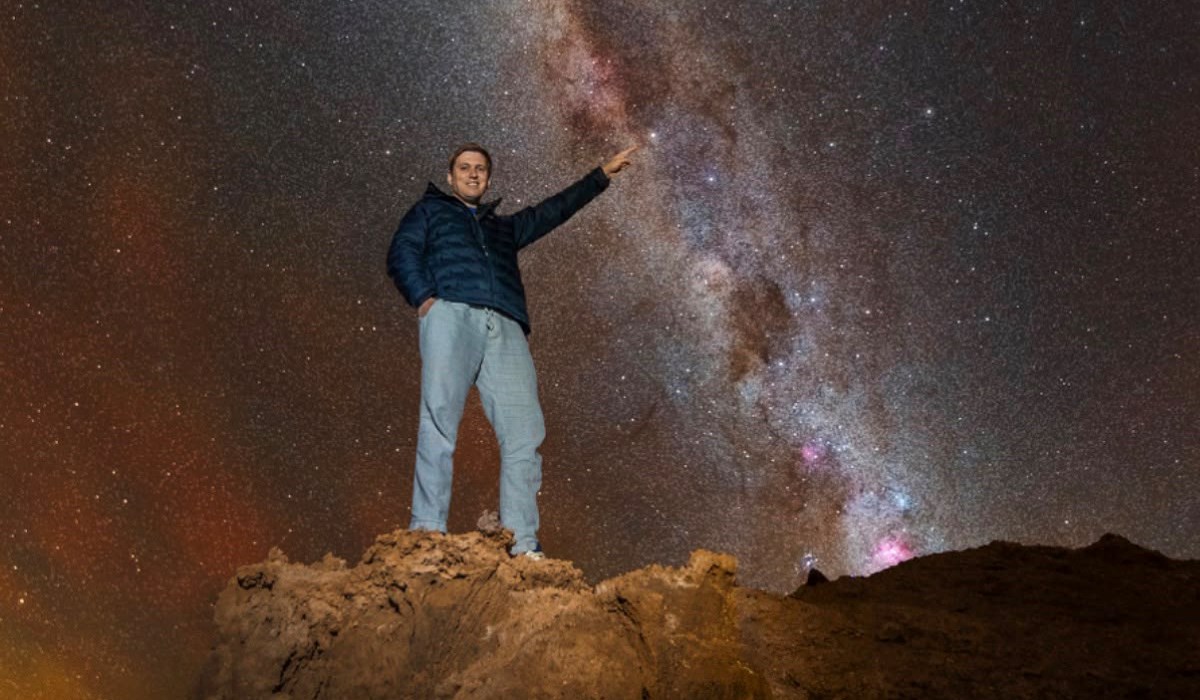
Philip Johnston, co-founder and president of the Fermi Explorer Mission, stands on an outcrop in Chile’s Atacama Desert and points at Alpha Centauri in the heart of our Milky Way galaxy. Johnston and his teammates aim to launch a probe by the end of 2029 that would reach Alpha Centauri roughly 80,000 years later. (Photo Credit: Alexis Trigo)

A Seattle-area nonprofit group known as the Fermi Explorer Mission today unveiled its plans to send a spacecraft on an 80,000-year trip to the nearest alien star system, Alpha Centauri.

If the mission goes as planned, it would mark a milestone for interstellar flight. But Philip Johnston, the group’s co-founder and president, doesn’t expect Fermi Explorer to be humanity’s first visitor to Alpha Centauri. He’s counting on our descendants to figure out faster ways to travel between now and the year 82026.

“We’ll be the first to leave, and the last to arrive,” he said.

The robotic spacecraft won’t be powered by antimatter, dilithium crystals or other science-fiction standbys for traveling between stars. Instead, it will depend on a tried-and-true solar electric propulsion system to build up speed for the 4.4-light-year trip.

Johnston and his teammates laid out the mission requirements for a bidding process that aims to keep the cost of designing, building, launching and operating the probe below $15 million. They’re also soliciting contributions, with launch targeted by the end of 2029.

The mission is contingent on raising the required funds, but Johnston voiced confidence about hitting the $15 million target. “We have raised significant funds already, but the bulk of the raise will kick off after [today’s] announcement,” he told GeekWire in an email. “One billionaire space founder already verbally offered $10M.”

What about NASA? “We are talking with NASA, but they have a very long process for backing missions,” Johnston said. “We would love to have them involved but will complete the mission with or without them.”

Johnston and the group’s other co-founders — Ezra Feilden and Adi Oltean — also founded Redmond, Wash.-based Starcloud, which plans to launch up to 88,000 satellites to serve as AI data centers. Johnston said there is no operational overlap between the two ventures.

Program manager Garrett Jameson, a former U.S. Air Force officer, will lead day-to-day operations. “We chose Garrett to optimize for something actually being launched,” Johnston said. “Rather than getting someone from JPL or an academic background, Garrett has 10 years of experience as an Air Force officer where he delivered on many missions, including space operations. His job will be selecting vendors and ensuring they deliver.”

Ten years ago, billionaire Yuri Milner announced a $100 million initiative called Breakthrough Starshot that aimed to send a swarm of micro-spacecraft to Alpha Centauri — but that effort, backed by the likes of Stephen Hawking and Mark Zuckerberg, never really got off the ground. Last year, Scientific American quoted the project’s executive director, retired Air Force Brig. Gen. Pete Worden, as saying that Starshot was put on hold.

“I spoke with the former program manager there,” Johnston said. “He was trying to do it in a human lifetime. Ours is a very different mission.”

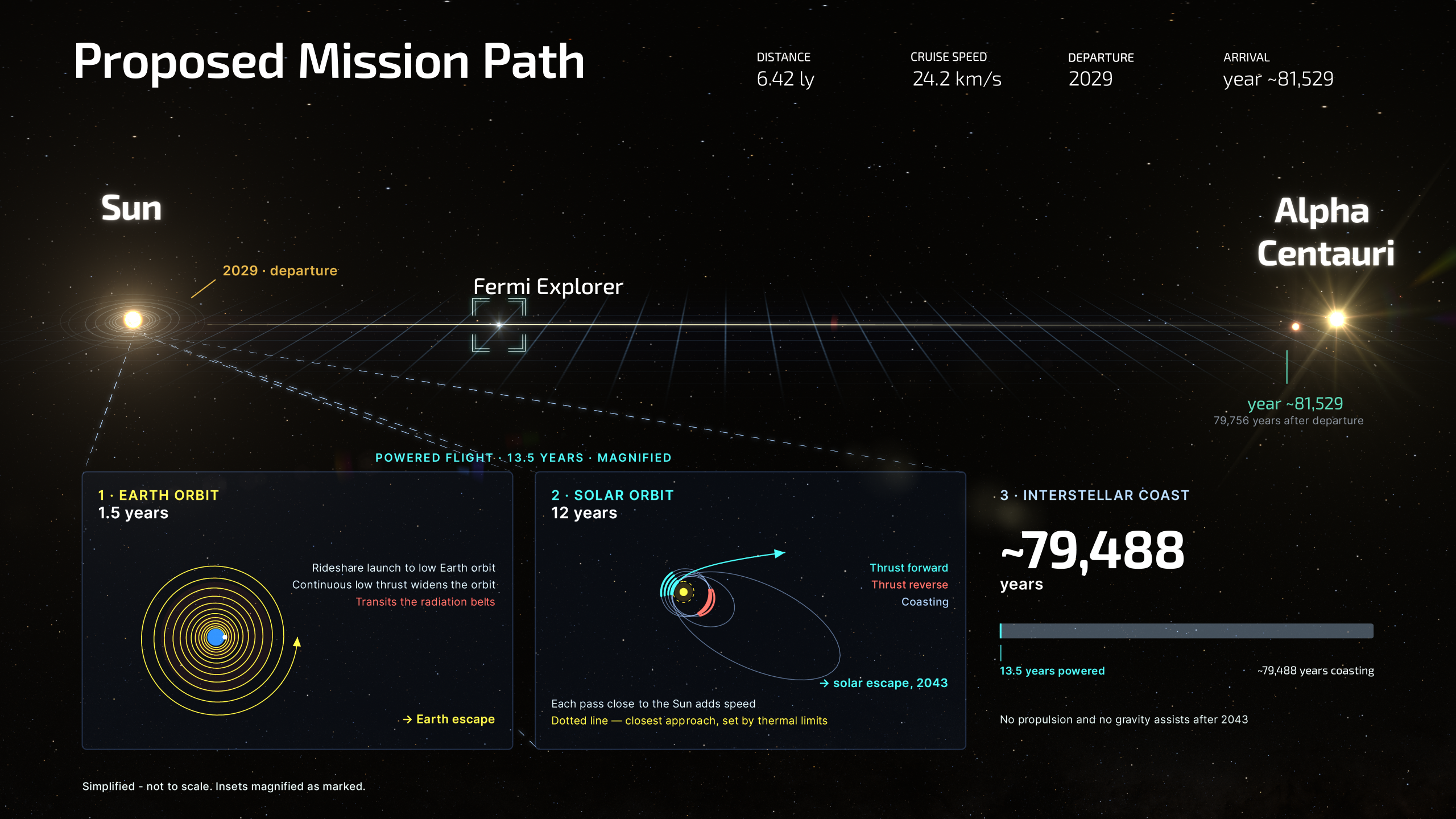
The mission plan calls for the spacecraft to deploy from its launch vehicle and then loop around Earth and the sun to build up speed through a series of perihelion pumping maneuvers. When the probe reaches the planned escape velocity, it will head out for Alpha Centauri. “We will have a 12-year operation period … and then a 79,500-year coast period,” Johnston said.

Chart showing proposed mission path for Fermi Explorer
This Fermi Explorer graphic shows different stages of the spacecraft’s mission. Click on the image for a larger version.

During the cruise, the probe will travel at a speed of 24.2 kilometers per second (54,000 mph). Johnston said the flight through the Alpha Centauri system will occur at a relative velocity of 17.9 km/s (40,000 mph) — roughly 25% faster than New Horizons’ Pluto flyby in 2015.

Specifications call for a minimum payload of 1 kilogram (2.2 pounds) inside a shielded 10-by-10-by-10-centimeter box (4 by 4 by 4 inches). The payloads could include artistic works or scientific experiments — for example, a cosmic-ray ion detector or an interstellar dust catcher. The Fermi Explorer team plans to schedule a three-month solicitation period for such payloads, and will make their selections based on feasibility, cost and other factors.

The team plans to send a digitized and micro-etched copy of the Voyager mission’s Golden Record, plus messages from children around the world. And the project offers several ways for supporters to “make their mark” on the mission, priced from $10 for a website mention to $1 million to place an gem-sized object on the probe.

“The purpose of messages from children is to inspire the next generation,” Johnston said in his email. “Grownups can pay.😅”

There’s no plan to orbit or land on a planet. Instead, the probe will continue outward after the Alpha Centauri encounter. Johnston hopes that future interstellar travelers will intercept it. “That is how we will get the data back,” he said.

The Fermi Explorer team conducted an AI-assisted analysis to verify that the plan was technically feasible. There’s also a board of human advisers, including Rob Meyerson, CEO of Seattle-based Interlune and former president of Blue Origin; Jeff Thornburg, CEO of Bothell, Wash.-based Portal Space Systems and former head of propulsion engineering at SpaceX; AstroForge CEO Matthew Gialich; Astro Digital CEO Chris Biddy; SpaceX engineer Ashkan Borna; and Alex Wissner-Gross, a physicist and inventor at the Massachusetts Institute of Technology.

“Philip and I have been talking about this idea for some time, and he asked me to support him as an adviser,” Meyerson told GeekWire in an email. “I believe in Philip as a leader, and big ideas like this need to be tried. I’m happy to be involved.”

Johnston hinted that SpaceX could play a key role. “We will most likely launch on a SpaceX rideshare, but that will be up to the vendor to select,” he said. When discussing the bidding process for providing the spacecraft, Johnston said that “we already have credible bids from U.S. manufacturers who have completed hundreds of successful missions” — a description that fits SpaceX’s profile.

Will Fermi Explorer actually lift off? The next few months should tell the tale. “The mission will happen,” Johnston insisted. “There will not be a no-go.”

There’s another, even deeper question about the mission: Why do it? Everyone involved in launching the Fermi Explorer will be long gone by the time it gets to Alpha Centauri. And there’s no guarantee that it will actually get there, or that humans will ever know if it does.

The answer lies in the name. “Fermi Explorer” is a reference to the Fermi Paradox, posed by physicist Enrico Fermi in 1950: If intelligent life is common in the universe, where is everybody? Some suggest that a “Great Filter” prevents species from expanding across the stars.

“I’m worried about the implications of the Fermi Paradox for the coming decades (i.e., are we coming up on a Great Filter),” Johnston said in his email. “I am doing the mission mainly to draw attention to the Fermi Paradox, and also to tick off a few more possible Great Filters.”

Learn more about the mission at FermiExplorer.org.

❌