Reading view

There are new articles available, click to refresh the page.

Microsoft 2.5: EVP Pavan Davuluri wants to remake Windows for both human and agent users
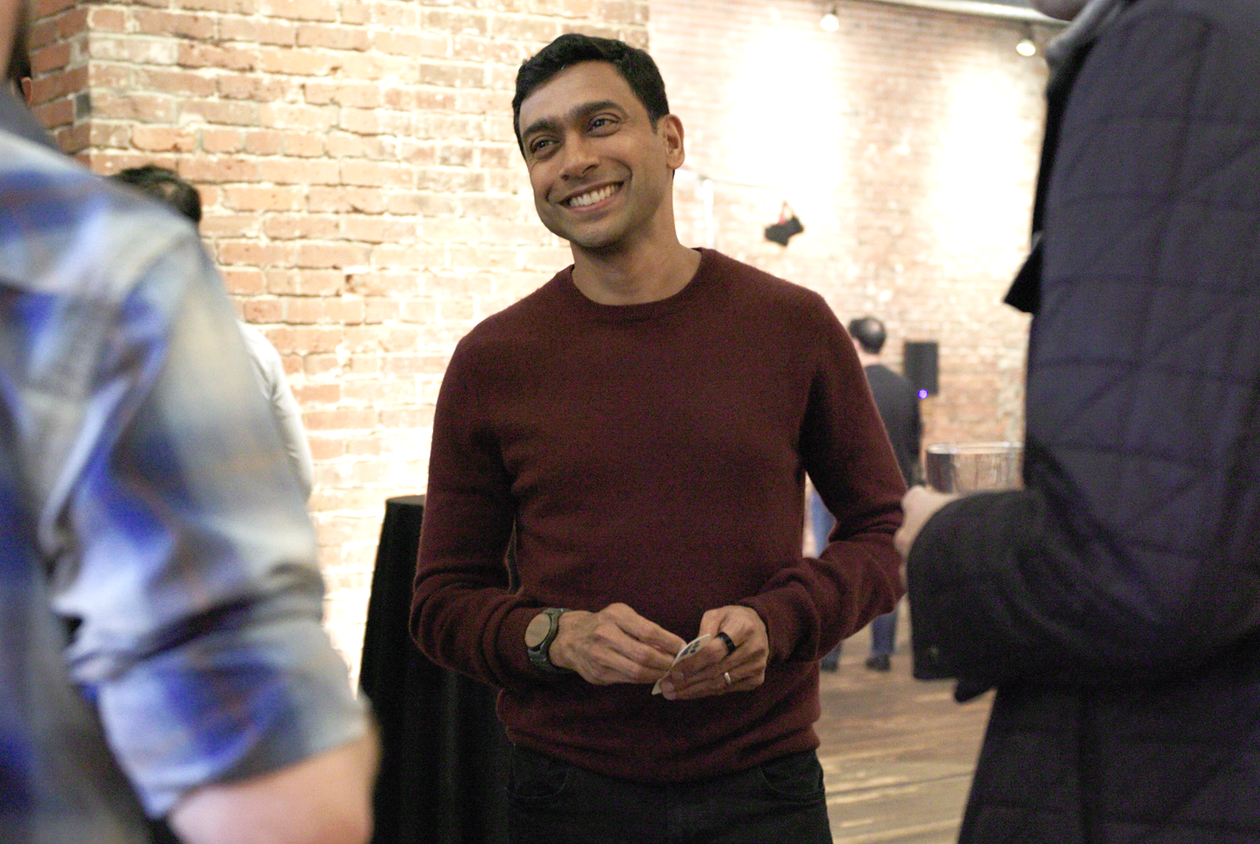
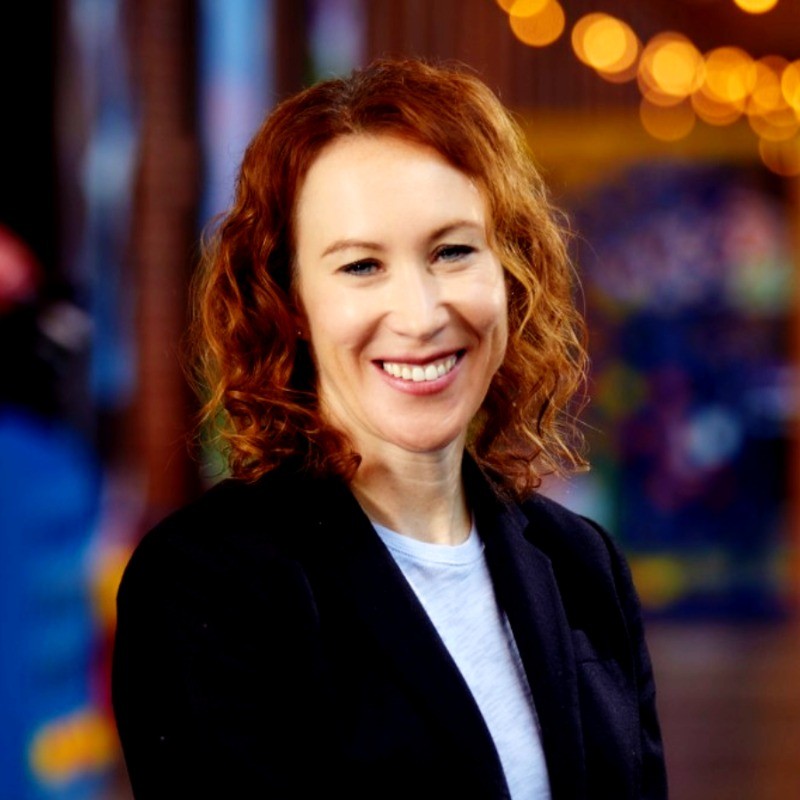
Pavan Davuluri says Windows will keep serving human users while adding agentic workloads. (Microsoft Photo)

GeekWire is profiling over the next few weeks some of the people and teams that are shaping the evolution of Microsoft in what we’re calling its “Microsoft 2.5” era.

Just Don’t Call It an ‘Agentic OS.’ Given Microsoft’s one-pointed AI focus these days, it’s not surprising that the Windows organization is on the agentic train.

But Executive Vice President of Windows + Devices Pavan Davuluri has learned the hard way not to call Windows an agentic OS. He did so back in November 2025, via a tweet and blog post, and the customer backlash was quick and biting.

But Davuluri has not done a complete U-turn because of the criticism. Instead, he has changed how he talks about where Windows is going — which is still in an agentic direction.

“The user of Windows going forward will continue to be users … but it’s also going to add these agentic workloads,” the nearly 26-year Microsoft veteran Davuluri told GeekWire in a recent interview.

During his time at Microsoft, he’s held a variety of roles, from intern to General Manager of Surface, to Corporate Vice President of Windows Silicon & Systems Integration. He was appointed Executive Vice President of Windows + Devices in March 2026, reporting directly to CEO Satya Nadella.

Windows needs to evolve to support agentic workloads through new platform capabilities that the team is building under the covers, Davuluri said. These low-level capabilities, or “primitives,” affect how Windows handles security, identity, governance, observability, and performance when it comes to building and running agents natively.

These coming changes likely will affect the Windows file system, security model, PowerShell, and other foundational components.

Microsoft already is working on Windows identity and manageability to make them better able to service agents. Windows can assign agents a local ID, or a cloud-provisioned identity backed by Entra.

And it also has an early preview of technology known as Microsoft Execution Containers, meant to help secure agents by running untrusted code in sandboxes or virtual machines. It’s these system-level areas where the team is focusing first in preparation for a human+agent future, Davuluri said, rather than the UX/UI level.

Going Back to Basics. Windows has had a lot of very different leaders over the years, with very different management styles and priorities.

For his part, Davuluri said he plans to run the Windows and Surface teams with four principles in mind: Maintaining customer obsession; treating Windows as a complete end-to-end system (“full stack”); focusing on complete user experiences and workflows rather than individual features; and building Windows openly and transparently, with clearer communication about plans and priorities.

On the heels of his promotion to EVP, Davuluri committed publicly to the much-needed goals of improving Windows quality and reliability. In a blog post, he outlined some of the requested changes that his team would be making to Windows, ranging from fixing the way the Insider test program works, to more granular improvements like allowing users to reposition the Windows task bar.

And since then, the team largely has been delivering to the surprise and delight of many long-time Windows users.

Davuluri has also been working to shift the conversation from which new features are coming to a specific build to what are the outcomes Microsoft wants to enable for specific groups of Windows users.

“There is no one single sort of ring for a billion-plus users on the platform,” Davuluri said. Windows users encompass people who use the product in a variety of different ways, so “we need to get clarity in our minds on the things that we do that lift all boats that raise the entire platform — and things that we have to go do that are specific and unique to each of our sets of users based on how they primarily or typically use the device.”

Full-Stack Thinking. Is there still a role for Microsoft as a PC maker in the coming agentic future? Not surprisingly, given his heavily hardware-focused background, Davuluri insisted there is.

When Microsoft debuted its first Surface devices in 2012, officials said the company needed to build its own hardware to create reference designs and innovative form-factor examples for other Windows PC makers.

These days, most Surfaces that ship arguably are not better, spec- or design-wise, than other PCs. But Microsoft still needs to keep a hand in hardware design to understand the full stack, Davuluri claimed.

Surface plays a key role in how Microsoft develops platform abstractions, incubates support for technologies like pen, facial-recognition, and neural-processing units that later spread across Windows, and optimizes for silicon-to-cloud, he said.

While the company’s attempt to create a distinct category of “Copilot+” AI PCs fizzled, Microsoft continues to try to find AI-centric reasons to convince customers to choose Windows devices. Davuluri and others have referred to the idea of “unmetered intelligence” to attempt to make the case for running AI models locally on PCs.

This fall, Microsoft (and other Windows PC makers) plan to roll out new PCs built on the Nvidia RTX Spark platform. The coming Surface Laptop Ultra, which will be optimized for RTX Spark, is aimed at creators, developers and AI builders, all of whom — Microsoft is hoping — will be fueling the growth of its next target user category: Agents.


Opinion: It’s time for Seattle to believe in Seattle

Seattle’s foundation as a hub of technology, science and innovation runs deep. Its confidence should, too. (GeekWire Photo / Kevin Lisota)

[Editor’s Note: Jacob Colker is co-founder and co-managing director of AI House.]

Seattle is one of the most talented, creative and inventive places in the world. But if we want the rest of the country to see us that way, we have to start acting like we believe it ourselves.

First, we need more pride around here.

Let’s talk about what it means to be proud. 

My mother grew up in Tarnów, Poland. She escaped communism and came to the United States in 1978 looking for a better life. She found one, built a family, and has lived in America for nearly 50 years. 

But my mom is still very, very Polish.

Several times a year, I get a message: “Jakub. Did you see this?”

I already know what’s coming. 

Some Polish person did something. A Polish athlete won something. A Polish scientist discovered something. Some guy with a Polish grandmother finished third in a regional Nebraska chess tournament. Doesn’t matter. Poland.

“Jakub. Look at this person.”

Okay, Mom. Who is she?

“POLISH.”

That’s it. That’s the story. 

And I love it, because Mom has this completely indestructible pride in where she comes from. Plenty of us know someone like this: a Greek mom, Vietnamese dad, Indian uncle or Nigerian aunt. Somebody from their corner of the world did something great, and you are going to hear about it.

There is power in that instinct. Not because your people are better, but because you believe your place matters.

Seattle could use more of that.

We are almost pathologically humble. Our response to notable achievements is often a polite nod before everybody gets back to our regularly scheduled Seattle freeze. 

That humility is working against us.

Second, Seattle is awesome and the evidence is everywhere.

I see Seattle’s potential every day working alongside dozens of entrepreneurs building startups. Some of the most ambitious and talented people in the world are already here.

We have many billion-dollar startups across the region and more than 200,000 people working across technology, science, space, health and startups. That is more than enough talent to build yet a dozen more unicorns. 

Nearly 40% of the world flies every day on airplanes built here. Blue Origin and SpaceX build rockets here. Starbucks, Amazon, Costco, REI and Nordstrom reshaped how the world shops. Microsoft helped put computing into our homes. AWS and Azure helped make the cloud the infrastructure of modern life. The University of Washington ranks among the world’s best. Seattle medical breakthroughs have helped save tens of millions of lives. We are pushing forward fusion energy, aerospace and maritime innovation. And let’s not forget: we just won the darn Super Bowl.

And so, so much more. 

So why, despite all the evidence, do we still seem to have a communal case of imposter syndrome?

This is not a city lacking accomplishments.

It is a city with a branding problem.

Third, we have let other people tell our story for far too long. This ends, today. 

Cities have brands whether they intend to or not. Silicon Valley is where ambitious people build companies. Nashville is music. Los Angeles for film and television.

Seattle’s cultural humility mostly assumes our accomplishments speak for themselves.

They don’t.

Reputation gets built one story at a time. You hear one story and it is interesting. You hear 10 and you notice a pattern. You hear 50 and your beliefs begin to change: That’s where important science happens. That’s where talented people live. That’s where I should invest, build or work.

Those beliefs shape real decisions about where people move, where companies get built and where investors put their money.

So to fix Seattle’s branding problem, here’s what we need to do.

Step 1: Let’s tell one clear story — Seattle’s talent pool is ridiculous. 

Seattle is where deep technical talent meets deep domain expertise to build consequential things: AI, aerospace, cloud computing, medicine, fusion, robotics, maritime technology and enterprise software.

We do not need 50 slogans. We do not need another consultant-led branding exercise. We need one simple idea that people outside this region can remember: Seattle’s talent pool is ridiculous.

There is a reason some of the world’s most important companies have built major engineering centers, research hubs and second headquarters here for decades. They come for the talent.

And that talent is why Seattle will not just participate in the future. We will lead in building it.

Step 2: Let’s use the megaphones we already have.

Seattle already has outlets (including this one) telling this story — publications, podcasts and social channels that document the region’s startups, breakthroughs and product launches. 

Every day, startups are raising money, scientists are making breakthroughs, companies are launching products, engineers are building technology and institutions are pushing this region forward.

That is not just tech news. That is the raw material of Seattle’s reputation. So let’s use it.

When you read or hear about a Seattle startup doing something remarkable, share it. When you see a story about a breakthrough at Fred Hutch or the University of Washington, send it to someone outside the region. When a local company raises money, lands a major customer or gets acquired, don’t just scroll past it. Amplify it.

Step 3: Let’s treat every local win as Seattle’s win.

When a local robotics company ships something remarkable, that is Seattle’s story.

When a maritime startup reinvents how ports operate, that is Seattle’s story.

When our AI research labs, or hometown heroes in Amazon and Microsoft, create breakthroughs, that is Seattle’s story. 

When a biotech company lands a major breakthrough, when a game studio creates a global hit, when a clean-energy company reaches a milestone, that is Seattle’s story.

Our companies, universities, hospitals, labs, investors, civic organizations and business leaders should act like an amplification network for one another. Stop treating somebody else’s success as somebody else’s news.

Their win is our collective proof.

Step 4: Let’s put Seattle on the label.

Founders need to say where they are building. “Made with ❤️in Seattle” should be on the bottom of every website. Put Seattle in the press release. Put it in the LinkedIn post. Mention it onstage. Say it in interviews. Tell investors. Tell customers. 

Silicon Valley companies have spent decades attaching their success to their geography. We should do the same. If you build something extraordinary here, make sure the world knows it was built here.

Step 5: Let’s do a better job of selling Seattle.

Every venture capitalist, founder, executive and civic leader in this region should be able to explain in 60 seconds why somebody should build a company here.

Not defend Seattle. Not apologize for Seattle. Sell Seattle. 

Reminder: It’s the talent. 

(And also cream cheese on hot dogs.)

When investors and founders from New York, Boston or San Francisco come to town, show them the region. Introduce them to engineers, researchers and entrepreneurs. Bring them into the community. Let them see what is happening. 

The best branding campaign is somebody getting on a plane home saying, I had no idea all of this was happening in Seattle.

If we’re going to succeed, we need to believe first.

Insert all the Ted Lasso jokes you want, but this stuff matters. 

There is no giant Seattle marketing department coming to save us. There is no national referee who will eventually review the evidence and declare that Seattle deserves more respect.

When somebody here does something extraordinary, act like it. Read the story. Share the post. Send the article to your team. Text it to your friend in New York. Put it in the group chat. Bring it up over dinner. Tell your kids.

Basically, become my Polish mother.

My mom doesn’t give a hoot that Kraków ranks No. 6 on some list or Warsaw is No. 8 on another. She doesn’t need a clickbait listicle to tell her Poland matters. She already believes it does.

We have to build our reputation ourselves. The good news is that we already have everything we need: extraordinary companies, world-class institutions, ambitious people, groundbreaking science and media documenting it all.

What we have been missing is the confidence to start being more loud. Stories become patterns, patterns become reputation, and reputation becomes gravity. 

Gravity is what creates influence and respect.

Pride is not something somebody else gives you. You don’t wait until the rest of the country decides your home is important. YOU decide it is. Then you act like it.

Let’s get to work. 

AI wealth fuels San Francisco’s housing boom while tech layoffs weigh down Seattle

The housing markets in San Francisco, left, and Seattle have been diverging for the past year. Prices started falling in Seattle on an annual basis about a year ago, while prices in San Francisco have been rising since November. (BigStock, GeekWire File Photos)

While a fresh wave of AI-generated wealth is pouring fuel on San Francisco’s housing market, Seattle’s real estate scene is getting left out in the cold, stuck in a slump driven by ongoing local tech layoffs, soaring costs, and persistent worker anxiety.

A new report published Wednesday by Seattle-based Redfin illustrates just how dramatically the housing markets in the West Coast’s top two tech hubs have split.

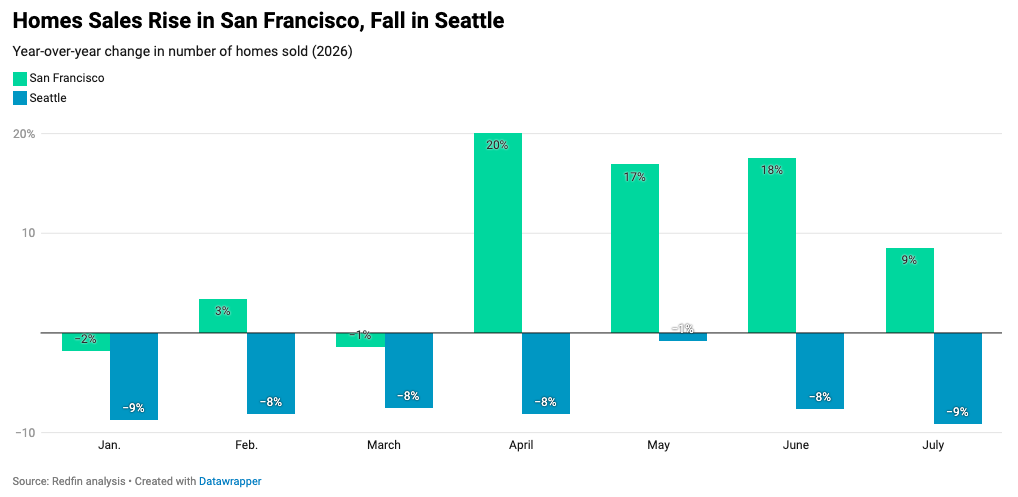
In July, San Francisco’s median home-sale price jumped 6% year-over-year to $1.6 million as home sales rose 8.5%, fueled by an 18.4% drop in active listings—the largest inventory contraction in the country.

By contrast, Seattle’s median sale price dropped 3.6% to $809,479 as home sales fell 9.1% and active listings surged 16.7%, the nation’s steepest inventory increase, leaving local sellers outnumbering buyers by 65%. Redfin detailed the drop in pending sales in the city in an earlier report.

San Francisco’s resurgence is fueled by a concentrated wave of AI wealth. Driven by big salaries, six-figure signing bonuses, and anticipation of massive IPOs for Bay Area giants OpenAI and Anthropic, affluent buyers are aggressively bidding up homes, frequently paying hundreds of thousands over asking price.

The frenzy mirrors findings from The New York Times, which reported in May that cash-flush AI startup employees and secondary stock sales are fueling hyper-concentrated bidding wars across the Bay Area.

In Seattle, the dynamic is reversed. While local tech giants pour billions into AI infrastructure, corporate belt-tightening and lingering layoff fears at companies like Amazon and Microsoft have squelched buyer confidence, leaving prospective buyers cautious, job mobility low, and listings piling up.

Click to enlarge. (Redfin Graphic)

Ground-level real estate agents in the Seattle area are feeling that buyer hesitation firsthand.

“Layoffs in the tech world are dampening homebuying demand in the entire area,” said Sheryl Wingate, a Redfin Premier agent, noting that return-to-office policies are further squeezing demand in outlying suburbs as tech workers avoid long commutes amidst job uncertainty.

Seattle-area real estate isn’t just feeling the squeeze from the heavyweights. Job cuts have hit nearly every tier of the regional tech ecosystem this year, sweeping through engineering hubs for Meta, Google, and Salesforce, consumer brands like Zillow, T-Mobile, and Starbucks, corporate divisions at Expedia and TikTok, and startups including Qualtrics and Amperity.

The chill is hitting the region’s high-end neighborhoods hardest. According to Bloomberg, pending luxury home sales in the Seattle area plummeted 15%, driven by a double hit of tech-sector layoffs and Washington state’s higher taxes on top earners. Once-frenzied markets in Eastside suburbs like Bellevue and Sammamish have stalled, with homes priced over $2 million sitting for an average of 44 days as affluent tech buyers pull back.

By comparison, high-end buyers in San Francisco are doubling their budgets as AI confidence surges. Redfin noted that luxury pending sales in the Bay Area jumped 46% year-over-year, with local agents reporting tech clients doubling their price points — in some cases expanding from $2 million budgets to nearly $4 million — and placing offers as much as $900,000 over asking price.

The shift is also severing a key migration pipeline that long fueled Seattle’s housing boom. While high-earning Bay Area transplants historically moved north to stretch their tech compensation, Redfin migration data shows the net inflow of home shoppers moving from San Francisco to Seattle plummeted to just 369 people in the first quarter — down from over 5,100 five years ago.

Looking ahead, Redfin economists expect these diverging trends to play out across other tech hubs as artificial intelligence reshapes the labor market.

“AI is reorganizing the tech labor market, with San Francisco and Seattle representing two sides of that transition,” said Chen Zhao, Redfin’s head of economics research, adding that while AI creates rapid wealth in some markets, it drives corporate restructuring and caution in others.

Microsoft 2.5: Superintelligence leader Ali Farhadi points company toward AI self-sufficiency

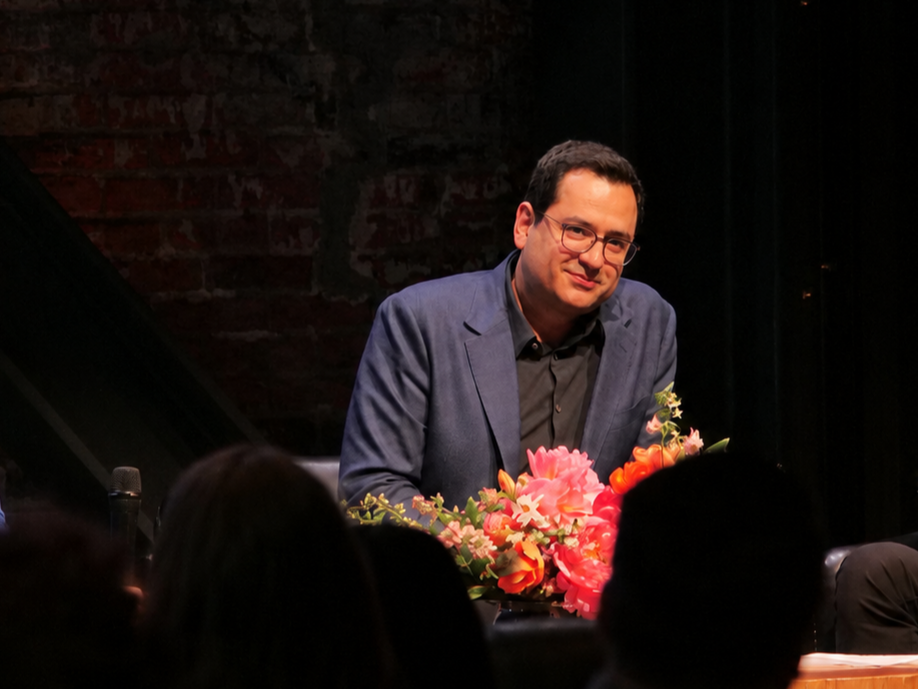
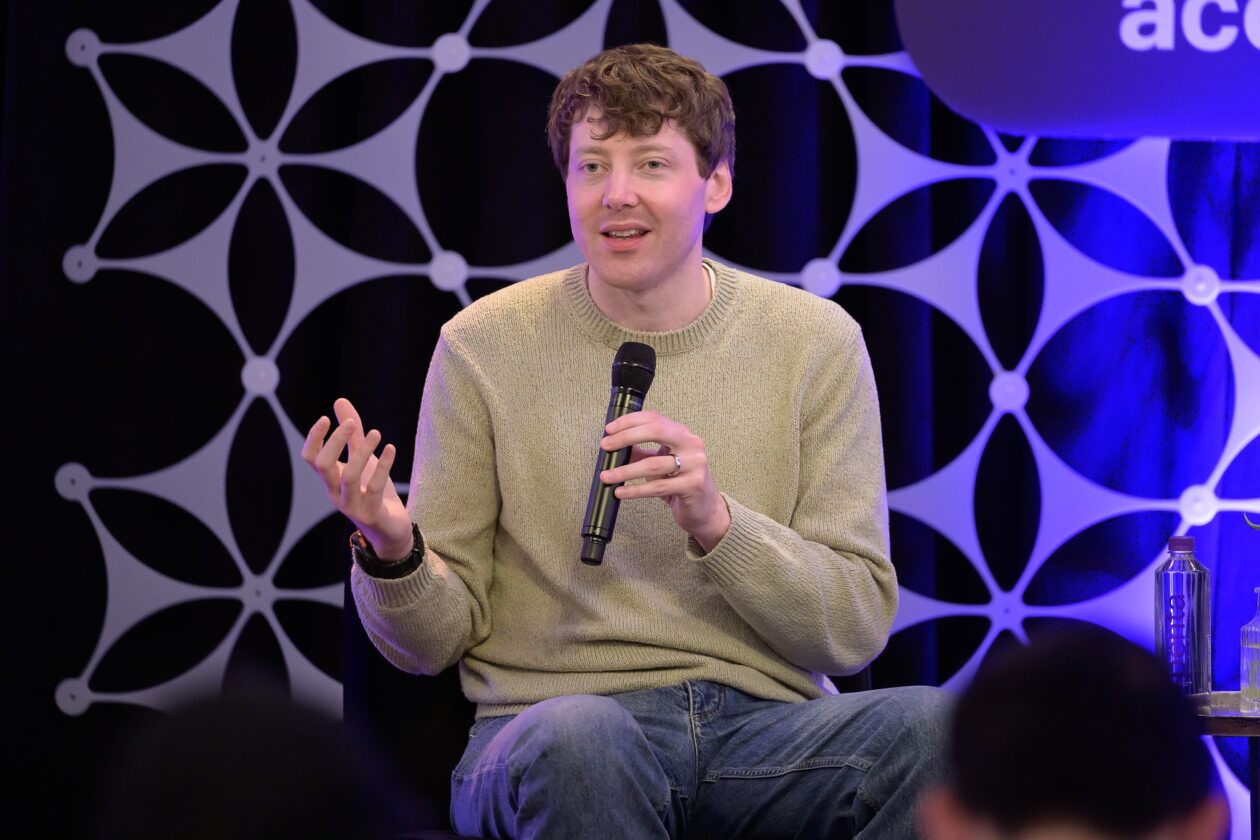
Ali Farhadi, now a Microsoft corporate vice president of AI, at a Technology Alliance event in May 2024. (GeekWire File Photo)

GeekWire is profiling over the next few weeks some of the people and teams that are shaping the evolution of Microsoft in what we’re calling its “Microsoft 2.5” era.

From AI Frontier Lab to Frontier Ecosystem: Microsoft got a foothold in AI thanks largely to its partnership with OpenAI. But that’s not the way it is planning to continue growing its AI business.

Inside Microsoft AI (MAI), the Microsoft Superintelligence team is focused almost entirely on building its own frontier-level models. That team already has developed a handful of home-grown offerings, including MAI-Code-Flash for writing code faster; MAI-Cyber-Flash, a cybersecurity model; and MAI-Image, a model for creating images.

The head of the Superintelligence team is Ali Farhadi, corporate vice president of AI. Farhadi, who joined Microsoft five months ago, is also a professor at the University of Washington, where he has worked for nearly 15 years. He was previously CEO of the Allen Institute for AI (Ai2) and before that was an AI and machine learning leader at Apple for more than three years, after it acquired his startup, Xnor.ai.

When he joined Microsoft, Farhadi said in a LinkedIn post that he believed “Microsoft has all the pieces to win in this AI race: data, search, coding, infrastructure, agents, software and the world’s biggest Fortune 500 companies taking dependencies on Microsoft every day.”

Farhadi elaborated on that in an interview with GeekWire this week. AI is shifting from a “Frontier Lab” era to a “Frontier Ecosystem” era, he said. It’s no longer just about training models; it’s about integrating the models with enterprise data, platforms, distribution systems and customers in a trusted way.

The next battlegrounds in AI will be around cost, reliability, specialization, and deployment at scale, rather than simply building larger models that beat others in benchmark scores, he said.

“If you look around, there are not that many places to have all these missing pieces together at scale, especially if you add the element of trust to it,” Farhadi said.

Cutting through the AI noise: Farhadi said his management philosophy is grounded in the importance of personal relationships, which are especially key in big organizations. People need to understand your rationale and to trust you can deliver on what you’re tasked to do, he said — an approach that has served him inside both Microsoft and Apple.

Staying on top of the flow of information while filtering out the AI noise makes prioritizing crucial. The team has “a long list of things that we believe we should be doing,” he said, but much of it stays on the back burner to maintain a “laser focus on delivering on the main mission.”

The priority is building high-quality models, both generalist and domain-specific. On the domain-specific front, Microsoft is working with the Mayo Clinic on a healthcare-specific model based on Mayo’s own clinical data, as well as Microsoft’s cybersecurity and coding models.

The thinking: For a lot of enterprise work, a narrower model beats a bigger one.

“If you can do something at [the same] quality or better quality at a fraction of a cost, it’s just a no-brainer. And having a way to specialize to domains, to industries, to enterprises is one way,” he said.

Microsoft execs have referred to this approach as a “hill-climbing machine,” meaning the ability of a model to scale and continuously improve within a specific domain. Microsoft is coupling the hill-climbing with “frontier tuning,” like it is doing with the Mayo Clinic. Frontier tuning includes customizing frontier models; keeping proprietary data private, preserving institutional know-how; and avoiding leaking intellectual property (IP) into shared models.

“We all thought that IP is your data,” Farhadi said. “But we learned that IP is also how you work.” And that’s why safeguarding these elements is so crucial.

Open all the things? Farhadi led an expansion of open-source AI development at Ai2, the Seattle-based institute founded in 2014 by the late Microsoft co-founder Paul Allen. While Microsoft has contributed to the open-source community on various fronts, including AI tooling, it hasn’t open-sourced its frontier models.

Farhadi said he personally remains “a big advocate of open source,” but noted that the industry has changed since his Ai2 days as there are now more credible Western open-source models and businesses forming around them.

He didn’t rule out Microsoft doing something in open-source models, or the somewhat less-open “open weights” area, but there’s seemingly nothing happening on that front in the near term.

In the coming months and beyond, the focus of Farhadi’s team is helping Microsoft turn into a Frontier Ecosystem by building cutting-edge AI capabilities; helping enterprises create their own tuned versions of them; continuously improving models; and making sure customers keep control of their own destinies and data.

Success for Microsoft’s Superintelligence team has nothing to do with the idea of Artificial General Intelligence (AGI) which OpenAI, Anthropic and others have positioned as their ultimate goal over the years. In fact, when I asked Farhadi about AGI, he said, “I don’t understand what that means.”

Don’t worry, Ali. You’re not the only one.

Flipboard acquires Portland startup Graze in bid to ‘re-orient the attention economy’

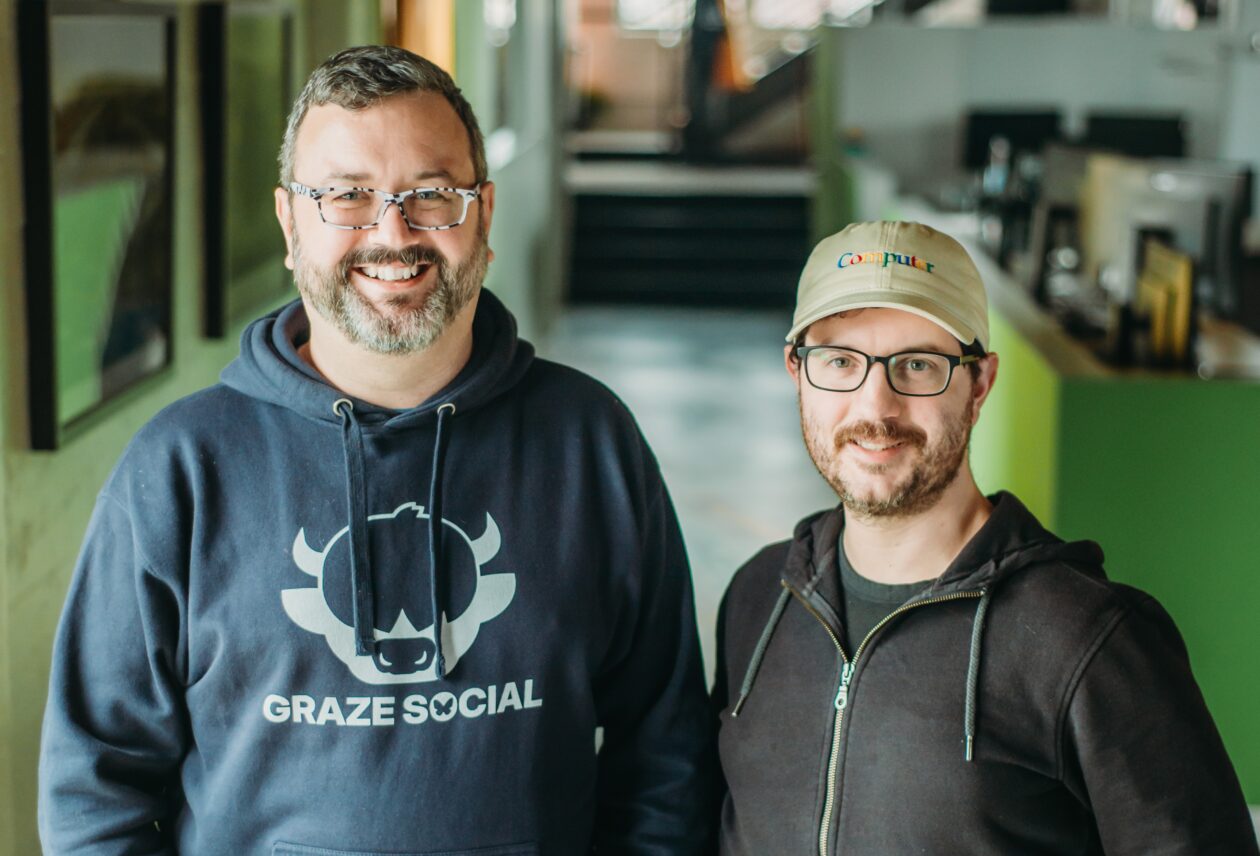
Graze co-founders Peat Bakke (left) and Devin Gaffney. (Graze Photo)

Portland-based social media startup Graze is joining Flipboard in a strategic acquisition aimed at expanding open social protocols and giving users control over their own content algorithms.

Founded by Devin Gaffney, Peat Bakke and Andrew Lisowski — starting from a blog concept and officially forming 21 months ago — Graze has grown into an engine for the open social web.

The Graze platform has delivered over 41 billion posts to 12 million users. It enables creators, publishers and everyday users to build, tune, and monetize custom social algorithms, particularly across platforms like Bluesky, without writing a single line of code.

In announcement announcing the deal, Gaffney said that Graze marks the most important work of his career, creating a new “playbook for how to re-orient the attention economy, and start pulling us back out of the widening gyre.”

Under the direction of Flipboard CEO Mike McCue, the Palo Alto, Calif.-based company has heavily invested in open social protocols like AT Protocol, ActivityPub and RSS through initiatives like its Surf browser and “Social Websites” product.

The acquisition combines Flipboard’s front-end discovery tools with Graze’s back-end algorithmic engine.

“Combined, we become two halves of one machine,” wrote Gaffney. “Surf will be the browser for the open social web — where people go to read and discover feeds across Bluesky, Mastodon, Threads, RSS, and more. Graze will be the engine under those feeds — how a curator builds, tunes, and monetizes one without writing a line of code.”

As a lean team, Graze faced a number of operational slowdowns with Gaffney writing that they ended up “wearing a half dozen hats we didn’t know we needed at the start.” Joining Flipboard allows the team to accelerate development by tapping into Flipboard’s established infrastructure rather than rebuilding existing systems from scratch.

“Mike (McCue) and I share a vision of creating an attention economy that works for everyone, and as the onslaught of generative AI starts to clog the pipes of legacy platforms, we both deeply believe that a curatorial role in shaping “the algorithm” is the only sustainable way to run that attention economy into the future,” Gaffney wrote.

For Graze’s existing user base, the team confirmed that the core product and service will remain online. The combined entities aim to offer a creator-first alternative to closed, legacy platforms like Facebook or Instagram, providing users with ownership over what they see and how they earn.

In April 2025, Graze raised $1 million in a pre-seed round led by Betaworks, Salesforce Ventures Factorial, Apertu Capital, Skyseed, and angel investors from Mozilla and Protocol Labs. Graze employed just two people — Gaffney and software engineer Nick Gerakines — and both will be transitioning to Flipboard. Bakke and Lisowski left the company last year.

In an email to GeekWire, Flipboard’s McCue said that the Graze team has built a special tool that has benefited many curators, community builders, creators and developers.

“I’m inspired by their vision and can’t wait to work closely with them to continue building out the open social web,” McCue said. “Devin and Nick will continue to advance Graze as the ultimate feed building and hosting platform while Surf and Flipboard will enable millions of additional users to discover and experience feeds in new ways we’re going to design together.” 

Financial terms of the transaction were not disclosed, though Gaffney tells GeekWire that they are “confident that this is a great outcome for the team, the company, and the investors.”

Amazon drones go national, inside Anduril’s Seattle buildup, and AirTag leads to secret book-scanning site

This week on the GeekWire Podcast: Amazon’s delivery drones are going national, nearly 13 years after Jeff Bezos unveiled them on 60 Minutes. We listen back and discuss what’s next.

Plus: We go inside Anduril’s unmarked Bellevue office as the defense company builds toward 1,000 Seattle-area engineers; a reporter hides an AirTag in a rare book and tracks it to a secret Amazon book-scanning facility in Las Vegas; and an Anduril-themed trivia challenge.

Audio editing and production by Curt Milton.

Related stories and links

Mentioned at the top

Amazon drone delivery

The AirTag and the book-scanning facility

Anduril in the Seattle region

Subscribe to GeekWire in Apple Podcasts, Spotify, or wherever you listen.

Tech Moves: AWS government tech VP departs; Funko, Coinme and DAT Freight add to C-suite

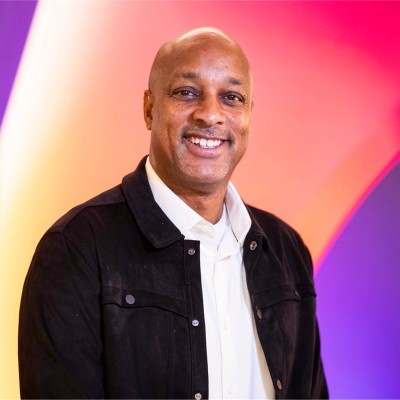
Dave Levy. (LinkedIn Photo)

Dave Levy, vice president of AWS Worldwide Public Sector, has left Amazon for a role at Google, according to Nextgov/FCW. An AWS spokesperson confirmed his departure; Google did not respond to a request for comment. Levy, who is based in Arlington, Va., was with AWS for more than nine years. He was previously head of U.S. government sales at Apple for 12 years.

Amazon first launched government-specific cloud infrastructure in 2011 and now supports more than 11,000 government agencies. In November, the company announced it would invest up to $50 billion to expand AI and advanced computing infrastructure for U.S. government agencies. That includes support for Top Secret, AWS Secret and AWS GovCloud (US), which serve classified and sensitive workloads.

David Appel, VP of AWS Global Government, National Security and Defense, has taken Levy’s role in an acting capacity, according to his LinkedIn account. Levy’s last day was July 31.

Kristin Hamilton. (LinkedIn Photo)

Kristin Hamilton has been named chief commercial officer for Funko, the Everett, Wash.-based makers of pop culture collectibles. Hamilton joined from Crunchyroll, a division of Sony Pictures Entertainment. She was previously at Hasbro for nearly 15 years, leaving as the consumer products division’s head of strategy and transformation. Hamilton begins work Aug. 24.

Funko has weathered financial and leadership bumps in recent years, with a quick succession of CEOs and the accumulation of significant debt. The company this month reported a strong second quarter with increased sales over the previous year.

Laurent Reichert. (Coinme Photo)

— Seattle cryptocurrency company Coinme has named Laurent Reichert as chief compliance officer, consumer protection officer and Bank Secrecy Act officer. Reichert, who is based in Miami, was previously chief compliance and risk officer for the blockchain company Paxos.

In January, Coinme announced that it had agreed to be acquired by blockchain payments company Polygon Labs. Polygon said it would also acquire wallet provider Sequence as part of a combined deal valued at more than $250 million.

Reichert praised Coinme’s currency trading platform, adding that he looks forward to “the next phase of growth, both domestically and as we move into new international markets alongside Polygon.”

DAT Freight & Analytics, a Beaverton, Ore.-based truckload freight marketplace, announced changes to its leadership team.

  • John Xiao has been promoted to chief technology officer, leading work on DAT’s tech platform, analytics and AI integration. He joined the company two years ago from Nordstrom, where he oversaw technology strategy in merchandising, supply chain and inventory management.
  • Marcus Womack, who joined DAT last year through the acquisition of his fintech startup Outgo, is now responsible for DAT’s carrier segment in addition to financial services.
  • Kary Jablonski, former CEO of Trucker Tools, which DAT acquired in 2024, continues to lead DAT’s broker business and is also responsible for marketing and customer support.

All three are based in DAT’s Seattle office. The company won GeekWire’s Workplace of the Year Award in May.

Emily Rabe. (LinkedIn Photo)

— Seattle’s Membrion has promoted Emily Rabe to vice president of technology. Rabe has been with the industrial wastewater treatment startup for six years, leading its intellectual property efforts and most strategic technology programs while also working with external technology partners.

“She has a remarkable ability to take on hard, ill-defined problems, learn quickly and put durable solutions in place,” the company said on LinkedIn.

The startup made two additional promotions: Ryan Flores has risen to senior scientist, and Michael Moreland has been promoted to senior customer success engineer.

Membrion spun out of the University of Washington a decade ago, has raised $40 million and is No. 154 on the GeekWire 200, a ranked index of the Pacific Northwest’s top startups.

— Microsoft’s Jordi Ribas has been appointed to the board of Sprinklr, a company helping global brands manage their customer experience, social media, ads and other marketing. Ribas has been with Microsoft for 26 years, currently as president of search and AI.

— Seattle biotech company Omeros has named Joseph Schocken to its board of directors. In 1987, Schocken founded the investment bank Broadmark Capital, now Tranceka Capital.

Jay Carney, who served as Amazon’s senior vice president of global corporate affairs for seven years ending in 2022, has left his position as Airbnb‘s global head of policy and communications. He did not indicate his next role.

Jimothy raids the corporate pantry: Amazon adds extra $200K to food bank gift after raccoon art auction

A painting of Jimothy, the viral raccoon, by Seattle artist Ryan Henry Ward. (@henry_beyond_museums via Instagram)

A friendly challenge sparked by a portrait of Jimothy, Seattle’s favorite short-spined raccoon, has now drawn in 11 regional heavyweights — and with a big new donation from Amazon, driven the total raised for the Ballard Food Bank past $270,000.

Amazon announced Friday that it is adding an additional $200,000 to a pot that already included $71,975.31 in matching contributions from coffee and software giants, airlines, pro sports teams, and others.

The corporate generosity started as a grassroots effort on Instagram in July, where prolific Seattle artist Ryan Henry Ward auctioned a 24-by-24-inch painting of the internet-famous raccoon to benefit the food bank. Buyer Angela Galdabini won the piece with an exact bid of $6,543.21 — prompting Amazon to match the amount and issue a public callout challenging other local brands to step up.

Ten companies stepped up to match the bid: Alaska Airlines, Brooks Running, Microsoft, the Seattle Mariners, the Seattle Kraken, Stanley 1913, Starbucks, T-Mobile, WaFd Bank, and Windermere Midtown.

It all sparked a Jimothy love-fest on social media with the brands responding to each other.

(Click to enlarge) Some of the Jimothy messages between Amazon and other brands on social media.

Jimothy’s path from Ballard backyards to corporate mascot of sorts began when photos and videos of the round raccoon started circulating online. Born with a rare condition that gives him a compressed, neckless posture, the creature quickly captured Seattle’s — and the internet’s — heart.

The flood of artwork, music, tattoos, food items, memes and more dedicated to Jimothy doesn’t appear to be slowing down, as this Reddit sub demonstrates.

The Mariners held a Jimothy night on Wednesday at T-Mobile Park, where the first 20,000 fans received trading cards with the raccoon’s “stats.” Ben Trammel, who shot video of Jimothy as a baby last year, threw out the first pitch. It all proved so popular that a second Jimothy night was added for Friday.

Microsoft 2.5: How EVP Charles Lamanna is helping turn Microsoft into the ‘Copilot company’

Charles Lamanna, EVP of Copilot, Agents and Platform at Microsoft, at a GeekWire event in March 2026. (GeekWire Photo / Kevin Lisota)

GeekWire is profiling over the next few weeks some of the people and teams that are shaping the evolution of Microsoft in what we’re calling its “Microsoft 2.5” era.

The Copilot Super App cat is only partially out of the bag. Sometime in the coming weeks, Microsoft will launch its entry into the AI “super app” space, company officials have said. But Microsoft hasn’t talked much about what the coming Copilot Super App will include beyond a few of the top-level experiences that are meant to unify and organize consumer and business users’ access to key Microsoft AI properties.

Executive Vice President Charles Lamanna is part of the inner circle known as the Copilot Leadership Team that is spearheading the Super App effort. He also oversees building out and securing the back-end services that will power the Copilot Super App.

As head of Copilot, Agents, and Platform, Lamanna has a lot of responsibility for someone who has been with Microsoft for “only” 13.5 years. He has actually been with the company a bit longer than that, as he has done three tours at Microsoft: He first interned for Windows Live OneCare, then returned in 2009 to work on message-filtering services. He rejoined Microsoft when it bought his cloud performance-management startup MetricsHub Inc. in 2013. He worked as an engineering manager on Azure, then ran the Power Platform and Dynamics 365 teams, before assuming his current role in March 2026.

Lamanna says he emphasizes three things with his team: Be customer-obsessed; get things done by having a “total ownership mindset”; and be kind, not jerks.

Every six months, he writes a “State of the Business” paper for the team, in which he outlines their priorities. In addition to focusing on changing how people work — from tooling, technology, budgeting and organization perspectives — he emphasizes the importance of keeping “the crown jewels” of Office and Microsoft 365 up, reliable and secure.

“There’s going to be a massive surge of demand on the back end (Microsoft 365) because of agents. They’re nonstop,” said Lamanna during GeekWire‘s interview with him this week.

While the Super App itself will likely be free (like the Copilot App today), the services it exposes will likely not. The company has been moving toward usage-based pricing with its AI products, the way it already has with GitHub Copilot and Microsoft 365 Cowork. That kind of model makes sense for the company in a world where always-on agents, not the number of users, drive a lot of the demand.

He also said his team needs to be at the frontier for AI products. “We need to have AI startup and lab characteristics but with Microsoft sensibilities,” he said.

Lamanna made a similar case publicly this week, asserting in a LinkedIn post that “the most important thing my team will do this year won’t be any single product or feature we ship” but rather changing how the team works.

Reining in the Copilot-Palooza. Despite the rise of agents and all things “agentic,” Copilot is still Microsoft’s top priority, Lamanna said. Microsoft’s goal is for Copilot to be a truly personal AI assistant that will know how you work, the apps you use, the processes and workflows that matter to you, and more.

“We had some missteps because we fragmented,” he acknowledged. “It’s like we had a consumer Copilot and we have like a commercial Copilot and we have GitHub Copilot and yeah — ‘Copilot Palooza’ is what I call it internally.”

This is where the coming Copilot Super App fits in. Microsoft wants it to be a single destination that brings the key Copilots together on the work and home fronts.

He said to think of the Super App “almost like a browser or an operating system.” In the same way a browser might have a bunch of different tabs, or Windows a bunch of different apps, the Super App will be the home for Code, Chat, Cowork and Autopilots, or always-on agents. Microsoft is expecting that users still will go directly to apps when needed, but it’s working to make Copilot the first app people boot into and live in, similar to the way many do today with Outlook or Teams, he said.

Microsoft’s goal is to wire into the Super App even more of its core franchises over time. Dynamics 365, its CRM and ERP offerings, are morphing into a set of agents that connect to Dynamics Model Context Protocol (MCP) servers, which connect AI models to back-end data. The plan is to integrate those Dynamics agents into the Super App.

The company also is in the midst of integrating the Dataverse storage and management platform that underlies its Power Platform and Dynamics directly with Copilot. That capability, in testing now, would give users a more streamlined way to query data stored in their ERP and CRM systems from inside Copilot.

Rethinking the ‘headless’ approach. With Microsoft looking to make the Super App its new front-end user experience, what happens to Office? Its competitors like Salesforce and SAP are moving toward the idea of a “headless” approach, meaning customers would access the backend CRM or Commerce data via agents, rather than traditional desktop apps.

Lamanna said he’s not a fan of the “headless” term, as it implies “it’s dumb.” He also said you can’t simply connect an AI model to a programming interface built 10 years ago without working through how to optimize for cost, performance, and retrieval.

He said the Microsoft IQ suite of intelligence layers is the key here. Work IQ analyzes emails, chats, meetings and usage patterns and preferences so Copilot and agents can make context-aware suggestions. Fabric IQ is a similar layer for Microsoft’s data platform.

Work IQ is becoming like the headless version of Microsoft 365, Lamanna said. That means users can get to their email, docs, and files without having to use applications like SharePoint or Outlook in between. Work IQ becomes a kind of in-the-background version of Microsoft 365, and the Super App automatically invokes whichever IQ/service/backend is needed.

“Copilot can navigate to these IQs as needed. For email, go to Work IQ. Info inside Dynamics 365, go to the MCP servers that it publishes. Data from Salesforce or ServiceNow, we have connectors. But you stay in the Super App,” Lamanna explained.

If Microsoft is no longer the Windows company or the Office company, what is it going to be when it grows up?

“We want to be the Copilot company,” said Lamanna without hesitation. “Copilot with the Super App is the front door to basically everything, from Dynamics, to GitHub, to Exchange, to SharePoint, to OneDrive, to other services I don’t even remember.”

Alongside that, Microsoft will continue to be an infrastructure company, he added, focusing on tokens, compute and storage.

“Those are probably the two most interesting businesses in technology for the next 10 years.”

Seattle Tech Week notebook: AI, startups, and the best insights and takeaways we heard

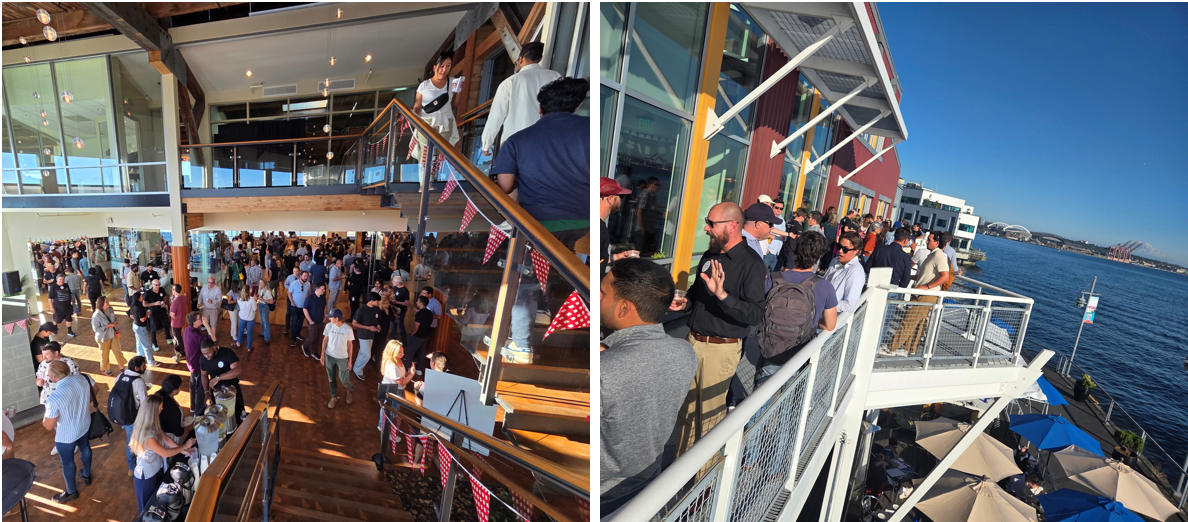
Seattle Tech Week attendees fill AI House at Pier 70, spilling onto the deck overlooking Elliott Bay. (GeekWire Photos / Todd Bishop)

Attending as many Seattle Tech Week events as possible and talking with as many people as I could, I was struck by the number of people looking for work and the volume of visitors from the Bay Area, including a number of investors looking to get a sense for what the regional tech scene is about.

It was hard not to imagine them being impressed with the sheer level of engagement and enthusiasm, even if they didn’t happen to catch Jacob Colker’s rallying cry. With more than 250 events (and waiting lists for many of them) it was more than any one person could take in.

It wasn’t Seattle AI Week — that’s still to come in October — but given the moment in tech and the world, the topic of artificial intelligence was naturally the main throughline of the week.

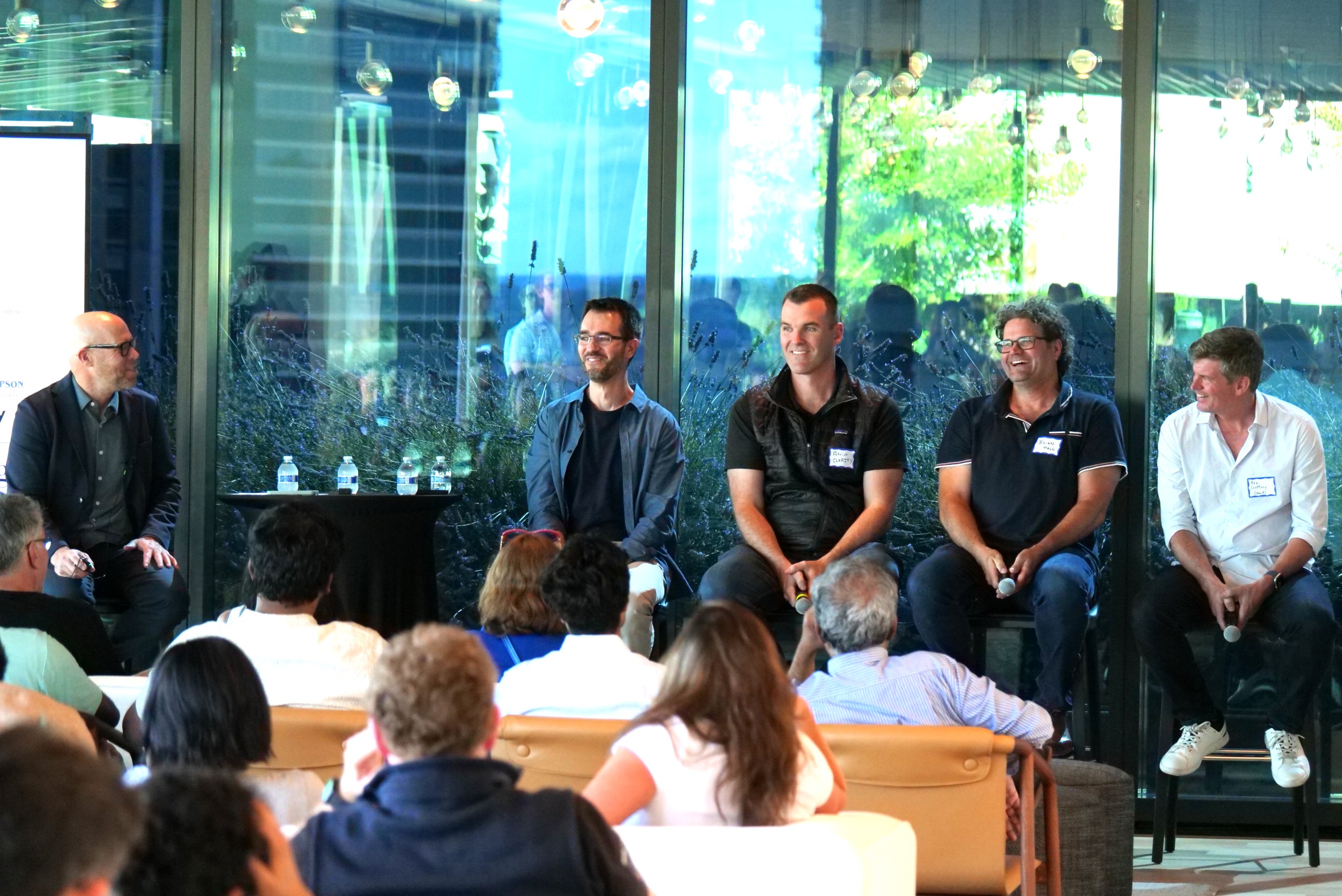
A panel that changed my perspective was early in the week, called “Foundation Models Go Vertical,” hosted by the Seattle pre-seed firm Ascend at Washington 1000 downtown. Founding general partner Kirby Winfield told the room that 600 people had tried to get in.

One of the biggest insights was from Manos Koukoumidis, CEO of Kirkland-based Oumi and a former Google Cloud AI engineering manager who led large language model efforts there.

From left: moderator Boaz Ashkenazy of the Shift AI podcast, Manos Koukoumidis of Oumi, Patrick Thompson of Clarify, Brian Hall of Mistral AI, and Ben Gaffney of OpenAI at the “Foundation Models Go Vertical” panel, hosted by Ascend. (GeekWire Photo / Todd Bishop)

Companies that are racing to build on top of the frontier models, he said, are renting a kind of intelligence that has very little to do with their own businesses.

“Enterprises are using a model that is trained on 5% of the world’s data that sits on the web, not the other 95%,” he said, referring to the data sitting inside their own organizations.

Which led him to the question (and the point) that I keep coming back to: If the intelligence at the center of the product belongs to someone else, he asked, “are you really an AI company, or an application company on top of somebody else’s intelligence?”

The next day, in the audience for a recording of the Founded & Funded podcast by Seattle Tech Week organizer Madrona, I posed the question that we debated on last week’s episode of our GeekWire Podcast: what should Seattle founders and investors make of venture numbers that rank Philadelphia, Austin, and New York ahead of them?

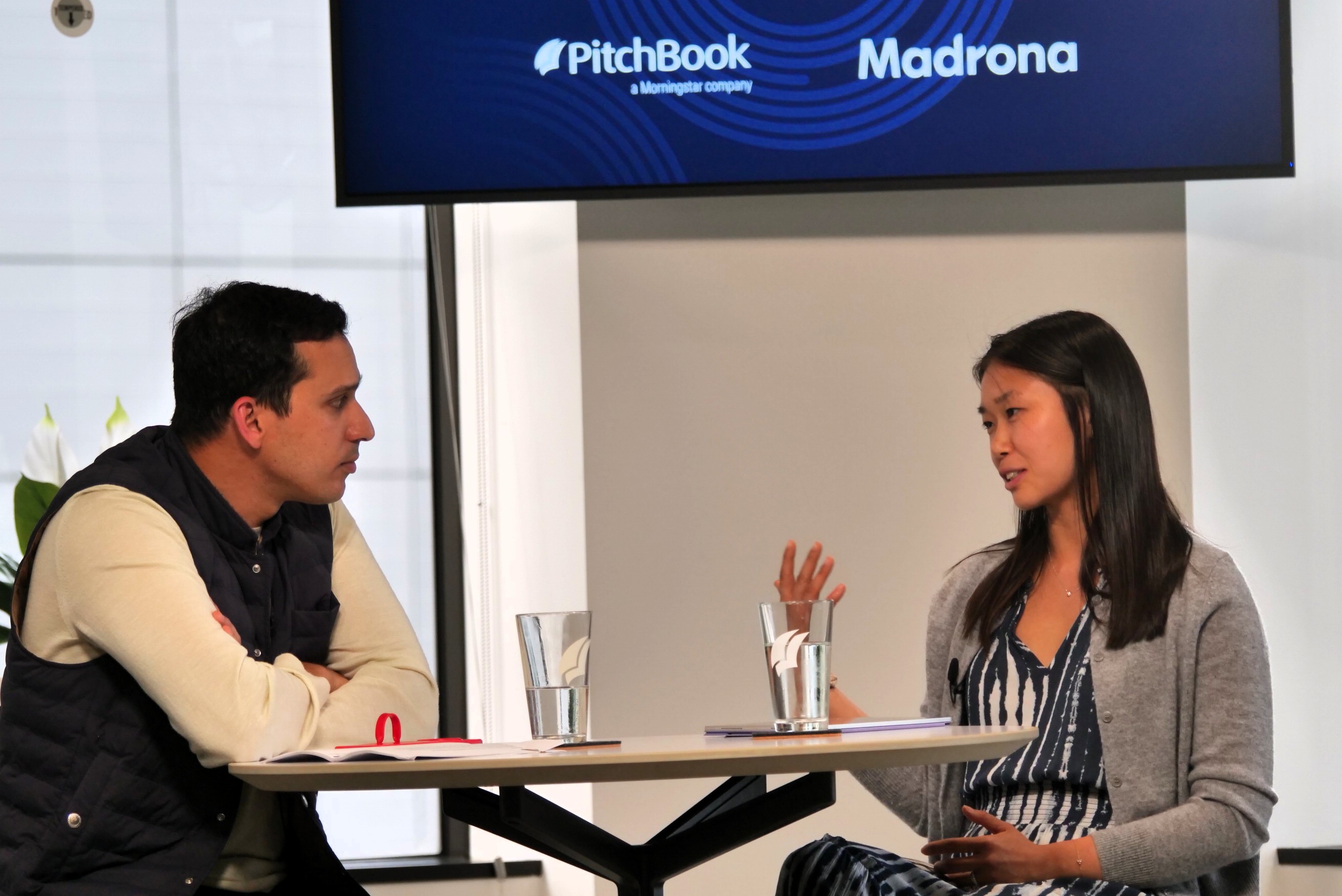
It was the right place to ask, given that the show featured Nizar Tarhuni, EVP for research and market intelligence at PitchBook, which tracks the numbers, and Madrona partner Sabrina Albert.

PitchBook’s Nizar Tarhuni and Madrona partner Sabrina Albert during a live recording of Madrona’s Founded & Funded podcast at Seattle Tech Week. (GeekWire Photo / Todd Bishop)

Albert pointed out that the numbers don’t capture everything. A company can have a big engineering group in Seattle, or even a co-founder here, and still be counted as a Bay Area company, she said. Large engineering offices for OpenAI and Anthropic are the latest examples.

Tarhuni made a similar point: “There’s so much talent in some of the biggest unicorns that are actually working out of Seattle,” he said. In terms of overall economic activity, he added, “there’s a lot more here that doesn’t make its way into those numbers.”

Other quotes and insights that stood out from the sessions we attended:

Patrick Thompson, CEO of Seattle-based Clarify, said his company’s Anthropic bill had tripled in three months. He has shifted spending to AWS Bedrock, citing reliability problems, and now runs smaller models locally on his own laptop for low-level work.

Madrona’s Albert, on the shift to selling outcomes: “Before, when you were thinking about traditional software, you would charge for a seat or a unit of software. But now you can really fundamentally change it. … If I deliver this outcome for you, then you can actually pay me for it.”

Ken Horenstein, founder of Pack Ventures, which invests in startups tied to the University of Washington, on the knock that Seattle is slow: research institutions here are “choosing problems that are 10, 15, 20, 50-year problems,” he said. “Sometimes people put that as a negative rap on us because we don’t go really fast and flame really bright like you might see in other markets. But I actually think that can be used as a benefit.”

Ben Gaffney, deputy general counsel at OpenAI, on the notion that AI is thinning out headcount: “Even within the legal team that I work in, we need more people. Even though we’re getting all these massive productivity gains, it isn’t like you don’t need people to supervise this stuff.”

Brian Hall, the longtime Microsoft, AWS and Google executive who became chief marketing officer at Mistral AI in June, on where this all ends up: “We’re gonna laugh when we thought that AI was gonna save us time.”

Ascend’s Winfield, on the limits of what investors provide: “If I invested in you, it’s not because I’m smart about your market. It’s because you’re smart about your market. … If you’re looking for answers from your investors, you’re in trouble.”

Karl Siebrecht, co-founder and CEO of Flexe, at a networking event, telling founders to stop networking: “Spending time as a founder trying to market yourself to investors, I think, is a fallacy. If you focus on building a valuable company … I can promise you, investors will find you.”

Molly Klein, founder and CEO of Perk Events, who runs some of GeekWire’s biggest events, on why any of this happens in the first place: “Events are hands-down the strongest business development tool that you have,” she said. “One conversation may take six emails in three weeks. At an event, it happens in 10 minutes, because you’re getting that face-to-face time.”

That pretty much summed up the week.

❌