Reading view

There are new articles available, click to refresh the page.

‘The Odyssey’ isn’t on IMAX 70mm in Seattle — is it worth a journey for the summer’s biggest film?

The biggest movie of the summer will create a big headache for film geeks in Seattle who want to see “The Odyssey” precisely as director Christopher Nolan intended.

For a population that has gotten comfortable watching anything and everything streamed on TVs and smartphones, the difference might not be that big of a deal. But the epic picture starring Matt Damon was shot on 70mm IMAX to capture the highest quality image and sound, and seeing it like that in a theater should be considered a treat.

But only 25 theaters in the U.S. can project “The Odyssey” in IMAX 70mm. Axios mapped the theater locations, as well as ones in Canada, showing how far apart they’re spread — unless you live in California, where there are eight.

The true IMAX format is an option in Seattle at what was previously called the Boeing IMAX Theater, located at Pacific Science Center. But earlier this year, The Space Needle purchased the theater as part of a sale of a chunk of the Science Center’s campus.

IMAX at the Center, with the biggest such screen in Washington state at six stories tall and 80 feet wide, switched to showing documentaries, according to Axios, which said the Space Needle has “no immediate plans” to show feature films.

For the record, the theater used to do IMAX 70mm film projection, but switched to an IMAX digital projection system that employs dual 4K projectors. It’s still the only nearby screen capable of showing films shot in IMAX in full frame, such as Nolan’s “Oppenheimer.”

The PACCAR IMAX Theater at the Science Center is showing “The Odyssey,” but the smaller screen is said to crop films that were natively shot for the taller 1.43:1 true IMAX aspect ratio.

So, if you’re willing to drive north to Vancouver or Richmond, B.C., two theaters across the border are showing the big IMAX version. Consider Odysseus’s 10-year journey before complaining about a 2.5-hour trip. Furthermore, if this has you really into distances and measurements, IMAX says “The Odyssey” was shot on 2.1 million feet of film — longer than the distance from Toronto to New York.

If you do decide to stick closer to home, what are you actually missing? The short answer: a lot of screen space. The long answer requires unspooling the technical jargon behind “70mm,” “IMAX,” and the digital formats filling up local multiplex listings:

IMAX 70mm Film (15/70, 1.43:1): The native, uncompressed “gold standard” shot by Nolan. Runs physical film horizontally for massive 18K-equivalent resolution and a towering 1.43:1 screen shape that fills giant 6-to-8-story screens.

IMAX Dual Laser GT (1.43:1): Dual 4K digital laser projection. You lose the analog film grain, but it is the only digital format that preserves 100% of the expanded vertical picture without cropping.

Standard 70mm (5-Perf, 2.20:1): Physical analog film running vertically. You keep the rich color, grain, and contrast of celluloid, but it is cropped to a wide 2.20:1 letterbox shape (available in the Seattle area at SIFF Cinema Downtown, AMC Pacific Place, and AMC Bellevue).

Commercial IMAX Digital (1.90:1): Single-laser or dual-xenon digital systems found in standard multiplexes. Crops about 26% to 40% of the native top and bottom image down to a 1.90:1 aspect ratio.

This YouTube video gives a quick idea of what the full frame and cropping looks like on various formats:

“IMAX is the best film format that was ever invented,” Nolan says on the IMAX website. “It’s the gold standard and what any other technology has to match up to, but none have.”

Nolan spoke to “60 Minutes” earlier this year about the technical aspects of shooting the first-ever feature entirely on IMAX film.

Two non-IMAX versions will be showing at Seattle’s most tech-heavy theater, the SIFF Cinema Downtown — formerly the Cinerama. The theater has 70mm screenings from July 16-26, and July 31-Aug. 2. Digital screenings run July 27-30 and Aug. 3-13.

A spokesperson for SIFF told GeekWire that 70mm provides finer detail and higher resolution in comparison to digital, and that movies shot and projected on film generally have a more natural, organic image than digital pixels.

Alternating between the two formats comes down to operational realities.

“We are currently working with a contract projectionist for these screenings, so we are limited by their availability,” SIFF said. “This is also the first time that SIFF has screened in 70mm on these projectors that we inherited from the Cinerama era. We also have digital screenings scheduled to give both the projectors and our projectionist a break.”

In another Cinerama-related story this week, The New York Times reported on the planned revival of the Los Angeles version of the famed Cinerama Dome. It’s an interesting development that explains in part why people even care about the arrival of “The Odyssey” in theaters.

The key point is that going to the movies in a theater is on the rebound after a retreat during the COVID pandemic nearly killed off the pastime. Domestic ticket sales totaled roughly $5.4 billion for the year to date, up 10% from the same period last year and the highest total since 2019, the NYT reported, citing film data service Rentrak.

“I am constantly having conversations with studio heads, and you can sense an optimism that they haven’t felt in a long time,” actor Seth Rogen told Variety in another story that cited Gen Z’s enthusiasm for going to the movies.


Earth first, Mars later: Inside AIM’s grand vision for physical AI and autonomous bulldozers

An excavator and bulldozer operating autonomously using AIM Intelligent Machines’ AI platform work at the company’s proving grounds near Monroe, Wash. (AIM Photo)

In a headquarters and lab space formerly occupied by SpaceX in Redmond, Wash., AIM Intelligent Machines (AIM) is focused on solving big problems on Earth. But the startup’s CEO envisions a day when autonomous bulldozers and excavators will dig, haul, and grade on the moon or Mars, and take AIM’s “terraforming mission” off planet.

For now, AIM’s 25,000-square-foot facility in a nondescript business park is a long way from Mars. Inside the sprawling space, there are glimpses of what the rapidly growing company is working on, including the apparatuses that attach to existing machines to make them self-driving.

Around the office, desk cubicles are decorated with tiny yellow excavator buckets, mirroring photos on the walls of heavy equipment operating on job sites worldwide.

AIM founder and CEO Adam Sadilek. (AIM Photo)

The toy excavators are a nod to a massive global market that AIM founder and CEO Adam Sadilek wants to continue to disrupt with modern technology.

Autonomous passenger vehicles have captured the public’s attention for decades, but construction, mining and hauling equipment attracts little fanfare, even as legacy companies including Komatsu and Caterpillar embrace new technology.

AIM’s goal is not to build new machinery, but retrofit existing earthmoving fleets with a physical AI platform — using advanced sensors and edge compute to let heavy iron operate entirely on its own.

Founded in 2021, the startup grew out of Sadilek’s background at Google where he spent nine years working on projects involving AI and autonomous vehicle systems.

Whether building anti-flood structures or wildfire breaks, managing nuclear waste, mining critical materials or clearing land for agriculture or the military, Sadilek views AIM’s work as immediate terraforming on Earth that is necessary to drive down costs for housing and commodities. But the long-term vision remains interplanetary.

“When humanity goes to Mars, the real question is not so much around what the rocket looks like as a vehicle to get us there, but what is going to happen after the rocket lands,” Sadilek said. “You cannot have human operators run there. That’s why this is a very long mission that we are on.”

Building autonomy for heavy equipment presents a paradox self-driving cars never have to face: the ground itself is constantly changing. While a Tesla or Waymo relies on pre-mapped roads and predictable lanes, a bulldozer or excavator’s entire job is to reshape its environment. AIM’s physical AI platform has to continuously build real-time 3D maps using onboard 360-degree LiDAR and edge compute, making split-second decisions without relying on persistent GPS or cloud connectivity on remote job sites.

Furthermore, taking human operators out of cab seats addresses one of the most perilous aspects of heavy industry. By creating “zero-entry” sites where machines operate autonomously, AIM’s platform effectively removes workers from harm’s way — transitioning traditional equipment operators into remote site supervisors who oversee entire fleets from a safe distance.

Beyond early deployments in mining and site preparation for data centers, AIM landed a $4.9 million U.S. Air Force contract earlier this year to deploy autonomous machines for airfield repair and base construction in remote or high-risk zones. The military work builds on the company’s growing momentum following a $50 million funding round backed by Khosla Ventures, General Catalyst, and Human Capital.

AIM has risen to No. 110 on the GeekWire 200 ranking on top Pacific Northwest startups.

To support its growth, AIM has rapidly expanded its headcount, doubling in size to about 80 employees in the last few months. Sadilek is attracted to the Seattle area’s intersection of hardware expertise from companies like Boeing and Amazon alongside top-tier software and AI talent.

But while AIM has managed to hire a couple former SpaceX engineers to build out its team, it isn’t the only startup mining that rocket-engineering pedigree. TerraFirma, an Austin-based company founded by two more SpaceX engineers, raised $115 million earlier this month in the burgeoning race to semi-automate physical construction.

For Sadilek, anchoring his team in Redmond rather than Silicon Valley was a deliberate decision to stay rooted in physical engineering. Having spent years in the Bay Area during his time at Google, Sadilek wanted to avoid the tech industry’s “echo chamber.”

“I wanted to be somewhat shielded from the Kool-Aid in Silicon Valley,” he said. “We wanted to build something that’s real and gets in the black really quickly… To do that, you need to do it in an environment that is more anchored in reality.”

That philosophy extends directly into their field testing. AIM’s regional proving grounds in the mountains near Monroe, Wash., expose the autonomous equipment to heavy snow and inclement weather early in development so the physical AI is built for harsh, real-world conditions from day one.

The poster that hangs in AIM’s lunchroom: “Building the plane while flying it” is a popular startup cliche, but it was close to real life during an April 1949 endurance flight in which the Sunkist Lady took on supplies while in the air. (Image via Orange County Public Libraries)

Amid the hard hats, safety vests and construction-related decor in AIM’s headquarters space, one piece of art offers a fun take on where AIM has been and where it’s headed.

The 1949 photograph, titled “Refueling the Sunkist Lady,” shows a Jeep driving beneath a low-flying plane and transferring supplies to aid the crew during an endurance flight.

Sadilek likes it as a reminder of getting started, and what it feels like to build a company from scratch, literally working on the airplane while it’s already rolling down the runway.

“The first years of AIM were exactly like that,” he said. “I think every tech startup is like that in the early days. The problem is that some of them never finish building it before the runway ends.”

Tech Moves: Agility Robotics gets CFO; Microsoft security departure; Zap’s legal officer; new KEXP CPTO

Michael Beer. (Agility Robotics Photo)

Agility Robotics named Michael Beer as its chief financial officer. Current CFO and chief operating officer Jennifer Hunter will transition to serving exclusively as COO.

“Michael brings outstanding public company finance and capital markets experience, while Jennifer, with her prior experience as a publicly traded COO, will focus exclusively on scaling our operational excellence and manufacturing capabilities,” said CEO Peggy Johnson, in a statement.

The Salem, Ore.-based startup, whose two-legged Digit robots have been tested inside Amazon warehouses, is set to become the first publicly traded U.S. company dedicated solely to humanoid robots, the company announced last month.

Beer joins Agility Robotics from the California energy storage company Energy Vault, where he was CFO for two years. Past roles include venture partner at Vest Coast Capital and CFO at FreeWire Technologies.

Matt Fisher. (Efekta Education Photo)

— Seattle-area tech veteran Matt Fisher has taken the role of CTO for London-based Efekta Education. The company is developing an agentic teaching and learning platform.

“I’ve spent my career building technologies that help people learn, connect and achieve more. What attracted me to Efekta is its clear vision for using AI to enhance learning, support teachers and
make high-quality education accessible to more people around the world,” Fisher said.

Last August, Fisher joined immersive media startup Adventr as a late-stage co-founder. Prior to that, he was co-founder and CTO at Daydream, a startup that raised a $50 million seed round last year to shake up the way people find and buy clothing online. Other past roles include leadership at Amazon, Microsoft, Nordstrom and Auth0.

— There is another name to add to the raft of departures from Microsoft‘s security leadership.

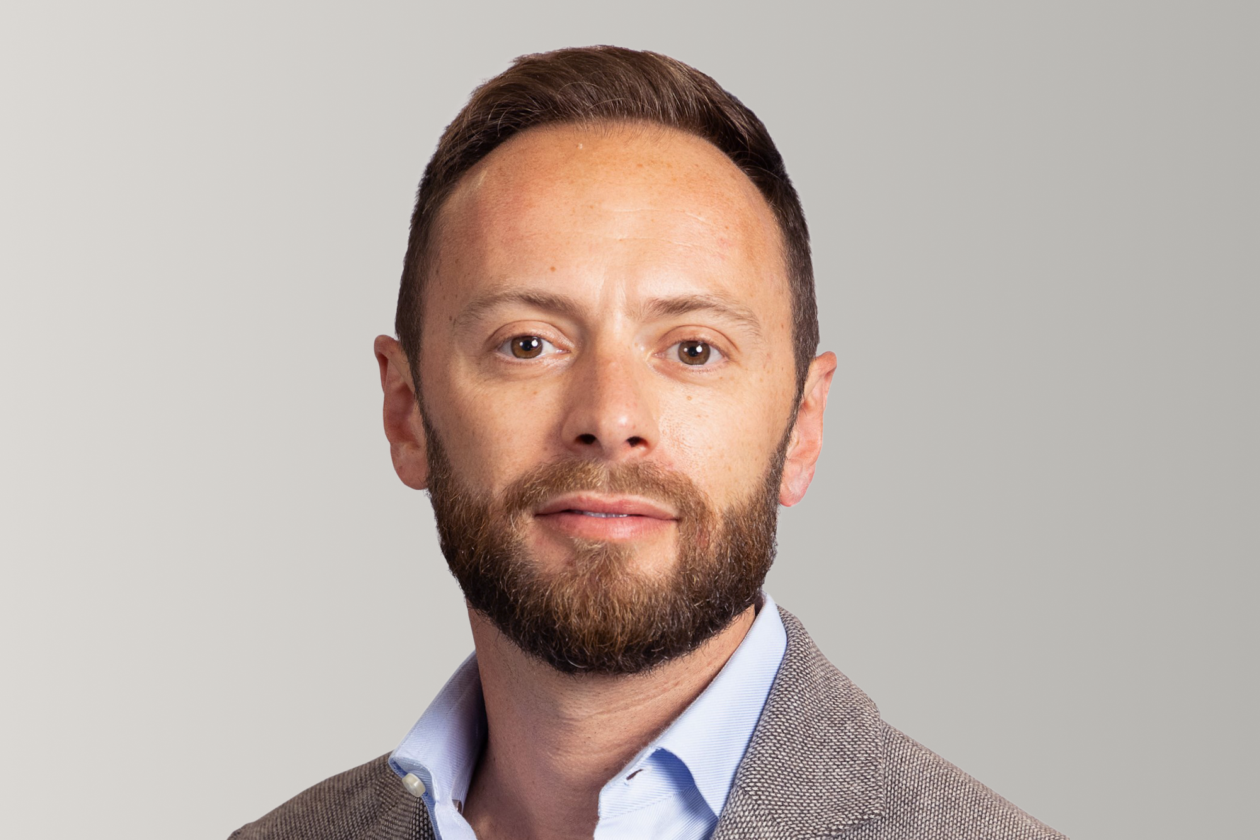
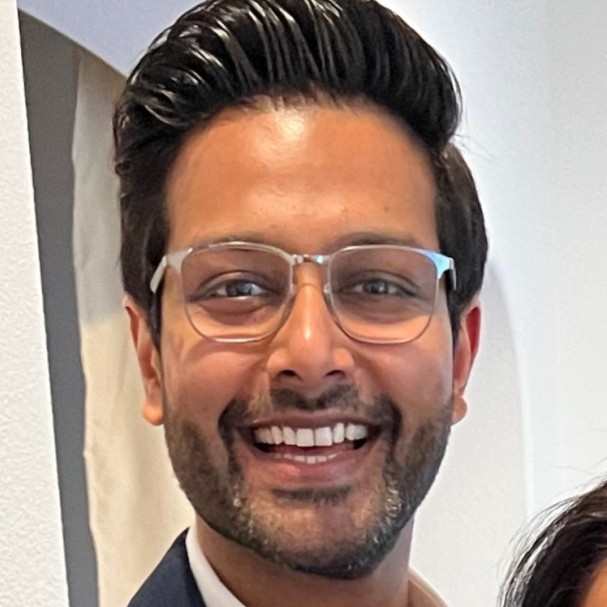
Rahul Prakash. (LinkedIn Photo)

Rahul Prakash, head of product for Microsoft Security Copilot, shared that he’s leaving his role after nearly a decade with the company.

“As any Identity professional will tell you, the world of [Identity Access Management] is far more intricate than people realize, and it’s being rewritten for the world of AI agents. At Microsoft, I’ve had the privilege of going deep into this space…” Prakash said on LinkedIn.

On Monday, GeekWire reported that Rudra “Rudy” Mitra, who spent more than 27 years at Microsoft, was joining Amazon Web Services as vice president of security services. Other recent departures include Krishna Kumar Parthasarathy, who resigned at after nearly three decades.

Nancy Lipson. (LinkedIn Photo)

Nancy Lipson has joined Zap Energy as chief legal officer. The Everett, Wash.-based company is in pursuit of fusion energy, and recently expanded its scope to include next generation nuclear fission.

Lipson was previously executive vice president and CLO for the gold mining giant Newmont Corporation, departing after 18 years in 2023.

“Nancy’s deep expertise in areas of corporate strategy, governance, compliance, and sustainability will be key assets as Zap pursues its integrated approach to advanced nuclear,” Zap posted on LinkedIn.

Jyoti Shukla. (LinkedIn Photo)

Jyoti Shukla was named chief product and technology officer at KEXP, a nonprofit radio station serving Seattle and the Bay Area. The station includes community and performance spaces, and features wide-ranging music genres.

“There is a lot of meaningful work ahead, and I’m excited to keep learning, building, and partnering with an amazing team as we shape what’s next,” Shukla said on LinkedIn.

Prior to taking the role, Shukla served on KEXP’s board of directors and was senior vice president of product design at SiriusXM. She has also worked in tech leadership roles at Nordstrom and Starbucks, and started her career at Microsoft.

ZEV Co-op, a Washington-based nonprofit EV carshare cooperative, announced Ry Armstrong as its new executive director. Armstrong was previously at Sustainable Seattle, where they served as co-director. 

Tirzah VanDamme has joined Gagen MacDonald as senior director of AI and digital transformation. She brings more than 20 years of experience and was most recently at Microsoft.

— The Washington State Academy of Sciences (WSAS) announced the election four new board members. They are:

  • Amanda Boyd, executive director of Native American Programs and Professor in the Elson S. Floyd College of Medicine at Washington State Universit
  • Mary Czerwinski, former research manager at Microsoft Research
  • John Stein, former science and research director of NOAA Fisheries’ Northwest Fisheries Science Center
  • Judith Wasserheit, professor emerita of Global Health, Medicine, and Epidemiology at the University of Washington

WSAS also elected 30 new members, who will assist the organization in providing scientific and technical information to state policymakers.

They include 26 scientists and engineers elected by their WSAS peers and four members recently elected to the National Academies of Science, Engineering, or Medicine or awarded the Nobel Prize and who reside or work in Washington state.

The members include 11 UW professors and eight from WSU, five researchers from Pacific Northwest National Laboratory, three from Fred Hutch Cancer Center, and three at private companies, with some participants holding roles at multiple institutions.

BioLife Solutions to be acquired by Repligen in $1.5B cell therapy deal

Roderick de Greef, CEO of BioLife Solutions. (BioLife Photo)

BioLife Solutions, a Bothell, Wash.-based company developing tools for cell and gene therapy, is being acquired for $1.5 billion by the life sciences corporation Repligen.

BioLife is a publicly traded business that makes products used by biotech firms to keep living cells alive and healthy while they’re stored, shipped, frozen or thawed for medical therapies. Waltham, Mass.-based Repligen makes tools and other materials used to manufacture vaccines, antibodies and other biological therapies. Both companies launched in the 1980s.

Cell and gene therapies are advanced treatments that use living cells or genetic material to treat disease at the molecular level. Cell therapies replace or repair damaged tissue with healthy cells, while gene therapies add, fix or modify DNA to correct the underlying cause of a condition.

“Over the past several years, we have successfully repositioned BioLife around our market-leading biopreservation media franchise, while strengthening our financial profile and establishing a durable foundation for profitable growth,” said Roderick de Greef, CEO of BioLife, in a statement.

BioLife shareholders will get $11.25 in cash plus 0.1442 shares of Repligen stock for every share of BioLife they own—bringing the total deal value to $31 per share.

The deal is expected to close in the fourth quarter, pending BioLife stockholder approval and regulatory clearance. The law firm K&L Gates advised BioLife Solutions on the acquisition.

Amazon puts Luna gaming service inside its Prime Video app, hoping people finally notice

Amazon will begin to fold its Luna cloud platform directly into the Prime Video app via the new Games tab, in an effort to get word about Luna to Prime members. (Amazon Luna promotional image)

Amazon announced today that it has updated some versions of its Prime Video app to include direct access to its cloud-based Luna gaming platform.

The business goal is to solve Luna’s awareness problem and bring new users to the platform. Many Prime members don’t know the gaming service is included with their membership.

Consumers in the US and UK who have both a Prime subscription and a Fire TV can now launch Luna directly from the Prime Video app, where it can be found in its own dedicated tab in the UI. Prime subscribers who launch Luna in the app will get direct access to a library of both casual and mainstream “AAA” video games for no additional cost and without having to exit the app.

“Effectively, we relaunched last October, taking a bunch of the value of Luna that had been behind a paywall… We pushed it into the Prime membership, as a way of providing great value and trying to grow our business,” Jeff Gattis, GM of gaming at Amazon, told GeekWire.

Players on Luna can stream an assortment of games to their TV or browser via Amazon’s cloud servers, using a smartphone as a controller if they don’t have a compatible gamepad. Luna’s current library ranges from established mainstream hits like Indiana Jones and the Great Circle, Dispatch, and Fallout 4 to an assortment of casual-friendly exclusive titles like Amazon’s own Courtroom Chaos.

(Amazon Luna press image)

Since that relaunch, Gattis said, the company has “basically 5x’d” its player base.

“The question for us is, how do you build upon that?” he said. “How do we let 200 million-plus Prime members worldwide know that they have this great benefit where you can play $70 games inside your Prime membership at no additional cost? One of our biggest challenges today remains that people don’t know the [Luna] benefit exists.”

While Luna was previously available to Prime subscribers via web browser and a couple of other types of smart TVs, it was a standalone service that required users to seek it out on its own. By shifting it into its own tab on the Prime Video app, Amazon’s hope is to drive up awareness that, well, Luna is there at all.

“It’ll start on Fire TV, but obviously our end state is to roll out to more countries and more devices, both first-party and third-party,” Gattis said. “Eventually we’ll be everywhere that Prime Video is.”

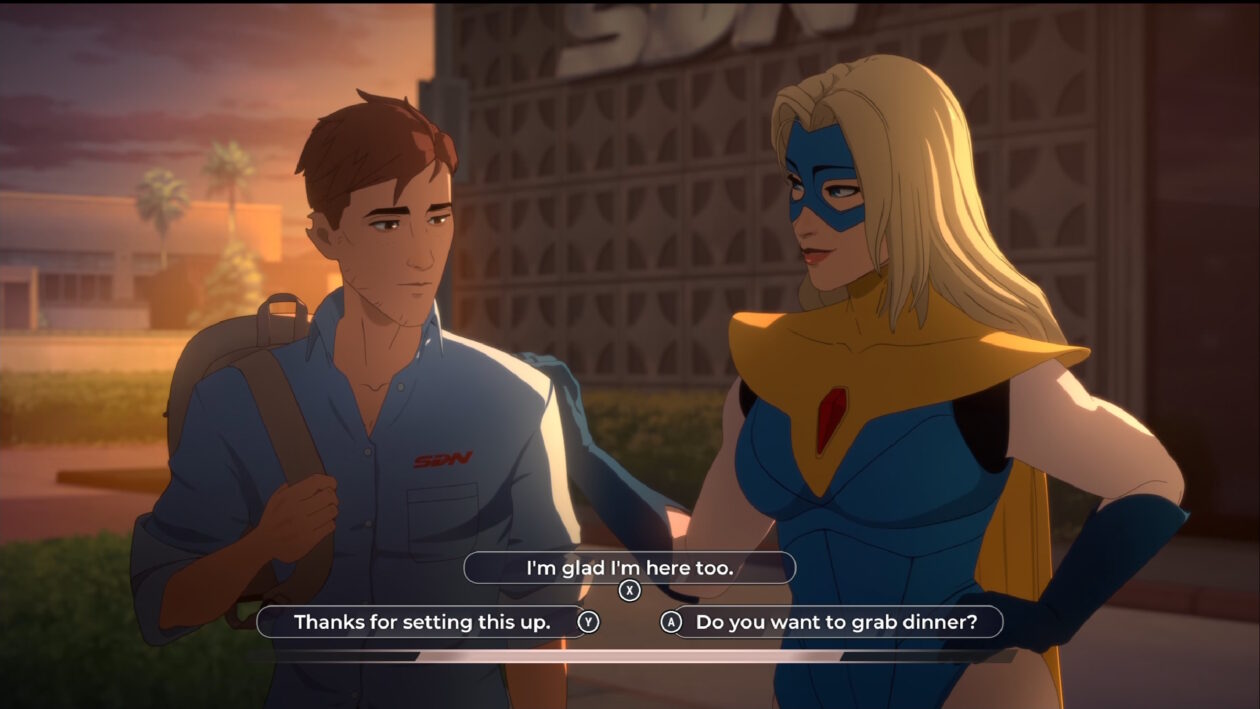
Dispatch, a viral indie hit from 2025 about office romance at a superhero agency, has been a big hit on Amazon Luna. (AdHoc Studio image)

The integration of Luna with Prime could also potentially bring back the largely-abandoned practice of video game movie tie-ins. Fans of this summer’s Masters of the Universe reboot can watch the film on Prime Video, then switch to Luna to play Masters of the Universe: Legends Unite, a strategic deckbuilding game that’s currently exclusive to Luna. This kind of transmedia synergy used to be a part of every big summer action movie, but it’s largely fallen by the wayside since the 2010s.

Luna originally debuted in 2020 as a subscription-based cloud service. Subscribers could pay a monthly fee for access to over 100 video games, which they could play through their browser by streaming them from Amazon’s servers.

Back then, Luna was Amazon’s entry into what was shaping up to be a publisher-driven “battle for the cloud,” with companies like Google and Nvidia all launching their own game streaming services. Over time, however, the cloud’s impact on gaming hasn’t matched its early hype.

More recently, the component crunch has driven up the price of consoles and graphics cards, and that plays into Amazon’s bet on Luna.

Gattis said the cloud has been “technology ahead of its time,” in part because the industry aimed it at the wrong people, pitching it as a direct replacement for consoles and gaming PCs.

“That’s a heavy lift to ask somebody like myself,” he said. “I’ve invested both emotionally and financially in my Series X console and my 5090 graphics card. I’m happy.”

Amazon is catering to everyone else: players unlikely to buy a gaming PC or a current-generation console, let alone the next generation of gaming hardware at even higher prices. For the first time, Gattis said, there are “a lot more people who are going to think about the cloud as a viable alternative to $1,500 hardware.”

Game developer Harebrained Schemes kicks off its new indie era with survival-horror RPG ‘GRAFT’

(Harebrained Schemes press image)

The latest game from Seattle-based developer Harebrained Schemes, and its first since its return to independence in 2023, is a dark sci-fi/horror adventure where the player must constantly change and enhance their body in order to survive.

In GRAFT, players take the role of Tiger, a man with jumbled memories who’s trapped aboard the Arc, a massive, decaying space station. The Arc’s other inhabitants include failed experiments, crazed mutants, bands of human survivors that could be either allies or enemies, and a hostile AI.

To survive, Tiger must salvage new parts from his enemies and graft them into his own body, which gives him new weapons, abilities, and upgrades. However, each new body part comes with its own secondhand memories, which quickly impacts Tiger’s sense of identity.

That leads naturally to a cyberpunk-infused Ship of Theseus situation: how much of yourself can you replace before you’re no longer you?

Harebrained CEO Mike McCain describes GRAFT as a survival horror game, in the spirit of mainstream releases like Resident Evil and Dead Space. In order to succeed, players must ration their available resources, constantly scavenge for supplies, and carefully pick their battles. Sometimes it’s going to be better to simply run away.

GRAFT is being developed in Unreal Engine by a core team of five at Harebrained, plus “key collaborators.” McCain also serves as GRAFT’s project director.

Harebrained Schemes was founded in 2011 by Jordan Weisman and Mitch Gitelman, who’d previously worked together on the Crimson Skies franchise. After releasing two mobile games, Harebrained pivoted to the PC market with a trilogy of crowdfunded strategy RPGs based on the Shadowrun tabletop game.

(Harebrained Schemes press image)

In 2018, Harebrained released a new BattleTech game for PC and Linux via the Swedish publisher Paradox Interactive (Crusader Kings). Paradox subsequently acquired Harebrained for $7.5 million. Shortly afterward, Weisman stepped down as CEO; he would eventually leave the company to found the no-code game development platform Endless Adventures.

5 years later, Paradox announced that it would “part ways” with Harebrained, shortly after the release of Harebrained’s original strategy RPG The Lamplighters League and the Tower at the End of the World. McCain, who’d previously been the director on BattleTech, rejoined the company in early 2024 as Harebrained’s new CEO, while Gitelman stepped back to an advisory role.

Following the separation, Paradox owns and operates most of Harebrained’s previous catalog, including Shadowrun, BattleTech, Lamplighters League, and Harebrained’s 2016 action-RPG Necropolis. With GRAFT, Harebrained is effectively starting from scratch.

GRAFT does not currently have a release date.

Next-gen battery startup Sila raises $300M to expand manufacturing plant in Washington state

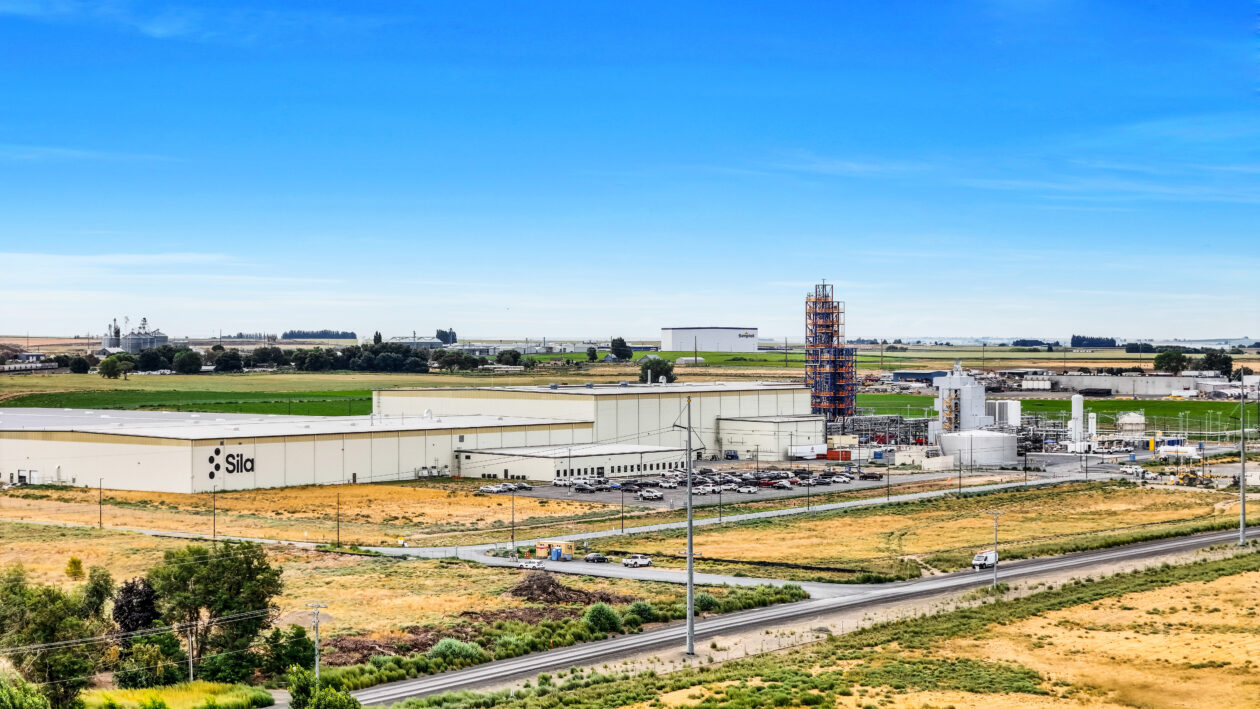
Sila began operations at its Moses Lake, Wash., plant in September. (Sila Photo)

Sila, a startup producing next-generation battery materials, on Tuesday announced $300 million in new funding.

The company previously raised $1.3 billion and was valued at close to $2 billion two years ago, according to PitchBook. It has 400 employees.

The California-based startup has developed a silicon-carbon material that replaces graphite traditionally used in the anodes of lithium-ion batteries, delivering better performance and significantly higher energy capacity.

Last fall, Sila opened its manufacturing facility in Moses Lake, Wash. — the first automotive-scale silicon-anode plant for both the company and the nation. It’s shipping sample anode material from the facility to a variety of customers.

The cash infusion will help fund a planned expansion of its Central Washington operations.

The current plant has a production capacity of about 2 gigawatt-hours of anode material, which, depending on its application, could supply 20,000 to 50,000 EVs. The expanded facility could increase that volume to tens of gigawatt-hours.

EV sales cooled in the U.S. after President Trump returned to office and federal support for battery-powered cars waned. But new models are still entering the market and demand is growing for other battery applications.

“Anything that AI is touching right now is driving tremendous need for better batteries,” said Gene Berdichevsky, co-founder and CEO.

That includes drones, hardware deployed in outer space, robotics, autonomous vehicles, wearable consumer devices, and batteries used at AI data centers. All of those uses require higher performing batteries, he added.

It’s also essential that the U.S. bolster its domestic manufacturing of battery components given national and economic security concerns, Berdichevsky said. Because while the U.S. is racing to strengthen its AI sector, if the nation has to import all of the equipment and hardware systems that it needs, “you really don’t have an AI industry,” he added.

Sila’s round was led by Atreides Management and Sutter Hill Ventures. It was joined by 8VC, Bessemer Venture Partners, Matrix Partners, funds and accounts advised by T. Rowe Price Associates, and other existing and new investors.

Moses Lake is also home to Group14, which is producing its own version of a silicon anode material. The Washington-based competitor to Sila has put its U.S. manufacturing on pause as it focuses on its South Korean plant, which is delivering commercial-scale volumes of material for customer performance testing.

Editor’s note: Story updated at 9:25 a.m. July 21 to add comments from Gene Berdichevsky and to clarify that the next phase of manufacturing expansion will increase production into tens of gigawatt-hours of material.

Veteran Microsoft security executive joins AWS amid broader reshuffle in Redmond

Rudra Mitra will lead Amazon security services in his new role. (LinkedIn Photo)

Rudra “Rudy” Mitra, who spent more than 27 years at Microsoft and most recently led its Purview data-security business, is joining Amazon Web Services as vice president of security services.

Mitra will oversee an AWS portfolio that includes tools such as GuardDuty and Security Hub, which companies use to track security risks across their cloud accounts. AWS recently added AI-specific threat detection to GuardDuty and, perhaps notably given today’s news, extended Security Hub to monitor AI workloads and security inside Microsoft Azure. 

He will report to Chet Kapoor, the former DataStax CEO whom AWS hired last year as vice president of search, security and observability, a role that reports to AWS CEO Matt Garman.

“Rudy brings decades of security experience, a passion for building, and a deep understanding of what customers need as the security landscape continues to evolve,” Kapoor wrote on LinkedIn

Mitra joined Microsoft in 1999 straight out of college, working on early efforts to deliver Office as an online service before launching Purview, the company’s data-security and governance product, in 2014. He announced his exit from Microsoft last week, addressing what was next at the time by saying only that there was “more on that soon.”

His departure comes amid a broader reshuffling of Microsoft’s security leadership this year under Hayete Gallot, who returned from Google in February to run the group and has been reshaping its executive ranks in recent weeks and months.

Gallot replaced Charlie Bell, who had joined from AWS in 2021 and continues at Microsoft as an individual contributor focused on engineering quality. She’s been overhauling the group’s product lineup, according to The Information, which reported last week that at least nine corporate vice presidents who reported to Bell have left the company this year.

Rohan Kumar left for Salesforce in June, Vasu Jakkal stepped down after six years. Krishna Kumar Parthasarathy departed this month after 28 years. Joy Chik, president of identity and network access, announced her retirement in April.

On the inbound side at Microsoft, Naseem Tuffaha returned in June to fill the corporate VP role Kumar had left, after nearly two decades at the company and a stint away.

When Gallot arrived, Microsoft named Ales Holecek, a longtime engineering leader, as the security group’s chief architect, reporting to her. David Weston, another veteran Microsoft executive, also reportedly shifted into the security unit earlier this year.

8-bit ‘Jimothy’: Viral sensation raids trash cans, eludes paparazzi in Seattle creator’s video game

The “Jimothy” video game features Seattle’s beloved raccoon making his way through assorted challenges. (Image via Chris Pirillo)

Jimothy, the short-spined Seattle raccoon, has become a global sensation whose likeness has been immortalized in artwork, clothing, songs and tattoos — and now a video game created in the creature’s hometown.

Tech enthusiast and entrepreneur Chris Pirillo launched an 8-bit NES-style video game called “Jimothy” this weekend in which players can control the movements of the critter as he raids trash cans, crosses streets to the park, sneaks past the paparazzi, and climbs to the safety of a big tree.

Pirillo says the missions are pulled straight from Jimothy’s real life. No doubt the animal is busy these days trying to dodge curious onlookers who are hoping to capture the next photo or video that feeds the masses on social media.

The viral Jimothy sensation took off last week when Kiana Hall spotted the raccoon in Seattle’s Ballard neighborhood and posted a video on Instagram — viewed by millions since — asking the question heard around the world: “What am I looking at?”

An earlier video of Jimothy, captured by a home security camera and posted on Reddit, ignited further curiosity and adoration, and now Reddit is flooded with sightings, memes, artwork, food, crafts, poetry and more. The Mariners put a Jimothy mascot in the Salmon Run. There’s even a Lego Jimothy.

Pirillo told GeekWire the game idea came to him on Saturday afternoon after seeing so many creatives flood his feeds with their own Jimothy fan art. He started to build a not-so-live tracker and realized it was a not-so-great idea. He hopes internet creativity is enough of a fix for the Jimothy-curious.

“This game is as close as any of us should ever get to him,” the game site states. “If you find yourself in his neighborhood: don’t go looking for him, don’t feed him, don’t try to touch him, and don’t crowd him for a photo.”

The game is easy enough to play, with challenges that are reminiscent of classic 1980s games “Frogger” and “Donkey Kong.”

Pirillo’s “Vibe Arcade” is loaded with other games he’s created. Earlier this year he vibe-coded a Resume Analyzer app and a pre-rejection letter generator called Dear Applicant to channel his frustrations with searching for a job.

Pirillo credits AI with changing the speed and ease with which a moment can go viral and be captured in new and creative ways.

“I remember when every big moment had a video game. But by the time a studio could create a video game around a meme pre-AI, the meme’s energy would have dissipated,” he said. “We are now at a day and age (certainly with AI as a tool) where almost literally anybody of any age or tech experience level can bring full-fledged experiences to life in just a few hours. We can simply talk our solutions into existence. It’s astounding.”

Pirillo built the game as a single HTML page, pitting OpenAI GPT 5.6 against Anthropic’s Claude Fable 5. One of the bigger challenges was getting the look of Jimothy right, as multiple AI models kept returning regular-looking raccoons.

Pirillo said he looks forward to sharing more about it all during a free vibe-coding community workshop in Seattle this Saturday.

His final takeaway for anyone looking to get in on the Jimothy hype — or whatever creature emerges next — is to not wait for the moment to pass.

“While it’s never been easier to make something, it’s also never been more challenging to get attention,” he said.

Silicon Valley icon Vinod Khosla: What kind of Seahawks owner will he be?

Vinod Khosla at TechCrunch Disrupt in San Francisco in October 2024. (TechCrunch Photo / Flickr / CC BY 2.0)

This week on the GeekWire Podcast: Silicon Valley legend Vinod Khosla’s family is leading a group that’s buying the Seattle Seahawks for a record $9.6 billion.

We dug into hours of his talks and interviews to answer the big questions: Who is this guy, why does he want an NFL team, and what does his track record tell us about the kind of owner he’ll be? Plus, the blind spot that could get him into trouble.

Featuring highlights from his 2015 talk at the Stanford Graduate School of Business.

Also: A mystery trove of aerospace artifacts is rescued from a Seattle-area electronics recycler, and we want to hear about your coolest tech history find. Send your comments, voice memos and photos to todd@geekwire.com.

Subscribe to GeekWire in Apple Podcasts, Spotify, or wherever you listen.

Ditch your smartphone for a flip phone for a month? This group wants Seattleites to try

Maggie Hollinbeck and James Wagar are leading the charge on Month Offline Seattle, a move to get people off their smartphones.

Seattle helped create the modern smartphone era. Now, nearly 40 people in the heart of one of the world’s biggest technology hubs are voluntarily putting theirs away.

The inaugural Month Offline Seattle cohort challenges participants to swap their smartphones for flip phones — or other “dumb phones” — for 35 days, gathering weekly for what organizers describe as part happy hour, part support group.

What started as a niche experiment in Washington, D.C. and Brooklyn has found an enthusiastic audience in Seattle, where organizers expected 10 to 20 participants but have already attracted the largest cohort outside those two cities.

Weekly programs are scheduled during the month-long detox from July 28 to Sept. 1, with activities on Tuesday evenings like bocce ball, bowling and mini golf slated to connect people in real time. There are also themed programs during the week, starting in week one with orientation and goal setting, and followed by topics such as “communication and relationships,” and “attention and boredom.” You can register here.

For a region like Seattle that’s home to Microsoft, Amazon, T-Mobile and a booming AI industry, the idea might sound almost rebellious. But organizers say the goal isn’t to reject technology — it’s to rethink how much of our lives should revolve around our smartphones.

James Wagar, a former investment banker and self-described techno-optimist who has carried a flip phone alongside his smartphone for years, teamed up with therapist and coach Maggie Hollinbeck, who describes herself as a techno-skeptic, to get the Seattle cohort launched. Together, they’re leading the gatherings, serving as the guides to those ready to take a break from their always-connected lifestyles.

“We (finally) seem to be at the beginning of a cultural moment with more people seriously evaluating their relationships with technology,” Wagar tells GeekWire. “Those using flip phones and simpler devices may be the canaries in the coal mine. While I remain a techno-optimist, the attention economy is not sustainable.”

Pick your favorite flip phone and disengage next month with Month Offline Seattle. Photos via James Wagar and Maggie Hollinbeck

Hollinbeck said she remembers when smartphones felt like a convenience — a way to replace multiple devices with one. But over time, she felt that same “rectangle of glass” had become harder to put down, prompting her to rethink her relationship with technology. She’s already ditched her Facebook and Instagram accounts, and was ready for the next step.

“I’m here to reclaim my time and attention, and I’m doing it in this way because I’ve found that it’s actually pretty hard to disentangle myself from this pocket-sized dementor,” said Hollinbeck. “It’s gonna take a village, so we’re building one.”

The concept has been spreading nationally through the Month Offline movement, but Seattle’s response has surprised the organizers. Most participants found the group not through social media, but through flyers, word of mouth, and conversations at neighborhood pubs during the FIFA World Cup.

Cohort members can use their own flip phone or purchase one at a discounted price of $10, and a commitment to subscribe for four months of discounted wireless service from dumb.co. That’s a total commitment of $42.

Denver, Austin, Los Angeles and Philadelphia also are jumping on the “Month Offline” bandwagon — which is kind of best described as a dry January for the tech obsessed. The organization says it is united by a common mission — “our commitment to attention liberation.”

Wagar and Hollinbeck are also encouraging a GeekWire reporter to join the movement.

So far, no takers.

Note: I actually tried a digital detox for one day back in 2013. Not sure I am ready for 35 days, 13 years later.

Seattle indie hit ‘Stardew Valley’ is coming to ‘Magic: The Gathering’

Credits: Eric “ConcernedApe” Barone and Sylvain Sarrailh for Wizards of the Coast.

One of the biggest hits ever produced by Seattle’s independent video game scene is joining the Magic: The Gathering multiverse later this month. Sort of.

Magic, the long-running collectible card game published and developed by Renton, Wash.-based Wizards of the Coast, frequently puts out special crossover editions via its Secret Lair imprint.

The Secret Lair “drops” are limited-run collectibles that typically reimagine older Magic cards with new designs and art, which replaces Magic‘s usual cast of wizards and monsters with, for example, Dwarf Fortress, Garfield, or various Marvel superheroes. A caveat: Secret Lairs are priced to appeal to die-hard collectors, rather than casual players.

On Friday, during the first day of MagicCon Amsterdam, Wizards announced several upcoming “drops” for Secret Lair, three of which are based on the popular indie video game Stardew Valley.

Stardew, made by solo developer Eric “ConcernedApe” Barone, is arguably the single biggest success story to come out of Seattle’s independent game development scene. It’s an open-ended video game about a young person who moves back to their grandfather’s abandoned farm, to raise crops, breed livestock, make friends, fish, adventure through the nearby abandoned mines, and/or romance neighbors. This can all be taken at the player’s own pace, with no particular time limits or directions.

Stardew’s success helped to popularize what’s come to be known as the “cozy” genre of chill-out, low-stress video games, alongside other hits like Nintendo’s Animal Crossing. Stardew celebrated its 10th anniversary earlier this year, has sold nearly 50 million copies across multiple platforms, and has spun out into a successful concert tour, a cookbook, and as of earlier this month, a crochet book.

Now Stardew is coming to Magic via Secret Lair, in a package that Wizards is calling the “Superdrop of the Moonlight Jellies,” named after a jellyfish-themed town festival in Stardew Valley.

Coming on July 27, the drop is split into three specific sets of cards: Welcome to Stardew Valley, Life in Pelican Town, and A Flicker in the Deep. The first set, Welcome, features unique pixel art made by ConcernedApe on each card.

Most of the cards in the Stardew Valley Secret Lair are reprints of existing Magic cards, though some have been renamed in keeping with the theme. For example, Swords to Plowshares is one of the oldest cards in Magic, but it’s getting a new Stardew-themed edition in this Secret Lair.

The lone exception is the actual Stardew Valley card (above), which is a special land that’s designed to be compatible with most styles of competitive Magic play.

Other upcoming Secret Lairs announced at MagicCon Amsterdam include:

  • a full playable deck that’s based on the virtual Japanese singer Hatsune Miku;
  • a food-themed take on J.R.R. Tolkien’s The Hobbit;
  • four separate Marvel Comics drops, including one that will feature the universe’s various super-pets;
  • three drops built around specific artists, including American cartoonist Gene Luen Yang (American Born Chinese);
  • and most oddly, a drop with a theme based upon the French record label Lofi Girl, best known for its 24-7 chillhop YouTube “radio station” featuring its namesake and mascot.

Icertis CEO is departing; contract management company names CFO and board member interim leaders

Anand Subbaraman. (LinkedIn Photo)

Anand Subbaraman is departing as CEO of Icertis, the Bellevue, Wash.-based contract management software company said Friday. Chief Financial Officer Rajat Bahri and longtime executive and Icertis board member Jim Moffatt will serve as interim co-CEOs as Icertis searches for its next CEO.

Subbaraman took the helm in August 2025 when Icertis co-founder Samir Bodas stepped down. Bodas had been the company’s only CEO since launching the business in 2009. Bodas shared at the time that he was resigning due to a health concern, and passed away in January after a battle with cancer. 

Subbaraman, who joined Icertis in 2024 as chief operating officer, will serve as an advisor during the leadership transition. No reason was provided for his exit. We’ve asked the company for further details.

“We are grateful for Anand’s service and his work to expand the company’s AI capabilities and scale operations,” Moffatt said in a statement. “As our Board conducts its search for the next CEO, Rajat and I will ensure we do not miss a beat during this important time for our company.”

Icertis Chief Financial Officer Rajat Bahri, left, and board member Jim Moffatt will serve as interim co-CEOs as the company searches for a new chief executive. (Icertis Photos)

Founded in 2009, Icertis has raised more than $500 million and was valued at $5 billion four years ago. Its investors include SoftBank’s Vision Fund, SAP and PSP Partners, the firm chaired by lead independent director Penny Pritzker.

Bloomberg reported in February that Icertis was working with Goldman Sachs to explore a potential sale that could value the company at as much as $5 billion, citing people familiar with the matter. Buyout firms had shown preliminary interest, and no final decision had been reached, according to the report.

The company said Friday that Bahri will hold dual roles as interim co-CEO and CFO. He joined Icertis in 2022 and previously served as CFO at several companies, including ID.me; Wish, where he helped lead the company’s IPO; and Jasper Technologies.

Moffatt has served on the Icertis board since 2022, after previously serving on its advisory board, and is a member of the board’s audit and compensation committees. He has also been appointed chair of the board, in addition to his interim leadership role. Moffatt spent more than 35 years at Deloitte, leaving the company as vice chairman and global CEO of Deloitte Consulting. He is now president of JSM Advisors.

Tech Moves: Former Amazon exec joins F5; Microsoft security CVP departs; Qualtrics adds leadership

Cathy Peterman. (F5 Photo)

F5 named former Amazon executive Cathy Peterman as executive vice president and chief people officer of the Seattle-based application-delivery and security company. In May, F5 celebrated its 30th year in business.

“Cathy brings a rare combination of strategic depth and genuine humanity that will raise the bar for how we invest in our people,” said CEO François Locoh-Donou in a statement. “She and I share a reverence for culture and its impact on driving sustained results.”

Peterman joins F5 from Wayfair, where she served as CPO for the retail company’s technology organization. Prior to that, she was with Amazon for more than five years, departing as the HR executive for advertising products and technology.

Rudra Mitra. (LinkedIn Photo)

— After more than 27 years at Microsoft, Rudra Mitra has announced his departure. He leaves the role of corporate vice president and head of Microsoft Security Purview, a team addressing data security and governance focused on artificial intelligence and AI agents.

Mitra joined the Redmond, Wash.-based tech giant straight out of college as a software engineer. He has led work on products including Office, Windows Live and Microsoft 365 Cloud Infrastructure.

“Microsoft is a very special place full of incredibly talented people, and this decision comes with gratitude, happiness, and optimism for the future,” he said on LinkedIn. Mitra did not share his next move, saying only that there is “more on that soon.”

Markham McIntyre. (LinkedIn Photo)

Markham McIntyre, who previously led Seattle’s Office of Economic Development, is now executive director of Climate Surge, which is described as a “project built to accelerate the deployment of climate policies and market solutions in Washington.”

The effort works with corporations, heavy industry, government, developers, advocates, and philanthropy, and is a partnership between Earth Finance, Climate Solutions and Stolte Foundation.

Prior to his role with the city of Seattle, McIntyre was at the Seattle Metropolitan Chamber for more than eight years, leaving in 2022 as executive vice president.

Qualtrics, an experience management technology company with headquarters in Seattle and Provo, Utah, announced a slate of new hires, all of whom appear to be working remotely:

  • Adam Block was named chief sales officer, joining from Motive where he was chief revenue officer.
  • Ken Coleman was named senior vice president of marketing, coming from Ramsey Solutions.
  • Khoi Hoang was named leader of the global sales engineering organization, joining from Salesforce.
  • Aaron Ellis was named leader of corporate sales, joining from Workday.

Qualtrics previously shared news that it promoted Ken Hoang to senior vice president of product.

Jay Shankar, Amazon’s former vice president of global talent acquisition, has joined Uber in a comparable role. Shankar, who is based in San Francisco, resigned from Amazon in December. Past employers include Adobe and BMC Software.

“When I joined AWS almost 8 years ago to lead recruiting, I had never run a talent acquisition organization. What I discovered was a team of builders who showed me that this work is fundamentally about investing in people and obsessing over customer needs,” Shankar said on LinkedIn.

Jamie Boyd has joined the advisory board for Seattle’s GemaTEG, a startup building technology to manage the heat produced by computer chips. Boyd is a founder of Cypress Capital Holdings and previously helped build Cascadia, an investment banking franchise focused on energy and climate technologies.

— Seattle immigration tech startup Casium named Kat Kelley as its founding go-to-market lead. Kelley joins from Teaching Strategies, a digital education company, and past employers include Rectxt and brightwheel.

Wilson Sonsini Goodrich & Rosati, a firm that specializes in corporate and technology-focused legal work, announced that Ty Kayam has joined as counsel in Seattle, expanding the firm’s healthcare regulatory team.

Rogo named Joe Xavier as chief technology officer of the New York-based finance platform. Early in his career, Xavier held leadership roles at Amazon and Microsoft, and more recently served as Grammarly’s CTO. At Rogo, he will help establish a San Francisco office.

And in case you missed it: Dave Brown, senior vice president of Amazon Web Services leading its compute, AI and machine learning operations, is leaving after nearly 19 years. He is departing at the end of this month, and Amazon exec Dave Treadwell will take over the group. Read more in this GeekWire story.

AWS EC2 and AI leader Dave Brown to exit, replaced by Amazon exec and Microsoft vet Dave Treadwell

Dave Brown, departing AWS executive, in 2023. (GeekWire Photo / Todd Bishop)

[Update, Friday, July 17: Brown is joining Meta, the WSJ reported. More here.]

Dave Brown, who joined Amazon Web Services as one of its earliest EC2 engineers and rose to lead its compute, AI and machine learning services, is leaving after nearly 19 years. 

AWS CEO Matt Garman told employees in a memo posted publicly Wednesday that Brown will depart at the end of July for an unspecified “new role outside of the company.” Amazon exec Dave Treadwell, who joined the company in 2016 after 27 years at Microsoft, will take over the group Aug. 1.

Dave Treadwell. (Amazon Photo)

Brown’s exit comes about three months after Amazon promoted him to senior vice president. Brown had been on the company’s senior leadership team since 2023.

His tenure stretched back to the early days of the cloud. He joined AWS in 2007 in Cape Town, South Africa, where Amazon based part of its early EC2 engineering, before relocating to the Seattle area.

In an interview with GeekWire earlier this year, as the company marked the AWS 20th anniversary, Brown recalled Amazon CEO Andy Jassy, then the company’s top cloud executive, gathering the small Cape Town team in those days and telling them the business could one day be worth a billion dollars.

Brown said he could barely grasp the figure at a time when the service was bringing in tens of dollars a day: “I couldn’t even imagine how much a billion dollars was. It sounded like a lot of money.”

AWS today runs at roughly $150 billion in annualized revenue, and grew 28% in its most recent quarter — its fastest pace in nearly four years.

Brown’s role grew with the business. After starting as an engineer on EC2, or Elastic Compute Cloud, he went on to lead its broader compute organization, including close collaborations with the executives running Amazon’s custom silicon business. His purview also expanded to include the machine learning and AI services now central to AWS, such as the Bedrock and SageMaker platforms.

Treadwell has run Amazon’s eCommerce Foundation, the technical backbone of the company’s online retail operations, since joining in 2016. Before that he spent 27 years at Microsoft, where as a corporate vice president he worked on Windows, Xbox, and the .NET software framework.

In his memo, Garman described Treadwell — known internally as “Tread” — as one of AWS’s largest and most vocal internal customers, someone who pushed the cloud group to innovate and will now lead it.

Brown will remain through the end of July to help with the transition. In his own farewell note, he said it felt like the right time to begin a new chapter. “I’ll be cheering you all on from the sidelines,” he wrote.

Startup Spotlight: Hedgehog bets that open-source networking will power the next generation of AI clouds

Marc Austin of Hedgehog.

As AI workloads drive soaring cloud bills, more companies are weighing whether to move computing out of public clouds and into their own data centers. But building and operating AI infrastructure is far more complicated than simply buying servers — networking has become one of the biggest technical hurdles.

That’s the opportunity Seattle startup Hedgehog is chasing.

Founded in 2022 by CEO Marc Austin, a Cisco networking veteran, Hedgehog develops open-source software designed to make private AI data centers operate more like hyperscale clouds. It has raised $11 million in seed funding, with plans to raise a series A financing round.

We caught up with Austin for the return of GeekWire’s Startup Spotlight to learn more about the 20-person company, the AI networking boom and what surprised him most about building a startup in one of tech’s fastest-moving markets.

In 50 words or less, give us your elevator pitch?

Hedgehog is open-source software that makes AI networking simple. AI clouds and enterprises use it to run GPU networks the way hyperscalers do — deployed in hours instead of months, operated by DevOps teams instead of armies of network engineers, on open hardware with no vendor lock-in.

What problem are you obsessed with solving?

Time to GPU value. A GPU cluster is the most expensive asset most companies will ever buy, and every day it sits idle waiting on the network is money burning. That wait is rarely the hardware — it’s the fabric: weeks or months of scarce network engineers hand-designing, cabling, tuning, and validating it across proprietary CLIs and locked-in vendor gear.

Meanwhile the people told to “own the network” usually aren’t network engineers at all — they’re platform and DevOps teams. We’re obsessed with collapsing that timeline: declare your network like intent in Kubernetes and go from racked GPUs to inference in hours instead of months — on open hardware, no lock-in, no room full of specialists. Cloud-grade networking without hyperscaler headcount.

What surprised you after talking to customers?

How rarely the buyer is a network engineer. It’s platform and DevOps teams, often at AI clouds who just took delivery of thousands of GPUs who are told “you own the network now.” They don’t want to learn BGP; they want a network that behaves like the rest of their cloud-native stack. The other surprise: they don’t just want to run the network, they want to sell it by carving up capacity for their own customers, like a cloud provider does.

How has AI changed the way you build your company?

Twice over.

Our product exists because AI broke traditional networking. Training and inference traffic melts networks designed for web apps.

And AI changed how we build: we use it heavily across engineering, testing, and go-to-market, which lets a small team continuously test every supported device and configuration in our lab and ship with hyperscaler-grade rigor. AI raised the bar for what a startup-sized team can deliver.

What’s one thing people misunderstand about your startup?

That “open source” means hobbyist. The opposite is true: openness is the enterprise feature. Our customers can audit every line of code that runs their fabric, extend it, and never get locked in. Nearly every competitor markets “open networking” while shipping a proprietary controller. Hedgehog is the only one that actually publishes the repo.

What’s the toughest decision you’ve made in the past year?

Betting entirely on Ethernet. We decided open, standards-based Ethernet would win AI networking and put everything behind it. Watching the industry’s largest AI operators now standardize on that same approach makes us feel good about the call — but saying no was hard.

What’s the one piece of advice you give to other entrepreneurs?

Pick the wave, not just the surfboard.

Product decisions are recoverable; betting against a structural industry shift isn’t. Find the standard, the architecture, or the buyer behavior that’s inevitable, align everything to it early, and be patient while the market catches up to your bet.

We’ll know our company has made it when…

Networking is boring again. When a platform engineer stands up a multi-tenant GPU cloud and the network is just a few lines of declared intent that nobody thinks twice about. When “network like a hyperscaler” describes every AI cloud, not just the giants running on Hedgehog, then we will have made it!

Vieu launches AI-ready map of business relationships, challenging tech incumbents

Vieu co-founders Simon Skaria (left) and Samir Manjure. (Vieu Photo)

Vieu, a Seattle startup aiming to replace cold outreach with warm introductions, launched what it calls the “Business Graph,” a live map of trusted relationships that drive business-to-business sales, marketing, recruiting and fundraising.

The 40-person company, which raised an $11 million seed round in October 2024, has grown to more than 100 enterprise customers including a number of well-known companies. Vieu competes with sales-intelligence tools like ZoomInfo and Outreach, and overlaps with LinkedIn’s Sales Navigator.

The company is led by CEO Samir Manjure and CTO Simon Skaria, both Microsoft alumni. Manjure went on to found KenSci, a healthcare AI startup acquired by Providence in 2021. Skaria has also founded and sold two other startups, Office365Mon and Albits.

The Business Graph, which launched Tuesday, maps relationships between people and companies based on observed signals — such as shared work history, co-authored research, board affiliations, and joint ventures — rather than the self-reported connections that populate LinkedIn.

Common use cases include finding someone who can make an introduction to a decision-maker at a target account, quietly checking references on a job candidate, and figuring out which LinkedIn connections a salesperson actually knows versus the ones they simply accepted a request from.

Vieu says the graph can be used inside its own app or queried directly by AI assistants like Anthropic’s Claude and Google’s Gemini, and it integrates with CRM, email, and Slack.

Manjure said Vieu still has the majority of its 2024 seed round in the bank and has not raised new funding. The company charges customers a platform fee for access to the Business Graph plus outcome-based pricing tied to specific use cases like sales, recruiting, and fundraising.

Tech Moves: Remitly CMO departs; Temporal names EVP; Veeam and Qualtrics leadership changes

Rina Hahn. (LinkedIn Photo)

Rina Hahn has left Seattle’s Remitly as chief marketing officer. Hahn joined the remittance company in 2018 as director of digital marketing and rose to CMO after four years. Before joining Remitly, she was an executive at Blue Nile and Big Fish Games.

The publicly traded company helps customers in more than 170 countries send money internationally.

“I’ve seen firsthand the deep love this company has for its customers and the impact that purpose-driven work can have on immigrants and their families around the world,” she said on LinkedIn. Hahn, who is based in London, did not share her next move. Remitly co-founder Matt Oppenheimer stepped down as CEO in February.

Preeti Somal. (LinkedIn Photo)

Temporal announced that Preeti Somal has been promoted to executive vice president in a role that will oversee the company’s engineering, product and design operations, which were recently reorganized under a single leader.

The industry is moving so fast that “we can’t afford any distance between the people who decide what to build and the people who build it. Unifying these functions closes that loop,” said CEO Samar Abbas on LinkedIn.

Somal has been with Temporal for three years, joining from HashiCorp where she held EVP roles.

The Seattle-area software company offers a platform for running complex computer workflows more reliably. In February, the business closed a $300 million round that pushed its valuation to $5 billion. Temporal is No. 2 on the GeekWire 200 is a ranked index of the Pacific Northwest’s top startups.

Michelle Graff. (LinkedIn Photo)

Veeam Software, a Seattle-based data protection and ransomware recovery company, appointed Michelle Graff as senior vice president of global partners and channel. She joins from the cybersecurity company Commvault and is based in the San Francisco Bay Area.

“The future belongs to organizations that can transform trusted data into trusted AI with resilience built in from the start,” Graff said on LinkedIn.

Graff’s hiring is the latest in a string of leadership changes at Veeam, which has made five other executive hires or promotions this year.

Ken Hoang. (LinkedIn Photo)

Qualtrics, an experience management technology company with headquarters in Seattle and Provo, Utah, has promoted Ken Hoang to senior vice president of product. Hoang is based in San Mateo, Calif., and will work remotely. He was previously a VP at Apptio in Bellevue, Wash.

Qualtrics had a big leadership shakeup in April, when five executives were let go in what CEO Jason Maynard described as an effort to “simplify our structure and ensure we are positioned for our next phase of growth.” Two product executives were among those who left, and Hoang joined the company around that time.

Qualtrics, which employs more than 4,500 people globally, makes software that helps companies gather and act on feedback from customers, employees and others through surveys, AI-powered analytics and other tools.

Monica Lazo is now the sales director for Loopr AI, a Seattle startup that sells computer vision quality control software to manufacturing firms. She joins from Neurala, an AI platform automating visual inspections that is based in Boston.

Pacific Northwest National Laboratory has named atmospheric scientist Larry Berg as the director of the Department of Energy’s Atmospheric Radiation Measurement User Facility.

And some departures from Big Tech:

  • Mary Birkner is retiring from Microsoft after 21 years, primarily in leadership with Xbox. “I thank you for the laughter and goodness that were part of the journey to all the big work stuff,” she said on LinkedIn.
  • Steve Andrews has closed out a 32-year career that included more than 11 years across two stints at Amazon, most recently as senior principal technical program manager. The TPM role “is often misunderstood and misused, so I dedicated a substantial amount of effort helping to set TPMs, their managers, and their teams up for success across the company,” he said. “I hope it made a difference.”
  • Jeff Nienaber is departing Microsoft after more than 16 years, leaving the role of senior director and principal PM for the office of the CTO. “I’m really excited to see what tomorrow’s sunrise has in store,” Nienaber said.

Augmodo raises $21M to push its spatial AI beyond just retail toward the broader physical workforce

(Augmodo Image)

Augmodo, the Seattle startup that straps AI-powered cameras onto retail workers to track store shelves, has raised $21 million as it pushes its technology beyond grocery aisles and into warehouses, factories, and other physical workplaces.

The new funding, led by existing investor TQ Ventures, values Augmodo at $350 million.

CEO Ross Finman, who told GeekWire he wasn’t even looking to raise fresh capital, said he was motivated by interest in the startup’s technology from customers beyond retail, including automotive settings and hospitals.

Augmodo CEO Ross Finman. (Augmodo Photo)

“Fundamentally, someone grabbing a wrench at an automotive factory isn’t that different from someone grabbing a Cheerios box,” Finman said. “Turns out the algorithms work pretty well across all of those.”

Founded in 2023, Augmodo builds AI-powered “Smartbadges” — lightweight wearable devices with dual cameras — that store employees wear passively as they move through aisles. The badges use computer vision, 3D mapping, and spatial computing to track shelf inventory in real time, building what the company calls a digital “Realogram” of each store.

Augmodo raised $37.5 million a year ago in a round that came after Australian pharmacy chain Chemist Warehouse — the startup’s first big customer — moved from a pilot to a full contract and validated the technology at scale. Now others want in on the action.

“Our whole mission statement is AI systems for the physical workforce,” Finman said. “Everyone’s focused on the 20% of the workforce that’s knowledge work, and we’re focused on the 80% of the workforce that’s physical work.”

That demand has pulled Augmodo into warehouses, facility maintenance, delivery operations, and even employee training — verticals the company didn’t originally set out to serve. Existing retail customers, Finman said, kept expanding their contracts to cover new parts of their operations, from auditing warehouse pallets to logging maintenance work like HVAC repairs.


The Smartbadge itself has evolved, too. Finman said it’s now lighter than an iPhone Air and has grown into what he calls an “everything device,” adding walkie-talkie capabilities, an opt-in panic button, and a digital ID display, on top of its original inventory-tracking function.

“That’s actually become a really big selling point,” Finman said. “You don’t need to buy five or six different devices, you buy one at cost, and then here’s all the different features that you can get out of it.”

The company says it has grown 10x in revenue over the past year and now maps more than 186 million square feet of retail space monthly — a figure it expects to cross 1 billion square feet per month by year’s end. Augmodo is adding 50 to 100 new store locations a month.

The company’s headcount has grown 5x over the past year to more than 50 employees, including new CTO Bradford Snow, who joined in January after previous stints at Axon, Meta, Amazon and Microsoft.

Augmodo is ranked No. 145 on the GeekWire 200 list of top Pacific Northwest startups and was a finalist in the Hardware, Robotics, and Physical AI of the Year category at the 2026 GeekWire Awards.

Beyond TQ Ventures, backers include Lerer Hippeau, Jefferson River Capital, Arena Holdings, Chemist Warehouse, New Fare, Interlace, and Webb Investment Network.

Andrew Marks, co-founding partner at TQ, called Finman an “exceptional” leader and said every board meeting reinforced that demand for Augmodo’s tech was outpacing the team’s ability to serve it.

“When you pair a truly special founder with customers lining up around the door and pulling you into new markets, it was obvious we should propose putting more fuel on the fire,” Marks said.

Augmodo said it plans to use the new capital to expand its global enterprise footprint, invest further in its core AI models, and grow its engineering team — with a particular focus on hiring for computer vision and machine learning roles as the company scales its data processing beyond retail.

What to know about Vinod Khosla, the Silicon Valley legend whose family is buying the Seahawks

Vinod Khosla speaks at a fireside chat at AI House in Seattle in March 2025. (GeekWire File Photo)

Vinod Khosla has spent four decades building and funding companies around a single idea: hire the right people and get out of their way. He’s one of the most respected and influential investors in Silicon Valley, with a track record of big bets and a habit of not backing down.

On Saturday, a group led by the billionaire venture capitalist and his family agreed to buy the Seattle Seahawks from the estate of the late Microsoft co-founder Paul Allen for a reported $9.6 billion, which would be the highest price ever paid for an NFL team.

Khosla, 71, was born in Pune, India. He earned degrees from the Indian Institute of Technology in New Delhi and Carnegie Mellon before getting his MBA at Stanford, where he landed in Silicon Valley for good. After co-founding Sun in 1982, he spent nearly two decades as a partner at the legendary venture firm Kleiner Perkins before launching Khosla Ventures in 2004.

His firm now manages roughly $15 billion and has backed companies including DoorDash, Affirm, and Opendoor. Khosla was the first VC to invest in OpenAI, putting in $50 million in 2019. Forbes ranked him No. 1 on its Midas List of top tech investors this year and estimates his net worth at $15.6 billion.

But the Seahawks deal isn’t just about Vinod. The Allen estate’s public statement confirming the formal sale agreement described the buyer as “an ownership group led by the Khosla family,” and Vinod’s own quote in the statement was delivered “on behalf of the Khosla family.”

Estate of Paul G. Allen Reaches Agreement to Sell Seattle Seahawks pic.twitter.com/Pmv8i6FEp8

— Seattle Seahawks (@Seahawks) July 11, 2026

An NFL memo sent to all 32 teams Saturday, reported by ESPN’s Adam Schefter and others, identified his wife, Neeru Khosla, as the controlling owner, and said their son, Neal Khosla, “would be expected to have a significant leadership role in the ownership group.”

Neal may be the one to watch. He has described himself on his personal website as “an obsessive sports fan” who likes “bringing a quantitative and analytical lens to understanding the game within the game,” the Seattle Times reports.

He and his father have been San Francisco 49ers season ticket holders for 30 years, and Neal has consulted for both the 49ers and the Miami Heat. The Khosla family last year bought a 3.1% stake in the 49ers — the Seahawks’ NFC West division rivals — which they’ll now have to sell.

But Vinod Khosla’s track record is the clearest window into how the family will approach its Seahawks ownership. Here’s what we know about him based on his long career in tech.

He focuses on people and talent above all else. “A company becomes the people it hires, not the plan it makes,” Khosla said in a 2016 Startup Grind interview.

“Experience doesn’t matter. The rate of learning matters,” he told Sam Altman in a Y Combinator interview the same year, using a football analogy (fittingly as it now turns out): “Pick for the best athlete, not the person who’s the most established wide receiver who knows how to run one pattern.”

At Sun, Khosla spent an inordinate amount of his time on recruiting. He personally reconstructed the org chart of competitor DEC to identify talent that the company could poach.

Speaking at Seattle’s AI House in March 2025, Khosla’s main advice for startup founders was that their success will be driven by the people they hire and the questions they ask.

“The single most important decision by far you will make is the team you build,” he said at the time. “The more questions that get asked around your conference table, the better it will go, the faster you will learn, and the faster you will accumulate advantages.”

Vinod Khosla speaks at the Bloomberg Green conference in Seattle in July 2025. (GeekWire Photo / Lisa Stiffler)

“Talent drives everything,” he said at another event in Seattle last summer, the Bloomberg Green Seattle conference on climate change.

For the record, the Seahawks’ current leadership is ostensibly locked in: general manager John Schneider is under contract through 2031, and head coach Mike Macdonald, who led the team to its Super Bowl win in February, is signed through 2029, according to The Seattle Times.

Whether the trademark Khosla obsession with talent will translate into getting involved with draft picks and player personnel will be an interesting question to watch.

He’s a Bay Area guy, not a Seattle guy. Khosla has lived and worked in Silicon Valley since earning his MBA at Stanford in 1980. Khosla Ventures is based in Menlo Park. The family’s 49ers ties underscore that this is not a homegrown owner.

Khosla has made a handful of appearances in the Seattle area over the years. His firm led a $11 million round for Seattle-based AI legal startup Lexion in 2021, and a $15 million round in Viome, the wellness startup co-founded by Seattle-area entrepreneur Naveen Jain, in 2017.

But he has no deep roots in the Pacific Northwest, which is a major difference from Seattle native Paul Allen and his family. How quickly the Khosla family builds a connection to the city and Seahawks fans may matter as much as anything they do on the football side.

He supports the people he picks, but tells it like it is. In more than 30 years on startup boards, Khosla says he has never once voted against a management team, even when he strongly disagrees.

“I’ll argue with them, I’ll debate with them, I’ll push them, but I will not vote against them,” he said in the Startup Grind interview. The Khosla Ventures website puts it more plainly: “Once we pick a management team, we back it and don’t second-guess it.”

For a Seahawks fan base that watched Paul Allen’s sister Jody Allen take a largely hands-off approach as chair of the Allen estate, the philosophy may sound familiar, although Khosla’s version would also come with a willingness to challenge leaders behind closed doors.

For example, Khosla has said he deliberately takes positions he doesn’t believe in when coaching founders — not to mislead them, but to force them to think through risks they haven’t considered.

The Khosla Ventures approach, as explained on its site, is “brutal honesty over hypocritical politeness.”

He’s not without controversy. In 2008, Khosla bought a 53-acre property south of Half Moon Bay, Calif., that included the only access road to Martins Beach, a stretch of coastline that surfers and families had used for decades. He locked the gate and blocked public access, setting off a legal battle that has lasted more than a decade and drawn widespread criticism.

The case has gone to the California Supreme Court and back.

“Every Generation Gets the Beach Villain It Deserves,” the New York Times headlined a 2018 story about the dispute. Khosla has argued it’s a private property rights issue. Critics see it as a billionaire putting his own interests above the public.

The takeaway: he doesn’t back down, even when public opinion is against him.

He’s persistent in business, as well. That habit of not backing down has been consistent throughout his tech and investing career.

When Sun was told it had lost a critical early deal to a rival, Khosla flew from San Francisco to Boston and camped out in the prospective customer’s office until the CEO agreed to see him. By the end of the day, the company had signed with Sun, according to The Generalist.

When defective Philips monitors nearly bankrupted Sun, Khosla went home at 3 a.m. and was back by 7 a.m. for months until the crisis passed, he said in the Y Combinator interview.

“Survive long enough in your field to have time to get lucky,” he told founders at one meetup.

During a 2011 appearance in Seattle, Khosla offered this take on betting big: “I don’t mind the low probability of success, but I better be impactful if we do succeed.” He was talking about startups, but the same idea no doubt applies to chasing another Lombardi Trophy.

❌