❌

Reading view

There are new articles available, click to refresh the page.

Uncommon Thinkers 2026: Last call for nominations for Seattle’s boldest innovators

The 2025 β€œUncommon Thinkers” award winners, from left: Anindya Roy, co-founder of Lila Biologics; Kiana Ehsani, co-founder of Vercept; Max Blumen of Tin Can representing winner Chet Kittleson, co-founder of Tin Can; Jeff Thornburg, co-founder of Portal Space Systems; Jay Graber of Bluesky; and Brian Pinkard, co-founder of Aquagga. (GeekWire Photo / Kevin Lisota)

It’s the final call to recognize the Seattle area’s boldest innovators β€”Β nominations for GeekWire’s 2026 Uncommon Thinkers Awards close this Friday. Help us select individuals who challenge conventional thinking, push boundaries and make an impact across the region.

Now in its fourth year, and in partnership withΒ Greater Seattle Partners, the program aims to honor inventors, scientists, technologists and entrepreneurs who are transforming industries and driving positive change throughout the world.

Community nominations will be accepted through Friday, Sept. 18 at 11 a.m. PT, after which a panel of judges will select honorees. They’ll be celebrated on stage during a VIP reception at the annualΒ GeekWire Gala on Dec. 10. Early-bird tickets available here.

Honorees are selected based on innovation, creativity and leadership and should have a track record of introducing novel ideas, technologies, or solutions that challenge the status quo. Nominees should also demonstrate a measurable and meaningful impact on their respective fields or industries, contributing to the betterment of society.

Do you know an Uncommon Thinker deserving of recognition?Β Fill out the nomination form today.

Read the GeekWire profiles of last year’s Uncommon Thinkers honorees:

Thanks toΒ First Tech Federal Credit Union, the title sponsor of this year’s GeekWire Gala. For a recap of last year’s event,Β head here.

UW AI researcher wins top Marconi award and aims to put β€˜superhuman hearing’ in billions of devices

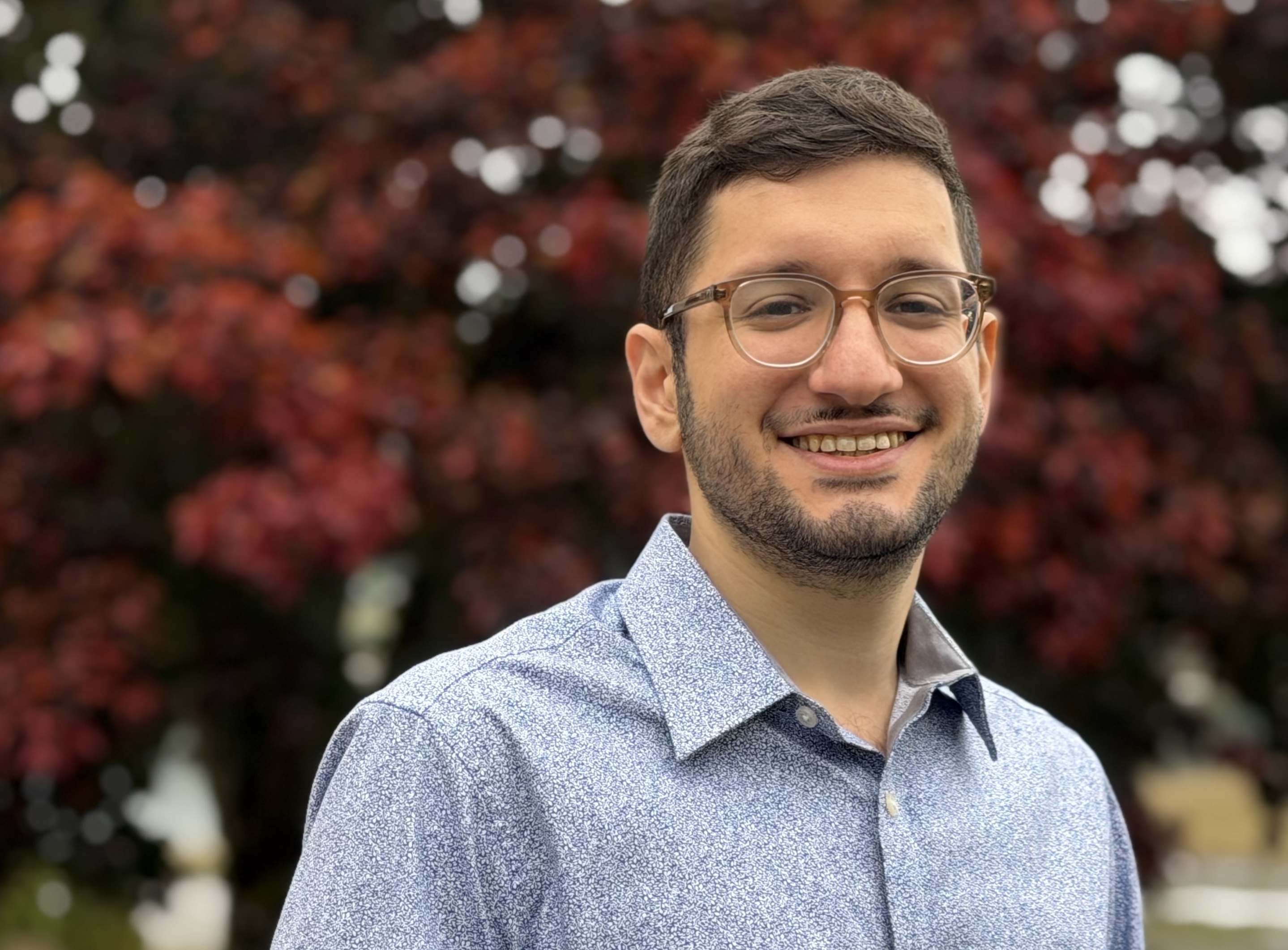
Malek Itani, a Ph.D. student in the UW’s Paul G. Allen School of Computer Science & Engineering. (Photo courtesy of Malek Itani)

University of Washington Ph.D. student Malek Itani, who co-founded the AI-powered sound enhancement startup Hearvana, has been awarded the prestigious Marconi Society Paul Baran Young Scholar Award for his groundbreaking work in β€œsuperhuman” hearing technology.

Selected as one of just three global recipients from a record pool of nominees, Itani was recognized for developing on-device AI algorithms that enable real-time target speech extraction, β€œsound bubbles,” and semantic hearing on low-power hearables like earbuds and hearing aids.

Itani’s award comes less than a year after he and Paul G. Allen School of Computer Science & Engineering professor Shyam Gollakota co-founded Hearvana, a spinout aimed at commercializing their lab discoveries. The startup raised $6 million in pre-seed funding last fall to bring on-device acoustic intelligence to earbuds, hearing aids, and smart glasses.

By packing tiny, real-time neural networks onto low-power chips, the researchers hope to replace blunt noise cancellation with true semantic hearing β€” allowing users to filter out city traffic, amplify a single companion’s voice in a crowded room, or create a localized β€œsound bubble” on demand.

Itani’s work in the UW Mobile Intelligence Lab began with β€œacoustic swarms” β€” small, self-distributing robotic microphones that track and separate multiple speakers in a room. He and his collaborators then pivoted to personal audio devices, pioneering neural networks like IF-MLPNet and platforms like NeuralAids. These systems allow complex AI models to handle real-time sound separation directly on low-power wireless hearables without relying on heavy cloud compute or draining battery life.

β€œMalek has been a key part of every major contribution to the field of superhuman hearing in recent years,” Gollakota told the Allen School Blog. β€œHe entered his Ph.D. with a background in RF and backscatter, but he rapidly mastered audio signal processing and deep learning, which is very impressive.”

β€œI feel like I’ve hit a niche that’s going to be so transformational, and it’s going to be in billions of devices,” Itani said. β€œIt’s going to change the way we hear the world.”

Itani and his fellow Young Scholars will be formally recognized at the Marconi Awards Gala in San Francisco this November.

❌