Reading view

There are new articles available, click to refresh the page.

AI plus IP: Sophia Space and Caltech secure a patent for orbital data centers that use passive cooling

An artist’s conception shows a data center satellite that makes use of Sophia Space’s tile-based architecture. (Sophia Space Illustration)

Sophia Space has secured a patent for a technology that could pave the way for solar-powered orbital data centers that passively radiate excess heat into space.

Developed in partnership with Caltech, Sophia’s architecture tackles a major hurdle in orbital computing: how to cool thousands of chips running artificial intelligence applications in space.

Traditional designs rely on satellite-wide radiator systems with heat pumps and circulating fluids. In contrast, Sophia plans to build flat, 4-inch-square modular tiles equipped with four processors each. The tiles draw power from solar cells on their sunlit side, and shed heat into the cold vacuum of space from their dark side.

This approach avoids having to put a cooling system in the central bus of every satellite, said Leon Alkalai, Sophia Space’s co-founder, chairman and chief technology officer. “I think you will find in time that our approach is much more favorable when we scale to larger wattage systems, because bringing everything into a bus can only be done until a certain level, and then it becomes almost impossible to do,” he told GeekWire. “Our benefit is really scalability.”

An added benefit of the satellite design is that each tile is powered independently. “The connectivity between the tiles is with fiber optic connectors,” Alkalai said. “Only data is shared. No power, no thermal, no copper wires. It’s just fiber optic links.”

Alkalai and his team came up with a fitting acronym for the design of the modules: TILE, which stands for Thermal Integrated LEO Edge. (LEO stands for “low Earth orbit.”)
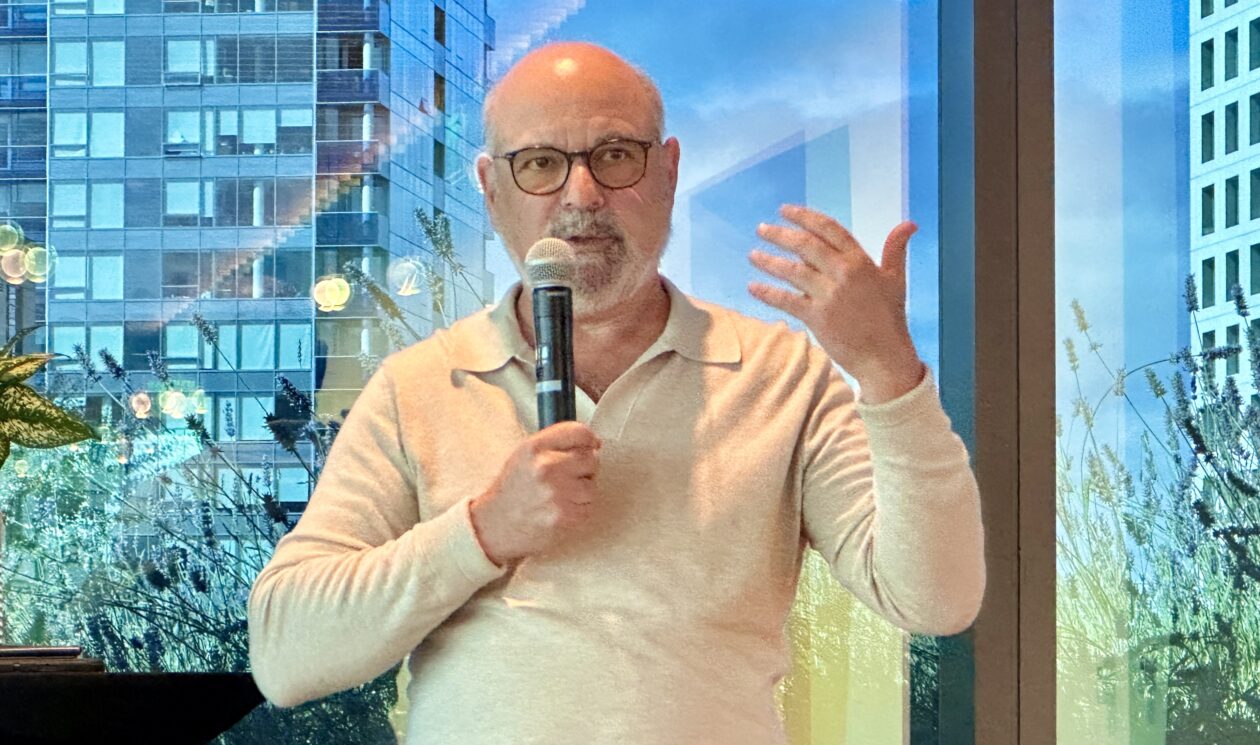
Sophia Space’s founder, Leon Alkalai, speaks during a Seattle Tech Week fireside chat. (GeekWire Photo / Alan Boyle)

How it all began

Alkalai founded Sophia Space after he finished up a 32-year career at NASA’s Jet Propulsion Lab and transitioned to the space startup world in 2021. The company is headquartered in Pasadena, Calif., but also has corporate connections to Seattle. This week, Alkalai was one of the featured speakers for Seattle Tech Week.

The TILE approach to orbital electronics came out of a Caltech research project that initially focused on space solar power systems.

“That was before 2022, when ChatGPT was announced,” Alkalai said. “Once that happened, within a year, all hell broke loose in the data center world, saying we need a thousand times more energy to power AI — and our reason to exist just skyrocketed.”

Putting data centers in orbit would get around some of the problems associated with terrestrial data centers — for example, the mushrooming requirements for real estate and the huge drain on electrical grids. But the cooling issue has loomed as a key impediment for orbital computing.

Alkalai said the “eureka moment” came when he and his fellow researchers came up with a way to balance out the solar power absorbed by the front of the tile, the power requirements for the processing chips, and the heat radiating out the back. “We did the basic math and said, ‘Oh my God, this can work,'” he recalled.

The patent application for “Space-Based Data Centers” was filed in October 2024, and the patent was granted to Sophia Space and Caltech on July 14. In addition to Alkalai, six other members of the team are listed as inventors: John Brophy, Jonathan Sauder, Timothy McElrath and Douglas Sheldon at JPL; Sergio Pellegrino at Caltech; and Don Hunter, a JPL retiree.

In a news release, Brophy said the TILE architecture “was developed as part of JPL’s mission to address challenges of national significance by applying unique JPL talent.”

“This is an illustration of how JPL, Caltech and private industry can work together to rapidly develop solutions to difficult technical problems for the benefit of the nation,” he said.

Where it’s all going

Alkalai said his fellow inventors will share in the fruits of the patent. “All of them are involved in Sophia, and they have equity in the company,” he said. “And with Caltech, we’ve signed a contract to continue doing research with Sergio Pellegrino and his students. … We are continuing this effort with the original inventors. They are consulting and are equity holders of Sophia.”

The development timeline calls for Sophia to fly its first technology demonstrator next year. “We’ve announced that we are partnering with Apex satellites,” Alkalai said. “We’re using their Nova bus … and that will be the first-ever tech demo of a tile with four GPUs.”

Alkalai said Sophia Space plans to start selling TILE systems and related components to customers in 2028, and start testing the system’s capabilities with a constellation of four to six satellites in the 2029-2030 time frame.

“What that will do is demonstrate the end-to-end system,” he said. “Then, in the new decade, we can scale up to larger numbers in the constellation, larger numbers of tiles, and so on.”
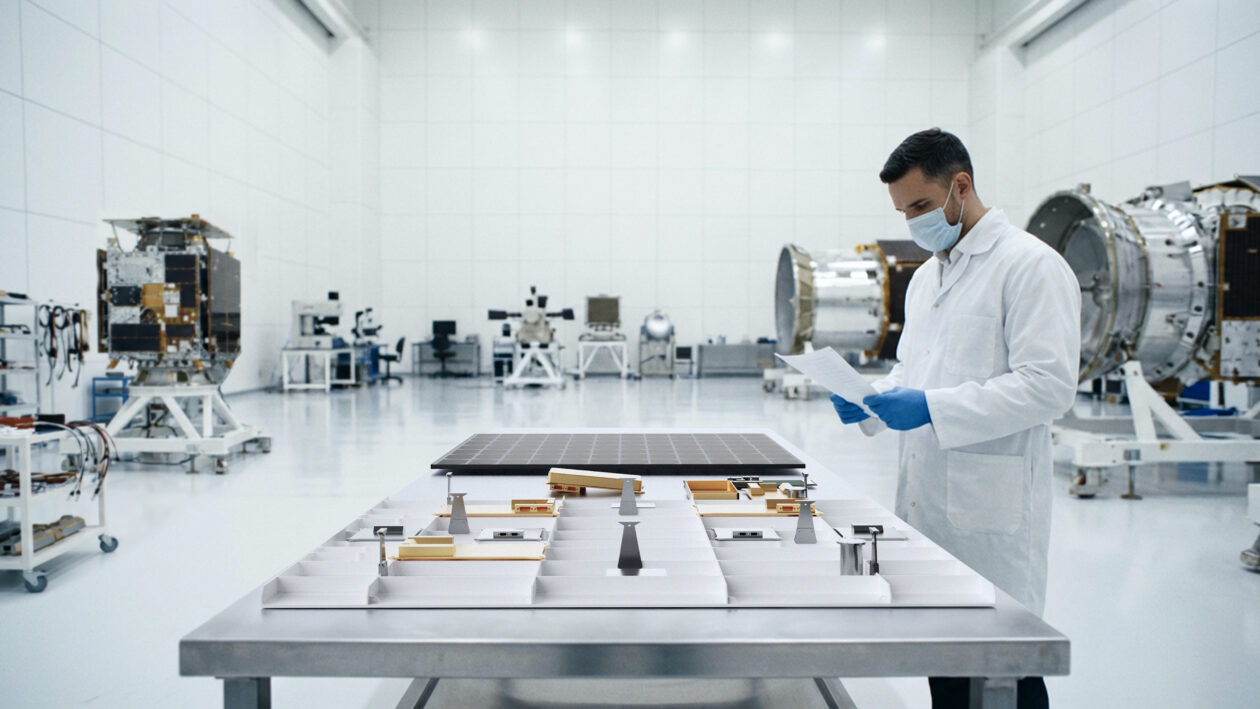
Computer processing tiles are assembled inside a Sophia Space lab. (Sophia Space Photo)

Alkalai said obtaining the newly issued patent is part of Sophia’s plan to build up a strong portfolio of intellectual property.

“If anybody wants to license or use our TILE and use our scalable approach, we could turn that into a business,” he said. “Protecting your IP is not only to deny, it’s also to enable. And I see it more as the latter. Why would somebody fight it? They could license it, and we could make this applicable all over the world.”

Alkalai said the orbital data centers that are being planned by other companies — for example, SpaceX’s ambitious Starmind network and the satellite constellation envisioned by Redmond, Wash.-based Starcloud — don’t appear to be designed to take advantage of passive cooling and would thus raise no questions of infringement on Sophia Space’s patent. But he suspects that the TILE architecture will eventually become the standard for orbital data centers.

“I’ve been on this quest for five years, and I really feel very, very good about this particular topic, because I think it’s of benefit to humanity,” Alkalai said. “This is not just a money issue, or about benefits to me or my team. I just think this is a good direction for humanity as we evolve into a space economy.”

Microsoft Azure tops $100B in annual revenue as record AI spending cuts into cash flow

GeekWire File Photo

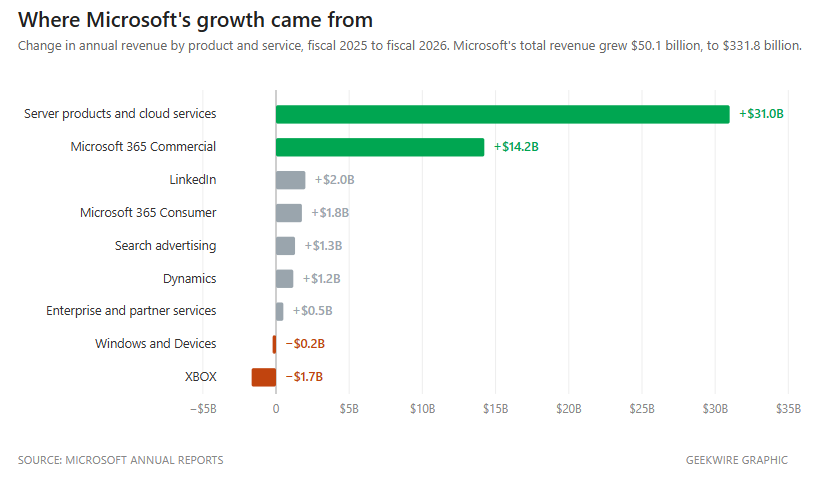
Microsoft’s Azure cloud business grew 43% last quarter, blowing past the company’s own forecast and surpassing $100 billion in annual revenue for the first time, providing fresh evidence of the potential for artificial intelligence to fuel new growth for the tech giant.

The company’s results for its fiscal fourth quarter also showed the price of that growth: capital spending hit a record $41 billion, largely to support the company’s AI buildout, and free cash flow sank 23% even as operating profits jumped 18%.

And in a new twist, Microsoft shares rose more than 5% in after-hours trading, in contrast with the recent pattern in which the company’s strong results were met with selloffs that pushed its stock near a one-year low.

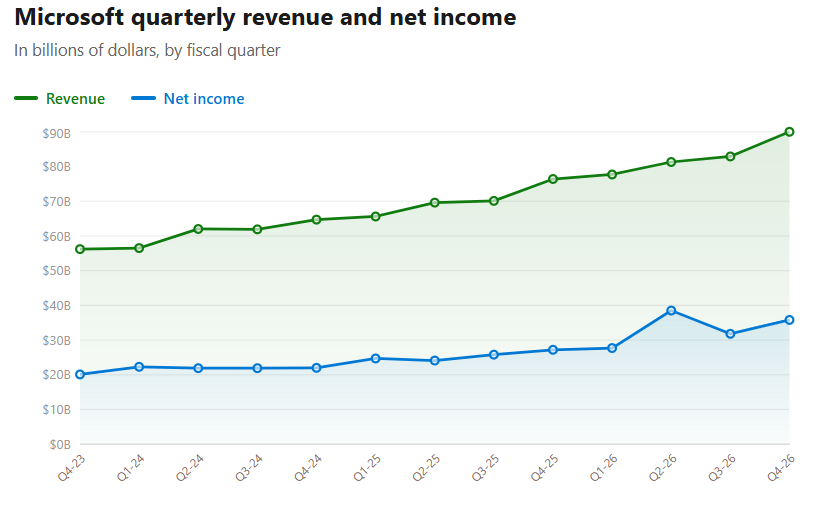
Companywide results: Overall, Microsoft reported revenue of $90 billion for the quarter, up 18% from a year ago, and net income of $35.8 billion, up 31%. Analysts had expected $87.7 billion in revenue, a figure that was already at the top of Microsoft’s own guidance range.

Microsoft’s adjusted earnings of $4.74 per share topped the $4.24 that analysts expected, according to Yahoo Finance. That included a $3.2 billion gain on Microsoft’s investment in Anthropic, part of a 27-cent benefit from one-time items. Even excluding those items, the company said, it exceeded expectations across revenue, operating income and earnings per share.

Microsoft 365 Copilot surpassed 30 million paid seats, up from 20 million last quarter. That’s still less than 7% of the roughly 450 million commercial Microsoft 365 seats, a gap that has drawn investor skepticism all year.

Microsoft’s backlog grew 84% to $678 billion. Known as remaining performance obligation, or RPO, it’s the value of contracts that customers have signed but that Microsoft hasn’t delivered on yet, basically the business Microsoft has already locked in but has yet to record as revenue.

Investors have been worried for a year that too much of it came from a single customer, OpenAI. Microsoft said all of the $51 billion increase over the prior quarter came from customers other than the big AI model companies. Setting OpenAI aside, the backlog still grew 25%.

Windows OEM and Devices revenue declined 7%, hurt by slower PC demand and a tough comparison with last year’s Windows 10 upgrade wave. The decline would have been steeper, but PC makers built more machines to get ahead of rising memory prices, and Microsoft collects its Windows fee when a PC is built rather than when it’s sold.

Xbox content and services revenue fell 10% and Xbox hardware fell 13%. Microsoft also wrote down the value of unspecified Xbox assets. The company grouped that charge with severance costs and lower-than-expected costs from its retirement program — a net $500 million hit to operating income — and declined to say how much of it was Xbox or what was written down.

Amazon earnings preview: Wall Street looks for more cloud growth as AI spending hits a record

Amazon reports quarterly earnings Thursday afternoon, facing the same test as every other big tech company right now: whether it’s generating enough business to justify its massive AI spending.

Wall Street expects revenue of about $196.4 billion, up 17% from a year ago, and earnings of $1.82 per share. That’s essentially the midpoint of Amazon’s own forecast for the second quarter.

Part of that growth is due to the calendar. Prime Day ran June 23-26 this year, during the second quarter in the U.S. and most large markets. Last year it ran July 8-11, in the third quarter. That gives Amazon’s retail numbers a boost this time that the year-ago quarter didn’t have.

Another factor is the cloud. AWS grew revenue 28% last quarter, its fastest rate in nearly four years, and analysts expect the acceleration to continue with revenue of roughly $40.5 billion for the second quarter, up 31%, according to Zacks Consensus Estimates.

The company plans a record $200 billion in capital expenditures this year, nearly all of it for data centers, servers and chips to support increased capacity for training and running AI models.

Amazon is making those investments based in part on demand from big AI companies including OpenAI and Anthropic, which have signed commitments to AWS worth $138 billion and more than $100 billion, respectively, for the coming years.

“We’re not investing approximately $200 billion in capex in 2026 on a hunch,” CEO Andy Jassy wrote in his April shareholder letter.

In the meantime, the spending is absorbing nearly all of the cash from Amazon’s operations. Free cash flow fell to $1.2 billion over the past 12 months, from $25.9 billion a year earlier.

Investors seem to be losing patience with that tradeoff overall. Google parent Alphabet beat expectations last week and its stock fell anyway, after raising its own capital spending forecast to as much as $205 billion for the year. Microsoft reports earnings Wednesday afternoon.

One difference for Amazon is its custom chip business — Graviton, Trainium and Nitro — which passed a $20 billion annual revenue run rate last quarter. Jeff Bezos said this week that it’s becoming a fourth pillar of the company, alongside Marketplace, Prime and AWS.

The company is overhauling its approach to AI model development. Business Insider reported this week that Amazon is winding down most of its in-house Nova models and concentrating engineers on a new frontier model effort, with a new flagship model expected at re:Invent this fall.

Amazon cut jobs in its AGI organization last week and confirmed that it’s closing its San Francisco AI site, while saying its frontier model research would continue.

At the same time, AWS is spending to help other companies deploy AI, committing $1 billion at the end of June to embed its own engineers with enterprise customers building agentic systems, following similar moves by OpenAI and Anthropic.

Check back with GeekWire for coverage on Thursday afternoon.

What are you building? Talking with founders and business leaders at the Seattle Tech Week kickoff event

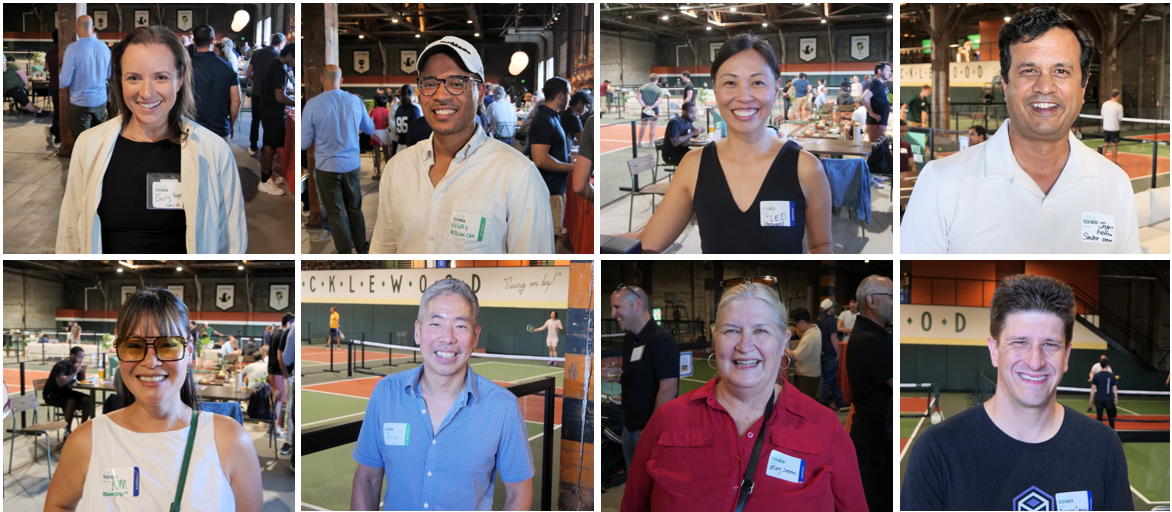
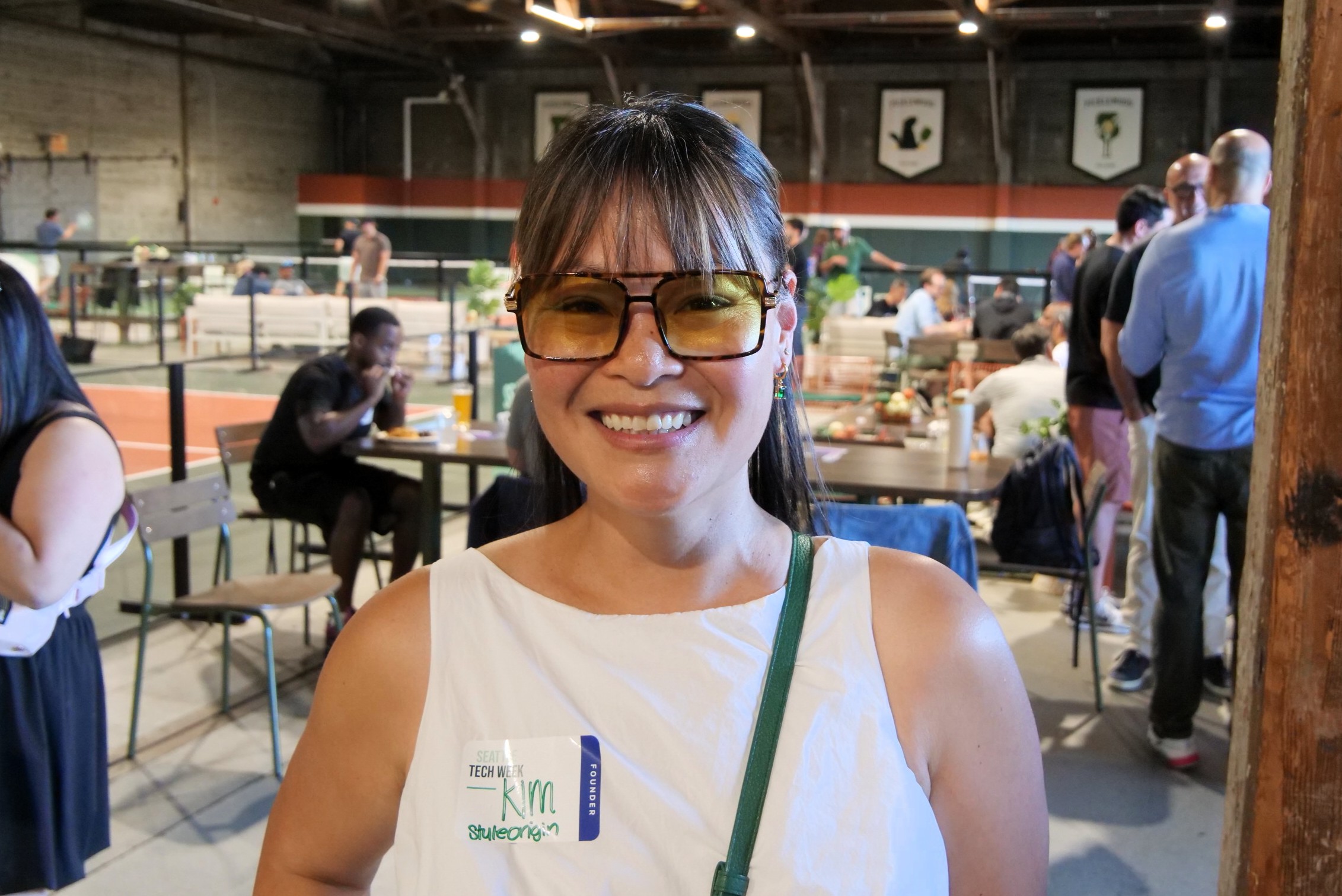
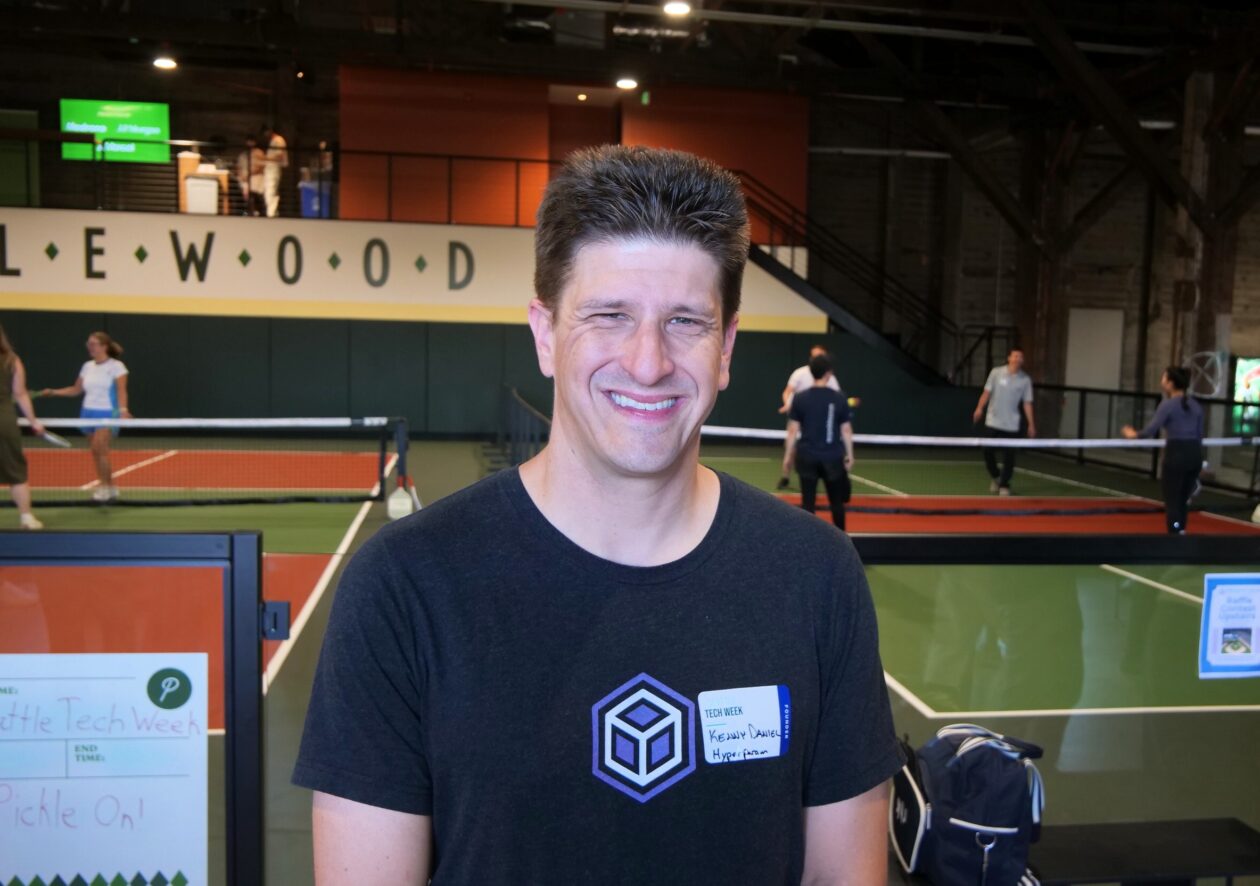
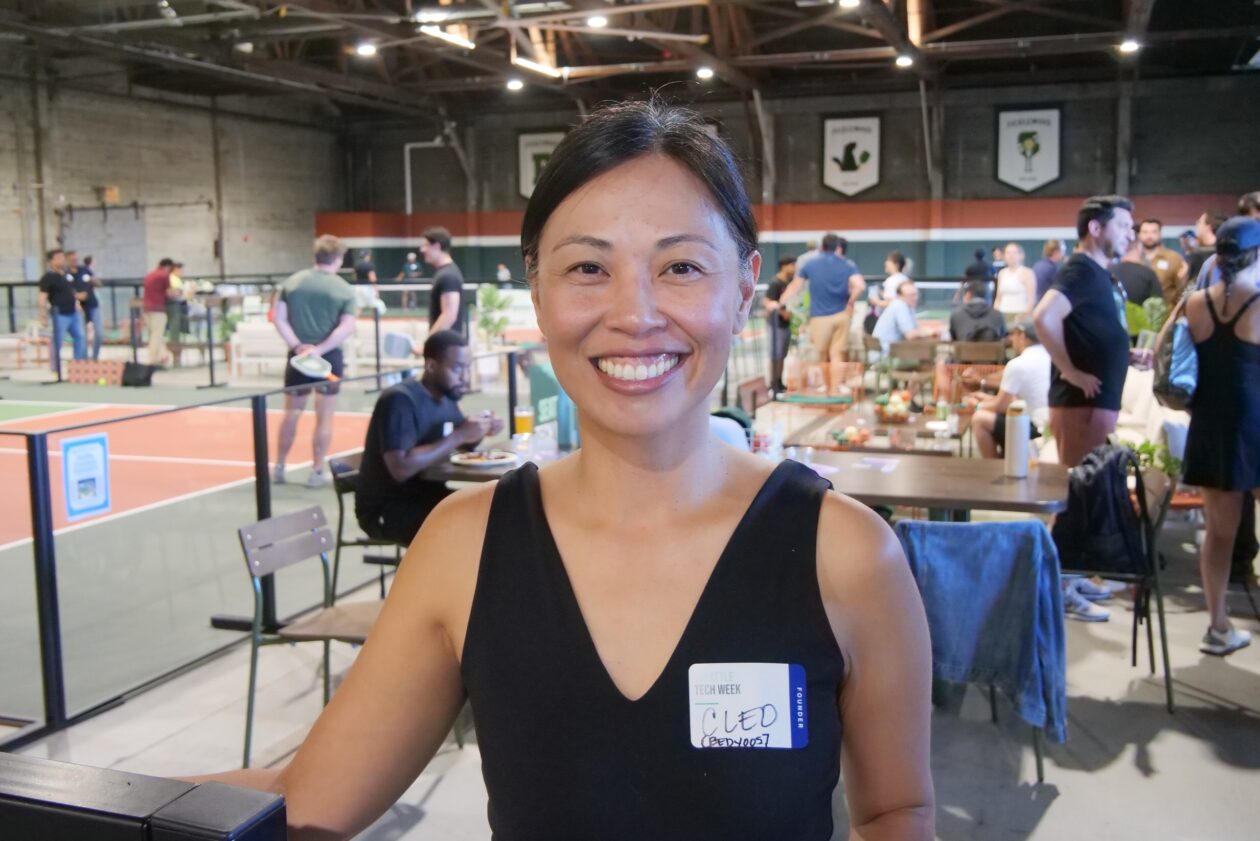
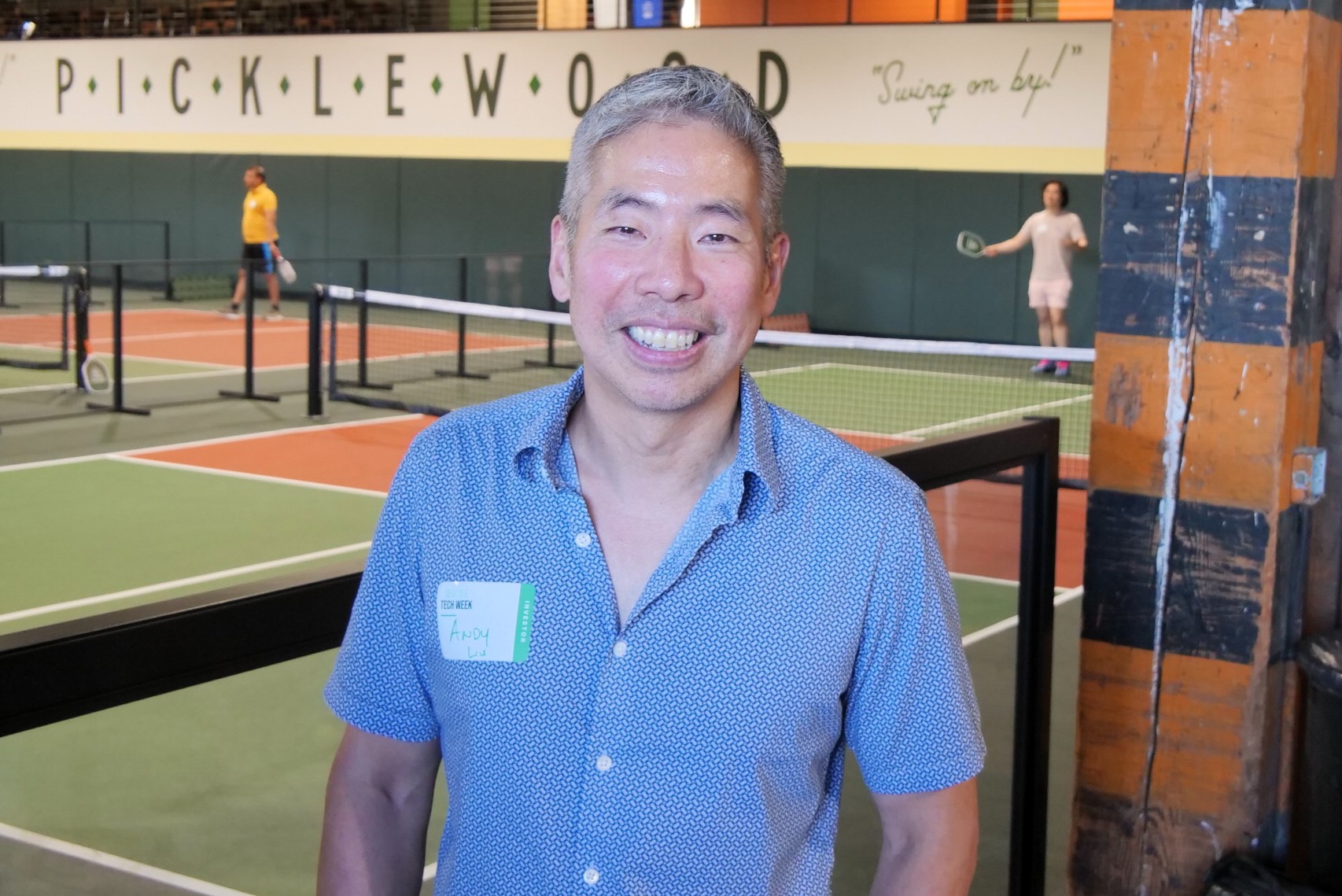
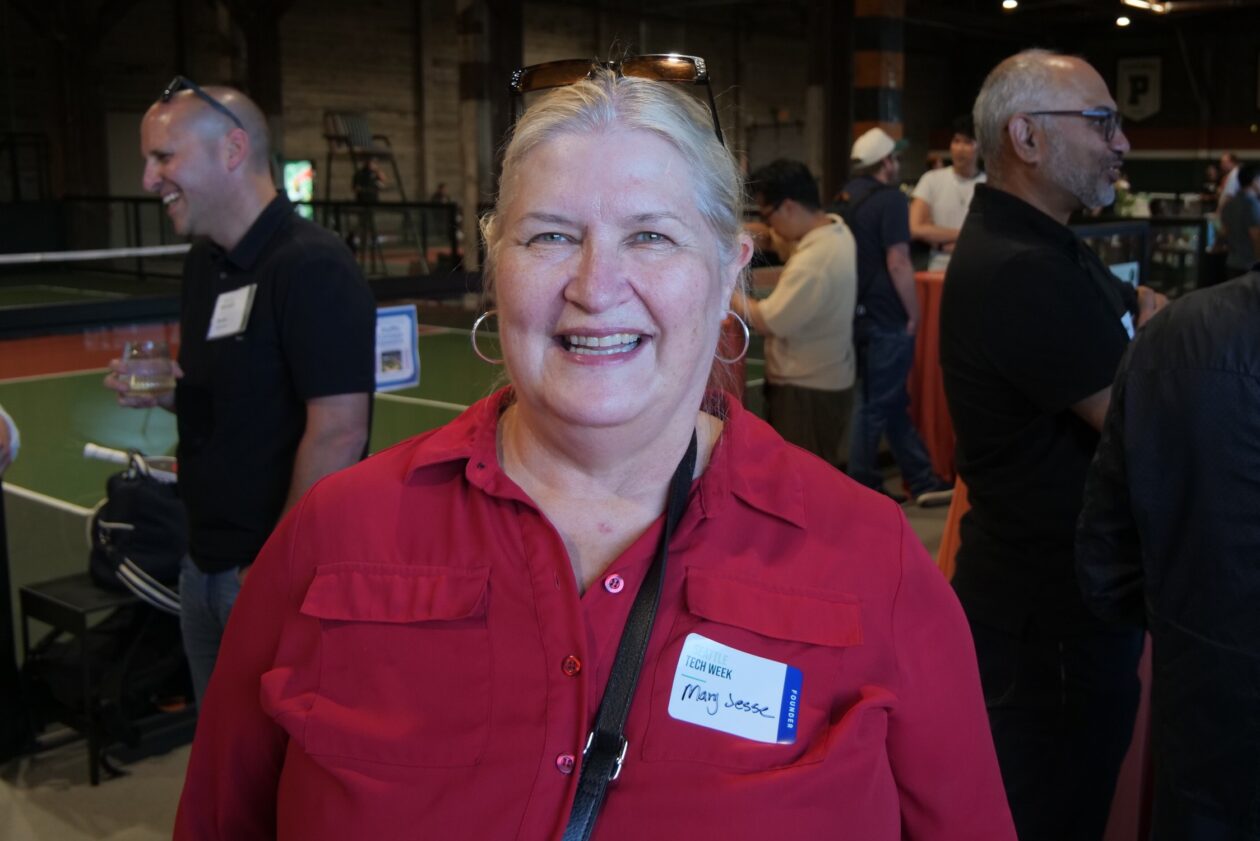
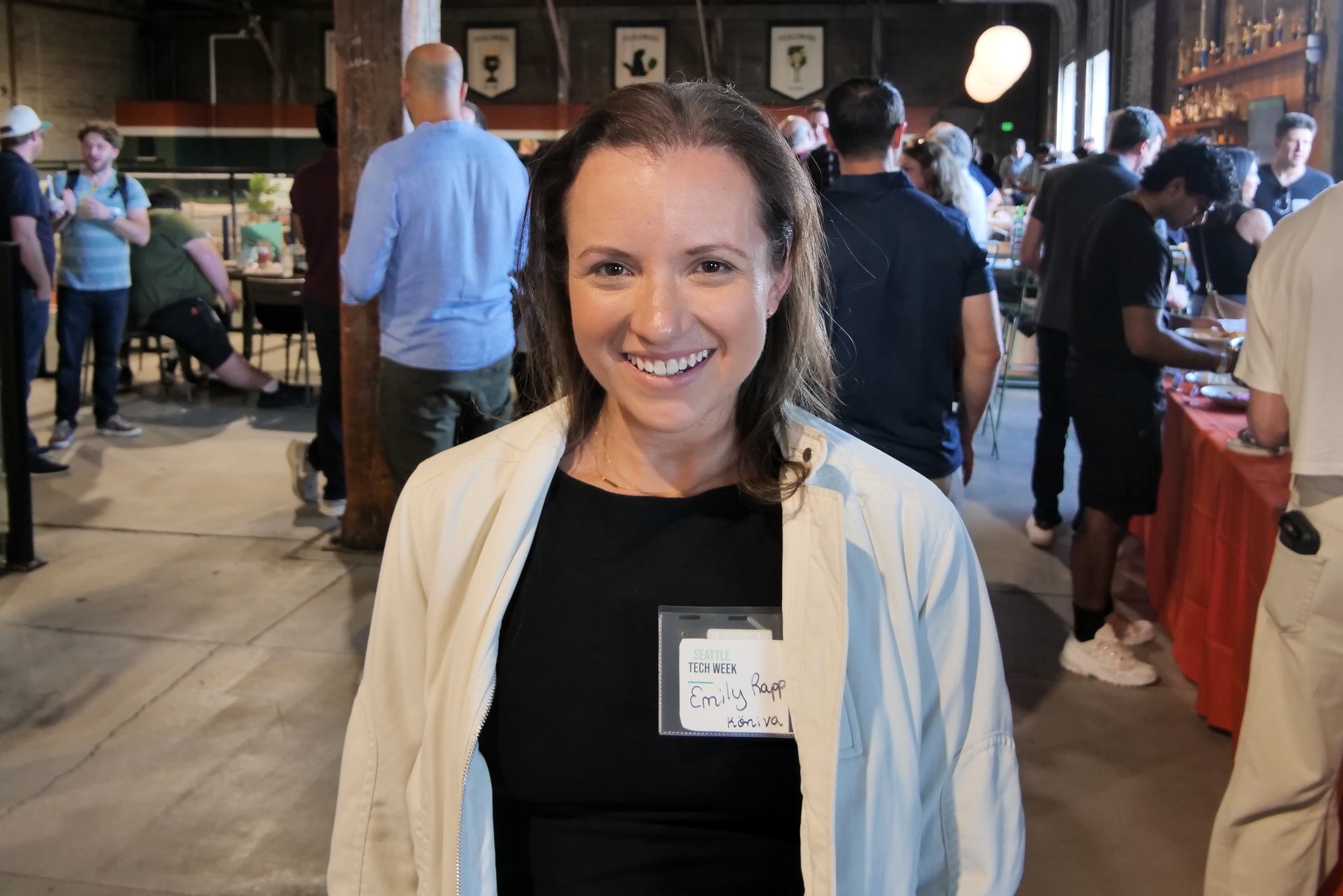
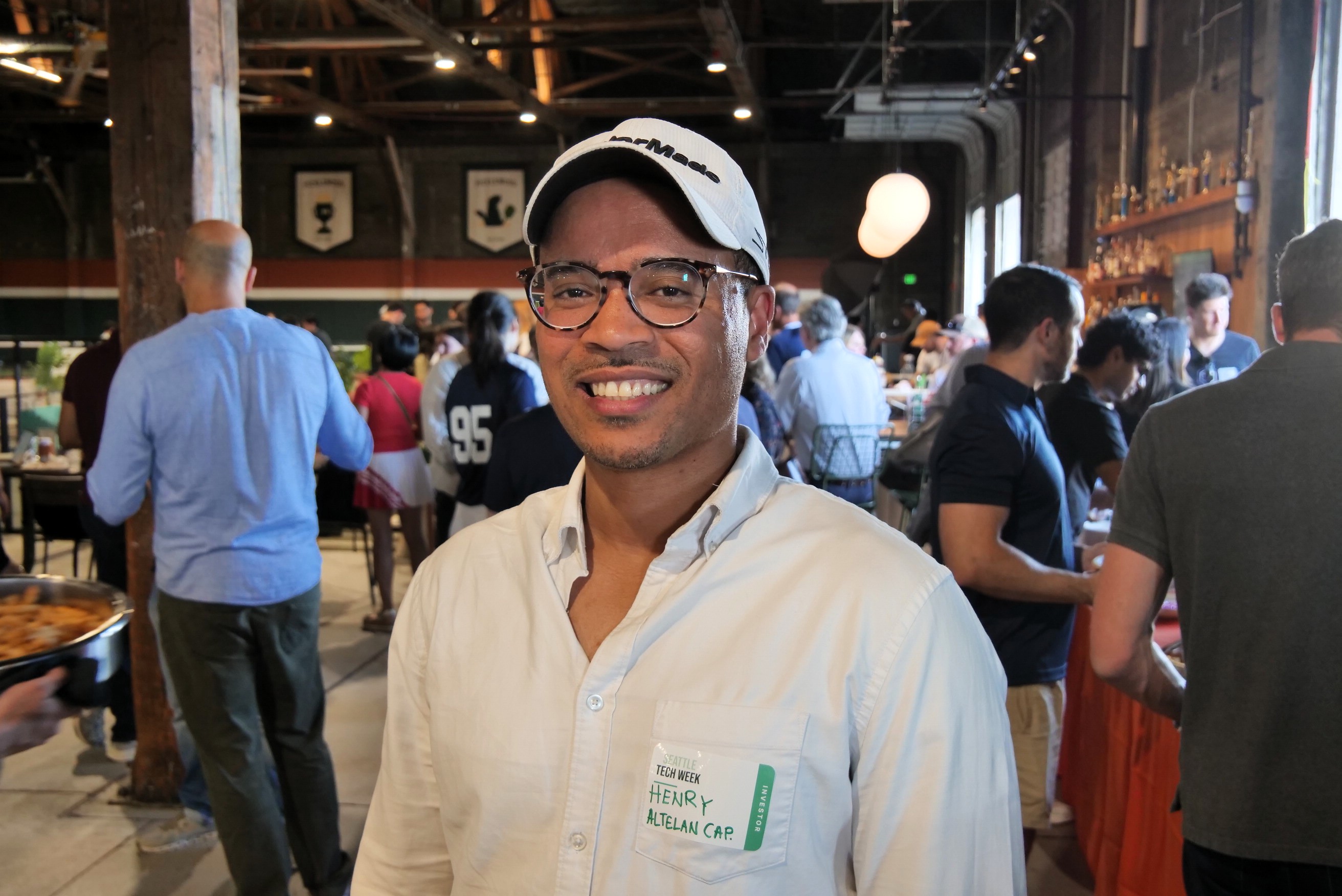
Top row from left: Emily Rapp, Henry Arias, Cleo Escarez, and Jagan Nemani. Bottom row from left: Kim Vu, Andy Liu, Mary Jesse, and Kenny Daniel, at the Seattle Tech Week kickoff. (GeekWire Photos / Todd Bishop)

The fourth annual Seattle Tech Week got off to a big start Monday, with panels and parties bringing together thousands of people from across the region and out of state. Organizers said the week features more than 250 events and drew more than 29,000 event registrations.

We went to Madrona’s kickoff event at Picklewood Paddle Club with one question for the founders, investors, and operators we met: What are you building? Here’s what we heard and learned.

Jagan Nemani

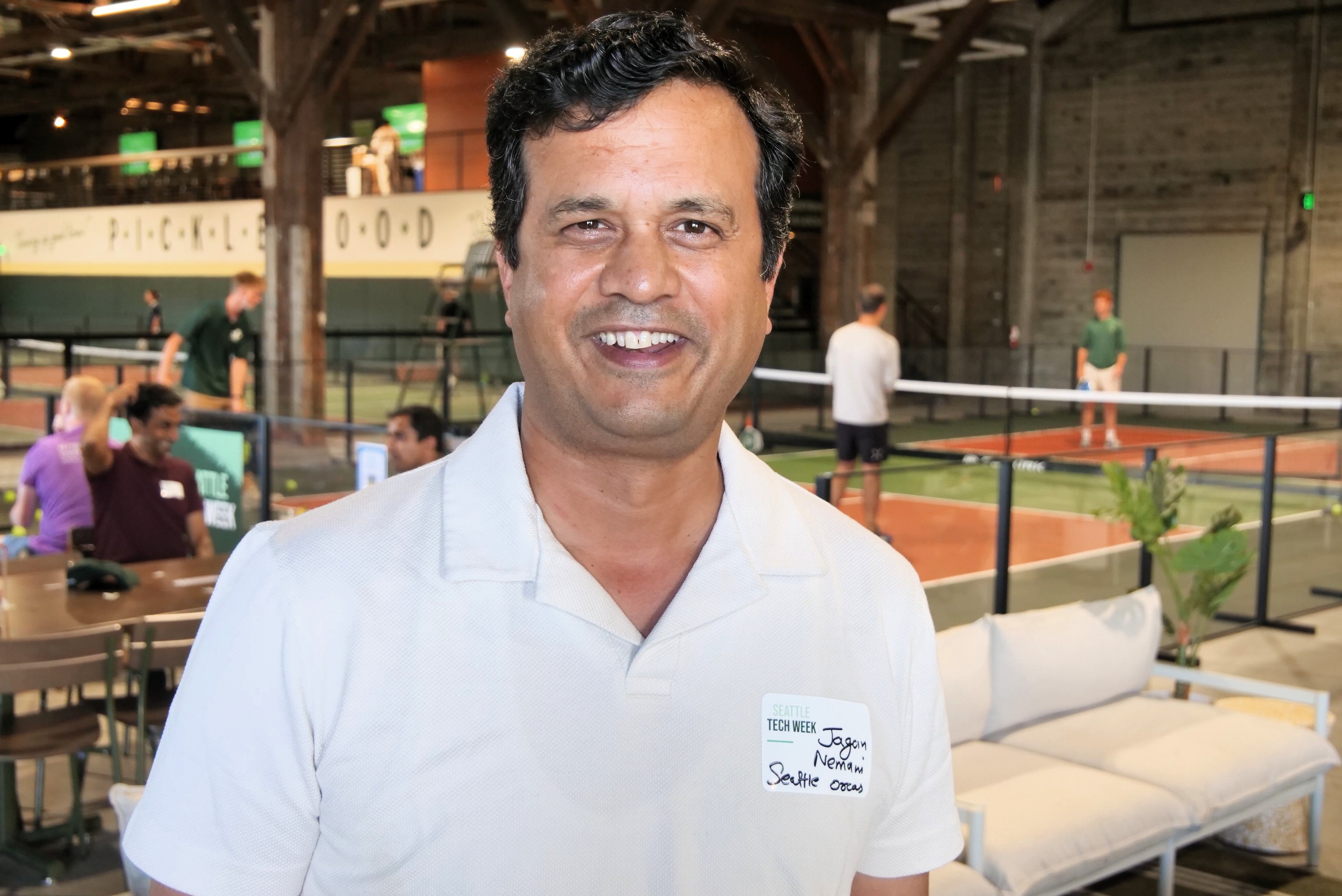
Jagan Nemani, chief product officer of the Seattle Orcas. (GeekWire Photos / Todd Bishop)

What he’s building: An AI system that runs a professional cricket franchise — flights, hotels, ground transportation, and daily schedules for players and staff, all handled over WhatsApp.

Nemani is chief product officer of the Seattle Orcas, the Major League Cricket team now in its fourth season. For the first three, he ran team operations the old-fashioned way: “I ran the entire operations using spreadsheets and people and processes,” he said. That meant tracking a constant stream of inbound flights, hotel blocks and car bookings across a season.

This year, he used Claude Code to build the backend for an AI agent that took over roughly 80% of the operation: booking flights, hotels and cars, dealing directly with hotels and transportation vendors, and telling players and staff when their flight lands, which hotel they’re in, and who’s picking them up. It also handles daily schedules, down to massage appointments.

To accommodate players and staff who were reluctant to adopt new tech tools, he built it to run on WhatsApp, the messaging app they already used every day.

Kim Vu

Kim Vu, founder and CEO of StyleOrigin.

What she’s building: A B2B tool that lets thrift, vintage, and consignment resellers photograph an item and get back the identification, pricing, and listing details they now assemble by hand.

Vu is founder and CEO of StyleOrigin. Getting a single secondhand garment listed for sale is still manual work that takes 30 to 45 minutes an item, she said. With StyleOrigin, a reseller takes one image and an AI analysis returns what they need to list and price it. The company also gives sellers data to guide inventory decisions.

She found the problem herself. Vu ran environmental, social and governance work at Remitly until she stepped down in 2023, then took a year off and started selling vintage clothing. She assumed she was slow because she was new to it. “But turns out everybody does it the same, and so there wasn’t really any good solution out there.”

She taught herself to code and built the first version of the product. StyleOrigin has a working MVP but no revenue yet. More than 70 stores around the country are on a waitlist, and Vu is about to bring her first engineer aboard.

Kenny Daniel

Kenny Daniel, founder of Hyperparam.

What he’s building: Tools for collecting, storing, and analyzing the data AI systems produce — the record of what agents actually did, not just the code they shipped.

Daniel is founder of Hyperparam, an early-stage Seattle startup, and previously co-founded Algorithmia, the Seattle machine learning company acquired by DataRobot in 2021.

Companies are spending heavily on AI without much sense of what they’re getting, he said. “AI is producing this wall of tokens. Companies are paying huge amounts of money to generate all these tokens, but they have really no visibility into what are these agents doing.”

Every token leaves a trail, and Daniel said most companies ignore it. Mining it would show them where AI is working and where it’s wasting money.

“Where are models being stupid? Where are they going down rabbit holes?” Older analytics tools can’t help, he said, because they were built for numbers and clicks: “People haven’t really been thinking about what do you do when the majority of the data being produced in the world is text.”

Cleo Escarez

Cleo Escarez, founder of Redyoos.

What she’s building: An urban mine — recovering precious metals from jewelry and returning them to the supply chain for clean technology.

Escarez is founder of Redyoos, which GeekWire featured in Startup Radar last year. The jewelry industry accounts for 40% to 50% of the global supply of precious metals, she said — the same materials found in “anything that has an on and off button,” from cell phones to wiring.

Demand for those metals is climbing with AI and clean energy, and Escarez said projections point to a supply shortfall of 700% over the next couple of decades. “We mathematically cannot solve this deficit,” she said, which is why she sees jewelry as a viable source.

Redyoos collects jewelry, refines what contains precious metals, and sells the recovered material to clean-tech manufacturers.

Escarez, a former chief operating officer at Boma Silver Jewelry and brand manager at Starbucks, has bootstrapped the company, which has been live a little over a year and is generating revenue. She is now raising a pre-seed round.

Andy Liu

Andy Liu, partner at Unlock Venture Partners.

What he’s building: An engineering team inside a venture capital firm, automating the work of investing.

Liu is a partner at Unlock Venture Partners, which he helped launch in 2018 to back early-stage startups in Seattle and Los Angeles, and which raised a $60 million second fund in 2022. A longtime Seattle entrepreneur and angel investor with stakes in close to 100 companies, he was previously CEO of BuddyTV, acquired by Vizio, and of NetConversions, acquired by aQuantive.

“We actually have an engineering team that’s trying to automate a lot of what we do in VC,” Liu said, “and trying to make sure we can scale our business just like our own portfolio companies.”

The work covers deal memos and diligence on prospective investments, along with the mechanics of dealing with the firm’s own investors and collecting updates from portfolio companies.

The point, he said, is better decisions: “How do we get smarter as VCs?”

Mary Jesse

Mary Jesse, co-founder and CEO of ACME Brains.

What she’s building: Private AI — letting people own their own data and context, use any large language model, and not be tracked or trained on.

Jesse is co-founder and CEO of ACME Brains, whose first product, nexie, is in beta. GeekWire wrote about the origins of the company last year: after her husband passed away, she turned to ChatGPT and found real comfort in it, then ran into its limits — it couldn’t carry the context of their conversations, and she had concerns about the privacy of what she was telling it.

nexie keeps a user’s notes, journals, and conversations in what the company calls a personal context engine, and carries that context across AI services instead of leaving it scattered in separate chat histories.

Trading privacy for free services goes back to the early internet, she said, but AI tilts the exchange further. A chatbot draws information out of a person in conversation, then combines it with everything already known about them. “AIs can talk you into your data,” she said.

An electrical engineer with more than two dozen patents who spent decades in wireless at McCaw Cellular and AT&T Wireless, Jesse said most people don’t grasp how AI actually behaves, which leaves them exposed — seniors especially. “You need people that understand it to help protect people that don’t.” Her co-founders are Alan Caplan, Amazon’s original general counsel, and patent attorney and engineer Bob Bergstrom.

Emily Rapp

Emily Rapp, founder and CEO of Köniva.

What she’s building: Voice AI that lets bar and restaurant staff count inventory out loud instead of writing it down by hand.

Rapp is founder and CEO of Köniva. A typical hotel resort bar spends 12 hours and four people on an inventory count, she said; with Köniva it’s two people and 3-and-a-half hours, and more accurate. Staff download an app and wear a lapel mic — you want both hands free on a ladder — and count out loud the way they always have.

She came to the problem after a career in big tech and ad tech. Not wanting to build for an industry she’d never worked in, she took a part-time job at Canlis after training as a sommelier.

When she was injured, the wine director let her help with inventory reconciliation and handed her a clipboard of handwritten numbers plus a login to the restaurant’s inventory software. She asked why they were still using paper and pencil when a whole engineering team had built software for the job. The wine director’s answer: it was faster.

Köniva has 10 customers. At several high-end hotels and restaurants, Rapp said, staff put the app on their personal credit cards to start using it, then helped her pitch their own procurement departments — an unusual path in an industry she said has been badly burned by technology.

“It is insane how bad tech has been to them,” she said.

Henry Arias

Henry Arias, founder and managing partner of Altelan Capital.

What he’s building: A growth equity firm investing at the intersection of food brands and food tech.

Arias is founder and managing partner of Altelan Capital, a Seattle firm he started last year. It underwrites companies around the Series A stage, generally, providing growth capital and strategic support.

He came up in the industry itself, leading finance at restaurants and breweries and most recently running corporate development and financial planning for Seattle Hospitality Group. That operator lens, he said, is what he brings to investments and to coaching founders on growth. He has been an investor since 2015.

Arias calls Altelan an AI-native investment fund, using AI tools to get up to speed on an industry and test assumptions about a business’s ability to scale and where the risks are. He’s equally interested in where the technology doesn’t belong and simplicity is the better option: “AI is great, but it may not be the right tool for the job.”

The bigger shift he’s watching is food and digitization. The industry has traditionally worked off “the proverbial clipboard and a notepad,” he said, and the pandemic accelerated the move to technology across the supply chain. “There are many applications of tech in food,” he said, “and that’s what keeps us up and gets us excited every day.”

Jeff Bezos says this business is becoming Amazon’s next ‘pillar’

Amazon’s next pillar could be built on a foundation of silicon.

In a new interview with Fortune, Amazon founder and Executive Chair Jeff Bezos says the company’s custom chip business is on track to become one of Amazon’s most durable businesses, placing it alongside Marketplace, Prime, and Amazon Web Services as a core pillar of the company.

“A few of our offerings have become durable pillars, things like Marketplace and Prime and AWS,” Bezos told Fortune. “What I see right now is that our chips business, our silicon business, is lining up to be our next pillar.”

The comments offer one of Bezos’ clearest public endorsements yet of Amazon’s push to design its own chips for artificial intelligence, an increasingly important strategy as demand for AI computing soars and companies look for alternatives to Nvidia’s dominant processors.

More than a decade of investment

Amazon has invested heavily in custom silicon through Annapurna Labs, the Israeli chip startup it acquired in 2015. The company now develops its own AI chips under the Trainium and Inferentia brands, designed to train and run large language models while reducing costs for customers using Amazon Web Services.

AWS has positioned the chips as a lower-cost alternative for AI developers. AWS has positioned the chips as a lower-cost alternative for AI developers. Anthropic trains and runs its Claude models on Trainium, and OpenAI has committed to consume about 2 gigawatts of Trainium capacity, ramping in 2027.

The company disclosed revenue for its in-house data center chips for the first time earlier this year, and since then its Trainium, Graviton, and Nitro chips have grown to a combined annual run rate of more than $20 billion. Amazon has been pouring billions of dollars into AI infrastructure, including new data centers and custom networking hardware.

Amazon CEO Andy Jassy has repeatedly argued that demand for AI computing will remain strong for years, making investments in chips, servers, networking equipment, and power generation essential to the company’s long-term growth.

In an earnings release earlier this year, Jassy signaled plans to pour a record $200 billion in capital expenditures across Amazon in 2026, citing “seminal opportunities like AI, chips, robotics, and low earth orbit satellites.”

The real potential for Amazon’s chips business could come in going beyond the walls of its own data centers. Jassy wrote in his annual letter to shareholders this year that it’s “quite possible” Amazon will sell racks of its internally developed chips to third parties in the future.

Amazon’s fourth pillar?

This discussion about Amazon’s “pillars” goes back to Bezos’ 2014 letter to shareholders, where he described four characteristics of what he called a “dreamy” business: “Customers love it, it can grow to very large size, it has strong returns on capital, and it’s durable in time — with the potential to endure for decades.”

AWS, Marketplace, and Prime are considered the first three pillars. The question of what could become Amazon’s “fourth pillar” has been debated for more than a decade, with areas including shipping and logistics and Alexa cited as contenders in the past.

The company’s big bet on silicon also was emphasized by Jassy in the Fortune piece. He told the magazine that chips are often the key to computing. “The growth in AI has been so significant, but we have a chips business that we built over the last decade here that is growing very quickly,” he said.

The profile appeared alongside Fortune’s release of its 2026 Global 500 ranking, which placed Amazon at No. 1 for the first time, ending Walmart’s 12-year run as the world’s largest company by revenue after Amazon surpassed $700 billion in annual sales, as reported previously.

Walmart fell to No. 2, followed by State Grid of China, UnitedHealth Group, and Saudi Aramco. The magazine reports that Amazon is on pace to be the first trillion dollar company by revenue.

Amazon reports Q2 2026 earnings on Thursday afternoon. Check back with GeekWire for coverage.

Defense tech giant Anduril eyes new funding at $100B valuation as Seattle expansion draws protests

Protesters outside Anduril’s Seattle offices on Sunday, July 19. (GeekWire Photo / John Cook)

Defense tech giant Anduril, which is rapidly expanding its operations in the Seattle area, is looking to raise a new round of capital that could value the company at about $100 billion, reports Reuters.

That would give the privately-held startup a bigger valuation than Northrop Grumman, the 87-year-old defense company which is currently valued at $77 billion. Boeing’s market value stands at $165 billion, while Lockheed Martin is valued at $134 billion.

Founded in 2017, Anduril is led by the Hawaiian-shirt and cargo-shorts wearing Palmer Luckey, the 33-year-old creator of Oculus VR, whom the New York Times described as the “It Guy of the booming defense-technology industry.”

In May, the Costa Mesa, Calif.-based company raised a $5 billion series H funding round — including investments from Thrive Capital and Andreessen Horowitz — that valued Anduril at $61 billion.

Anduril is rapidly expanding in the Seattle area, with offices in downtown Seattle and Bellevue where the company is working on a range of defense technologies, including its Lattice command and control software. That platform is described as an “AI-powered battle management platform built to accelerate complex kill chains.”

It also recently established operations at the historic Foss Maritime shipyard along the southern bank of the Lake Washington Ship Canal, where the company is developing autonomous naval vessels and other maritime technologies.

The company’s expansion in Washington state is not without controversy. Last weekend, protesters handed out flyers outside the company’s downtown Seattle offices that said: “Anduril Out! No AI for War and Plunder!”

Anduril said it recognizes the right to protest, while defending its work supporting the U.S. military and service members.

“We respect the right to free speech and we understand that protests are a hallmark of democratic expression,” Anduril said in a statement provided to GeekWire. “That said, it is perplexing when people choose to protest a company dedicated to supporting the very military that safeguards those rights.”

Earlier this week, Anduril announced a new program called Thunder, an autonomous attack rotorcraft that it said is “designed to multiply the combat power and increase the survivability of current and next-generation crewed attack and assault aircraft.”

The size of the potential funding round hasn’t been determined and the terms are still in flux, Reuters reported, citing two people familiar with the matter. One structure under discussion would have investors commit upfront to a second financing within a year at a higher valuation, contingent on Anduril hitting certain financial targets.

In a statement, Anduril said the “reporting runs well ahead of the facts.”

“Any details about terms, structure, pricing, or timing of a future financing round are purely speculative,” the company said. “As a private company, we regularly evaluate opportunities to fund the growth of the business. Beyond that, we don’t comment on rumors.”

Microsoft 2.5: New security business chief Hayete Gallot on the company’s push into the agentic era

Hayete Gallot, now executive vice president of Microsoft Security, speaks at a Microsoft event in France in 2024. (Microsoft Photo)

GeekWire is profiling over the next few weeks some of the people and teams that are shaping the evolution of Microsoft in what we’re calling its “Microsoft 2.5” era.

AI has had an impact on just about every tech-product category, but especially security. Attackers are using AI; customers are looking to defend with AI. The goalposts keep shifting. “Agentic security” is now the holy grail, and Hayete Gallot, the newly minted executive vice president of Microsoft Security, is leading the charge toward it.

Gallot, a 16-plus-year Microsoft veteran who rejoined the company in February after a 1.5-year Google detour, replaced Charlie Bell, who came to Microsoft from AWS in 2021 and continues at the company as an individual contributor focused on engineering quality.

“Customers care about two things: solving for security and being able to afford it,” Gallot said when I asked during our interview this week why she came back to Microsoft.

“I am a problem solver. And an engineer at heart (and by training). Security is the most important problem right now — and Microsoft is the only place with all of the puzzle pieces to help our customers.”

Since her return, Gallot hasn’t been shy about shaking things up. As noted recently by The Information, at least nine corporate vice presidents who previously reported to Bell have left the company this year.

“We’re making changes to ensure we’re in the best formation to go after this opportunity,” she acknowledged.

“I’m motivated by doing the right thing for our customers, my teams, and tech outcomes,” she said. “I like to move quickly: days and weeks, not months and years, learning through execution, iterating rapidly, and adjusting based on real customer signals.”

The company isn’t starting from scratch. As of 2021, Microsoft claimed security was a $10 billion business for the company. By 2023, security had reached a $20 billion annual revenue rate, officials said.

Those claims haven’t been without controversy. Microsoft has built a huge business in finding and fixing security problems which some customers felt were of the company’s own making.

Microsoft has a wide-ranging and rather unwieldy security portfolio, encompassing identity management (Entra), endpoint protection (Defender), endpoint management (Intune), security information and event management (Sentinel), and compliance (Purview), among others.

In 2023, Microsoft introduced its Security Copilot set of AI analysis services that integrated with some of its existing security offerings. But a portal-based solution like Security Copilot doesn’t offer the kind of end-to-end coverage that an agentic security platform can, Gallot said.

The problem is that attackers are using agents, too. Customers need real-time insight into what’s happening in their environment, and the ability to act just as quickly, Gallot said.

Agentic security is about “taking the signals and turning them into a graph that is useful,” Gallot said. “If you’re trying to reason about 100 trillion signals, it’s not really effective.” The graph, she said, lets agents pick the right model for each threat and close the loop.

In practice, that means the system can quarantine a device or revoke access on its own, for example, rather than waiting for a human.

[Editor’s Note, July 27: Microsoft announced Project Perception on Monday, the broader agentic security offering anticipated below. Mary Jo Foley wrote further about the announcement for Directions on Microsoft, where she is editor in chief.]

Microsoft’s core existing security products will continue to play a role as the landscape evolves, both spotting the problems and acting on them. Security Copilot isn’t going away in the process: “You’ll have Copilot and you’ll have agentic security,” she said.

The company’s new Agent 365 “control plane” — a central console for tracking every AI agent a company runs — fits in by letting customers see the “blast radius” of an agent, meaning everything a hijacked agent could reach, Gallot said. It’s similar in concept to Zero Trust, the “never trust, always verify” security model that limited how far an attacker could get with a stolen employee login, but applied now to agents rather than people.

So what exactly is this ‘agentic security’ thing? Microsoft has a whole website dedicated to the very topic.

Traditional AI security and agentic AI security are fundamentally different, Microsoft says. Agentic security doesn’t just protect models and training data; it also can protect tools, workflows, memory, connected systems and more. Because agents can take action, the potential positive and negative stakes are higher.

While AI has helped businesses make strides in finding and fixing vulnerabilities, it hasn’t gone much beyond that. Microsoft introduced its multi-model agentic scanning harness (MDASH) as its first step into the agentic security space, Gallot said.

The company used MDASH internally to boost finding and fixing Windows security issues, and it is now making it available to select customers in an expanded preview. MDASH will allow customers to use the best model for the right task to secure all different types of code bases, she said.

Microsoft is rumored to be readying a more comprehensive agentic security offering, of which MDASH is likely just one piece.

Microsoft is far from the only one doing this. AWS, Anthropic, and OpenAI are offering security tools on their platforms, and dedicated security vendors are building their own agentic platforms.

Microsoft has the advantage of scale in the enterprise. The question is whether Gallot and her new leadership team can turn that scale and emerging AI tools into both a bigger business for the company and better protection for its customers.

Microsoft 2.5: A new series on the people shaping the company’s future

Nearly 20 years ago (!), in 2007, I published my first and only book: Microsoft 2.0. It focused on changes I expected at the company in the “Post-Gates” era. What would remain the same and what likely would be different once co-founder and CEO Bill Gates had left the building?

CEO Satya Nadella has not exited the company (yet). But there’s no question that Microsoft and its mission have morphed considerably in the past year or two. I’m not quite ready to christen this the Microsoft 3.0 era, even though Nadella handed the reins of Microsoft’s dominant commercial business to Judson Althoff nearly a year ago.

That decision resulted in Nadella moving into more of a “founder mode” role, allowing him to focus less on the day-to-day work of running the business. (Microsoft historians may recall that Gates made a somewhat similar move back in 2000 when he became Microsoft’s chief software architect.)

While it might not yet be time for Microsoft 3.0, we arguably could be in the “Microsoft 2.5” era. Windows and Office are still around and still play a big role. Microsoft still builds and sells developer tools and databases. But there’s no question that the cloud and all things AI are at the top of the pecking order now.

I’m embarking on a series here at GeekWire that will focus on what matters to Microsoft and, by extension, to its customers, partners, investors, and employees these days. Who are some of the people shaping and leading the company? What are their opportunities and challenges right now?

Over the next few weeks, I will be profiling various Microsoft execs working on plans for Microsoft’s ongoing evolution. Some are company veterans; some are newcomers. I’ll be talking with top execs from Microsoft’s Security, Copilot, Windows + Devices, Xbox, GitHub, and more.

I’m interested in their strategies for Microsoft’s key products and technologies and how they plan to try to turn Microsoft’s ambitious vision into reality. What are their teams building? What do they see as their biggest challenges and opportunities? And where do they see the technologies in their respective areas heading?

I feel like many of us who’ve been keeping track of the biggest tech companies (myself included) have fallen into the trap of blaming or attributing everything a company does to AI. Layoffs? AI is the culprit. Price increases? It’s all thanks to AI. Changing sales strategies? Chalk it up to AI …

But upon further reflection, I believe Microsoft’s strategy is more nuanced than “AI or bust.” There’s no question that Microsoft’s AI ambitions are shaping its goals and tactics. But Microsoft, as a heavily enterprise-focused entity, can’t simply stop supporting products that aren’t built from the ground up with AI (as much as it might like to do so). Nor can it just leave behind customers who aren’t 100% onboard with its AI moves.

Couple those enterprise hurdles with some not-so-popular consumer decisions, like axing 3,200 people in the gaming unit, and Microsoft’s approach to turning the ship looks a lot trickier.

Read the first installment in the series, profiling new Microsoft Security EVP Hayete Gallot, who’s revamping the group’s leadership as the company pushes into the agentic security.

New Markdown rival: Open-source DGML format aims to turn docs into data that AI (and humans) can trust

L-R: Mantra CEO John Patrick Mullin, Docugami CEO Jean Paoli, and Inveniam CEO Patrick O’Meara. The companies are partnering to make DGML a standard for AI, with Docugami turning documents into data, Inveniam verifying it on a blockchain, and Mantra providing the chain.

Jean Paoli has spent his career making documents readable by machines — first as a co-creator of XML, then helping build the file formats behind Microsoft Office. Now his Kirkland, Wash.-based startup, Docugami, is open-sourcing the technology at the heart of its business, betting it can become a standard way to turn documents into data that people and AI agents can trust. 

The company is releasing its technology, called DGML (short for Document Graph Markup Language), under Apache 2.0, a widely used open-source license, so other developers and companies can adopt it.

The idea is to turn it into a shared standard that no single company owns, much as XML became a common foundation across the tech industry. 

The move reflects a shift in where the value is created in AI. Docugami until now has made its money selling software that turns unstructured documents into usable data. It’s betting now that there’s more value in proving that data is trustworthy instead. 

How it works: Docugami is teaming up with Inveniam, a Detroit company whose software helps big investors keep tabs on the mountains of paperwork behind real estate and other hard-to-value assets. Inveniam will record a kind of digital fingerprint of each piece of DGML data on NVNM Chain, its blockchain built with Mantra, a crypto firm that Inveniam is acquiring.

That means, for example, that a single fact buried in a 200-page lease — such as the rental rate, a renewal option, or a default clause — can be verified on its own, without exposing the whole document. An investor, auditor, or AI agent can trace it to the page it came from. 

To work with documents, AI systems usually convert them into a simpler format first. DGML enters a growing field of contenders in that regard, competing with the popular Markdown format and DocLang, a new open standard for AI-ready documents backed by IBM, Nvidia and Red Hat.

The business model: This is a big move for a company of Docugami’s size, taking the 30-person startup in a new direction. Paoli is handing the industry the technology his team spent years building, and pinning the company’s future on a larger idea.

The plan is to make money not from the format itself but from the value of the trusted data. Once a company converts its leases or loans into DGML and anchors the key numbers on the blockchain, investors, lenders and auditors can pay to draw on that verified data.

Docugami will share in the revenue through its partnership with Inveniam. The company also stands to collect a small fee each time a piece of data is recorded on the chain. 

The company is giving away the DGML format and a working version of the software, but not everything. Paoli said the company is keeping some of its own technology private, including AI models it has fine-tuned to read documents, and could sell those or other tools to enterprises. 

“The business model of everybody is changing. And if you know any company where it’s not true, you need to tell me, because I haven’t met them yet,” Paoli said in an interview. 

Docugami has raised about $13 million to date, including a $10 million seed round in 2020 that drew the first investment in Grammarly’s history.

The partnership: Paoli met Patrick O’Meara, Inveniam’s CEO, a few months ago, through a former Microsoft colleague who had become one of O’Meara’s advisers. They quickly realized they had been working toward the same idea from different directions.

Inveniam, founded in 2017, helps big investors keep track of assets that are hard to value, like office towers, private loans and infrastructure. It monitors the documents behind those assets and flags changes as they happen, and its clients include some of the world’s largest sovereign wealth funds, according to O’Meara.

What it lacked was a consistent way to break those documents into verifiable pieces. That is what Docugami provides.

“We’re not putting the data itself on-chain, just a fingerprint of the document. Change one bit, one byte, one pixel, and the hash won’t match,” O’Meara said.

The blockchain comes from Mantra, a crypto company run by John Patrick Mullin. Inveniam invested $20 million in Mantra last year and has since agreed to acquire it outright. Mantra’s OM token collapsed in April 2025, erasing several billion dollars in value. 

Paoli said the project uses the underlying blockchain, not the token.

“Crypto as an industry has gone through a lot of changes in the last 18 to 24 months, and it’s growing up in a lot of ways. This is a real use case with fundamental value, not just pure speculation,” Mantra’s Mullin said in an interview. 

The result is a division of labor: Docugami turns documents into data, Inveniam verifies it and brings the customers, and Mantra provides the chain where the proof is recorded.

The DGML specification, sample documents and reference code are at dgml.io and on GitHub

Editor’s note: This story was updated after publication to correct the name of a competing document format, DocLang, and to note that Inveniam’s blockchain is called NVNM Chain.

TerraByte AI expands its ‘Earth Search Engine’ with satellite imagery partnership and interactive features

U.S. map with sites of wildfires, earthquakes and other natural phenomena pinpointed
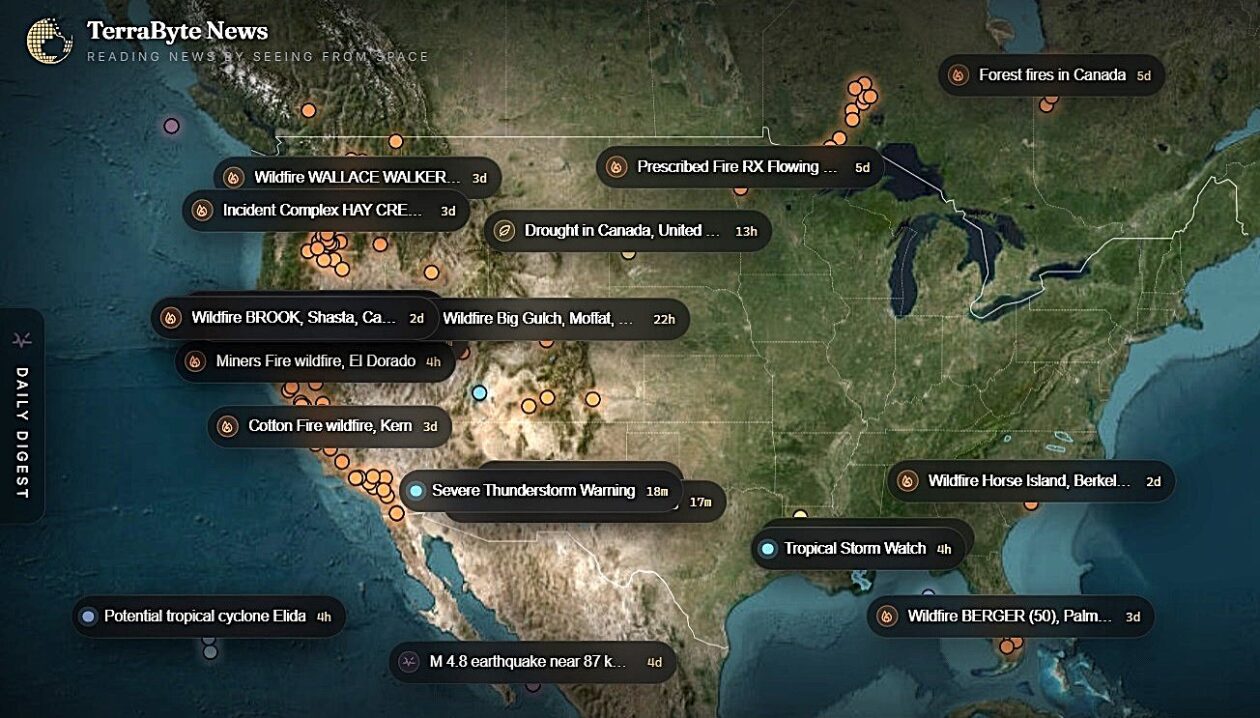
An interactive map displays the sites of wildfires, earthquakes and severe weather events, with links to satellite imagery. (Credit: TerraByte)

Two months after emerging from stealth mode, TerraByte AI is using artificial intelligence and a new partnership to upgrade its “Earth Search Engine.”

The startup, which maintains operations in Seattle as well as San Francisco, has just rolled out a TerraByte News service that pinpoints wildfires, earthquakes and severe weather events on an interactive map. Users can follow links to access news reports, social media posts and satellite views related to selected events.

The satellite views include open-source images from NASA’s Earth observation system as well as Europe’s Sentinel satellites. And now the database also features high-resolution pictures provided through a newly announced partnership with Texas-based SkyFi. The partnership gives TerraByte’s users access to SkyFi’s self-service Earth intelligence platform, which offers satellite and aerial imagery from more than 300 sources at prices as low as $15 per image.

“In May, when we came out of stealth, we made the planet searchable,” TerraByte CEO Rishi Madhok told GeekWire. “Now, the moment you find something, you can hold the imagery in your hands within a day. The next step is making Earth intelligence as routine as a web search — you ask, you see, and then you act.”

Madhok and Fuxun Yu, TerraByte’s chief technology officer, founded the company last year as a follow-up to their work on geospatial data analysis at Microsoft. They developed search tools that can recognize features of interest in satellite images and deliver data-driven insights in response to natural-language queries.

TerraByte’s digest entry for “Forest Fires in France” combines satellite imagery and news reports. (TerraByte Graphic)

Over the past couple of months, TerraByte’s team has grown from three to five employees, Madhok said. “Our goal is to grow the team even further this year, because we are seeing a lot of traction from users since we came out of stealth,” he said.

“A lot of traction is coming from insurance [companies], from the government, from mining, from other areas where there is the possibility to see things,” he said. “And finance, right? A lot of quant firms and hedge funds want to see all of this activity coming in.”

One key application involves emergency response. “Our big focus is on catastrophes, particularly wildfires,” Madhok said. “Our vision is that anybody should be able to track this — not limited to just journalists, but including everyone who is living in those areas and wants to see what’s going on.”

Madhok expects the revenue-sharing partnership with SkyFi to open up new opportunities. “I’m happy to say that we have customers who are paying us,” he said. “From that perspective, we’re already doing well.”

Advances in AI are creating still more opportunities. “Now you can do searches not just using text, but using images, which we call visual search,” he said. “Let’s say you’re searching for a certain kind of vessel, and it’s very hard for you to describe it in natural language. You can just take a screenshot of it, upload it, and within seconds it will literally search for what you were looking for.”

Looking ahead, Madhok and his teammates plan to add people power to the power of AI.

“This is the first version of a platform that we’re going to release, and we obviously want to learn more from our users,” he said. “We want this platform to become crowdsourced, so that people who are local to a region can add more information from that perspective, because then it starts becoming more powerful. We don’t want just TerraByte to be the owner of this.”

Madhok shared a video on LinkedIn that shows how TerraByte’s platform can quickly find high-resolution imagery of a shipwreck in Washington state’s Possession Sound:

UK data center startup Nscale bets big on Bellevue for U.S. engineering hub amid AI boom

Nscale’s Nidhi Chappell. Photo via Nscale.

Fresh off a $2 billion fundraising and $900 million line of credit, London-based data center startup Nscale is planning a big expansion at a new engineering office in Bellevue, Wash.

Nscale, one of the fastest-growing companies building AI computing infrastructure, recently inked a deal for nearly 24,000 square feet of space at The Eight office tower in downtown Bellevue.

The office is slated to open in January 2027. It will serve as Nscale’s primary engineering hub in the United States, a company spokesperson said. The company currently employs about 50 people in the Seattle area, and the new office will be able to accommodate up to 250 people.

The company earlier this year hired Nidhi Chappell, the former Microsoft corporate vice president who led Azure AI and high-performance computing infrastructure, including the supercomputers that power ChatGPT. As Nscale’s new president of AI infrastructure, based in the Seattle area, Chappell will oversee the company’s global engineering and data center operations.

“I’ve had a front-row seat to some of the biggest moments in AI over the past several years, but one thing has always stood out: the world remembers the breakthroughs, but it’s the people building the infrastructure behind the scenes who make them possible,” Chappell wrote in a LinkedIn post last week announcing the company’s first “onboarding” event in Seattle.

Nscale, which is also preparing to open an office in New York, said it selected Bellevue because of the Seattle region’s concentration of AI infrastructure talent and its proximity to major customers.

Microsoft is one example. Earlier this year, the companies announced an expanded collaboration to deploy Microsoft’s next-generation AI infrastructure across Europe, including large-scale installations of NVIDIA Vera Rubin GPUs in Norway, Portugal and other locations. Nscale said it would be among the first providers outside of Microsoft to deploy the Vera Rubin platform, supporting Microsoft’s growing AI cloud infrastructure.

The new office is the latest sign of Bellevue’s growing role in the AI economy. The Eastside has become a magnet for companies building AI applications and infrastructure, with xAI, OpenAI, Databricks, CoreWeave, Armada, Anduril and others establishing and expanding offices.

AI companies have been giving a boost to the regional office market overall. Claude maker Anthropic, for example, recently announced an expansion of its offices in Dexter Yard in Seattle.

Nscale was founded in 2024. Its $2 billion funding round earlier this year valued the company at $14.6 billion, believed to be the largest Series C financing ever raised by a European technology company. The capital is being used to expand Nscale’s AI cloud platform, GPU infrastructure and data center footprint across North America and Europe.

Its backers include Astra Capital Management, Citadel, Dell, Jane Street, Lenovo, Linden Advisors, Nokia, NVIDIA and Point72.

News of the Nscale office in Bellevue was first reported by the Puget Sound Business Journal.

AI weapons under scrutiny as activists plan weekend protest at Anduril’s Seattle office

Defense giant Anduril is operating its autonomous naval vessel manufacturing facility at the old Foss Shipyard on the Lake Washington Ship Canal in Seattle. Demonstrators plan to protest a different location, Anduril’s downtown Seattle office. (GeekWire Photo / John Cook)

A coalition of activists and community organizations plans to rally Sunday outside Anduril’s Seattle office, protesting the defense technology company’s development of artificial intelligence-powered military systems and its growing presence in the region.

The demonstration, scheduled for 9:30 a.m. at Anduril’s downtown Seattle office, is being organized by groups including BAYAN Washington, International Coalition for Human Rights in the Philippines and The International League of Peoples’ Struggle. Organizers say the event will highlight concerns about the use of AI in warfare, autonomous weapons systems and the expansion of defense technology companies in Washington state. They expect more than 50 to attend.

“The rally will respond to urgent developments in the expansion of AI weapons companies in Washington State and will expose Anduril as an engine of U.S.-led wars of aggression and a domestic threat to migrant and working class communities,” the organizations said in a statement.

Anduril said it recognizes the right to protest, while defending its work supporting the U.S. military and service members.

“We respect the right to free speech and we understand that protests are a hallmark of democratic expression,” Anduril said in a statement provided to GeekWire. “That said, it is perplexing when people choose to protest a company dedicated to supporting the very military that safeguards those rights.”

The company’s statement continued:

“At Anduril, we’re proud of our role in helping the brave men and women who risk their lives to defend the freedoms that we all enjoy, freedoms that include the right to stand outside and protest our existence. We’ll continue to honor those serving our country, even when others stand in opposition.”

The protest comes as Anduril expands its operations in the Seattle area, including a new maritime manufacturing and testing operation along Seattle’s historic Lake Washington Ship Canal. GeekWire reported earlier this year that the company has taken over the former Foss shipyard, where it is thought to be testing autonomous vessels for the U.S. Navy.

Founded in 2017 by entrepreneur Palmer Luckey, Anduril has become one of the most prominent defense technology companies in the country, developing autonomous aircraft, maritime systems, surveillance technologies and AI-powered software platforms for military and national security customers.

The company’s Seattle expansion has drawn attention because of the region’s long history as a hub for aerospace, maritime engineering, artificial intelligence and advanced manufacturing. The new maritime facility on the south bank of the Ship Canal represents a new chapter for a site with deep roots in Seattle’s shipbuilding history.

In announcing the rally, organizers cited the company’s work on autonomous systems, including underwater and surface vessels, and raised concerns about the role of artificial intelligence in global conflicts.

The groups also pointed to the ongoing Rim of the Pacific (RIMPAC) military exercises, a multinational naval exercise held in and around Hawaii. The exercise runs through July 31 and includes participation from dozens of nations.

Anduril has increasingly positioned itself as a technology company focused on modernizing defense capabilities, arguing that faster adoption of advanced software, autonomy and AI can improve the effectiveness and safety of military operations.

Sunday’s event is expected to include speeches, testimonials and cultural performances from participating community organizations.

The rally adds a new point of public debate around Anduril’s expansion in Seattle, as the company builds out its presence in a region already home to major technology companies, aerospace firms and a growing defense innovation sector.

In addition to the new facility at the Foss shipyard, Anduril operates facilities in downtown Seattle and Bellevue, where it expanded last summer with a lease for 39,851 square feet of space at Skyline Tower.

Anduril also is rapidly expanding its operations in California, where the company is headquartered. And it is building a massive facility just south of Columbus, Ohio, that it dubs Arsenal-1, described by the company as “the future of American defense manufacturing.”

In May, the company raised a $5 billion funding round from Thrive Capital, Andreessen Horowitz and others at a $61 billion valuation.

The code AI forgot: logcat.ai raises $2.55M to put agents to work on device operating systems

Varun Chitre, CEO, left, and Tarun Vashisth, CTO, co-founders of logcat.ai. (logcat.ai Photos)

The past two years have transformed the world of software development, but there’s at least one area that remains largely untouched by artificial intelligence: the operating-system layer inside phones, vehicles, and other connected devices. 

A Seattle startup called logcat.ai has raised $2.55 million to change that.

Co-founded by CEO Varun Chitre and CTO Tarun Vashisth, two engineers with years of experience building device software, logcat.ai is developing a system of AI agents that autonomously hunt down bugs across the kernel, modem, and firmware of devices running Android or Linux.

The pre-seed round was led by Founders’ Co-op, with participation from Act One Ventures, TheFounderVC, Shorewind Capital, Clayoquot Capital, and Alumni Ventures. 

“It’s one of the toughest areas of software engineering, and it doesn’t get a lot of exposure. Operating-system engineering is virtually hidden today,” Chitre said in an interview.

It’s also a challenge for many companies given a shortage of engineers who specialize in the field, compared to the much larger population of developers who build apps and software that run on top of the operating system.

How it works: An engineer using logcat.ai uploads the log files a device generates when something goes wrong — such as bug reports and kernel logs — and logcat.ai’s software analyzes them together to find the root cause and point to where in the code to fix it. Each finding cites the exact log line it came from, so an engineer can check the work.

Currently, logcat.ai finds the root cause and recommends a fix. The larger plan is to have the AI write the fixes, test them, and eventually build new features on its own, with engineers approving the work before it’s deployed.

The long-term goal, Chitre said, is to become the standard tool for building and maintaining operating systems on new and existing hardware — from smartphones to cars to robots and other embedded systems — so a company can ship without a full-stack specialist on staff.

“We’re moving toward a world where software and intelligence extend far beyond our laptops and phones, yet the tooling to build high-quality products for that world is still missing,” said Aviel Ginzburg, general partner at Founders’ Co-op, in a statement.

He called Chitre and Vashisth “one of the only teams in the world truly up for the challenge.”

Traction: The company says it has served hundreds of engineering teams in a public beta, analyzed more than 10 billion lines of trace data, and run thousands of automated investigations. It’s generating revenue but isn’t ready to disclose numbers or customers. 

Competitive landscape: Chitre said logcat.ai’s main competition isn’t another product but in-house scripts and the knowledge locked in a few senior engineers’ heads. App-level crash tools like Google’s Crashlytics and Sentry stop at the app layer and don’t do the deeper system debugging.

Specialist vendors and the contract manufacturers that build devices are potential partners more than rivals, Chitre said, since they face the same engineer shortage.

GeekWire first reported on logcat.ai in March, in a Startup Radar roundup.

The team: Chitre and Vashisth met at Esper, the Bellevue, Wash.-based device-management company, where they worked together for more than seven years. They started logcat.ai because they had spent years doing debugging by hand and knew what was missing.

Chitre has spent more than 13 years in the field, getting operating systems to boot and run on new hardware and porting new Android releases and Linux kernels onto older devices. He was also a maintainer of LineageOS, a widely used open-source version of Android. 

Vashisth has led engineering teams working across Android, Linux, and iOS, and brings a background in large-scale distributed systems. At Esper, he rose to senior software engineering manager. His prior experience includes platform-architecture engineering at Target.

For now, the company is just the two founders: Chitre in the Seattle area, Vashisth in Bengaluru, India. They plan to hire about 10 people over the next year, with a distributed team working remotely from wherever they can find the specialized talent.

They know those hires won’t be easy to find, given the scarcity of people in the field. “That’s the same shortage our product exists to address,” Chitre said, “and we’re not exempt from it.” 

JPMorgan Chase bets on Seattle to build its AI control layer

Lori Beer, JPMorgan Chase’s global chief information officer, at the JPMorganChase Center in Seattle. (GeekWire Photo / Todd Bishop)

JPMorgan Chase is building out a new AI software infrastructure team, anchored in Seattle, focused on running AI across its data centers and outside providers in a way that controls costs, protects its intellectual property, and avoids tying its fortunes to any one vendor.

Lori Beer, the bank’s global CIO, discussed the effort as part of a broader interview Tuesday during a stop in Seattle. She said the bank is being “careful about lock-in, strategic risk, financial risk, all those things.”

The move comes as business and tech leaders — including Microsoft CEO Satya Nadella and Palantir CEO Alex Karp — publicly warn about the risks of letting a small number of AI vendors accumulate control over costs, data, and the choice of which AI tools businesses can use.

Beer described the new group as an AI infrastructure team but said it works at the software level, separate from JPMorgan groups that build data centers or procure hardware.

She said the group will, for example, develop systems to determine when to route different types of AI workloads to JPMorgan’s own data centers, when to tap into public cloud providers, and when to use newer specialty computing suppliers.

AI agents are one example of where the bank is drawing a line.

Beer said JPMorgan will build and own the software that runs its agents, while treating the underlying AI models as interchangeable. The agentic layer is specific to JPMorgan’s business, whereas the underlying models are general-purpose, and JPMorgan wants to be able to switch among them as the market changes. 

Cost is another focus. Given the option, Beer said, engineers naturally reach for the newest and most powerful model, even when a cheaper one works as well. Systems built by the new team will route specific workloads to different types of models.

The new AI infrastructure team will be spread across multiple JPMorgan locations, but Beer said the Seattle area offers a high concentration of the required skills, including engineers who built cloud infrastructure at Amazon, Microsoft, and other tech platforms before joining JPMorgan. 

It’s part of a broader focus on AI at JPMorgan’s Seattle Tech Center, which has grown to about 400 people since opening in 2018, with a heavy emphasis on cybersecurity.

JPMorgan said this week that it has named Ture Armas, the bank’s CTO for Commercial Bank Lending Technology, to lead the Seattle Tech Center. Armas will continue in his existing role while adding oversight of the tech center’s strategy, talent, and community engagement. He replaces Mamtha Banerjee, who left in March.

The Seattle Tech Center is preparing to move next month into an expanded space at the JPMorganChase Center, the skyscraper that was renamed from the Russell Investments Center in January. The tech center is currently located in a smaller space in a nearby building. The move will put engineers closer to business teams, which Beer called critical as AI accelerates the pace of product development.

Beer, who started her career as a software engineer at a nuclear facility, joined JPMorgan in 2014 from health insurer WellPoint. In 2017, she became the first CIO to sit on the bank’s Operating Committee. She oversees a technology division of about 70,000 people, including 45,000 engineers, with a $20 billion annual budget. 

JPMorgan reported record second-quarter results Tuesday morning, topping Wall Street expectations. On the earnings call, CEO Jamie Dimon said the bank has almost 1,000 AI use cases across the business, with about 50 he described as the most important, in areas including risk, fraud, marketing, note-taking, and document reading.

In what turned out to be a preview of Beer’s comments later in the day, CFO Jeremy Barnum described the bank’s AI priorities: “Use the right model for the right purpose, be smart about open source where appropriate, and ensure that you’re getting value out of it ultimately.” 

Startup Spotlight: Hedgehog bets that open-source networking will power the next generation of AI clouds

Marc Austin of Hedgehog.

As AI workloads drive soaring cloud bills, more companies are weighing whether to move computing out of public clouds and into their own data centers. But building and operating AI infrastructure is far more complicated than simply buying servers — networking has become one of the biggest technical hurdles.

That’s the opportunity Seattle startup Hedgehog is chasing.

Founded in 2022 by CEO Marc Austin, a Cisco networking veteran, Hedgehog develops open-source software designed to make private AI data centers operate more like hyperscale clouds. It has raised $11 million in seed funding, with plans to raise a series A financing round.

We caught up with Austin for the return of GeekWire’s Startup Spotlight to learn more about the 20-person company, the AI networking boom and what surprised him most about building a startup in one of tech’s fastest-moving markets.

In 50 words or less, give us your elevator pitch?

Hedgehog is open-source software that makes AI networking simple. AI clouds and enterprises use it to run GPU networks the way hyperscalers do — deployed in hours instead of months, operated by DevOps teams instead of armies of network engineers, on open hardware with no vendor lock-in.

What problem are you obsessed with solving?

Time to GPU value. A GPU cluster is the most expensive asset most companies will ever buy, and every day it sits idle waiting on the network is money burning. That wait is rarely the hardware — it’s the fabric: weeks or months of scarce network engineers hand-designing, cabling, tuning, and validating it across proprietary CLIs and locked-in vendor gear.

Meanwhile the people told to “own the network” usually aren’t network engineers at all — they’re platform and DevOps teams. We’re obsessed with collapsing that timeline: declare your network like intent in Kubernetes and go from racked GPUs to inference in hours instead of months — on open hardware, no lock-in, no room full of specialists. Cloud-grade networking without hyperscaler headcount.

What surprised you after talking to customers?

How rarely the buyer is a network engineer. It’s platform and DevOps teams, often at AI clouds who just took delivery of thousands of GPUs who are told “you own the network now.” They don’t want to learn BGP; they want a network that behaves like the rest of their cloud-native stack. The other surprise: they don’t just want to run the network, they want to sell it by carving up capacity for their own customers, like a cloud provider does.

How has AI changed the way you build your company?

Twice over.

Our product exists because AI broke traditional networking. Training and inference traffic melts networks designed for web apps.

And AI changed how we build: we use it heavily across engineering, testing, and go-to-market, which lets a small team continuously test every supported device and configuration in our lab and ship with hyperscaler-grade rigor. AI raised the bar for what a startup-sized team can deliver.

What’s one thing people misunderstand about your startup?

That “open source” means hobbyist. The opposite is true: openness is the enterprise feature. Our customers can audit every line of code that runs their fabric, extend it, and never get locked in. Nearly every competitor markets “open networking” while shipping a proprietary controller. Hedgehog is the only one that actually publishes the repo.

What’s the toughest decision you’ve made in the past year?

Betting entirely on Ethernet. We decided open, standards-based Ethernet would win AI networking and put everything behind it. Watching the industry’s largest AI operators now standardize on that same approach makes us feel good about the call — but saying no was hard.

What’s the one piece of advice you give to other entrepreneurs?

Pick the wave, not just the surfboard.

Product decisions are recoverable; betting against a structural industry shift isn’t. Find the standard, the architecture, or the buyer behavior that’s inevitable, align everything to it early, and be patient while the market catches up to your bet.

We’ll know our company has made it when…

Networking is boring again. When a platform engineer stands up a multi-tenant GPU cloud and the network is just a few lines of declared intent that nobody thinks twice about. When “network like a hyperscaler” describes every AI cloud, not just the giants running on Hedgehog, then we will have made it!

Vieu launches AI-ready map of business relationships, challenging tech incumbents

Vieu co-founders Simon Skaria (left) and Samir Manjure. (Vieu Photo)

Vieu, a Seattle startup aiming to replace cold outreach with warm introductions, launched what it calls the “Business Graph,” a live map of trusted relationships that drive business-to-business sales, marketing, recruiting and fundraising.

The 40-person company, which raised an $11 million seed round in October 2024, has grown to more than 100 enterprise customers including a number of well-known companies. Vieu competes with sales-intelligence tools like ZoomInfo and Outreach, and overlaps with LinkedIn’s Sales Navigator.

The company is led by CEO Samir Manjure and CTO Simon Skaria, both Microsoft alumni. Manjure went on to found KenSci, a healthcare AI startup acquired by Providence in 2021. Skaria has also founded and sold two other startups, Office365Mon and Albits.

The Business Graph, which launched Tuesday, maps relationships between people and companies based on observed signals — such as shared work history, co-authored research, board affiliations, and joint ventures — rather than the self-reported connections that populate LinkedIn.

Common use cases include finding someone who can make an introduction to a decision-maker at a target account, quietly checking references on a job candidate, and figuring out which LinkedIn connections a salesperson actually knows versus the ones they simply accepted a request from.

Vieu says the graph can be used inside its own app or queried directly by AI assistants like Anthropic’s Claude and Google’s Gemini, and it integrates with CRM, email, and Slack.

Manjure said Vieu still has the majority of its 2024 seed round in the bank and has not raised new funding. The company charges customers a platform fee for access to the Business Graph plus outcome-based pricing tied to specific use cases like sales, recruiting, and fundraising.

Apptio co-founders reunite to launch enterprise AI startup Thira with $21M in funding led by Madrona

Thira co-founder and executive chairman Sunny Gupta at a 2017 event. (GeekWire File Photo)

Sunny Gupta has led two prior enterprise tech companies with backing from venture capital firm Madrona in the past 20 years. iConclude sold to Opsware. Apptio sold to Vista Equity Partners, then to IBM for $4.6 billion.

Now they’re getting the band back together for the AI era. Madrona’s Matt McIlwain is calling it the biggest opportunity “by far.”

Thira co-founder Kurt Shintaffer was Apptio’s co-founder and CFO. (LinkedIn Photo)

Gupta is launching Thira, a Bellevue, Wash.-based enterprise AI startup, with Apptio co-founder Kurt Shintaffer, and leaders from companies such as Atlassian, Oracle, and Databricks. Thira announced Tuesday that it raised $21 million in seed funding led by Madrona, with participation from FUSE.

The idea: Thira is building AI to handle the behind-the-scenes tasks that keep big companies running, like setting up a new hire’s laptop, resetting a locked account, or approving a software purchase. The pitch is to enable a “back-office that runs itself,” according to the company.

It’s starting with IT support. The company is building software agents that can take an IT ticket, work it across the systems where the actual fixes happen — such as ServiceNow, Jira Service Management, Freshservice, and the identity and device-management tools that connect them — and close it out.

Finance and HR systems are also on the roadmap. Thira’s job listings describe agents built to “autonomously run the back-office work that consumes companies today, across IT, finance, HR, and beyond.”

Thira is entering a crowded market. ServiceNow closed its $2.85 billion acquisition of Moveworks last December to build autonomous IT ticket resolution into its service management platform. Startups including Aisera, Rezolve.ai, and Serval are pursuing similar territory.

Part of Thira’s bet is that Gupta and Shintaffer’s relationships with CIOs, which they built over many years at Apptio, will help to give it a foot in the door. Thira says it’s working with 10 companies as design partners ahead of a broader launch this fall.

In many ways, it’s a step beyond Apptio, which helps CIOs see where their companies spend money on technology. Thira is aiming to go past visibility to the “system of execution,” actually doing the work.

In a post on LinkedIn, Gupta said he began hearing from CIOs during Apptio tenure who wanted not only visibility into spending but also the ability to act on inefficiencies and automate work.

“In early 2026, I asked more than twenty CIO friends a simple question: has enough changed that what they’ve been asking for is finally buildable? The answer was yes, and bigger than I expected,” he wrote.

Thira’s team also includes:

Gupta has been Smartsheet’s executive chair since August 2025, when longtime CEO Mark Mader retired. He also served as acting CEO until Raj Singh was named CEO in October 2025. Shintaffer was Smartsheet’s CFO from July 2025 to May 2026.

McIlwain, the Madrona managing director, is joining Thira’s board of directors. FUSE founding partner Kellan Carter is a board observer.

In a statement, McIlwain said the founding team pairs Gupta and Shintaffer’s two decades of enterprise credibility at Apptio with what he calls “AI-native innovators.” He added, “This is my third time starting and building a company with Sunny and it is by far the largest opportunity we have pursued together.”

Etzioni on AI: Who disagrees with you about AI? Here’s what the research shows

(AI Illustration via Google Gemini)

Attitudes towards AI differ by country, gender, profession, age, and political affiliation.  A few of those gaps are startling. This article is chock-full of stats. Read it for the surprises, or glance at the bar graph below for a quick overview.

Let’s start with geography, the widest split of all. Ask people in China whether they trust AI and, Edelman finds, nearly nine in 10 say yes; ask Americans and barely a third do. The same chasm shows up, in the Stanford AI Index, on the larger question of whether AI’s benefits outweigh its drawbacks, where most Chinese say it’s good stuff and most Americans have their doubts. 

Here’s a possible explanation. Where economies are young and growing fast, AI reads as a ladder up; where they are mature, it reads as a threat to jobs and more. Trust in AI seems to track two things, confidence in institutions and the expectation of personal gain, and both run higher in many Asian countries than in a wary West.

(Click to enlarge)

In the U.S., men are about twice as likely as women to expect AI to be good for society, Pew finds, and the gap is wider still among the researchers who build it. The tempting explanation, that women use the tools less, no longer holds: over the past two years women have drawn even with men in using chatbots, yet they trust them less. Women are also likelier to say AI is moving too fast

Adults under 50 reach for ChatGPT at twice the rate of their elders, Pew reports, yet it is the under-30s who are most convinced it will be bad for society. Here, familiarity breeds unease, and for a concrete reason: the young are not only the heaviest users but the most exposed. AI may be coming first for the entry-level jobs they are trying to land, and they sense it, with Gen Z likelier than any older group to expect it to cut into their job prospects, per the Harris Poll. 

Among the AI researchers surveyed, most expect the technology to help the country over the next two decades, Pew’s survey shows; among the public, fewer than one in five do. Some of that is knowledge, since the experts grasp what the systems can and cannot do and fear the lurid scenarios less.

Of course, the people who design AI have their careers and fortunes riding on its success, while the people who answer phones or drive trucks see mainly the threat to their own. The same pattern runs across industries, from technology workers who welcome AI on the job to transportation workers who oppose it. As per Miles’ Law, where you stand depends on where you sit.

The last divide is one that’s moved in recent years, and it’s moved fast. Two years ago Republicans were the AI skeptics; Democrats have since caught up and passed them. Today, just over half of Republicans now trust Washington to regulate AI; barely a third of Democrats do, Pew finds. 

AI companies are now more admired on the right than the left, a Harris Poll shows. Democrats are cooling on companies they once cheered, and Republicans are warming to a boom their side now champions. That said, in both parties more people worry that regulation will do too little than too much; what they split on is whom they trust to do the reining.

Despite some loud voices, there is no single verdict on AI.  Optimism comes from those with the most to gain, in the rising economies and inside the labs; doubts rise from those with the most to lose or the most to fear. Whatever AI turns out to be, it is being built by the people most enthusiastic about it, for a public that is not.

Supply chain startup Auger, led by ex-Amazon operations chief, raises $50M and lands big customers

Auger co-founders Leigh Anne Clark and Dave Clark at the company’s Bellevue, Wash., office. (GeekWire Photo / Todd Bishop)

While investors spent much of the spring concerned that frontier AI models from companies like Anthropic and OpenAI would consume the software industry, Dave Clark was closing a funding round for exactly the kind of enterprise software those models are supposedly going to replace.

Auger, the supply chain technology startup founded in Bellevue, Wash., by the former Amazon executive, has raised $50 million in Series B funding led by Eclipse, with existing investor Oak HC/FT also participating in the new round.

The round brings total funding to $150 million for the company, which has grown to about 130 employees and counts Meta’s virtual and augmented reality division, sports merchandise giant Fanatics, and consumer products maker Kimberly-Clark among its customers.

Clark’s view is that general-purpose AI can generate insights but can’t handle deeply specialized domains like running a supply chain. Making financial and operational decisions and executing them at the scale of big companies requires systems built on strong supply chain expertise — what Auger calls its ontology, essentially a detailed map of how supply chains actually work.

“Many a pure technology company died on the hill of supply chain over the last decade,” said Clark, the company’s CEO, in an interview this week. “You really need to understand the complexity and the contextual requirements.”

Auger sits on top of a company’s existing systems — ERP, warehouse management, transportation management, and demand planning tools — and unifies the data into a single operating layer. Rather than replacing those systems, it connects them, using AI agents and traditional optimization models to make decisions and execute them automatically, as much as possible.

For example, in a recent demo at the company’s Bellevue office, Clark showed how the system would handle a supplier missing a delivery commitment when there isn’t enough product to go around. Auger identifies the shortfall, determines which customers get priority, reallocates inventory, and pushes the updated plan back to the company’s existing systems.

Most supply chain software, Clark said, generates alerts and waits for a person to act. Auger is designed to make routine decisions on its own and flag the exceptions for human review.

“We’re not really a tool,” he said. “We’re really the new employee.”

At Fanatics, the sports merchandise company, Clark said about 85% of decisions in the process Auger manages are happening autonomously, with a goal of reaching the mid-90s soon. In addition to the customers it has named so far, Clark said another eight to 10 companies are in contract negotiations or pilot programs.

Clark spent 23 years at Amazon, rising to lead the company’s worldwide operations and later its worldwide consumer business. He left in 2022 and became CEO of Flexport, the freight forwarding startup, but that tenure lasted less than a year amid a turbulent period for the company.

He launched Auger in 2024 with a team that includes Leigh Anne Clark, his wife, who serves as co-founder and president of the company’s fashion and beauty division, focused on an industry Clark describes as one of the most wasteful supply chains outside of groceries.

Clark moved back to the Seattle area from Texas to tap the region’s talent pool, and raised a $100 million Series A from Oak HC/FT. The company quickly assembled a C-suite drawn heavily from Amazon’s senior ranks, along with leaders from Johnson & Johnson, Microsoft, and Salesforce, spanning supply chain operations, AI, data science, and product development.

In March, Auger was named a premier supply chain partner on Microsoft Fabric, the tech giant’s data platform. Auger’s product is built on Azure, and Microsoft sales reps can earn commission on Auger deals. Clark said the partnership has generated engagement but is still early.


Clark said Auger went out for the Series B early, before the company needed it, to avoid the distraction of fundraising during what he expects to be a busy fall of customer onboarding.

With the investment, Eclipse partner Jiten Behl joined the Auger board, which also includes Clark, president and CFO Alex Ceballos, and Oak HC/FT’s Matt Streisfeld.

Auger hasn’t disclosed revenue or other financial metrics, but Clark said the valuation was roughly double the level set by Auger’s initial round. “We didn’t shoot for the crazy astronomical valuation,” he said. “We sat at a place that we felt really comfortable with.”

That pragmatic approach extends to how Auger operates. In Bellevue, the company works out of an office it subleased after Microsoft vacated the space. Auger kept the desks, monitors, and chairs the tech giant left behind, furnishing its new offices for next to nothing.

But Clark’s ambitions for the company are anything but modest. He said Auger’s goal is to have half of U.S. GDP flowing through its platform by 2030, with revenue exceeding $1 billion.

“That requires a pretty steep curve to get there,” he said. “We’re not playing small.”

An agent in the empty chair: Amazon vets launch Primitive Labs, using AI to model customer behavior

Primitive Labs co-founders, from left: CTO Jean Farmer, CEO Rohit Talluri and COO Gabriel Fong. (Primitive Labs Photo)

Rohit Talluri learned the tradition at Amazon: always keep an empty chair in the room to represent the customer — a reminder of the people who will ultimately use whatever gets built.

Now, with AI coding tools creating software faster than ever, Talluri and his co-founders, fellow Amazon veterans Jean Farmer and Gabriel Fong, recognize that the customer can be easily forgotten in the process. So they’re creating a seat at the table for AI agents.

That’s the idea behind Primitive Labs. The startup is building what it calls behavioral intelligence: systems that observe, reason and act as customers would across software platforms and devices, helping product teams learn how people will react to a new feature, design or marketing decision before it ships.

Traditional user research and focus groups can take weeks or months, so teams under pressure to ship quickly are tempted to skip them. Primitive Labs is automating that research with agents that simulate human behavior, aiming to make it a routine step in building software.

“It’s bringing humans back to the center of a world that’s created by AI,” Talluri said. “That is the goal here.”

The mission, according to the startup’s launch post, is to “make human behavior a first-class primitive of software development.” That’s the inspiration for Primitive Labs’ name. The idea is to build products that people will understand, trust and keep using — not the average user, but specific types of users in specific contexts.

Founding team: Talluri, the Primitive Labs CEO, is joined by co-founders Farmer, CTO; and Fong, COO.

Fong and Talluri have worked together since 2020. At AWS in Seattle, Fong held product marketing and enterprise account roles, then led sales and marketing at the cloud consultancy DoiT International.

At Primitive Labs, his role runs broader than sales and marketing, spanning product direction, customer development and operations. Talluri describes him as highly technical and a hands-on contributor to the company’s core product work.

Farmer and Talluri worked together at AWS on large-scale machine-learning infrastructure, including the SageMaker HyperPod training service, before both moved into Amazon’s AGI organization.

Farmer worked on the Amazon Nova models’ ability to use software tools — designing how the models call tools and take actions, and building the systems to test and measure how well the resulting agents perform. That work included benchmarks for the Model Context Protocol (MCP), the emerging standard for connecting AI models to outside tools and data.

Roots in AI autonomy: Talluri joined the AGI Autonomy Lab, the group Amazon assembled around talent it hired from Adept, a San Francisco startup building AI agents that operate software on their own.

Amazon had brought on Adept’s CEO, David Luan, a former OpenAI executive, along with other co-founders in 2024, and licensed the startup’s technology, putting Luan in charge of the lab. Talluri worked there on computer-use agents and helped launch Nova Act, Amazon’s agentic computer-use model.

Talluri said he initially came close to leaving Amazon in 2025 to start a company, before leaders there steered him toward the Autonomy Lab to work under Luan (who has since left Amazon).

Funding: Primitive Labs has raised a pre-seed round, led by a16z Speedrun and joined by several small, newer venture funds and a group of angel investors. The company isn’t disclosing the funding amount.

Its launch post lists backers including Olive Tree Capital, Cloverfield Fund and Unexpected Investments (from former TechCrunch editor Josh Constine), plus angels such as Luan, Harsh Patel and Artur Kiulian, and others with backgrounds at OpenAI, Amazon, Google DeepMind, Databricks, Nvidia and Meta.

Primitive Labs will join a16z Speedrun’s cohort starting this month, and expects to raise its next round around the end of the program, in September or October.

Headquarters: The company is based in San Francisco, where it’s working part-time out of a16z’s Speedrun space, with plans to get its own office after making its first hires.

Talluri, a University of Washington graduate who read GeekWire as a student and dreamed of launching a startup of his own, said the choice came down to San Francisco’s talent density and the pace of AI research there, plus the Speedrun program being there.

Primitive Labs posted its first job listings last week — for founding engineers, researchers and an intern, in San Francisco or New York.

Product status: The company is pre-revenue and working with a small group of early customers who are testing its product and helping shape it, including private previews with what Talluri described as Fortune 500 and Fortune 50 consumer-technology and e-commerce brands.

The company plans to launch its products in general availability later this year.

How it works: The agents work across devices including computers and phones, focused for now on digital products and customer journeys. The company says it has also explored using them to gauge reactions to physical products, such as brand and packaging.

The underlying research draws on computational cognitive science, continual learning and custom memory systems modeled on how people store information — work Talluri said the company plans to publish and partly open-source in the coming months.

While other startups are working on agent-based simulation and automated testing of user interfaces, what sets Primitive Labs apart, Talluri said, is the focus on human alignment. That means building agents that faithfully represent a specific product’s users, and making that a standard layer of how software gets built. He described the key measure as behavioral fidelity, or how closely an agent’s choices track human decisions.

Asked whether the startup will keep a chair empty when it gets an office, in the Amazon tradition, Talluri didn’t hesitate. “100%,” he said. And yes, he said, they’ll be envisioning an agent sitting there.

❌