❌

Reading view

There are new articles available, click to refresh the page.

Open Source Acoustic Drone Detection

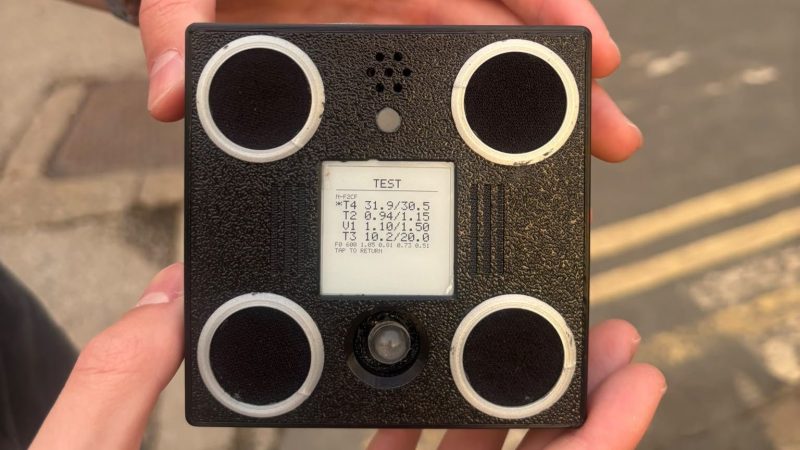
Drones have become a potent military threat, particularly on the small scale. Nimble multi-rotor drones are fast, difficult to spot, and can cause plenty of harm if allowed to go about their work unhindered. The first step to dealing with this issue is detectionβ€”a problem that [Agam Rossen] has put some work into.

The result is VolAntiβ€”an open-source drone detector. This route was chosen as a reliable way to detect incoming multi-rotors, since spinning propellers tend to create a telltale sound that can be plucked from the noise quite specifically. In a world where fiber optic drones eschew RF emissions, it also proves particularly useful for early warning of such craft.

VolAnti relies on a small four-microphone array, with the I2S output of all four mics summed together. The output is then fed into a 2048-point FFT running every 32 ms on an ESP32-S3. A comb score is given to try and pick out different blade rates from 70 Hz to 2000 Hz. Multiple detection algorithms run in parallel, because [Agam] noted a problemβ€”using an adaptive noise floor would miss drones that arrived in the area and hovered in place. With the noise not varying, it would get filtered out by the adaptive floor, so one algorithm in the four runs with no floor to catch drones that aren’t moving.Β Files are on GitHub for those curious to learn more.

We’ve featured other acoustic detection projects before, too. If you’re working on something similar, or conversely, you have the inside scoop on how toΒ hideΒ a drone’s noise signature, don’t hesitate to let us know on the tipsline.
Running Apple ][ Software on a Commodore 64 β€” Silently

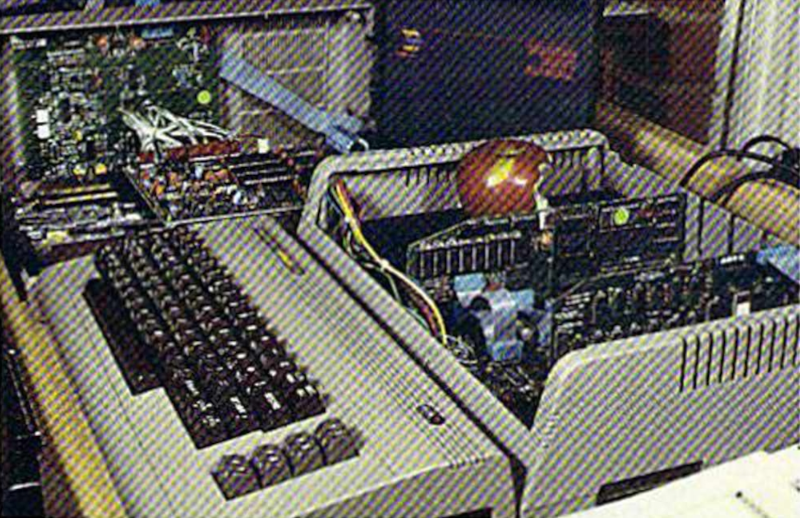
The computer business in 1984 was a bizarre mix of hobby-level companies, a few small companies that had made it big, and a lot of big companies starting to take notice of personal computers. Plenty of money followed, which led to strange products and even stranger ads. [Such Bad Tech Ads] reveals a very bad ad from that time for a product we have barely heard of: the Spartan. The Spartan’s job was to convert your Commodore 64 so it could run Apple ][ software. The ad campaign had, inexplicably, a mime. We think. Or maybe a clown. Hard to say.

On the face of it, the Spartan might not be a bad idea. In 1984, there was plenty of Apple software. Well, relatively, anyway. But a Commodore computer was far cheaper. Other conversion kits like the Intel Inboard/386 managed to find some success in the market later. The problem, outside of strange ads, was one of timing.

If the product was available in 1984, it might have worked out better for the Canadian company, Mimic, behind it. Instead, it was about two years before an actual piece of hardware would show up in anyone’s hands. By that time, there was a ton of software for the Commodore 64. Not to mention that even when Mimic announced the Spartan, Apple had discontinued the Apple ][+ computer.

Why use a mime to promote a product that turns your Commodore 64 into a keyboard and monitor? We have no idea. But he was in all the ads and even on the product box. Strange.

We’ve seen the Spartan before, naturally. Being late usually has bad consequences. Ask FedEx.

A Split Keyboard Designed for Human Hands

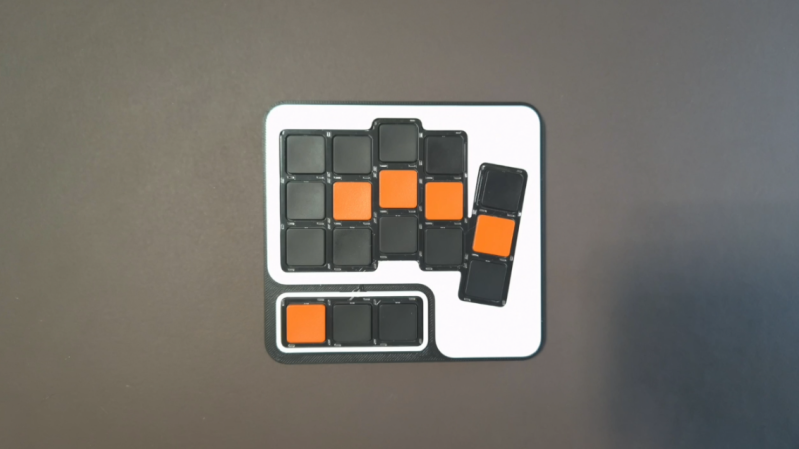
A surprising number of things we use in everyday life retain most of their design cues from their 19th century ancestors. The bicycle retains the same basic design as it had in 1890, as does the sewing machine, the toilet, the car, and of course, the keyboard and the QWERTY layout from old typewriters. But we aren’t doomed to have our technology perpetually living in the past. [Paul] wanted a keyboard designed around human hands, rather than being designed around a machine, so he built this unique split keyboard.

The design of this specific keyboard went through around 50 iterations before he was comfortable with it. Other design goals here were for it to be portable, and the split nature of this certainly makes it more compact as does the use of low-profile switches. Each finger’s column is angled and spaced based on the needs of that finger, with the ring finger keys sitting higher and the index finger columns angled inward. Each thumb has access to three keys, one of which is the spacebar and the other two layer keys, which is what enables this design to get down to only 36 total keys.

When thinking about it for any length of time, the modern keyboard’s design holdovers from the 1800s are fairly wasteful compared to this split, ergonomic version. Especially when looking at the spacebar, which ties up both thumbs and only performs a single task, there’s a lot of opportunity for modern designs to be more efficient, more portable, and easier on one’s body. Feel free to take this to the extreme and use all three dimensions, as long as you aren’t particularly concerned with portability.

Panoramic Photography with a Linear Scanner

Although digital photography took a big bite of the film industry’s lunch, it wasn’t able to completely eliminate the need β€” or desire β€” for photographers to use film in some situations. But digital information from a camera sensor can be manipulated to augment the natural physical capabilities of a camera in ways not really feasible for film. High dynamic range images, focus and exposure stacking, and automatic panoramic stitching. This camera takes the latter example to the extreme.

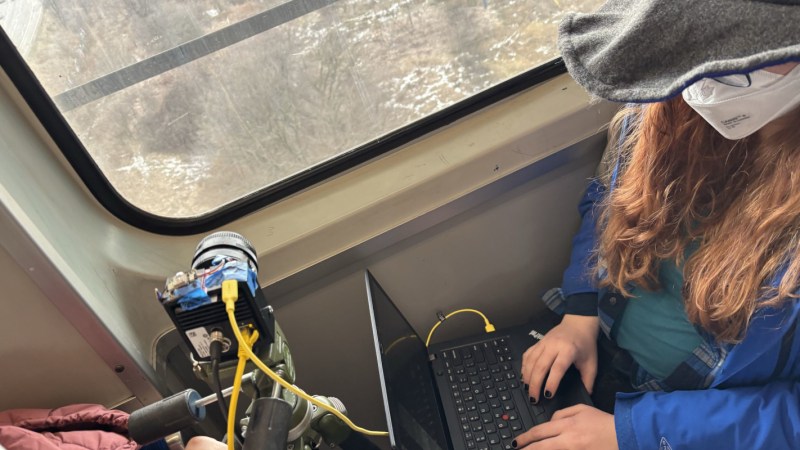
[Philo]’s proof of concept was a smartphone camera set on a chair and rotated around a room. Some software grabbed a single column of pixels as it moved and stitched them all together to form an image. This came out well enough that the idea was refined a few times, but it wasn’t until a single-line digital camera meant for imaging assembly lines was found that this really took off. Using the camera and some custom software, [Philo] was eventually able to take some of the longest panoramic images we’ve seen, using things like railways and boats as the track the camera rides on, with accelerometer data to help stabilize the image.

The results speak for themselves. There’s a bit of wobble from the movement of the various vehicles despite the accelerometer data, but given that the image is coming from a sensor meant for examining conveyor belts, it’s hard to complain. Of course, if you want to stick to film, there are panoramic film cameras available too even if they don’t quite have the reach of this digital one.

❌