❌

Reading view

There are new articles available, click to refresh the page.

Keeping Old Wi-Fi Radios Alive With Stream Conversion
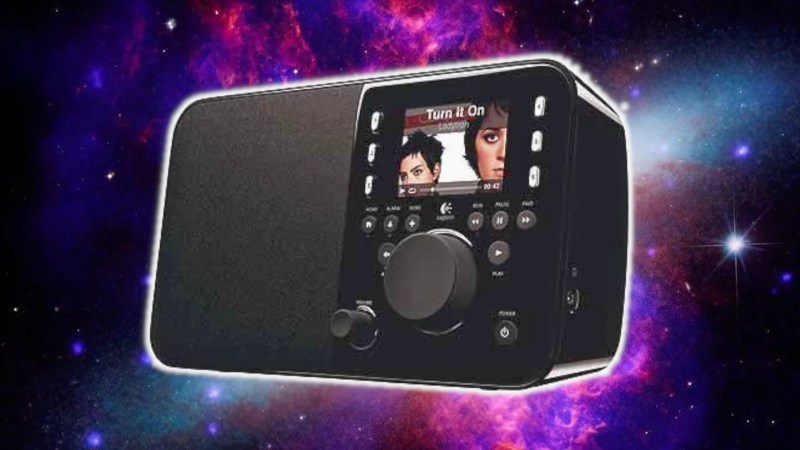
There are plenty of Wi-Fi radios out there that were built over the last two decades or so. However, many older models are now becoming less useful because many internet radio stations are switching to newer streaming formats that they don’t support. [Clifford Farrugia] has been working on a little project to save these appliances from the e-waste bin.

The HLS Radio Converter is the result of that work. It’s a small open-source tool that converts modern HTTP Live Streaming (HLS) protocol streams into regular old HTTP MP3 streams that older internet radio appliances are built to decode. You can run the tool on something as simple as an old Raspberry Pi. To make it work, you just give the tool the URL of the stream you’re looking to convert, and it then spits out a new URL to point your radio to which has the stream in the old-school format instead.

It’s a simple tool, but one that should prove very useful if you have a beloved old internet radio that can’t handle modern streams. We’ve featured lots of fun projects in this vein before, too, like this ultra-tiny internet radio build. If you’re working on your own projects in this space, be sure to let us know via the tipsline.
2026 Retrocomputing Challenge: Dollhouse Arcade Cabinet Runs Remote DOS Games

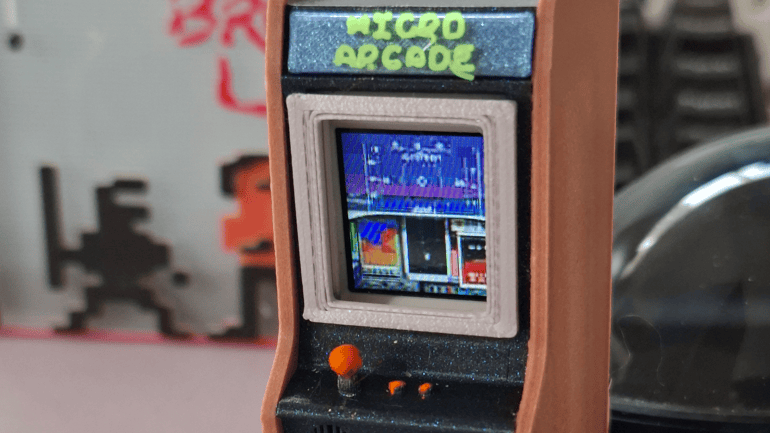
Classic DOS games never ran from within stand-up arcade cabinets in dollhouses, but [Juha Lilja] imagines a world in which they did. His Micro DOS arcade cabinet is described as a device that β€œruns nothing” because the tiny unit is actually streaming the games over Wi-Fi from a nearby PC. That doesn’t mean it’s just a glorified movie player, though β€” the cabinet is playable, if a bit awkward to do so.

An economical development board and a 3D-printed enclosure is all it takes to put classic DOS games into dollhouse-sized arcade cabinet.

The core of the micro arcade cabinet is a M5Stack AtomS3R running as an embedded remote terminal. One tilts the whole cabinet as if it were a virtual joystick to send up, down, left, and right. Button presses are done by pushing on the physical screen; it supports single, double, and long-clicks. While in theory one could install a micro joystick and buttons instead, [Juha] aimed to keep everything self-contained and use only what was already built into the AtomS3R. In this case, that’s a motion sensor and the single button which is activated by pressing the screen.

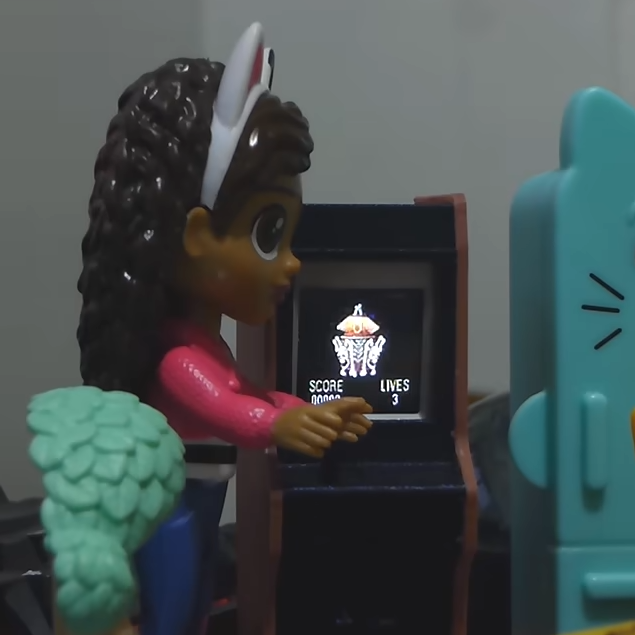
The games themselves run on a PC, with screen contents being streamed wirelessly to the little display and inputs being sent back. The firmware on the AtomS3R doesn’t know or care what game is being played; all it does is display what it’s told, and send back input events. The back end does the rest. This makes it pretty flexible, and a tiny arcade cabinet is a handy way to demonstrate the whole system. It’s a pretty slick addition to his daughter’s dollhouse, too.

If streaming DOS games (or whatever else) to economical endpoints is giving you some ideas, the GitHub repository holds code and a fuller explanation of how it works. There’s a deeper discussion on some of the finer technical points, as well. Watch it in action in the video embedded just below the page break.

2026 Hackaday Retrocomputing Contest

Streaming Games Means the Nintendo DSi Will Never Be Obsolete

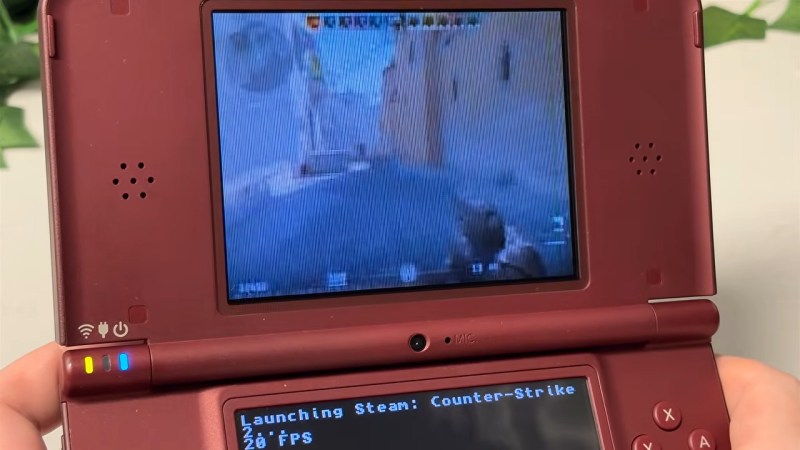
There comes a point where you have to acknowledge that your beloved console is out of date and– barring the odd homebrew title– won’t be playing new games ever again. You’d think that Nintendo’s 2008 DSi handheld would be in this category, but [gavff64] has a workaround. What if the odd homebrew title streamed games over the network?

At its core the RNDS-Stream is just decoding an MJPEG stream from a server on a Linux PC, giving you the content of an X11 or xWayland window with relatively low latency at around 15-20FPS. So while you won’t be entering any e-sports tournaments, you can enjoy more relaxed, casual games like Counterstrike. Well, at least there’s no audio streaming yet, so you won’t have to hear the other team’s trash talk. That ought to make it more relaxed.

Sound may come; the project is very much a work in progress, and also a showcase of RubyNDS, [gavff64]’s Ruby-based homebrew framework for the DSi. Why Ruby? Why the DSi? For no other reason than [gavff64] likes both of those things.You can observe it in action after 4:48 in the video embedded below– just be warned, it’s editing is tuned to a TikTok-using audience and won’t be to everyone’s taste. Don’t let videography get in the way, though, because the hack is the thing and it’s up on GitHub for all and sundry under an MIT license.

The DSi is no stranger to hackers, having gotten its first flash cart the year of its release. In spite of that, we’ve seen surprisingly little homebrew for the dual-screen device, this augmented reality app being an exception.

❌