❌

Reading view

There are new articles available, click to refresh the page.

Meshtastic Pet Tracking

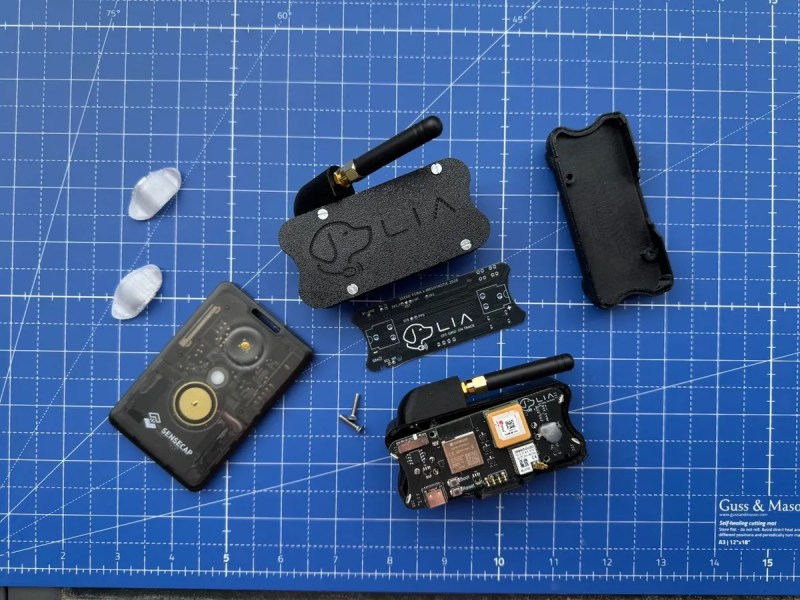
Four black plastic devices, two with a black, stubby antenna, sit on a blue cutting mat with white guidelines. There is also a PCB and a couple grey-ish clips in the assortment. One of the devices is open, showing another PCB with various components including a GPS antenna and LoRa radio. A silhouette of a dog is screen printed next to the text "LIA" on the PCBs, and the same text and image is present in the shell of the device in the top center.

Most commercial pet trackers require a subscription or network connection to function. [Jon G Aguado] wanted a better way and designed LIA, a Meshtastic collar tracker.

LIA uses a custom PCB containing a ESP32-S3, LoRa radio, GPS/GNSS receiver, and a charge controller for the 18650 or 5023450 pouch Li-ion cell powering the device. Everything fits inside a 3D printed enclosure, and the device is charged via a magnetic 4-pin USB pogo connector to increase weather resistance.

One of the neat features of this particular tracker is that [Aguado] gave it two different power modes. High power gets a location fix every 30 seconds and has a pair of bright LEDs for visual assistance, low power only gets a fix every minute or so, and it can also be set to off, which is something we wish more device manufacturers remembered should be an option.

We hope anyone planning on using Meshtastic and LoRa in the US is aware of the issues surrounding FCC compliance, and if you want to track your pet another way, maybe KineFox is an option?
Meshtastic Sniffer for DragonOS

Meshtastic has gained a lot of popularity over the last few years thanks to its low barrier of entry. No licenses are needed and the hardware is dirt cheap, at least when compared to a lot of ham radio gear. But while that physical barrier is low, there is a bit of a learning curve. Part of that comes from the fact that there are a lot of channels and modes that people could be communicating on, and unless the user knows that information up front it can be hard to find where the conversations are happening. [cemaxecuter] noticed this problem and built a Meshtastic sniffer into his radio-forward Linux distribution, DragonOS.

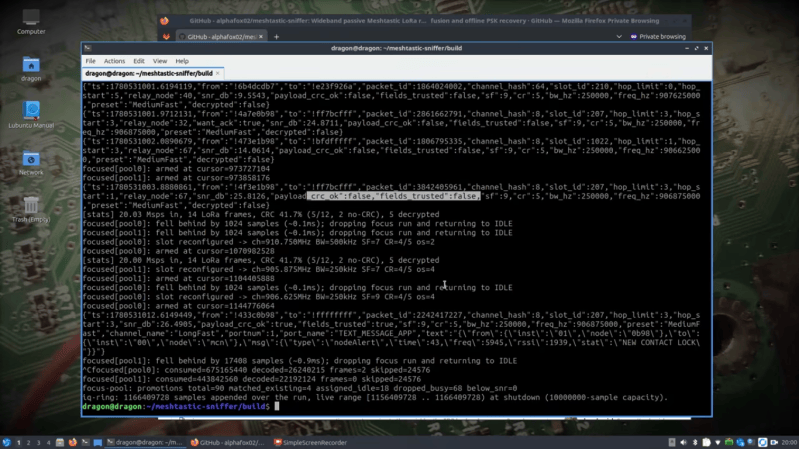
The sniffing software is built in C and comes as a complete standalone binary and does not rely on GNU Radio. With DragonOS up and running and the software loaded, it can look at the entire bandwidth that Meshtastic operates on and detect any traffic and decode it (as long as the key is known). [cemaxecuter] is using a HackRF as a software-defined radio for this project, which he notes doesn’t quite have enough bandwidth to cover every Meshtastic operating frequency, but it can get most of them. After firing up his own node, the software quickly detects it and shows its details in the terminal.

Software like this opens up a lot of opportunities for things that would be tedious, difficult, or impossible to do with with a standard Meshtastic node. Besides finding places where conversations are happening more easily, [cemaxecuter] also suggests that it could be used for wardriving and for locating or finding other networks much more easily. For those who still haven’t tried it out, take a look at this 2023 treatise on the protocol and hardware and then dive right in.

Pager Converted to Meshtastic Node

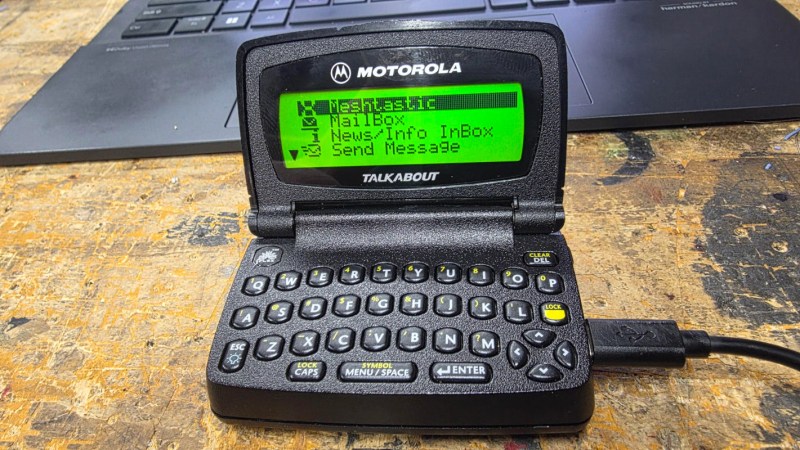
Text messaging has been around on cellular networks en masse for around three decades now. It’s so common that it’s difficult to remember a time without it. Its two-way quick messaging is incredibly useful, but for even simpler communications there’s a one-way system that predates it. Pagers are able to receive simple messages, but outside of hospitals are rarely used nowadays. Eventually some added in two-way communications like this Motorola T900, but they’re still mostly obsolete. That’s why [zindustries87] converted it to operate on the Meshtastic network instead.

To get this pager working, a lot of reverse engineering was needed. There is essentially no documentation on the chips in these devices, so the screen and keyboard both were reverse-engineered to work with other hardware. In this case, [zindustries87] found space for a Heltec V4 with an ESP32-S3, a popular Meshtastic node with a small form factor. Some programming was needed to get everything communicating together, but from the looks of things it seems to have basic functionality.

[zindustries87] points out that this is a prototype, and didn’t know going in if the keyboard and screen could be brought back to life, or if the other hardware would fit in the case. But with it working on this level, they plan to add a number of other features in and possibly build a drop-in PCB replacement for these devices. They were once fairly popular so there are plenty around, and they’re a good form factor for a dedicated Meshtastic device that doesn’t need a smartphone to work. The only other ways of bringing pagers back to life involve bootstrapping an entire pager network, and Meshtastic is a bit more useful than that now.

❌