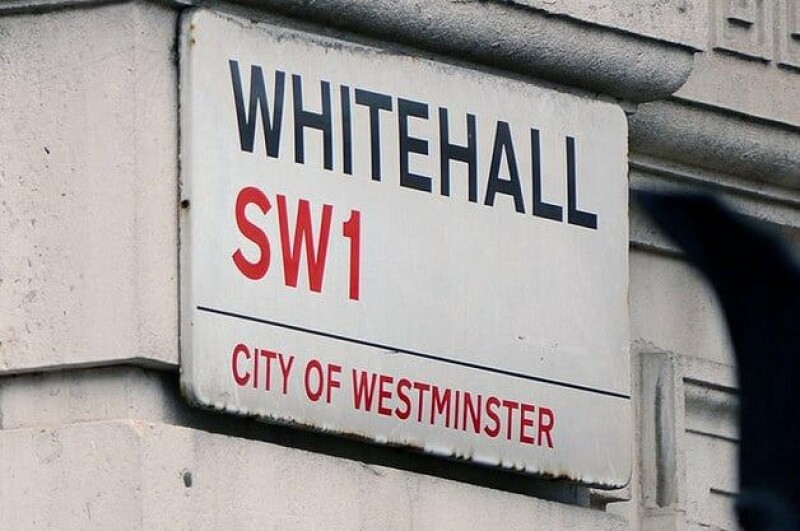
OPINION "Where do we put digital government? You know, all those billions we spend on consultants and legacy systems?" "Oh, that! Put it with sports and tourism. And something we're calling 'place'." It might be a fictional conversation between a SpAd* and a mandarin**, but in reality, the outcome is more or less the same. With the arrival of Andy Burnham as UK prime minister came a shake-up of responsibilities in Whitehall, leaving responsibility for science, technology, and government tech scattered across several departments and eliminating the dedicated technology ministerial role. Shortly after the changes were announced in July, Dame Chi Onwurah, chair of the House of Commons Science, Innovation and Technology Committee, wrote to the government asking for an explanation. The government had yet to confirm what the new roles and responsibilities meant in practice, and there was no news on ministerial portfolios, she said. Now a joint letter from the ministers leading three departments attempts to answer Onwurah's questions. It brings clarity only by laying bare the government's confused thinking and lack of credibility. Take space, for example. The letter says BIST aims to "support companies from breakthrough ideas and research excellence through to commercialization, scaling and exporting, and to fortify the UK's global leadership in this space." When it comes to literal space, however, responsibility falls to Baroness Lloyd of Effra. A law and history graduate, Lloyd worked in Tony Blair's policy unit before becoming his deputy chief of staff. She will fit responsibility for the UK's public and private space sectors between her cyber, regulatory reform, corporate governance, and Insolvency Service duties. She will work across two departments: the Department for Business, Innovation, Science and Trade (BIST) and the Department for Digital, Culture, Media and Sport (DCMS). We're sure the role will afford plenty of time to help oversee the £7.8 billion of cross-government spending brought together under the new space strategy intended to cover orbital collision warnings, low Earth orbit communications, military intelligence, launch capabilities, and space science. The question is, where did technology go? Isn't space related to technology? Technology was in the Department for Science, Innovation and Technology. But that T is now Trade. The D that stood for Department in DSIT is gone; in DCMS, it stands for Digital. (The DWP and DHSC still keep their D for Department, for those wishing to understand that no rules apply here.) But what is digital? It underpins everything. "The technologies shaping our economy are also transforming how people create, communicate, learn, participate and access public services. By expanding DCMS's remit to include responsibility for tech sector oversight and digital, including: digital skills, digital infrastructure and connectivity, cyber security, and the delivery of a modern digital government, we are enabling DCMS to lead the transformation of public services while strengthening and growing the digital, cyber and information foundations on which our economy and society depend." OK, but why is the technology sector separated from science? If digital underpins everything, then it is also worryingly vague. Is it really closer to culture and media? A photographer might want to use Photoshop, but they don't need to know how the software works. The development of computer hardware and software has gone hand in hand with wider research. The World Wide Web and DeepMind both came out of university projects, not to mention one of the early modern computers, the Manchester Mark 1, developed at the University of Manchester with input from WWII code breaker Alan Turing. To further muddy the waters, Kanishka Narayan was appointed Minister of State for AI, a joint Cabinet Office and BIST role that comes with Cabinet attendance. Responsibility for science and technology is now spread across four departments. Chris McDonald, Minister of State for Science, Innovation and Investment, works jointly across BIST and the Department of Health and Social Care. Science sits with business and trade, but digital sits with "creative industries" and sport. Digital government – which has been in three departments over two years – gets a junior minister in the DCMS. Stephanie Peacock is expected to perform that role along with responsibility for sport, tourism, and place (which is not defined in the letter or elsewhere). It is questionable whether she will get the backing needed to confront big tech suppliers repeatedly feasting on government spending while other ministers court those same companies for investment. Her public announcements so far have focused more on Blackpool staycations and the Commonwealth Games than digital government. In their letter, the three ministers said the changes were necessary because "the UK stands at a critical juncture where unprecedented global changes demand that we secure our position as a world leader in AI, science and technology. In this context, we cannot see science and technology as an isolated issue, limited to one department. Instead it is a major priority that cuts across the whole of government and is vital to the UK's future economic prosperity." But the government's answer has been to break up the former technology department and scatter its responsibilities among portfolios where they will struggle for attention. As for tech in the public sector, we might hope the government will stop getting beaten up by suppliers, but we will be waiting a long time. ® * Special Advisor in the British civil service ** slang term for a senior UK civil servant
Britain's biggest trade union body wants workers to have the right to negotiate over AI before employers decide which parts of their jobs to hand over to machines. The Trades Union Congress (TUC) has called on the government to give workers more say over how AI is introduced in the workplace, warning that its enthusiasm for the technology has yet to be matched by a practical plan for the people expected to work alongside it. In a letter to the new AI and Future of Work ministers, Kanishka Narayan and Kate Dearden, TUC general secretary Paul Nowak and assistant general secretary Kate Bell said the government's approach should be built around three principles: giving working people "a voice, rights, and a fair share." "The government is actively pursuing an AI strategy based on the assumption that these are transformative technologies," the pair wrote. "And you have acknowledged that AI technologies are changing the world of work, and that workers and their unions are key to shaping that change. "But we have not yet seen a practical plan that gives force to your acknowledgement that working people need to determine and benefit from AI-related change." Among the union body's demands is the right for workers to negotiate over the introduction of AI, including algorithmic and surveillance technologies that could affect their jobs or working conditions. TUC isn't arguing that employers should keep AI out of the workplace altogether. Its beef is with companies making those decisions while giving the people affected little or no say. "A comprehensive plan must include reforming corporate practices so that workers are stakeholders in firms, not merely inputs to be minimised using AI in the pursuit of short-term profits," Nowak and Bell wrote. "It means a right to negotiate on AI, empowering workers' expertise and interests as a prerequisite for any fair and effective AI adoption." TUC said the government's work on algorithmic and surveillance technologies will provide an early test of whether its stated commitment to workers amounts to much, arguing that workers need "a clear right to negotiate on technologies that risk undermining their dignity and conditions at work." It also had some words for employers who like the productivity part of the AI pitch rather more than the worker rights part. "For employers keen on AI but allergic to workers' rights, we would say it's notable that the Nordic countries have among the highest levels of AI adoption," the letter said. "A key factor is that these workers have more structural power to shape technology and are therefore more open to its effective use." Across the Atlantic, meanwhile, the TUC sees an example of what not to do. It pointed to the booming fortunes of tech billionaires and the declining share of wealth going to workers in the US, describing the result as a "chaotic billionaire-driven AI agenda." The union body also warned of political consequences if workers come to see AI primarily as a means of cutting jobs, wages, or bargaining power. "Working people winning a stake in the benefits of new technology can be a vital plank in this government's plan to deliver growth in every postcode," Nowak and Bell wrote. "Without this, AI disruption – real and perceived – will become ripe for exploitation by the far-right." For a government betting heavily on AI as an engine for economic growth, the TUC's message is fairly simple: if machines are going to transform work, perhaps the humans doing it should get a say too. ®
The UK government opposed a proposal to make air traffic control provider NATS reimburse airlines for passenger compensation arising from its failures, weeks before a massive tech glitch led to 2,000 flight cancellations. During a House of Commons debate, Liberal Democrat MP Luke Taylor pointed out that the government had opposed the amendment in the months before this week's computer outage, which disrupted travel for around 330,000 passengers. The UK Civil Aviation Authority (CAA) told affected passengers: "We consider that disruption caused by the NATS outage is likely to be considered the result of 'extraordinary circumstances' under passenger rights rules. "This means that although passengers should be looked after by airlines, they are unlikely to be entitled to compensation for delays or cancellations that were directly caused by the incident." NATS is a public-private partnership in which the government owns 49 percent and a consortium of airlines holds 42 percent. Computer outages have hit the organization three times in three years, beginning with an August 2023 failure that disrupted hundreds of thousands of passengers. NATS said it had fixed the latest technical problem, but warned that the resulting disruption could continue for several days. Taylor told MPs that after earlier NATS computer problems, the government said it had been assured that "NATS took the necessary steps to prevent a recurrence of those particular circumstances." He explained that while the Civil Aviation (Consumer Protection and Regulatory Reform) Bill was passing through the House of Lords, Lord Young of Cookham had proposed an amendment that would require NATS to reimburse airlines for compensation paid to passengers following cancellations caused by its failures. The government opposed the amendment, which Lord Young subsequently withdrew. Taylor quoted the government's earlier response that it had been "able to place considerable pressure on" NATS. Taylor told MPs: "Following the third major failure of our airspace management in the past three years, it is imperative that this Bill is amended to include measures to stop that happening again. NATS is quite clearly not fit for purpose. We cannot suffer a major air traffic outage once a year." Also speaking in the debate, transport secretary Heidi Alexander said she had asked the CAA to conduct an independent review into the cause of the failure and report within six months. NATS was also ordered to give the CAA an initial account of the failure within a week. The minister told MPs that she did "not believe this issue was unavoidable." In a statement yesterday, NATS said: "Our operations are stable and we continue to work closely with airlines and airports to support their recovery from the ongoing disruption to their operations. We would also like to reiterate our apology to all those affected – passengers, airlines and airports – by our system issue. While our immediate focus is on safely managing today's flights, a full investigation will be conducted to establish what happened and identify any further action needed." Ryanair, meanwhile, called for NATS CEO Martin Rolfe to resign after "yet another UK ATC system failure caused widespread delays and cancellations across UK airspace… disrupting over 65,000 Ryanair passengers and cancelling over 50 scheduled flights." Wizz Air said in a statement that it was "extremely disappointed that another NATS technical failure has caused widespread disruption across the UK aviation network. Passengers are once again facing delays and cancellations because of a failure entirely outside airlines' control." It added: "This is not the first time NATS has failed during a peak summer period, and here we go again. A critical national infrastructure provider should not repeatedly bring the aviation system to a standstill." ®
The UK government has told MPs that Fujitsu has promised not to pursue contracts with new public sector customers through frameworks potentially worth billions of pounds while its voluntary bidding moratorium remains in place. In July, The Register revealed that the Japanese supplier had won a place on a UK government framework worth up to £14.9 billion despite its role in the Post Office Horizon scandal, one of the greatest miscarriages of justice in modern times. The supplier's place on the Digital Outcomes and Specialists 7 (DOS7) framework came after it won spots on two other frameworks, including Technology Services 4, worth up to £19.08 billion, and Transport Technology worth around £2.3 billion. In January 2024, Fujitsu voluntarily committed to stop bidding for contracts with new government customers until the public inquiry into the Horizon scandal had concluded. After Fujitsu secured places on the three government frameworks, House of Commons Business and Trade Committee chair Liam Byrne wrote to the government seeking assurance that the company would not use them to pursue work from new public sector customers. He also asked what discussions the government had held with Fujitsu about its participation and compliance with the moratorium. Horizon is an EPOS and back-end finance system that was first implemented in the 1990s by ICL, a UK tech firm majority-owned by Fujitsu at the time and fully acquired in 1998. It has since undergone two upgrades. Between 1999 and 2015, the Post Office prosecuted 700 subpostmasters in cases in which Horizon evidence may have featured, while almost 300 more cases were brought by other bodies. Hundreds were wrongfully convicted, devastating lives in the process. A statutory inquiry into the scandal was launched in 2021 and remains ongoing. The inquiry's first report said the families of at least 13 people believed their deaths by suicide were linked to their experiences with Horizon and the Post Office. Fujitsu has apologized for its role in the scandal. Frameworks are procurement vehicles that let public bodies buy from pre-approved suppliers under agreed terms, although a place on one does not guarantee any work. The Government Commercial Agency (GCA) – which replaced the Crown Commercial Service – is the Cabinet Office agency that manages the framework and receives a 1 percent levy on sales made through it. In a letter published this week, Cabinet Office Parliamentary Secretary Mark Ferguson said: "While appointment to a GCA framework, such as DOS7, places a supplier on a list of approved providers, Fujitsu has assured the GCA that its voluntary moratorium fully applies to call-off contract opportunities that arise via its participation on GCA frameworks. Consequently, inclusion on a framework does not override Fujitsu's commitment not to seek work with new public sector customers." He added that the GCA monitors Fujitsu's compliance with its self-imposed bidding restrictions and that agency officials were in regular contact with the company to oversee its framework activity. "To date, GCA can confirm that Fujitsu have kept to these self-imposed restrictions," Ferguson wrote. In April 2025, The Register revealed that Fujitsu had won a £125 million contract to build Northern Ireland's new land registry system for the Department of Finance, a new government customer, more than a year after its voluntary moratorium came into effect. At the time, a spokesperson for Fujitsu told The Register: "Fujitsu was named preferred bidder for this contract in 2023, before the voluntary restrictions came into place." Fujitsu's 2024 letter said the company would assess its continued involvement in procurements that were already underway when the moratorium began. However, it also said Fujitsu would bid for work with a new government customer only if asked to do so. Fujitsu said it had been named preferred bidder for the Northern Ireland contract before introducing the restrictions. The Northern Ireland government subsequently confirmed to The Register that it had not asked the company to continue bidding. Ferguson's letter does not explain how that award was reconciled with Fujitsu's undertaking. The Register has asked the Cabinet Office for clarification. ®
One of the few proven use cases for generative AI is automating customer service inquiries to reduce costs even further than it’s been possible to achieve by offshoring jobs to low-wage companies like the Philippines – which yesterday bet that its outsourcing industry will thrive even as it plans a massive investment in AI. The nation’s government yesterday delivered the PAIIM – aka the Philippines AI+ Infrastructure Masterplan [PDF], a policy that calls for $34.4 billion of investment in infrastructure, connectivity, and datacenters. Current government programs and private investments dedicated to funding network and energy spending already cover $18.2 billion of the planned spend. The government hopes the remainder “will be mobilized through targeted public investment and private sector participation, particularly for hyperscale AI datacenter infrastructure.” The plan assumes private enterprise will invest $21 billion of the total spend. The likes of Amazon, Google and Microsoft currently spend roughly $20 billion on AI infrastructure each quarter. Chinese clouds also expect to spend tens of billions each year. The Philippines is bidding for less than a month of their combined spending to fuel its national plan. The Philippines’ government nonetheless thinks this plan will turn the nation into a regional AI hub and see the national datacenter fleet surge from today’s 50MW to 1.5 GW by 2033, and for the new bit barns to house around 152,000 GPUs. Again, these are small numbers: American and Chinese AI players have committed to acquire and operate millions of GPUs that require multiple gigawatts of energy. Government officials said the plan means the Philippines can compete with regional competitors Singapore and Thailand. They didn’t mention nearby Malaysia, where the Johor datacenter province already has almost 4GW of datacenter projects in place, with similar capacity in the planning and construction pipeline. Citizens have been told that the plan will see over 1.3 million professionals receive training on how to use AI, and will generate half a million AI-related jobs – 175,000 of them working on AI infrastructure projects. “These investments will further produce spillover benefits such as improved public service delivery, greater international connectivity for all businesses, and enhanced cybersecurity and data governance frameworks in line with global best practices,” the plan promises. Those outcomes are made possible, the plan suggests, by the fact that the nation already has a million-strong tech workforce – including its outsourcing industry that will apparently both make the AI plan possible and benefit from it. “PAIIM does not position AI as a replacement for the Philippine IT-BPM industry;” the policy document states. “Rather, it enables the sector to move up the value chain by using AI for first-level, repetitive, and data-intensive interactions while empowering Filipino workers to handle complex, empathy-driven, and higher-value customer experience functions.” That’s a very old assumption about the impact of automation on customer service. Yet the Philippines owes the existence of its business process outsourcing industry to the fact that automation alone didn’t drive down the cost of customer service to levels that some businesses were willing to pay. And AI will likely enable even more automation at even lower costs. ®
Britain's publicly owned energy system operator has awarded Palantir a £21.2 million contract without competition, extending a relationship that began under private ownership three years earlier. The National Energy System Operator (NESO) handed the US spy-tech firm the £17.7 million contract – £21.2 million including VAT – to continue licensing and supporting two "critical business processes," Connections and Skip Rates, running on its Foundry platform. NESO said it was preparing a competitive procurement for a replacement platform but needed to continue working with Palantir in the meantime to avoid disruption to customer-facing services and regulatory obligations. "A contract will be put in place to enable continuity of the existing critical platform services whilst a competitive procurement is undertaken," a tender notice said. The organization has already begun sounding out potential suppliers. "Palantir possesses the specialist knowledge, technical expertise and the system knowledge required to maintain and support the solution effectively," the notice said. The Financial Times reported that the original contract began in March 2023 but was not publicly disclosed. NESO said it was part of National Grid at the time and therefore did not publish the contract award notice. A NESO spokesperson told us: "Palantir has supported both connections and skip rates since the original contract was put in place by National Grid ESO in March 2023 and transferred to NESO at separation from National Grid and, while this extension provides continuity of these services as NESO develops procures any long-term solution through a competitive procurement process, it does not determine the future supplier of these services." Palantir told The Reg: “We’re proud to be supporting Neso’s efforts to improve energy efficiency, drive down costs and transition to net zero.” The new contract is due to run from September 8, 2026, until July 31, 2027, with six-month extensions available until July 31, 2028. "Due to the complexity of legacy data structures and potential security, data quality, or regulatory compliance issues, the data modelling process may encounter unforeseen challenges. Should these risks materialize and impact data integrity, security, regulatory compliance and/or the successful transition of services, the contract may be modified, including to extend the transition timeline," the notice said. NESO was established under the Energy Act 2023 as an operationally independent public corporation responsible for coordinating and planning Great Britain's electricity and gas systems. It is wholly owned by the government but funded through regulated industry charges. According to a "preliminary market engagement notice," it has begun discussions with suppliers about a new Strategic Enterprise Modelling Capability. The proposed platform would provide enterprise-wide modeling, decision support, audit trails showing how source data informed decisions, and tools for comparing scenarios. The notice, published last month, also mentions "AI-enabled innovation." The resulting contract is expected to begin on July 31, 2027, and run until July 2032, with a possible two-year extension. The procurement path has echoes of Palantir's route to the NHS Federated Data Platform (FDP). Following a competitive process, the company won the principal contract, worth up to £330 million ($412 million), while several consultancies secured related awards. That award followed £60 million in contracts handed to the US company during and after the pandemic, some without competition. Critics argued that Palantir's incumbency allowed it to influence the later procurement and gave it an unfair advantage. The NHS maintained that the FDP competition was fair and open. ®
The UK government has considered the evidence and concluded that it spends far too much time considering the evidence. In a letter sent to all ministers on Monday, Chancellor John Healey, First Secretary of State Louise Haigh, and Attorney General Ellie Reeves said "consultation culture" had become an "industry of dither and delay" and told departments that the default should be to make a decision and get on with it. The ministers argued that formal consultations too often fail to reach those with the most relevant perspectives and can drag policies towards a "lowest common denominator outcome." The proposed cure is fewer formal consultations. These should generally take place only when legally required, when not holding one would be "conspicuously unfair," or when ministers decide there is a good reason to seek outside input that way. Previous promises to consult aren't necessarily safe either. Departments have been told to consider each case afresh rather than assume that past consultations or commitments require another. The government also wants to start removing what it says are thousands of unnecessary consultation and reporting requirements from the statute book. Its starting position is that these requirements should be repealed and retained "only by exception," with departments asked to look for opportunities to bin them through legislation already in the works. This is separate from Whitehall's other effort to wean itself off consultants, although the timing invites comparison. The government promised in 2024 to tighten controls on consultancy spending and deliver annual savings of £1.2 billion by 2026. As The Register reported in July, that didn't stop the Home Office from awarding Deloitte and PA Consulting contracts worth up to £200 million and £150 million respectively for data and analytics services. The National Audit Office also warned last year that the Treasury lacked comprehensive data on consultancy spending, while Parliament's Public Accounts Committee said in March that departments weren't complying with Cabinet Office controls designed to rein it in. Consultations aren't consultancies, of course. One involves asking interested parties what they think before making policy; the other can involve paying them rather a lot of money for their advice. Whitehall appears keen to cut down on both. The new drive doesn't stop at consultation. Ministers are also being encouraged to accept a higher risk of legal challenge when pushing ahead with policy. The letter says that where there is a "tenable legal argument," ministers can choose to proceed even when government lawyers assess the legal risk as high. Guidance for government lawyers is due to be updated this week to make that explicit. Judicial review is getting attention too. The government wants to extend reforms limiting challenges to nationally significant infrastructure projects beyond energy schemes to transport, water, and other major developments. Having identified consultation, legal caution, and judicial review as obstacles, Whitehall will now begin the traditionally straightforward business of changing Whitehall. ®
The UK government has corralled £7.8 billion of cross-departmental spending into a new space strategy intended to boost growth and national security through to 2030. The package covers orbital collision warnings, low Earth orbit communications, military intelligence, launch capabilities, and space science. The strategy brings together activity across government, including the newly created Department for Business, Innovation, Science and Trade (BIST), the Ministry of Defence (MoD), the Department for Transport, UK Research and Innovation, and the Met Office. The government says the domestic space sector is worth £18.6 billion and supports more than 55,000 skilled jobs. In a prepared statement, BIST Secretary Jonathan Reynolds said space was becoming a new frontier of economic and military competition. "This plan will help keep Britain secure by strengthening our ability to launch satellites, detect threats and protect the services people rely on every day. At the same time, this plan will enable our excellent UK industry to seize the boundless opportunities of this new age in space, creating skilled jobs, driving growth and improving connectivity for all of us." The plans include work to strengthen space domain awareness – tracking and analyzing satellites, rockets, and debris in orbit – backed by £149 million for European Space Agency (ESA) space safety work, including the Vigil mission, and £85 million for the National Space Operations Centre. The funding is intended to improve warnings of potential satellite collisions, hostile activity, and solar storms, helping protect power, communications, and navigation services. The government has also allocated £880 million during this Parliament to space control and space-based intelligence, surveillance, and reconnaissance capabilities. The investment is intended to help track military activity on the ground, identify potential attacks on satellites, and protect British assets in orbit. The strategy also identifies £2.8 billion for satellite connectivity, including the Connectivity in Low Earth Orbit program and the military's SKYNET communications system. Funding of up to £160 million through March 2030 has already been announced for the UK Space Agency's Connectivity in Low Earth Orbit (C-LEO) program, helping British companies and researchers develop satellite communications technology. The strategy also puts £40 million towards technology for servicing, assembling, and manufacturing equipment in orbit. The government says this could support everything from repairing satellites and clearing debris to producing semiconductors and pharmaceuticals in space. Another £148 million is allocated to European rocket programs, while SaxaVord Spaceport in Shetland is set to receive £30 million, subject to due diligence. A further £163 million will go toward space science and exploration missions, including delivery of the UK-built Rosalind Franklin Mars rover. The package also includes £57 million to improve rail connectivity, £190 million for astronomy and space science research, and £9 million to strengthen space weather forecasting. The government also plans to adopt a single approach to buying and developing space technology, beginning with satellite communications, in an effort to steer more work towards British suppliers, accelerate delivery, and secure better value for taxpayers. In July, the government's projects authority sounded the alarm over progress on Skynet 6, the £8.35 billion program to upgrade the military's satellite communications. The National Infrastructure and Service Transformation Authority (NISTA) gave Skynet 6 a red rating, meaning "successful delivery of the project appears to be unachievable" in its current form. Confidence had fallen from last year's amber rating because department-wide recruitment and resourcing constraints had created workforce shortages, while "sub-par supplier performance continues to delay delivery of the first SKYNET 6 satellite," the report said. The new document formally replaces the UK's 2021 National Space Strategy, which a House of Lords report warned last year had failed to turn its ambitions into reality. "The UK space sector lacks the strategic direction necessary for success," it said. ®
Matt Clifford is stepping down as chair of the UK's taxpayer-funded Advanced Research and Invention Agency (ARIA), just days after saying he intended to keep the job while working for AI giant Anthropic. Clifford, one of the architects of the UK government's AI strategy, said in a LinkedIn post on Monday that he would leave ARIA, less than a week after his appointment as Anthropic's managing director of international affairs prompted warnings of a "clear conflict of interest." "Having completed my first full term last month, I have decided to step down to ensure my new role at Anthropic doesn't become a distraction from ARIA's incredible work," he said. The decision reverses the position outlined when Anthropic announced Clifford's appointment as managing director of international affairs last week. At the time, he intended to remain as ARIA chair, with safeguards put in place to manage potential conflicts between the two roles. He said the Secretary of State had asked him to remain until November 6 while a new chair is appointed, and that he had agreed to do so "with appropriate safeguards against potential conflicts in place." The overlap between the roles had already attracted scrutiny in Parliament. Dame Chi Onwurah, Labour MP and chair of the House of Commons Science, Innovation and Technology Committee, warned last week that Clifford's plan to retain the ARIA role while working for Anthropic created a "clear conflict of interest." ARIA invests taxpayer money in high-risk scientific and technological research, including AI-related work. At Anthropic, Clifford will lead the company's engagement with governments outside North America. Onwurah welcomed Clifford's decision on Monday but said questions remained about how the original arrangement was approved. "It's right that the conflict of interest between the taxpayer funded ARIA and Anthropic has been addressed through Matt Clifford's decision to step down as ARIA's Chair," she said. "However, important questions remain. Last week, I wrote to the government seeking clarity on how this situation arose, what conflict of interest assessments were undertaken and what safeguards are in place to protect confidence in ARIA's governance. I expect a detailed response in the upcoming weeks." Clifford has become an influential figure in UK AI policy. As well as chairing ARIA, he helped establish the Frontier AI Taskforce, which later became the AI Security Institute, worked on the UK's 2023 AI Safety Summit, and wrote the government's AI Opportunities Action Plan. ®
The US military's effort to prevent troops from being tracked by adversaries through purchased location data hasn't worked as well as anticipated, and lawmakers want to know why. US Senator Ron Wyden (D-OR) and Rep. Pat Harrigan (R-NC) on Friday asked for an investigation by the Defense Department Inspector General into policies that have only partially stanched the flow of location data that allows military personnel to be tracked and targeted. In May, Wyden, Harrigan, and a bipartisan group of 12 other members of Congress released details about how commercially purchased location data – often captured by mobile apps and advertising SDKs – can be used to identify where US military personnel gather and to target those locations. They noted that the DoD has been aware of this threat since at least 2016. The lawmakers urged Defense Department CIO Kirsten A. Davies to take steps to mitigate this risk, including turning off advertising identifiers on DoD smartphones and issuing a policy requiring the disabling of advertising identifiers on all personal devices brought into DoD facilities or overseas. Since then, various military branches have blocked advertising identifiers on government-issued devices. According to the letter, "several DoD components – the Army, Air Force, Navy and Marine Corps, and Special Operations Command – confirm that they now disable advertising IDs on government-issued devices to protect their personnel from such threats." But that hasn't entirely eliminated the availability of location data tied to US military personnel. Citing ongoing reports, Wyden and Harrigan want to know why location data pinpointing the movement of troops continues to be available. "We commend these service branches for implementing this cybersecurity defensive best practice on government devices," they said in their letter [PDF] to the DoD IG. "However, recent reports regarding the continued availability of commercial location data originating from DoD facilities raise troubling questions." The two lawmakers speculate about the reason DoD policies have fallen short. One possibility, they say, is that some parts of the DoD turned off their advertising identifiers only as recently as July. Another, they say, is that disabling ad identifiers may no longer be sufficient to limit the availability of location data. And the third is that the location data is coming entirely from the personal devices of DoD personnel and contractors. Zach Edwards, staff threat researcher at Infoblox, told The Register in an email that it's good to hear all the military branches have disabled advertising IDs on their phones because it will make members of the military and their families safer, especially those serving in combat zones overseas. "This change will essentially ensure that military device location data isn't being included in bulk data sales being done by numerous vendors," he said. "It’s truly unfortunate that Google and Apple have not effectively reformed their mobile advertising IDs, even after it’s been well documented that it’s the primary piece of data being used by data brokers to connect up people’s mobile phone location data for bulk sales." Mobile advertising identifiers (MAIDs), Edwards explained, serve as join keys for tracking people – they can link different datasets. "So one core benefit is that military data won't be available for sale via data brokers, who will sell to literally anyone with a pulse and a credit card," said Edwards. "But the other slightly less obvious benefit is that this MAID was also being broadcast to all ad systems participating in the auctions." Edwards said that while states like California, Vermont, Texas, and Oregon have data broker registries, he's unaware of any Russian or Chinese ad tech vendors who have registered. And those companies, he said, partner with Western publishers and mobile apps to collect data anyway. "I think it's important to appreciate that these ad tech companies in Russia and China have also likely been getting MAID data from the programmatic ad tech auctions from members of the military, and companies in those countries have an obligation to share it with the state without any ability to appeal or provide any external notice," he said. ®
UK Parliament's science and technology committee has asked the government to explain how it will avoid conflicts of interest after Anthropic recruited Matt Clifford, chair of blue-sky research agency ARIA. Clifford said he was joining the US AI poster child as managing director of international affairs, "leading the company's work with governments outside North America." He was commissioned to write the "AI Opportunities Action Plan" in July 2024. The government published it in January 2025, adopted all 50 recommendations, and appointed Clifford as its AI Opportunities Adviser. Clifford also chairs the Advanced Research and Invention Agency (ARIA), the high-risk, high-reward research body modeled on the US agency DARPA. He said he would retain that position and his role at UK venture capital and seed funding company Entrepreneurs First, but would be "stepping back from everything else." Dame Chi Onwurah MP, chair of the House of Commons Science, Innovation and Technology Committee, said Clifford had made a significant contribution to UK AI policy. "While it is a matter of some concern that he is taking his knowledge, experience and government contacts to a leading global AI company, this is entirely within the rules, and we would not want to discourage movement between the public and private sectors," she said in a statement. "However, his intention to remain as Chair of ARIA, which invests taxpayer money in cutting-edge research – much of it AI-related or AI-enabled – creates a clear conflict of interest. The committee looks forward to the AI Minister setting out robust safeguards and clear boundaries to ensure confidence in ARIA's independence." Following Andy Burnham's appointment as Prime Minister, Kanishka Narayan became Minister for Artificial Intelligence, a Cabinet-attending role spanning the Cabinet Office and Department for Business, Innovation, Science and Trade. Clifford was appointed chair of ARIA in 2022. He reportedly plans to recuse himself from matters involving Anthropic at the agency. In a post on X, Clifford said he had spent the past few years working on some of the major questions AI poses for governments and countries. "It's clear that the decisions that will shape AI's impact shouldn't be made by any one actor – it will take industry, governments and civil society working together. People everywhere want real agency over how this technology is built and used in their societies, and they should have it. Anthropic takes that seriously, which is why I'm joining. I'll be based in London and working with governments across Europe, Asia-Pacific, and beyond." ®
Northern Ireland's Education Authority plans to add £15 million to Fujitsu's EA One contract without a new competition, taking its ceiling to £55.4 million. The authority intends to exercise five one-year extension options already built into the deal, keeping the Japanese supplier in place until March 31, 2032. The current term is due to expire in March 2027. Public sector awards to Fujitsu have attracted scrutiny since the supplier acknowledged its role in the Post Office Horizon scandal. The company has voluntarily stopped bidding for contracts with new UK government customers until the public inquiry reports, although it continues to pursue extensions and procurements already in progress. According to an official notice, the Education Authority intends to add £15 million to the contract ceiling to "cover the continued service provision" during the five-year extension while it replaces the customized Oracle-based finance, HR, and payroll system. "Replacing the current EA One system will require a significant lead in time to manage its design, procurement, implementation and for the replacement solution to become business as usual," the notice said. The authority has begun the EnAble Programme to replace EA One and is working toward implementing its successor in 2032. It argued that EA One has been extensively customized and that changing suppliers before a replacement is ready would cause significant technical disruption, inconvenience, and duplication of costs. The authority also said the current service continues to meet its contractual performance targets. "The extension provides continuity of service and certainty for EA during a period where significant resource and focus will be on the programme of work to replace and transition to the new solution," the notice said. The latest notice values the contract at £40.4 million before the new extension and £55.4 million afterward. It describes the original published value as £30 million, making the additional £15 million exactly 50 percent of that amount. The initial 2015 award was reported at around £20 million, and a 2021 modification added £9.2 million. At the time, the authority cited functionality changes, complex data migration, and delays caused by COVID-19 lockdowns. The modification covered the "supply of a broad range of computer and related services, information technology consultancy services and the supply of computer hardware, software and associated products," the authority said. Fujitsu inherited responsibility for Horizon after acquiring ICL, the British technology company that developed the Post Office's electronic point-of-sale and accounting system. Between 1999 and 2015, the Post Office prosecuted 700 subpostmasters in cases where Horizon evidence may have featured, while other bodies brought almost 300 more cases. Hundreds were wrongfully convicted, devastating lives in the process. Fujitsu has apologized for its role and voluntarily agreed not to bid for contracts with new UK government customers until the statutory inquiry reports. The undertaking still allows it to negotiate extensions with existing customers, including Northern Ireland's Education Authority. Fujitsu also continued bidding for a £125 million contract with Northern Ireland's Department of Finance, which it won in April 2025. That procurement had begun before the company made its voluntary undertaking. ®
Legacy government systems would have posed a significant barrier to the UK's abandoned national digital ID scheme, according to the country's spending watchdog. The National Audit Office (NAO) has published a review of the digital identity landscape and the lessons that should inform any future attempt to introduce a government-wide system. Drawing on its previous work on digital transformation, data, and identity, as well as evidence from international audit bodies, the NAO emphasized that digital identity is not a single product or technology. Instead, it encompasses services, credentials, standards, providers, and governance arrangements across the public and private sectors. Earlier this year, newly appointed Prime Minister Andy Burnham cancelled the digital ID scheme announced less than a year earlier by his predecessor, Keir Starmer. The government had already reversed its plan to make digital ID compulsory for right-to-work checks amid questions about its cost, funding, and implications for civil liberties. Gareth Davies, head of the NAO, said: "Despite the government's recent announcement that it will not be going ahead with its digital identity plans, questions about how people can conveniently and securely prove who they are or something about themselves in a digital world remain relevant. Experience from other countries suggests digital identity works best when people find it useful and want to use it in their everyday lives, together with effective security and privacy protections." The report identified legacy systems as a barrier to introducing digital ID across government because they use "inconsistent data standards and have multiple ways of representing the same person." "Individuals can appear differently across different systems, making it hard to link data and limiting the ability and effectiveness of joining up data across different services. Unless addressed, these issues would be a practical constraint on what a digital identity could achieve." Any future government-wide digital identity proposal should clearly define its objectives and delivery model and explain how it would address longstanding constraints involving legacy systems and fragmented data, the report said. ®

 Login
Login