Reading view

There are new articles available, click to refresh the page.

XRP Price Prediction: Fed Rate Decision and Ripple ETF Flow

XRP prediction remains mixed as its price trades near $1.5, down about 5% over the past 24 hours, while traders await the Federal Reserve’s July 28 to 29 policy meeting. The macro backdrop remains cautious, yet ETF flow data could be signaling resilience beneath the surface. Bitcoin also slipped to around $63,450 after briefly trading above $64,900, reinforcing the defensive mood across major cryptocurrencies.

Seven US spot XRP ETFs have traded since late 2025. Although inflows have cooled from earlier this year, they have not turned into sustained outflows. That gap between steady ETF demand and weaker prices is the kind of setup analysts often watch for. It may suggest institutional interest remains intact despite short-term selling pressure.

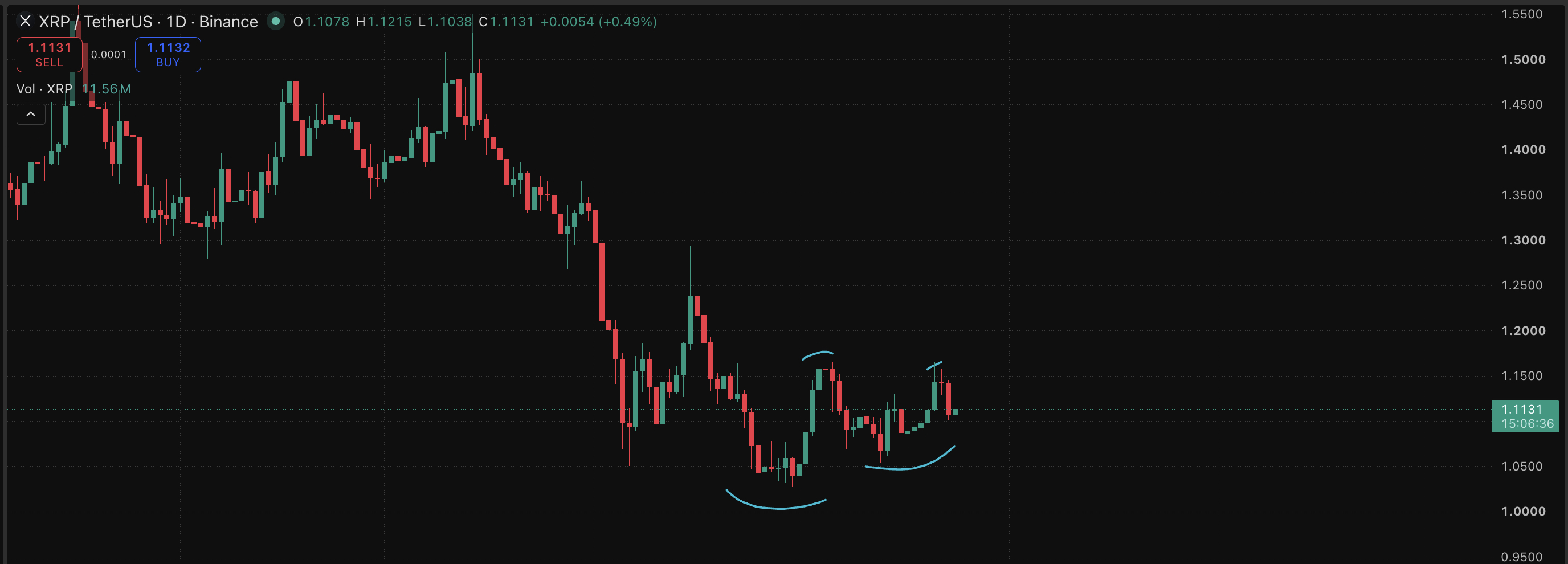
XRP price prediction: XRP is trading at around the $1.06 price level, down more than 4% since yesterday. The setup remains as unstable as it looks.
XRP ETFs, Coinglass

However, expectations for the Fed have shifted. Markets now largely expect rates to remain unchanged, while a surprise 25 basis point hike remains a less likely possibility. That makes forecasts based on an immediate 25- or 50-basis-point rate cut outdated. Even so, some analysts still argue that easing monetary policy later this year could support a stronger XRP recovery alongside continued ETF demand.

Meanwhile, Bitcoin’s negative Coinbase premium continues to point to muted institutional spot buying. That matters because XRP has historically lagged during risk-off periods before recovering quickly when sentiment improves. For now, traders appear focused on the Fed’s decision as the next catalyst for both Bitcoin and XRP.

Discover: The Best Crypto to Diversify Your Portfolio

XRP Price Prediction: Reclaim $1.20 Before the Fed Decision Lands?

At $1.05, XRP price is trading at the bottom of its recent intraday prediction range, around $1.05 to $1.09. The compression building over recent weeks faces a key catalyst. The Fed’s July 29 policy statement could trigger a sharp move in either direction.

Near-term resistance sits around $1.18 to $1.20, marking the first major technical hurdle. Above that, bullish momentum could open the path toward $1.22 to $1.32 if buying pressure returns. Meanwhile, immediate support rests at $1.05. A decisive break below that level could expose the $0.95 to $1.00 zone, where longer-term buyers may step in.

The bullish scenario depends on a dovish Fed and stronger institutional demand. If that happens, XRP could reclaim $1.20 and attempt a move toward $1.35. A sustained rally would also put longer-term targets, including Standard Chartered’s $2.80 year end forecast, back into focus.

xrp logo
Xrp (XRP)
24h7d30d1yAll time

The base case remains a Fed pause with dovish language. That could lift XRP toward the $1.15 to $1.20 area before momentum fades into consolidation. On the other hand, a hawkish surprise could drag XRP back toward $1.00 or even $0.95. A daily close below $1.00 would weaken the current bullish outlook.

One encouraging signal remains institutional demand. ETF-related products continue attracting capital even as XRP trades near local lows. That divergence suggests selling pressure is being absorbed, although the price still needs to reclaim resistance before confirming a stronger trend.

Trade XRP on Bybit and Get a Chance to Win Our $1,000 USDT Airdrop

Bitcoin Hyper Eyes Early-Stage Upside as XRP Treads Water Around Key Support

XRP at $1.05 offers a clean macro trade, but the upside is capped by a market cap already north of $60 billion. The Fed catalyst is real; a 10–20% move is achievable.

For traders who want exposure to a Bitcoin-ecosystem catalyst with asymmetric early-stage pricing, the math on established large-caps starts to look less interesting.

Bitcoin Hyper is currently in presale at $0.0136838, with almost $33 million raised to date. The project positions itself as the first-ever Bitcoin Layer 2 with Solana Virtual Machine (SVM) integration, combining Bitcoin’s security and trust layer with sub-Solana-speed execution and programmable smart contracts.

The Decentralized Canonical Bridge handles BTC transfers natively, removing the custodial friction that has historically kept institutional capital out of Bitcoin DeFi. Staking is live with high APY for presale participants.

For active traders watching XRP range-trade into a macro binary, researching Bitcoin Hyper before the presale window closes is a straightforward risk-sizing exercise. Also worth monitoring: how the Fed decision reshapes positioning across the broader crypto complex. The rate outcome will reset the risk appetite framework for everything from large-caps to early-stage plays.

Discover: The Best Token Presales

The post XRP Price Prediction: Fed Rate Decision and Ripple ETF Flow appeared first on Cryptonews.

Crypto Exchange Shakeout Deepens as BitMEX, BitMart, and AscendEX Exit the Market

BitMEX’s closure is no longer an isolated event. Within days, BitMart announced its own wind-down, while AscendEX had already confirmed it would cease operations earlier this month. Three centralized crypto exchange platforms exiting within weeks have shifted attention from individual failures to whether the industry is entering a new phase of consolidation.

Three centralized exchange platforms exiting within weeks have shifted attention away from individual failures as crypto consolidating.

The timing comes as trading activity remains well below previous bull market peaks. Retail participation has cooled, compliance costs continue rising, and liquidity is increasingly flowing toward a handful of global exchanges. Together, those trends are making it harder for smaller and mid-sized platforms to compete.

The growing list of exchange closures has also reignited debate over regulation. Former Binance CEO Changpeng Zhao, known as CZ, argued that years of regulatory pressure under the Biden administration accelerated industry consolidation by making it significantly harder for smaller exchanges to survive. While each exchange cited different reasons, analysts increasingly see the closures as symptoms of broader structural change.

Sad to see BitMex go. Some thoughts:

BitMex pioneered 100x perps in crypto back in 2014. Delivery futures existed before then, making Fridays hectic.

BTC deposits only, one chain only, withdrawals only once per day, through a multi-sig wallet. The constraints that seemed… https://t.co/8kP8byy37y

— CZ 🔶 BNB (@cz_binance) July 23, 2026

Discover: The Best Crypto to Diversify Your Portfolio

Crypto Exchange Consolidation Leaves Little Room for Smaller Platforms

BitMEX pioneered the perpetual swap in 2016 and later became the world’s largest crypto derivatives exchange. At its peak, the platform controlled roughly 57% of the global derivatives market. Its decline accelerated after U.S. authorities charged the exchange in 2020 with violating anti-money laundering and Bank Secrecy Act requirements.

Co-founders Arthur Hayes, Ben Delo, and Samuel Reed later pleaded guilty, while BitMEX paid substantial financial penalties and strengthened its compliance program. The changes reshaped its business model, ending the anonymous high-leverage trading that helped build its early success.

BITMEX PLEADS GUILTY TO BANK SECRECY ACT VIOLATION

– HDR Global Trading Limited, known as BitMEX, has pled guilty to violating the Bank Secrecy Act by failing to establish an adequate anti-money laundering (AML) program. The case is overseen by U.S. District Judge John G.… https://t.co/BtAz1sfyb1 pic.twitter.com/NSpcfsgbN6

— BSCN (@BSCNews) July 10, 2024

Meanwhile, Binance, Bybit, and OKX expanded with deeper liquidity, broader product offerings, and stronger fiat infrastructure. BitMEX later introduced spot trading and additional services, but those efforts failed to restore its competitive position as traders increasingly migrated elsewhere.

BitMart’s shutdown and AscendEX’s earlier exit reinforce the same trend. Each exchange faced different challenges, yet all struggled as compliance costs rose and competition intensified. A proposed class action lawsuit against former BitMEX executives also added reputational pressure, although the allegations remain unproven.

Trade Crypto on Bybit and Get a Chance to Win Our $1,000 USDT Airdrop

Regulation and Lower Trading Activity Reshape the Industry

The recent closures reflect broader structural changes across the crypto industry. Retail trading has slowed since the previous bull market, while Bitcoin ownership has increasingly shifted toward long-term holders. Lower speculative activity has reduced trading revenue, making it harder for smaller exchanges to remain profitable.

Binance’s Android app is reportedly no longer available on Google Play in parts of Europe amid MiCA licensing restrictions.

But the bigger story isn’t Binance. It’s the direction crypto is moving.

The days of exchanges competing only on fees, listings and features are changing

— Lisa (@LisaT22193) July 28, 2026

At the same time, Europe’s Markets in Crypto Assets regulation has raised compliance requirements across the European Union. Similar regulatory frameworks are emerging elsewhere, increasing legal and operational costs. Larger exchanges can spread those expenses across millions of users, while smaller competitors often cannot.

For customers, BitMEX has already halted new registrations and will enter reduced-only mode before its September closure. BitMart and AscendEX have also instructed users to withdraw assets within their respective timelines. Together, the three exits suggest the crypto exchange market is becoming increasingly concentrated among a few large global operators.

Discover: The Best Token Presales

The post Crypto Exchange Shakeout Deepens as BitMEX, BitMart, and AscendEX Exit the Market appeared first on Cryptonews.

Lido Crypto Validator Consolidation Will Cut Ethereum’s Beacon Chain by 29%

Lido Crypto has launched its Core 2026 protocol upgrade, introducing native 0x02 validator support to its largest staking module, restructuring node operator economics around ETH-backed bonds, and setting in motion a validator consolidation that will reduce the total number of Ethereum validators by roughly one-third.

No action is required from stakers, the changes operate entirely at the protocol level.

The upgrade lands at a structurally important moment. Ethereum’s Pectra hard fork introduced EIP-7251, which raised the maximum effective validator balance from 32 ETH to 2,048 ETH via 0x02 withdrawal credentials, but adoption required coordinated infrastructure work at the protocol layer.

Lido’s Core upgrade is effectively the largest single deployment of that new validator architecture on the network.

ldo logo
Lido Dao (LDO)
24h7d30d1yAll time

Lido Crypto Curated Module v2: The Architecture Shift

The Curated Module has secured roughly 90% of all staked ETH in Lido Core since the protocol launched in 2020. Curated Module v2 (CMv2) now brings 0x02 native support to that module, enabling migration of more than 265,000 existing validators from legacy 0x01 withdrawal credentials through consolidation.

The result: the share of ETH secured by compounding validators rises from 32.06% to 52.21%, and the Ethereum validator set shrinks from approximately 880,000 to an estimated 628,000, a reduction of about 29% in attestation messages per epoch, according to the Lido protocol blog.

Lido Core 2026 Upgrade

The biggest evolution of Lido Core brings improvements across the staking modules to keep the protocol aligned with Ethereum’s roadmap and ensure long-term protocol sustainability.

No action is required from stakers – the upgrade is protocol-level.

pic.twitter.com/VS5M59QiGh

— Lido (@LidoFinance) July 27, 2026

That attestation reduction matters beyond Lido. Consensus-layer overhead affects every validator on the network, and a 29% cut in per-epoch messages meaningfully reduces networking and processing load for all operators.

This is the clearest way in which Lido’s internal restructuring carries direct implications for Ethereum staking dynamics broadly, fewer validators means a leaner beacon chain, independent of any single protocol’s market share.

CMv2 rolls out in two phases. Phase 1, now live, covers 0x02 validator support, operator classification, bond-based security mechanisms, and streamlined governance. Phase 2, in development, introduces flexible stake distribution, custom operator fees, and a strike system, moving Lido’s curated set toward an explicit market-driven ranking model.

Operator Economics: From Reputation to Bonded Capital

The most significant structural change for node operators is the introduction of ETH-backed bonding and a formal penalty framework. The legacy Curated Module operated on reputation: operators were expected to perform and compensate stakers if losses arose, but there was no locked collateral enforcing that obligation.

CMv2 adds financial skin-in-the-game, covering underperformance, downtime, slashing events, and execution-layer rewards violations.

The new Curated Module v2 by @LidoFinance is a big deal for @ethereum. With all curated validators consolidated, we will see a 30%+ decrease in the total @ethereum validators.

Fast finality has never been closer than today!

— gusakov.eth | Lido (@d_gusakov) July 28, 2026

Alongside bonding, CMv2 introduces a Node Operator Type Framework that formally classifies operators by contribution profile: Decentralization Operators (geographic and client diversity), Extra Effort Operators (capital participation, oracle and deposit security committee roles, LDO governance activity), and Public Good Operators (Ethereum consensus and execution layer client developers).

Seven client teams have been onboarded as curated node operators; as of July 1, 2026, they had collectively received 8,710 stETH, approximately $21 million, in cumulative staking rewards, per the Lido blog.

Governance overhead also decreases under CMv2. Routine administrative updates, previously requiring on-chain DAO votes, are now permissioned to operators and the Curated Module Committee. The DAO retains authority over operator set composition and key parameters, with override and veto rights intact.

Trade Ripple XRP on Bybit and Get a Chance to Win Our $1,000 USDT Airdrop

The post Lido Crypto Validator Consolidation Will Cut Ethereum’s Beacon Chain by 29% appeared first on Cryptonews.

Fairshake, $48M, and the Senate Vote Ripple Is Racing to Win

Ripple has become one of the largest corporate political donors in the United States this election cycle, while the market structure bill backed by the crypto industry remains before the Senate ahead of the August recess.

Public Citizen estimates Ripple has contributed about $48 million during the 2026 election cycle, placing it among the country’s largest corporate political donors. Andreessen Horowitz ranks slightly higher at roughly $51.65 million, while Coinbase’s reported total differs because organizations count different PACs and contribution vehicles.

Call it what it is: Ripple's other ledger

The XRPL is public…… Every transfer, every validator, every state change anyone with a node can verify it

Then there's the other ledger: $48 million funnelled into Fairshake and its sister PACs, moving through the far less… pic.twitter.com/N5V8tyurdu

— Clover (@Clover__Ken) July 27, 2026

Most of the funding flows through Fairshake, the crypto industry’s leading super PAC network. Fairshake and its affiliated committees entered the 2026 midterms with roughly $193 million in cash, about 37% above their July 2025 level. Coinbase, Ripple, and Andreessen Horowitz together committed around $74 million during the second half of 2025.

Public Citizen estimates crypto companies have spent roughly $189 million, representing about 37% of all corporate election spending this cycle. By comparison, artificial intelligence and Big Tech contributed about $60 million, while online gambling accounted for roughly $45.6 million. By that measure, crypto has become the largest corporate political spending sector.

Discover: The Best Token Presales

How Ripple Mechanism Works

Fairshake operates through three organizations. The flagship super PAC supports candidates from both parties, while Protect Progress backs Democrats and Defend American Jobs supports Republicans. This structure lets donors compete in both parties’ primaries without presenting every campaign as explicitly pro crypto.

The network mainly targets low-turnout primaries, where relatively modest advertising budgets can influence competitive races. Fairshake entered 2026 with about $64 million already available, giving it an established political operation before new fundraising began.

Ripple has committed $48M this cycle, making it America's second-largest corporate donor as the CLARITY Act heads for a critical Senate vote.

Ripple’s largest disclosed commitment this cycle is a $25 million contribution to Fairshake, announced in late 2025. However, reports that Ripple has already committed $1 million directly to John Deaton’s 2026 Senate campaign remain unconfirmed through public campaign finance records. Claims that Ripple CTO David Schwartz donated XRP to Deaton’s campaign also lack official confirmation.

Discover: The Best Crypto to Diversify Your Portfolio

What the Spending Achieved and the Senate Test

Fairshake and its affiliates raised about $93 million during the 2023 to 2024 cycle and spent more than $130 million supporting preferred candidates. Representatives Jamaal Bowman and Cori Bush both lost Democratic primaries after heavy Fairshake-backed advertising, reinforcing the industry’s growing political influence even though neither race centered on crypto policy.

Congressional momentum followed. The House approved the CLARITY Act, while the GENIUS Act advanced separately with bipartisan backing. Although campaign spending alone cannot explain those results, the industry’s expanding political presence coincided with stronger congressional support for crypto legislation.

The U.S. Senate has exactly 10 days left to pass the CLARITY Act before leaving for its summer recess on August 7, 2026.

This will not pass and will be the catalyst for the last leg down in bitcoin.

— Jon O (@JonO42989) July 28, 2026

Massachusetts remains an important exception. John Deaton lost to Elizabeth Warren by nearly 20 percentage points in 2024 despite significant outside support, suggesting Fairshake’s strategy remains more effective in lower turnout primaries than statewide general elections.

Critics argue crypto’s influence comes from its concentration, with one industry supplying more than one third of corporate election spending. The industry counters that banking, energy, and pharmaceutical companies have long used similar political strategies. More than 200 crypto firms, including Coinbase, Ripple, and Kraken, have urged the Senate to pass the CLARITY Act, arguing clear rules are needed to keep innovation in the United States.

The legislation now faces a crucial Senate window before the August recess. Ripple CEO Brad Garlinghouse has remained one of its strongest advocates. If the bill passes, Fairshake will carry a substantial campaign reserve into the general election. If it fails, those resources could instead target future primary races.

xrp logo
Xrp (XRP)
24h7d30d1yAll time

Ripple’s political spending complements its broader investment in institutional finance, including RLUSD, custody services, and the Hidden Road acquisition, making regulatory clarity a strategic business priority rather than an XRP-specific objective.

Trade Crypto Before The Clarity Act Passes on Bybit and Get a Chance to Win Our $1,000 USDT Airdrop

The post Fairshake, $48M, and the Senate Vote Ripple Is Racing to Win appeared first on Cryptonews.

Securitize Gains Full RIA Status to Expand Onchain Advisory Mandates

SEC Crypto: Securitize Capital, the advisory subsidiary of tokenized asset platform Securitize, has registered with the SEC as a full investment adviser, unlocking expanded institutional mandates for its onchain capital markets business.

The move graduates the firm from exempt reporting adviser status, under which it operated with constraints that limited the scope of the assets and clients it could serve.

Securitize announced the registration on Monday, framing it as a direct expansion of its regulated business stack. CEO Carlos Domingo said the registration strengthens the company’s ability to help institutions develop and manage investment strategies for onchain capital markets, according to Securitize.

btc logo
Bitcoin (BTC)
24h7d30d1yAll time

Discover: The Best Crypto to Diversify Your Portfolio

What the Registration Actually Changes For Securitize

As an exempt reporting adviser, Securitize Capital operated under a lighter regulatory regime, primarily suited to venture capital or private funds with limited U.S. assets.

Full SEC registration under the Investment Advisers Act imposes additional disclosure, compliance, recordkeeping, and examination requirements, but it also removes the constraints on who the firm can advise and at what scale.

We’ve expanded our regulated platform with the registration of Securitize Capital LLC as an investment adviser with the SEC.

This adds advisory capabilities for asset managers, institutional investors, and other sophisticated market participants. pic.twitter.com/p0N7U3XzyW

— Securitize (@Securitize) July 27, 2026

The practical effect: Securitize can now pursue a wider range of institutional advisory mandates, separately managed accounts, broader private fund structures, and formal investment strategies built around its tokenization infrastructure, without the cap imposed by exempt status.

This also completes Securitize’s U.S. regulatory stack in a meaningful way. The firm already operates an SEC-registered broker-dealer, an alternative trading system, a transfer agent, and fund administration services.

Adding a full RIA license positions it as a vertically integrated, regulated infrastructure provider for tokenized securities, a configuration few competitors can match. For context on the broader push toward regulated institutional infrastructure in crypto, the regulatory momentum driving institutional adoption has been building across multiple fronts in 2026.

Scale and Asset Manager Relationships

Securitize is the largest tokenization platform by onchain asset value, with approximately $4.8 billion in tokenized assets across funds managed by BlackRock, Apollo, KKR, VanEck, Hamilton Lane, and other institutional asset managers.

That existing franchise is what the advisory registration layers on top of; this is not a startup building toward institutional relevance, it’s a firm with established AUM relationships formalizing the advisory wrapper around them.

2/ Our U.S. affiliates now bring together an SEC-registered investment adviser, broker-dealer and Alternative Trading System, transfer agent, and fund administration services.

Together, they expand the regulated foundation for onchain capital markets. pic.twitter.com/R9iTam1jy3

— Securitize (@Securitize) July 27, 2026

The Apollo relationship is worth flagging specifically. Securitize Capital has been listed as the contact on SEC filings tied to the Securitize Tokenized Apollo Diversified Credit Fund, indicating active work in tokenized credit strategies. Full RIA status makes structuring and managing those types of mandates more straightforward from a regulatory standpoint.

The trajectory here mirrors what’s happening elsewhere in institutional crypto infrastructure. Ripple’s push into institutional finance with RLUSD and prime brokerage and Fasanara Capital’s on-chain activity in institutional DeFi both reflect the same pattern: traditional capital isn’t waiting for perfect regulatory clarity before committing infrastructure spend to onchain markets.

Public Company Context and Stock Performance

Securitize began trading on the New York Stock Exchange under the ticker SECZ on July 2, after completing a merger with Cantor Equity Partners II. Shares have since fallen roughly 46% from their first-day closing price – a sharp correction that adds some irony to a week of regulatory milestone announcements.

The neoclassical facade of the New York Stock Exchange building on Wall Street.

Photo: Blackrock Headquarter

The stock decline doesn’t directly undercut the strategic logic of the RIA registration, but it does put the compliance build-out in context: Securitize is now a public company with earnings obligations, and the advisory license needs to translate into fee-generating mandates to justify the increased regulatory overhead.

The infrastructure is compelling; the revenue model tied to it is what the market is apparently still pricing in.

For institutional asset managers already running tokenized funds through Securitize’s platform, full RIA status likely reduces friction around adding advisory services to existing relationships.

Whether that converts into new AUM inflows or an expanded mandate scope in the near term is the open question that the registration itself doesn’t answer.

Trade Ripple XRP on Bybit and Get a Chance to Win Our $1,000 USDT Airdrop

The post Securitize Gains Full RIA Status to Expand Onchain Advisory Mandates appeared first on Cryptonews.

John Oliver Rips Trump Crypto Involvement as “Flagrantly Corrupt and Compromised”

John Oliver’s return to Last Week Tonight landed on crypto’s most politically charged fault line. The TRUMP crypto memecoin is trading near $1.48, down about 6% over the past day. Meanwhile, Bitcoin sits around $63,460 after slipping roughly 2%, reflecting cautious sentiment ahead of key macro events.

Oliver’s HBO exposé highlighted one striking figure. Trump’s first year back in office reportedly generated more than $2.2 billion in personal income. Around $1.4 billion came from crypto ventures, including NFTs, memecoins, and World Liberty Financial. He called Trump “the first crypto president” and traced his shift from dismissing Bitcoin to embracing digital assets.

The segment also described the TRUMP memecoin as a classic pump and dump. Oliver argued insiders sold into strength while many retail investors absorbed steep losses. He tied that criticism to the Trump family’s expanding crypto business and questioned whether political influence amplified investor demand.

For markets, the bigger issue is regulation. Ethics lawyers argue that a sitting president earning substantial crypto revenue creates an obvious conflict of interest. Whether that leads to tighter oversight or fuels more speculation around Trump crypto tokens remains a key question traders continue to weigh.

Discover: The Best Crypto to Diversify Your Portfolio

Can TRUMP Crypto Memecoin Recover, or Is $1.50 the New Ceiling?

At $1.48, TRUMP is pressing against a range that has offered little meaningful technical support since its sharp post-launch decline. The recent 24-hour range sits between roughly $1.47 and $1.56. Sellers continue rejecting rallies near the upper boundary, while buyers struggle to defend recent lows with conviction.

Volume remains the key factor. Oliver’s segment has brought fresh attention, but attention cuts both ways for a memecoin. It attracts speculative traders while reinforcing the pump-and-dump narrative for a much wider audience. Meanwhile, Bitcoin trades near $63,460, down about 2% on the day, offering little support for risk assets.

24h7d30d1yAll time

The bullish case depends on political headlines fueling speculative inflows. If TRUMP reclaims $1.56 with sustained volume, it could target $1.75 next. Even so, that outcome looks difficult unless Bitcoin regains momentum and market sentiment improves.

The base case favors consolidation between $1.45 and $1.56 as Oliver’s criticism continues circulating. Regulatory scrutiny may also keep buyers cautious. As a result, many holders could remain trapped on thin margins while waiting for a stronger catalyst.

The bearish case starts with a decisive break below $1.47. That would expose the $1.40 area if selling pressure accelerates. Any meaningful congressional action involving crypto conflicts of interest could intensify downside pressure, although no formal action has been announced.2 hours.

Trade Memecoins on Bybit and Get a Chance to Win Our $1,000 USDT Airdrop

Bitcoin Hyper Eyes Early-Stage Entry as Political Heat Pressures Meme Plays

When politically exposed tokens carry headline risk, and BTC softens on macro pressure, rotation tends to find infrastructure plays rather than narrative ones. The current market structure, with BTC dominance in flux and alt-season signals emerging, rewards projects that offer technical utility over political adjacency. That’s the environment Bitcoin Hyper ($HYPER) is raising into.

The project’s positioning is straightforward and technically specific: it is the first-ever Bitcoin Layer 2 integrating the Solana Virtual Machine (SVM), delivering smart contract execution and transaction throughput that, by design, outperforms Solana itself at the infrastructure level.

While inheriting Bitcoin’s security and trust model. That’s a meaningful combination if the architecture delivers, addressing Bitcoin’s three core limitations (slow finality, high fees, no programmability) without abandoning the base layer’s guarantees. The Decentralized Canonical Bridge handles BTC transfers natively.

Presale numbers as of this writing: $0.0136838 per $HYPER, with $33 million raised. Staking is live with a high APY incentive for early participants. With BTC under near-term pressure, a Bitcoin-native infrastructure presale absorbs a different risk profile than a memecoin.

Research Bitcoin Hyper before the current stage closes.

Discover: The Best Token Presales

The post John Oliver Rips Trump Crypto Involvement as “Flagrantly Corrupt and Compromised” appeared first on Cryptonews.

Arthur Hayes Holds 7,213 ETH as FOMC Jitters Drives Ethereum Price Drop

Arthur Hayes added 3,298 ETH worth $6.39 million on July 28, roughly three hours before Ethereum’s spot price slid from $1,960 to $1,872, a drop that immediately raised the question of whether the BitMEX co-founder’s whale trading triggered the selloff. The answer, grounded in the on-chain data, is no.

But the timing crystallizes a more interesting question about where Hayes is positioning for the next leg of this ETH cycle.

According to Lookonchain, the July 28 purchase was Hayes’s largest single leg in a buying streak that began on July 15. He has now accumulated 7,213 ETH at a total cost of $13.87 million, averaging $1,923 per ETH.

Arthur Hayes(@CryptoHayes) bought another 3,298 $ETH($6.39M) 3 hours ago.

Since July 15, Arthur Hayes has bought a total of 7,213 $ETH($13.87M) at an average price of $1,923 and is now down ~$301K.https://t.co/gau6egd7Vm pic.twitter.com/BoElOKmmaG

— Lookonchain (@lookonchain) July 28, 2026

At post-drop prices, the position sits roughly $368,000 underwater – a paper loss, not a crisis, but one that underscores how quickly the macro environment can move against even a well-telegraphed accumulation thesis.

Discover: The Best Crypto to Diversify Your Portfolio

How Hayes Built the Position – and Why OTC Routing Matters

Hayes assembled the 7,213 ETH stack through a series of over-the-counter trades routed through Galaxy Digital, FalconX, and Cumberland. Individual legs ranged from approximately 645 ETH to 1,330 ETH, with the July 28 purchase at 3,298 ETH representing the largest single tranche.

OTC execution is the key structural detail: none of these trades hit the open order book in a way that would create visible sell pressure or liquidate stacked bids.

On-chain data flagged by Lookonchain confirmed the wallet-to-OTC-desk transfer pattern. The mechanics mean the correlation between Hayes’s buy and the subsequent ETH price drop is coincidental timing, not causation.

Source: Arkham

A $6.39 million OTC purchase, however attention-grabbing in dollar terms, is small relative to daily ETH spot and derivatives volume across centralized and decentralized venues.

This accumulation reverses a June exit that cost Hayes approximately $606,000 in realized losses. He had sold roughly 6,000 ETH below $1,700, citing macro headwinds, including energy prices and political risk.

He then re-entered starting July 15 as ETH recovered above $1,750, a pattern that fits his documented trading style, which prioritizes rebuilding conviction positions at dislocated prices rather than protecting short-term P&L.

The Actual Catalyst: Fed Timing and Broader Crypto Market Pullback

The ETH price drop on July 28 was not an isolated event. It was part of a broader crypto market pullback across the asset class as traders de-risked ahead of the Federal Reserve’s two-day policy meeting.

Rate decisions, or more precisely, the forward guidance language that accompanies them, have been the dominant macro variable for risk assets in 2026. Crypto markets have priced in sensitivity to that signal, and positioning ahead of the announcement typically compresses speculative longs.

Source: CME Watch

ETH is not uniquely exposed here, but it is exposed. The move from $1,960 to $1,872 represents a roughly 4.5% intraday drawdown that hit simultaneously with pullbacks in BTC and major altcoins.

Attributing that to a single 3,298 ETH OTC purchase, one that didn’t touch the open market, requires ignoring how macro-driven de-risking actually propagates through derivatives books and spot liquidations.

$1,900 Is the Level That Decides the Near-Term Narrative

Hayes’s average entry of $1,923 is not far above ETH’s post-drop price. The $1,900 level is the immediate technical line of significance: a sustained hold above it would keep Hayes’s position near breakeven and preserve the bullish structure that drew him back in after the June exit.

A failure to reclaim $1,900 with any conviction opens the door to a retest of the $1,750–$1,800 range where his July re-accumulation began.

The institutional thesis underpinning Hayes’s position has not been altered by a single macro-driven pullback. Fundstrat’s Tom Lee has made a parallel argument: institutions are moving past simply trading Ethereum toward building on it, with BlackRock’s tokenized fund and Robinhood’s ETH-based fee token cited as structural demand drivers.

That thesis is a medium-term one, and it does not immunize any position against near-term rate-driven volatility.

Ethereum (ETH)
24h7d30d1yAll time

On-chain data confirms that Hayes’s Maelstrom-linked wallet is still holding, with no exit signals flagged in the reporting window. That matters because his track record includes rapid reversals – he has publicly championed tokens including HYPE, Zcash, and Worldcoin before quietly closing those positions as sentiment shifted.

The ETH position is larger in both size and stated conviction than those prior trades, but the pattern is worth tracking. On-chain watchers will be monitoring for any OTC transfer flows in the opposite direction as the Fed decision lands.

For active ETH traders, the Hayes accumulation is a data point, not a trade signal. The more actionable read is the Fed meeting outcome and whether ETH can reclaim $1,900 in the sessions immediately following. A contrarian institutional position of this size at current levels suggests smart money sees value here; it does not guarantee the market agrees on any particular timeline.

Trade Ripple XRP on Bybit and Get a Chance to Win Our $1,000 USDT Airdrop

The post Arthur Hayes Holds 7,213 ETH as FOMC Jitters Drives Ethereum Price Drop appeared first on Cryptonews.

Inside CZ Binance Plan to Turn ASEAN Into Crypto Federation

Changpeng Zhao (CZ Binance) publicly backed a crypto license passporting system across ASEAN at the ASEAN Tech Summit Manila 2026 on July 28, arguing that firms already licensed in one member state should face only a streamlined approval process, not a full re-application, to operate across the rest of the bloc.

The proposal, if adopted, would materially reduce compliance overhead for crypto and stablecoin service providers targeting Southeast Asia’s fragmented regulatory landscape.

Speaking during the “One ASEAN, One Digital Economy” fireside chat alongside FinTech Alliance PH founding chair Lito Villanueva, CZ endorsed Villanueva’s idea of license portability across the region.

Regulators would retain the right to review applicants entering their jurisdiction, but the threshold would be fundamentally lower than starting from scratch in every market.

See you all tmr, in Manila 🇵🇭 https://t.co/KOkXZmVoea

— CZ 🔶 BNB (@cz_binance) July 26, 2026

“I think that’s mostly a political problem,” Zhao said of cross-border regulatory coordination, adding that the underlying technology posed no meaningful obstacle.

He argued that allowing more licensed platforms to compete regionally would improve services and reduce costs for consumers, a straightforward pro-competition case that sidesteps the harder question of how to get nine politically distinct regulators to agree on mutual recognition standards.

Bitcoin News: Why Regulatory Fragmentation Is a Real Cost for ASEAN Crypto Firms

The problem Zhao is identifying is structural. Southeast Asia currently has no bloc-wide passport for crypto companies – each ASEAN member state runs its own digital asset licensing regime, with separate AML requirements, conduct rules, and capital standards.

A firm seeking a genuine regional presence must run parallel licensing processes across multiple jurisdictions simultaneously, which scales compliance costs in a way that disadvantages smaller, well-regulated operators relative to larger incumbents.

The regulatory framework Zhao described mirrors the EU’s MiCA model directly. Under the Markets in Crypto-Assets Regulation, a crypto-asset service provider authorized in one EU member state can passport its services across all 27 member states by notifying its home regulator of the countries and services involved, no fresh application required.

Photo: Changpeng Zhao

CZ referenced the MiCA architecture as the functional template for what ASEAN could build, and the comparison is structurally apt even if the political dynamics differ substantially between a treaty-based union and a looser regional grouping.
The ESMA implementation timeline for the Markets in Crypto-Assets Regulation (MiCA).

The argument around Crypto regulation fragmentation being primarily political rather than technical carries weight here. Brad Garlinghouse has made a parallel case in the US context, framing regulatory incoherence as the primary drag on institutional crypto adoption, a problem of legislative will, not technical incapacity.

Discover: The Best Crypto to Diversify Your Portfolio

ASEAN Already Has Passporting Precedents in Adjacent Markets

The idea is not without regional precedent. The ASEAN Capital Markets Forum’s Collective Investment Schemes Framework, operationalized in Malaysia, Singapore, and Thailand in 2014, with the Philippines joining in 2021, allows a fund authorized in its home jurisdiction to be offered in participating host markets through a streamlined authorization process rather than full reregistration.

The ACMF Pass extends a similar fast-track model to investment advisers across participating jurisdictions.

btc logo
Bitcoin (BTC)
24h7d30d1yAll time

These frameworks are narrower than those proposed by Zhao and Villanueva and remain subject to host-market requirements, but they establish that ASEAN regulators have already accepted the logic of mutual recognition in principle. Crypto-specific passporting would require agreement on supervision standards and consumer protection floors that don’t yet exist at the bloc level, but the institutional machinery for building them does.

For traders watching Binance’s regulatory trajectory, the Manila remarks fit a broader pattern of the exchange positioning itself in Asia as its primary licensing growth market. Ripple’s multi-jurisdictional expansion strategy illustrates the same operational reality CZ is addressing: operating at scale across Southeast Asia requires either accepting full licensing overhead in every market or pushing regulators toward a lighter mutual-recognition model.

Trade Ripple XRP on Bybit and Get a Chance to Win Our $1,000 USDT Airdrop

The post Inside CZ Binance Plan to Turn ASEAN Into Crypto Federation appeared first on Cryptonews.

XRP Price Caught in Volatile Range, With Both Sides Ready For a Violent Coil

XRP is trading at around the $1.06 price level, down more than 4% since yesterday. The setup remains as unstable as it looks. Price is compressing inside a tight range with no clear resolution. Bulls and bears both have a case, and whichever side breaks first could trigger the next meaningful move.

The main near-term narrative remains spot ETF inflows optimism. That expectation has helped support sentiment despite recent price weakness. Meanwhile, price differences across exchanges reflect uneven liquidity rather than a clear market direction.

XRP is trading at around the $1.06 price level, down more than 4% since yesterday. The setup remains as unstable as it looks.
XRP ETFs Flows, Coinglass

Speculative forecasts of $5 XRP by late 2025 continue circulating on social media. However, those projections remain opinion, not evidence. For now, traders are paying closer attention to price structure than long-term predictions.

Technically, the key support sits around $1.05. A decisive break below that level could expose the psychological $1.00 area. If buyers continue defending support, the current range may tighten until either ETF developments or a shift in market sentiment forces a breakout.

Discover: The Best Crypto to Diversify Your Portfolio

Can XRP Price Reclaim $1.20 Before the ETF Decision Lands?

At its current $1.06 price level, XRP is sitting near the lower edge of its recent consolidation range. Recent support around $1.08 to $1.10 has already given way, leaving the near-term structure looking more cautious. Trading volume remains steady rather than explosive, suggesting buyers have not returned with conviction.

The bullish scenario remains straightforward. XRP needs to reclaim $1.10 with strong volume before buyers can target the $1.20 to $1.25 resistance zone. Spot ETF optimism continues supporting sentiment, but traders still need confirmation from price before calling for a sustained breakout.

xrp logo
Xrp (XRP)
24h7d30d1yAll time

The base case still favors consolidation. XRP could continue trading between $1.05 and $1.10 while investors digest macro developments and regulatory headlines. That would leave neither bulls nor bears with a decisive advantage, extending the current period of indecision.

The bearish case begins with a confirmed daily close below $1.05. If that level fails, the next meaningful demand zone sits around $1.00, followed by $0.95 if selling accelerates. Momentum indicators still lack a clear directional signal, making any breakout likely to be sharp once volatility returns.

Trade Ripple XRP on Bybit and Get a Chance to Win Our $1,000 USDT Airdrop

Maxi Doge Targets Early Mover Upside as XRP Tests Key Levels

XRP at current levels offers a known asset with a known ceiling. The upside math from $1.06 to even $2.00 is roughly a double, and that requires flawless ETF execution, sustained institutional flows, and cooperative macro. That’s not a bad trade. It’s just not an asymmetric one.

Traders hunting for the kind of outsized return profiles that don’t depend on a $69 billion market cap re-rating tend to look earlier in the cycle. And that’s the structural argument for Maxi Doge ($MAXI), an ERC-20 meme token built around a 240-lb canine mascot and a community culture centered on high-conviction trading.

POV: The government trying to work out how to tax capital gains on assets that price fluctuate pic.twitter.com/MXJPJDRzzJ

— MaxiDoge (@MaxiDoge_) July 7, 2026

The project has raised $4.8 million at a current presale price of $0.0002831, with dynamic APY staking already live. The token’s mechanics include holder-only trading competitions with leaderboard rewards, a Maxi Fund treasury managing liquidity and partnerships, and meme-first marketing that’s earned genuine traction in trading communities rather than just ad spend.

The tagline “never skip leg-day, never skip a pump” is stupid in the best possible way, and that’s intentional. For traders sizing a small speculative allocation, research Maxi Doge before the presale window closes.

Discover: The Best Token Presales

The post XRP Price Caught in Volatile Range, With Both Sides Ready For a Violent Coil appeared first on Cryptonews.

Crypto News, July 28: CLARITY Act Shelved, Bitcoin Drops in Asian Market Rout

In Washington, momentum can vanish as quickly as it arrives. The Clarity Act now sits on the shelf, while the Bitcoin price slips under renewed pressure after a sharp selloff across Asian markets.

Senate Majority Leader John Thune has shifted attention toward federal nominations and a Russia sanctions bill, delaying debate on crypto legislation. The Digital Asset Market Clarity Act, designed to define SEC and CFTC oversight, now faces an increasingly narrow window before Congress begins its August recess.

🚨SENATE SHELVES CLARITY ACT FOR NOW!

Majority Leader John Thune is prioritizing nominations and a Russia sanctions bill, pushing the crypto market structure legislation aside amid limited floor time, CoinDesk reports.

Clarity is unlikely to reach a vote before next week, the… pic.twitter.com/XKztbFL7cf

— Crypto Banter (@crypto_banter) July 28, 2026

That delay arrives at a supposedly bullish moment. Risk appetite was at its top, and now, the delay leaves crypto exposed to fresh volatility.

Discover: The Best Token Presales

Clarity Act Delay Extends Regulatory Limbo

The Clarity Act is a reminder that politics don’t move in straight lines. Ethics concerns surrounding public officials’ digital asset holdings continue to complicate negotiations. Meanwhile, a proposed 2029 sunset clause remains another point of contention before lawmakers can reach consensus.

Outside Capitol Hill, opposition continues to build. New York Attorney General Letitia James argues the Clarity Act could weaken states’ ability to prosecute crypto fraud, potentially limiting local enforcement powers. Her criticism adds another obstacle as supporters race against the congressional calendar.

NY Attorney General Targets CLARITY Act

New York Attorney General Letitia James urged Congress to strengthen the Clarity Act instead of weakening state oversight.

She said the bill could preempt state investor protection laws and limit fraud enforcement.

James argued state… pic.twitter.com/bCPyiyeYWW

— BSCN (@BSCNews) July 28, 2026

Not just in the States, regulatory pressure is also unfolding overseas. Thailand’s SEC has filed criminal complaints against Bitkub and two former executives over allegations they concealed a 2021 cyberattack worth about $50 million. Although customers were reimbursed, authorities allege the exchange submitted inaccurate reports, reviving concerns over transparency throughout the industry.

DECRYPT: Bitkub exchange faces criminal charges from Thailand's SEC regarding concealed $47M security breach. pic.twitter.com/JBGyij3Dff

— MSB Intel (@MSBIntel) July 27, 2026

Elsewhere, prediction markets continue advancing despite federal uncertainty. A U.S. judge temporarily blocked Minnesota’s restrictions on platforms including Kalshi and Polymarket, citing potential conflicts with federal commodities law. As the CFTC seeks faster legal clarity, the Clarity Act remains trapped in Washington’s legislative queue.

Discover: The Best Crypto to Diversify Your Portfolio

Bitcoin Price Slides as Asian Markets Trigger Risk Aversion

eth logo
Ethereum (ETH)
24h7d30d1yAll time

The Bitcoin price weakened after Asian equity markets suffered a huge selloff, extending losses from the previous U.S. session. Bitcoin briefly fell below recent support before stabilizing. It’s not just crypto, but a wider retreat from risk assets as investors reduced exposure across multiple markets.

The butchering started with South Korea’s Kospi, which recorded one of its sharpest declines in months, led by heavy selling in major technology stocks. This could be the culprit, dragging the Bitcoin price lower alongside market sentiment.

Bitcoin price tumbles as the Clarity Act stalls in Congress. Is crypto heading for a deeper correction or just another shakeout?
Kospi Composite Index, Tradingview

Recent gains have also begun to lose momentum. Bitcoin price previously rebounded from July lows but struggled to reclaim higher resistance levels as buying pressure softened. Spot Bitcoin ETFs continued attracting inflows over recent weeks, although significant late-week withdrawals showed institutional demand remains sensitive to macroeconomic shifts.

Large holders have largely avoided aggressive accumulation during the latest decline. Strategy maintained its existing Bitcoin position without announcing any additional purchases, instead preserving billions in available cash. At the same time, miners may receive modest relief as network difficulty appears set for its first annual decline in nearly two decades.

Attention now shifts toward the Federal Reserve and Washington alike. Bitcoin price could remain trapped in a cautious range until investors receive clearer signals from policymakers and lawmakers. For now, delayed legislation and fragile market sentiment continue moving together, leaving the Clarity Act and crypto markets waiting for the next decisive chapter.

Trade Bitcoin and Major Cryptocurrencies on Bybit and Get a Chance to Win Our $1,000 USDT Airdrop

The post Crypto News, July 28: CLARITY Act Shelved, Bitcoin Drops in Asian Market Rout appeared first on Cryptonews.

How Ripple Became a Full-Stack Institutional Finance Platform

Ripple SVP Jack McDonald told Grayscale Research that the company has moved well beyond its origins as a cross-border payments provider. It now operates as a platform for institutional digital asset infrastructure. Its offerings include custody, stablecoins, treasury management, and institutional trading services. Ripple argues institutions can simplify operations by using one provider instead of several.

Speaking with Charlie Perkins of Grayscale Research, McDonald said Ripple expanded through product development and acquisitions. Its platform now includes digital asset custody, the U.S. dollar-backed stablecoin RLUSD, treasury management, and institutional trading infrastructure. Ripple also strengthened its capabilities through Standard Custody & Trust Company and Hidden Road.

In 2013, @Ripple was just a payments company. Today it spans custody, payments, native stablecoins, treasury management, and prime brokerage, all under one roof.@_JackMcDonald_, SVP at Ripple, joins Grayscale to discuss how the company is building full-stack financial… pic.twitter.com/JJgAgPWV4K

— Grayscale (@Grayscale) July 26, 2026

McDonald said Ripple focuses on banks, fintechs, payment firms, and asset managers. Those organizations require regulated, enterprise-grade infrastructure. That institutional focus shapes every major product launch and acquisition. Ripple is targeting large financial institutions rather than retail users.

The strategy addresses a common hurdle in institutional crypto adoption. Many firms still rely on separate providers for custody, liquidity, stablecoin infrastructure, and execution services. Ripple believes integrating those services can reduce operational complexity. It also aims to accelerate the adoption of blockchain-based finance.

Ripple SVP Jack McDonald outlines how custody, RLUSD, prime brokerage, and treasury tools now form one integrated institutional platform.

McDonald described RLUSD as infrastructure instead of a market share play. Ripple wants the stablecoin to support enterprise payment and treasury workflows. The company is prioritizing practical use cases over rapid supply growth. That strategy aligns with its broader institutional focus.

Hidden Road strengthens Ripple’s institutional trading capabilities. Meanwhile, Ripple continues expanding RLUSD support across multiple blockchain networks. The company has also announced partnerships with financial institutions and infrastructure providers. Each partnership supports a different stage of institutional digital asset adoption.

Trade Ripple XRP on Bybit and Get a Chance to Win Our $1,000 USDT Airdrop

Regulation Could Strengthen Ripple Position

xrp logo
Xrp (XRP)
24h7d30d1yAll time

Ripple says it holds more than 60 regulatory licenses, registrations, and approvals worldwide. That regulatory footprint could become increasingly valuable as digital asset rules evolve. Banks and regulated financial firms typically prefer established compliance frameworks. Ripple believes that the foundation supports institutional onboarding.

The company also invests through its University Blockchain Research Initiative. The program includes more than 60 academic partners worldwide. Researchers study blockchain technology, tokenization, artificial intelligence, and post-quantum cryptography. Ripple views those investments as long-term infrastructure development.

McDonald’s strategy is clear, but execution remains the key challenge. Integrating Standard Custody and Hidden Road into one seamless platform will take time. Institutions will judge Ripple by operational results instead of marketing. Successful integration remains critical to its long-term strategy.

Institutional demand for blockchain-based financial services continues to grow across the industry. That creates opportunities for Ripple while increasing competition. Investors should watch RLUSD adoption, acquisition integration, and enterprise product growth. Those indicators will reveal whether Ripple is gaining meaningful institutional traction.

Discover: The Best Crypto to Diversify Your Portfolio

The post How Ripple Became a Full-Stack Institutional Finance Platform appeared first on Cryptonews.

Pump Fun Crypto Breaking Out, Shrugging Off Vesting Supply Unlocks

PUMP, or Pump Fun crypto token, is trading at $0.00214 after staging a 60% recovery from its recent swing low. The unusual part is what did not happen alongside that move. The token absorbed its largest investor and team unlock without breaking down, suggesting demand remained strong despite fresh supply.

Mid-July marked the first vesting tranche. Investors received 32.5 billion PUMP, equal to 25% of their allocation. Team members unlocked 50 billion PUMP, also 25% of their allocation. The remaining tokens will unlock linearly over the next 36 months. Despite the supply increase, buyers stepped in and pushed the price higher.

Trader sentiment has stayed optimistic throughout the event. Many argued that unlock fears were overwhelmed by speculative demand instead of triggering sustained selling. As a result, attention has shifted away from vested concerns. Instead, traders are watching whether PUMP can clear the next resistance after climbing more than 18% over the past 24 hours and nearly 42% in the last z days.

The market backdrop also remains supportive. Total crypto market capitalization sits near $4 trillion, while Bitcoin and Ethereum continue trading in relatively stable ranges. That environment often encourages capital to rotate into higher-risk assets. Meanwhile, Solana’s meme coin ecosystem continues attracting attention, with Pump Fun remaining a crypto major launchpad at the center of that narrative.

Trade Memecoins on Bybit and Get a Chance to Win Our $1,000 USDT Airdrop

Can PUMP Fun Crypto Price Sustain Its Breakout Against Long-Term Resistance?

Price is testing a long-term descending resistance that has capped previous recovery attempts. That trendline now converges near the current $0.00214 price. A decisive close above it with strong volume would shift the structure from a relief rally into a more constructive uptrend.

Still, one complication remains. Open interest has declined even as the price climbed. That usually suggests the rally is driven by spot buying and short covering instead of fresh leveraged positions. While that creates a healthier foundation, sustained gains may still require new capital entering the market.

Is $Pump a better trade right now than $Hype ?

Sebastian reveals why he thinks $Pump is the “strongest thing in the market” right now.

“People didn’t trust it because they thought memecoin was going to die and Pumpfun will be phased out”

“Now everyone is coming to conclusion… pic.twitter.com/1U8q72VpGP

— Nick (@nickisback_) July 27, 2026

The bullish case sees PUMP holding above $0.0021, with open interest rebuilding as momentum traders return. If resistance flips into support, the token could target the next technical level higher. In that scenario, the ongoing 36-month vesting schedule becomes far less important as demand absorbs new supply.

The base case is a period of consolidation around current levels as the market digests the unlocked tokens. The bearish case emerges if PUMP fails at resistance and slides back toward its recent swing low. With another 82.5 billion unlocked tokens now potentially tradable, renewed selling from early holders could add pressure if the breakout fails.

Discover: The Best Crypto to Diversify Your Portfolio

LiquidChain Eyes Early Infrastructure Positioning as Meme Rails Test Their Ceiling

PUMP’s resilience against vesting supply confirms one thing: when a narrative captures speculative attention, fundamentals get repriced fast. But Pump Fun is ultimately a crypto meme-launch tool, and meme-launch tools have a ceiling defined by how long the narrative stays hot.

Altseason signals are broadening across the market, which raises a fair question: at $0.0024 and after a 50% move, how much of the easy upside is already captured?

Traders looking for exposure to Solana-adjacent activity at an earlier stage are eyeing LiquidChain ($LIQUID), an L3 infrastructure project currently in presale at $0.01484, with $919K raised to date.

The view is different from the third layer. 👁

You’ll understand soon. pic.twitter.com/P2WOELSTjI

— LiquidChain (@getliquidchain) July 27, 2026

The pitch is structural rather than speculative: LiquidChain fuses Bitcoin, Ethereum, and Solana liquidity into a single execution environment via a Unified Liquidity Layer, enabling single-step cross-chain execution and deploy-once architecture.

The project has been gaining traction as macro conditions push investors toward presale-stage infrastructure plays. For traders who want exposure to cross-chain execution rails before a public listing, the entry price reflects early-stage positioning.

Research LiquidChain here.

Discover: The Best Token Presales

The post Pump Fun Crypto Breaking Out, Shrugging Off Vesting Supply Unlocks appeared first on Cryptonews.

Dogecoin Bulls Are Betting on a $0.10 Breakout

Dogecoin is trading at a few cents under $0.073, up about 1% this week. However, the real question is not today’s price. The question is whether the $0.07 level can hold as support or turn into resistance again. Bulls staged a weekend rebound, briefly lifting DOGE above $0.073 before momentum cooled.

Polymarket currently gives DOGE only a slim chance of making a meaningful breakout before July ends. Just weeks ago, those odds were much higher. That sharp shift in sentiment shows how quickly traders have turned cautious despite the recent bounce.

The weekend rally was partly fueled by easing geopolitical tensions, which sparked a crypto risk-on move. Analyst Ali Martinez also flagged a buy signal with a $0.16 upside target. Meanwhile, TradingView’s MACD indicator flipped to a buy signal on the DOGE/USD pair.

Dogecoin $DOGE is screaming BULLISH!

The TD Sequential has flashed buy signals on the monthly, weekly, 3-day, and daily charts.

It's rare to see this kind of alignment across so many timeframes at once. https://t.co/pJlR8oDYqt pic.twitter.com/8lf48e31Aq

— Ali Charts (@alicharts) July 27, 2026

Even so, 24-hour trading volume remains around $670 million to $950 million, and activity has improved, but it still falls short of the surges that usually precede sustained breakouts.

Whether DOGE is building a base for another leg higher or forming a local top will depend largely on sentiment across the altcoin market. For now, traders are watching whether support near $0.07 can survive another round of selling.

Discover: The Best Crypto to Diversify Your Portfolio

Can Dogecoin Price Hit $0.10 Before August Ends?

Current price sits in contested territory. Multiple analyses frame $0.072 as the key support for bulls. Lose that level, and the short-term structure weakens. Resistance near $0.075 has repeatedly capped recent rallies, with DOGE pulling back after testing that area. Its market cap stands near $11.3 billion, keeping Dogecoin among the largest cryptocurrencies by market value.

An analyst, Peter Zhang, describes the setup as a coiled spring between support and resistance. He notes neutral RSI and weak near-term momentum but still targets $0.16 if buyers regain control. Meanwhile, TradingView’s MACD buy signal adds a constructive data point. Even so, a technical signal without stronger volume remains a warning rather than confirmation.

doge logo
Dogecoin (DOGE)
24h7d30d1yAll time

The bullish case is straightforward. DOGE must defend support around $0.072 and reclaim $0.075 with convincing volume. If that happens, momentum could strengthen and keep the path toward Martinez’s $0.16 target alive.

The base case is continued consolidation around current levels until a fresh macro or social catalyst emerges. On the downside, a break below $0.072 with rising volume would shift the structure bearish. Analysts also caution that even a breakout needs sustained buying pressure to avoid another failed rally.

Polymarket still tells a cautious story. The crowd remains unconvinced that a major breakout is imminent. Technical buy signals are present, but traders will likely want stronger volume before treating them as anything more than an early indication. DOGE has a habit of generating signals that fade without the social and retail momentum that defined its 2021 runs.

Trade Dogecoin on Bybit and Get a Chance to Win Our $1,000 USDT Airdrop

LiquidChain Targets Early Mover Upside as DOGE Tests Key Levels

For traders watching DOGE consolidate at a ceiling that may or may not break, the asymmetry calculus shifts. A $0.10 DOGE at roughly $19 billion market cap offers a different risk/reward profile than an early-stage infrastructure play still in presale, and that’s precisely where LiquidChain ($LIQUID) enters the frame.

LiquidChain is a Layer 3 infrastructure project built around a single core thesis: the fragmentation problem across Bitcoin, Ethereum, and Solana ecosystems isn’t a UX inconvenience. It’s a structural inefficiency that bleeds value.

The view is different from the third layer. 👁

You’ll understand soon. pic.twitter.com/P2WOELSTjI

— LiquidChain (@getliquidchain) July 27, 2026

Its Unified Liquidity Layer also fuses BTC, ETH, and SOL liquidity into a single execution environment, with Single-Step Execution, Verifiable Settlement, and a Deploy-Once Architecture that lets developers access all three ecosystems without redeployment overhead.

As of today, the presale has raised $920K at a current price of $0.01484 per $LIQUID. That’s not a rounding-friendly number, it’s exact by design, and the rise trajectory is building. For traders sizing up where early-stage infrastructure sits relative to a memecoin grinding at a resistance ceiling, the entry math is worth running.

Research LiquidChain here.

Discover: The Best Token Presales

The post Dogecoin Bulls Are Betting on a $0.10 Breakout appeared first on Cryptonews.

XRP Price Stalls Despite Huge Weekly ETF Net Inflows

XRP price prediction remains neutral as XRP trades around $1.10, with strong ETF inflows failing to trigger a sustained price breakout. Price remains mostly flat despite strong institutional demand.

According to SoSoValue, XRP spot ETFs recorded $8.15 million in net inflows during the July 20 to 24 trading week. Franklin Templeton’s XRPZ led with $5.66 million, lifting its cumulative inflows to $421 million. Bitwise followed with $2.49 million, bringing its total to $501 million.

XRP price prediction remains neutral as XRP trades around $1.10, with strong ETF inflows failing to trigger a sustained price breakout.
XRP ETF Flow, SosoValue

Total net assets across XRP spot ETFs now stand at $997 million. Meanwhile, cumulative historical net inflows have reached $1.49 billion. ETF assets also represent about 1.46% of XRP’s total market capitalization. Those numbers point to steady institutional accumulation even as spot prices remain stuck in a range.

An eight-figure institutional demand in a single week without a lasting price reaction is more than market noise. It suggests persistent selling is absorbing fresh capital. As a result, next week’s setup looks more complex than the inflow headlines alone suggest, making any breakout dependent on buyers finally overwhelming that supply.

Discover: The Best Token Presales

XRP Price Prediction: Hold $1.10 While ETF Demand Builds Overhead?

XRP remains trapped in a tight range. The $1.10 level marks the lower edge of immediate demand, while $1.11 caps recent buying pressure. Despite steady ETF inflows, the token has struggled to build momentum. XRP is up roughly 1.2% over the past seven days, a modest gain considering institutional demand.

XRP market capitalization is about $69.1 billion, and that scale requires sustained institutional buying to produce a meaningful move. In that context, weekly ETF inflows of about $8 million remain too small to materially shift prices.

xrp logo
Xrp (XRP)
24h7d30d1yAll time

Three scenarios frame the near term. The bull case sees ETF assets decisively pushing above the $1 billion mark, encouraging buyers to reclaim resistance at $1.11. The base case keeps XRP trading between $1.10 and $1.11 as retail participation stays muted. Meanwhile, a break below $1.10 could expose the psychological $1.00 level if selling pressure increases.

For active traders, the demand zone around $1.10 and the resistance near $1.11 deserve close attention. A convincing close above resistance with strong volume would shift the outlook. Until that happens, range trading remains the dominant theme.

Trade XRP on Bybit and Get a Chance to Win Our $1,000 USDT Airdrop

LiquidChain Targets Early Mover Upside as XRP Tests Key Levels

XRP’s ETF flows confirm that institutional capital is moving into crypto infrastructure, but at a $69 billion market cap, the upside math is fundamentally different from early-stage exposure. Traders who understand that dynamic are increasingly scanning for where structural positioning still offers asymmetric returns.

LiquidChain is an L3 infrastructure project with a specific thesis: fuse Bitcoin, Ethereum, and Solana liquidity into a single execution environment, eliminating the fragmentation that currently forces developers to choose between ecosystems. The architecture powers Unified Liquidity Layer, Single-Step Execution, Verifiable Settlement, and the Deploy-Once design, which target the cross-chain coordination problem that costs DeFi protocols measurable volume every day.

The view is different from the third layer. 👁

You’ll understand soon. pic.twitter.com/P2WOELSTjI

— LiquidChain (@getliquidchain) July 27, 2026

The presale is currently priced at $0.01484, with $920K raised to date. For traders comfortable with early-stage exposure, the infrastructure angle is worth researching.

Review the LiquidChain presale details here.

Discover: The Best Crypto to Diversify Your Portfolio

The post XRP Price Stalls Despite Huge Weekly ETF Net Inflows appeared first on Cryptonews.

Garlinghouse Calls CLARITY Act XRP’s Last Regulatory Hurdle, Urges Senate to Act Now

In the latest XRP news, Ripple CEO Brad Garlinghouse went public on July 22 with a direct call for Congress to advance the Digital Asset Market CLARITY Act, amplifying a message from Ripple Chief Legal Officer Stu Alderoty with a blunt verdict: “Perfect can’t be the enemy of good. Let’s get this done!”

The push comes as the bill sits in active Senate negotiations, with seven Senate Democrats seeking stronger consumer and enforcement safeguards before any floor vote.

Alderoty had framed the CLARITY Act explicitly as a consumer protection measure, pointing to its strengthened anti-money laundering requirements, expanded enforcement tools for law enforcement agencies, and new authority for state attorneys general. Garlinghouse endorsed that framing wholesale.

The Clarity Act is a consumer protection bill: strong AML/KYC, real tools for law enforcement and state AGs. Leave it on the table and consumers are left twisting in the wind with the status quo with no clear standards for bad actors to exploit (again).
Perfect can't be the…

— Stuart Alderoty (@s_alderoty) July 22, 2026

Ripple global co-head of public policy Lauren Belive sharpened the stakes further, warning that rejecting the bill could leave digital asset users exposed to the same structural gaps that enabled the FTX collapse.

The institutional dimension is central to Ripple’s advocacy calculus. Garlinghouse has repeatedly described the CLARITY Act as the final legislative barrier to XRP achieving genuine institutional crypto scale, the kind of CFTC commodity classification that would help expand institutional access

Discover: The Best Crypto to Diversify Your Portfolio

XRP News: Lummis Defends the Framework as Democrats Push Back

Senator Cynthia Lummis has continued anchoring the bill’s Republican defense, framing CLARITY as a framework that sharpens regulator accountability, improves market oversight, and gives compliant companies defined operating rules.

Her argument is that clearer federal standards benefit both legitimate firms and the regulators tasked with policing misconduct, a position designed to draw Democratic votes by rebranding the bill as enforcement infrastructure, not industry relief.

Photo: Tom Williams / CQ-Roll Call/Reuters

That argument has not yet closed the gap with Senate holdouts. With concerns centering on oversight requirements and financial consumer protections, Garlinghouse is now publicly pressuring lawmakers to resolve.

Discover: The Best Token Presales

Financial Giants and Tech Firms Expand the Coalition

Support for the CLARITY Act has moved well beyond the native crypto regulation constituency. Fidelity has pushed directly for Senate action, citing institutional participation trends that make regulatory certainty urgent.

Goldman Sachs’s chief executive has expressed support for a defined digital asset framework. Stand With Crypto is running a coordinated grassroots campaign to translate user sentiment into congressional contact.

More than 200 organizations have joined the formal call for progress on the legislation, with over 1,200 technology firms separately backing a federal crypto framework.

xrp logo
Xrp (XRP)
24h7d30d1yAll time

The breadth of that coalition is the strongest structural argument Ripple has: when Wall Street incumbents and Silicon Valley supply chains are aligned on the same bill, Senate moderates face real political cost in holding out on procedural grounds alone.

For XRP specifically, the stakes are concrete. Institutional friction around Ripple’s RLUSD and the broader XRP ecosystem has persisted precisely because statutory classification remains unresolved. Clearer regulatory standards under the CLARITY Act would remove that ambiguity, unlocking access to capital pools that currently treat regulatory gray-area assets as off-limits.

Don’t Miss Out on Our $1,000 USDT Airdrop on ByBit

The post Garlinghouse Calls CLARITY Act XRP’s Last Regulatory Hurdle, Urges Senate to Act Now appeared first on Cryptonews.

Crypto News, July 27: Why Crypto Up? ETH BTC Ratio Just Flashed a Massive Alt Season Signal

Crypto has started the week with a completely different mood. Just days ago, traders were preparing for another round of geopolitical escalation. Instead, the United States and Iran have now held fire for a second consecutive day, oil prices have dropped by 5%, and risk appetite has returned. If you’re wondering why crypto is up today, this shift in sentiment is where the news and story begin. Today, we also see the ETH BTC ratio breaking higher, adding another bullish signal.

🇺🇸🇮🇷 JUST NOW: The US paused its bombing of Iran after Omani officials visited Tehran Friday for talks.
Iran has since halted its own retaliatory strikes. Both sides have signaled interest in returning to ceasefire negotiations. https://t.co/2gGgG1Wmmu

— Coin Bureau (@coinbureau) July 26, 2026

Bitcoin climbed back above $65,000, Ethereum led gains among major crypto coins, and bearish traders were caught offside. More than $200 million worth of crypto positions were liquidated over the past day, with the vast majority coming from shorts forced to cover their positions.

For the first time in weeks, the rally feels supported by improving macro conditions instead of speculation alone.

Discover: The Best Crypto to Diversify Your Portfolio

Why Crypto Up? Peace Trade Meets Fresh Crypto Optimism

The biggest catalyst behind today’s rally came from outside the crypto space. A second day without fresh military strikes between the United States and Iran pushed oil prices sharply lower, encouraging investors to rotate back into risk assets. Bitcoin reclaimed $65,000 while Ethereum accelerated even faster, reviving talk that the market may be entering the early stages of a recovery.

btc logo
Bitcoin (BTC)
24h7d30d1yAll time

Institutional demand has also remained healthy. Spot Bitcoin, Ethereum, Solana, and XRP ETFs attracted a combined $152 million in weekly inflows despite minor Bitcoin ETF outflows earlier in the week. Meanwhile, attention is returning to Washington as reports suggest the final version of the CLARITY Act could arrive this week, although Senate hurdles still remain.

Another closely watched story involves Strategy. The company has now gone four straight weeks without purchasing additional Bitcoin as it builds cash reserves ahead of earnings. Michael Saylor has teased “another color” on social media, fueling speculation that another announcement could be approaching.

We’re gonna need another color. pic.twitter.com/AqZO5UeXDx

— Michael Saylor (@saylor) July 26, 2026

One of today’s more surprising headlines came from BitMart. The exchange announced plans to wind down operations after nearly nine years, following recent exits by AscendEX and BitMEX. We have noticed this pattern before. During previous bear markets, weaker exchanges often disappeared as liquidity dried up, with stronger platforms eventually emerging after the dust settled. Many still view exchange capitulation as a sign that the market may be moving closer to a long-term bottom.

🚨 EVERY BITCOIN BEAR MARKET ENDS WITH CASUALTIES.

2014 had Mt. Gox.
2018 had BitGrail.
2022 had FTX.

Now BitMEX and BitMart are shutting down within days of each other.

This confirms that the final phase has begun… https://t.co/RhmgsbxvXO pic.twitter.com/F6gWgOVG8n

— Crypto Rover (@cryptorover) July 26, 2026

Discover: The Best Token Presales

ΩETH BTC Ratio Breakout Puts Ethereum in the Spotlight

Bitcoin is trading around $65,300 to $65,500 after reclaiming the key $65,000 level. Today’s crypto recovery is being supported by improving sentiment, positive ETF flows, and heavy short liquidations rather than excessive leverage from buyers.

Ethereum has stolen the spotlight. The second-largest crypto is trading around $1,950 to $1,965 after gaining more than 4% in a day. More importantly, the ETH BTC ratio has climbed back toward 0.030 after breaking above a multi-month downtrend.

btc logo
Bitcoin (BTC)
24h7d30d1yAll time

ETH BTC ratio has historically strengthened before capital rotates into the wider altcoin market. Previous bull cycles saw Ethereum outperform Bitcoin before gains spread across larger altcoins and eventually smaller projects. It is not a guarantee, but the pattern has repeated often enough to stay on traders’ radar.

Other signs of improving risk appetite are emerging. Shiba Inu has climbed roughly 25% over the past week, while long-term Bitcoin holders continue showing little interest in selling. At the same time, fresh discussion around quantum computing has resurfaced, although many experts argue governance remains a bigger challenge than any immediate technological threat.

Today’s crypto news reflects easing geopolitical tensions, falling oil prices, healthy ETF inflows, aggressive short liquidations, and a strengthening ETH BTC ratio. Together, they paint a much stronger picture than the market offered only a few days ago. If Bitcoin continues holding above $65,000 and the ETH BTC breakout extends, today’s rally could become the first chapter of a much broader recovery rather than another short-lived bounce.

Trade ETH, BTC, and Major Coins on Bybit and Get a Chance to Win Our $1,000 USDT Airdrop

The post Crypto News, July 27: Why Crypto Up? ETH BTC Ratio Just Flashed a Massive Alt Season Signal appeared first on Cryptonews.

CLARITY Act Is Secret to Killing North Korean Lazarus Hacker Group, Says Lummis

Senator Cynthia Lummis has put national security at the center of her push for the Digital Asset Market Clarity Act, arguing the bill’s three core illicit-finance provisions are the most direct mechanism available to cut off North Korea’s Lazarus Group from crypto markets.

The argument lands as the bill’s Senate floor vote slips toward the August recess, and Polymarket traders price 2026 passage at just 33–37%, down from above 80% in February.

btc logo
Bitcoin (BTC)
24h7d30d1yAll time

Discover: The Best Crypto to Diversify Your Portfolio

Clarity ACT: Three Provisions, One Target

Lummis has pointed to three specific sections of H.R. 3633 to make her case. Section 201 extends the Bank Secrecy Act and AML crypto compliance obligations to crypto firms, exchanges, DeFi front ends, and crypto ATMs, including. Section 303 adds a new Treasury crypto sanctions authority aimed at Iran.

Section 305 creates a safe harbor that allows exchanges to voluntarily freeze funds tied to suspicious activity before obtaining a court order, provided they cooperate with law enforcement.

That last provision is the operational crux of Lummis’s argument. Lazarus moves stolen funds quickly across chains and through mixers, and the current legal framework gives exchanges little incentive to act unilaterally. Section 305 closes that window by removing liability for platforms that freeze fast-moving suspicious transactions.

North Korea's Lazarus Group and other bad actors thrive on gaps in our financial rules. The Clarity Act gives Treasury new sanctions authority and a safe harbor for companies to freeze suspicious transactions before the money moves.

— Senator Cynthia Lummis (@SenLummis) July 26, 2026

On July 26, Lummis posted that North Korea’s Lazarus Group and other bad actors thrive on gaps in financial rules, and that the CLARITY Act gives Treasury new sanctions authority alongside a safe harbor for companies to freeze suspicious transactions before the money moves, a paraphrase of her public statement on X.

Discover: The Best Token Presales

Lazarus’s Track Record Makes the Case

The scale of the problem is not abstract. Lazarus Group stole roughly $625 million from the Ronin Bridge in 2022, the infrastructure underpinning Axie Infinity.

In February 2025, it executed the largest single crypto heist on record, taking $1.5 billion from Bybit. Treasury estimates the group has taken at least $3.4 billion in crypto since 2007, with proceeds routed toward North Korea’s weapons programs.

The Axie Infinity main menu screen features a player’s team of three Axies.

The group has also deployed operatives posing as remote IT workers to directly infiltrate crypto firms, a vector that AML and KYC controls at the corporate level are specifically designed to catch. Lummis frames Section 201’s extension of BSA obligations as a direct response to exactly this kind of insider-access attack surface.

Photo: Elizabeth Warren

Senator Elizabeth Warren has pushed back hard, calling the Digital Asset Market Clarity Act a sanctions loophole rather than a sanctions tool. A former NSC Iran director. Those are not frivolous objections. Republicans have already absorbed additional ethics language into a merged draft released July 22.

Don’t Miss Out on Our $1,000 USDT Airdrop on ByBit

The post CLARITY Act Is Secret to Killing North Korean Lazarus Hacker Group, Says Lummis appeared first on Cryptonews.

Ethereum News: How a $67M ETH Short Reveals Hyperliquid’s Institutional Leap

In Ethereum news today, Fasanara Capital, a London-based quantitative asset manager, is holding a $67M ETH short on Hyperliquid via an on-chain wallet labeled “BobbyBigSize,” and the directional bet is almost beside the point.

What matters is that institutional-grade capital is now executing complex, multi-leg crypto derivatives strategies entirely on a decentralized venue, in full public view, in a way that would have looked implausible just two years ago.

In Ethereum news today, Fasanara Capital's $67M ETH short on Hyperliquid signals institutional DeFi is maturing. Can ETH break $2,000?
SOURCE: Arkham

The position is visible through Hyperliquid’s on-chain explorer at wallet address 0x7fda..17d1. On-chain analytics providers including Arkham Intelligence and Nansen have linked the wallet to Fasanara Capital.

The short sits on Hyperliquid, one of the most closely watched decentralized perpetuals exchanges in the market, a venue that has grown rapidly by offering execution quality and liquidity depth that professional traders previously expected only from centralized exchanges.

Discover: The Best Crypto to Diversify Your Portfolio

Ethereum News Today: A $67M Short Is Not a Simple ETH Bearish Call

$ETH hasn't lost its key support zone.

As long as the $1,870-$1,900 support zone holds, Ethereum could rally towards $2,000. pic.twitter.com/ClrqnHfgSs

— Ted (@TedPillows) July 24, 2026

The instinctive read- large ETH short, therefore bearish signal does not survive contact with how quantitative funds actually operate. A short of this size can be a directional bet, but it can equally be a hedge against spot ETH holdings, an offset against options book exposure, one leg of a basis trade, or part of a market-neutral spread.

Fasanara runs systematic, multi-strategy books where relative pricing, funding rates, liquidity, and volatility relationships matter far more than a clean up-or-down call on ETH.

Supplementary on-chain data, reported by Phemex and attributed to Arkham Intelligence, adds another layer: holds an additional ~$41M ETH short on Hyperliquid, and should be treated as supplementary attribution, but if accurate, it reinforces that this is coordinated institutional positioning across multiple regulated managers, not a lone prop desk swing.

This includes approximately $11Bn in cumulative trading volume on Hyperliquid in ETH, BTC, AVAX, HYPE, and other tokens. That is the profile of a systematic, high-frequency institutional book, not a retail trader making a leveraged directional bet.

The current ETH leverage environment and funding dynamics give that short context: in a market where funding rates and open interest are already elevated, a large institutional short of this kind can function as a structural offset rather than a conviction trade.


Trade Ethereum on Bybit and Get a Chance to Win Our $1,000 USDT Airdrop

Hyperliquid Is Becoming Core Institutional Infrastructure

In Ethereum news today, Fasanara Capital's $67M ETH short on Hyperliquid signals institutional DeFi is maturing. Can ETH break $2,000?
SOURCE: DefiLlama

In adjacent Ethereum news, Hyperliquid has compressed the quality gap between on-chain derivatives and centralized exchange execution to the point where a fund managing multi-billion-dollar mandates is comfortable running nine-figure notional exposure natively on-chain.

Fast matching, deepening order book liquidity, and a familiar perpetuals interface have done what earlier DeFi derivatives platforms could not: attract serious derivatives flow rather than just yield farmers chasing incentives. The Hyperliquid trading interface features advanced charting and real-time order book data.

The structural consequence is a new kind of market signal. Centralized exchange positioning has always been inferred indirectly, through funding rates, open interest, liquidation data, and exchange-reported metrics.

Institutional DeFi trading on Hyperliquid makes wallet-level positioning directly observable. Analysts can track when Fasanara adds to or reduces its size and monitor collateral and position changes. That transparency is what DeFi trading was theoretically supposed to create, and now it is arriving at institutional scale.

The fund reportedly holds a concurrent BTC long entered around $75,950, plus shorts across TON, AVAX, and DOGE, a cross-asset relative-value book executed entirely on a decentralized perpetuals venue.

That breadth signals that Hyperliquid is functioning as primary execution infrastructure for at least one major quant manager, not a peripheral experiment running alongside the real book on Binance or OKX.

Discover: The Best Token Presales

The post Ethereum News: How a $67M ETH Short Reveals Hyperliquid’s Institutional Leap appeared first on Cryptonews.

Bitcoin News: Johor Syndicate Cleared $25,000 Monthly by Stealing Power

In Bitcoin news today, police in Malaysia dismantled a Bitcoin mining syndicate following four raids on July 22 and 23 by Tenaga Nasional Berhad (TNB) across four rented premises.

Authorities arrested three local men and seized 71 cryptocurrency mining rigs in an operation that generated an estimated RM80,000 to RM100,000 (~$25,000) in monthly profits.

The Johor police chief said the suspects comprised a manager who oversaw the activities, and two technicians.https://t.co/oBbdQ8YunV

— The Star (@staronline) July 24, 2026

The bust, codenamed Ops Letrik, exposes the persistent economics of illegal mining in Johor, Malaysia: electricity theft converts what would be an unprofitable operation into a high-margin one, with TNB absorbing the cost.

This story dropped as Bitcoin USD fell -0.4% over the past 24 hours, slipping to $65,300 after losing the $66,000 level yesterday. As of right now, support at $65,000 is holding steady.

$BTC is holding above its uptrend.

A clean breakout above $67,500-$68,000 could pump BTC to $74,000. pic.twitter.com/yN8r5GhMOS

— Ted (@TedPillows) July 24, 2026

Bitcoin News: How the Johor Syndicate Operated

The operation was carried out by the Johor Contingent Police Headquarters’ Criminal Investigation Department (D4) in collaboration with TNB’s Southern Region SEAL team.

Raids hit three residential homes and one shophouse in Iskandar Puteri, Johor Bahru Utara, and Kulai – each rented at RM5,000 to RM6,000 per month, with the rental arrangements still under active investigation.

The syndicate’s method was direct tapping: bypassing legitimate TNB meters with hardwired connections allowing their Bitcoin mining operations to run without paying bills.

Over roughly one month of operation before police moved in, that power theft inflicted RM67,502.30 in losses on TNB. The profit margin is self-evident – the syndicate was clearing multiples of its RM67,000 electricity liability in monthly Bitcoin revenue while paying it nothing.

Items seized included 71 cryptocurrency mining machines, two computers, two laptops, five routers, two monitors, two keyboards, one mobile phone, and two vehicles.

Johor police chief Datuk Ab Rahaman Arsad said one suspect acted as the manager across all four premises, while the other two were external technicians responsible for wiring and machine installation.

Ab Rahaman said initial investigations found the syndicate was capable of generating profits of between RM80,000 and RM100,000 per month, while the suspects are believed to have been paid around RM5,000 a month.

All three suspects, aged 26 to 46, were remanded until July 26. Police said they are actively tracking additional individuals linked to the network.

Discover: The Best Token Presales

Legal Exposure and Johor’s Enforcement Record

The case is being investigated under two statutes: Section 427 of the Penal Code for criminal mischief, which carries a jail term of between one and five years, or a fine, or both, upon conviction. and Section 37(1) of the Electricity Supply Act 1990 for interfering with electrical installations, which carries a fine not exceeding RM100,000, up to five years’ imprisonment, or both.

Combined exposure is meaningful but not prohibitive given the profit scale, which is precisely why the Malaysian crackdown has escalated enforcement frequency rather than relying solely on statutory deterrence.

Between January 2025 and June 2026, the Johor Contingent Police raided 16 premises linked to illegal cryptocurrency mining, seizing 158 machines in total and incurring TNB losses of nearly RM1 million.

The July 22–23 operation involved 71 mining machines and resulted in TNB utility losses estimated at RM67,502.30 – smaller in rig count than some prior busts but operationally similar in structure.

Malaysia just seized 75,000 illegal Bitcoin mining rigs.

Electricity theft crackdowns like this keep popping up globally as miners chase the cheapest power they can find, legal or not.

The "grid wars" are real — mining's biggest constraint isn't hash rate anymore, it's who… pic.twitter.com/sEIzjIBGBp

— AlphaOnChain (@alphaforchain) July 22, 2026


Trade BTC on Bybit and Get a Chance to Win Our $1,000 USDT Airdrop

Malaysia’s Broader Power Theft Problem

In wider Bitcoin news, the Johor raid is one node in a sustained national enforcement campaign. The scale separates Malaysia’s problem from most jurisdictions: this is not marginal grid abuse but a structured shadow industry operating at the expense of a state utility.

The arithmetic that drives these operations is straightforward. Legitimate Bitcoin mining in Malaysia requires paying commercial electricity rates against a fixed BTC price outcome, margins that compress quickly when the network difficulty rises.

Stealing power eliminates the primary variable cost, transforming marginal or loss-making operations into profitable ones regardless of market conditions. That dynamic explains why enforcement has not eliminated the practice despite years of raids, seizures, and prosecutions.

The contrast with above-board Bitcoin operations is stark. Where legitimate Bitcoin businesses manage treasury exposure and operational costs transparently, syndicates like the Johor network externalize their highest cost onto the public grid.

Johor police said they continue to track additional suspects connected to this syndicate, suggesting the network extends beyond the three men currently in custody.

Discover: The Best Crypto to Diversify Your Portfolio

The post Bitcoin News: Johor Syndicate Cleared $25,000 Monthly by Stealing Power appeared first on Cryptonews.

XRP Price Fails to Complete Cup and Handle as Ripple Introduces Mint to Solve RLUSD Problem

XRP is caught between a compelling technical setup and stubborn overhead price resistance. That gap is testing bullish patience. The cup and handle pattern that traders have tracked for weeks now faces invalidation. XRP trades near $1.11, remaining well below the former $2.68 to $2.77 breakout zone discussed in earlier bullish scenarios.

Ripple has introduced a dedicated Mint function to streamline RLUSD issuance. The update targets minting delays and improves settlement predictability. It strengthens Ripple’s enterprise infrastructure and could make RLUSD more attractive to institutions. However, the direct benefit favors stablecoin adoption more than immediate spot XRP demand.

The cup and handle pattern on the XRP price that traders have tracked for weeks now faces invalidation. What's next for Ripple token?
XRP USD, Tradingview

Regulatory clarity across Ripple’s product suite remains the bigger variable for XRP price. Even so, infrastructure upgrades could improve long-term confidence if institutional usage continues expanding. Until then, traders still need stronger demand to reclaim higher resistance levels.

Meanwhile, the macro backdrop remains challenging. Megacap technology stocks pressured major U.S. indexes as AI spending concerns resurfaced. Tariff headlines also encouraged a risk-off mood across financial markets. When equities weaken, altcoins rarely avoid the selling pressure.

Discover: The Best Crypto to Diversify Your Portfolio

Can XRP Price Reach $1.5 Before the Cup-and-Handle Breaks Down?

XRP is trading near $1.11, sitting just below a key resistance zone that many analysts continue to monitor. The measured move target around $5.18 still depends on a sustained breakout above previous swing highs. Meanwhile, the 50-day and 200-day EMAs remain below the current price, keeping the long-term trend constructive.

The breakout trigger remains straightforward. A daily close above nearby resistance with strong volume could open the door to a move toward the next resistance zone around $1.30 to $1.40. Until then, XRP may continue trading within its recent range, frustrating both bulls and bears.

xrp logo
Xrp (XRP)
24h7d30d1yAll time

On the downside, losing support around $1.08 to $1.10 could invite another test of lower levels. Some wave analysts still warn that a deeper correction is possible if momentum continues fading. However, those bearish projections remain conditional rather than confirmed.

Long-term targets such as $33 to $67 or even $60 are still circulating among well-known XRP analysts. Even so, those are multi-cycle projections rather than near-term expectations. For now, the bigger question is whether XRP can reclaim higher resistance and build enough momentum for a sustained breakout.

Trade XRP on Bybit and Get a Chance to Win Our $1,000 USDT Airdrop

LiquidChain Targets Early Mover Upside as XRP Tests Key Levels

XRP’s cup-and-handle setup illustrates the core frustration of late-cycle positioning: even a technically clean pattern at a $70 billion market cap requires a significant capital event to move the needle. Traders rotating out of stalled large-caps are increasingly looking at early-stage infrastructure plays where the entry price still reflects discovery rather than expectation.

LiquidChain is one project drawing attention. The Layer 3 protocol fuses Bitcoin, Ethereum, and Solana liquidity into a single execution environment. It boasts a Unified Liquidity Layer with Single-Step Execution and Verifiable Settlement, meaning developers deploy once and access all three ecosystems without bridging overhead.

Third layer. Third eye. 👁

Coincidence? The Order thinks not.https://t.co/vqvBcdSQYC pic.twitter.com/TkjPSubTRQ

— LiquidChain (@getliquidchain) July 24, 2026

The presale is currently priced at $0.01483, with $920K raised to date. The project is approaching the $1M milestone, which historically marks an inflection point in presale momentum.

Explore LiquidChain’s presale details here.

Discover: The Best Token Presales

The post XRP Price Fails to Complete Cup and Handle as Ripple Introduces Mint to Solve RLUSD Problem appeared first on Cryptonews.

❌