 Login
Login
Bitcoin’s Recovery Has Reached the Point Where History Usually Pushes Back

The Pattern That Most Investors Have Already Forgotten Is Being Repeated By Bitcoin

The Pattern That Most Investors Have Already Forgotten Is Being Repeated By Bitcoin

Crypto adoption has grown significantly over the past decade, but everyday spending remains one of the industry’s biggest challenges. The products that succeed aren’t necessarily those with the most users — they’re the ones that become part of users’ daily financial lives.
Millions of people now own digital assets. They trade cryptocurrencies, participate in decentralized finance, and store assets in secure wallets. Yet despite this rapid adoption, one question continues to challenge fintech founders and product teams alike:
Why do so few crypto payment products become part of everyday spending?
The answer isn’t a lack of interest in digital assets. Instead, it’s a product strategy problem.
Many crypto payment platforms are designed to help users acquire, store, or trade assets. Far fewer are designed to make spending those assets feel as simple, secure, and rewarding as using a traditional payment card. As a result, users often return only when markets become volatile or when they want to execute a trade, leaving payment features largely untouched.
For entrepreneurs planning to build the next generation of fintech products, understanding this gap may be one of the most important strategic advantages in the market today.
Product success isn’t measured by downloads alone. A payment product becomes valuable when users choose it repeatedly without having to think about it.
Traditional payment ecosystems have achieved this over decades by embedding themselves into daily routines — buying groceries, paying subscriptions, booking travel, or purchasing coffee. These interactions happen so naturally that users rarely consider the technology behind them.
Crypto payment products, on the other hand, often struggle to reach the same level of habitual engagement.
This isn’t because blockchain technology lacks potential. It’s because many products are still optimized for ownership rather than utility.
Owning cryptocurrency and using cryptocurrency are fundamentally different user experiences. The first is driven by investment behavior. The second depends on convenience, trust, merchant acceptance, and seamless payment infrastructure.
Bridging that gap is where the next wave of innovation is likely to emerge.
Launching a payment product is an achievement, but sustaining engagement is an entirely different challenge.
Many platforms experience an initial surge of registrations fueled by marketing campaigns, token incentives, or market enthusiasm. However, usage often declines once the novelty fades because the product hasn’t become essential to the user’s everyday financial routine.
The strongest products aren’t built around one-time transactions. They’re designed to become recurring financial tools that solve practical problems consistently.
For founders, this shift in thinking changes how success should be measured. Instead of focusing solely on registrations or wallet creations, attention should move toward metrics such as transaction frequency, customer retention, and long-term engagement.
One of the most common mistakes is building products that make it easy to acquire digital assets but difficult to use them in real life.
Users may enjoy buying cryptocurrency, but if spending those assets requires multiple steps, manual conversions, or complicated workflows, they naturally return to familiar payment methods.
The most successful payment products reduce this friction by allowing users to move effortlessly between digital assets and everyday purchases. The experience feels intuitive rather than technical, encouraging repeated usage instead of occasional interaction.
For businesses exploring payment innovation, this is where modern White Label Crypto Card infrastructure is becoming increasingly relevant. Rather than creating another wallet, founders are beginning to focus on enabling practical, real-world spending experiences that encourage ongoing customer engagement.
Many crypto payment applications are built for experienced blockchain users rather than the broader market.
Technical terminology, fragmented onboarding processes, confusing transaction flows, and inconsistent interfaces create unnecessary barriers for everyday consumers. Even small moments of friction can discourage repeat usage when traditional payment alternatives are faster and more familiar.
Successful financial products simplify complexity without removing functionality. Users shouldn’t need to understand blockchain architecture, token standards, or settlement mechanisms to complete a purchase.
The best payment experiences are almost invisible. They prioritize speed, clarity, and confidence while allowing the underlying technology to operate quietly in the background.
A payment product becomes part of a user’s daily routine only when it works wherever the user chooses to spend. While digital asset ownership continues to grow, many crypto payment experiences remain limited by fragmented acceptance, complicated payment flows, or inconsistent merchant support.
For consumers, convenience almost always outweighs innovation. If completing a purchase with cryptocurrency takes longer than using a traditional debit or credit card, most users will naturally choose the faster option.
The platforms seeing stronger engagement are focusing on bridging this gap rather than expecting merchants or customers to change their behavior. By making crypto payments feel familiar and frictionless, they remove one of the biggest barriers to everyday adoption.
People rarely change financial habits without a compelling reason.
Traditional payment providers have spent years encouraging repeat usage through cashback, loyalty rewards, exclusive offers, subscription benefits, and premium experiences. These incentives reinforce customer behavior and create long-term engagement.
Many crypto payment products overlook this entirely.
Owning cryptocurrency may attract users initially, but it rarely motivates daily spending on its own. Products that combine practical utility with meaningful rewards are far more likely to become part of a user’s everyday financial routine rather than remaining an occasional feature inside a crypto application.
Ultimately, successful payment products reward consistent behavior — not just initial adoption.
Every additional step in a payment journey reduces the likelihood of repeat usage.
Manual asset conversions, uncertain exchange rates, slow authorization, delayed settlements, or confusing confirmation processes create hesitation during what should be a simple transaction.
Consumers compare every digital payment experience with the fastest option already available to them.
The most successful crypto payment platforms recognize that blockchain innovation should happen behind the scenes. Users care less about the technology powering a payment and more about whether the payment is completed instantly, securely, and predictably.
The simpler the experience, the stronger the customer retention.
Many crypto payment products operate as standalone features instead of connected financial ecosystems.
However, users increasingly expect financial services to work together seamlessly.
A customer may want to:
When these experiences exist across multiple disconnected applications, engagement naturally declines.
The strongest fintech companies build ecosystems rather than isolated products. Each service reinforces the next, increasing customer retention while creating multiple opportunities for users to remain active within a single platform.
One of the biggest differences between successful payment platforms and struggling ones is how they define success.
Average products measure registrations.
Great products measure habits.
They monitor transaction frequency, active users, customer lifetime value, repeat purchases, and long-term engagement.
Every product decision is designed around one simple question:
“Will this make customers want to use our platform again tomorrow?”
That mindset shifts product development away from launching features and toward creating lasting financial behaviors.
For founders, this distinction often separates businesses that experience temporary growth from those that build sustainable ecosystems.
As digital assets continue moving into mainstream finance, the next competitive advantage won’t come from simply offering cryptocurrency — it will come from making cryptocurrency practical.
Businesses that enable users to spend digital assets as naturally as traditional money will be positioned to serve a rapidly evolving financial landscape.
This opportunity extends far beyond crypto-native startups.
Digital banks, payment providers, fintech platforms, exchanges, loyalty platforms, and embedded finance providers are all exploring ways to integrate digital asset payments into broader customer experiences.
For founders entering this market, success will depend less on introducing another payment product and more on creating a payment experience that customers genuinely choose to use every day.
The next phase of digital asset adoption won’t be defined by how many people own cryptocurrency — it will be defined by how many people can use it naturally in their everyday lives.
At Coinexra, we believe the future belongs to businesses that bridge the gap between digital assets and real-world commerce. Launching a crypto payment product is no longer the primary challenge. The real challenge is creating an ecosystem where users can seamlessly store, manage, convert, and spend their digital assets without friction.
This is where modern White Label Crypto Card Solutions become a strategic advantage.
Rather than investing years in developing payment infrastructure, integrating multiple technology providers, managing compliance workflows, and building card management systems from scratch, businesses can focus on what truly drives long-term growth — building their brand, acquiring customers, and delivering exceptional financial experiences.
Our infrastructure is designed to help fintech companies, digital banks, cryptocurrency exchanges, and Web3 businesses accelerate their entry into the market with scalable technology that supports secure transactions, card management, payment processing, and seamless user experiences.
As customer expectations continue to evolve, the companies that succeed won’t simply offer crypto — they’ll make crypto spending feel as effortless as every other digital payment.
The crypto industry has already demonstrated that millions of people are willing to own digital assets. The next challenge is ensuring those assets become part of everyday financial life.
The payment products that thrive won’t necessarily have the largest marketing budgets or the widest feature lists. They’ll be the ones that remove friction, create meaningful customer habits, integrate naturally into broader financial ecosystems, and consistently deliver value beyond speculation.
For founders, the opportunity is no longer about launching another crypto product.
It’s about building payment experiences that customers trust enough to use every day.
Because in the next generation of fintech, daily usage — not downloads — will define the market leaders.
Why Most Crypto Payment Products Never Reach Daily Usage (And How the Winners Do) was originally published in Coinmonks on Medium, where people are continuing the conversation by highlighting and responding to this story.

When people talk about blockchain innovation, the conversation often revolves around networks, consensus mechanisms, tokenomics, or user interfaces. While these elements are important, they are rarely what determine whether a blockchain project succeeds over the long term.
Behind every decentralized application, tokenization platform, DeFi protocol, NFT marketplace, crypto exchange, or Web3 ecosystem lies a layer of code that defines how the entire platform behaves.
That layer is the smart contract.
Yet one of the biggest misconceptions among founders is believing that writing a smart contract is simply another development task.
It isn’t.
A smart contract is the business logic of a blockchain project. It governs how assets move, how transactions are validated, how users interact with the platform, and how rules are enforced without human intervention.
Unlike traditional software, where functionality can be modified relatively easily after deployment, smart contracts often operate within immutable environments. Decisions made during the architecture phase can influence security, scalability, compliance, operational efficiency, and user trust for years to come.
This is why successful blockchain projects don’t begin by asking, “Which blockchain should we use?”
They begin by asking, “How should the business logic be designed?”
Because architecture — not just code — is what transforms blockchain ideas into reliable digital infrastructure.
Many businesses entering Web3 initially view smart contracts as automation tools.
In reality, they are much more than that.
A smart contract defines the rules that every participant in a blockchain ecosystem must follow.
It determines:
Every action performed on a blockchain platform ultimately depends on the logic embedded within these contracts.
If that logic is poorly designed, every application built on top of it inherits the same weaknesses.
This is why architecture deserves as much attention as functionality.
One of the greatest challenges in blockchain development is that architectural mistakes rarely become obvious during the early stages of a project.
An application may launch successfully.
Transactions may execute correctly.
Users may begin adopting the platform.
Only later do problems emerge.
For example:
Unlike traditional applications, blockchain platforms cannot always rely on quick software updates to resolve architectural shortcomings.
As ecosystems grow, redesigning smart contracts becomes increasingly complex, requiring careful migration strategies and extensive testing.
Planning the architecture correctly from the beginning reduces these long-term risks while creating a stronger foundation for sustainable growth.
When security discussions arise, many teams immediately think about penetration testing or external audits.
Those activities are essential.
However, security starts much earlier.
It begins with architectural decisions.
Questions founders should ask include:
Answering these questions before development begins significantly reduces future security risks.
Businesses investing in Smart Contract Development increasingly recognize that secure architecture is far more effective than attempting to fix vulnerabilities after deployment. Careful planning, modular design, and clearly defined business logic help create contracts that are resilient, maintainable, and prepared for real-world usage.
In blockchain development, prevention is almost always less expensive than recovery.
Many blockchain projects launch with a relatively small user base.
Founders naturally focus on delivering a minimum viable product and validating market demand.
However, successful platforms rarely remain small.
As adoption grows, smart contracts may need to support:
Architecture determines whether these capabilities can be introduced efficiently or require substantial redevelopment.
Designing for scalability does not mean overengineering.
It means creating flexible foundations capable of supporting future business growth.
Many founders become excited about adding new capabilities to their blockchain platforms.
Staking.
NFTs.
Yield farming.
Tokenization.
DAO governance.
These features certainly add value.
However, features only perform as well as the business rules governing them.
For example:
A lending platform depends on accurate collateral calculations.
A tokenization platform relies on transparent ownership logic.
A decentralized exchange requires reliable trade execution.
A DAO depends on secure governance mechanisms.
The quality of these experiences is determined not by interface design but by the underlying smart contract architecture.
Strong business logic creates predictable outcomes.
Predictable outcomes create trust.
And trust remains one of the most valuable assets any blockchain project can build.
Technology evolves rapidly.
Blockchain ecosystems continue to introduce new standards, interoperability solutions, scaling technologies, and regulatory expectations.
Projects designed solely around current requirements often struggle to adapt as the industry evolves.
Architectural planning helps future-proof blockchain platforms by making them easier to maintain, expand, and integrate with emerging technologies.
Founders who think beyond the initial launch position themselves to respond more effectively to changing market conditions without rebuilding the foundation of their platform.
Because successful blockchain products are not defined by how quickly they launch.
They are defined by how well they continue evolving years after deployment.
One of the biggest challenges in blockchain development is designing smart contracts that remain secure while allowing the platform to evolve.
Unlike traditional software, blockchain applications often operate in environments where deployed code cannot simply be replaced with a quick update. New business requirements, regulatory changes, or product enhancements must be anticipated long before the platform reaches production.
This is why modern smart contract architecture emphasizes flexibility without compromising security.
Founders should consider questions such as:
By planning for change instead of reacting to it, businesses create blockchain platforms that continue delivering value as markets and technologies evolve.
Many blockchain projects focus heavily on decentralization but spend very little time defining how decisions will actually be made.
Governance is not simply a community feature.
It is a critical component of platform architecture.
Whether a project is managed by a startup, a consortium, or a decentralized community, there must be clear mechanisms for:
Poor governance often introduces operational risks that have little to do with blockchain technology itself.
Well-designed governance structures provide transparency, accountability, and confidence for users, investors, and ecosystem participants.
Even the most carefully designed architecture requires validation before deployment.
Unlike traditional applications where software patches can often resolve issues after release, blockchain projects operate in environments where errors may become permanent.
Comprehensive testing should include:
These practices help identify vulnerabilities, improve operational reliability, and strengthen confidence before users interact with the platform.
For founders, investing in testing is far less costly than recovering from a preventable security incident or business disruption after launch.
The role of smart contracts has expanded significantly beyond cryptocurrency transactions.
Today they support:
As blockchain adoption accelerates across industries, smart contracts are increasingly becoming the operational layer that governs digital business processes.
This evolution places even greater importance on thoughtful architecture, maintainability, and long-term scalability.
The blockchain industry continues to mature.
New Layer 2 solutions improve scalability.
Cross-chain interoperability becomes more practical.
Artificial intelligence is beginning to complement decentralized applications.
Institutional participation continues to increase.
Despite these changes, one principle remains constant.
Every successful blockchain ecosystem depends on reliable business logic.
Projects that prioritize architecture from the beginning are better prepared to integrate emerging technologies without compromising stability or security.
Technology will continue to evolve.
Strong architecture allows businesses to evolve with it.
Building a blockchain product requires more than deploying smart contracts. It demands a clear understanding of business processes, secure architecture, scalable infrastructure, and long-term platform sustainability. At Softean, we help startups, enterprises, fintech companies, and Web3 innovators transform ideas into production-ready blockchain solutions that combine security, performance, and reliability.
Through our expertise in Blockchain Development, we design and build end-to-end decentralized applications, smart contract ecosystems, tokenization platforms, crypto exchanges, wallets, and enterprise blockchain solutions tailored to each client’s business objectives. Every solution is engineered with a security-first approach, rigorous testing, and scalable architecture to ensure it performs reliably as user adoption and transaction volumes grow.
At Softean, we believe great blockchain products are built on more than innovative ideas — they are built on strong architecture. By combining technical expertise with a deep understanding of business strategy, we help organizations launch secure, scalable, and future-ready blockchain solutions that continue creating value long after deployment.
Many blockchain projects succeed or fail long before users ever interact with the platform.
The defining factor is rarely the user interface, marketing strategy, or blockchain network.
It is the architecture that governs every transaction, every asset transfer, and every business rule.
Smart contracts are no longer just pieces of code that automate processes.
They are the operational foundation of modern blockchain ecosystems.
When designed thoughtfully, they improve security, simplify governance, support scalability, and enable sustainable innovation.
When designed poorly, they introduce technical debt, operational complexity, and long-term business risk.
For founders entering the blockchain space, investing in strong smart contract architecture is not simply a technical decision.
It is one of the most important strategic decisions they will make.
Because successful blockchain projects are not built solely on innovative ideas.
They are built on dependable foundations.
Why Smart Contract Architecture Determines the Success of Blockchain Projects was originally published in Coinmonks on Medium, where people are continuing the conversation by highlighting and responding to this story.

The CLARITY Act Is Nearing Completion: Ethics, Market Structure, and Why U.S. Crypto Policy May Change in the Next Few Weeks
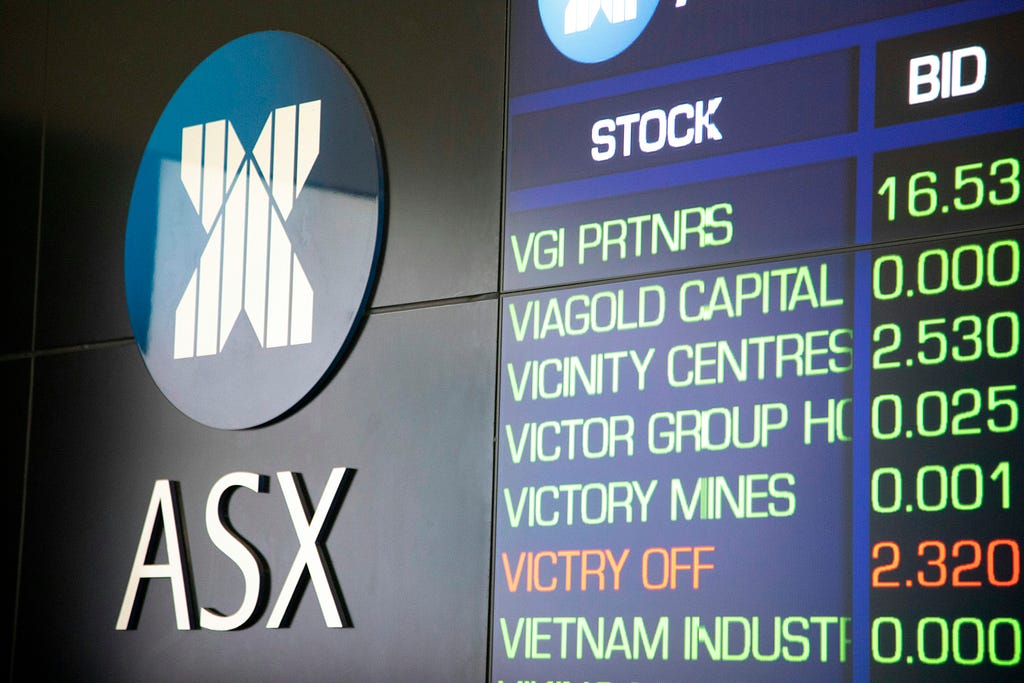
While semiconductor stocks have spent July giving back gains, one sector has quietly kept climbing for entirely different reasons: defense.
Swedish defense manufacturer Saab beat second-quarter earnings expectations as booming demand for military equipment propelled the company to a fifth consecutive quarter of order book growth, with its total backlog rising to 317.7 billion Swedish crowns, up from 197.6 billion a year earlier. That’s not a one-quarter anomaly it’s a sustained, multi-year demand curve building in real time.
The business lesson here isn’t really about defense specifically. It’s about what happens to industries positioned squarely against a sustained geopolitical trend, as opposed to industries riding a narrower, sentiment-driven cycle like AI infrastructure spending has increasingly become this year. Saab’s order backlog isn’t dependent on investor confidence in a single earnings call it’s backed by government procurement cycles that move on entirely different, slower-moving timelines than public market sentiment.
For business leaders watching semiconductor valuations swing 20% in a matter of weeks, Saab’s steady backlog growth is a useful contrast in risk profiles. Businesses tied to structural, multi-year demand trends whatever the sector tend to weather sentiment-driven market volatility far better than businesses whose growth story depends on continuously beating quarterly expectations.
The practical takeaway: when you’re evaluating your own company’s growth narrative, ask whether it’s built on a structural trend with government or institutional demand behind it, or on a sentiment cycle that requires constant reacceleration to sustain its valuation. Saab’s backlog didn’t happen by accident, it happened because the underlying demand driver was real, sustained, and largely indifferent to what Wall Street felt about it that week.
Defense Stocks Are Booming While Tech Wobbles. Here’s the Business Lesson Hiding in Plain Sight. was originally published in Coinmonks on Medium, where people are continuing the conversation by highlighting and responding to this story.
Advanced trading infrastructure for a secure, scalable White Label Crypto Exchange.
What happens when a crypto exchange attracts thousands of traders but fails when market activity reaches its highest level? For investors, blockchain entrepreneurs, and professional traders, the biggest challenge is not launching a platform; it is building technology strong enough to support long-term success. A trading platform may look impressive from the outside, but without powerful infrastructure behind it, businesses can face liquidity issues, slow execution, security risks, and performance failures during critical moments. This is why advanced trading infrastructure has become the foundation for companies planning to compete in the global crypto economy.
Modern crypto platforms are no longer simple marketplaces for buying and selling digital assets. They are advanced financial ecosystems powered by high-performance architecture, intelligent automation, institutional security frameworks, and scalable technology solutions. Businesses that invest in strong infrastructure can create reliable platforms capable of supporting professional traders, global investors, and growing market demands.
The crypto industry has evolved into a highly competitive financial environment where speed, reliability, and user confidence determine success. Traders today expect exchange platforms to deliver experiences similar to traditional financial markets.
Professional traders and institutional investors require:
A platform that cannot provide consistent performance may lose users, especially during periods of extreme volatility.
A successful crypto business requires technology that can handle increasing users, higher transaction volumes, and international operations. Scalable infrastructure allows companies to expand without facing major performance limitations.
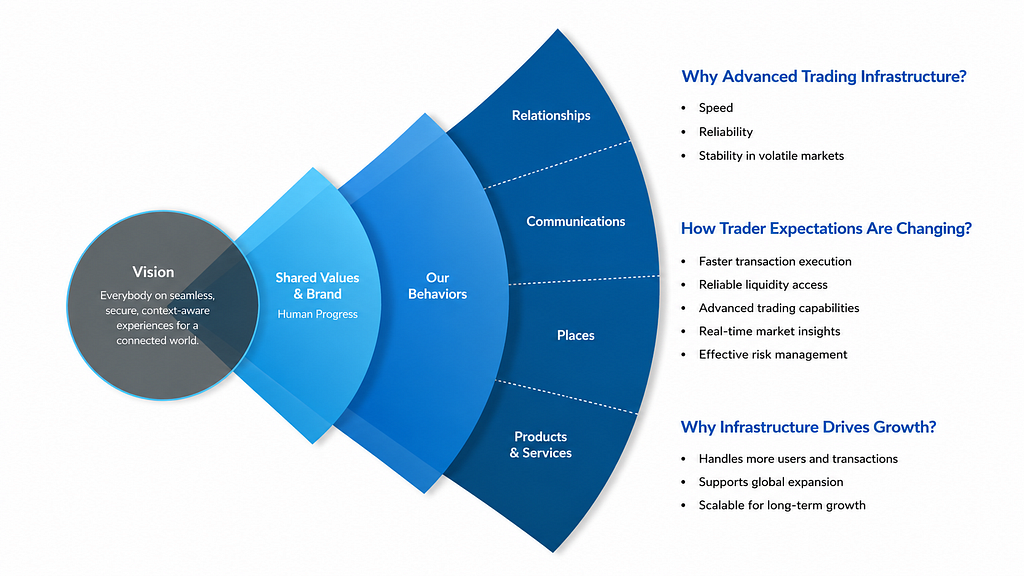
A successful trading ecosystem depends on multiple technology layers working together to deliver speed, security, and efficiency.
The matching engine is the core component responsible for processing buy and sell orders. It uses advanced algorithms, optimized processing methods, and low-latency architecture to complete transactions quickly.
For professional traders, execution speed can directly impact profitability. A powerful matching engine ensures smoother operations even during high-volume market activity.
Liquidity is one of the most important factors influencing exchange growth. Strong liquidity systems improve market depth, reduce price differences, and create better trading experiences.
Businesses with effective liquidity management can attract experienced traders and build stronger market credibility.
Crypto companies are adopting flexible technology models to create platforms that can adapt to changing market conditions.
Building an exchange from the ground up requires significant time, technical resources, and development expertise. A White Label Crypto Exchange provides businesses with a ready-made technology foundation that can be customized according to their goals.
These solutions allow entrepreneurs to access essential exchange features while reducing development complexity and improving market entry speed.
Modern white label solutions provide important components such as trading engines, liquidity integration, security systems, user management features, and automation tools.
This allows businesses to focus on branding, customer acquisition, and market growth while using a reliable technical foundation.
Artificial intelligence is introducing smarter capabilities into crypto platforms. AI-powered systems can analyze market behavior, identify suspicious activities, and generate valuable insights.
Machine learning technology helps businesses improve operational decisions, enhance security monitoring, and create better user experiences.
Security is one of the biggest concerns for investors entering the digital asset market. Strong protection systems are essential for maintaining confidence.
Advanced platforms use multi-party computation wallets, encryption systems, identity verification frameworks, and continuous monitoring solutions.
These technologies help reduce security risks and protect sensitive financial information.
Blockchain-based verification creates greater trust through immutable records and cryptographic validation. For investors and traders, transparency plays an important role when selecting a reliable trading platform.
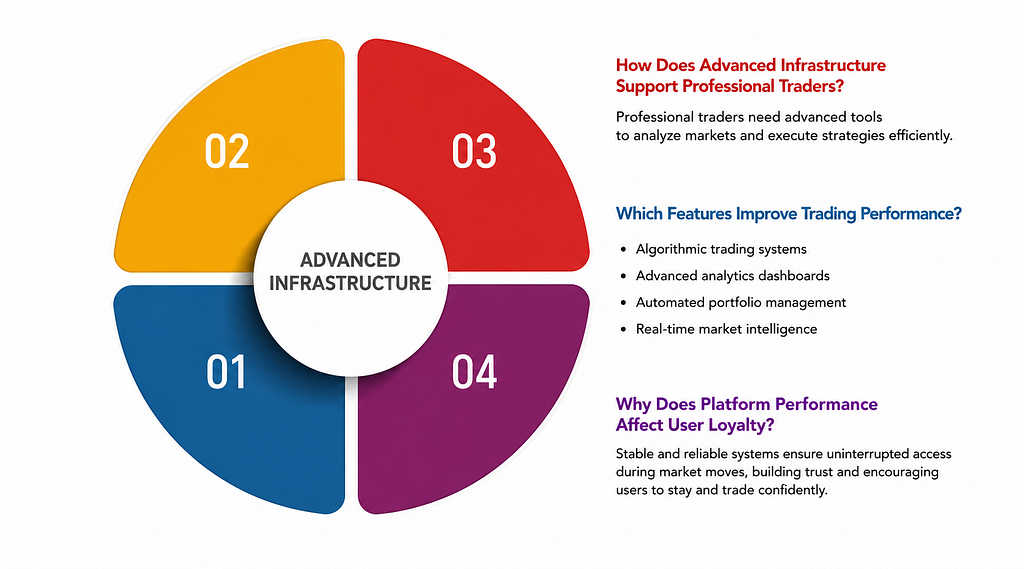
Professional traders require more than basic exchange functionality. They need advanced tools that help them analyze markets and execute strategies efficiently.
Institutional-grade platforms provide:
These features help traders make faster and more informed decisions.
When markets move quickly, traders expect stable and uninterrupted access. Technology that is dependable fosters trust and motivates users to stick with the platform.
The crypto industry continues developing with new assets, technologies, and financial models. Businesses need systems that can adapt without rebuilding their entire platform.
Future-ready architecture allows companies to introduce:
Flexible systems help businesses respond quickly to market opportunities.
The next generation of crypto infrastructure will be influenced by technologies focused on speed, intelligence, and security.
Innovations such as zero-knowledge systems, blockchain interoperability, edge computing, and autonomous trading agents will create smarter financial ecosystems.
These technologies will help businesses develop faster, safer, and more efficient trading environments.
Many investors focus on marketing, branding, and user acquisition, but technology determines whether a crypto platform can achieve sustainable growth.
A strong infrastructure foundation improves reliability, increases user trust, and creates opportunities for global expansion.
Engineering advanced trading infrastructure is not simply about creating exchange software. It is about building the financial backbone of the future crypto economy. Businesses that combine strategic vision, advanced engineering, and White Label Crypto Exchange technology will be better prepared to handle market challenges and attract professional participants.
The future of digital finance will belong to companies that understand one important factor: powerful ideas require powerful infrastructure. Platforms built with scalable architecture, intelligent systems, and strong security foundations will become the leaders shaping the next generation of global crypto markets.
Engineering Advanced Trading Infrastructure for the Global Crypto Economy was originally published in Coinmonks on Medium, where people are continuing the conversation by highlighting and responding to this story.
Intelligence does not have to be artificial.
The goal of this field was always to reproduce what a brain does. Somewhere along the way “artificial” stopped meaning inspired by the real thing and started meaning nothing like it — enormous, power-hungry, and opaque.
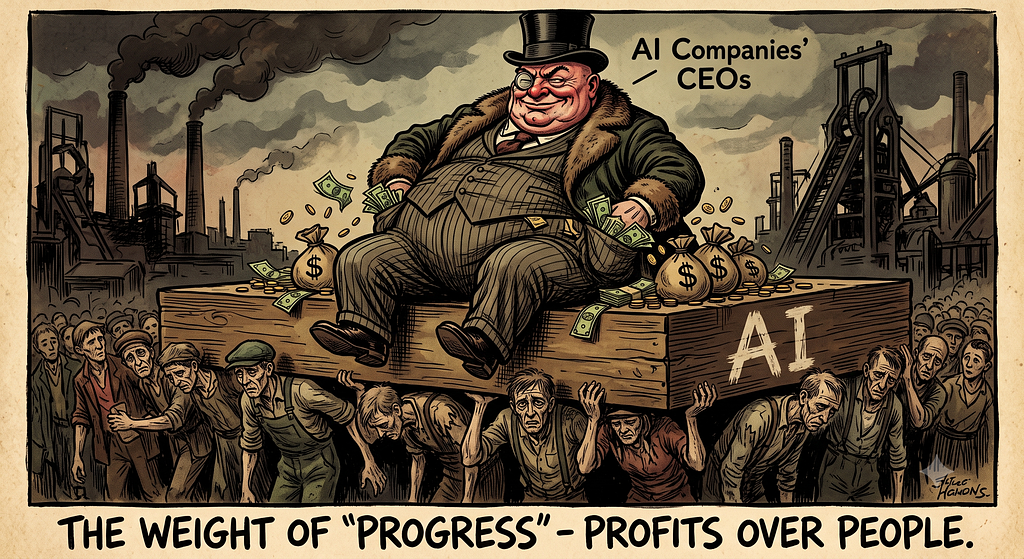
You’re tired of AI launches and IPOs? So am I. Every week there’s a bigger model, a longer context window, another benchmark nobody outside the lab can reproduce — and underneath it, the same machine doing the same thing a little faster and a lot more expensively. I mean, just looking at my emails these days is making me nauseous. I do not even check my social media anymore, and even less the stock market.
But, instead of complaining and be satisfied with the status quo, I decided to look at the problem from a different angle.
The main problems everybody knows without knowing it…
The cost problem isn’t separate from the design. It falls out of four choices that the field made early and never really revisited.
1- It reasons in the dark. Which makes hallucination or fake generation very hard to catch, yet to fix. Hidden states are well, hidden.
2- Scale is not intelligence. The reflex has been to make the model bigger and hope understanding shows up (it never will, the bigger the model, the more “links” it can do between concept and give the illusion of understanding). Scale = $$$$$$$$$$$$$$$.
3- Biology as the last of their concern. The brain runs on about twenty watts, and that number is a challenge, not a footnote. While we cannot make an AI that works on 20watts we can definately reduce the amount of energy consumption.
4- The root of it is profit. Not science. Even OpenAI leader is confirming it by saying that AI will eventually be sold like electricity and water — by companies like OpenAI. Article link: https://www.businessinsider.com/sam-altman-ai-utility-electricity-water-openai-2026-3
The goal of this field was always to reproduce what a brain does. Somewhere along the way “artificial” stopped meaning inspired by the real thing and started meaning nothing like it — enormous, power-hungry, and opaque.
I think we need to take the biology seriously instead of metaphorically: real neural mechanisms, a memory that consolidates the way a hippocampus does, a neurochemistry that actually modulates behaviour, learning that happens as the system runs rather than only in an offline training run. Those are design constraints, not decoration. And will lead to the “second generation” of AI.
a very convenient one if what you need is a reason to keep raising money.
While I have been plain, here’s where I don’t stand: AGI. The industry’s favourite three letters do a lot of quiet work — a general, human-beating machine, forever a few years and a few hundred billion away. It’s a wonderful story — or a frightening one, depending on where you stand — and a very convenient one if what you need is a reason to keep raising money. It’s a poor description of what these systems actually are, and a worse goal to organise a field around.
It’s a poor description of what these systems actually are, and a worse goal to organise a field around.
And the way today’s models are built won’t get there — not for lack of ambition, but for reasons you can put numbers on. Large language models improve along a scaling curve, and that curve has a shape: the returns diminish. Each new increment of capability takes not a little more compute but multiples more; the graph everyone cites bends the wrong way, flattening as the bill climbs. Every training run costs more than the last and buys less than the last one did. That isn’t a detail better engineering erases. It’s the shape of the method itself.
Every training run costs more than the last and buys less than the last one did. That isn’t a detail better engineering erases. It’s the shape of the method itself.
Now set that against a hard limit: power is finite. You can’t answer a curve of exponentially rising cost with an infinite supply of energy, because there isn’t one. A method whose only real lever is “make it bigger” runs into a wall that isn’t philosophical — it’s thermodynamic. Somewhere on that curve the next run stops being affordable, then stops being physically possible, long before it stops being merely better at text.
You don’t get a different kind of thing by making the same thing bigger
And that’s the deeper point: what scales here is fluency, not understanding. A model trained to predict the next word learns the statistics of language extraordinarily well. It doesn’t thereby acquire a grounded model of the world, a cause it can reason about, or a memory it can update — and no amount of the same training conjures those out of more of the same text. You don’t get a different kind of thing by making the same thing bigger. You get a costlier version of the same thing. A transformer is, underneath, a very good text generator; scale it and you get a better text generator — not a mind that understands, and not consciousness quietly emerging from the weights. Fluency is not comprehension, and no quantity of the first ever becomes the second. Something like general intelligence, if it’s reachable at all, will come from a different design — grounded, able to reason step by step, able to learn as it runs.
The point of this work was never to conjure a god
The point of this work was never to conjure a god. It was to build something genuinely useful — that reasons, remembers, and helps — and to run it on hardware people can actually afford. Intelligence doesn’t have to be general to be worth having, and it certainly doesn’t have to be a superbeing to earn its keep. Chasing AGI is how you end up with the bill on the other pages. Building something useful, efficient, and yours is how you don’t.
What a discovery is for, and how it gets used, stays a human call — the machine widens what we can see; the judgment is still ours.
None of this means the tools are useless — the opposite. An AI can read across billions of documents and surface a link between two of them in seconds, connections no person would ever stumble on alone. That is a genuinely powerful research instrument, and we build with it every day. But it won’t know what to do with what it finds unless someone told it beforehand what to look for and why. Finding is not deciding. What a discovery is for, and how it gets used, stays a human call — the machine widens what we can see; the judgment is still ours.
If one ever goes autonomous and causes genuine harm, it will be because a person somewhere pointed it that way —
Some people will tell you AI is the real long-term danger. We’d put it the other way around: the danger is us. A model does what it is built and instructed to do. If one ever goes autonomous and causes genuine harm, it will be because a person somewhere pointed it that way — wrote the objective, wired it to something it should never have touched, or pulled out the guardrails that other people had put there in the first place. Even the runaway story needs a human at the start of it: someone to build it, aim it, and take it off the leash. Even if it escapes, a human had to set it loose or dare it to.
That isn’t a reason to be careless — it’s the opposite. It means the responsibility is ours and stays ours, which is exactly why we should keep the reasoning legible and the controls somewhere a person can see them. A tool you can read is a tool you can hold to account. That matters far more than pretending the machine has a will of its own.
Now time for a little shameless self-promotion ;) I built Grillcheese Research Laboratory exactly to study, learn and solve those problems and share how to do it with as much people as possible. I invite you to check the link to our website if you are curious. https://grillcheeseai.com
Let me know in the comment what you think and if you have more ideas / different views / links.
Thanks for reading and have a wonderful day!
Yours, Nick
Beyond A.I. was originally published in Coinmonks on Medium, where people are continuing the conversation by highlighting and responding to this story.

When reports emerged that crypto exchanges are increasingly being viewed as the next distribution channel for Wall Street assets, many people interpreted it as another headline about crypto adoption. In reality, the bigger story has very little to do with cryptocurrency itself. It is about distribution, an area that has quietly become one of the most important battlegrounds in modern finance.
Financial institutions have spent years improving the products they offer. Today, many of them are asking a different question: How do we deliver those products to a much larger audience without relying on infrastructure that was built decades ago? The answer is leading them toward digital platforms that can support faster transactions, broader accessibility, and entirely new investment models.
The shift is subtle but significant. Instead of treating blockchain as an alternative financial system, Wall Street is beginning to view it as another way to distribute financial products. That change in perspective could influence everything from how stocks are traded to how private assets are accessed in the future.
Investment products often receive the most attention, but distribution has always determined how successful those products become. Creating a financial product is only one part of the equation. Making it easily accessible to investors is what ultimately drives participation and liquidity.
Think about how streaming transformed entertainment. Movies did not become better overnight, but the way audiences discovered and consumed them changed completely. Retail experienced a similar shift as ecommerce platforms removed geographical limitations and gave businesses direct access to customers around the world.
Finance is beginning to experience a comparable transition. Investors increasingly expect digital-first experiences where opening an account takes minutes instead of days, assets can be monitored from a mobile device, and transactions happen with minimal friction. As those expectations grow, traditional distribution models are being challenged by platforms that are designed for speed, connectivity, and global reach.
Traditional financial markets have built enormous trust over many decades, but they were also designed around a different technological era. Market hours are fixed, settlement processes can still take multiple days in certain jurisdictions, and expanding investment opportunities across borders often introduces additional intermediaries, compliance requirements, and operational complexity.
Digital platforms address many of these limitations without changing the underlying value of the assets themselves.
An investor purchasing a stock is still purchasing a stock. A bond remains a bond. What changes is the infrastructure that delivers those assets. Digital systems can automate administrative processes, simplify onboarding, improve transaction visibility, and reduce delays that have long been accepted as part of financial markets.
For institutions managing millions of customers, even small improvements in efficiency can translate into significant operational savings while creating a better experience for investors.
A few years ago, crypto exchanges were largely associated with digital currencies and speculative trading. Today, they are increasingly being recognized for something else: the technology they have already built.
These platforms were designed from the beginning to handle digital asset custody, identity verification, continuous trading, wallet infrastructure, and global user participation. While traditional financial institutions have been modernizing these capabilities over time, crypto exchanges have spent years refining them under real market conditions.
This does not necessarily mean every crypto exchange will become a marketplace for Wall Street assets. Rather, it highlights how much of the underlying infrastructure has matured. Features such as digital onboarding, integrated asset management, API-driven trading, and real-time portfolio visibility are becoming increasingly relevant beyond the cryptocurrency market.
The discussion is gradually shifting from “Should traditional finance adopt blockchain?” to “Which parts of the existing digital infrastructure can help modernize financial markets?”
One of the biggest drivers behind digital distribution is tokenization.
At its simplest, tokenization represents ownership of an asset in digital form on a blockchain network. While cryptocurrencies introduced the concept to a wider audience, the same technology can represent a much broader range of financial products, including equities, government bonds, real estate, commodities, private equity, and investment funds.
Why does this matter?
Because tokenization changes how assets can be owned, transferred, and divided. Instead of requiring large capital commitments, certain assets can potentially be fractionalized into smaller units, allowing more investors to participate. Transactions become easier to record, ownership becomes easier to verify, and distribution is no longer limited by the infrastructure of a single exchange or financial institution.
This has attracted interest from banks, asset managers, fintech companies, and regulators who see digital assets not as replacements for traditional markets but as an extension of them.
Not quite.
One of the biggest misconceptions surrounding digital finance is that traditional markets are preparing to abandon existing systems altogether. That is unlikely to happen in the foreseeable future.
Financial markets operate within complex regulatory environments where investor protection, market stability, and compliance remain non-negotiable. Rather than replacing these foundations, institutions are looking for ways to enhance them using digital technologies.
The more realistic outcome is a hybrid financial ecosystem. Traditional exchanges, banks, custodians, and clearing systems will continue to play an important role, while blockchain-powered infrastructure supports new methods of issuance, settlement, and distribution.
In other words, the future is unlikely to be a choice between Wall Street and Web3. It is far more likely to combine the strengths of both.
The most valuable opportunities may not lie in creating new financial products but in building the infrastructure that supports them.
Every digital marketplace requires identity verification, compliance systems, secure custody, trading engines, liquidity management, settlement mechanisms, and data reporting. As more financial institutions embrace digital distribution, demand for these capabilities is expected to grow alongside it.
This growing demand is also influencing how new trading platforms are built. Instead of developing an exchange from the ground up, many fintech companies and digital asset businesses are turning to a crypto exchange script as a foundation for launching scalable trading platforms.
These solutions provide the core infrastructure needed to support order matching, wallet integration, liquidity management, and security, allowing businesses to focus on innovation and market expansion rather than rebuilding essential exchange components.
The companies that provide reliable, scalable, and compliant infrastructure may ultimately shape the next phase of capital markets just as much as the institutions issuing financial products. Whether they are traditional financial institutions modernizing their services or technology providers enabling the next generation of digital trading platforms, the race is increasingly about building the systems that power tomorrow’s markets.
For investors, the long-term impact is likely to be greater access and more choice.
Digital distribution has the potential to reduce geographical barriers, simplify participation in global markets, and make certain investment opportunities available to a broader audience. It could also encourage more competition among financial service providers, leading to better user experiences and lower costs.
At the same time, greater accessibility should not be confused with lower risk. Whether an investment is offered through a traditional brokerage or a digital platform, understanding the underlying asset remains just as important. Technology can improve access, but it does not eliminate market risk or replace informed decision-making.
Much of the public conversation has focused on whether blockchain will transform finance. That may not be the most interesting question anymore.
A more important question is how financial products will be distributed over the next decade.
History shows that industries often change more because of distribution than because of the products themselves. Streaming reshaped entertainment without changing the concept of film. Ecommerce transformed retail without changing the products people bought. Ride-sharing altered transportation without reinventing the automobile.
Finance now appears to be approaching a similar turning point. The assets themselves may continue to look familiar, but the channels through which they are issued, discovered, traded, and managed are beginning to evolve.
Wall Street’s growing interest in digital platforms reflects this broader shift. The future may not belong exclusively to traditional exchanges or crypto-native marketplaces. Instead, it is likely to belong to digital ecosystems that combine institutional trust with modern technology, making financial markets more connected, efficient, and accessible than they have ever been before.
Wall Street’s Next Growth Chapter Is Being Written on Digital Platforms was originally published in Coinmonks on Medium, where people are continuing the conversation by highlighting and responding to this story.

Bitcoin Wealth, Personal Finance, and Long-Term Capital Allocation: Why I See Wealth as a Process of Strengthening Financial Foundations…

The Netherlands has become one of Europe’s leading technology hubs, with businesses increasingly embracing digital innovation to stay competitive. Among the technologies driving this transformation, AI stands out as one of the most impactful. Organizations across industries are investing in AI Development to improve efficiency, streamline operations, and unlock new opportunities for growth.
From startups and small businesses to large enterprises, companies are recognizing the value of intelligent technologies that can analyze data, automate repetitive tasks, and support better decision-making. As adoption continues to grow, AI is reshaping how businesses operate and compete in the Dutch market.
Several factors have contributed to the rapid growth of AI across the Netherlands. The country benefits from a strong digital infrastructure, a highly skilled workforce, and a culture that encourages innovation. Businesses are constantly looking for ways to improve productivity and deliver better customer experiences, making AI a natural choice.
The increasing availability of data has also played a major role. Organizations now generate vast amounts of information every day, and Artificial Intelligence Solutions help transform that data into actionable insights. This enables businesses to make informed decisions, identify trends, and respond quickly to changing market conditions.
AI is no longer limited to technology companies. Today, organizations in healthcare, finance, retail, logistics, and manufacturing are using AI to solve real-world business challenges.
Many businesses are implementing Custom AI Solutions designed to address their unique requirements. These solutions help automate routine tasks, improve operational efficiency, and enhance customer interactions.
Some common applications include:
As businesses continue exploring new use cases, AI is becoming an essential part of everyday operations.
One of the biggest advantages of AI is its ability to automate repetitive processes. Tasks that previously required hours of manual effort can now be completed more quickly and accurately. This allows employees to focus on higher-value activities that contribute directly to business growth.
AI systems can process and analyze large volumes of data much faster than traditional methods. By identifying patterns and trends, businesses gain valuable insights that support strategic decision-making.
Modern consumers expect fast, personalized, and convenient experiences. AI helps businesses understand customer preferences and deliver more relevant interactions. Whether through recommendation engines or intelligent chatbots, AI can improve customer satisfaction and engagement.
Automation reduces manual workloads and minimizes operational inefficiencies. Businesses can optimize resources, reduce errors, and lower costs without compromising quality or performance.
As organizations grow, managing increasing workloads can become challenging. AI enables businesses to scale operations more effectively by handling larger volumes of data and customer interactions without significant increases in resources.
Healthcare organizations are using AI to support medical research, improve diagnostics, streamline administrative tasks, and enhance patient care. AI-driven systems can help healthcare professionals make faster and more informed decisions.
Banks and financial institutions rely on AI for fraud detection, risk management, customer support, and financial forecasting. AI helps improve security while delivering more personalized financial services.
Retail businesses use AI to understand customer behavior, optimize inventory levels, and create personalized shopping experiences. These capabilities help increase customer satisfaction and operational efficiency.
Manufacturers are implementing AI to improve quality control, predict equipment maintenance needs, and optimize production processes. These improvements can reduce downtime and increase productivity.
AI helps logistics providers optimize delivery routes, forecast demand, and improve warehouse operations. This leads to faster deliveries and more efficient supply chain management.
While the benefits of AI are significant, successful implementation requires careful planning and execution.
Some common challenges include:
Many organizations begin by evaluating available AI Development Services to better understand which solutions align with their business objectives. Taking a strategic approach helps reduce implementation risks and improves long-term outcomes.
The role of AI in business is expected to expand significantly over the coming years. Emerging technologies such as machine learning, computer vision, natural language processing, and generative AI are opening new possibilities for innovation.
Businesses are increasingly viewing AI not simply as a tool for automation but as a way to improve competitiveness and create long-term value. As technology continues to evolve, organizations that invest in AI today will be better prepared to adapt to future market demands.
The demand for Artificial Intelligence Solutions is expected to increase as businesses seek smarter ways to manage operations, improve customer experiences, and drive sustainable growth.
AI is becoming a key component of modern business strategy. Organizations that embrace AI Development can gain advantages through improved efficiency, better decision-making, and enhanced customer engagement.
As competition continues to increase across industries, businesses are exploring Custom AI Solutions that help them remain agile and responsive to market changes. Companies that successfully integrate AI into their operations are likely to be better positioned for long-term success.
Working with an experienced AI Development Company can also help organizations identify practical opportunities for AI adoption and ensure solutions are aligned with their business goals.
The rise of AI in the Netherlands marks an important shift in how businesses approach growth and innovation. Organizations across industries are using AI Development to improve operations, gain valuable insights, and deliver better experiences for customers.
As AI technologies continue to evolve, the adoption of Artificial Intelligence Solutions and Custom AI Solutions will become increasingly common. Businesses that understand and embrace these changes will be better equipped to compete, innovate, and grow in the years ahead.
The Netherlands is well positioned to lead this transformation, making AI one of the most important drivers of business success in the modern digital economy.
The Rise of AI in the Netherlands: A New Era for Business Growth was originally published in Coinmonks on Medium, where people are continuing the conversation by highlighting and responding to this story.
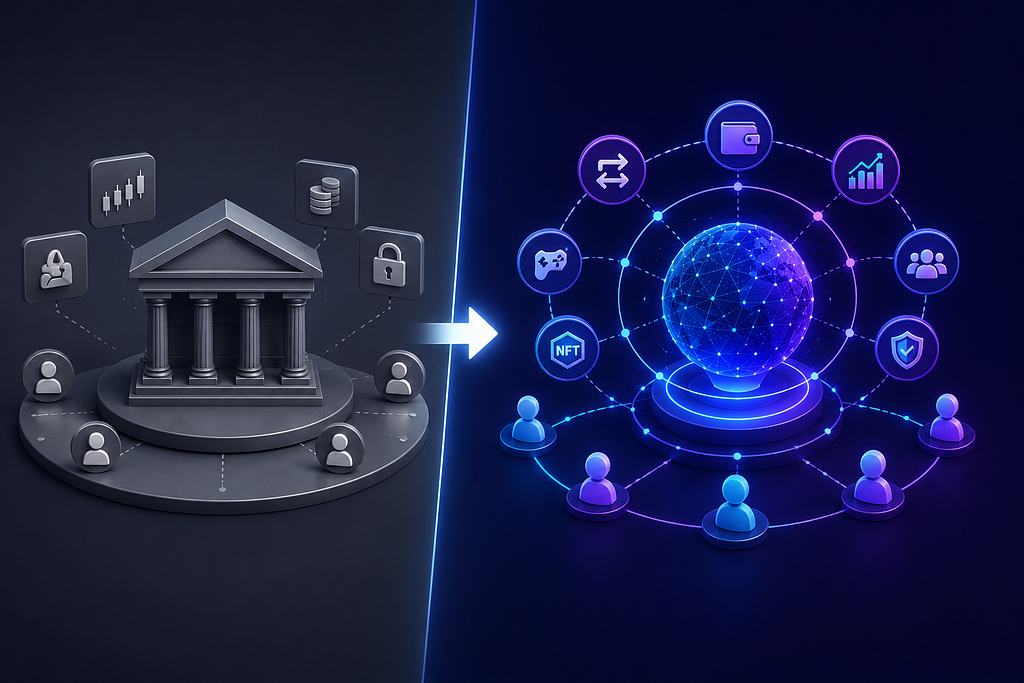
The cryptocurrency industry has spent more than a decade building the infrastructure necessary to transform digital assets from a niche experiment into a global financial market. During that journey, crypto exchanges emerged as the primary gateways connecting users, investors, institutions, and liquidity across the digital asset ecosystem.
Yet the crypto exchange industry of 2026 looks remarkably different from the one that existed just a few years ago. What began as a race to offer cryptocurrency trading access has evolved into something much broader. Exchanges are no longer competing solely on token listings, trading fees, or market access. Increasingly, they are competing on trust, infrastructure, compliance, security, and the ability to serve a diverse range of users.
The numbers reflect this maturation. According to CoinGecko’s 2025 Annual Crypto Industry Report, the digital asset market maintained its position as a multi-trillion-dollar asset class, while average daily crypto trading volume reached approximately $161.8 billion. Stablecoin market capitalization also expanded significantly, rising nearly 49% year-over-year to approximately $311 billion. These figures point to an industry that is becoming larger, more interconnected, and increasingly dependent on sophisticated financial infrastructure.
Against this backdrop, an important question is emerging: Are we entering the second generation of crypto exchanges?
While there is no official definition, the evidence suggests that a significant shift is underway. The first generation of exchanges focused on enabling access to digital assets. The next generation appears focused on becoming comprehensive financial platforms capable of supporting mainstream adoption, institutional participation, and long-term market stability.
To understand the transition, it is important to examine the characteristics that defined the first wave of crypto exchange development.
Early exchanges emerged during a period when cryptocurrency itself was still an experimental technology. Most users were enthusiasts, developers, or early adopters willing to navigate technical complexity in exchange for exposure to a new asset class. The primary challenge was simple: provide a platform where people could buy, sell, and trade cryptocurrencies.
As a result, many exchanges prioritized functionality over user experience. Security standards varied widely, regulatory frameworks were limited, and operational processes were often built to support rapid growth rather than long-term scalability.
Competition largely revolved around token availability, transaction fees, and trading volume. In many cases, the ability to list emerging cryptocurrencies faster than competitors was viewed as a key differentiator.
This model proved effective during the industry’s formative years. However, as crypto adoption expanded beyond early enthusiasts, the limitations of first-generation exchanges became increasingly apparent.
The market was no longer serving only crypto-native users. It was beginning to attract institutional investors, regulators, fintech companies, and mainstream consumers with very different expectations.
One of the strongest indicators of a second-generation exchange landscape is the growing influence of institutional investors.
For much of crypto’s early history, retail traders dominated market activity. Today, however, large financial institutions are playing a much larger role in the ecosystem. Hedge funds, asset managers, family offices, corporations, and publicly traded companies are increasingly allocating capital to digital assets.
According to Chainalysis’ 2025 Global Crypto Adoption Index, institutional activity has become so significant that the firm introduced additional categories specifically designed to measure large-value transfers. Transactions exceeding $1 million now represent a meaningful segment of overall crypto activity, highlighting the expanding presence of professional investors.
CoinGecko also reported that digital asset treasury companies collectively deployed nearly $50 billion into Bitcoin and Ethereum holdings during 2025. This level of participation reflects a market that is gradually integrating with traditional finance rather than operating separately from it.
Institutional participants bring fundamentally different requirements than retail traders. They expect enterprise-grade security, transparent reporting, sophisticated custody solutions, reliable liquidity, and robust risk management systems.
As a result, crypto exchanges are increasingly investing in infrastructure that resembles traditional financial markets. Trading engines, custody frameworks, surveillance systems, and compliance capabilities are becoming strategic priorities rather than optional features.
For years, discussions surrounding cryptocurrency often framed regulation as a challenge to innovation. Today, that narrative is becoming more nuanced.
As governments and financial regulators continue to develop clearer frameworks for digital assets, exchanges are beginning to view compliance as a competitive advantage. Regulatory readiness is increasingly associated with trust, stability, and long-term viability.
This shift is visible across multiple markets. Chainalysis reported that North America experienced approximately 49% year-over-year growth in crypto activity, supported in part by increasing institutional participation and evolving regulatory clarity.
Modern crypto exchanges are therefore placing greater emphasis on Know Your Customer (KYC) procedures, Anti-Money Laundering (AML) controls, transaction monitoring systems, and transparent operational practices.
The objective is no longer simply to meet regulatory obligations. Exchanges are increasingly using compliance infrastructure as a mechanism to attract institutional capital, strengthen user confidence, and position themselves for future growth.
In many ways, regulation is becoming less of a barrier and more of a foundational component of exchange development.
One of the most noticeable differences between first-generation and second-generation crypto exchanges is the emphasis placed on user experience.
Historically, many trading platforms assumed users already understood wallets, blockchain networks, private keys, and trading terminology. While this approach worked for technically sophisticated users, it created significant barriers for newcomers.
As the industry seeks broader adoption, exchanges are increasingly investing in simplifying the user journey.
Account onboarding has become more intuitive. Mobile applications have become central to product strategy rather than secondary offerings. Educational tools, streamlined interfaces, and guided user experiences are helping reduce friction for new participants entering the market.
This evolution reflects broader trends across financial technology. Consumers no longer compare crypto exchanges exclusively against competing crypto products. They compare them against digital banking applications, investment platforms, and payment ecosystems that prioritize convenience and usability.
Consequently, the distinction between crypto exchange development and fintech product development is becoming increasingly blurred.
Security has always been a defining concern within cryptocurrency markets, but its role is changing.
In the past, exchange security was often viewed primarily through the lens of preventing hacks and safeguarding customer funds. While these remain critical objectives, modern exchanges are adopting a much broader approach to operational resilience.
Today’s security frameworks often incorporate cold storage systems, multi-signature technologies, real-time monitoring, fraud detection mechanisms, institutional custody solutions, and sophisticated incident response procedures.
The stakes are also significantly higher than they were during the industry’s early years. With hundreds of billions of dollars moving through crypto markets annually, security incidents can affect not only individual platforms but also broader market confidence.
As digital assets become increasingly integrated into the financial system, security is evolving from a technical requirement into a business differentiator.
Perhaps the strongest argument for the emergence of a second generation of crypto exchanges is the industry’s movement beyond pure trading functionality.
Increasingly, exchanges are positioning themselves as digital asset ecosystems rather than transaction venues.
Many platforms now offer staking services, lending products, derivatives markets, custody solutions, portfolio management tools, payment infrastructure, and yield-generating opportunities alongside traditional spot trading.
The growth of stablecoins illustrates this broader transformation. CoinGecko reported that stablecoin market capitalization reached approximately $311 billion in 2025, while Chainalysis identified stablecoins as a major driver of transaction growth across several global markets.
This trend signals a shift in how digital assets are being used. Rather than functioning solely as speculative instruments, cryptocurrencies are increasingly becoming components of broader financial systems involving payments, settlements, remittances, and treasury management.
As user expectations evolve, exchanges are adapting by offering integrated services designed to keep participants within a single ecosystem.
Liquidity has always been important to exchange success, but its significance is increasing as markets mature.
According to CoinGecko, average daily trading volumes reached approximately $161.8 billion during 2025. Supporting activity at this scale requires infrastructure capable of handling substantial trading demand without sacrificing performance or reliability.
Professional traders, institutions, and high-volume market participants increasingly expect low-latency execution, minimal downtime, and consistent performance during periods of market volatility.
Consequently, exchange operators are investing heavily in matching engine technology, liquidity aggregation, market-making strategies, and scalable architecture.
The conversation is gradually shifting away from whether an exchange can support current demand and toward whether it can support future growth. Infrastructure is becoming a strategic asset rather than a background operational concern.
Looking ahead, the evolution of crypto exchanges appears far from complete.
Artificial intelligence, tokenized real-world assets, blockchain interoperability, decentralized finance integration, and cross-chain liquidity solutions are already influencing the next phase of industry development.
At the same time, exchanges are becoming increasingly connected to traditional financial systems. The growth of institutional participation, the expansion of stablecoin infrastructure, and the emergence of clearer regulatory frameworks suggest that crypto markets are becoming more integrated with the broader financial ecosystem.
Future exchanges may ultimately operate as hybrid environments that combine centralized efficiency with decentralized transparency and user control. They may also serve as the infrastructure layer connecting traditional finance and digital assets in ways that are only beginning to emerge.
The cryptocurrency industry appears to be moving beyond its first phase of development. The exchanges that helped introduce digital assets to the world were built primarily around access and trading functionality. The exchanges emerging today are being shaped by a different set of priorities.
Institutional participation is expanding. Regulatory expectations are becoming clearer. Stablecoin adoption continues to accelerate. Infrastructure demands are growing more sophisticated, and user expectations increasingly resemble those found in mainstream financial services.
Chainalysis reported that crypto activity in the Asia-Pacific region grew approximately 69% year-over-year, while North America recorded nearly 49% growth driven by institutional engagement and evolving regulatory frameworks. Combined with the rise of stablecoins and sustained growth in trading activity, these developments point toward an industry that is maturing rather than merely expanding.
Whether history ultimately labels this transformation as the second generation of crypto exchanges remains uncertain. What is increasingly clear, however, is that crypto exchanges are no longer just marketplaces for digital assets. They are evolving into foundational components of a rapidly developing financial ecosystem, and that evolution may shape the future of digital finance for years to come.
Are We Entering the Second Generation of Crypto Exchanges? was originally published in Coinmonks on Medium, where people are continuing the conversation by highlighting and responding to this story.
For decades, there was only one generally undisputed rule about the financial industry, if you want to provide banking services, you have to open a bank.
Banking licenses, compliance departments, hundreds of regulators, and billions in capital were some of the high barriers to entry that only large multinational conglomerates could overcome
That belief, however, is now an outdated perspective that does not take into account recent innovations in the financial industry. Namely, many financial institutions now rely on specialized enablers to provide regulated banking-like services to their clients.
As such, the banking-as-a-service (BaaS) economy now enables non-financial institutions to embed payments, wallets, cards, accounts, and other financial services and functions within their own P2P and B2B commerce platforms, apps, and sites
This new industry trend ultimately results in a situation where the line between technology and finance gets blurred, often to the point where neither one is particularly obvious to the consumer
The new BaaS economy disrupts the traditional financial services industry in numerous ways, from allowing non-banks to embed financial services inside their platforms to enabling technology companies to innovate and specialize in different aspects of the financial value chain
The most basic characteristic of the BaaS economy is that it enables collaboration between financial institutions that hold banking licenses and technology companies that operate as enablers. The former provides the backbone services and products, such as custodian accounts and deposits,
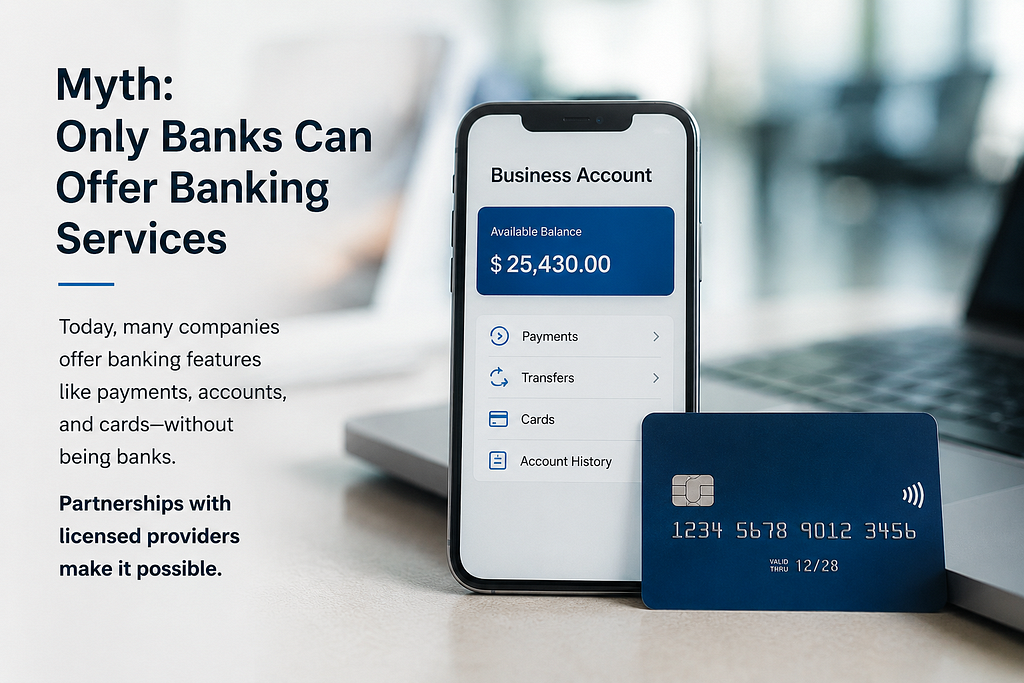
While the latter embed them in their platforms to facilitate everyday P2P and B2B payments, money transfers, issuing cards, lending, and other financial services
The overall purpose of BaaS is to separate the core banking infrastructure from the front-end technologies and make it much easier for companies to adopt and customize financial services, rather than having to build them from scratch.
The BaaS economy ultimately makes a wide variety of financial services accessible to a much broader audience of innovators and entrepreneurs. Some examples of such companies include technology-native financial platforms that embed cards and accounts as a way to make their business-to-business and business-to-consumer transactions more efficient, secure, and transparent
For example, many of the largest technology companies today offer their business clients an option to open business accounts and receive payments directly through their digital platforms.
In that way, BaaS ultimately empowers the technology industry to disrupt the financial services industry by embedding financial infrastructure as a way to improve products and services offered by non-financial companies.
At the same time, the BaaS economy is not removing the importance of financial institutions, as they remain critical enablers of the digital economy.
A fundamental change brought by the BaaS economy is that it focuses on the needs of the consumer. Embedded finance ultimately puts the consumer at the center of the financial experience, which means the overall experience has to be much more intuitive and more compelling
The BaaS economy therefore ultimately shifts the paradigm to create value by complementing existing products and services with financial services and functions
The opportunities for such financial complementarities are countless, as they can be found in virtually every industry and every company, regardless of their size or specialization.
An e-commerce marketplace can allow its merchants to receive instant settlements, rather than having to wait for several days for the money to clear. A payroll company can allow its workers to open mobile accounts and receive payments instantly, as well as issue cards that can be used to make purchases.
A logistics company can make it much easier for its business clients to settle international payments, while a SaaS company can allow its clients to send and receive money directly through the SaaS platform. In each of these examples, the financial infrastructure enhances the core vertical, which ultimately results in a much better client experience.
Ultimately, the embedded finance model can be seen as much more efficient and effective way to distribute financial services, as it ultimately makes them more accessible and easier to use.
It is important to note that financial regulations have not gone away, despite the rapid rise of the BaaS economy. Financial services have always been one of the most heavily regulated industries worldwide, and they continue to be subject to extremely strict anti-money laundering (AML), compliance, transaction monitoring, and data privacy regulations.
However, many of those regulations can now be handled by BaaS enablers (i.e., financial institutions that specialize in reselling their infrastructure and technology to other companies). Such enablers handle the banking license, custodian accounts, deposits, transaction clearing, and other aspects that were traditionally the responsibility of the financial institutions that provided those services directly to the consumer
Therefore, the BaaS economy ultimately lowers the regulatory barriers for non-financial companies that want to embed financial services within their platforms and products. At the same time, the BaaS economy also reduces the implementation costs and the amount of time needed to launch new financial products and services
That is especially important for smaller technology companies and start-ups that would not be able to launch a financial services product, even if they wanted to, due to the immense costs involved. It takes hundreds if not thousands of employees for technology-native financial platforms to manage risk, comply with regulations, maintain the necessary IT infrastructure, and provide excellent consumer support.
By collaborating with BaaS enablers, such companies can significantly reduce their costs and risks by relying on the expertise of financial infrastructure providers and their extensive regulatory experience.
The BaaS economy ultimately lowers the barriers to entry for everyone involved. New entrants can launch more innovative financial products and services with reduced risk and cost.
Simultaneously, larger financial services companies can use the BaaS economy to scale their operations faster by relying on the business-to-business (B2B) infrastructure provided by technology enablers. At the same time, the widespread adoption of the BaaS economy allows even non-financial and non-technology companies to embed wallets and payments solutions within their business-to-consumer (B2C) and business-to-business (B2B) operations.
Such opportunities ultimately allow diverse sets of companies to compete more effectively while improving products and services offered to their consumers.
One of the reasons why the BaaS economy is misunderstood is because some of the most basic principles have not been fully acknowledged. The banking industry has long held the belief that only banks can offer banking services.
Yet, in the twenty-first century, the most valuable financial services innovations are being driven by companies that are not financial institutions, even if they collaborate with banks and other financial institutions.
There is nothing mysterious or counterintuitive about this trend the banking-as-a-service economy ultimately reflects the fact that the finance industry has started to behave like any other technology-driven industry.
Just like many other technologies, finance is now being unbundled between different specialized enablers, each of which plays a specific role in the client experience. The core infrastructure remains the domain of financial institutions, while the front-end technology is now being developed by companies that care to customize the financial experience for their clients.
By enabling those enablers, the BaaS economy ultimately promotes competition, lowers the costs and complexity of financial services, and provides those services to a much broader audience.
The finance industry no longer has a duopoly between large technology companies and big banks, with the competition between the two often stifling the innovation at the intersection between the two domains. Instead, the BaaS economy enables a much more dynamic and diverse financial services ecosystem that ultimately benefits everyone involved.
Perhaps the most important insight regarding the BaaS economy and the embedded finance space is that the entire financial services industry will ultimately become dominated by non-bank enablers that embed financial services within their products and technologies.
This development is ultimately driven by the demand for convenience and ease of use, as consumers are much more likely to use financial services when they do not have to deal with the hassles and complexities of the traditional finance industry.
The BaaS economy ultimately recognizes that the most valuable financial services are the ones that are embedded within other technology products and services. As such, the future of financial services is no longer dictated by banks, but rather the companies and platforms that utilize banks’ infrastructure to create compelling financial products for their clients.
The Biggest Fintech Myth Holding Businesses Back: You Don’t Need to Be a Bank to Offer Banking… was originally published in Coinmonks on Medium, where people are continuing the conversation by highlighting and responding to this story.

For decades, traditional banking has served as the backbone of the global financial system. It has enabled businesses to grow, facilitated international commerce, and provided individuals with access to essential financial services. However, despite its long-standing role in the economy, the traditional banking model is increasingly struggling to keep pace with the demands of a digital-first world.
Today’s consumers and businesses expect instant payments, seamless cross-border transactions, personalized financial services, and always-on digital experiences. Entrepreneurs entering the financial technology sector are recognizing that meeting these expectations often requires a different approach — one built on modern infrastructure rather than legacy banking systems.
This shift has given rise to a new generation of financial platforms: crypto banks. Combining blockchain technology with digital banking experiences, crypto banks are redefining how financial services are delivered and creating new opportunities for entrepreneurs to build scalable, global financial businesses.
The banking industry has undergone significant transformation over the past decade. Mobile banking, digital wallets, contactless payments, open banking, and embedded finance have fundamentally changed how people interact with financial institutions.
Consumers no longer compare banks solely on interest rates or branch locations. Instead, they evaluate financial platforms based on speed, accessibility, convenience, transparency, and digital experience.
Businesses have similar expectations. They seek banking solutions that support international operations, reduce payment friction, simplify treasury management, and integrate seamlessly with modern digital ecosystems.
As customer expectations continue to evolve, entrepreneurs are looking beyond conventional banking models and investing in technology-driven financial platforms that are more agile, scalable, and globally accessible.
Traditional banks remain essential to the global economy, but many of their operating models were designed for an era that relied heavily on physical infrastructure and manual processes.
Entrepreneurs entering today’s fintech market often encounter challenges such as:
These challenges can slow product development and make it difficult for startups to compete in rapidly evolving financial markets.
As a result, many founders are exploring alternative financial infrastructure that enables faster innovation while delivering the digital experiences customers increasingly expect.
Crypto banks represent the convergence of blockchain technology and modern digital banking.
Rather than replacing traditional financial services, many crypto banks complement them by offering digital asset management, multi-currency accounts, international transfers, virtual and physical payment cards, digital wallets, and seamless cryptocurrency transactions within a unified banking experience.
Our modern crypto bank software is designed to serve both individual users and businesses, enabling financial services that are faster, more accessible, and increasingly borderless.
For entrepreneurs, this creates an opportunity to build financial platforms capable of serving customers across multiple regions without replicating the operational complexity associated with traditional banking infrastructure.
Launching a traditional banking institution often requires years of planning, extensive infrastructure, and significant financial investment.
Modern crypto banking infrastructure enables entrepreneurs to introduce digital financial services much more quickly, allowing businesses to validate ideas, acquire customers, and respond to market opportunities with greater agility.
Digital businesses increasingly operate without geographical boundaries.
Crypto banks are designed to facilitate international transactions, support multiple currencies and digital assets, and serve customers across diverse markets through digital-first platforms.
This global accessibility allows entrepreneurs to expand beyond domestic markets while providing consistent financial services to international users.
Developing a complete banking ecosystem from scratch requires expertise across payments, compliance, wallet infrastructure, security, customer management, and core banking technology.
By leveraging modern banking infrastructure, startups can significantly reduce development complexity and operational costs while focusing resources on product innovation and customer acquisition.
Digital banking extends far beyond account management.
Entrepreneurs can create diversified revenue streams through services such as:
This ecosystem approach enables businesses to build stronger customer relationships while increasing long-term revenue potential.
Blockchain technology has evolved from a niche innovation into a foundational component of modern financial systems.
Its ability to provide transparent record-keeping, secure digital asset transfers, programmable financial services, and near-instant settlement has attracted growing interest from fintech companies worldwide.
Rather than viewing blockchain solely as cryptocurrency infrastructure, entrepreneurs increasingly recognize it as an enabling technology for next-generation banking platforms.
By integrating blockchain with traditional financial services, businesses can improve operational efficiency while creating entirely new customer experiences.
Modern consumers expect financial services to operate with the same convenience as their favorite digital applications.
They expect:
Businesses that successfully deliver these experiences are more likely to attract digitally native customers who value convenience, accessibility, and innovation.
One of the most significant developments in fintech has been the rise of white-label banking infrastructure.
Instead of investing years building proprietary banking systems, entrepreneurs can deploy fully branded financial platforms using proven infrastructure while focusing on customer growth and product differentiation.
This model enables startups to launch modern banking services with significantly lower development risk, shorter implementation timelines, and greater operational flexibility.
As competition within fintech continues to intensify, white-label infrastructure is becoming an increasingly strategic advantage for businesses seeking rapid market entry.
The future of banking will not be defined solely by physical branches or legacy systems.
It will be shaped by intelligent, technology-driven financial platforms capable of delivering secure, scalable, and globally connected services.
Artificial intelligence, blockchain, embedded finance, digital identity, and programmable payments are converging to create a financial ecosystem where flexibility and customer experience become the primary competitive advantages.
Entrepreneurs who embrace these technologies today will be better positioned to meet tomorrow’s financial expectations while building resilient businesses capable of evolving alongside the digital economy.
Why Coinexra’s White Label Crypto Bank Is Built for the Future of Digital Banking
As the demand for digital-first financial services continues to grow, entrepreneurs need more than just an idea — they need a technology partner capable of transforming that vision into a secure, scalable, and market-ready banking platform.
Coinexra’s white label crypto bank software is designed to help fintech startups, financial institutions, payment providers, and entrepreneurs launch fully branded crypto banking platforms without the complexity of developing an entire banking ecosystem from scratch.
Built on modern financial infrastructure, Coinexra combines digital banking capabilities with blockchain-powered services, enabling businesses to deliver seamless financial experiences while accelerating time-to-market.
Whether your goal is to launch a digital bank, a crypto-first financial platform, or an all-in-one fintech ecosystem, Coinexra provides the infrastructure needed to accelerate growth while maintaining the flexibility to evolve with changing customer expectations and market demands.
Digital banking is no longer defined by physical branches or legacy financial systems. It is increasingly shaped by technology, customer experience, and the ability to deliver financial services without traditional limitations.
For entrepreneurs, the rise of crypto banks represents more than a technological trend — it is an opportunity to participate in the next phase of financial innovation. By combining blockchain technology with modern banking infrastructure, businesses can create platforms that are faster to launch, easier to scale, and better aligned with the expectations of today’s global customers.
As the financial industry continues to evolve, those who invest in digital-first infrastructure today will be well positioned to lead tomorrow’s banking landscape.
The Rise of Digital Banking: Why Entrepreneurs Are Building Crypto Banks Instead of Traditional… was originally published in Coinmonks on Medium, where people are continuing the conversation by highlighting and responding to this story.
