Login
Login
The Crypto Blacklist Problem: Sanctions and Restrictions

In the world of cryptocurrencies, a “blacklist” usually means a list of addresses, accounts, or smart contracts that are banned from sending, receiving, or using tokens in centralized platforms — sometimes, even in some “decentralized” platforms, too. Governments and regulators use these lists to enforce financial laws, but they also raise hard questions about privacy and freedom in crypto. With pressure growing, many are asking: can truly decentralized systems survive blacklists?
Some distributed ledgers, like Ethereum, have had to walk a careful line between legal compliance and maintaining their open nature. Meanwhile, alternative networks like Obyte offer a different approach that could make censorship much harder. Let’s explore what’s happening, what’s at risk, and where things could go from here.
Blacklists and Ethereum — A Growing Challenge
Ethereum, the second-largest crypto network by market value, has faced several blacklist controversies. For example, after the U.S. sanctioned the privacy tool Tornado Cash in 2022, many Ethereum apps and services blocked addresses linked to it. Even stablecoins like USDC froze accounts that regulators flagged.
These moves show how central players in crypto ecosystems — like token issuers — can control access. Although distributed ledgers and smart contracts are supposed to run without middlemen, outside events can force changes that break this ideal. Developers are left caught between building open platforms and following real-world laws. For users, the consequences are even clearer: your assets could become unusable overnight if they land on a blacklist. For instance, if you, as a US citizen, mixed some funds on Tornado Cash and authorities found out.

Censorship in crypto doesn’t just block a few bad actors — it can reshape entire networks. After Ethereum switched to proof-of-stake (PoS), “validators” became the new gatekeepers (replacing mining pools), and some started filtering transactions to avoid dealing with blacklisted addresses. Tools like MEV-boost made it easier for them to choose which transactions to include.
This behavior weakens the original promise of crypto neutrality. Instead of treating every user equally, censored networks prioritize compliance over fairness. If enough “validators” cooperate with regulators, blockchains could lose their independence and start resembling traditional financial systems. Over time, this could drive away users who once turned to crypto for freedom.
Crypto’s Vulnerability: Custodians and Compliance
Even though crypto itself is designed to resist censorship to a degree, centralized players like exchanges and custodians are more vulnerable. Besides token issuers in blockchains, many firms choose to comply with regulations to protect their reputation and continue operating legally.
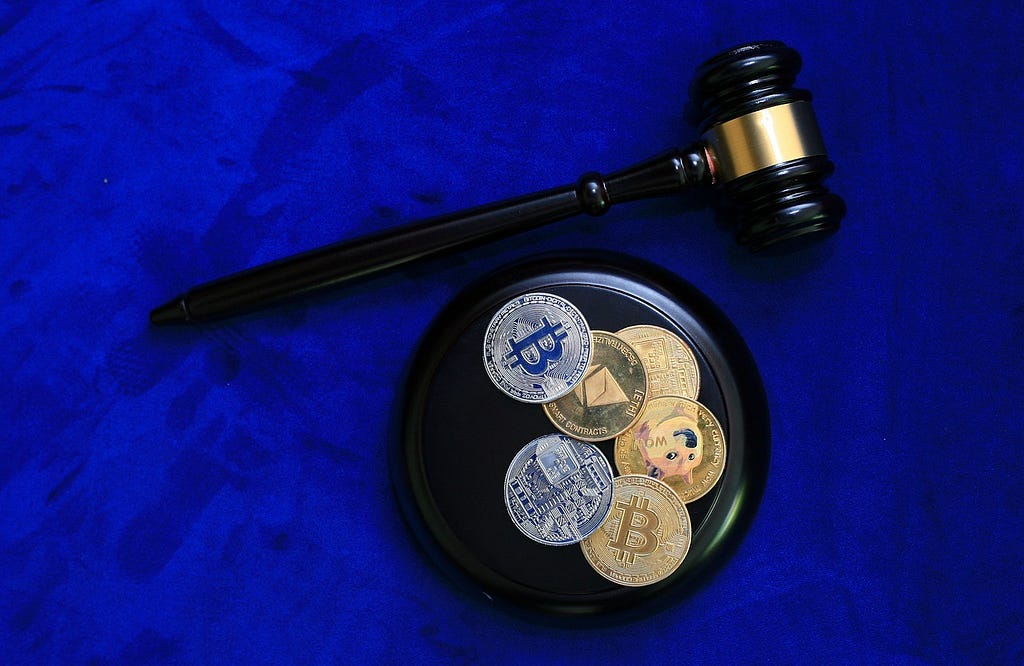
Major exchanges like Coinbase and Binance have enhanced Know Your Customer (KYC) and Anti-Money Laundering (AML) practices, restricting transactions linked to sanctioned entities. Although this protects their legal standing, it limits cryptocurrencies even more and potentially threatens the core ethos of crypto freedom. On the other hand, governments wouldn’t allow them to operate at all without this compliance. It’s an inescapable conundrum.
The tension between maintaining decentralization and complying with regulations is a delicate balancing act. While some projects strive to uphold the original ideals of financial autonomy, many large-scale operations prioritize business sustainability over ideology.
Alternative Approaches
At the very least, we can fix internal blockchain censorship by picking another network. Not all crypto platforms are built the same. Obyte, for example, uses a Directed Acyclic Graph (DAG) instead of a blockchain. There are no miners or “validators” deciding which transactions go through. Instead, transactions are added to the DAG directly by users themselves, removing centralized bottlenecks that can be targeted by regulators.

This structure makes censorship much harder. Since no single group controls transaction approval, it’s almost impossible to blacklist an account or address globally. In a world where blacklists are spreading, architectures like Obyte’s could offer real alternatives.
However, even the most censorship-resistant systems face practical limits. Crypto projects still need bridges, gateways, and exchanges to interact with the broader economy. In other words: you’ll need to turn your crypto into USD, EUR, or whatever fiat currency at some point. These points of contact, as we mentioned above, are often under legal pressure and can block users even if the underlying network resists.
Obyte is better protected at the protocol level, but users still risk exposure when cashing out or connecting to external services. No system is completely immune because people still live under legal systems. Designing censorship resistance is essential, but managing the risks outside the network matters just as much. But hey, good news? Crypto bans are rarely effective, even when exchanging for fiat.
Why Bans Often Fail to Stop Crypto
Despite regulatory efforts, crypto use persists in countries with bans — and platforms with sanctions are still very much used. Chainalysis’ Global Crypto Adoption Index shows that 50% of the top 10 countries with the highest crypto adoption rates have either full or partial bans. China, for instance, maintains strict regulations, yet still ranks within the top 20 for crypto usage.

In nations like Bangladesh, Egypt, and Morocco, where crypto is officially forbidden, enforcement struggles to keep pace with user activity. Individuals continue to buy, sell, and trade cryptocurrencies, often using decentralized platforms or peer-to-peer (P2P) networks to evade restrictions.
This isn’t just a sense of rebellion. Economic instability plays a significant role. In places where local currencies are unstable, citizens turn to crypto to preserve their wealth. In Venezuela and Nigeria, for example, crypto provides an alternative to hyperinflation and tight government controls. The decentralized design of cryptocurrencies makes it nearly impossible for authorities to shut down networks entirely, even if individual users may face risks.
Bans often push crypto activity into underground markets, removing the protective layers that regulation could have provided. Instead of stopping usage, heavy-handed laws often make crypto ecosystems more opaque and harder to supervise.
How Decentralized Players Are Facing Restrictions
Even as centralized players increasingly comply, decentralized systems remain resistant. Protocols without central authorities — like certain DeFi platforms and decentralized exchanges (DEXs) — cannot easily enforce blacklists or freeze funds. Without a governing body, these platforms continue operating globally, regardless of local bans.
Individual users have also been adapting creatively. Although Tornado Cash was sanctioned by the U.S. Treasury (until November 2024) and its domains and website were taken down, users still accessed it through decentralized interfaces like IPFS. According to Dune Analytics, users deposited variable amounts after the sanctions, up to $22 million in September 2024, despite legal hurdles.

Speaking of those legal hurdles, six users of Tornado Cash, backed financially by Coinbase, sued the U.S. Treasury Department after it sanctioned the mixer. In November 2024, the U.S. 5th Circuit Court of Appeals ruled that the Treasury overstepped its authority because Tornado Cash’s decentralized smart contracts aren’t “property” that can be sanctioned under current law. The court sided with the users, overturning the sanctions. Individuals are fighting back and winning some battles, too.
On the other hand, data from the Atlantic Council shows that at least 27 countries have imposed full or partial crypto bans. Yet crypto adoption is still highest in regions under pressure. In Nigeria, even with restrictions, over 46% of the population reports owning or using cryptocurrencies. In China, underground networks and offshore exchanges allow continued participation in the global crypto economy.

Necessity drives innovation. In authoritarian regimes, citizens often use crypto to protect savings, send remittances abroad, or circumvent local banking restrictions. Bans, instead of halting crypto activity, push it further into decentralized, less traceable channels. Crypto’s foundational trait — censorship resistance — proves indispensable where freedom is under threat.
Toward a Freer Crypto Future
The rise of blacklists highlights a major tension in crypto: can these technologies stay open and neutral while fitting into the regulated world? Blockchains that allow easy censorship might survive in the short term, but they risk losing their core values — and users.
Systems like Obyte show that it’s possible to prioritize user freedom at the design level. Still, the bigger battle lies in how users, developers, and regulators shape the evolving crypto space. Whether people choose resilient platforms or prioritize convenience will define what crypto becomes in the next decade — and whether it stays true to its original vision.
As personal liberties continue to erode across the globe, users will likely, over time, gravitate toward more open and decentralized platforms. The future belongs to decentralization, as centralization has led to widespread surveillance, media manipulation, discrimination, financial censorship, data breaches, and countless other problems.
Featured Vector Image by pikisuperstar / Freepik
Originally Published on Binance Square
The Crypto Blacklist Problem: Sanctions and Restrictions was originally published in Coinmonks on Medium, where people are continuing the conversation by highlighting and responding to this story.