
❌

Reading view

There are new articles available, click to refresh the page.

Solana Breaks 10-Month Downtrend As August Rally Reclaims $100

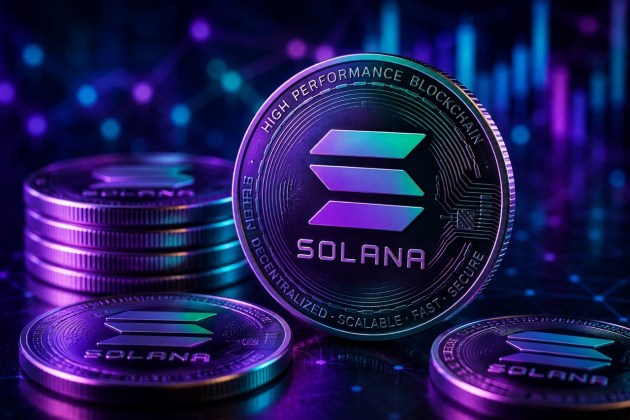
Solana has broken out of a 10-month downtrend after a strong August rally, with SOL reclaiming the $100 level and finishing the month up roughly 46%.

CoinGecko market data showed SOL recovering sharply through August, reversing a long stretch of weakness and putting momentum back on the side of bulls. The move makes Solana one of the stronger large-cap assets in the latest market rotation.

Still, this is a market structure story, not a guaranteed continuation call.

A 46% monthly rally is meaningful, but it does not prove the next leg higher is automatic. Solana now needs follow-through, stable liquidity, and continued ecosystem strength to hold the breakout.

For more details, visit the official Coingecko platform.

TL;DR

  • SOL reclaimed the $100 level after a 46% August rally.
  • The move broke a 10-month downtrend.
  • The breakout needs confirmation before traders treat it as a durable trend shift.

Why The Downtrend Break Matters

Long downtrends shape trader psychology.

When an asset trends lower for months, rallies often get sold. Traders become cautious, liquidity thins, and investors wait for evidence that momentum has changed. Breaking that structure can shift sentiment quickly.

Solana’s August move does that.

Reclaiming $100 gives the market a clean psychological level. Breaking the downtrend gives technical traders a reason to re-evaluate. A strong monthly performance gives momentum funds and retail traders another reason to pay attention.

That combination can be powerful.

Solana Has More Than One Catalyst

Solana’s rally is not happening in a vacuum.

The network has seen renewed attention around ETF access, mobile ecosystem activity, DeFi usage, governance debates, and high-throughput applications. Traders may also be rotating into assets that lagged earlier in the cycle but still have strong communities and liquidity.

SOL benefits from that setup.

It remains one of the few non-Bitcoin, non-Ethereum assets with enough liquidity, brand strength, developer activity, and exchange support to attract large flows during a risk-on move.

That helps explain why it can move quickly when sentiment turns.

Reclaiming $100 Is Symbolic

Round levels matter.

For Solana, $100 is not just a number. It is a sentiment marker. Holding above it can make the asset feel stronger, especially after a long downtrend. Falling back below it could make the breakout look less convincing.

That is why the next few sessions matter.

Traders will watch whether SOL builds support above $100 or treats the level as a temporary stop during a volatility spike.

Avoiding The Price Prediction Trap

A breakout does not guarantee a target.

Solana has moved strongly, but the market can still reverse. Broader crypto weakness, Bitcoin volatility, ETF flow changes, macro stress, or network-specific issues could all pressure the asset.

The responsible read is that SOL has improved its technical position.

That is different from promising a specific next price level.

What The Market Watches Next

The next signals are volume, ETF flows, on-chain activity, and whether Solana’s ecosystem keeps producing real usage.

If spot demand continues and network metrics support the move, the downtrend break may become more durable. If the rally is mostly momentum-driven, traders may become cautious once volatility cools.

For now, Solana has done something important.

It broke a long downtrend, reclaimed $100, and returned to the center of the large-cap altcoin conversation.

This article is based on public Solana market data from CoinGecko.

This article was written by the News Desk and edited by Samuel Rae.

This report is based on information released by Coingecko. at Coingecko
XRP Reclaims $1.10 As Traders Watch Breakout Momentum

XRP jumped 11% intraday to reclaim the $1.10 level, giving bulls a short-term win after weeks of choppy trading.

The move came alongside broader crypto strength and renewed attention on regulatory expectations following recent political and industry discussions. Market data showed XRP pushing back into a key area watched by traders, with $1.10 acting as both a psychological and technical reference point.

That does not mean a new all-time high is around the corner.

The clean read is simpler: XRP has recovered an important level, and now the market has to see whether buyers can defend it.

TL;DR

  • XRP rallied 11% intraday.
  • The move reclaimed the $1.10 level.
  • Traders should not treat one breakout attempt as a guaranteed trend reversal.

Why $1.10 Matters For XRP

Round levels matter in crypto because they create shared reference points.

A price like $1.10 is easy for traders to watch. It can influence stop levels, breakout entries, short covering, and retail sentiment. When XRP moves through that level quickly, it gets attention.

The recent rally suggests buyers were willing to step in aggressively.

But reclaiming a level is only the first part of the move. Holding it is the more important test.

If XRP stays above $1.10 and volume remains healthy, traders may treat the move as a stronger breakout attempt. If price slips back below, the rally may look like a short-term squeeze.

Regulatory Sentiment Still Drives XRP

XRP remains one of the most regulation-sensitive major assets.

News around market structure, ETF exposure, Ripple, crypto ownership, and US policy can all influence XRP sentiment. That is because the asset’s narrative has long been tied to legal clarity, institutional access, and payment infrastructure.

When the broader regulatory backdrop improves, XRP often benefits.

That does not mean every policy headline translates into lasting demand. But it explains why XRP can move sharply when traders believe the environment is becoming more favorable.

Price Action Needs Confirmation

An 11% intraday move is meaningful, but crypto traders know how quickly momentum can fade.

XRP needs follow-through. That means sustained spot demand, clean volume, and continued defense of reclaimed levels. Without that, the move risks becoming another brief rally inside a wider range.

The market will also watch whale activity and exchange flows.

If large holders are accumulating, the move may look stronger. If the rally is mostly leverage-driven, it may be more fragile.

The difference matters.

Do Not Turn The Move Into A Forecast

A breakout attempt is not a prediction.

It tells traders that momentum has shifted for now. It does not guarantee that XRP will continue higher, reclaim former highs, or avoid retracement. Crypto markets can move violently in both directions, especially when leverage returns quickly after a rally.

That is why the $1.10 level becomes the immediate battlefield.

Bulls want to turn it into support. Bears want to push price back below it.

The Measured Read

XRP’s move back above $1.10 gives the market a stronger short-term setup.

It shows that buyers are still present, regulatory optimism can still move the asset, and traders are willing to chase momentum when the broader crypto market improves.

But the next phase matters more than the first spike.

If XRP can hold the level and build from there, the breakout narrative strengthens. If not, the move may become another failed rally.

For now, XRP has reclaimed attention. Holding it is the hard part.

This article is based on public XRP market data for August 20, 2026.

This article was written by the News Desk and edited by Samuel Rae.

This report is based on information released in disclosures at primary source documentation.

Solana Rallies 7% After Breaking Multi-Week Downtrend

Solana climbed roughly 7% from its August 7 low to an August 10 intraday high, breaking above a descending trendline that had shaped price action since July.

Market data shows SOL moved from about $72.49 to $77.36 during the rebound. That is a meaningful short-term move, especially after several weeks of weaker momentum.

But it should not be treated as a confirmed long-term reversal.

A breakout from a multi-week downtrend can improve sentiment, but Solana still trades inside a broader market driven by Bitcoin, liquidity, ETF flows, risk appetite, and macro data. One rally changes the setup. It does not guarantee the next leg higher.

For more details, visit the official Coingecko platform.

TL;DR

  • SOL rallied about 7% from its August 7 low.
  • The move broke a multi-week descending trendline.
  • This is a short-term price-action story, not a guaranteed trend reversal.

Why The Breakout Matters

Technical levels matter because traders watch them together.

If enough market participants see a descending channel or trendline, a break above it can change positioning. Shorts may cover. Momentum traders may enter. Spot buyers may regain confidence. Market makers may adjust hedges.

For Solana, the move from $72.49 to $77.36 gives bulls something to point to.

The asset had been under pressure, and a clean break from a downward pattern suggests selling momentum has at least slowed.

That does not mean the bearish case disappears, but it makes the chart less one-sided.

Solana Still Tracks Broader Risk Appetite

SOL rarely trades in isolation.

When Bitcoin weakens, Solana often feels it. When liquidity improves and traders rotate into higher-beta assets, SOL can outperform. That makes the asset sensitive to both crypto-specific catalysts and broader market mood.

A 7% rally is encouraging, but the next test is whether buyers keep defending higher levels if the wider market turns cautious.

Solana’s ecosystem remains active, but token price is still influenced by macro conditions, leverage, and capital rotation.

Price Action Is Not Adoption

This distinction matters.

A price breakout does not automatically prove network adoption improved. It may reflect trading flows, technical positioning, short covering, or broader altcoin momentum.

Solana’s fundamentals should be measured through activity, developers, fees, apps, stablecoins, DeFi usage, NFT activity, payments, and infrastructure growth.

The price move is still worth covering because market structure matters, but it should not be confused with a full fundamental upgrade.

What Bulls Need Next

For bulls, the key is follow-through.

Breaking a downtrend is one thing. Holding above it is another. SOL needs sustained buying, higher lows, and enough volume to show the move is not just a brief relief rally.

If price slips back below the broken trendline, traders may treat the breakout as a fakeout.

If SOL consolidates above it, the market may become more confident that the July downtrend has lost control.

The next few sessions matter.

The Measured Read

Solana’s 7% rebound is a positive short-term signal.

It shows buyers are still willing to step in around the low-$70s and that the market can respond quickly when technical pressure eases. But the move does not settle the larger question of whether SOL is entering a stronger trend.

For now, it is a breakout attempt with momentum behind it.

That is enough to put Solana back on traders’ screens, but not enough to declare a lasting reversal.

This article is based on public Solana market data for August 7–10, 2026.

This article was written by the News Desk and edited by Samuel Rae.

This report is based on information released by Coingecko. at Coingecko
Injective Price Breakout Puts INJ Bulls Back At The $5.30 Resistance Line

Injective Price Breakout Puts INJ Bulls Back At The $5.30 Resistance Line is a useful reminder that crypto coverage is not only about token prices. Sometimes the more important story is the infrastructure, regulation, security, or product layer sitting underneath the market noise.

The immediate point is straightforward: iNJ is being watched for a possible move toward $5.30 resistance. That gives readers something concrete to work with, rather than another vague sentiment update.

TL;DR

  • INJ is being watched for a possible move toward $5.30 resistance.
  • The setup depends on volume support and continued bullish momentum.
  • The piece should stay conditional and avoid presenting the target as guaranteed.

Why This Matters Now

The timing matters because Injective is already part of a wider conversation across the market. Traders want to know whether the development changes liquidity or risk. Builders want to know whether it changes what can be deployed. Compliance teams want to know whether it changes how platforms operate.

In that sense, the story is bigger than one headline. It sits inside the ongoing shift from speculative crypto cycles toward more practical questions: who can use these systems, how safe are they, and whether the underlying incentives actually work.

The best way to read it is with discipline. It is not a guarantee of immediate upside, and it should not be treated as one. But it does add a fresh data point to the way the market is thinking about Injective.

The Injective Angle

For Injective, the important part is the specific mechanism. If this is a security issue, the risk sits in dependencies and user protection. If it is a listing or product launch, the question is access and liquidity. If it is a governance or research proposal, the question is whether the idea can survive implementation.

That is where this update becomes useful. It is not just a label attached to a trend. It gives readers a way to understand what might actually change if the development gains traction.

Crypto has a habit of turning every announcement into a broad market claim. This one deserves a narrower read. The value is in seeing how it affects the users, developers, institutions, or traders closest to the issue.

The Risk Side

There is also a caution attached. Source material can confirm that a development exists, but it cannot prove that adoption will follow. A proposal still needs support. A product still needs users. A chart still needs confirmation. A compliance tool still needs integration.

That is why the responsible reading is not to oversell the story. The stronger takeaway is that this adds to a pattern. The crypto market is steadily becoming more professional, more technical, and more sensitive to real operational details.

Readers should also watch for follow-up signals. That could mean developer feedback, exchange support, regulatory response, wallet adoption, liquidity data, or simply whether market participants continue reacting after the first headline fades.

What Comes Next

The next stage will decide whether this remains a narrow update or becomes part of a larger market theme. In crypto, that difference matters. Plenty of stories look important for a few hours and then disappear. The ones that last usually show up again through usage, liquidity, enforcement, governance, or developer adoption.

For now, this gives the market another piece of information to weigh. It is specific enough to be useful, but still early enough that readers should keep the caveats in view.

That makes it worth covering without pretending it settles anything. The story is a signal, not a final verdict.

The key is not to confuse coverage with certainty. Injective stories can move quickly, especially when they touch security, regulation, listings, infrastructure, or price levels. The useful approach is to track the next confirming detail rather than assume the first update carries the whole market story. That is how traders avoid chasing noise and how readers separate a genuine development from another passing headline.

This report is based on information from coinjournal.net.

This article was written by the News Desk and edited by Samuel Rae.

❌