❌

Reading view

There are new articles available, click to refresh the page.

Coinbase Settles FOIA Fight With the SEC Over Gensler’s Vanished Texts

Bitcoin Magazine

Coinbase Settles FOIA Fight With the SEC Over Gensler’s Vanished Texts

Coinbase has settled its Freedom of Information Act lawsuit against the Securities and Exchange Commission, closing a years-long fight that came to rest on a batch of text messages the agency admits it destroyed.Β 

Chief legal officer Paul Grewal disclosed the deal in a Wall Street Journal op-ed on Wednesday.

Under the terms, Grewal wrote, the SEC will pay $150,000 and repair its record-retention policies.Β 

The story behind the settlement is what gives it weight. Coinbase filed FOIA requests in 2023 for records that might show how the SEC decided to treat crypto as securities, the same question at the center of the enforcement suit the agency brought against the company that June.Β 

Rather than hand over the files, the SEC denied the requests, and the case dragged into court.

The SEC’s own inspector general found that close to a year of former Chair Gary Gensler’s text messages, from October 2022 to September 2023, had been wiped after the agency reset his phone before a backup was made.Β 

That window covered the collapse of FTX and the agency’s hardest push against crypto exchanges. The watchdog found that 38% of the recovered texts touched agency business, including a May 2023 exchange on the timing of enforcement against trading platforms.

SEC should play by the same rules: Coinbase

Grewal built his case on a point that needs no legal training to feel. Under Gensler, the SEC had levied more than $1 billion in fines on financial firms for losing employee messages, and had said β€œeverybody should play by the same rules.” 

Yet it lost its own chair’s texts during the most consequential stretch in crypto’s short history. β€œThe Gensler SEC destroyed documents they were required to preserve and produce,” Grewal wrote when the report landed. β€œWe now have proof from the SEC’s own Inspector General.”

For Coinbase, the value was never the documents alone. The company had cast its transparency suits, including a challenge to the SEC and FDIC over pressure on crypto’s banking access, as proof that regulators leaned on the industry without clear rules. The SEC’s own case against Coinbase fell away in early 2025 under a new administration and a new chair.

The settlement doubles as a personal coda. Grewal, the lawyer who steered Coinbase through years of combat with the SEC, plans to leave the company at the end of July.Β 

He closes this chapter with a small check, a promise of better filing habits, and a story the industry will carry for a long time: that the recordkeeping enforcer could not keep its own records.

This post Coinbase Settles FOIA Fight With the SEC Over Gensler’s Vanished Texts first appeared on Bitcoin Magazine and is written by Micah Zimmerman.

Kraken Seeks Final Judgment After $22 Million Award Against Former Auditor

Bitcoin Magazine

Kraken Seeks Final Judgment After $22 Million Award Against Former Auditor

Payward, the parent company of the cryptocurrency exchange Kraken, has asked the Delaware Court of Chancery to enter a final judgment against its former auditor, Mazars USA, after an arbitrator awarded the firm $22 million.Β 

The exchange disclosed the request on July 7 through an open letter from co-CEO Arjun Sethi and a series of posts from co-CEO Dave Ripley.

The dispute traces to December 2023, when Mazars withdrew from Kraken’s 2022 audit days before its completion. Mazars had audited Kraken for three prior years and issued two clean opinions, according to the company.Β 

In writing, Sethi said, the auditor confirmed it had no disagreement with management, no concerns about the firm’s integrity, and no findings of fraud.

Mazars attributed its resignation to legal developments, among them a complaint the Securities and Exchange Commission had filed against Kraken weeks before.

That SEC complaint was dismissed with prejudice, with no penalties and no admission of wrongdoing. Kraken said the abandoned audit cost it years and millions of dollars in legal fees to secure new auditors and reassure banks, regulators, and counterparties. The exchange said it has received a clean audit in each year that followed.

The letters come as Kraken pursues a full European banking license, reportedly through Lithuania, a move that would allow the company to offer traditional banking services across the European Economic Area and potentially become the first cryptocurrency exchange to secure a full European bank license, according to CoinDesk reporting.Β 

The effort is part of Kraken’s broader regulatory strategy as it expands beyond crypto into mainstream financial services, building on milestones including U.S. Federal Reserve payment access and authorization in the UAE.

Operation Chokepoint 2.0

Sethi placed the episode within what critics call Operation Chokepoint 2.0, a term for what they describe as a coordinated effort by regulators to cut lawful crypto firms off from banking and other services. In December 2022, a year before quitting the Kraken audit, Mazars Group halted proof-of-reserves work for the crypto sector and removed those reports from its website.

The letter cited a chain of actions from 2022 and 2023. On January 3, 2023, the Federal Reserve, FDIC, and OCC issued a joint statement warning that crypto business models raised safety and soundness concerns for banks.Β 

Documents released after a Freedom of Information Act lawsuit showed the FDIC sent at least 25 letters to two dozen banks urging them to pause or refrain from expanding crypto activity. The SEC’s SAB 121 accounting guidance required public companies holding crypto to record those assets on their balance sheets, a step that made custody uneconomical for banks.Β 

The Federal Reserve denied a master account to Custodia, a Wyoming bank built for digital assets. And in March 2023, the payment networks run by Silvergate and Signature shut down within days of each other.

As the debanking era ends, Kraken demands rulesΒ 

Much of that framework has come undone. The SEC rescinded SAB 121, the banking regulators withdrew the joint statement, and a House committee report concluded that regulators used vague rules and informal pressure to push banks away from lawful digital asset firms.Β 

Sethi also recounted the experience of Kraken founder Jesse Powell, who started the exchange in 2011. In March 2023, federal agents raided Powell’s home and seized his devices in connection with a dispute involving a nonprofit unrelated to Kraken.Β 

After two years, the government closed the investigation, returned the devices, and brought no charges. Powell handed the chief executive role to Ripley, and Sethi joined Ripley in leading the company.

The letter closed with a call for Congress to pass the CLARITY Act, which would establish market-structure rules for digital assets, dividing oversight between the Commodity Futures Trading Commission and the SEC and adding protections for software developers.Β 

The House passed the bill in July 2025 by a vote of 294 to 134, with 78 Democrats in support, and the Senate Banking Committee advanced its version in May.Β 

Sethi contrasted the U.S. timeline with the European Union, where the MiCA framework took effect across member states.

This post Kraken Seeks Final Judgment After $22 Million Award Against Former Auditor first appeared on Bitcoin Magazine and is written by Micah Zimmerman.

SEC’s Peirce Sees Clarity Act Passing This Summer as Crypto Rules Take Shape

Bitcoin Magazine

SEC’s Peirce Sees Clarity Act Passing This Summer as Crypto Rules Take Shape

America’s top securities regulators marked the nation’s 250th anniversary with a common theme: open markets, broader investor access, and a clear legal framework for digital assets.

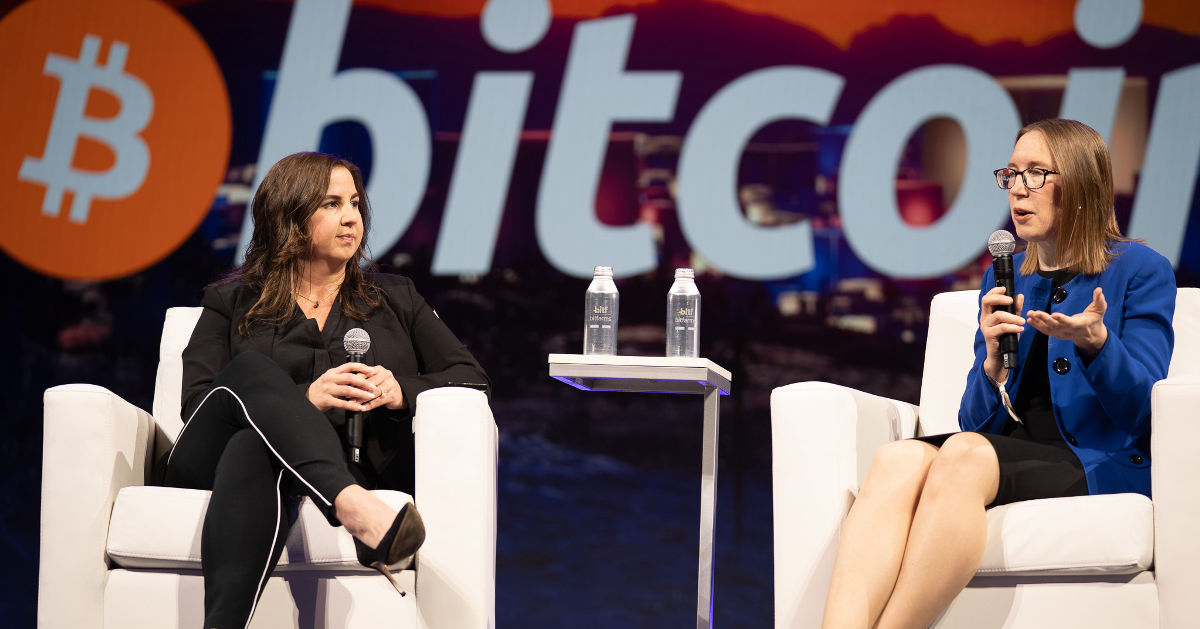
SEC Commissioner Hester Peirce, in an interview on the Searching for Mana podcast, said she expects the Clarity Act to pass this summer. The bill has cleared the House and awaits Senate action. Peirce, a veteran of the Senate Banking Committee during the financial crisis, called it a large piece of legislation with many moving parts, and she praised the work of members in both chambers.

The Clarity Act would divide oversight of crypto between the SEC and the Commodity Futures Trading Commission and build a federal structure for spot markets, a structure that does not exist at present.Β 

Peirce said the framework would clarify the application of the Howey Test β€” the standard for when a token counts as part of an investment contract β€” and would shield developers from liability when others misuse their tools.

Peirce argued that past enforcement pushed the industry onto a poor path. The old approach, she said, rewarded builders of throwaway projects and made honest actors hard to tell apart from fraudsters. Her hope for the current window is a shift toward products that meet real human needs.

β€œThis is a rare window where you have a lot of regulatory goodwill,” Pierce said. β€œUse that to build things that last, things that matter.”

She tied the technology’s promise to the transfer of value across networks, the removal of costly intermediaries, and the use of smart contracts to automate back-office work.Β 

Tokenized securities, she said, could improve collateral mobility, ease securities lending, and let issuers reach shareholders through their wallets. She also linked crypto to artificial intelligence, and predicted that AI agents will transact with crypto assets.

On AI regulation, Peirce favored a hands-off stance: allow experimentation, and address harms as they surface rather than shape the technology from the start. She noted that a firm’s use of AI does not excuse the firm from responsibility for the outcome.

Peirce, whose term nears its end, will leave the agency for a law school teaching post. She flagged a rise in scams and a gap in financial education as her chief concerns, and urged investors toward skepticism.

SEC Chair Paul Atkins chimes in

The SEC’s chairman, Paul Atkins, struck similar notes in a Fox News interview with Larry Kudlow after an address to the Economic Club of New York.Β 

Atkins cast himself as an advocate of free-market capitalism and pointed to a series of reforms aimed at drawing more Americans into public markets and easing the path to an IPO.

β€œAmerica was an investment before it was a nation,” Atkins said.

Atkins highlighted the Trump Accounts, set to launch on July 4th, as an expression of American capitalism and long-term saving. He said about 6 million children have enrolled, and that children born in the next two years will receive a $1,000 deposit, with room for matches from employers, parents, and friends.Β 

The accounts, he said, function as a version of a traditional IRA and give a stake in the market to children who might lack exposure to it at home.

β€œAmerica was an investment before it was a nation,” Atkins told Kudlow, citing the European companies that financed voyages across the Atlantic, including the settlement that became New York.

On crypto, Atkins said the president had challenged the agency to make the United States the crypto capital of the world. He faulted the prior administration for treating digital assets as suspect by nature, and pledged a reversal that would bring innovators who left the country back to build under American law, for American investors, who could judge the products for themselves.

Both officials framed their agenda against the backdrop of the July 4th holiday and the anniversary of the founding. Peirce called the market system a powerful force for social good and a check on capital allocation by the government.Β 

Atkins offered a shorter version of the same creed: free-market capitalism, in his words, will win.

This post SEC’s Peirce Sees Clarity Act Passing This Summer as Crypto Rules Take Shape first appeared on Bitcoin Magazine and is written by Micah Zimmerman.

❌