❌

Reading view

There are new articles available, click to refresh the page.

Senator Bill Hagerty: Expanding the U.S. Strategic Bitcoin Reserve, & the Future of Dollar Hegemony


Bitcoin Magazine
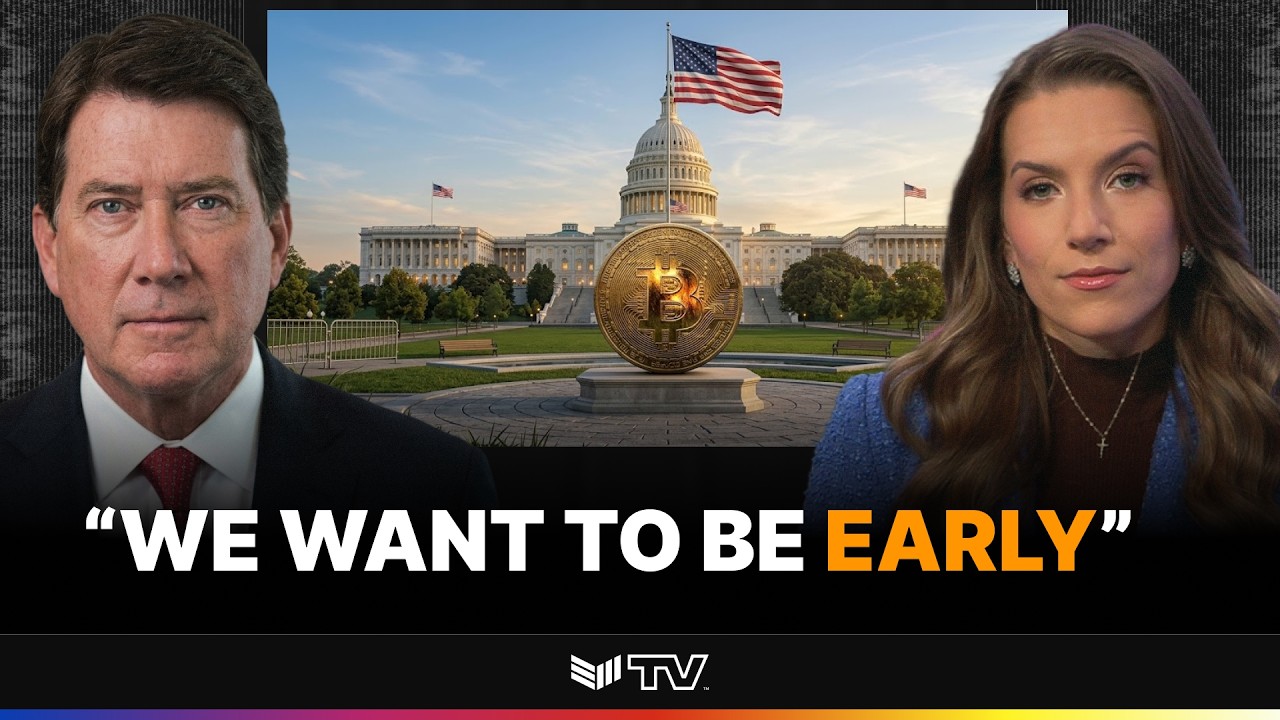
Senator Bill Hagerty: Expanding the U.S. Strategic Bitcoin Reserve, & the Future of Dollar Hegemony

Senator Bill Hagerty says the only answer some in Congress have is a central bank digital currency, and that’s “absolutely not consistent with freedom and liberty.” In this in-studio interview, he explains how uncertainty let former SEC chair Gary Gensler attack the industry, why a light government touch helps innovation thrive, and what Congress can realistically get done before the new session in January.

Chapters:
00:00 Senator Bill Hagerty on What’s Next for the Clarity Act
01:38 Democrats, Ethics Provisions and the Stablecoin Rewards Debate
03:04 How the SEC and CFTC Are Regulating Crypto Without Congress
04:43 How the GENIUS Act Will Change Payments and Settlement
07:08 Stablecoins, Treasury Demand and U.S. Dollar Dominance
08:31 The U.S. Strategic Bitcoin Reserve and 200,000 Bitcoin
10:54 Why Americans Are Still Skeptical of Crypto
13:18 Bitcoin Mining, TVA and Tennessee’s Energy Buildout
17:14 Bitcoin Businesses in Nashville and Why CBDCs Threaten Freedom
18:36 What Congress Can Pass Before the New Session in January

DISCLAIMER: The views and opinions expressed in this show are those of the participants and do not necessarily reflect the official policy or position of BTC Inc., Bitcoin Magazine, or any affiliated entities. This content is provided for informational and educational purposes only and should not be construed as investment, legal, tax, or accounting advice. Nothing contained in this show constitutes a solicitation, recommendation, endorsement, or offer to buy or sell any securities or financial instruments. Viewers should consult their own advisors before making financial or business decisions.

This post Senator Bill Hagerty: Expanding the U.S. Strategic Bitcoin Reserve, & the Future of Dollar Hegemony first appeared on Bitcoin Magazine and is written by Patrick Green.

CFTC Again Probes Polymarket Over Whether It Let Americans Trade

Bitcoin Magazine

CFTC Again Probes Polymarket Over Whether It Let Americans Trade

The Commodity Futures Trading Commission is investigating whether Polymarket broke a 2022 enforcement settlement, according to Reuters reporting earlier today. The probe revives an inquiry the agency closed in 2025 without filing charges. For a platform that has tried to fit prediction markets inside US law, the question strikes at its core.

Polymarket settled with the CFTC in January 2022 and paid a $1.4 million penalty for offering event-based binary options without registration. The company agreed to block American users from its offshore exchange. Geofencing tools followed, but regulators and critics pointed to traders who reached the site through VPNs. The platform has also courted crypto natives, adding bitcoin deposits in October 2025 as part of a broader push to fund accounts with digital assets. 

According to the sources, investigators are examining three areas: the adequacy of Polymarket’s location controls, its advertising inside the United States, and the onboarding and customer protections on its US platform, which launched late last year. 

The company is headquartered in New York and runs its offshore exchange through a Panama-registered entity. A probe is an inquiry, not a finding, and many investigations end without enforcement. 

Polymarket’s mounting regulatory scrutiny

The inquiry sits inside a wider effort. In June, the Wall Street Journal reported that Polymarket paid individuals to produce videos of fictitious winning bets, and senators Adam Schiff and John Curtis urged the agency to open a probe. Bloomberg reported that investigators were examining the company’s social media activity.

CFTC Chairman Michael Selig has framed prediction markets as tools for hedging and information discovery, and he has argued that federal regulators, not states, should oversee them. Enforcement director David Miller has pledged tough policing of the sector.

Enforcement pressure has a test case. In April, prosecutors charged a US soldier, Gannon Ken Van Dyke, with making $400,000 from insider bets on the offshore platform. The indictment says he used a VPN and an “exit mode” that appeared to sit in a foreign country. Van Dyke has denied the charges, and Polymarket says it referred the matter to authorities.

Scale raises the stakes. Intercontinental Exchange, the parent of the NYSE, agreed in October 2025 to invest roughly $2 billion, and Bloomberg counted founder Shayne Coplan, 27, among the youngest self-made billionaires. The bigger the platform, the more its geographic walls matter.

Earlier this year, Polymarket’s five-minute Bitcoin up/down contract was exploited by a small group of traders who pushed Binance’s price in the final seconds before each close, according to a study. Just 821 wallets, about one in 300 traders, took $8.2 million in the pushed cycles, and 93% of the losses fell on retail bettors. 

The authors of the study found no manipulation in the fifteen-minute contract, since a longer window dilutes a fixed push, a lesson that matters now that Nasdaq and Cboe have filed to list similar binary contracts on equity indices.

This post CFTC Again Probes Polymarket Over Whether It Let Americans Trade first appeared on Bitcoin Magazine and is written by Micah Zimmerman.

CFTC Chair Says New Crypto Rulemaking Will Prevent Another FTX-Style Collapse

Bitcoin Magazine

CFTC Chair Says New Crypto Rulemaking Will Prevent Another FTX-Style Collapse

Pro-crypto regulator Mike Selig has said that pushing ahead with new rules will stop another collapse like FTX. 

Speaking on Fox Business Network’s Varney & Co. show Wednesday, the Commodity Futures Trading Commission Chair said that crypto exchanges will have the chance to register with the regulator in order to safeguard digital asset spot markets. 

Once one of the most popular crypto exchanges, FTX quickly and abruptly went bankrupt in 2022 due to mismanagement. Its founder, Sam Bankman-Fried, is now serving 25 years in prison for fraud and other crimes after $8 billion in customer funds was stolen. 

The CFTC and other regulators are pushing ahead with rulemaking for the crypto space, despite lawmakers last month blocking the long-awaited Clarity Act. 

“Four years ago, we saw the collapse of Sam Bankman-Fried’s FTX, where he stole over $8 billion in customer funds. That can’t happen under our regime,” Selig said. 

“Actually, Sam Bankman-Fried’s subsidiary that was CFTC registered, all the funds were safe and secure because they were segregated, and we have some of the most stringent requirements of any federal agency when it comes to markets — we want to bring that to the crypto world,” he added. 

Selig added that some exchanges may choose to remain under the state regimes, while others will register federally. 

The CFTC is relying on powers it already has to regulate crypto markets. The watchdog this week sought public comment on a framework that would create a new federal registration category, called a “crypto asset market,” for exchanges offering leveraged, margined or financed crypto trades to retail customers. 

Exchanges that don’t offer leverage could stay under state licenses. But the agency reads “leverage” broadly, which could bring even fully paid trades under its oversight unless customers take delivery of their crypto.

CFTC Chair Selig, formerly chief counsel at the SEC’s Crypto Task Force, last month said that the regulator was preparing for the transition of markets moving “24-7, on-chain.”  

Both the CFTC and Securities and Exchange Commission have taken a more friendly approach to regulating the crypto industry since U.S. President Donald Trump took power. 

This post CFTC Chair Says New Crypto Rulemaking Will Prevent Another FTX-Style Collapse first appeared on Bitcoin Magazine and is written by Mathew Di Salvo.

Coinbase’s Ryan VanGrack: CFTC Approval “Opens Many Doors” for Bitcoin

Bitcoin Magazine

Coinbase’s Ryan VanGrack: CFTC Approval “Opens Many Doors” for Bitcoin

The SEC’s proposed custody rules could make it easier for investment advisors to help clients own Bitcoin directly. Coinbase’s Ryan VanGrack explains why institutional capital tends to flow where there are clearer rules, and why he sees direct ownership and ETFs as “both and, not either or.” He also shares why traditional finance is accelerating its push into Bitcoin and digital assets.

Chapters:
00:00 Coinbase Wins CFTC Approval for Its Own Clearinghouse
01:29 Can SEC Guidance Last Without the Clarity Act?
02:40 SEC Custody Proposal: Helping Advisors Hold Bitcoin Directly
04:14 Tokenization: The Biggest Upgrade Since Electronic Trading
05:41 How Tokenization Cuts Out Wall Street’s Middlemen
07:34 What Washington Still Needs to Fix for Bitcoin Holders
08:56 Institutional Adoption Accelerates After the Clarity Act Vote
11:07 How Coinbase Is Bringing Digital Asset Infrastructure to Community Banks
12:01 Sponsor: Square
12:34 Is Crypto Really a Tool for Illicit Finance?

DISCLAIMER: The views and opinions expressed in this show are those of the participants and do not necessarily reflect the official policy or position of BTC Inc., Bitcoin Magazine, or any affiliated entities. This content is provided for informational and educational purposes only and should not be construed as investment, legal, tax, or accounting advice. Nothing contained in this show constitutes a solicitation, recommendation, endorsement, or offer to buy or sell any securities or financial instruments. Viewers should consult their own advisors before making financial or business decisions.

This post Coinbase’s Ryan VanGrack: CFTC Approval “Opens Many Doors” for Bitcoin first appeared on Bitcoin Magazine and is written by Patrick Green.

CFTC Proposes New Crypto Oversight Rules

Bitcoin Magazine

CFTC Proposes New Crypto Oversight Rules

The U.S. Commodity Futures Trading Commission has proposed new rules to regulate digital asset transactions and markets. 

In a Monday release, the agency said that the proposed rules would ​allow U.S. crypto exchanges to opt into a federal regulatory regime. 

Despite lawmakers blocking the Clarity Act last month, the CFTC and Securities and Exchange Commission have pressed ahead with proposing rules to regulate the digital asset industry. 

“Today’s action is a critical step in the CFTC’s ongoing efforts to ensure America remains the crypto capital of the world,” Chairman Mike Selig said. 

JUST IN: 🇺🇸 CFTC proposes rules to regulate U.S. crypto markets.

"Today’s action is just the beginning…America can lead the next generation of financial technology without repeating the mistakes of the last one." 👏 pic.twitter.com/jTL52Aqhbi

— Bitcoin Magazine (@BitcoinMagazine) October 5, 2026

He added: “The Commission’s announcement begins our process of new rulemakings grounded in the CEA’s purpose and President Trump’s directive to propose a federal crypto asset regulatory market structure using the CFTC’s existing statutory authorities.”

If approved, the new rules would allow crypto exchanges offering the leveraged trades to register with the regulator. 

The Clarity Act wants to formally divide oversight between regulators, distinguishing which digital assets are securities, commodities or stablecoins. 

But the bill stalled and stumbled this year as the banking lobby had issues with crypto companies paying customers stablecoin rewards and some lawmakers — mostly Democrats — were concerned about the ethics side of the legislation. 

Regulators are drafting rules that the crypto industry has long called for regardless. 

CFTC Chair Selig, formerly chief counsel at the SEC’s Crypto Task Force, last month said that the regulator was preparing for the transition of markets moving “24-7, on-chain.” 

The SEC — also run by a pro-crypto regulator — went ahead and in September approved tokenized stocks trading. 

That came after it also proposed its own framework for crypto asset offerings in August, pressing ahead while the landmark legislation stalled.   

U.S. President Donald Trump campaigned on a ticket to help the digital asset industry and since taking office has signed pro-crypto legislation and executive orders. 

Trump in August urged lawmakers to get the Clarity Act over the line, calling the proposed legislation “very powerful.” 

The CFTC’s preliminary rulemaking notice is open for public comment for 60 days after it’s published in the Federal Register. After that, the agency will review the feedback and decide whether to issue a formal proposed rule, which would go through another comment period before any final rule is adopted.

This post CFTC Proposes New Crypto Oversight Rules first appeared on Bitcoin Magazine and is written by Mathew Di Salvo.

❌