Russia’s largest bank, Sberbank, has said it expects trading volume with its new crypto rollout to hit 4 trillion rubles ($46.43 bln) in the first year, according to reports.
Volumes are also expected to hit 7.5 trillion rubles ($87.06 bln) by 2029, Sberbank Deputy Chairman of the Executive Board Anatoly Popov was quoted saying, as reported by Tass on Saturday.
The forecast was deemed “conservative” according to the news report. Sberbank in July revealed plans to debut a Bitcoin and crypto wallet as well as digital asset custody by December. The Bank of Russia in July published draft regulations for crypto trading, and the State Duma is preparing the comprehensive regulation of digital assets.
And in a Friday report, Tass quoted Sberbank Deputy Chairman Anatoly Popov saying that the bank was planning to accept Bitcoin — and other cryptocurrencies — as collateral for loans.
Russia is fast moving ahead with regulating digital assets in the country. Russian President Vladimir Putin this month signed a law to set in stone the regulation of digital currencies and digital rights in the country.
The new law reportedly allows only registered entities to operate as exchanges, and puts limits on the amount of crypto retail investors can use.
Still, despite the rollout, using digital assets as a means of payment or legal tender within Russia is still banned. Using crypto as a form of payment has been prohibited in Russia since 2022.
President Putin has appeared to praise Bitcoin in the past, once saying that the leading cryptocurrency can’t be stopped.
Since the U.S. and European governments cut Russia off from the SWIFT payments system after it invaded Ukraine in 2022, Russian companies have been using Bitcoin to skirt around the penalties.
But the Russian state keeps a tight grip on what its citizens can do with crypto: authorities have been cracking down and arresting people operating unregistered crypto exchanges.
And the amounts involved barely matter — a nuclear engineer in Sarov was sentenced to 18 years for sending about $13 from his crypto wallet to groups the state designates as terrorist organizations.
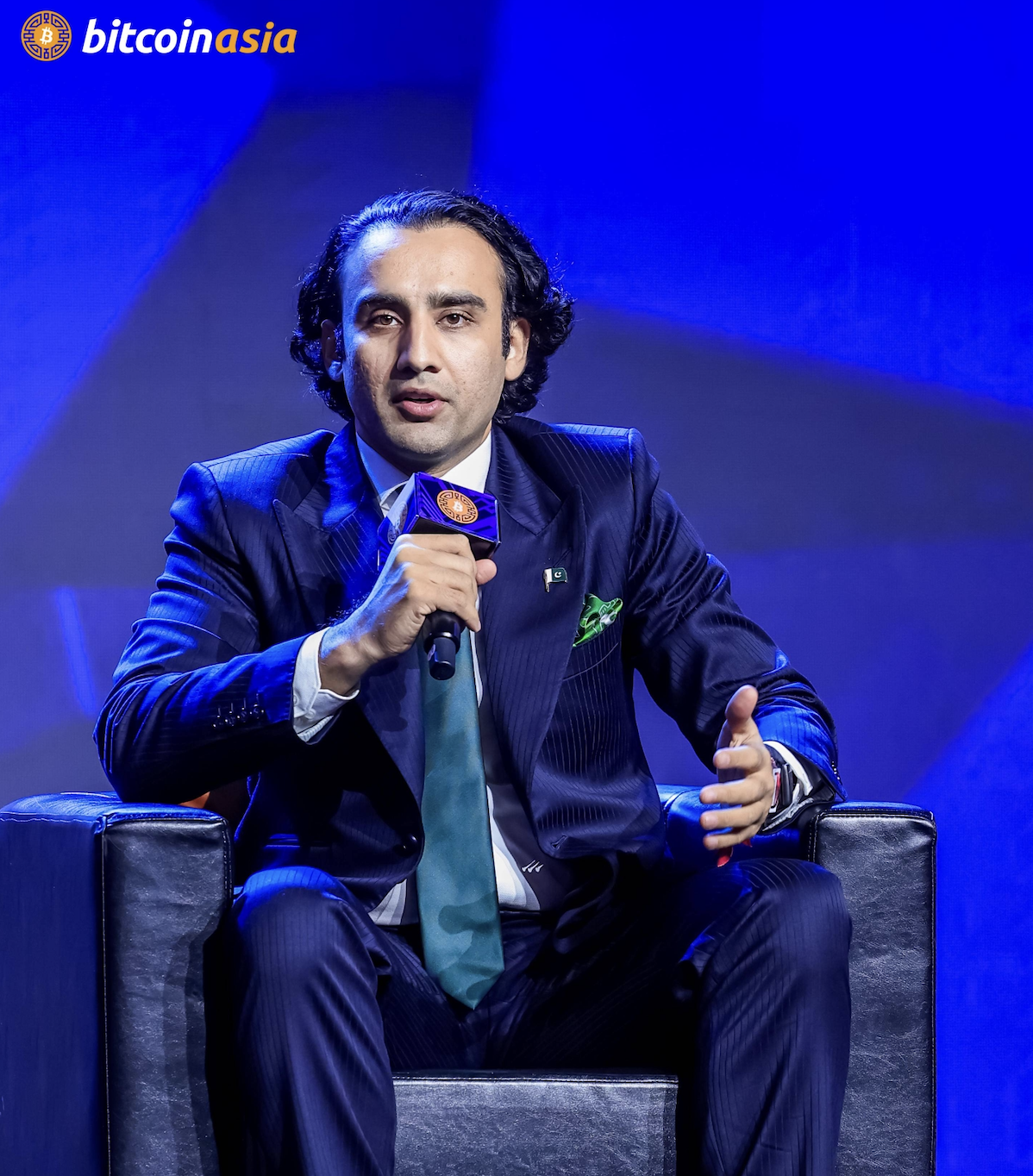
Pakistan has launched its virtual asset regulatory regime in less than six months while using just 8% of the budget allocated to build it, according to Bilal Bin Saqib, the country’s Minister of State and Chairman of the Pakistan Virtual Assets Regulatory Authority (PVARA).
Speaking at Bitcoin Asia in Hong Kong on August 28, Saqib said approximately $200,000 was used to build and operationalize the new regulatory framework, leaving roughly 92% of the approved budget unspent.
“We used only 8% of our approved budget to get this done,” Saqib announced. “Government should not measure success by how much money it spends. It should measure success by how much it delivers.”
Pakistan moved from primary legislation to notified regulations and a live licensing regime in under six months, establishing a formal pathway for companies operating in the digital asset sector.
The framework covers activities including exchanges, custody, brokerage, asset management, lending and settlement, while introducing requirements around governance, anti-money laundering and counter-terrorism financing, customer asset safeguarding, cybersecurity and market conduct.
For Pakistan, the regulatory rollout represents a significant shift toward bringing Bitcoin and digital asset activity into the formal financial system and providing companies with a defined framework for operating in the country.
Rethinking How Governments Build
Saqib framed the PVARA rollout as more than a regulatory achievement, arguing that it demonstrates how governments can operate differently in an environment where technology is developing rapidly.
Rather than building a large bureaucracy, the authority focused on smaller teams, technology-driven workflows and delivering a functioning regulatory framework.
“Technology is moving at machine speed. Government has to learn how to move much faster without compromising structure, accountability or consumer protection,” Saqib stated.
Saqib argued that governments need to balance speed with institutional credibility as emerging technologies continue to develop.
“Speed without structure can be dangerous. But structure without speed can become irrelevant.”
The approach reflects a broader vision for how Pakistan intends to compete in financial technology. Rather than simply adopting technologies developed elsewhere, the country is positioning itself to participate in the development of new financial infrastructure.
Beyond Crypto: The Agentic Economy
Saqib said Pakistan’s regulatory ambitions extend beyond today’s digital asset market.
The country is looking toward an economy increasingly shaped by tokenized markets, programmable payments, stablecoins, machine-to-machine commerce and artificial intelligence agents.
AI agents could eventually transact on behalf of individuals, companies and other machines, creating new questions around financial authority, identity, compliance and consumer protection.
Among the questions governments may need to address are who is responsible when an AI agent executes a financial transaction, how delegated authority should work and how anti-money laundering controls can function when machines transact directly with one another.
“Today we are regulating virtual asset service providers,” Saqib stated. “Tomorrow we will need regulation around agentic payments and the agentic economy.”
Saqib described the country’s virtual asset framework as an initial building block for this broader financial system.
Pakistan Wants to Build at the Frontier
The strategy represents an attempt to compress the traditional timeline for emerging markets, which often adopt financial and technological innovations after they have already matured in larger economies.
“Emerging markets do not have to spend the next decade catching up. We can build at the frontier,” Saqib said.
With a population of more than 240 million, Pakistan represents a potentially significant market for emerging financial technologies.
For PVARA, the immediate test will be whether the new regulatory regime can attract legitimate digital asset businesses while maintaining the consumer protections and oversight built into the framework.
But Saqib’s vision extends beyond regulation itself.
Pakistan’s rapid transition from legislation to live licensing — accomplished with only 8% of its approved budget — is being presented as a model for how governments can approach the next generation of financial infrastructure.
The country now wants to apply that same philosophy to an economy where digital assets, artificial intelligence and programmable finance increasingly converge.
You can watch Saqib’s full appearance at Bitcoin Asia 2026 below.
Pakistan has announced a new regulatory framework for crypto after banning the asset class for close to a decade,
Announcing the news in an X post Friday, Bilal Bin Saqib, the special assistant to the prime minister on blockchain and cryptocurrency, invited foreign businesses to come to the country and set up shop.
Pakistan’s Virtual Assets Act introduces the country’s first comprehensive legal framework for overseeing virtual assets and the businesses that operate in this space.
8 years of prohibition end today.
Chairman PVARA @BilalBinSaqib announces the notification of the Licensing Regulations and the opening of the licensing portal, and sets out what licensing requires of providers and what it guarantees consumers.
— Pakistan Virtual Assets Regulatory Authority (@PakistanVARA) August 21, 2026
“For approximately a decade, Pakistan’s answer to virtual assets was complete permission and complete ban — but history tells us that technology never waits for permission,” Bin Saqib said.
He added: “To the companies watching Pakistan from outside, the front door is open for you. Come, get licensed. Come, get banked. Come, build here under rules that are clear, public and enforceable.”
In a separate post, Bin Saqib said that the country now has “the rules, the regulator and the licensing framework to bring virtual assets into the formal economy, protect consumers and build the foundation for the next generation of financial infrastructure.”
Pakistan’s virtual Assets Act was approved by the senate earlier this year and then signed into law by President Asif Ali Zardari. Friday’s announcement indicates that licensing regulations are now in place.
Pakistan has made a crypto-friendly pivot in recent years. In 2025, plans to launch a national strategic Bitcoin reserve were announced at the Bitcoin 2025.
Before that, the country announced that it was allocating 2,000 MW of surplus electricity to Bitcoin mining and AI data centers in an initiative aimed at generating revenue, creating jobs, and attracting foreign investment, according to the Pakistani government.
The country has played an important part as a mediator between the U.S. and Iran. A relationship started forming between the two after it became an affiliate of Trump-backed crypto project, World Liberty Financial.
Weeks after President Donald Trump’s return to power last year, WLF leaders went to Islamabad to meet with Pakistan’s prime minister.
U.S. President Donald Trump urged lawmakers to pass the Clarity Act on Wednesday — and also hinted that the government may accumulate more bitcoin.
After gathering with crypto executives at the White House, President Trump said that getting the Clarity Act over the line would keep the U.S. ahead of China.
Lawmakers were hoping to get a vote on the crypto market structure bill, or Clarity Act, in August. A vote will now go ahead in September. The bill will establish a framework for distinguishing between digital assets that are securities, commodities or payment stablecoins.
BREAKING: President Trump when asked if the U.S. plans to accumulate sizable amounts of Bitcoin:
"Certainly it's been talked about. It's take a lot of pressure off the dollar. It's been very, very good for the dollar. and I think if you came in with recommendations I would… pic.twitter.com/NnWFHi51nT
“We’re ensuring that America remains the undisputed leader in not only Bitcoin and crypto, but also technologies like prediction markets, artificial intelligence and much more,” President Trump said.
He added: “Now we need Congress to take the next step by passing the Clarity Act — a fair version of the Clarity Act — and this landmark structure legislation. It’s a very, very powerful structured legislation which will keep us ahead of China, and keep us ahead of everyone else.”
When asked if the U.S. government would be accumulating bitcoin, President Trump said: “It’s been talked about — it’s taken a lot of pressure off the dollar, it’s been very, very good for the dollar, and I think if [regulators] came in with recommendations, I would certainly listen.”
President Trump signed an executive order to establish a strategic bitcoin reserve last year. The order states that the U.S. cannot sell any of the bitcoin it has, most of which has been seized in law enforcement operations. But the EO does not commit to buying the asset.
Nevertheless, the president has recently spoken highly of bitcoin: Just last week, Trump said in an interview with Punchbowl News that “you see people paying with bitcoin and they don’t even know about cash anymore.”
Despite being passed by the House of Representatives last year, the Clarity Act has been in a deadlock for most of this year after the banking lobby clashed with lawmakers and crypto businesses over whether platforms like Coinbase should be able to pay customers yield.
Some lawmakers have sought to change wording in the bill regarding ethics. A new bill started circulating in July, banning government officials from promoting and making money from crypto.
Other lawmakers said it still fell short, and a number of pro-crypto Republicans accused Democrats of deliberately playing politics and delaying the bill.
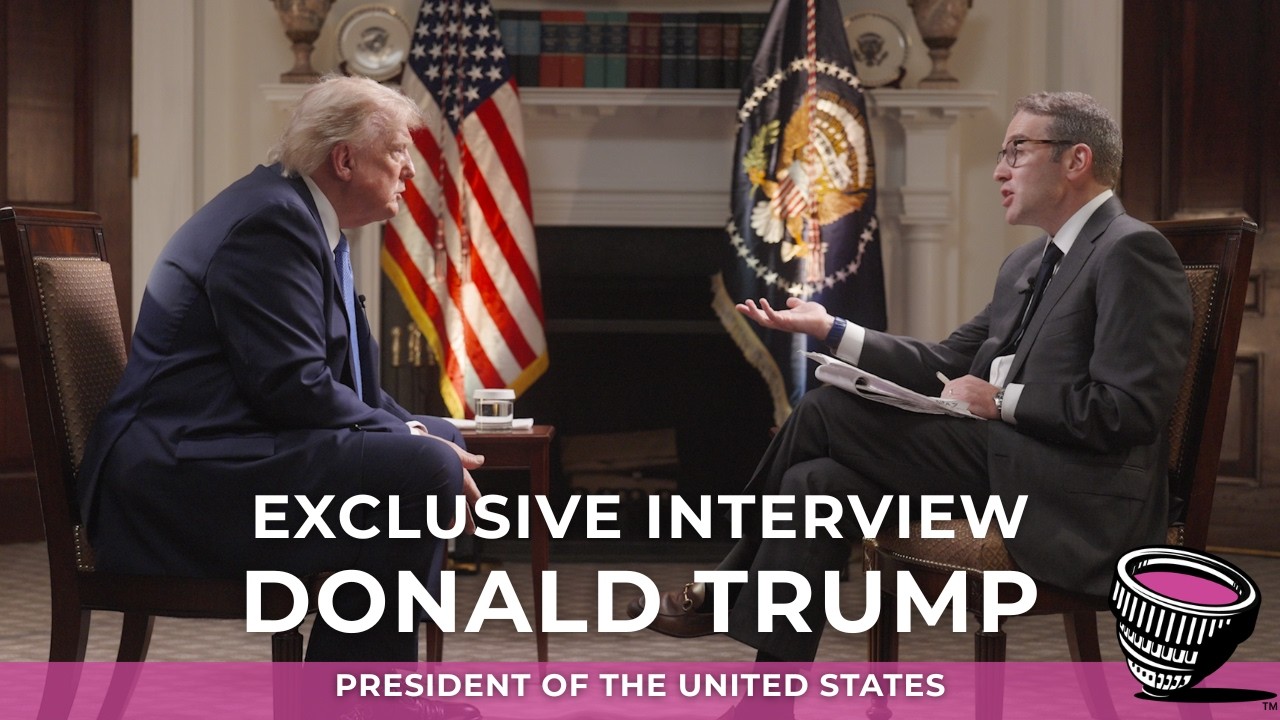
Jake Sherman sits down with President Donald Trump to talk the SAVE America Act, Iran, Blanche's nomination and MUCH more.Stick around: John Bresnahan and An...
Citigroup CEO Jane Fraser has said that while some improvements need to be made to the crypto Clarity Act, the bank wants a “good bill to go through.”
The banking executive said that the bank was a “leader in digital assets” so wanted “safe adoption” of the technology.
Lawmakers were trying to get a vote on the Clarity Act through before splitting for recess last week but ran out of time. A vote will now take place in September.
JUST IN: Citi CEO Jane Fraser says she wants the CLARITY Act to become law.
“We want to have good regulation that supports innovation and also encourages the safe adoption of the capabilities of digital assets,” Fraser said.
“I think it would be excellent for the system.”
A sticking point for the bill has been from the banking lobby, who raised concerns over crypto companies paying customers yield for holding stablecoins. U.S. banks have said they could lose customers if crypto exchanges offer more attractive products for their deposit base.
Fraser reiterated the point on Friday, saying that small banks play an important role in the U.S. and a reward system on deposits could have a “detrimental effect.” But she added: “We have not given up on pushing to get some improvements made to the bill, but we would like to see a good bill go through.”
America’s biggest crypto exchange, Coinbase, pulled support for the bill in January after clashing with banking chiefs who said that earning yield on stablecoins should be banned.
The Clarity Act was passed last year by the House of Representatives but has been deadlocked since 2026.
Still, the bill has been worked on by both Republicans and Democrats — despite crypto legislation being something pushed by pro-crypto President Donald Trump.
Major institutions, including Fidelity and Goldman Sachs, as well as crypto lobby groups and politicians, have said the revised bill works in its current form.
Crypto and prediction market bigwigs are set to gather at the White House next week, according to a Thursday report from POLITICO.
The report, citing people with knowledge of the matter, said the industry officials would meet one day before the Commodity Futures Trading Commission holds a meeting for its new Innovation Advisory Committee. The committee will feature a panel of experts also from the crypto, prediction market and traditional finance spheres.
Despite the long-awaited crypto Clarity Act being delayed, regulators are moving ahead with pro-crypto initiatives.
BREAKING: White House to host gathering for crypto industry officials next week, POLITICO reports pic.twitter.com/mdVnzglpmN
POLITICO’s report did not mention if President Trump would attend the event.
Last week, pro-crypto lawmakers were hoping the Clarity Act passed before Congress departed for August recess. After a delay, a vote will now go ahead in September.
Lawmakers started mulling over a new draft of the bill, which was passed by the House of Representatives last year, in July. The text tackled the issue of ethics, banning government officials from promoting or making money from crypto.
President Trump campaigned on a ticket to help the America become the crypto capital of the world, and received backing from major players in the space.
Since taking office, the president has signed a number of pro-crypto measures, including a March 2025 executive order directing the creation of a Strategic Bitcoin Reserve.
Regulators have also scrapped a number of high-profile lawsuits against crypto companies, and made a push to watchdog the industry in a more helpful way.
The Office of the Comptroller of the Currency says it will keep pushing to revive de novo bank chartering, a campaign that has already opened a federal on-ramp for some of the largest companies in crypto.
In a statement Tuesday, the regulator said reinvigorating new bank formation remains a priority and commended the Federal Deposit Insurance Corporation for its own recent efforts on the issue.
“De novo chartering is a sign of a healthy banking system,” said Comptroller of the Currency Jonathan V. Gould, adding that the FDIC’s new process for reviewing deposit insurance applications aligns with the OCC’s work to reverse the decline in new charters.
JUST IN: US regulator OCC approves Bitcoin and crypto firms to become national banks.
Over the past 15 years, de novo chartering fell significantly, the OCC said. From 2011 through 2014, the OCC received an average of fewer than four charter applications per year, and in some years it received none at all.
“For more than a decade, regulators signaled that those seeking a federal bank charter and federal deposit insurance need not apply,” Gould said. “Entities that engage in legally permissible activities, including those involving digital assets and other novel technologies, should have a path to becoming a national bank. America and the OCC are once again open for business.”
The numbers have turned. The OCC has received 40 de novo applications in the last 18 months, including applications for national trust banks — a charter type it has granted for decades. In many cases it has ruled within 120 days of receiving a complete application. For the first time in five years, a full-service national bank has received final approval and opened its doors: Erebor Bank, N.A., backed by Palmer Luckey, Joe Lonsdale and Peter Thiel’s Founders Fund.
A number of top crypto companies have received conditional approval, including Ripple, Circle, Crypto.com and Paxos. Donald Trump-backed decentralised finance platform World Liberty Financial has also applied, hoping to get institutions on board with using its native stablecoin, USD1.
The appeal is structural: the charter lets crypto companies hold client assets and handle trade settlement inside a federally regulated framework. For an exchange like Coinbase, whose application remains under review, it would mean serving as a crypto custodian on a federal basis, managing assets for larger entities.
Not everyone is happy about it, though. The Independent Community Bankers of America in December urged the OCC to reject Coinbase’s application for a national trust bank charter, arguing the exchange has “demonstrably flawed risk and control functions” and operates under governance that “prevents independent oversight.”
And in February, the American Bankers Association — the country’s largest banking lobby — urged the OCC to slow its review of crypto companies’ charter applications.
Underneath the procedural objections is a turf war. One of the biggest gripes from traditional banks comes down to stablecoins: companies like Coinbase want to pay users rewards for holding the tokens, which banks say is unfair and could erode their deposit base.
The OCC, for its part, says it will continue to encourage the formation of new banks and strengthen the resilience of the federal banking system.
A Federal Bureau of Investigation agent allegedly took $1 million in seized cryptocurrencies before turning himself in, according to court records.
Documents unsealed this week allege Patrick Steven Yaroch, who was a FBI Supervisory Special Agent working at the FBI Headquarters Counterintelligence and Espionage Division, claimed he “was frustrated that the FBI could not or would not act against adversarial cryptocurrency accounts.”
He then proceeded to “take matters into his own hands,” according to the affidavit filed with a district court in Virginia, and transfer $925,426.07 in crypto to his personal wallets over numerous transactions.
Yaroch then allegedly toyed with the idea of retiring in Portugal with his wife, court documents claim, citing his ChatGPT history, but later confessed to a Department of Justice employee what he had done.
“Yaroch told DOJ employee 1 that he made some very poor decisions related to cryptocurrency wallets,” court documents read. “Yaroch said that he went into FBI systems and found keys needed to transfer money from wallets to himself.”
A motion for a detention order, made public on Tuesday, added: “The weight of the evidence against the defendant is strong. He confessed to stealing the cryptocurrency from the adverse nations’ wallets.”
Court filings further allege that Yaroch “previously had access to some of the nation’s most secret and important information. He then chose to misuse this information to steal money, for his own financial gain.”
It adds that the defendant has been charged with two felonies that carry a maximum penalty of 10 years of incarceration each.
The nation in question has not been named in the documents.
The court documents made public this week only briefly mention that Yaroch had a tiny amount of Bitcoin in his Kraken account; the vast majority of his funds were held in stablecoins.
Yaroch, from Ashburn, Virginia was fired from the FBI on July 31, and investigations are ongoing, according to the court documents.
Crypto investment firm Digital Currency Group is the latest big name to throw its weight behind the Clarity Act.
In a statement posted Wednesday, the conglomerate said that the current draft of the long-awaited bill “offers exactly the kind of certainty our industry needs to grow and thrive responsibly.”
A number of lawmakers are hoping the Clarity Act — which would set in stone crypto regulation in the U.S. — gets passed before Congress departs for August recess. While the bill has been drafted bipartisanly, some Democrats are unhappy with the current version.
“The bill is the product of serious negotiation and reflects genuine compromise from industry, advocates, and members on both sides of the aisle,” the statement read.
“The competitive stakes could not be higher. The United States has long been the global center of technological innovation, but we are ceding ground at an alarming pace,” it continued, adding that “talent, capital, and innovative companies” are looking to countries like Singapore and the United Arab Emirates to set up shop.
Crypto giant DCG has over 200 companies in its portfolio, most notably Grayscale, the manager of the Grayscale Bitcoin Trust.
Lawmakers have been working on the Clarity Act since last year. Republicans passed the bill in 2025 but it has been in a deadlock this year, partially because banking chiefs raised concerns over stablecoin yield.
A new draft circulating last week bans officials and their families from issuing or promoting crypto — something opposition lawmakers previously had issue with.
GOP lawmakers are pushing Democrats to pass the bill. Bipartisan support for the bill exists though some lawmakers — such as senator Elizabeth Warren — have criticized the draft, claiming it would allow President Donald Trump to make money from crypto, as well as benefit criminals.
A group of Democrats last week penned a statement claiming the bill in its current form falls short.
Major institutions, including Fidelity and Goldman Sachs, as well as crypto lobby groups and politicians, have said the revised bill works in its current format.
Securities and Exchange Commission Chairman Paul Atkins has thrown support behind the long-awaited crypto market structure bill.
Writing on X Tuesday, the chief of Wall Street’s biggest regulator said that he was “committed to supporting Congress in advancing” the bill.
A number of lawmakers are hoping the Clarity Act gets passed before Congress departs for August recess. While the bill has been drafted bipartisanly, some Democrats are unhappy with the current version.
JUST IN: SEC Chair Paul Atkins says he will support Congress in passing the Clarity Act:
“I am committed to supporting Congress in advancing the CLARITY Act, including providing technical assistance.” pic.twitter.com/wRRbnY9vXu
“American leadership in the digital finance revolution means matching the energy of American innovators with a regulatory framework worthy of them,” wrote Atkins on the social media platform, adding a video from a Monday CNBC interview where he spoke about the need for such a bill.
Chosen by President Trump, Atkins was officially sworn in as the 34th Chairman of the SEC last year. He has taken a far more crypto-friendly approach to regulating the space compared to his predecessor, Gary Gensler.
The regulator is the latest big name to push for the Clarity Act to get over the line.
Major financial institutions like Fidelity and Goldman Sachs have thrown their weight behind the new bill, but a group of Democrats last week said in a statement that the bill in its current form falls short.
A number of lawmakers are hoping the bill gets passed before Congress departs for August recess.
Despite being passed in the house of representatives last year with strong bipartisan support, the Clarity Act has been in a deadlock for much of 2026, partially because the banking lobby raised concerns over stablecoin yield and Democrats were worried over language surrounding ethics.
Banking lobbyists have said that if crypto exchanges pay attractive yields to customers, banks could lose their deposit base.
An updated bill of the Clarity Act was introduced last week that addressed the ethics concerns, banning government officials and their families from issuing or promoting crypto.
Republicans are hoping to gain bipartisan support for the bill this week to advance the legislation. If passed, the long-awaited bill would create a regulatory framework for the cryptocurrency market.

 Login
Login

 President Trump when asked if the U.S. plans to accumulate sizable amounts of Bitcoin: