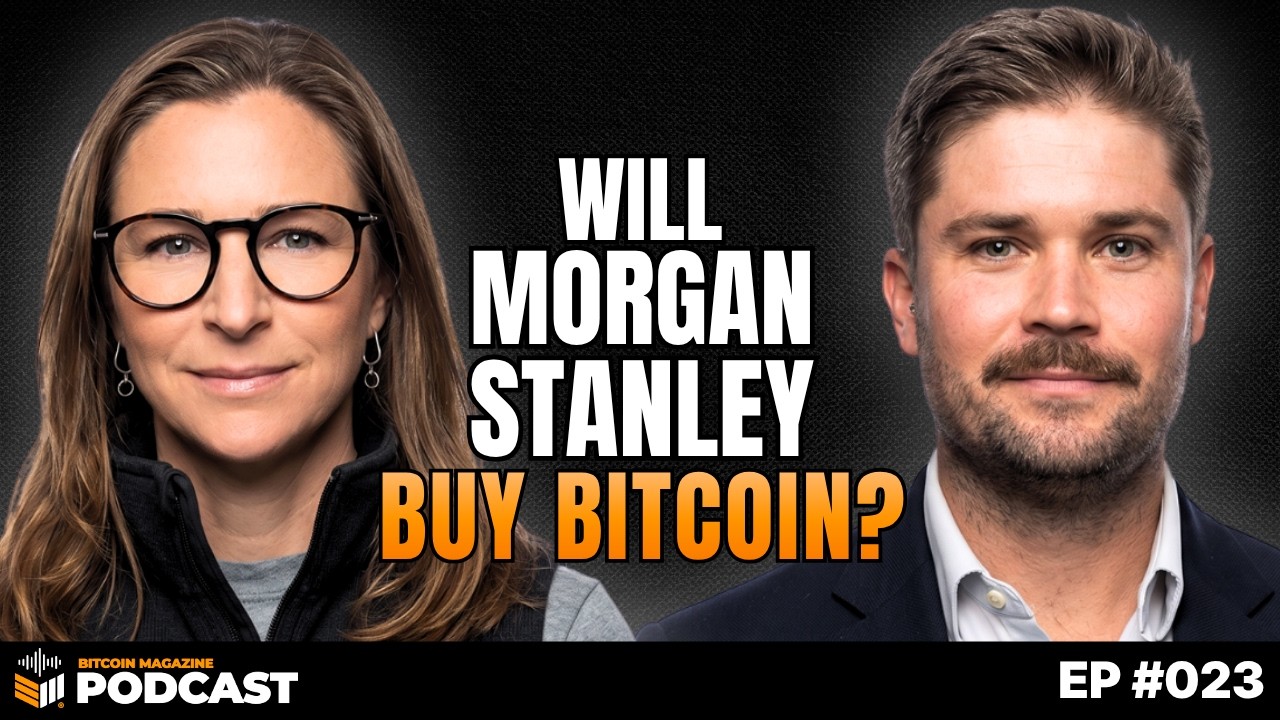
Morgan Stanley became the first global systemically important bank to launch a spot Bitcoin ETP and it crossed $600 million within months of its April debut. Amy Oldenburg, Head of Digital Assets at Morgan Stanley, joins host Spencer Nichols to explain how that product came together, why it was priced below competing spot Bitcoin ETFs, and what still stands between clients and their first Bitcoin allocation. She also details the firm’s 0–4% allocation framework across three investor risk profiles and why Morgan Stanley has no equivalent gold allocation. Plus: whether Bitcoin could land on Morgan Stanley’s own balance sheet.
Host: Spencer Nichols — Bitcoin Magazine Amy Oldenburg, Head of Digital Assets at Morgan Stanley
Chapters: 0:00 — Morgan Stanley on Putting Bitcoin on Its Own Balance Sheet 1:14 — 26 Years at Morgan Stanley: Emerging Markets to Head of Digital Assets 2:10 — First Major Bank to Launch a Spot Bitcoin ETP Tops $600 Million 3:14 — Education, E-Trade Spot Crypto, and What Clients Actually Own 4:49 — Why Morgan Stanley Priced Its Bitcoin ETP So Low 6:40 — The 0–4% Allocation Framework and the Digital Gold Thesis 8:52 — Correlation Regimes: Digital Gold, High Beta Tech, and Volatility 11:41 — Gold 2.0, Market Cap, and Bitcoin on the Balance Sheet 14:37 — Institutional Market Structure, Quantum Risk, and Client Trust 18:02 — Global Off-Ramps, Tokenization, Stablecoins, and Morgan Stanley Research
DISCLAIMER: The views and opinions expressed in this show are those of the participants and do not necessarily reflect the official policy or position of BTC Inc., Bitcoin Magazine, or any affiliated entities. This content is provided for informational and educational purposes only and should not be construed as investment, legal, tax, or accounting advice. Nothing contained in this show constitutes a solicitation, recommendation, endorsement, or offer to buy or sell any securities or financial instruments. Viewers should consult their own advisors before making financial or business decisions.
Bitcoin’s price rose on Friday — despite data revealing that U.S. inflation had risen.
The biggest cryptocurrency by market cap was recently trading for close to $78,749 after jumping 2% over a 24-hour period. At one point on Friday morning in New York, bitcoin rose as high as $79,607.
Bitcoin’s price spike came after news dropped that U.S. consumer prices accelerated in August, reinforcing expectations that the Federal Reserve will raise interest rates next week.
The consumer price index, excluding food and energy, climbed 0.3% in August from a month earlier, which was higher than expected.
Inflation in the U.S. has been difficult to tame due to the war with Iran, which has lifted oil prices, in turn raising the costs of food, gasoline and other goods.
Higher inflation typically means the Federal Reserve will raise interest rates, which in turn could stop bitcoin’s price climbing higher.
According to CME’s FedWatch tool, traders think there is a 85% chance interest rates will be higher by next week. The Federal Reserve will meet next week and reveal what it will do with borrowing costs.
Bitcoin has typically performed well in a low interest rate environment because it means people can buy more of the cryptocurrency with increased liquidity.
Federal Reserve Chairman Kevin Warsh, who took the helm in January, last month gave his first speech as head of the U.S. central bank and said he had “more work to do” to fight inflation.
The U.S. is currently in the grips of an affordability crisis and rising oil prices are a hot topic ahead of the midterm elections.
U.S. President Donald Trump has reassured voters that prices will get under control and repeatedly put pressure on the central bank to lower interest rates.
Bitcoin in August had its biggest run in years following positive regulatory news and an announcement from the U.S. Treasury.
Treasury Secretary Scott Bessent announced the department would double the size of its long-dated bond buybacks, helping non-yielding assets like bitcoin and gold. The cryptocurrency then benefited from President Trump urging lawmakers to get key crypto legislation, the Clarity Act, over the line.
Bitcoin’s price slid on Thursday after the price of oil shot over $105 a barrel thanks to renewed tensions in the Middle East.
The biggest and oldest cryptocurrency was recently trading for $77,208 after sliding as low as $76,748 — down more than 2% over the past day.
Its dip came after Iran signaled that it had no intention of backing down against U.S. forces. The two countries earlier this week stepped up attacks in some of the heaviest fighting since the war started in February.
Tehran-backed Houthis in Yemen this week hit Saudi Arabian assets, also pushing the price of oil up.
War in the Middle East pushes oil prices higher and makes the chances of interest rate cuts lower because of inflation. Bitcoin has typically performed well in a low interest rate environment and has experienced sell-offs when the Federal Reserve pivots to hawkishness.
The U.S. is currently in the grips of an affordability crisis and rising oil prices are a hot topic ahead of the midterm elections. U.S. President Donald Trump has reassured voters that prices will get under control.
Federal Reserve Chair Kevin Warsh said at his first speech as leader of the central bank and said that inflation in the world’s largest economy had not come down enough.
Traders are now pricing in an interest rate hike next week when the bank meets.
Still, bitcoin had one of its best runs in August after the U.S. Treasury said it would at least double the size of its liquidity-support buyback operations, in response to surging borrowing costs.
The announcement hurt the dollar but non-yielding assets like bitcoin and gold have benefited.
Despite previously trading in line with risk-on assets like tech stocks, bitcoin has this year traded more in tandem with gold as the so-called debasement trade becomes hot again.
Investors have bought the largest cryptocurrency — along with the precious metal — to hedge against the dollar’s decline.
Bitcoin slid Friday after a better-than-expected labor report showed that the U.S. job market accelerated in August.
The leading cryptocurrency was recently trading for close to $79,764 after dropping as low as $78,706 earlier in the morning in New York. It’s currently down over 1% over a 24-hour period. On Thursday, the coin soared above $82,000.
The Federal Reserve is typically more likely to raise interest rates when the labor market is strong, because more people employed means more spending, and more spending can push inflation up.
Federal Reserve Chair Kevin Warsh last week gave his first major speech as head of the U.S. central bank and said he had “more work to do” to fight inflation. Bitcoin has typically done well in a low-interest rate environment.
Traders currently view a U.S. Federal Reserve interest rate hike at the upcoming September 15–16 policy meeting as roughly a 50% to 60% probability.
But U.S. President Donald Trump on Friday demanded the Federal Reserve slash interest rates.
Writing on his social media platform Truth Social, Trump said: “Lower the interest rates because the U.S.A. is a much stronger credit than it was just a short time ago!”
He added: “We should have the LOWEST RATE of any country in the World, like ‘the old days.'”
Bitcoin has decoupled from stocks recently as investors have renewed concerns around dollar debasement.
The cryptocurrency started surging last month, after the U.S. Treasury Department said it would more than double the size of its government debt repurchases. The coin had its best run in three years and third best August ever.
The much-talked about debasement trade is back in the spotlight, and bitcoin has been trading in lockstep with gold, according to analysts. The so-called debasement trade is when investors buy an asset as a way to hedge against a currency losing value.
News dropped last month that U.S. public debt exceeded $40 trillion for the first time too. Excessive debt also undermines confidence in the dollar, making assets like bitcoin and gold attractive.
Over the past 30 days, the bitcoin price has surged over 23% following both positive regulatory news and announcements from the U.S. Treasury Department regarding debt buybacks.
But other major crypto company stocks rose quicker. Bitcoin treasury Strategy (NASDAQ: MSTR) was trading more than 13% higher on Thursday. The company on Monday resumed bitcoin buys after a 10-week pause to reshuffle its cash balance sheet.
America’s biggest crypto exchange, Coinbase, also saw its stock shoot up. Nasdaq-listed COIN was trading 11% higher in the same time period.
Elsewhere, bitcoin mining companies had a boost too. Top public companies in the space — including the Nasdaq-listed HIVE Digital, MARA, and CleanSpark — all were up on Thursday.
HIVE Digital led the pack with a 13% jump, while MARA Holdings was up more than 10% on the day.
Clean energy bitcoin miner CleanSpark jumped by 9%; IREN, which is slowly phasing out its mining operations to focus on AI-compute, was up by 4%.
Bitcoin had a phenomenal run in August — its third best such month in its history — after the U.S. Treasury Department said it would more than double the size of its government debt repurchases.
The announcement, aimed to tame surging yields not seen in nearly 20 years, hurt the dollar but has benefited non-yielding assets like bitcoin and gold.
Soon after, President Donald Trump urged lawmakers to get the long-awaited crypto Clarity Act over the line — digital asset legislation the industry has long called for.
Investors rushed back into bitcoin exchange-traded funds as a result, throwing over $2.8 billion at the vehicles — the most since October, when the coin hit a new all-time high.
Bitcoin had spent a lot of the year trading below $80,000 per coin, with June and July mostly below $65,000. The coin hit a new record of $126,080 in October. It is now nearly 40% below that number.
Bitcoin slid on Tuesday after investors went into “risk-off” mode following escalating attacks between the U.S. and Iran.
The largest cryptocurrency had initially shrugged off President Donald Trump’s threats to the Middle Eastern nation, as well as the first strikes.
But things heated up on Tuesday, and bitcoin’s price slid. It was recently down more than 2% on the day, trading for $77,363. The coin had pushed past as high as nearly $81,282 on Friday.
The Tuesday attacks from the U.S. were because Iran tried to put mines in the Strait of Hormuz, and also because of an attack on an American military base in Jordan, according to President Trump.
U.S. Central Command said on X that Iran had also attacked commercial ships.
Today at 12 p.m. ET, U.S. forces began striking Islamic Revolutionary Guard Corps (IRGC) targets in Iran. The strikes follow recent attempted attacks by the IRGC against commercial shipping in the Strait of Hormuz and against American service members deployed to the region.
“The strikes follow recent attempted attacks by the Islamic Revolutionary Guard Corps against commercial shipping in the Strait of Hormuz and against American service members deployed to the region,” the post read.
Iran responded with a “decisive operation” against U.S. military bases, according to Iranian media. Oil surged on the news.
Bitcoin’s price has been sensitive to geopolitical tensions this year — especially after Iran and Israel attacked Iran. The cryptocurrency has typically faced downward pressure on news of war, only to then rally when Trump raised hopes of a ceasefire.
Despite Bitcoin’s price being relatively muted, in recent months, it has made more wild swings since mid-August.
Bitcoin’s immediate reaction to rising oil prices is to drop: more expensive energy means higher inflation, and higher inflation typically means the U.S. central bank will postpone rate cuts, which can restrict the liquidity that bitcoin needs to gain momentum.
The Federal Reserve’s chair, Kevin Warsh, last week gave his first major speech as leader of the central bank and said that inflation in the world’s largest economy had not come down enough.
Traders are now no longer pricing in an interest rate cut this year, instead expecting a hike. Bitcoin has typically performed well in the past in low interest rate environments.
Still, the coin had one of its best runs in August after the U.S. Treasury said it would at least double the size of its liquidity-support buyback operations, in response to surging borrowing costs.
The announcement hurt the dollar but non-yielding assets like bitcoin and gold have benefited.
Bitcoin on Monday shrugged off tensions in the Middle East, barely moving despite U.S. President Donald Trump vowing to hit Iran hard.
The price of the biggest cryptocurrency recently stood at $79,076, unmoved over a 24-hour period. The coin also hasn’t budged from where it stood seven days ago.
Geopolitical strife has this year hurt Bitcoin’s price, with the cryptocurrency typically facing downward pressure on news of war and rallied in hopes of a ceasefire.
When the U.S. and Israel first attacked Iran in February, the coin nosedived, and had been shaky on news of war in March and April.
But in recent months, Bitcoin’s volatility has been muted, according to analysts, and Monday was no different: President Trump promised to hit Iran again but the asset didn’t flinch.
“We’re going to hit them hard,” President Trump was quoted telling a Fox News reporter on Monday. The U.S. and Iran started strikes again on Sunday — the first in over one month.
Bitcoin started a phenomenal run two weeks ago — its best in three years — and is up nearly 30% over the past month.
Its price started surging after the U.S. Treasury would at least double the size of its liquidity-support buyback operations. The announcement hurt the dollar but non-yielding assets like bitcoin and gold have benefited.
Positive regulatory news has also helped bitcoin this month: President Donald Trump this month said that the long-awaited crypto Clarity Act was a “very, very powerful” piece of legislation, and urged lawmakers to get it over the line.
The Clarity Act aims to establish a framework for distinguishing between digital assets that are securities, commodities or payment stablecoins — legislation that the crypto industry has long called for.
JUST IN: Crypto ETFs attracted $3.2 billion in inflows last week, "their largest weekly intake since October 2025", The Kobeissi Letter reports.
BlackRock's IBIT led with $928 million last week, adding to their $1.3 billion from the prior week, and marking the biggest 2-week… pic.twitter.com/ROC9tYPMGN
Investors have piled back into exchange-traded funds this month, too, which has also helped bitcoin’s price. From August 17 to 27, investors threw over $2.8 billion at the vehicles — the most since October.
Bitcoin reached as high as $81,281 last week before sliding again on Friday.
Bitcoin dropped, then popped after Federal Reserve Chair Kevin Warsh gave his first major speech as head of the U.S. central bank and said he had “more work to do” to fight inflation.
The leading cryptocurrency was recently trading for $79,474 after dropping as low as $78,630 before quickly rising again.
Bitcoin has typically done well in a low interest rate environment but the Federal Reserve has been reluctant to lower borrowing costs due to sticky inflation in the world’s biggest economy.
“But on the price-stability side of our mandate, the numbers are more concerning,” Warsh said after talking about employment.
He added: “We must be confident that underlying inflation is moving to our objective, clearly and at sufficient speed. Otherwise, we have work to do.”
Bitcoin has in the past dropped on news that the Federal Reserve thinks inflation is too high because it means less chance of a rate cut. Following Warsh’s speech, traders priced in a 50% chance of rate hike in September.
But Bitcoin has appeared to — at least for now — shrug off the speech.
Bitcoin’s started surging last week after the U.S. Treasury Secretary Scott Bessent announced the department would double the size of its long-dated bond buybacks.
The news sent yields down lower, and the dollar slid while non-yielding assets like bitcoin and gold jumped.
Positive regulatory news also helped the coin: President Donald Trump last week said that the long-awaited crypto Clarity Act was a “very, very powerful” piece of legislation, and urged lawmakers to get it over the line.
The proposed law will establish a framework for distinguishing between digital assets that are securities, commodities or payment stablecoins — legislation that the crypto industry has long called for.
The Federal Reserve Bank of Kansas City is on Friday holding the annual event at Jackson Hole, Wyoming, where central bankers, Federal Reserve officials, policymakers and academics will gather to discuss “Financial Innovation: Implications for Payments and Policy.”
According to the Federal Reserve Bank of Kansas City website, this year’s event will touch on how “recent years have seen a dramatic increase in innovation in financial intermediation and payments,” including new technologies such as “cryptocurrencies and stablecoins.”
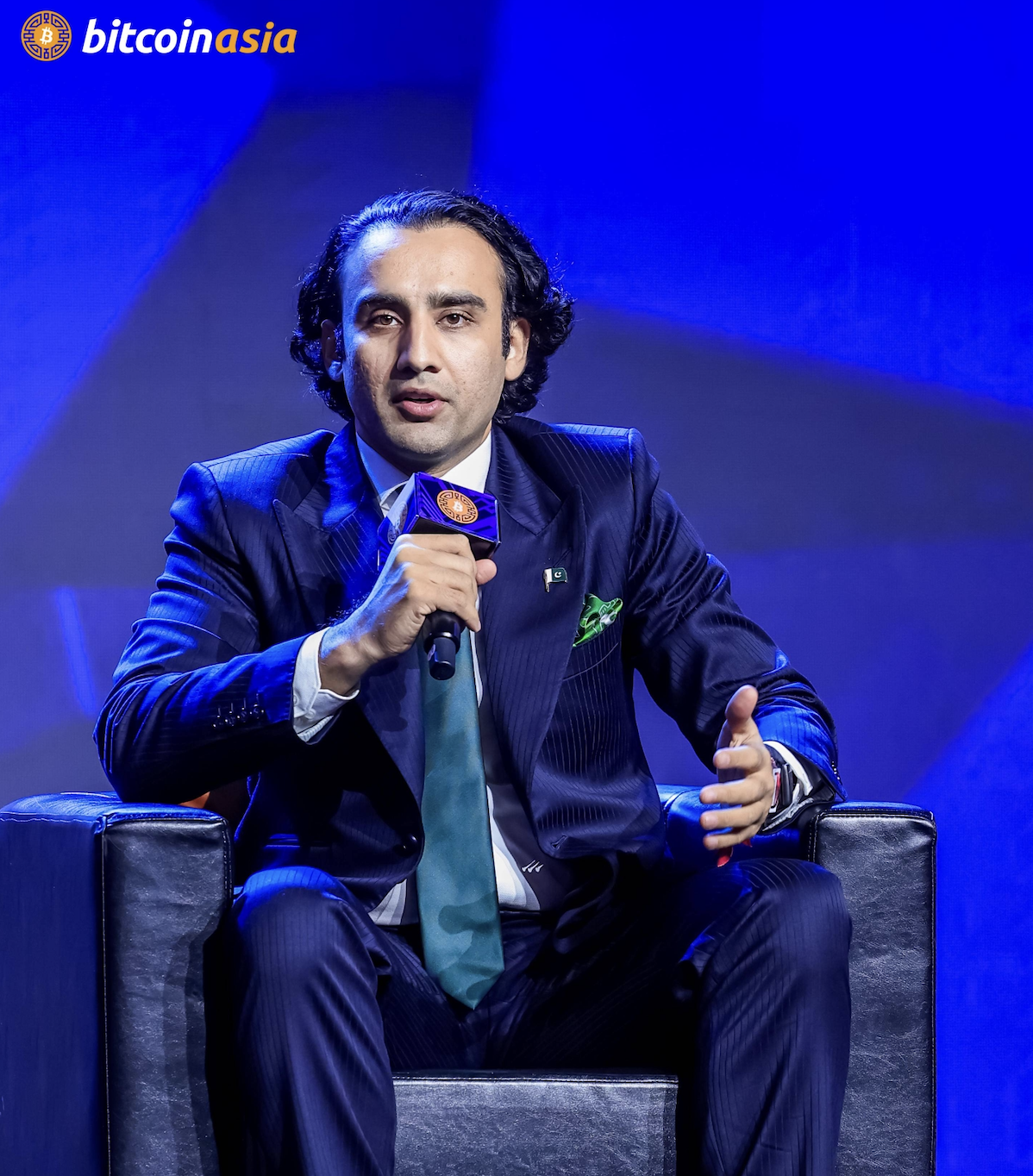
Pakistan has launched its virtual asset regulatory regime in less than six months while using just 8% of the budget allocated to build it, according to Bilal Bin Saqib, the country’s Minister of State and Chairman of the Pakistan Virtual Assets Regulatory Authority (PVARA).
Speaking at Bitcoin Asia in Hong Kong on August 28, Saqib said approximately $200,000 was used to build and operationalize the new regulatory framework, leaving roughly 92% of the approved budget unspent.
“We used only 8% of our approved budget to get this done,” Saqib announced. “Government should not measure success by how much money it spends. It should measure success by how much it delivers.”
Pakistan moved from primary legislation to notified regulations and a live licensing regime in under six months, establishing a formal pathway for companies operating in the digital asset sector.
The framework covers activities including exchanges, custody, brokerage, asset management, lending and settlement, while introducing requirements around governance, anti-money laundering and counter-terrorism financing, customer asset safeguarding, cybersecurity and market conduct.
For Pakistan, the regulatory rollout represents a significant shift toward bringing Bitcoin and digital asset activity into the formal financial system and providing companies with a defined framework for operating in the country.
Rethinking How Governments Build
Saqib framed the PVARA rollout as more than a regulatory achievement, arguing that it demonstrates how governments can operate differently in an environment where technology is developing rapidly.
Rather than building a large bureaucracy, the authority focused on smaller teams, technology-driven workflows and delivering a functioning regulatory framework.
“Technology is moving at machine speed. Government has to learn how to move much faster without compromising structure, accountability or consumer protection,” Saqib stated.
Saqib argued that governments need to balance speed with institutional credibility as emerging technologies continue to develop.
“Speed without structure can be dangerous. But structure without speed can become irrelevant.”
The approach reflects a broader vision for how Pakistan intends to compete in financial technology. Rather than simply adopting technologies developed elsewhere, the country is positioning itself to participate in the development of new financial infrastructure.
Beyond Crypto: The Agentic Economy
Saqib said Pakistan’s regulatory ambitions extend beyond today’s digital asset market.
The country is looking toward an economy increasingly shaped by tokenized markets, programmable payments, stablecoins, machine-to-machine commerce and artificial intelligence agents.
AI agents could eventually transact on behalf of individuals, companies and other machines, creating new questions around financial authority, identity, compliance and consumer protection.
Among the questions governments may need to address are who is responsible when an AI agent executes a financial transaction, how delegated authority should work and how anti-money laundering controls can function when machines transact directly with one another.
“Today we are regulating virtual asset service providers,” Saqib stated. “Tomorrow we will need regulation around agentic payments and the agentic economy.”
Saqib described the country’s virtual asset framework as an initial building block for this broader financial system.
Pakistan Wants to Build at the Frontier
The strategy represents an attempt to compress the traditional timeline for emerging markets, which often adopt financial and technological innovations after they have already matured in larger economies.
“Emerging markets do not have to spend the next decade catching up. We can build at the frontier,” Saqib said.
With a population of more than 240 million, Pakistan represents a potentially significant market for emerging financial technologies.
For PVARA, the immediate test will be whether the new regulatory regime can attract legitimate digital asset businesses while maintaining the consumer protections and oversight built into the framework.
But Saqib’s vision extends beyond regulation itself.
Pakistan’s rapid transition from legislation to live licensing — accomplished with only 8% of its approved budget — is being presented as a model for how governments can approach the next generation of financial infrastructure.
The country now wants to apply that same philosophy to an economy where digital assets, artificial intelligence and programmable finance increasingly converge.
You can watch Saqib’s full appearance at Bitcoin Asia 2026 below.
Bitcoin soared past $81,000 for the first time since January on Monday before dropping slightly. The recent moves have market observers asking if the debasement trade is back.
The biggest cryptocurrency was recently trading for $79,098 on Tuesday morning in New York after hitting $81,160 the evening before. Over a 24-hour period, the coin now sits unmoved. But zoom out seven days and it has jumped by 23%.
Bitcoin has benefited from news that the Treasury would at least double the size of its liquidity-support buyback operations. The announcement last week hurt the dollar but non-yielding assets have benefited.
This has some asking whether 2025’s much talked about debasement trade is back. The strategy — when investors buy an asset as a way to hedge against a currency losing value — has in the past benefited Bitcoin along with precious metals because such assets cannot be endlessly printed.
Analysts frequently touted the trade last year but following Bitcoin’s decline since October, it became less talked about as traders turned their attention to stocks related to artificial intelligence.
Though since the dollar has become increasingly weaker, Bitcoin could be attracting longer-term and “smart money” investors, market observers have said.
U.S. investors last week piled back into Bitcoin exchange-traded funds; the investment vehicles had their best week since October, with nearly $2 billion in inflows.
Bitcoin notched a new record of $126,080 in October before the biggest liquidation event in crypto history hurt its price. It continued to dip in 2026 on negative macroeconomic headwinds and fears that the Federal Reserve would not lower interest rates.
Still, it has become increasingly less volatile and so far has suffered from its shallowest bear market, according to analysts.
Bitcoin’s price surged further on Monday, flirting with $80,000 after U.S. exchange-traded funds had their best week since October.
The leading cryptocurrency was recently trading more than 2% higher over a 24-hour period after flying past $79,155. It earlier on Monday morning in New York reached as high as $79,954.
Over the past week, the coin has risen 25%. Its rise comes after a sluggish June and July when it mostly traded below $65,000.
Last week, U.S. investors reversed course and bought up shares in the Bitcoin ETFs, which had their best week since October, when bitcoin notched its record of $126,080. Data from Farside Investors shows that the funds — managed by the likes of BlackRock, Fidelity, Grayscale, and Morgan Stanley — received $1.9 billion in new cash.
“This is one of the benefits of a commodity in a constant state of supply shock,” Bloomberg Intelligence ETF analyst Eric Balchunas wrote on X on Monday.
Bitcoin ETFs took just about $2b last week- their best week since the Good Ol Days of Oct 2025 as price went from $64k to $77k in a New York minute (that counts as God candle yeah?). Anyway, this is one of the benefits of a commodity in a constant state of supply shock. pic.twitter.com/B63AUp3G8k
The surge in interest in bitcoin’s was triggered by the Treasury Department’s announcement last week to at least double the size of its long-dated bond buybacks.
Since the Treasury made the announcement, yields have gone down, while bitcoin and gold have shot up. The dollar last week was trading at a three-month low and on track for its worst week of August. Bitcoin, on the other hand, had its best week since 2023.
Positive regulatory news coming out of the White House also helped: President Donald Trump held a meeting with crypto executives earlier last week, and urged lawmakers to get the Clarity Act over the line.
Lawmakers will vote on the long-awaited crypto legislation, which the digital asset industry has long called for, in September. The proposed law will establish a framework for distinguishing between digital assets that are securities, commodities or payment stablecoins.
Bitcoin notched an all-time high in October but was hurt later that month after the biggest liquidation event in crypto history saw over $19 billion in bets closed. The coin continued its plunge after the Federal Reserve made it clear it was in no hurry to lower interest rates and investors increasingly threw money at artificial intelligence-related stocks.
Bitcoin continued its rise on Friday, having its best week since 2023 as over $1 billion in shortsellers’ positions got ruined and exchange-traded funds received billions in new cash.
The leading cryptocurrency on Friday was recently trading 23% higher over a seven-day period after flying past $77,542. It earlier in the day reached as high as $79,319.
Bitcoin’s rise comes after the American investors fast piled into exchange-traded funds, with the vehicles so far this week taking in over $1.6 billion, according to Farside Investors data.
CNBC analysts said that the coin’s rise is its best performance since 2023 and was triggered by the Treasury Department’s Wednesday announcement to at least double the size of its long-dated bond buybacks.
The announcement has helped send yields down lower, while assets like bitcoin and gold have shot up. The dollar is trading at a three-month low and on track for its worst week of August.
Why? Because lower long-term yields reduces the opportunity cost of holding non-yielding assets, and generally supports risk-on sentiment.
Those betting on the price of the cryptocurrency to fall also got hit hard: Data from Coinglass shows that over $1 billion in shorts positions were closed.
In a note Friday, Standard Chartered’s Global Head of Digital Assets Research, Geoffrey Kendrick, said that Thursday was the largest liquidation of Bitcoin shorts ever when $1.1 billion in bets were closed.
Bitcoin’s volatility had dropped significantly over June and July and had mostly been trading below $65,000.
Investors have this week frantically bought shares of Bitcoin ETFs, with the funds on Thursday receiving $606.3 million — one of their biggest trading days this year.
Positive regulatory news coming out of the White House is also helping: President Donald Trump held a meeting with crypto executives earlier in the week, and urged lawmakers to get the Clarity Act over the line.
A vote will go ahead on the long-awaited crypto legislation, which the digital asset industry has long called for, in September.
Bitcoin was trading higher on Wednesday — but only slightly — after the Federal Reserve decided to keep interest rates still.
The leading cryptocurrency was recently priced at close to $64,402 per coin, after moving up by nearly 1% in the hour following the announcement.
As expected, the U.S. central bank left the federal funds rate in the 3.50%-3.75% range. Three of the 12 members of the policy-setting Federal Open Market Committee “preferred” a quarter-percentage-point hike at this meeting.
BREAKING: Federal Reserve officially leaves interest rates unchanged at 3.5-3.75%. pic.twitter.com/mkMnSee2ou
Speaking to the press following the announcement, the Fed’s new Chair, Kevin Warsh, revealed little about where the central bank would go next.
“The Fed’s on the case,” he said. “I’ve been heartened by the reception I’ve received. We’re committed as ever to deliver.”
He added that the July rate decision was “a rigorous review of the economic situation.”
“I wouldn’t characterize what we did as anything like a pause,” he said. “I would characterize what we did as a rigorous review of the economic situation. I would characterize what we did as a review of the big, hard questions.”
Warsh, who took over in May, has said he has “no tolerance” for inflation that has been running above the central bank’s target for more than five years.
Bitcoin has typically performed well in a low-interest rate environment, and crypto investors have been hoping the Federal Reserve would cut rates to boost digital assets.
President Donald Trump since taking office has pushed for lower interest rates, and clashed with ex-Fed chair Jerome Powell over the matter.
For now, Warsh doesn’t seem like he’ll be going in that direction as sticky inflation continues to bother Americans.
The Federal Reserve started aggressively raising rates in 2022 in a bid to control 40-year-high inflation spurred by the COVID-19 pandemic. Bitcoin was hit by the tightening.
Then, in 2024, the central bank repeatedly cut rates. It has been hesitant to lower them since the end of 2025.

 Login
Login
 Host: Spencer Nichols — Bitcoin Magazine



 Federal Reserve officially leaves interest rates unchanged at 3.5-3.75%.