Reading view

There are new articles available, click to refresh the page.

Goldman Sachs Backs the Clarity Act, Splitting Wall Street Over Crypto Rules

Bitcoin Magazine

Goldman Sachs Backs the Clarity Act, Splitting Wall Street Over Crypto Rules

Goldman Sachs chairman and CEO David Solomon has thrown his support behind the Clarity Act, the crypto market-structure bill moving through the Senate, a stance that sets one of Wall Street’s largest banks apart from rivals lining up against it.

“I’m very supportive of moving the Clarity Act forward, so we can get some market structure in place and start to move the innovation process along,” Solomon said in an interview with Politico. He called the bill imperfect, and said its value lies in creating “a level playing field to enhance market stability and allow these markets to develop appropriately.”

Solomon spoke after Senate Republicans began circulating new text of the bill this week, ahead of a possible floor vote. His endorsement lands against a wave of opposition from other bankers, chief among them JPMorgan chief Jamie Dimon, who declared war on the bill and, in May, upbraided Coinbase CEO Brian Armstrong over the industry’s lobbying.

Banks split over stablecoin yield

The split runs along business lines. The fight centers on a provision that governs stablecoin yield, the rewards crypto platforms can pay users who hold dollar-pegged tokens. Commercial and community banks warn the language would pull deposits out of insured accounts and cut into local lending.

Six of the largest banking trade groups, including the American Bankers Association, published a statement Wednesday that called the Clarity Act and its provisions a risk to “the local lending that drives economic activity in the U.S.” The ABA has pushed to strip the yield language, and labor unions have joined the opposition.

Investment banks like Goldman, less reliant on consumer deposits, have trained their focus on other parts of the bill. 

Solomon pointed to language that would let “regulated institutions that have been on the sidelines participate more actively,” a green light for old-guard firms to use digital assets and blockchain rails. “Goldman Sachs’s position is that we believe strongly that we need one system where everybody can participate,” he said, and declined to weigh in on other bankers’ views.

The stance fits Goldman’s own turn toward the asset. The bank has disclosed a $1.1 billion position in a spot bitcoin ETF, called the funds an “astonishing success,” and Solomon has revealed a small personal bitcoin holding.

The bill’s stablecoin section holds the Tillis-Alsobrooks compromise, which bars passive yield on idle balances while it permits narrow activity-based rewards, a line the banking lobby says leaves too much room.

The measure has moved through bipartisan talks for months. The House passed its version in July 2025, and the Senate Banking Committee advanced its text in a 15-9 vote in May. 

The Clarity Act still faces an uphill battle

The path to the floor for the Clarity Act stays murky. Republican senators John Curtis of Utah and John Cornyn of Texas told Punchbowl News they share the banks’ worry over deposit flight. “Crypto is not going to be loaning any money for small businesses,” Cornyn said. Bill Cassidy of Louisiana hinted at concerns of his own.

The sharpest problem is ethics. The new Clarity Act draft would bar federal officials from issuing digital assets, language negotiated between Senators Cynthia Lummis, Bernie Moreno, and the White House. Democrats call it too weak, in part because they distrust the Trump Justice Department to enforce limits on the president. 

President Trump and his family made more than $1 billion from crypto ventures over the past year, a windfall that has fueled Democratic demands for reform. A group of seven Democrats led by Angela Alsobrooks said Wednesday the text “falls short” on consumer protection, illicit finance, and conflicts of interest.

Lummis framed the Clarity Act standoff without illusion. “There’s not going to be a provision that makes opponents of the president happy that also makes the president happy,” she said to Punchbowl. Majority Leader John Thune aims for a vote in the coming week, a window that lawmakers say may decide whether the bill lives or dies before the August recess.

This post Goldman Sachs Backs the Clarity Act, Splitting Wall Street Over Crypto Rules first appeared on Bitcoin Magazine and is written by Micah Zimmerman.

New Clarity Act Draft Would Bar Trump and Officials From Issuing Crypto, With a 2029 Sunset

Bitcoin Magazine

New Clarity Act Draft Would Bar Trump and Officials From Issuing Crypto, With a 2029 Sunset

Senate Republicans released an updated version of the Clarity Act on Wednesday, a draft that for the first time carries a crypto ethics agreement barring the president, vice president, members of Congress, federal judges, and other covered officials from issuing or sponsoring digital assets.

The new Clarity Act text, posted after morning briefing calls with stakeholders, adds a section titled “Ban on certain digital asset transactions.” It states that a covered individual “shall not, in exchange for consideration,” issue or sponsor a digital asset, a prohibition that reaches public officials and employees during their service, and their spouses. 

A companion clause bars the listing of any digital asset found to be issued or sponsored by a covered individual in violation of the ban.

The bill offers a safe harbor. A covered individual would avoid violation by placing a direct interest in a digital asset in a qualified blind trust, divesting it, or both, along procedures that track the ethics-agreement rules under section 208 of title 18. 

A separate carve-out protects continued use of a covered individual’s name, image, or likeness when an issuer or intermediary used it before the person entered covered status.

JUST IN: 🇺🇸 Senate Republicans release updated Clarity Act text that bans the President and covered officials from issuing digital assets and requires them to sell their crypto holdings or put them in a blind trust. pic.twitter.com/v7UDXGI45B

— Bitcoin Magazine (@BitcoinMagazine) July 22, 2026

The ethics package carries an expiration date. Under the draft, the provisions have no force after noon on January 20, 2029, and no person faces penalty after that sunset for conduct on or before it. The timing lines up with the end of the current presidential term.

Clarity Act dispute over President Trump’s crypto efforts

The ethics language answers a months-long Clarity Act dispute over President Trump’s crypto ventures, which a July financial disclosure tied to about $1.4 billion in 2025 income through the $TRUMP token and World Liberty Financial. 

Eleanor Terrett reported the package was negotiated between the White House and Republican Senators Cynthia Lummis and Bernie Moreno, and that it does not carry Democratic sign-off. 

Democrats on the Banking Committee had pressed for enforceable conflict-of-interest rules, and an amendment to bar officials from crypto ties failed during the May markup of the Clarity Act.

Beyond ethics, industry sources say the Blockchain Regulatory Certainty Act stays intact from the committee version. The BRCA holds that non-custodial developers and infrastructure providers are not money transmitters for building or maintaining decentralized networks, a protection the industry has pushed to preserve

Further amendment details

The Lummis-Grassley amendment keeps criminal liability for anyone who “knowingly” facilitates illicit transactions, and the Keep Your Coins Act preserves the right to self-custody.

The stablecoin-yield section holds the Tillis-Alsobrooks compromise: a ban on interest paid on idle payment-stablecoin balances, with room for rewards tied to activity such as transactions or staking, as long as those rewards do not function as interest on a bank deposit.

A new section of the Clarity Act builds out law enforcement tools. It raises funding for state and local crypto investigations and blockchain analytics, sets up training for police and prosecutors, creates a “cyber center” against nation-state actors such as North Korea and Iran, and forms a public-private task force on fraud. 

It also requires stablecoin issuers to comply with lawful orders to freeze, seize, burn, and reissue tokens.

The text carries bankruptcy protections that treat customer digital assets as property of the customer rather than part of a failed company’s estate, a rule meant to head off another FTX-style loss.

The 616-page draft came from Republicans, and it lacks Democratic support for the moment. 

Senator Lummis thanked her “Democratic colleagues for their important contributions” and voiced a commitment to “reaching a deal in the coming days that will allow this legislation to become law.” Majority Leader John Thune plans a floor vote in the coming weeks.

The release caps a stretch of pressure to move the Clarity Act. The House passed its version in July 2025 on a 294-134 vote, and the measure has waited in the Senate since

The Senate Banking Committee advanced its text in a 15-9 vote in May. Coinbase and other firms have pushed for passage before the August recess, Treasury Secretary Scott Bessent put the effort at the “1-yard line,” and Trump has pressed the chamber to act.

This post New Clarity Act Draft Would Bar Trump and Officials From Issuing Crypto, With a 2029 Sunset first appeared on Bitcoin Magazine and is written by Micah Zimmerman.

White House Presses Senate Democrats To Accept Trump Ethics Deal On Clarity Act

Bitcoin Magazine

White House Presses Senate Democrats To Accept Trump Ethics Deal On Clarity Act

The White House is pushing Senate Democrats to accept a conflict-of-interest agreement that President Donald Trump worked out with Republicans, a move that negotiators hope will settle the last major dispute in the Digital Asset Market Clarity Act.

A White House official, who spoke on the condition of anonymity, told CoinDesk that Trump “has agreed to the most comprehensive and wide-ranging ethics provision in history.” 

No details have emerged on what crypto restrictions Trump has consented to, and Democrats have been kept out of the loop on the provision.

The ethics section would restrict senior government officials from personal business ties to the crypto industry, including Trump, whose family holdings have generated more than $2 billion in new wealth since he returned to office, according to Reuters. Release of the final draft has stalled for several days as negotiators work through the language.

Democratic lawmakers have not received a briefing on the concession, though Republicans and the crypto industry have begun a sales campaign that casts Democrats as the obstacle.

“If Senate Democrats block this historic legislation after the administration has bent over backward to accommodate their concerns, stakeholders should make no mistake: It is the Democrats who are blocking this legislation because they were never serious about a legislative outcome,” the White House official said.

Treasury Secretary Scott Bessent has added his voice to the push, saying that lawmakers stood at the “1-yard line” on the Clarity Act and urging Congress to pass the bill before the recess.

Clarity Act updates coming out of the White House

Democratic negotiators such as Senators Kirsten Gillibrand, Ruben Gallego and Angela Alsobrooks have not seen details of the agreement with Trump, who met with Republican senators at the White House last week.

Many of the Democrats have drawn a line that the ethics provision needs to be strong. Trump has pressed the Senate to pass the Clarity Act, and his disclosure that he made more than $1 billion from crypto in 2025 has given critics fresh ammunition.

The Clarity Act’s text cleared the Senate Banking Committee in a 15-9 vote, with Gallego and Alsobrooks joining Republicans to advance it. 

Both said in May they would not back the final passage without an ethics provision. During the committee markup, an amendment from Senator Chris Van Hollen to bar the president, vice president and members of Congress from crypto business ties failed 11-13.

The industry expects full circulation of the legislative text this week, according to CoinDesk. 

The Senate has fewer than three weeks to finish the bill and clear a floor vote before Majority Leader John Thune’s August 7 deadline, when lawmakers break for their reelection campaigns and enter a narrow stretch to finish the bill. 

Galaxy Research puts the odds of passage at 50-50.

This post White House Presses Senate Democrats To Accept Trump Ethics Deal On Clarity Act first appeared on Bitcoin Magazine and is written by Micah Zimmerman.

U.S. Senator: Clarity Act is ‘Almost There,’ Treasury Secretary Puts It at the ‘1-Yard Line’

Bitcoin Magazine

U.S. Senator: Clarity Act is ‘Almost There,’ Treasury Secretary Puts It at the ‘1-Yard Line’

Senator Kevin Cramer said the Senate has moved close to a deal on the Clarity Act, the crypto market-structure bill, with a fresh set of amendments on ethics and enforcement before Democrats for review.

The North Dakota Republican, a member of the Senate Banking Committee, told Fox Business on Tuesday that the bill grows “clearer” as “each issue gets dealt with,” and that “we’re almost there.” He said the largest holdup is Democrats reading the new amendments, “some of them relevant to the ethics piece.”

The central compromise Cramer described concerns who enforces the law. He said there appears to be “some agreement that the Department of Justice would be the prevailing enforcer,” a structure he backed as the source of uniform rules. Democrats, he said, had preferred a role for state attorneys general, an approach he argued would create “too disparate a situation” for the clarity the industry seeks.

Ethics fight over President Trump

That enforcement question sits at the heart of a months-long ethics fight over President Trump’s crypto ventures. 

Senator Cynthia Lummis, who chairs the Banking Committee’s digital assets subcommittee, had floated language that would let state attorneys general sue exchanges that list tokens issued by public officials, a provision aimed at holdings tied to the president and his family. 

Democrats on the committee have pressed for enforceable conflict-of-interest rules, and an amendment to bar the president, vice president, and members of Congress from crypto business ties failed on a party-line vote during the committee markup. 

Trump has met with senators over the ethics dispute as the White House and negotiators work toward terms. The shift Cramer outlined would route that enforcement to federal prosecutors rather than to fifty separate state offices, a change that narrows the paths available to challenge a listed token but centralizes the decision to act in the Justice Department.

Cramer said the Senate has “a couple more weeks” before the August recess, and echoed Lummis in the push for passage before the break. 

“We have to get this done,” he said about the Clarity Act. 

Lummis, in an interview last week, said the bill was “ready” and that it was “very important” to move it across the finish line before the recess, so that markets could see “the stability that will be provided to them if they remain on shore in the United States.”

Cramer flagged one more sticking point beyond enforcement: the definition of securities intermediaries. “The industry doesn’t like that,” he said, and noted a preference for a definition built around decentralization. He cast the remaining gaps as matters of “small details.”

Lots of clarity about the Clarity Act

The Clarity Act would split oversight of digital assets between the Securities and Exchange Commission and the Commodity Futures Trading Commission, set disclosure rules for certain tokens, and extend anti-money-laundering and sanctions rules to crypto exchanges. The House passed its version a year ago, and the measure has waited in the Senate since

The Senate Banking Committee advanced its version of the Clarity Act in a 15-9 vote this spring, with two Democrats crossing over.

The timeline is tight. Majority Leader John Thune has aimed to bring the bill to the floor before the work period ends in early August, and House members have urged the Senate to act within the window. 

The CFTC chair called the bill “so close”, while Galaxy Research cut its passage odds to 50-50 as the clock ran down. 

Treasury Secretary Scott Bessen: Clarity Act on ‘1-yard line’

Treasury Secretary Scott Bessent added his voice to the push, telling Bloomberg that lawmakers stood at the “1-yard line” on the Clarity Act and urging Congress to pass the bill before the recess.

The bill competes for floor time with a continuing resolution to avert a government shutdown at the end of September and a reconciliation package, priorities Cramer ranked ahead of other items in the same interview. President Trump has pressed the chamber to pass the crypto measure, a message he has paired with warnings about competition from China.

For all the optimism, Cramer stopped short of a firm date. “I don’t know that we get to it this week,” he said, a caveat that leaves the bill’s fate to the narrow stretch of Senate days before lawmakers leave Washington.

This post U.S. Senator: Clarity Act is ‘Almost There,’ Treasury Secretary Puts It at the ‘1-Yard Line’ first appeared on Bitcoin Magazine and is written by Micah Zimmerman.

Coinbase Executive Says Clarity Act Has ‘Tremendous Momentum’ in the Senate

Bitcoin Magazine

Coinbase Executive Says Clarity Act Has ‘Tremendous Momentum’ in the Senate

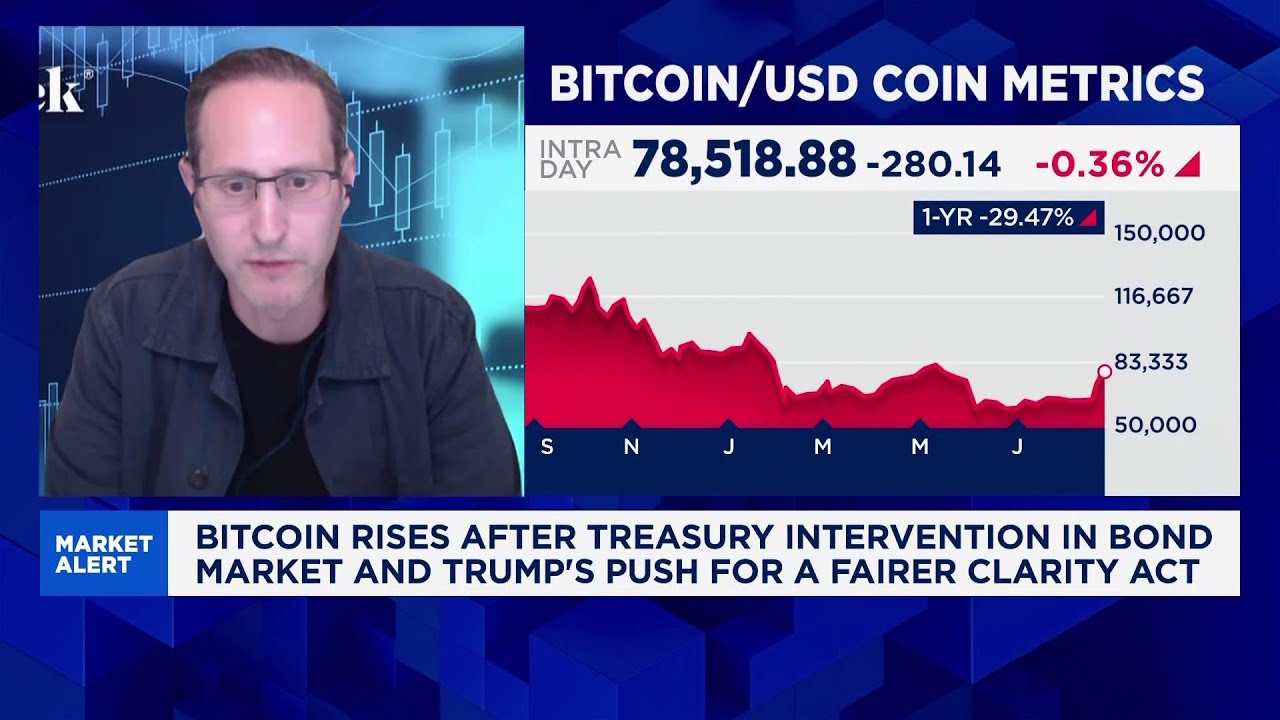
Coinbase Vice Chair Ryan VanGrack said the Clarity Act has gained “tremendous momentum” in the Senate, in a CNBC “Squawk Box” appearance that made the case for a federal crypto framework and touched on bitcoin, blockchain, and the industry’s uneasy truce with Wall Street.

VanGrack, a former SEC official, framed the Clarity Act as an overdue set of rules rather than a giveaway. “It’s not about no regulation,” he said. “This is about imposing regulation on the industry for the first time.” He described a “win-win-win” for American investors, innovators, and standards should the measure pass, and said a bipartisan group of senators has kept up work “even in the last few weeks and days.”

Clarity Act updates

The House passed its version of the Clarity Act last year, and attention has shifted to the Senate, where the path to 60 votes remains the central hurdle. 

The Senate Banking Committee advanced the bill in a 15-9 vote this spring, with two Democrats crossing over, and House members have urged the Senate to act before the August recess. The measure sits in a narrow window as negotiators work out remaining terms.

President Trump added his voice last week, posting on Truth Social in support of Senator Lindsey Graham and calling on the Senate to pass the bill. Trump framed the stakes in terms of competition with China, a message he has repeated as he presses the chamber to move.

VanGrack said Democrats have won concessions that strengthen the bill’s consumer protections. 

JUST IN: 🇺🇸 Coinbase Vice Chair talks CLARITY ACT on CNBC

"The Democrats have obtained meaningful concessions to make what was already a strong consumer protection bill, THAT much stronger" 👏 pic.twitter.com/y3n04dKdRi

— Bitcoin Magazine (@BitcoinMagazine) July 20, 2026

He pointed to an illicit-finance framework, an “FTX loophole” that the text would close, insider-trading safeguards, and added disclosures. 

“Across the board, the Democrats have obtained meaningful concessions to make what was already a strong consumer protection bill that much stronger,” he said. 

He said the bill would not change how crypto is classified as a commodity or a security in a fundamental sense, and would preserve the registration, examination, and surveillance structure from the House version.

Asked how the industry reconciles with skeptics like JPMorgan chief Jamie Dimon, VanGrack pointed to a wave of bank and institutional deals. 

“Not a week goes by,” he said, where a firm fails to announce a new crypto project or investment. He predicted an “inevitable convergence,” a point at which the market stops separating traditional finance from crypto and treats each as a modern financial institution.

That convergence has played out in public, and in conflict. JPMorgan and Coinbase announced a partnership to widen crypto access, and the bank has moved to accept bitcoin as loan collateral and to let clients trade it

Dimon, for his part, has declared war on the Clarity Act and aimed a crude insult at Coinbase CEO Brian Armstrong, a reminder that the détente carries friction.

Is bitcoin real? 

The interview turned to a sharper question from CNBC’s Andrew Ross Sorkin: whether blockchain is real but bitcoin is not. VanGrack called it “a fair question” and said the technology’s benefits stand on their own — faster settlement, more transparency, and round-the-clock transactions. 

He argued that no one building a financial system today would recreate the infrastructure of the past century. He cited Citadel Securities, which he said made another large investment in the crypto economy last week, as a sign that major institutions are trending the same course.

Sorkin pressed the harder edge of the design: the technology aims to remove the counterparty a customer might call when something goes wrong. VanGrack conceded the point as fair, then countered with the costs of the current system — days to reconcile trades and the counterparty risk that delay creates. 

“I’m not here to tell you it’s the wrong technology,” he said. He acknowledged open questions, including whether crypto accounts should carry interest or loyalty rewards, a debate that bankers have raised and that the law will settle as “a blunt instrument.”

He closed on the case for Clarity Act passage. “In the absence of clarity, you do not have a federal oversight and framework,” he said. “So whether you love crypto or hate crypto, you should want” the Clarity Act.

This post Coinbase Executive Says Clarity Act Has ‘Tremendous Momentum’ in the Senate first appeared on Bitcoin Magazine and is written by Micah Zimmerman.

President Trump To Meet Senators On Clarity Act’s Ethics Fight: Report

Bitcoin Magazine

President Trump To Meet Senators On Clarity Act’s Ethics Fight: Report

President Donald Trump plans to meet with a group of senators at the White House on Thursday afternoon to address the last major obstacle to the crypto market structure bill, according to people familiar with the plans that spoke to Politico and lawmakers involved in the talks.

The sticking point is the ethics section of the Digital Asset Market Clarity Act, which would restrict senior government officials from holding personal business interests in the crypto sector. Democrats have made such limits a condition of their support, in large part to address Trump’s own ties to the industry. 

Negotiators have not reached a compromise, and the Senate calendar leaves a narrow window.

Senator Bernie Moreno, an Ohio Republican in the negotiations, said the senators will brief the president on the bill and its “path to success.”

“We’ll be talking about the entirety of the bill. I mean, obviously the president’s been very engaged in this bill,” Moreno said. “He’s the one who’s really driven the innovation that I think will pay dividends.”

Trump’s crypto disclosures as the Clarity Act teeters

Clarity’s fate may hinge on what Trump will accept, and on whether he will support a bill that restricts his own businesses. He has pressed the Senate to pass the legislation, though he has not stated which conflict-of-interest terms he will sign into law. His disclosure that he made more than $1 billion from crypto involvement in 2025 gave critics fresh ammunition.

The bill cleared the Senate Banking Committee in a 15-9 vote, with Democrats Ruben Gallego and Angela Alsobrooks joining Republicans to advance it. Both said in May they would not back final passage without an ethics provision. During the committee markup, an amendment from Senator Chris Van Hollen to bar the president, vice president and members of Congress from crypto business ties failed 11-13.

On Tuesday, a group of Democratic senators held a press conference to call for opposition to Clarity if it does not sever what they term Trump’s “corrupt” ties to the sector. Gallego, who has led the ethics negotiation for months, was not among them.

Timing on the revised text remains open. Senator Cynthia Lummis, a Wyoming Republican and a chief architect of the bill, said a draft could circulate as soon as Wednesday, but that senators were weighing whether to include the ethics language or bracket it for later.

Senate Majority Leader John Thune said he hopes to bring the bill to the floor before the work period ends August 7. Asked whether he would hold a vote absent a deal with Democrats, Thune said, “at some point, we’ll vote on it, yeah.”

The chamber breaks for its summer recess after the first week of August, which opens a narrow stretch to finish Clarity before members turn to the November midterms. Galaxy Research put the odds of passage at 50-50 as the clock runs down.

This post President Trump To Meet Senators On Clarity Act’s Ethics Fight: Report first appeared on Bitcoin Magazine and is written by Micah Zimmerman.

White House Crypto Chief Patrick Witt to Begin Military Leave as Clarity Act Nears Senate Deadline

Bitcoin Magazine

White House Crypto Chief Patrick Witt to Begin Military Leave as Clarity Act Nears Senate Deadline

Patrick Witt, the White House’s top crypto adviser, will begin a months-long leave of absence this month to report for training with the Georgia Army National Guard, according to a report from Crypto in America

His departure arrives as the Senate works to advance the Clarity Act before its August recess.

Witt, 37, is expected to conclude his White House work next Friday before reporting on July 27 to the Guard’s Judge Advocate General (JAG) program. Completion of the training qualifies him to serve as a JAG officer, a military attorney who advises on military justice and operational and administrative law. Witt and the White House did not respond to Crypto in America’s requests for comment.

Witt took over as executive director of the White House crypto council last August, after Bo Hines left the post for a role at stablecoin issuer Tether. He spent two years at the Defense Department before the appointment. 

Sources told Crypto in America that Witt applied to the JAG program last spring and postponed an April start date to remain at the White House as Clarity Act talks stretched on. A second postponement was not an option.

Witt’s absence and the current Clarity Act status

The timing carries weight for the Clarity Act, the crypto industry’s market structure bill, which would divide oversight of digital assets between the SEC and the CFTC. The measure cleared the House in July 2025 by a 294-134 vote and advanced from the Senate Banking Committee in May by a 15-9 margin. 

Senate leaders aim to open floor debate before Congress breaks on August 7, a window many policy observers view as the last chance for passage this Congress.

As executive director, Witt served as the administration’s chief negotiator on the bill. He led talks with lawmakers and industry stakeholders over its most contested provisions, including a compromise on stablecoin yield, disputes over ethics language, and concerns from law enforcement groups about developer protections.

The ethics provisions remain among the bill’s largest obstacles. Lawmakers continue to negotiate guardrails addressing President Trump’s crypto business interests, after disclosures showed he earned more than $1 billion from crypto ventures last year. 

Prediction market Polymarket prices 2026 passage near 48 percent, down from 74 percent a month earlier.

In Witt’s absence, crypto council deputy director Harry Jung is expected to assume his duties. Jung worked alongside Witt over the past year and sat in on many of the same negotiations, a factor sources cited as a measure of continuity. Witt intends to stay involved during training, though his full-time return remains unconfirmed.

Beyond the Clarity Act, Witt has directed the administration’s rollout of the Strategic Bitcoin Reserve and its work on the GENIUS Act, the stablecoin law enacted in July 2025, along with efforts to revise the tax treatment of digital assets.

This post White House Crypto Chief Patrick Witt to Begin Military Leave as Clarity Act Nears Senate Deadline first appeared on Bitcoin Magazine and is written by Micah Zimmerman.

‘Don’t Let China Win’: President Trump Presses Senate on Clarity Act in Final Stretch

Bitcoin Magazine

‘Don’t Let China Win’: President Trump Presses Senate on Clarity Act in Final Stretch

The Senate returns to Washington on July 13, with the clock running down on the most consequential piece of crypto legislation in years. Lawmakers now have roughly four weeks to schedule, debate, and pass the CLARITY Act before the August recess. 

President Trump weighed in directly on Monday, posting on Truth Social that “in honor of Senator Lindsey Graham, a big supporter, the U.S. Senate should pass the Clarity Act” and warning that China and other countries “would like to take complete and total control of this major financial ‘happening,'” as well as A.I. 

White House crypto adviser Patrick Witt amplified the urgency, noting the critical week coincides with the one-year anniversary of the GENIUS Act and cautioning, “We cannot afford to delay any longer.”

This is a window many policy watchers see as the last realistic chance to enact comprehensive digital-asset market structure legislation this Congress.

The CLARITY Act would draw a firm regulatory line between the SEC and the CFTC, granting the commodities regulator exclusive jurisdiction over spot markets for “digital commodities” while leaving the SEC to oversee investment-contract assets. 

It cleared the House in July 2025 by a bipartisan 294–134 vote and advanced out of the Senate Banking Committee in May by a 15-9 margin, with two Democrats joining all Republicans. 

Those committee votes, however, came with warnings that floor support was not guaranteed.

This week’s milestone is the release of updated text merging the Senate Banking and Agriculture Committee versions, the clearest signal yet of what survived negotiations and what remains unsettled. 

JUST IN: 🇺🇸 President Trump says "The U.S. Senate should pass the Clarity Act." 🚀 pic.twitter.com/9Y7VxKZ3ck

— Bitcoin Magazine (@BitcoinMagazine) July 13, 2026

Clarity Act issues remain 

The bill missed the July 4 signing ceremony that White House crypto adviser Patrick Witt had targeted, and while meetings ran through the recess, the thorniest issues remain unresolved, according to Crypto in America. Getting to 60 votes may prove harder than getting this far, and with the Republican conference shrinking, Democratic buy-in matters more than ever.

Chief among them is the Blockchain Regulatory Certainty Act, folded into the CLARITY Act as Section 604, which would shield non-custodial software developers from being treated as money transmitters. 

Law enforcement groups argue the language, as written, would hamper investigations into on-chain crime, and Democratic support may hinge on revisions.

An ethics standoff

The more explosive fight is over ethics. Negotiators have yet to reach a CLARITY Act deal with the White House on guardrails around conflicts of interest tied to President Trump’s crypto ventures, after disclosures showed he earned more than $1 billion from crypto-related businesses last year. 

House members have pressed the Senate to act while addressing those concerns, and a coalition of more than 200 companies has urged leadership to bring the bill to the floor. The coalition argued that the bill would establish a clear federal framework for digital assets and help keep innovation in the U.S.

Complicating the math, the death of Senator Lindsey Graham (R-SC) and the continued absence of Mitch McConnell (R-KY) leave Republicans with almost no room for error in reaching 60 votes.

Sentiment is split. Solana Policy Institute President Kristin Smith says momentum is building and a floor vote before recess remains achievable, echoing CFTC leadership calling the bill “so close.” 

Others are wary: Galaxy Digital cut its passage odds to 50-50, citing the shrinking calendar and competing priorities like the NDAA. The firm said the legislation still faces procedural hurdles, unresolved ethics and developer-protection disputes, and a crowded Senate agenda that could delay consideration until September. Galaxy said the odds would improve if Senate leaders commit to a July vote. Odds were as high as 70% earlier this year.

The next four weeks may be CLARITY’s last chance in the 119th Congress.

This post ‘Don’t Let China Win’: President Trump Presses Senate on Clarity Act in Final Stretch first appeared on Bitcoin Magazine and is written by Micah Zimmerman.

U.S. Representatives Urge Senate to Vote on CLARITY Act in July, Address Ethics Concerns

Bitcoin Magazine

U.S. Representatives Urge Senate to Vote on CLARITY Act in July, Address Ethics Concerns

Rep. French Hill wants a deadline. 

One year after the House passed the Digital Asset Market CLARITY Act, the Arkansas Republican who chairs the House Financial Services Committee used a Fox Business interview with anchor Maria Bartiromo to press Senate leaders for a floor vote before the August recess.

“I’ve encouraged Senate leadership to put it on the floor,” Hill said. “I think if you schedule a floor date here in the month of July, that will cause these final meetings, these final discussions to take place. You’ve got to have a deadline in Congress to get people to move and find consensus.” 

Hill thanked Senators Kirsten Gillibrand, Cynthia Lummis, John Boozman and Tim Scott for working toward a deal, and pointed to the 78 Democrats who backed the House measure a year ago.

Hill’s central argument is that the CLARITY Act would resolve the ethics concerns now used to block it, rather than deepen them. 

Critics point to President Trump’s crypto ventures, including $TRUMP meme coin licensing and World Liberty Financial token sales, which a July 1 financial disclosure tied to about $1.4 billion in 2025 income. 

Hill contends a market framework offers the transparency those critics want. 

“If we passed the CLARITY Act last summer, many of the things that people are expressing concern about — meme coin issuance, co-investment, use of exchange, investing in exchanges — all that would be under a market framework of regulation with clarity, no pun intended, and that would provide a lot of transparency to people that are concerned about the Trump family’s investments,” he said.

JUST IN: 🇺🇸 Congressman French Hill says lawmakers are going to have a field hearing for the Clarity Act in New York next week 👀

"We’ve got to get this market framework in place to be combined with the GENIUS Act" 🚀 pic.twitter.com/F1b9QpSdQT

— Bitcoin Magazine (@BitcoinMagazine) July 10, 2026

Clarity Act pairs with the GENIUS Act

Hill framed the bill as the missing half of a system that pairs it with the GENIUS Act, the stablecoin law enacted last year. 

“Stablecoin is like a cell phone not connected to a cell phone network,” he said, “and the market framework is in fact that network that we need.” To keep the pressure on, Hill plans a field hearing in New York next week, led by digital assets subcommittee chair Rep. Bryan Steil, to make the case for a market structure.

His push drew support from two other voices in the same Bartiromo appearance. CFTC Chairman Michael Selig warned of “mission creep beyond what’s really critical here” and cautioned that a stalled bill leaves the rules to regulators. 

Coinbase Vice Chair Ryan VanGrack, a former SEC official, described the measure as “on the one-yard line,” with senators from both parties “working around the clock to get this across the finish line.”

JUST IN: 🇺🇸 Coinbase Vice Chair says Clarity Act has bipartisan support 👀

"Democratic and Republican senators are working around the clock to get this across the finish line." 🚀 pic.twitter.com/OvKPU3SHuC

— Bitcoin Magazine (@BitcoinMagazine) July 10, 2026

The Senate returns July 13 with about three weeks before recess. Prediction market Polymarket prices Clarity Act 2026 passage near 39%, a fall from the prior month’s 74%.

This post U.S. Representatives Urge Senate to Vote on CLARITY Act in July, Address Ethics Concerns first appeared on Bitcoin Magazine and is written by Micah Zimmerman.

CFTC Chair Says Clarity Act Is ‘So Close’ As August Deadline Nears

Bitcoin Magazine

CFTC Chair Says Clarity Act Is ‘So Close’ As August Deadline Nears

Commodity Futures Trading Commission Chairman Michael Selig said the Clarity Act remains within reach, days after Congress missed its July 4 target to pass the crypto market-structure bill. “We’re so close. We have to get this done,” Selig told Fox Business host Maria Bartiromo. 

Some analysts give the measure even odds of passage before the August 7 recess.

The bill would divide oversight of digital assets between the CFTC and the Securities and Exchange Commission, a split the industry has sought for years. The House passed the legislation last summer. The Senate has yet to hold a floor vote.

Selig, a Trump appointee confirmed in December, backed the Clarity Act effort as a matter of national competitiveness. He backed the effort as a matter of national competitiveness. 

“It’s critical that we have a federal standard for crypto assets,” he said, pointing to a patchwork of state laws that, in his account, has hurt U.S. business. He described the goal as certainty, clarity, and consumer protection, and called the measure bipartisan. “We have to get it across the line,” he said.

Asked about the holdup, Selig pointed to scope. Democrats have pressed for ethics language addressing President Trump, his family, and their crypto ventures, a demand he characterized as a distraction. 

“There’s a little bit of creep into ethics and other issues, and they’re just derailing the real opportunity to have a bipartisan bill,” he said. 

Democrats have framed the Clarity Act provisions as consumer protection. The bill has also drawn disputes over illicit-finance rules and over a reopened piece of the GENIUS Act, the stablecoin law, that concerns whether exchanges may pay yield on stablecoin balances.

Senator Cynthia Lummis, who leads the Senate Banking Committee’s digital assets subcommittee, has said negotiators aim to release bill text and hold a vote this month.

The committee advanced the measure in a 15-9 vote, with two Democrats joining Republicans. Lawmakers have warned that a failure to act before the recess could delay the next opening for years.

Selig on prediction markets, Iran beyond Clarity Act

Bartiromo also asked Selig about prediction markets, where Kalshi and Polymarket processed a combined $24 billion in volume over the past year.

Selig said the CFTC has proposed rules for the sector and has sued nine states in a fight over jurisdiction. On markets during the U.S. strikes on Iran near the Strait of Hormuz, he said crypto held its ground and served as a hedge, while the agency worked to keep oil and derivatives markets orderly.

For now, the Clarity Act’s fate rests on released text, a Senate vote, and a calendar that leaves a few weeks before the August recess.

This post CFTC Chair Says Clarity Act Is ‘So Close’ As August Deadline Nears first appeared on Bitcoin Magazine and is written by Micah Zimmerman.

💾

Enjoy the videos and music you love, upload original content, and share it all with friends, family, and the world on YouTube.

SEC’s Peirce Sees Clarity Act Passing This Summer as Crypto Rules Take Shape

Bitcoin Magazine

SEC’s Peirce Sees Clarity Act Passing This Summer as Crypto Rules Take Shape

America’s top securities regulators marked the nation’s 250th anniversary with a common theme: open markets, broader investor access, and a clear legal framework for digital assets.

SEC Commissioner Hester Peirce, in an interview on the Searching for Mana podcast, said she expects the Clarity Act to pass this summer. The bill has cleared the House and awaits Senate action. Peirce, a veteran of the Senate Banking Committee during the financial crisis, called it a large piece of legislation with many moving parts, and she praised the work of members in both chambers.

The Clarity Act would divide oversight of crypto between the SEC and the Commodity Futures Trading Commission and build a federal structure for spot markets, a structure that does not exist at present. 

Peirce said the framework would clarify the application of the Howey Test — the standard for when a token counts as part of an investment contract — and would shield developers from liability when others misuse their tools.

Peirce argued that past enforcement pushed the industry onto a poor path. The old approach, she said, rewarded builders of throwaway projects and made honest actors hard to tell apart from fraudsters. Her hope for the current window is a shift toward products that meet real human needs.

“This is a rare window where you have a lot of regulatory goodwill,” Pierce said. “Use that to build things that last, things that matter.”

She tied the technology’s promise to the transfer of value across networks, the removal of costly intermediaries, and the use of smart contracts to automate back-office work. 

Tokenized securities, she said, could improve collateral mobility, ease securities lending, and let issuers reach shareholders through their wallets. She also linked crypto to artificial intelligence, and predicted that AI agents will transact with crypto assets.

On AI regulation, Peirce favored a hands-off stance: allow experimentation, and address harms as they surface rather than shape the technology from the start. She noted that a firm’s use of AI does not excuse the firm from responsibility for the outcome.

Peirce, whose term nears its end, will leave the agency for a law school teaching post. She flagged a rise in scams and a gap in financial education as her chief concerns, and urged investors toward skepticism.

SEC Chair Paul Atkins chimes in

The SEC’s chairman, Paul Atkins, struck similar notes in a Fox News interview with Larry Kudlow after an address to the Economic Club of New York. 

Atkins cast himself as an advocate of free-market capitalism and pointed to a series of reforms aimed at drawing more Americans into public markets and easing the path to an IPO.

“America was an investment before it was a nation,” Atkins said.

Atkins highlighted the Trump Accounts, set to launch on July 4th, as an expression of American capitalism and long-term saving. He said about 6 million children have enrolled, and that children born in the next two years will receive a $1,000 deposit, with room for matches from employers, parents, and friends. 

The accounts, he said, function as a version of a traditional IRA and give a stake in the market to children who might lack exposure to it at home.

“America was an investment before it was a nation,” Atkins told Kudlow, citing the European companies that financed voyages across the Atlantic, including the settlement that became New York.

On crypto, Atkins said the president had challenged the agency to make the United States the crypto capital of the world. He faulted the prior administration for treating digital assets as suspect by nature, and pledged a reversal that would bring innovators who left the country back to build under American law, for American investors, who could judge the products for themselves.

Both officials framed their agenda against the backdrop of the July 4th holiday and the anniversary of the founding. Peirce called the market system a powerful force for social good and a check on capital allocation by the government. 

Atkins offered a shorter version of the same creed: free-market capitalism, in his words, will win.

This post SEC’s Peirce Sees Clarity Act Passing This Summer as Crypto Rules Take Shape first appeared on Bitcoin Magazine and is written by Micah Zimmerman.

JPMorgan Backs U.S. Crypto Bill, But Puts a Warning Label Front and Center as Senate Eyes August Deadline

Bitcoin Magazine

JPMorgan Backs U.S. Crypto Bill, But Puts a Warning Label Front and Center as Senate Eyes August Deadline

JPMorgan threw its support behind federal digital asset legislation Monday, but the bank’s message to Congress was as much a caution as an endorsement: get the framework right, or risk recreating the financial vulnerabilities regulation was designed to prevent.

In a joint op-ed, Umar Farooq, global co-head of JPMorgan Payments, and Peter Muriungi, CEO of Digital Assets and Blockchain Solutions, argued that the United States has a genuine opportunity to lead in digital finance — provided lawmakers pair regulatory clarity with durable safeguards. 

The piece arrived as the Senate race to advance the Digital Asset Market Clarity Act before its August recess, with negotiators still working through sticking points on stablecoin yield provisions, ethics rules for government officials with crypto ties, and liability protections for decentralized finance developers.

“Regulatory clarity matters only if paired with durable safeguards,” Farooq and Muriungi wrote. “Clarity with gaps or loopholes can push activity into lightly supervised channels and weaken long-standing protections.”

The op-ed stands out less for what it celebrates than for what it warns against. Rather than leading with the promise of tokenization and programmable money, the executives spent much of their argument flagging how crypto innovation could go wrong without proper guardrails.

JPMorgan’s take on stablecoins, blockchain

On market structure, JPMorgan’s position was blunt: the blockchain on which a product is issued does not change its economic function. Assets that look and behave like securities should face disclosure, custody, and market integrity rules. 

Decentralized trading platforms that operate like brokers or exchanges should be held to the same standards. Tokenization, the executives argued, should improve how markets operate, not serve as a mechanism for bypassing the rules that have made U.S. capital markets the most trusted in the world.

The bank reserved particular focus for stablecoins, where JPMorgan sees both commercial opportunity and competitive threat. Stablecoins and tokenized deposits could enable faster settlement and reduce friction in cross-border payments, Farooq and Muriungi wrote. 

But when those products offer yield-like incentives or hold balances without meeting bank-level capital, liquidity, and consumer-protection standards, payments innovation becomes shadow banking by another name.

Features such as rewards or cashback on held balances lead many consumers to assume the product carries familiar protections. When it does not, the result is heightened run risk — a concentrated vulnerability that surfaces in the worst moments. 

JPMorgan CEO Jamie Dimon has been among the banking industry’s loudest voices on the issue. “The banks will not accept it,” Dimon said last month, vowing to fight stablecoin yield provisions in the Clarity Act “down to the wire.”

The executives also pressed for strong anti-money laundering and law enforcement tools across the digital asset ecosystem. Broad exemptions for infrastructure that processes core transactions, they argued, can enable opaque arrangements that shield true ownership — a risk for both national security and market integrity.

The op-ed did not arrive without commercial context. Also Monday, JPMorgan announced the expansion of its Kinexys blockchain payments platform to eight currencies, adding the Australian dollar, Hong Kong dollar, Japanese yen, Chinese renminbi, and Singapore dollar to a system that already supports the U.S. dollar, euro, and British pound.

The platform has processed more than $4 trillion in transactions to date, with average daily volume exceeding $7 billion. Payoneer and Japanese energy trader JERA Global Markets are among the first clients using the new currency accounts.

Kinexys earlier this year also launched JPM Coin, a deposit token designed to give institutional clients near-instant, 24/7 settlement without stepping outside the regulated banking system. The token runs on a permissioned blockchain network operated by J.P. Morgan, where client deposits are represented digitally and transfers settle within the network rather than on public rails.

Earlier this week, Fidelity wrote that Bitcoin’s current crypto winter could end if one or more major catalysts emerge, including the continuation of the four-year halving cycle, clearer crypto regulation, Federal Reserve rate cuts, a new breakout crypto use case, or a fresh wave of institutional adoption. 

While none of these factors are guaranteed, the bank argued that history suggests major bull markets have often followed similar shifts in supply dynamics, policy, macro conditions, and investor demand.

JUST IN: JPMorgan on the Clarity Act: "The United States must take great care in how it establishes a framework for digital assets."

"The promise is clear." pic.twitter.com/gqVse4GKFy

— Bitcoin Magazine (@BitcoinMagazine) June 29, 2026

This post JPMorgan Backs U.S. Crypto Bill, But Puts a Warning Label Front and Center as Senate Eyes August Deadline first appeared on Bitcoin Magazine and is written by Micah Zimmerman.

Clarity Act Enters Critical Two-Week Window as Senate Heads Into Recess

Bitcoin Magazine

Clarity Act Enters Critical Two-Week Window as Senate Heads Into Recess

The Senate has left Washington for the July 4 recess, and the fate of the Clarity Act, the most sweeping digital asset market structure legislation Congress has ever attempted, now rests on negotiations happening out of public view, according to reporting from Crypto in America.

Senators return July 13. From that point, the window to pass the bill before August recess is narrow, and the remaining obstacles are substantial. 

Senate Majority Leader John Thune has signaled he wants to use the week of July 13 for the National Defense Authorization Act, the must-pass defense bill. That would push Clarity Act floor consideration to late July or the first week of August, the final stretch before Congress breaks for summer.

The 60-vote threshold is the central problem. Assuming all 53 Republicans vote yes — not a safe assumption, given Senators Josh Hawley and Rand Paul both voted against the GENIUS Act — the bill still needs at least seven Democrats. 

JUST IN: 🇺🇸 U.S. Senator Tim Scott says "The Senate should vote on crypto market structure legislation in July."

"It’s time to deliver for the American people." 🙌 pic.twitter.com/S8oCglJCmM

— Bitcoin Magazine (@BitcoinMagazine) June 29, 2026

Clarity Act disputes

Getting there requires resolving a core dispute: whether the Clarity Act will include a meaningful ethics framework to address President Trump’s crypto holdings, which have generated more than $2 billion in new wealth for him since he returned to office, according to Reuters.

As of now, no deal has been reached. Senator Cynthia Lummis floated one possible path last week: language that would allow state attorneys general to sue crypto exchanges that list tokens issued by public officials in violation of the act. 

Whether that satisfies the Democrats whose votes are in play remains an open question — and the White House, which would need to sign off on any compromise, has not yet weighed in.

A second fault line runs through Section 604, which incorporates the Blockchain Regulatory Certainty Act. 

Law enforcement groups argue the provision, as written, would impede their ability to investigate and prosecute on-chain crime. Some industry stakeholders have indicated openness to targeted revisions, but no agreement has been reached.

The Agriculture Committee text presents a third set of problems. Sources familiar with the negotiations point to federal preemption of state law, conflict-of-interest rules for crypto exchanges, and restrictions on affiliate trading as unresolved sticking points that staff will need to work through before senators return.

On July 17, the House Financial Services Committee has scheduled a field hearing to examine “how the Clarity Act unlocks innovation.” 

Senator Tim Scott, chair of the Senate Banking Committee, has been among those pushing for the bill’s passage — a signal that Republican leadership remains committed, at least in principle, to getting it done.

This post Clarity Act Enters Critical Two-Week Window as Senate Heads Into Recess first appeared on Bitcoin Magazine and is written by Micah Zimmerman.

❌