
 Login
Login
Results of The Big F Awards 2026
The Big F Awards Celebrates Culinary and Hospitality Excellence at its 13th Edition
A rigorous, independent evaluation process continues to define the credibility of The Big F Awards
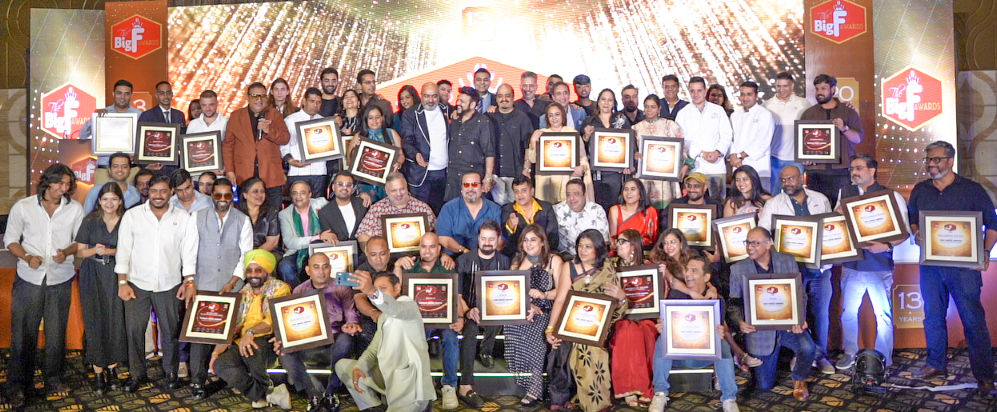
New Delhi, 10th September: The 13th edition of The Big F Awards concluded at The Westin, Gurgaon, bringing together accomplished professionals, emerging talent and enterprising brands from across India’s culinary and hospitality landscape. More than a celebration of achievement, this year’s edition reaffirmed the platform’s core principle: recognition must be earned through a credible and rigorous evaluation process.
At the heart of The Big F Awards is a jury-led approach designed to place merit ahead of visibility, reputation or commercial scale. The awards follow a structured and independent evaluation process, with entries assessed through successive rounds of screening and scoring against defined parameters including originality, execution, consistency, quality and sectoral relevance. The framework is designed to ensure that every participant is assessed on the strength of their work, rather than their profile, popularity or market presence.
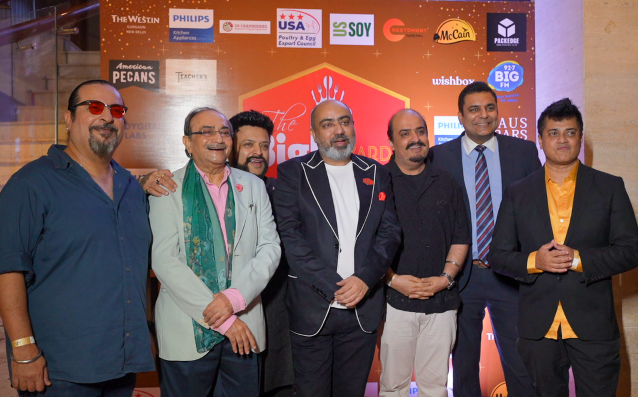
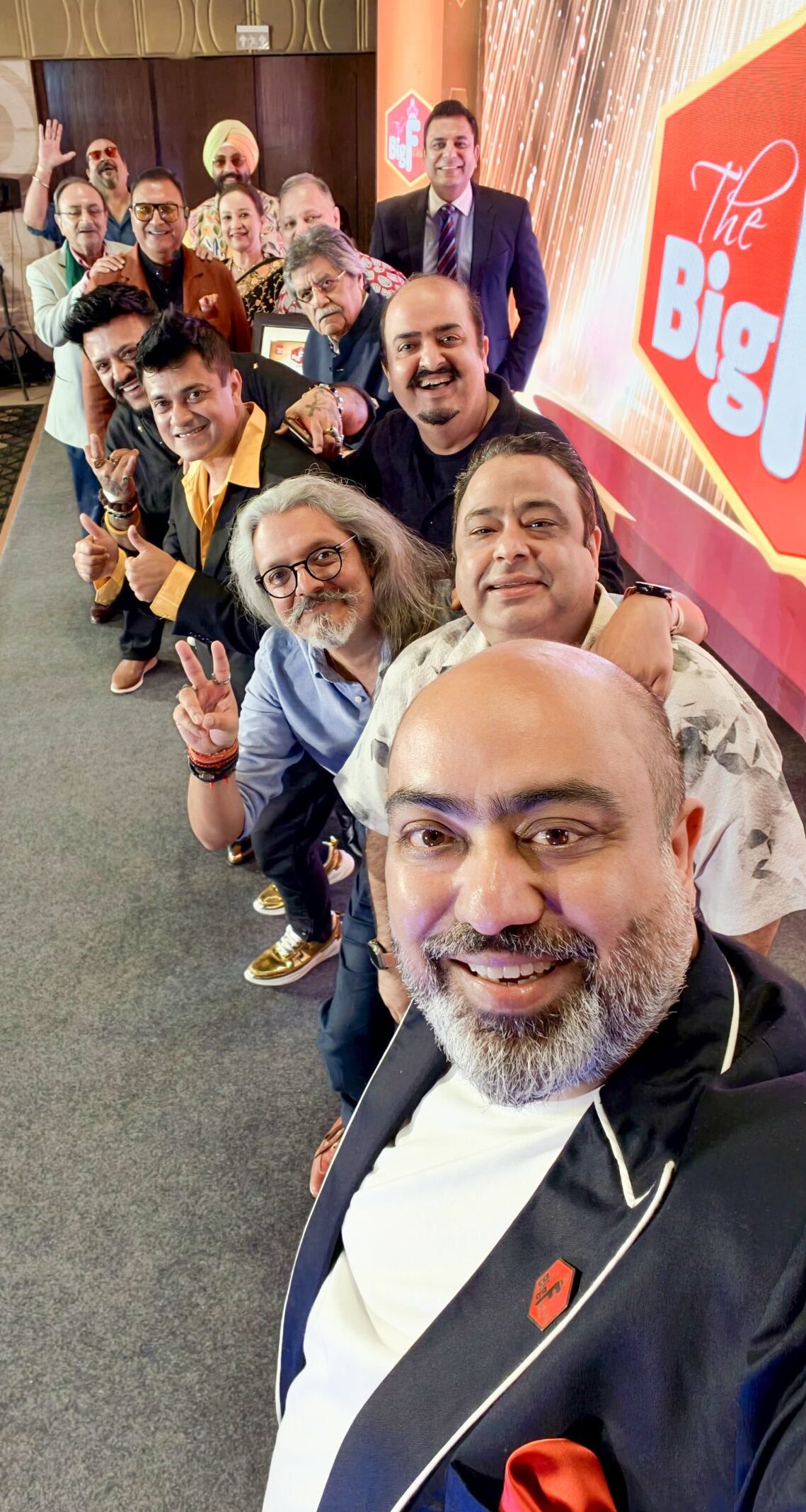
The jury for the 13th edition comprised Chef Nita Mehta, Chef Kunal Kapur, Chef Ashish Bhasin, Chef Sabyasachi Gorai, Pawan Soni, Diwan Gautam Anand, Sameer Bawa, Khurafati Nitin, Rocky Singh and Anirudh Singhal. Bringing together experience across cuisine, hospitality, media and business, the panel applied a common evaluation framework to assess the nominees and arrive at the final results.
Importantly, the process is built to create a level playing field. Commercial size, public visibility and geographical location do not determine recognition. The platform actively seeks to bring deserving work into consideration, including independent ventures, emerging professionals, newer businesses and establishments that may not always receive the same visibility as larger or more established names.
The awards also maintain a clear separation between participation and recognition. There are no nomination fees and no pay-to-participate mechanisms, reinforcing the principle that an award should be a result of merit rather than commercial participation. Winners are not disclosed in advance, with the final results remaining confidential until they are announced at the awards ceremony.
Speaking after the ceremony, Pawan Soni, Host & Jury member, The Big F Awards, said, “Thirteen editions have reinforced our belief that credibility cannot be created through a trophy or an announcement; it comes from the process behind it. This year, in the 6-month long process the jury evaluated nominations with the same discipline across categories, looking closely at the work, its consistency, execution and relevance. What stood out was the diversity of talent—from established names to smaller ventures and professionals receiving national recognition for the first time. That is precisely what we want The Big F Awards to stand for: a platform where deserving work has an opportunity to be recognised on merit, irrespective of visibility or scale.”
The 13th edition saw participation from independent ventures, established organisations, chefs, restaurateurs and emerging businesses across multiple regions and formats. The broad participation model reflects the awards’ continued effort to identify and recognise excellence beyond conventional industry circles.
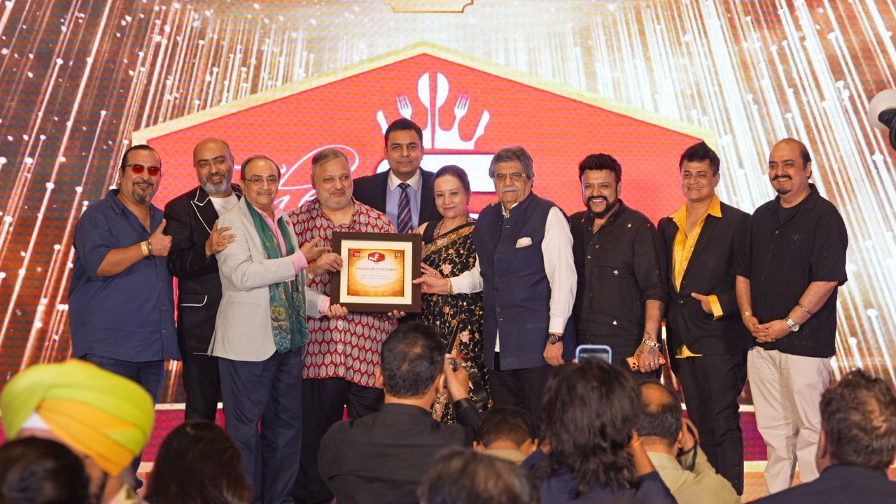
The recipients included Megu, who won League of Legends Awards, followed by Nisaba in the Noteworthy Newcomer category. Inja received the Restaurant of the Year distinction, while Best Cocktail Bar, Cocktail Menu of the year and Best Debut Bar were presented to AaBbCc.concept. Further honours went to Porus Arora for Restaurateur of the Year and Sahil Sambhi for Nightlife Entrepreneur of the Year.
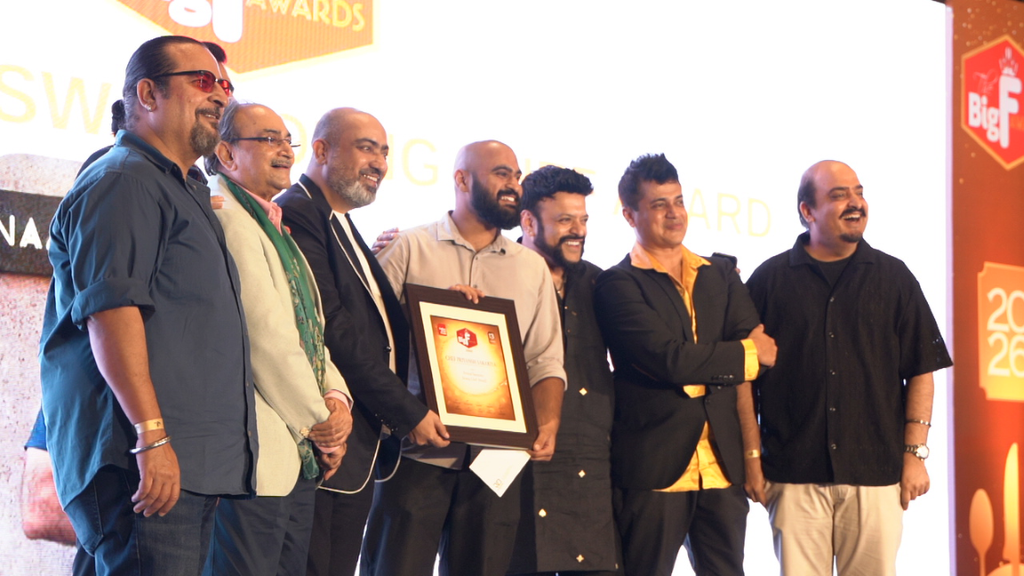
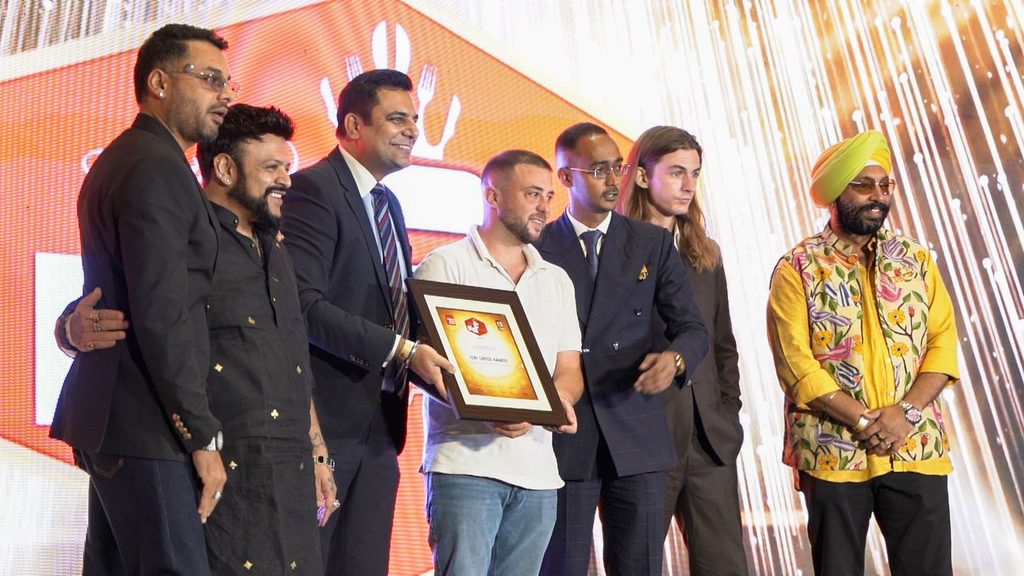
Highlights from the evening included Chef Manish Mehrotra, Chef Harpal Singh Sokhi, Rocky Singh, Rocky Mohan, Chef Manisha Bhasin, Zorawar Kalra, Sid Jalan amongst other dignitaries attending the presentation ceremony.
As The Big F Awards closes its 13th edition, its focus remains unchanged: to build recognition around work that stands up to scrutiny. The platform will continue to expand its outreach for the next edition, bringing a wider pool of professionals, establishments and businesses into a process where credibility, consistency and merit remain at the centre of recognition.
About The Big F Awards
The Big F Awards is a Delhi NCR-based platform recognising excellence across the food and hospitality industry through a rigorous and independent evaluation process. Founded on the belief that credible recognition must be rooted in process rather than perception, the awards follow a structured jury-led evaluation framework, with entries assessed against defined parameters. The platform maintains a zero nomination fee and no pay-to-participate policy, ensuring that recognition remains independent of commercial participation. Over 13 editions, The Big F Awards has sought to create a credible platform that recognises established as well as emerging talent based on the merit of their work.
Given below is the complete list of winners:
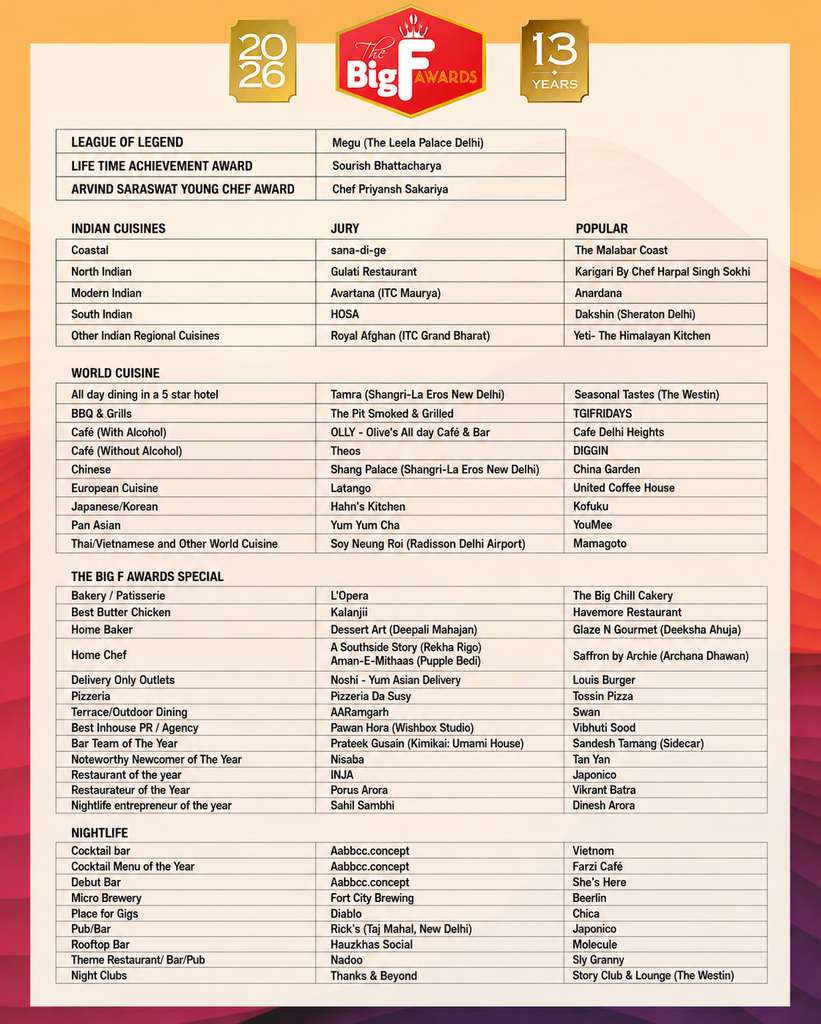
Given below is the complete list of winners:
The Big F Awards 2026 – Winners
- The League of Legend Award was presented to Megu at The Leela Palace Delhi.
- Habeeb ur Rehman Lifetime Achievement Award was presented to Sourish Bhattacharya.
- The Arvind Saraswat Young Chef Award was presented to Chef Priyansh Sakariya.
Indian Cuisines
- In the Coastal category, the Jury Award went to sana-di-ge, while the Popular Award went to The Malabar Coast.
- In the North Indian category, the Jury Award went to Gulati Restaurant, while the Popular Award went to Karigari by Chef Harpal Singh Sokhi.
- In the Modern Indian category, the Jury Award went to Avartana (ITC Maurya), while the Popular Award went to Anardana.
- In the South Indian category, the Jury Award went to HOSA, while the Popular Award went to Dakshin (Sheraton Delhi).
- In the Other Indian Regional Cuisines category, the Jury Award went to Royal Afghan (ITC Grand Bharat), while the Popular Award went to Yeti – The Himalayan Kitchen.
World Cuisine
- The All-Day Dining in a 5-Star Hotel Jury Award went to Tamra (Shangri-La Eros New Delhi), while the Popular Award went to Seasonal Tastes (The Westin).
- The BBQ & Grills Jury Award went to The Pit Smoked & Grilled, while the Popular Award went to TGIFRIDAYS.
- The Café (With Alcohol) Jury Award went to OLLY – Olive’s All Day Café & Bar, while the Popular Award went to Cafe Delhi Heights.
- The Café (Without Alcohol) Jury Award went to Theos, while the Popular Award went to DIGGIN.
- The Chinese Jury Award went to Shang Palace (Shangri-La Eros New Delhi), while the Popular Award went to China Garden.
- The European Cuisine Jury Award went to Latango, while the Popular Award went to United Coffee House.
- The Japanese/Korean Jury Award went to Hahn’s Kitchen, while the Popular Award went to Kofuku.
- The Pan Asian Jury Award went to Yum Yum Cha, while the Popular Award went to YouMee.
- The Thai/Vietnamese and Other World Cuisine Jury Award went to Soy Neung Roi (Radisson Delhi Airport), while the Popular Award went to Mamagoto.
The Big F Awards Special
- The Bakery/Patisserie Jury Award went to L’Opera, while the Popular Award went to The Big Chill Cakery.
- The Best Butter Chicken Jury Award went to Kalanji, while the Popular Award went to Havemore Restaurant.
- The Home Baker Jury Award went to Dessert Art (Deepali Mahajan), while the Popular Award went to Glaze N Gourmet (Deeksha Ahuja).
- The Home Chef Jury Award went to A Southside Story (Rekha Rigo) and Aman-E-Mithaas (Puplee Bedi), while the Popular Award went to Saffron by Archie (Archana Dhawan).
- The Delivery Only Outlets Jury Award went to Noshi – Yum Asian Delivery, while the Popular Award went to Louis Burger.
- The Pizzeria Jury Award went to Pizzeria Da Susy, while the Popular Award went to Tossin Pizza.
- The Terrace/Outdoor Dining Jury Award went to AARAMgarh, while the Popular Award went to Swan.
- The Best In-House PR/Agency Jury Award went to Pawan Hora (Wishbox Studio), while the Popular Award went to Vibhuti Sood.
- The Bar Team of the Year Jury Award went to Prateek Gusain (Kimikrai: Umami House), while the Popular Award went to Sandesh Tamang (Sidecar).
- The Noteworthy Newcomer of the Year Jury Award went to Nisaba, while the Popular Award went to Tan Yan.
- The Restaurant of the Year Jury Award went to INJA, while the Popular Award went to Japonico.
- The Restaurateur of the Year Jury Award went to Porus Arora, while the Popular Award went to Vikrant Batra.
- The Nightlife Entrepreneur of the Year Jury Award went to Sahil Sambhi, while the Popular Award went to Dinesh Arora.
Nightlife
- The Cocktail Bar Jury Award went to Aabbcc.concept, while the Popular Award went to Vietnam.
- The Cocktail Menu of the Year Jury Award went to Aabbcc.concept, while the Popular Award went to Farzi Café.
- The Debut Bar Jury Award went to Aabbcc.concept, while the Popular Award went to She’s Here.
- The Micro Brewery Jury Award went to Fort City Brewing, while the Popular Award went to Beerlin.
- The Place for Gigs Jury Award went to Diablo, while the Popular Award went to Chica.
- The Pub/Bar Jury Award went to Rick’s (Taj Mahal, New Delhi), while the Popular Award went to Japonico.
- The Rooftop Bar Jury Award went to HauzKhas Social, while the Popular Award went to Molecule.
- The Theme Restaurant/Bar/Pub Jury Award went to Nadoo, while the Popular Award went to Sly Granny.
- The Night Clubs Jury Award went to Thanks & Beyond, while the Popular Award went to Story Club & Lounge (The Westin)
