Login

How a Johnson Mentor Shapes the Next Generation of NASA Talent
How a Johnson Mentor Shapes the Next Generation of NASA Talent
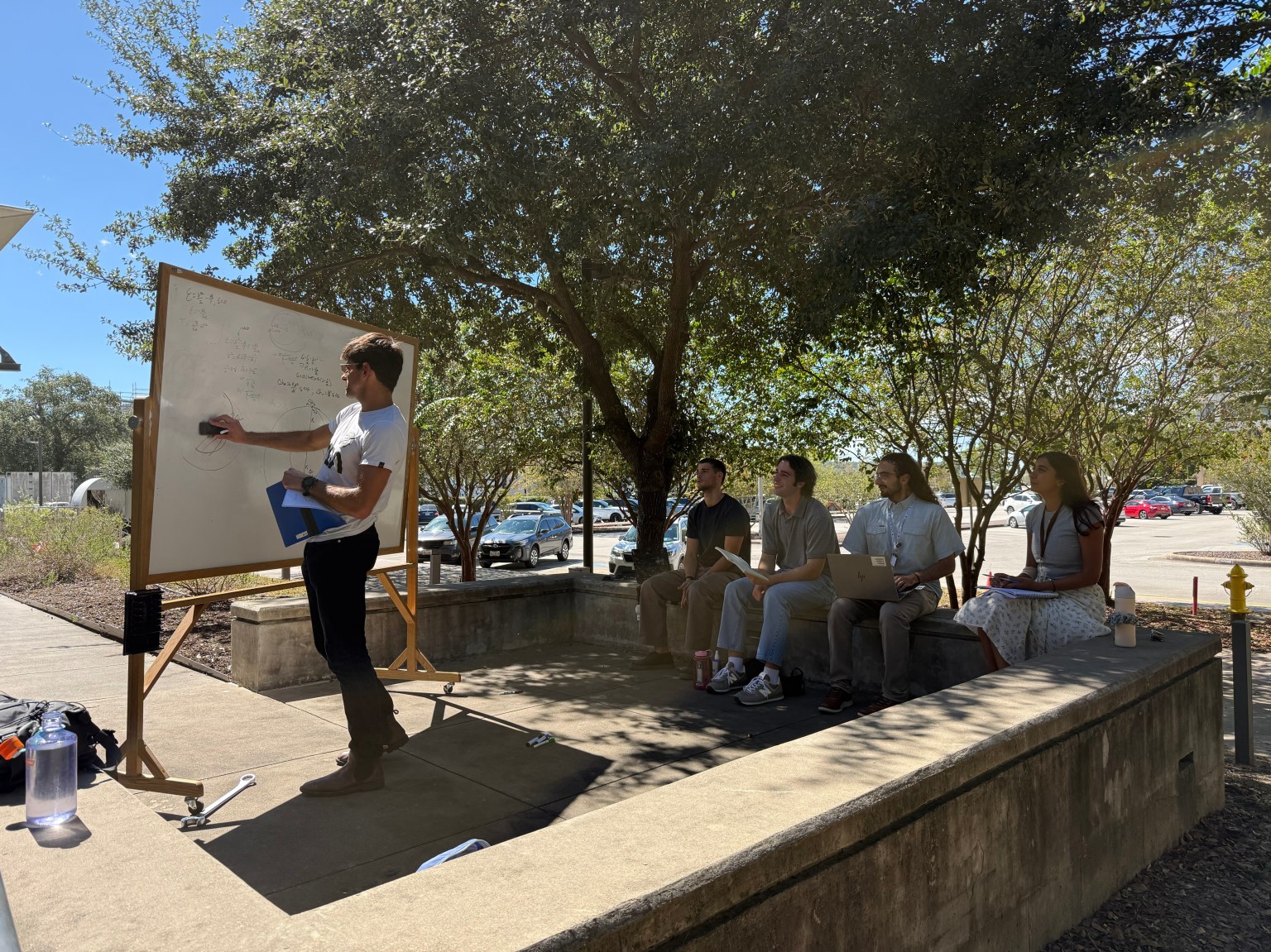
When Rice University student Malvika Bhardwaj asked her mentor Daniel Cohen, a Guidance, Navigation & Control (GN&C) engineer at NASA’s Johnson Space Center, whether he had time to keep teaching interns with his busy workload, he answered, “You decide what’s important.”
In honor of National Mentoring Day on Oct. 27, Bhardwaj reflects on how Cohen’s advice and support has shaped her internship experience at Johnson.
Through NASA’s Office of STEM Engagement, interns like Bhardwaj contribute to agency projects while learning from NASA mentors and gaining technical skills and hand-on experience to build a future career in space exploration.
Bhardwaj studies computational and applied mathematics at Rice University and interns with the GN&C team, which focuses on how spacecraft determine their position and maneuver in orbit. She is developing tools to analyze thruster firings on the U.S. Deorbit Vehicle that will help NASA safely deorbit the International Space Station at the end of its operational life. Bhardwaj also uses computer simulations to test the vehicle’s control system and identify conditions under which it could fail.
“I’ve learned about the culture of community and support at Johnson and NASA as a whole. Daniel made an effort to introduce me to the team and include me in conversations and meetings. I saw how team members step up to help one another and keep the whole unit moving forward,” Bhardwaj said.
Cohen, a Rice University alumnus with a master’s in mechanical engineering, began his NASA career as a flight operations intern in 2020. He later held internships in docking dynamics, propulsion systems, and GN&C analysis before joining Johnson as a full-time engineer in August 2024.
His current work includes developing simulations and models for studies of the U.S. Deorbit Vehicle, analyzing its control algorithms and GN&C performance, and evaluating SpaceX’s design at multiple life-cycle reviews.
He also analyzes settings for the Orion spacecraft’s docking camera, which provides positioning measurements that can help inform navigation during future Artemis rendezvous activities.
Cohen supports Bhardwaj beyond her internship, giving her a closer look at how colleagues collaborate on projects and share ideas. He sets aside a couple of hours each week to teach interns topics such as orbital mechanics and control systems.
Bhardwaj took Cohen’s advice to heart: How she spends her time and energy reflects what she values. She believes that her internship has shown her that problem-solving is rarely an individual effort. Team members bring different perspectives and need to understand how their work connects to a larger project.
Working alongside interns in outreach, social media, and digital design has also broadened Bhardwaj’s view of STEM careers. “No matter what interests you, there’s likely a role for you here,” she said.
She was proud to complete her first project, a set of analysis tools she built from scratch. Working through the debugging process and seeing a finished, functioning product was especially rewarding.
Bhardwaj’s advice to students interested in NASA internships is to apply even if they do not feel fully prepared.
“You’re probably never going to feel 100% ready, but so much of the learning happens on the job,” she said. “Trust in your ability to navigate new environments.”
About the Author