❌

Reading view

There are new articles available, click to refresh the page.

NASA Invites Media to Crew Completion of Yearlong Mars Simulation
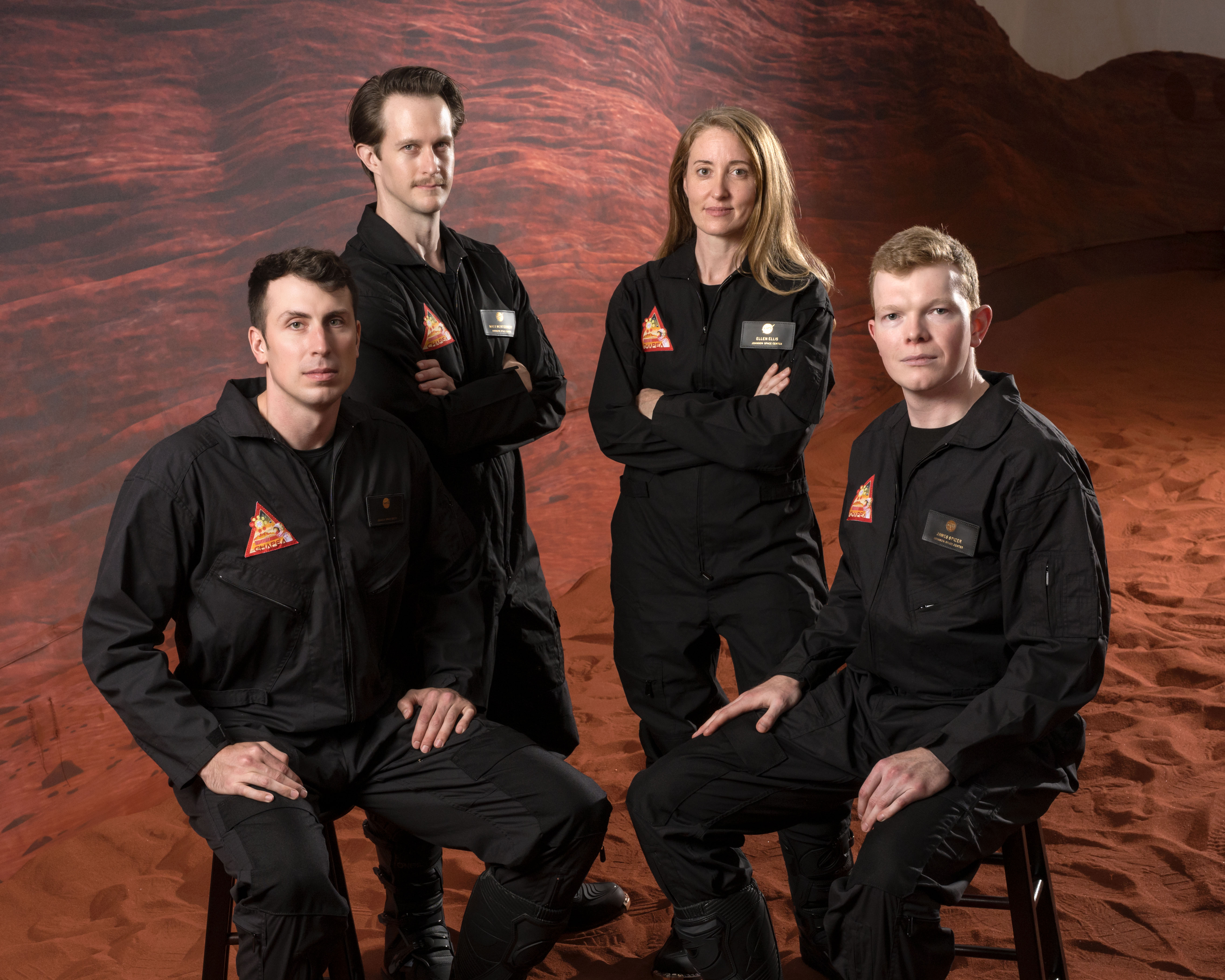
Crew Health and Performance Exploration Analog (CHAPEA) Mission 2 crew members (from left) Ross Elder, Matthew Montgomery, Ellen Ellis, and James Spicer, pose for a photo on Oct. 8, 2025.
Credit: NASA

The four volunteers who lived and worked in a simulated NASA Mars mission for more than a year will exit their habitat on Saturday, Oct. 31, after 378 days of isolation in a facility at the agency’s Johnson Space Center in Houston. Health and performance data collected from the simulation can help NASA develop methods to counter human spaceflight risks for future Artemis and Moon Base missions.

Beginning at 3 p.m. EDT, NASA will provide live coverage of the volunteers’ departure from the Crew Health and Performance Exploration Analog (CHAPEA, pronounced cha-pea’-ah) mission habitat. The exit ceremony will be streamed on NASA Johnson’s YouTube and social accounts.

Johnson Center Director Vanessa Wyche and NASA astronaut Jack Hathaway will provide remarks. The CHAPEA crew members Ross Elder, Ellen Ellis, James Spicer, and Matthew Montgomery also will provide remarks.

Media are invited to watch the CHAPEA Mission 2 ceremony live at NASA Johnson on a screen outside the hangar holding the CHAPEA facility, after which a subject matter expert will be available in person to answer questions. Media will have the opportunity to capture the moment the crew exits the building, stepping outside for the first time in more than a year.

U.S. media interested in attending the activities in person, or media interested in speaking virtually with the CHAPEA Mission 2 crew members in the days following completion of their mission, must contact the NASA Johnson newsroom no later than 2 p.m., Friday, Oct. 30, at jsc-newsroom@mail.nasa.gov. 

The second CHAPEA mission began on Oct. 19, 2025. Four crew members have lived and worked inside a 3D-printed 1,700-square-foot facility, simulating Mars mission operations, conducting simulated spacewalks, exercising, performing habitat maintenance, growing plants, and more, while operating under stressors that future deep space crews will likely experience. These included communication delays, resource limitations, and isolation.

Data from the mission can aid preparation for NASA’s lunar missions by optimizing food system design, efficient use of crew time, bandwidth on NASA’s Deep Space Network, and other aspects of living in deep space. In addition, data can help flight doctors and psychologists strengthen spaceflight medical care and behavioral support practices to ensure crew readiness and performance.

To learn more about NASA’s CHAPEA mission, visit:

https://www.nasa.gov/humans-in-space/chapea

-end-

Rachel Kraft
Headquarters, Washington
202-358-1600
rachel.h.kraft@nasa.gov

Kelsey Spivey
Johnson Space Center, Houston
281-483-5111
kelsey.m.spivey@nasa.gov
NASA’s SpaceX Crew‑12 Splashes Down, Sets Briefing to Discuss Mission

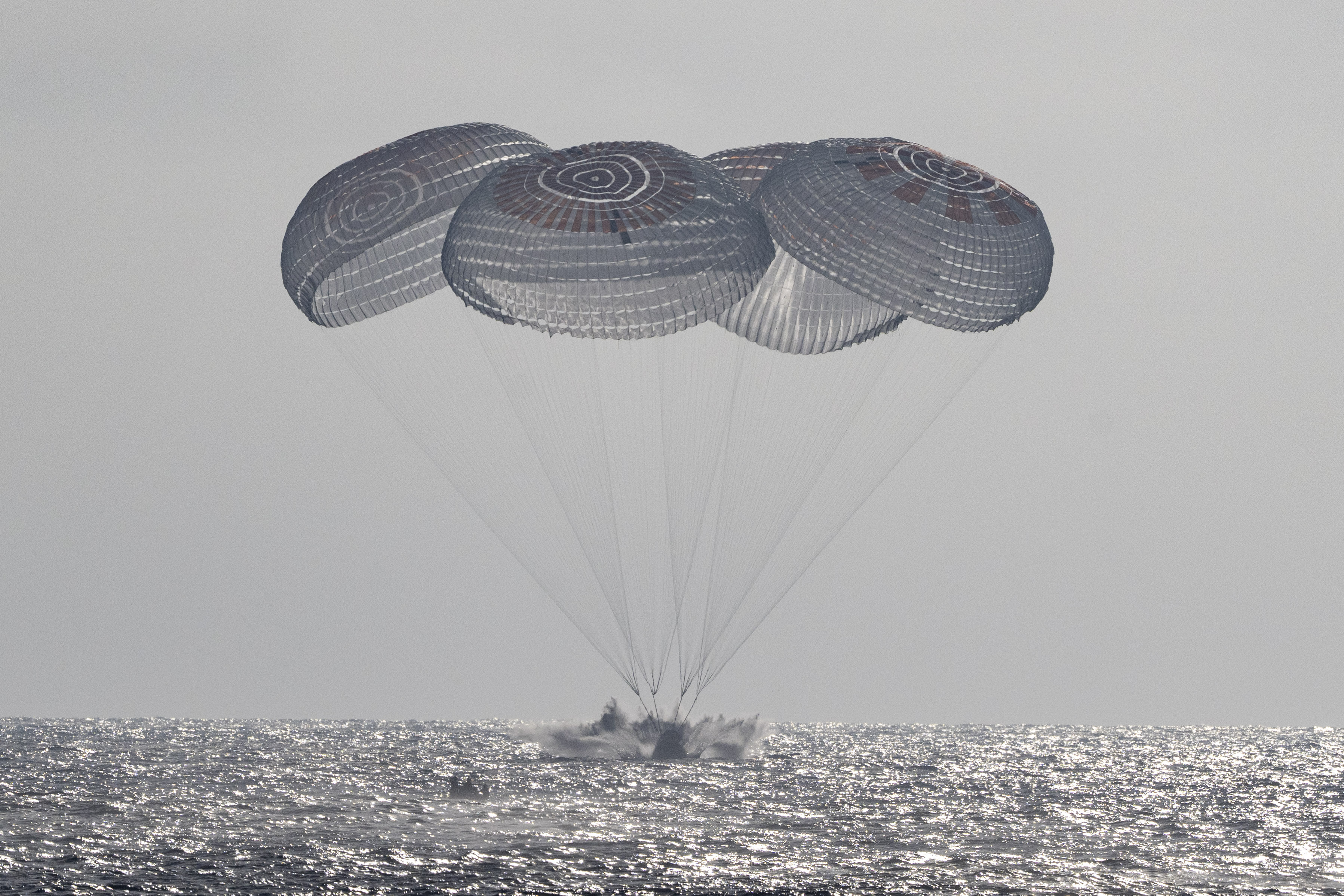
The SpaceX Crew Dragon Freedom spacecraft is seen as it lands with NASA astronauts Jessica Meir, Jack Hathaway, ESA (European Space Agency) astronaut Sophie Adenot, and Roscosmos cosmonaut Andrey Fedyaev aboard in the Pacific Ocean off the coast of Los Angeles on Oct. 8, 2026.
Credit: NASA/Keegan Barber

After more than seven months aboard the International Space Station, NASA’s SpaceX Crew-12 mission safely splashed down Thursday in the Pacific Ocean off the coast of Los Angeles. The crew members will discuss their science mission during a news conference at 3:30 p.m. EDT, Thursday, Oct. 15, at the agency’s Johnson Space Center in Houston.

“Jessica, Jack, Sophie, and Andrey spent 237 days living and working in orbit, traveled more than 100 million miles, advanced important science, and returned safely home because of the extraordinary expertise and competence of thousands across NASA, SpaceX, and our international partners,” said NASA Administrator Jared Isaacman. “Building the capability, experience, and confidence to do this repeatedly is exactly what will allow us to go farther, and I am grateful to Crew-12 and their families for their service to humanity’s greatest adventure.”

NASA astronauts Jessica Meir and Jack Hathaway, ESA (European Space Agency) astronaut Sophie Adenot, and Roscosmos cosmonaut Andrey Fedyaev returned to Earth at 8:34 a.m. PDT. Teams aboard SpaceX recovery vessels retrieved the spacecraft and its crew shortly after. Following standard postflight medical screenings, the crew will fly to shore before returning to NASA’s Johnson Space Center in Houston.

“NASA’s activities supporting the International Space Station — transporting crew, conducting impactful research, and maintaining critical national assets — enable the science, engineering, and risk‑reduction needed for future missions across the solar system,” said Dana Weigel, manager of NASA’s Low Earth Orbit Program at the agency’s Johnson Space Center. “We’re grateful for the dedication across the human spaceflight team that makes this possible, and we’re thrilled to welcome Jessica, Jack, Sophie, and Andrey home.”

During their 237-day mission, the four crew members traveled more than 100 million miles and completed more than 3,792 orbits around Earth. The mission was the second for Meir and Fedyaev and the first for Hathaway and Adenot. Crew-12 lifted off at 5:15 a.m. EST on Feb. 13 and docked to the orbiting laboratory a day later.

Crew‑12 logged hundreds of hours of scientific research to support human exploration beyond low Earth orbit and advance benefits for people on Earth. The crew members’ work included testing stem cell production for cell‑based therapies, demonstrating on‑demand IV fluid generation for future missions, and studying how the bacteria that causes pneumonia can lead to long‑term heart damage. The crew also conducted nutrition-focused research and examined how physical characteristics may affect blood flow during spaceflight to help keep astronauts safe and healthy on future missions. Research conducted aboard the space station advances knowledge and demonstrates new technologies that enable us to prepare for human exploration of the Moon and Mars.

Meir completed four spacewalks, bringing her career total to seven. That places her third all-time in total spacewalks among women at NASA, behind former agency astronauts Peggy Whitson and Suni Williams. Adenot completed three spacewalks, becoming the first French woman to venture outside the orbital outpost.

United States-based media interested in attending the crew news conference in person with Meir, Hathaway, and Fedyaev, must contact the NASA Johnson newsroom no later than 5 p.m. EDT, Tuesday, Oct. 13, at jsc-newsroom@mail.nasa.gov. Media joining by phone must request dial-in details by 9:30 a.m., Oct. 15. To ask a question, media must join no later than 15 minutes before the start of the news conference. The agency’s media credentialing policy is available online. Adenot will return to Europe and not be available during the news conference.

NASA’s Low Earth Orbit Program provides reliable access to space, maximizing the use of the International Space Station for research and development by partnering with private U.S. companies, including SpaceX, to transport astronauts to and from the space station.

Learn more about NASA’s SpaceX Crew-12 at:

https://www.nasa.gov/commercialcrew

-end-

Joshua Finch / Jimi Russell
Headquarters, Washington
202-358-1100
joshua.a.finch@nasa.gov / james.j.russell@nasa.gov

Sandra Jones / Joseph Zakrzewski
Johnson Space Center, Houston
281-483-5111
sandra.p.jones@nasa.gov / joseph.a.zakrzewski@nasa.gov

Steven Siceloff
Kennedy Space Center, Florida
321-867-2468
steven.p.siceloff@nasa.gov

NASA Sets Coverage for SpaceX 35th Station Resupply Launch, Arrival

D4_2067548_20260616T162925_R_2026-06-16 16-29-28.NEF
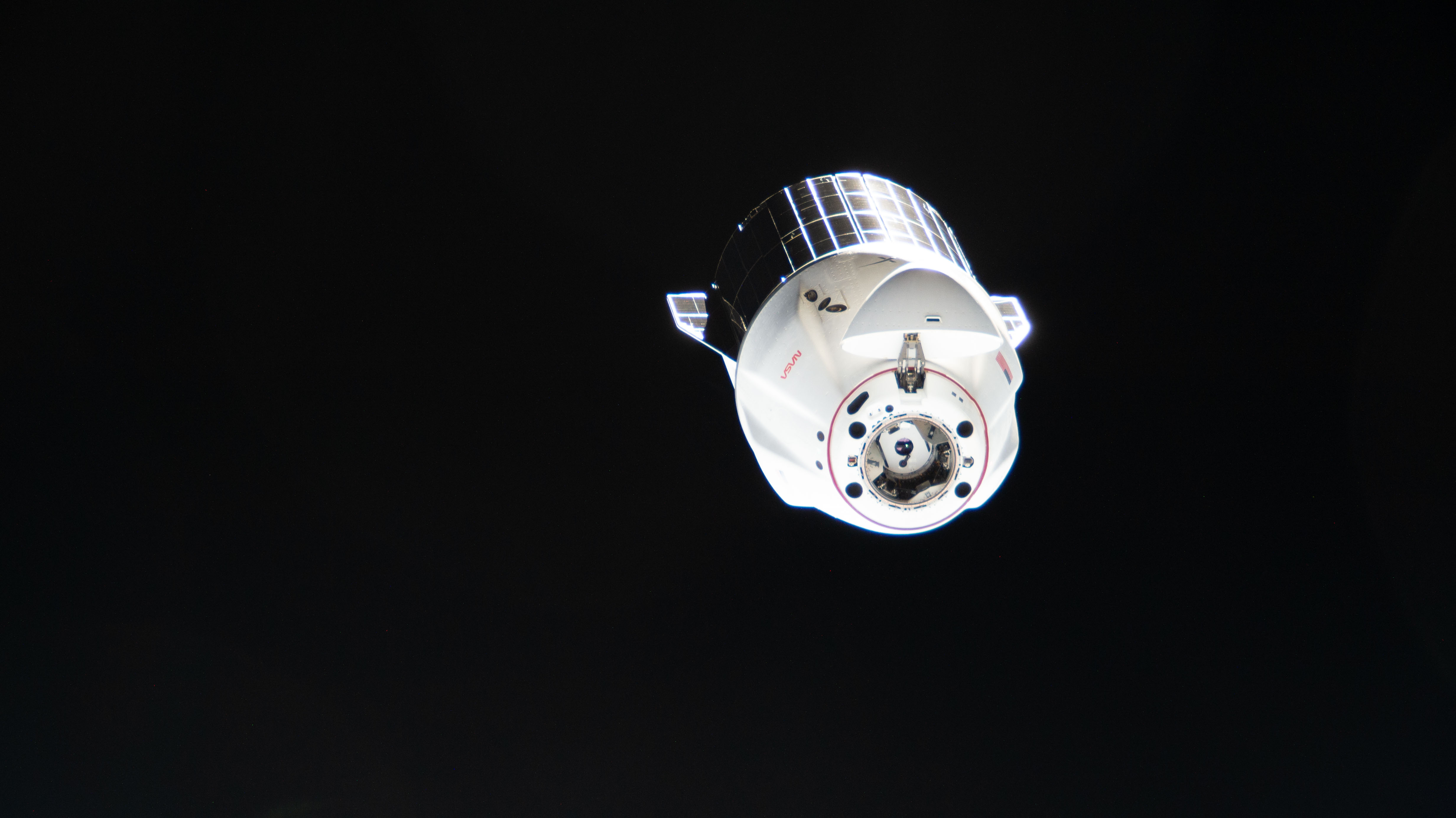
A SpaceX Dragon cargo spacecraft departs from the International Space Station on June 16 after undocking from the Harmony module’s forward port. Dragon, packed with completed science experiments and cargo for retrieval and analysis on Earth, parachuted to a splashdown off the coast of southern California the following day.
Credit: NASA

NASA and SpaceX are targeting 6:33 a.m. EDT, Tuesday, Oct. 13, for the next launch to deliver science investigations, supplies, and equipment, including the final set of International Space Station Roll-Out Solar Arrays, to the space station. This is the 35th SpaceX commercial resupply services mission to the orbital complex for NASA.

NASA also will host a media teleconference on Thursday, Oct. 8 that will preview the cargo resupply flight, as well as provide a post-splashdown update for the agency’s SpaceX Crew-12 mission, which will have returned to Earth from the space station Thursday morning.

Loaded with more than 6,300 pounds of supplies, a SpaceX Dragon spacecraft on a Falcon 9 rocket will lift off from Space Launch Complex 40 at Cape Canaveral Space Force Station in Florida. Dragon will dock autonomously around 11 a.m. on Thursday, Oct. 15, to the space-facing port of the station’s Harmony module.

NASA’s live launch and docking coverage will stream through a variety of platforms. Learn where to watch online:

https://www.nasa.gov/live

In addition to the solar arrays, the Dragon spacecraft will deliver hardware to manufacture artificial retinas in microgravity to help restore vision on Earth and 3D heart tissues models to advance large‑scale drug testing on future missions. The spacecraft will carry materials to study how a new type of glass forms in microgravity and brain organoids that could reveal treatment targets for neurodegenerative diseases, such as Alzheimer’s, Parkinson’s, and multiple sclerosis.

The Dragon spacecraft is scheduled to remain at the space station until mid-November when it will depart the orbiting laboratory and return to Earth with time-critical research and cargo, splashing down off the coast of California.

NASA’s mission coverage is as follows (all times Eastern and subject to change based on real-time operations):

Thursday, Oct. 8

1:15 p.m.: International Space Station briefing for Crew-12 return, and SpaceX’s 35th Commercial Resupply Services launch with the following participants:

  • Bill Spetch, deputy manager of Commercial, Low Earth Orbit Program
  • Dr. Liz Warren, deputy chief scientist, NASA’s International Space Station Office
  • Lee Echerd, senior mission manager, Customer Operations and Integration, SpaceX
  • Andreas Mogensen, leader, Human Exploration Group, ESA (European Space Agency)

To participate in the teleconference, media must contact the NASA Johnson Space Center newsroom for call details by 12 p.m., Oct. 8, at: jsccommu@mail.nasa.gov or 281-483-5111. To ask questions, media must dial in no later than 10 minutes before the start of the call. The agency’s media credentialing policy is available online.

Tuesday, Oct. 13

6:15 a.m.: Launch coverage begins

6:33 a.m.: Launch

Thursday, Oct. 15

9:15 a.m.: Arrival coverage begins

11 a.m.: Docking

NASA website launch coverage

Launch day coverage of the mission will be available on the NASA website. Coverage will include live streaming and blog updates beginning no earlier than 6 a.m. on Oct. 13, as the countdown milestones occur. On-demand streaming video on NASA+ and photos of the launch will be available shortly after liftoff. For questions about countdown coverage, contact the NASA Kennedy Space Center newsroom at 321-867-2468. Follow countdown coverage on our International Space Station blog for updates.

Attend launch virtually

Members of the public can register to attend this launch virtually. NASA’s virtual guest program for this mission also includes curated launch resources, notifications about related opportunities or changes, and a stamp for the NASA virtual guest passport following launch.

Watch, engage on social media

Let people know you’re watching the mission on X, Facebook, and Instagram by following and tagging these accounts:

X: @NASA, @NASAKennedy, @NASASpaceOps, @Space_Station, @ISS National Lab

Facebook: NASA, NASAKennedy, ISS, ISS National Lab

Instagram: @NASA, @NASAKennedy, @ISS, @ISSNationalLab

Learn more about this commercial resupply services mission at:

https://www.nasa.gov/mission/nasas-spacex-crs-35/

-end-

Josh Finch / Jimi Russell
Headquarters, Washington
202-358-1100
joshua.a.finch@nasa.gov / james.j.russell@nasa.gov

Steven Siceloff
Kennedy Space Center, Fla.
321-876-2468
steven.p.siceloff@nasa.gov

Sandra Jones / Joseph Zakrzewski
Johnson Space Center, Houston
281-483-5111
sandra.p.jones@nasa.gov / joseph.a.zakrzewskI@nasa.gov

NASA Opens Applications for Next Class of Flight Directors

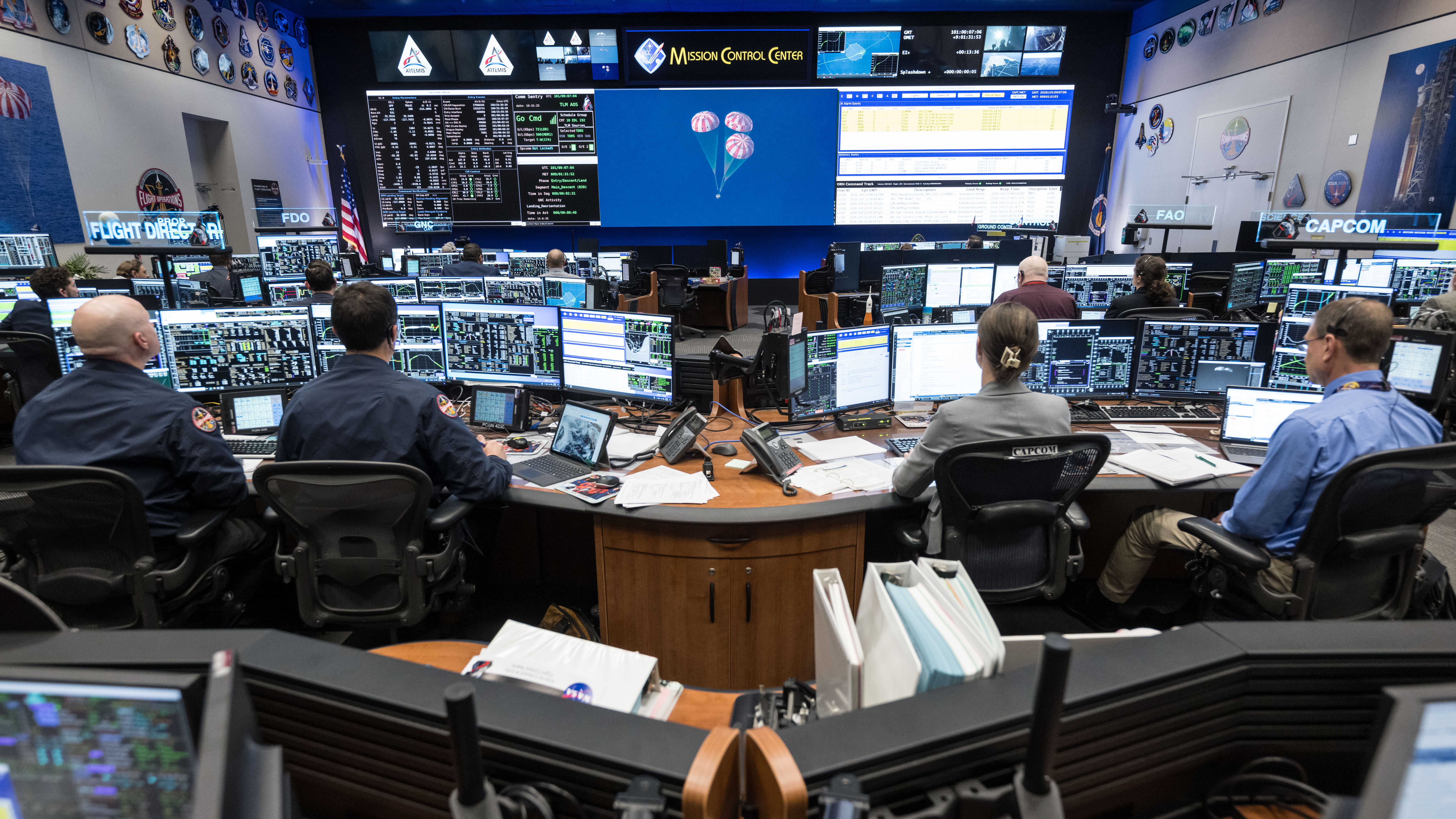
 The Artemis II flight control team is pictured in the White Flight Control Room in mission control at NASA’s Johnson Space Center in Houston on April 10, 2026, for the splashdown and recovery of the Artemis II mission.
Credit: NASA/Robert Markowitz

NASA is seeking leaders for one of the most esteemed positions on Earth for human spaceflight: flight director in mission control at the agency’s Johnson Space Center in Houston. This role is critical to advancing American leadership in space exploration, as NASA paves the way for a sustained human presence on the Moon.

Applications for new flight directors are open now through Monday, Oct. 12. U.S. citizens can apply at:

https://www.usajobs.gov/GetJob/ViewDetails/886788000

Those chosen as NASA flight directors will lead human spaceflight missions to the International Space Station, Artemis missions to the Moon, and, eventually, the first human missions to Mars.

Flight directors lead teams of flight controllers, astronauts, and commercial and international partners in real-time mission execution and risk management. In preparation for a mission, flight directors collaborate with engineering, safety, and program partners to ensure operational plans align with spacecraft capabilities and mission objectives.

“We are working in an exciting, pivotal time as we continue supporting operations to the International Space Station while building the next phase of human spaceflight with Artemis and Moon Base missions, preparing to go farther than ever before,” said Emily Nelson, chief flight director at Johnson. “Accomplishing these ambitious goals requires flight directors who are expert integrators, bringing together a broad range of teams and disciplines into a clear, unified mission effort. This integral role exemplifies the best of innovation and teamwork.”

To be considered, flight director candidates must be U.S. citizens with a bachelor’s degree from an accredited institution in engineering, biological science, physical science, computer science, or mathematics. They also will need substantial related, progressively responsible professional experience, including time-critical decision-making experience in high-stress, high-risk environments. Although many NASA flight directors have previously been flight controllers working in mission control, it is not a prerequisite to apply.

NASA plans to announce selections by the end of the year. The new flight directors will receive extensive training in flight control and spacecraft systems, as well as operational leadership and risk management.

Learn more about NASA flight directors and the application process at:

go.nasa.gov/BeAFlightDirector

-end-

Rachel Kraft
Headquarters, Washington
202-358-1100
rachel.h.kraft@nasa.gov

Anna Schneider / Mary Pfister
Johnson Space Center, Houston
281-483-5111
anna.c.schneider@nasa.gov / mary.m.pfister@nasa.gov

Share

Details

Last Updated
Oct 02, 2026

NASA’s SpaceX Crew-13 Launches to International Space Station

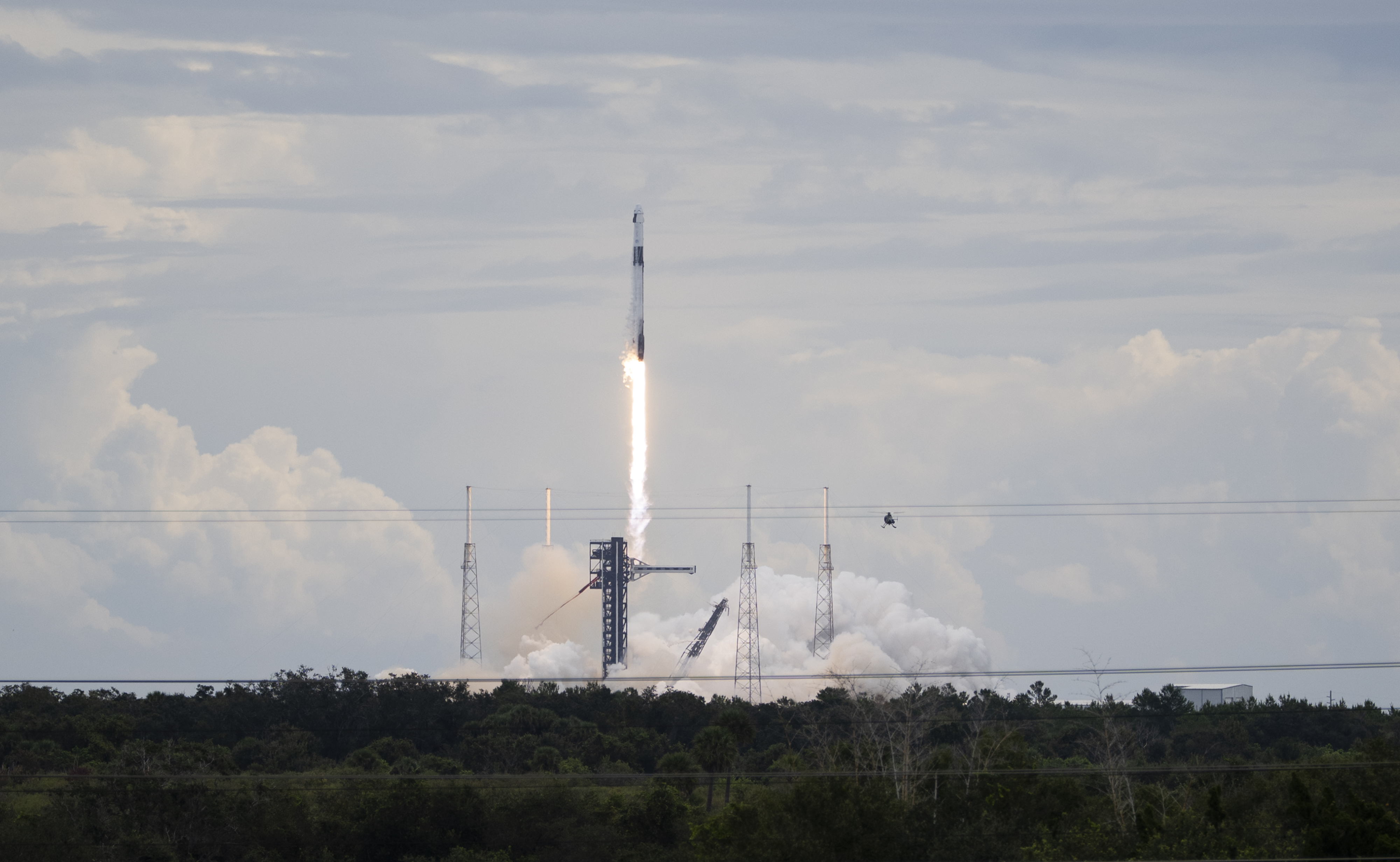
A SpaceX Falcon 9 rocket carrying the company’s Dragon spacecraft launched on NASA’s SpaceX Crew-13 mission to the International Space Station with NASA astronauts Jessica Watkins and Luke Delaney, CSA (Canadian Space Agency) astronaut Joshua Kutryk, and Roscosmos cosmonaut Sergey Teteryatnikov onboard, Thursday, Oct. 1, 2026, from Cape Canaveral Space Force Station in Florida.
Credit: NASA/Joel Kowsky

Four crew members of NASA’s SpaceX Crew-13 mission launched at 11:10 a.m. EDT Thursday from Space Launch Complex 40 at Cape Canaveral Space Force Station in Florida for a science expedition aboard the International Space Station.

“Crew-13 is another demonstration of America’s unmatched capability in human spaceflight and the strength of our commercial partnerships,” said NASA Administrator Jared Isaacman. “Jessica, Luke, Joshua, and Sergey will carry forward important work aboard the International Space Station while helping us build the experience and capabilities needed for ambitious missions to the Moon and beyond. Congratulations to the crew and the NASA and SpaceX teams who made today’s launch possible.”

A SpaceX Falcon 9 rocket propelled a Dragon spacecraft into orbit carrying NASA astronauts Jessica Watkins and Luke Delaney, CSA (Canadian Space Agency) astronaut Joshua Kutryk, and Roscosmos cosmonaut Sergey Teteryatnikov. The spacecraft will dock autonomously to the forward port of the station’s Harmony module at approximately 7 p.m., making it the fastest launch-to-docking by a U.S. spacecraft in the history of the International Space Station.

“Our steady cadence of commercial crew launches demonstrates the essential role the International Space Station plays in sustaining our presence in Earth’s orbit and sharpening the tools we’ll take forward to the Moon and Mars,” said Dr. Lori Glaze, associate administrator of NASA’s Human Spaceflight Mission Directorate at the agency’s headquarters in Washington. “Each space station mission adds to our blueprint for exploration, and the work our crews carry out guides our plans while ensuring we keep pushing the boundaries of what’s possible in human spaceflight.”

During Dragon’s approximately 7-hour, 50-minute flight, SpaceX will monitor a series of automatic spacecraft maneuvers from its mission control center in Hawthorne, California. NASA will monitor space station operations throughout the flight from the Mission Control Center at the agency’s Johnson Space Center in Houston.

NASA’s live arrival coverage begins at 5:20 p.m. for rendezvous, docking, and hatch opening. After docking, the crew members will change out of their spacesuits and prepare cargo for offload before opening the hatch to the station’s Harmony module around 8:45 p.m.

NASA will stream Crew‑13’s arrival across multiple platforms. Learn where to watch at:

https://www.nasa.gov/live

Watkins, Delaney, Kutryk, and Teteryatnikov will join the Expedition 75 crew, which includes NASA astronaut Anil Menon and Roscosmos cosmonauts Pyotr Dubrov and Anna Kikina already aboard the station. After a brief handover, NASA’s SpaceX Crew‑12 mission, with agency astronauts Jessica Meir and Jack Hathaway, ESA (European Space Agency) astronaut Sophie Adenot, and Roscosmos cosmonaut Andrey Fedyaev, will return to Earth.

During its mission, Crew‑13 will help advance research aboard the orbiting laboratory by using microgravity to produce human stem cell‑derived tissues for improved personalized medicine, disease modeling, and pharmaceutical testing for conditions such as heart disease and Parkinson’s. The crew also will explore crop production through a new, mostly autonomous plant growth system and test how plants grow outside dedicated facilities. In addition, the crew members will continue human‑health studies that examine factors linked to blood-flow abnormalities in microgravity and will test a new inflight diagnostic device to monitor astronaut health.

Crew-13 is part of NASA’s Low Earth Orbit Program, which partners with private companies to provide reliable access to space, support research and development aboard the space station, and enable future missions beyond low Earth orbit.

Learn more about NASA’s Space Crew-13 at:

https://www.nasa.gov/mission/nasas-spacex-crew-13/

-end-

Joshua Finch / Jimi Russell
Headquarters, Washington
202-358-1100
joshua.a.finch@nasa.gov / james.j.russell@nasa.gov

Steven Siceloff
Kennedy Space Center, Fla.
321-867-2468
steven.p.siceloff@nasa.gov

Sandra Jones / Anna Schneider
Johnson Space Center, Houston
281-483-5111
sandra.p.jones@nasa.gov / anna.c.schneider@nasa.gov

NASA Adds New Science Investigations for Moon Base

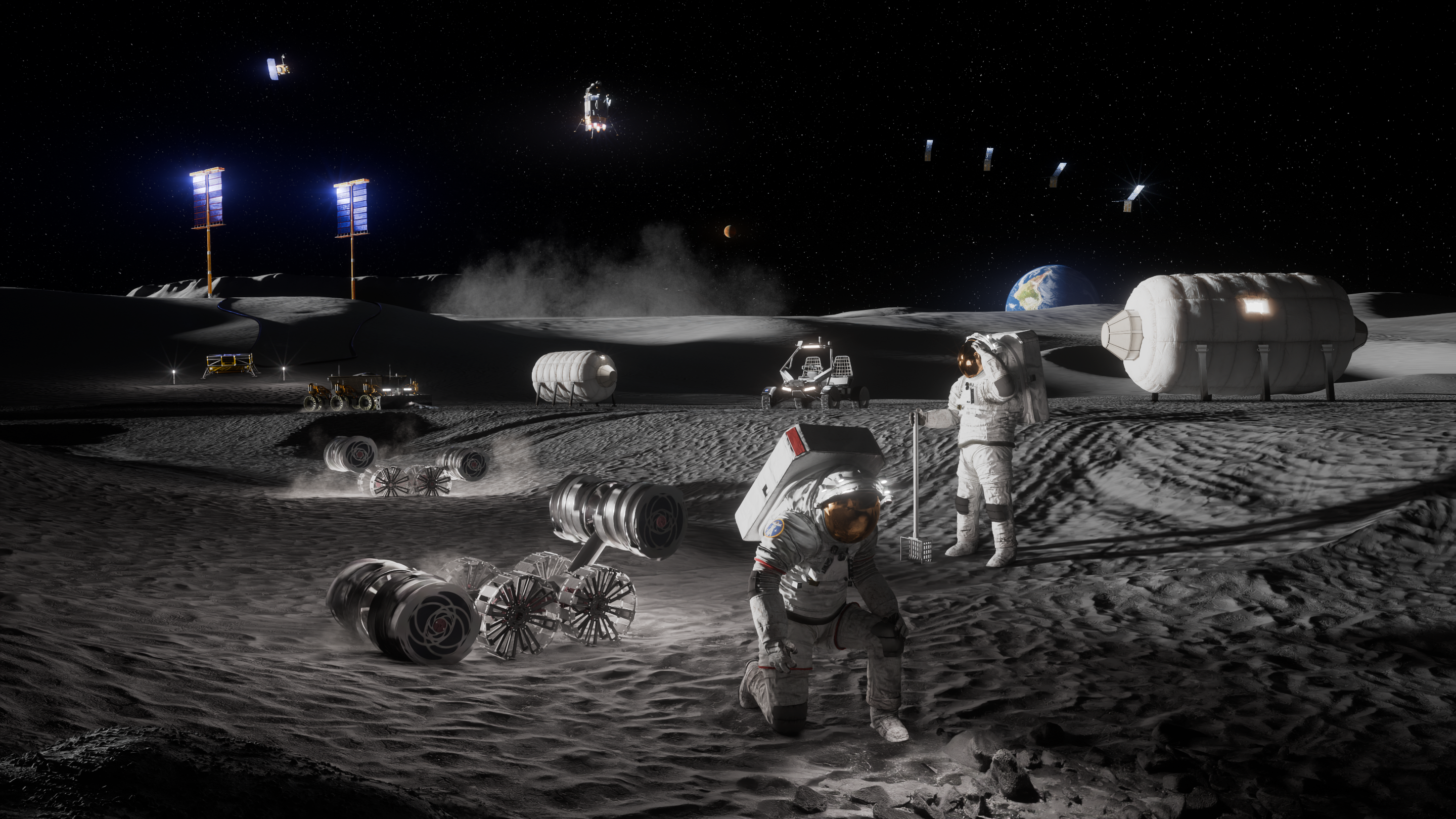
Artist’s rendering depicting astronauts, habitats, rovers, power systems, and cargo operations supporting sustained human activities at the Moon Base near the lunar South Pole.
Credit: NASA

Editor’s note: This release was updated on Sept. 30, 2026, to correct the name of the DISCO payload.

NASA selected three new scientific investigations and their payload suites to advance our knowledge of the Moon and help pave the way for building humanity’s first lunar outpost, Moon Base.

The suite of science instruments and technologies was selected through NASA’s Payloads and Research Investigations on the Surface of the Moon (PRISM) program and will fly to the lunar surface using the CLPS (Commercial Lunar Payload Services) initiative as part of the agency’s Moon Base Program. The payloads will help researchers understand lunar resources, map natural shelters, and assess environmental hazards, laying the foundational groundwork for a safe and sustained human presence under the agency’s Artemis and Moon Base programs. 

“NASA Science is building the ultimate interplanetary survival guide to ensure that science goes first to the lunar surface to provide our future astronaut crews with the vital information, resources, and safety precautions needed ahead of time to survive the night on the Moon,” said Nicky Fox, associate administrator, Science Mission Directorate, at NASA Headquarters in Washington. “These PRISM selections will directly help NASA minimize risks to our astronauts while maximizing our agency goals as we set up humanity’s first lunar outpost in preparation for sending the first astronauts to Mars.”

The three payload suites are:

Lunar Environment Monitoring Station – South Pole (LEMS-SP):

  • The autonomous LEMS-SP instrument suite will serve as a long-term environmental and hazard monitoring station. The instrument will be designed to help build a picture of the lunar environment by monitoring falling micrometeoroids and tracking the abundance of volatiles, or materials that can easily shift into gas, that drift into the Moon’s thin outer layer of gases. Using a short‑period seismometer to detect seismic events, the instrument could deliver the critical hazard assessments needed to ensure the physical safety of Moon Base hardware.

Principal Investigator: Dr. Mehdi Benna, University of Maryland, Baltimore County

 Geophysical Investigation for Mapping Lunar Interior (GIMLI):  

  • The GIMLI payload will be deployed at the Marius Hills Pit on the lunar surface to hunt for subterranean lava tubes and aid in our understanding of fundamental lunar volcanic processes. The payload will scan beneath the Moon’s surface to see whether the Marius Hills Pit leads into a large underground lava tube. If it does, these natural underground spaces could offer future astronauts ready‑made protection from extreme temperatures and harmful radiation — important groundwork for safe, long‑term living on the Moon. Confirming these void spaces now could shift future habitat planning, offering natural, ready-made shelters that provide crucial thermal stability and shielding from deadly ionizing radiation and micrometeoroid bombardment.  

Principal Investigator: Dr. Nathaniel Putzig, Planetary Science Institute

Depth Imager with Spectral and Color Optics (DISCO):  

  • The DISCO payload will provide the first direct, on-the-ground measurements of ice hidden in lunar micro-cold traps and also will lay the groundwork for lunar resource utilization and surface operations. The payload will study how the lunar surface behaves, from how rocket exhaust disturbs the ground to how stable it is for mobility, while also pinpointing where ice exists and how much of it is there. Together, this information will help NASA design safe surface operations and develop the technologies needed to turn ice into a usable resource for the future Moon Base.

Principal Investigator: Dr. Ariel Deutsch, NASA’s Ames Research Center in California’s Silicon Valley

“Each new PRISM selection strengthens our ability to deliver ambitious, transformative science to the lunar surface,” said Brad Bailey, director of the Exploration Science Strategy Integration Office in NASA’s Science Mission Directorate. “These investigations exemplify how Artemis and Moon Base are expanding the frontier of lunar exploration, advancing innovative technologies, deepening our understanding of the Moon’s environment, and paving the way for future astronaut missions.”

NASA is increasing its cadence of lunar missions to build a Moon Base, delivering science investigations and technology payloads that contribute to American scientific preeminence, strengthen a sustained presence on the Moon, and advance future human exploration.

NASA’s CLPS initiative supports the Moon Base Program, as the agency works with American companies to deliver scientific, exploration, and technology payloads to the Moon’s surface and orbit.

For more information, visit:

https://science.nasa.gov/lunar-science

-end-

Tiffany Blake
Headquarters, Washington
202-358-2546
tiffany.n.blake@nasa.gov

NASA Features Exploration, Science at International Space Conference 

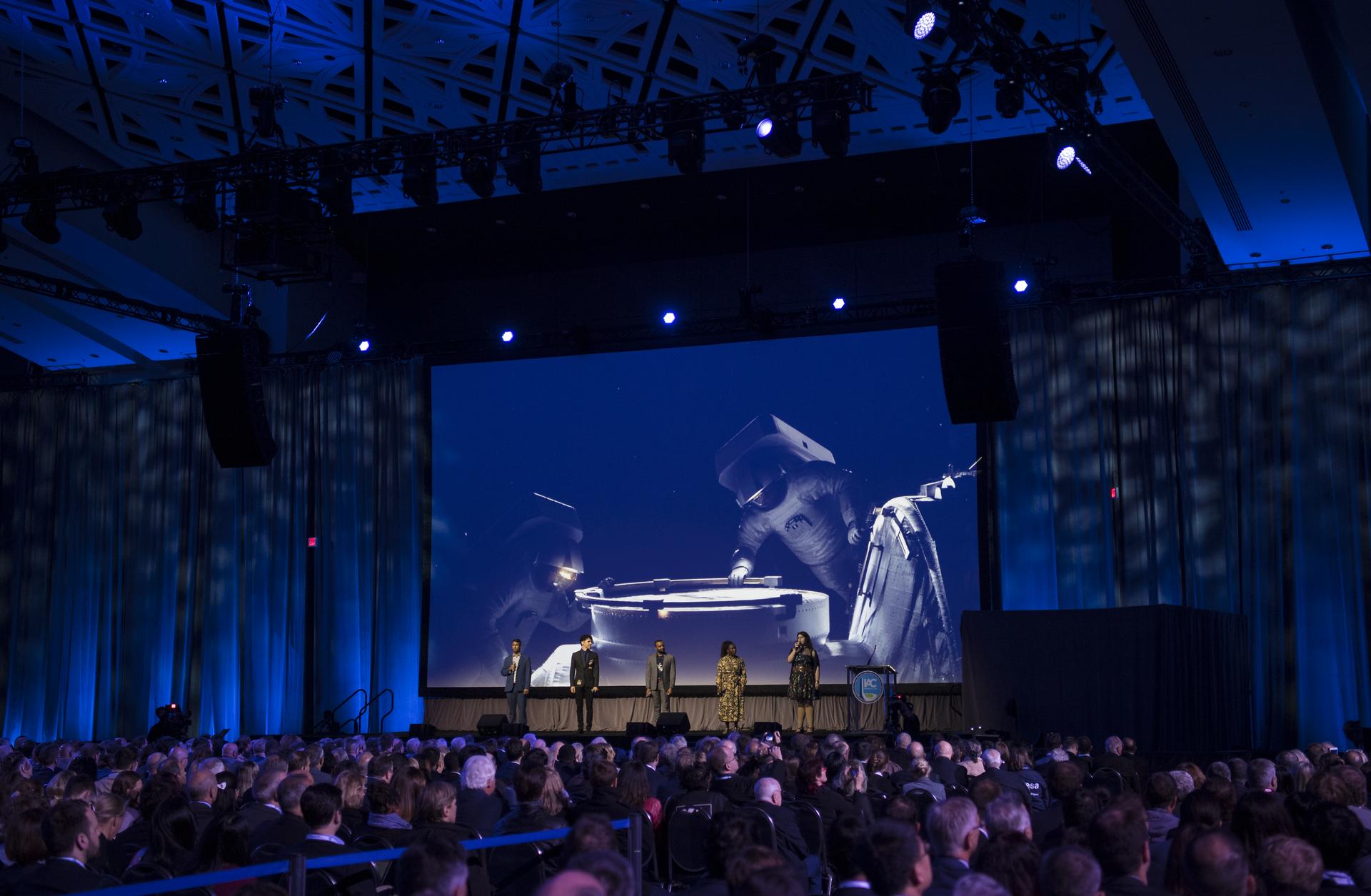
Caption: Broadway performers are seen as they sing during the opening ceremony of the 70th International Astronautical Congress, Oct. 21, 2019 at the Walter E. Washington Convention Center in Washington.
Credit: NASA/Joel Kowsky

Editor’s Note: This advisory was updated on Sept. 30, 2026, to reflect additional NASA activities.

NASA will participate in the 77th International Astronautical Congress (IAC) in Antalya, Türkiye, from Monday, Oct. 5, to Friday, Oct. 9, highlighting America’s leadership in human exploration to the Moon and Mars, advancing responsible exploration under the Artemis Accords, world-changing science, and support for the commercial space sector. 

The IAC, organized by the International Astronautical Federation, is hosted this year by the Turkish Space Agency (TUA). 

The NASA delegation, led by NASA Deputy Administrator Matt Anderson, will take part in plenary sessions, technical discussions, and media engagements throughout the week. 

Monday, Oct. 5  

  • 3 a.m. EDT (10 a.m. TRT): “One-to-One with Heads of Space Agencies” featuring Anderson  
  • 9:30 a.m. EDT (4:30 p.m. TRT): “Transforming the Speed of Science with a New Model for Earth Observation Cooperation: International and Commercial Fleets with More Rapid Mission Development” with keynote speaker Karen St. Germain, division director, Earth Science Division, NASA’s Science Mission Directorate
  • 9:30 a.m. EDT (4:30 p.m. TRT): “Leveraging SmallSats for an Architecturally Diverse Heliophysics Fleet” with Joe Westlake, heliophysics division director, NASA’s Science Mission Directorate
  • 10:15 a.m. EDT (5:15 p.m. TRT): “NASA’s Artemis II Test Flight: Lessons Learned” with Jeremy Parsons, Artemis program manager, NASA’s Human Spaceflight Mission Directorate 
  • 10:45 a.m. EDT (5:54 p.m. TRT): “Addressing the Environmental Challenges and Infrastructure Needs of the Lunar South Pole” with Carlos García-Galán, program manager for the Moon Base, NASA’s Human Spaceflight Mission Directorate 
  • 11:06 a.m. EDT (6:06 p.m. TRT): “NASA’S Human Landing System: Demonstrating the Capability to Land Artemis Astronauts on the Moon by 2028” with Steve Creech, acting program manager, NASA’s Human Landing System Program
  • 11:18 a.m. EDT (6:18 p.m. TRT): “NASA’s Artemis Era Science Strategy for Exploration and Discovery” with Dr. Nicky Fox, associate administrator, NASA’s Science Mission Directorate  

Tuesday, Oct. 6 

  • 4:45 a.m. EDT (11:45 a.m. TRT): “Artemis II Mission Results: The Industry Perspective” featuring Parsons

Wednesday, Oct. 7  

  • 3:15 a.m. EDT (10:15 a.m. TRT): “Space Manufacturing Technology: Driving the Next Revolution in Biotechnology, Advanced Materials, and Human Exploration” featuring Fathi Karouia, senior research scientist, Blue Marble Space Institute of Science, exobiology branch, NASA’s Ames Research Center in California’s Silicon Valley 
  • 4:35 a.m. EDT (11:35 a.m. TRT): “From Observation to Decision – Cracking the Last Mile Challenge” with St. Germain  
  • 5 a.m. EDT (12 p.m. TRT): Artemis Accords news conference with Anderson and Major General Roberto Melgar Sheen, director of the Peruvian Space Agency (CONIDA) 
  • 8 a.m. EDT (3 p.m. TRT): “Trusted AI on Mars” featuring Steve Chien, technical fellow and senior research scientist in the Artificial Intelligence Group at NASA’s Jet Propulsion Laboratory in Southern California 
  • 9:35 a.m. EDT (4:35 p.m. TRT): “NASA’s Artemis II Preliminary Lunar Science Release” featuring Anderson, Fox, Dr. Lori Glaze, associate administrator, NASA’s Human Spaceflight Mission Directorate, and Dr. Kelsey Young, Artemis II lunar science lead, NASA’s Science Mission Directorate 

Thursday, Oct. 8  

  • 10:45 a.m. EDT (5:45 p.m. TRT): “Pioneering Organ-Chip Research in Space to Advance Precision Health” featuring Dr. Lisa Carnell, division director, Biological and Physical Sciences, NASA’s Science Mission Directorate  

Friday, Oct. 9 

  • 3 a.m. EDT (10 a.m. TRT): “What It’s Like to Be an Astronaut” with NASA astronaut Chris Williams at NASA’s exhibit

How to Attend/Watch 

A full agenda for this year’s IAC is available online for registered media. To view select events, visit the International Astronautical Federation YouTube channel.  

In addition to the events outlined above, NASA will have an exhibit featuring the agency’s contributions to space exploration, celebrating the U.S. Freedom 250 commemoration, and U.S. leadership in space exploration, science, and technological innovation.

NASA’s exhibit booth number is in Hall 1 at NEST Convention Centre. 

To learn more about NASA international partnerships, visit:

https://www.nasa.gov/oiir

-end-

George Alderman / Elizabeth Shaw  
Headquarters, Washington 
202-358-1600 
george.a.alderman@nasa.gov / elizabeth.a.shaw@nasa.gov

NASA, Boeing to Provide Update on Starliner Development

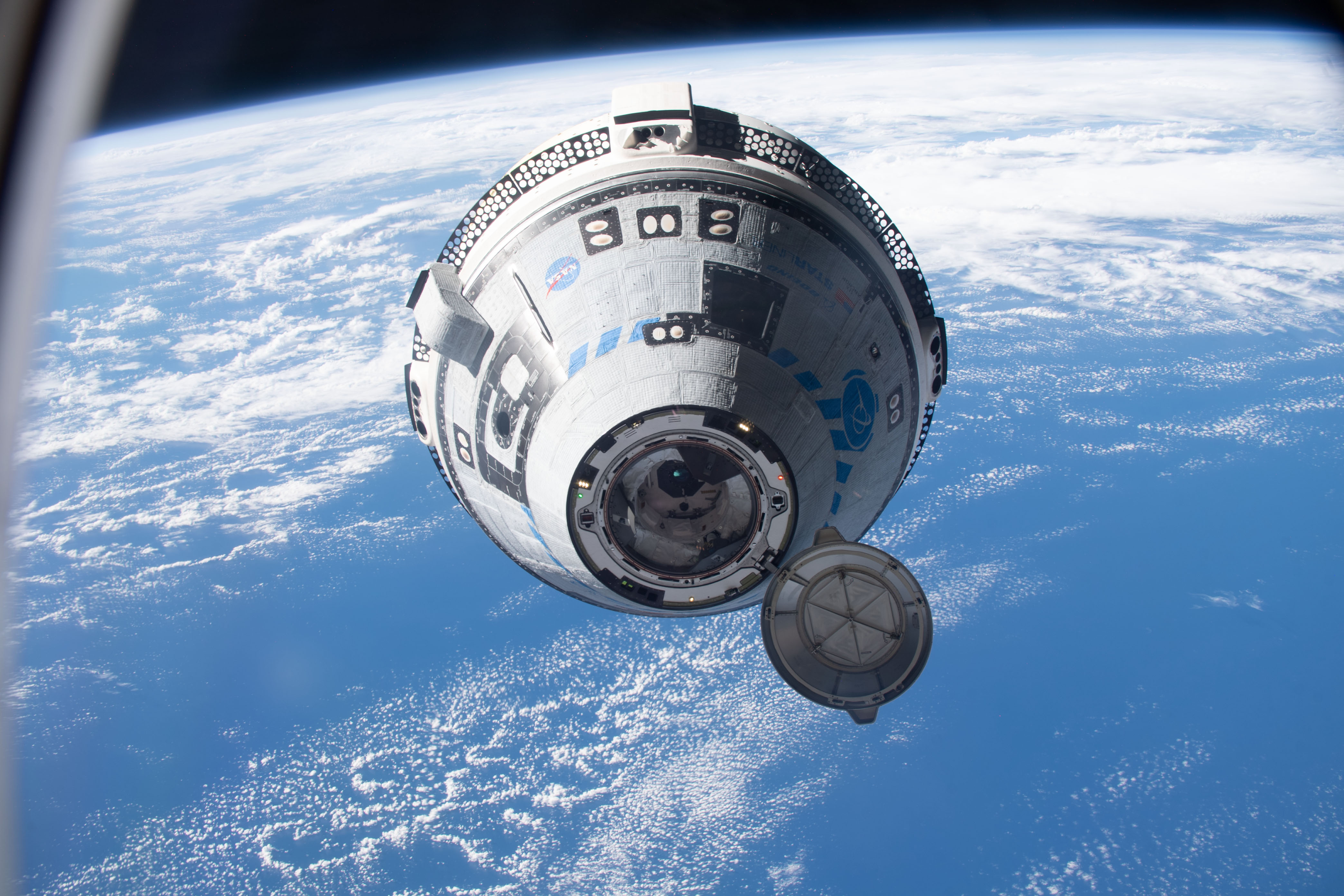
A photo of Boeing’s Starliner spacecraft that launched NASA’s Crew Flight Test astronauts Butch Wilmore and Suni Williams to the International Space Station.
Credit: NASA

During a news conference at 3 p.m. EDT on Monday, Sept. 28, NASA and Boeing leadership will discuss Starliner’s development and plans for regular crew flights to and from the International Space Station.

Learn where to watch online:

https://www.nasa.gov/live

The briefing participants include:

  • NASA Administrator Jared Isaacman
  • Dana Weigel, manager, NASA’s Low Earth Orbit Program
  • Woody Hoburg, NASA astronaut
  • John Mulholland, vice president and program manager, Boeing Commercial Crew

Media already credentialed for Crew-13 may participate in person at NASA’s Kennedy Space Center in Florida. To ask questions, media must request the dial-in number from the Kennedy newsroom by emailing: ksc-newsroom@mail.nasa.gov no later than one hour prior to the start of the call. A copy of NASA’s media accreditation policy is online.

For NASA’s blog and more information about the agency’s missions, visit:

https://www.nasa.gov

-end-

George Alderman / Joshua Finch
Headquarters, Washington
202-358-1600
george.a.alderman@nasa.gov / joshua.a.finch@nasa.gov

❌