❌

Reading view

There are new articles available, click to refresh the page.

BMW i3 Mod Brings Small Trucks to the EV Future
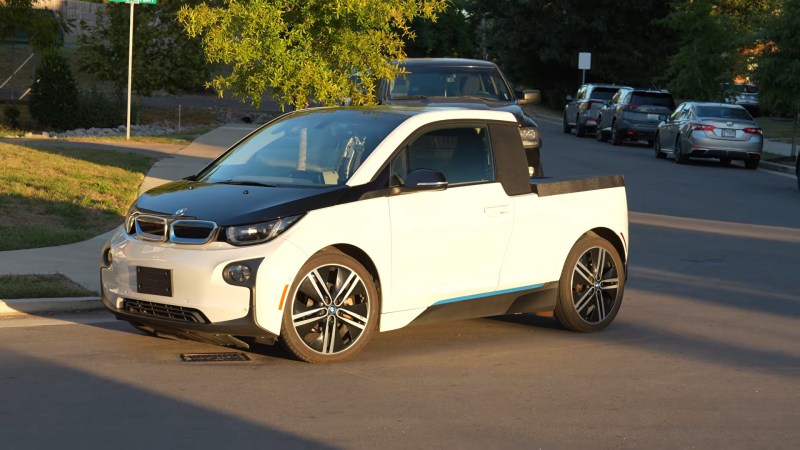
A two door pickup or ute in white with a black hood and blue accents. It's built from a chopped up BMW i3 REX EV.

Trucks are handy, especially if you’ve got messy or dirty loads, but there aren’t a lot of options if you want a small electric pickup yet. [Michael Pick] decided to convert a BMW i3 into a utility vehicle.

After getting a new 12 V battery and cleaning the car up, [Pick] proceeded to disassemble the interior and remove the hatch from the car. Once he could look at the bones, he planned out the best places for the cut lines and removed the back half of the cabin.

The bed is built from plywood coated in penetrating epoxy and bedliner for weatherproofing, and special care was taken to seal the interface between the cabin and bed as the main electronics for the vehicle are housed in a compartment directly below. The taillight electronics were rehoused as the OEM lenses were too large to fit next to the tailgate opening.

The i3 has graced these pages before with a battery upgrade, and we’d be remiss not to remind you of the most famous EV to truck conversion, Truckla.

Meshtastic Pet Tracking

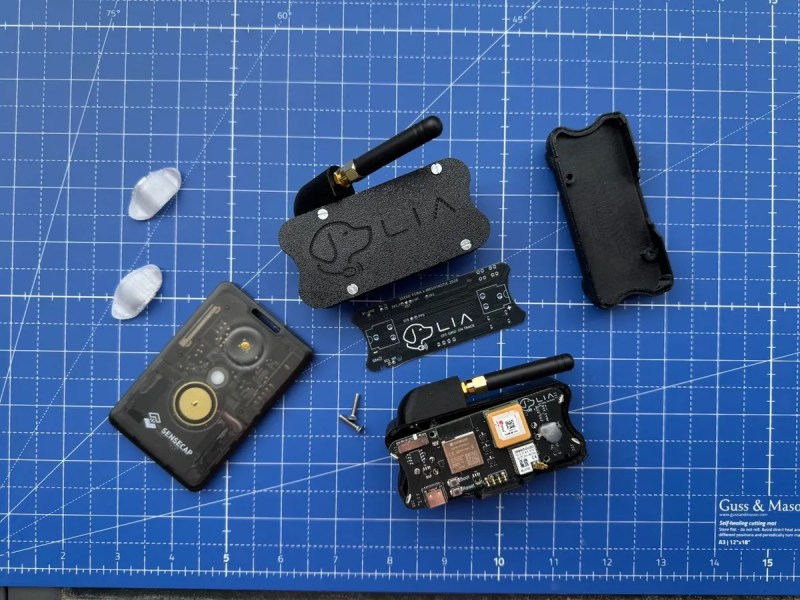
Four black plastic devices, two with a black, stubby antenna, sit on a blue cutting mat with white guidelines. There is also a PCB and a couple grey-ish clips in the assortment. One of the devices is open, showing another PCB with various components including a GPS antenna and LoRa radio. A silhouette of a dog is screen printed next to the text "LIA" on the PCBs, and the same text and image is present in the shell of the device in the top center.

Most commercial pet trackers require a subscription or network connection to function. [Jon G Aguado] wanted a better way and designed LIA, a Meshtastic collar tracker.

LIA uses a custom PCB containing a ESP32-S3, LoRa radio, GPS/GNSS receiver, and a charge controller for the 18650 or 5023450 pouch Li-ion cell powering the device. Everything fits inside a 3D printed enclosure, and the device is charged via a magnetic 4-pin USB pogo connector to increase weather resistance.

One of the neat features of this particular tracker is that [Aguado] gave it two different power modes. High power gets a location fix every 30 seconds and has a pair of bright LEDs for visual assistance, low power only gets a fix every minute or so, and it can also be set to off, which is something we wish more device manufacturers remembered should be an option.

We hope anyone planning on using Meshtastic and LoRa in the US is aware of the issues surrounding FCC compliance, and if you want to track your pet another way, maybe KineFox is an option?

Reading QR Codes by Hand

A person with blonde hair and light skin in a black t-shirt points at an image of a large QR code with what appear to be pictographic humans dancing in place of the usual blocky squares between the finding squares.

QR codes can be a handy way to send a link or contact details without all that tedious mucking about with typing in a link, but they aren’t very useful without a smartphone to decode them. [Noel Friedrich] wondered if there was a way to do it by hand.

If it all seems a bit daunting at first, [Friedrich]’s write-up helpsΒ you work through copying a QR code to paper and then decoding it, as long as it’s version 1-5. Slashes in the template tell you where error correction has been applied to the code and you need to flip the bit back to what it was.

[Friedrich] then goes into some more details with a practical example of how the error correction works and how to exploit the ways QR codes are generated and read to make artistic QR codes. This even works to make human readable codes (without the worksheet), although the quality of the text still makes it somewhat challenging.

This isn’t the first time we’ve featured reading QR codes without a computer, but once you learn, maybe this QR code clock will be a bit more useful!

Thanks to [InstantArcade] for the tip via Discord!

Spreading Life to Bleached Coral

A series of ten close up images of two pieces of coral. In the first, on the top left, the coral on the left is bright white while the one on the right is brown with darker brown spots. Text reads: "Week 0." The last image, on the bottom right, shows both pieces of coral as brown with darker brown spots and the text, "Week 9." The intervening images show the white, dead coral, slowly becoming more brown as time progresses.

Coral bleaching is a major problem for ocean ecosystems as the ocean gets warmer. Researchers at Stanford have found a new method for regenerating bleached corals.

Scientists working on coral found that when they had a bleached and healthy example accidentally touching in the lab, the symbionts from the healthy coral that make its food were able to spread to the bleached coral, reviving it in a matter of weeks. Contact was only required for one week, although three days was sufficient in a few cases. The effect only seems to work with corals of the same genet as the healthy corals of other genets just take over the bleached coral antagonistically.

This is particularly exciting, as areas where not all coral has bleached may indicate the presence of symbionts that are more heat tolerant, and being able to spread these symbionts to their neighbors quickly can greatly speed up the process of coral regeneration and save the reef. Coral reefs are some of the most vibrant ecosystems in the ocean, so if you save the coral, you can save many other species as well that rely on them.

If you’d like to explore how the coral is doing near you, perhaps you should try an open ROV or a bionic jellyfish?

Driving On the Moon at a Blistering 11.6 MPH

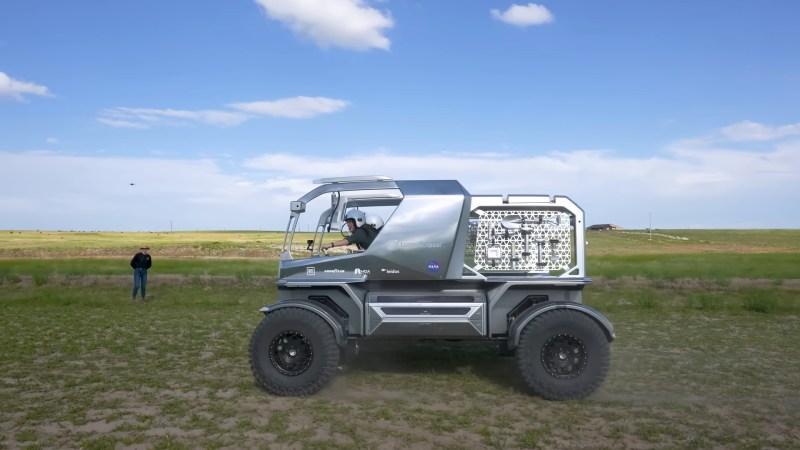
A shiny, silver vehicle with tools on a mesh rack on the back half and a large open cab up front drives across a grassy field under blue, partly cloudy skies. A person in a black shirt stands in the background with a drone hovering above their head. Two women in white helmets are piloting the vehicle from the cab.

As NASA continues humanity’s slow march back to the Moon, different pieces of the puzzle of establishing a more permanent base there are falling into place. One of these pieces is the the Lunar Terrain Vehicle (LTR), and [Cleo Abram] and [Michelle Khare] got a look at the LTR candidate from Lunar Outpost.

Designed to help astronauts traverse the lunar surface as well as function as a semi-autonomous rover when uncrewed, the LTR will be an integral part to any future Moon base. NASA announced earlier this year that it would be moving forward with the LTR featured in this video and another from competitor Astrolab. Regardless of manufacturer, the LTR will have to deal with some wild conditions in the lunar environment.

Lunar dust is abrasive, so the LTR generates an electric current to pull the dust under the truck to prevent it from entering the cab of the vehicle as it moves along. Given the extreme temperature swings on the moon (-200˚C to 200˚C), the space truck will also be fitted with wire mesh tires as nobody wants to be changing a flat in space. The two seats in the cab are oversized and can help lift the astronauts up as space suits hamper their agility to a significant degree. There are compartments for storing samples, and the truck has a robot arm that can grab samples to bring back if no one is along for the ride.

We’ve still got a few years before crews arrive on the moon, but when they do, there’s a good chance they’ll be using the LTR to explore the lunar south pole in hopes of water.

❌