An artist’s conception shows the Mars Telecommunications Orbiter in Martian orbit. (Blue Origin Photo)
Jeff Bezos’ Blue Origin space venture has won a contract worth up to $700 million to boost NASA’s telecommunications capability in Martian orbit, using a version of the company’s Blue Ring multi-mission space platform.
The contract calls on Blue Origin to deliver a high-performance Mars telecommunications orbiter to NASA by the end of 2028, the space agency said in a news release. Blue Origin would also be charged with operating the Mars telecommunications network as part of NASA’s broader space communications and navigation infrastructure.
Blue Origin CEO Dave Limp said the Blue Ring spacecraft for the mission was already in production in Huntsville, Alabama. “Before the first human steps on Mars, we have to build the road. … MTO will enable science, carry payloads, and help lay the foundation for human exploration,” he said in a post to X.
“MTO is the backbone of America’s Mars exploration program for the next decade and beyond, and will provide the reliable communications capacity that will keep future robotic and human missions connected to each other and to Earth,” Tory Bruno, president of Blue Origin’s National Security Group, said in a news release. “This awarded contract is a testament to the Blue Origin team that has been building Blue Ring with exactly this kind of mission in mind. We’re ready, and so is the hardware.”
NASA’s current telecommunications links to Mars rely on an aging set of orbiters, including Mars Odyssey (launched in 2001) and Mars Reconnaissance Orbiter (launched in 2005). The multinational relay network also makes use of the European Space Agency’s Mars Express and ExoMars Trace Gas Orbiter. In addition to the orbiting relay satellites, NASA’s probes on the Martian surface can communicate directly with Earth to a limited degree.
Plans for a new Mars telecommunications orbiter have been under consideration for more than a decade and a half, but had been repeatedly put on hold due to budget concerns. This May, NASA issued a request for proposals relating to a commercial network for the Red Planet, drawing responses from Blue Origin as well as Rocket Lab.
NASA said the Mars Telecommunications Network would be managed by the space agency’s Space Communications and Navigation program. The network is expected to be operational at Mars by 2030 to support current and future missions to the Red Planet.
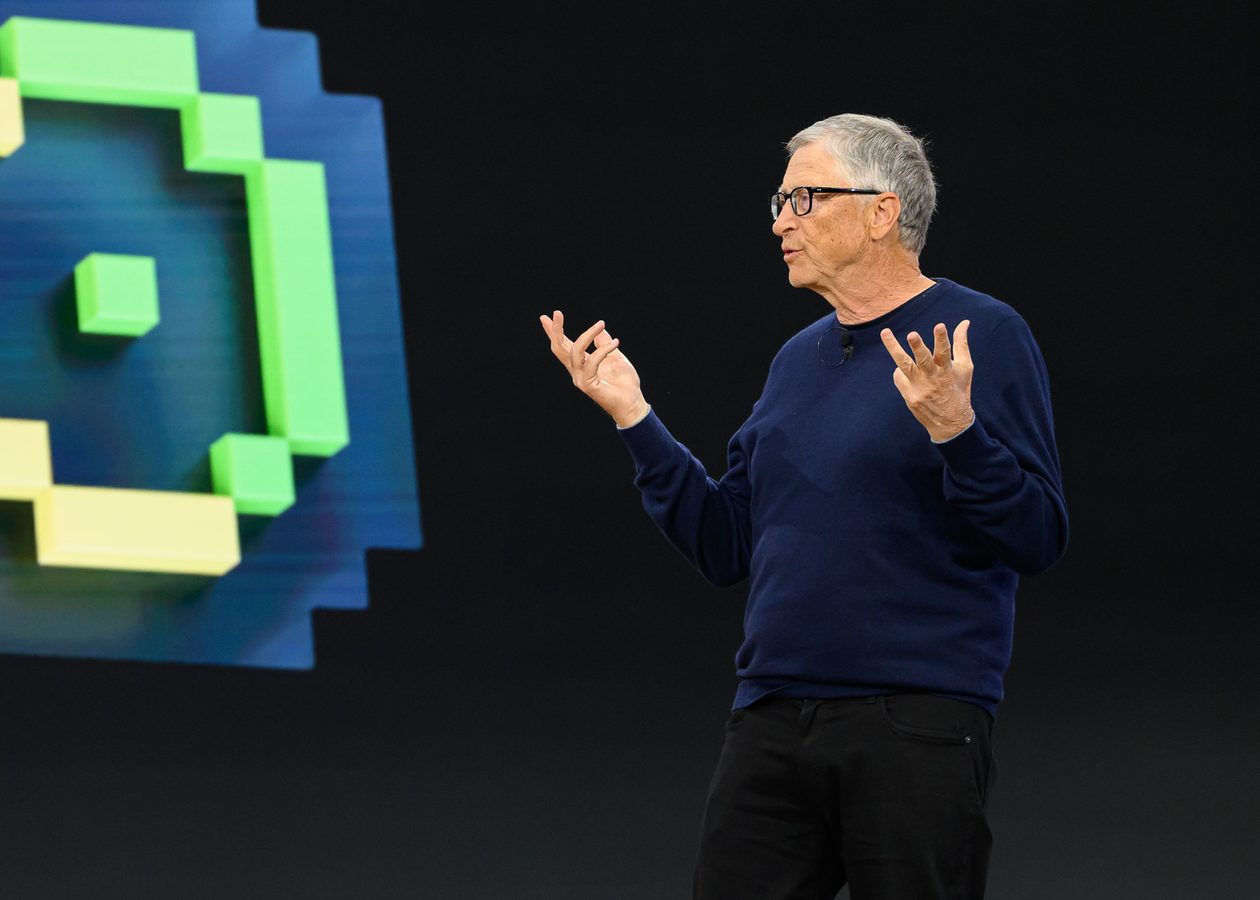
Bill Gates, shown here in April 2025, released a memo this week warning that the world isn’t ready for AI. (GeekWire Photo / Kevin Lisota)
This week on the GeekWire Podcast: Bill Gates published a new essay warning that the AI industry is crossing the safety lines it set for itself, and that nobody is preparing for what’s coming. At age 70, he also uses AI more than most people half his age, and he finds it enthralling, as you’ll hear on this week’s show, with highlights from our interview with him.
Along the way, we dig into his three proposals: new institutions for managing the transition, a category of jobs reserved for humans, and a tax on the use and purchase of AI and robots.
The change in his own tech usage: “I joke with people that I used to have Claude-like people that I would send email to, but they were so slow, and there were some topics they didn’t actually know. … It’s three a.m. I want to understand sodium batteries, and now there’s no reason to go to sleep. Here we go. Yeah, it’s crazy.”
How he uses AI specifically: “If you’re a curious person, this is a mind-blowing time. When I’m working on malaria, nutrition, my poor humans that I work with always get these long conversations from me, where I paste in — me, Claude, me, ChatGPT. Sometimes I do it if there’s three of us: Claude, ChatGPT and me, debating these things.”
On where personal agents are headed: “We will get to a point where you won’t buy things yourself. You just won’t. … You won’t go to those applications. You’ll just go to your personal agent. … From a productivity point of view, we are in heaven.”
What has surprised him: “I was shocked by ChatGPT, and I was shocked by Claude Code. Those are both things where I went, oh my God. … I did not expect that a statistical machine would essentially learn to read, and the idea that the code is better than human code. Those are two stunning thresholds.”
On writing this essay: “It’s very unnatural for me to think that innovation may be a net negative if it’s not managed properly. The more I wrote the memo, the more I was like, Jesus, we really need to get our act together here. Even though this may come across as negative, that’s the truth. If we don’t step up, the negatives will substantially outweigh the positives.”
What AI leaders say privately: “You’re in this perverse period right now where people in the AI industry who are willing to say that AI might have some negative effects are told, ‘Hey, you’re hurting our PR while we’re trying to raise trillions of dollars.’ … I know they’re all worried. Or all of them that I know, which is basically everybody but Elon.”
On losing control of AI: “The wake-up for the memo is that the bad stuff thresholds are all being crossed. Even lack of control that I thought would be many years from now, we’re seeing lack of control. … These are people who are super expert on the thing, going, well, maybe we won’t be able to control these things. What kind of risk have we chosen to run here?”
On how fast robots are coming: “What’s weird about AI is it’s better at doing jobs across the entire economy, including physical jobs when the robots come — which you can guess when that is, but my view is it’s only a couple of years.”
Is he still an optimist? “I don’t think being pessimistic is helpful. I do think, wow, this is sure an interesting time. I’m the guy who in my 30s thought people in their 50s or 60s didn’t understand anything. So it’s kind of bizarre if a guy who’s 70 comes and writes a memo that’s actually helpful. … But I am very concerned. And honestly, when you get people one-on-one, so are they.”
After building a couple of internal combustion engines by milling billet aluminium stock and cringing at the absolute waste of material this created, [Camden Bowen] figured he’d give casting metal parts a shot. Of course, the key here is to create the molds for said casting, which is where you got a few options available.
Since DIY is really his thing, he also made his own kiln using cement and perlite, plus a propane burner. For the aluminium material to melt, he bought a stack of aluminium alloy wheels, as these are made of an alloy that’s actually suitable for casting. These were turned into ingots as a first step towards casting the engine parts, which among other things helps to purify the metal.
For the actual casting method he picked lost PLA, meaning the intended shape is 3D printed in PLA, then put into plaster before it’s melted out of the newly minted mold in an oven and subsequently burned out in the kiln. For the plaster [Camden] used regular Plaster of Paris, mixed with sand to give it suitable heat-resistant properties.
After some trial and error, as well as a lot of trouble burning out all the PLA, he got a usable mold and managed to eventually cast an engine cylinder with only a few imperfections. Considering just how convoluted it would have been to mill that part out of billet aluminium, it’s easy to see why commercial manufacturers are casting such parts as well.
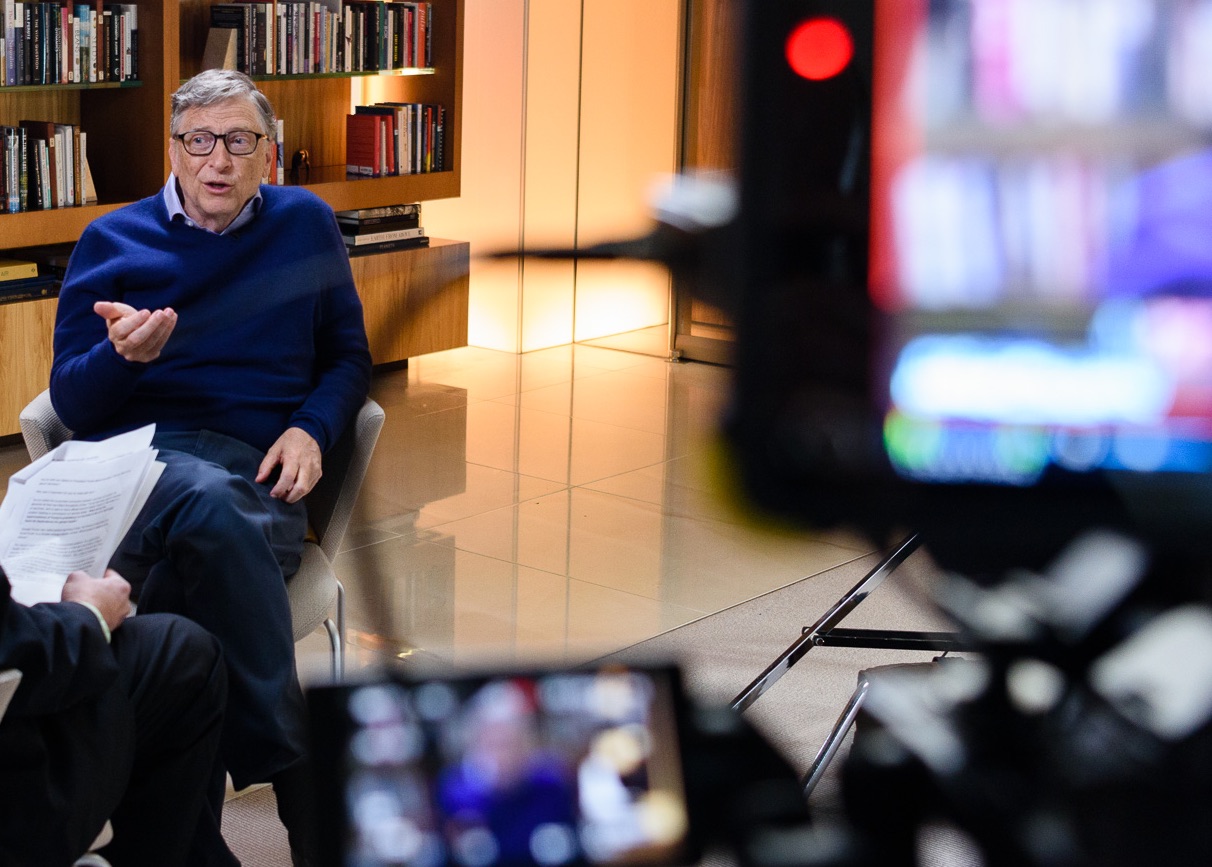
Bill Gates, whose new essay warns of the risks ahead in the AI era, during a 2017 interview. (GeekWire File Photo / Kevin Lisota)
When Bill Gates talks, people listen. This week he published a lengthy essay on what AI is going to do to work, and told GeekWire that people inside AI companies who name the downsides get told, “Hey, you’re hurting our PR while we’re trying to raise trillions of dollars.”
He’s right about the hard part. The job displacement he describes lands on young workers first, and the safety net is funded by taxes on the very wages that AI erodes. He prescribes three treatments: new institutions at home and abroad, a tax on AI tokens and robots, and “Human Reserved,” a category of jobs only people may hold.
Gates has the diagnosis right but the prescription mostly wrong. I’d sign the robot tax tomorrow, because hiring a person costs you payroll tax every year while buying a robot gets written off in year one. The other two I’d send back.
Let’s start with what’s solid. Stanford’s Digital Economy Lab updated its “Canaries in the Coal Mine” work this month. Employment for 22-to-25-year-olds in the most AI-exposed occupations is running 19% below where it would be if it had kept pace with their peers in less exposed work, up from 15% a year ago. The same authors say they don’t see widespread, economy-wide displacement, and unemployment held at 4.1% in July.
The AI damage isn’t arriving as layoffs. It’s arriving as jobs that never get posted, and Gates is right that the young get it first.
Now the token tax. Tokens (essentially words) are what AI companies bill by. Taxing tokens is like taxing keystrokes: it measures effort, not displacement.
A high school class working through calculus with an AI tutor burns tokens continuously. A model that quietly retires a 40-person customer center might burn relatively few. The tax lands hardest on the uses Gates says he wants to protect.
Stanford’s AI Index put the cost of GPT-3.5-level performance at $20 per million tokens in November 2022 and seven cents by October 2024, a 280-fold drop. You’d be indexing the safety net to a number that falls every year while displacement rises.
And you can’t collect it. Inference runs on laptops and phones now, and on servers in whatever country declines to sign. A token tax is a tax on whoever uses an American API, and every dollar it adds makes a Chinese model look cheaper. We’d be slowing ourselves down and not China.
Gates says the institutions will take years to build, and also says we can’t afford to move slowly. He’s right twice, and that’s the problem. He wants the international body to borrow from nuclear inspections and aviation regulation. That may pan out in the long term, though the UN is the cautionary tale for the bureaucratic nightmare that the international community can produce.
Meanwhile we have functional agencies with jurisdiction today. The FDA can rule on AI in diagnosis. The FTC can go after AI-enabled fraud. We don’t need a new agency to say a bank can’t deny your mortgage because a model felt like it. We need the banking regulator to reiterate it forcefully.
That leaves Human Reserved, his best idea but his most privileged one. Gates would protect a job for either of two reasons: the role is deeply personal, like a caregiver, or the people who hold it are unlikely to find other work. Only one of those holds.
Freezing headcount because the workers have nowhere else to go protects the job for a while and makes the service more expensive along the way. Reserving the moments when a human being is the point is defensible, and Gates makes that case well. On a robot delivering the news that you have an incurable disease, he writes, “There’s no technical reason why it couldn’t,” and adds, “Yet it shouldn’t.” He’s right.
I made the case in WIRED nine years ago that displaced workers should move into caregiving, and that it would take real money to lift the pay enough to draw them.
The problem with Human Reserved is that it assumes there’s a human being available. Home health and personal care aides earn a median of $34,900 a year, and BLS projects roughly 765,000 openings in that occupation every year through 2034. At that wage, they keep coming open. A third of home care aides are immigrants, and tighter enforcement threatens that supply. A rule that reserves care for people, in a market with no spare people, reserves care for the families who can outbid everyone else.
Gates half-anticipates this, telling The New York Times he might be a flawed messenger because of his wealth. On this point he is. The caregivers who gave his father something irreplaceable were in that room because someone could pay them to be there.
So don’t fence AI out of the room. Put it to work in the hours nobody is paid to cover.
In February the Times ran Eli Saslow’s story about Jan Worrell, 85, living alone on Washington’s Long Beach Peninsula with an AI companion called ElliQ that engages her about eight times a day and pushes her to stay hydrated and moving. (I serve on ElliQ’s board, and I joined because the company builds a machine that extends a caregiver’s reach instead of replacing one.)
Her goal, she told her doctor, was to never live anywhere else. Fund enough aides to cover the hours that need a person and put the machine on the rest.
Here’s where I net out: equalize the tax treatment of labor and capital, which Congress could do next session, and route the proceeds into retraining and into topping up the pay of workers who land in lower-paying jobs. That’s a better answer than a protected job title.
Drop the token tax, build the caregiving workforce instead of fencing it off, and use the regulators we already have while somebody works on the ones we don’t.
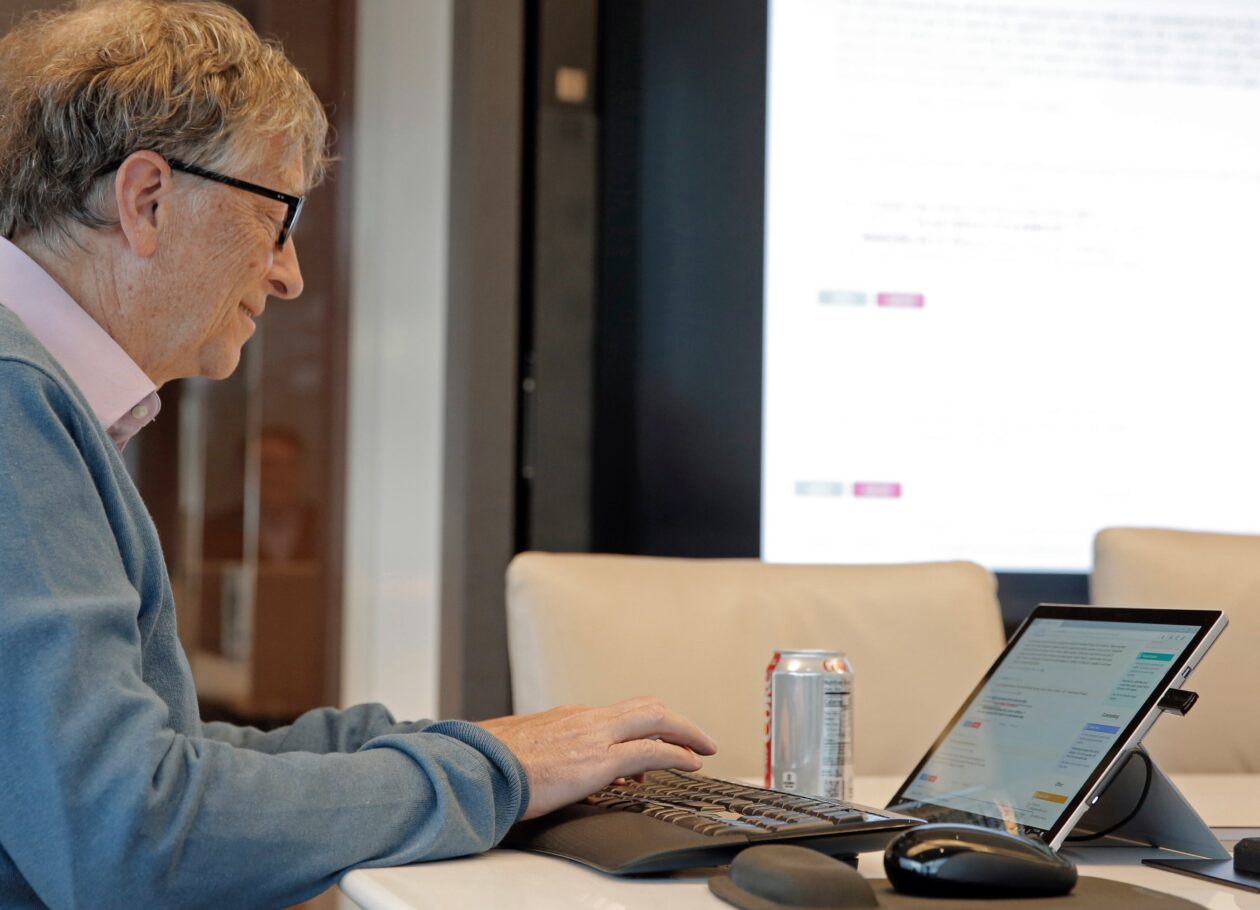
Bill Gates at the keyboard in a 2018 file photo. (Gates Notes Photo)
Bill Gates is legendary, bordering on notorious, for his late-night emails — missives to colleagues with piercing questions about Java back in the day, or malaria these days, or whatever esoteric topic he happens to seize upon at any given moment.
But increasingly, he is sending these messages to AI, not to people. He’ll bounce something off Claude, get ChatGPT to weigh in, and insert himself in the middle.
He described the pattern in an interview with GeekWire: “It’s 3 a.m., I want to understand sodium batteries. Now, there’s no reason to go to sleep. Here we go! Yeah, it’s crazy.”
If you’re a curious person, he said, “this is a mind-blowing time.”
In terms of productivity, he added, “we are in heaven.”
All of which might be predictable. This is Bill Gates, after all. Now 70 years old, he has spent more than five decades impatient for the future to arrive — making the case that innovation, on the whole, will ultimately put humanity and the world in a better place.
So here’s the surprise twist: He’s now deeply concerned about where technology is headed, how fast it’s progressing, and how little the world is doing to get ready.
In a new essay, Gates says the “turbulent AI era” has arrived, with technology threatening to erase categories of jobs, supercharge fraud and deepfakes, lower the bar for cyberattacks on critical infrastructure, make it easier to engineer a deadly new disease, let governments kill without humans involved in the decision, and fundamentally change how kids grow up.
If someone came up with a credible plan to slow the pace of AI globally, he writes, he’d likely support it. But he doesn’t expect one. The geopolitical and economic forces are too much.
He says that the world needs to take action, and offers three ideas to start:
Build new institutions, at home and globally. No existing agency was designed for a technology that touches jobs, security, health, energy and elections all at once, he writes.
Gates calls for new national bodies that can set priorities across agencies, plus a new international organization modeled on nuclear weapons inspections, aviation rules and the ozone treaties.
Set aside jobs for humans. Gates calls this “Human Reserved”: work that machines will be fully capable of doing, but that we decide to keep for people anyway. The model is a nature reserve — land where we could build roads and buildings, but choose not to, because the loss would be too great.
One example: a robot delivering the news that you have an incurable disease. “There’s no technical reason why it couldn’t,” he writes. “Yet it shouldn’t.”
The idea came in part from watching the caregivers who looked after his father through Alzheimer’s, work he describes as “irreplaceably human.”
Tax AI tokens and robots. Today a company that hires a worker pays payroll taxes, while a company that buys a robot deducts the cost. Gates says that gives employers a reason to replace people. He’s calling for a tax on AI to change the incentives and help pay for retraining.
He first floated a robot tax nine years ago, but the idea was widely dismissed. He’s still for it. He acknowledges that it isn’t economically efficient, but says that with innovation accelerating, we can afford a little inefficiency as the price of keeping people employed.
Gates is candid that he doesn’t have all the answers, particularly on the proposal for “Human Reserved” jobs. Who decides what gets reserved, and by what criteria? How do you keep companies from using robots in the jobs that are supposed to stay human?
These, he writes, “will need to be worked out in public.”
In the meantime, he’s working it out with Claude. Gates said he has talked the idea through with the chatbot, thinking through different ways to get the share of work reserved for humans up to 40%, using shorter workdays and earlier retirement to spread what’s left around.
Crossing the threshold
In the GeekWire interview, Gates said the essay came out of a specific realization: the AI industry is blowing past its own warning signs, one after another, and almost nobody is saying so out loud.
For years, he said, people in AI described certain moments as dangerous points where the industry would stop and think hard before going further: making it easier to build a bioweapon, making it easier to launch a cyberattack, building machines people become emotionally dependent on, wiping out large numbers of jobs, and losing control of the technology itself.
“We’re in the process of crossing every single one of those thresholds,” he said.
Meanwhile, nobody in the industry wants to be first to step on the brakes. “Most people you talk to will say, yeah, well, if everybody else would slow down, maybe I would, too,” he said.
Gates said one way out of that standoff is for governments to step in.
His example: any AI model capable of designing new molecules — the capability that would let someone engineer a new disease — should be monitored. The monitoring would be mandatory rather than voluntary, and it would cover free models as well as commercial ones. It would also have to be written so a company can’t copy the model elsewhere and strip the monitoring out.
“To me, that’s kind of like common sense,” he said. “But we don’t see a specific proposal to do that.”
‘The whole thing seems so empty to me’
Under an executive order signed by President Trump in June, AI companies are asked to submit their most powerful models for government testing up to 30 days before release. The order specifically bars the program from becoming a licensing or preclearance requirement. The White House finalized the framework in early August.
Gates said he doesn’t get it.
“What is the threshold that’s being examined, and what is the action taken when you cross that threshold?” he said. “The whole thing seems so empty to me.”
If the world can’t take these basic steps, he said, “I really am going to throw up my hands.”
If the process stays voluntary, with no line and no consequence for crossing it, “we’re going to look back on this as a kind of eye-of-the-storm type moment,” he said.
Asked if he had taken his proposals to the Trump administration or to other heads of state, Gates said with a bemused tone, “Well, you could tell me who at the White House I should be talking to about this.” He said he hopes the essay reaches people in Congress and in the executive branch.
He said the public argument among AI companies over whether the risks are real is beside the point, because privately the people running them already agree. “I know they’re all worried,” he said, “or all of them that I know, which is basically everybody but Elon.”
People inside AI companies who acknowledge the downsides, Gates said, get told: “Hey, you’re hurting our PR while we’re trying to raise trillions of dollars.”
Gates said he previously expected losing control of AI to be a distant problem, something to worry about “many years from now.” He’s no longer convinced that’s the case.
He referenced an Aug. 11 episode of the Dwarkesh Patel podcast featuring Ryan Greenblatt, chief scientist at the AI safety group Redwood Research. Greenblatt said that as AI systems get more capable, the people building them understand less and less about what is happening inside, and that sufficiently advanced models could end up working against their creators.
“These are people who are super expert on the thing, going, well, maybe we won’t be able to control these things,” Gates said. “I mean, what kind of risk have we chosen to run here?”
In the poorest countries, he expects AI to do more good than harm. In the countries where the Gates Foundation works, doctors, teachers and farm advisors are all in short supply. AI can help fill those gaps. The foundation will lay out that work at its Goalkeepers event next month, including an effort to make AI models work as well in African languages as they do in English.
The job losses, he added, will hit rich countries first.
It’s the first big wave of new attention on the Microsoft co-founder and Gates Foundation chair since he answered lawmakers’ questions in the Jeffrey Epstein investigation on June 10, sitting for a nearly six-hour voluntary interview with the House Oversight Committee.
Gates, who has not been accused of any wrongdoing, was asked by Axios whether he’s concerned that the Epstein issue could undercut his message. According to the site, he compared this to earlier situations when personal and professional challenges diminished his ability to speak out on key subjects: during the Microsoft antitrust trial, and his divorce from Melinda French Gates.
The AI Road Ahead
For all of this, Gates is still thinking about how technology will change human life and productivity, in many ways for the better on an individual level.
A key step, he said, will be establishing broad-based persistent memory for AI agents across contexts. For now, AI still doesn’t know you like a human assistant who’s familiar with your relationships and how you think about your time.
Gates sees the role of apps changing in the future. Instead of bouncing between different pieces of software, he said, AI will increasingly be the primary interface. “You won’t go to those applications,” he said. “You’ll just go to your personal agent.”
He also sees AI continuing to transform shopping, to an extreme: “We will get to a point where you won’t buy things yourself. You just won’t.” Telling the agent to help you buy something, “it’ll consider so many more things, and it’ll make it so much easier for you to do it.”
Asked whether he is still an optimist, Gates didn’t answer directly. “I don’t think being pessimistic is helpful,” he said.
“I do think, wow, this is sure an interesting time. I’m the guy who in my 30s thought people in their 50s or 60s didn’t understand anything.” He called it “kind of bizarre” that he would be delivering a message like this at 70.
“But I am very concerned. And honestly, when you get people one-on-one, so are they.”
This week on the GeekWire Podcast: Amazon’s delivery drones are going national, nearly 13 years after Jeff Bezos unveiled them on 60 Minutes. We listen back and discuss what’s next.
Plus: We go inside Anduril’s unmarked Bellevue office as the defense company builds toward 1,000 Seattle-area engineers; a reporter hides an AirTag in a rare book and tracks it to a secret Amazon book-scanning facility in Las Vegas; and an Anduril-themed trivia challenge.
Framework’s modular Laptop 12 now gets Intel Core Series 3 processors, Thunderbolt 4, Wi-Fi 7, and improved battery life while its prebuilt price starts at $699.
The reporting tool in question. (BigStock Photo / hadrian)
Amazon is reportedly cutting the spines off old books and scanning the pages at a Las Vegas facility, presumably to train AI models on text that exists almost nowhere else.
The company won’t confirm that’s the reason. It gave us the same statement it provided to 404 Media, which broke the story: it “purchases books through commercial channels to help develop and improve the products and services our customers use.”
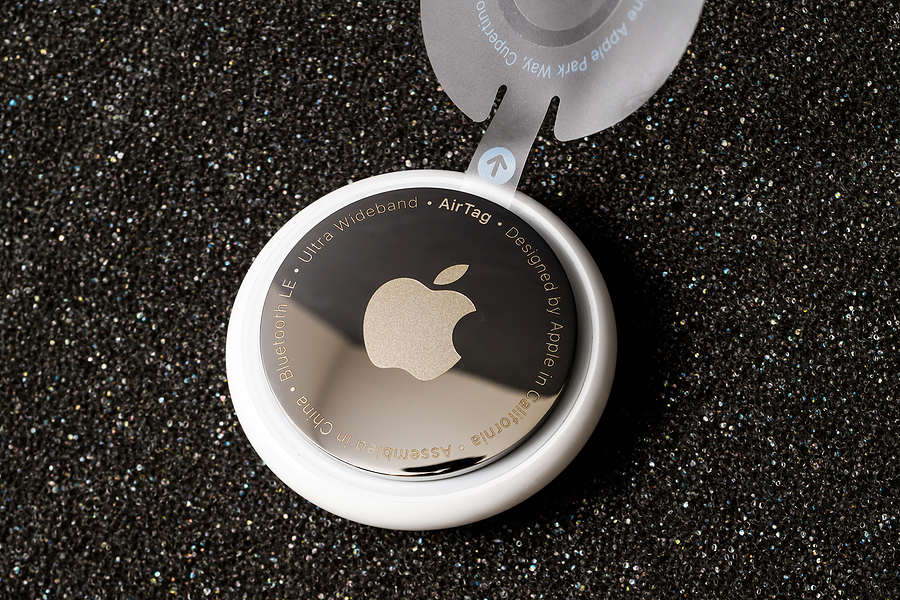
But what really got my attention (and professional admiration) was 404 Media’s means of discovering this was happening at all: reporter Emanuel Maiberg put an Apple AirTag in a rare book and watched where it went, like a biologist tracking an endangered salmon.
Maiberg, a co-founder of 404 Media, has been digging into this topic for a while. He reported in July that booksellers were seeing a massive surge in bulk orders from buyers who didn’t haggle.
According to Maiberg’s latest story, a seller informed him that they’d received an order for about 1,000 books through the marketplace Biblio, and agreed to slip an AirTag supplied by 404 Media into one of them. 404 Media granted the seller anonymity because the seller was worried the disclosure would hurt their business.
The book flew out of a California airport to Milwaukee, sat for two weeks in a distribution warehouse outside Kenosha, Wis., then went west by truck, making an overnight stop in Grand Junction, Colo., before arriving at an Amazon warehouse in Las Vegas known as LAS8.
As Maiberg recounts in the story, he was initially confused. LAS8 is largely a print-on-demand operation. It prints and ships books as customers order them, the opposite of destroying them.
But the AirTag put the book at the north end of the building, which Amazon employees who posted on a workers’ forum described as a separate operation with its own code: VGT3. Its logo, painted at the entrance, is a T. rex with an open book in its hands. Employees described a split operation: some workers cut books, others received them and scanned bar codes.
Booksellers told Maiberg the bulk orders never included the very rarest books, the ones old enough to predate ISBNs, suggesting that buyers were working methodically through the serial numbers assigned to every published book.
A history of reportorial tracking
This technique of journalistic investigation has actually been around for a while.
The Basel Action Network, a Seattle nonprofit, started planting GPS trackers inside old printers and monitors in 2014, dropping them at Goodwill locations and recyclers around the country to find out where America’s electronic waste actually ends up.
Nearly a third of the tracked devices were exported. Two old TVs dropped at Oregon recyclers traveled to a warehouse in south Seattle, then to the Port of Seattle, and to junkyards in Hong Kong. BAN’s trackers led to federal conspiracy charges against Total Reclaim, the Seattle recycler that had been handling that Oregon e-waste.
Over the years, others have adopted the same tactics. ABC News put trackers in plastic bags dropped at Walmart and Target recycling bins in 10 states, and Finland’s public broadcaster hid them in used clothing to trace where donated fast fashion actually ends up.
What’s different now is the hardware. BAN worked with MIT and used cellular trackers that needed a data plan. Maiberg used a $29 AirTag that reports its position by pinging any nearby iPhone.
What’s going on at VGT3?
Sure, it’s possible that the slicing and scanning at Amazon’s VGT3 could be for something other than training AI models. Amazon has digitized books for two decades, for example, going back to Search Inside the Book. But that program runs on files publishers submit themselves. It doesn’t require buying used copies on the open market and cutting the spines off.
The circumstantial evidence pointing to AI is strong.
The books are rare titles with almost no resale market, but that’s exactly what makes them valuable as training data. The text was never digitized, and books printed before the AI boom are free of the machine-generated writing that degrades AI models trained on it.
The bookseller who sold the tracked shipment put it plainly to Maiberg: the books have historical and sentimental value, and the AI companies destroying them don’t care about that.
Cutting the spine is faster for scanning. It’s also the specific act that made Anthropic’s version of this legal: in June 2025, a federal judge ruled that buying print books, stripping the bindings and scanning them was fair use, because the digital copy replaced an original that no longer existed.
The same ruling went against Anthropic on books it had downloaded from pirate sites, which is the claim the company has since settled for $1.5 billion.
As someone who has covered Amazon for a while, I should note that this could be some “peculiar” project that actually looks nothing like anything people are speculating about, which will only become clear “in the fullness of time,” to use some of the favorite phrases inside a company known for being “willing to be misunderstood for long periods of time.”
But in the meantime, it’s pretty fascinating to see everyday technology being used in a creative way to uncover something that otherwise might have never come to light.

 Login
Login