Reading view

There are new articles available, click to refresh the page.

The quest to keep organs alive outside the body

This week, I covered a fascinating effort to preserve organs outside the body. There’s a huge shortage of donor organs, and one of the main reasons is time—they survive only a matter of hours outside the body, even when they’re kept on ice.

Doctors dream of organ banks—stores of human organs that can be preserved for days, weeks, months, or even longer. That would allow them to run tests on organs, find the best matches for them, and transport the organs to those recipients.

In new research, one team has been able to supercool the kidneys of pigs—animals whose organs are of a similar size to human ones—and preserve them for days. The kidneys survived being stored at −4 °C (25 °F) and eventually reimplanted back into pigs. And that’s just the latest development in a field that is positively buzzing.

It has proved super difficult to freeze organs. Once ice forms in them, they’re done. The ice crystals create all kinds of damage and render the organs unusable. That hasn’t stopped many researchers from trying.

Some have focused on cryopreservation—rapid extreme cooling that essentially leaves cells in a glasslike state. This process is now routine for eggs, sperm, and embryos, which are cooled to −196 °C in less than two seconds and can be used even after decades in storage.

No one has managed to cryopreserve and thaw human organs for transplantation. But plenty of human bodies and brains have been stored at ultra-low temperatures in the hope that they might one day be rewarmed and brought back to life. (You can read more about why some people opt for cryonics here.)

In March, I wrote about Stephen L. Coles, a gerontologist who had opted to cryopreserve his own brain. After the scientist died in 2014, his body was taken to Alcor, a cryonics facility in Arizona. A team at the facility removed Coles’s head, perfused his brain with cryoprotective chemicals (which work like antifreeze), removed the brain from the skull, and cooled it to −146 °C.

When Coles’s friend Greg Fahy, a cryobiologist, studied pieces of his brain years later, he found that the brain cells, which had shrunk, “bounced back” once they were rewarmed. But that doesn’t mean the cells are alive, or that it might one day be possible to reanimate the brain. As Matthew Powell Palm of Texas A&M told me at the time: “There are so many ways those neurons could be toast.”

Powell Palm is working on other ways to preserve organs. It was he, along with his colleagues, who managed to store supercooled pig kidneys and successfully transplant them, in a study described as “a landmark achievement.” Those organs did better than kidneys stored on ice, he says.

His approach didn’t require cryoprotectants. But other teams are exploring potential chemical cocktails that might allow them to store organs at lower temperatures, potentially for longer periods of time. (More on this in The Checkup soon!)

Another way to prolong the lifespan of an organ is to use a machine that perfuses it with nutrients, mimicking what happens inside the body. Machine perfusion devices have become more commonly used over the last decade or so and are typically used to maintain livers and kidneys for up to about 24 hours.

Researchers are now adapting this protocol for a growing list of organs, even eyeballs—a recent feat that might enable whole-eye transplants. In March, I went to visit scientists in Valencia who had developed a perfusion system for uteruses. They had used their device—which they nicknamed “Mother”—to keep a human uterus alive for a day.

It’s an exciting time for organ preservation. Keep an eye out for more coverage from MIT Technology Review in the coming weeks.

This article first appeared in The Checkup, MIT Technology Review’s weekly biotech newsletter. To receive it in your inbox every Thursday, and read articles like this first, sign up here.

FDA reports new outbreak of explosive diarrhea with 72 cases identified

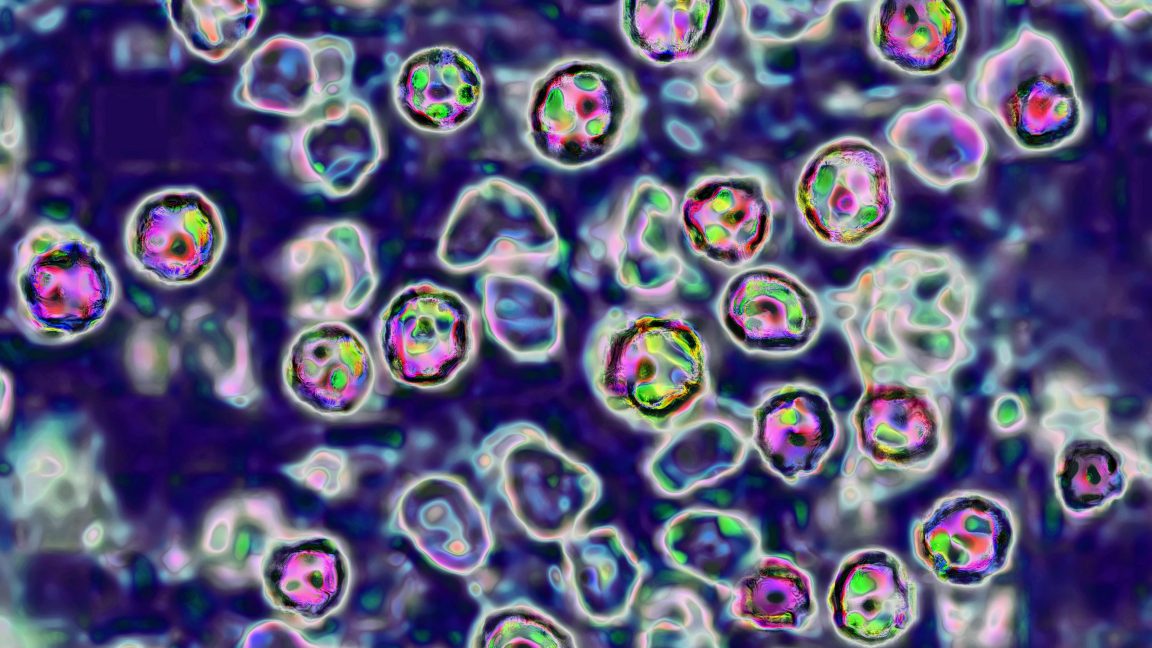
The Food and Drug Administration announced on Wednesday that it's investigating yet another outbreak of Cyclospora, the unicellular foodborne parasite behind a nationwide surge in explosive watery diarrhea illnesses. The FDA said 72 cases have been identified in this outbreak, but the agency provided no details on the situation.

This announcement marks the sixth Cyclospora outbreak investigation the FDA has opened this year. Overall, the Centers for Disease Control and Prevention has gotten reports of more than 11,500 cases (including 4,173 confirmed and over 7,400 probable) from 41 states. Among the cases, there have been 308 hospitalizations and no deaths.

This year's tally so far—just in July—greatly exceeds the normal number of cases the US sees in a whole year. In recent years, the US has reported between 2,000 and 5,000 cases in a year, according to CDC data. With a new outbreak announced, the tally of cases is likely to continue climbing. Nevertheless, when asked about the national surge in cases earlier this week, anti-vaccine Health Secretary Robert F. Kennedy Jr. said the situation was "under control."

Read full article

Comments

© CDC | Melanie Moser

A woman got a UTI. Two years later, the bacteria had evolved, invaded her brain.

A 63-year-old woman arrived at a hospital in pain. She had abruptly lost vision in her right eye. As doctors got to work, the series of findings that followed revealed not just bad news for her, but an alarming revelation of how infections can evolve within a patient.

The woman's remarkable case was reported this week in the New England Journal of Medicine. According to her doctors, initial magnetic resonance imaging scans of her brain quickly identified the key problem. The imaging indicated inflammation in her right eye, but also picked up lesions in her brain. Specifically, the imaging suggested problems in her parietal lobe, which is a hub for processing sensory information.

The doctors suspected she had a brain abscess. Laboratory results of her blood and urine samples suggested an infection as well as kidney problems. Doctors decided to open up her skull for a brain biopsy. Inside, the surgical team was met with pus. Meanwhile, doctors worked to identify the bacteria found in two urine samples.

Read full article

Comments

© CDC

Supercooled kidneys have been transplanted into pigs in a “landmark achievement”

When it comes to organ donation, time is everything. As soon as an organ has been carefully removed from a donor’s body, it starts to deteriorate. Surgeons have a matter of hours to get it into a recipient. Leave it too long and the organ will become unusable.

In most cases, organs will be kept on ice during that time, at around 4 °C (39 °F). They cannot be frozen—in previous attempts, ice has formed, causing all kinds of damage.

Matthew Powell Palm at Texas A&M University and his colleagues have an alternative solution—a device that allows organs to be cooled to -4 °C (25 °F) without forming any ice.

Now, in new research with pig organs, his team has shown that kidneys, at least, can be supercooled and preserved in the device for days. Once rewarmed, the organs have been successfully transplanted into animals, and they seem to do better than organs kept on ice.

The work represents “a landmark achievement,” says Kevin Myer, president and CEO of LifeGift, an organ procurement organization based in Texas, who was not involved in the research.

Cooling organs

Powell Palm hopes this approach could ultimately help ease the organ shortage crisis. Today, there are more than 104,000 people waiting for a kidney transplant in the US alone. It is estimated that 17 people die every day in the US while waiting for a transplant. That’s partly due to a lack of donated kidneys, but it’s also because many of those that are available never make it to a recipient. In some years, around one in three donated kidneys end up being discarded, often because they end up too degraded to use by the time they reach a recipient. Kidneys can be stored on ice for around 24 hours or placed in devices that aim to mimic the conditions of the body, also for up to around 24 hours. That’s not always long enough to find a suitable recipient and transport the organ, says Myer.

Scientists around the world have been working on ways to store organs for longer by cooling them to even chillier temperatures. Cooling an organ slows its metabolism—the colder you go, the greater the effect, and the longer you can store it.

We’ve long been able to successfully cryopreserve eggs, sperm, and embryos, but it’s much harder to freeze large organs. Teams have been exploring various temperatures and cryoprotectants (chemicals that essentially work like antifreeze), but so far no one has been able to freeze human organs for transplantation.  

As a thermodynamicist, Powell Palm explored another approach. By keeping an organ submerged at a constant pressure, it should be possible to prevent the formation of ice at temperatures a little below 0 °C, without the need for cryoprotectants (which might have side effects and would need to be approved before being used in human transplants). 

To test this theory, Powell Palm and his colleagues have created a device that does just that. The device itself is essentially a hermetically sealed chamber with a transparent lid. At its base is a device that monitors the organ’s temperature and checks for the formation of ice. Organs are submerged in a solution that is already commonly used to preserve them for transplant. “I always describe this as low-tech high science,” says Powell Palm. “A lot of work has gone into understanding the … kinetics at play in this system, but ultimately … it’s quite simple.”

Supercooled kidneys

To test their device, Powell Palm and his colleagues first removed single kidneys from pigs. The organs were flushed with the same commonly used solution to remove the blood, just as transplant organs are. The team then kept some kidneys on ice for either two hours or 24 hours, to mimic standard conditions used in human transplantation. They also put some of the removed kidneys in their device for 24, 48, or 72 hours.

The stored kidneys were then each transplanted back into the original donor pigs. Each pig’s second kidney was removed in the same procedure, leaving each animal with only the kidney that had been stored, and reimplanted.

Once the 24-hour supercooled kidneys were transplanted, they immediately began producing urine—a key indication that they were working. The team members also measured other markers of kidney function and found that the organs appeared to be working normally within about 10 days of being transplanted.

Kidney supercooled for 72 hours reperfuses homogeneously upon transplantation, and proceeds to recover baseline renal function over the 30 day survival period studied.
A kidney that was supercooled for 72 hours recovers once it is transplanted back into a pig.
COURTESY RONALD SELLERS, POWELL-PALM LAB, TEXAS A&M UNIVERSITY

That’s slower than kidneys stored on ice for two hours but much quicker than kidneys kept on ice for 24 hours, says Powell Palm.

The organs that were kept supercooled for 48 and 72 hours performed similarly, he says. “Even at three days—triple the clinical standard—we’re getting recovery that is faster than … [what has been] the gold standard for the last three decades,” he says. “So we’re really, really pumped about this.”

“It is impressive,” says Heidi Yeh, a transplant surgeon at Mass General Brigham for Children, who also researches organ preservation technologies. “Often kidneys that have been stored for 48 hours [in other studies] take a week or two before they start working again.”

Organs that grow

The supercooled organs seem to work well in the long term, too. Over a 30-day period, the pigs grew by around 30%—and the kidneys grew with them, almost doubling in size to compensate for both the pigs’ growth and the lack of a second kidney. The team monitored one of the pigs for 200 days before removing and analyzing its kidney. Even at that point the organ looked healthy, says Powell Palm. He and his colleagues presented the findings at the American Transplant Congress in Boston last month.

Earlier this year, researchers in Canada showed they could also cool pig kidneys to below-zero temperatures and transplant them into pigs. The team’s protocol included the use of a cryoprotectant, and organs were stored for up to 48 hours before being transplanted into pigs. Those organs survived for a week.

In supercooling organs for 72 hours and showing that they do well for 30 days or more, Powell Palm and his colleagues have broken new ground. “It’s the first time this has ever been reported in history,” he says.

Those extra hours could make all the difference, says Myer of LifeGift. The advance could give doctors more time to evaluate the kidneys, match them to the most suitable donors, and physically get the organs to their intended recipients in time. It could enable international donations and open up cheaper transport options, he adds. “Right now, with kidney transplantation the assumed limit is 18 to 24 hours,” he says. “If we can get up to 72 hours … that would change everything.”

Powell Palm and his colleagues think they may even be able to go beyond 72 hours. In preliminary studies, organs that had been stored for up to 120 hours appeared healthy, although those organs have not yet been transplanted.

And because the process doesn’t require any cryoprotective chemicals, the team members are hoping for an accelerated approval from the US Food and Drug Administration, which would allow them to test the device in human transplantations.

The storage device is simple and compact, so Powell Palm thinks it will be easy to transport. It hasn’t been tested for air travel yet, but it has been used to take supercooled kidneys across the US in the back of a Kia Sorento, he says: “From a stability perspective, we view this as an even higher bar.”

Powell Palm and his colleague Sebastian Giwa plan to launch a company dedicated to developing the technology, along with other protocols that “stop biological time,” in the coming months, he says.

Four Young Mathematicians Awarded the 2026 Fields Medals

Scientific American reports that the 2026 Fields Medals went to four mathematicians for work ranging from the theory of knots to the motion of fluid: The Fields Medals went to Hong Wang of New York University and France's Institute of Advanced Scientific Studies (IHES), Yu Deng of the University of Chicago, John Pardon of Stony Brook University and Jacob Tsimerman of the University of Toronto. In the awards' 90-year history, Wang is only the third woman to win one, after mathematicians Maryam Mirzakhani and Maryna Viazovska in 2014 and 2022, respectively. Wang and Deng represent the prizes' only Chinese-born recipients besides mathematician Shing-Tung Yau, who won a Fields Medal in 1982. Hong Wang co-proved the three-dimensional Kakeya conjecture, establishing a fundamental limit on how little space is needed to rotate a line through every possible direction. Mathematician Nets Katz called it the field's "holy grail" problem and said the achievement made her "a central figure" in the area. Yu Deng and his collaborators reconciled the microscopic and macroscopic mathematics of fluid motion, proving that equations describing chaotic molecular interactions and large-scale fluid behavior are fundamentally connected. N.Y.U. mathematician Scott Armstrong called it "a truly spectacular, singular result." John Pardon made an early breakthrough in knot theory by proving that certain sequences of knots can have arbitrarily large "distortion," a measure of how difficult they are to traverse. Princeton mathematician David Gabai said the problem had "attracted much interest among mathematicians during the previous 25 years." Jacob Tsimerman and two collaborators proved the Andre-Oort conjecture, giving mathematicians a stronger way to understand special points on complex geometric objects known as Shimura varieties. Collaborator Jonathan Pila described him as "a brilliant mathematician" known for his "brilliance and resourcefulness." Tsimerman has also advanced Hodge theory and hopes pure mathematics can help researchers better understand AI.

Read more of this story at Slashdot.

Pan Am Plane Crash That Inspired Modern Safety Briefings Found After 74 Years

Longtime Slashdot reader BeaverCleaver shares a report from the BBC: The wreckage of a Pan American Airways plane has been found 74 years after it plunged into the Atlantic Ocean in a crash that prompted mandatory airline safety briefings. The Clipper Endeavor was found 2,000ft (610m) below sea level off the coast of Puerto Rico with a sonar-equipped drone. It went down on April 11, 1952, following multiple-engine failure shortly after take-off. Everyone onboard survived the impact -- but passengers struggled to locate life vests and rafts as the plane rapidly sank. Of the 69 passengers and crew onboard, just 17 survived. The disaster led to sweeping reforms in aviation safety, including compulsory pre-flight safety briefings on every commercial flight. [...] Today, before every commercial flight, cabin crew are required to outline where a plane's exits are, as well as the location of life vests and how to inflate them.

Read more of this story at Slashdot.

Long Presumed Dead, a Thriving Coral Reef Is Discovered in West Africa

Scientists have rediscovered a healthy coral reef off the coast of Benin more than 60 years after surveyors first hinted at its existence. "At least eight coral types and eight fish species have formed a thriving ecosystem on this long-forgotten site," reports Inside Climate News. "What they had captured was a wealth of marine life: six types of soft coral; two black corals; and eight species of sheltering fish, from golden African snappers to the Monrovia doctorfish." From the report: While no coral samples have yet been extracted, researchers have classified the site as a mesophotic coral ecosystem (MCE). Such systems are light-dependent communities existing at the lower limits of reef-building corals. At more than 175 feet below the surface, the coral garden they discovered appears patchily scattered on a rocky substrate. Bridging the gap between shallow reefs and deeper benthic habitats, MCEs are home to distinct species and unique environmental conditions. While scientists are increasingly recognizing their ecological and climatic importance, they remain among the least explored elements of tropical and subtropical marine biodiversity. And this one has real potential to unlock new information about coral history. "Since it's an undisturbed marine ecosystem, it can help through carbon dating or paleoclimatic study to tell us which kind of climate system has occurred here in the past," said [Gerard Zinzindohoue, the project lead for Coral Reefs Rediscovering & Exploration in Benin]. "It's better to know the past to help explain the present, and help know which kind of direction we can take in the future." In addition to the blackbar soldierfish, West African goatfish, and Guinean angelfish filmed darting through the reef, the discovery presents potential conservation claims for other marine life. "We will be advocating for its full protection, perhaps by setting up a marine protected area around it," said [Houangninan Midinoudewa, an oceanographic researcher at the Benin Marine Conservation Club], who specializes in elasmobranchs -- the study of sharks, rays, and skates. Midinoudewa is currently submitting an application to designate the area as an Important Shark and Ray Area with the International Union for Conservation of Nature. Based on the knowledge of local fishermen, Midinoudewa is confident the reef is home to sawback angel sharks, silky sharks, brown skates, and marbled stingrays. The team behind the discovery hopes this will spark a wave of similar discoveries in the waters off West Africa, an area of the world underserved by scientific research projects. "I hope the Gulf of Guinea will be a hub for research because we know our resources are being exploited and people [need to] know exactly what we have and why we should care," said Midinoudewa. Zinzindohoue agrees: "We don't need to wait for others to come to our country to show us what is under our sea. We are the ones who must take responsibility."

Read more of this story at Slashdot.

❌