Welcome to Edition 9.17 of the Rocket Report! It's been a while since an American company announced plans for a medium-lift new launch vehicle, but that's what happened this week when a startup named Cowboy Space revealed specs for its Big Iron rocket, named for the classic country-western song by Marty Robbins. I'm a huge fan of the name. Maybe Cowboy Space is striking while the iron is hot as the space industry frets over demand for launch outpacing supply. However, Cowboy Space lags far behind so many other launch providers nearing the launch pad with their medium-class rockets, and the company didn't have much hardware to show at this week's big reveal. In other words, don't mistake style for substance. But we're rocket fans at Ars, and we wish them luck.
As always, we welcome reader submissions, and if you don't want to miss an issue, please subscribe using the box below (the form will not appear on AMP-enabled versions of the site). Each report will include information on small-, medium-, and heavy-lift rockets as well as a quick look ahead at the next three launches on the calendar.
Virgin's new rocket plane reaches home port. The first of Virgin Galactic's new Delta-class rocket planes left its Arizona factory Wednesday for a trip to Spaceport America in neighboring New Mexico, where it will undergo preparations for a test campaign culminating in suborbital flights to the edge of space, Ars reports. Virgin Galactic expects the craft's first commercial spaceflight to take place "early" in the second quarter of 2027, but like every other projected date in aerospace, this should be taken with a grain of salt. Virgin Galactic halted commercial flights of its previous vehicle, VSS Unity, in 2024.
Seattle-based PicoBrew set out to revolutionize home beer brewing with a line of machines it initially sold on Kickstarter. (PicoBrew File Photo)
The patents behind PicoBrew, the Seattle startup that once promised to do for home beer what Keurig did for coffee, are up for sale again — six years after the company collapsed into receivership and after two changes of ownership.
Hilco Global, an Illinois-based diversified financial services company, announced this week that its Intellectual Property Services group has been retained by PicoBrew’s current owner to market the startup’s technology to potential buyers.
The sale includes 17 patents and patent applications, two of them pending, along with engineering and design files and product concepts. Buyers can bid on all or part of the portfolio, and non-binding indications of interest are due Nov. 18. Hilco is pitching the assets to companies in coffee, tea, kombucha, spirits, beverage appliances and housewares.
The seller is Pico Craft Group, which Hilco described as led by a former PicoBrew investor. After PicoBrew’s 2020 collapse, its bridge lender took over the assets. That lender, PB Funding Group, was managed by former Microsoft software developer Greg Whitten, The Seattle Times reported at the time. Pico Craft Group bought the assets from the lender in 2024 for an undisclosed amount, according to Hilco, which did not say who runs the group.
“PicoBrew was a true innovator in the consumer and commercial craft beverage space, and its portfolio has applications well beyond beer,” Eric Hurwitz, a senior director at Hilco, said in a news release.
The portfolio covers technology from PicoBrew’s full product line, according to the release, including the Pico Pro and Pico C home brewing appliances, the PicoStill accessory for spirits, the Pico U Multibrew platform for beer, coffee, tea and kombucha, and Z-Series brewing machines and KegSmarts kegerators for commercial use.
Bill Mitchell, a former Microsoft vice president and longtime homebrewer, founded PicoBrew in 2010 with his brother Jim Mitchell, a food scientist, and Avi Geiger, an engineer who also worked at Microsoft. Their countertop machines automated the brewing process using PicoPaks, ingredient packs based on recipes from craft breweries.
The startup became a Kickstarter regular. Its 2017 campaign for the Pico Model C raised $1.93 million from 4,301 backers, a record at the time in the site’s food category, and the $549 machine landed at retailers including Best Buy, Williams-Sonoma and Amazon. A 2018 campaign for the Pico U pushed PicoBrew into coffee, tea and kombucha.
But the company struggled to land more funding. In February 2020, after failing to close a new round, PicoBrew entered receivership. It had raised more than $15 million and cut its staff to fewer than 40, down from a peak of more than 80.
PicoBrew ceased operations in 2020, and no one has supported existing devices since, according to Hilco. Any decision about future support would be up to a buyer. The King County Superior Court approved the 2020 sale, which freed PicoBrew’s bridge lender from the company’s liabilities and from responsibility to past customers, The Seattle Times previously reported.
Some owners kept their machines brewing without the company’s servers by using a workaround developed by a Facebook group of PicoBrew users, The Spoon reported in 2020. The founders were let go after the receivership, according to the site.
When PicoBrew went up for sale in 2020, Mitchell told GeekWire that hardware takes time and multiple funding rounds backed by firm investor commitment.
He shared advice he’d gotten from Dan Leviton of Maveron: “Startups only fail for one of two reasons — they run out of heart, or they run out of money.”
During a lengthy news conference on Friday, NASA provided a detailed overview of how it plans to return astronauts to the lunar surface as soon as 2028 as part of its Artemis Program.
Although much of the information behind these plans has been previously reported at Ars Technica and elsewhere, this marked the first time NASA has laid them out in detail and acknowledged some substantial changes in the architecture.
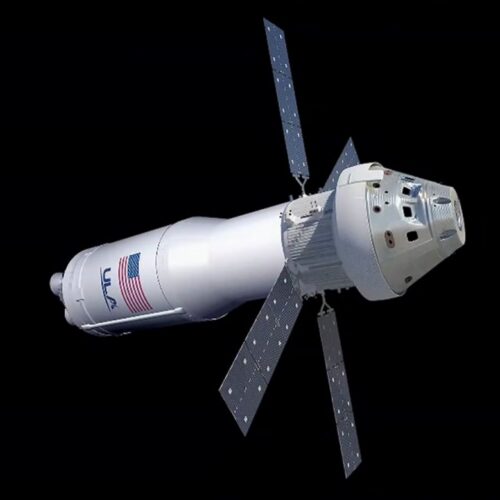
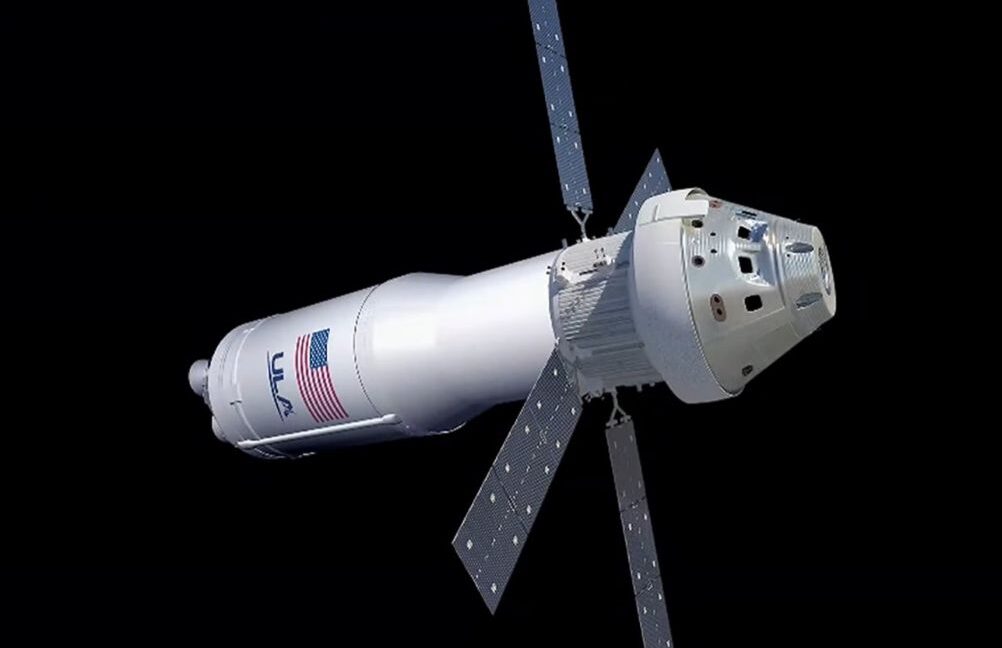
Most notably, for SpaceX's Starship vehicle, the revised plan calls for the Orion spacecraft to dock with the Starship lunar lander in high-Earth orbit before transiting to the Moon. And for Blue Origin, the mission architecture includes four launches of the New Glenn rocket, but no spacecraft-to-spacecraft refuelings. Additionally, the Blue Origin plan allows for the possibility of its Blue Moon lander rendezvousing with Orion in low-lunar orbit.
NASA does not have, nor want, nuclear weapons. But when it comes to a particular metric that is part of the Artemis Program to land people on the Moon, NASA guards a particular number like it is trying to prevent outsiders from cracking nuclear codes.
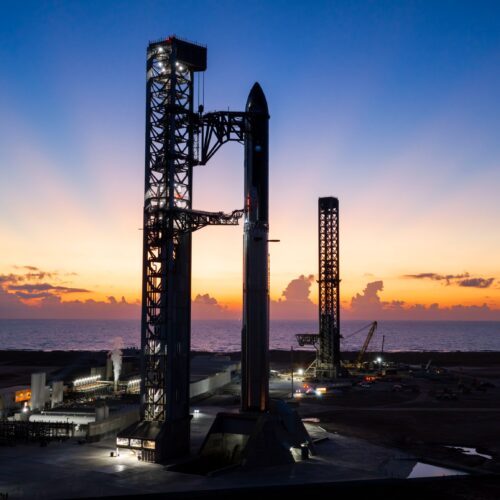
I am speaking of the number of Starship launches required to fuel a Starship-based lunar lander in low-Earth orbit such that it can fly out to the Moon, land there, and return to lunar orbit.
This number has been a moving target over the years. The general response from NASA has typically been, 'We don't know for sure, so we're not going to say.' In 2023, for example, the then-director of NASA's Human Landing System, Lisa Watson-Morgan, told Ars, "We have a general idea, but I’m reluctant to say exactly what that is."
In its current iteration, SpaceX is largely a data company seeking to provide enormous amounts of compute for artificial intelligence. During an earnings call on Tuesday afternoon, company officials spent much of their time discussing ambitious plans to roll out up to 10 GW of compute in 2027—on the ground.
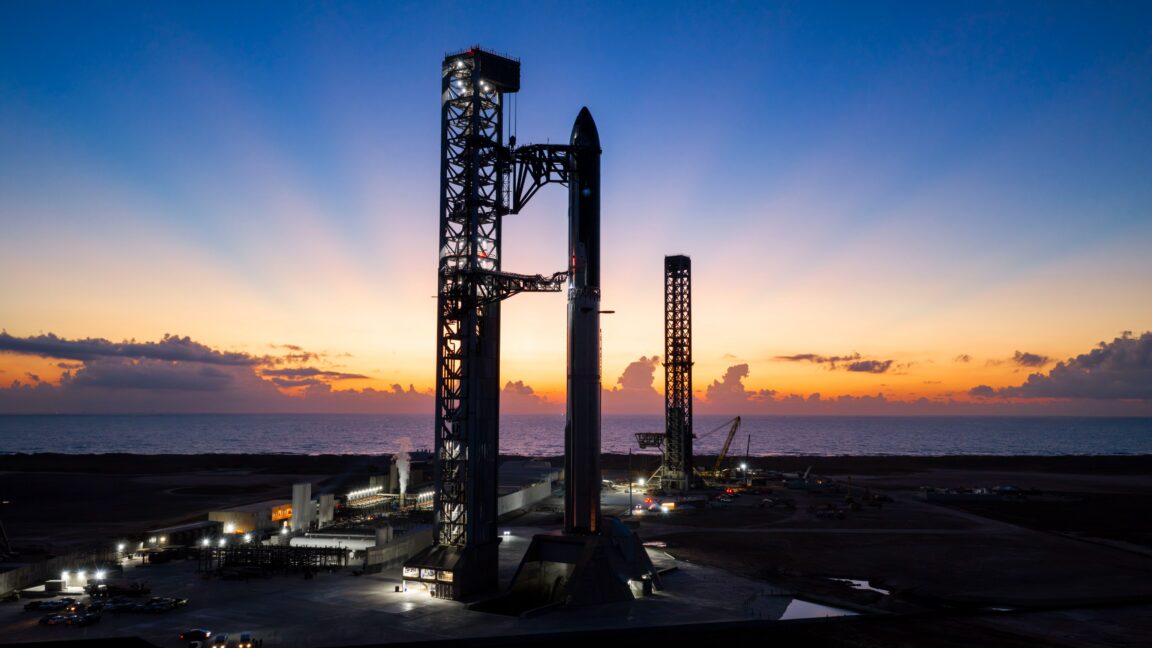
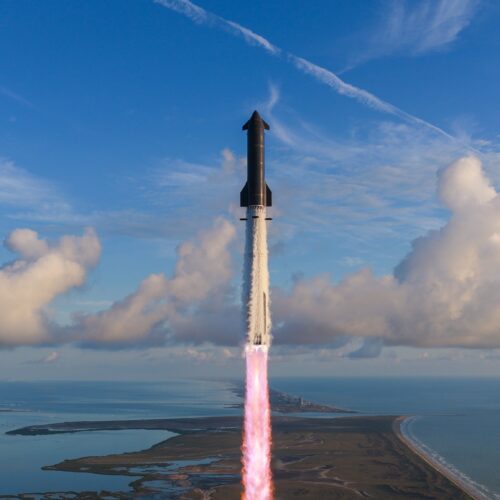
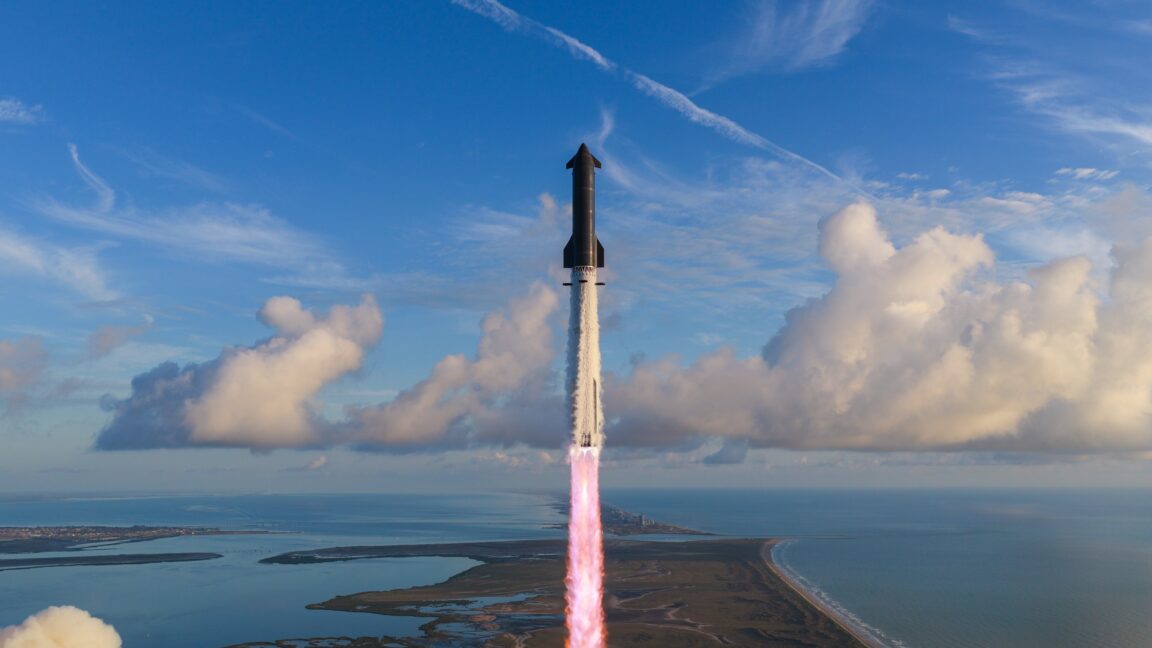
Gone are the days of aspirational talk about sending humans to Mars and settling the red planet. Now it is almost all about artificial intelligence and the data needed to support its expansion. However, the company's long-term ambitions to provide data services from space, initially with the Starlink Internet constellation and eventually through the "Starmind" data center constellation, still rely on an actual rocket.
That would be the Starship vehicle, and during the earnings call, SpaceX founder Elon Musk and the company's president and chief operating officer, Gwynne Shotwell, provided new performance targets for the vehicle.
Welcome to Edition 9.15 of the Rocket Report! The launch I'm most looking forward to in the next few weeks is that of Japan's Martian Moons Exploration (MMX) mission. MMX is one of the marquee space science missions launching this year, and it's set to leave Earth as soon as Monday (US time) aboard a Japanese H3 rocket. The spacecraft will visit Phobos and Deimos, the two asteroid-like moons of Mars, deploying a rover and collecting specimens for return to Earth in 2031. Exploration at its finest.
As always, we welcome reader submissions, and if you don't want to miss an issue, please subscribe using the box below (the form will not appear on AMP-enabled versions of the site). Each report will include information on small-, medium-, and heavy-lift rockets as well as a quick look ahead at the next three launches on the calendar.
Reflect Orbital looks to India for launch capacity. California-based Reflect Orbital, the startup attempting to offer sunlight on-demand with in-space mirrors, announced the purchase of two launches Wednesday from Indian launcher Skyroot Aerospace, Payload Space reports. One of the launches will use Skyroot's Vikram-1 rocket, which became the first privately developed Indian rocket to reach orbit in July. The other will fly on an upgraded rocket called the Vikram-1U.
The rising tide that has been the Drive to Survive effect has lifted more boats in motorsport than simply Formula 1’s. Sportscar racing is enjoying its own surge in popularity internationally at races like Le Mans in France, but also in North America in IMSA’s WeatherTech Sportscar Championship. For one thing, multi-hour, multi-class racing lends itself better to the age of streaming and second screens than it did linear broadcast TV, and fans are taking advantage of that: IMSA’s audience grew by more than a third domestically and almost a quarter internationally last year.
Having some of the coolest-looking cars racing today certainly helps, whether that’s the (mostly) hybrid prototypes or the GTs, racing versions of road-going cars from Porsche, Ferrari, and others. And it definitely helps that fan access at the races is virtually unmatched, with open paddocks and grid walks that now see huge crowds get up close to the cars just before the start of each race.
“I think we're just scratching the surface,” said IMSA President John Doonan. “I think besides the people that are here on the ground, the people watching, people engaging with us on social media, I'm seeing the passion come out more. Just on the grid walk, these fans coming up and being so excited to be here.” The series has certainly been making an effort, among other things getting local high school students exposed to the industry and starting a partnership to train more mechanics with ASE.

 Login