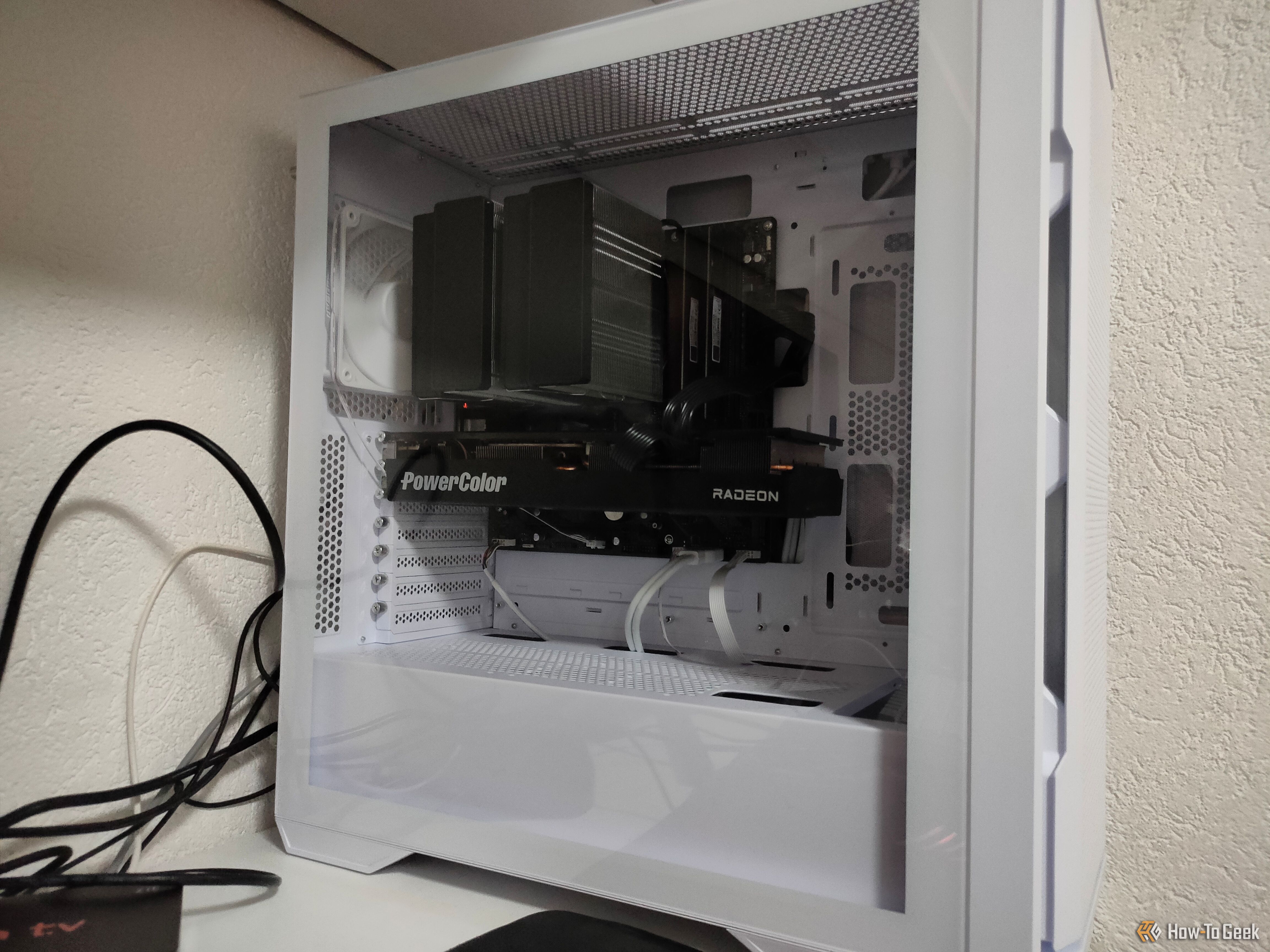
2026 has been a weird year for me. I'm one of the most "pro DIY PC" people you'll ever meet. I built my first PC around 20 years ago, and I've never touched a prebuilt since then, except for the purpose of reviewing them. And yet, this year, I bought a prebuilt—not for me, but still.
Pavan Davuluri says Windows will keep serving human users while adding agentic workloads. (Microsoft Photo)
GeekWire is profiling over the next few weeks some of the people and teams that are shaping the evolution of Microsoft in what we’re calling its “Microsoft 2.5” era.
Just Don’t Call It an ‘Agentic OS.’ Given Microsoft’s one-pointed AI focus these days, it’s not surprising that the Windows organization is on the agentic train.
But Executive Vice President of Windows + Devices Pavan Davuluri has learned the hard way not to call Windows an agentic OS. He did so back in November 2025, via a tweet and blog post, and the customer backlash was quick and biting.
But Davuluri has not done a complete U-turn because of the criticism. Instead, he has changed how he talks about where Windows is going — which is still in an agentic direction.
“The user of Windows going forward will continue to be users … but it’s also going to add these agentic workloads,” the nearly 26-year Microsoft veteran Davuluri told GeekWire in a recent interview.
During his time at Microsoft, he’s held a variety of roles, from intern to General Manager of Surface, to Corporate Vice President of Windows Silicon & Systems Integration. He was appointed Executive Vice President of Windows + Devices in March 2026, reporting directly to CEO Satya Nadella.
Windows needs to evolve to support agentic workloads through new platform capabilities that the team is building under the covers, Davuluri said. These low-level capabilities, or “primitives,” affect how Windows handles security, identity, governance, observability, and performance when it comes to building and running agents natively.
These coming changes likely will affect the Windows file system, security model, PowerShell, and other foundational components.
Microsoft already is working on Windows identity and manageability to make them better able to service agents. Windows can assign agents a local ID, or a cloud-provisioned identity backed by Entra.
And it also has an early preview of technology known as Microsoft Execution Containers, meant to help secure agents by running untrusted code in sandboxes or virtual machines. It’s these system-level areas where the team is focusing first in preparation for a human+agent future, Davuluri said, rather than the UX/UI level.
Going Back to Basics. Windows has had a lot of very different leaders over the years, with very different management styles and priorities.
For his part, Davuluri said he plans to run the Windows and Surface teams with four principles in mind: Maintaining customer obsession; treating Windows as a complete end-to-end system (“full stack”); focusing on complete user experiences and workflows rather than individual features; and building Windows openly and transparently, with clearer communication about plans and priorities.
On the heels of his promotion to EVP, Davuluri committed publicly to the much-needed goals of improving Windows quality and reliability. In a blog post, he outlined some of the requested changes that his team would be making to Windows, ranging from fixing the way the Insider test program works, to more granular improvements like allowing users to reposition the Windows task bar.
And since then, the team largely has been delivering to the surprise and delight of many long-time Windows users.
Davuluri has also been working to shift the conversation from which new features are coming to a specific build to what are the outcomes Microsoft wants to enable for specific groups of Windows users.
“There is no one single sort of ring for a billion-plus users on the platform,” Davuluri said. Windows users encompass people who use the product in a variety of different ways, so “we need to get clarity in our minds on the things that we do that lift all boats that raise the entire platform — and things that we have to go do that are specific and unique to each of our sets of users based on how they primarily or typically use the device.”
Full-Stack Thinking. Is there still a role for Microsoft as a PC maker in the coming agentic future? Not surprisingly, given his heavily hardware-focused background, Davuluri insisted there is.
When Microsoft debuted its first Surface devices in 2012, officials said the company needed to build its own hardware to create reference designs and innovative form-factor examples for other Windows PC makers.
These days, most Surfaces that ship arguably are not better, spec- or design-wise, than other PCs. But Microsoft still needs to keep a hand in hardware design to understand the full stack, Davuluri claimed.
Surface plays a key role in how Microsoft develops platform abstractions, incubates support for technologies like pen, facial-recognition, and neural-processing units that later spread across Windows, and optimizes for silicon-to-cloud, he said.
While the company’s attempt to create a distinct category of “Copilot+” AI PCs fizzled, Microsoft continues to try to find AI-centric reasons to convince customers to choose Windows devices. Davuluri and others have referred to the idea of “unmetered intelligence” to attempt to make the case for running AI models locally on PCs.
This fall, Microsoft (and other Windows PC makers) plan to roll out new PCs built on the Nvidia RTX Spark platform. The coming Surface Laptop Ultra, which will be optimized for RTX Spark, is aimed at creators, developers and AI builders, all of whom — Microsoft is hoping — will be fueling the growth of its next target user category: Agents.
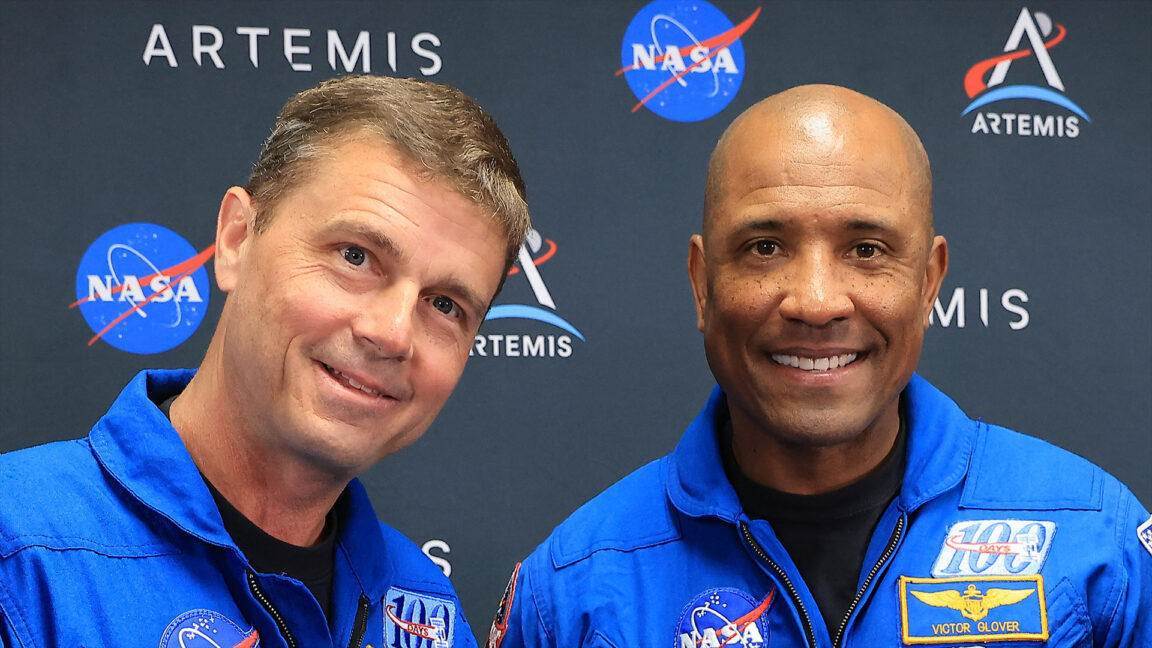
The commander and pilot of NASA's Artemis II mission have gained a new distinction five months after splashing down from the Moon: They're not fully retiring from the space agency.
Reid Wiseman and Victor Glover are the first astronauts to join NASA's emeritus program, enabling them to continue to support the work being done at Johnson Space Center in Houston. They will remain available to train and mentor the current workforce while still being able to pursue employment and opportunities outside of NASA.
"I have asked NASA ... to not use the term 'retire' as much, but technically emeritus is a retirement program," Glover told collectSPACE.com on Wednesday. "It's something we have typically done for scientists when they have groundbreaking research, and they want to go back to academia to teach or to research and publish."
Meta took days to remove ads containing AI-generated child sexual abuse material (CSAM) on Facebook and Instagram. Some ads featured photos of real kids, including a press photo of a young member of a European royal family and images swiped from a popular Instagram profile of a preteen girl deemed an influencer.
In an investigation published Tuesday, the Tech Transparency Project (TTP) reported that Meta failed to detect 332 ads containing CSAM this year. The “vast majority” of ads promoted AI apps made in China, while many ads promoted so-called “nudify” apps that make it easy for bad actors to use AI and digitally alter images of children.
TTP matched “multiple CSAM ads to photos of real children that appeared online.” These ads seem to violate federal child pornography laws, since the Justice Department has clarified that AI CSAM is just as harmful as CSAM. The young royal’s image was “animated into a video of her performing a graphic sex act,” TTP found. Other ads animated a photo of a 14-year-old Instagram influencer “showing off her new sports club uniform” into “a video of her performing oral sex.” A third “preteen” victim “posing in a pink athletic outfit with pigtails” in a series of stock photos was morphed into a video where she looks frightened as she’s molested by an adult male, TTP reported.
Instagram will limit recommendations for AI-generated influencer profiles that fail to disclose their synthetic identities under a new labeling policy.
In the business world, a moat is a quality of a business that makes it difficult for competitors to take that company’s profits. With how hard it is to train models for large language models (LLMs) and generative AI, it might seem like Anthropic, Open AI, and other LLM companies would have huge moats given the amount of compute it takes to build models. But open source models are quickly draining that moat, and now the only thing standing in the way of a customer using one of these models on their own hardware instead one from the larger companies is physical computing resources. [TerminalBytes] demonstrates a few of these models on personally owned computers to show the current state of the art.
[TerminalBytes] started off running the 27B version of the Qwen3.8 on a Mac Studio with 256 GB of unified RAM, which is plenty for this task. But it’s also enough to benchmark a few different models. Qwen3.6 is compared to 3.8, and then the different quants of each model are also compared. Quants are compressed versions of models that need fewer bits to store weights, meaning that the same models can run in less memory with smaller losses in fidelity. Many of these quants run on machines with 32 GB of RAM or less, encompassing many average gaming PCs. There’s even a 1-bit quant that [TerminalBytes] tested which can easily run on a machine with 16 GB, although with mixed results.
Keep in mind that this is just the current state of affairs with open LLMs. Future versions of these models are likely to optimize the number of tokens produced per unit time, or otherwise increase quality of responses while requiring less computer resources. We don’t really think that the ease of running local models will be the sole reason that the AI bubble pops, though. The fact that not every computer user is running Linux is proof enough of that.
We all know that the price of RAM and storage has shot up due to demand from the AI industry and other factors. In most cases that means we grumble about the price, but if we really need the part we can fork out for it. [CNX Software] are reporting that rather than continue to push up their prices, Pine64 are responding to the crisis by halting production of their Linux boards for the time being.
We’ve seen online comment over the now-exorbitant cost of other boards such as a fully-loaded Raspberry Pi, and this follows in that vein. If we had to guess we’d speculate that the high process have resulted in too little in the way of sales, which considering the knock-on impact on our community if other vendors follow suit, could be concerning.
If there’s one bright spot in the current situation, it’s that for many applications where a single-board computer might be used, a microcontroller might now be a better choice for the job than something running Linux. We’re in a very different situation from that we were in when cheap Linux boards appeared, the current generation of high-power microcontrollers have significantly closed the gap between the two. Given that microcontrollers have onboard memory and storage, their immunity from the price hikes makes them even more attractive. As to Pine64, we hope that sales of their other products make up for it.
Meta agreed to impose daily limits on children's social media use and pay nearly $18 billion in settlements with nearly every US state today, cutting short a trial in which Meta said several of the states were demanding over $1.4 trillion. The settlement requires court approval.
Meta is facing claims that it designed its products to foster compulsive use by children and failed to warn users of addiction and mental health risks. Meta, which already uses ID checks and face analysis to verify user ages, said it agreed to impose on people under 18 a "default two-hour daily time limit that teens can only turn off with a parent’s permission," a default block between midnight and 6 am, and a school mode in which notifications are muted by default from 8 am to 3 pm.
The two-hour daily "limit is cumulative across Facebook and Instagram, and time spent scrolling on both apps counts toward the total, including if we detect that someone has multiple accounts," Meta said. Teens will "receive prompts after every 15 minutes of continuous screen time on Facebook or Instagram," and "prompts when their total daily usage hits 60 minutes and 90 minutes."
Meta must overhaul Instagram and Facebook for young users by enforcing daily time limits, turning off push notifications during school hours, and blocking access late at night. (BigStock Photo)
Washington state will receive up to $339 million as part of a historic $17.1 billion multistate settlement with Meta, resolving allegations that the tech giant intentionally designed Facebook and Instagram with addictive features that harmed youth mental health.
Attorney General Nick Brown said Wednesday that the landmark agreement delivers on core youth-safety product changes — including hard caps on daily time limits, late-night scrolling blocks, and disabled push notifications during school hours — that state lawmakers failed to pass through legislation over the past two years.
“Let me say to the young people of Washington state: This agreement shows that your health and safety is more important than Meta’s profits,” Brown said in a news release.
Under the deal, Meta must overhaul Instagram and Facebook for young users by enforcing a two-hour combined daily time limit, turning off push notifications during school hours (8 a.m. to 3 p.m.), and blocking access late at night between midnight and 6 a.m. Teen users will also get the option to switch off algorithmic feeds in favor of a chronological timeline.
The agreement resolves claims brought by a coalition of 47 states, Washington, D.C., and three territories. While Meta acknowledged the settlement could cost up to $18 billion total over 10 years, it marked a rare legal resolution for a major platform facing nationwide youth safety litigation.
Outside the landmark Big Tobacco agreements of the late 1990s, the $17.1 billion deal represents the largest state consumer protection settlement in U.S. history. State officials and tech policy experts are framing the enforcement action as a similar watershed moment for regulating algorithmic harms and digital product design.
Washington state will receive a guaranteed baseline of $237 million from the core youth-safety agreement, with its payout potentially scaling up to nearly $339 million over the next decade if other major platforms like TikTok and Snapchat adopt comparable terms.
The Attorney General’s Office plans to use the funds to cover legal costs, bolster ongoing consumer protection enforcement, and directly fund state programs tackling the youth mental health crisis driven by social media use.
The settlement also mandates an independent third-party auditor to evaluate and report Meta’s technical compliance directly to state regulators annually over the next five years. Beyond usage limits, Meta must restrict social comparison features such as targeted beauty filters, hide public “like” counts for younger users, and implement stricter age verification to prevent children under 13 from creating accounts.
In addition to the core youth-safety agreement, Washington will receive a separate $10.2 million payment resolving long-standing state claims against Meta for sharing nonpublic user data with third parties like Cambridge Analytica during the 2016 election cycle.
Oregon Attorney General Dan Rayfield announced that his state’s share will total more than $125 million over 10 years.
In a public statement, Meta praised the agreement as setting a new benchmark for youth safety, while emphasizing that the restrictions should apply across the entire industry.
“While this is an important step, these protections will only be truly effective if our peers — TikTok and YouTube — put the same measures in place,” a Meta spokesperson said.
The agreement remains subject to final judicial approval in federal district court.
Teens are using Ray-Ban Meta smart glasses to secretly film classmates and teachers at school, with the harassment disproportionately aimed at girls. Much of the footage stayed online until Futurism contacted Meta and TikTok directly.
Android 17 introduces stricter per-app memory limits that can slow or terminate runaway apps, giving Google a new way to protect overall phone performance before one memory hog causes wider problems.
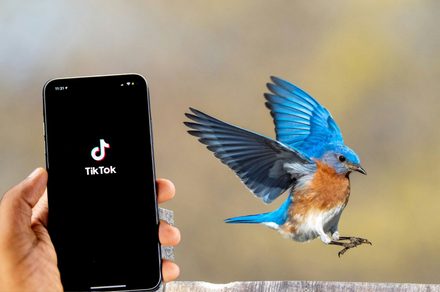
Birdwatching is finding a younger audience on TikTok, where millions of views are helping Gen Z discover birds, wildlife and an increasingly popular outdoor hobby.
Instagram said it would get tougher on harassment filmed with Meta’s AI glasses. A month later, plenty of those videos are apparently still slipping through.

 Login
Login