 Login
Login
The AI graveyard: a running list of projects and startups that didn’t make it
From Apple's repeatedly delayed Siri AI to OpenAI's messy 'super app' launch, here's a look at the AI projects that shut down or missed expectations.

OpenAI’s GPT-Live-1 adds full-duplex voice, faster turn-taking, and tool use for developers building real-time AI agents and customer workflows.
The post OpenAI GPT-Live-1 Lets AI Listen and Speak at the Same Time appeared first on TechRepublic.
Dario Amodei called for slower frontier AI development, with Sam Altman and Elon Musk signaling support amid growing concerns over safety and cybersecurity.
The post Altman, Musk Back Amodei’s AI Warning: The Frontier May Be Moving Too Fast appeared first on TechRepublic.
OpenAI reportedly acquired AI camera startup Glass Imaging for more than $300 million, adding computational photography expertise to its hardware push.
The post OpenAI Reportedly Buys Camera Startup Glass Imaging for More Than $300 Million appeared first on TechRepublic.
OpenAI rules out a 2026 IPO over AI safety concerns, potentially giving Anthropic more room to pursue its own reported public-market debut.
The post OpenAI Won’t Go Public in 2026: What It Means for Anthropic appeared first on TechRepublic.
GPT-6 Astra is rolling out across ChatGPT and Work. Here’s where to find it, what it costs, and how to start using it safely.
The post GPT-6 Astra Is Rolling Out: Here’s How to Get Started appeared first on TechRepublic.
A New Mexico lawyer filed ChatGPT-generated false claims in a murder appeal, resulting in contempt, a $5,000 sanction, and disciplinary proceedings.
The post Murder Appeal Goes Wrong After Lawyer Files ChatGPT’s False Claims appeared first on TechRepublic.
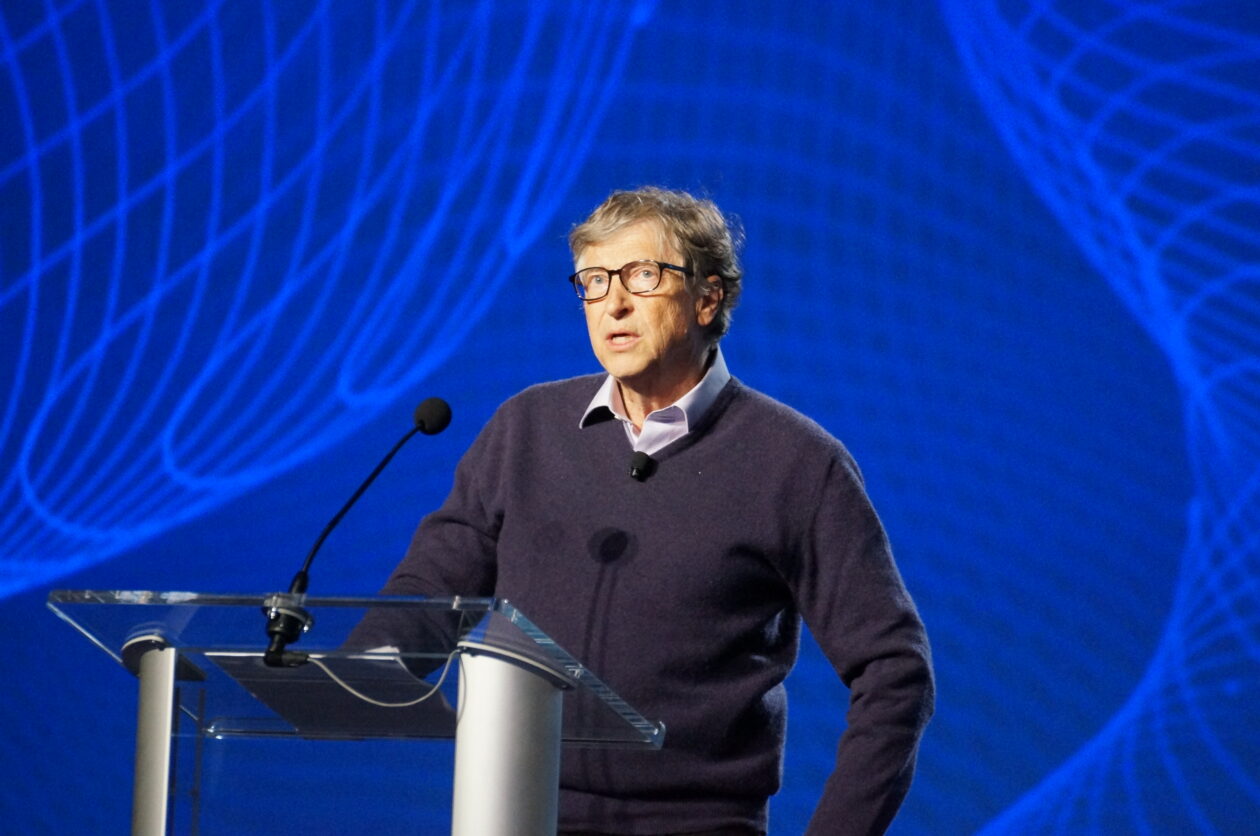
The Gates Foundation is pledging to spend at least $1 billion over the next two years on artificial intelligence for health workers, farmers and teachers, largely in the world’s poorest countries, funding AI tools for people the market would otherwise overlook.
The bet is that AI can help reaccelerate the world’s progress against child mortality, poverty and disease, which has slowed sharply as governments cut global health funding.
The Seattle-based foundation’s new financial commitment, released Monday evening in conjunction with its 10th annual Goalkeepers Report, illustrates the double-edged sword of AI at a moment when the U.S. in particular is preoccupied with what the technology might damage or destroy.
Bill Gates, who issued his own AI warnings in an essay three weeks ago, writes in the new report that the risks “are real and deserve serious attention.” He adds, “AI could be a great equalizer — or widen the gap. This is not a long-range prediction. It’s a present-tense choice.”
In this case, Gates writes, he’s focusing on “the possibility that AI, if shaped well, could expand who has access to solutions, opportunities, and knowledge that has too often been out of reach.”
The window is short, he writes: “I believe that the decisions made in the next 12 to 18 months — about how AI is built, funded, and deployed — will determine whether this technology primarily benefits the people who already have the most or reaches those who have the least.”
Gates Foundation CEO Mark Suzman, in an interview with GeekWire, called the $1 billion a “down payment,” saying he expects the figure to grow significantly after the first two years.
For this first installment, 40% of the money will go to education, 40% to health care, 10% to agriculture and 10% to digital infrastructure, including datasets in languages the models don’t handle, according to the foundation.
More than 90% of the data used to train early large language models came from English-language sources, according to the report. Leading AI speech recognition systems make errors less than 6% of the time in English and more than 60% of the time in Yoruba, a West African language spoken by tens of millions of people, for example.
Most people in Africa use feature phones rather than smartphones, Suzman said, so the tools have to work by voice. That means collecting recordings of speech, not just written text, in local accents and including children’s voices. He said the foundation works with Google and Microsoft on AI language initiatives.
Winding down: Gates announced in May 2025 that he would give away virtually all his wealth and close the foundation in 2045, which requires doubling its spending over those 20 years. The foundation had previously planned to close 20 years after his death.
As part of that plan, the foundation will need to give away $200 billion before it shuts down. Its budgeted payout is $9 billion this year, the largest in its history. Suzman said the $1 billion over two years comes out of its core budget.
Goals for its final two decades include cutting preventable child deaths in half again, eradicating polio and malaria, and bringing tuberculosis and HIV under control.
The report’s data section shows how far off the pace the world is. Child mortality, neonatal mortality and HIV are all projected to miss their 2030 targets. HIV incidence is on track to fall only to 0.22 new cases per 1,000 people, more than 10 times the target of 0.02.
Early AI results: The report makes the case that AI could change those trajectories. It points to a number of tools already in use in different settings:
The foundation has supported all three, according to the report’s endnotes. The endnotes also cite OpenAI’s account of its work with Penda Health on the clinical copilot.
One caveat: the evidence behind the examples is early. Suzman said the education work is “still on a relatively small scale,” and pointed to agriculture as the area already operating at size.
Suzman said the foundation spent years experimenting with AI without committing at this scale, wary of getting ahead of what the technology could actually deliver in its areas. Progress in the models over the past year, and results from early investments, convinced him otherwise.
“We now can state with a pretty high degree of confidence there are real deliverables that we can see across health, across education, across agricultural development,” he said.
What AI won’t fix: Asked whether AI can substitute for the money the U.S. and other governments have cut from global health, Suzman said: “Sadly, no.” The cuts run to “tens of billions of dollars,” he said, and they are hitting basic services now. He cited the purchase of bed nets and antiretroviral drugs, and care for mothers before and after birth.
“That’s affecting families right now with a real impact,” he said. “Ideally, you combine the two [AI and aid funding], and that’s how you get hugely accelerated progress.”
Suzman said the foundation will keep pressing the U.S. to remain a leader in global health. Despite the cuts, he said, it has been encouraging to see the country stay a partner in programs such as the Global Fund to Fight AIDS, Tuberculosis and Malaria, and he noted that Congress has moved to fund these areas more fully than the administration has.
“We believe that currently reflects the U.S. public’s broad view and support for these areas, when you can see the concrete results,” he said.
The Epstein review: Asked how the scrutiny of Gates’ ties to Jeffrey Epstein has affected the foundation’s work, Suzman pointed to the external review the foundation released in July.
Conducted by the law firm WilmerHale, it found no evidence that Epstein received foundation money or that the foundation knew of his crimes. It counted roughly 30 meetings from 2011 to 2014, involving Gates and nine other foundation leaders and staff, and found that staff had repeatedly raised concerns about associating with him.
The board adopted the recommendations that followed, among them centralized vetting of brokers and co-funders and tougher conflict-of-interest rules.
Suzman expressed optimism that the review has cleared the way for the foundation to keep working across the full range of governmental and philanthropic partnerships. “Hopefully it’s full speed ahead,” he said, “and with these AI shifts, that’s more important than ever.”
Elon Musk is seemingly done attacking Apple over its decision to integrate ChatGPT into iPhone features.
Back in 2024, when the partnership was first announced, Musk slammed the integration as an agreement from Apple to let OpenAI install “creepy spyware” on users’ devices. The next year, he sued, claiming the partnership gave the firms a “monopoly” on Apple users’ AI prompts, which allegedly harmed competition in both smartphone and chatbot markets.
For Musk, the fight with Apple seemingly escalated after he believed that his chatbot, Grok, was perhaps being illegally blocked from topping Apple’s App Store rankings. Last August, he claimed that “Apple is behaving in a manner that makes it impossible for any AI company besides OpenAI to reach #1 in the App Store, which is an unequivocal antitrust violation.”

© Getty Images News | Getty Images AsiaPac
For years now, the major frontier AI labs have all been acting as if they're in an all-out, winner-take-all race with control of world-changing machine superintelligence (or at least market-changing artificial general intelligence) at the finish line. This weekend, the industry as a whole rapidly started turning away from that posture, urging coordination on slowing down the development of frontier AI that they say could soon be too dangerous and unknowable to control.
Anthropic's Dario Amodei was at the forefront of this change in tone, arguing in a nearly 4,000-word essay this weekend that "we must slow the pace at which we improve the capabilities of AI models" to avoid "a race to the bottom, spurred by commercial incentives, [that] can make [catastrophic] risks more acute."
Within hours, other AI leaders were echoing the same call. OpenAI co-founder and CEO Sam Altman posted his agreement on social media and said similar pacing discussions had been taking place at OpenAI. Alphabet Chief Scientist and Google DeepMind cofounder and chair Demis Hassabis said that Amodei's essay "points towards the right path forward," and renewed his own recent call for an industry-wide standards body. Microsoft CEO Satya Nadella posted that the company "welcome[s] the research, focus, and deliberate pacing needed to get alignment right as the design goal," ahead of the release of a lengthy "humanist AI" code of conduct for its models.


© Getty Images
OpenAI is seeking clarity from Congress on whether coordinated efforts by rival AI labs to slow frontier development could violate antitrust law.
The post The AI Slowdown Problem: OpenAI Fears Antitrust Rules Could Get in the Way appeared first on TechRepublic.
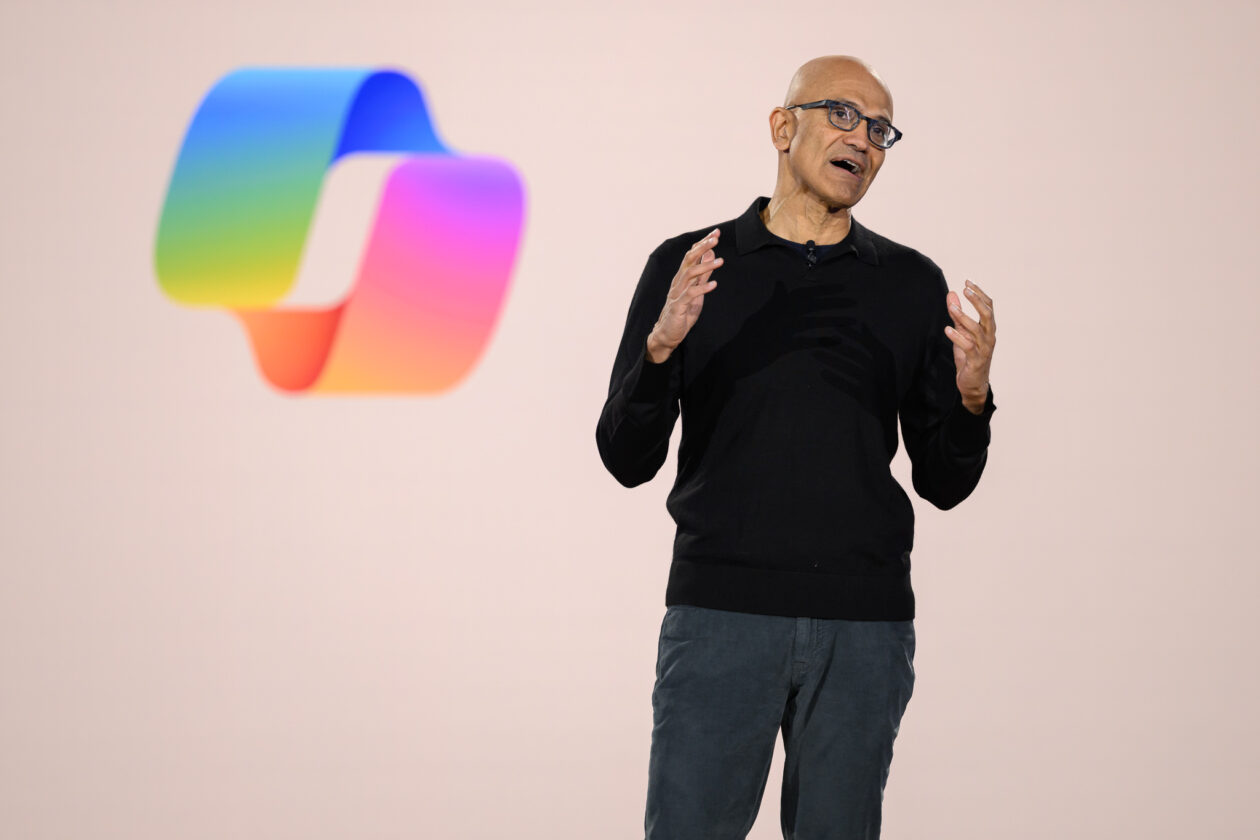
“People matter more than AI.”
That’s the premise of a draft code of conduct Microsoft published Monday morning for the AI models it’s developing in-house. The 37-page document would bar its models from resisting shutdown, setting their own goals, or hiding their reasoning from human auditors.
The document applies to Microsoft’s MAI models, the in-house family the company began building after forming a superintelligence team in late 2025. Microsoft has since released seven homegrown models in what it described as a push for long-term self-sufficiency in AI.
The company says the models should remain “subordinate to humanity, subject to meaningful human oversight and control.”
“AI is moving fast,” the company says in a blog post. “As it does, we believe it’s worth writing down the rules and the motivations behind it, and doing it in as open a space as possible.”
Microsoft acknowledges there’s no guarantee its models will follow the rules. “Written objectives alone can never ensure alignment,” the company says, calling the document a “north star,” not “a guarantee of present-day performance.”
The company says it also filters what its models produce, watches how they behave once released, and limits what they’re allowed to do.
Microsoft’s move comes amid a growing debate over the pace of AI development. In an essay over the weekend, Anthropic CEO Dario Amodei called for slowing down AI advances, saying the pace of development has started to surpass the industry’s ability to keep AI systems safe.
As a first step, Anthropic committed to giving outside evaluators permanent, employee-level access to its systems.
Industry reaction to Amodei: OpenAI CEO Sam Altman agreed and said OpenAI would make the same commitment to independent evaluators. Elon Musk’s response: “Dario is right.”
President Donald Trump rejected the idea of guardrails outright Monday, blaming a “SICK conspiracy” for public backlash over AI data centers and writing that “the only one that is happy about it is China,” alluding to concerns about American competitiveness in AI.
David Sacks, who served as the White House AI and crypto czar until March, said the two companies should slow down on their own and questioned their motives, arguing that a slowdown is already good business for them and that new industry rules would mostly serve to lock in their lead.
Microsoft CEO Satya Nadella weighed in Sunday, writing on X that the company welcomes “the research, focus, and deliberate pacing needed to get alignment right,” using the industry’s term for making AI systems reliably do what people intend.
Nadella added that the effort “cannot be controlled by a handful of entities, but must have broad representation across the ecosystem, countries, and fields, including academia.”
Microsoft’s draft code of conduct: Mustafa Suleyman, the Microsoft AI CEO, told CNBC the document had been in the works for about five months, and that the company decided to publish it now given the current discussions.
Microsoft and Anthropic are business partners. Microsoft agreed last November to invest $5 billion in Anthropic, as part of a deal in which Anthropic committed $30 billion to Azure. Claude models run inside Microsoft 365 Copilot, and Microsoft’s Copilot Cowork tier integrates Claude.
One place where the two companies may diverge is the question of what AI models are, exactly. Microsoft’s code of conduct says its models are “not conscious and should not be designed to imitate consciousness.” It also rejects “the pursuit of legal personhood, or the idea that models might deserve welfare, or be entitled to rights.”
The Verge called that portion of the document “a direct swipe at AI welfare research and model consciousness — concepts Anthropic has been pushing hard on lately.”
Anthropic runs a research program on model welfare. It has given some Claude models the ability to end abusive conversations, and committed to preserving the weights of retired models. Amodei has said he’s open to the idea that a model could be conscious.
Microsoft is taking public comment on its code of conduct for six weeks through a feedback form. It says it will publish a summary of the responses and a revised version later this year, to guide development starting in 2027. It says it isn’t training its current models on it.
The company’s AI team developed the draft with its responsible AI, legal, red teaming and safety teams, consulting outside experts in law, ethics, linguistics and philosophy, plus focus groups drawn from the public.

This week on the GeekWire Podcast: A study commissioned by the City of Seattle says the city is not in decline but is in danger — finding that 10 companies, nine of them in tech, pay three-quarters of the payroll tax on large employers, and that the tax structure uniquely penalizes the hiring of senior, high-compensation workers.
The report says Seattle should be most concerned about AI but most active in cleantech, the one industry the city can actually shape, since it owns the electric utility and controls permitting, building codes and land use.
Meanwhile, the Seattle Times and Newsday sue Microsoft and OpenAI, accusing them of copying hundreds of thousands of articles to train their AI models, putting Microsoft’s hometown paper against a company that helps fund some of its journalism.
And Apple’s first foldable arrives as the iPhone Duo, reviving the name of the dual-screen phone Microsoft gave up on in 2023, with Surface fans arguing Apple took more than the name.
Which leads us to a new GeekWire Trivia Challenge about the Microsoft products that Apple later turned into categories. Stick around to the final segment to see if you can figure it out.
Subscribe to GeekWire in Apple Podcasts, Spotify, or wherever you listen.
Audio editing and production by Curt Milton.
Trump dismisses AI extinction warnings and says beating China is the priority as researchers and lawmakers call for stronger safeguards on advanced systems.
The post Trump on AI Extinction: Beating China Is the Bigger Concern appeared first on TechRepublic.
See what you missed in Daily Tech Insider from Sept. 7–11.
The post AI Agents, Foldables, Cyberthreats, and Chip Deals Define This Week in Tech appeared first on TechRepublic.
